Free Printable Synonyms and Antonyms Worksheets for Class 3
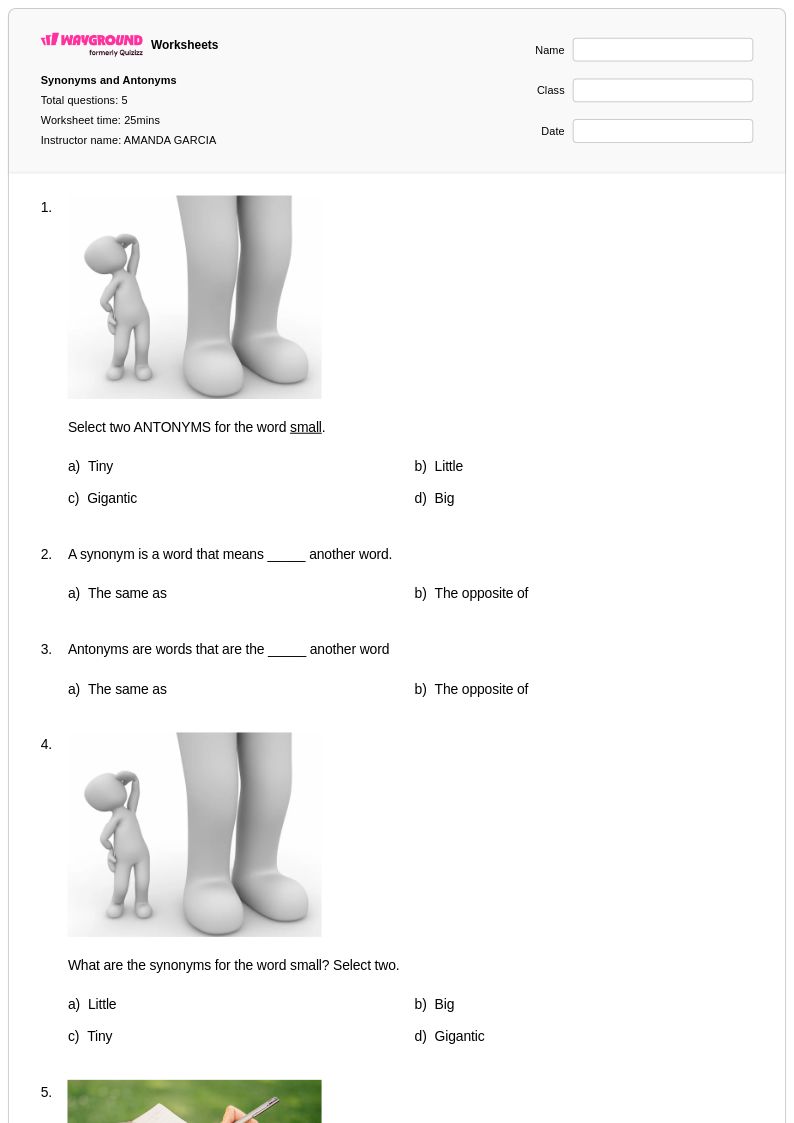
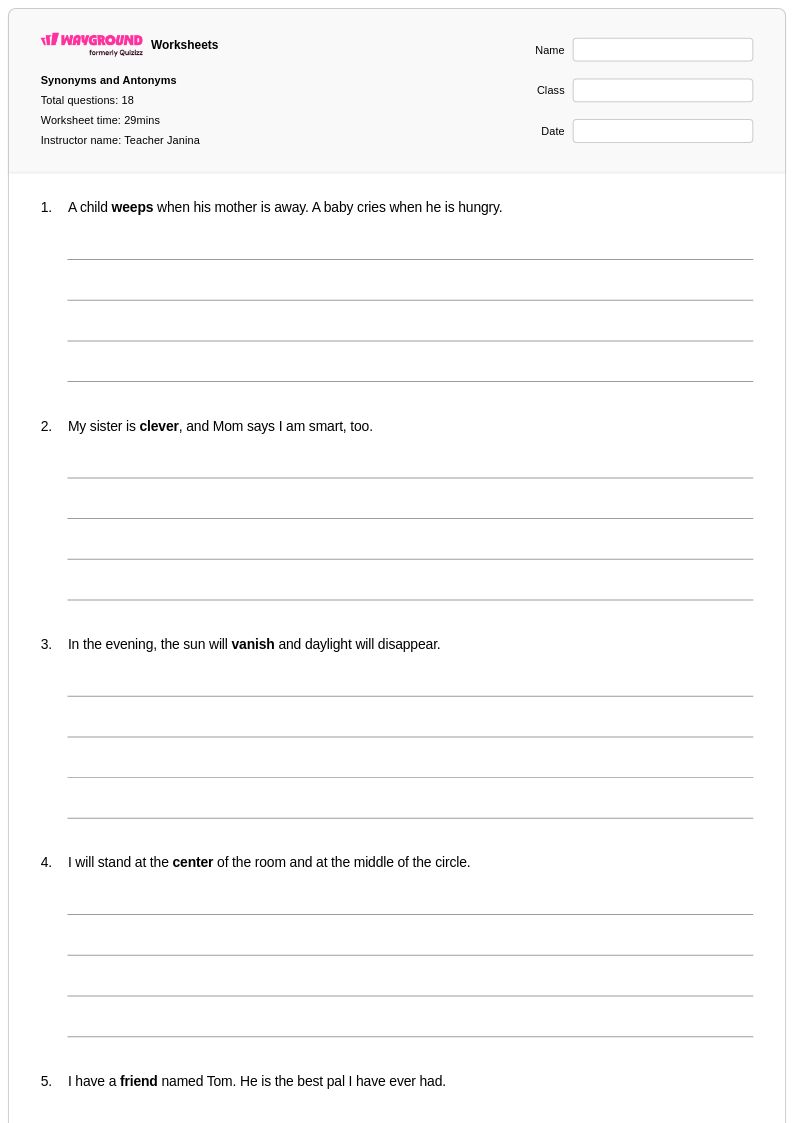
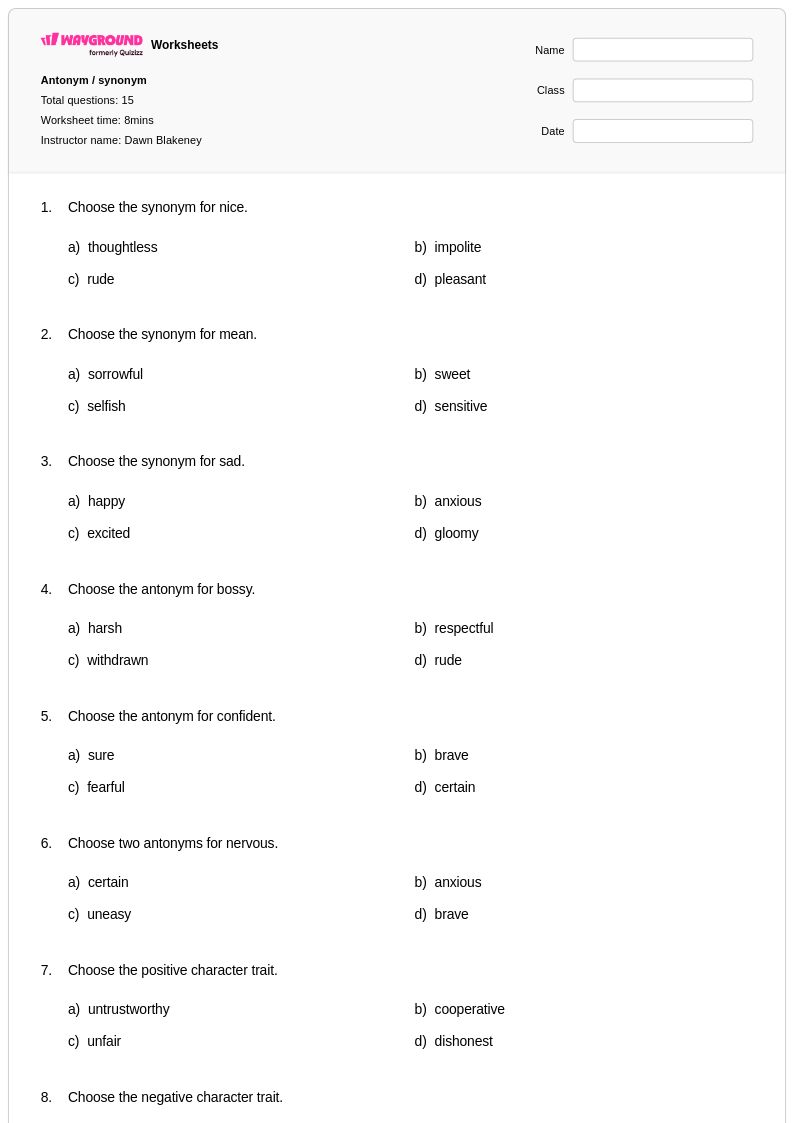
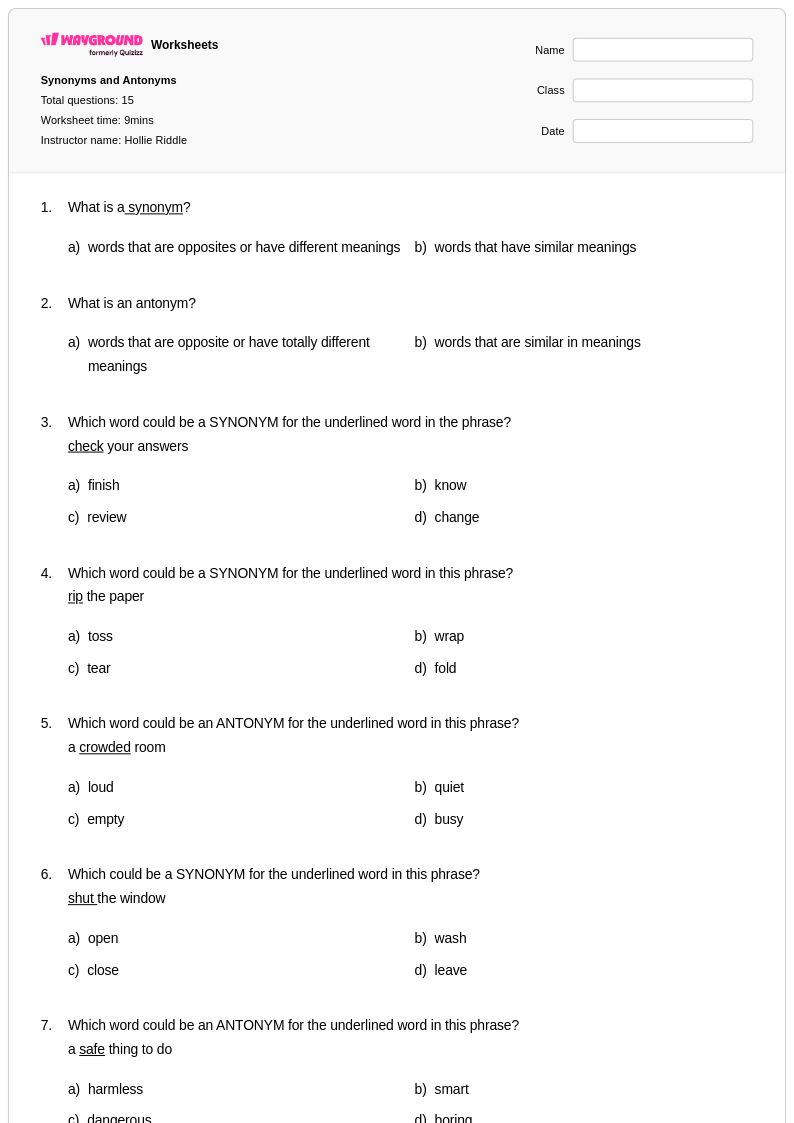
Class 3 synonyms and antonyms free worksheets and printables from Wayground help students master word relationships through engaging practice problems with comprehensive answer keys included.
Explore printable Synonyms and Antonyms worksheets for Class 3
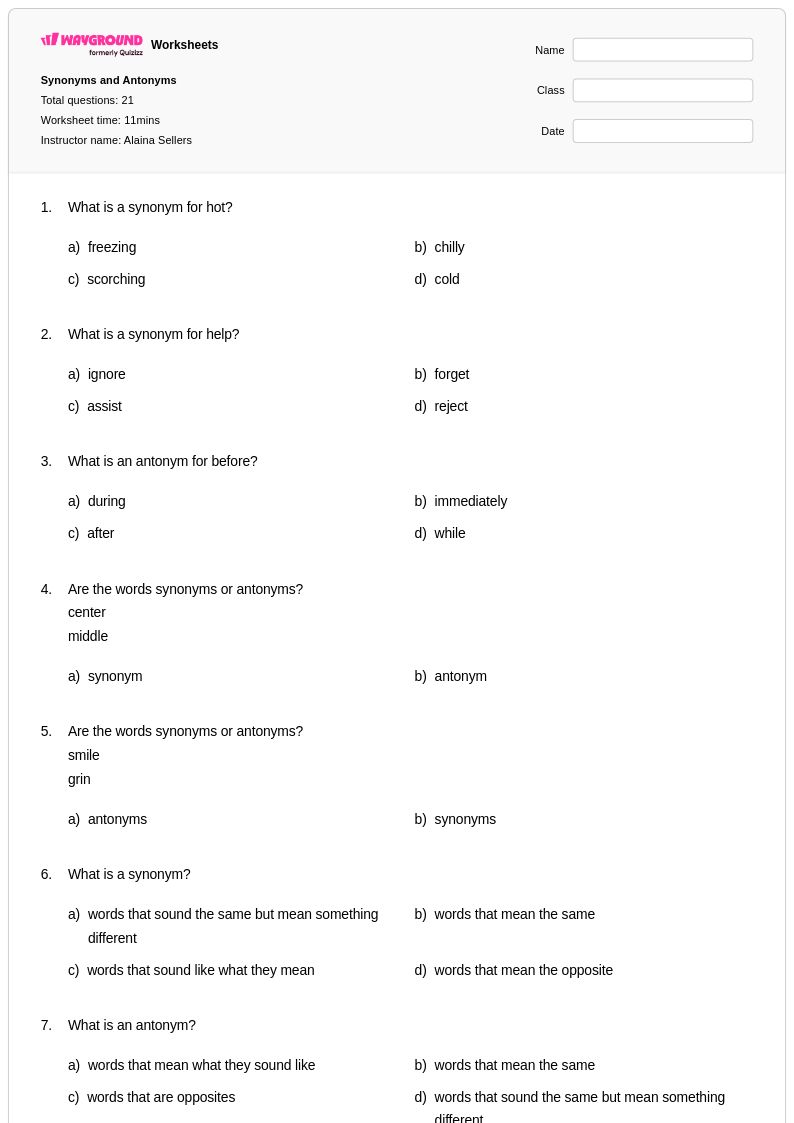
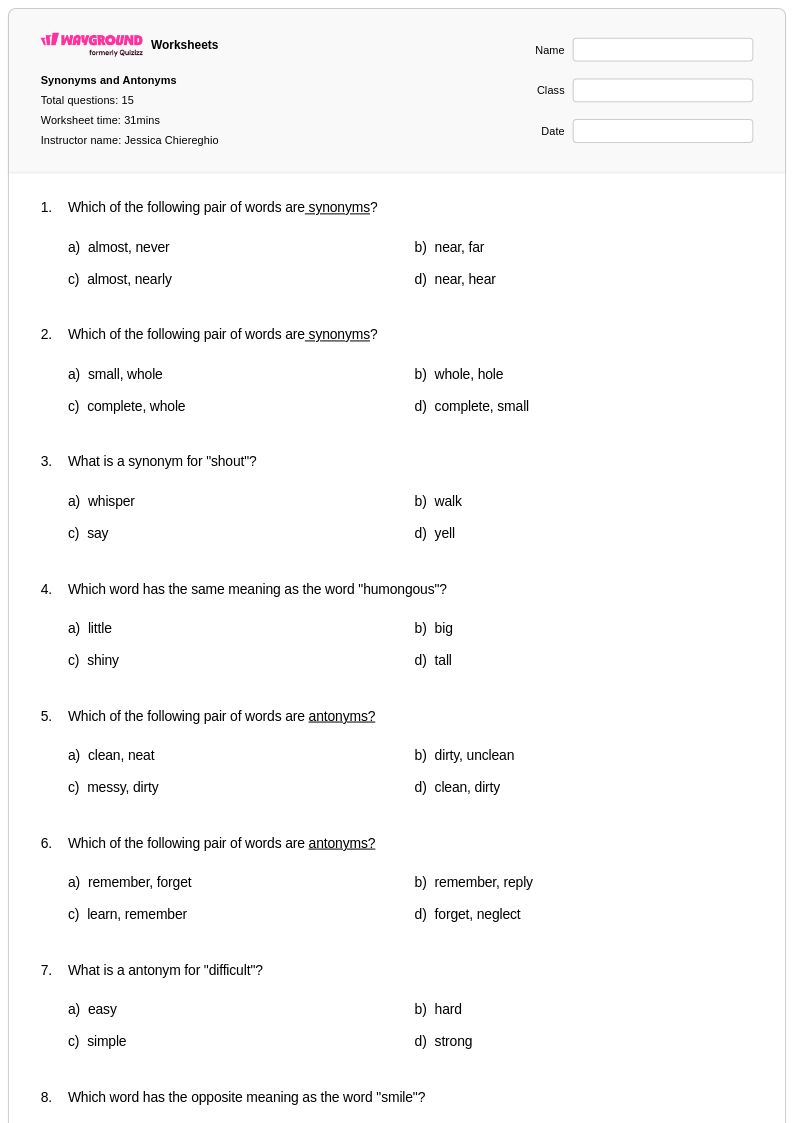
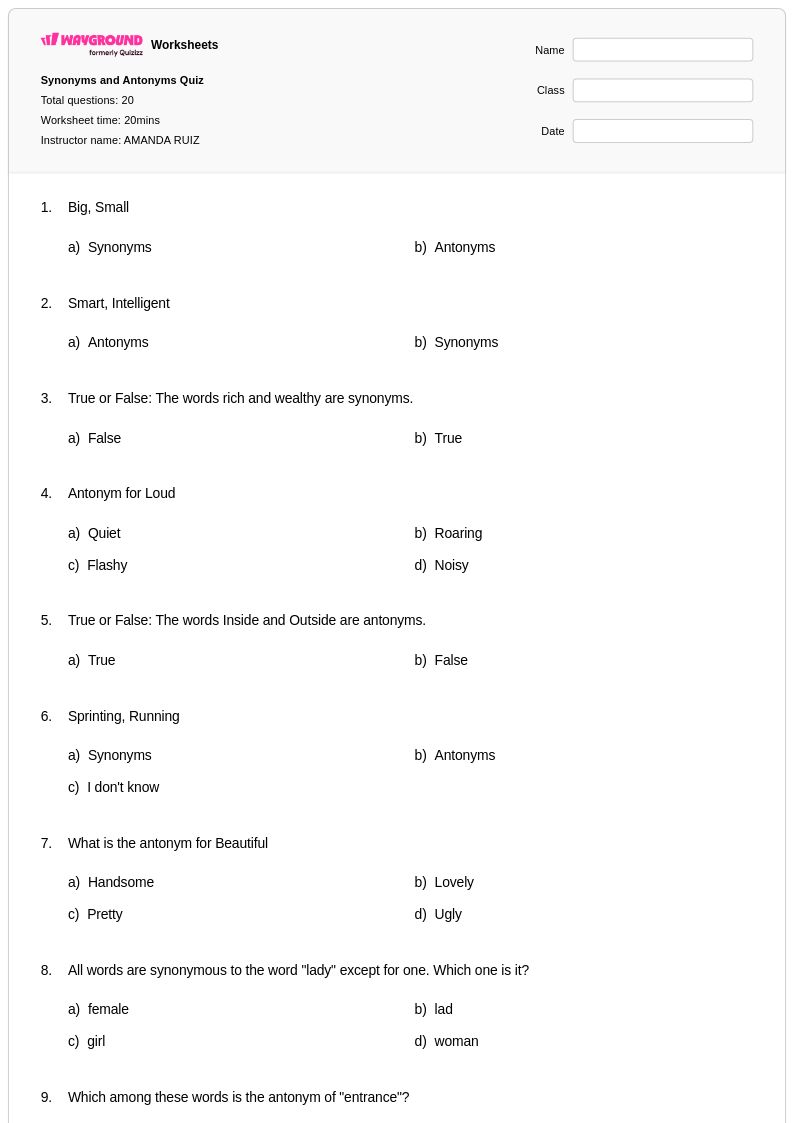
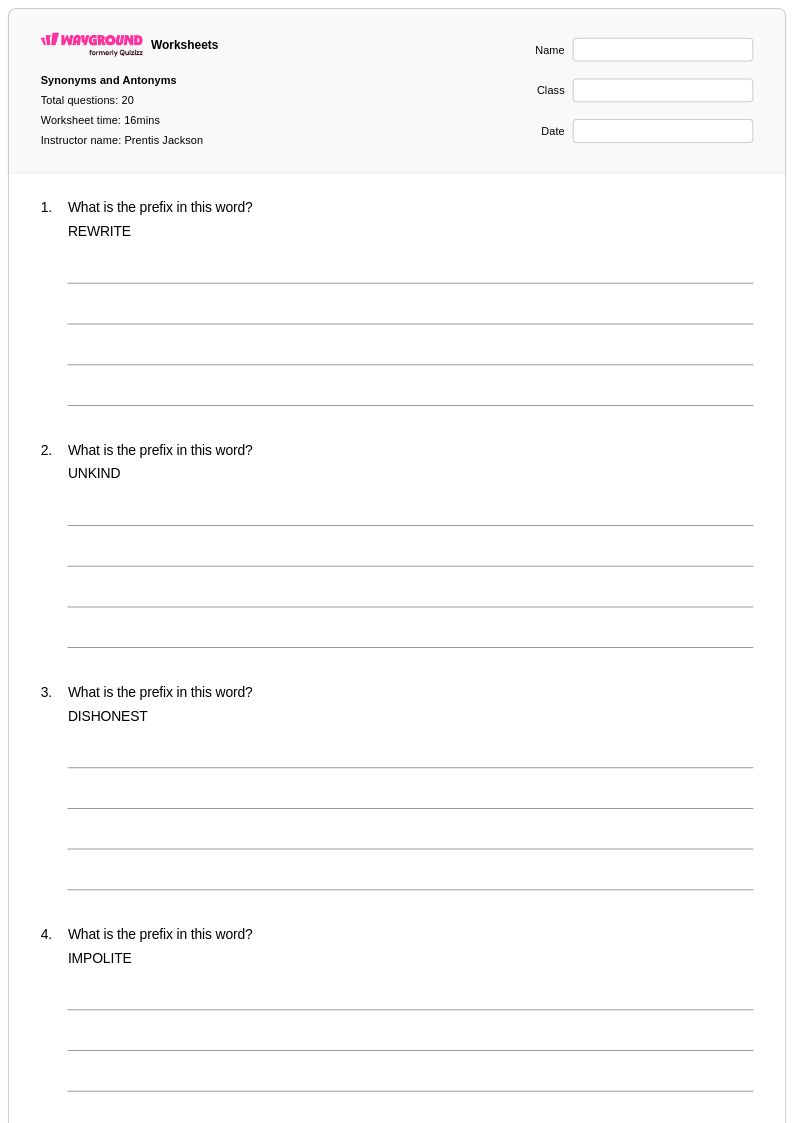
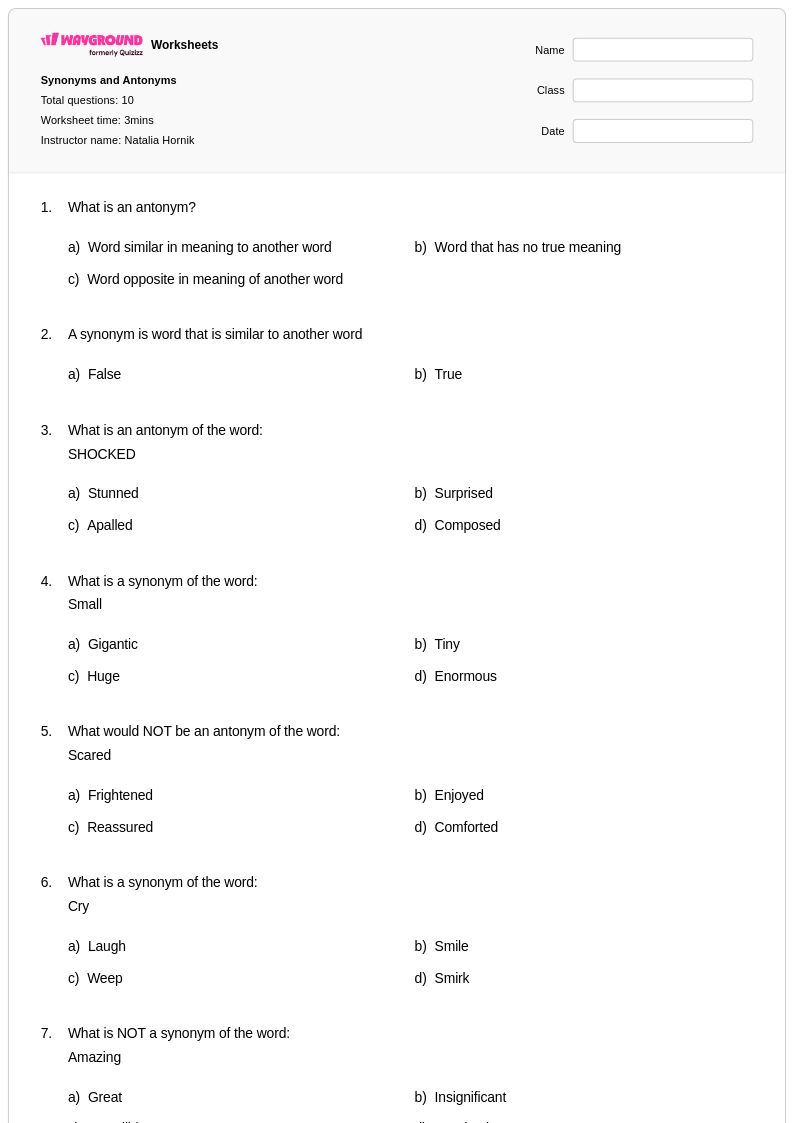
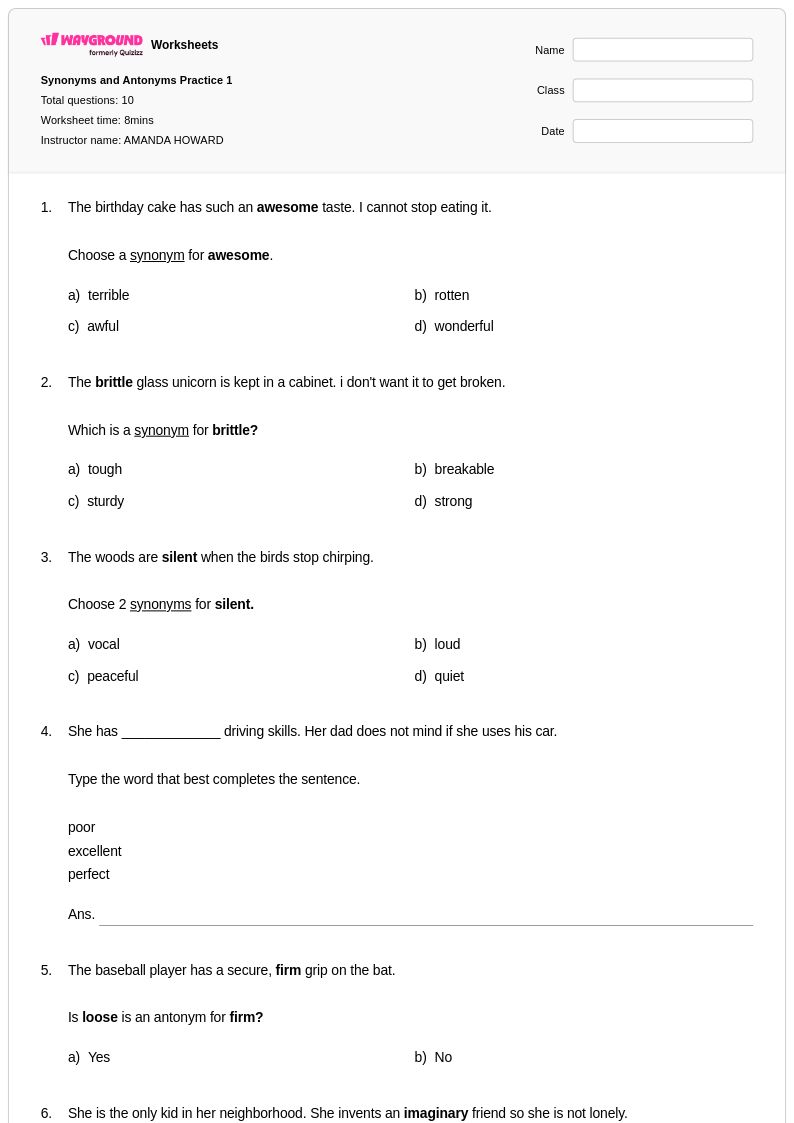
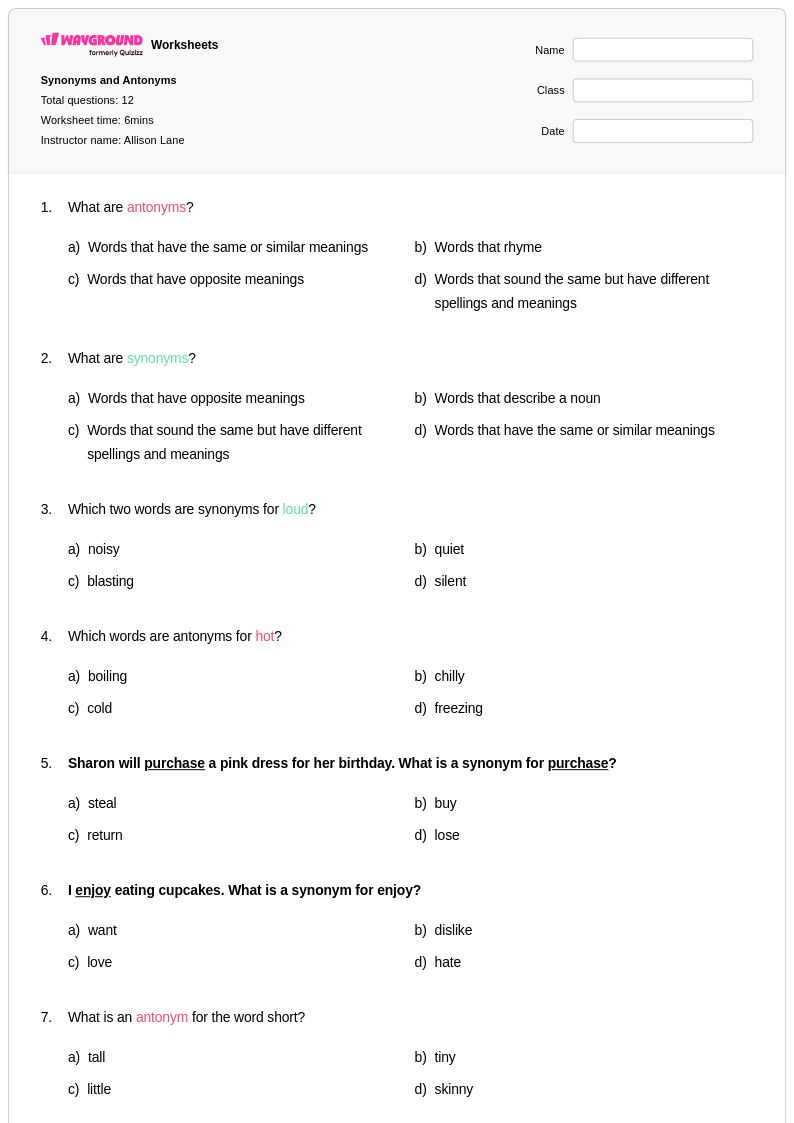
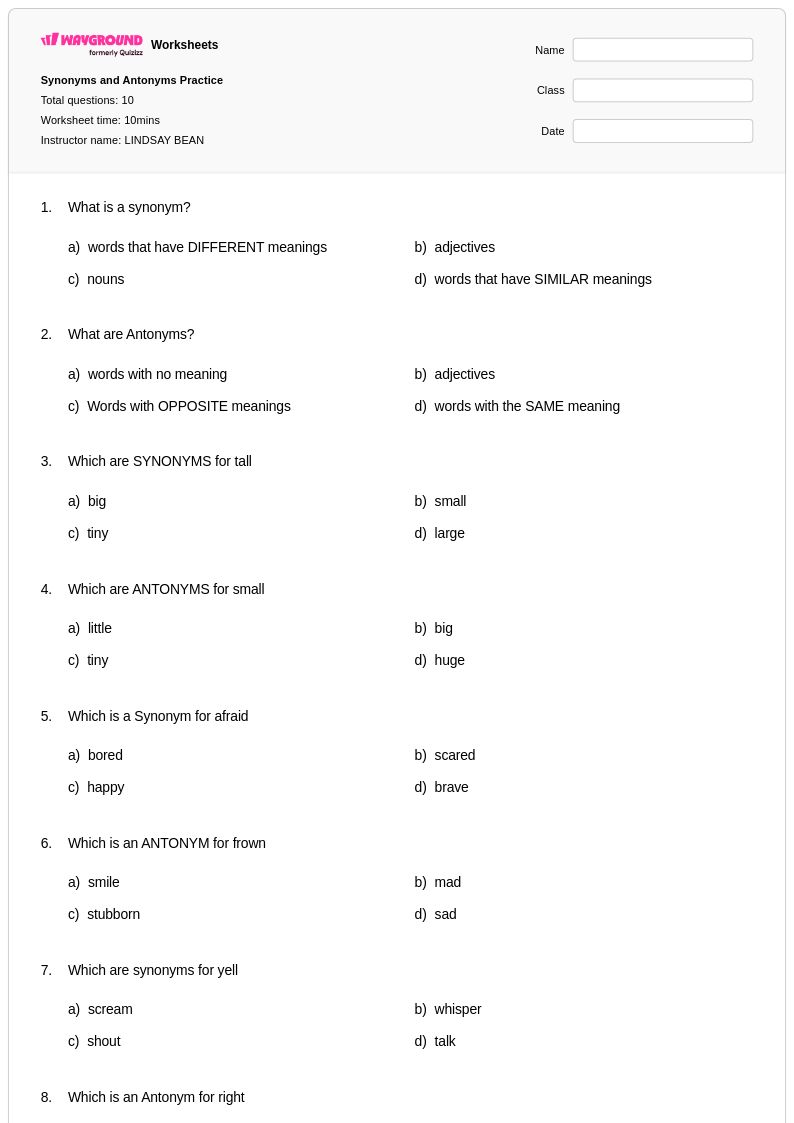
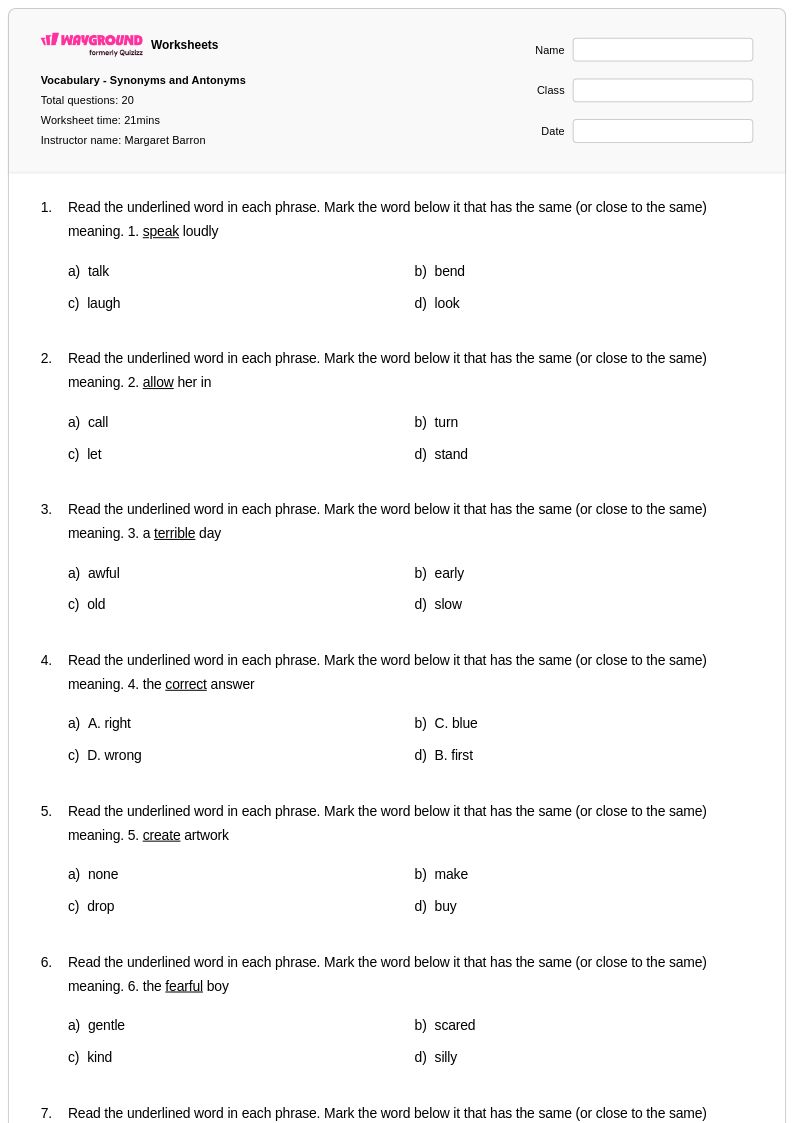
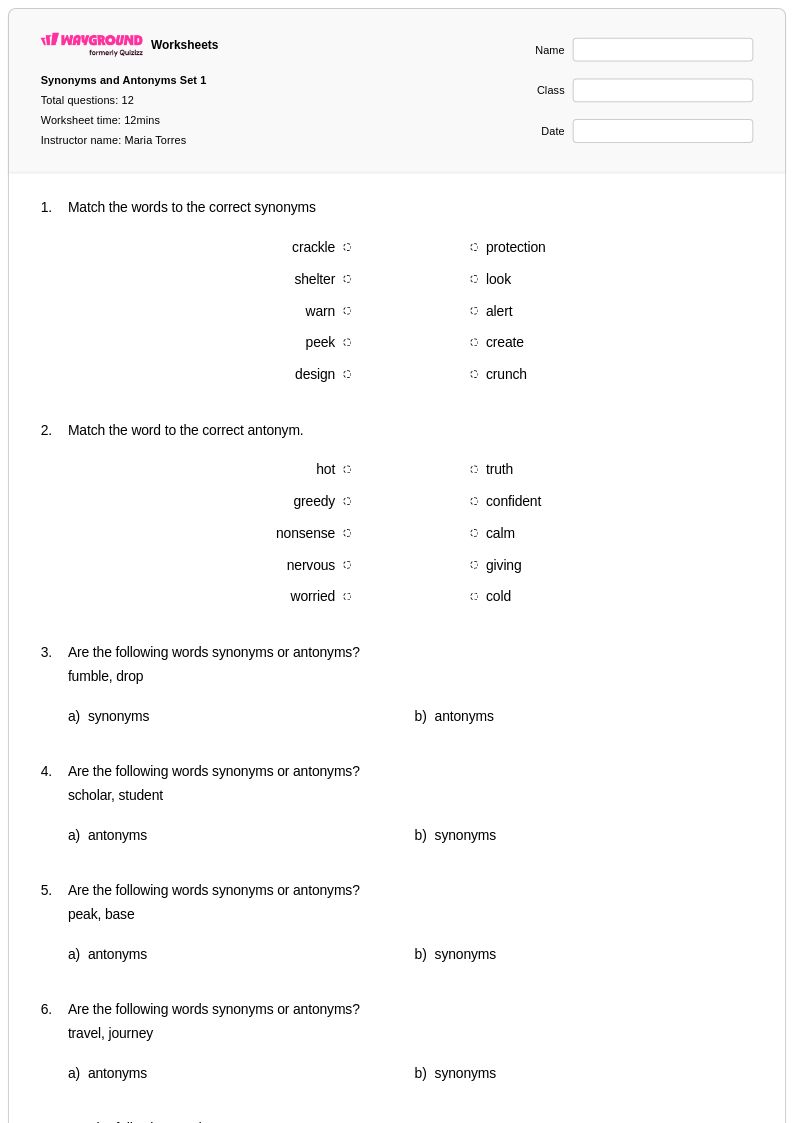
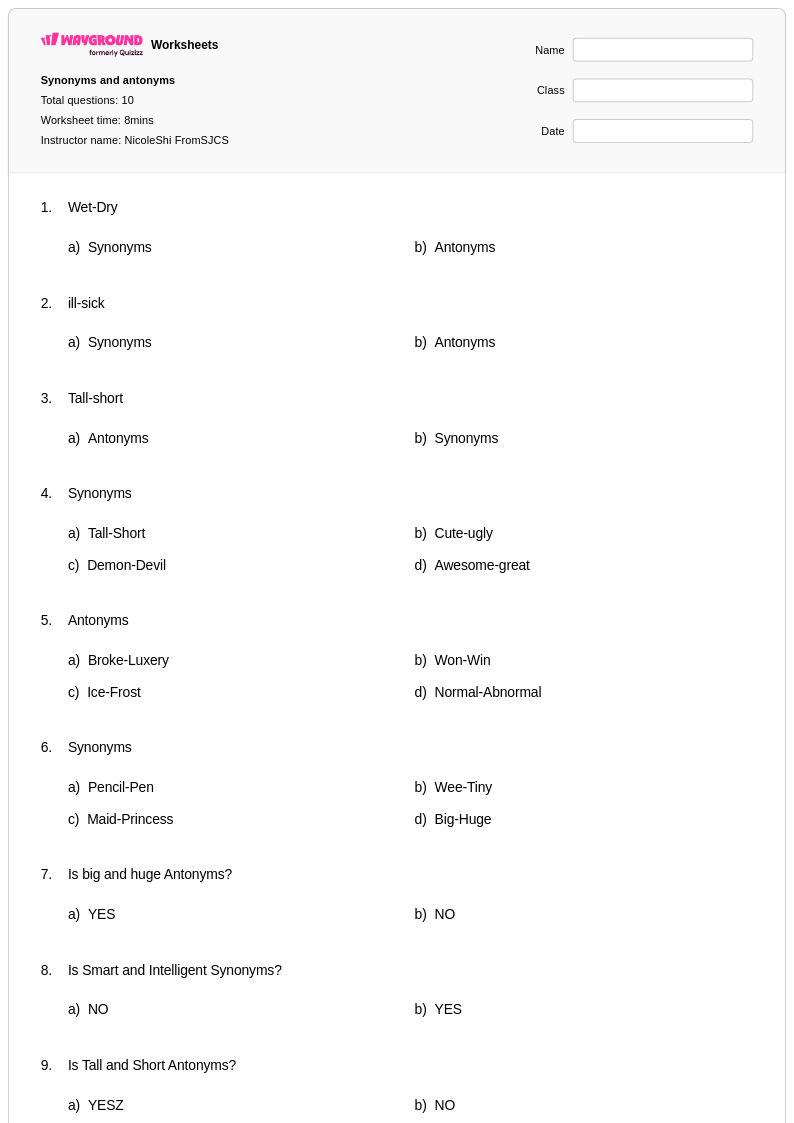
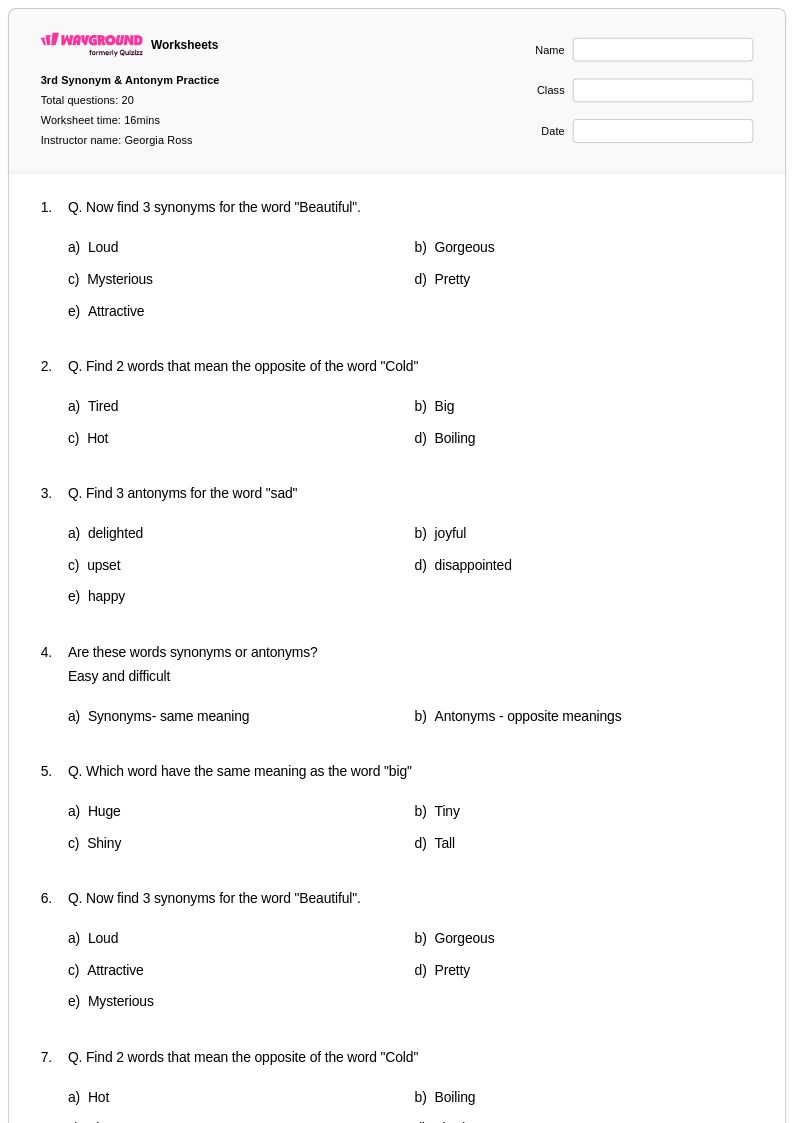
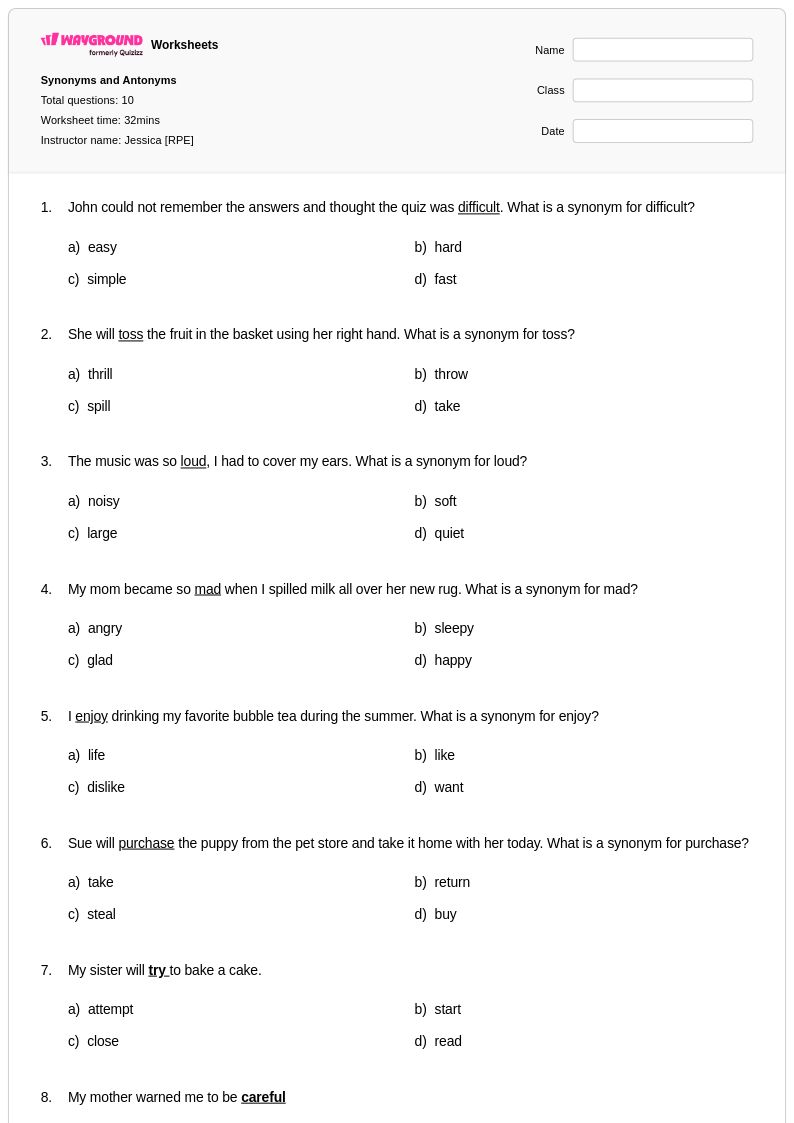
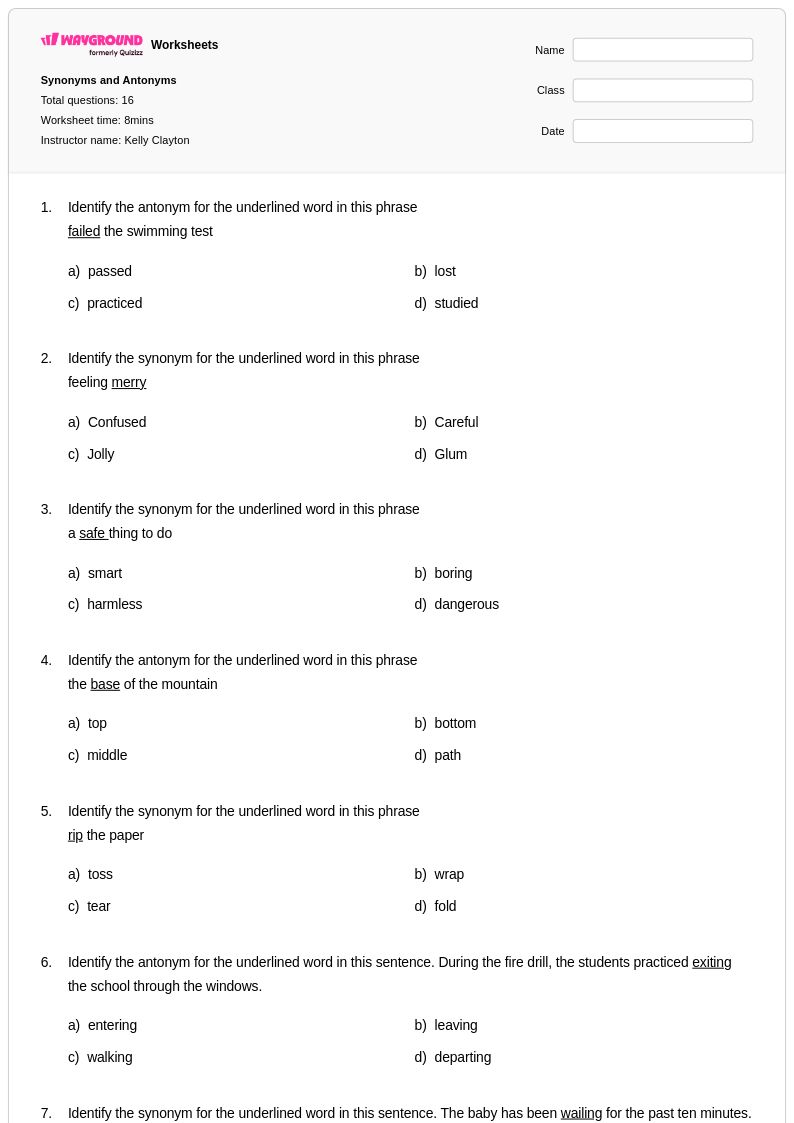
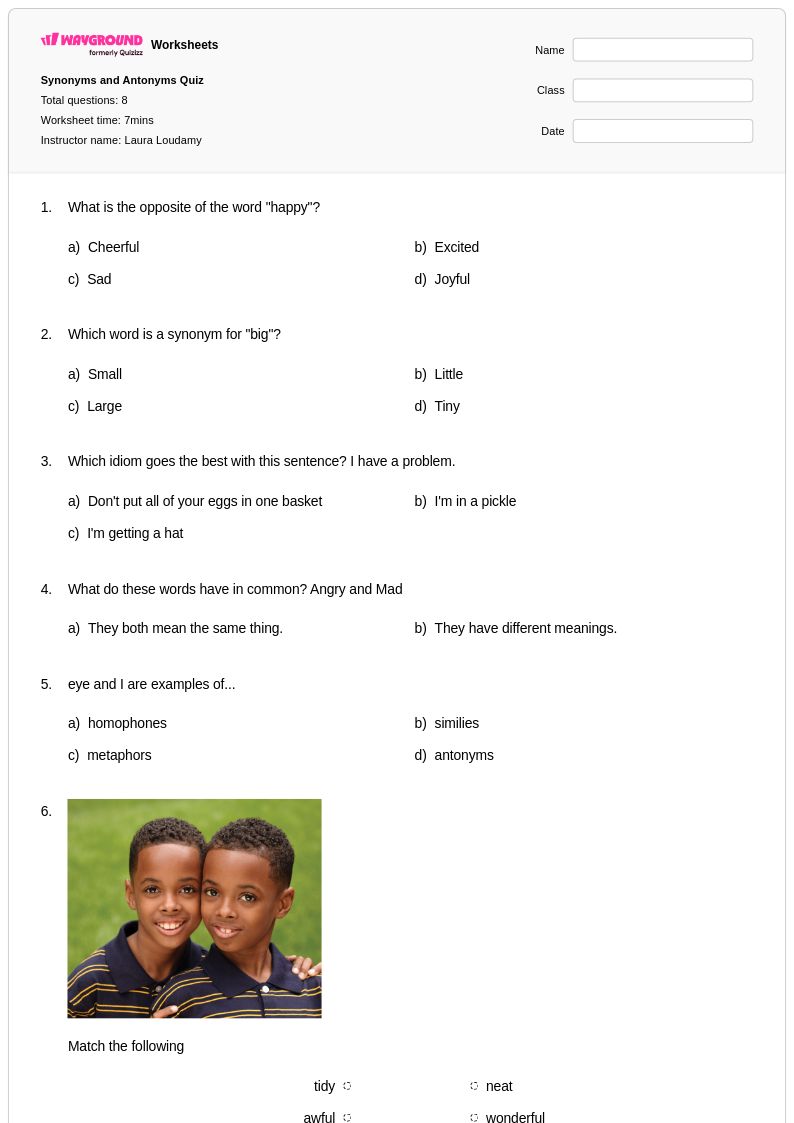
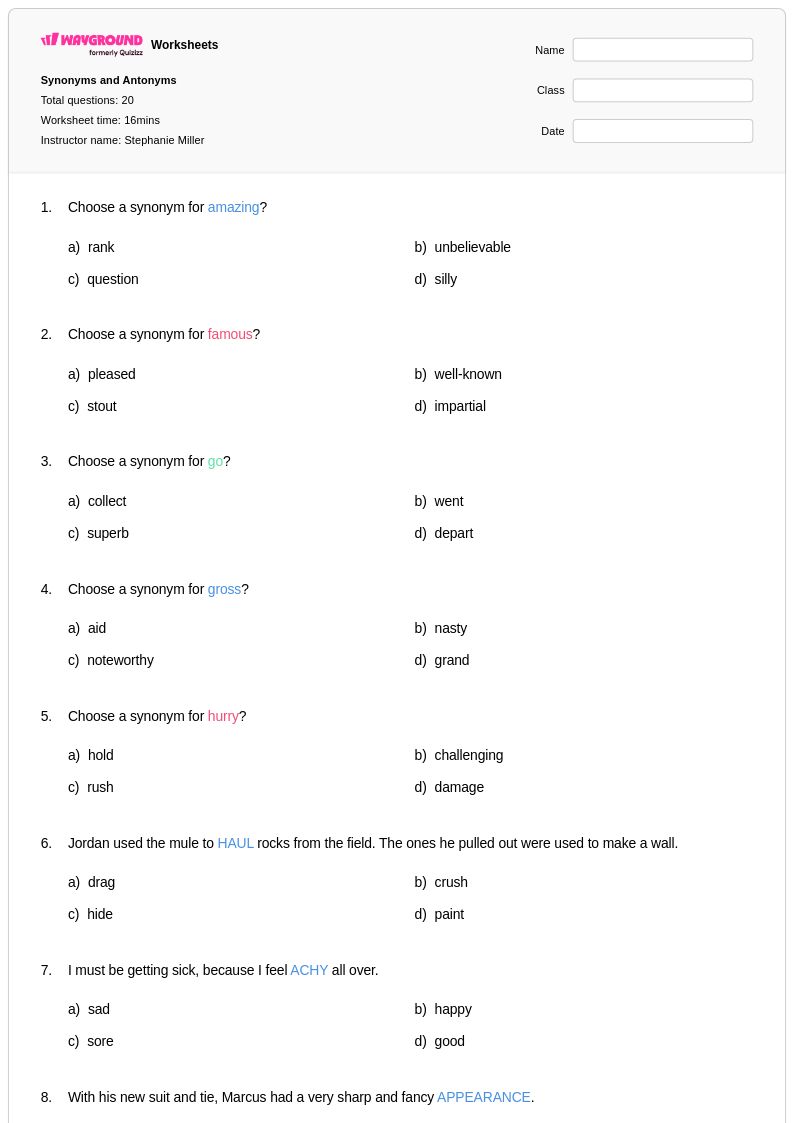
Synonyms and antonyms worksheets for Class 3 students through Wayground (formerly Quizizz) provide comprehensive practice opportunities that strengthen vocabulary development and word relationship understanding. These carefully designed educational materials help third-grade learners recognize words with similar meanings and identify opposite word pairs, building essential language skills that support reading comprehension and expressive writing. The collection includes diverse practice problems that challenge students to match synonyms, select appropriate antonyms, and apply word relationships in context, with accompanying answer keys that enable immediate feedback and self-assessment. These free printables offer structured exercises ranging from basic word matching activities to more complex sentence completion tasks, ensuring students develop both recognition and application skills essential for language mastery.
Wayground (formerly Quizizz) empowers educators with millions of teacher-created synonyms and antonyms resources that streamline lesson planning and differentiated instruction for Class 3 classrooms. The platform's robust search and filtering capabilities allow teachers to quickly locate worksheets aligned with specific learning standards and student proficiency levels, while customization tools enable educators to modify existing materials or create personalized practice sets. Available in both printable pdf formats and interactive digital versions, these resources support flexible implementation across various learning environments, from traditional classroom settings to remote instruction. Teachers utilize these comprehensive worksheet collections for targeted skill practice, remediation support for struggling learners, and enrichment opportunities for advanced students, ensuring every third-grader receives appropriate vocabulary instruction that builds confident language use.
FAQs
How do I teach synonyms and antonyms effectively in the classroom?
Start by grounding instruction in words students already know, then use those familiar words to introduce synonyms and antonyms as a way of expanding their vocabulary network rather than memorizing isolated pairs. Word sorts, semantic maps, and sentence substitution activities help students understand that synonyms are not perfectly interchangeable and that connotation matters. Connecting synonym and antonym work to reading and writing tasks reinforces the concepts in meaningful context.
What exercises help students practice identifying synonyms and antonyms?
Fill-in-the-blank sentences, word matching activities, and word relationship exercises are among the most effective practice formats because they require students to apply their understanding rather than simply recall definitions. Asking students to replace a word in a sentence with a synonym or antonym and evaluate whether the meaning shifts also builds critical thinking about word choice. Regular, varied practice across these formats builds both recognition speed and contextual flexibility.
What mistakes do students commonly make when working with synonyms and antonyms?
The most common error is treating synonyms as fully interchangeable, without accounting for connotation, register, or context. For example, students may correctly identify 'thin' and 'slender' as synonyms but not recognize that one carries a more neutral tone than the other. With antonyms, students sometimes confuse gradable antonyms (hot/cold) with complementary antonyms (alive/dead), leading to errors when asked to identify the 'opposite' of a word in context.
How can I differentiate synonym and antonym practice for students at different reading levels?
For struggling readers, start with high-frequency, concrete word pairs and use visual supports or word banks to reduce cognitive load. More advanced students benefit from working with nuanced synonyms that differ in connotation, or from exercises that embed vocabulary choices in complex sentences. On Wayground, teachers can apply accommodations such as reduced answer choices for individual students who need additional support, while the rest of the class works with standard settings.
How do I use Wayground's synonyms and antonyms worksheets in my classroom?
Wayground's synonyms and antonyms worksheets are available as printable PDFs for traditional paper-based practice and in digital formats for online or hybrid assignments, giving teachers flexibility across different classroom environments. Teachers can also host the worksheets as a quiz directly on Wayground, which enables interactive digital delivery. The included answer keys make grading straightforward whether the activity is used for independent practice, small group work, or homework.
How do synonyms and antonyms worksheets support reading comprehension and writing skills?
Understanding word relationships helps students infer the meaning of unfamiliar words from context, which directly supports reading comprehension. In writing, a strong grasp of synonyms allows students to vary word choice and match tone to purpose, while understanding antonyms supports the use of contrast as a rhetorical tool. Consistent practice with synonyms and antonyms builds the vocabulary depth that underpins both stronger reading and more precise writing.