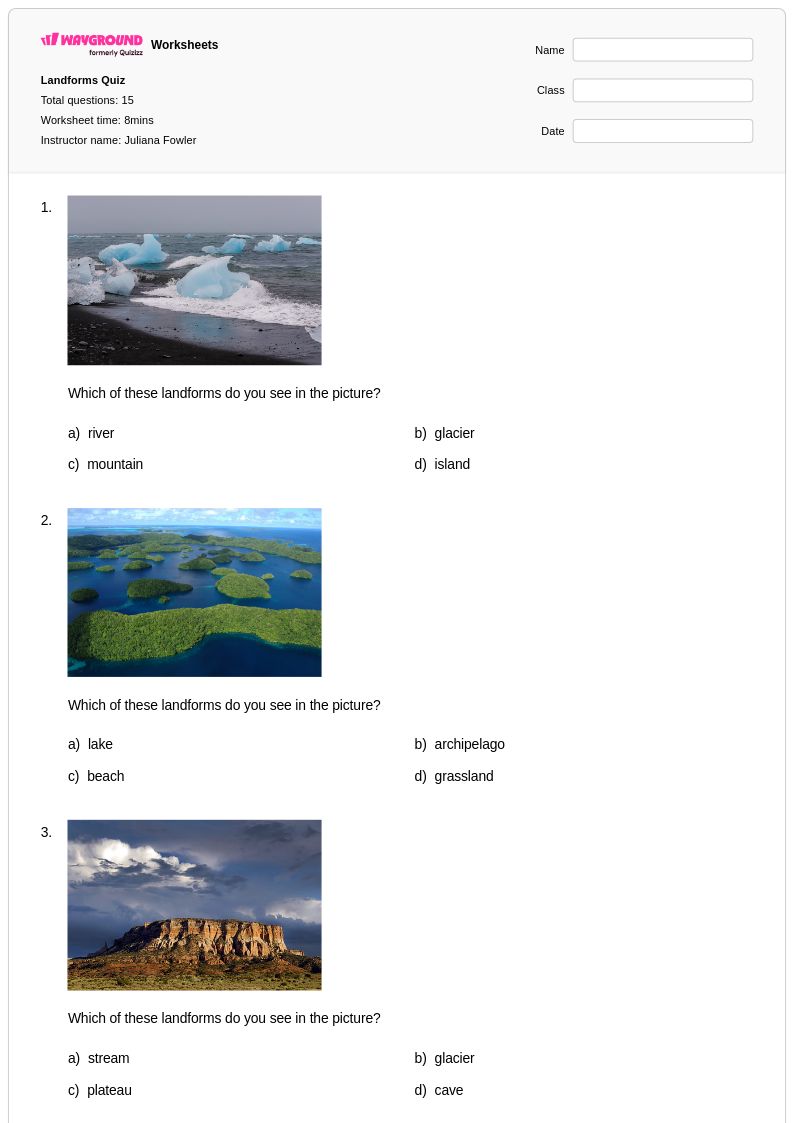
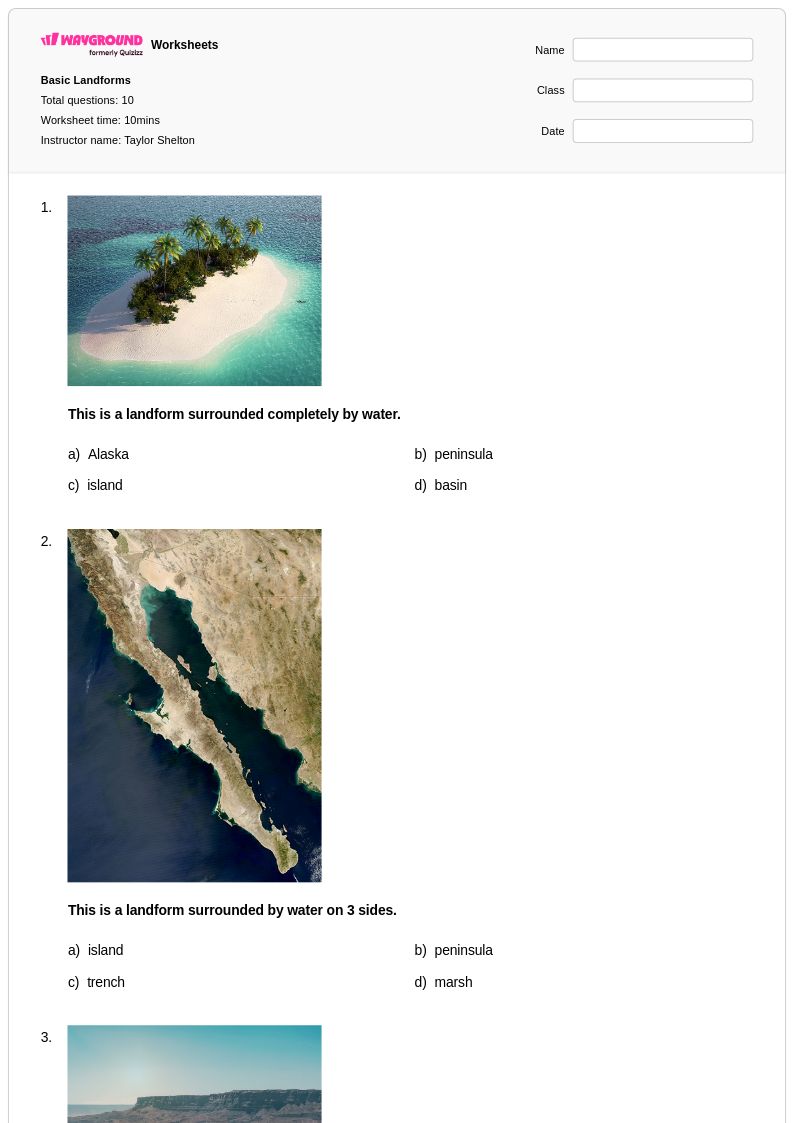
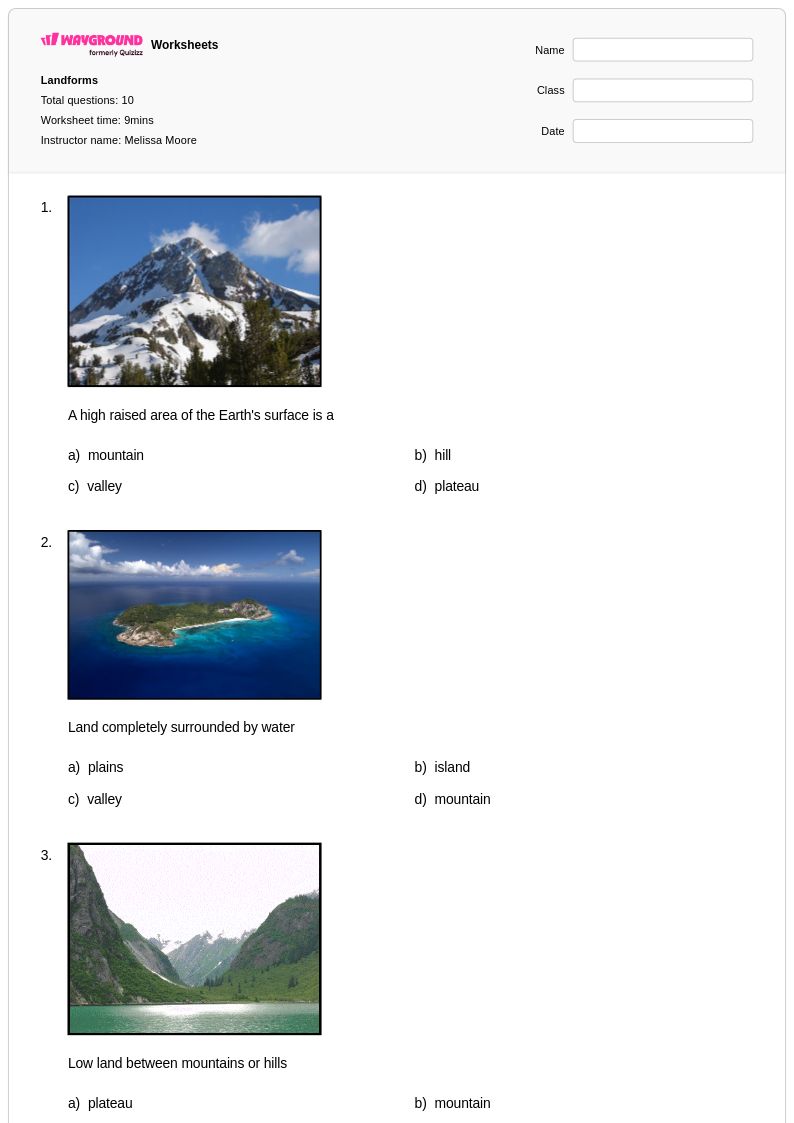
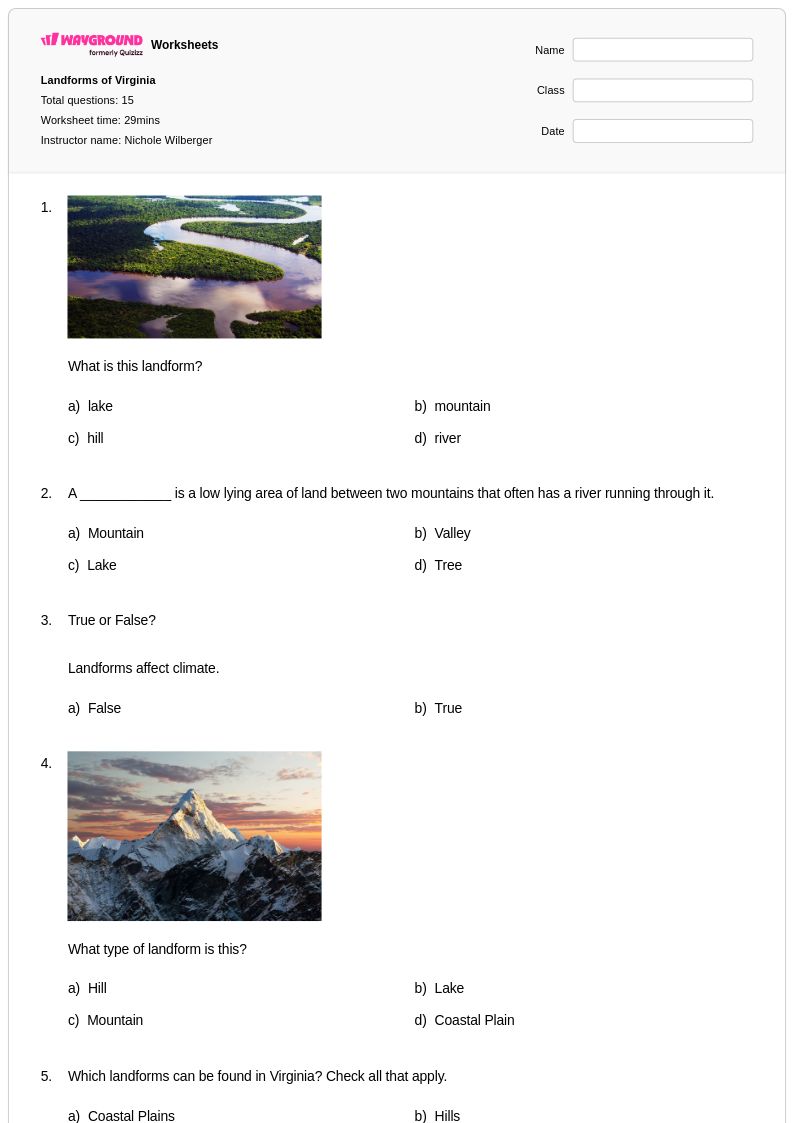
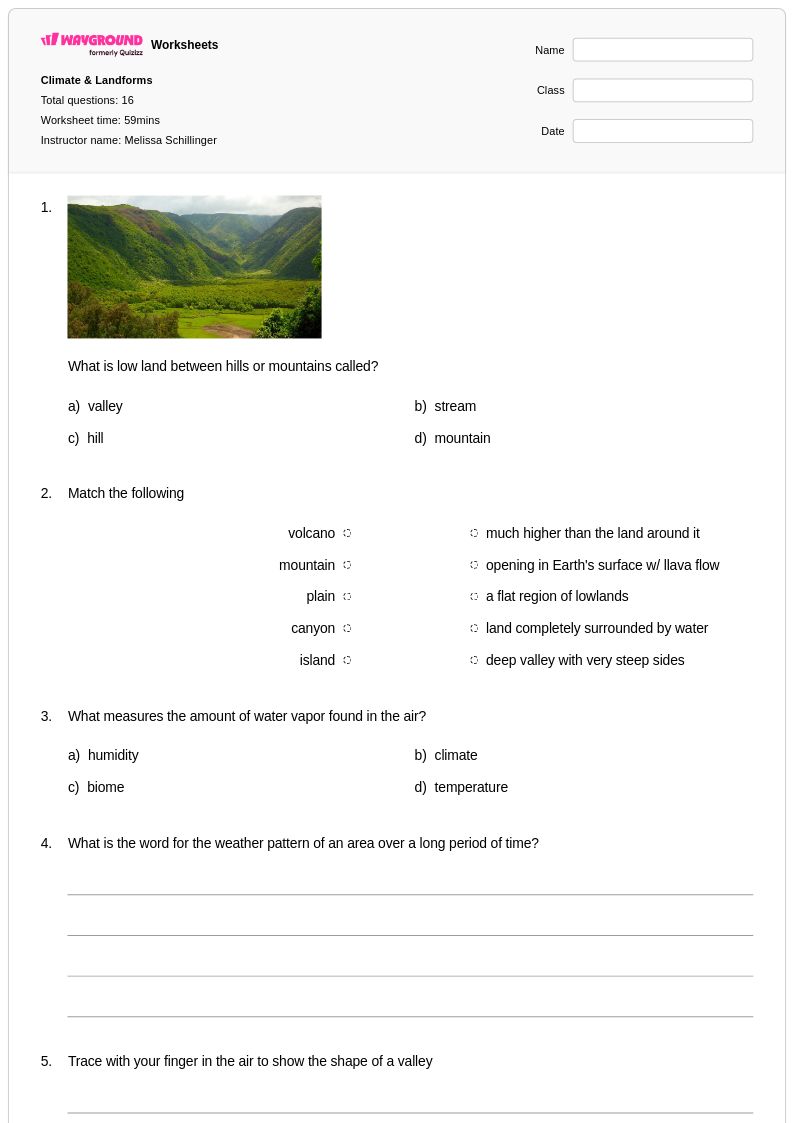
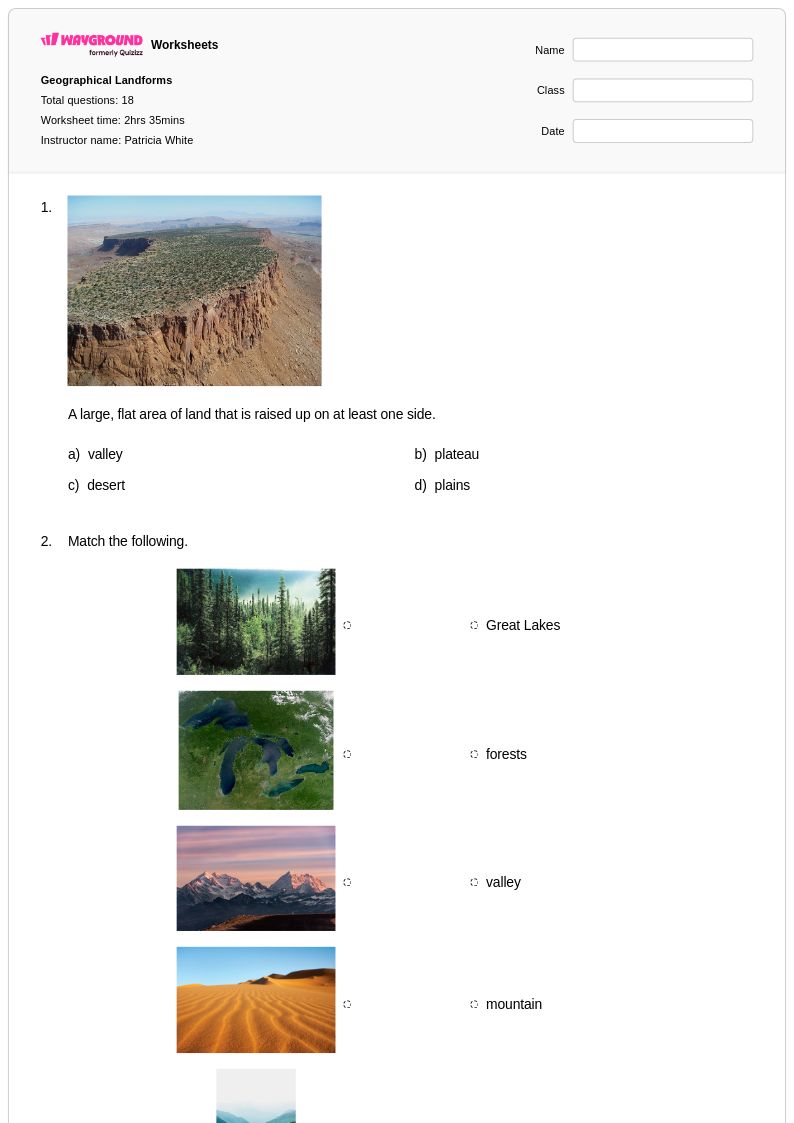
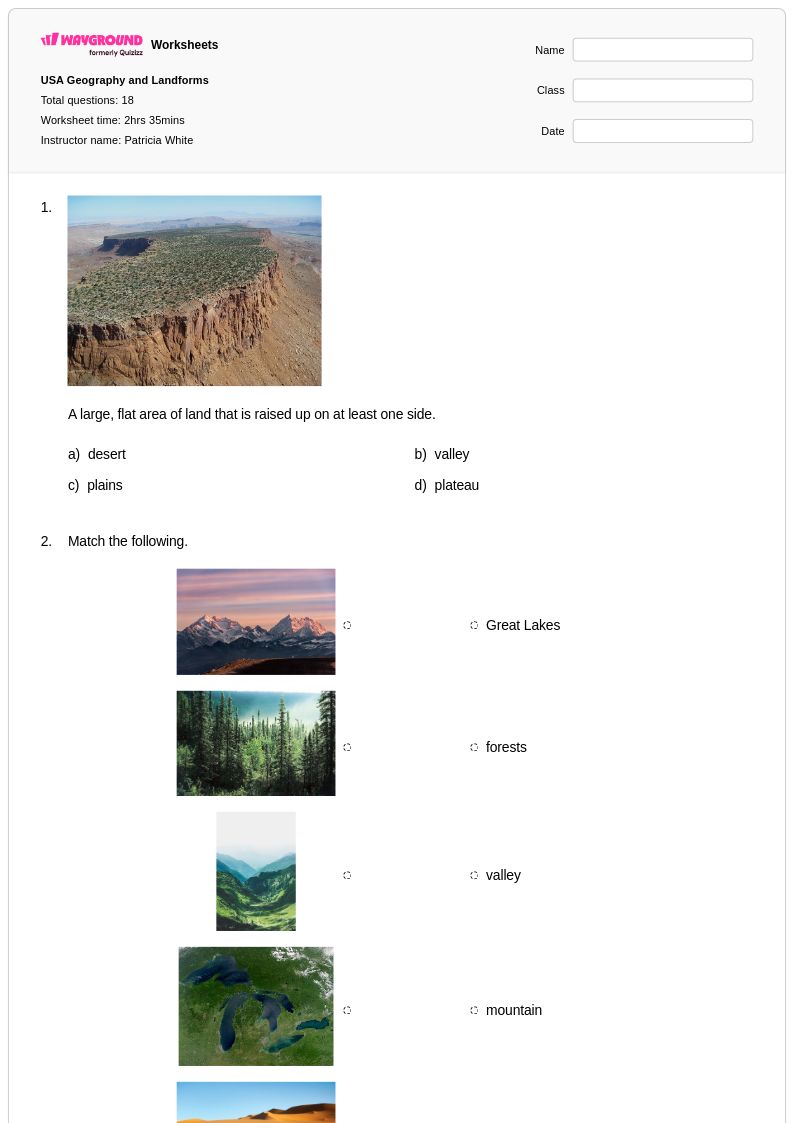
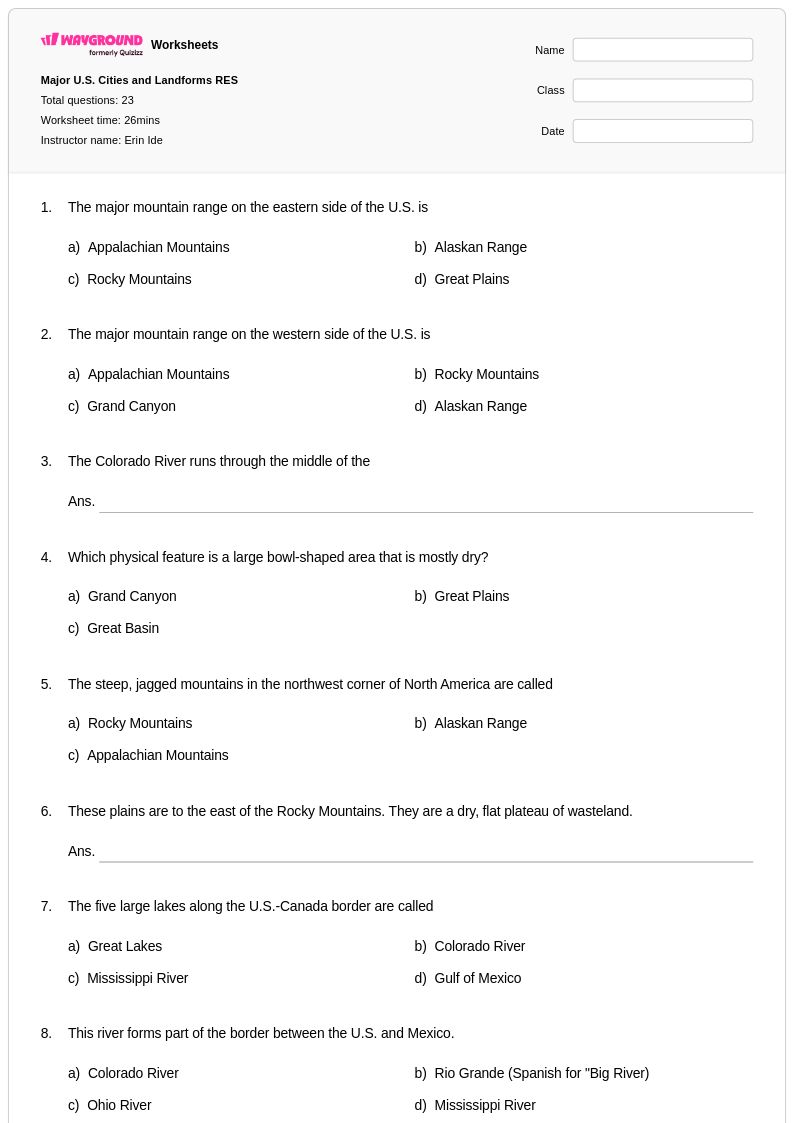
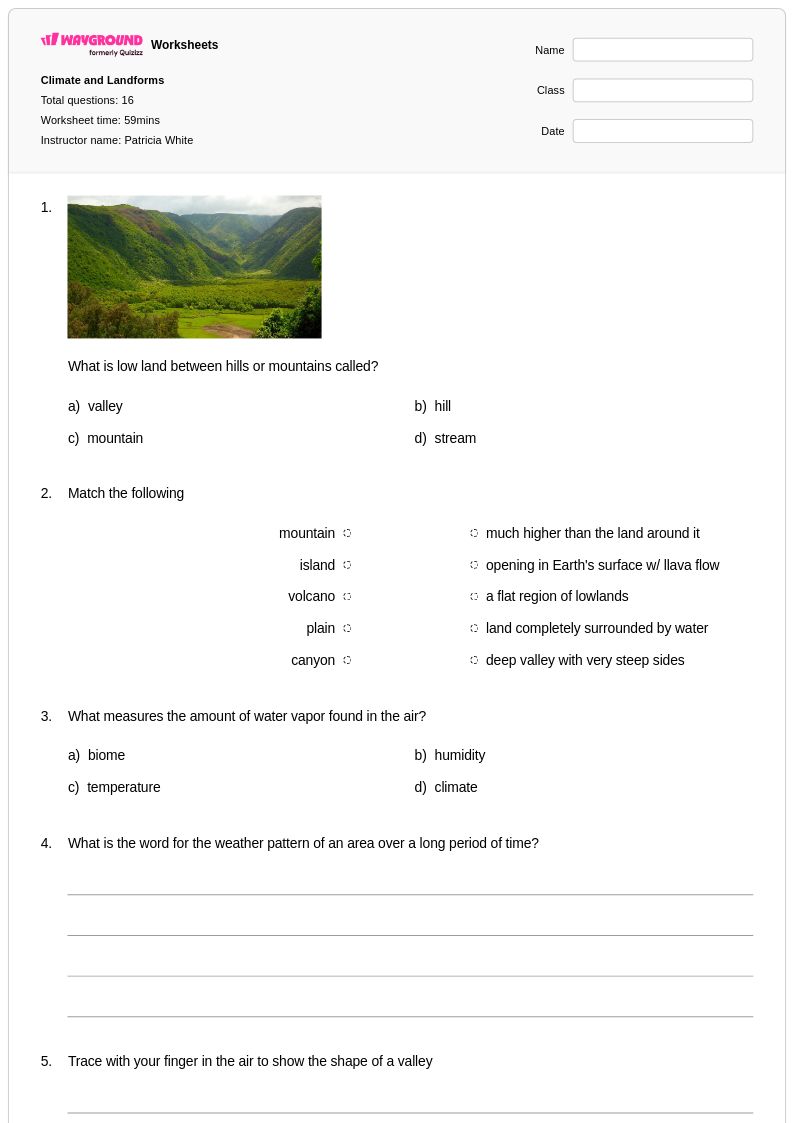
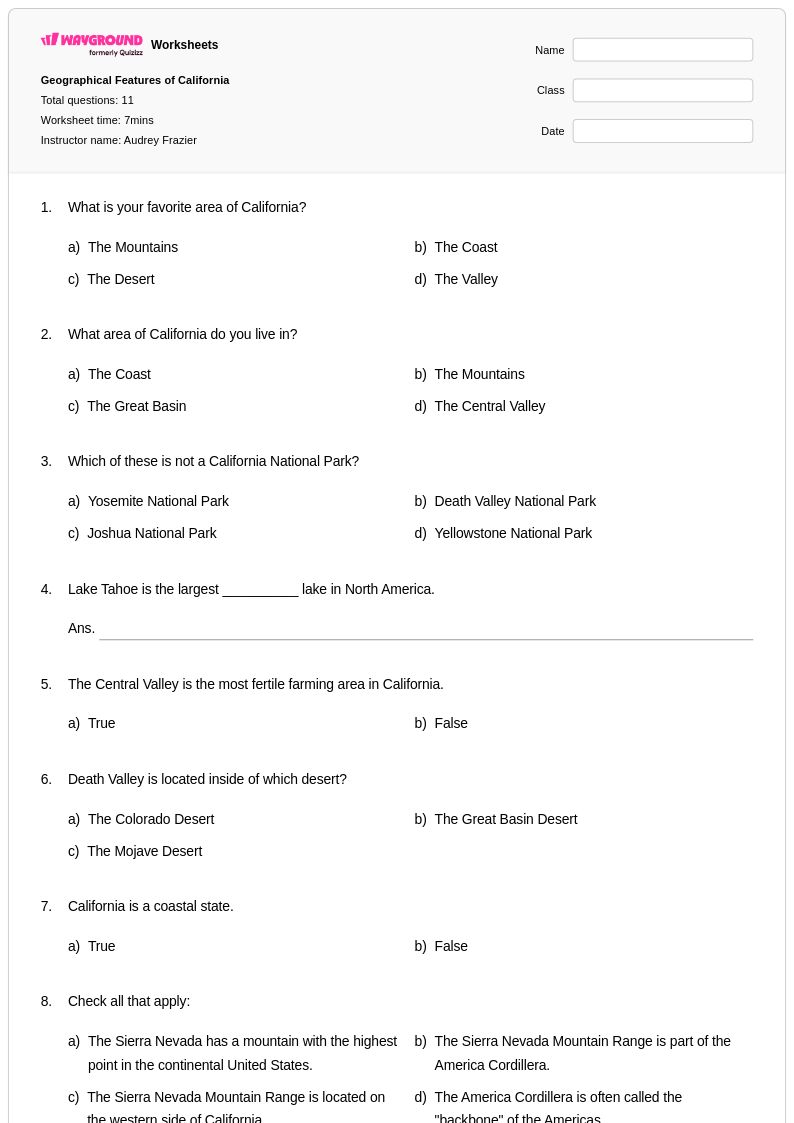
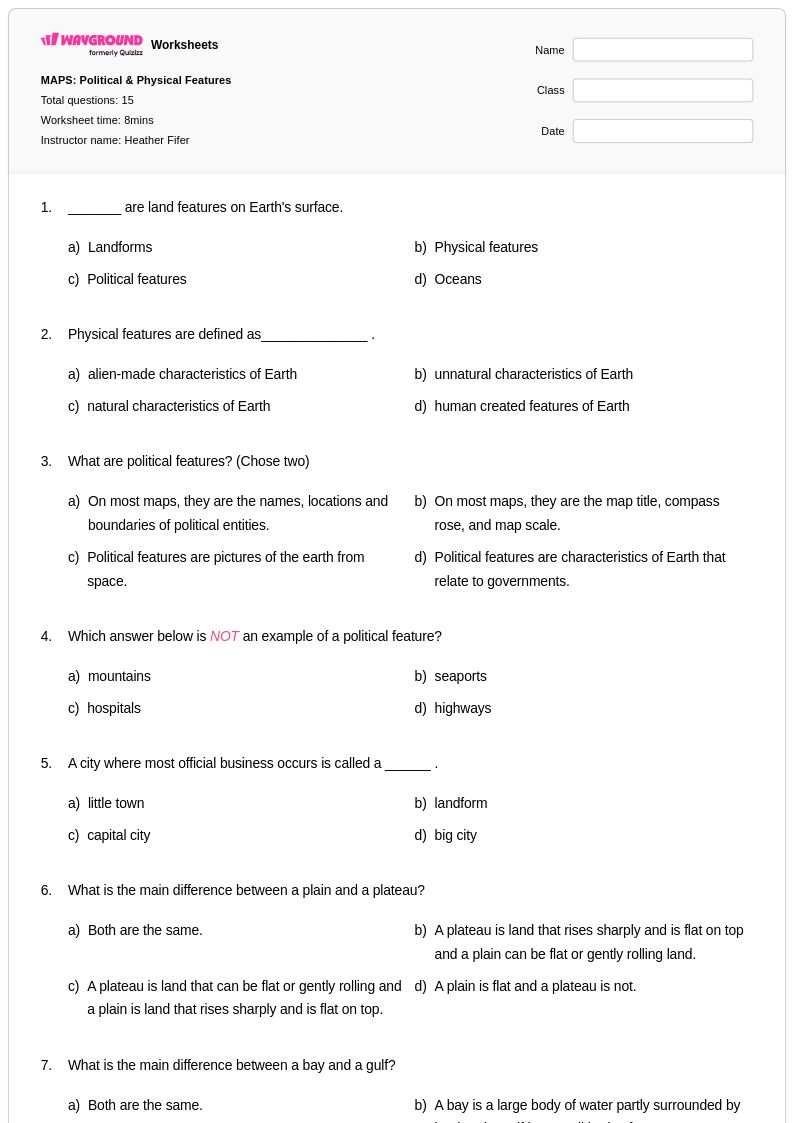
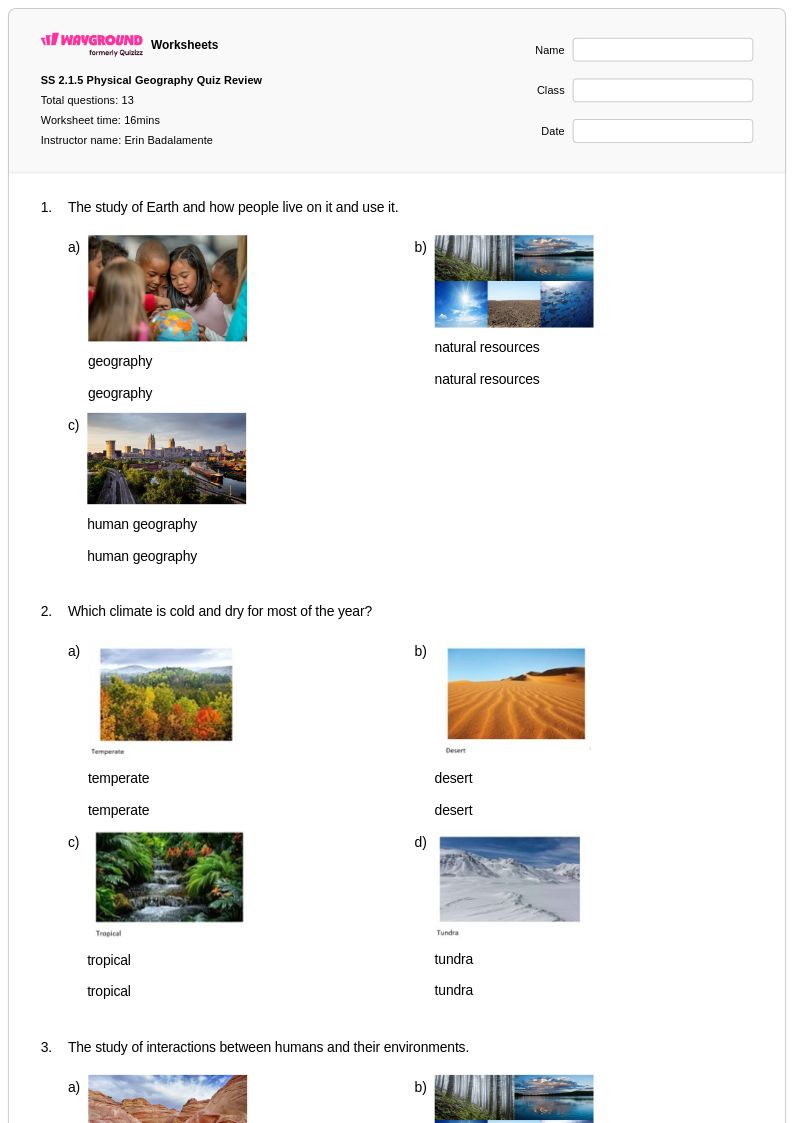
Explore our free Class 3 landforms worksheets and printables that help students identify mountains, valleys, rivers, and other geographical features through engaging practice problems and comprehensive answer keys.
Explore printable Landforms worksheets for Class 3
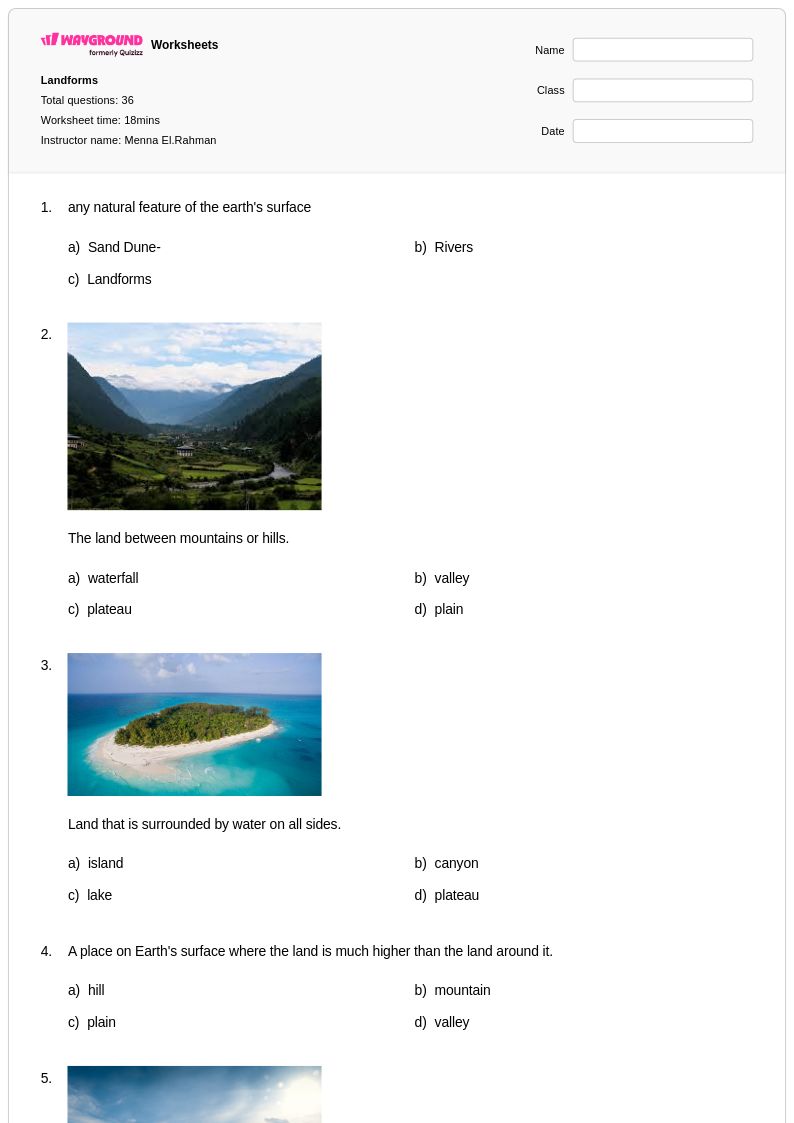
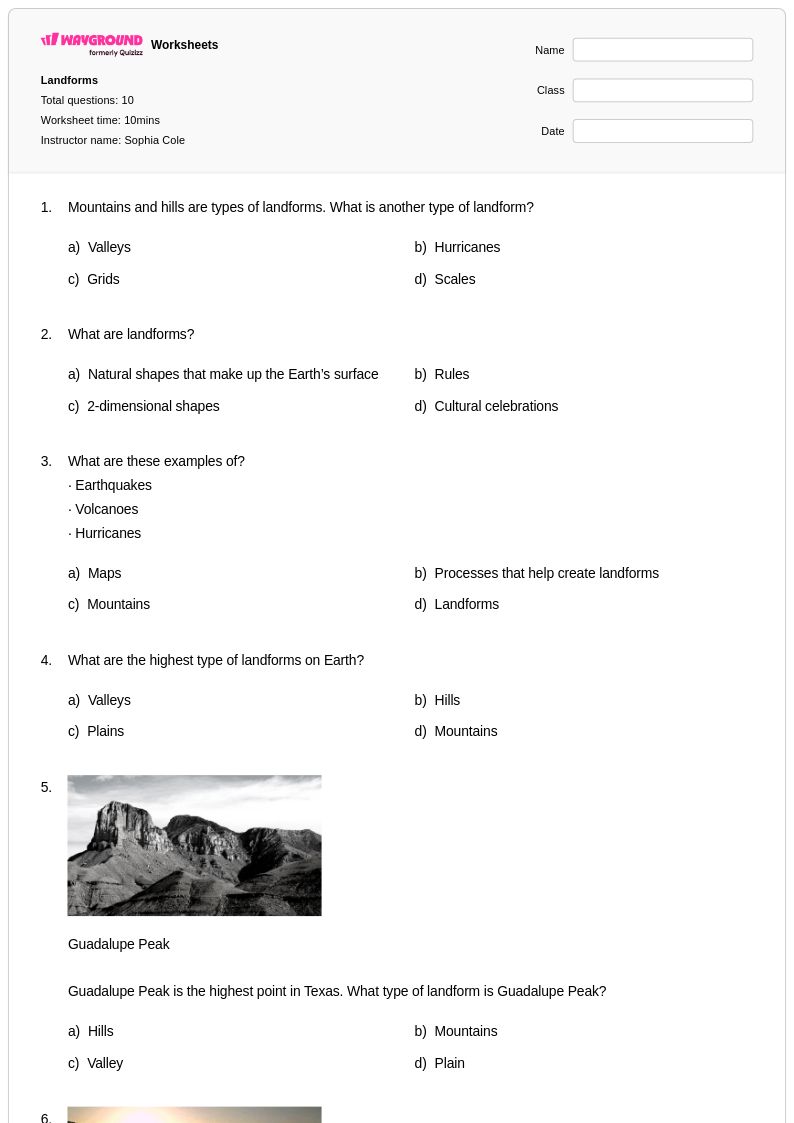
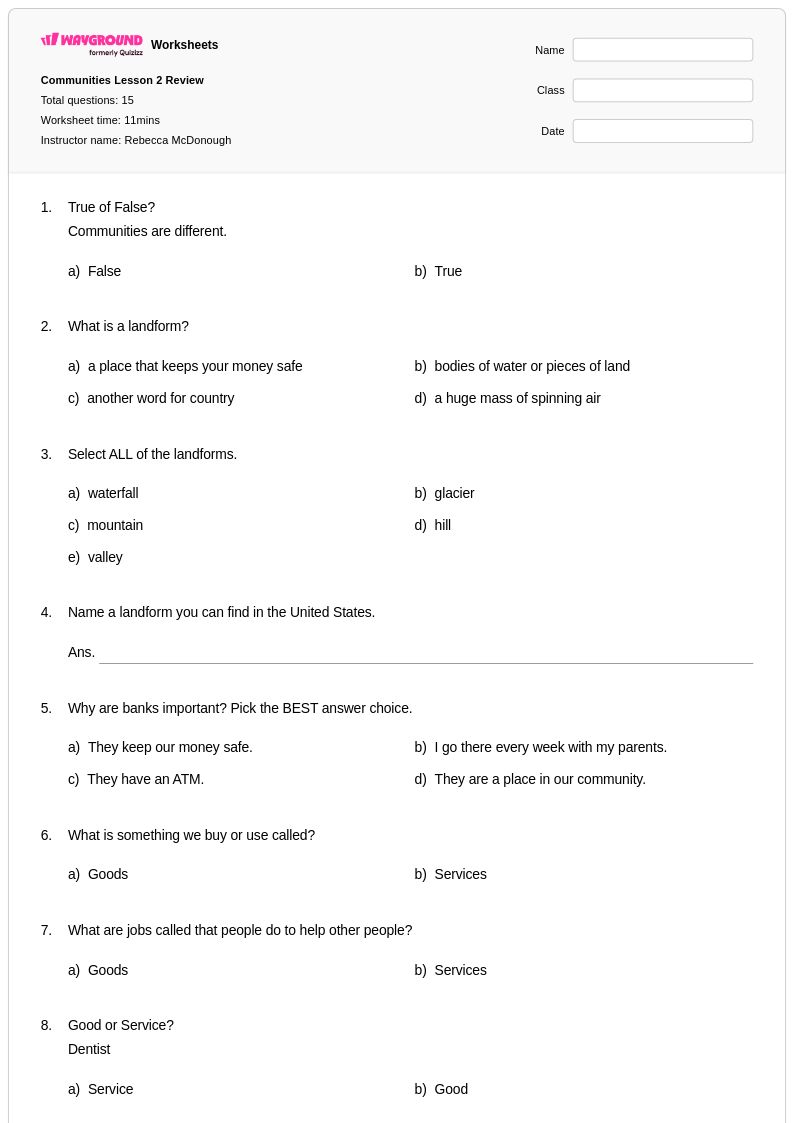
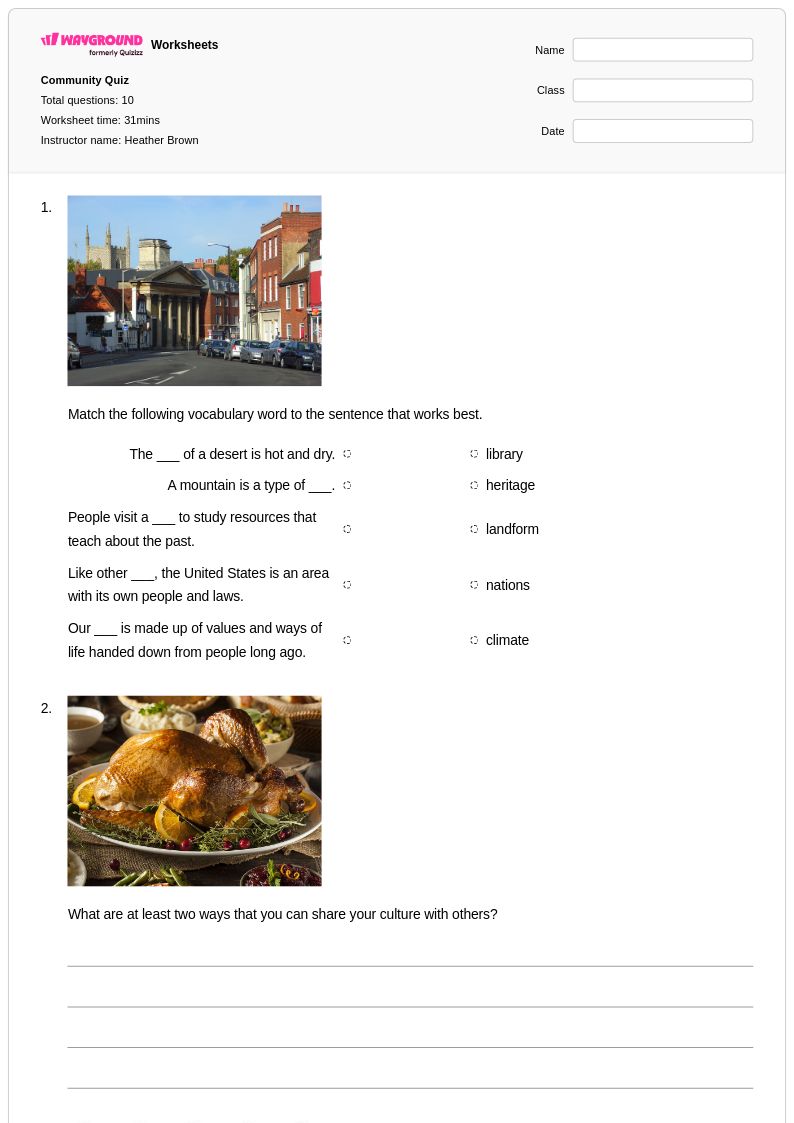
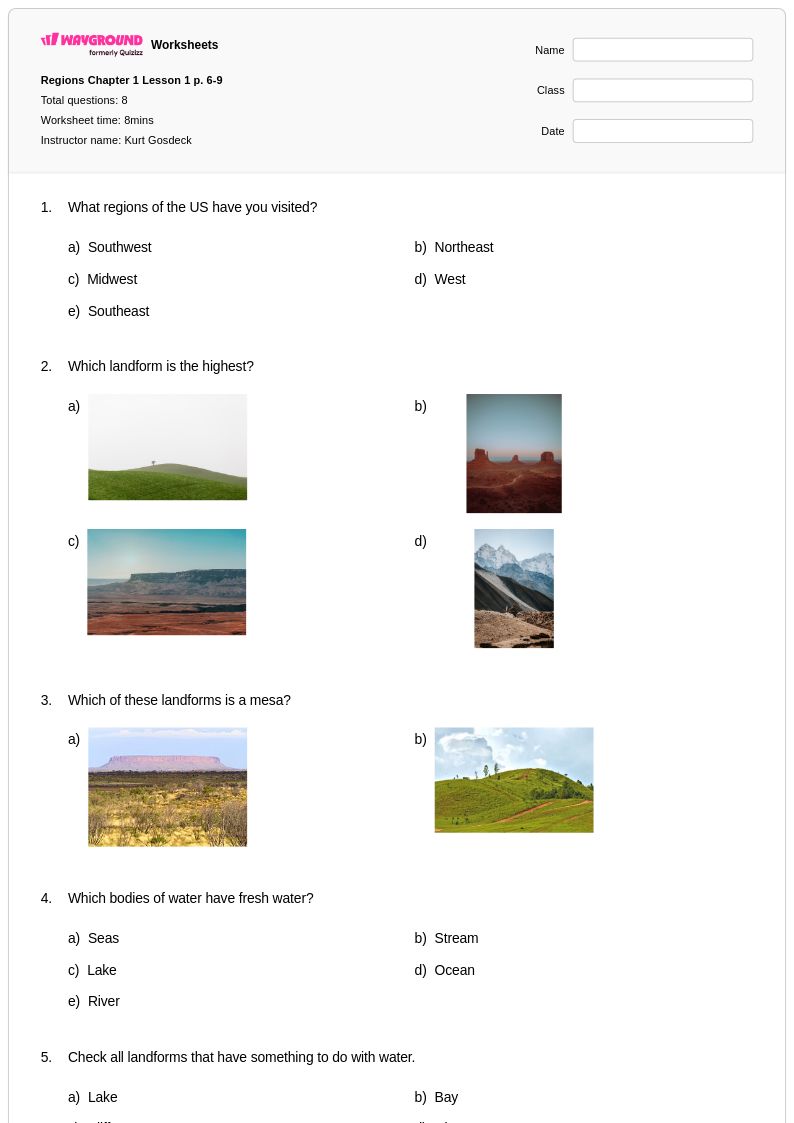
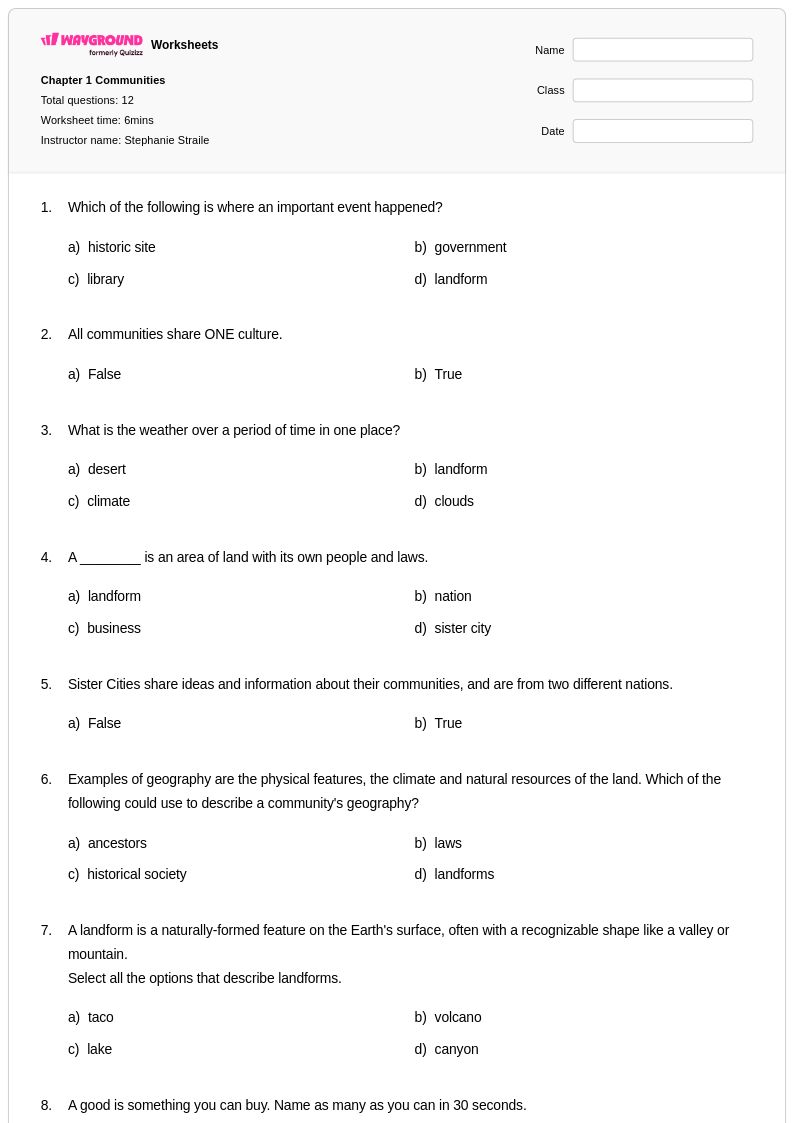
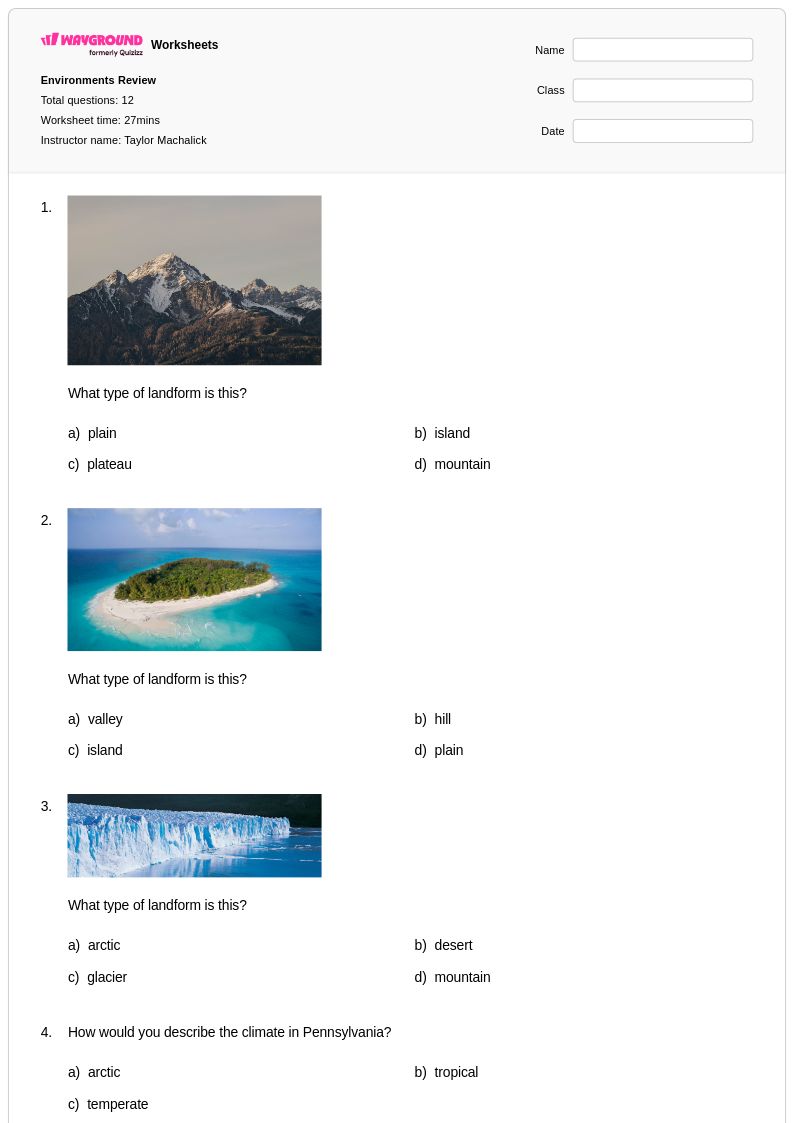
Class 3 landforms worksheets available through Wayground (formerly Quizizz) provide comprehensive practice materials that help young learners identify, classify, and understand Earth's diverse geographical features. These educational resources strengthen essential geography skills by engaging students with mountains, valleys, plains, plateaus, hills, and bodies of water through interactive exercises and visual recognition activities. The worksheet collection includes detailed answer keys that support independent learning and teacher assessment, while printable pdf formats ensure easy classroom distribution and home practice. Students develop spatial thinking abilities and vocabulary knowledge as they work through practice problems that require them to match landform definitions, label geographical diagrams, and distinguish between different types of terrain formations.
Wayground (formerly Quizizz) empowers educators with access to millions of teacher-created landforms resources that streamline lesson planning and differentiated instruction for Class 3 geography curricula. The platform's robust search and filtering capabilities allow teachers to quickly locate materials aligned with state standards and specific learning objectives, while customization tools enable adaptation of existing worksheets to meet diverse classroom needs. These digital and printable resources support effective remediation for struggling learners and provide enrichment opportunities for advanced students through varied difficulty levels and multiple question formats. Teachers benefit from the flexibility to assign worksheets as formative assessments, homework practice, or skill reinforcement activities, with both interactive digital versions and traditional pdf printables available to accommodate different learning environments and technological capabilities.
FAQs
How do I teach landforms to elementary students?
Start by grounding students in concrete examples they can observe or visualize — mountains, rivers, valleys, and coastlines work well as anchor concepts. Use photographs, maps, and labeled diagrams to help students associate vocabulary with real-world features before moving into classification or comparison tasks. Building from recognition to analysis (e.g., 'What forces created this landform?') ensures students develop geographic literacy progressively rather than memorizing isolated terms.
What exercises help students practice identifying landforms?
Effective practice exercises include labeled diagram activities where students match landform names to visual features, map-reading tasks that require locating and identifying landforms in real geographic contexts, and classification charts that group landforms by formation process (e.g., erosion, volcanic activity, tectonic uplift). Progressing from basic recognition to explaining how landforms form reinforces deeper understanding beyond surface-level memorization.
What mistakes do students commonly make when learning about landforms?
A frequent misconception is conflating landforms that look similar — students often confuse plateaus with plains, or hills with mountains, because they rely on visual impression rather than definitional criteria like elevation, relief, and formation process. Students also commonly treat landforms as static rather than understanding that erosion, weathering, and tectonic activity continuously reshape them. Addressing these errors explicitly through comparison activities and process-focused questions helps correct both types of misunderstanding.
How do landforms connect to human geography and settlement patterns?
Physical landforms directly influence where and how human communities develop — plains and river valleys have historically supported agriculture and dense settlement, while mountain ranges act as natural barriers that shape trade routes, cultural boundaries, and climate patterns. Teaching this connection helps students see physical geography not as isolated content but as a foundation for understanding history, economics, and cultural development. Discussion prompts and case studies that pair landform analysis with settlement data are effective ways to make this link explicit.
How can I use landforms worksheets to support students with different learning needs?
Landforms worksheets on Wayground support differentiation through built-in accommodation tools, including read aloud for students who need audio support, reduced answer choices to lower cognitive load for struggling learners, and adjustable font sizes and themes through reading mode. These settings can be applied to individual students without affecting the rest of the class, making it straightforward to support diverse learners during the same lesson. Extended time can also be configured per student for digital worksheet sessions.
How do I use Wayground's landforms worksheets in my classroom?
Wayground's landforms worksheets are available as printable PDFs for traditional classroom use and in interactive digital formats for technology-integrated settings, giving teachers flexibility to use them for whole-class instruction, independent practice, or small group review. Teachers can also host worksheets as a live quiz on Wayground, enabling real-time student responses and automatic grading. Each worksheet includes a detailed answer key, reducing prep time and supporting both self-paced student review and teacher-led correction.