Free Printable Latitude and Longitude Worksheets for Class 8
Enhance Class 8 students' understanding of latitude and longitude with Wayground's comprehensive collection of free geography worksheets, featuring printable PDFs, practice problems, and answer keys for mastering coordinate systems.
Explore printable Latitude and Longitude worksheets for Class 8
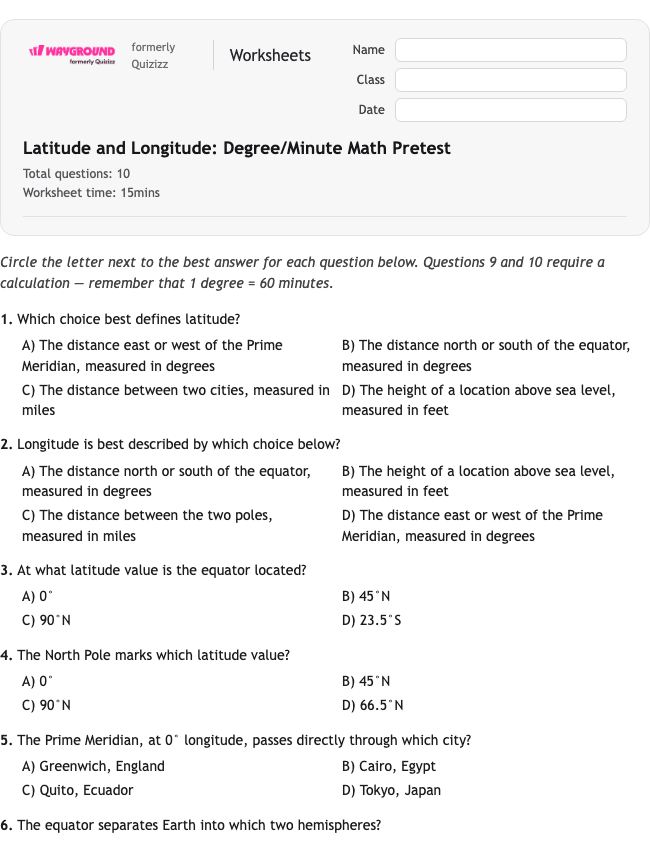
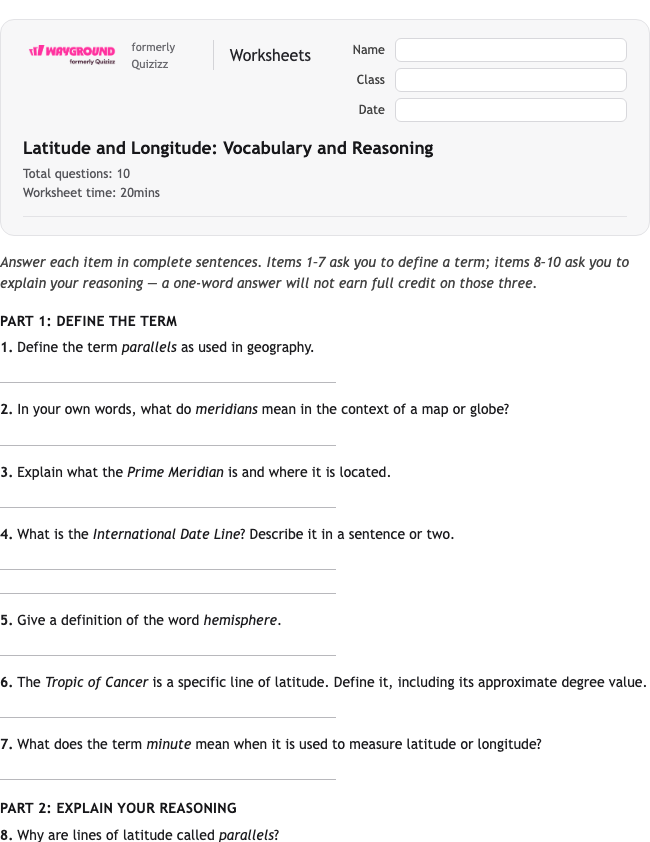
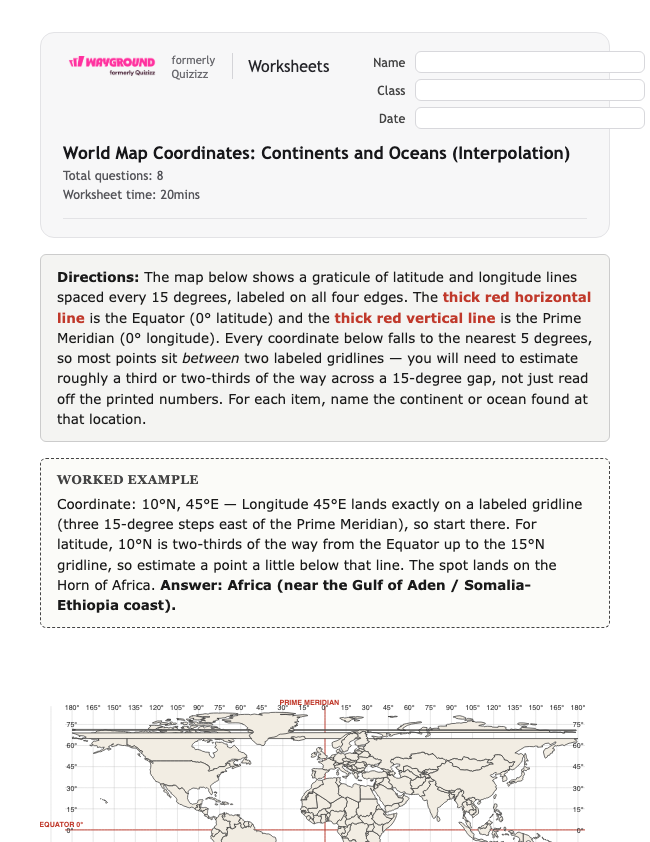
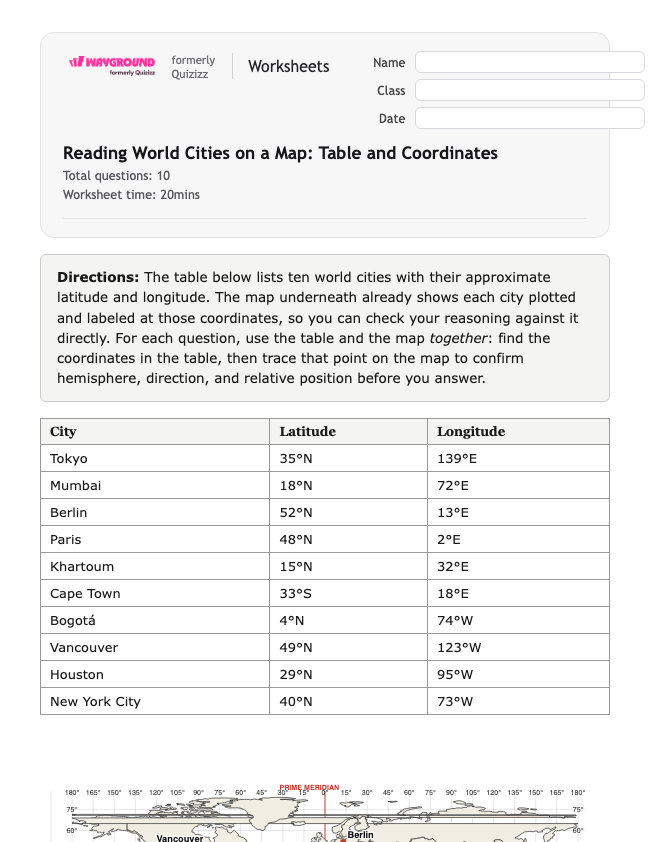
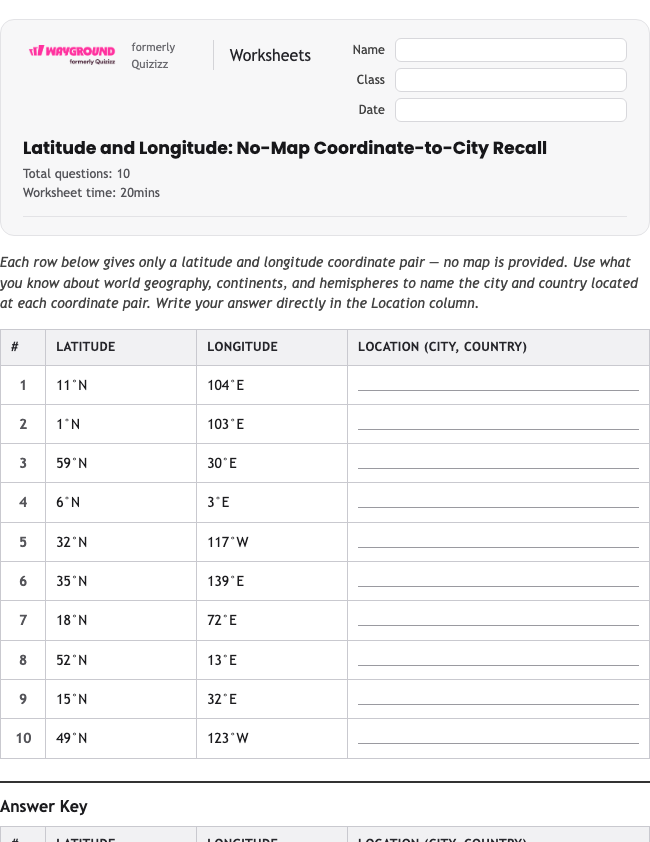
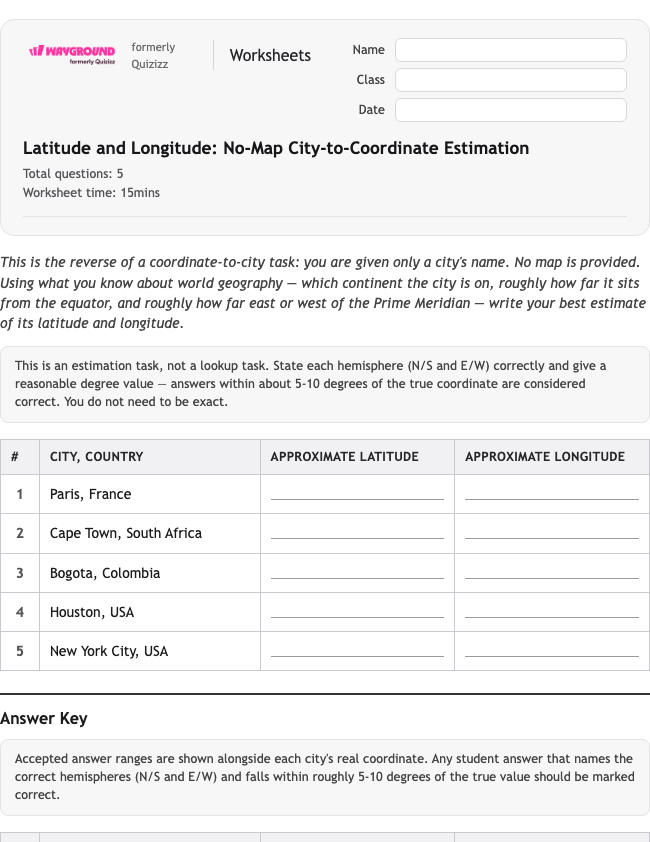
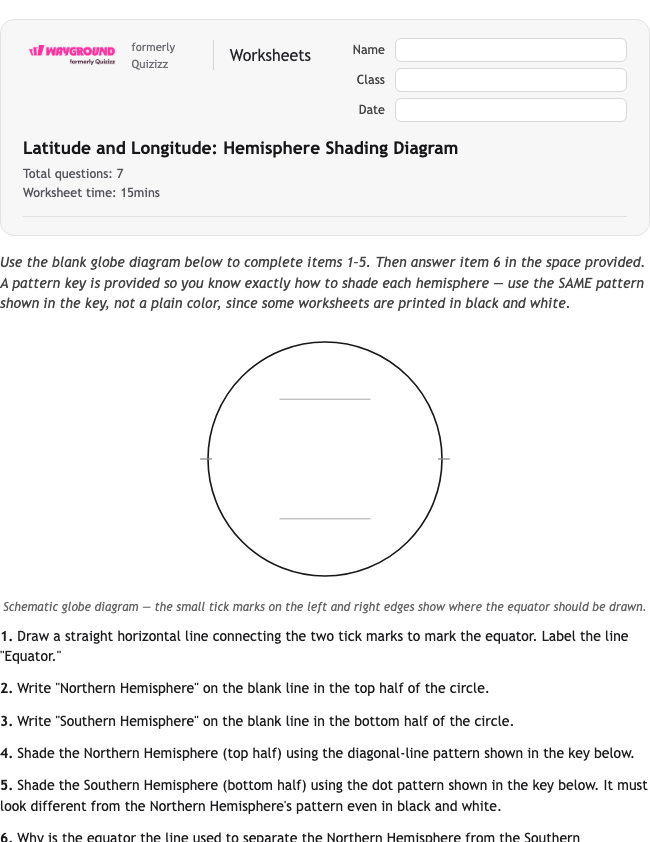
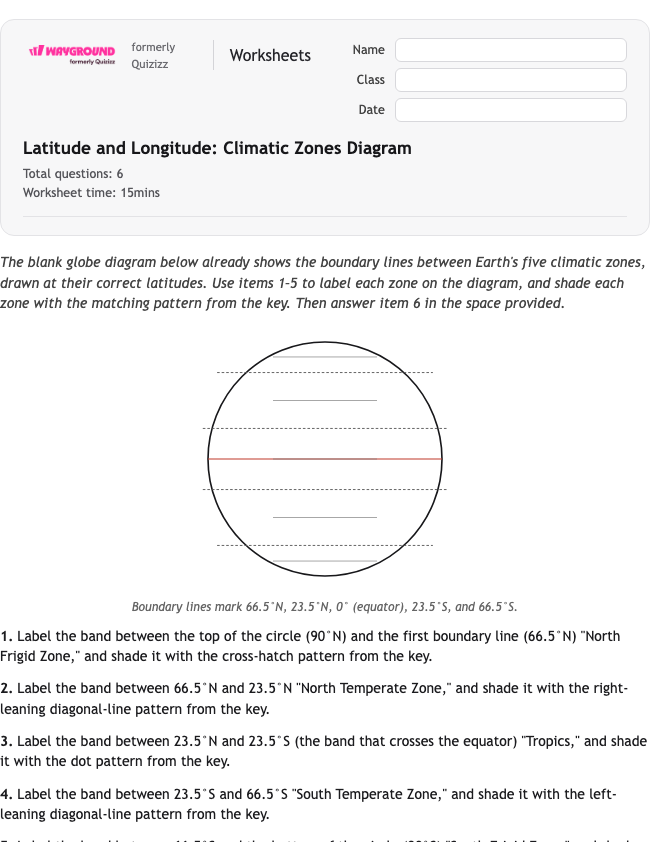
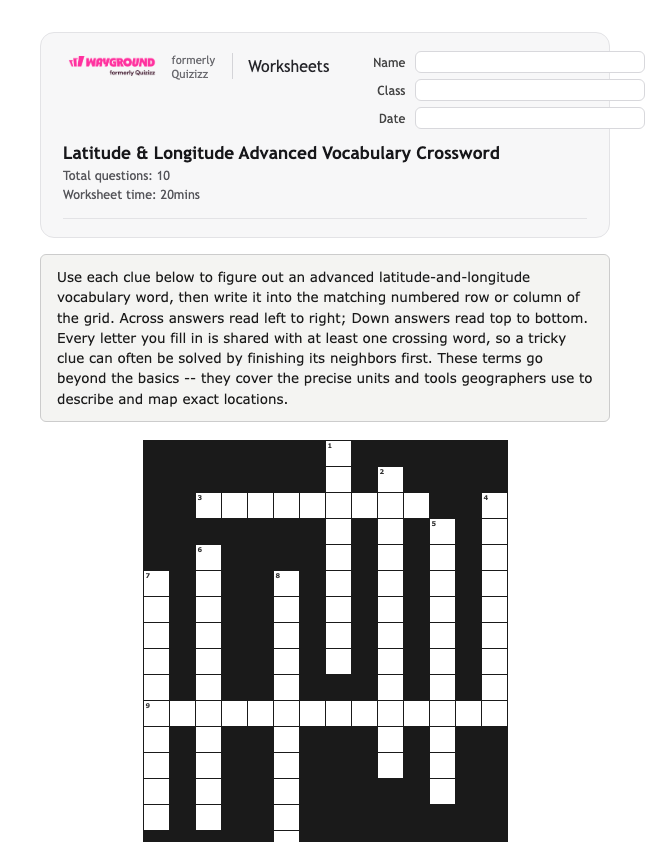
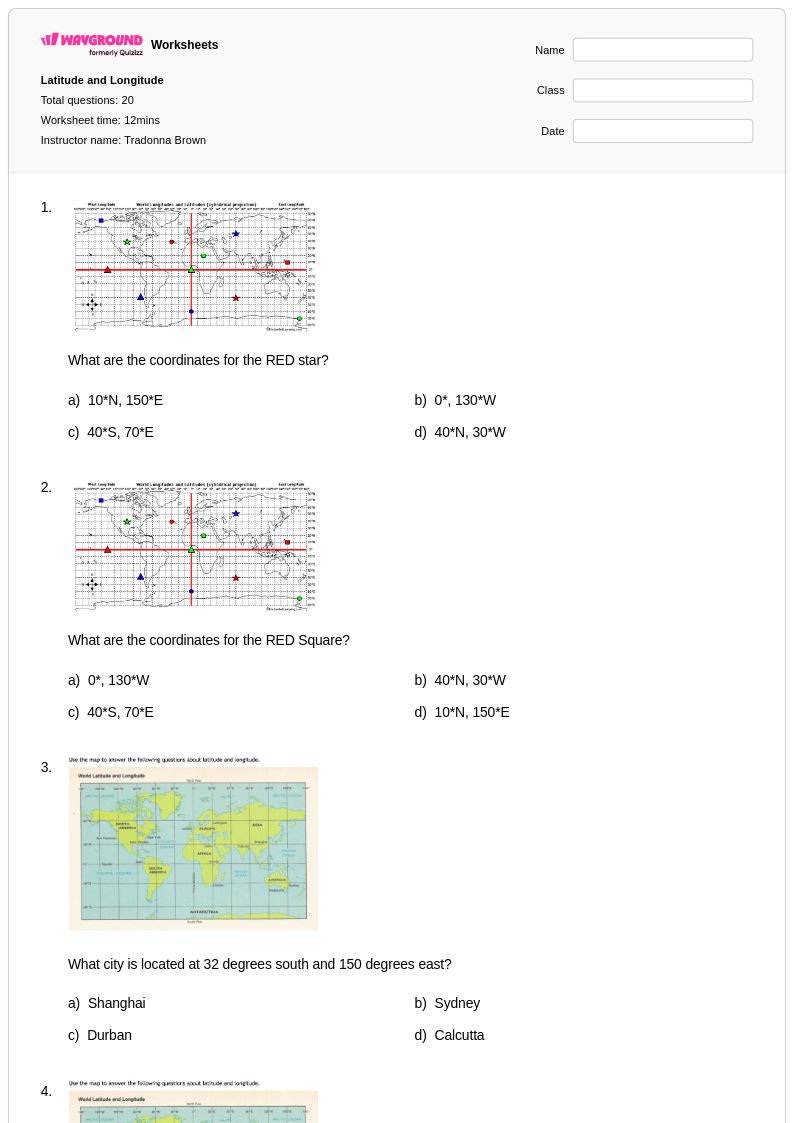
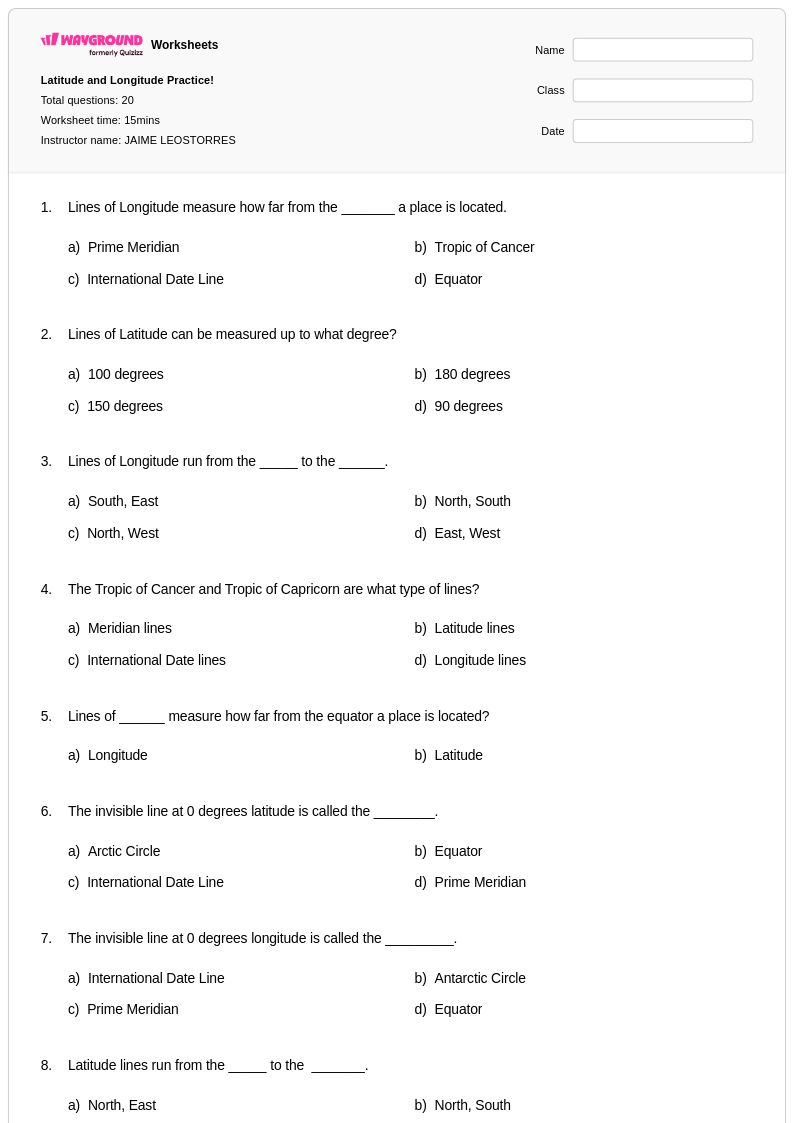
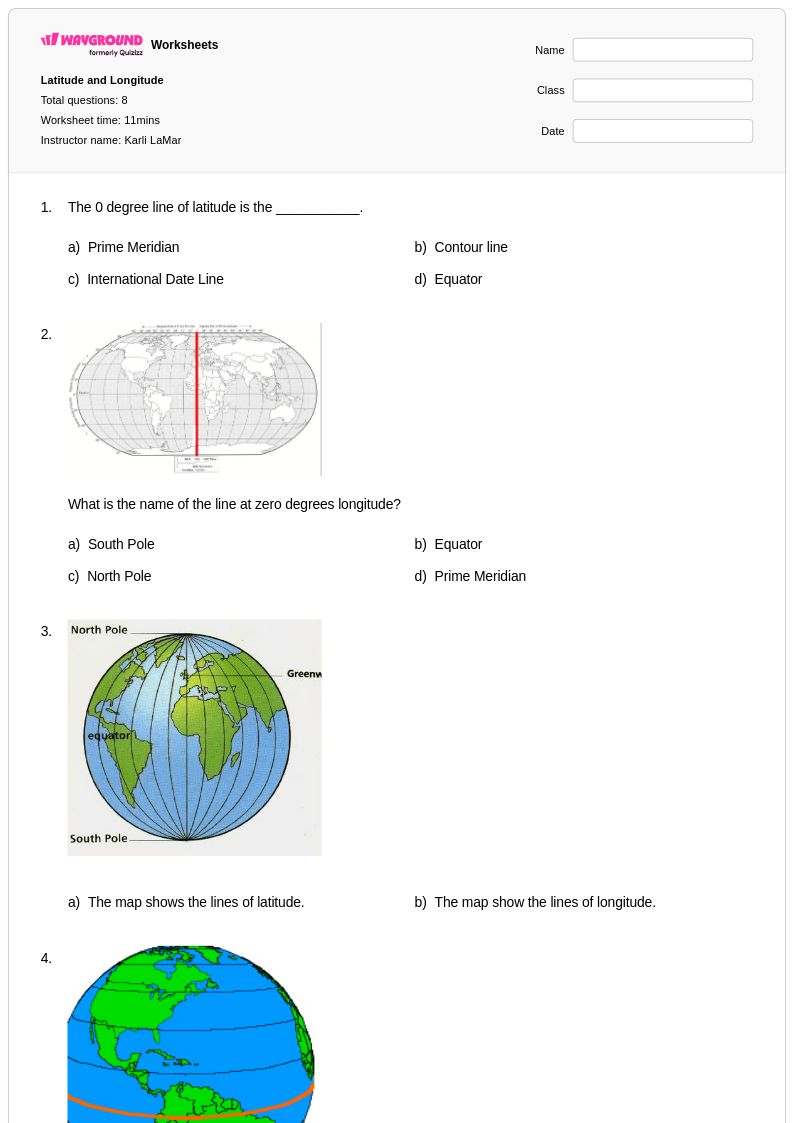
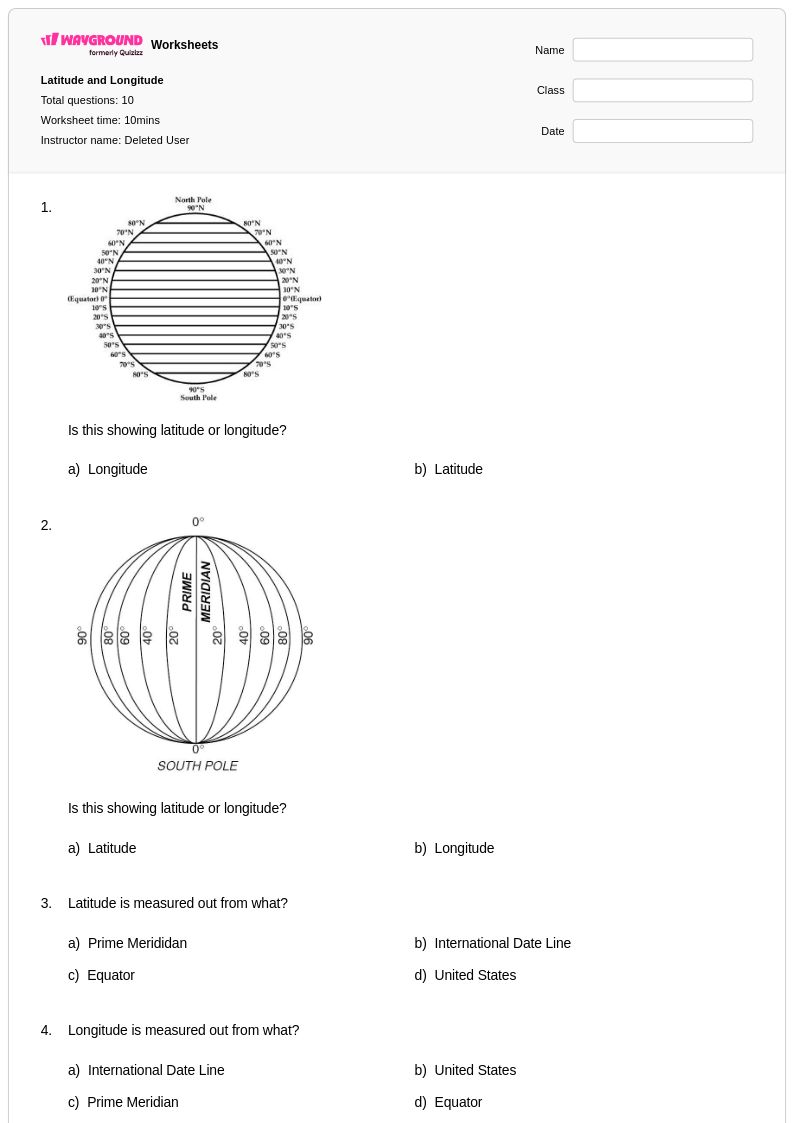
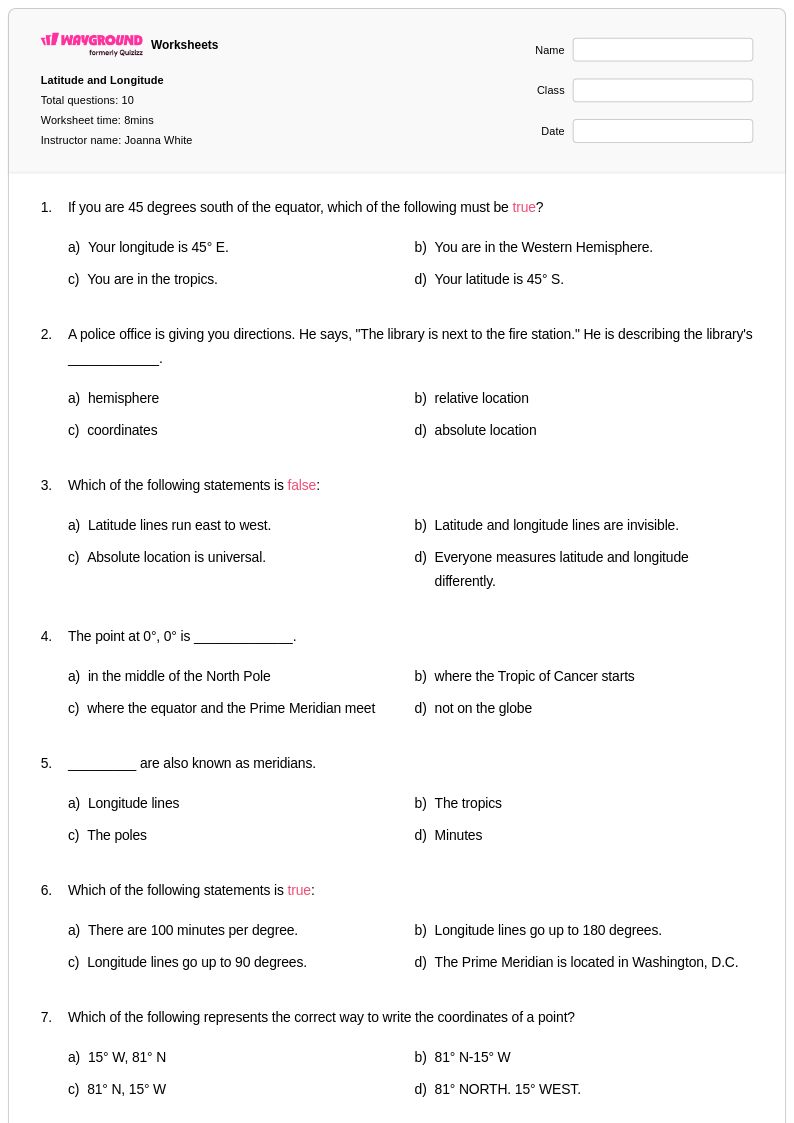
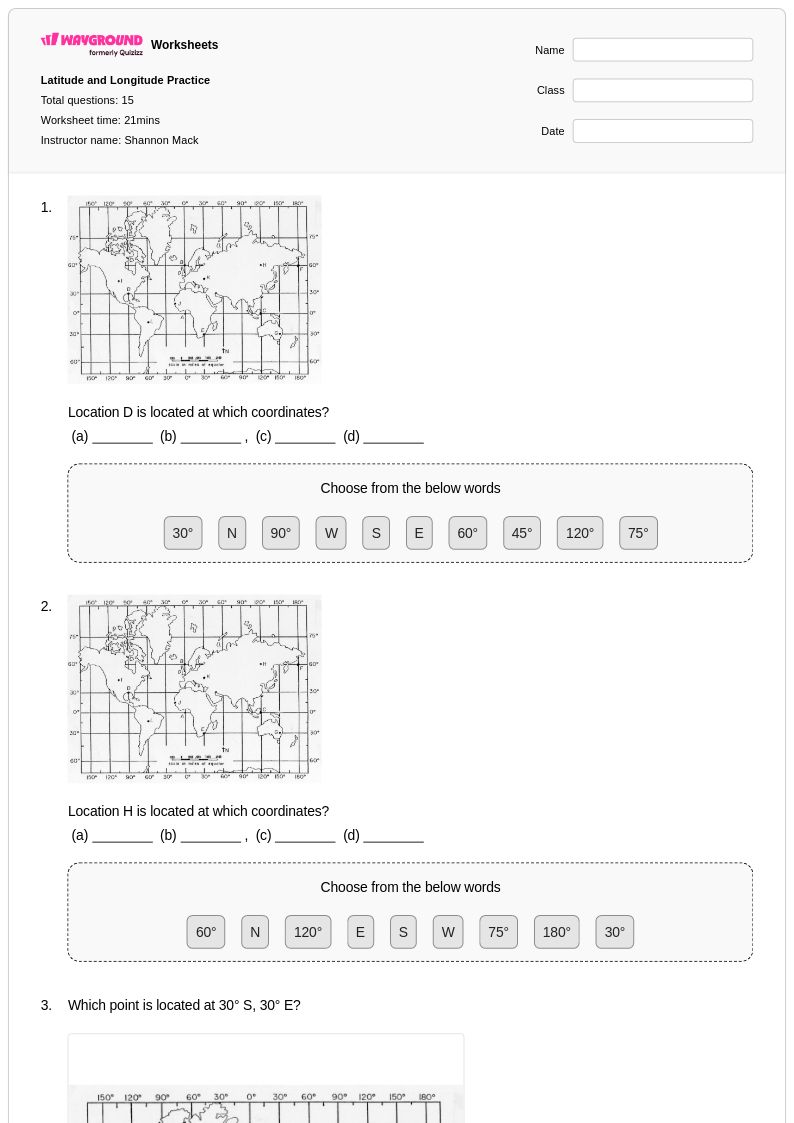
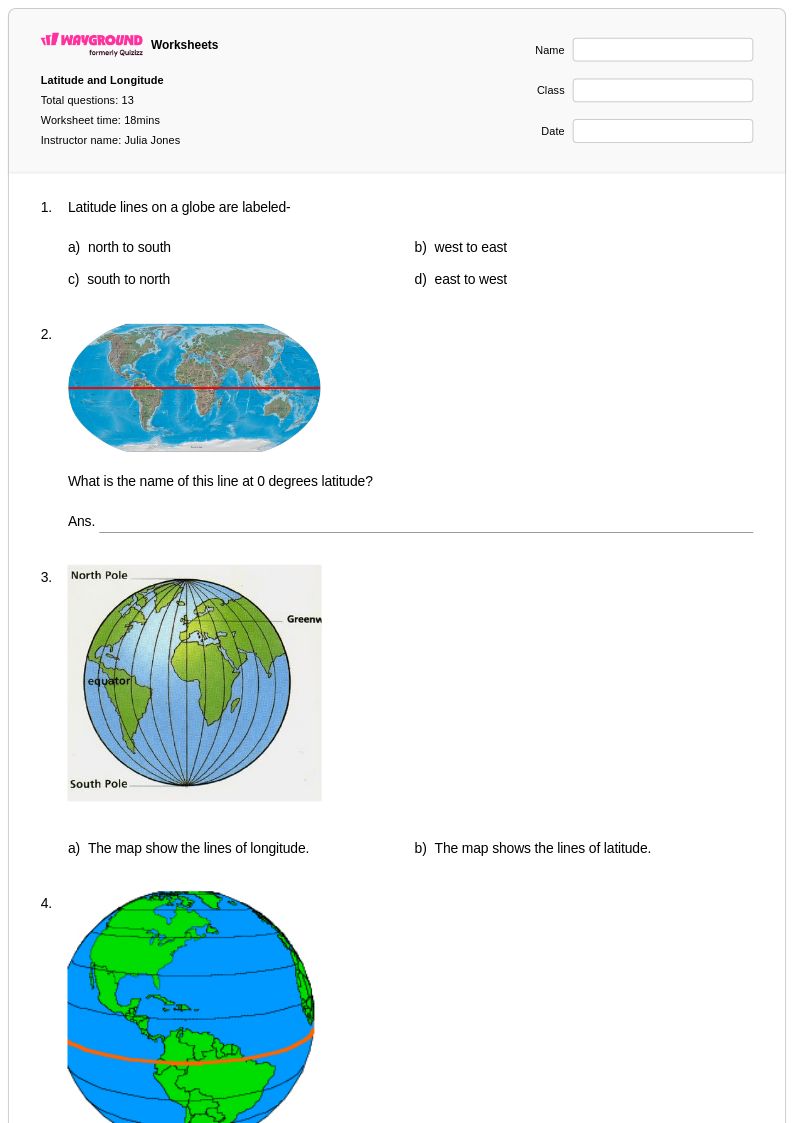
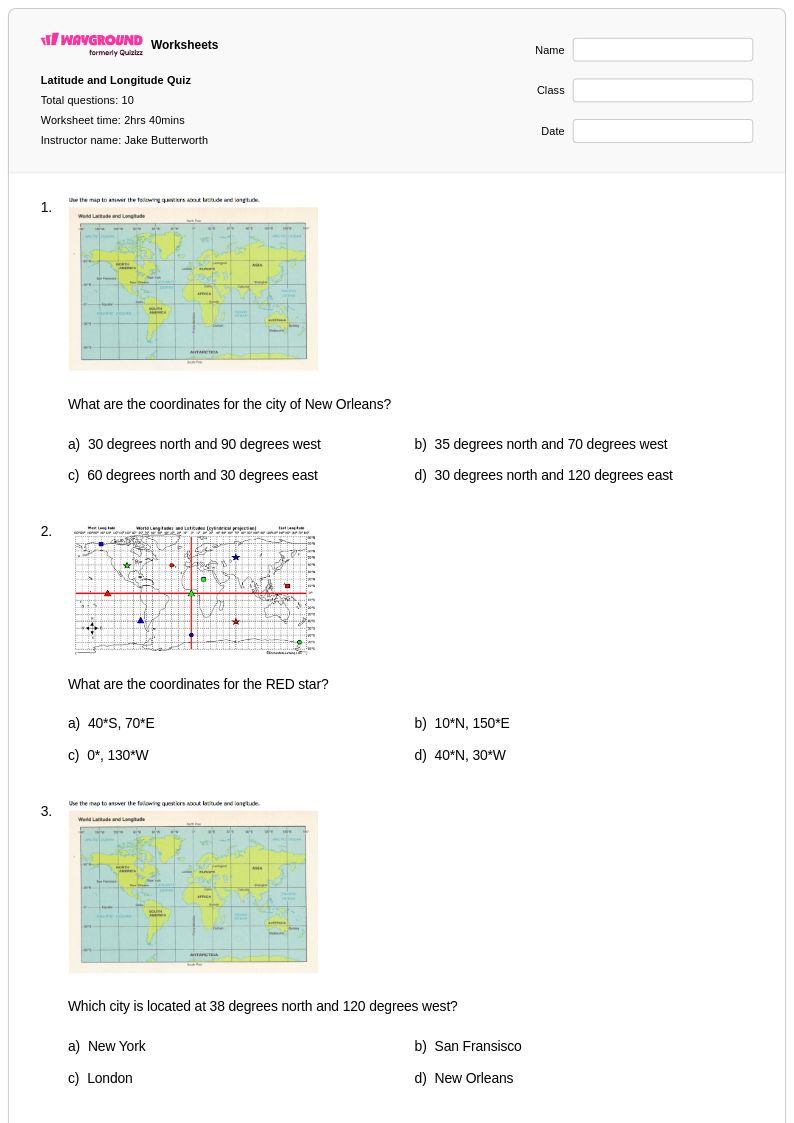
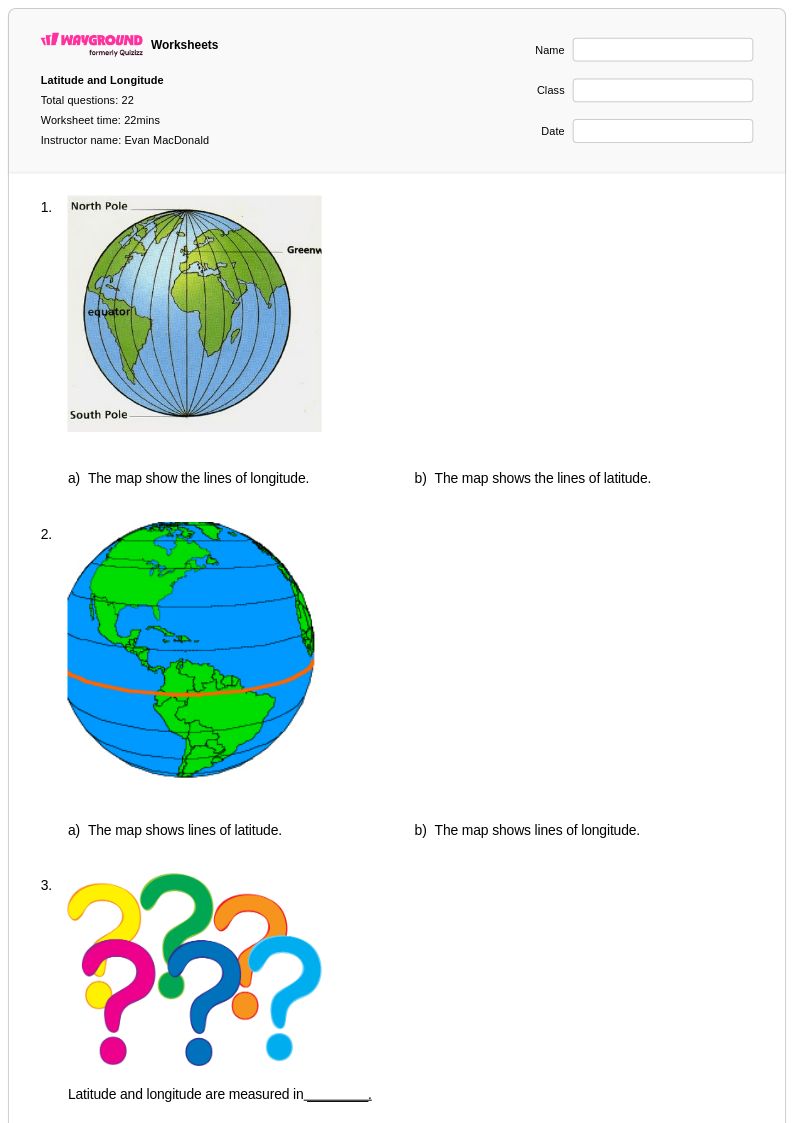
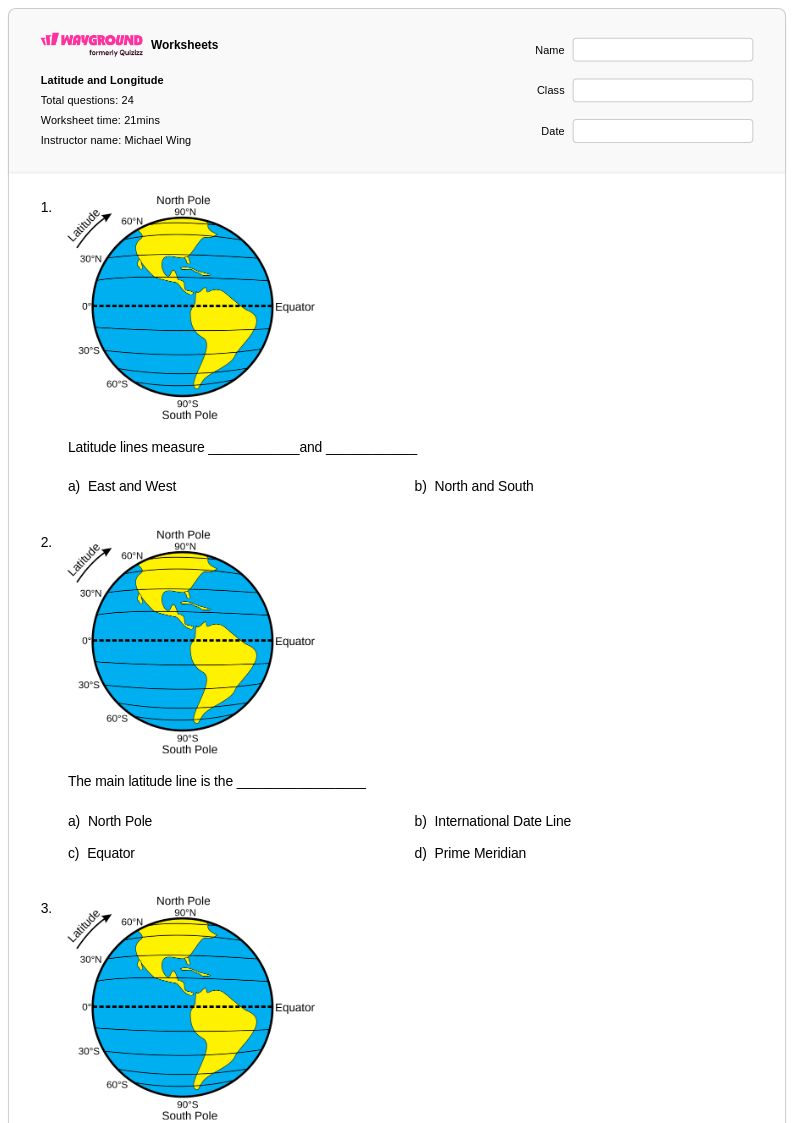
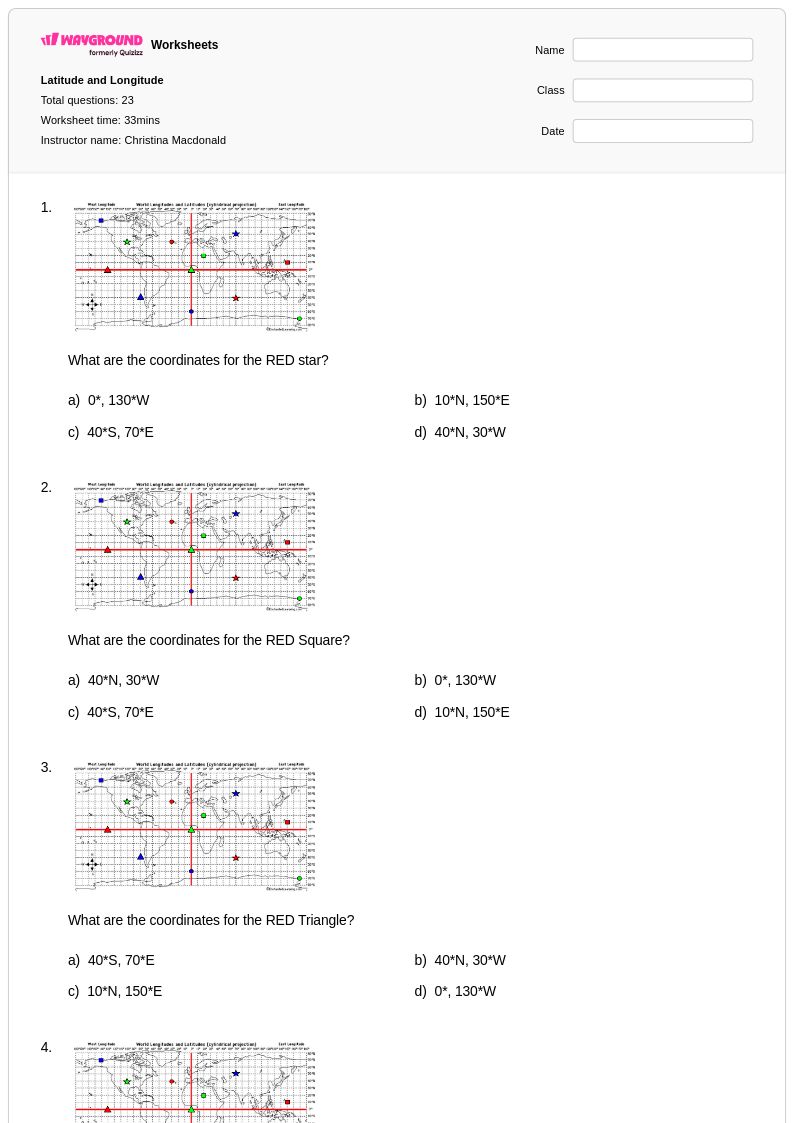
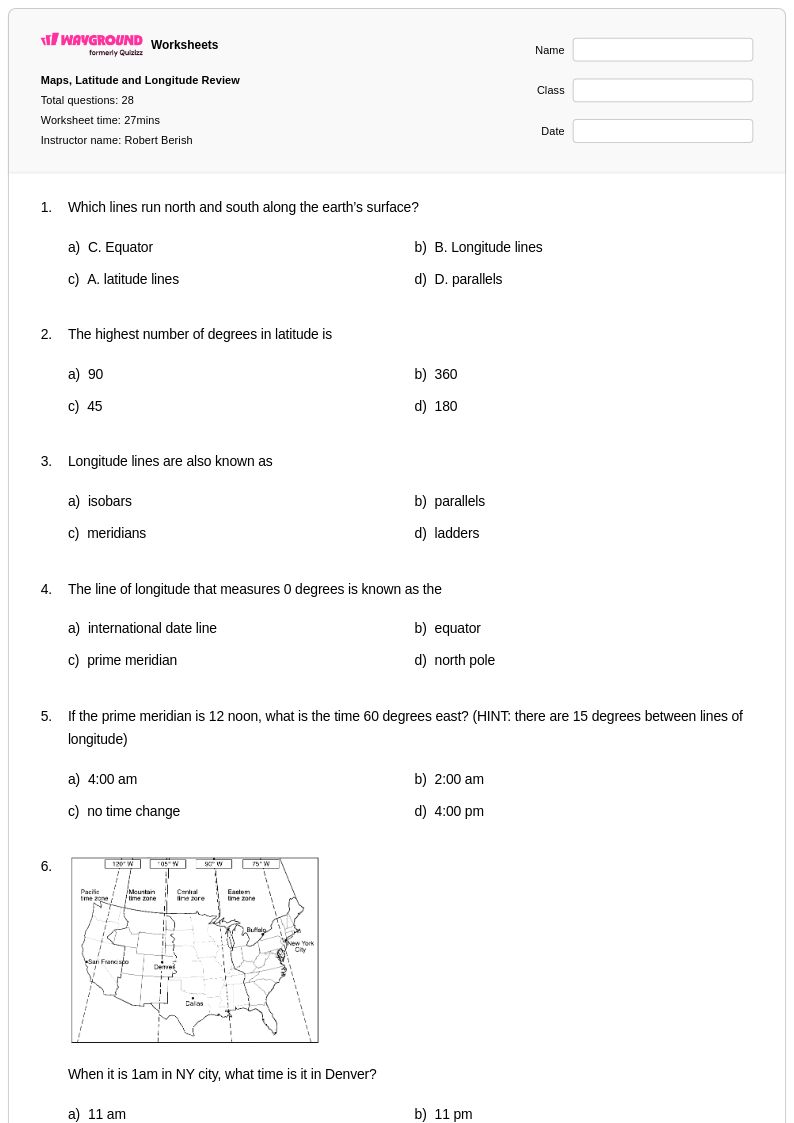
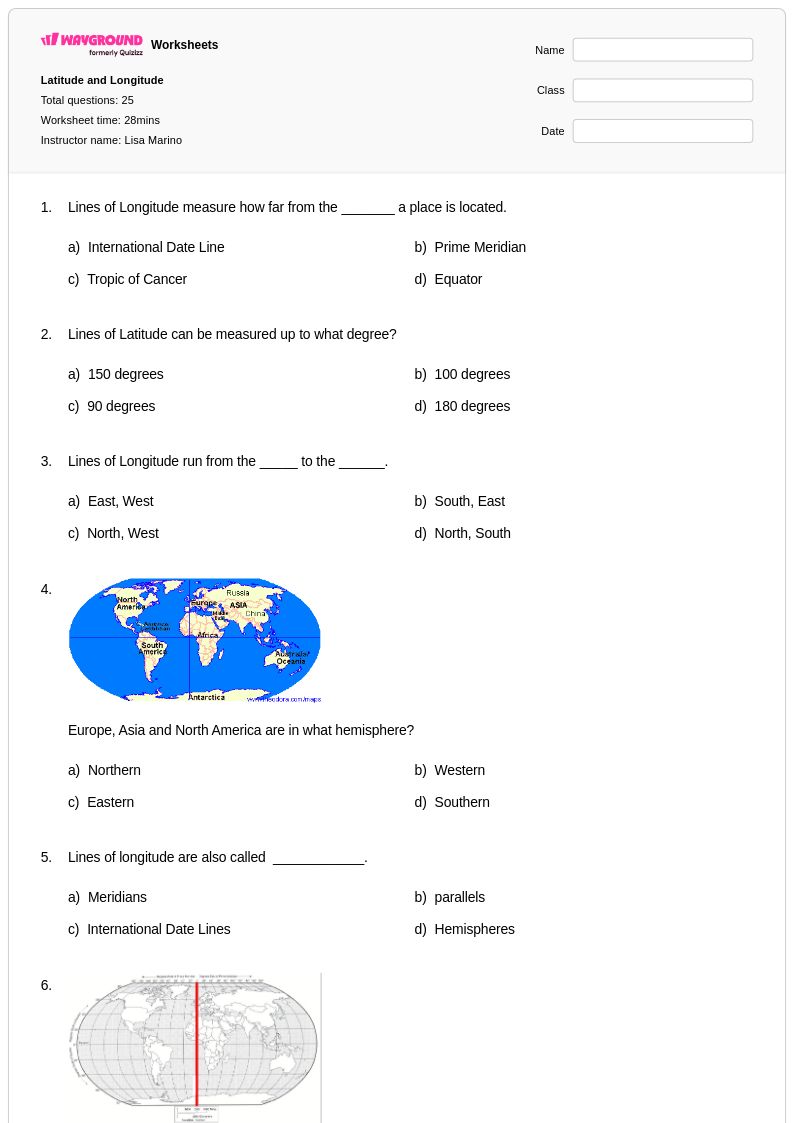
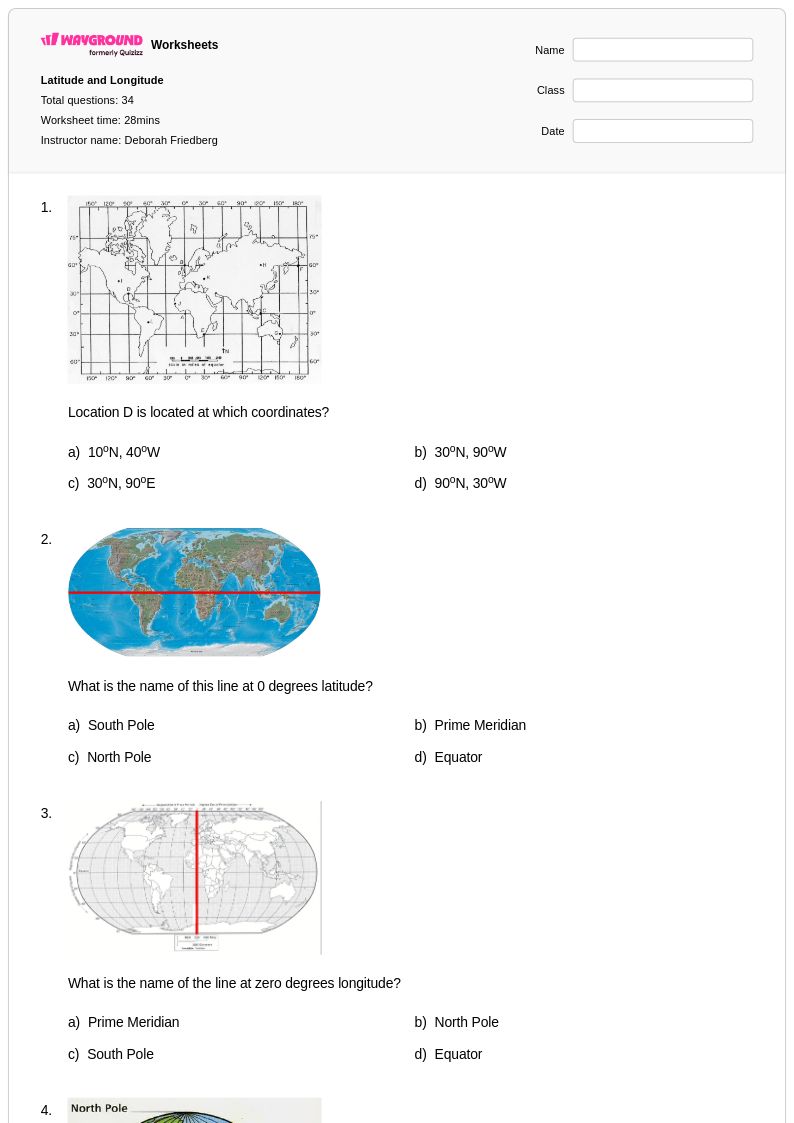
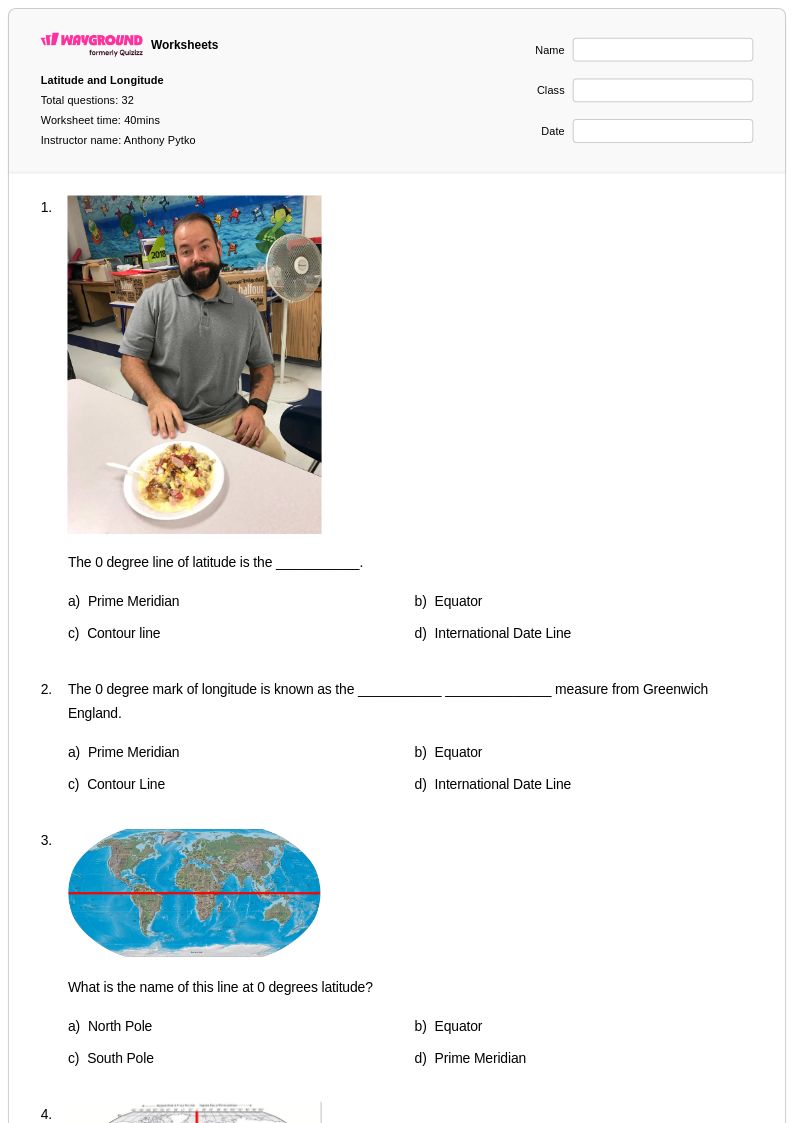
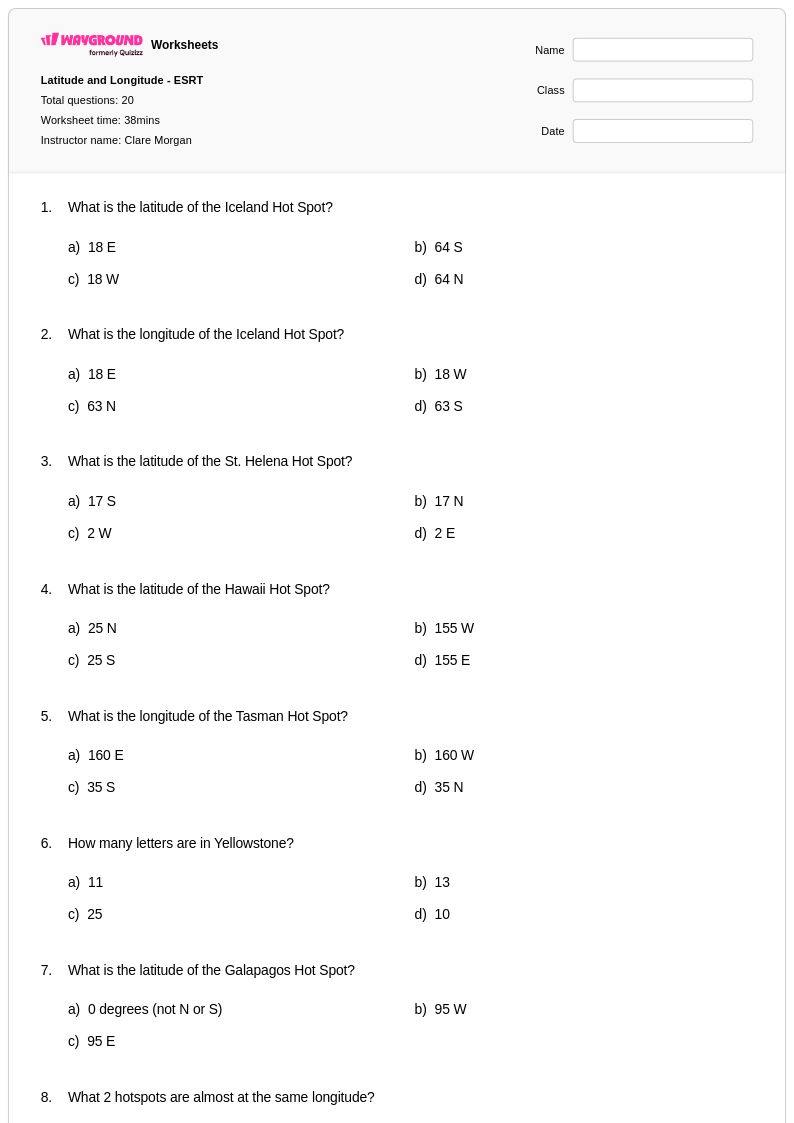
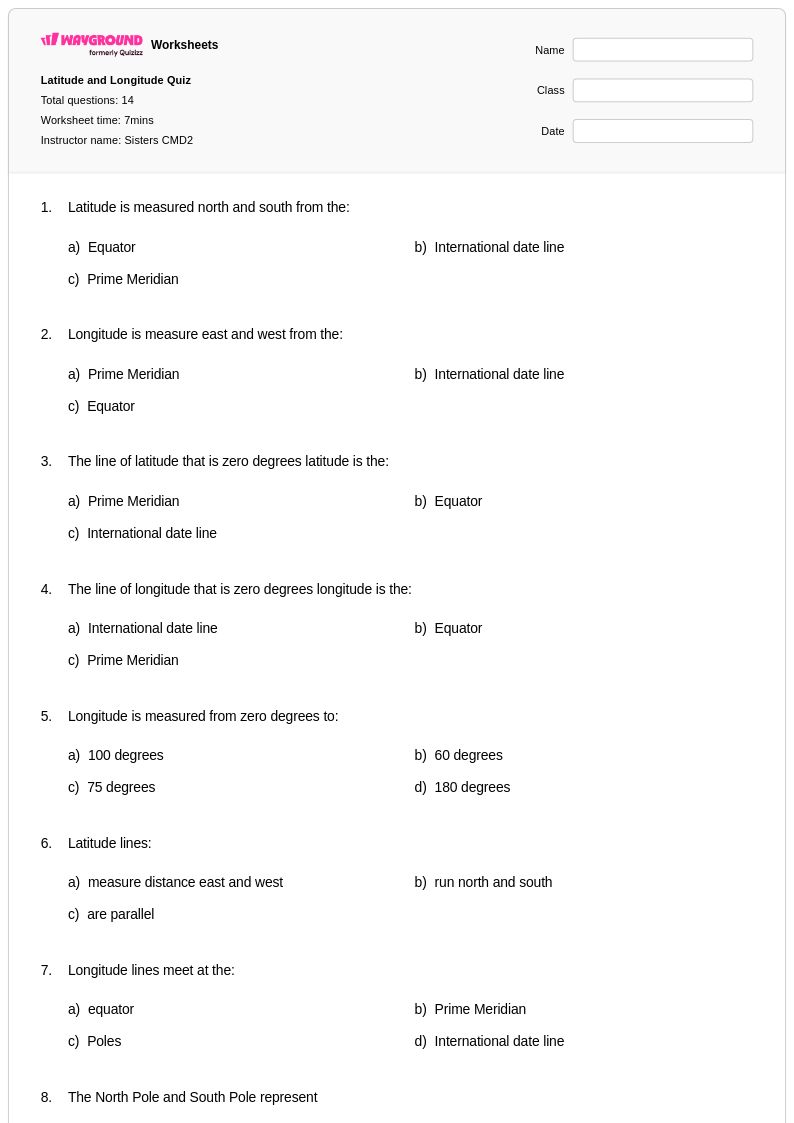
Latitude and longitude worksheets for Class 8 students available through Wayground (formerly Quizizz) provide comprehensive practice with Earth's coordinate system and global positioning concepts. These expertly designed resources help students master essential geographic skills including reading coordinates, plotting locations on world maps, understanding the significance of the Prime Meridian and Equator, and applying coordinate knowledge to real-world navigation scenarios. The worksheets strengthen students' spatial reasoning abilities while building foundational skills in map interpretation, mathematical precision, and geographic literacy. Each printable resource includes detailed answer keys and offers free access to practice problems that range from basic coordinate identification to complex geographic problem-solving activities available in convenient pdf format.
Wayground (formerly Quizizz) supports educators with millions of teacher-created latitude and longitude worksheets specifically designed for Class 8 geography instruction. The platform's robust search and filtering capabilities allow teachers to quickly locate standards-aligned resources that match their specific curriculum requirements and student needs. Advanced differentiation tools enable educators to customize worksheets for various skill levels, supporting both remediation for struggling learners and enrichment opportunities for advanced students. Whether teachers need printable pdf worksheets for traditional classroom activities or digital formats for interactive learning, Wayground's flexible customization options streamline lesson planning while providing targeted skill practice that reinforces coordinate system mastery and geographic understanding essential for middle school social studies success.
FAQs
How do I teach latitude and longitude to students who have never used a coordinate system before?
Start by introducing latitude lines (parallels) and longitude lines (meridians) as separate concepts before combining them. Use a physical or projected globe to show how latitude measures distance north or south of the equator and longitude measures distance east or west of the prime meridian. Once students are comfortable with each axis independently, practice locating real-world cities using coordinate pairs to build confidence with the full system.
What exercises help students practice reading latitude and longitude coordinates?
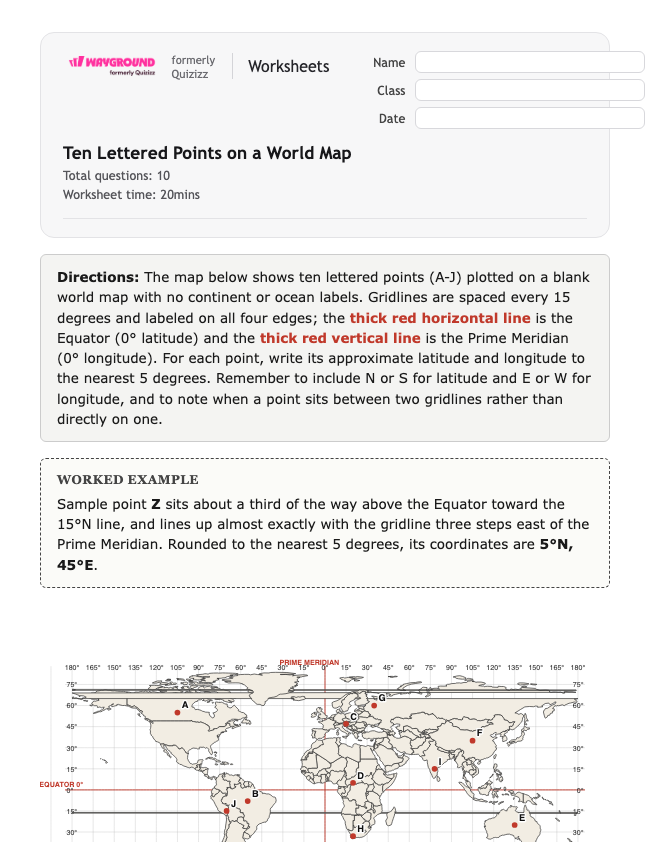
Effective practice exercises include coordinate identification tasks where students read a map and write the coordinates of marked locations, and plotting tasks where students are given a coordinate pair and must mark the correct point on a blank grid. Adding distance calculation problems and hemisphere identification challenges builds deeper fluency. Varied problem formats prevent rote memorization and push students to apply the skill in different contexts.
What mistakes do students commonly make when working with latitude and longitude?
The most common error is reversing latitude and longitude — students frequently list longitude first or confuse which value refers to north-south versus east-west. A second frequent mistake is ignoring hemisphere indicators, writing coordinates without N, S, E, or W designations and then misplotting locations. Consistently requiring students to label hemisphere direction in every answer, and providing immediate feedback through answer keys, helps correct these patterns early.
How can I differentiate latitude and longitude instruction for students at different skill levels?
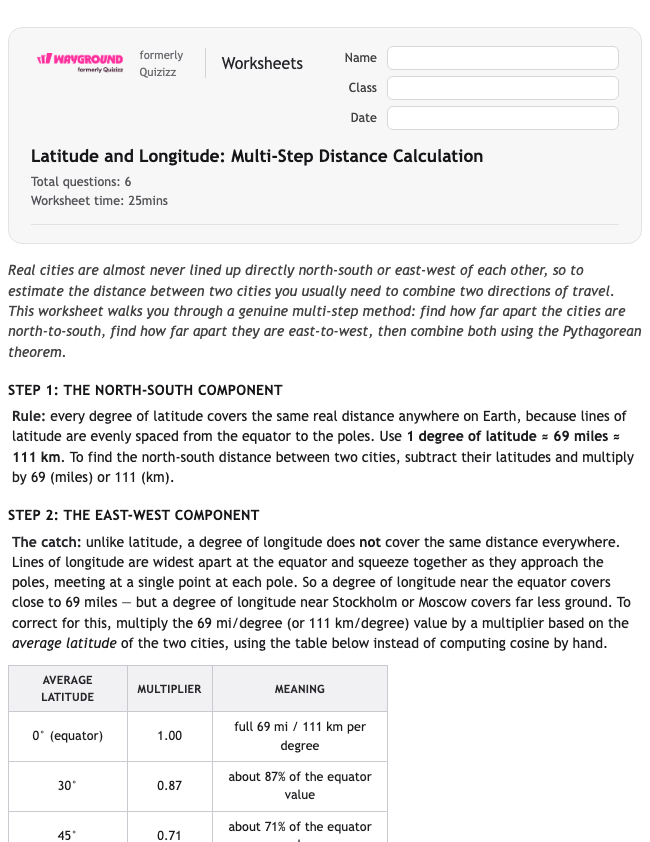
For students who are still developing foundational skills, begin with whole-degree coordinates on simplified grid maps before introducing minutes or decimals. Advanced learners can work with precise coordinates involving degrees and minutes, or take on challenge problems like calculating approximate distances between two coordinate points. On Wayground, teachers can also apply accommodations such as reduced answer choices or read-aloud support for individual students, ensuring all learners can access the same core material at an appropriate level.
How do I use Wayground's latitude and longitude worksheets in my classroom?
Wayground's latitude and longitude worksheets are available as printable PDFs, which work well for traditional classroom instruction, homework packets, and independent practice stations. They are also available in digital formats, making them suitable for technology-integrated classrooms and remote learning. Teachers can host the worksheets as a quiz directly on Wayground, enabling real-time response tracking and faster feedback without additional setup.
How do latitude and longitude connect to other geography skills students need?
Latitude and longitude form the foundation for map reading, spatial reasoning, and geographic literacy more broadly. Students who are comfortable with coordinate systems can more readily interpret climate zone maps, time zone charts, and navigation data, all of which rely on the same global reference grid. Building fluency with coordinates early gives students a reusable framework they will encounter across social studies, earth science, and real-world contexts.