Free Printable Topographic Map Reading Worksheets for Class 8
Class 8 topographic map reading worksheets from Wayground help students master elevation interpretation, contour line analysis, and terrain identification through comprehensive printables with detailed answer keys and engaging practice problems.
Explore printable Topographic Map Reading worksheets for Class 8
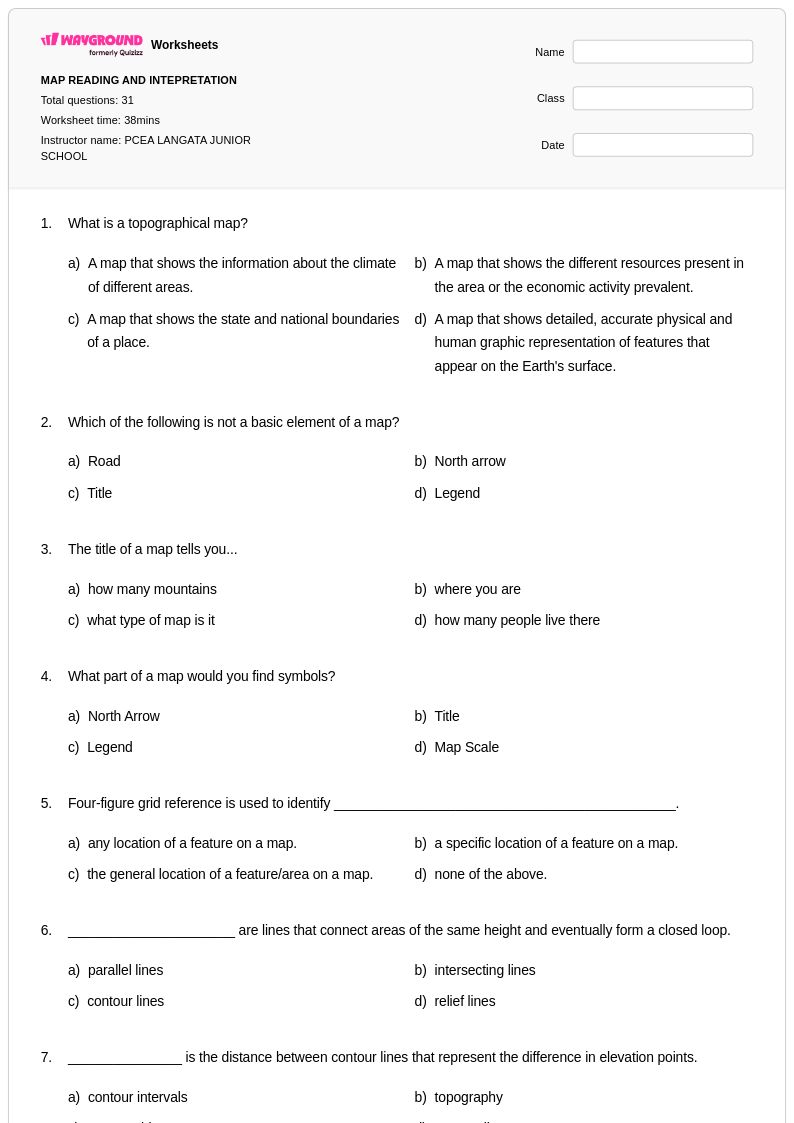
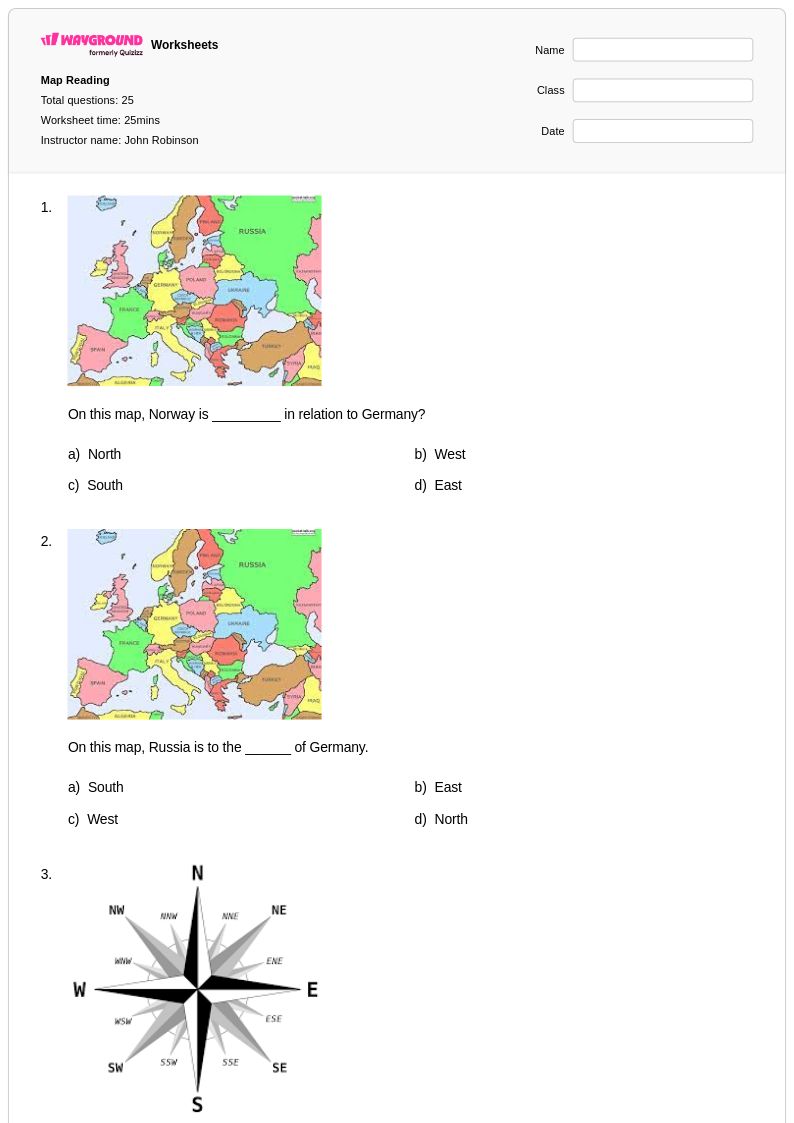
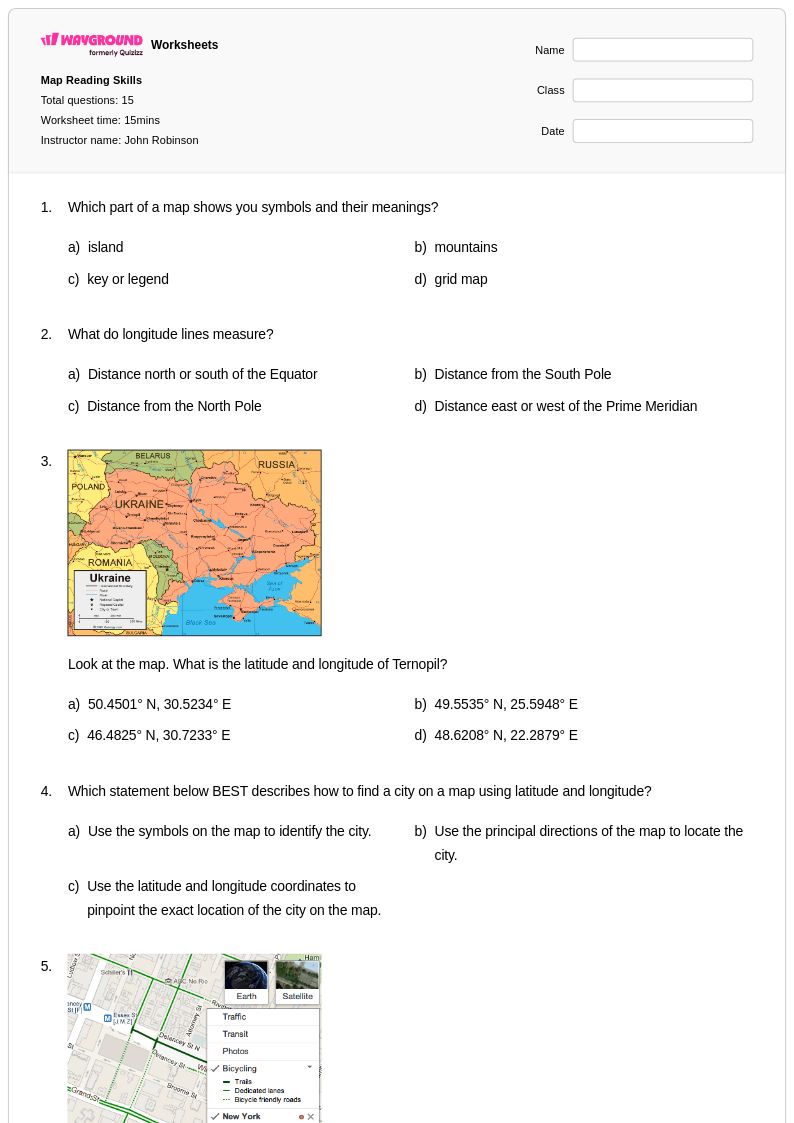
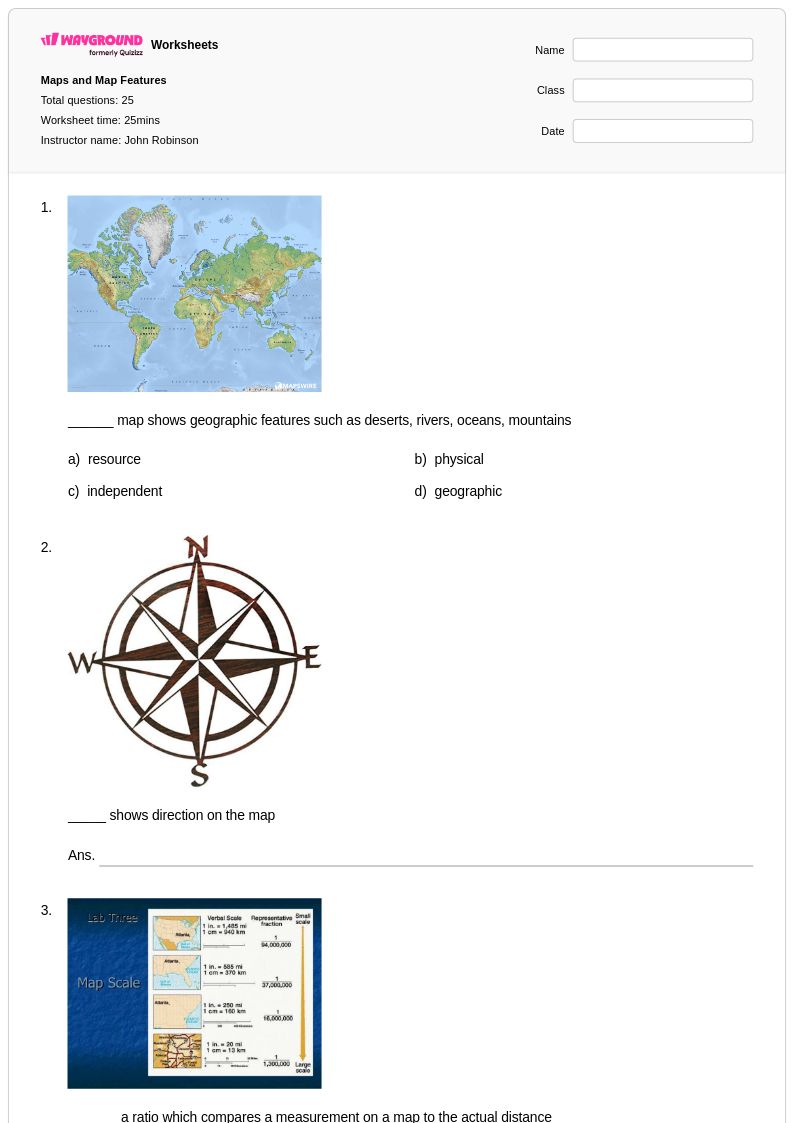
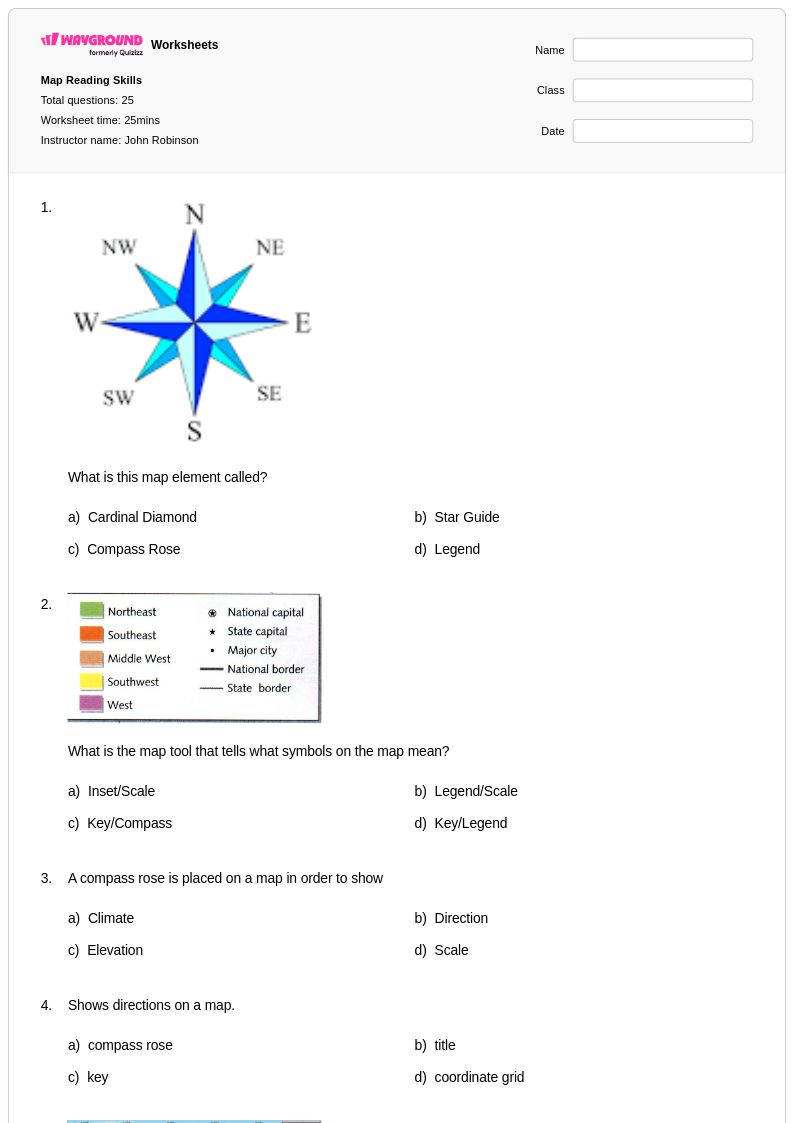
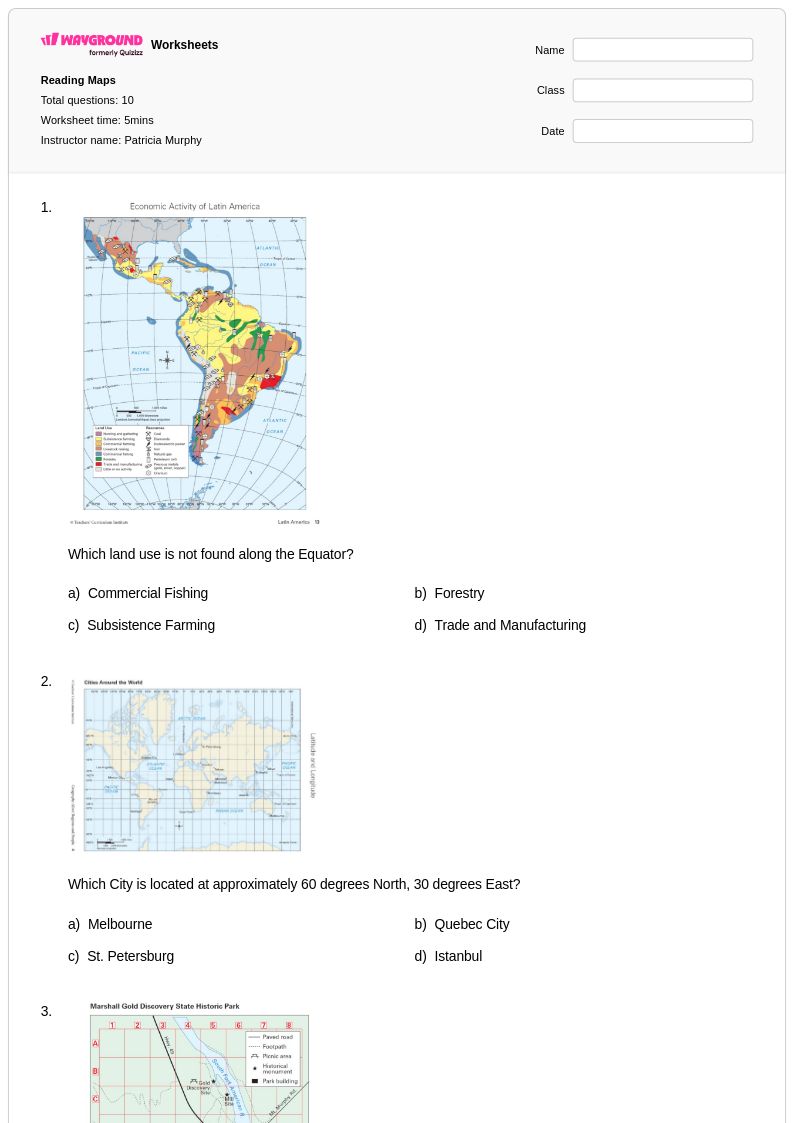
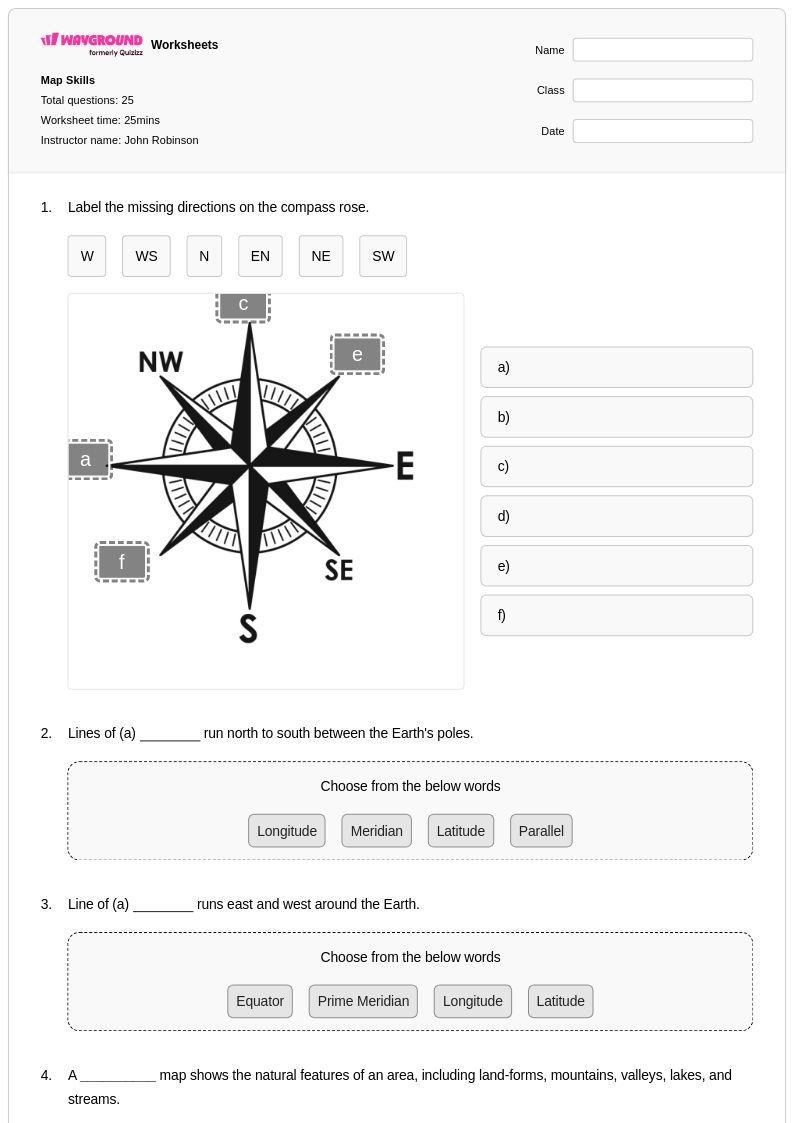
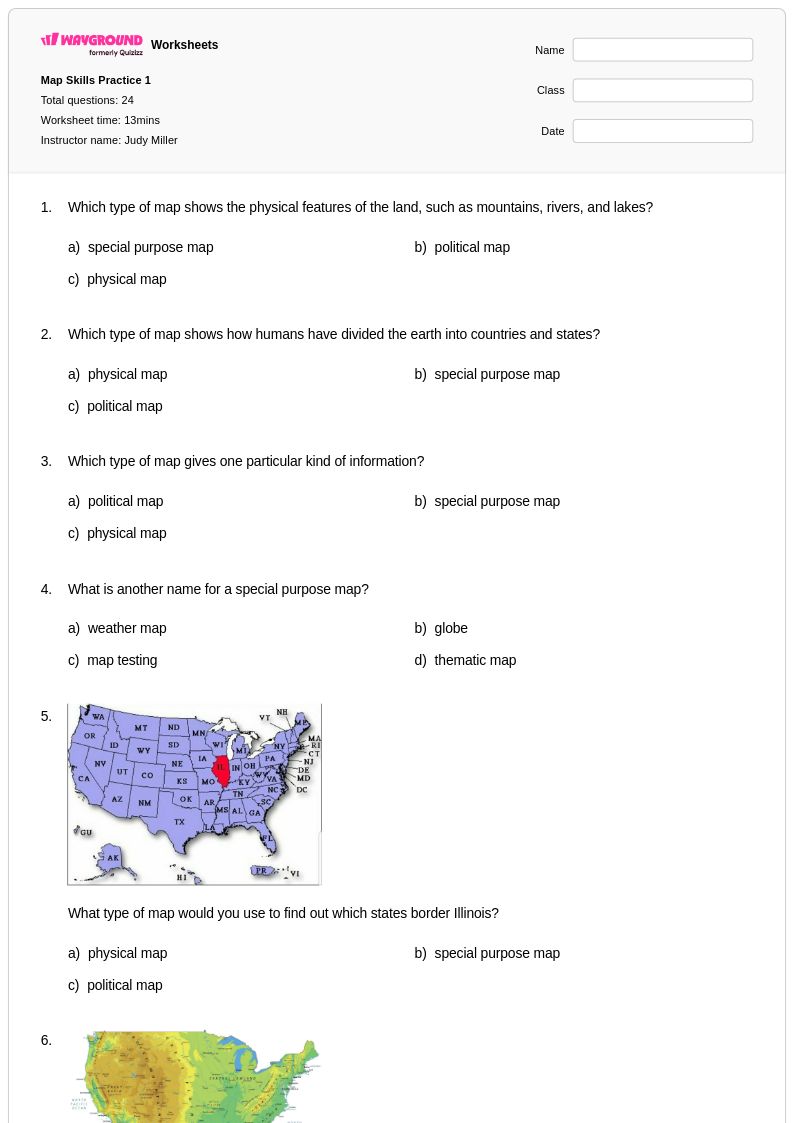
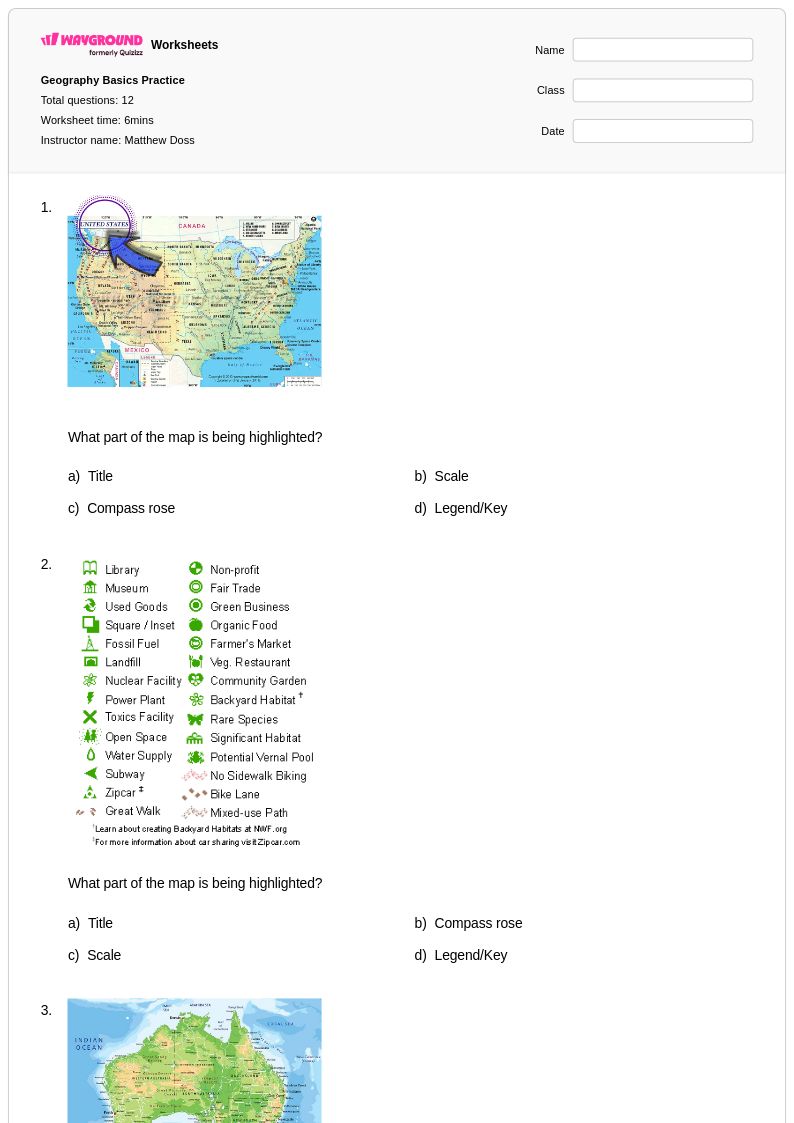
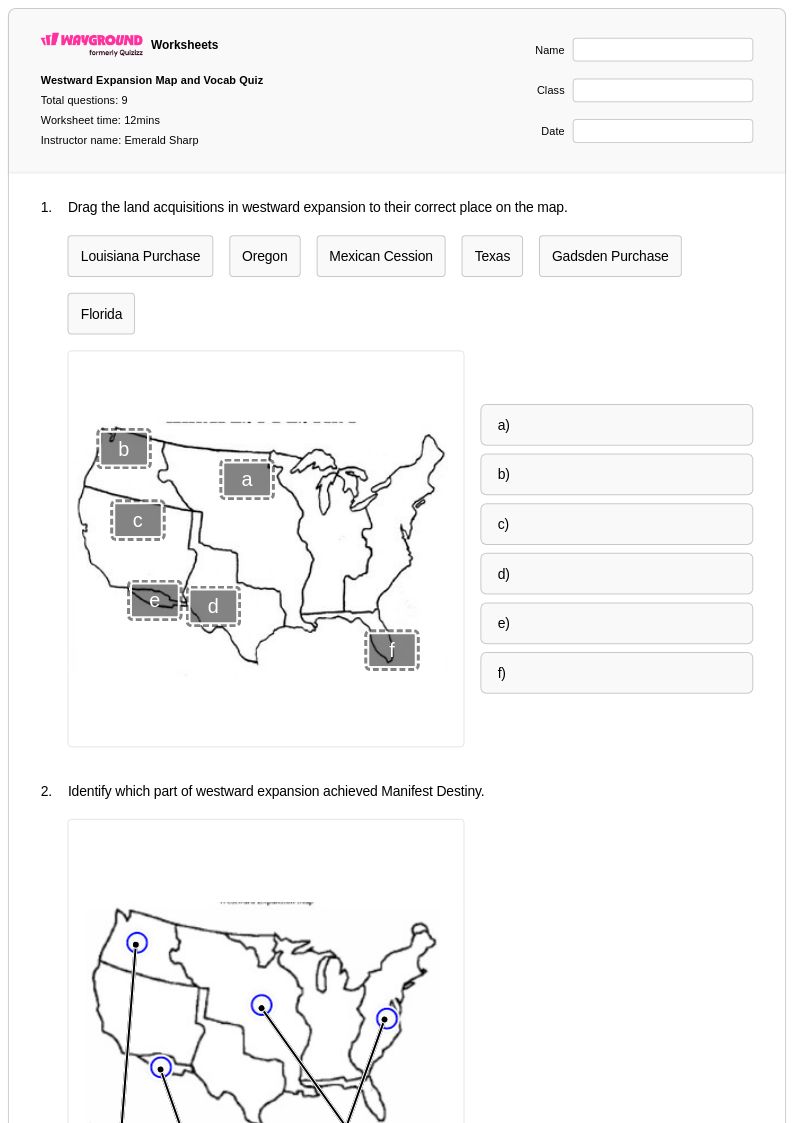
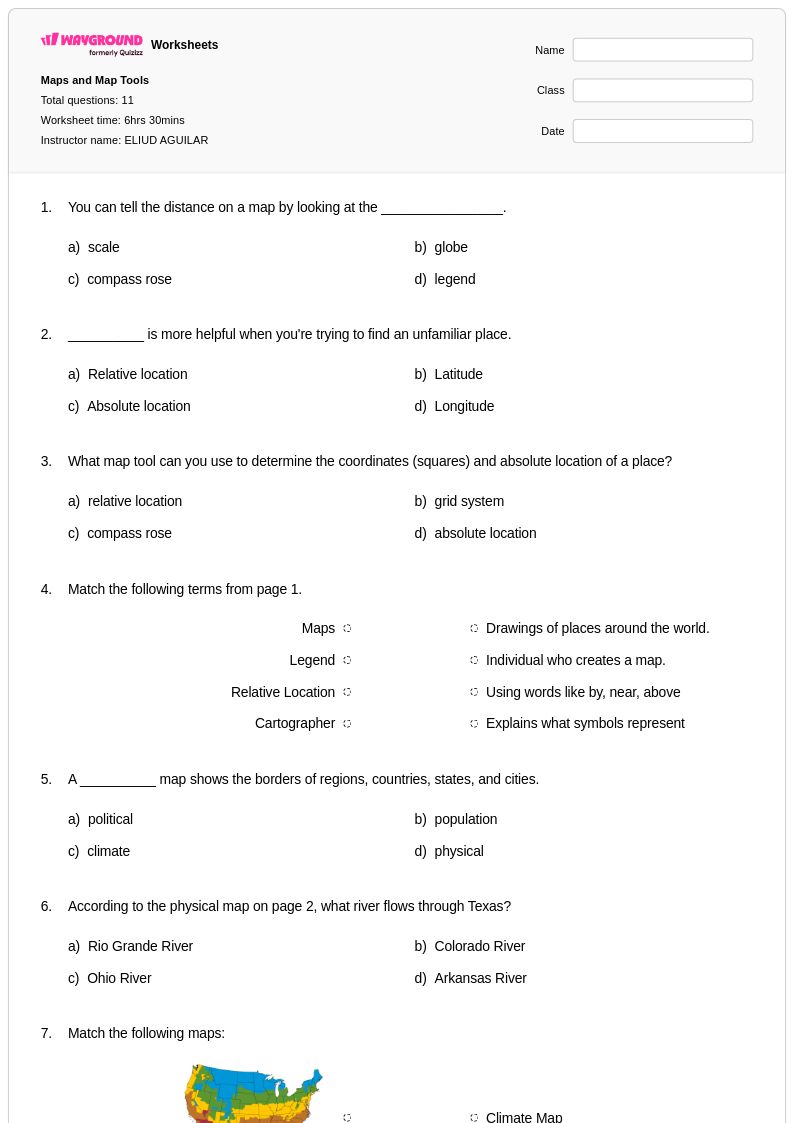
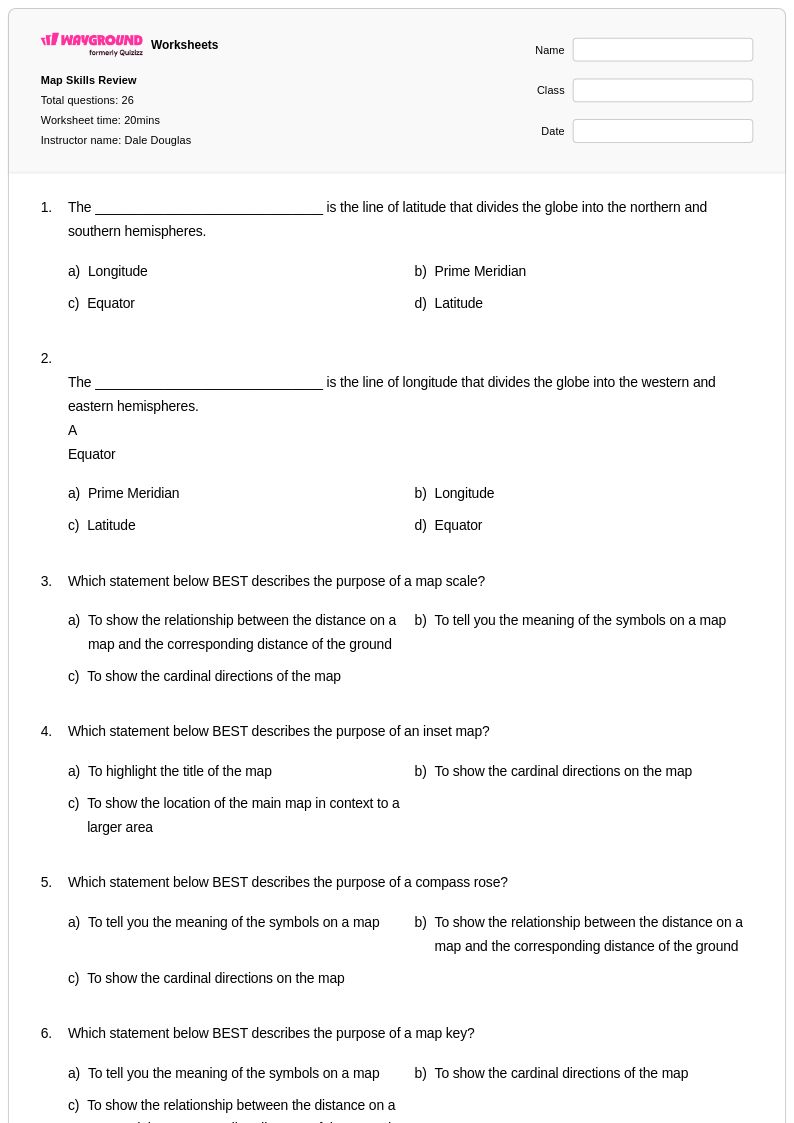
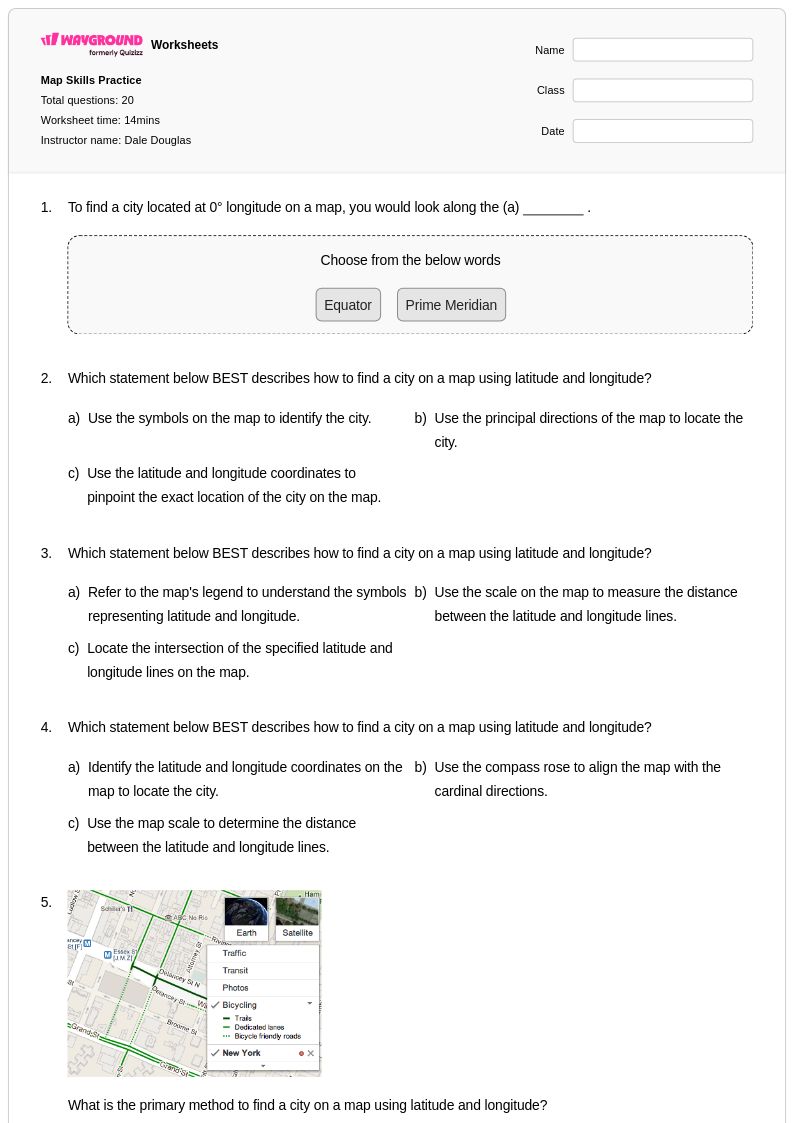
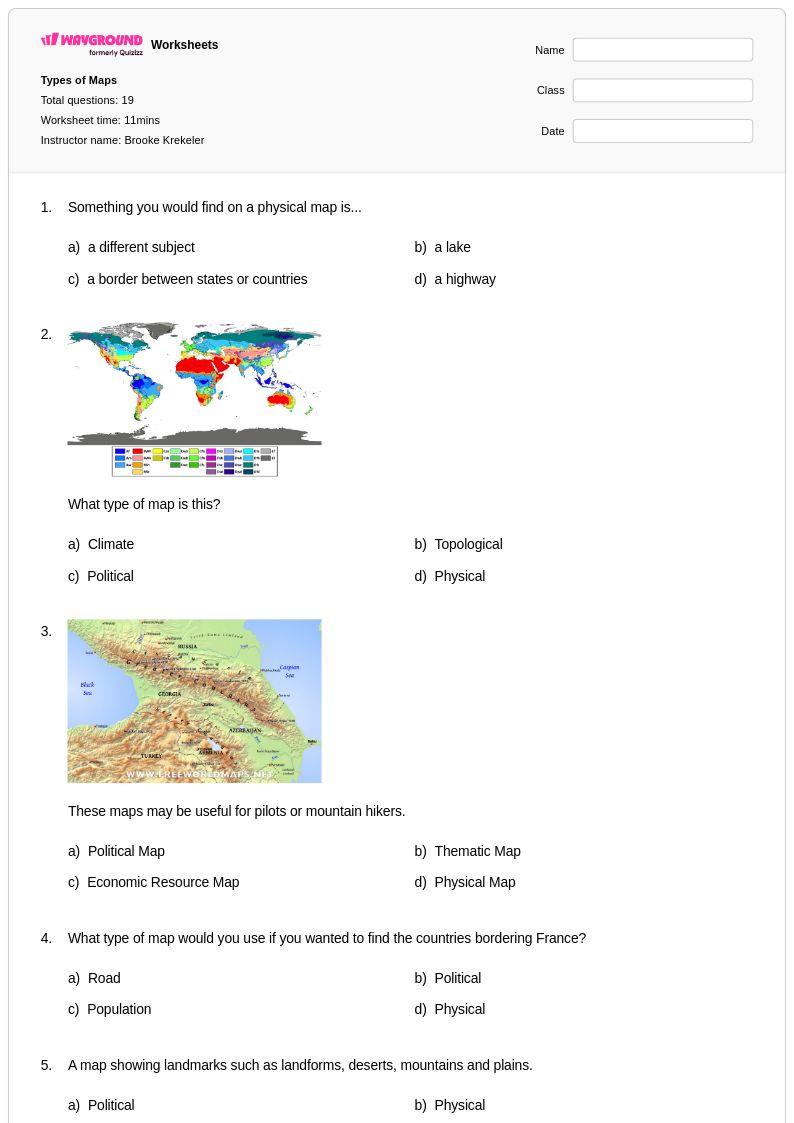
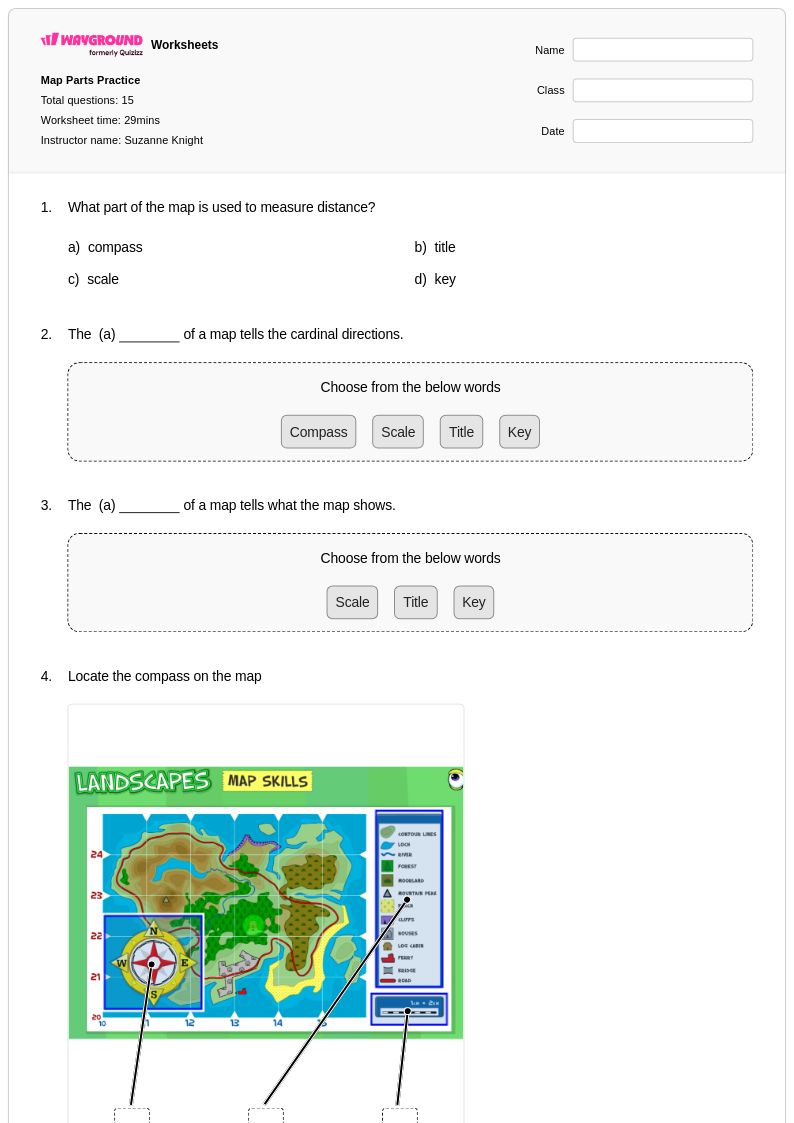
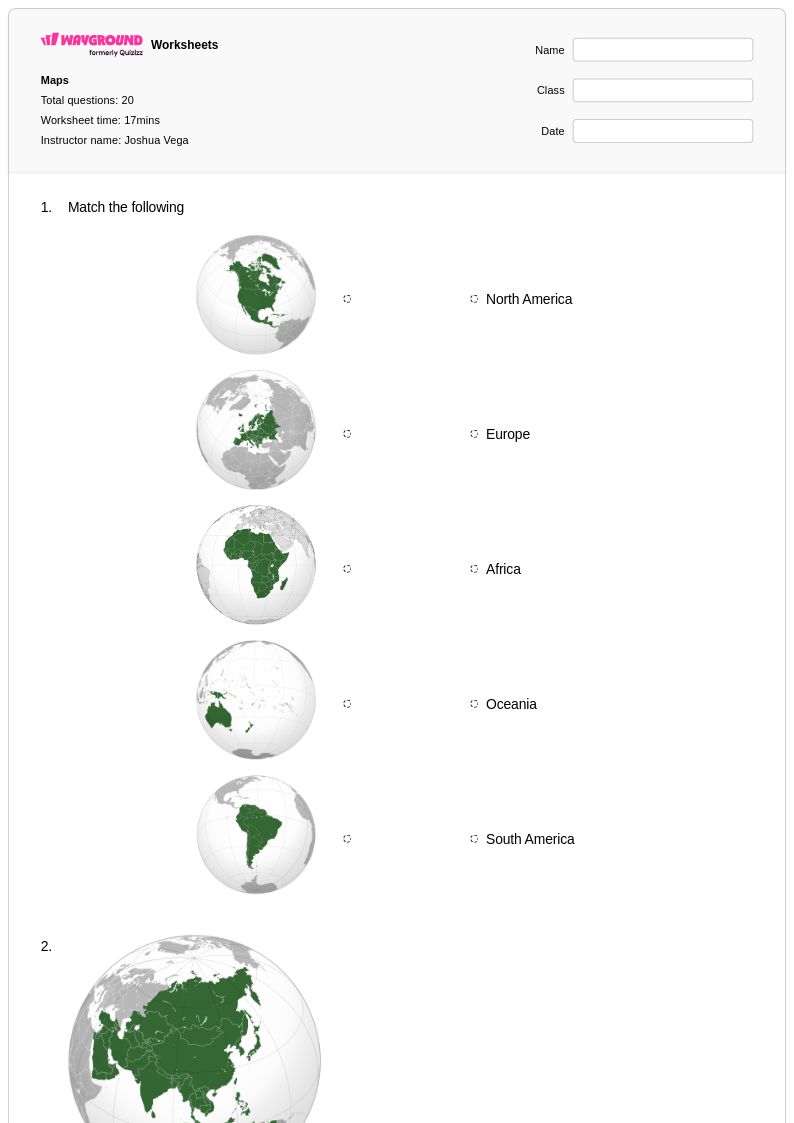
Topographic map reading worksheets for Class 8 students available through Wayground (formerly Quizizz) provide comprehensive practice in interpreting elevation data, contour lines, and three-dimensional terrain features represented on two-dimensional maps. These carefully designed educational resources strengthen essential geographic skills including calculating elevation changes, identifying landforms such as valleys and ridges, determining slope steepness, and understanding scale relationships between map symbols and actual terrain. Students develop proficiency in reading elevation markers, interpreting contour line spacing to assess gradient changes, and visualizing landscape features through systematic practice problems that range from basic contour line identification to complex topographic analysis. Each worksheet collection includes detailed answer keys that support independent learning and self-assessment, with free printable pdf formats ensuring accessibility for diverse classroom environments and individual study needs.
Wayground (formerly Quizizz) empowers educators with an extensive library of millions of teacher-created topographic map reading resources specifically aligned with Class 8 geography standards and learning objectives. The platform's robust search and filtering capabilities allow teachers to quickly locate worksheets that match specific skill levels, from introductory contour line concepts to advanced topographic interpretation techniques, supporting effective differentiation strategies for diverse learners. Teachers can customize existing materials or create original assessments using flexible digital tools, then seamlessly distribute content in both printable and interactive digital formats including downloadable pdf versions for offline use. These comprehensive worksheet collections serve multiple instructional purposes, enabling targeted skill practice during regular lessons, focused remediation for students struggling with spatial reasoning concepts, and enrichment opportunities for advanced learners ready to tackle complex topographic analysis challenges.
FAQs
How do I teach students to read topographic maps for the first time?
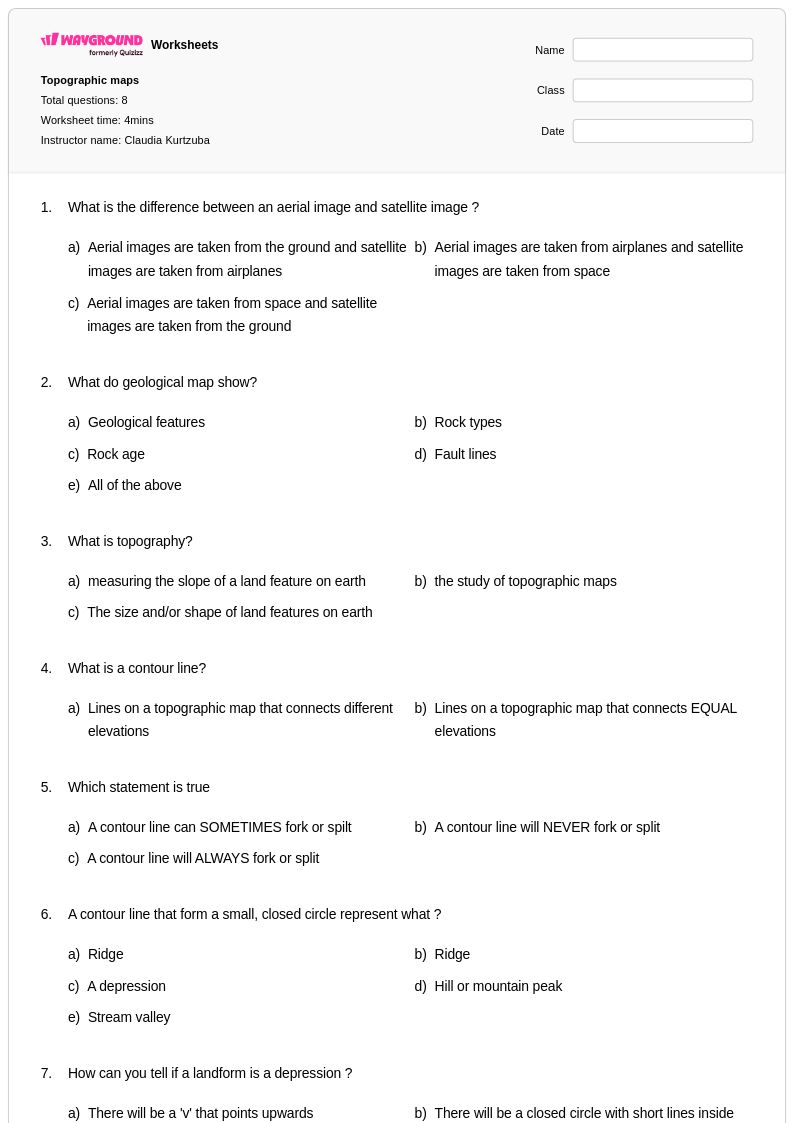
Start by helping students understand that contour lines connect points of equal elevation, and that the spacing between lines indicates slope steepness. Introduce the concept of contour intervals before asking students to identify specific landforms like ridges, valleys, and depressions. A layered approach works well: begin with reading the legend and identifying symbols, then progress to calculating elevation changes, and finally move to visualizing three-dimensional terrain from two-dimensional representations.
What exercises help students practice interpreting contour lines and elevation?
Effective practice exercises include calculating the elevation of specific points using contour intervals, identifying whether a slope is gentle or steep based on contour line spacing, and tracing the path of water drainage across a terrain map. Students also benefit from drawing cross-section profiles between two points on a topographic map, which directly builds the skill of translating two-dimensional contour data into a three-dimensional mental model.
What common mistakes do students make when reading topographic maps?
The most frequent error is misreading contour intervals, with students assuming all maps use the same interval value rather than checking the legend first. Students also commonly confuse closely spaced contour lines with crowded labeling rather than recognizing them as steep slopes. Another persistent misconception is misidentifying valleys and ridges: on a topographic map, V-shaped contours pointing uphill indicate a valley, while V-shapes pointing downhill indicate a ridge, and students frequently reverse these.
How do I help students visualize 3D terrain from 2D topographic maps?
Having students construct topographic profiles, or cross-sections, is one of the most effective bridging activities between two-dimensional maps and three-dimensional thinking. Pairing map analysis with physical or digital terrain models reinforces the connection between contour patterns and real landform shapes. Relief shading exercises, where students shade areas by elevation band, also strengthen spatial reasoning before moving on to slope gradient calculations.
How can I use Wayground's topographic map reading worksheets in my classroom?
Wayground's topographic map reading worksheets are available as printable PDFs for traditional classroom use and in digital formats for technology-integrated learning environments, and can also be hosted as a quiz directly on Wayground. Teachers can search and filter resources by specific skill focus or difficulty level, making it straightforward to sequence lessons from basic contour line identification through to advanced terrain analysis. Each worksheet includes a complete answer key, reducing prep time and supporting efficient formative assessment.
How do I differentiate topographic map reading instruction for students at different skill levels?
For students who need additional support, begin with simplified maps that use wide contour intervals and clearly labeled landforms before introducing complex terrain. Wayground's platform supports individual student accommodations including reduced answer choices to lower cognitive load, read-aloud functionality for students who need text support, and extended time settings that can be configured per student. These accommodations are saved and reusable across sessions, so teachers can consistently support diverse learners without rebuilding settings each time.