
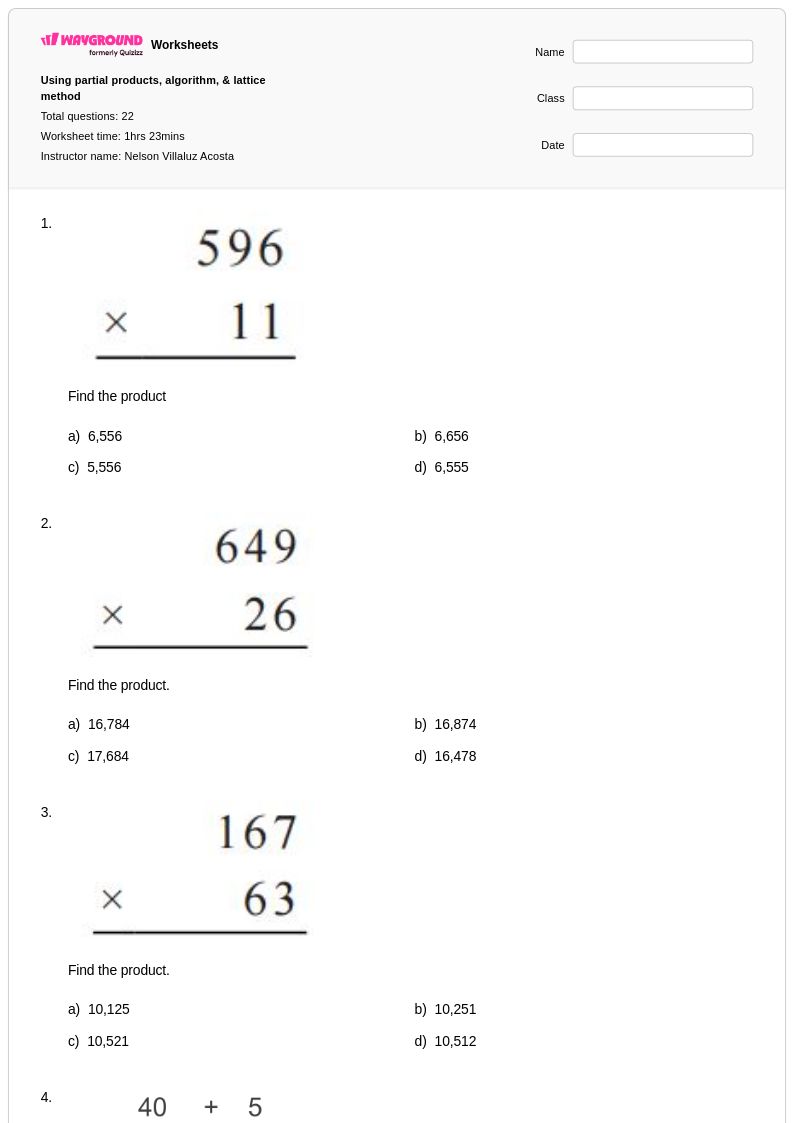
22 Q
5th
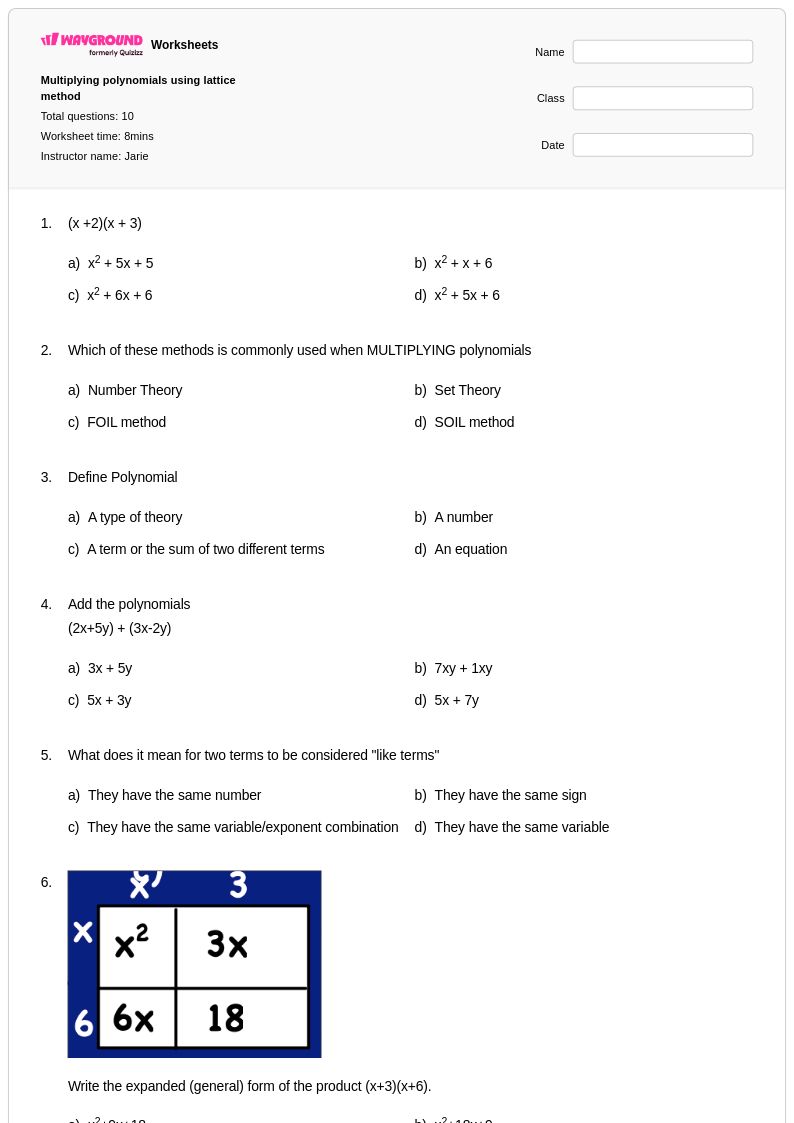
10 Q
7th
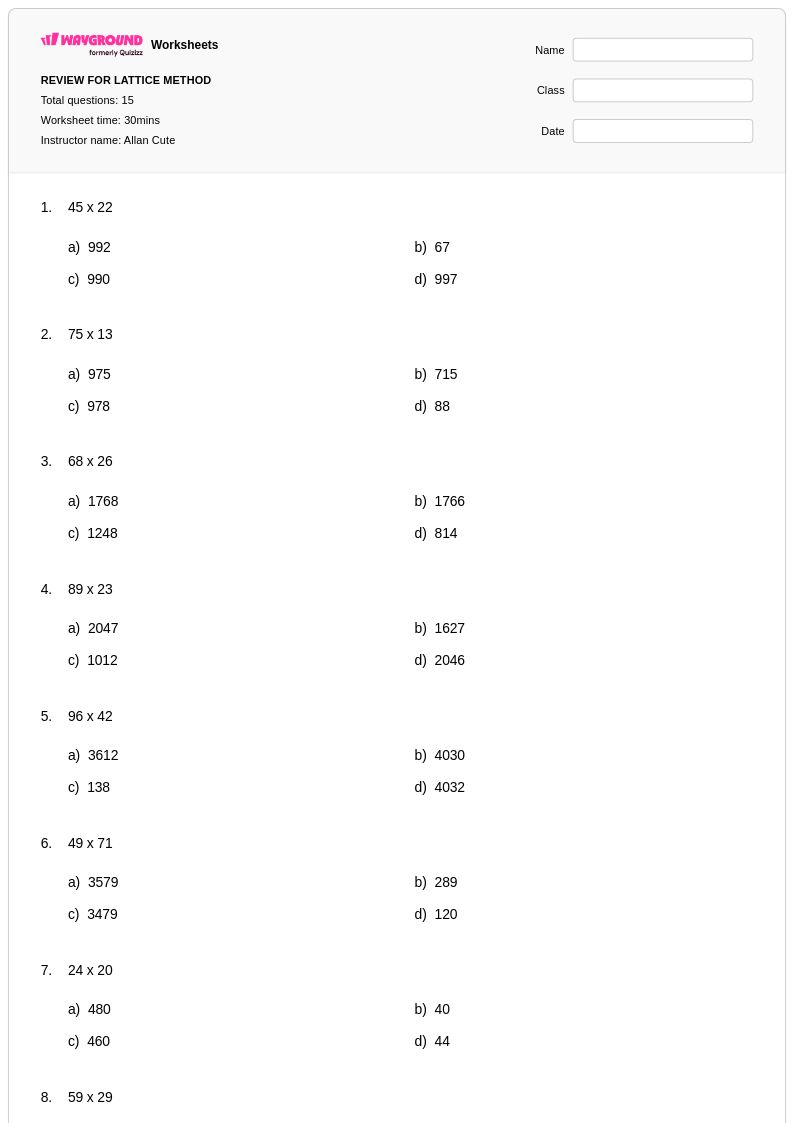
15 Q
4th - 8th
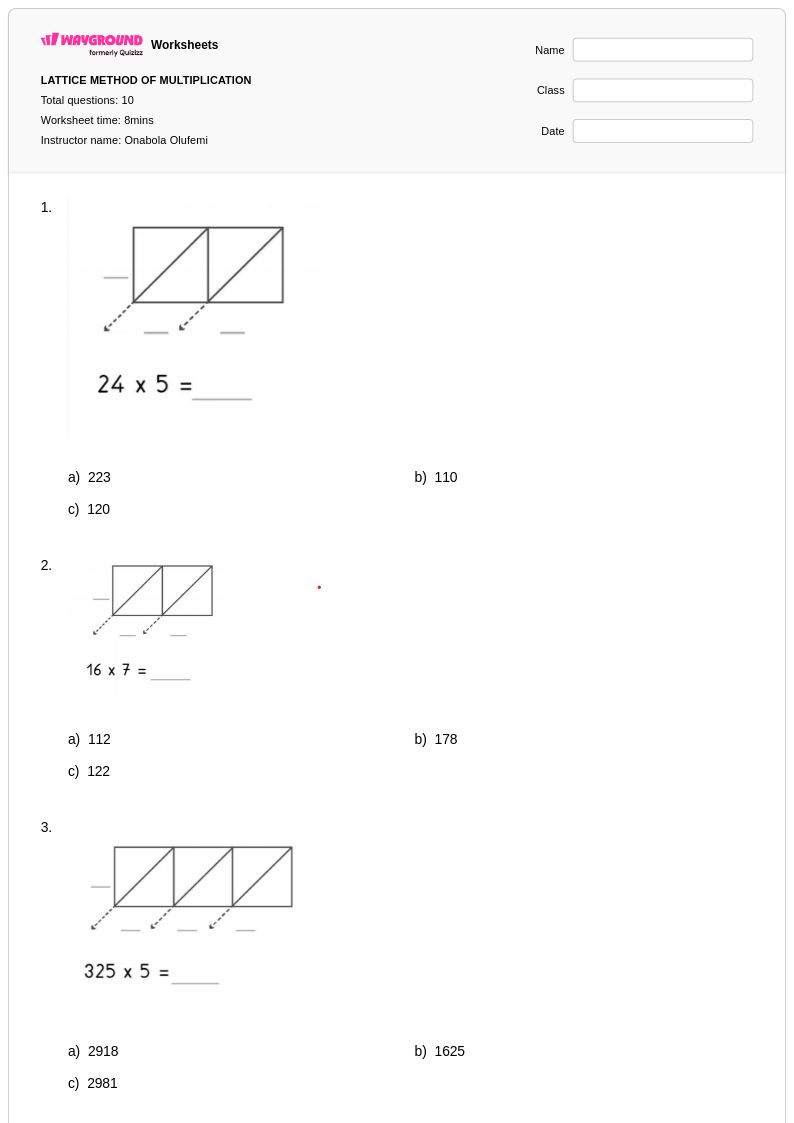
10 Q
KG - Uni
10 Q
6th
8 Q
KG - Uni
7 Q
4th
5 Q
3rd - 4th
16 Q
4th
18 Q
4th - 6th
9 Q
5th
10 Q
5th
10 Q
3rd
20 Q
8th - Uni
10 Q
3rd
15 Q
3rd - 8th
10 Q
5th
16 Q
3rd - 5th
7 Q
5th
10 Q
5th
15 Q
Uni
20 Q
10th - Uni
19 Q
9th - Uni
20 Q
11th - Uni
Explore Worksheets by Subjects
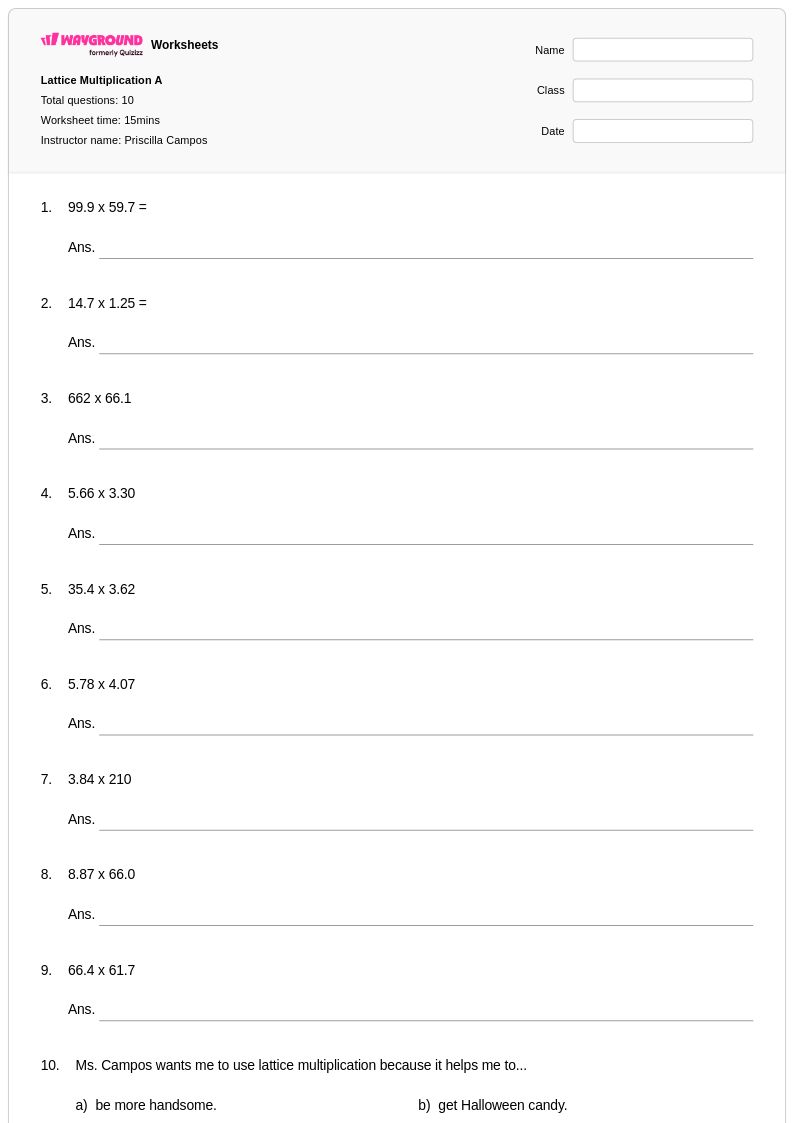
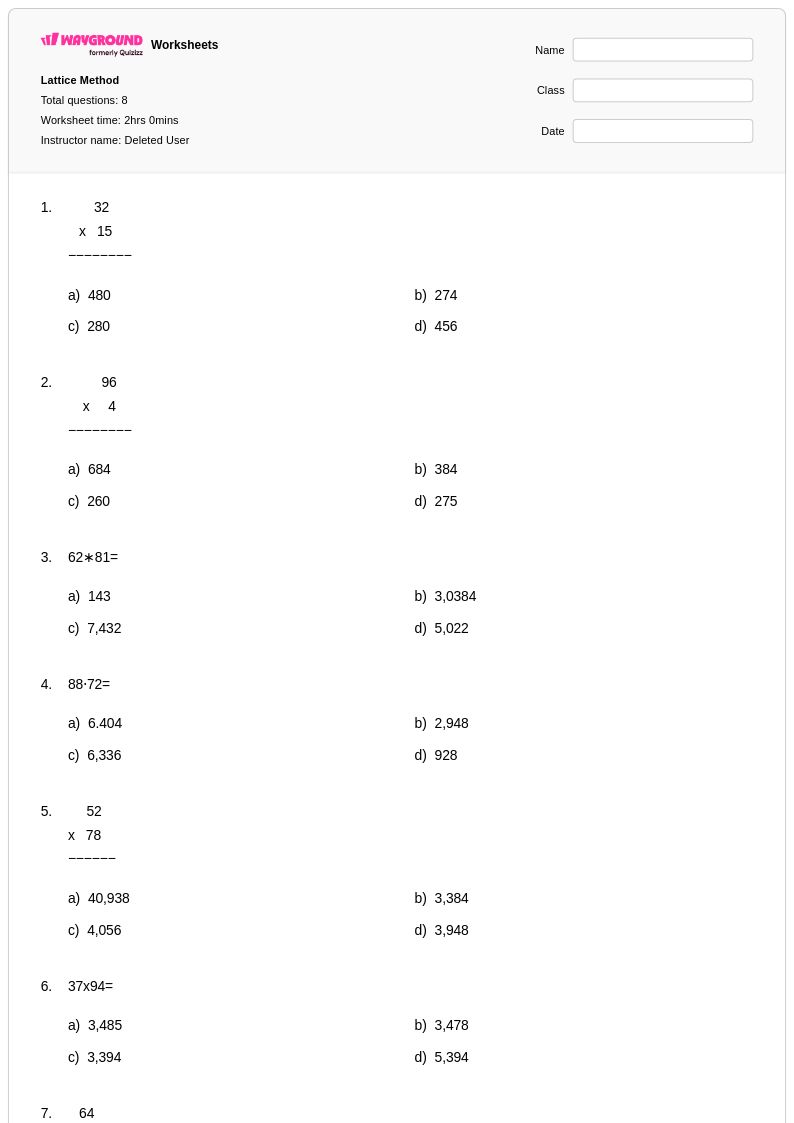
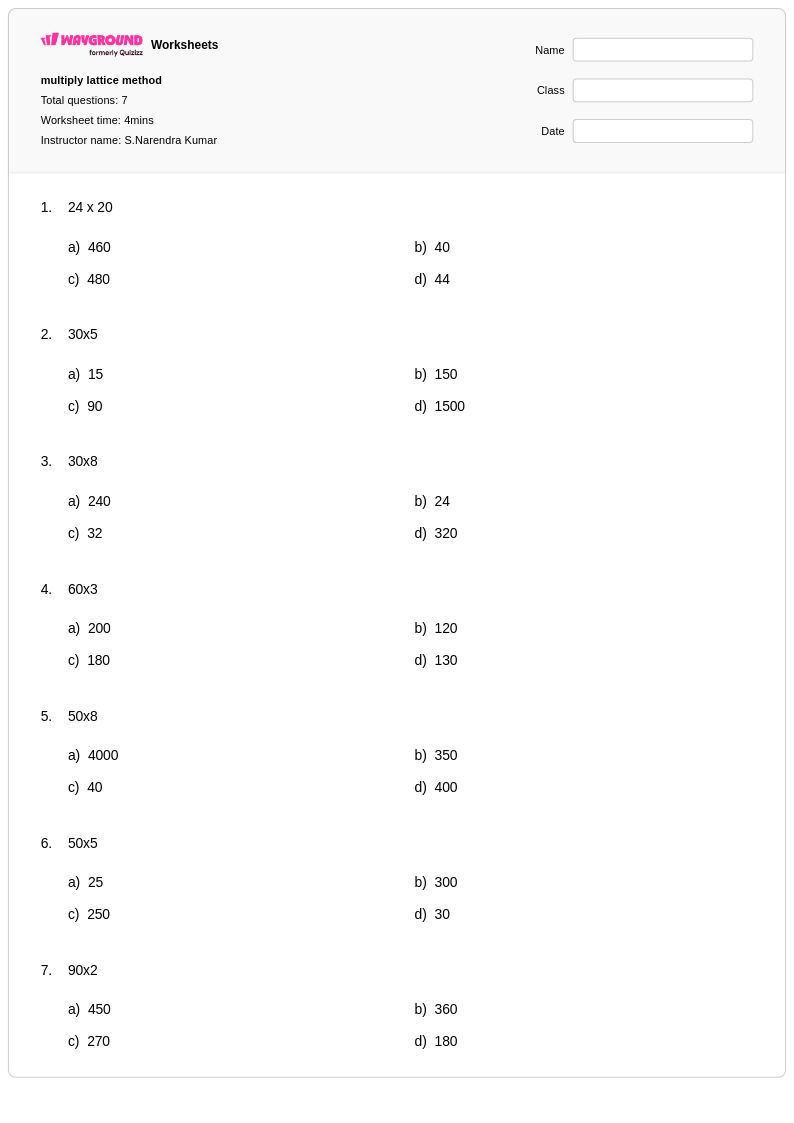
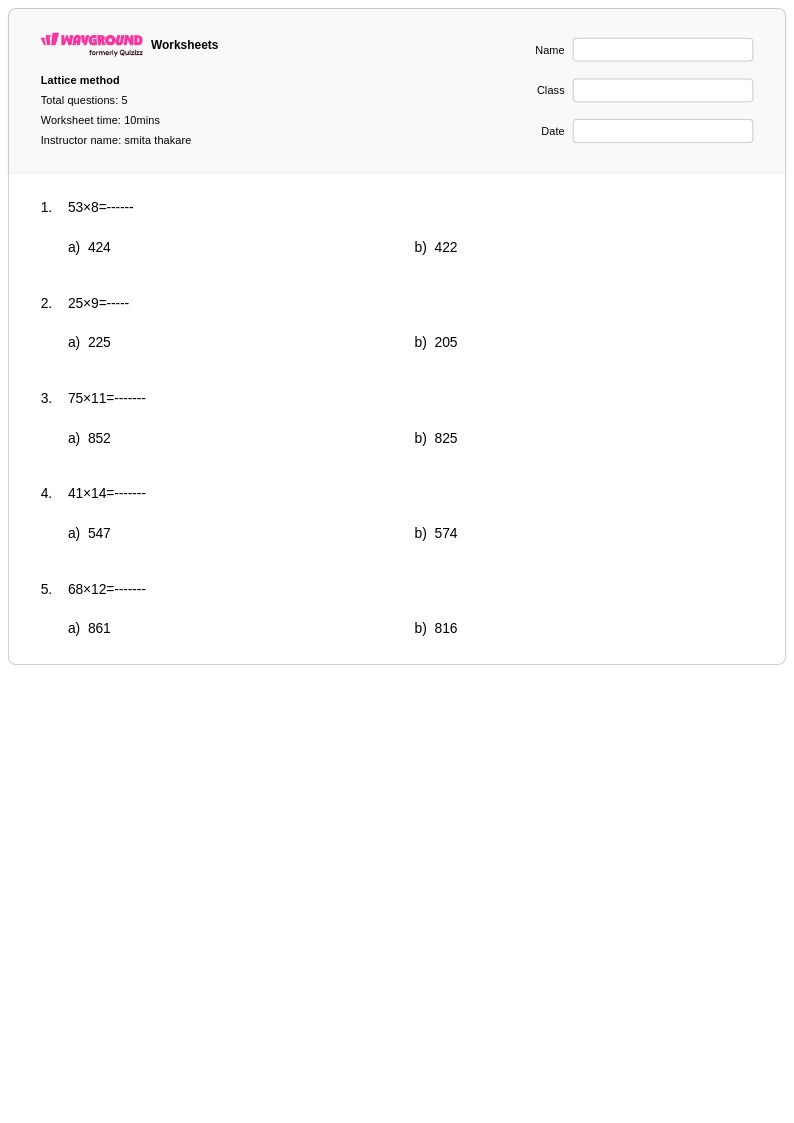
Explore printable Lattice Method worksheets
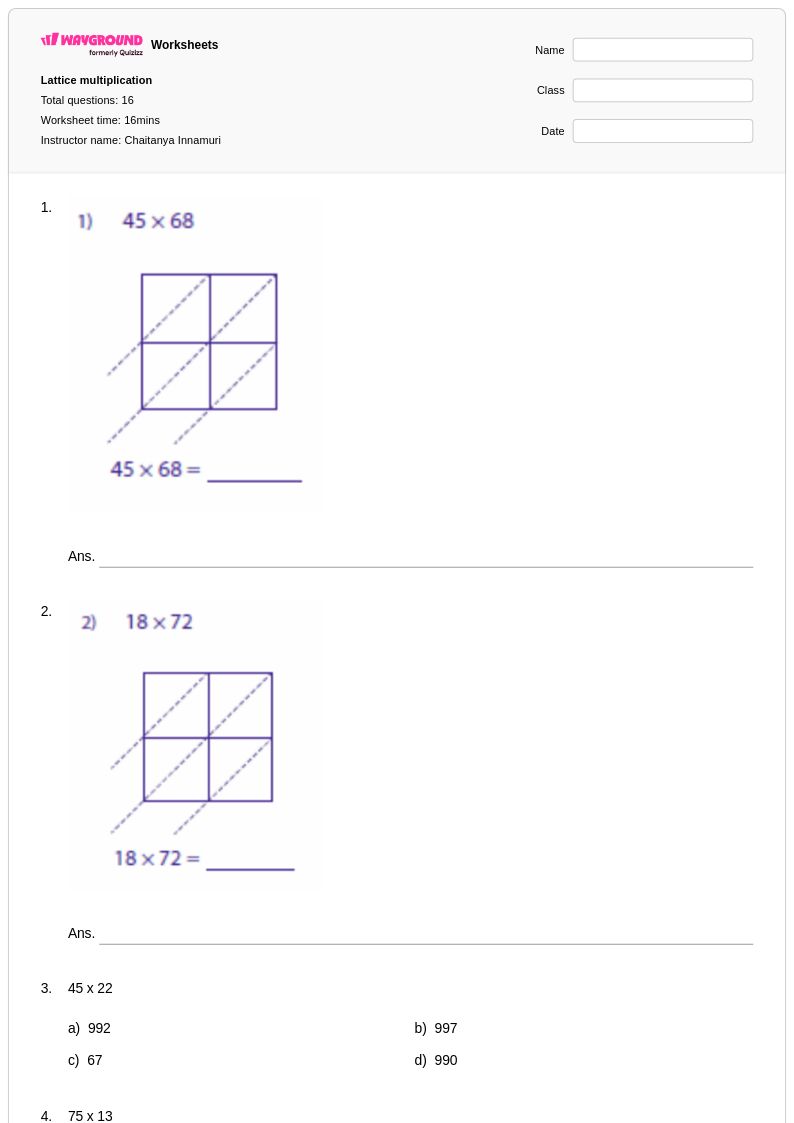
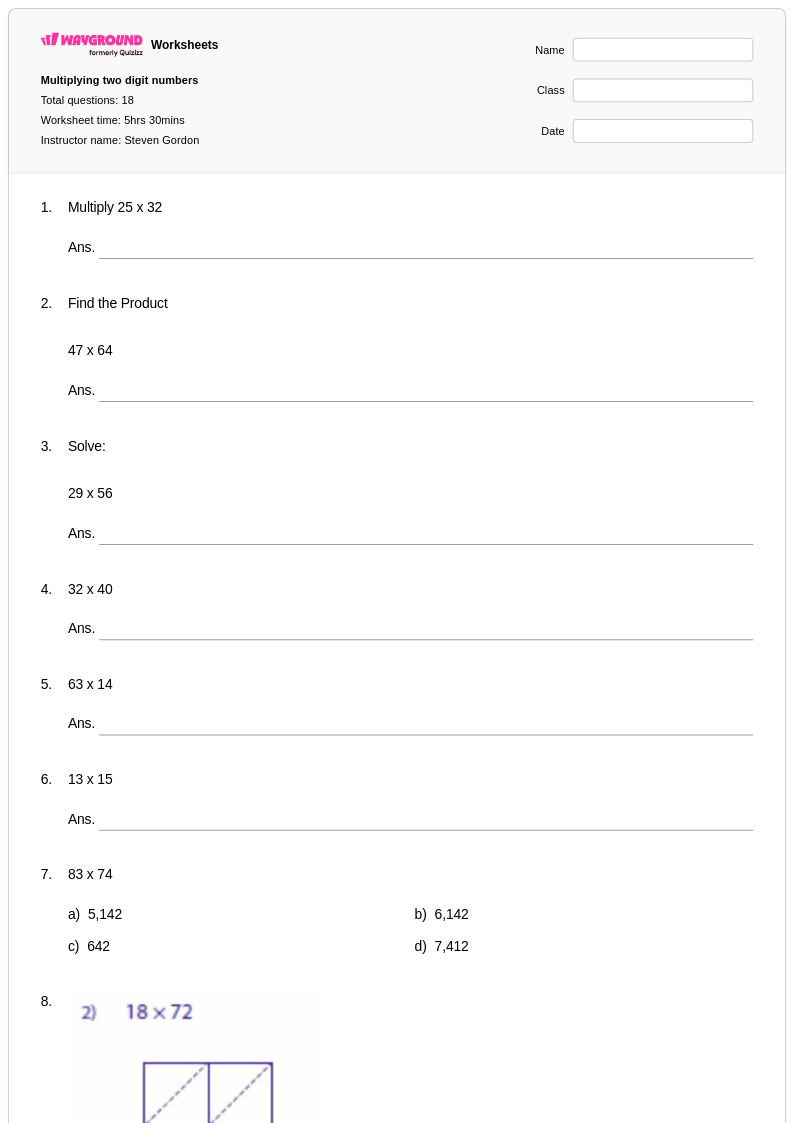
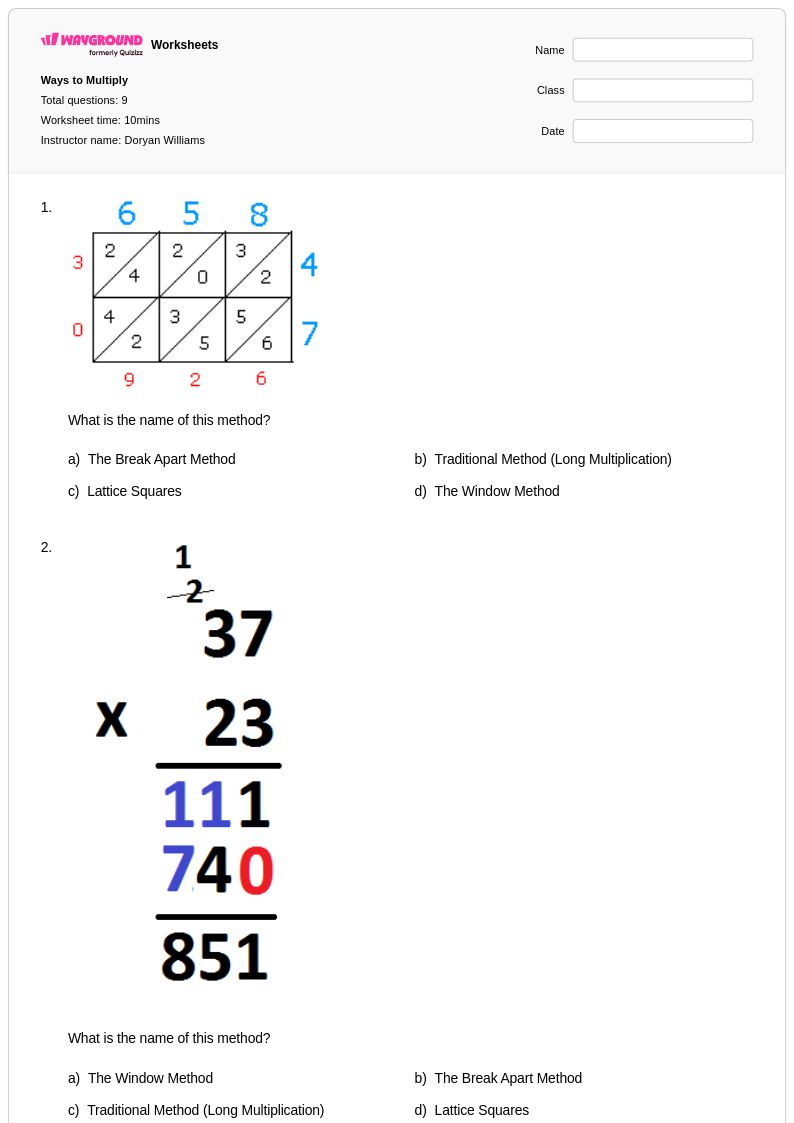
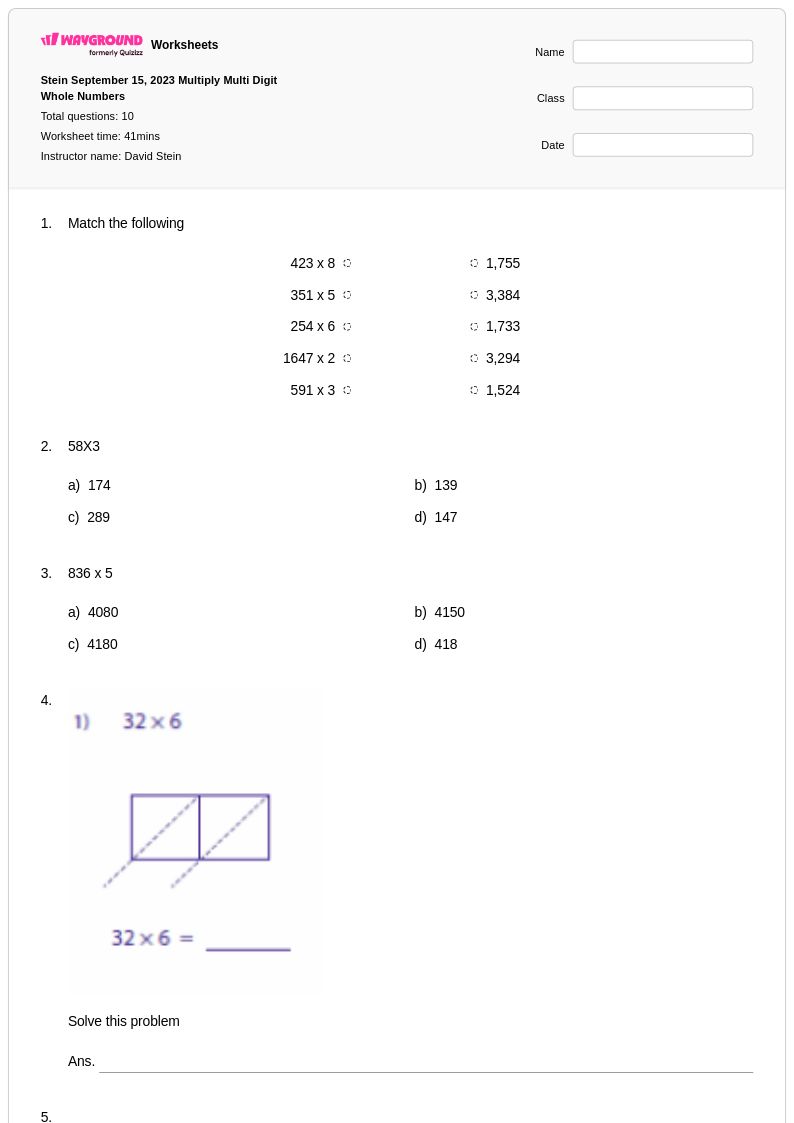
Lattice method worksheets available through Wayground (formerly Quizizz) provide students with structured practice in this powerful multiplication algorithm that breaks down complex calculations into manageable grid-based steps. These comprehensive worksheets strengthen fundamental multiplication skills by teaching students to organize partial products systematically within a diagonal lattice framework, enabling them to tackle multi-digit multiplication problems with greater confidence and accuracy. The collection includes a diverse range of practice problems that progress from basic two-digit by two-digit multiplication through more challenging multi-digit scenarios, complete with answer keys and detailed step-by-step solutions. Teachers can access these free printables in convenient PDF format, making it easy to distribute targeted practice materials that reinforce the visual and organizational aspects of the lattice multiplication method.
Wayground (formerly Quizizz) empowers educators with millions of teacher-created lattice method resources that can be seamlessly integrated into multiplication instruction across various skill levels. The platform's robust search and filtering capabilities allow teachers to quickly locate worksheets that align with specific learning objectives and academic standards, while built-in differentiation tools enable customization based on individual student needs and mathematical readiness. These versatile resources are available in both printable PDF format for traditional classroom use and digital formats for interactive learning environments, supporting flexible lesson planning and diverse instructional approaches. Teachers can effectively use these materials for initial skill introduction, targeted remediation for students struggling with traditional multiplication algorithms, enrichment activities for advanced learners, and ongoing practice to solidify mastery of this alternative computational strategy.
FAQs
How do I teach the lattice method for multiplication?
What are the most common mistakes students make with the lattice method?
How do these worksheets help students practice the lattice method?
How does the lattice method connect to curriculum standards?
How can I use this worksheet with my students?
How can I use the lattice method to support struggling students?