Free Printable League of Nations Worksheets for Class 12
Class 12 League of Nations free worksheets and printables help students analyze the formation, structure, and ultimate failures of this pivotal interwar international organization through engaging practice problems with answer keys.
Explore printable League of Nations worksheets for Class 12
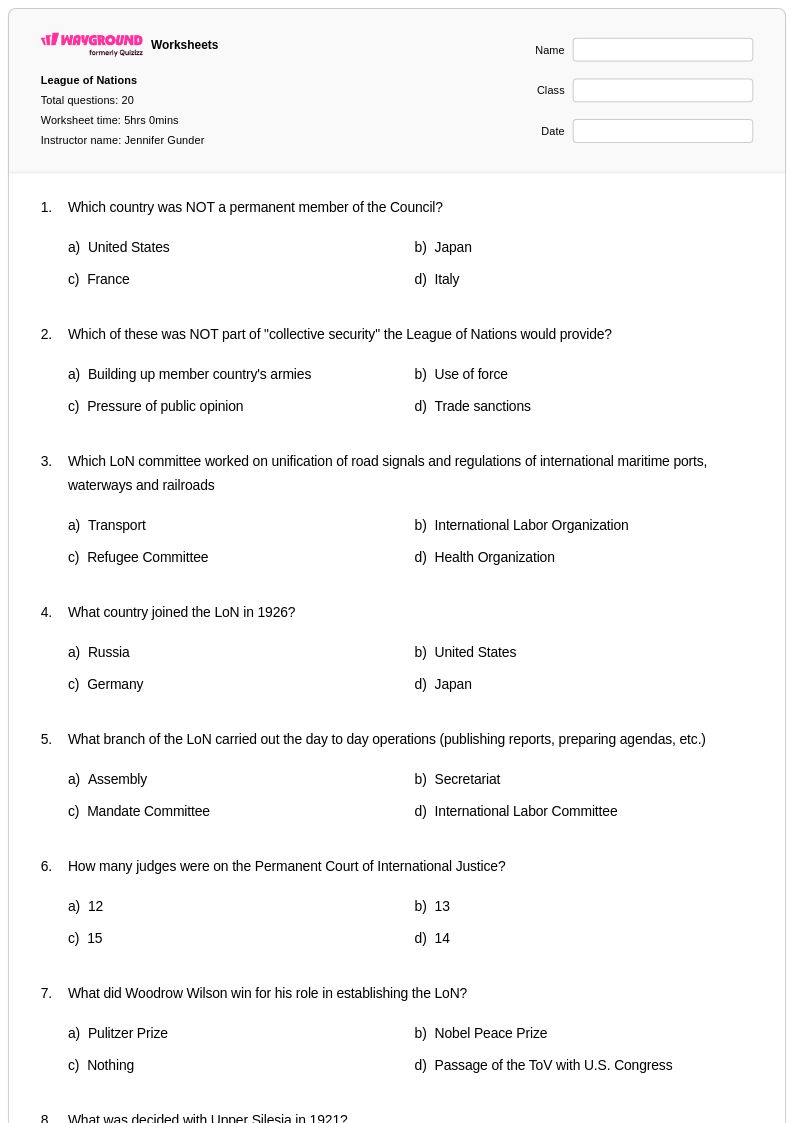
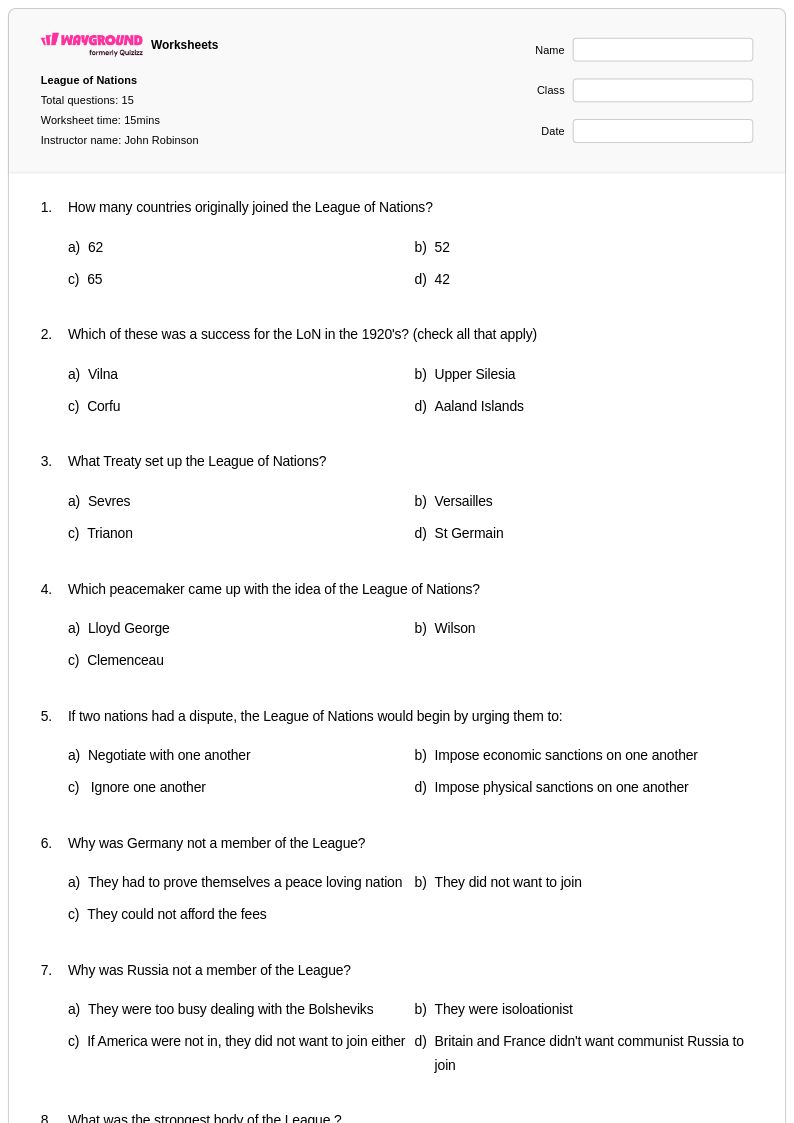
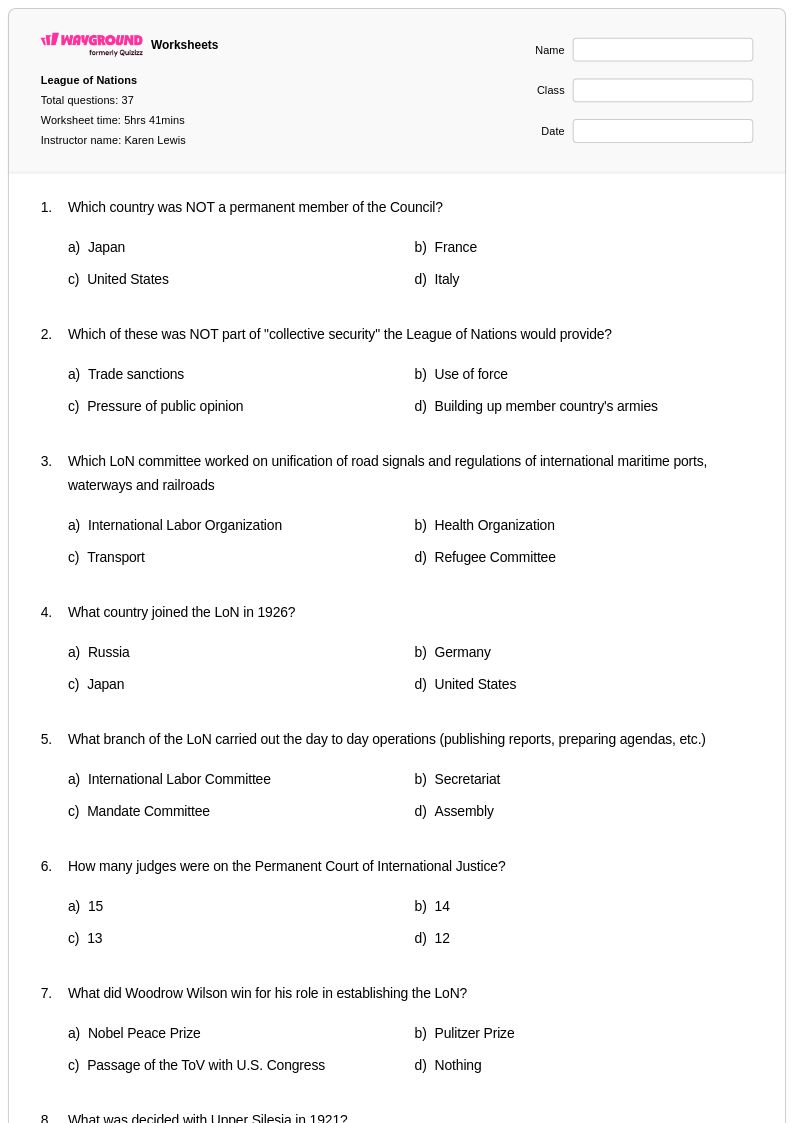
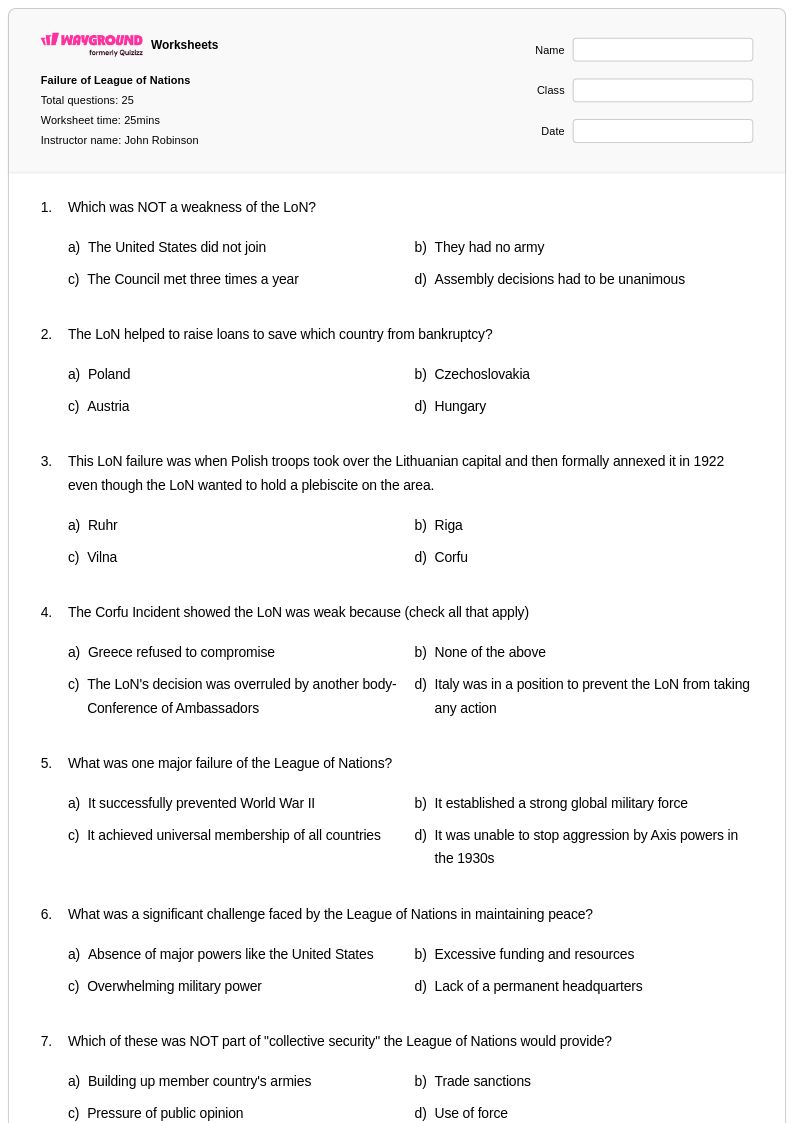
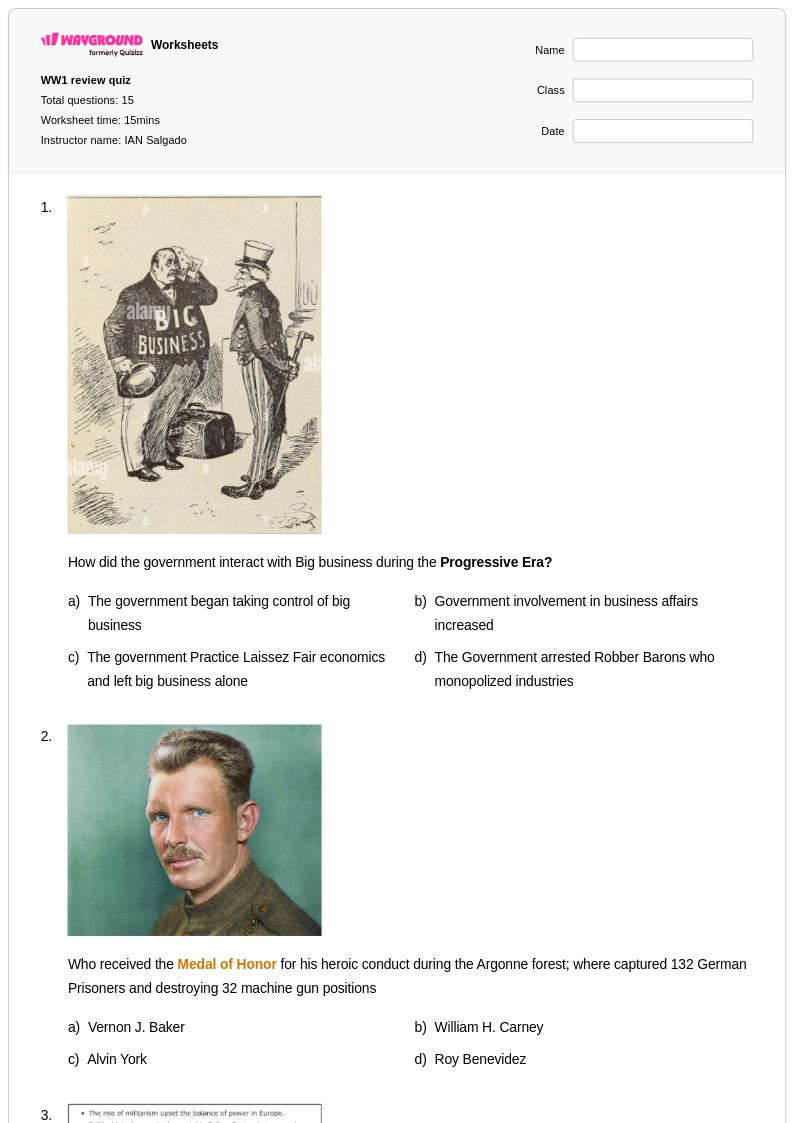
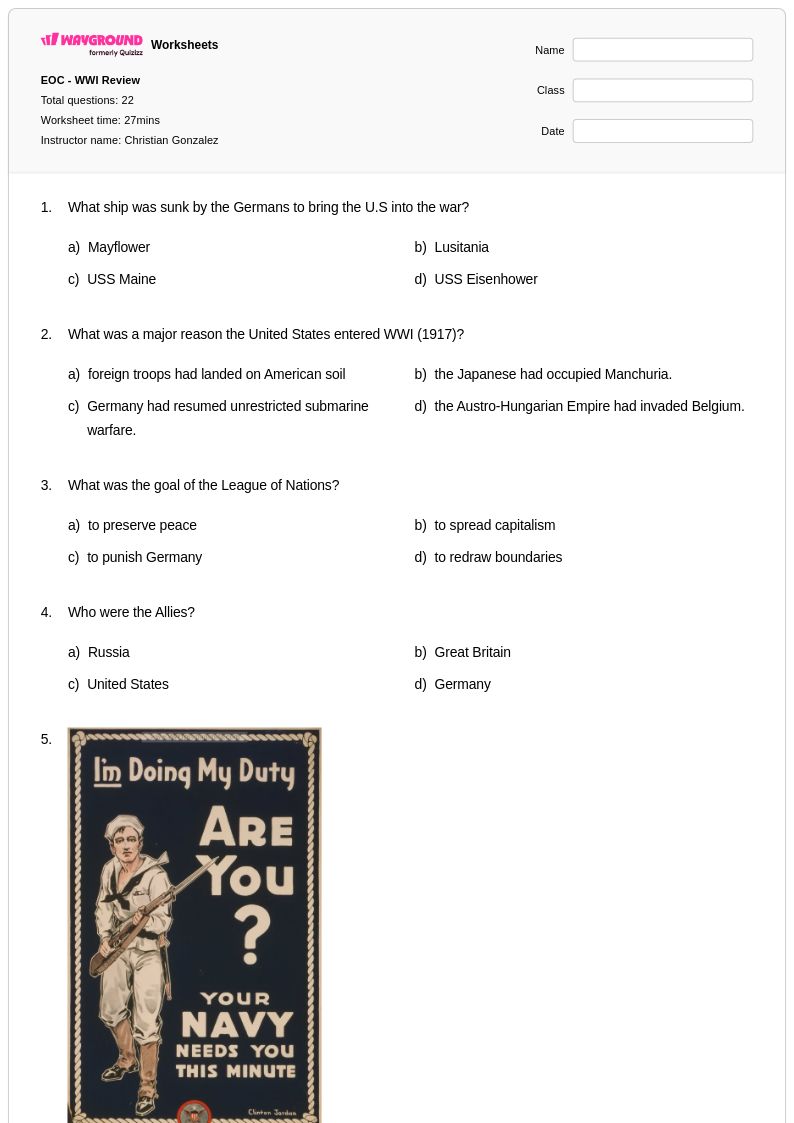
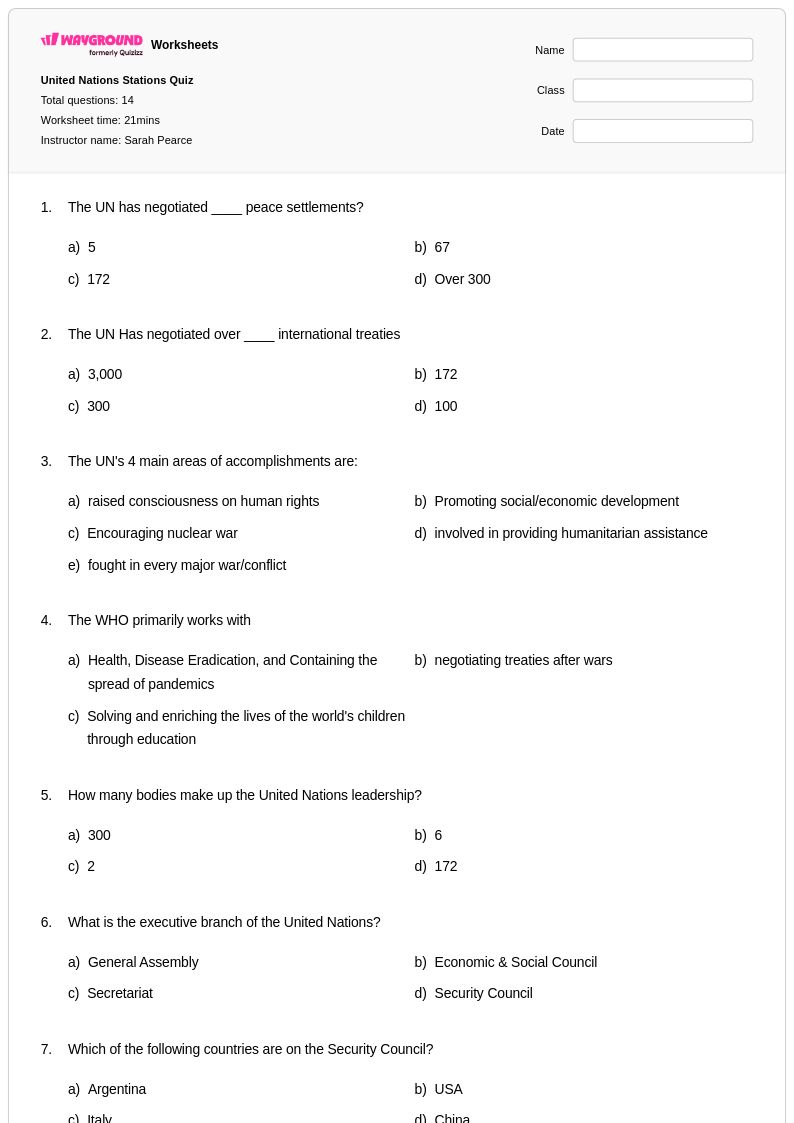
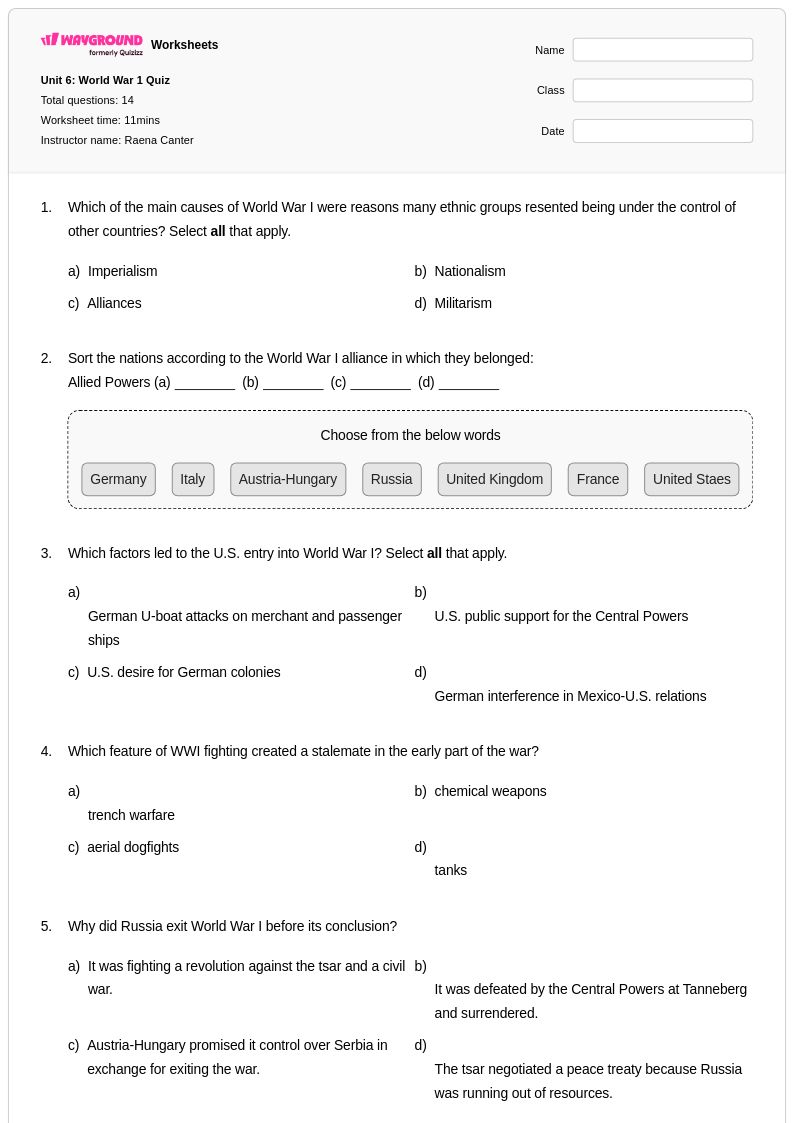
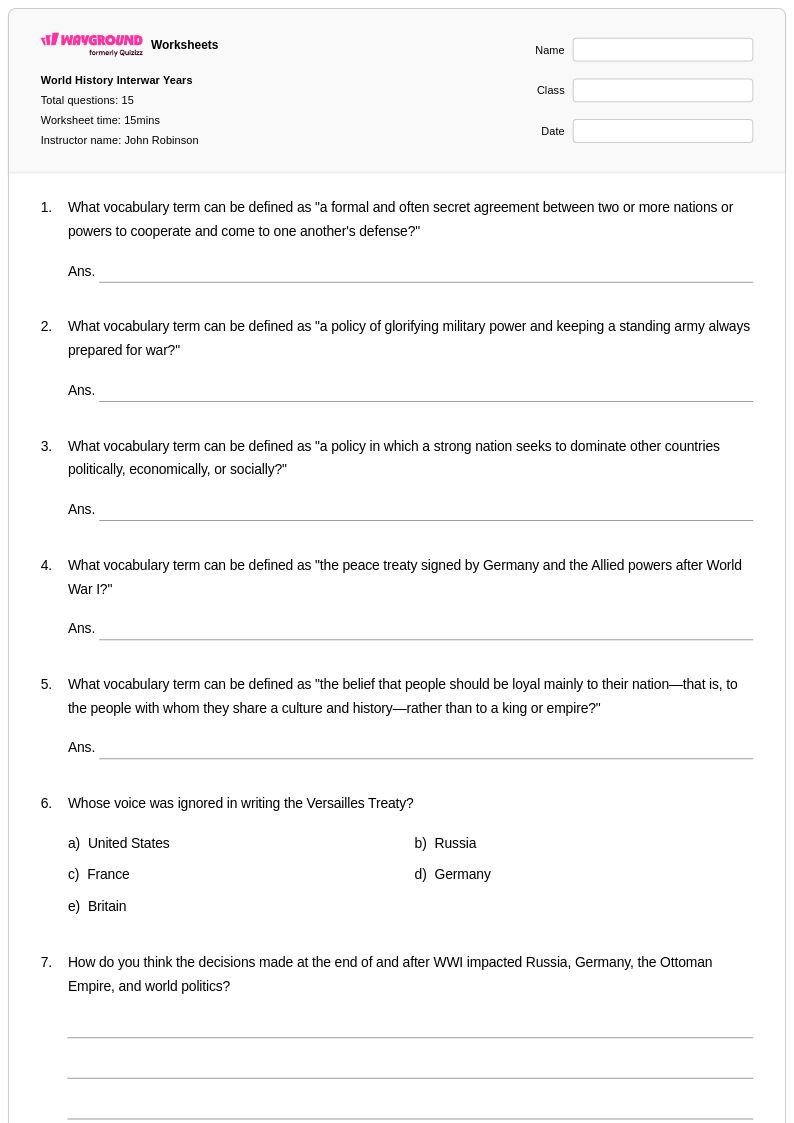
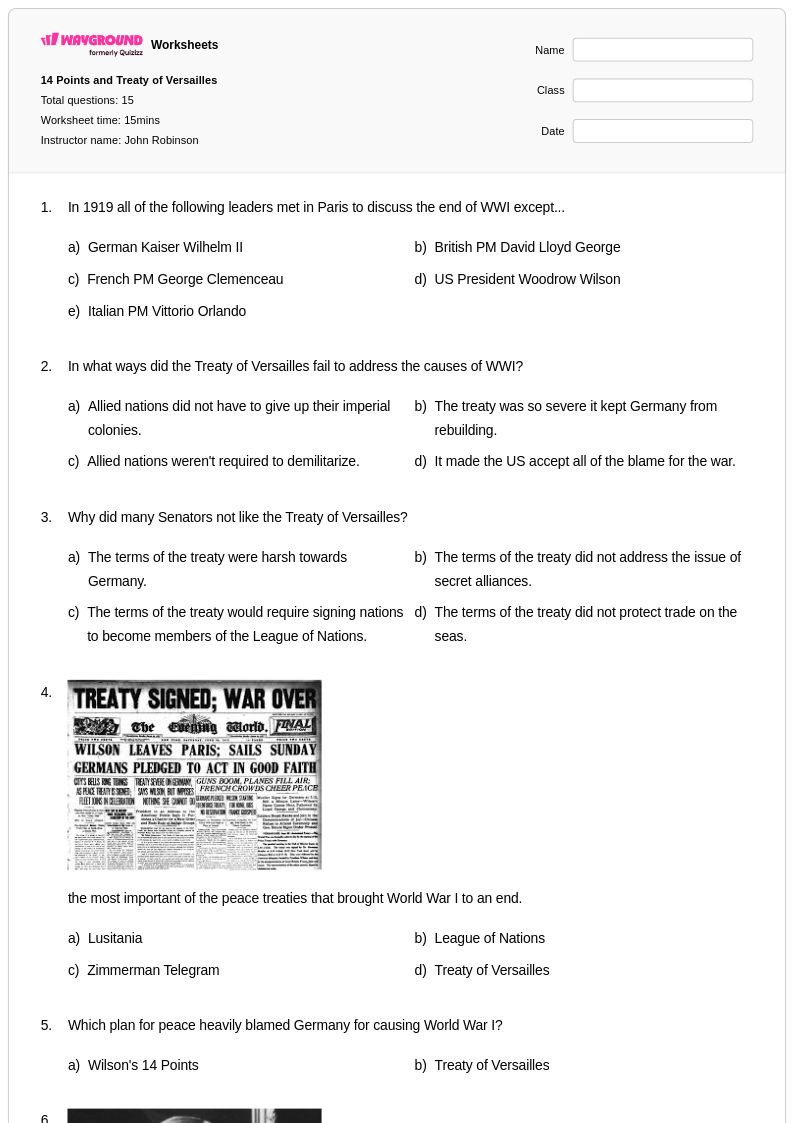
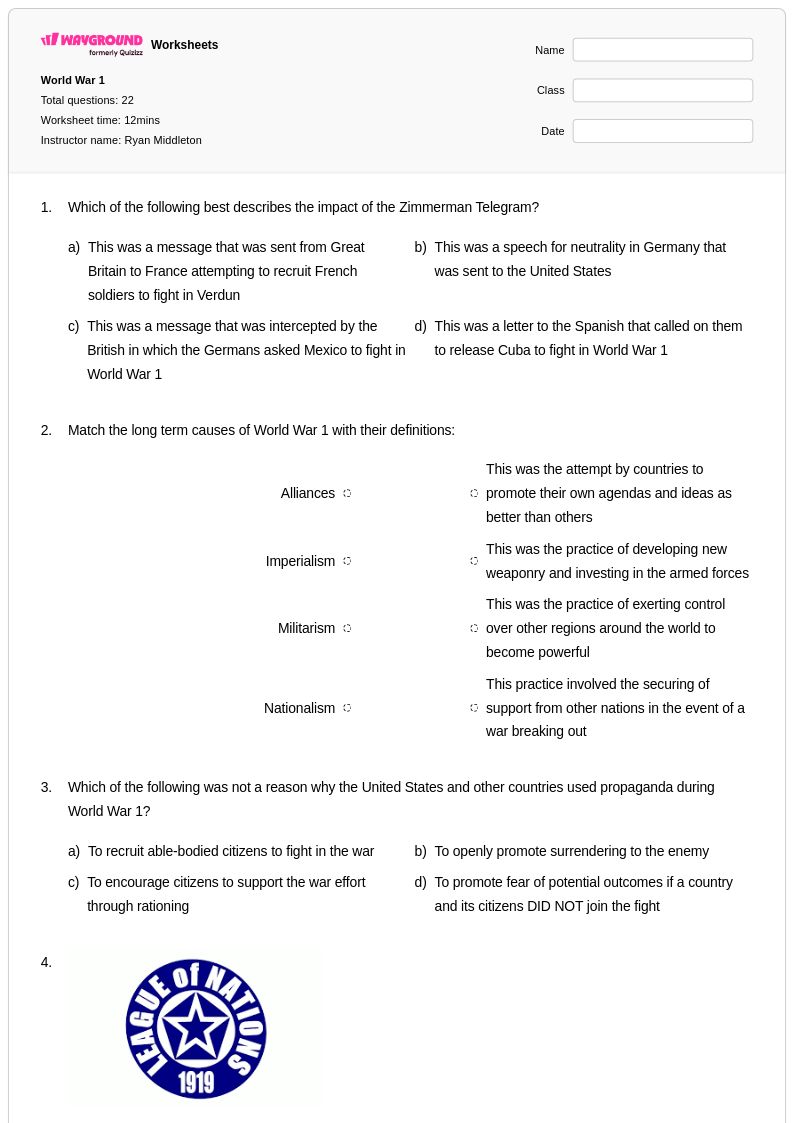
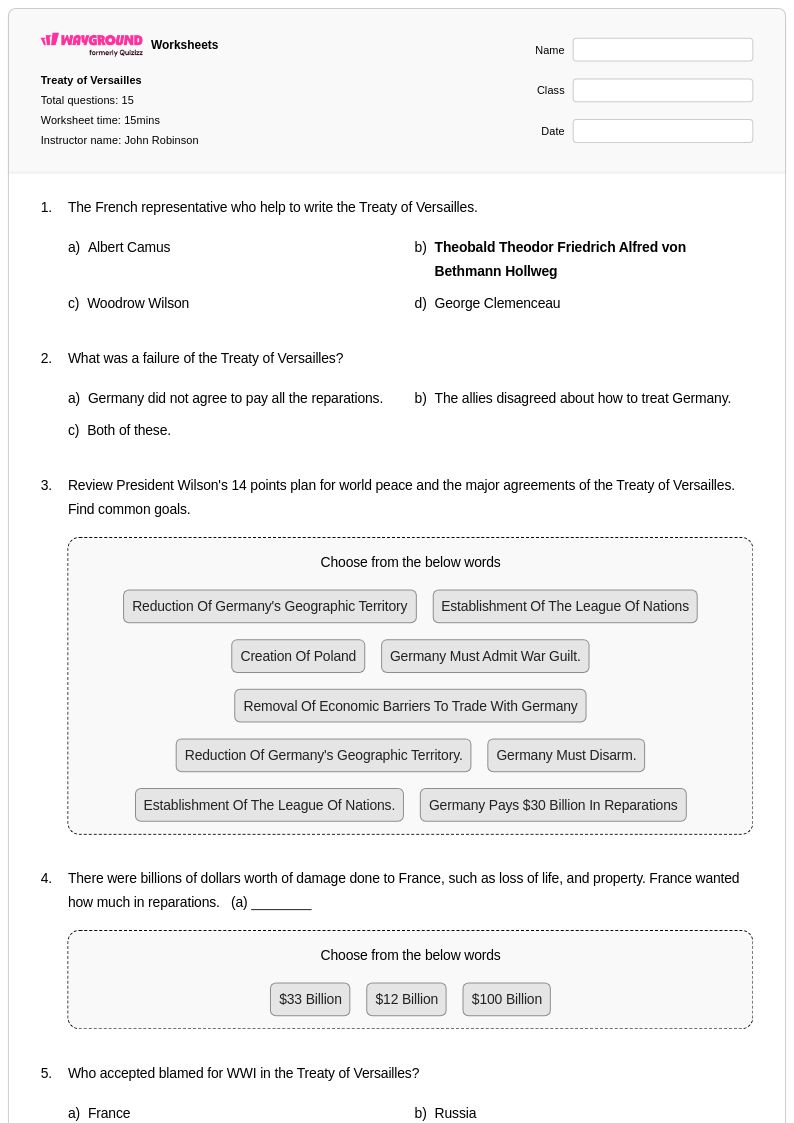
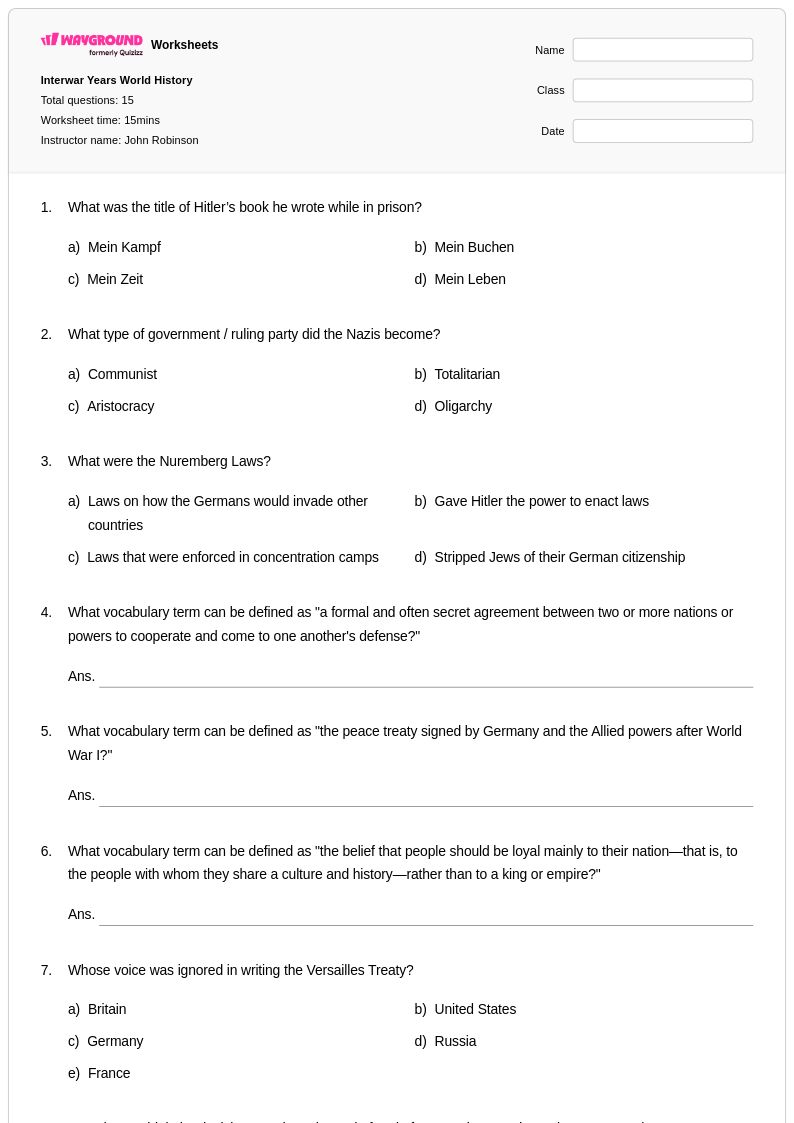
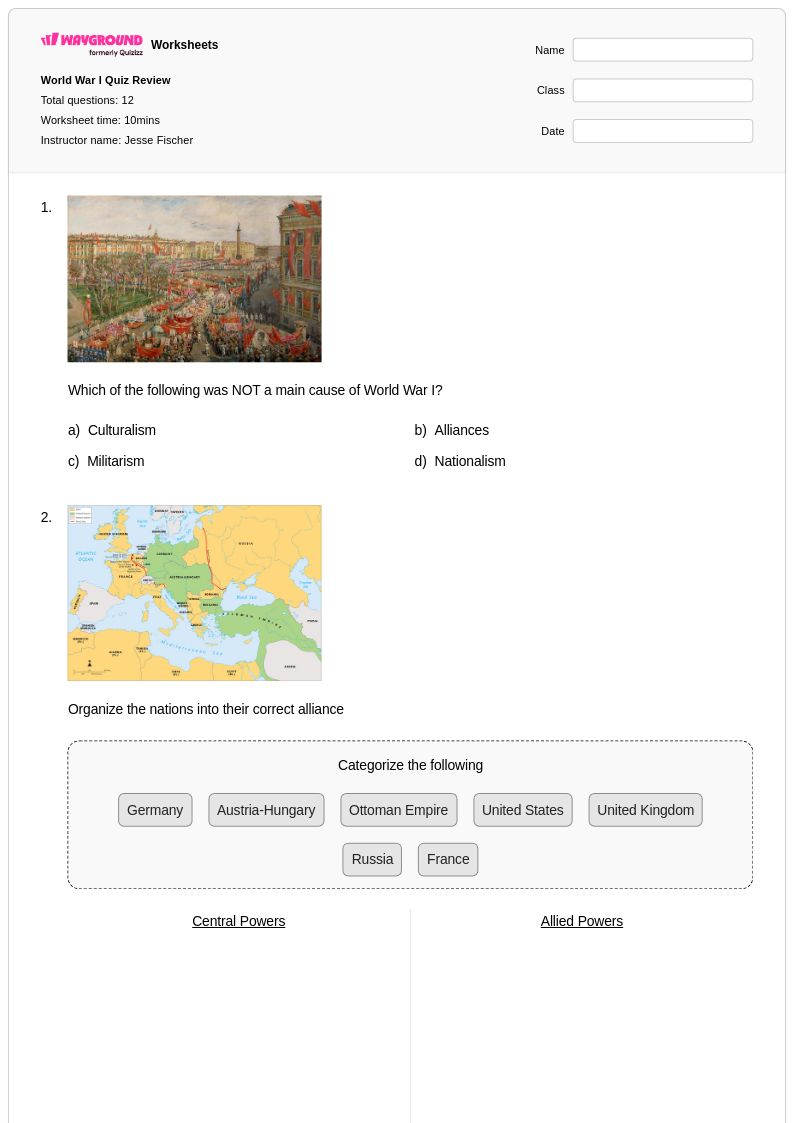
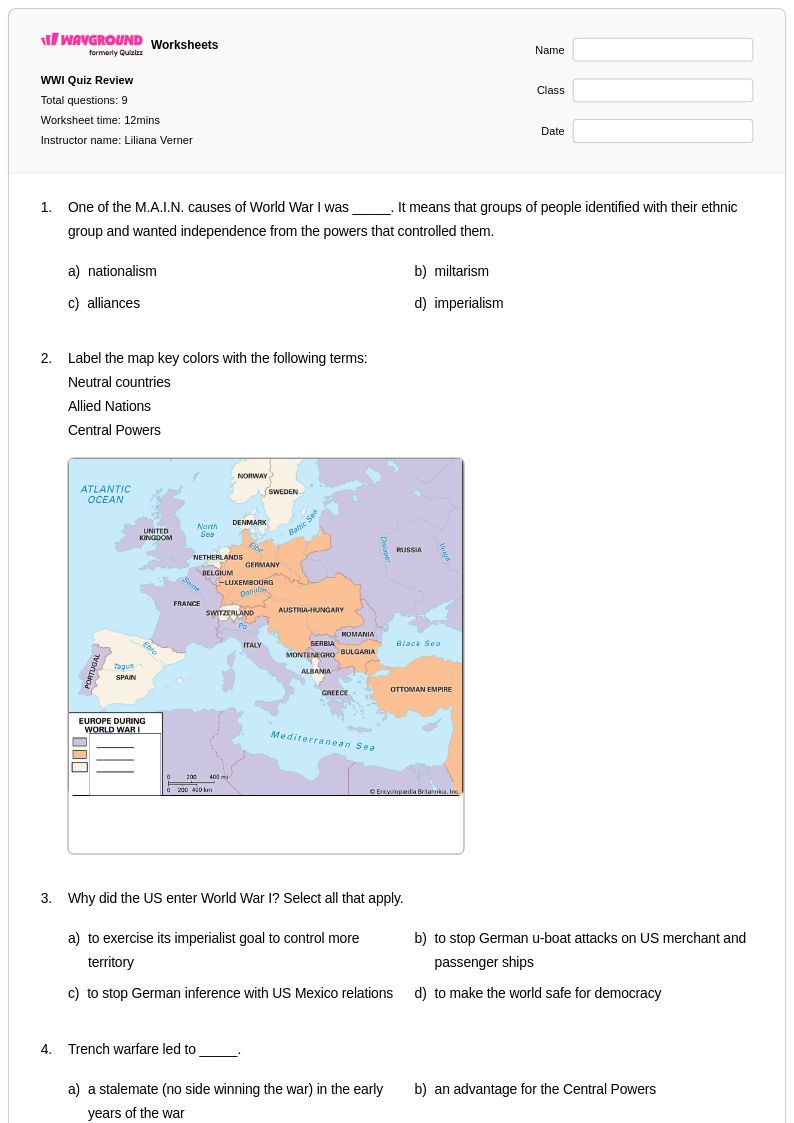
League of Nations worksheets for Class 12 students available through Wayground (formerly Quizizz) provide comprehensive coverage of this pivotal interwar period organization and its impact on international relations. These expertly crafted materials strengthen critical thinking skills by examining the League's founding principles, organizational structure, major successes and failures, and ultimate dissolution following World War II. Students engage with primary source documents, analyze case studies of international disputes, and evaluate the League's effectiveness in maintaining collective security through detailed practice problems that mirror advanced placement expectations. The collection includes free printable resources with corresponding answer keys, allowing educators to seamlessly integrate these materials into their curriculum while providing students with immediate feedback on their understanding of complex diplomatic and political concepts.
Wayground (formerly Quizizz) empowers educators with millions of teacher-created League of Nations resources that span multiple difficulty levels and learning objectives, supported by robust search and filtering capabilities that enable quick identification of grade-appropriate materials. The platform's standards alignment ensures worksheets meet state and national social studies benchmarks, while built-in differentiation tools allow teachers to modify content complexity for diverse learners within the same classroom. These flexible resources are available in both printable pdf format and interactive digital versions, facilitating seamless integration into traditional and technology-enhanced learning environments. Teachers can customize existing worksheets or combine multiple resources to create comprehensive assessment packages that support lesson planning, targeted remediation for struggling students, enrichment opportunities for advanced learners, and ongoing skill practice that reinforces understanding of the League's lasting influence on modern international organizations.
FAQs
How do I teach the League of Nations to high school students?
Teaching the League of Nations effectively requires grounding students in the post-WWI context before examining the organization's structure and purpose. Start by establishing why world leaders believed a collective security organization was necessary after the devastation of World War I, then guide students through the League's covenant, its key bodies (the Assembly, Council, and Secretariat), and the significance of the United States never joining. From there, use case studies like the Manchurian Crisis and the Italian invasion of Ethiopia to show students how the League's weaknesses played out in practice, building toward an analytical understanding of why it ultimately failed to prevent World War II.
What exercises help students practice analyzing the League of Nations?
Timeline activities are particularly effective for helping students sequence key events in the League's history, from its founding at the Paris Peace Conference in 1919 through its dissolution in 1946. Comparative analysis exercises that ask students to evaluate the League's response to specific international crises, such as the Manchurian Crisis of 1931 and the Italian invasion of Ethiopia in 1935, build critical thinking skills by requiring students to weigh evidence and draw conclusions about the organization's effectiveness. Primary source document analysis adds depth by letting students engage directly with the language and arguments of the era rather than relying solely on secondary accounts.
What mistakes do students commonly make when studying the League of Nations?
One of the most common misconceptions is that the League of Nations failed solely because the United States did not join, when in fact structural weaknesses such as the requirement for unanimous decisions and the lack of an independent military force were equally significant. Students also frequently conflate the League of Nations with the later United Nations, missing the important distinctions in membership, enforcement mechanisms, and mandate. Another common error is treating the League as a complete failure, overlooking its genuine successes in areas like labor standards, refugee assistance, and resolving several smaller territorial disputes during the 1920s.
How can I use League of Nations worksheets in my classroom?
League of Nations worksheets on Wayground are available as printable PDFs for traditional classroom use and in digital formats for technology-integrated or blended learning environments, making them adaptable to a wide range of instructional setups. Teachers can also host worksheets as a quiz directly on Wayground, enabling real-time student responses and streamlined assessment. The range of task types, from basic comprehension questions to complex analytical prompts, means the same collection can support direct instruction, independent practice, small-group work, or homework assignments depending on where students are in the unit.
How do I help struggling students understand why the League of Nations failed?
Breaking the League's failures into distinct, concrete categories helps struggling students organize what can otherwise feel like an overwhelming amount of interrelated causes. Focus first on structural problems (unanimous voting, no standing army, key nations absent), then move to specific crisis case studies where students can see those structural problems in action. Graphic organizers that ask students to match each failure category to a real historical example are especially useful for reinforcing these connections before moving to open-ended analytical writing.
How can I differentiate League of Nations instruction for mixed-ability classes?
For mixed-ability classrooms, scaffolding the analytical demand of tasks is the most effective approach: give developing learners structured graphic organizers and sentence frames while challenging advanced students with open-ended comparative essays that connect the League's failures to the origins of World War II. On Wayground, teachers can apply individual accommodations such as read-aloud support, reduced answer choices, and extended time to specific students, ensuring each learner engages with the same content at an appropriate level of support without singling anyone out.