Free Printable World War 1 Homefront Worksheets for Class 12
Free Class 12 World War 1 Homefront worksheets and printables from Wayground help students explore how WWI transformed daily life, economy, and society on the home front through engaging practice problems with answer keys.
Explore printable World War 1 Homefront worksheets for Class 12
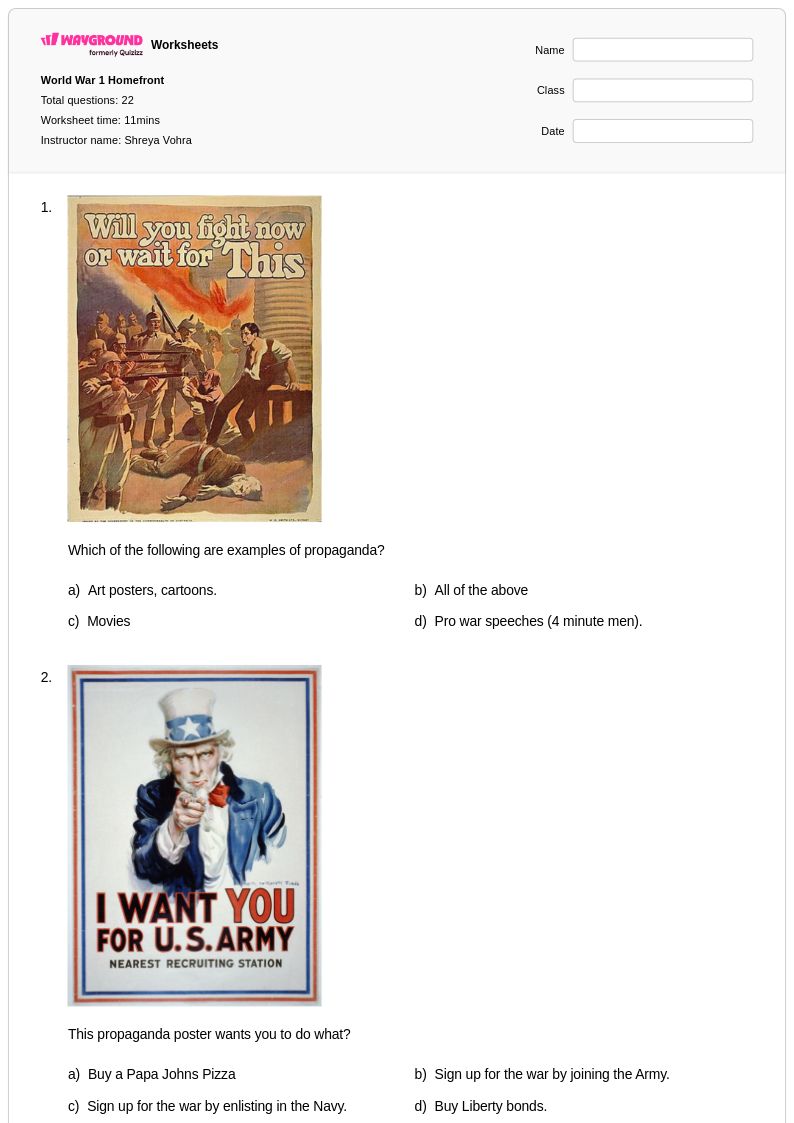
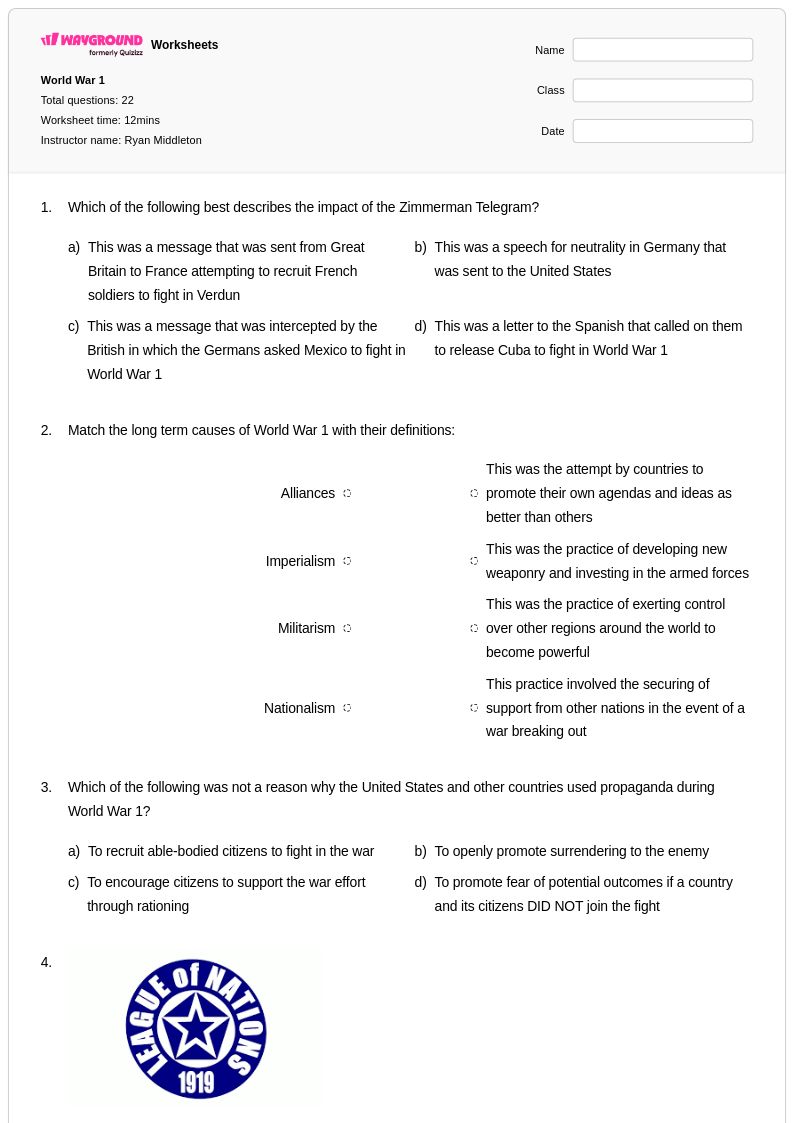
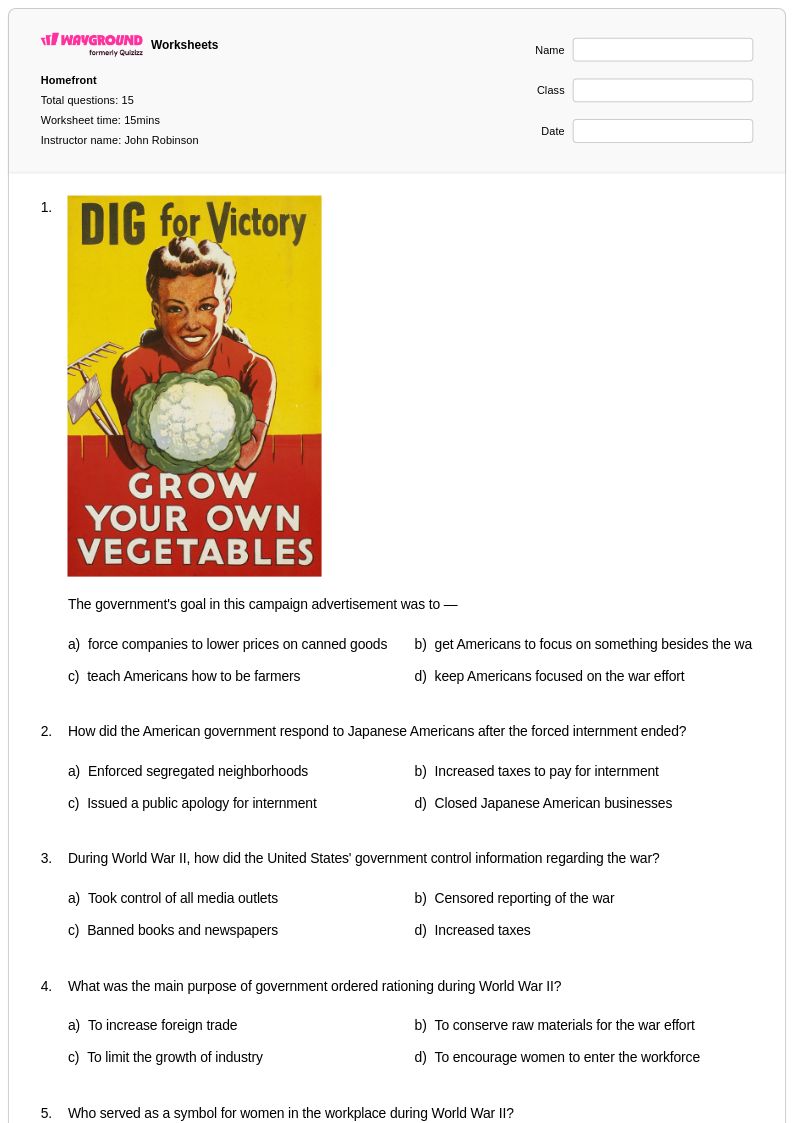
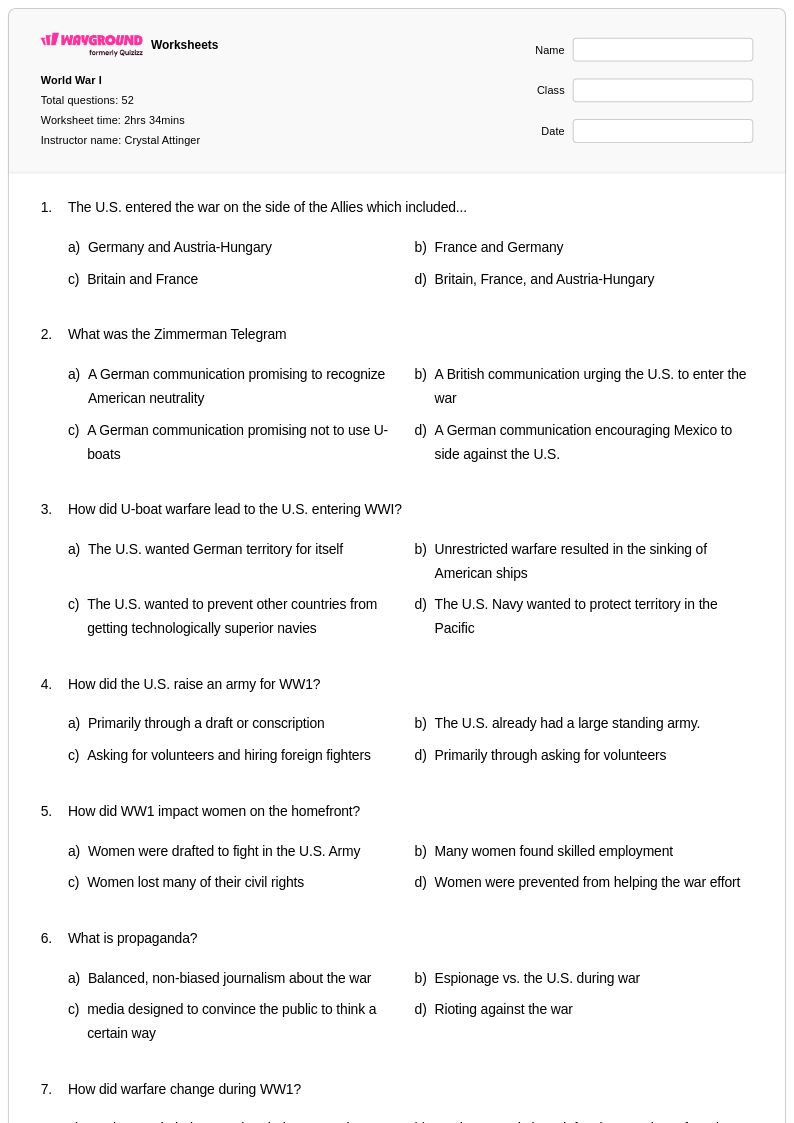
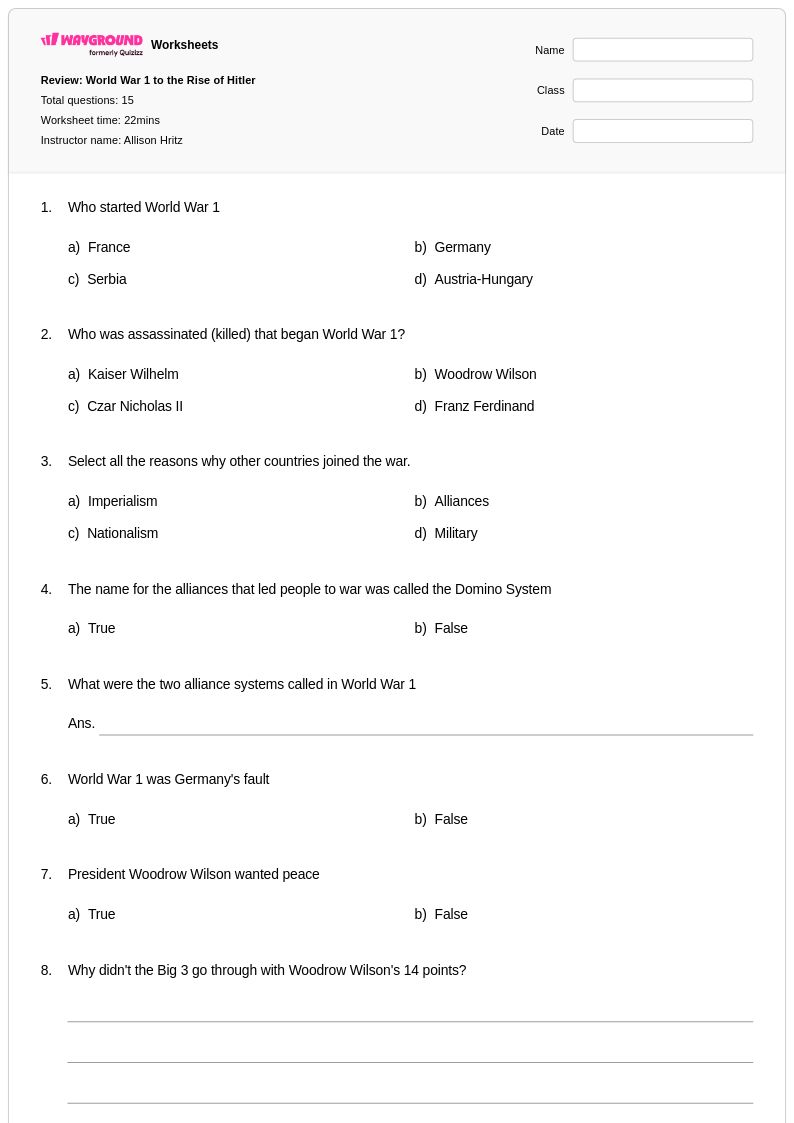
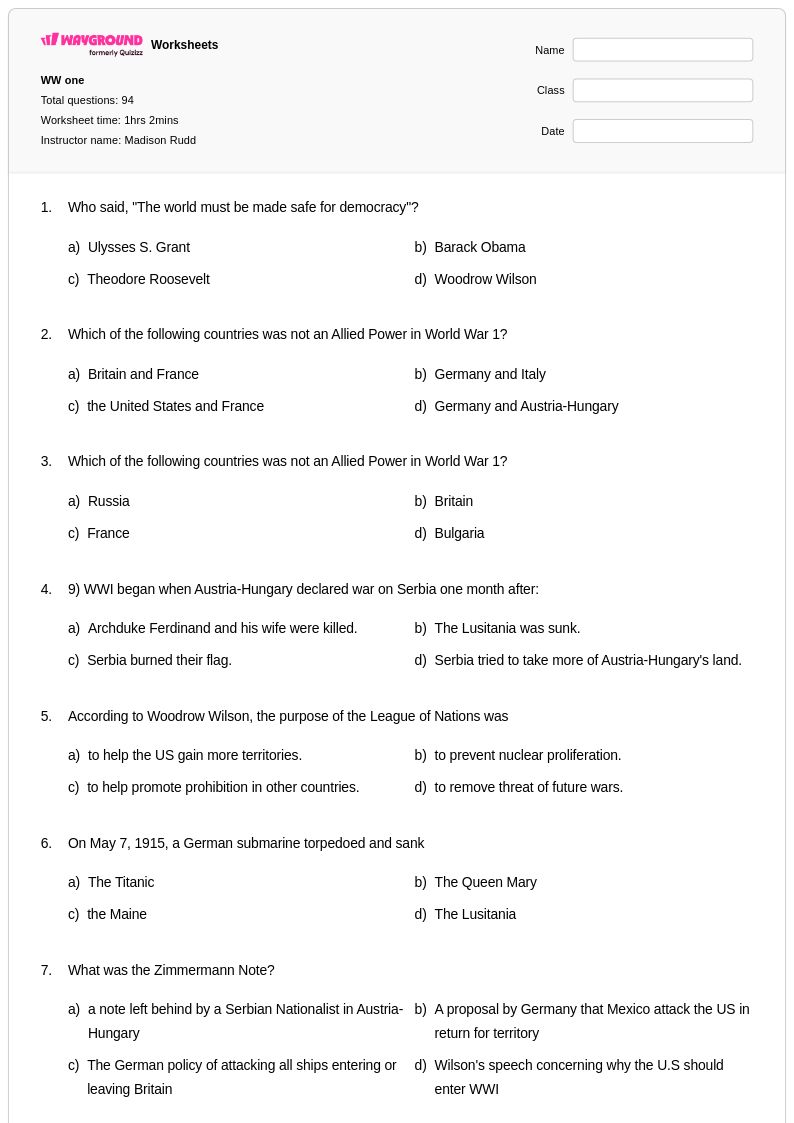
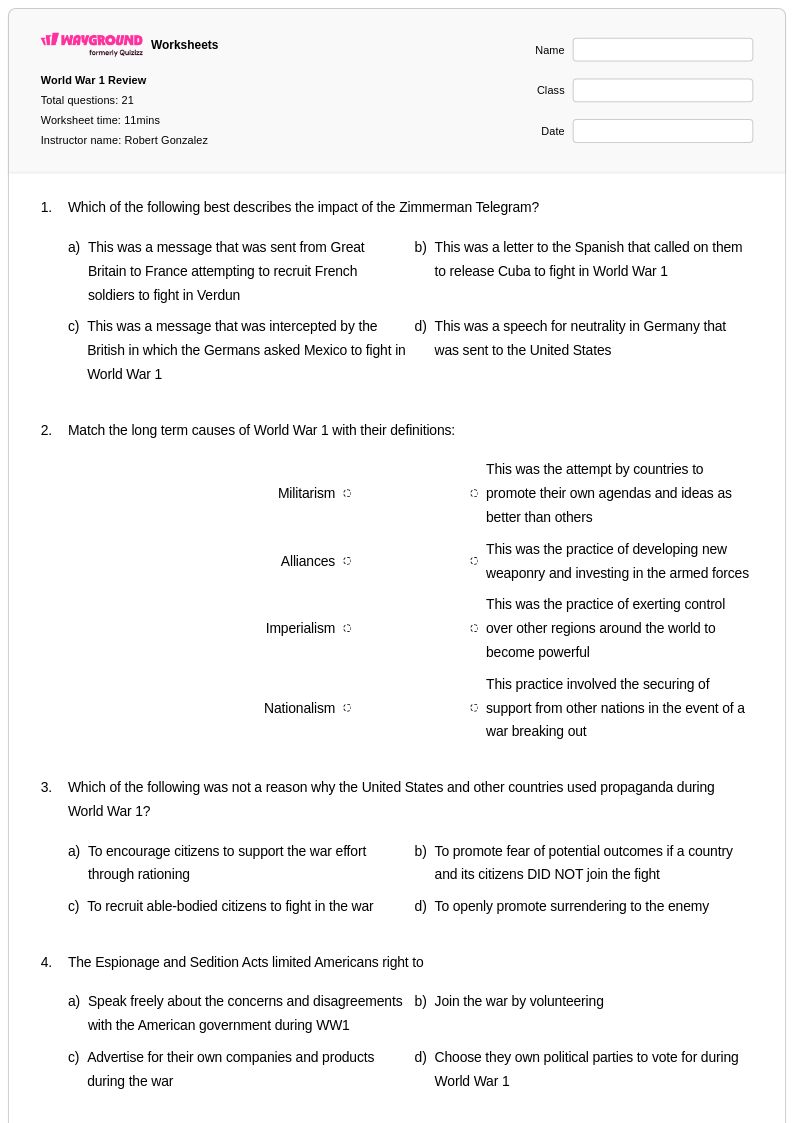
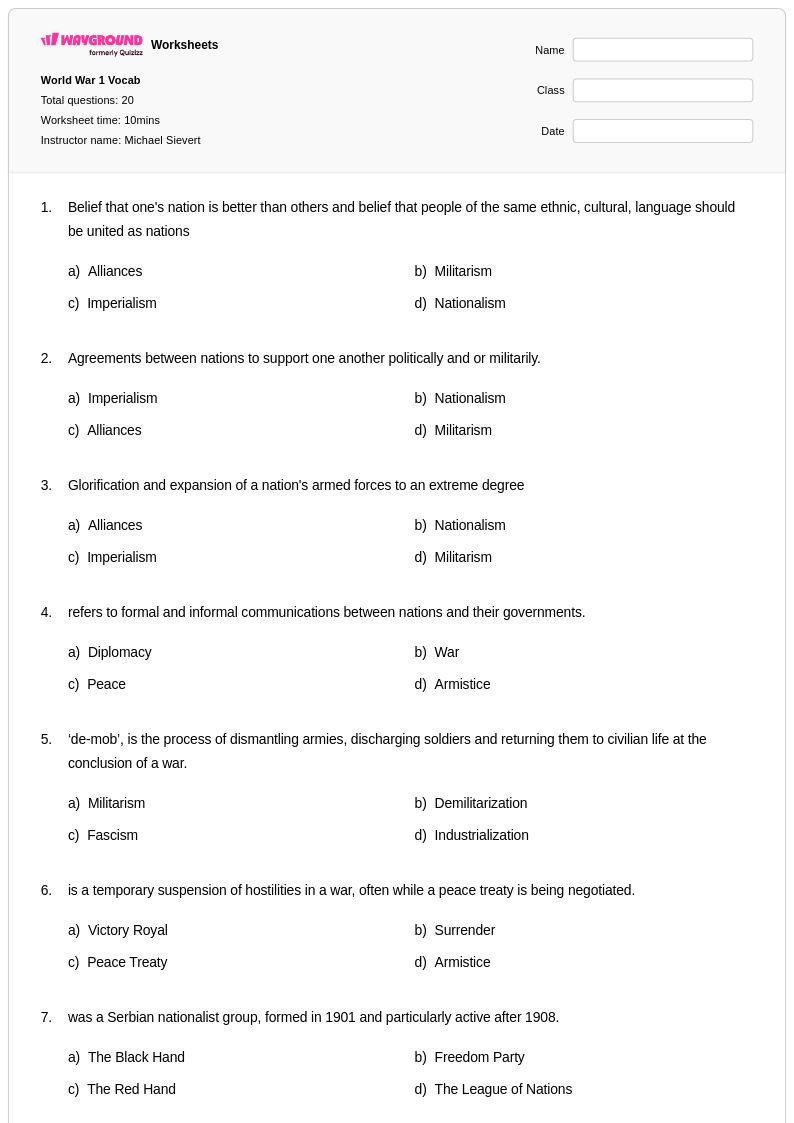
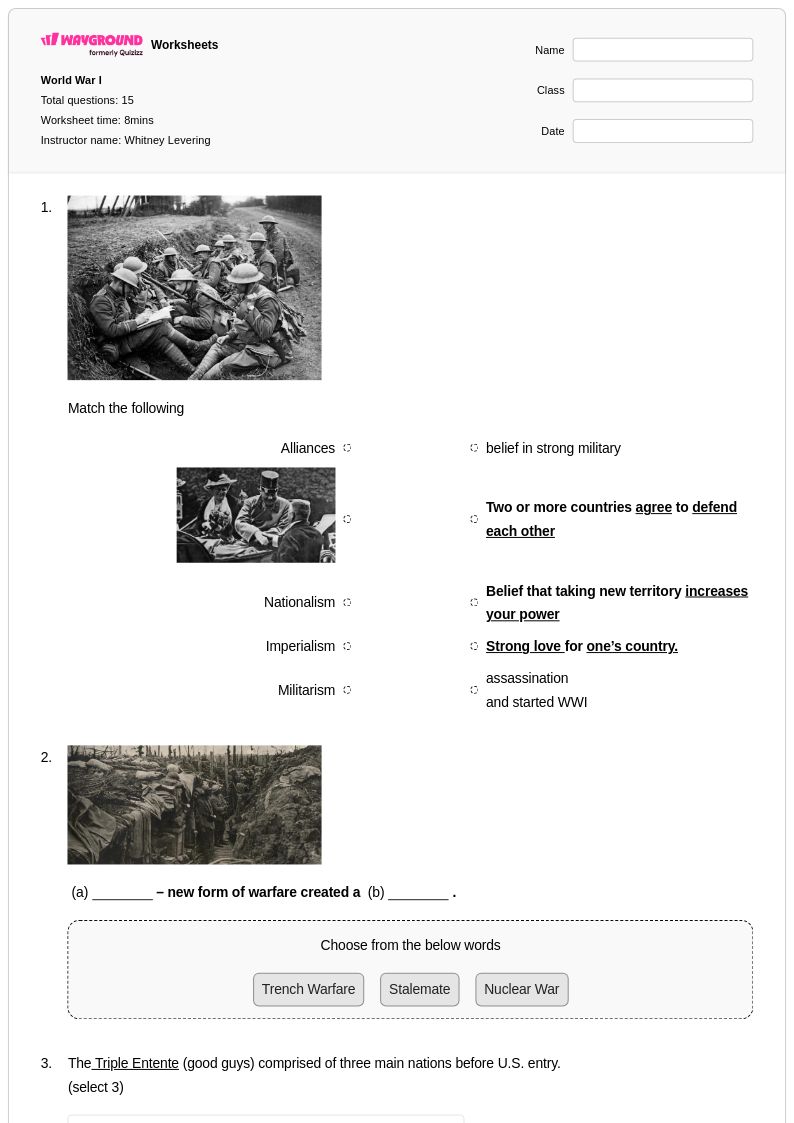
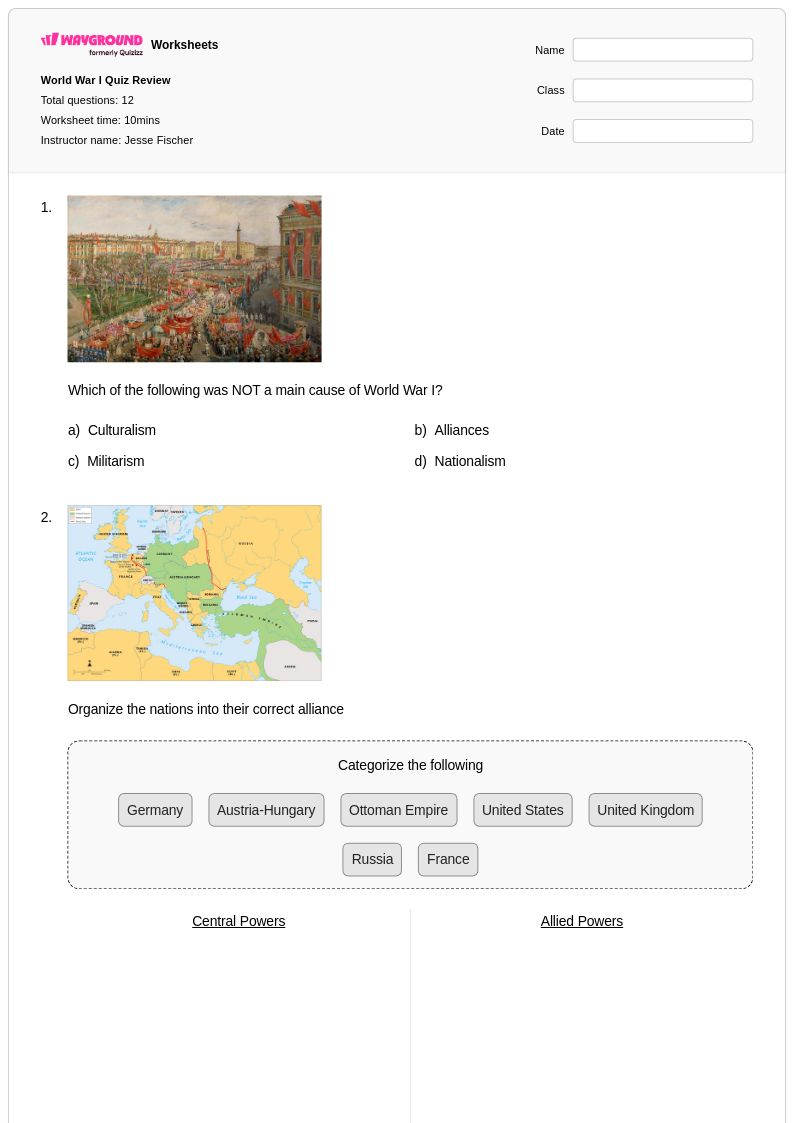
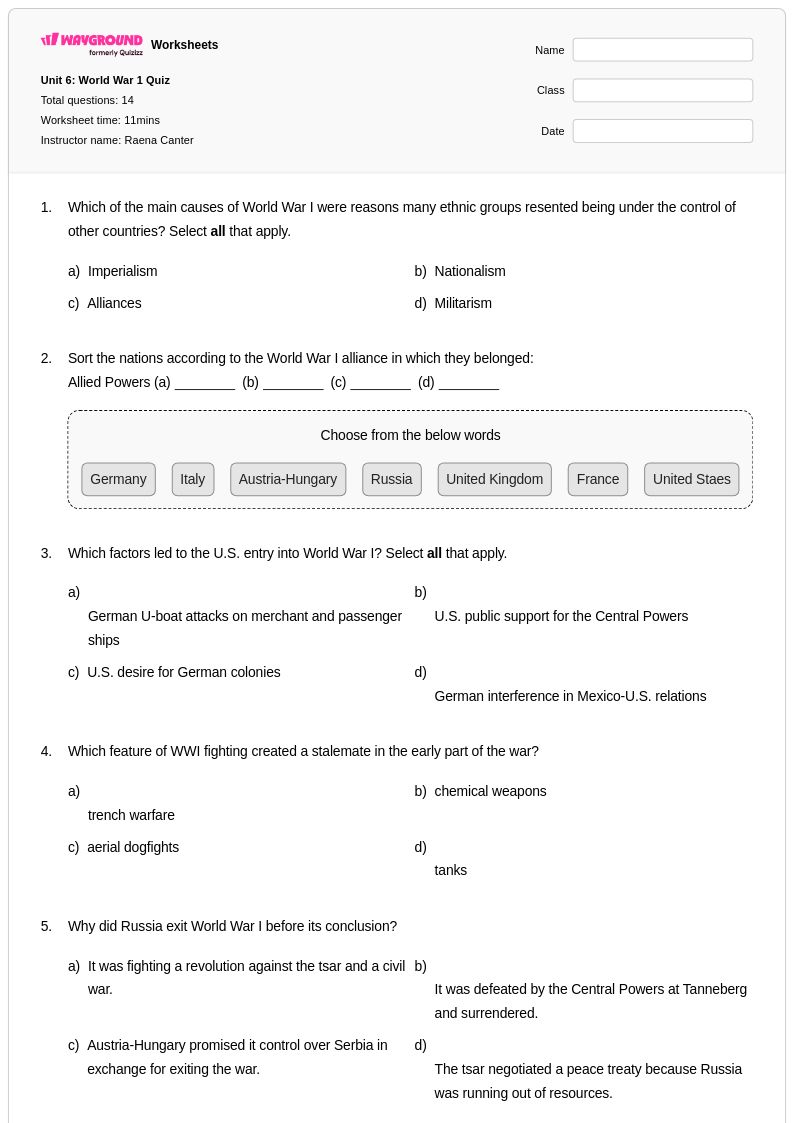
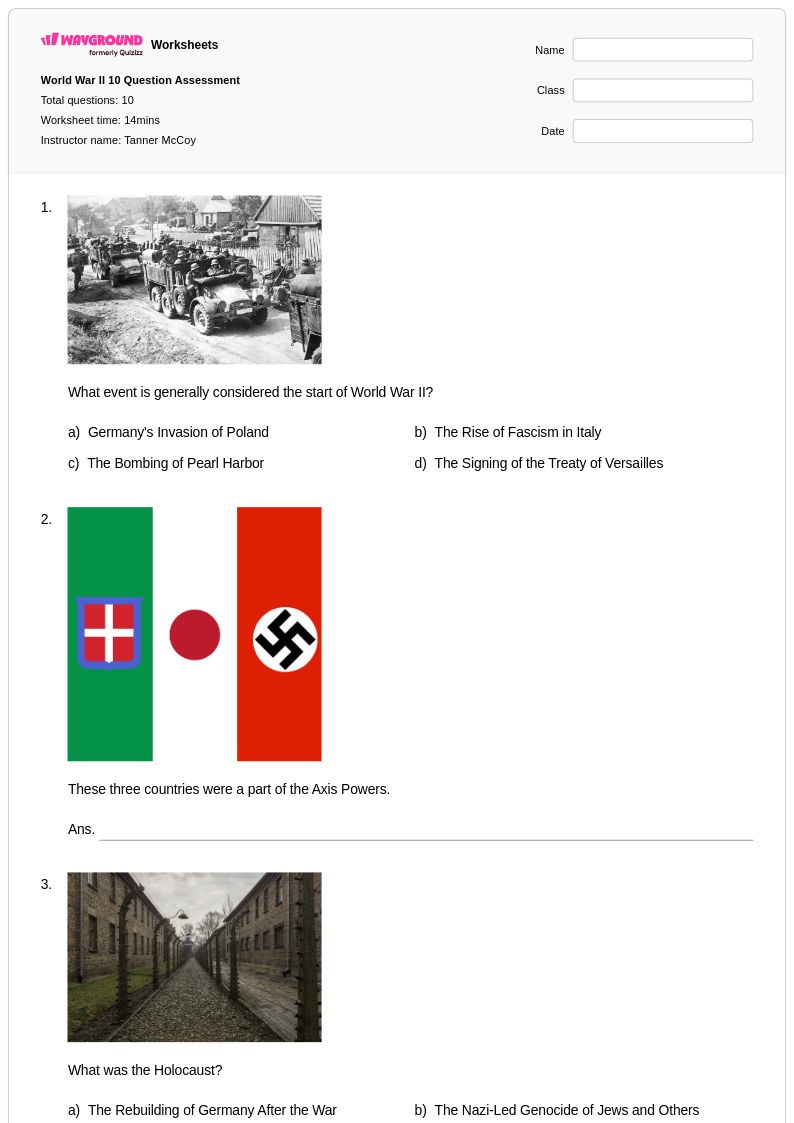
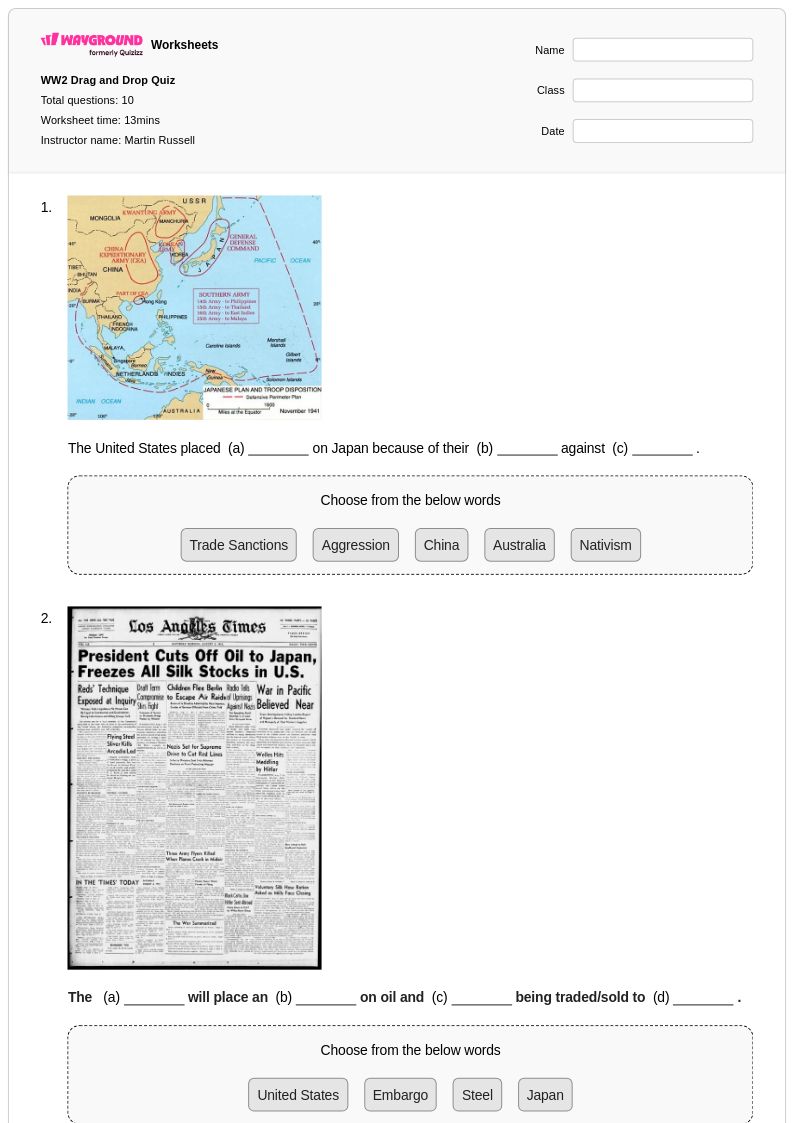
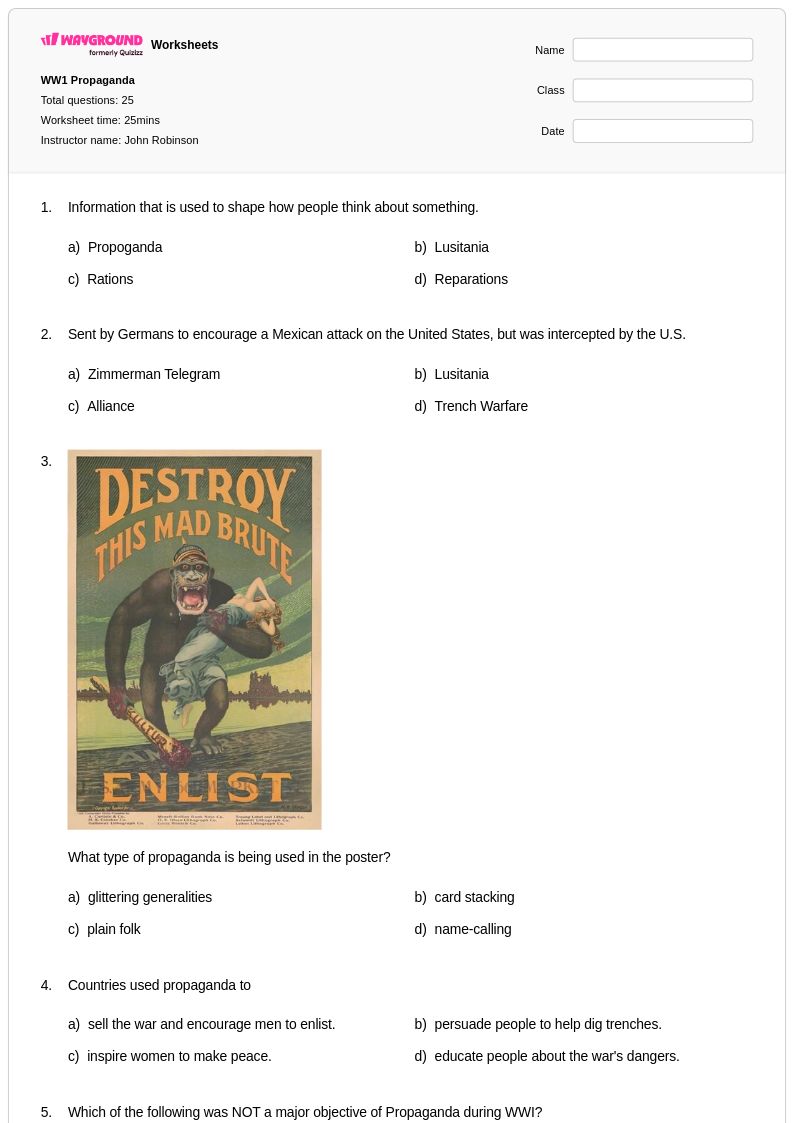
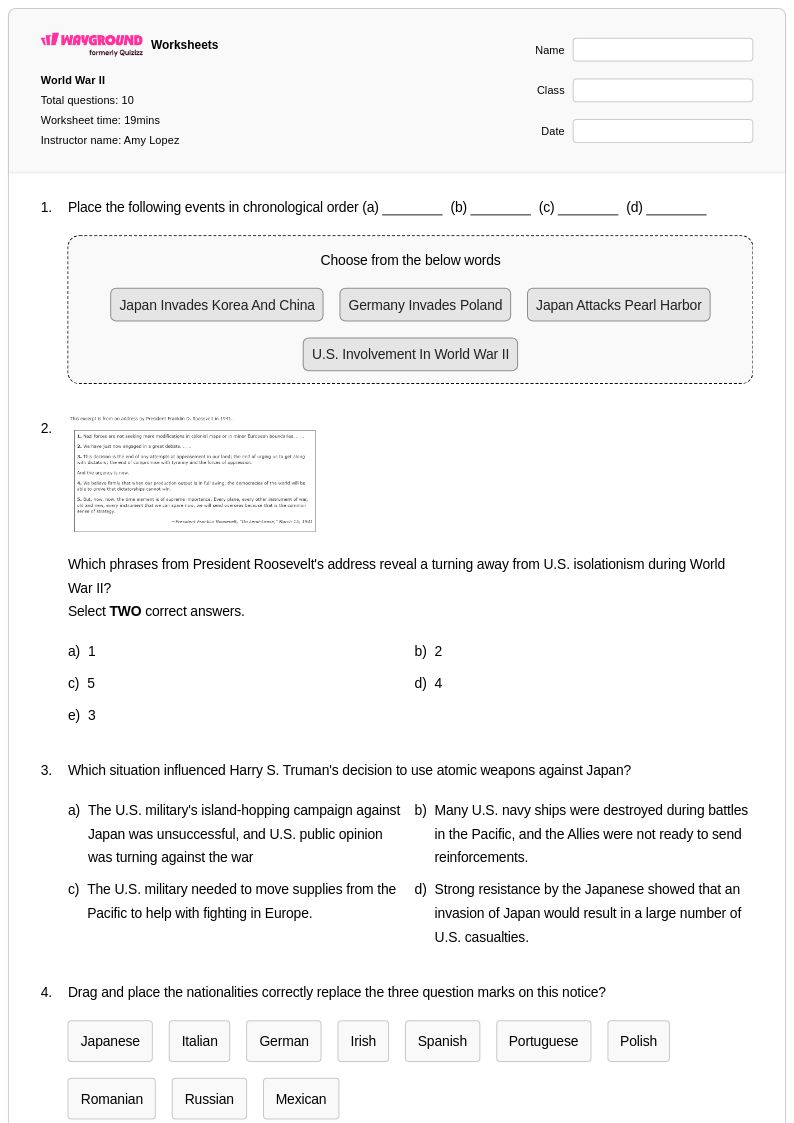
World War 1 Homefront worksheets for Class 12 students available through Wayground (formerly Quizizz) provide comprehensive coverage of the domestic impacts and transformations that occurred during the Great War. These expertly crafted resources examine critical topics including wartime production shifts, rationing systems, propaganda campaigns, women's expanded roles in the workforce, and the social changes that reshaped civilian life between 1914 and 1918. Students develop analytical skills by evaluating primary sources, interpreting statistical data about industrial output, and assessing the effectiveness of government policies designed to mobilize entire populations for total war. Each worksheet includes detailed practice problems that challenge students to connect homefront developments with military strategies, while comprehensive answer keys support both independent study and classroom instruction. These free printable resources strengthen critical thinking abilities essential for advanced historical analysis and college-level coursework.
Wayground (formerly Quizizz) empowers educators with millions of teacher-created World War 1 Homefront worksheet collections that streamline lesson planning and enhance student engagement. The platform's robust search and filtering capabilities enable teachers to quickly locate materials aligned with specific curriculum standards, while differentiation tools allow for seamless customization based on individual student needs and learning objectives. These versatile resources are available in both printable pdf formats and interactive digital versions, providing flexibility for traditional classroom instruction, hybrid learning environments, and remote education settings. Teachers can efficiently identify materials for skill practice, remediation support for struggling learners, and enrichment activities for advanced students, ensuring that all Class 12 learners develop mastery of complex historical concepts related to civilian experiences during World War 1.
FAQs
How do I teach the World War 1 homefront to middle or high school students?
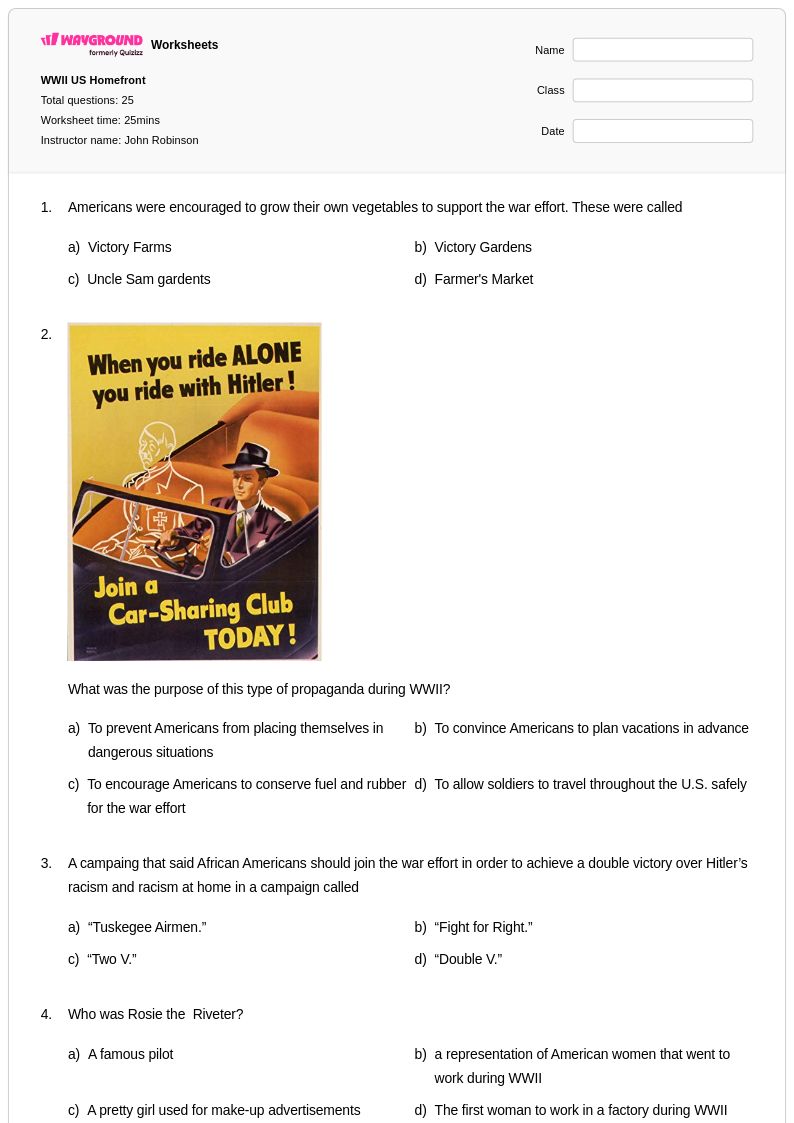
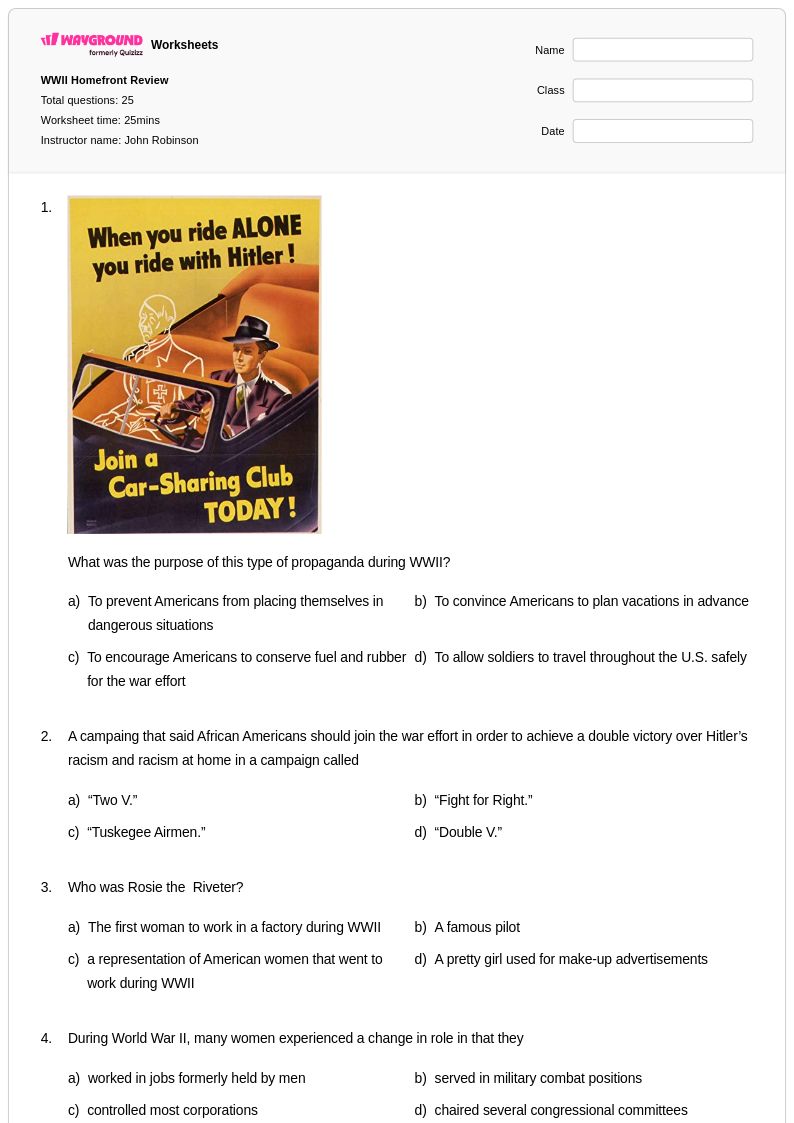
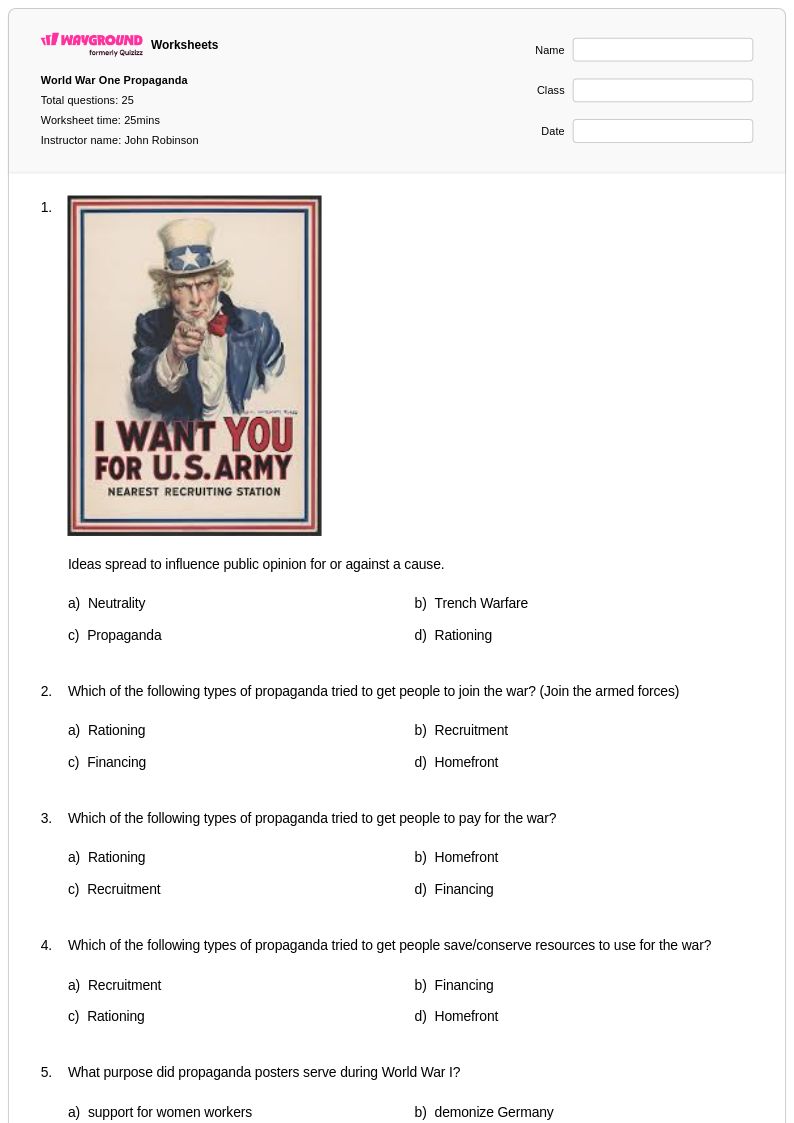
Teaching the WWI homefront effectively means anchoring instruction in the lived experiences of civilians rather than battlefield events alone. Focus on concrete examples like rationing programs, victory gardens, war bond drives, and propaganda posters to show how total warfare mobilized entire societies. Pairing primary source analysis with structured discussion helps students connect economic and social policy to real human impact, making abstract concepts like industrial mobilization and gender role shifts more accessible.
What topics should WWI homefront worksheets cover?
Strong WWI homefront worksheets should address civilian rationing, wartime industrial and agricultural production, propaganda campaigns, the expansion of women's roles in the workforce, and the social and cultural changes that persisted after 1918. Comparing homefront experiences across multiple nations, such as Britain, France, Germany, and the United States, deepens students' understanding of how total war affected different societies in distinct ways. Primary source analysis and document-based questions are particularly effective for building historical thinking skills within this topic.
What common misconceptions do students have about the WWI homefront?
A frequent misconception is that the homefront was largely passive, with civilians simply waiting for the war to end. In reality, governments actively mobilized civilian populations through propaganda, rationing mandates, and labor conscription, making domestic life inseparable from the war effort. Students also often underestimate the scale of social change, particularly the entry of women into industrial jobs and the long-term implications those shifts had for gender roles well beyond 1918.
How can I use primary sources to teach the WWI homefront?
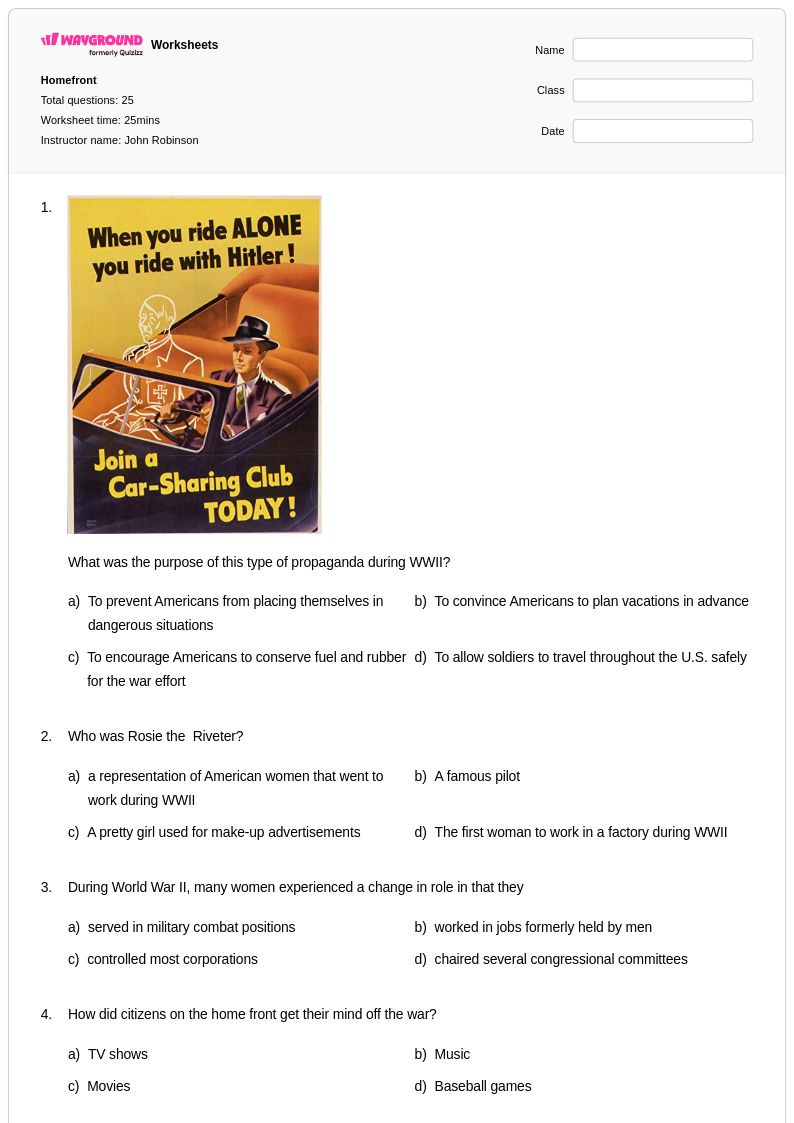
Primary sources such as government propaganda posters, rationing guidelines, personal letters, and newspaper editorials give students direct access to how civilians experienced and understood the war. Asking students to identify the intended audience, purpose, and emotional appeal of a propaganda piece builds source analysis skills while also revealing how governments shaped public opinion. Comparing sources from different nations highlights that homefront mobilization strategies varied significantly depending on political culture and wartime circumstances.
How do I differentiate WWI homefront instruction for students with different learning needs?
Differentiation for this topic works best when scaffolding is built around access to content rather than simplification of concepts. Providing graphic organizers, sentence frames, or annotated primary sources helps struggling readers engage with complex historical material without lowering expectations. On Wayground, teachers can enable individual accommodations such as Read Aloud for students who need audio support, reduced answer choices to lower cognitive load, and extended time, all configurable per student without affecting the rest of the class.
How do I use Wayground's World War 1 Homefront worksheets in my classroom?
Wayground's WWI Homefront worksheets are available as printable PDFs for traditional classroom use and in digital formats for technology-integrated or remote learning environments, and teachers can also host them as a quiz directly on Wayground. Each worksheet includes a complete answer key, so they work equally well as guided in-class activities, independent practice, or homework assignments. Teachers can customize content to support remediation, enrichment, or targeted skill practice, and Wayground's search and filtering tools make it straightforward to locate materials aligned to specific curriculum standards.