Free Printable Letter Identification Worksheets for Class 1
Enhance Class 1 students' letter identification skills with Wayground's free printable worksheets and practice problems, complete with answer keys to support early literacy development.
Explore printable Letter Identification worksheets for Class 1
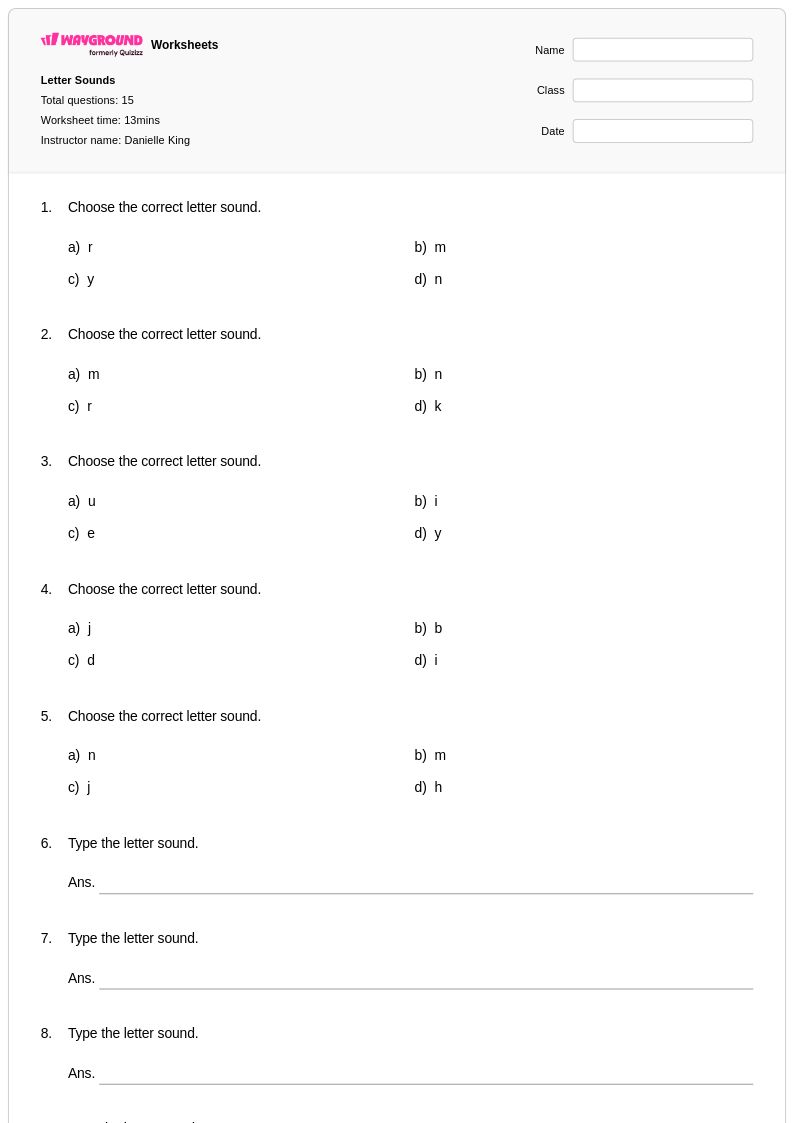
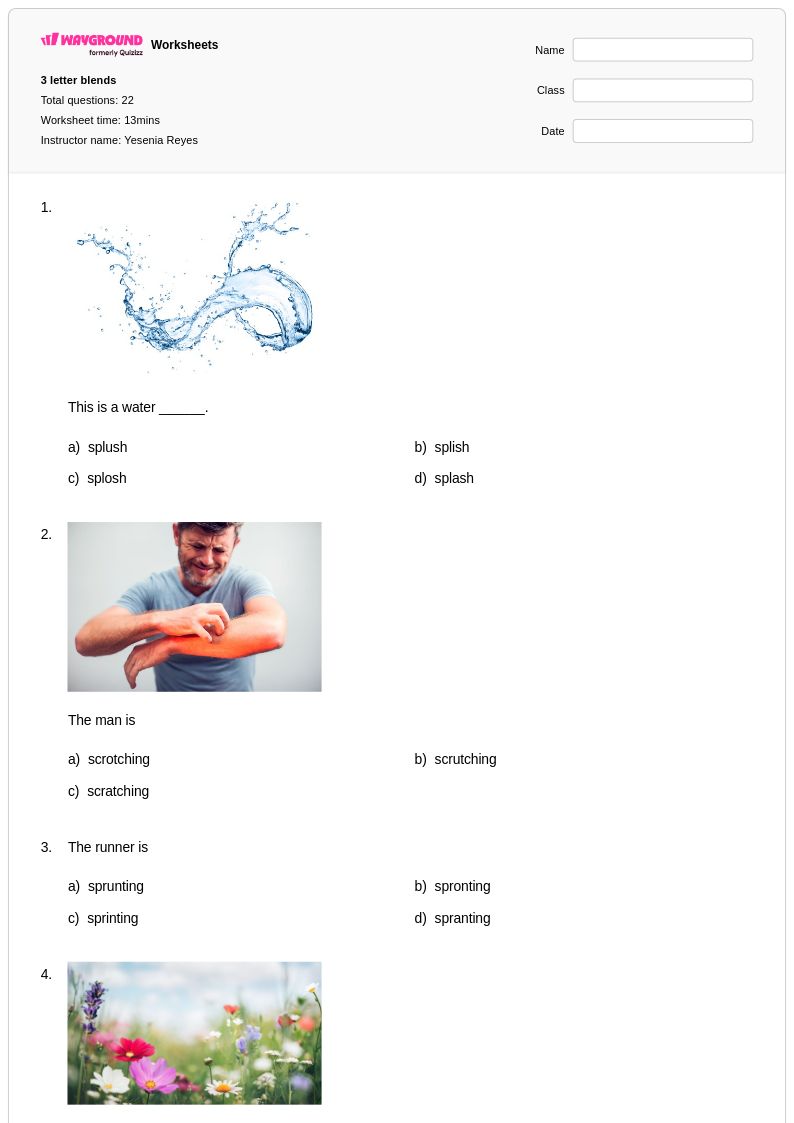
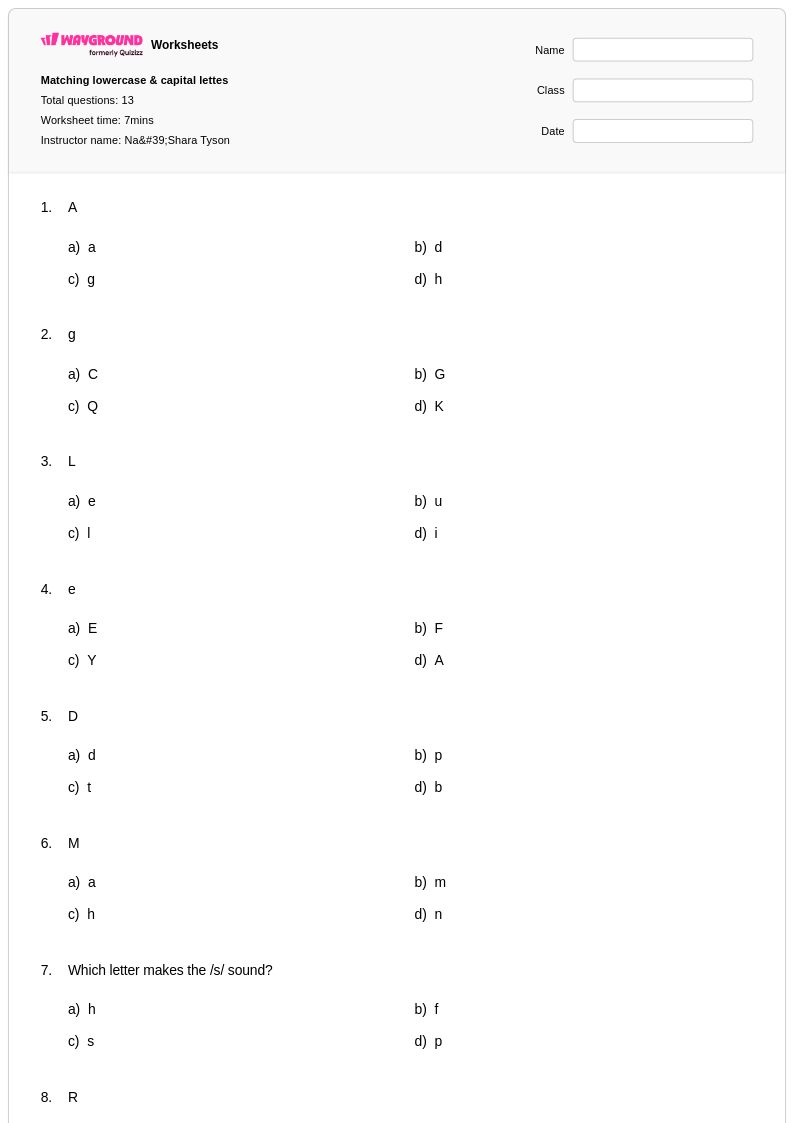
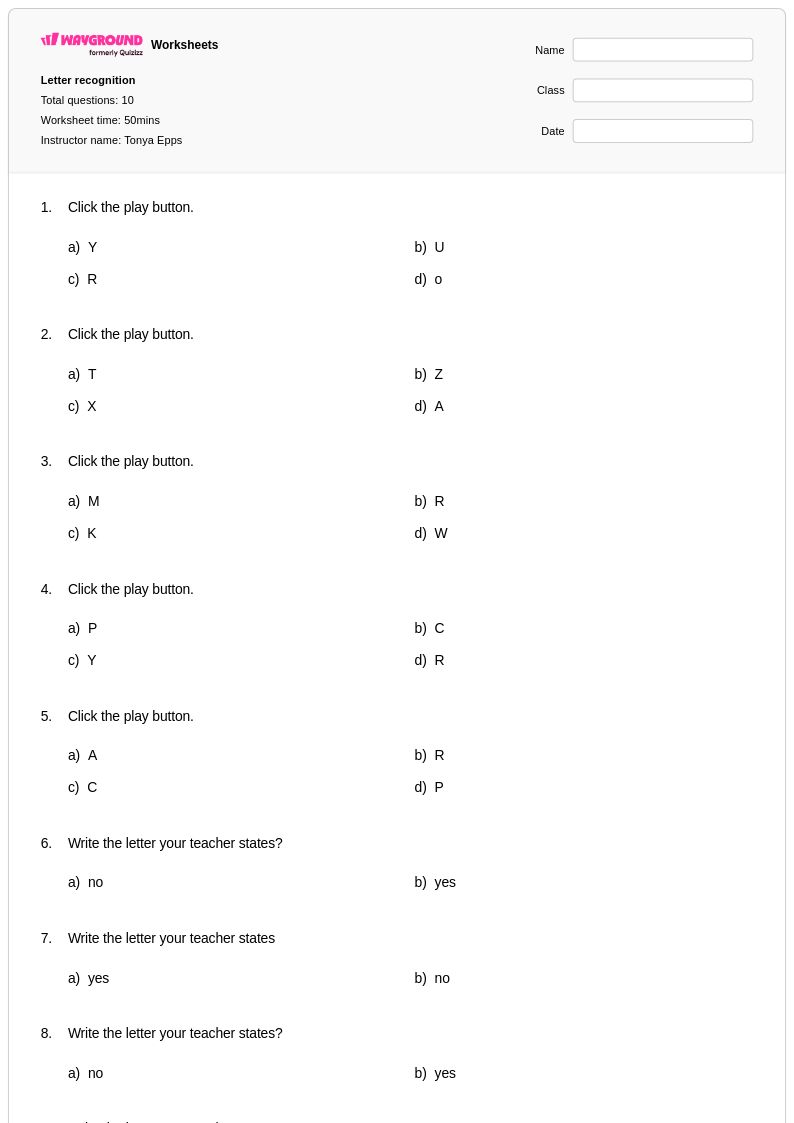
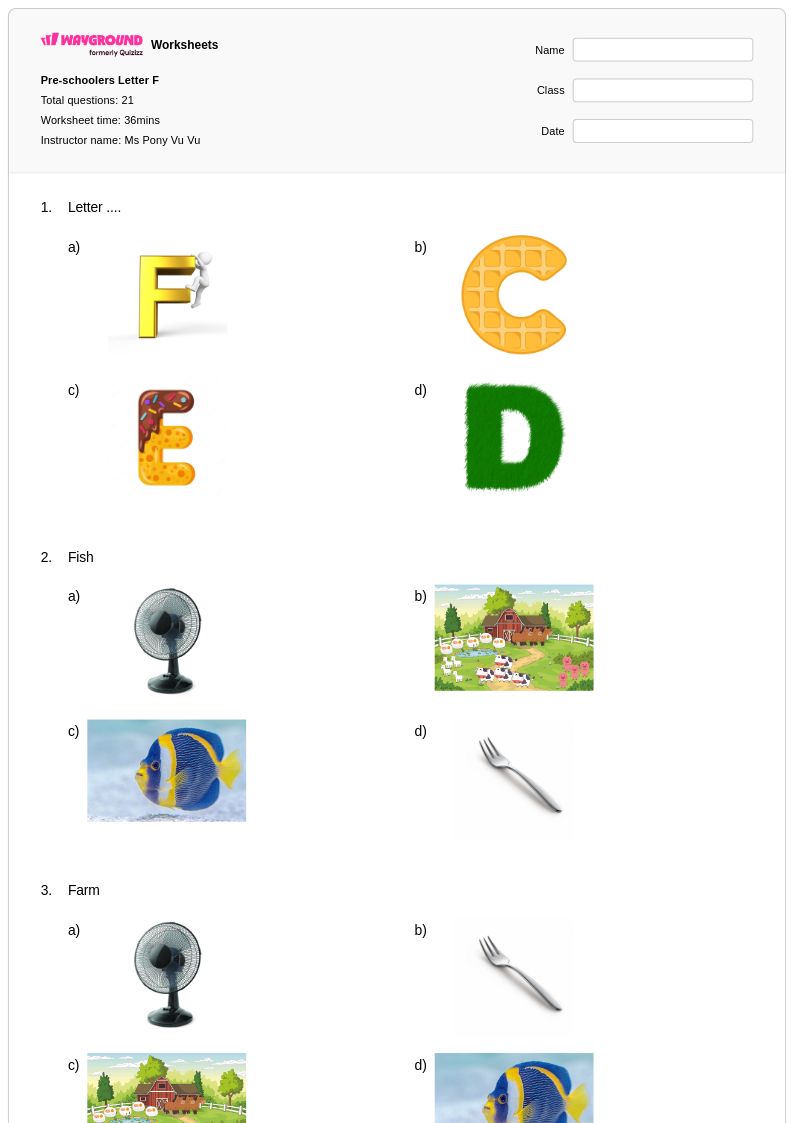
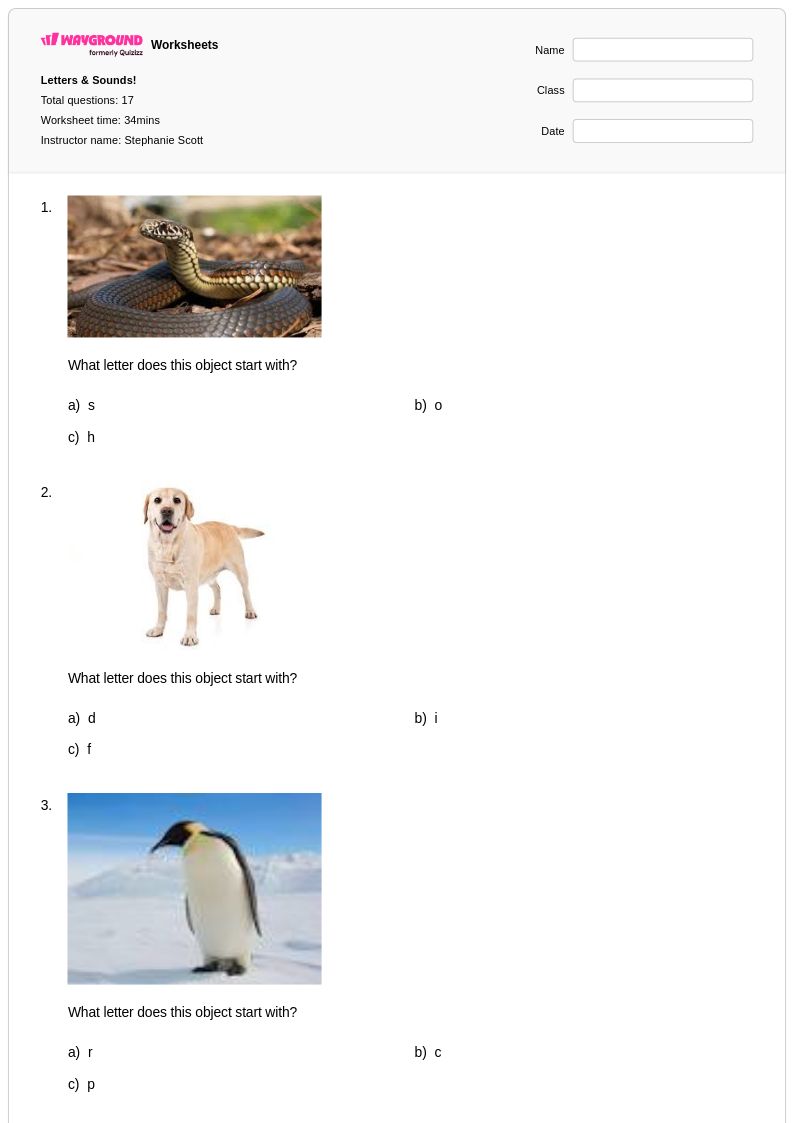
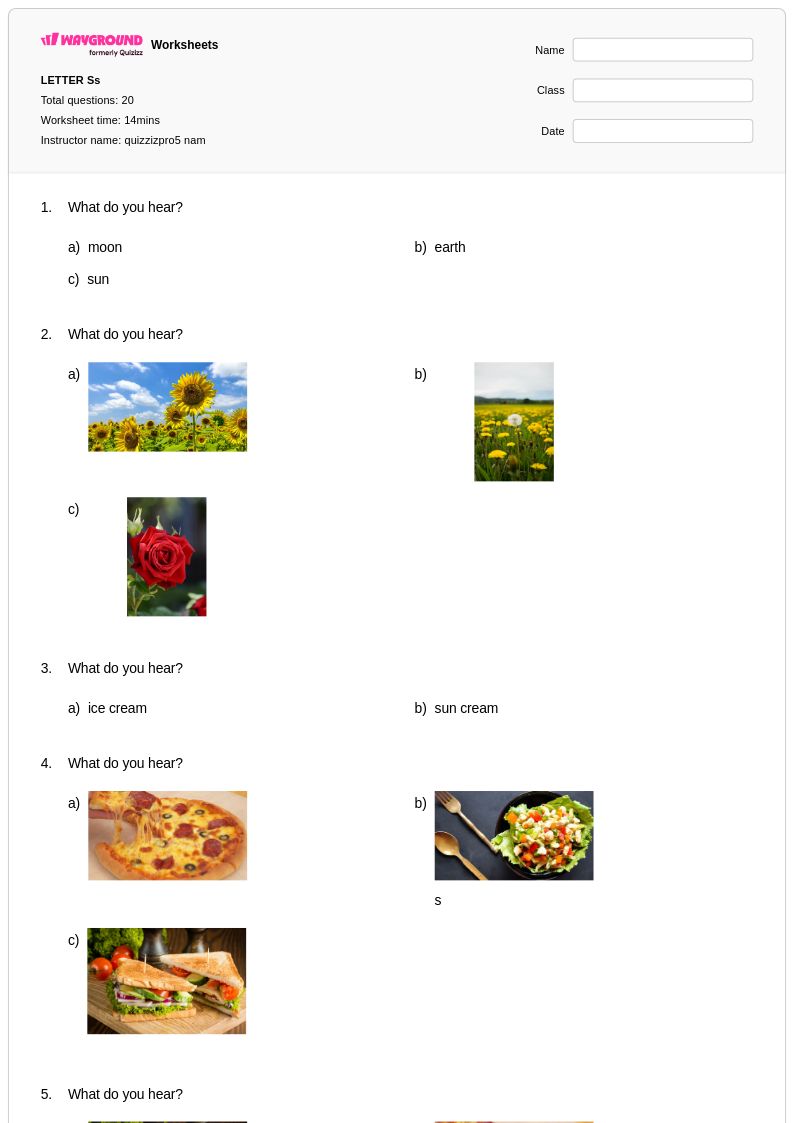
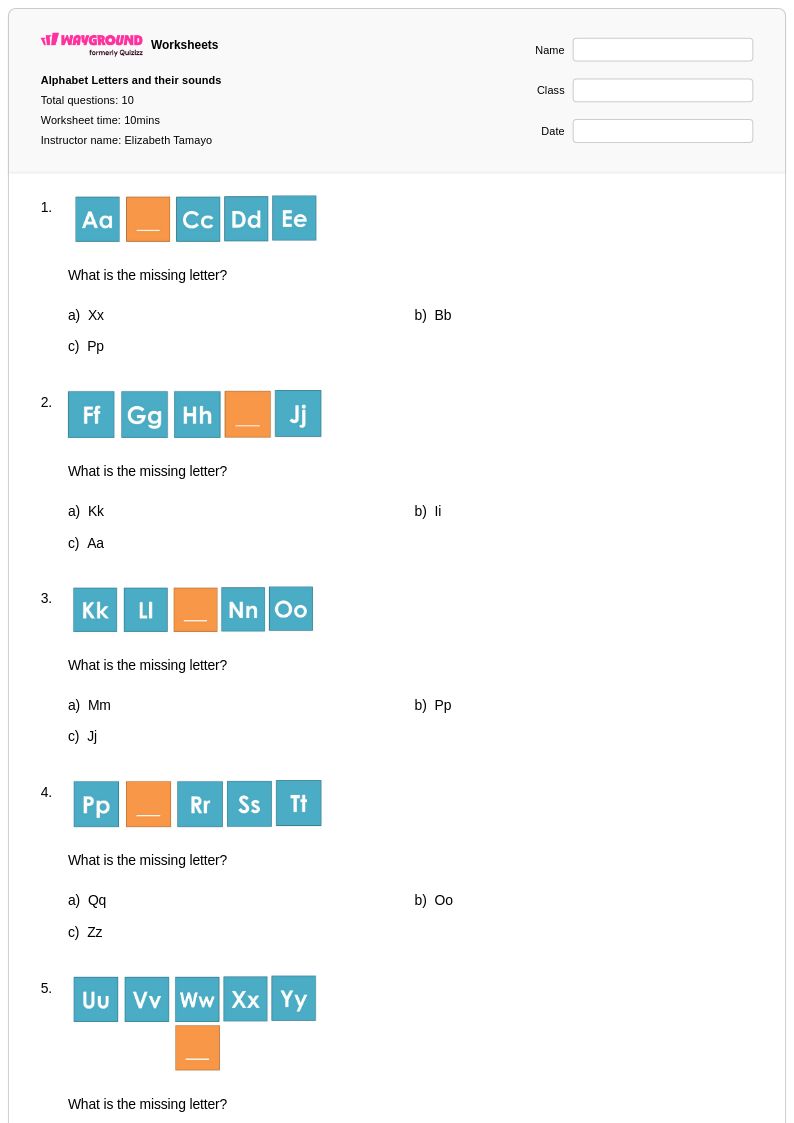
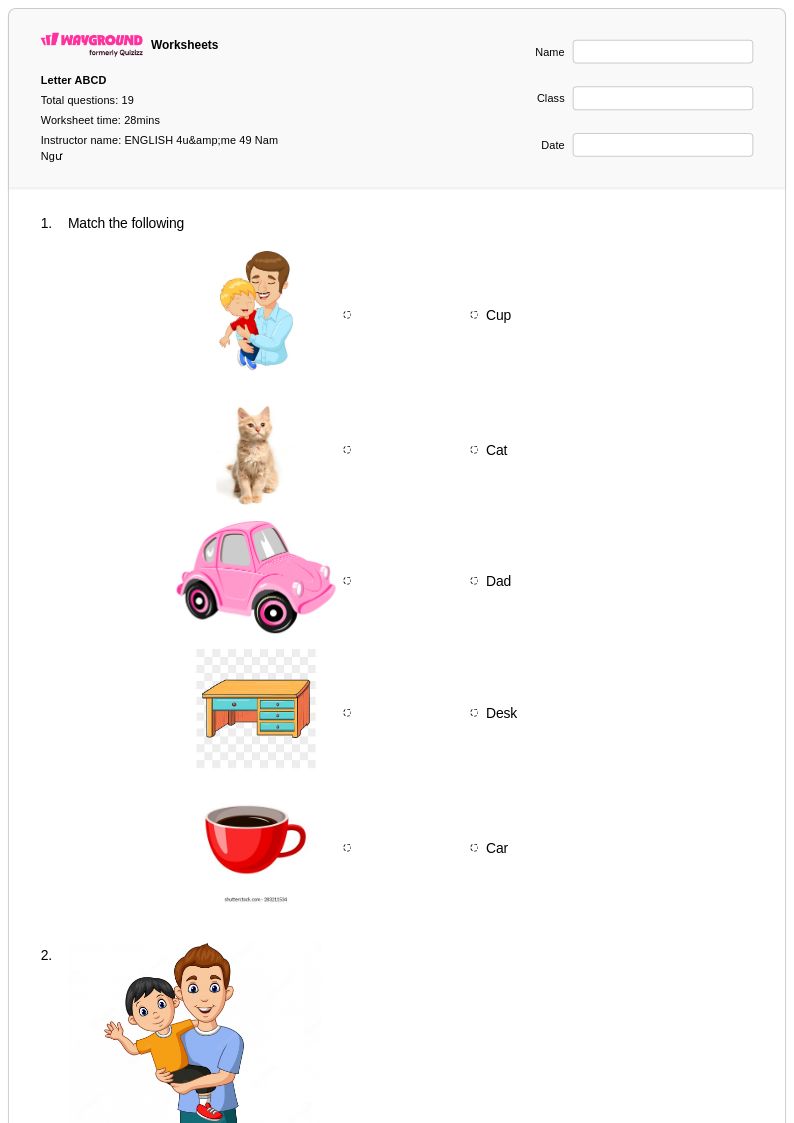
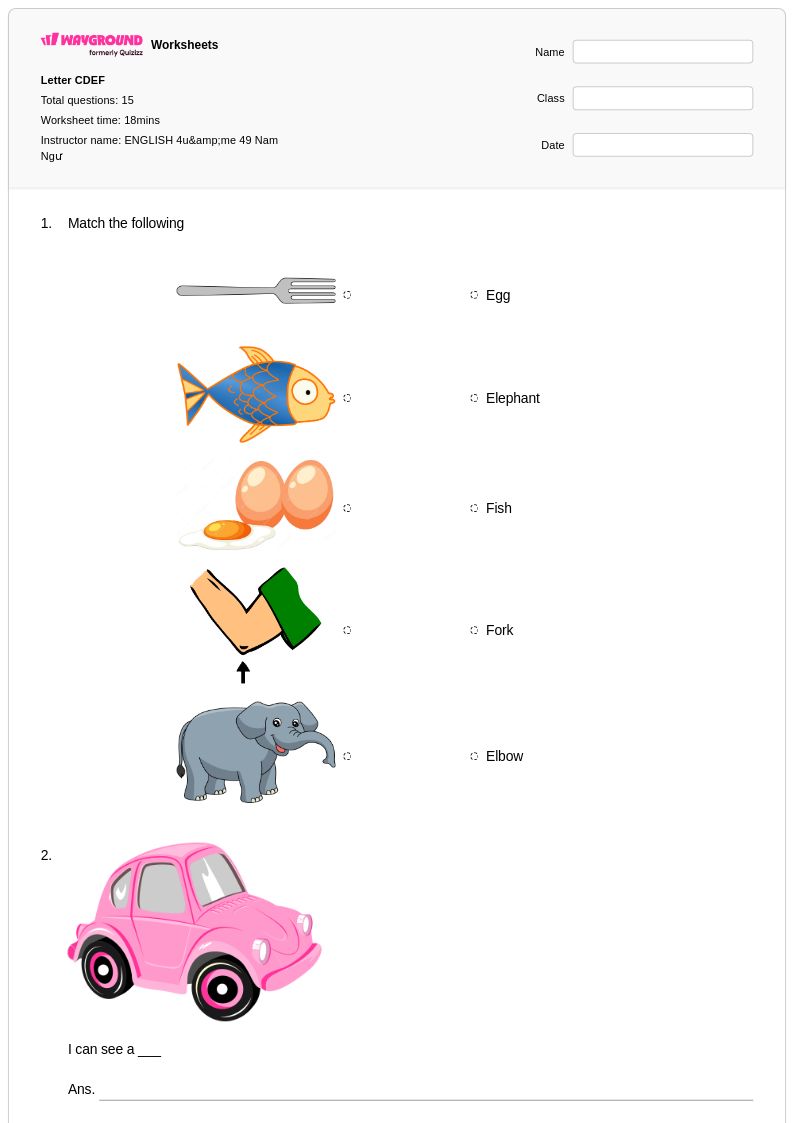
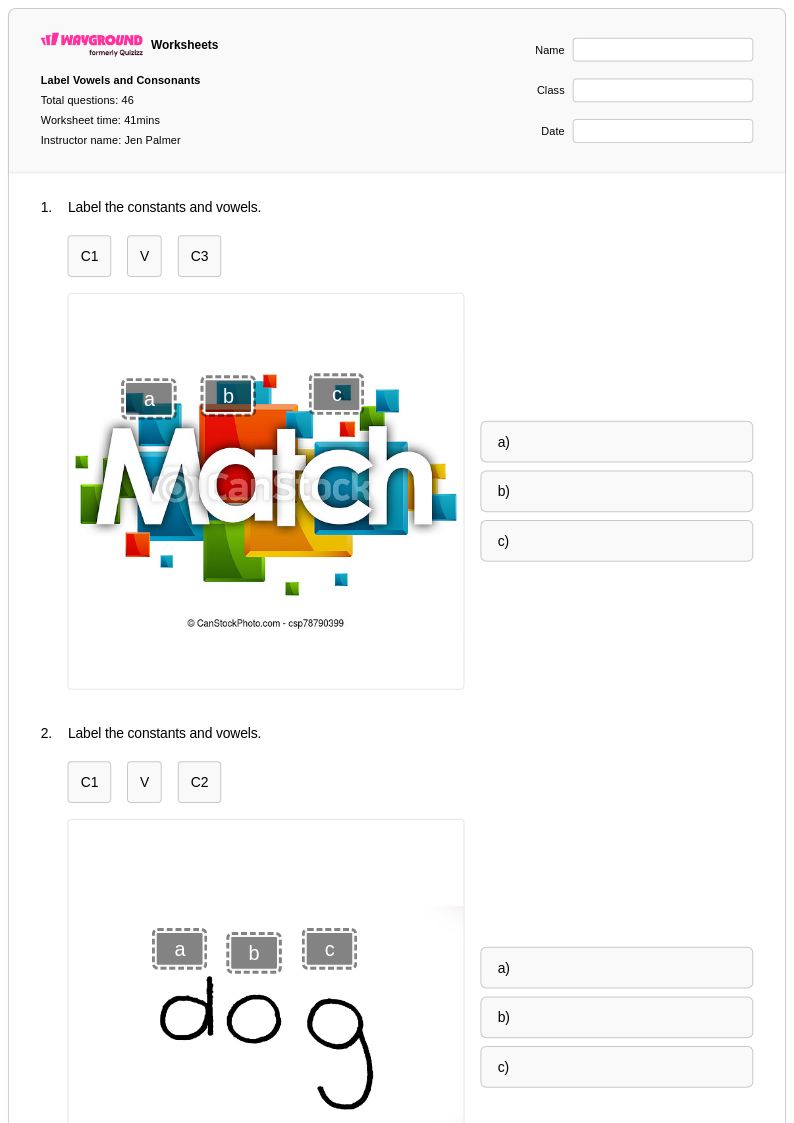
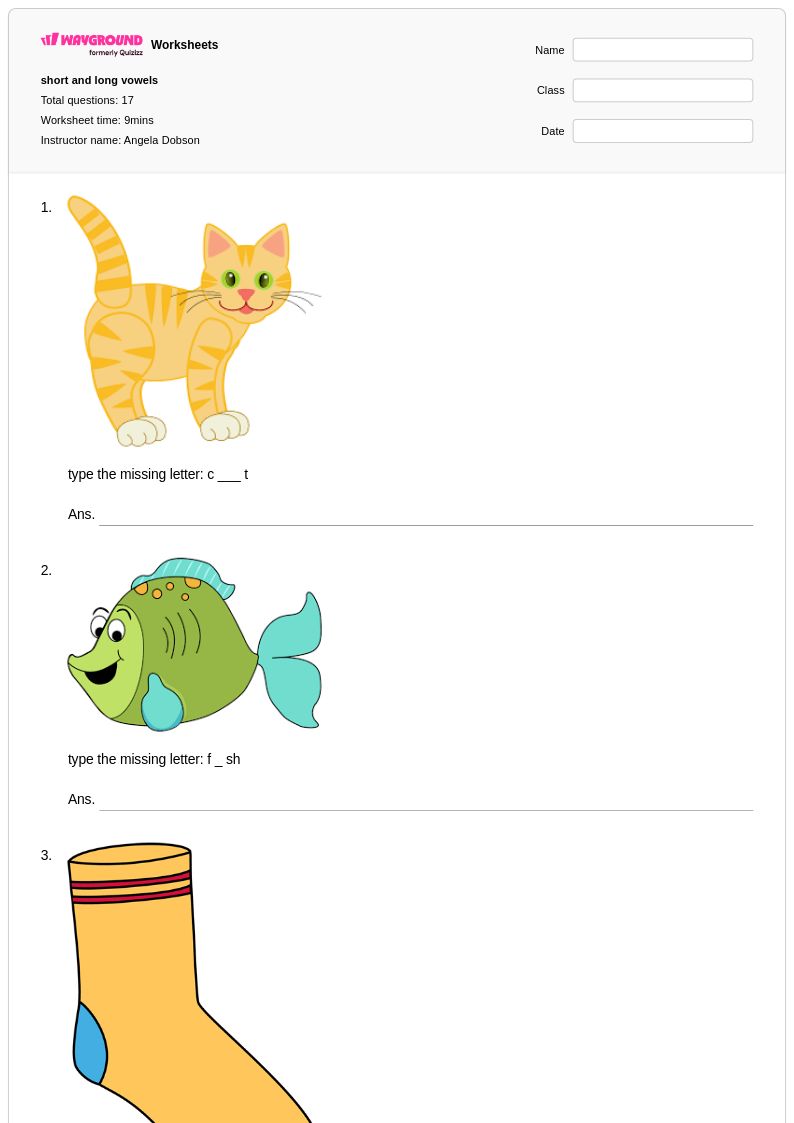
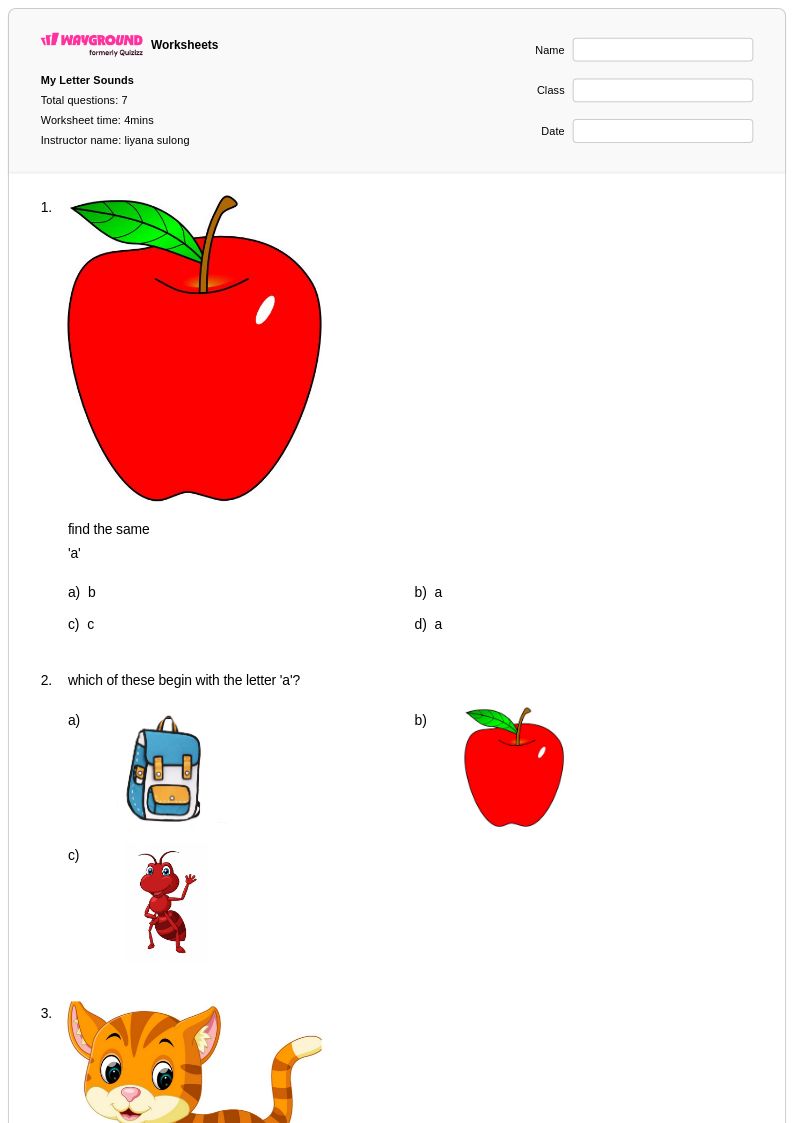
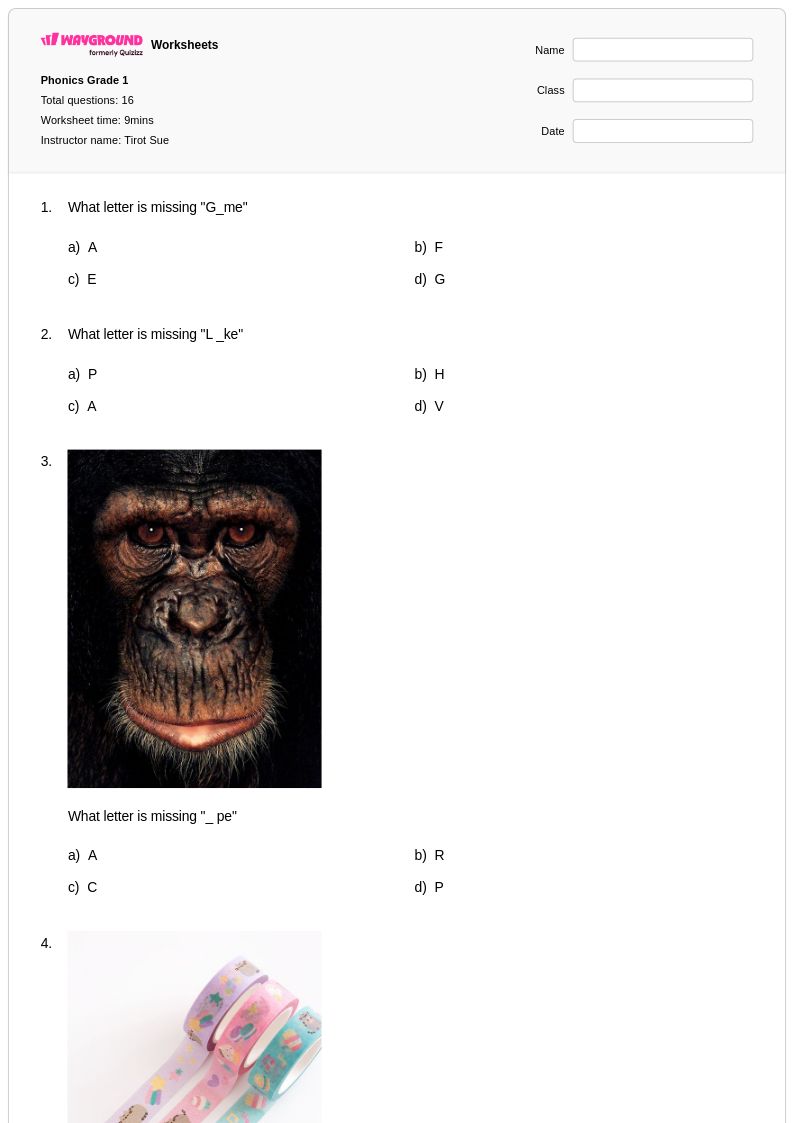
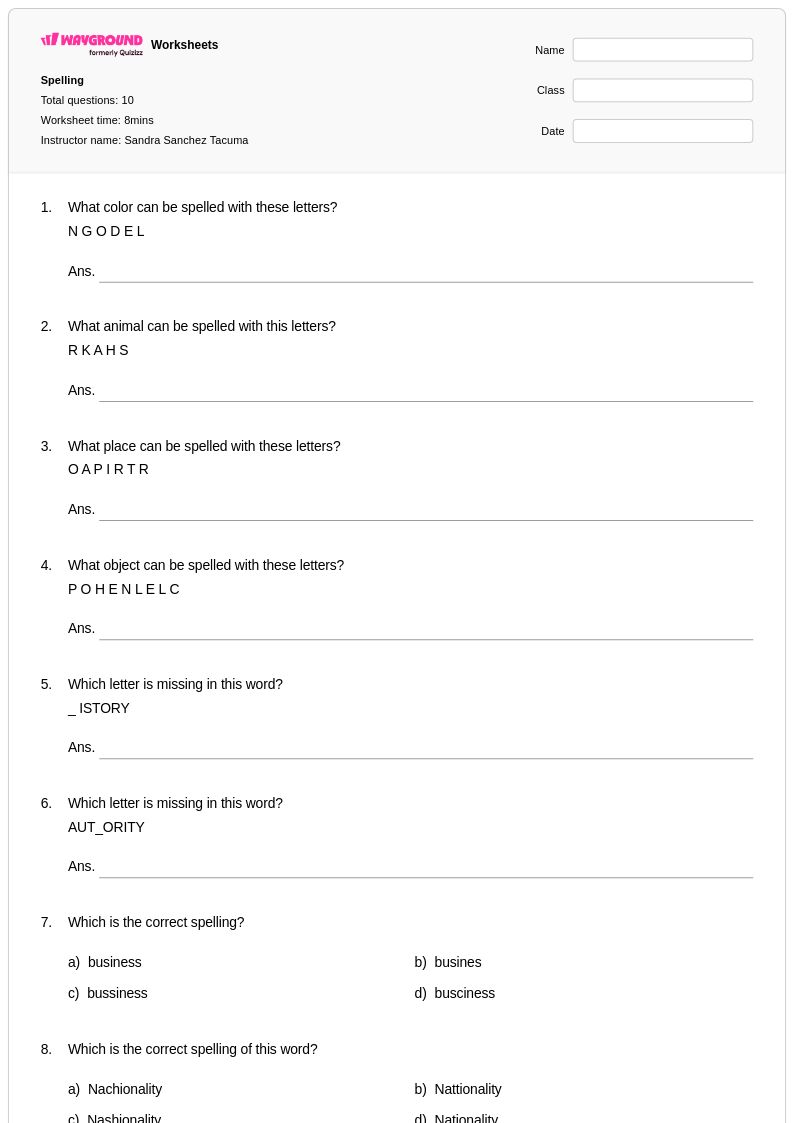
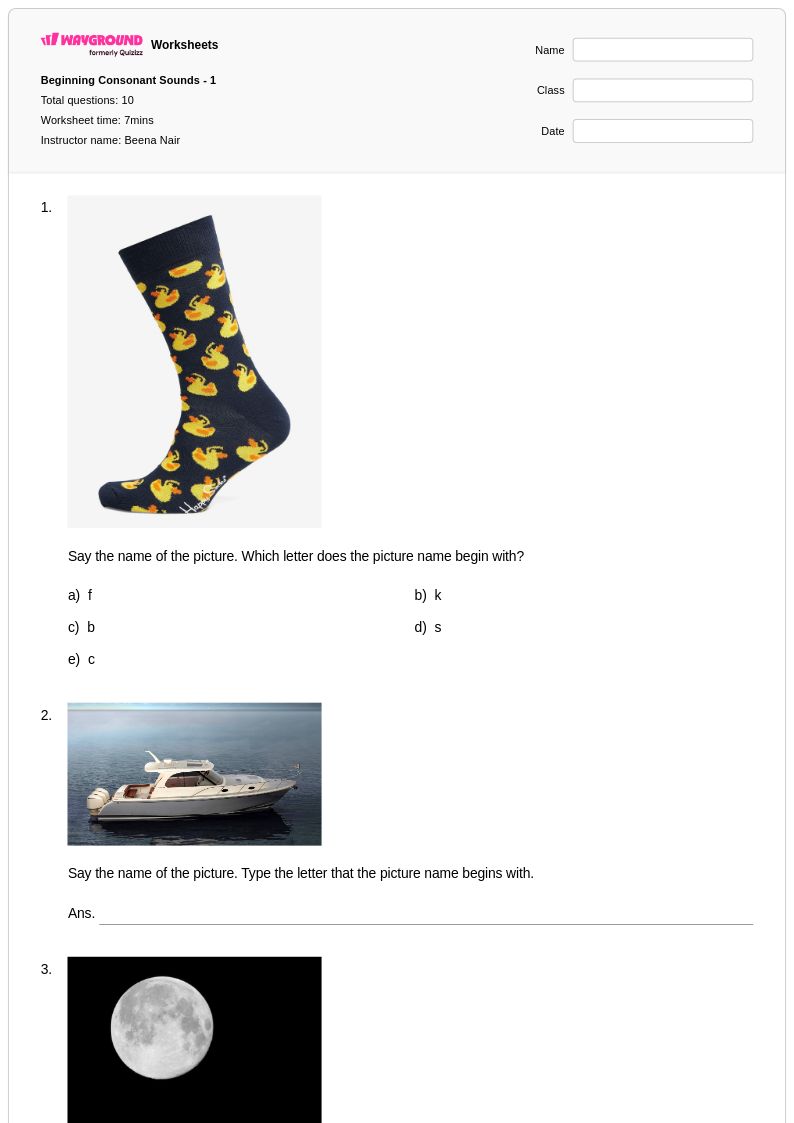
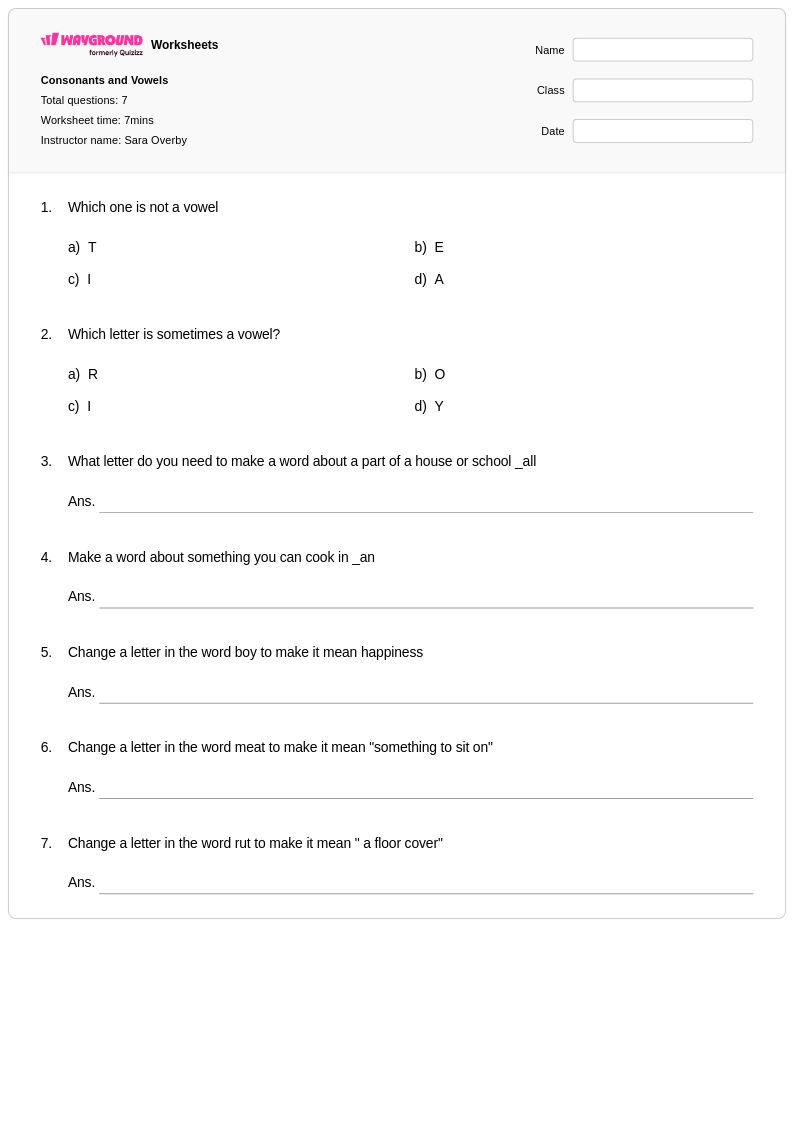
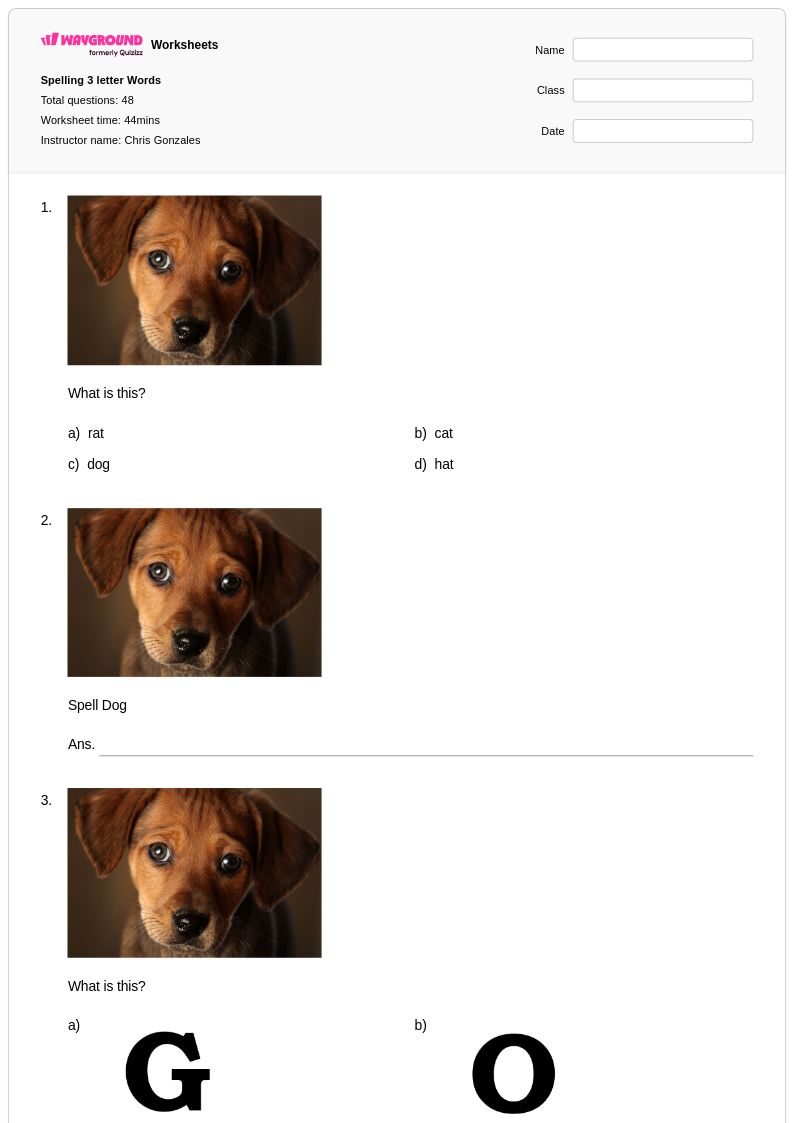
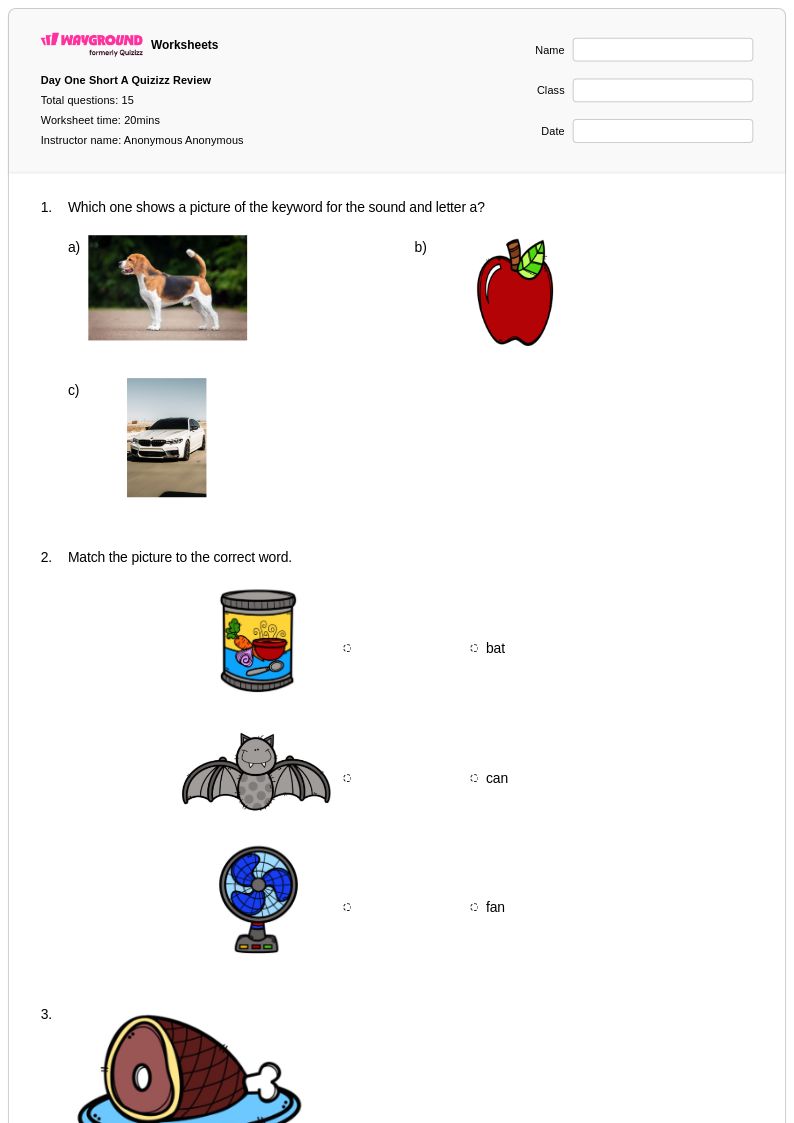
Letter identification worksheets for Class 1 students available through Wayground (formerly Quizizz) provide essential foundational practice for developing early literacy skills. These comprehensive printables focus on helping young learners recognize, name, and distinguish between uppercase and lowercase letters across multiple engaging formats. The worksheets systematically strengthen visual discrimination abilities, letter-sound correspondence, and alphabetic recognition through varied practice problems that include tracing activities, matching exercises, and identification tasks. Each worksheet collection includes an answer key to support efficient assessment and provides free, high-quality resources that teachers can implement immediately in their classrooms. These targeted materials address the critical developmental milestone of automatic letter recognition, which serves as the cornerstone for future reading and writing success in Class 1 students.
Wayground (formerly Quizizz) empowers educators with access to millions of teacher-created letter identification resources specifically designed for Class 1 early literacy instruction. The platform's robust search and filtering capabilities allow teachers to quickly locate worksheets aligned with specific learning standards and customize materials to meet diverse classroom needs. These differentiation tools enable educators to provide targeted remediation for struggling learners while offering enrichment opportunities for advanced students, all within the same lesson framework. Teachers can seamlessly access these resources in both printable PDF formats for traditional classroom use and digital formats for technology-integrated learning environments. This flexibility significantly streamlines lesson planning while ensuring that skill practice remains consistent and purposeful, ultimately supporting systematic progress monitoring and data-driven instructional decisions throughout the letter identification learning process.
FAQs
How do I teach letter identification to early readers?
Effective letter identification instruction combines explicit, systematic teaching with repeated exposure across multiple contexts. Teachers should introduce letters in a deliberate sequence, pairing each letter with its name, sound, and a visual anchor word. Multisensory activities such as tracing, building letters with manipulatives, and matching uppercase to lowercase forms help reinforce recognition. Consistent daily practice, even in short sessions, builds the automaticity students need before they can focus cognitive resources on decoding and fluency.
What exercises help students practice letter identification?
Tracing activities, uppercase-to-lowercase matching exercises, and letter sorting tasks are among the most effective practice formats for building letter recognition. Students also benefit from identifying target letters within a field of distractors, which strengthens visual discrimination. Varied practice formats prevent rote memorization from plateauing and keep young learners engaged. Wayground's letter identification worksheets include tracing activities, matching exercises, and interactive games designed to make this practice both systematic and enjoyable.
What mistakes do students commonly make when learning to identify letters?
The most frequent errors involve visually similar letter pairs: students commonly confuse b/d, p/q, m/w, and n/u because these letters share the same basic shape in different orientations. Inconsistent exposure to both uppercase and lowercase forms can also cause students to recognize one form but not the other. Teachers should anticipate these confusions and provide targeted practice that isolates and contrasts the problematic pairs rather than moving on before automaticity is established.
How can I differentiate letter identification practice for students at different skill levels?
For students who are still building basic recognition, reduce the number of answer choices or focus practice on a small set of high-confusion letters at a time. More advanced students can work on automatic recognition under timed conditions or move into letter-sound correspondence activities. On Wayground, teachers can apply accommodations such as reduced answer choices and read-aloud support to individual students, so struggling learners receive adjusted tasks while the rest of the class works with standard materials, all without drawing attention to the difference.
How do I use Wayground's letter identification worksheets in my classroom?
Wayground's letter identification worksheets are available as printable PDFs for traditional classroom use and in digital formats for technology-integrated learning environments, giving teachers flexibility regardless of their setup. Teachers can also host the worksheets as a live or self-paced quiz directly on Wayground. Each worksheet includes a complete answer key, so grading or checking student work requires minimal preparation time. The platform's search and filtering tools allow teachers to quickly locate materials aligned to specific standards or target letters, making it straightforward to slot resources into daily instruction, small-group intervention, or independent practice.
Why is letter identification important before teaching phonics?
Letter identification, specifically the ability to recognize and name letters automatically, is a strong predictor of early reading success and a prerequisite for phonics instruction. Before students can reliably decode words, they must be able to distinguish one letter from another without using working memory to puzzle out the shape. When letter naming is automatic, students can direct full attention to learning and applying letter-sound correspondences, which accelerates decoding development. Delays in letter identification are therefore a meaningful early warning sign that benefits from targeted intervention.