
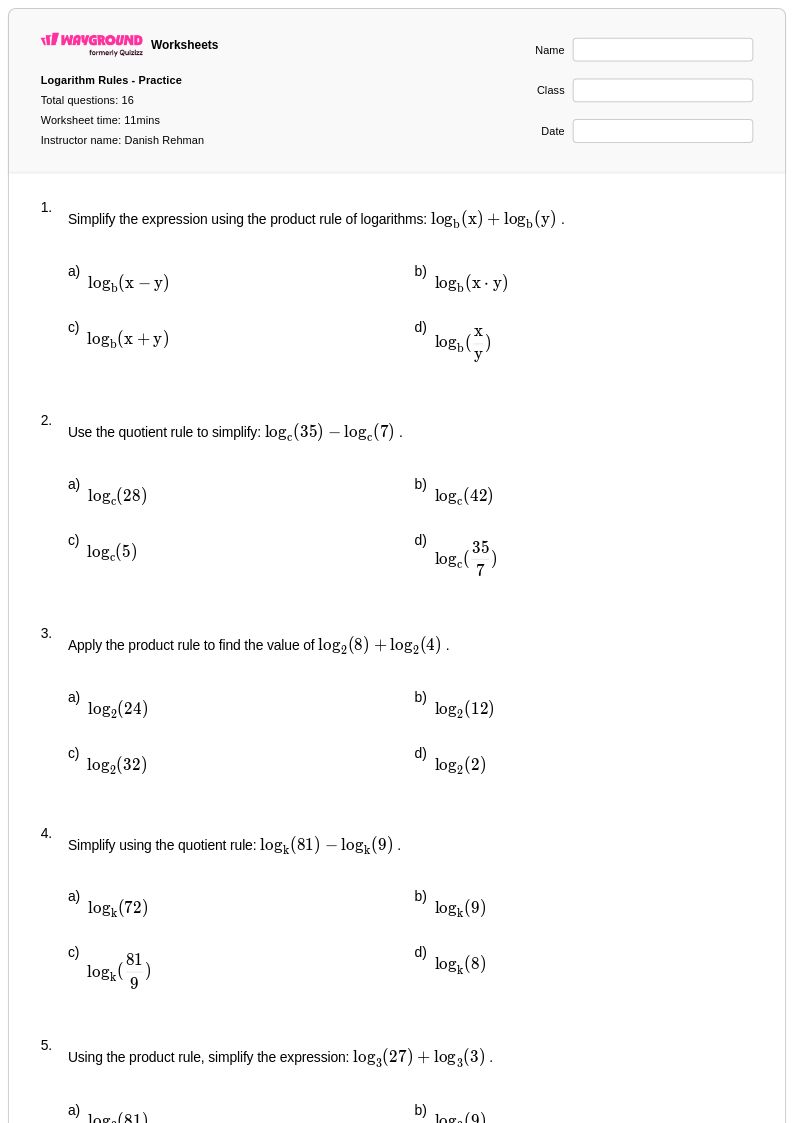
16 Q
9th
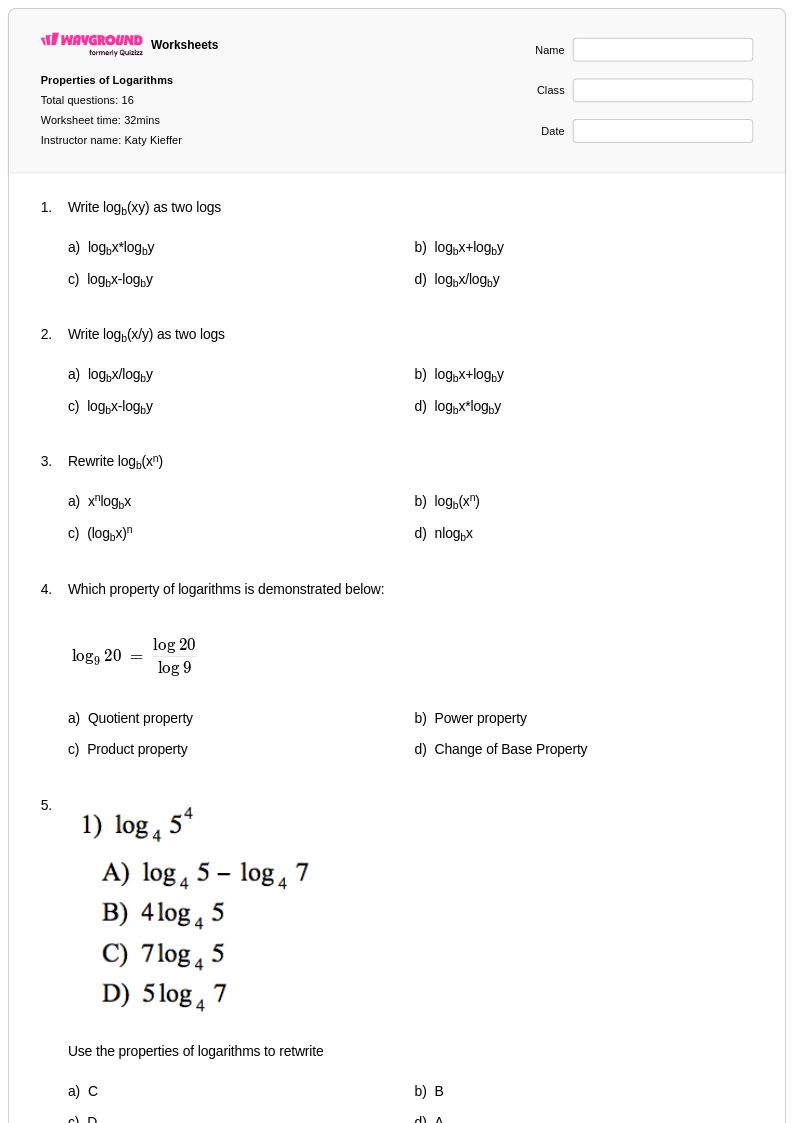
16 Q
9th - 11th
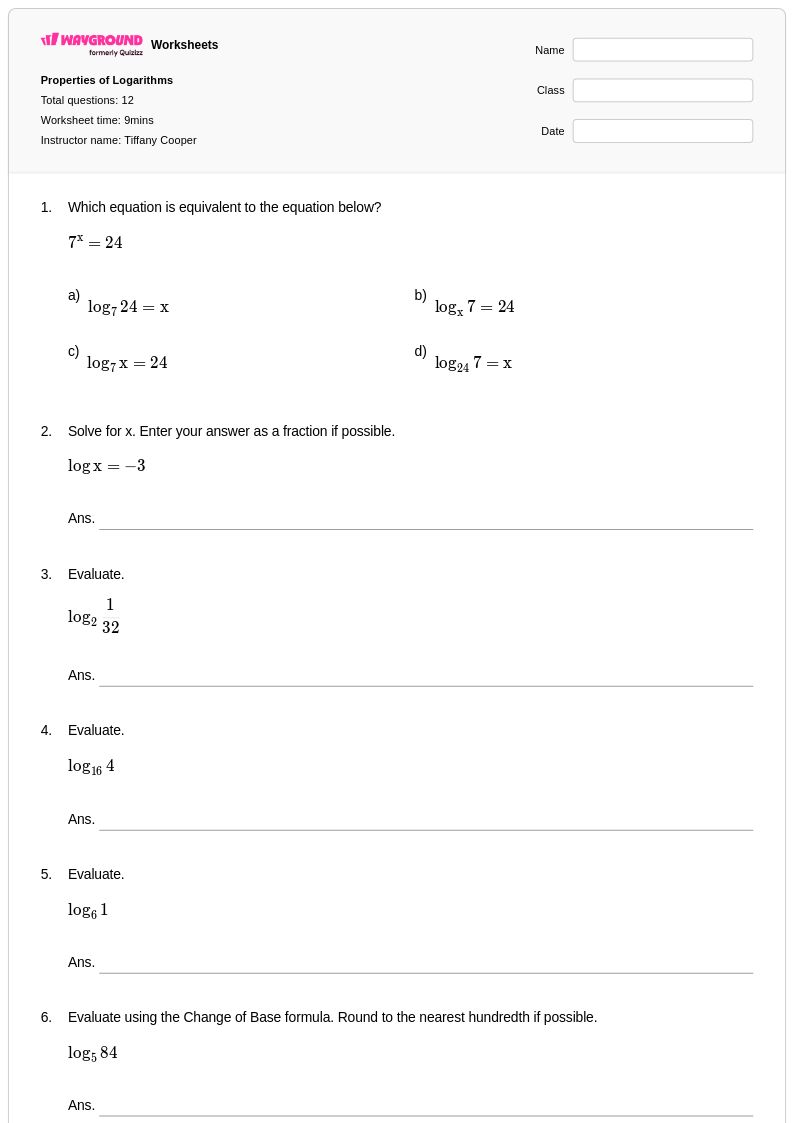
12 Q
9th - 12th
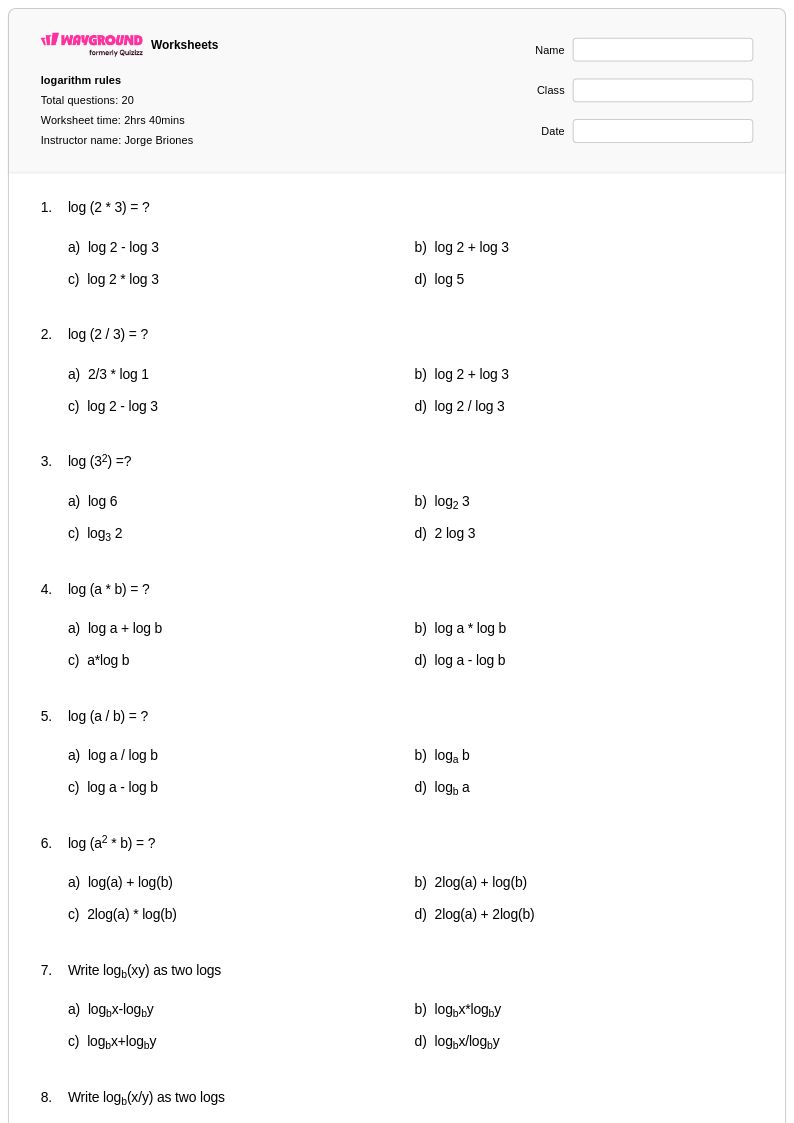
20 Q
9th - 12th
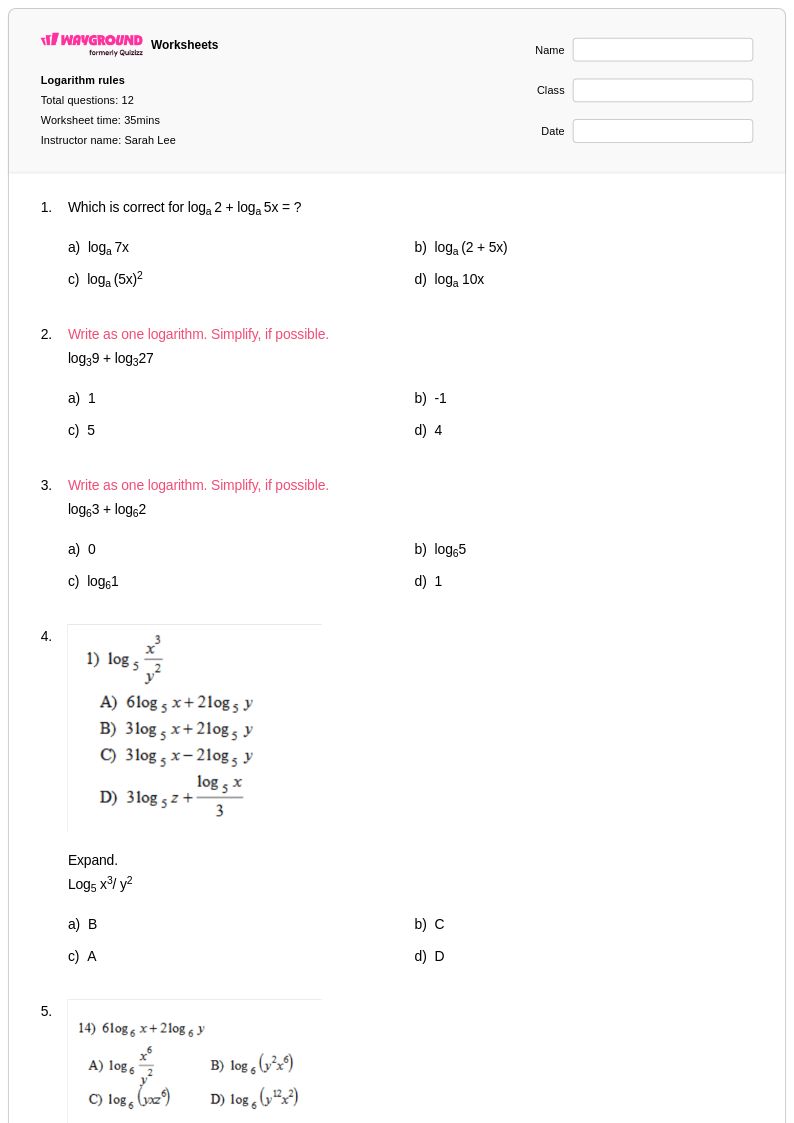
12 Q
9th - 11th
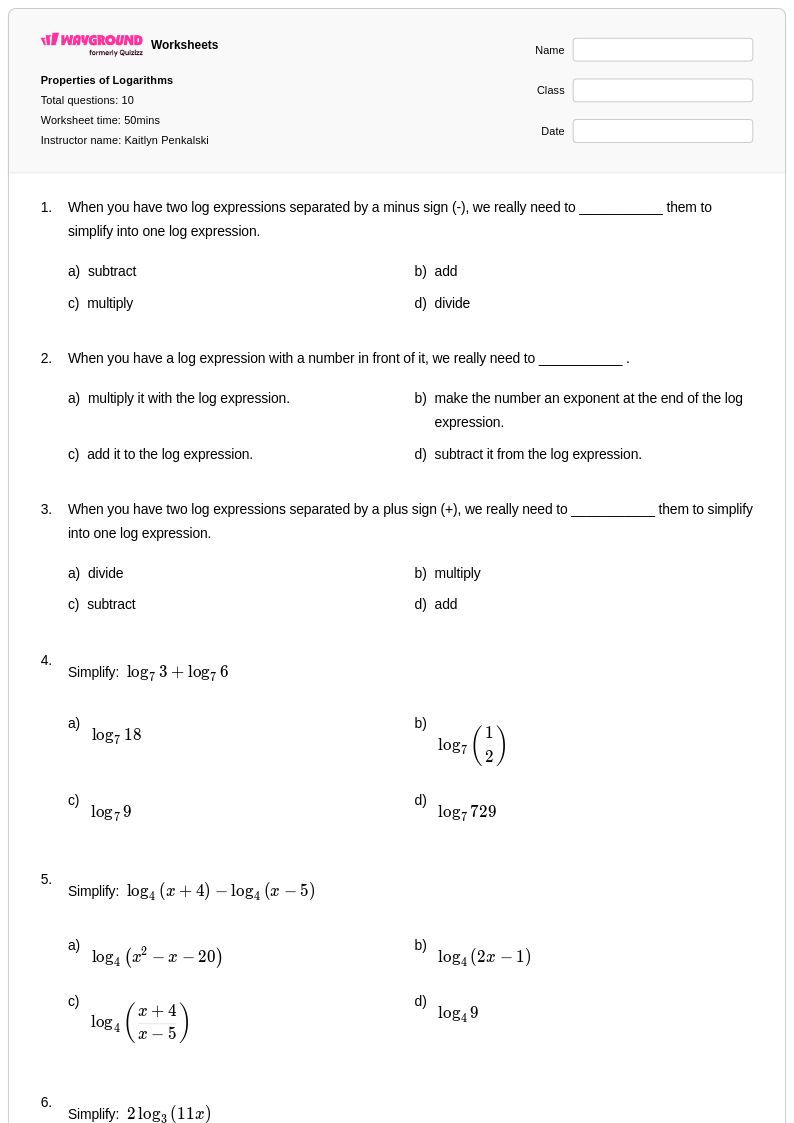
10 Q
9th - 12th
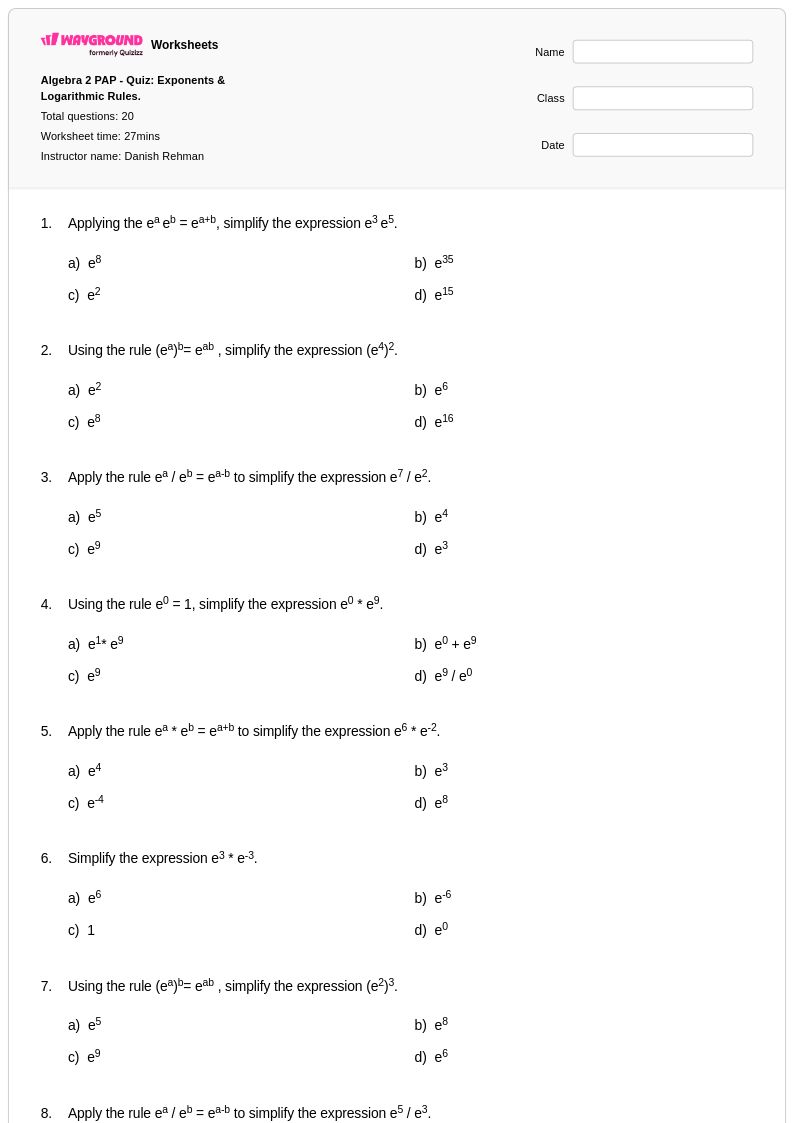
20 Q
9th - 12th
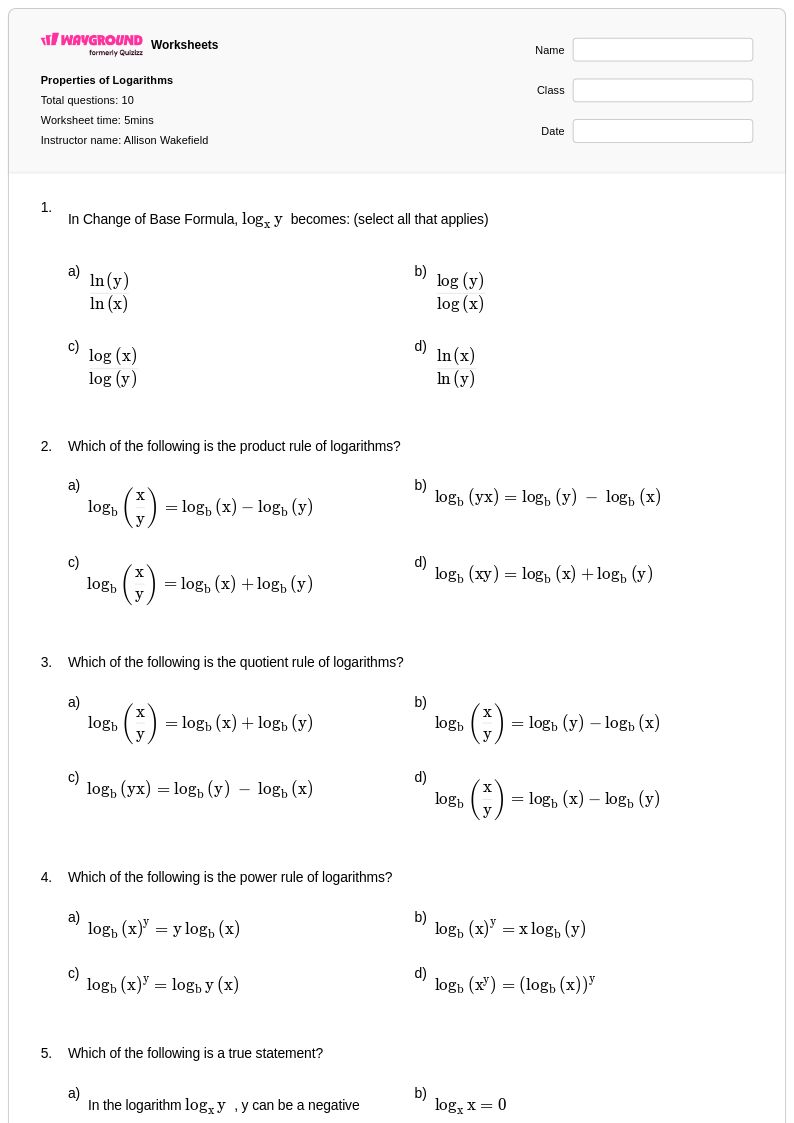
10 Q
9th - 12th
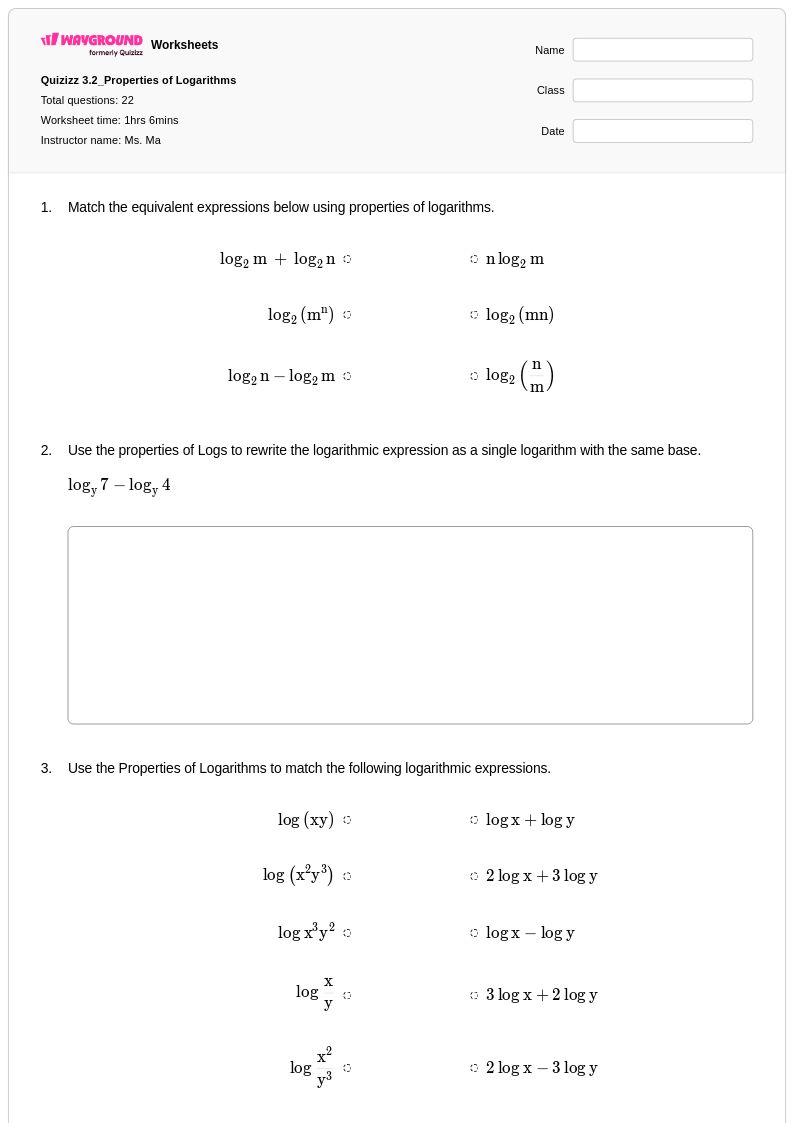
22 Q
9th - 12th
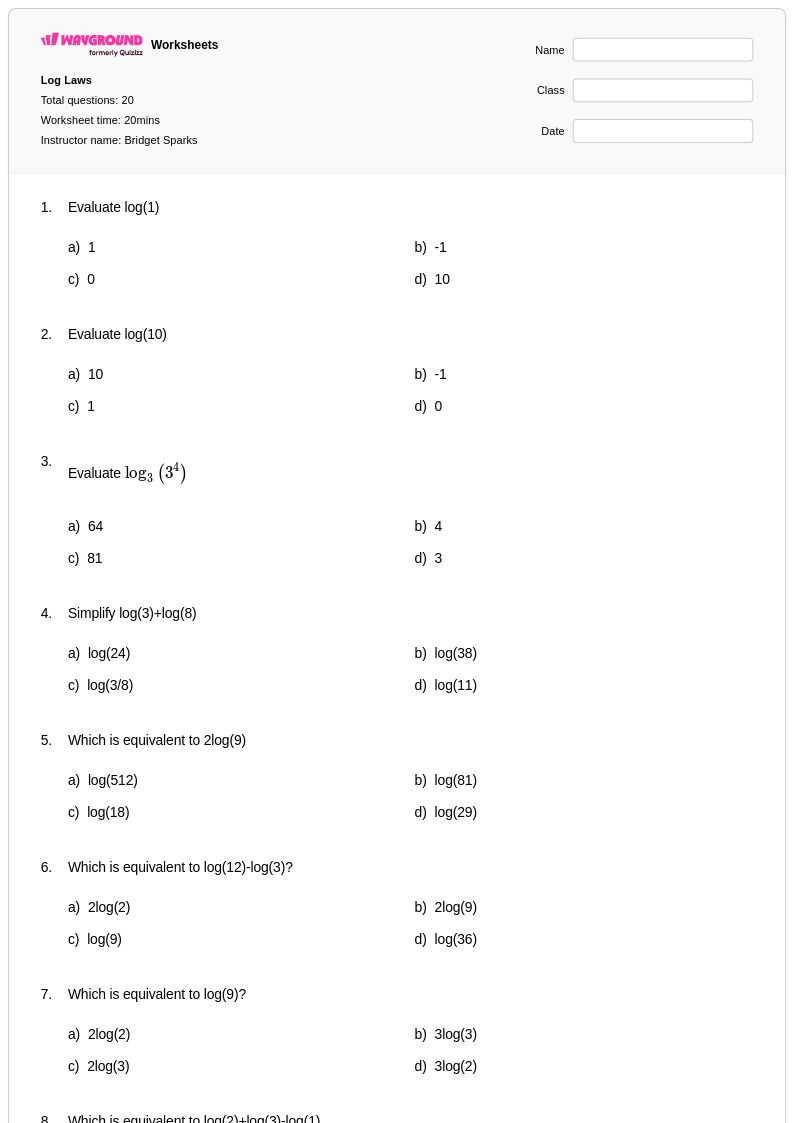
20 Q
9th - 12th
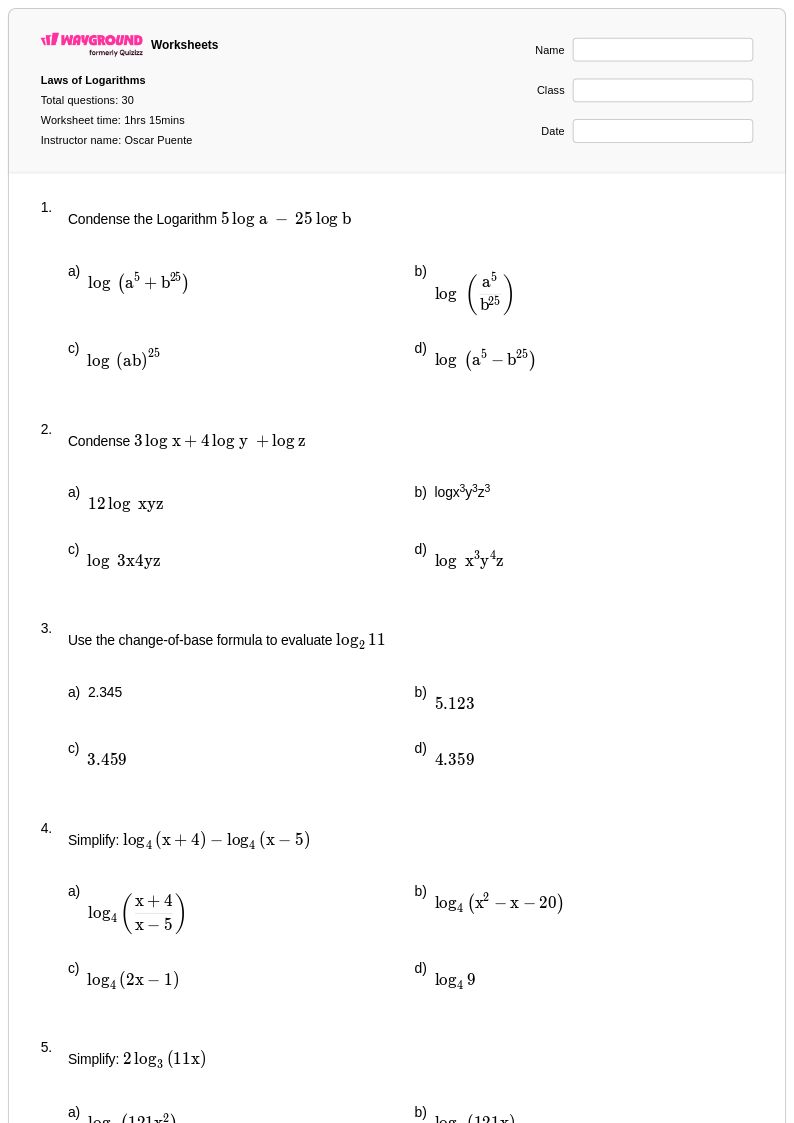
30 Q
9th
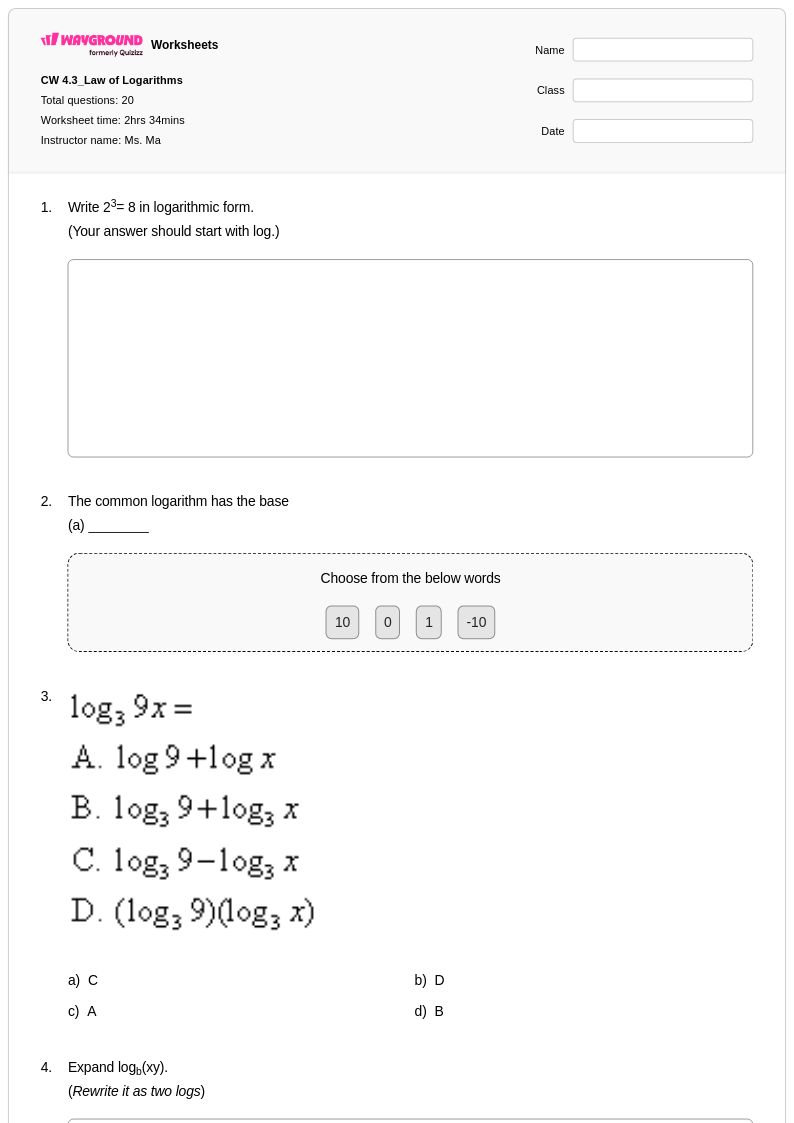
20 Q
9th - 12th
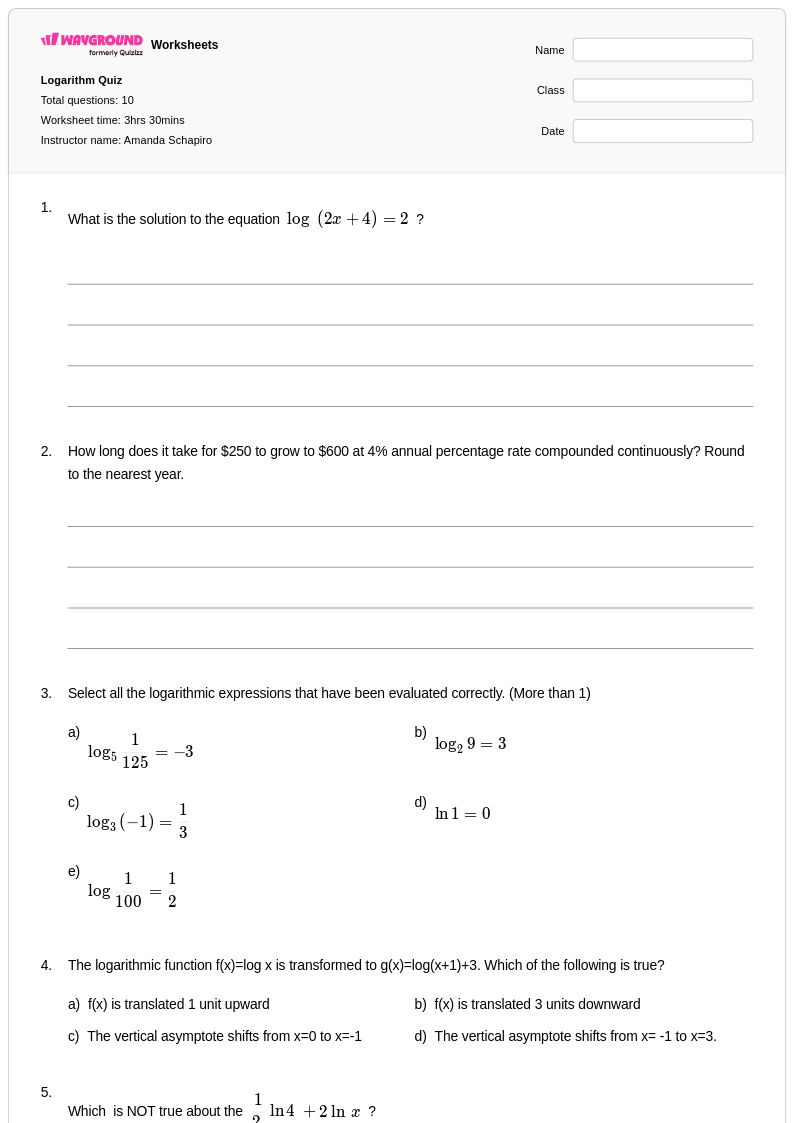
10 Q
9th - 12th
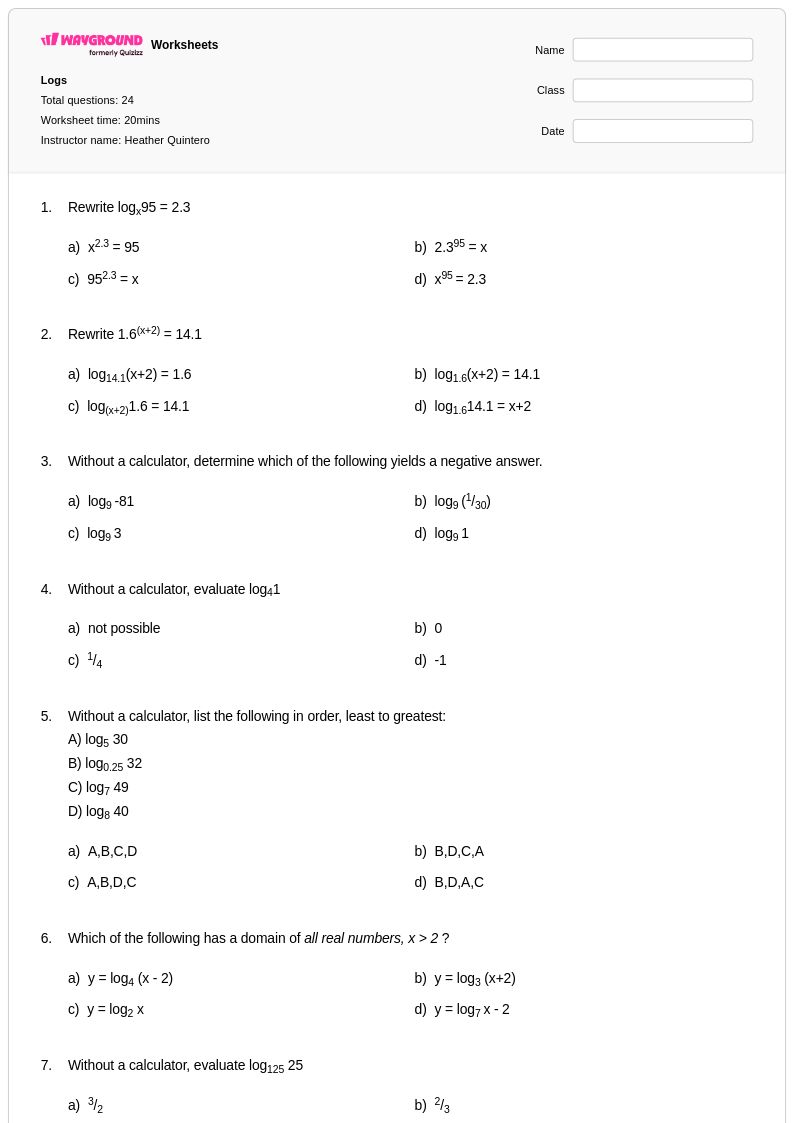
24 Q
9th - 12th
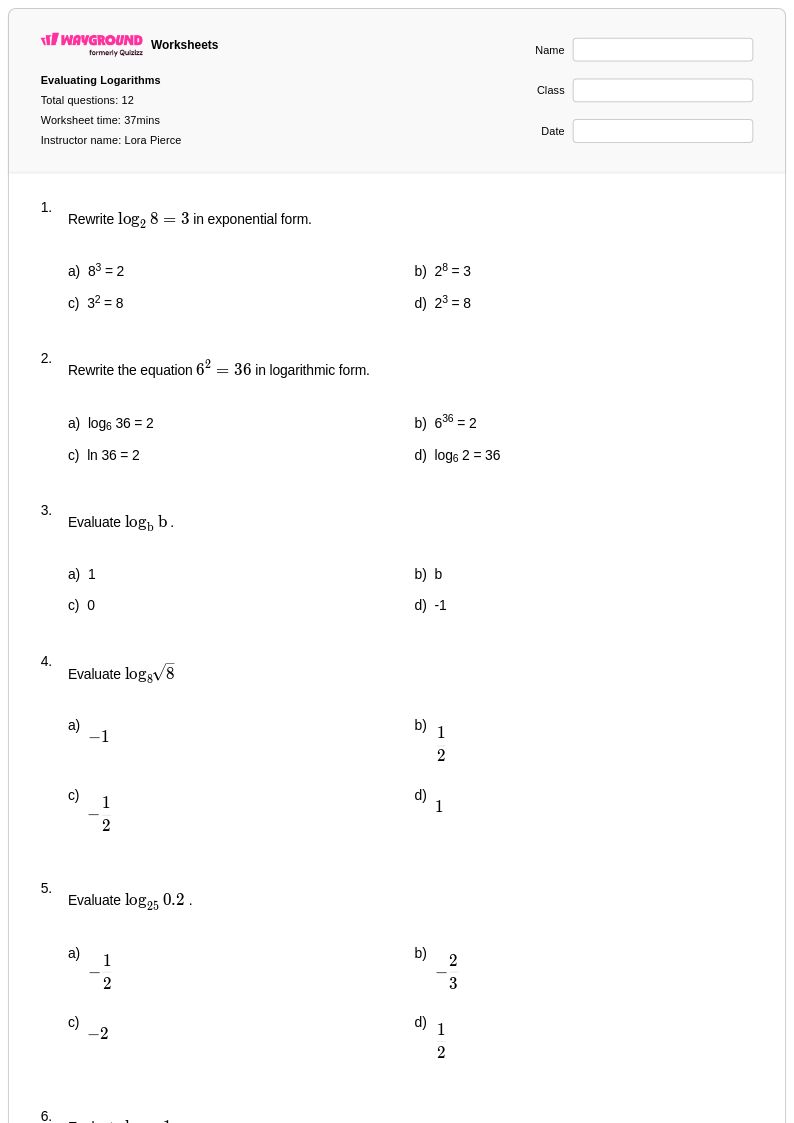
12 Q
9th
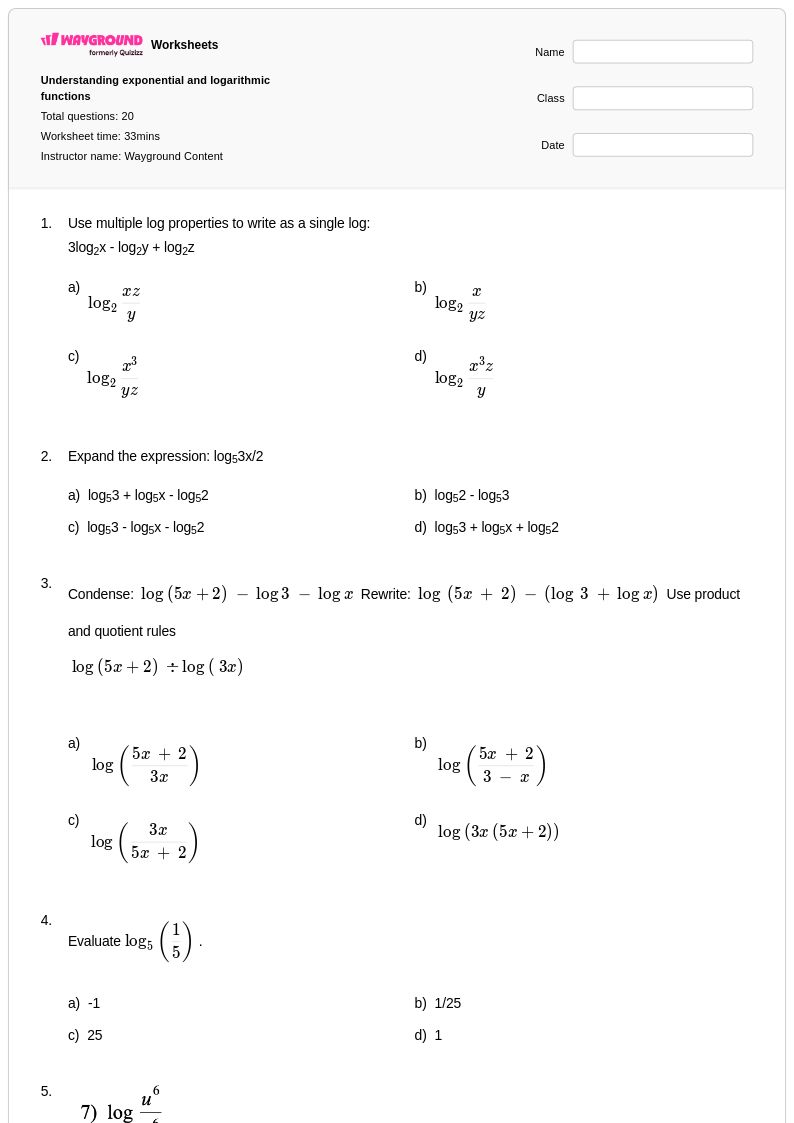
20 Q
9th - 12th
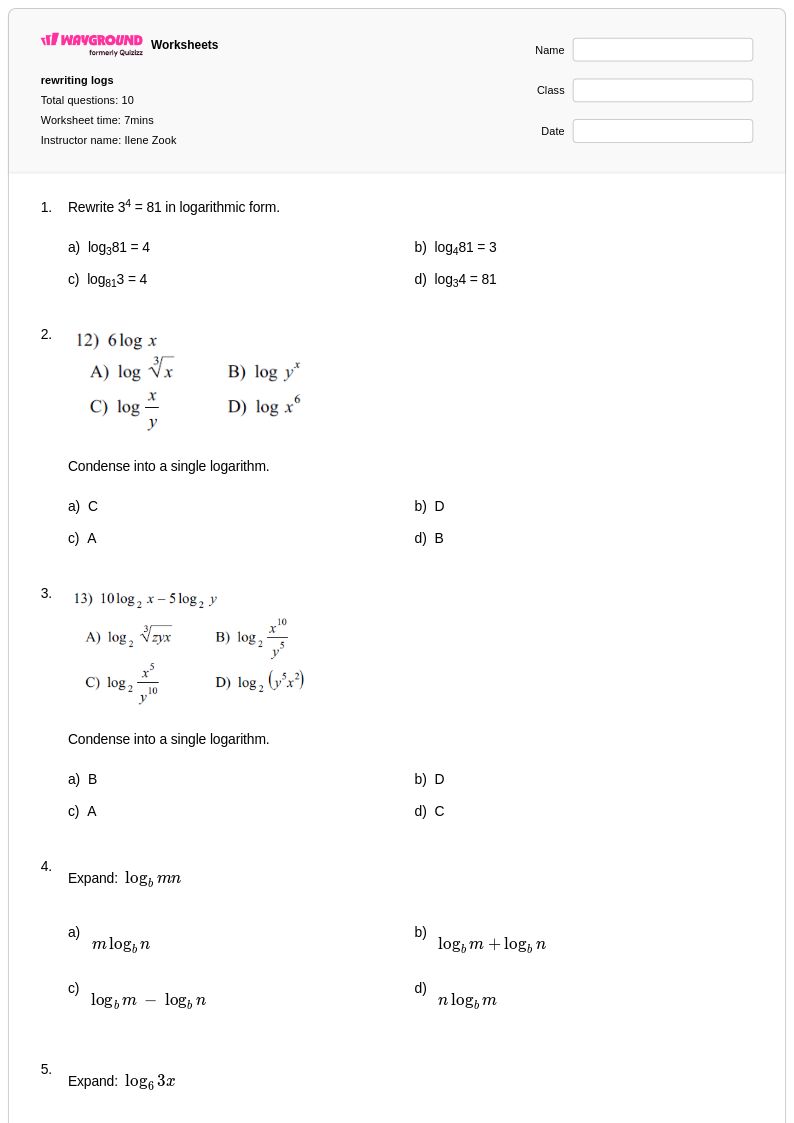
10 Q
9th - 12th
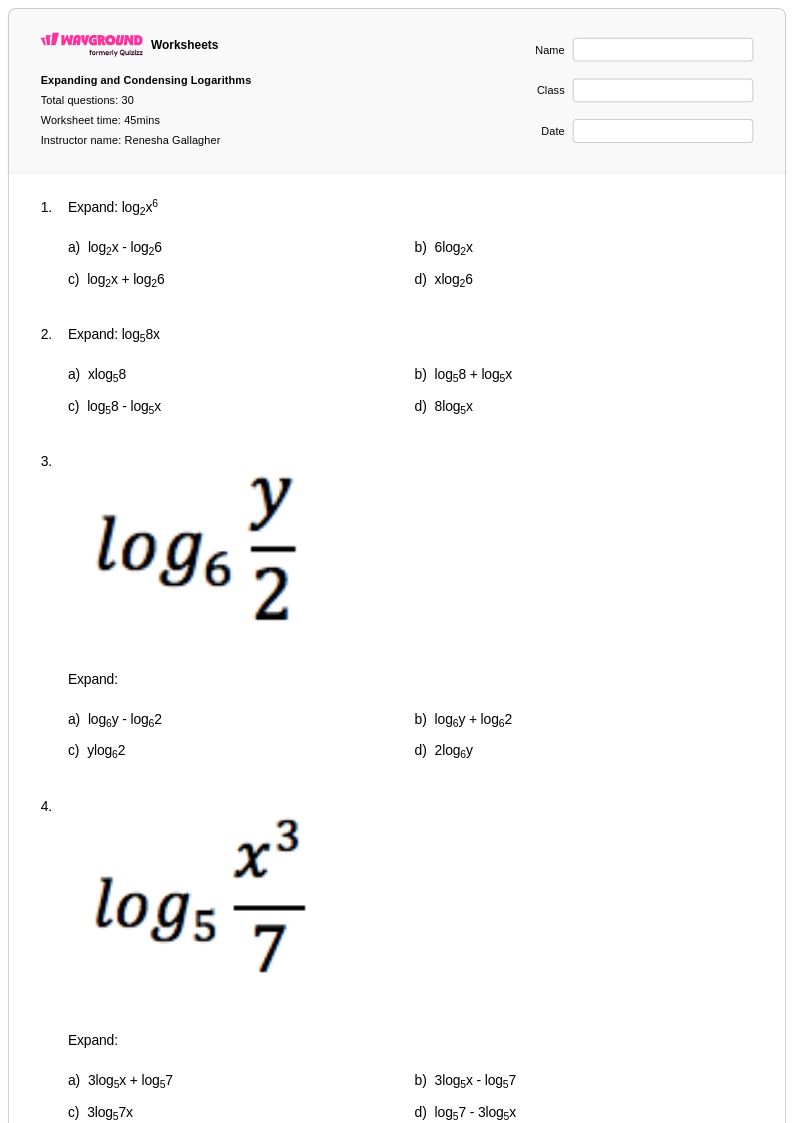
30 Q
9th - 12th
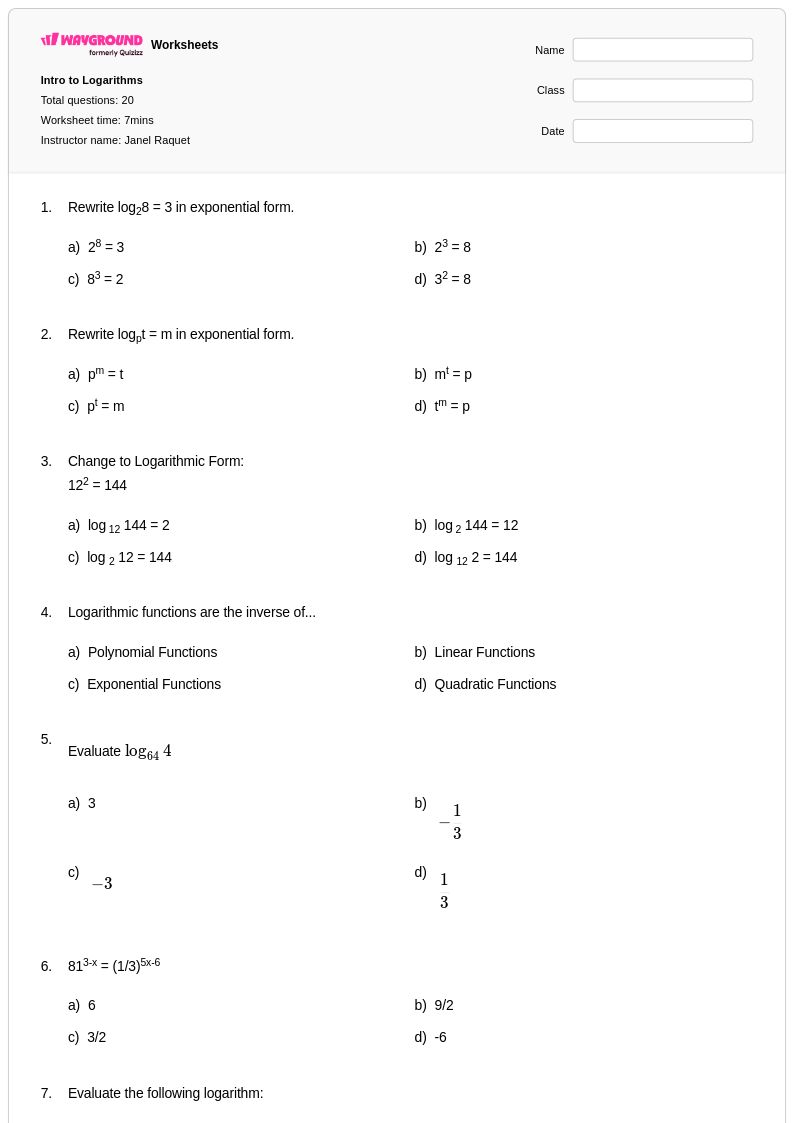
20 Q
9th - 12th
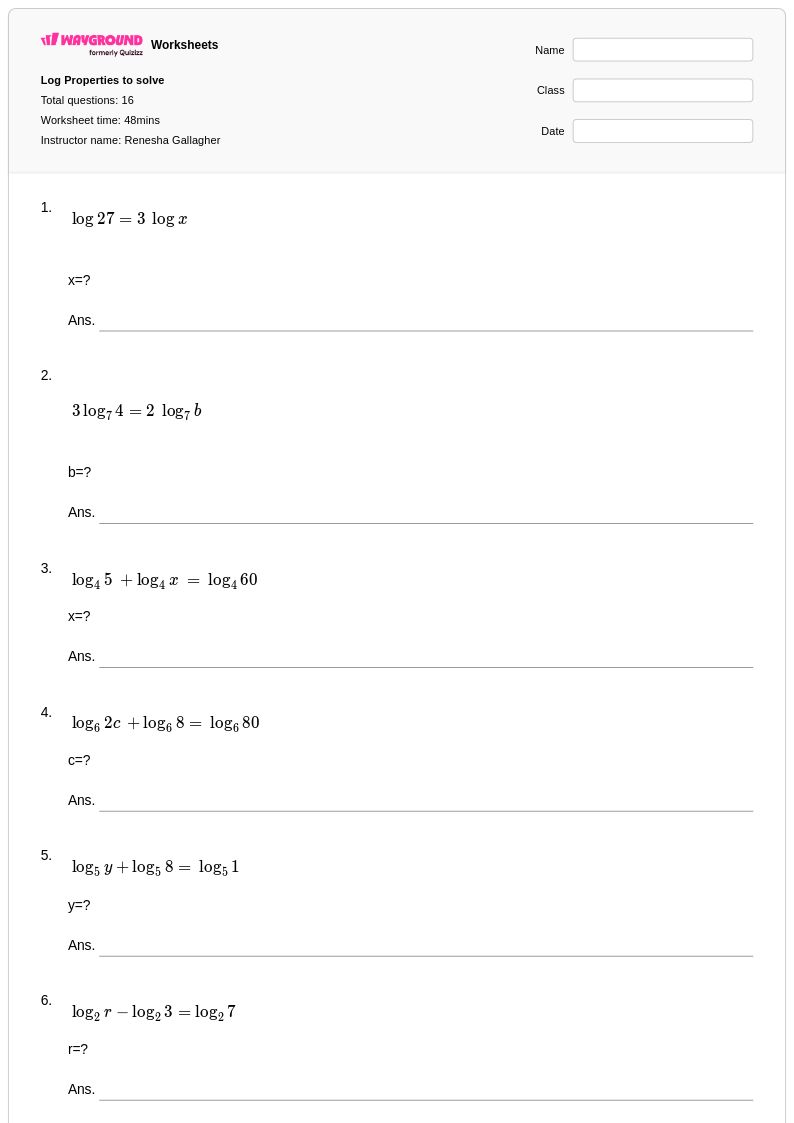
16 Q
9th - 12th
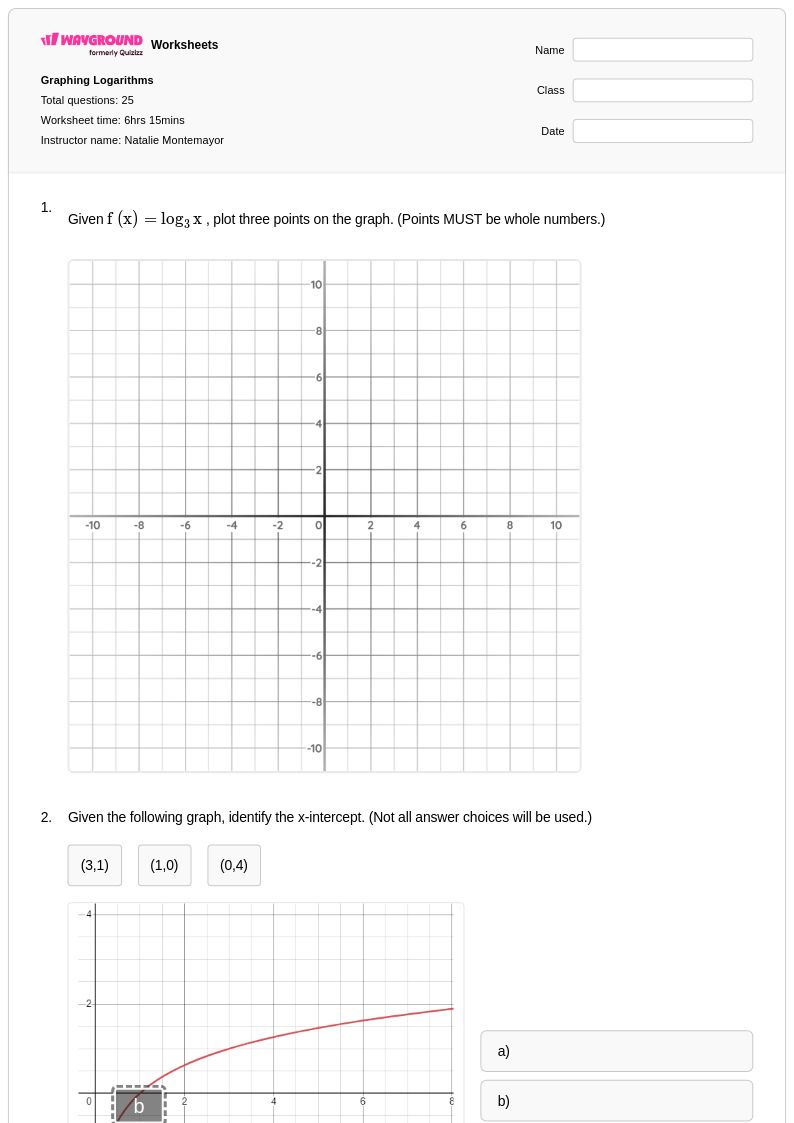
25 Q
9th - 12th
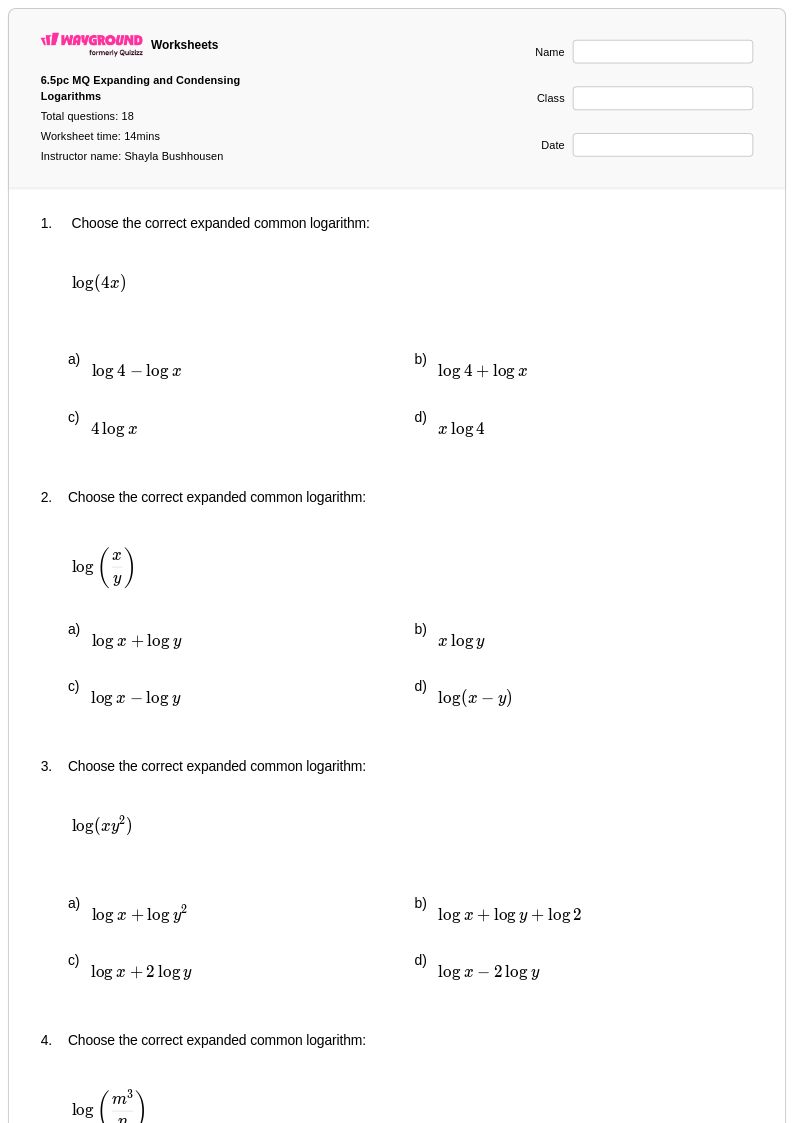
18 Q
9th - 12th
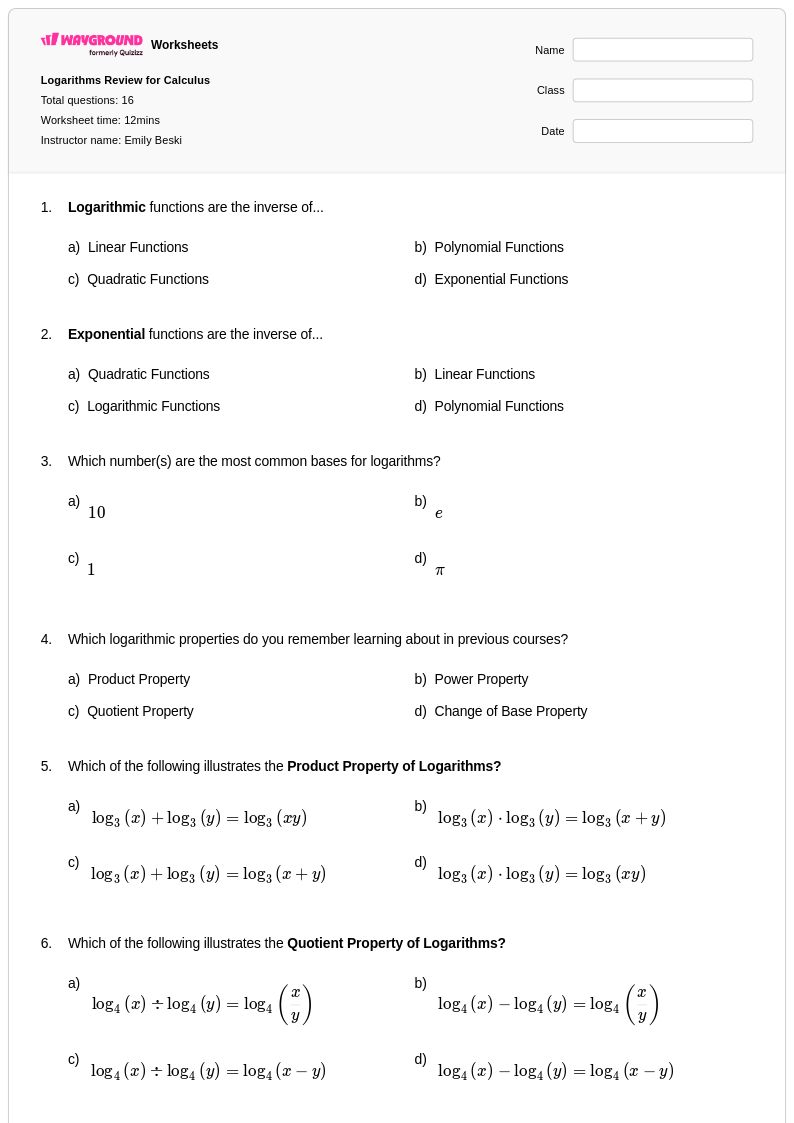
16 Q
9th - 12th
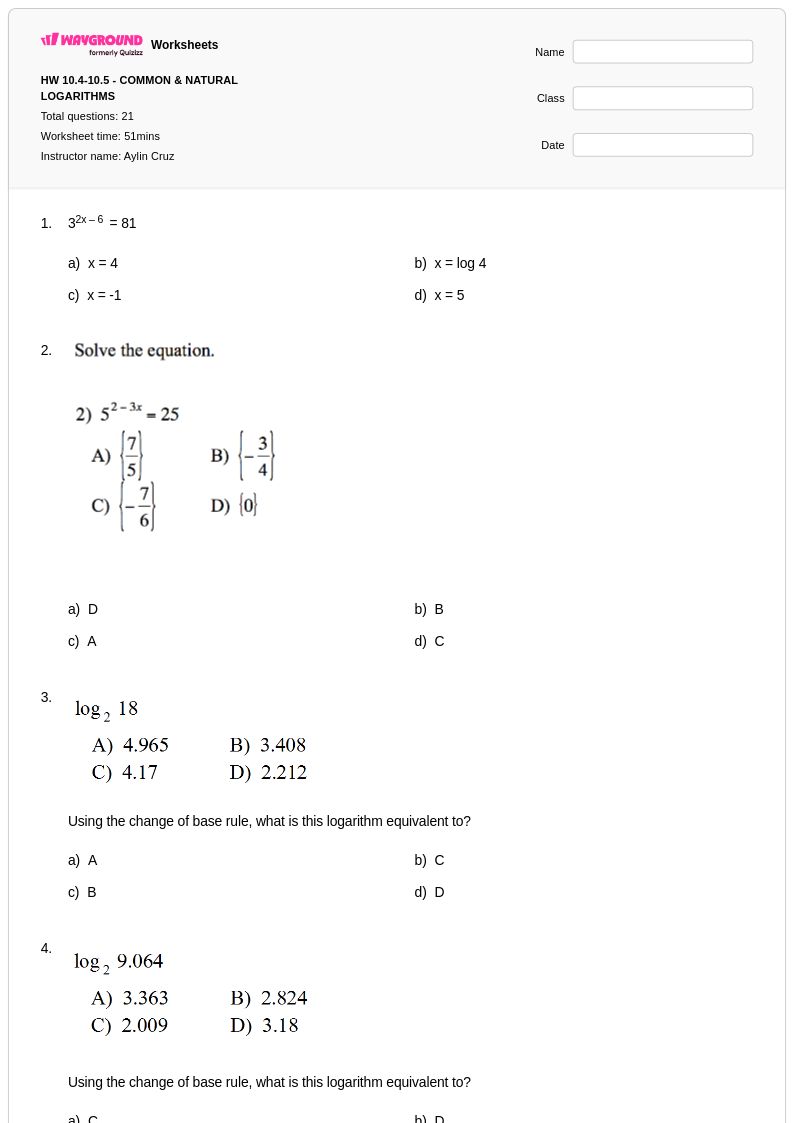
21 Q
9th - 12th
Explore Other Subject Worksheets for class 9
Explore printable Logarithm Rules worksheets for Class 9
Logarithm rules worksheets for Class 9 mathematics provide students with essential practice in mastering the fundamental properties that govern logarithmic operations. These comprehensive worksheets available through Wayground focus on core logarithmic principles including the product rule, quotient rule, power rule, and change of base formula, helping students develop fluency in manipulating and simplifying logarithmic expressions. The carefully structured practice problems progress from basic rule application to more complex multi-step problems, strengthening students' algebraic reasoning and preparing them for advanced mathematical concepts. Each worksheet collection includes detailed answer keys and is available in convenient pdf format, making these free printables valuable resources for both classroom instruction and independent study sessions.
Wayground, formerly Quizizz, empowers mathematics teachers with access to millions of teacher-created logarithm rules resources that streamline lesson planning and enhance student learning outcomes. The platform's robust search and filtering capabilities allow educators to quickly locate worksheets that align with specific curriculum standards and match their students' skill levels, while built-in differentiation tools enable seamless customization for diverse learning needs. Teachers can easily modify existing worksheets or combine multiple resources to create targeted practice sets for remediation or enrichment, with all materials available in both printable pdf formats for traditional classroom use and digital formats for interactive learning environments. This flexibility supports effective skill practice across various teaching scenarios, from whole-class instruction to individualized intervention programs.
FAQs
Are logarithm rules typically taught in Grade 9?
How should I introduce logarithm rules to 9th graders?
What exercises are best for 9th graders practicing logarithm rules?
What's a common misconception for students first learning logarithm rules?
How can I use this Grade 9 logarithm worksheet?
How do logarithm rules connect to the 9th-grade math curriculum?