
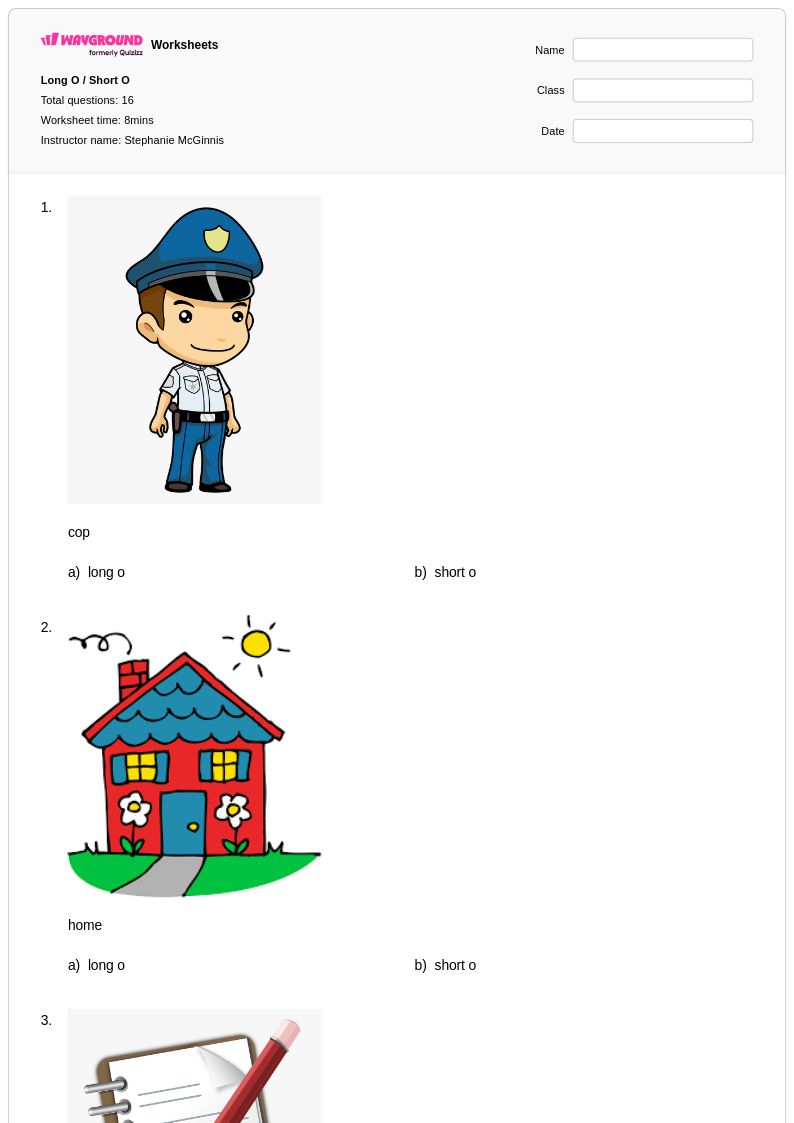
16 Q
1st - 3rd
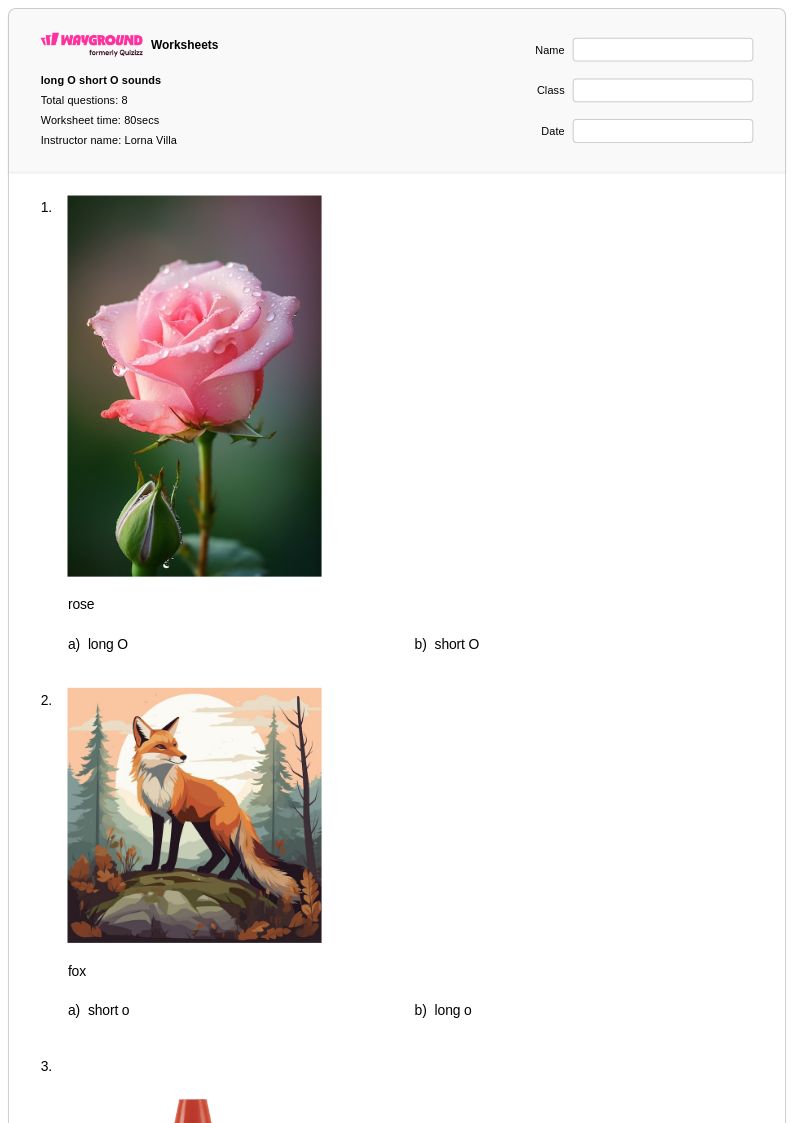
8 Q
1st
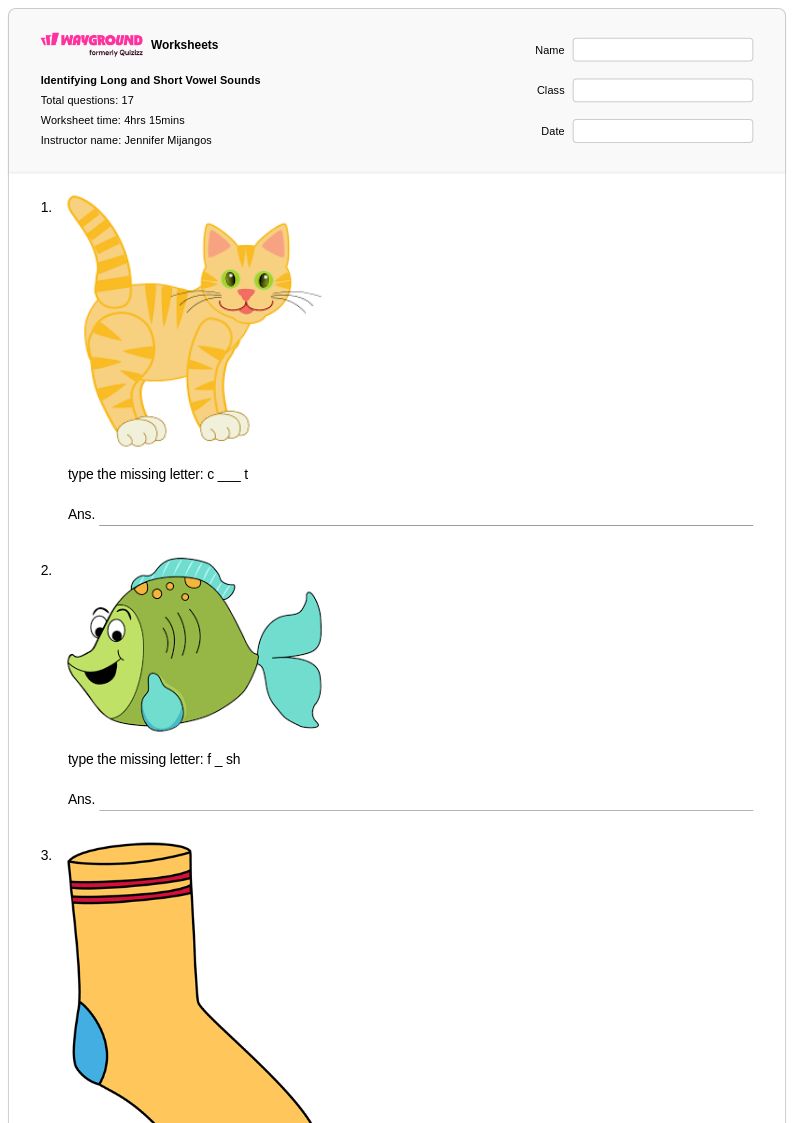
17 Q
1st - 5th
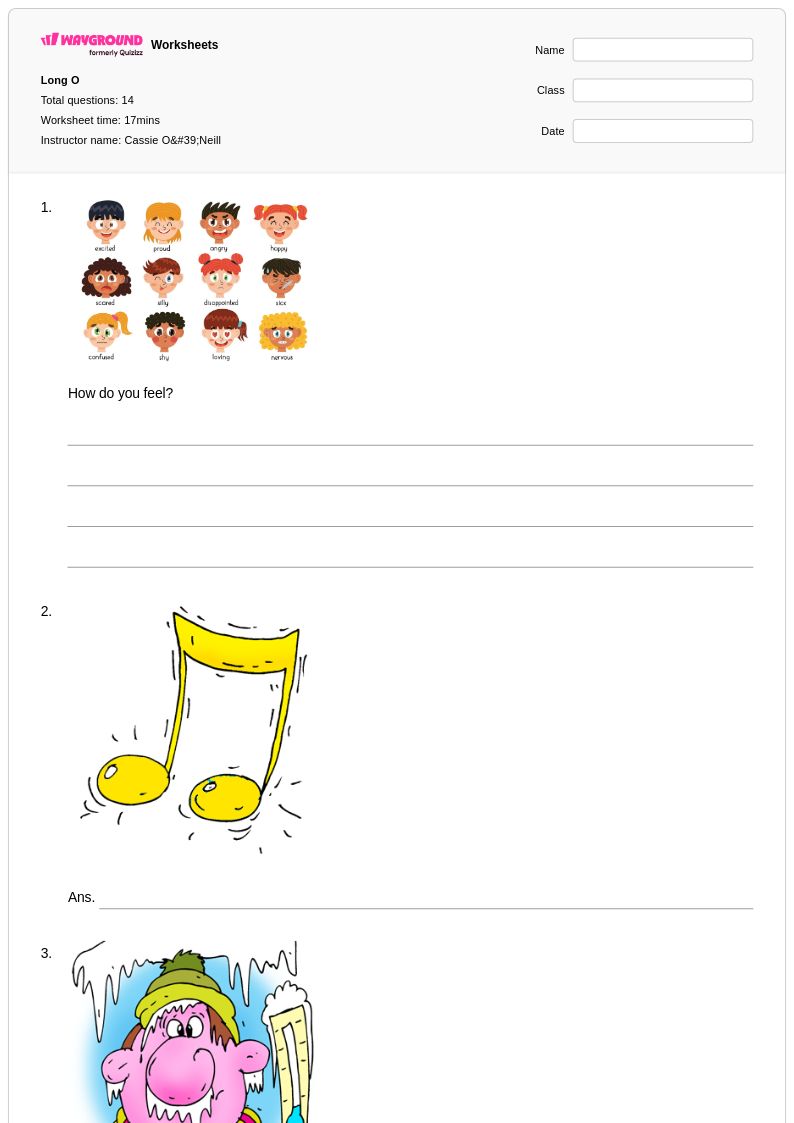
14 Q
1st
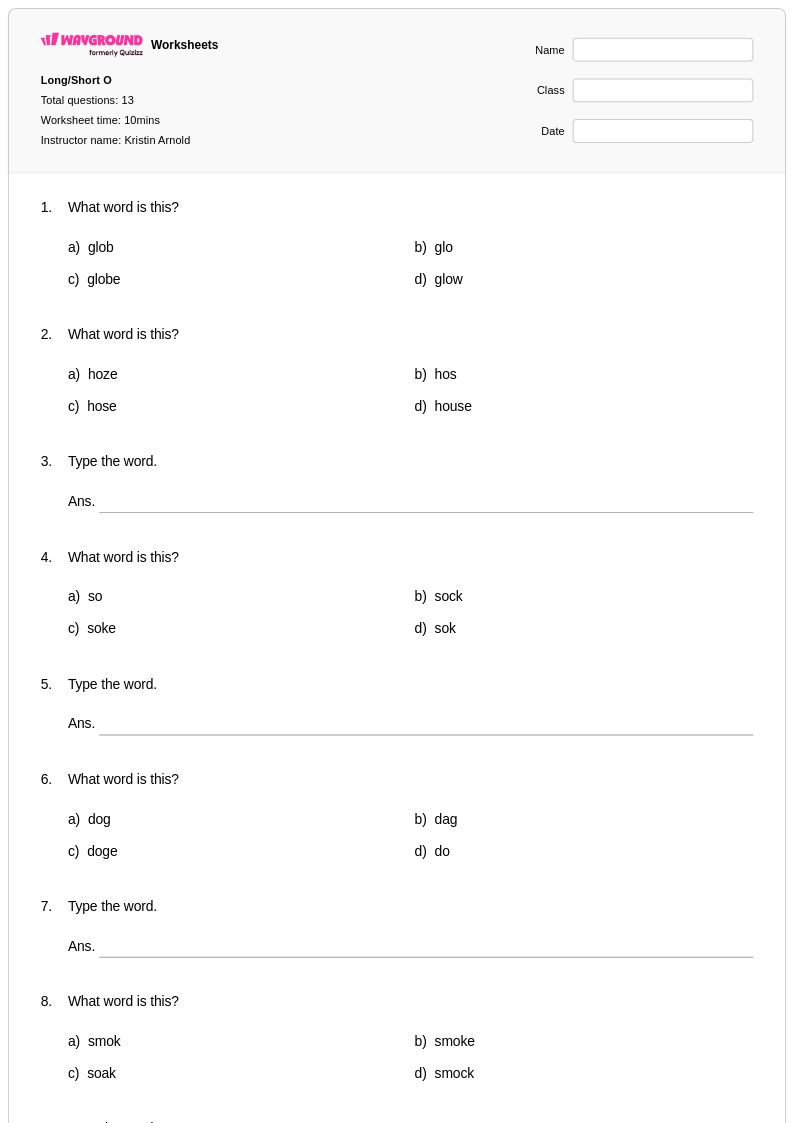
13 Q
1st - 4th
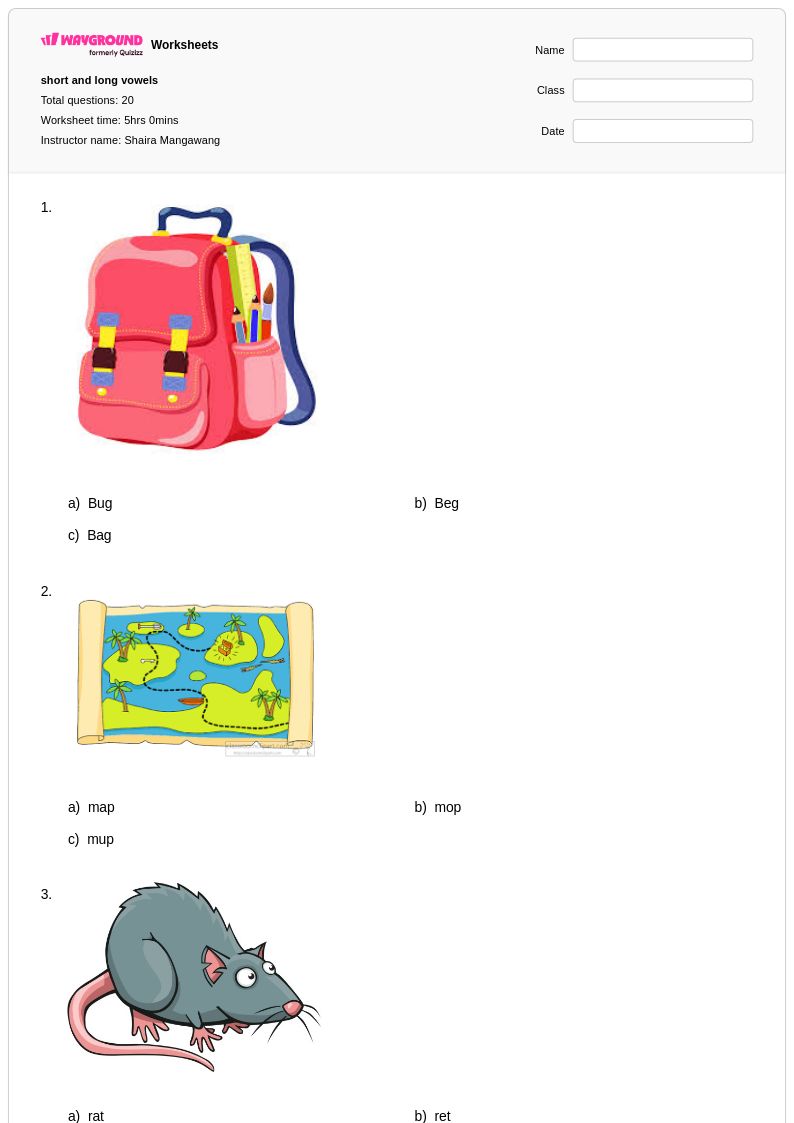
20 Q
1st - 2nd
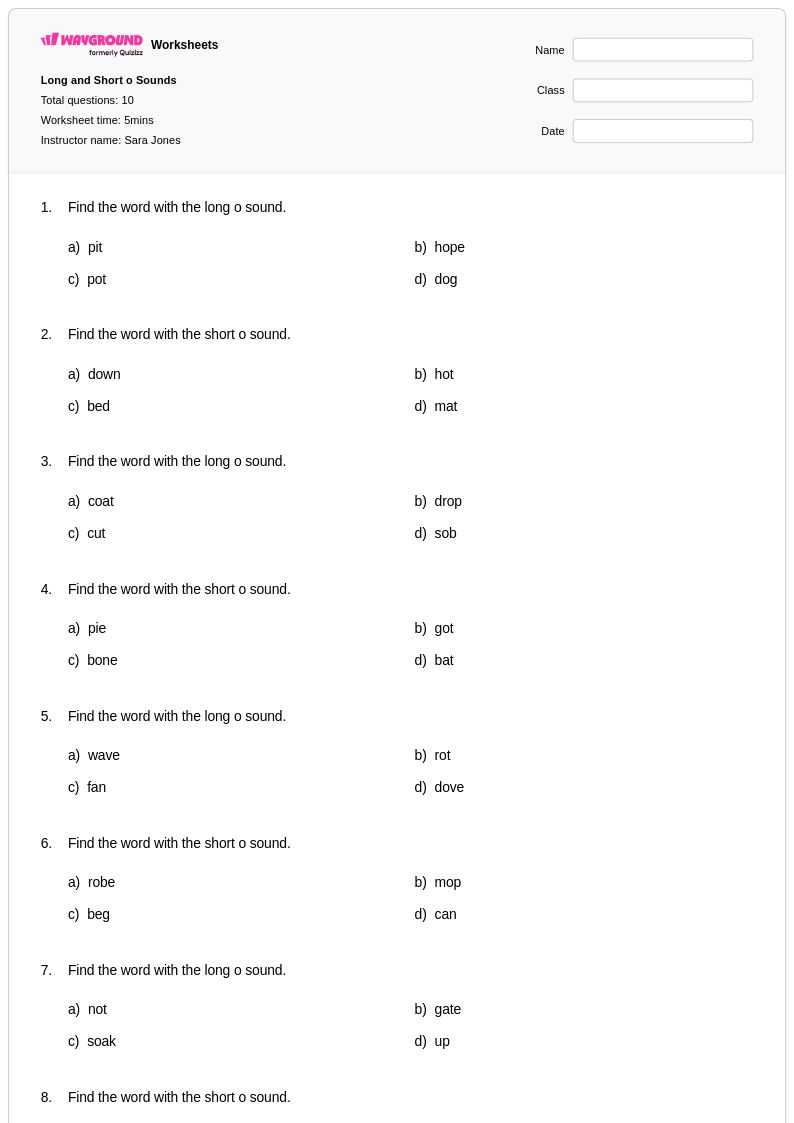
10 Q
1st
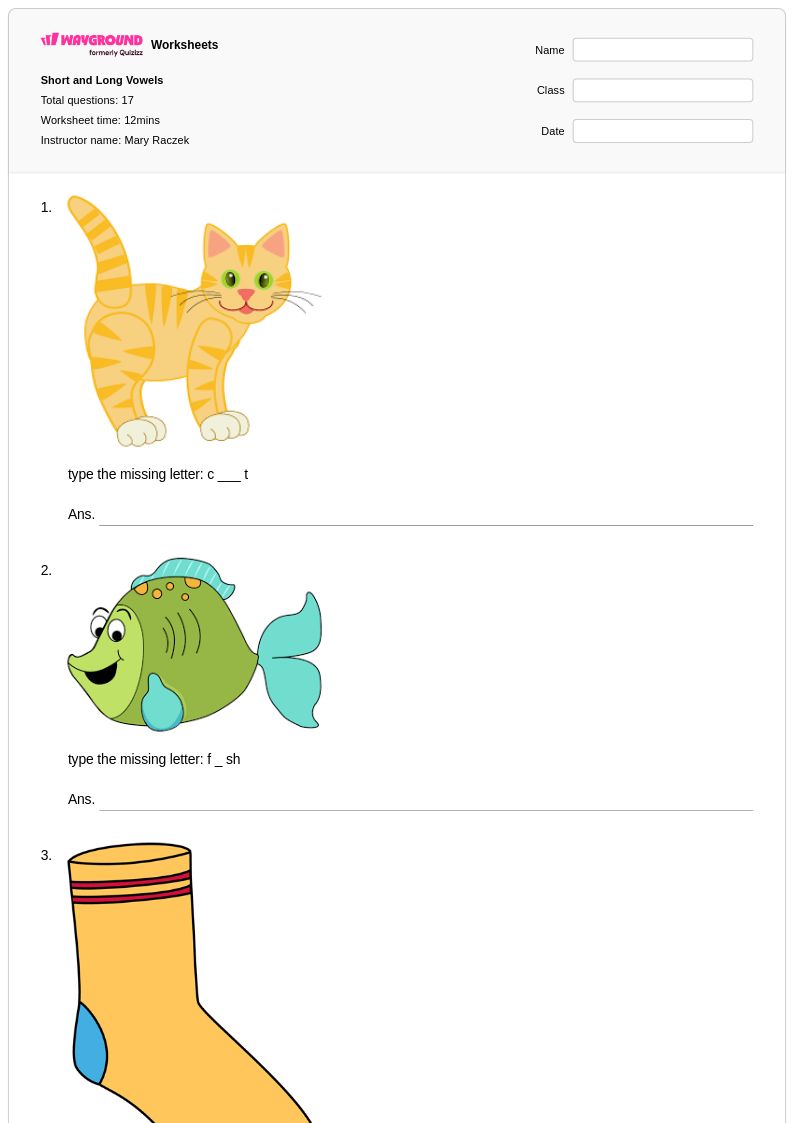
17 Q
1st - 2nd
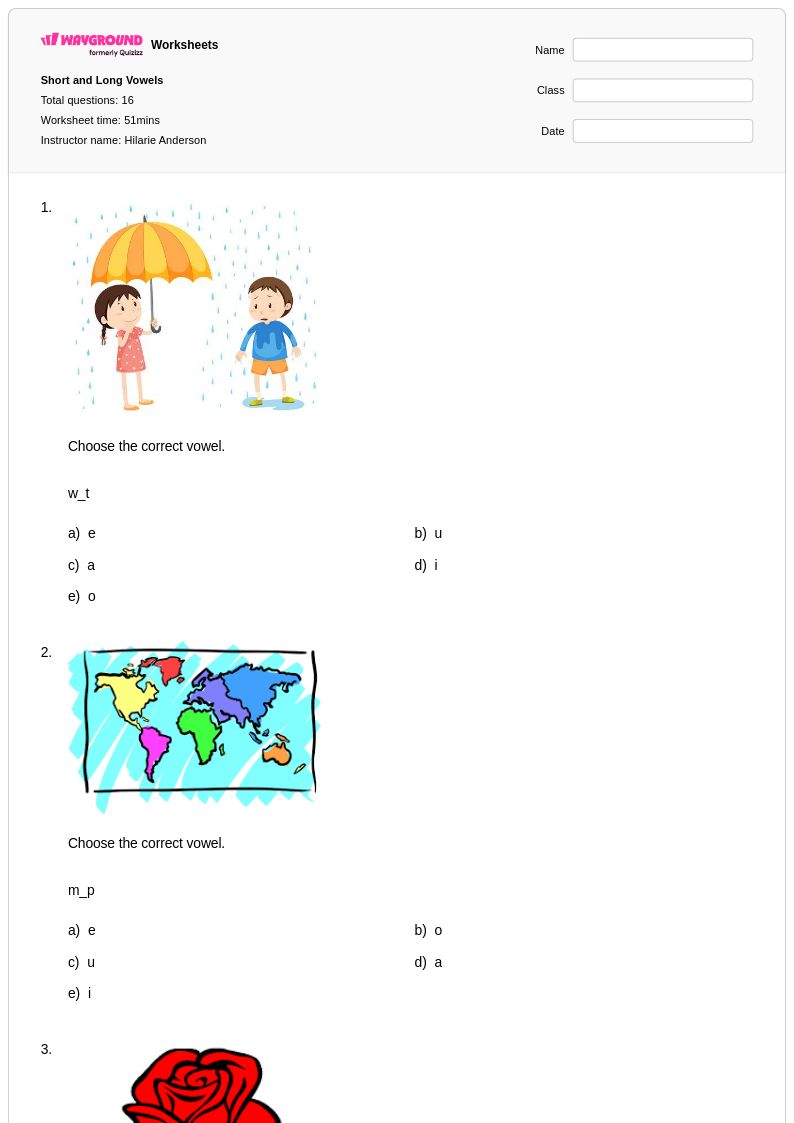
18 Q
1st - Uni
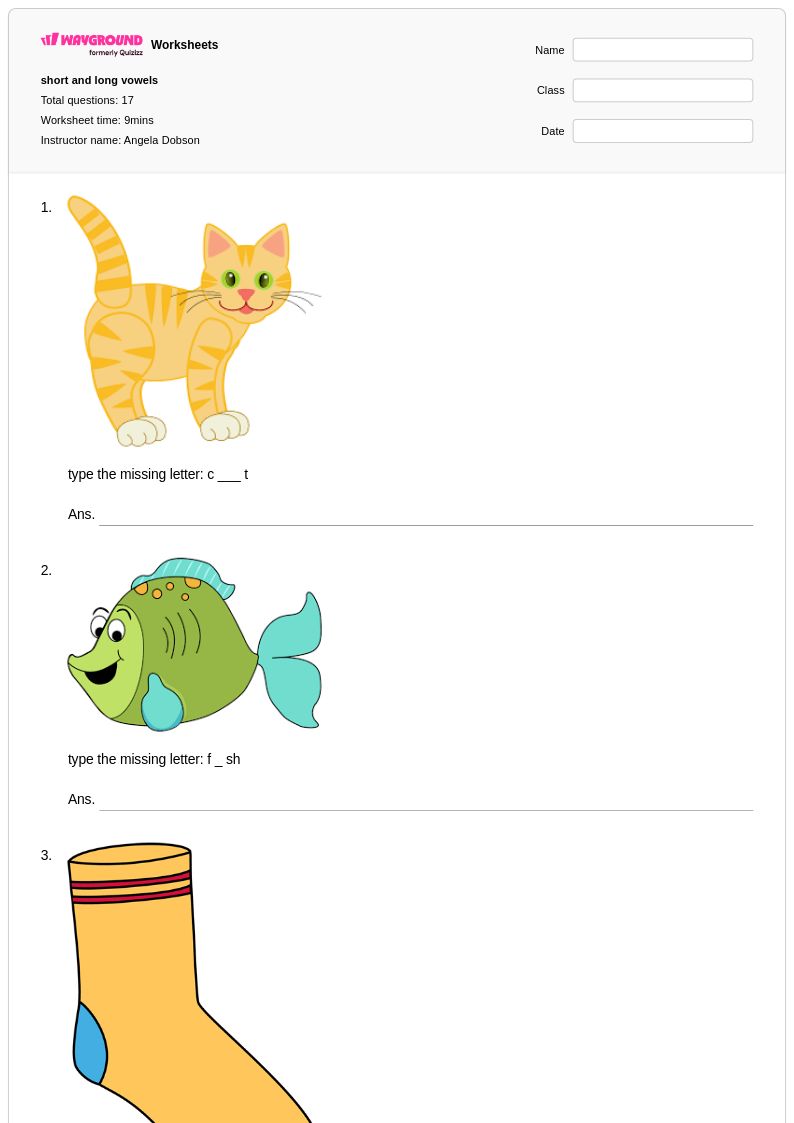
17 Q
1st - 3rd
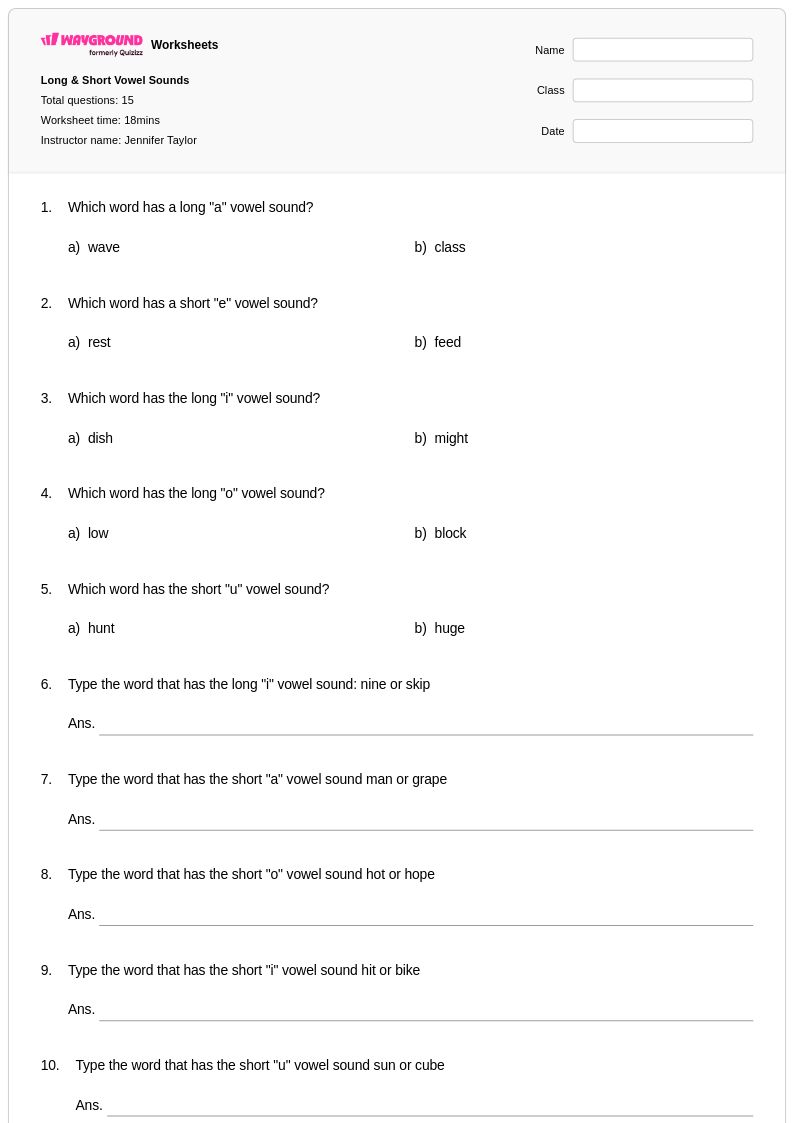
15 Q
1st - 5th

18 Q
1st - 5th
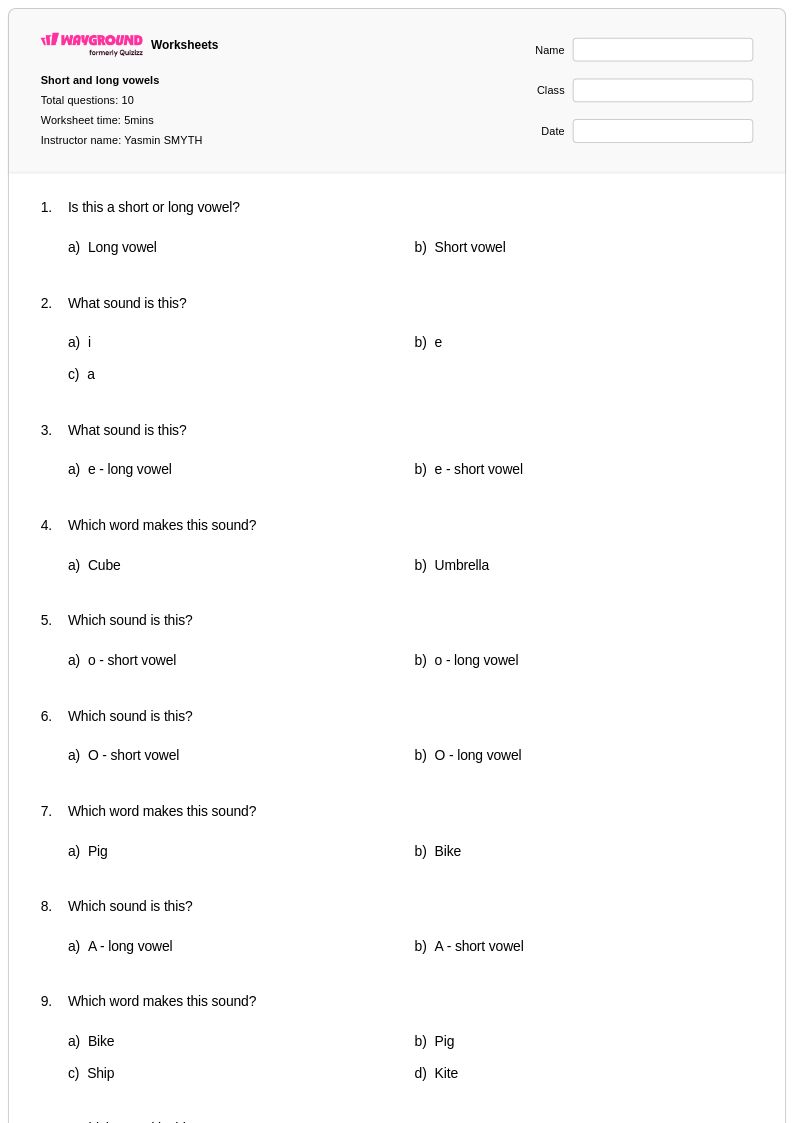
10 Q
1st - 2nd
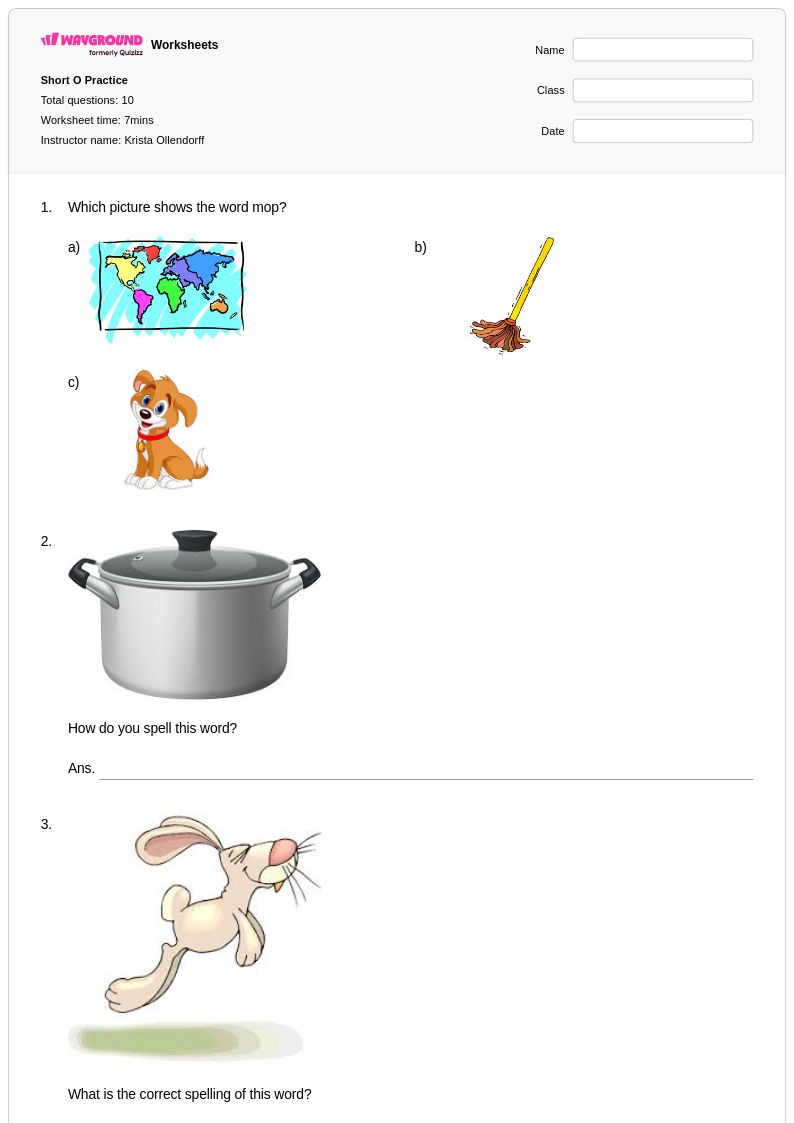
10 Q
KG - 1st
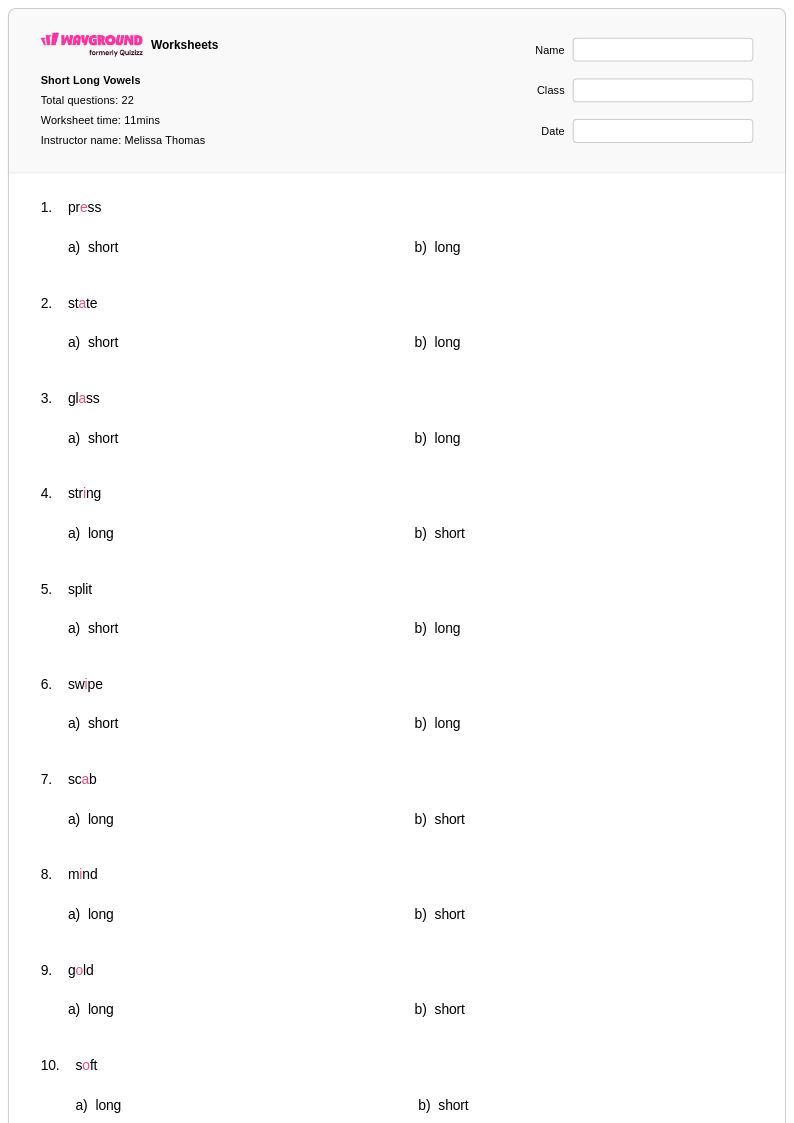
22 Q
1st - 2nd
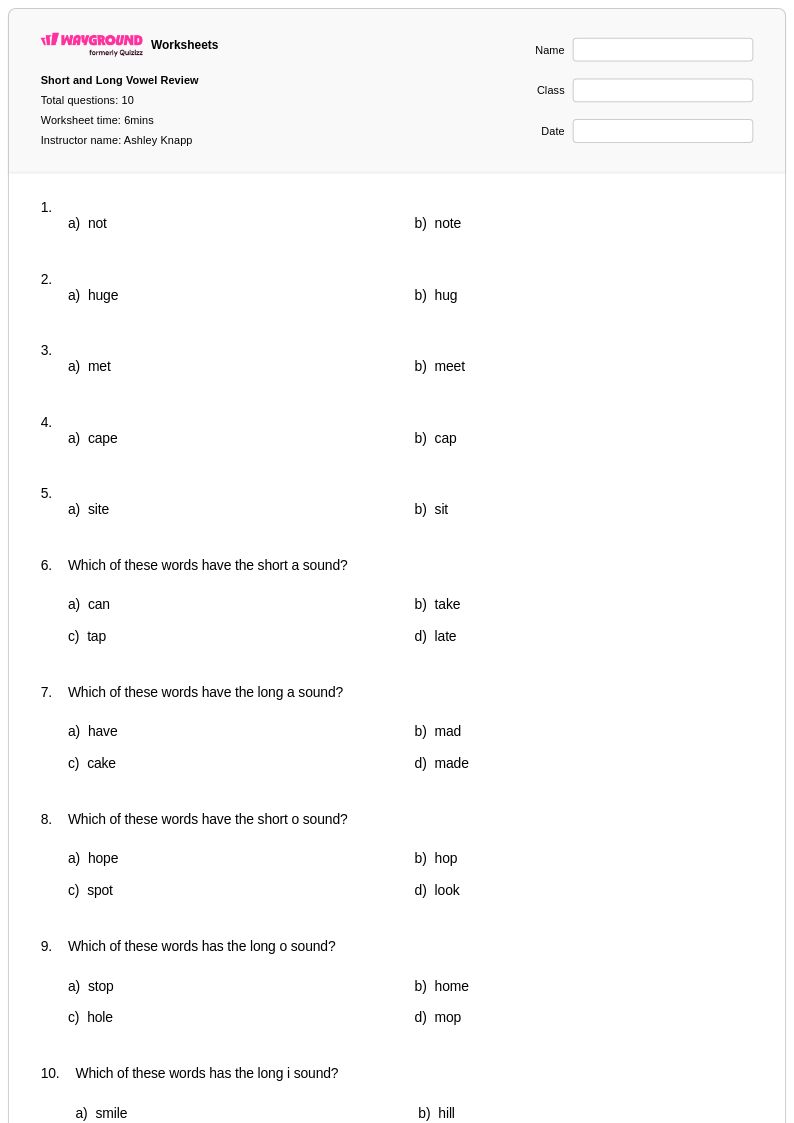
10 Q
1st
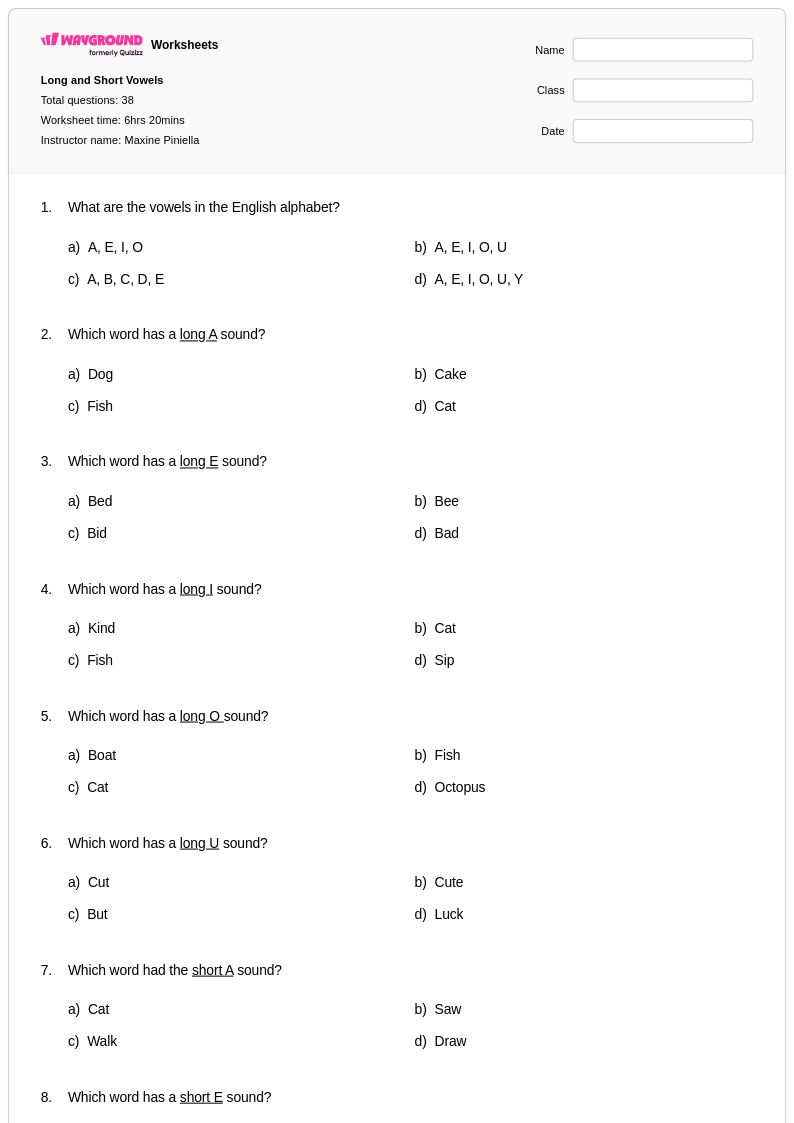
38 Q
1st - 5th

20 Q
1st
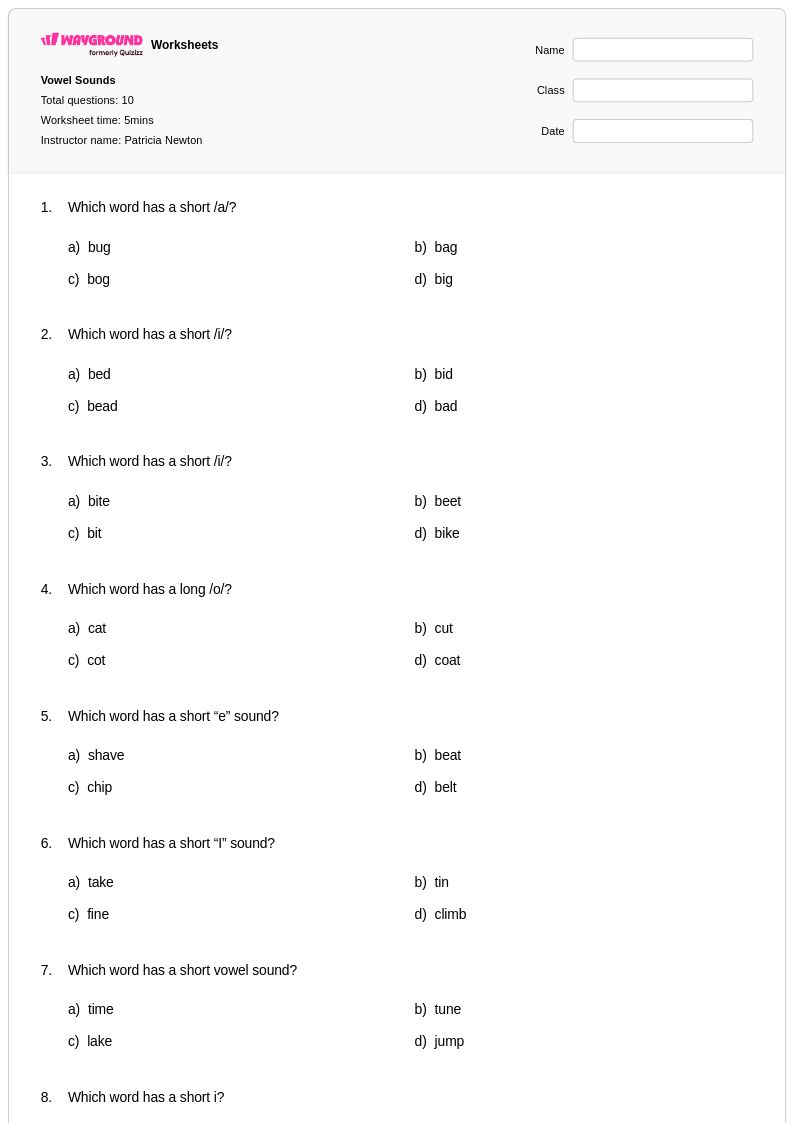
10 Q
1st
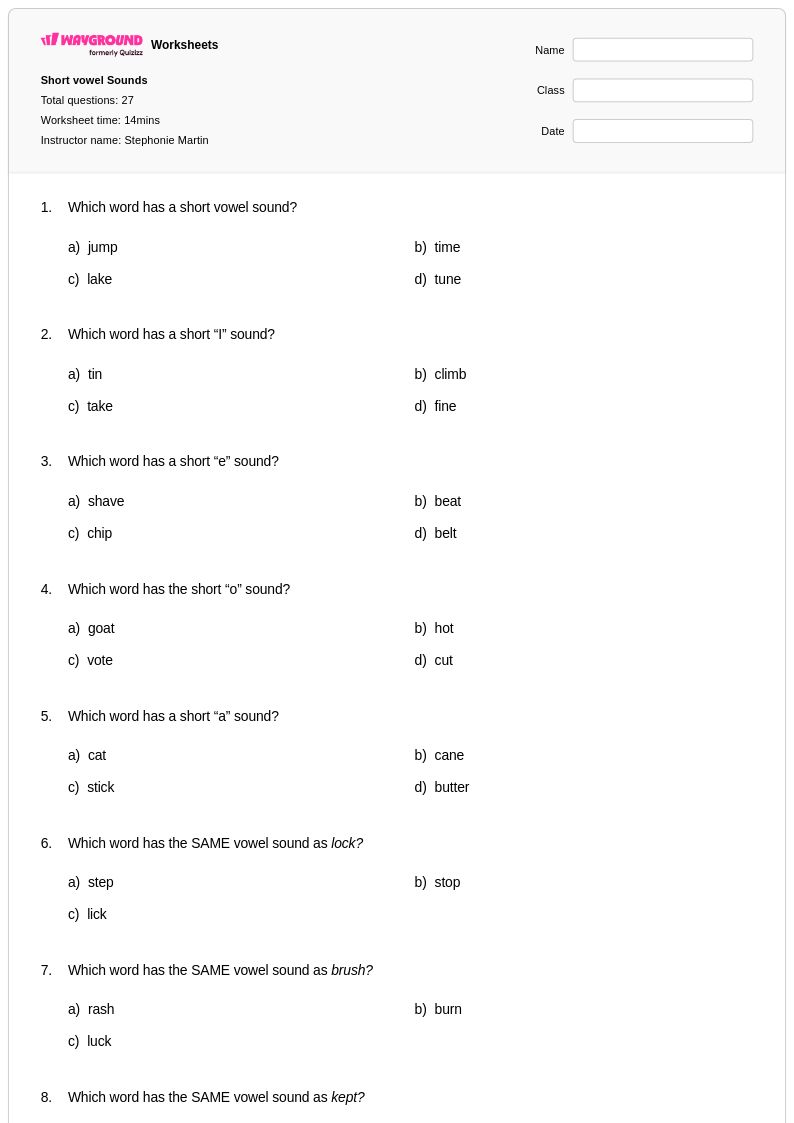
27 Q
1st - 3rd
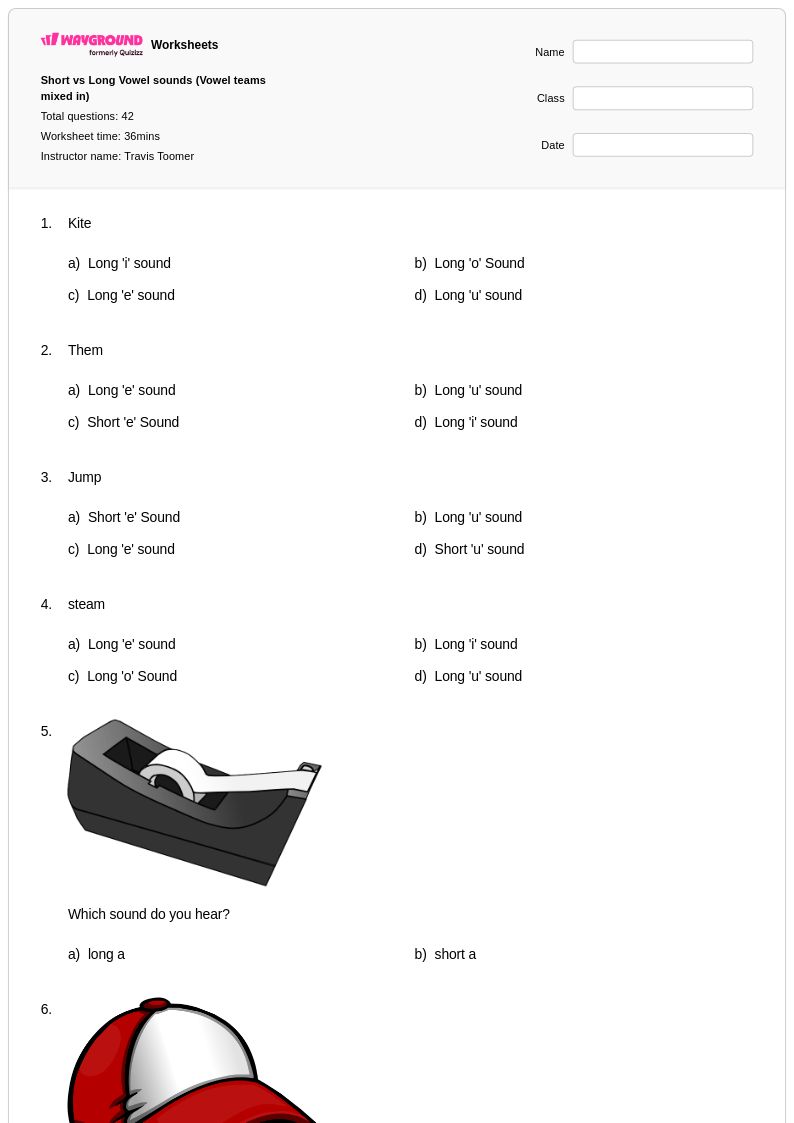
42 Q
KG - 3rd
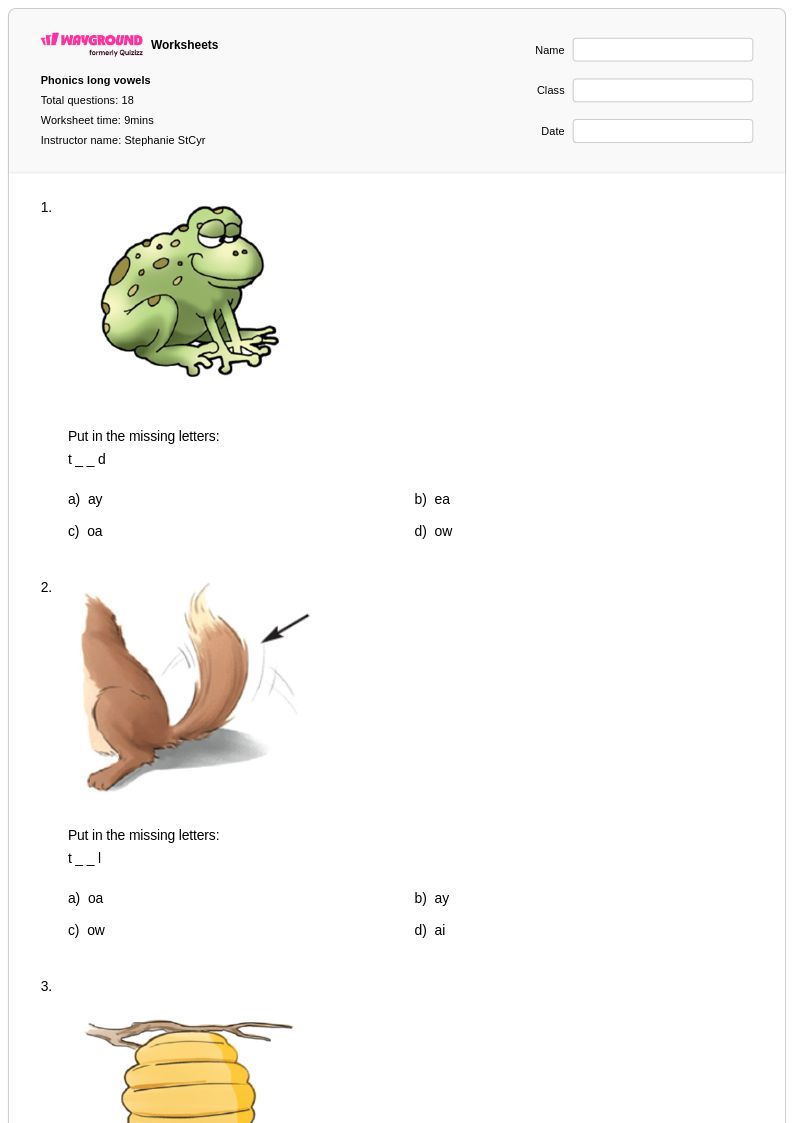
18 Q
1st
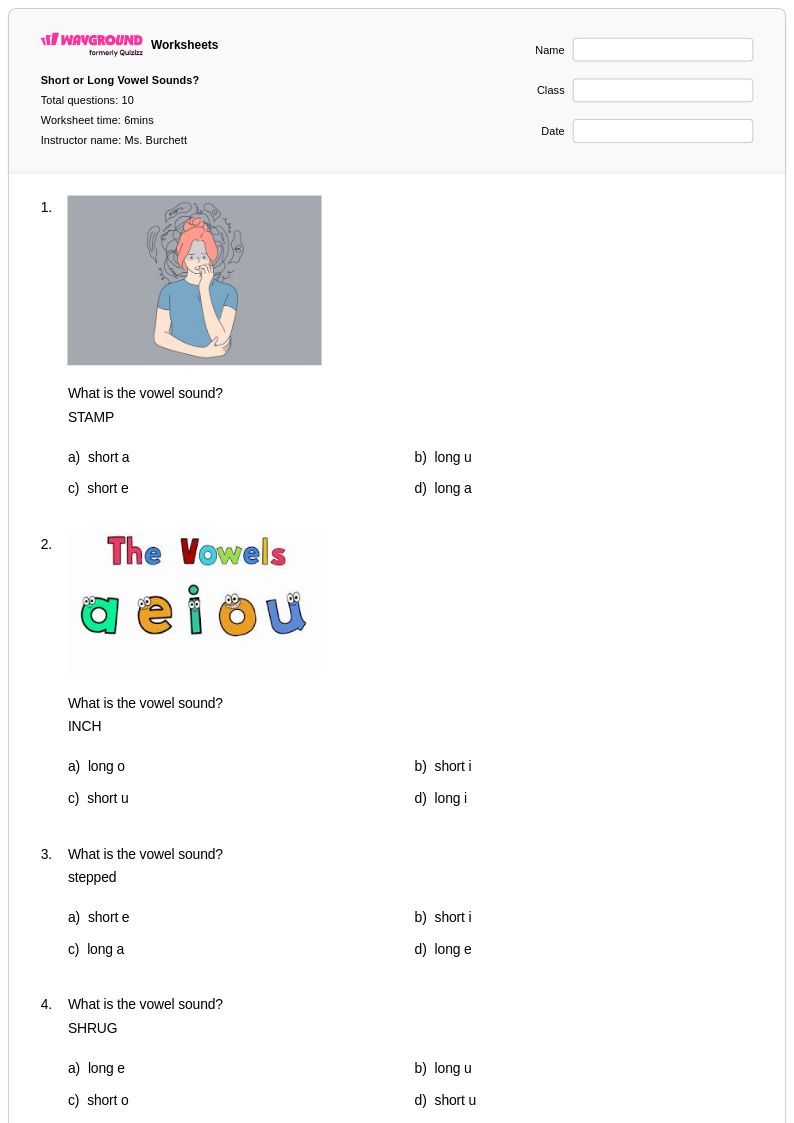
10 Q
KG - 2nd
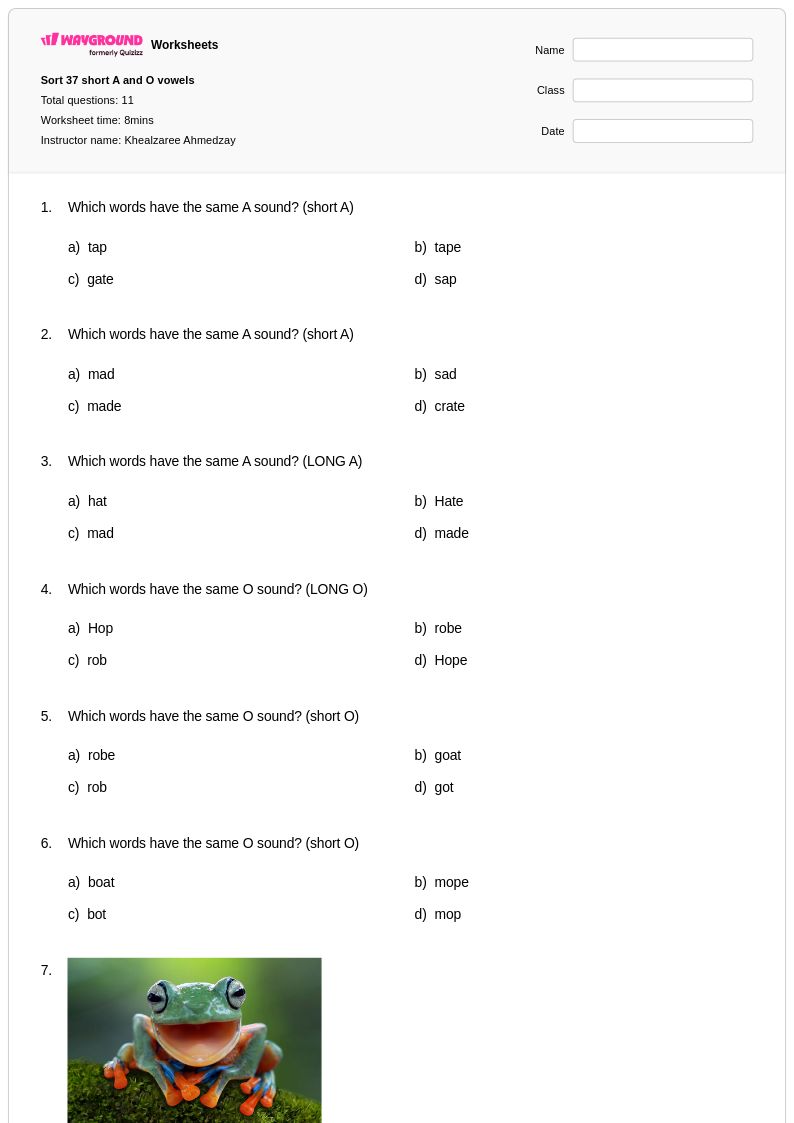
11 Q
KG - 8th
Explore Long O/short O Worksheets by Grades
Explore Other Subject Worksheets for class 1
Explore printable Long O/short O worksheets for Class 1
Long O and short O vowel worksheets for Class 1 students available through Wayground (formerly Quizizz) provide essential phonics instruction that builds the foundation for reading fluency and spelling accuracy. These carefully crafted worksheets help young learners distinguish between the two distinct sounds of the letter O, strengthening their ability to decode unfamiliar words and apply vowel patterns in their writing. Students engage with practice problems that reinforce recognition of short O sounds in words like "hop," "sock," and "pond," while developing mastery of long O sounds found in words such as "rope," "bone," and "note." Each worksheet collection includes comprehensive answer keys and is available as free printables in convenient pdf format, making it easy for educators to implement systematic vowel instruction that supports beginning readers in developing critical phonemic awareness skills.
Wayground (formerly Quizizz) empowers teachers with an extensive library of millions of teacher-created long O and short O vowel resources specifically designed for Class 1 instruction. The platform's robust search and filtering capabilities allow educators to quickly locate worksheets that align with phonics standards and match their students' specific learning needs. Teachers can easily differentiate instruction by selecting from various difficulty levels and activity types, while the flexible customization tools enable modifications to accommodate diverse learning styles and abilities. These comprehensive worksheet collections are available in both printable and digital formats, including downloadable pdf versions, providing educators with versatile options for lesson planning, targeted remediation, enrichment activities, and ongoing skill practice that ensures students develop strong vowel recognition abilities essential for reading success.
FAQs
How do I teach long O and short O vowel sounds to early readers?
What exercises help students practice long O and short O sounds?
What mistakes do students commonly make when learning long O and short O?
How can I use long O and short O worksheets with students who need extra support?
How do I use Wayground's long O and short O worksheets in my classroom?