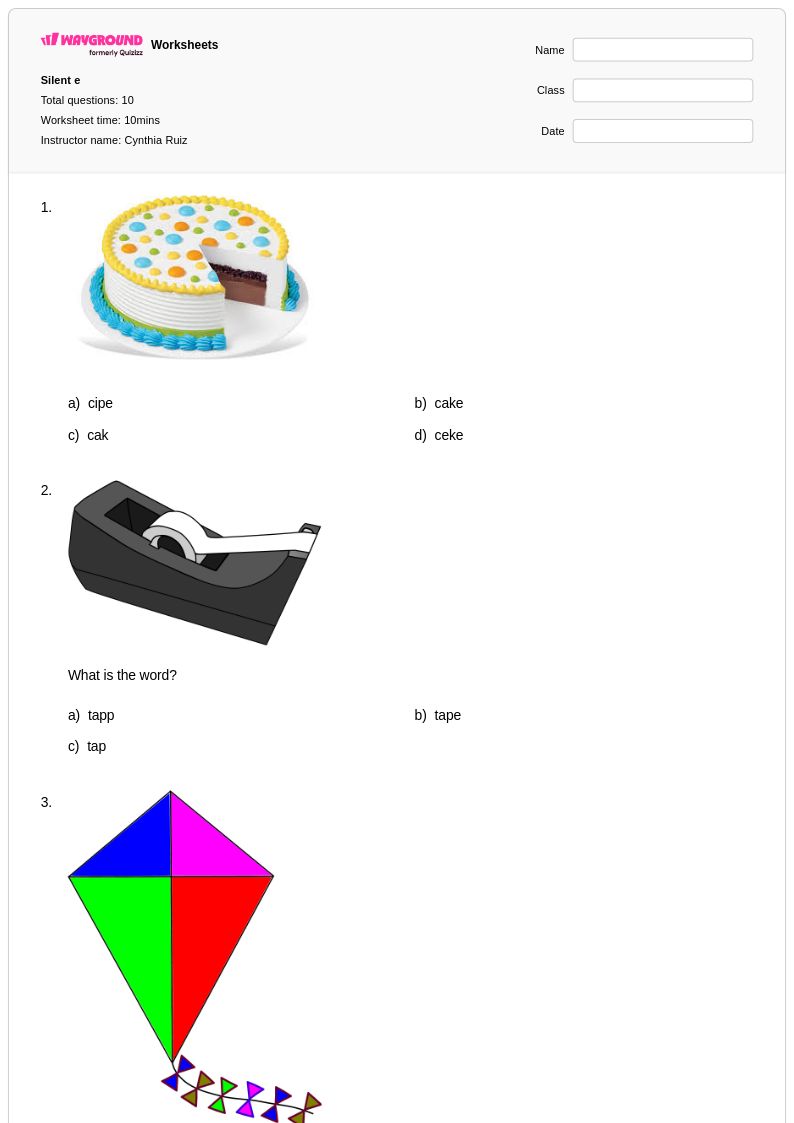
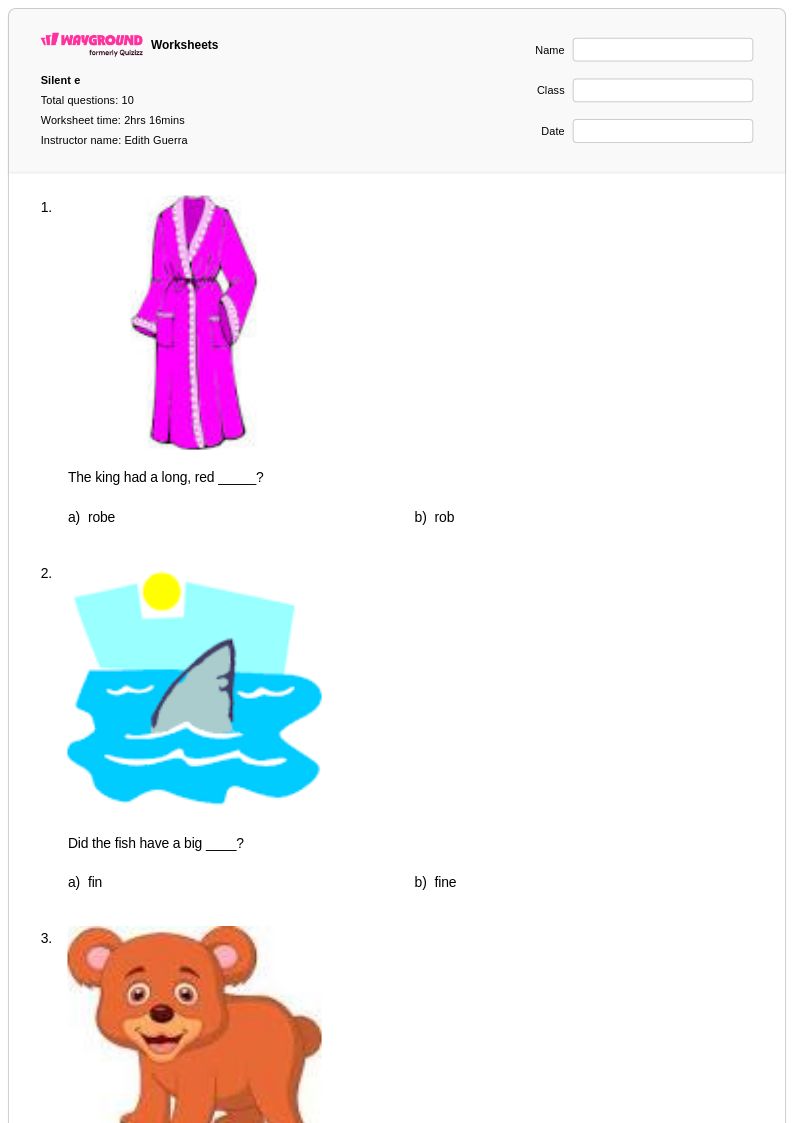
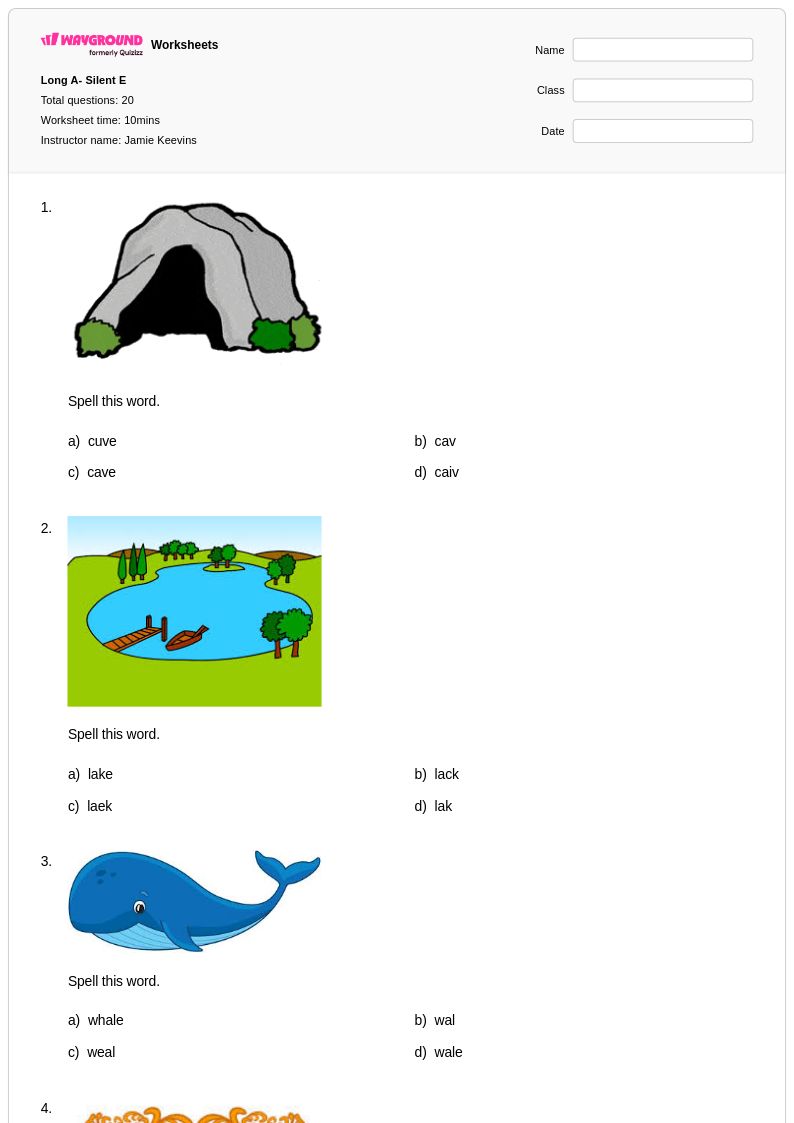
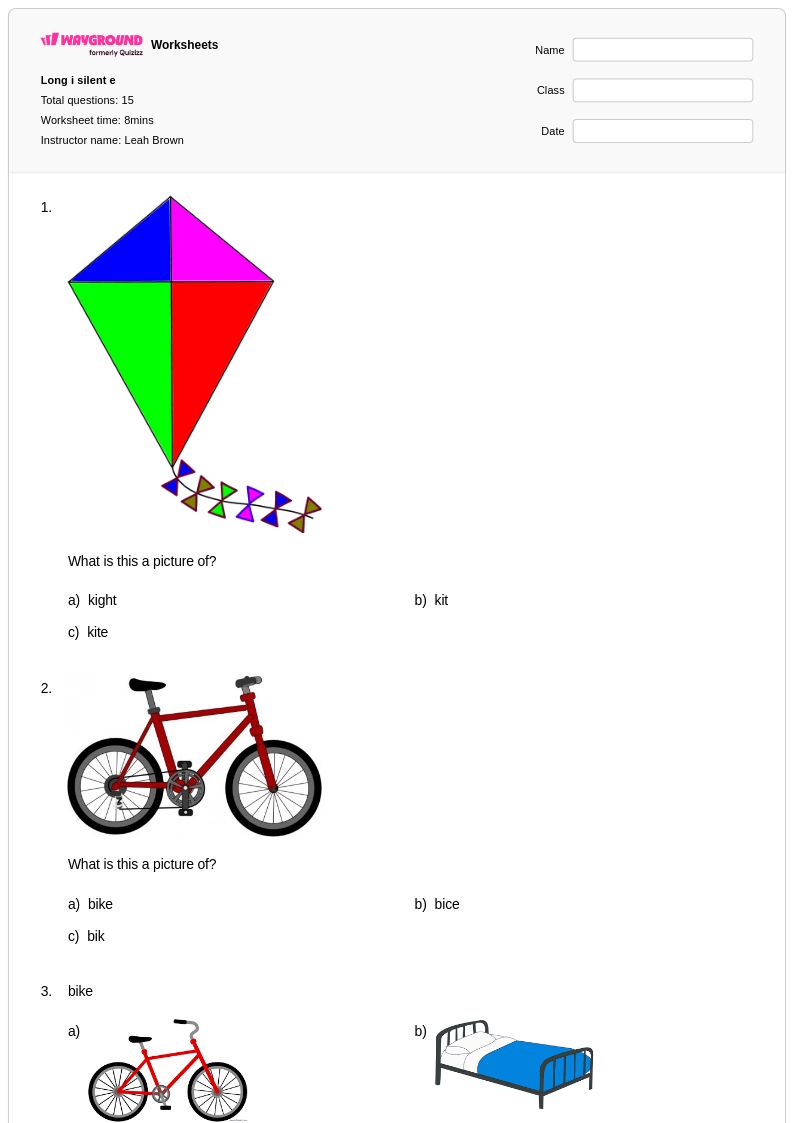
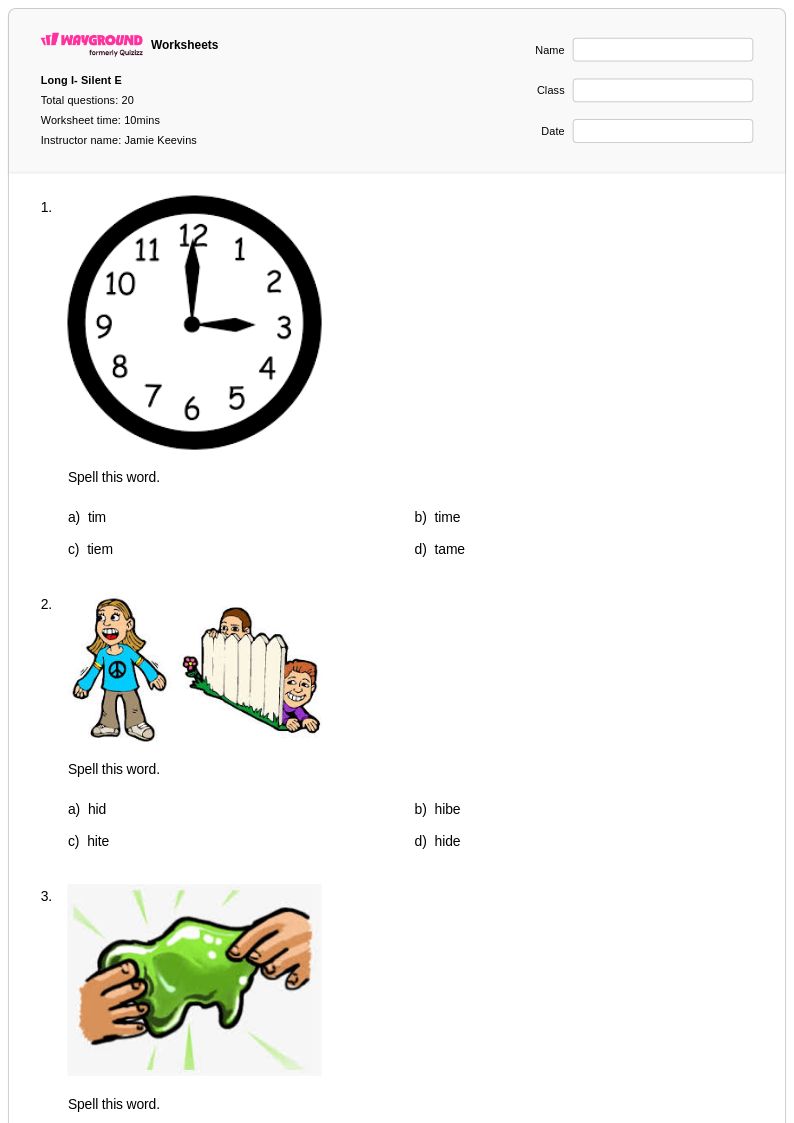
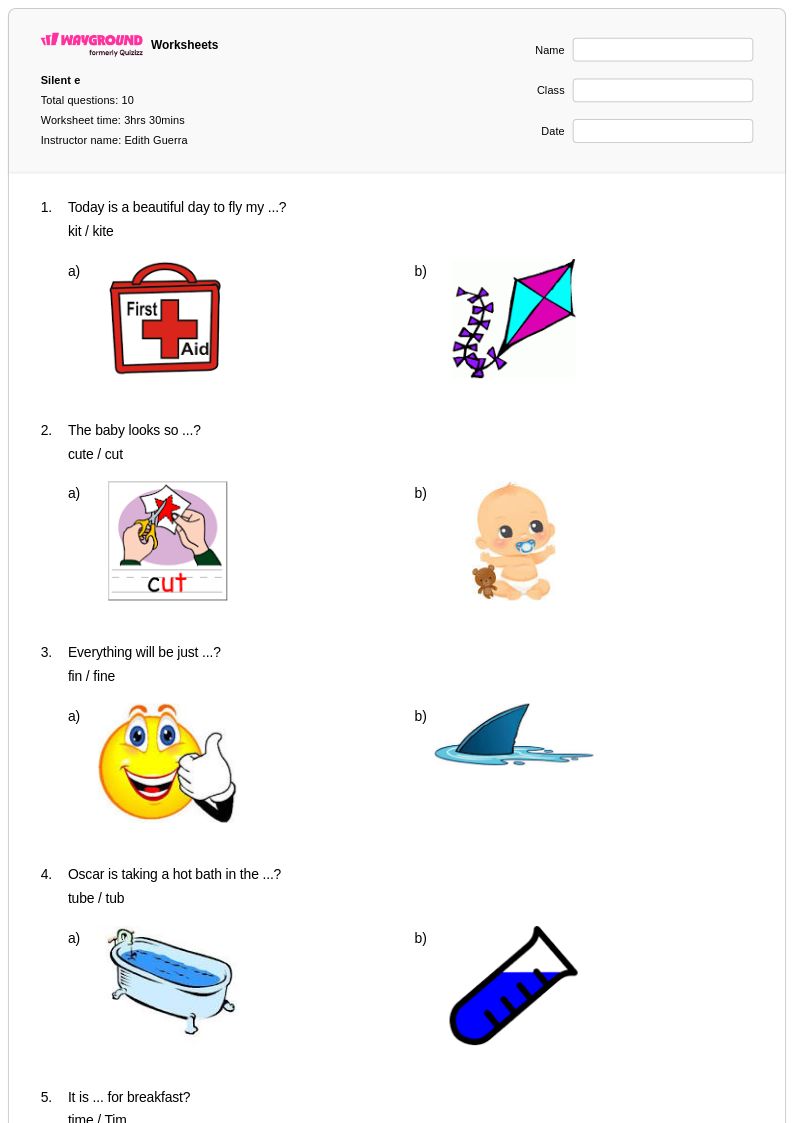
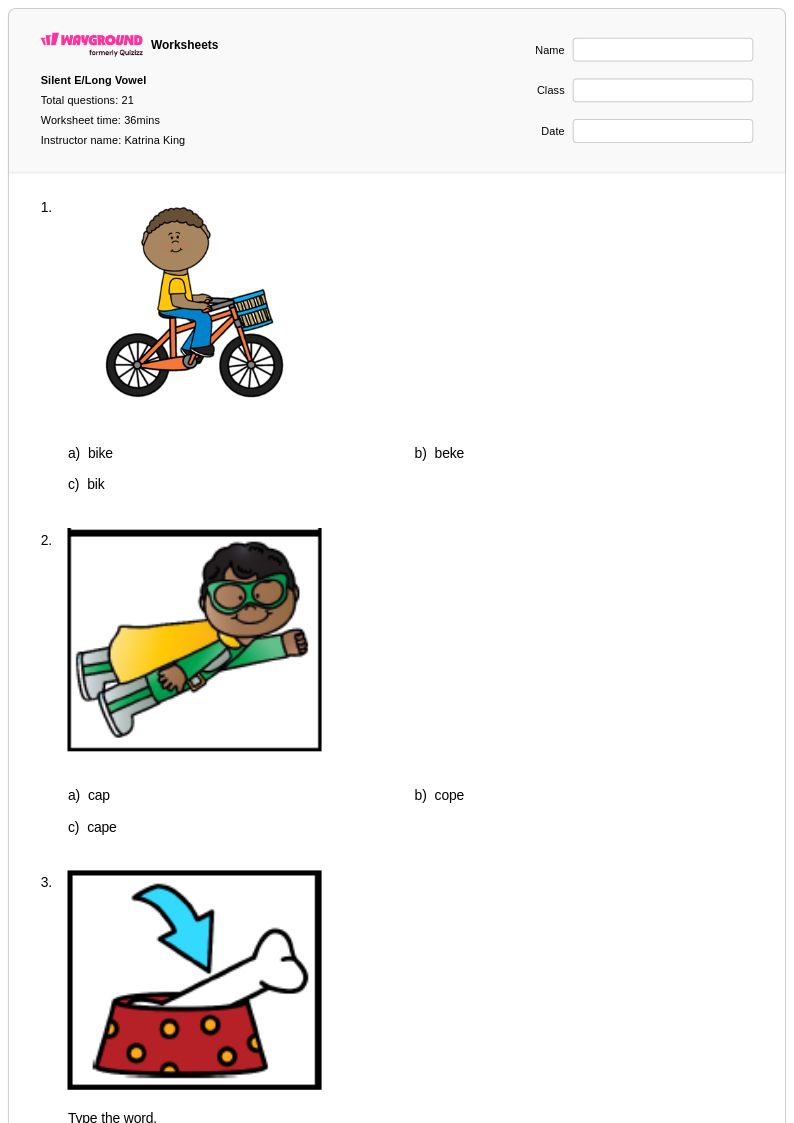
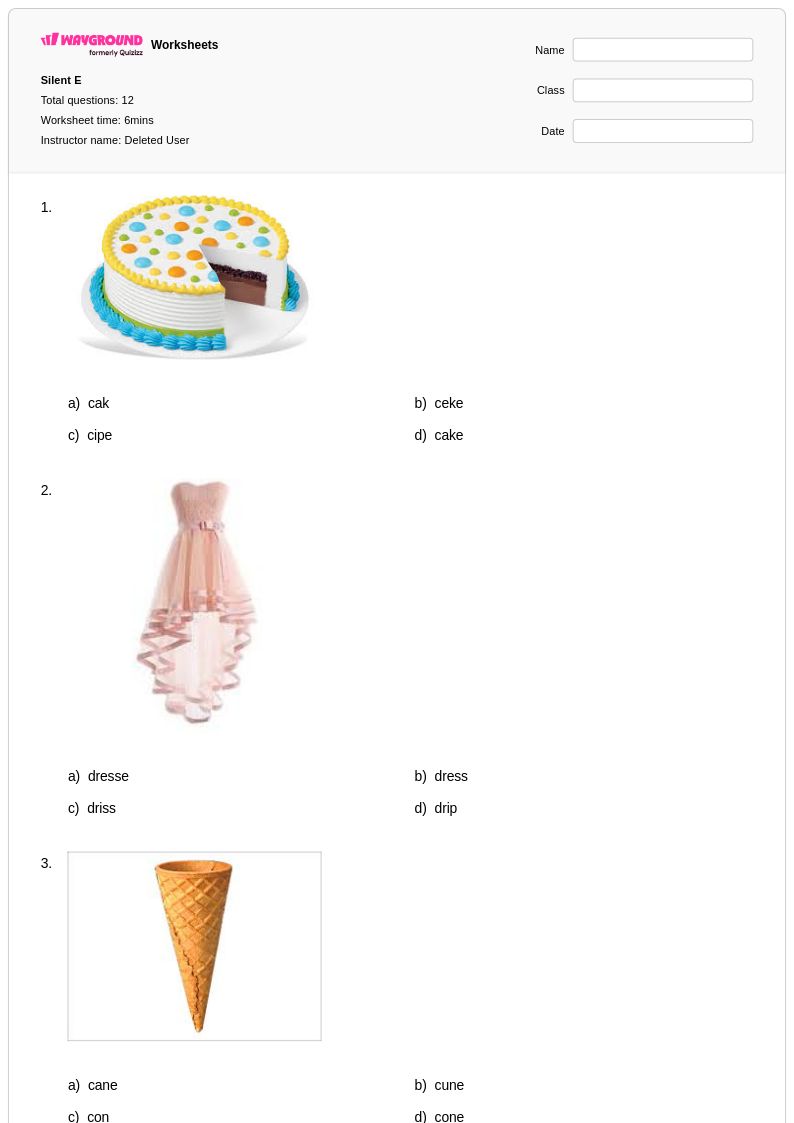
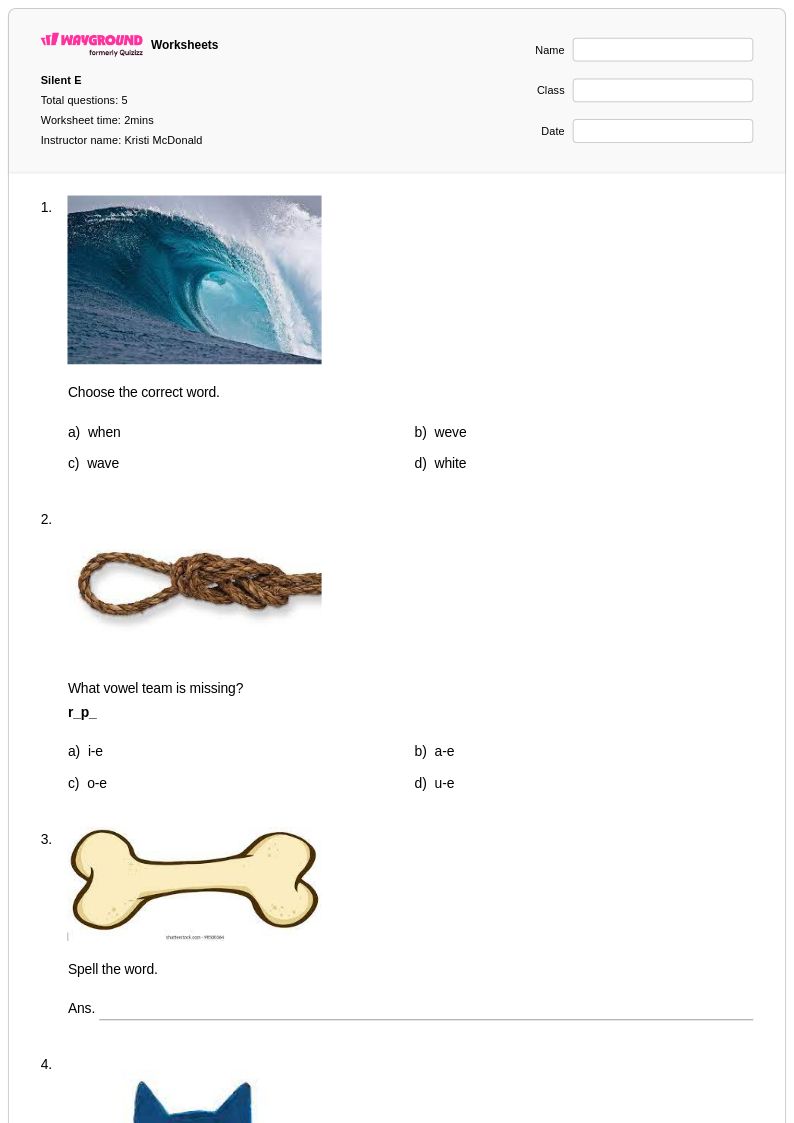
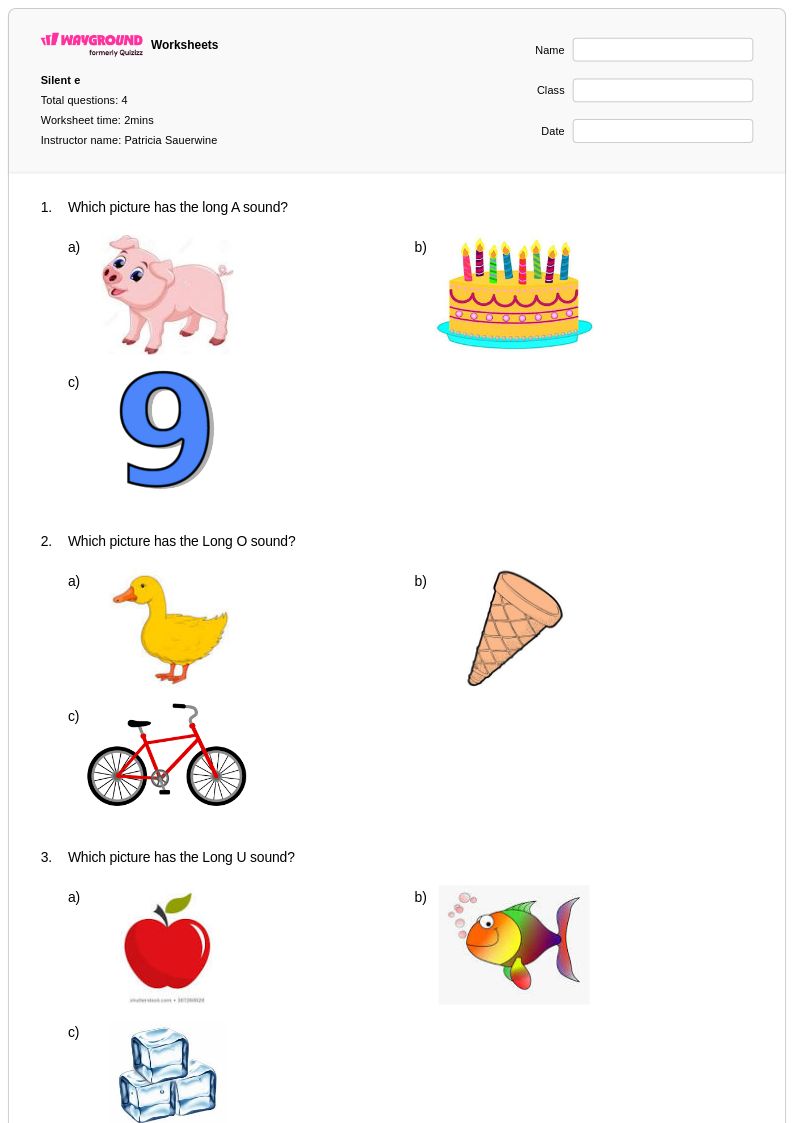
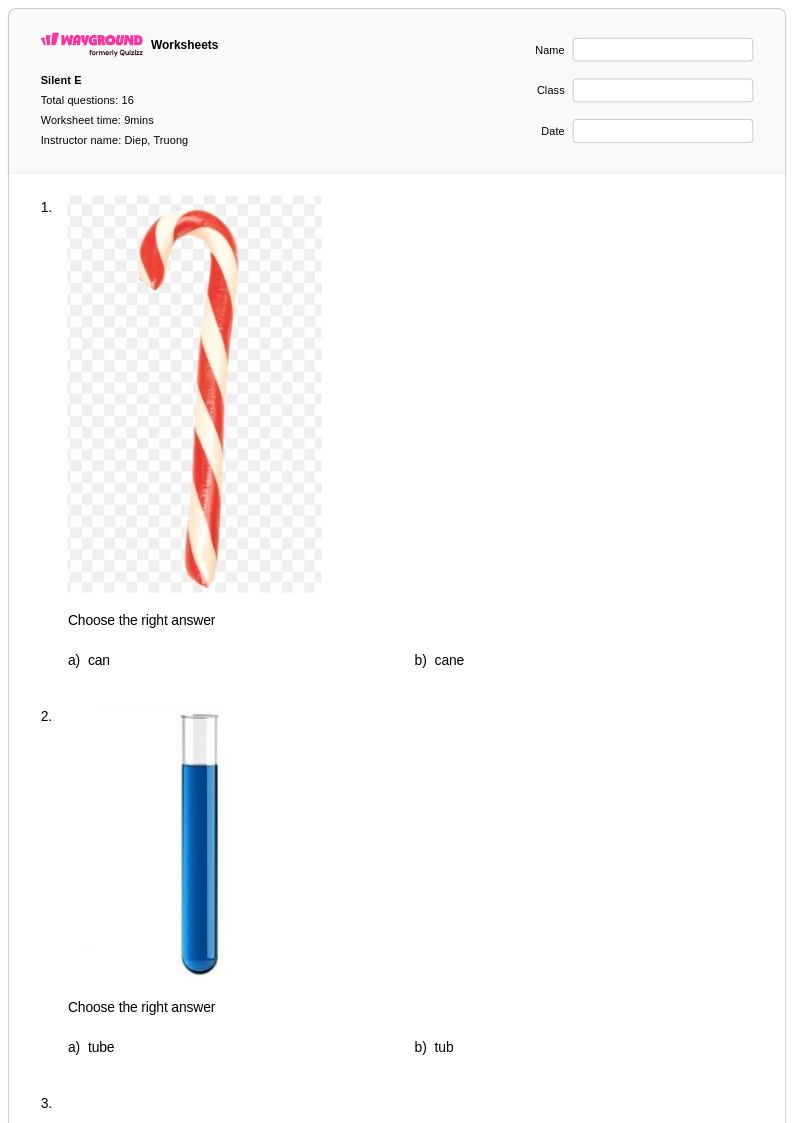
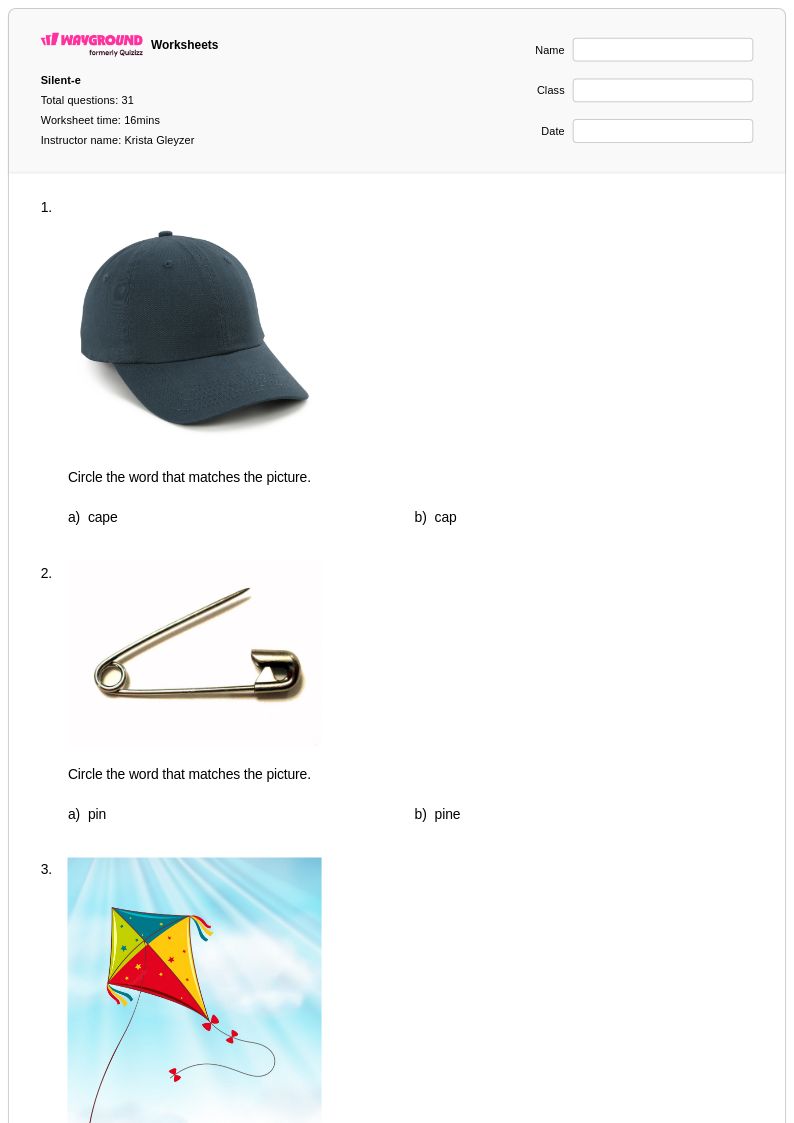
Class 1 silent e worksheets help students master the magic e rule through engaging printables and practice problems, with free PDF downloads and answer keys available.
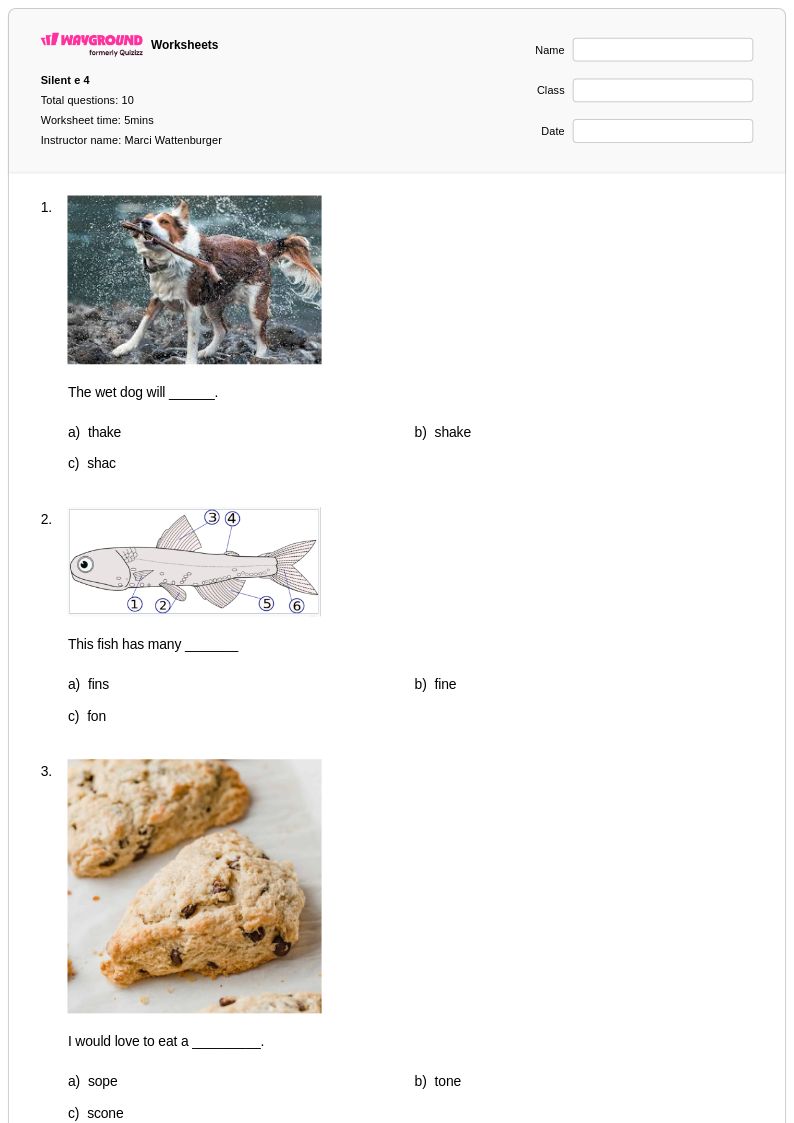
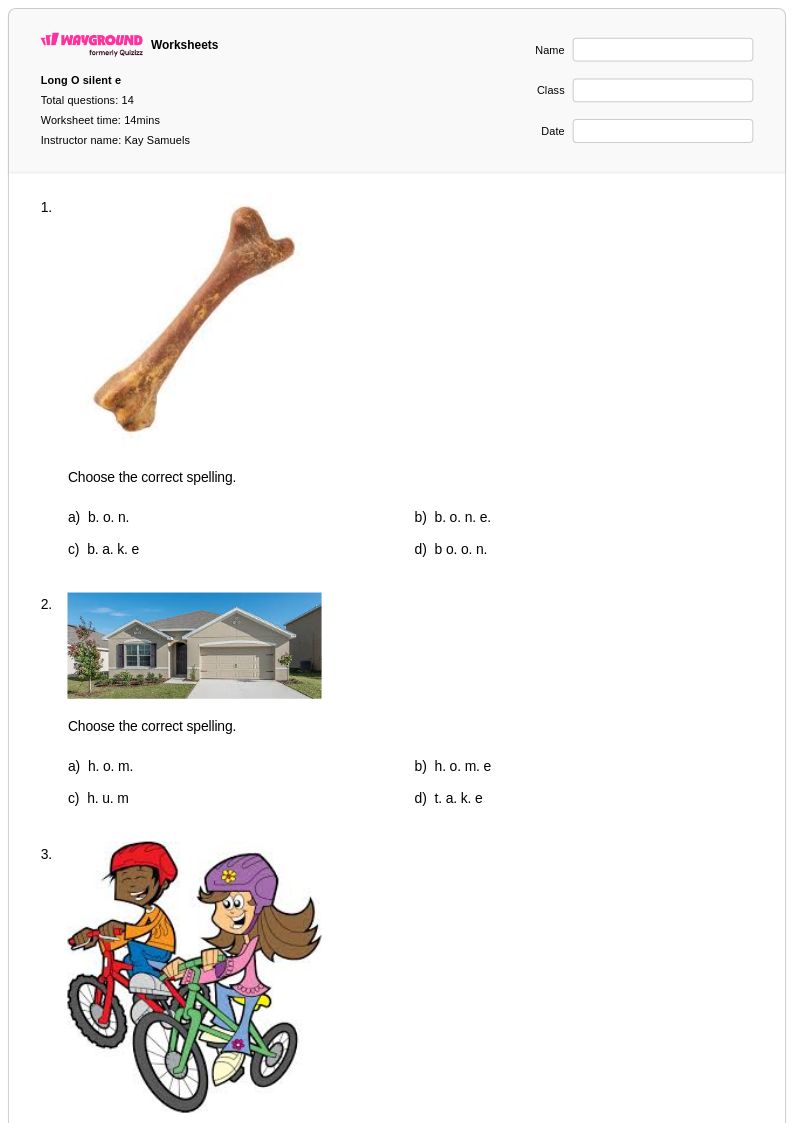
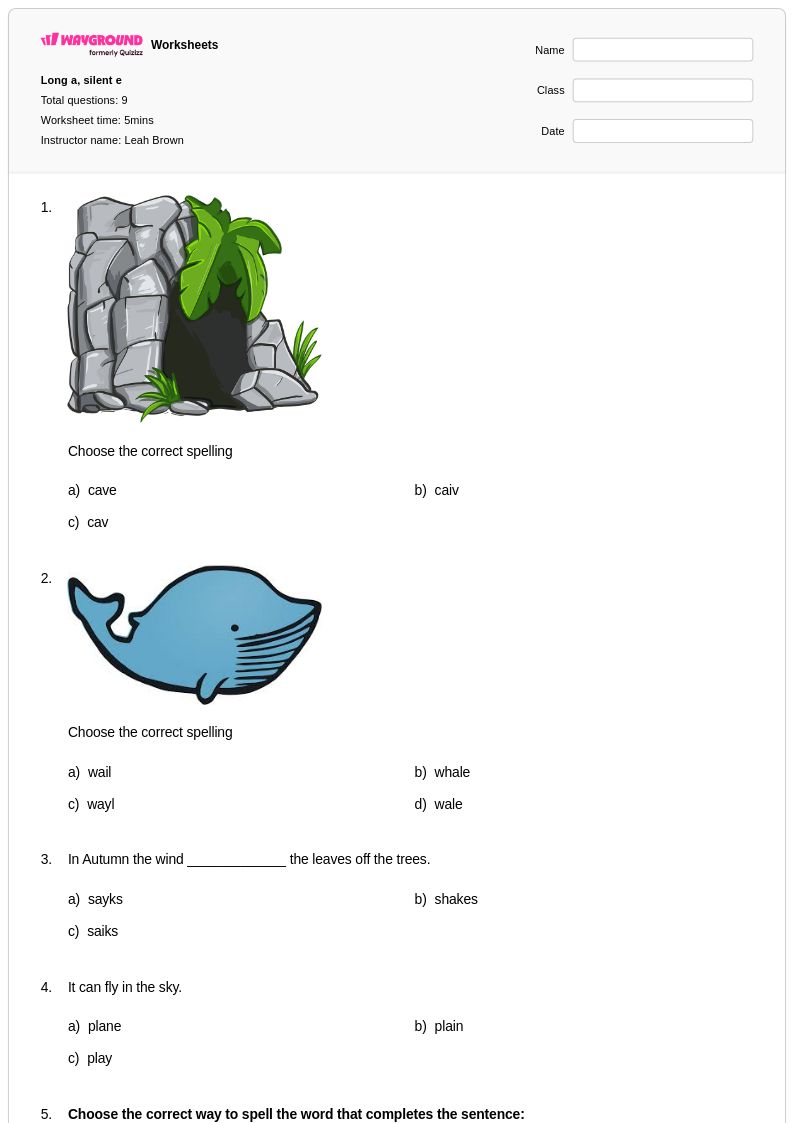
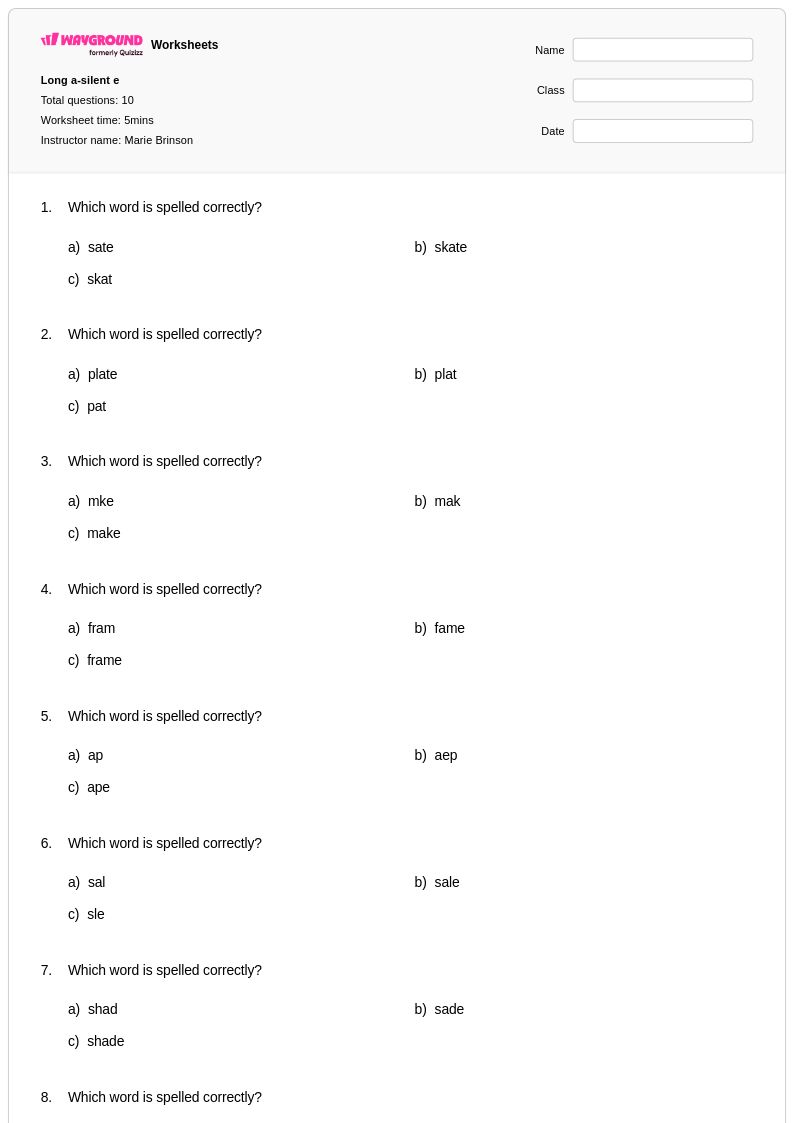
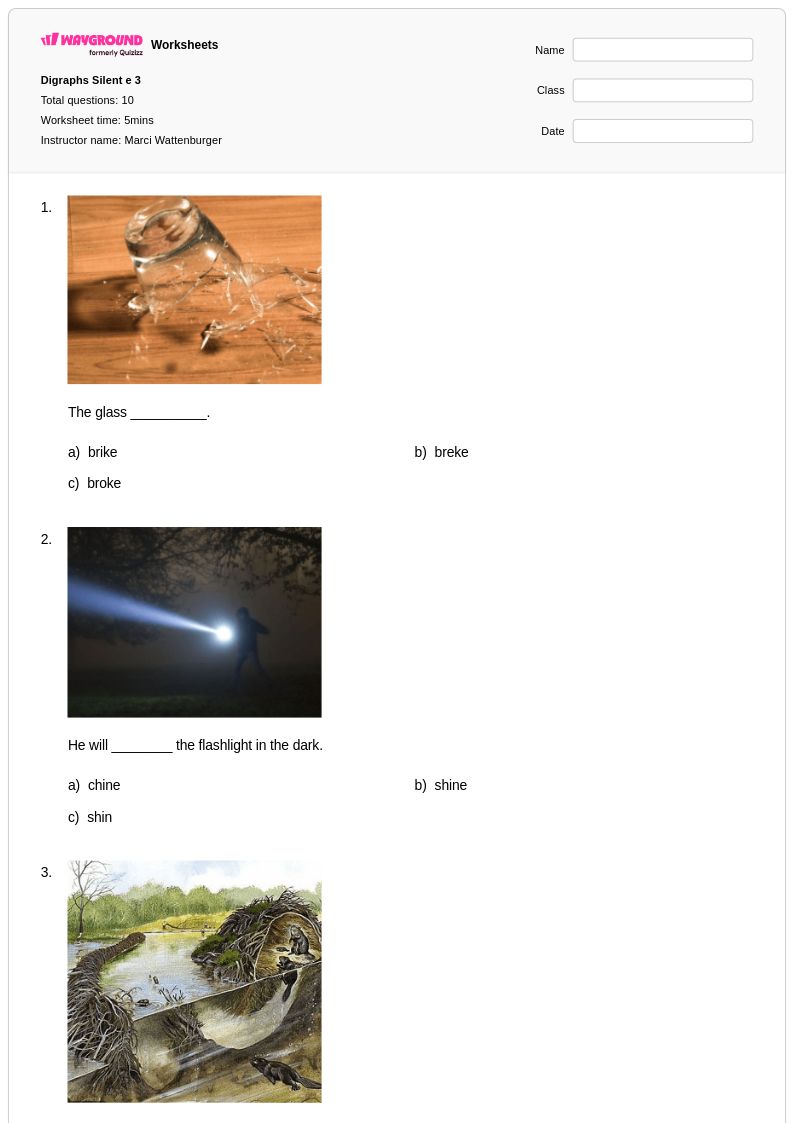
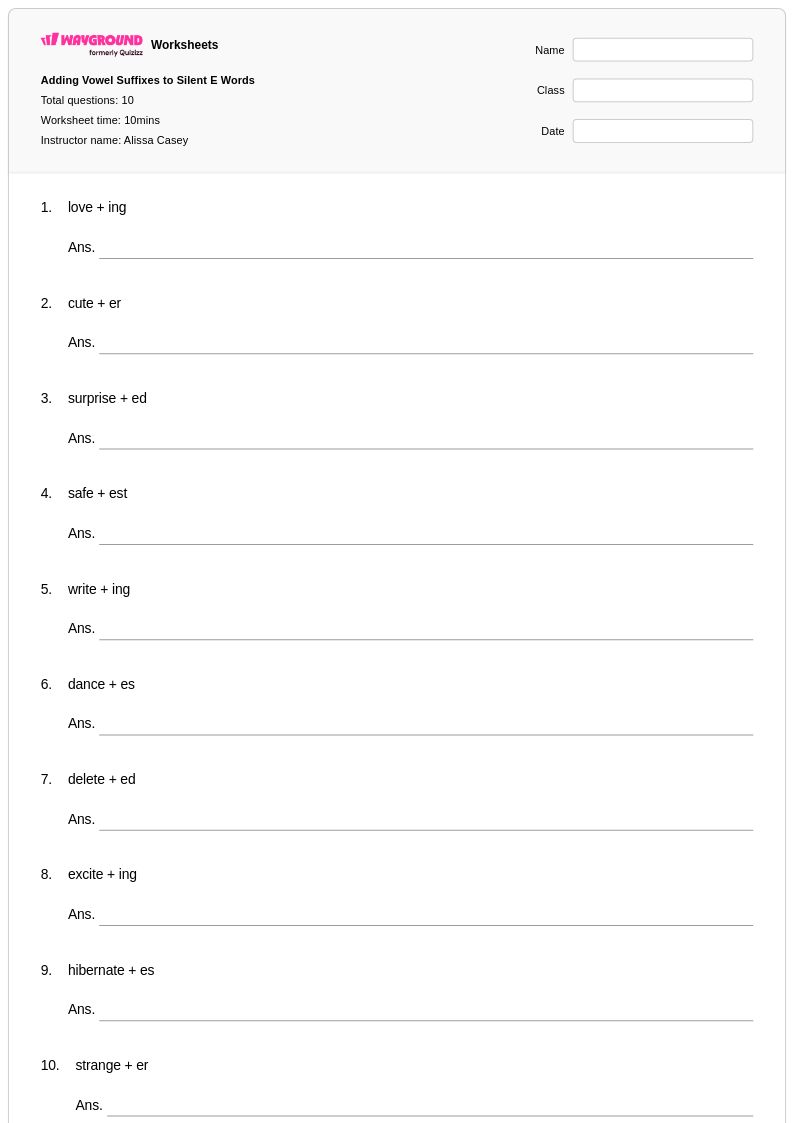
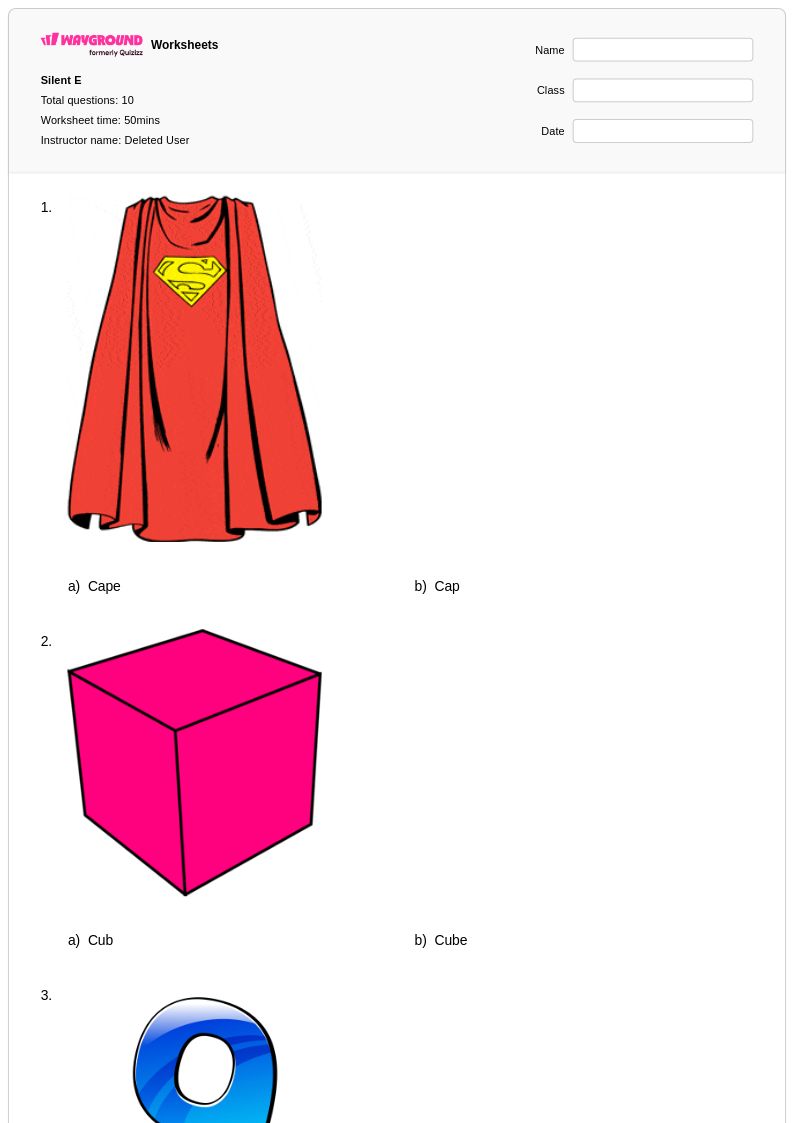
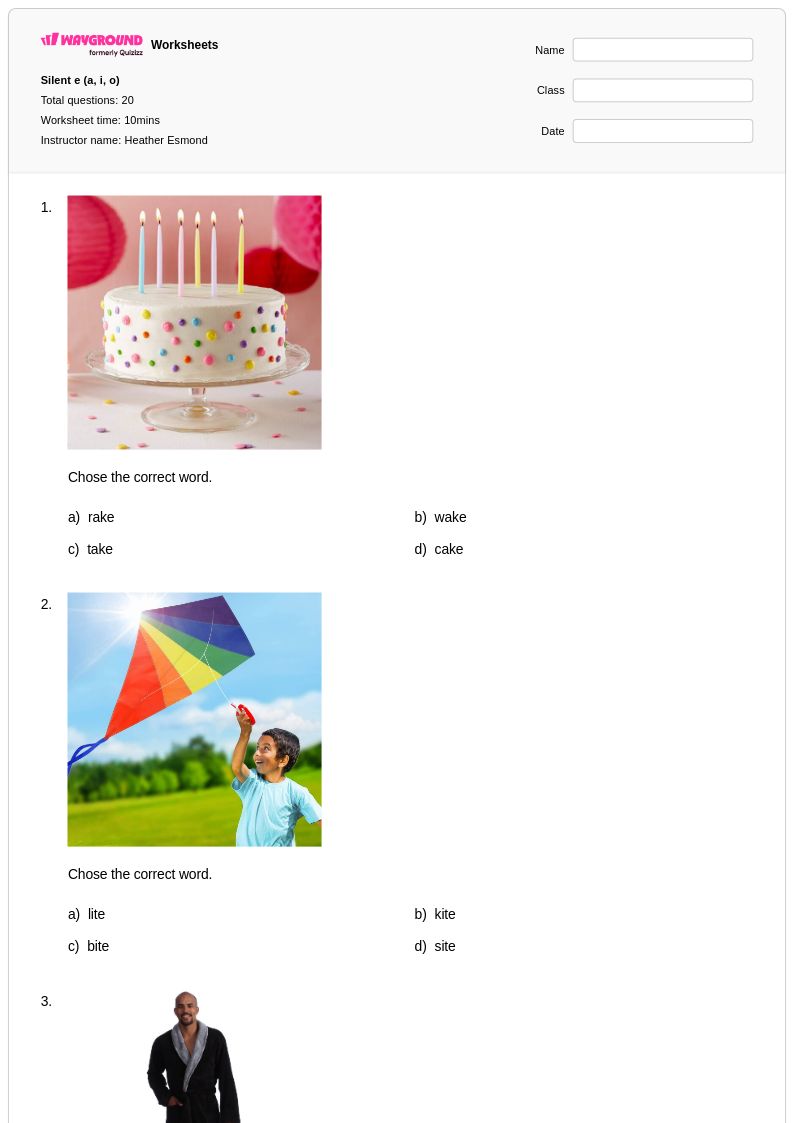
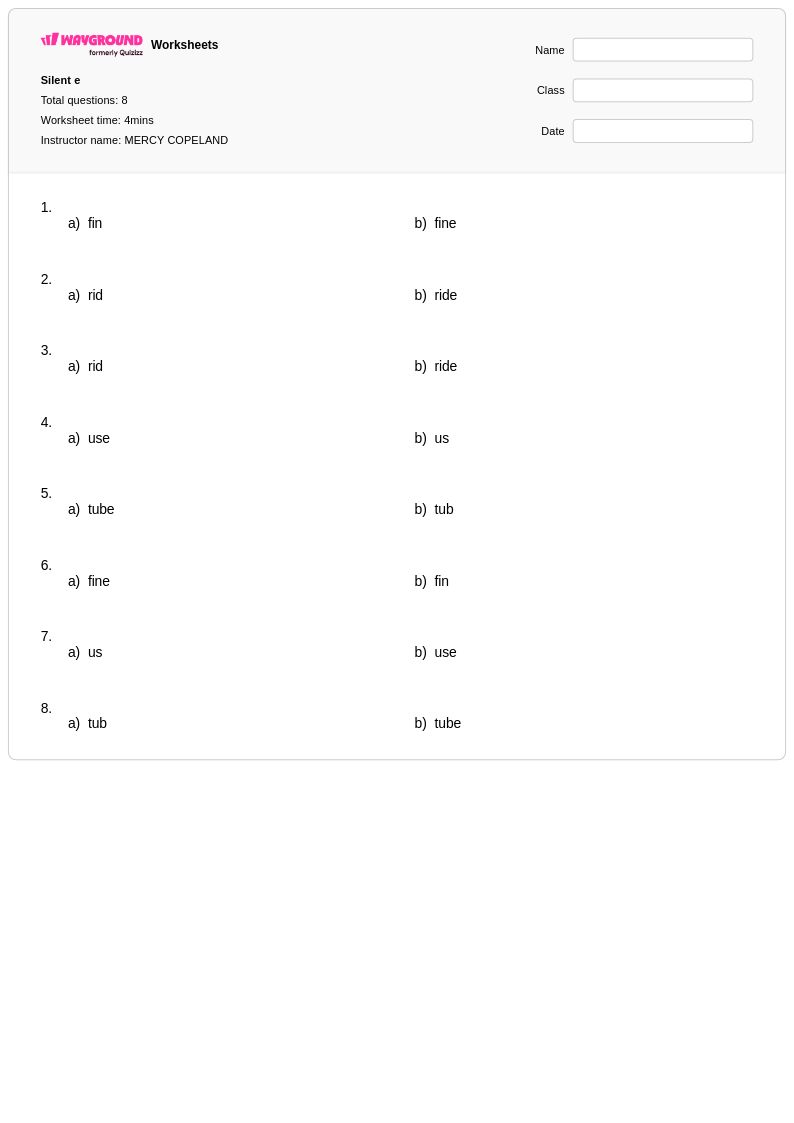
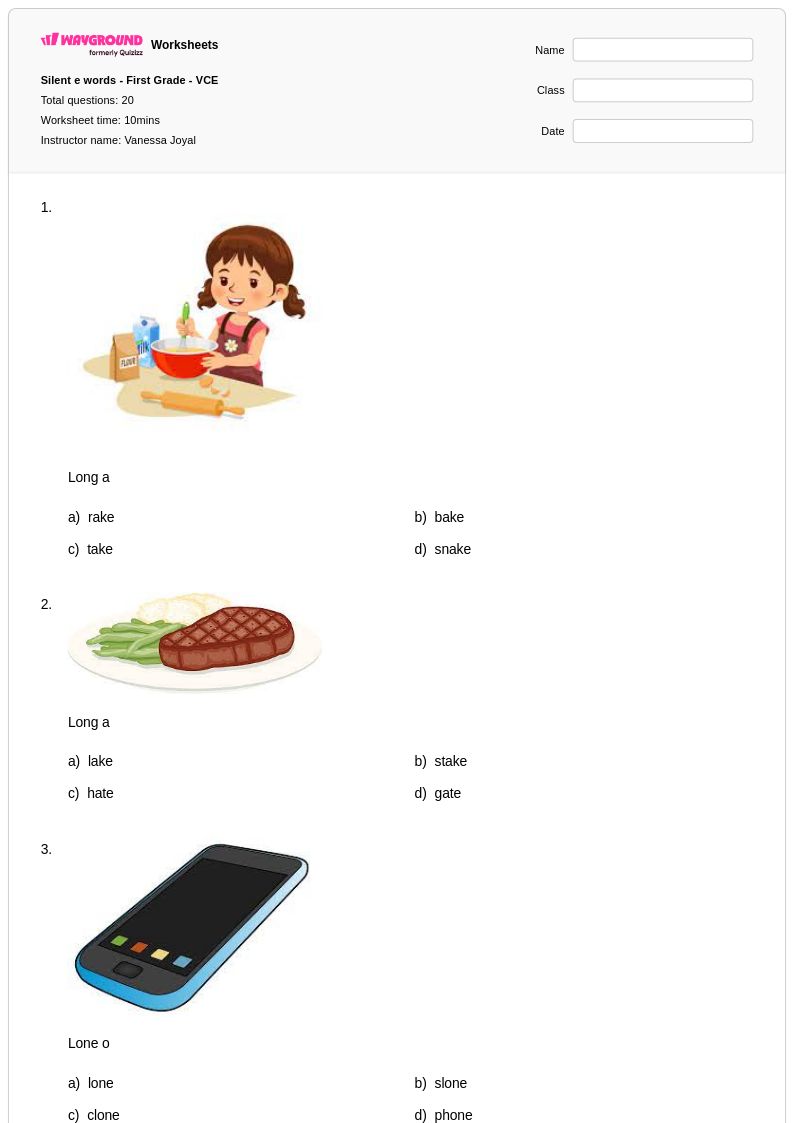
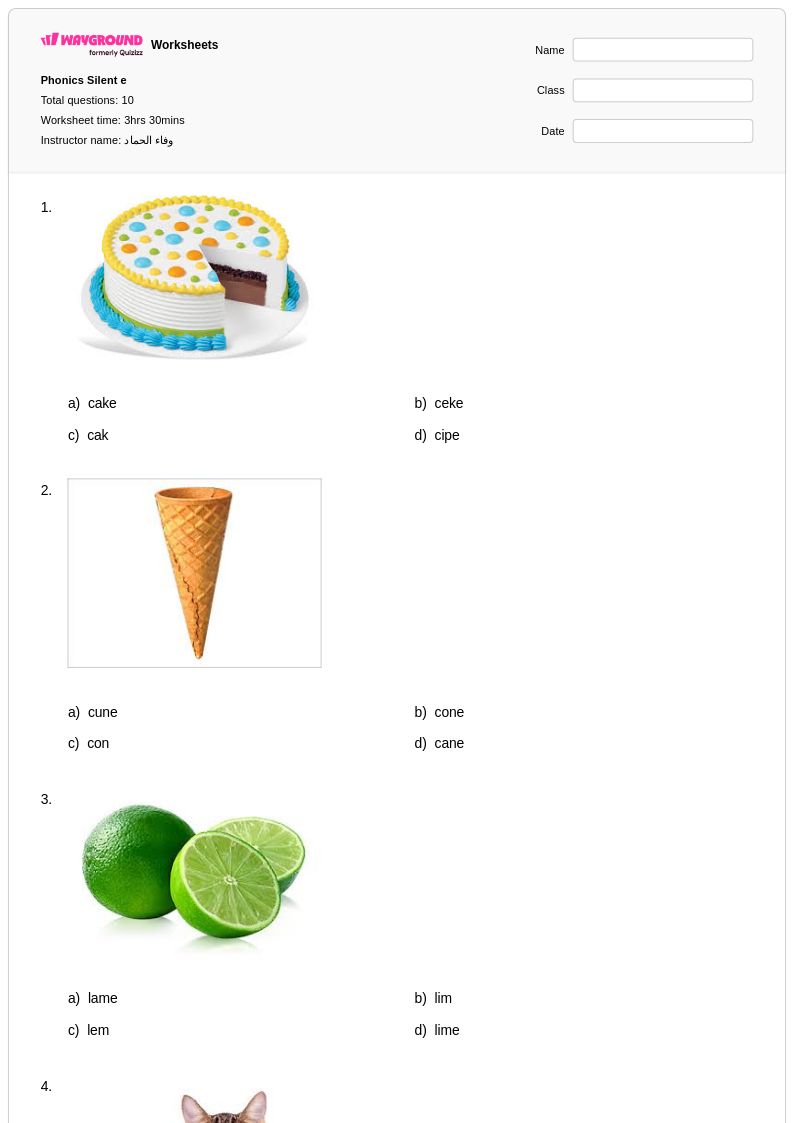
Silent E worksheets for Class 1 students available through Wayground (formerly Quizizz) provide essential practice for mastering one of English phonics' most important spelling patterns. These comprehensive printables focus on helping young learners understand how adding a silent E to the end of short vowel words transforms them into long vowel sounds, such as changing "cap" to "cape" or "kit" to "kite." The worksheets strengthen critical decoding skills through systematic practice problems that guide students in recognizing, reading, and spelling silent E words accurately. Each free resource includes structured exercises with answer keys, making it simple for educators to assess student progress and identify areas needing additional support. These pdf materials build phonemic awareness while developing the foundational reading skills that Class 1 students need to become confident, fluent readers.
Wayground (formerly Quizizz) supports teachers with an extensive collection of millions of teacher-created silent E resources that can be easily located through powerful search and filtering tools designed specifically for educational planning. The platform offers both printable and digital worksheet formats, including downloadable pdf versions that maintain consistent quality whether used in classroom instruction or sent home for additional practice. Teachers benefit from standards-aligned content that supports differentiated instruction, allowing educators to customize materials based on individual student needs for remediation or enrichment activities. The flexible customization options enable teachers to modify existing worksheets or combine resources to create targeted skill practice sessions that address specific learning objectives. This comprehensive approach to silent E instruction helps teachers efficiently plan lessons while ensuring students receive the repetitive, structured practice necessary for mastering this fundamental phonics concept.
FAQs
How do I teach the silent E rule to early readers?
Start by helping students hear the vowel change before introducing the spelling pattern. Use minimal pairs like 'cap' and 'cape' or 'kit' and 'kite' so students can isolate how adding a silent E stretches the preceding vowel from short to long. Once students can hear the difference, move to visual sorting activities that group silent E words alongside their short-vowel base words. Repeated exposure through reading and spelling practice builds the automaticity students need to apply the rule independently.
What exercises help students practice the magic E rule?
Word sorting activities are particularly effective because they require students to categorize words by vowel sound, reinforcing the pattern without rote memorization. Fill-in-the-blank exercises that ask students to add or remove a silent E to complete a sentence also target both decoding and spelling simultaneously. Reading comprehension passages that embed silent E words in context help students transfer the pattern from isolated practice to real reading.
What mistakes do students commonly make with the silent E rule?
One of the most common errors is overgeneralizing the rule — students will add a silent E to words that don't follow the pattern, such as writing 'love' and assuming the O is long. Students also struggle with multisyllabic words where a final E does not trigger the vowel shift. A related error is misreading the vowel in words like 'have' or 'give,' where the silent E is present but the vowel remains short due to exception patterns. Targeting these specific exception words explicitly during instruction helps prevent confusion.
How do I use silent E worksheets to support struggling readers?
For students who are still developing phonemic awareness, begin with auditory discrimination tasks before introducing written work — have them listen to word pairs and identify which has the long vowel sound. On Wayground, teachers can enable the Read Aloud accommodation so questions and words are read to students who need additional support, reducing decoding demands while keeping the focus on the phonics concept itself. Reduced answer choices can also lower cognitive load for students who are easily overwhelmed by multiple options. These accommodations can be assigned to individual students without notifying the rest of the class.
How do I use Wayground's silent E worksheets in my classroom?
Wayground's silent E worksheets are available as printable PDFs, making them straightforward to use as seat work, homework, or small-group intervention materials. They are also available in digital formats, so teachers can assign them for independent practice on devices in a one-to-one or station rotation setting. Teachers can host the worksheets as a quiz directly on Wayground, enabling real-time progress monitoring. Each worksheet includes a complete answer key, which reduces grading time and allows for faster feedback to students.
At what grade level should I introduce silent E?
The silent E rule is typically introduced in first grade after students have solidified short vowel CVC patterns and are ready to extend their decoding skills. Many students encounter it formally in late kindergarten or early first grade as part of a structured phonics sequence. Students who are still developing short vowel automaticity will benefit from additional foundational work before tackling the magic E pattern, since the rule depends on the ability to contrast short and long vowel sounds reliably.