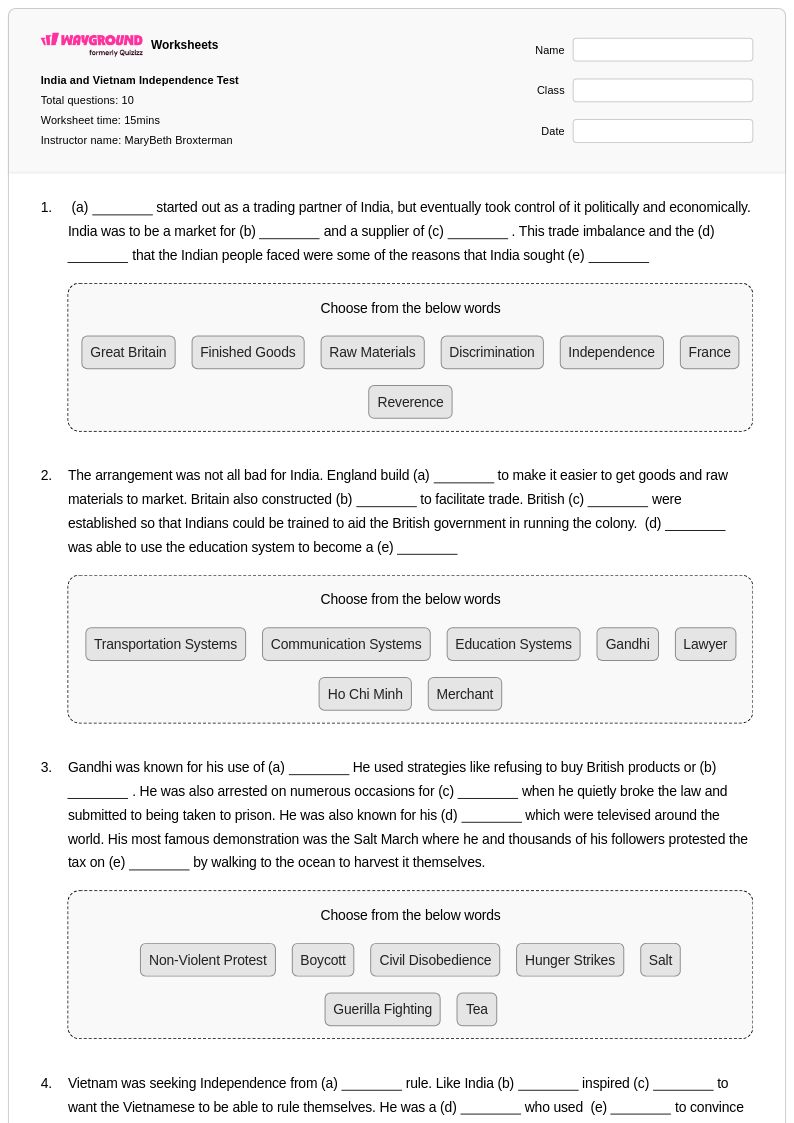
Free Printable Manifestation Determination in Special Education Law Worksheets for Class 10
Explore Class 10 manifestation determination in special education law with Wayground's comprehensive collection of free worksheets, printables, and practice problems that help students understand legal processes, including detailed answer keys and PDF resources for effective learning.
Explore printable Manifestation Determination in Special Education Law worksheets for Class 10
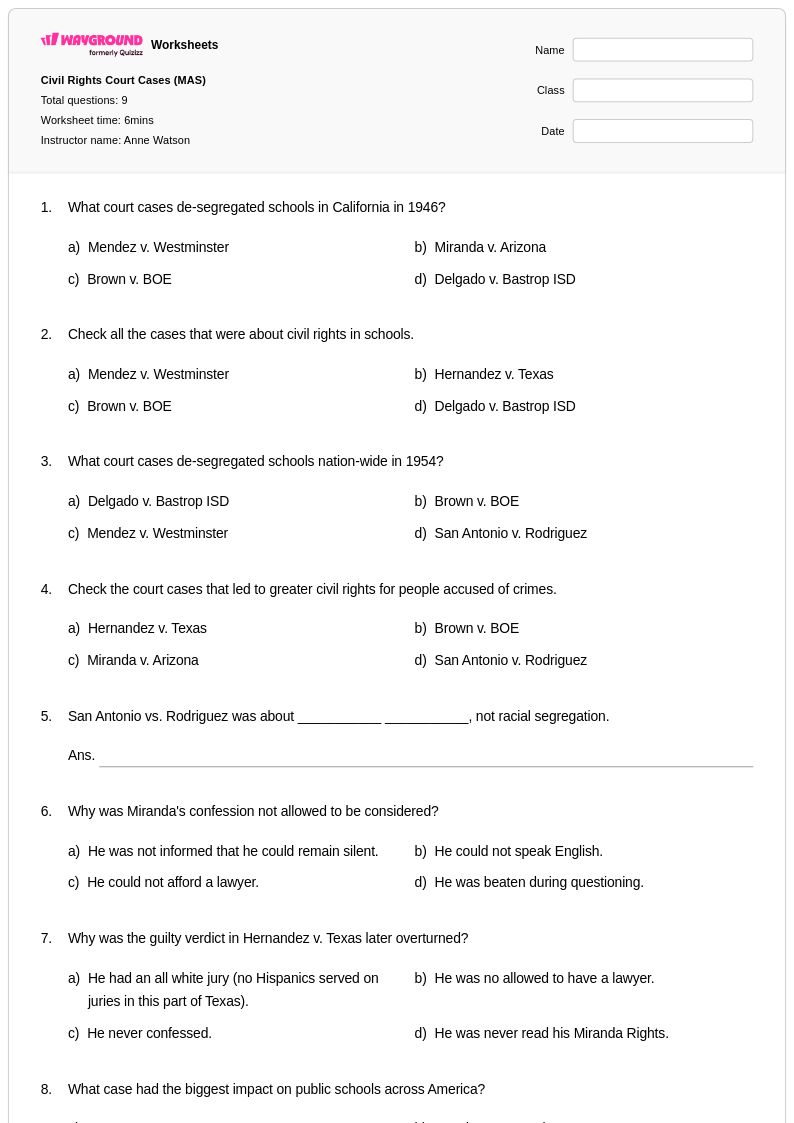
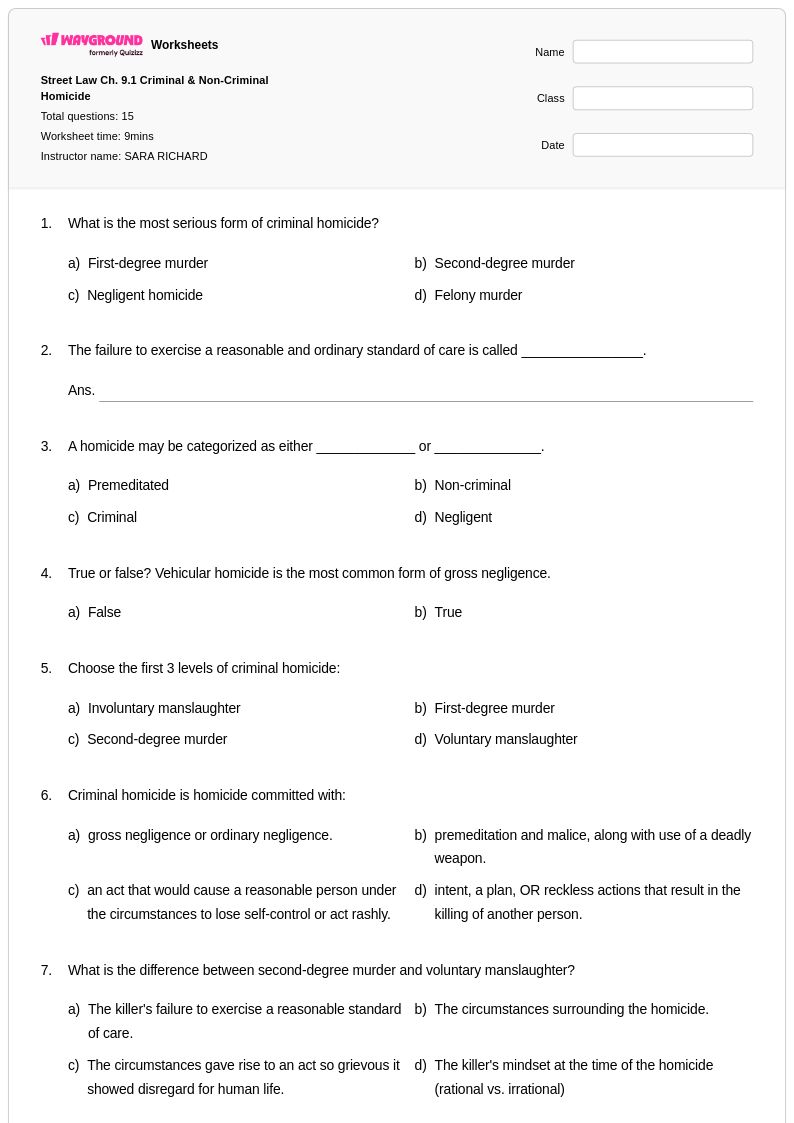
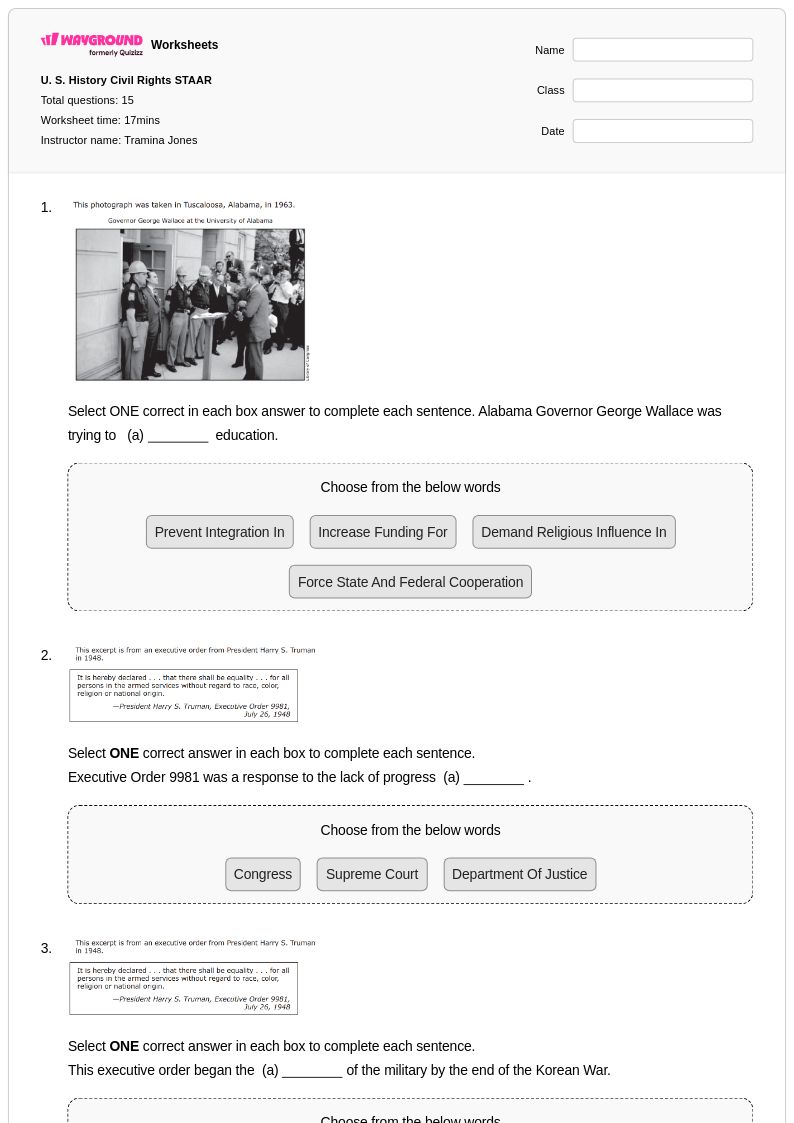
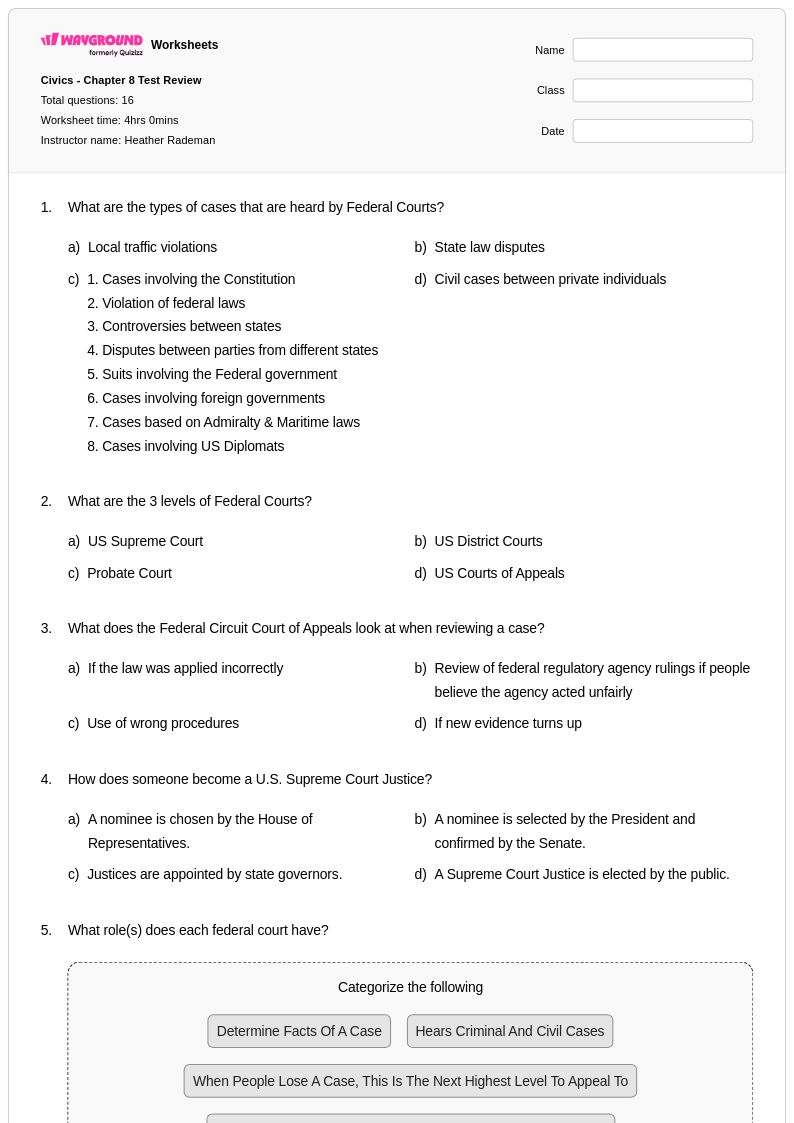
Manifestation Determination in Special Education Law worksheets for Class 10 students provide comprehensive practice with this critical aspect of special education procedure and student rights. These educational resources help students understand the complex legal framework that determines whether a student's disability is connected to their behavioral infractions, strengthening analytical thinking skills and legal reasoning abilities essential for advanced social studies coursework. The worksheets feature detailed scenarios, case study analysis, and practice problems that guide students through the manifestation determination process, including IEP team decision-making, disciplinary considerations, and procedural safeguards. Each printable resource includes comprehensive answer keys and supporting materials in pdf format, allowing students to engage with free, structured practice that builds expertise in special education law concepts and develops critical evaluation skills necessary for understanding disability rights and educational policy.
Wayground, formerly Quizizz, empowers educators with access to millions of teacher-created manifestation determination worksheets and special education law resources specifically designed for Class 10 social studies instruction. The platform's advanced search and filtering capabilities enable teachers to locate standards-aligned materials that match their specific curriculum requirements, while differentiation tools support customization for diverse learning needs and academic levels. These flexible resources are available in both printable and digital formats, including downloadable pdf versions that facilitate seamless integration into lesson planning, targeted remediation for struggling learners, and enrichment activities for advanced students. Teachers can efficiently modify worksheets to address individual student goals, create supplementary skill practice opportunities, and develop comprehensive assessment materials that reinforce understanding of complex legal concepts in special education law.
FAQs
How do I teach manifestation determination to special education staff or students?
Teaching manifestation determination is most effective when grounded in real case scenarios that require learners to apply the two-part IDEA test: whether the misconduct was caused by the disability, or whether it was a direct result of the school's failure to implement the IEP. Start by establishing the legal framework under IDEA 2004, then walk through procedural flowcharts that map the decision-making sequence. Case study analysis helps learners move from abstract statute language to practical judgment, which is especially important for educators who will participate in actual MDR meetings.
What exercises help students or professionals practice manifestation determination analysis?
Effective practice exercises for manifestation determination include case study scenarios where learners must evaluate a student's disability documentation, behavioral history, and IEP compliance to reach a legally defensible conclusion. Procedural flowcharts, legal precedent analysis tasks, and fill-in-the-blank regulatory reviews all reinforce the step-by-step logic required in real MDR meetings. These practice formats build the analytical skills needed to distinguish between misconduct that is and is not a manifestation of a student's disability.
What are the most common mistakes educators make when applying manifestation determination procedures?
One of the most frequent errors is failing to consider whether the school's own failure to implement the student's IEP contributed to the misconduct, which is a legally distinct prong under IDEA that is often overlooked. Educators also commonly conflate a student having a disability with the disability being the direct cause of the behavior, when the standard requires a more specific causal link. Confusing the manifestation determination review timeline, which must occur within ten school days of a disciplinary decision, is another compliance gap that can expose districts to due process challenges.
How can I use Wayground's manifestation determination worksheets in my course or training program?
Wayground's manifestation determination worksheets are available as printable PDFs for use in face-to-face professional development sessions, law courses, or special education certification programs, and in digital formats for online or hybrid training environments. Teachers and trainers can host the materials as a quiz on Wayground to track participant responses and assess comprehension of legal procedures in real time. The included answer keys make it straightforward to facilitate self-paced independent study or debrief group discussions after scenario-based exercises.
How does manifestation determination affect what disciplinary consequences a school can apply to a student with a disability?
If a student's misconduct is determined to be a manifestation of their disability, the school cannot proceed with a long-term disciplinary removal such as expulsion under the same standards applied to non-disabled students. Instead, the IEP team must conduct a functional behavioral assessment and revise the behavior intervention plan. If the behavior is not a manifestation, the school may apply the same disciplinary measures used for students without disabilities, though the student must continue to receive a free appropriate public education during any removal.
How do I differentiate manifestation determination instruction for learners at different experience levels?
For learners new to special education law, begin with vocabulary building around IDEA terminology and the procedural rights framework before introducing MDR case analysis. More experienced practitioners benefit from complex multi-factor scenarios that require weighing competing evidence and applying legal precedent. On Wayground, differentiation tools allow instructors to customize materials based on learners' familiarity with special education concepts, and accommodations such as read aloud and reduced answer choices can be applied to individual learners who need additional support navigating dense regulatory content.