Free Printable Reframing Thoughts Worksheets for Class 10
Class 10 social studies students can master reframing thoughts with Wayground's comprehensive collection of free worksheets, printables, and practice problems featuring detailed answer keys to develop positive thinking skills.
Explore printable Reframing Thoughts worksheets for Class 10
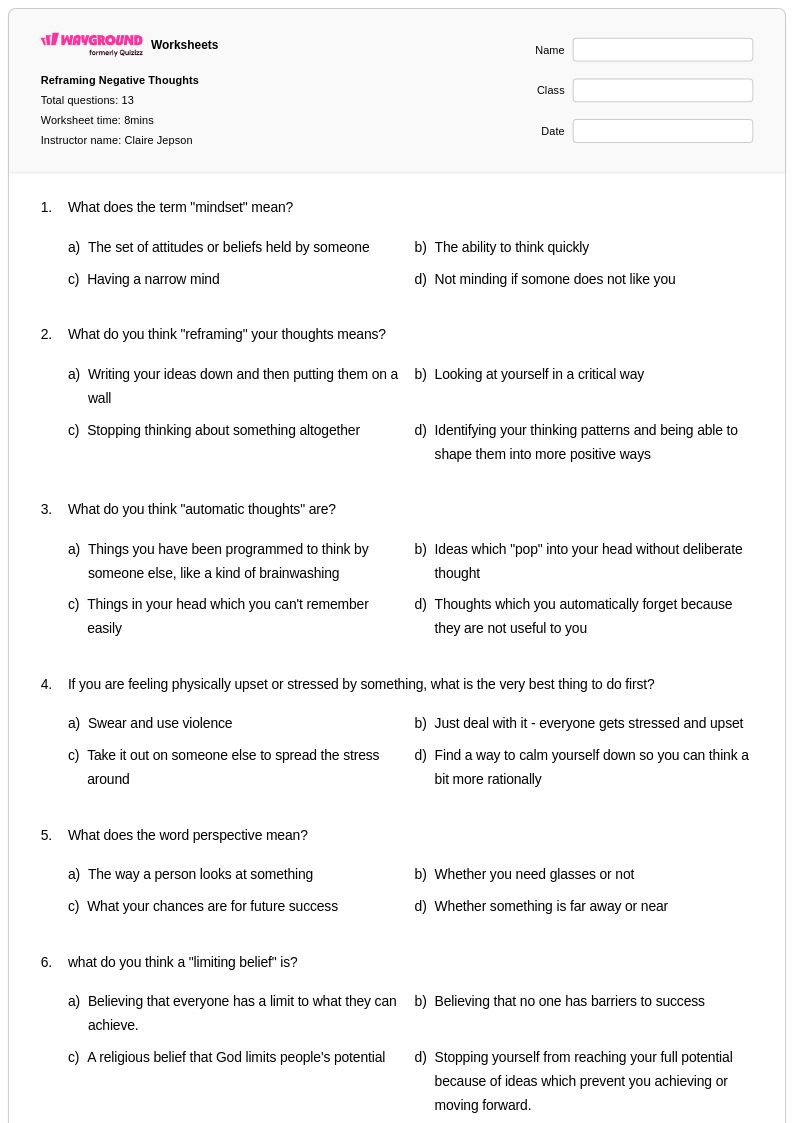
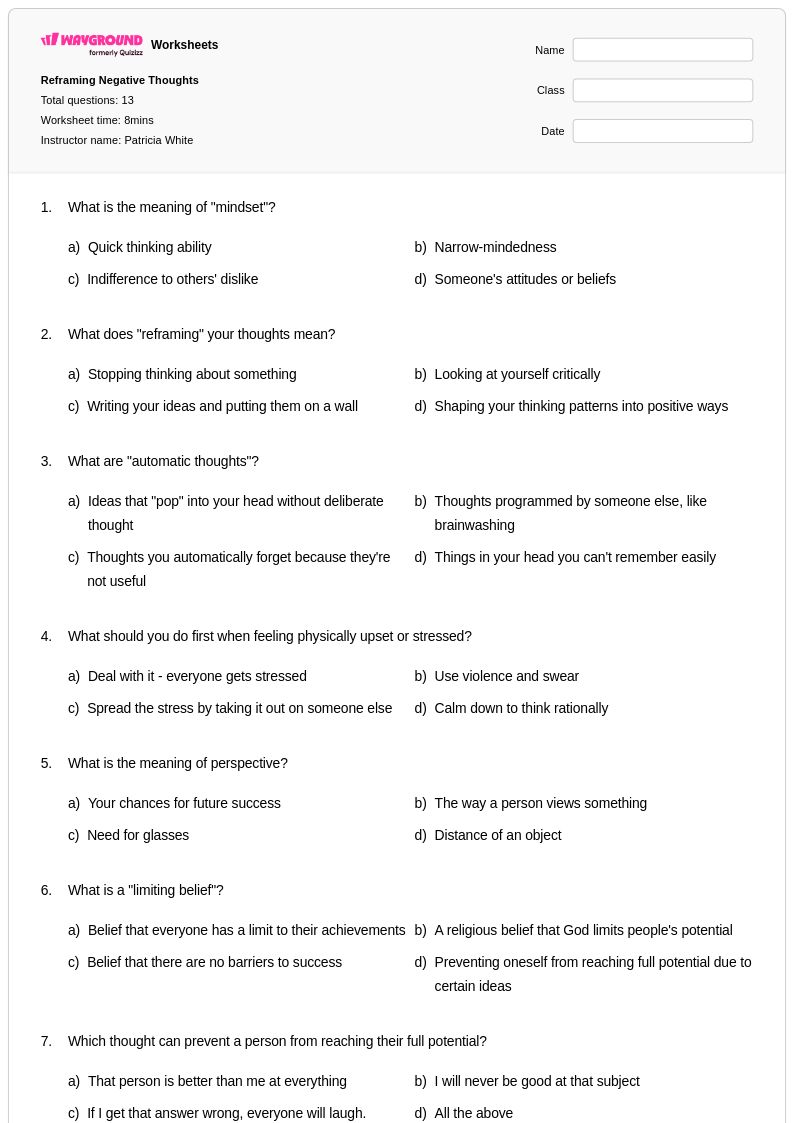
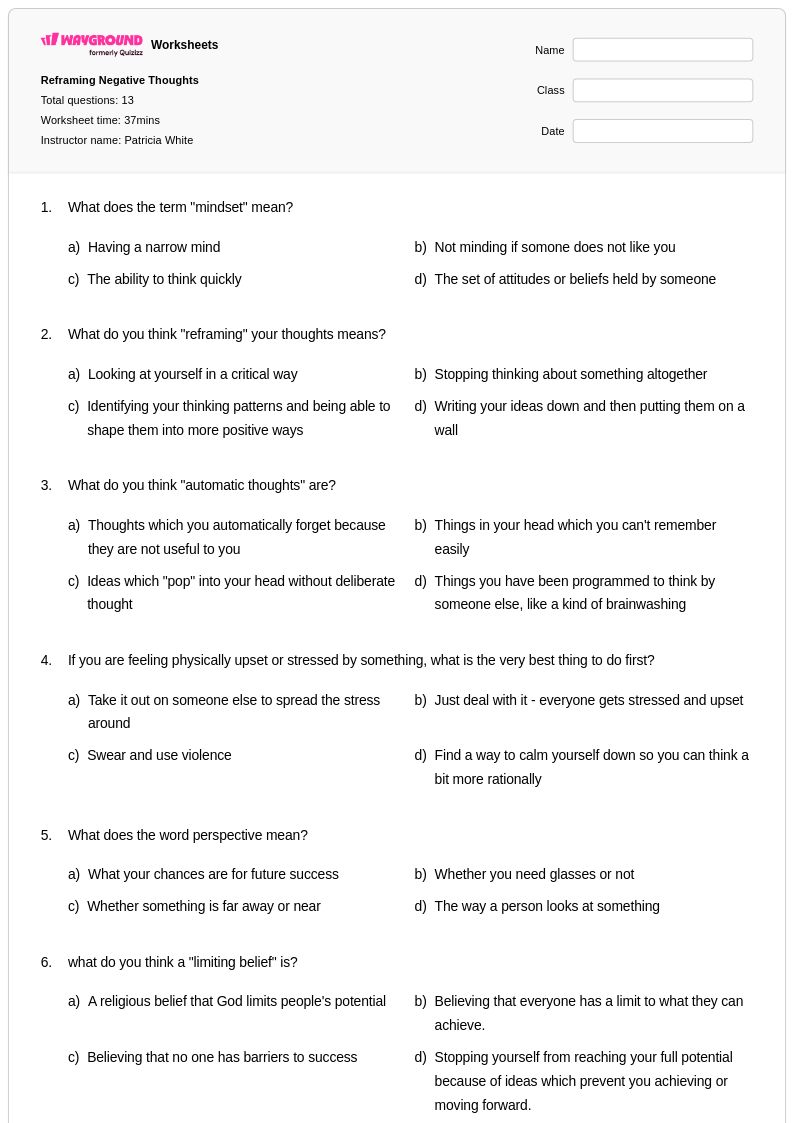
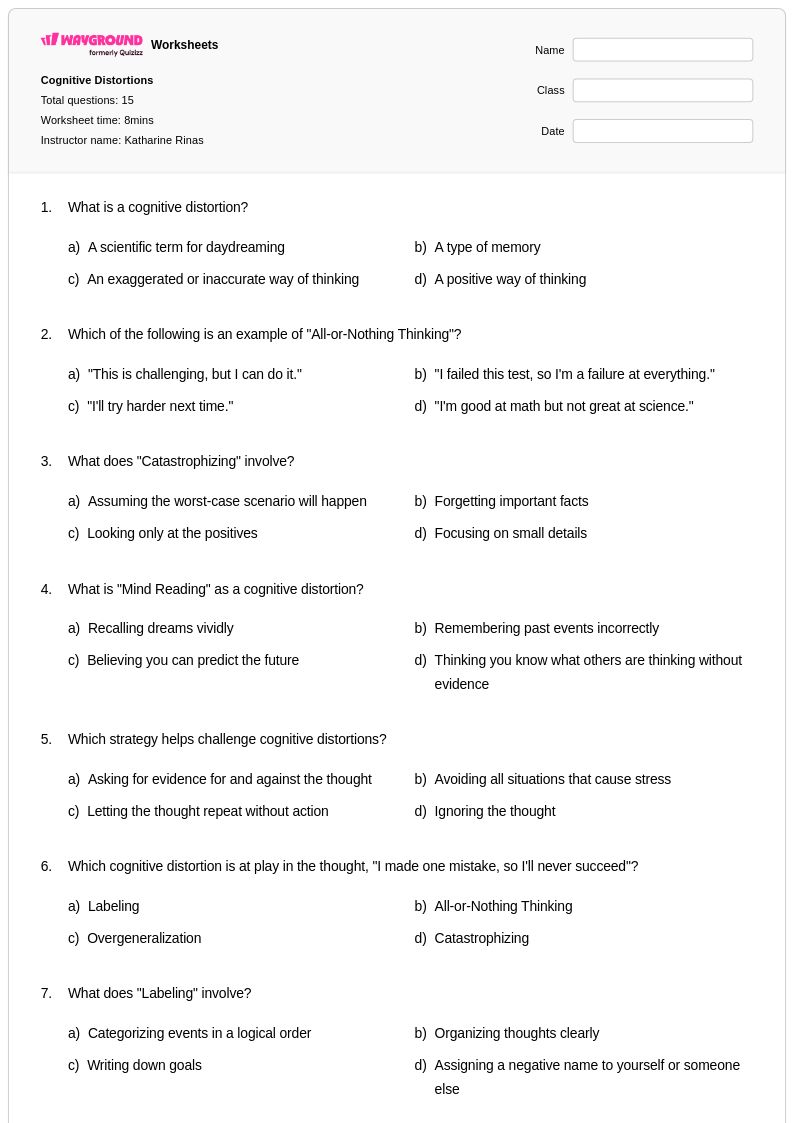
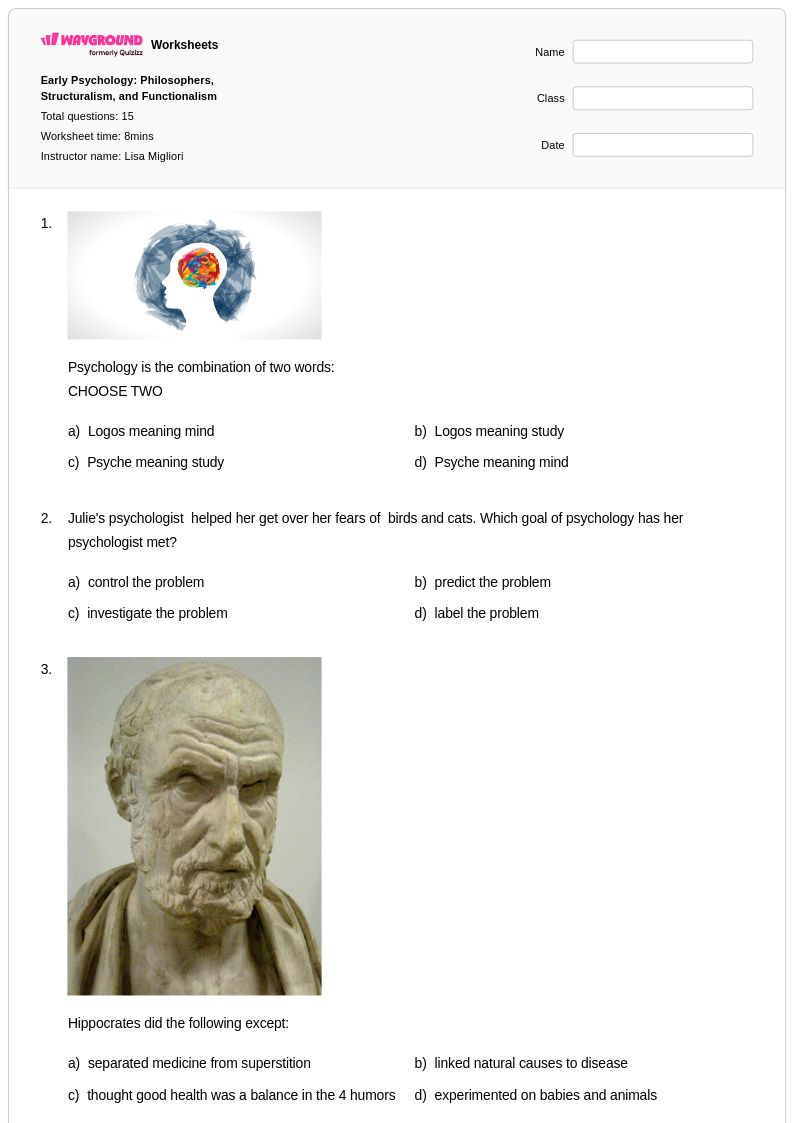
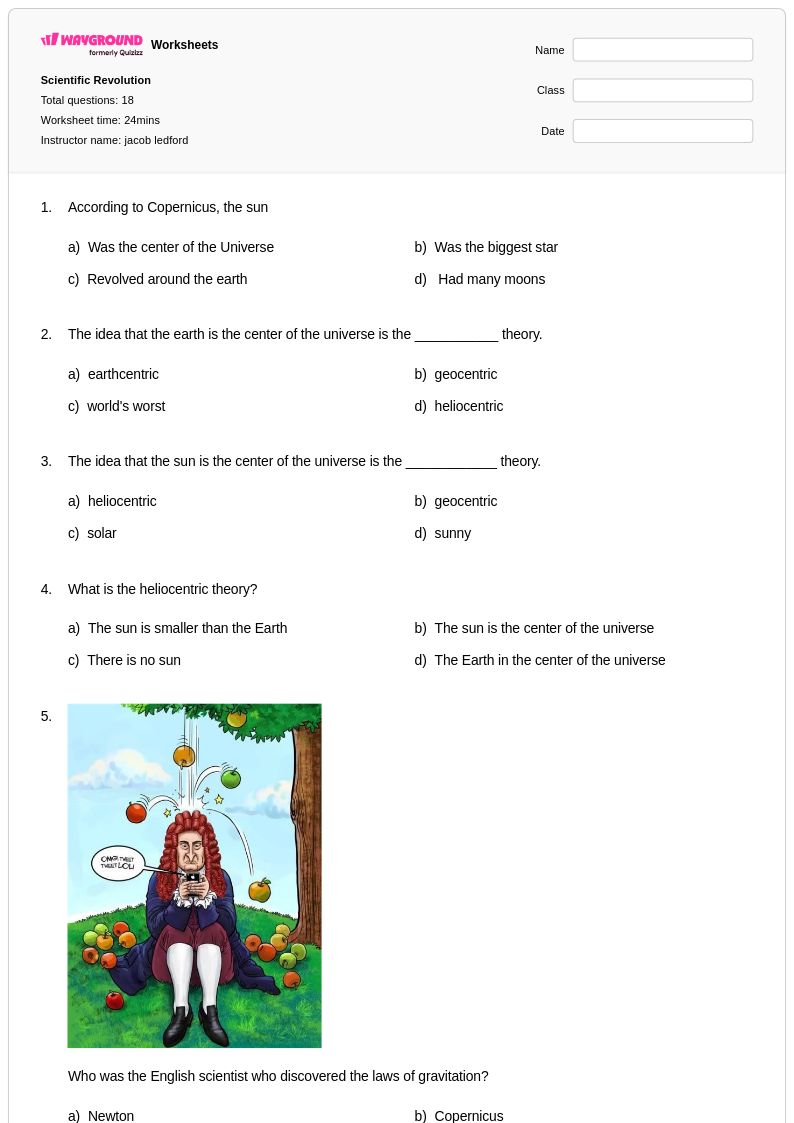
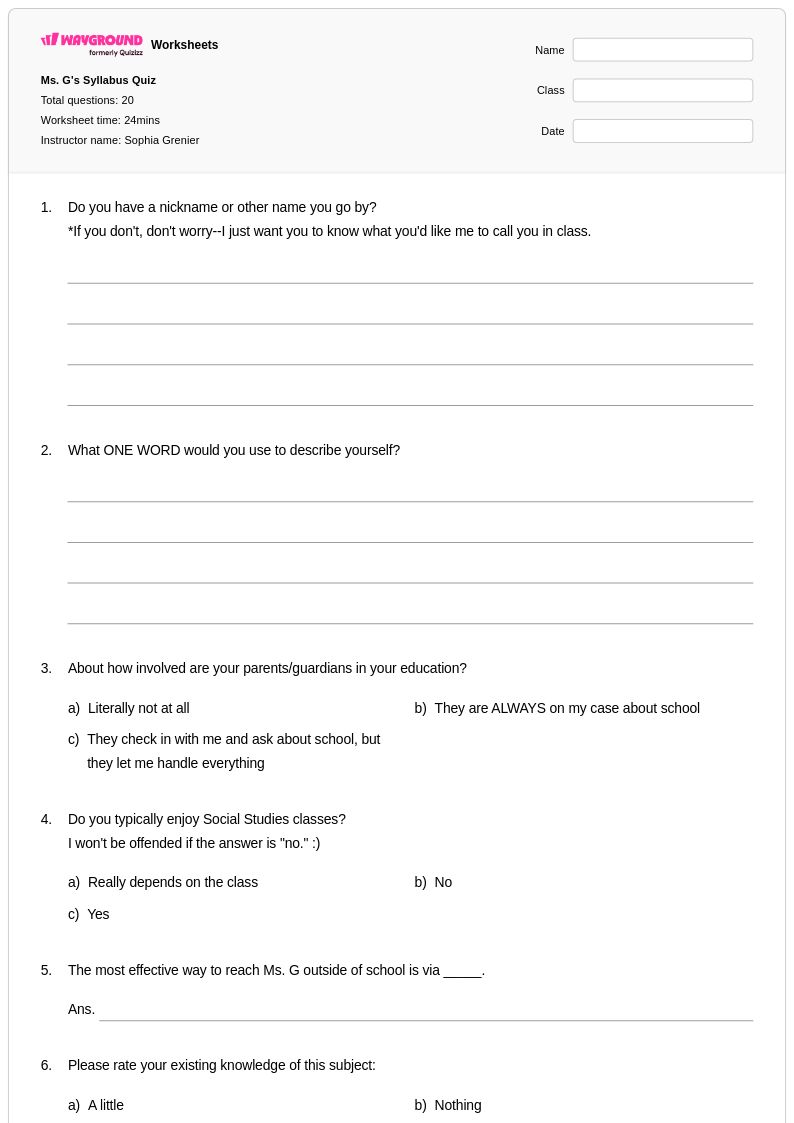
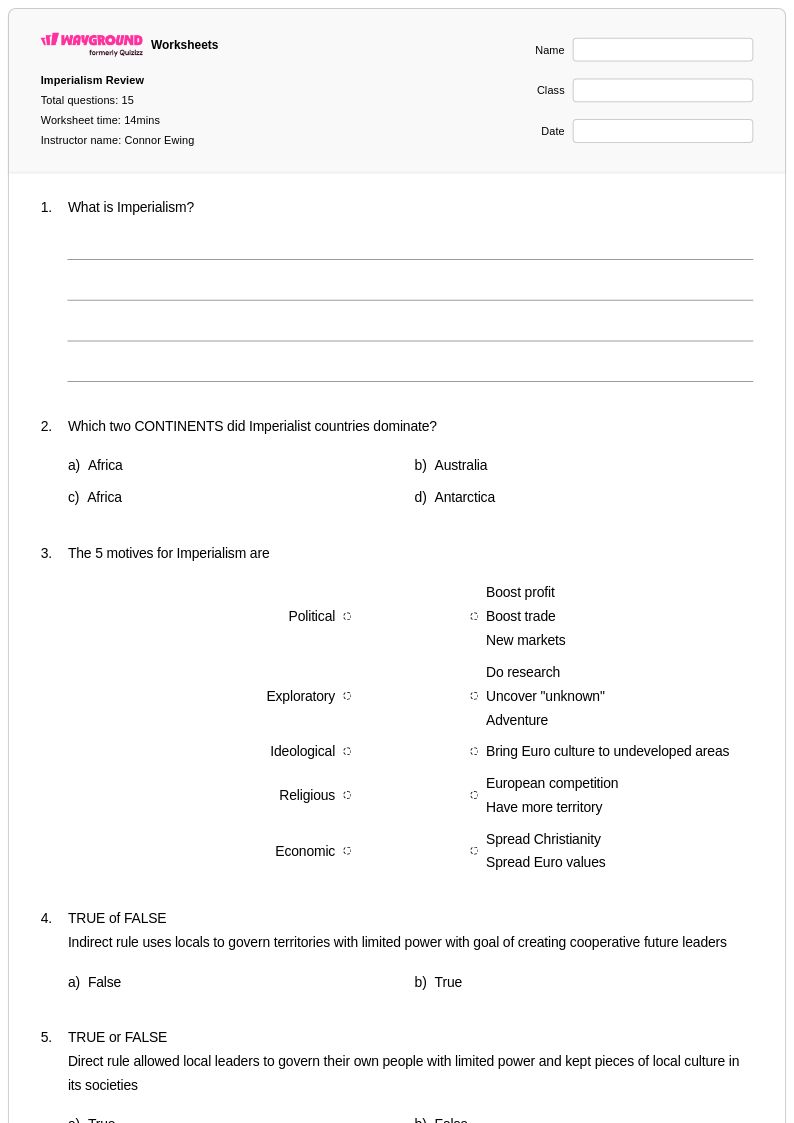
Reframing thoughts worksheets for Class 10 students available through Wayground (formerly Quizizz) provide essential practice in developing cognitive flexibility and emotional regulation skills within the social studies curriculum. These comprehensive printables guide tenth-grade learners through systematic approaches to identifying negative thought patterns, challenging unhelpful assumptions, and restructuring their mental responses to various social situations and academic challenges. Students work through carefully designed practice problems that teach them to recognize cognitive distortions, evaluate evidence for and against their initial thoughts, and develop more balanced and realistic perspectives. Each worksheet includes detailed answer keys that help students understand the reasoning behind effective thought reframing techniques, while the free pdf format ensures accessibility for both classroom instruction and independent study.
Wayground (formerly Quizizz) empowers educators with millions of teacher-created resources specifically designed to support social-emotional learning objectives like thought reframing for Class 10 students. The platform's robust search and filtering capabilities allow teachers to quickly locate worksheets that align with specific learning standards and differentiate instruction based on individual student needs. These customizable materials are available in both printable and digital formats, including downloadable pdfs, making them versatile tools for classroom lessons, homework assignments, and remediation activities. Teachers can easily modify existing worksheets or combine multiple resources to create comprehensive skill-building sequences that support students in developing critical thinking abilities, emotional awareness, and positive coping strategies that extend beyond the social studies classroom into their daily lives.
FAQs
How do I teach students to reframe negative thoughts?
Start by helping students identify the automatic negative thought, then guide them to examine the evidence for and against it before constructing a more balanced alternative. Use concrete, relatable scenarios — such as failing a test or being left out at lunch — so students can practice the process with situations they recognize. Modeling your own thought reframing aloud is one of the most effective ways to make the cognitive process visible for younger learners.
What exercises help students practice reframing thoughts?
Structured worksheets that walk students through real-world scenarios are among the most effective practice tools, because they provide a repeatable framework rather than relying on in-the-moment insight. Exercises that ask students to name the negative thought, identify the cognitive distortion (such as catastrophizing or all-or-nothing thinking), and then write a replacement thought build the habit systematically. Reflection prompts and sentence starters can scaffold this process for students who struggle to generate alternative perspectives independently.
What are the most common mistakes students make when learning to reframe thoughts?
The most common error is confusing reframing with forced positivity — students will often replace a negative thought with an unrealistically optimistic one rather than a balanced, evidence-based alternative. Another frequent mistake is skipping the identification step entirely and jumping straight to the replacement thought, which means the underlying cognitive distortion goes unexamined. Teachers should explicitly teach that a reframed thought does not have to be positive, only more accurate and less extreme.
How do I use reframing thoughts worksheets with students who have social-emotional learning needs?
Reframing thoughts worksheets work well as both whole-class instruction tools and targeted intervention resources for students working on emotional regulation or perspective-taking. For students who need additional support, Wayground allows teachers to enable accommodations such as read aloud, which delivers audio reading of questions and prompts, and reduced answer choices to lower cognitive load during guided practice. These settings can be applied to individual students without alerting the rest of the class, making differentiated support discreet and efficient.
How do I use Wayground's reframing thoughts worksheets in my classroom?
Wayground's reframing thoughts worksheets are available as printable PDFs for traditional classroom use and in digital interactive formats for technology-integrated or hybrid learning environments. Teachers can also host the worksheets as a quiz directly on Wayground, allowing students to complete the exercises online while the teacher monitors responses in real time. Each worksheet includes a complete answer key, which supports both independent student review and teacher-led discussion of common error patterns.
At what age or grade level should students start learning to reframe thoughts?
Reframing thoughts as a structured skill is typically introduced in upper elementary grades, around grades 3 through 5, when students have enough metacognitive awareness to observe and describe their own thinking. The technique becomes more nuanced and evidence-based in middle and high school, where students can engage with cognitive distortion frameworks more explicitly. That said, simplified versions of the skill — such as identifying 'unhelpful' versus 'helpful' thoughts — can be introduced as early as kindergarten within a social-emotional learning curriculum.