Free Printable Maslow's Hierarchy of Needs Worksheets for Class 10
Class 10 Social Studies worksheets help students explore Maslow's Hierarchy of Needs through engaging printables and practice problems, complete with answer keys for comprehensive learning and free PDF resources.
Explore printable Maslow's Hierarchy of Needs worksheets for Class 10
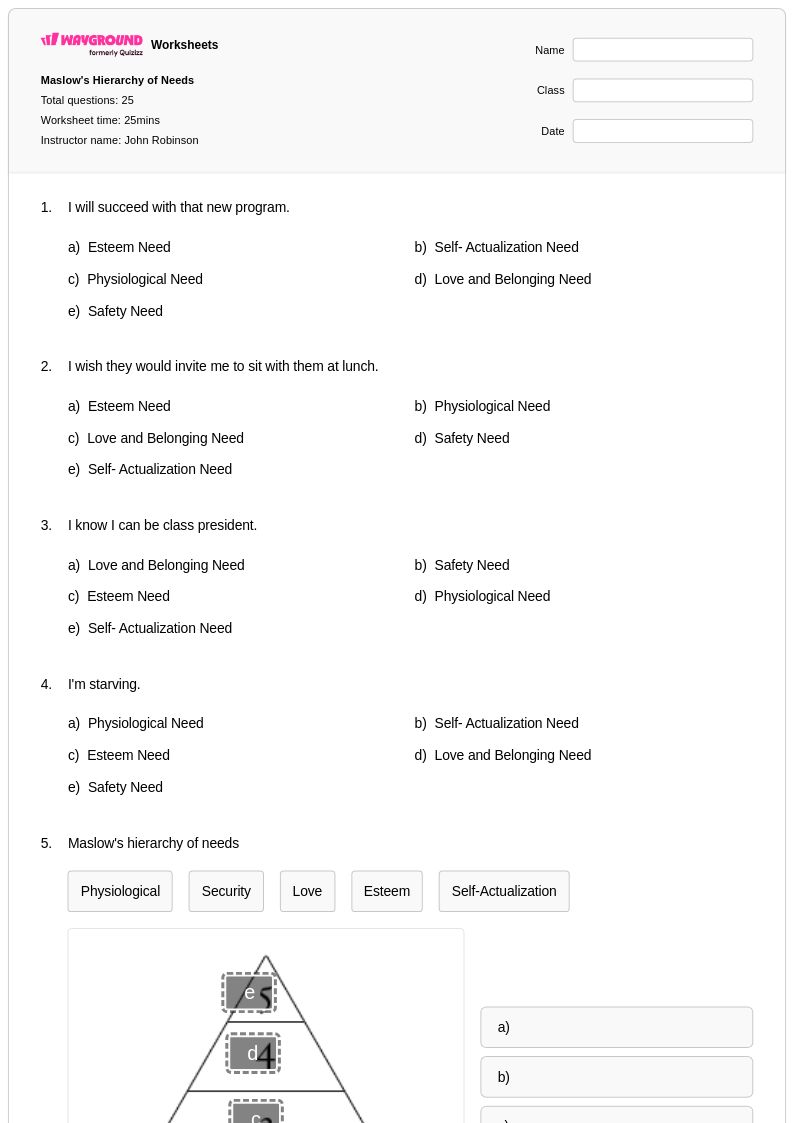
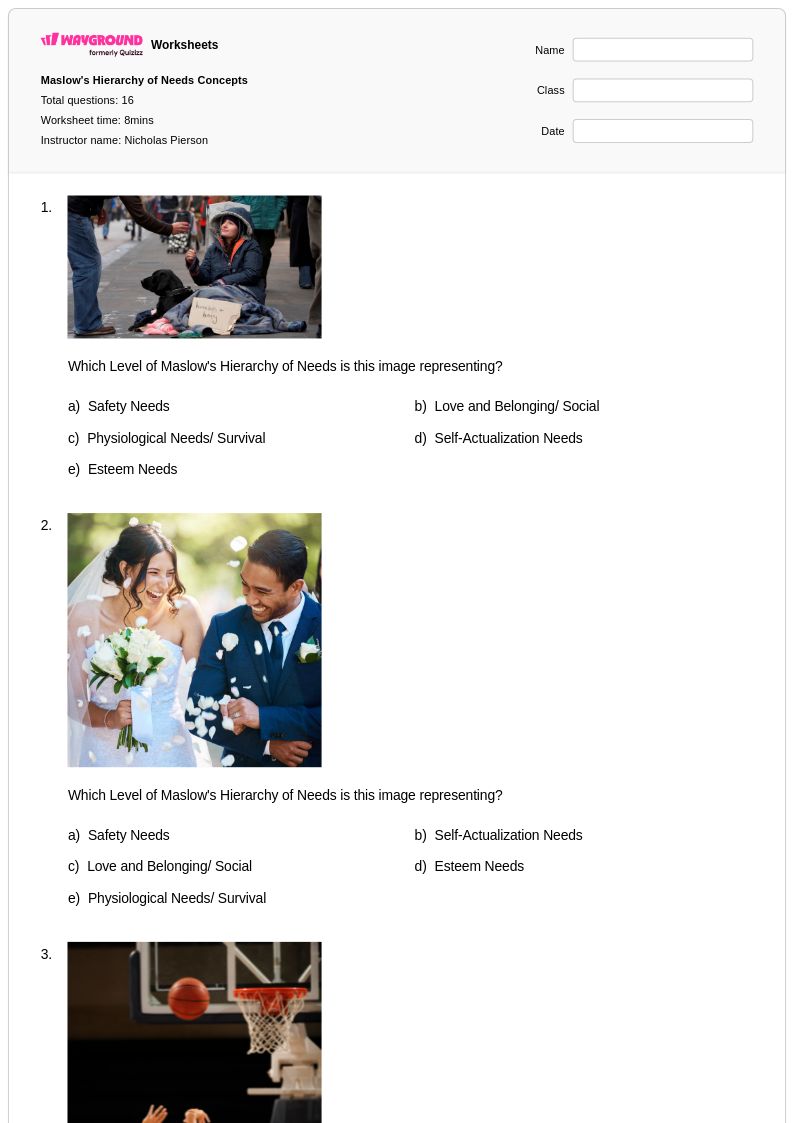
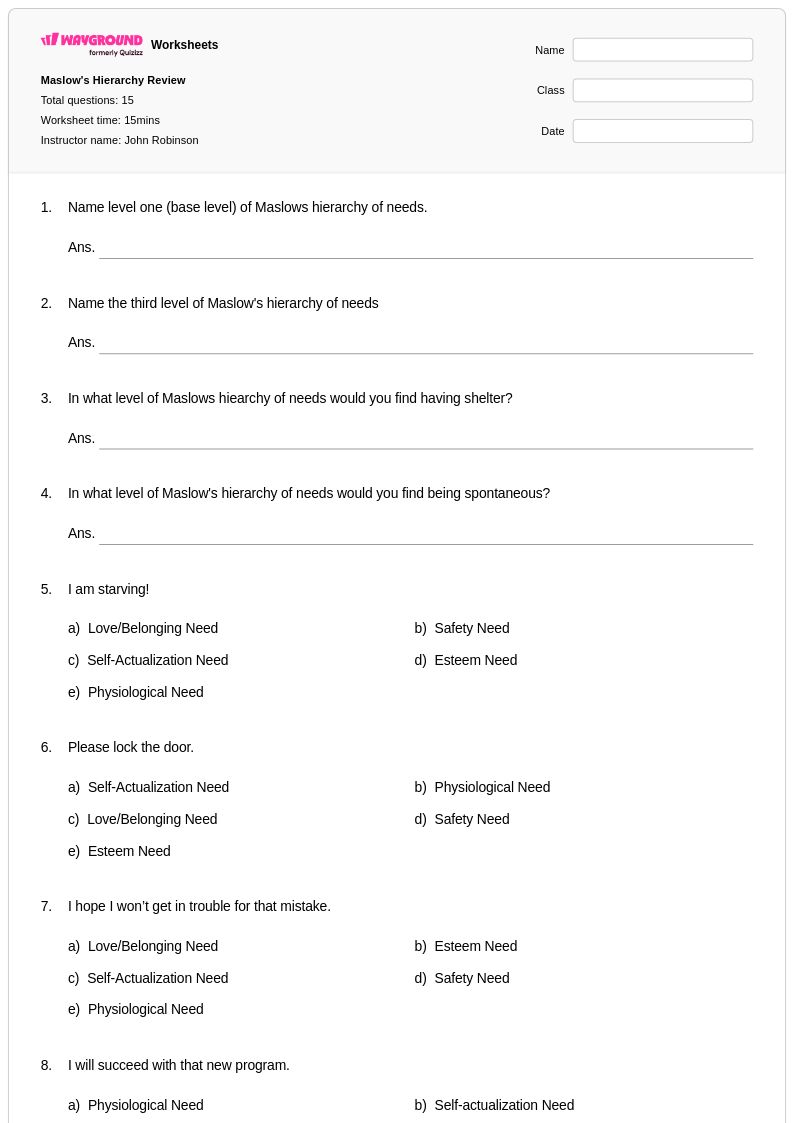
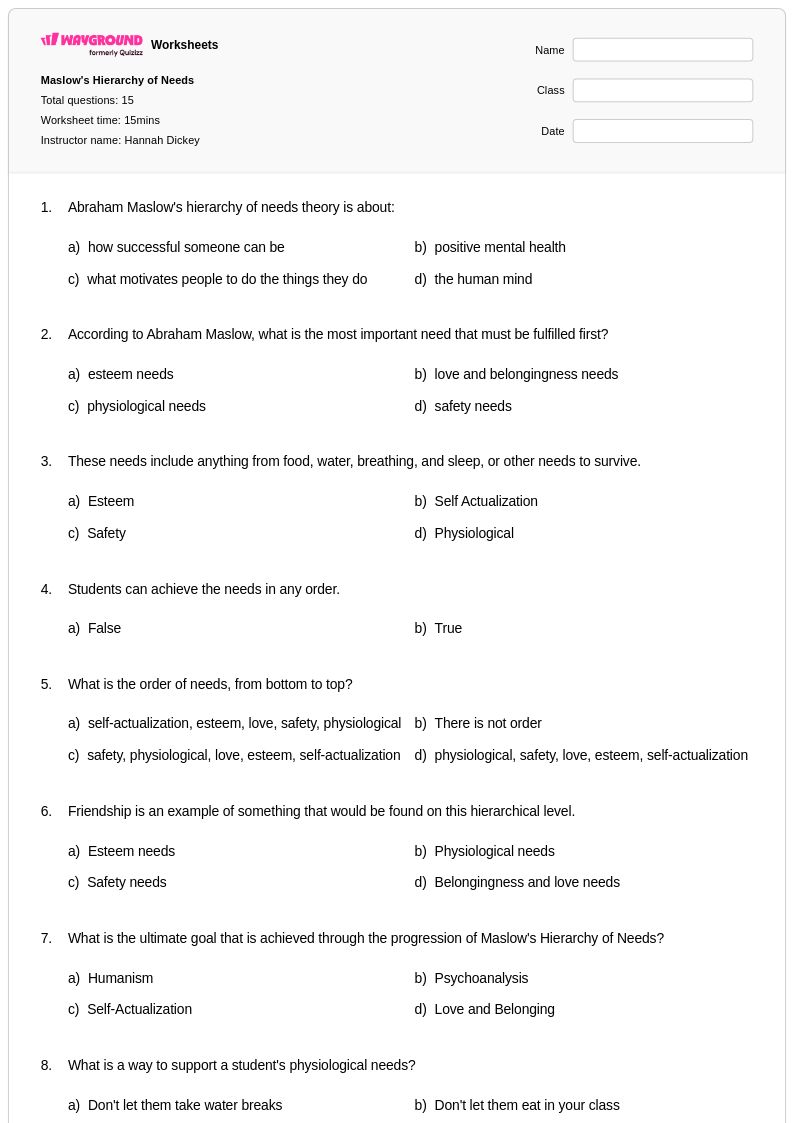
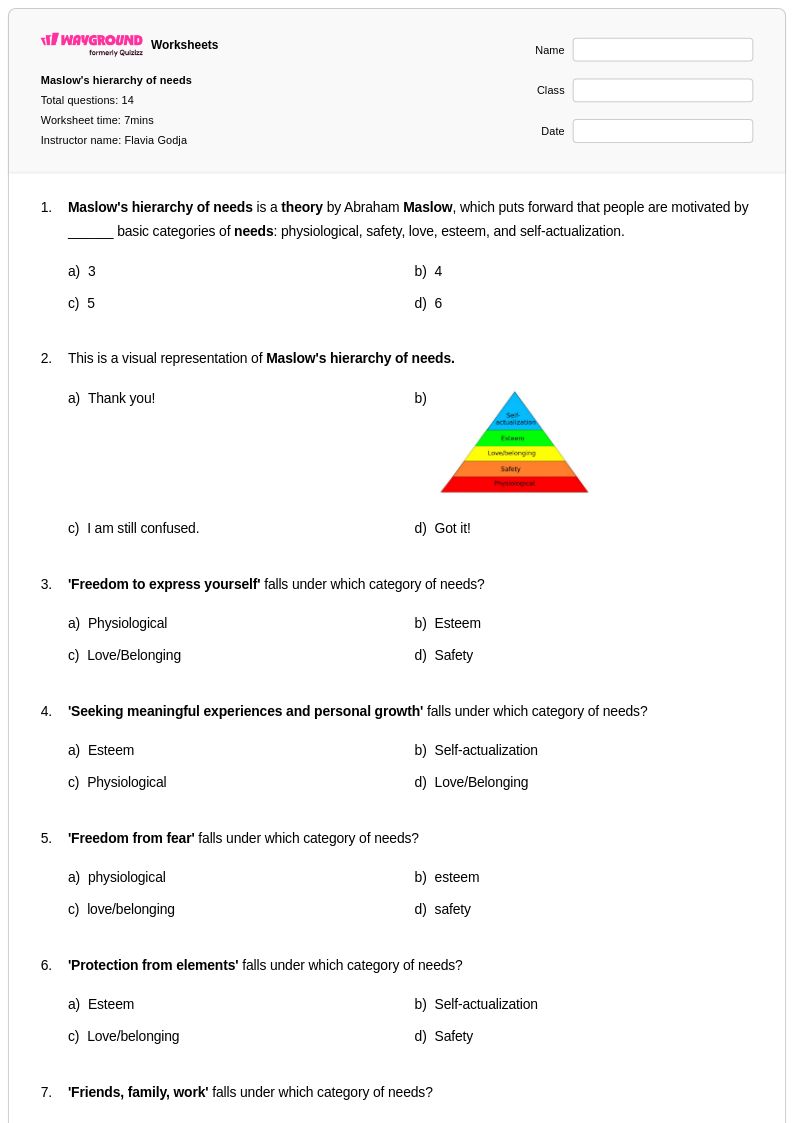
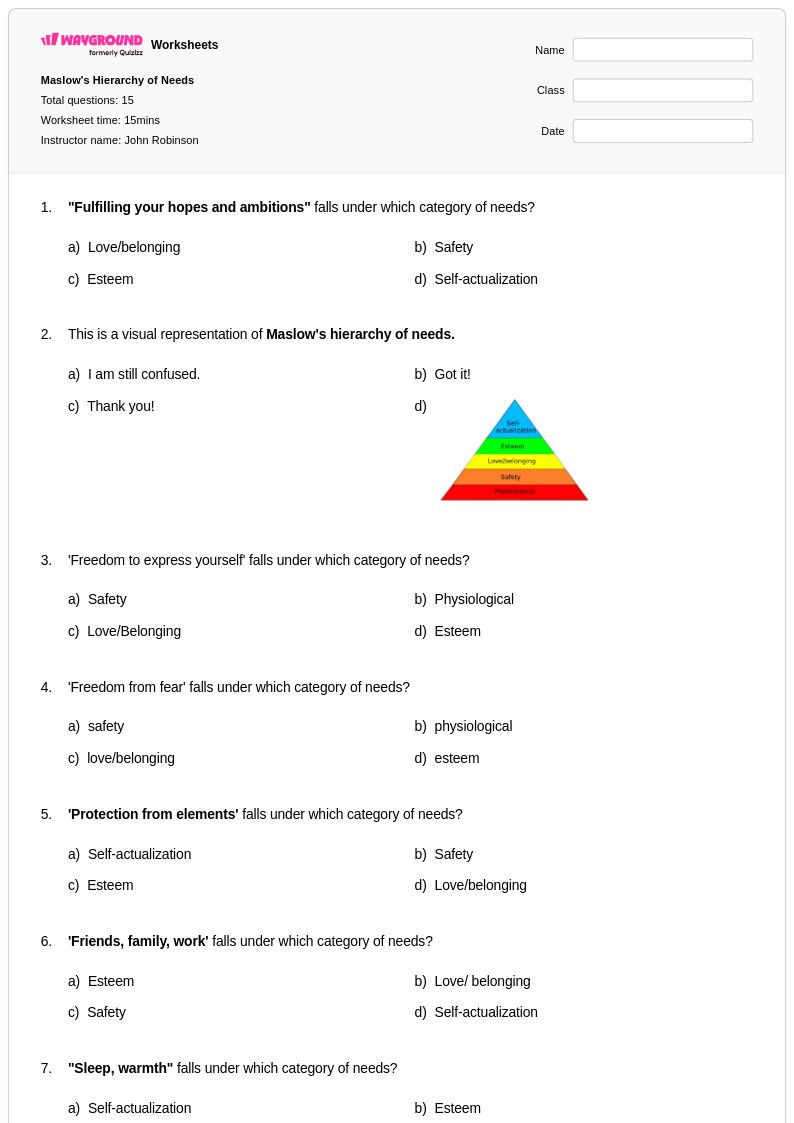
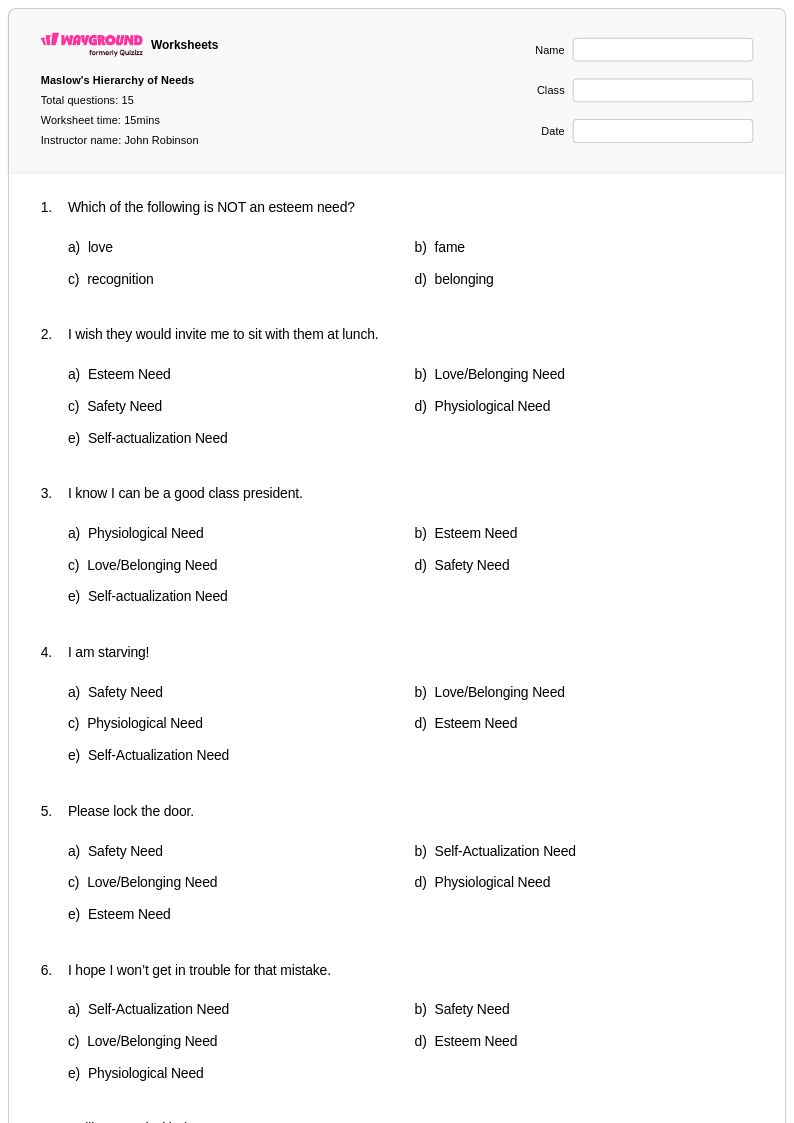
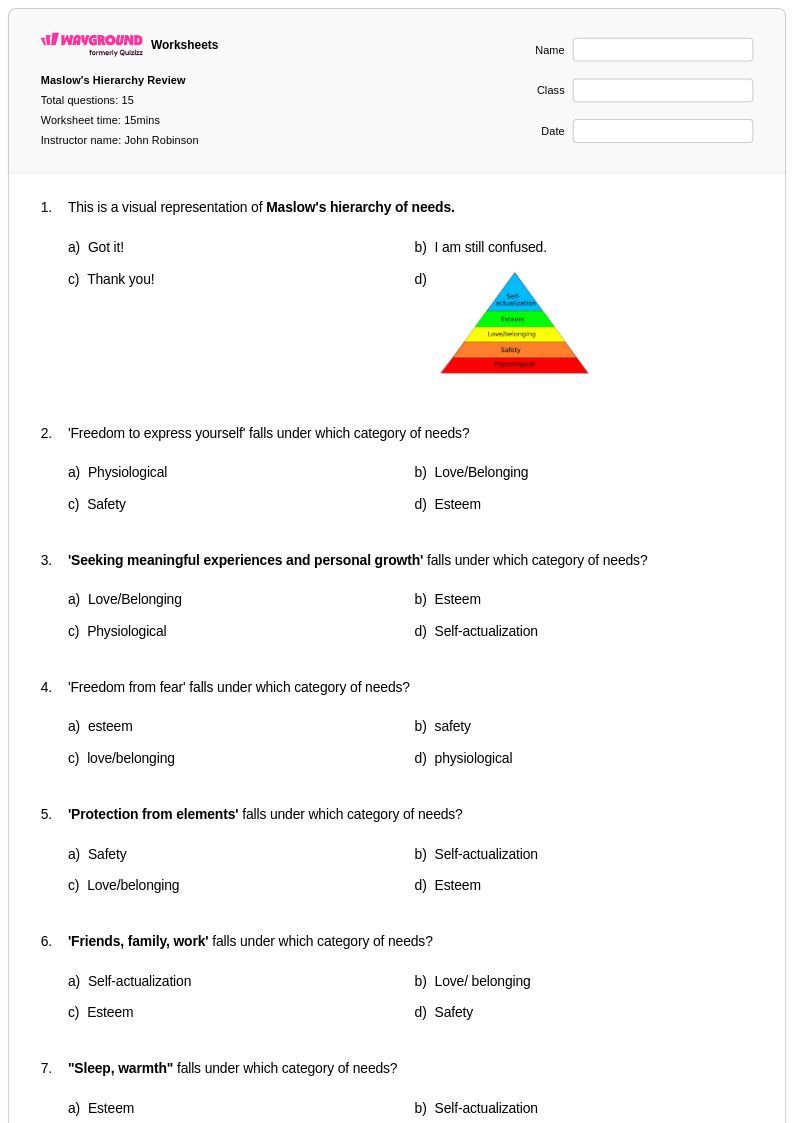
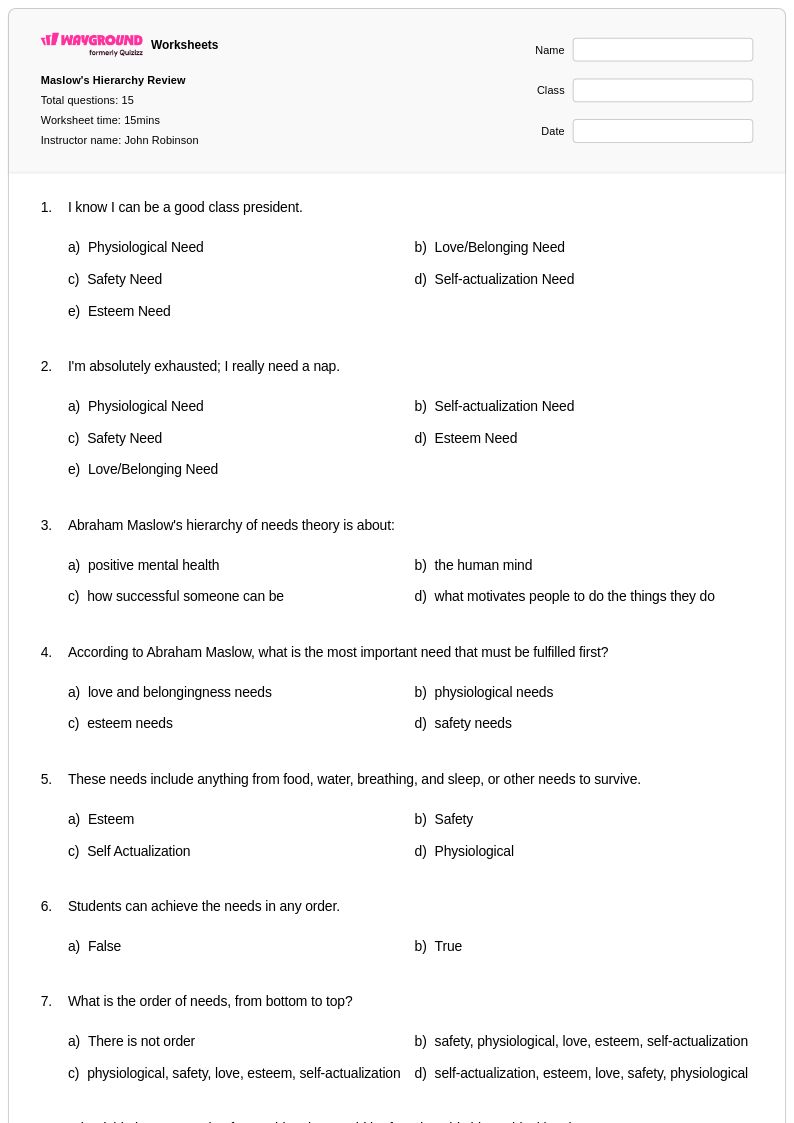
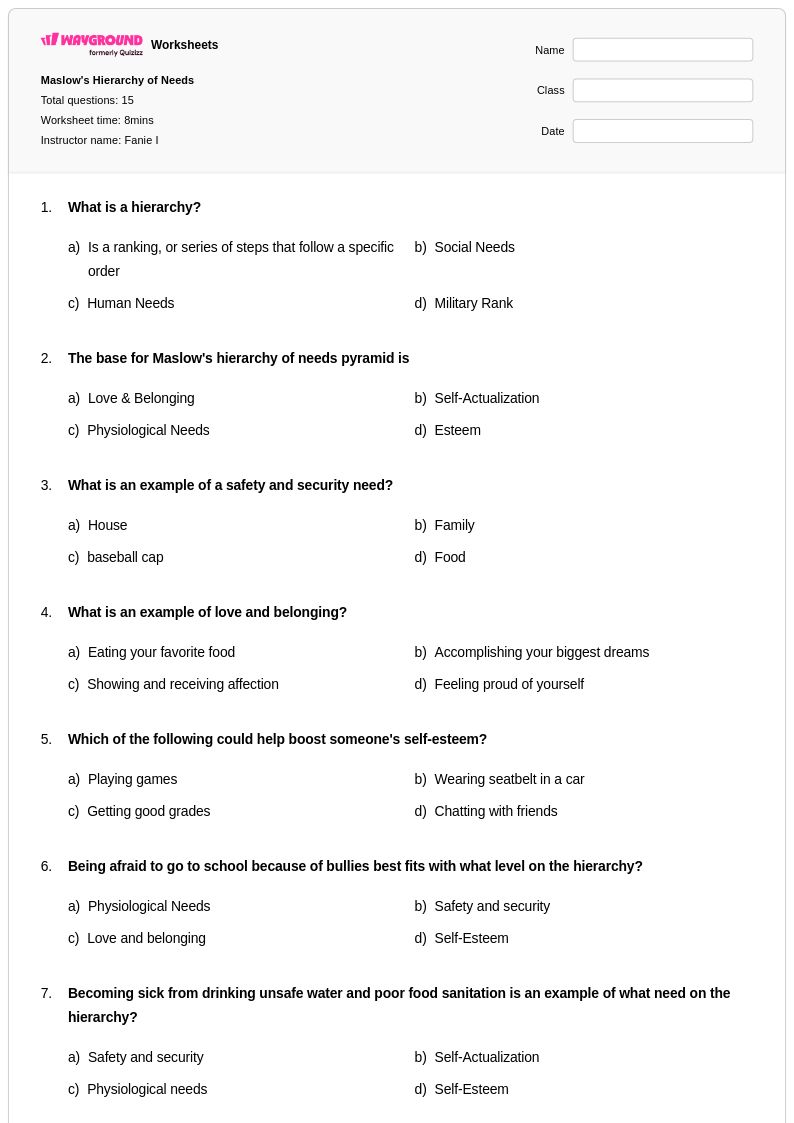
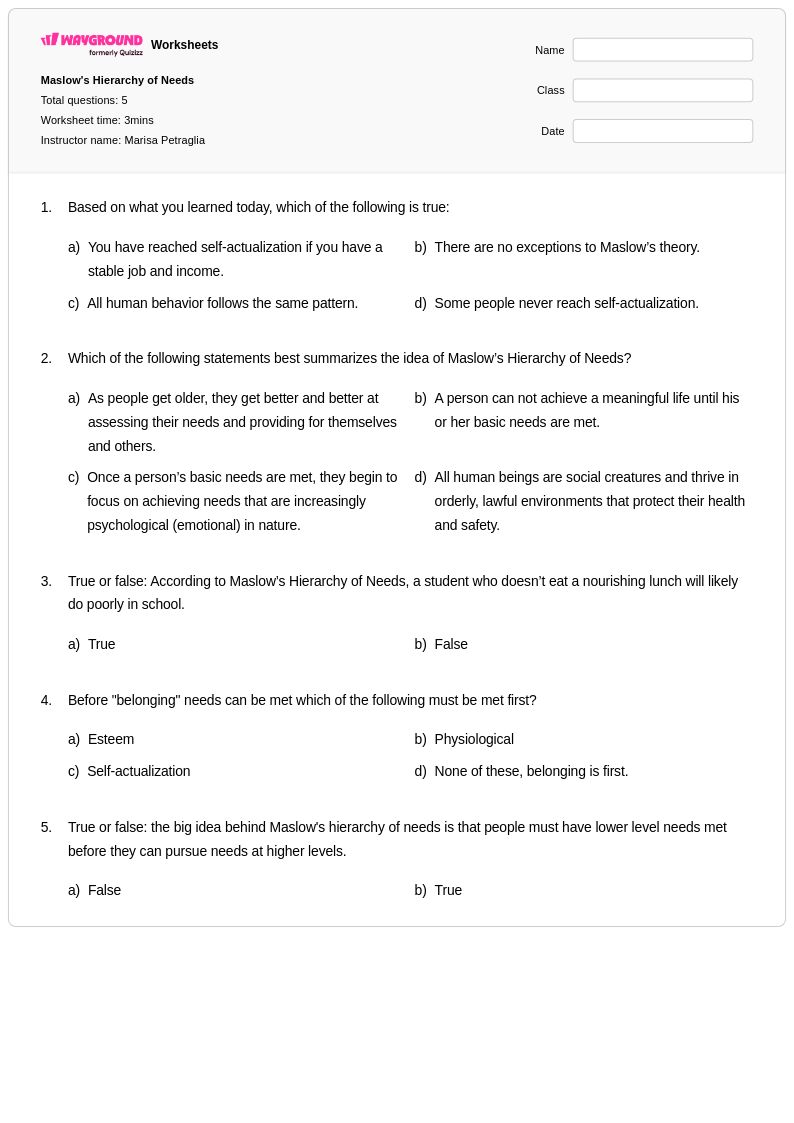
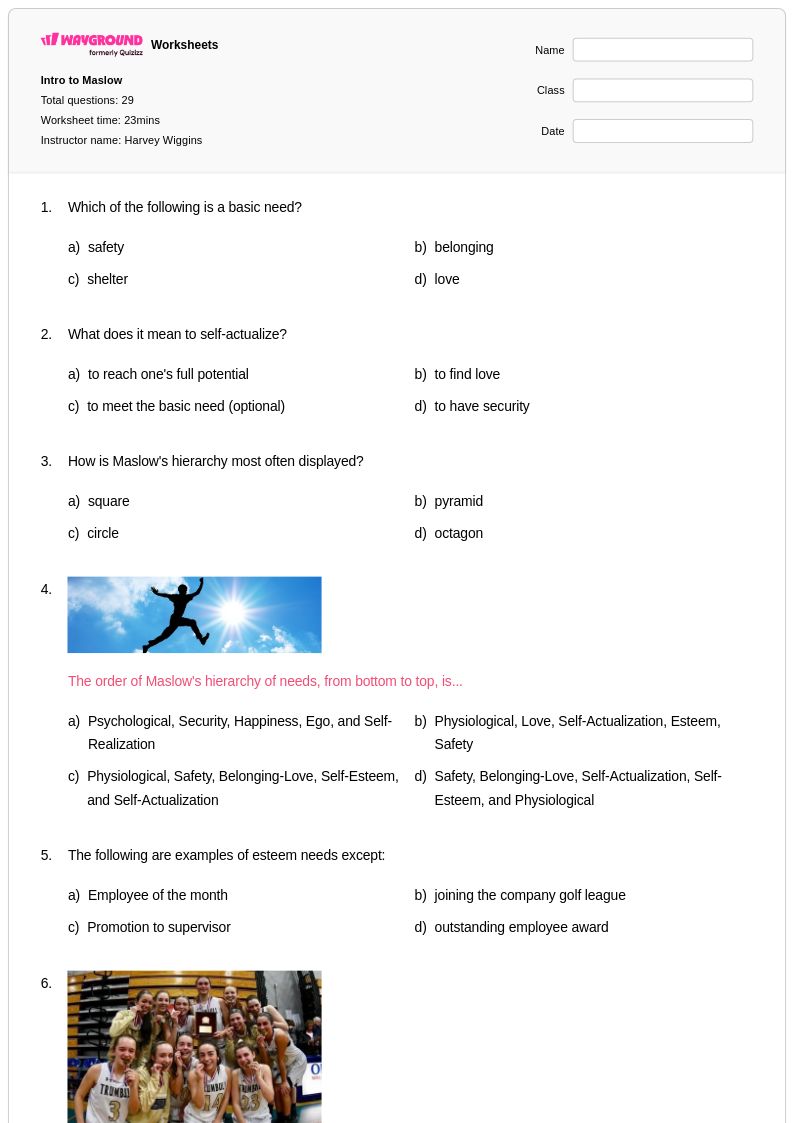
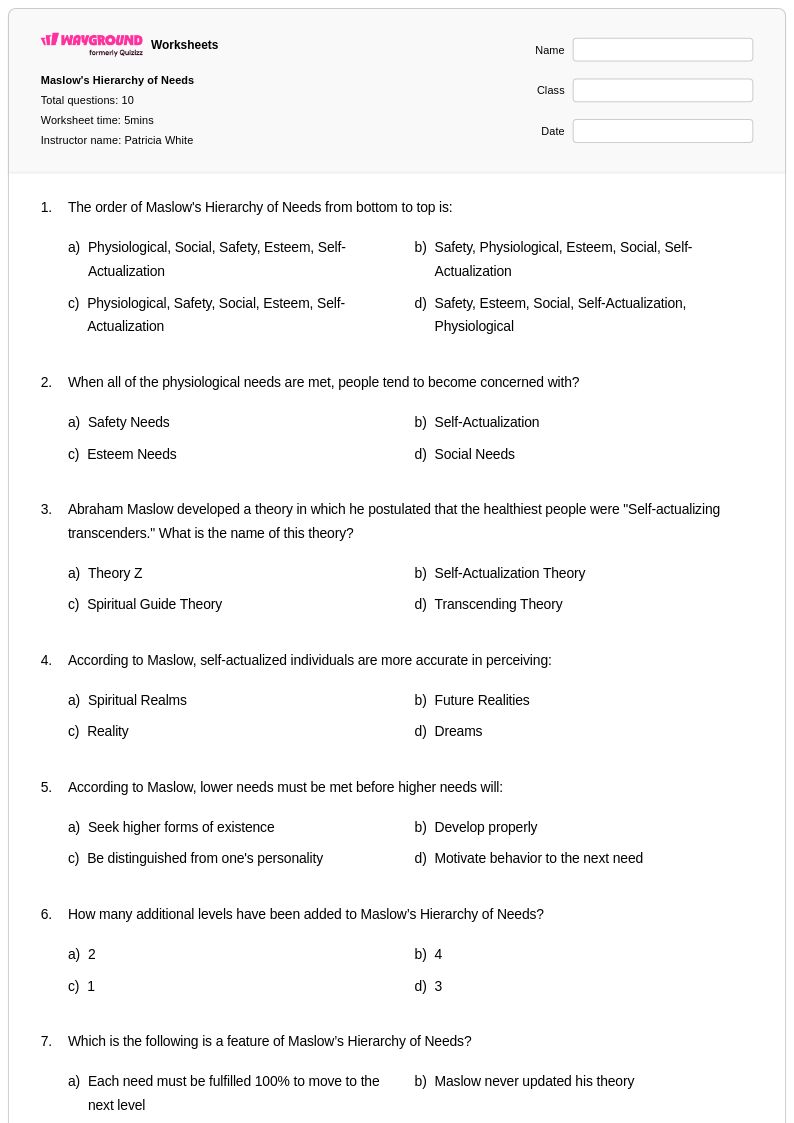
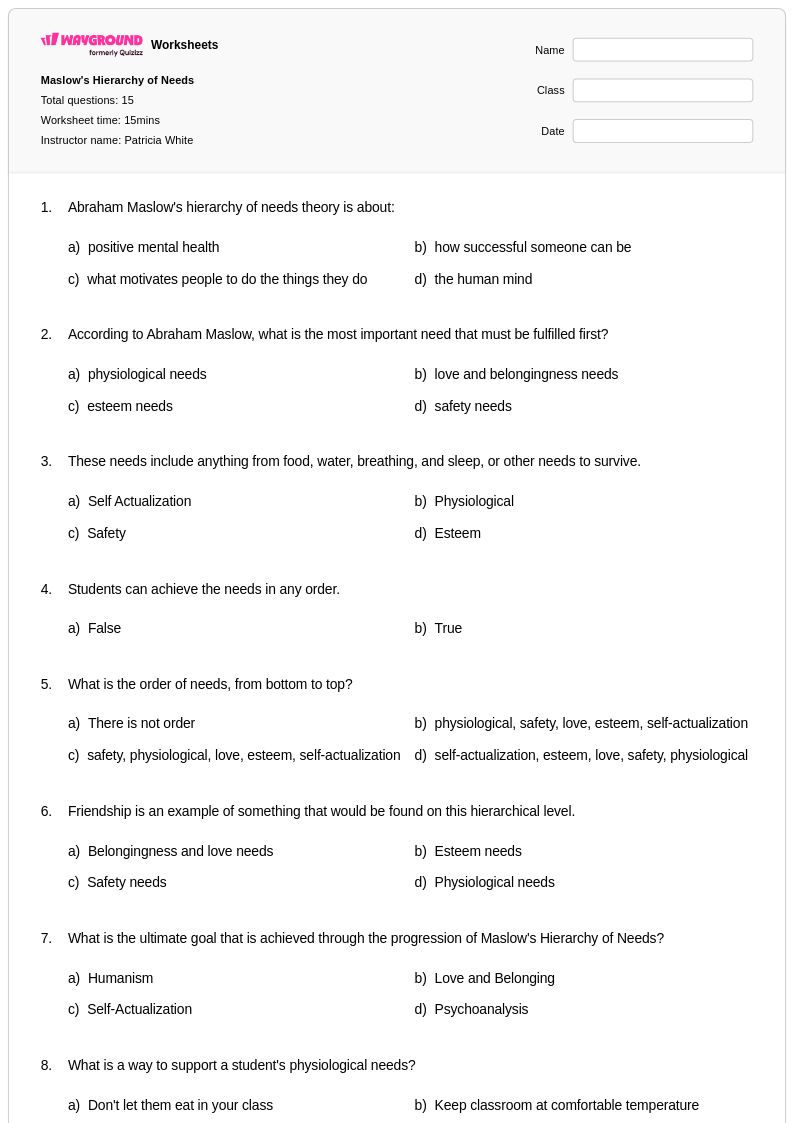
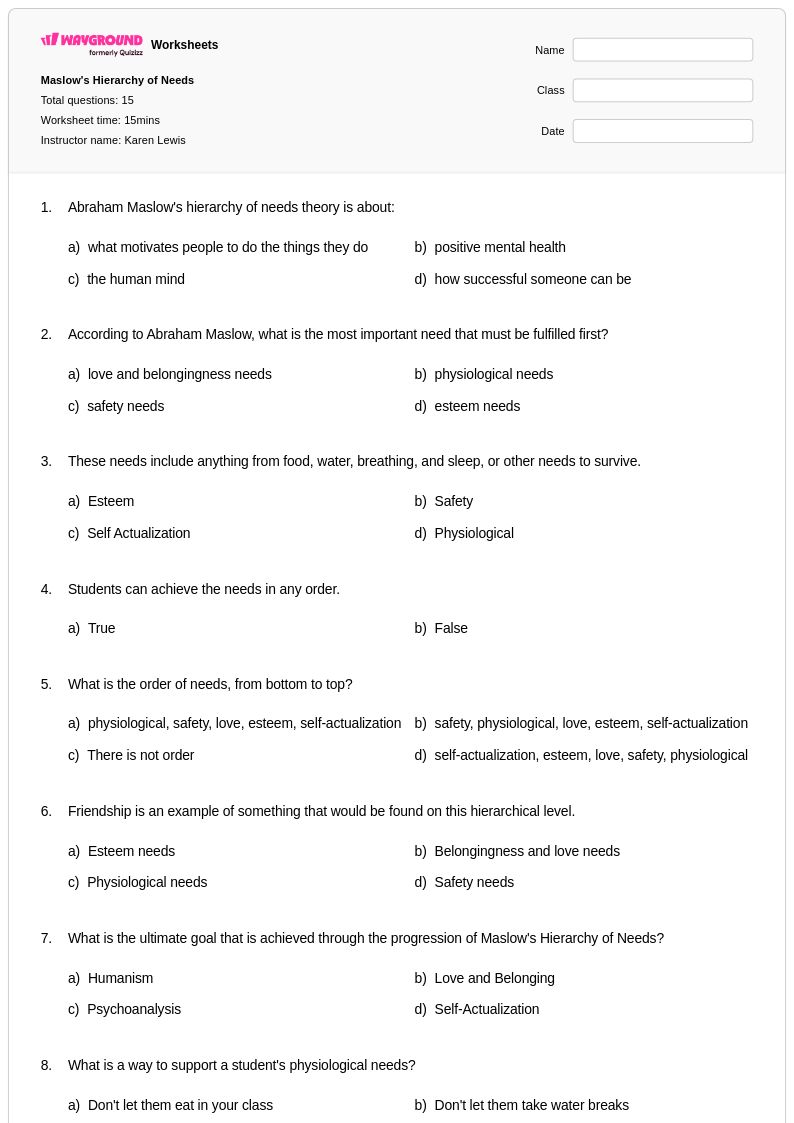
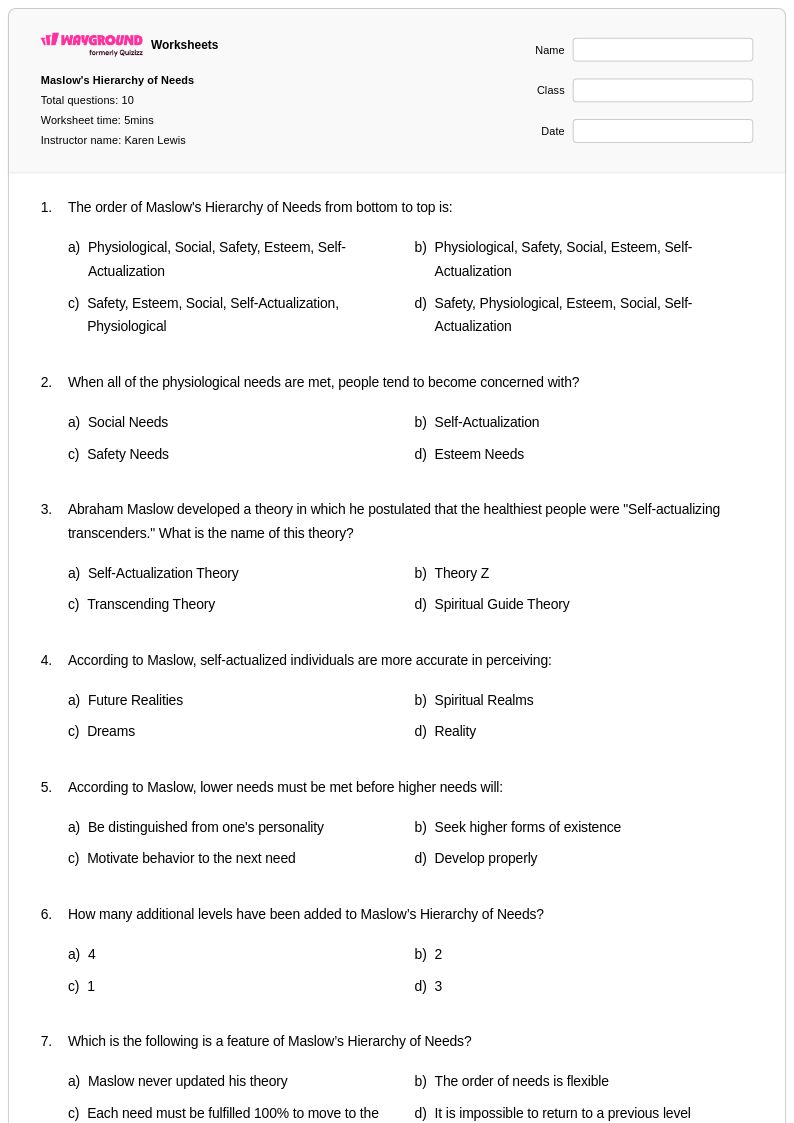
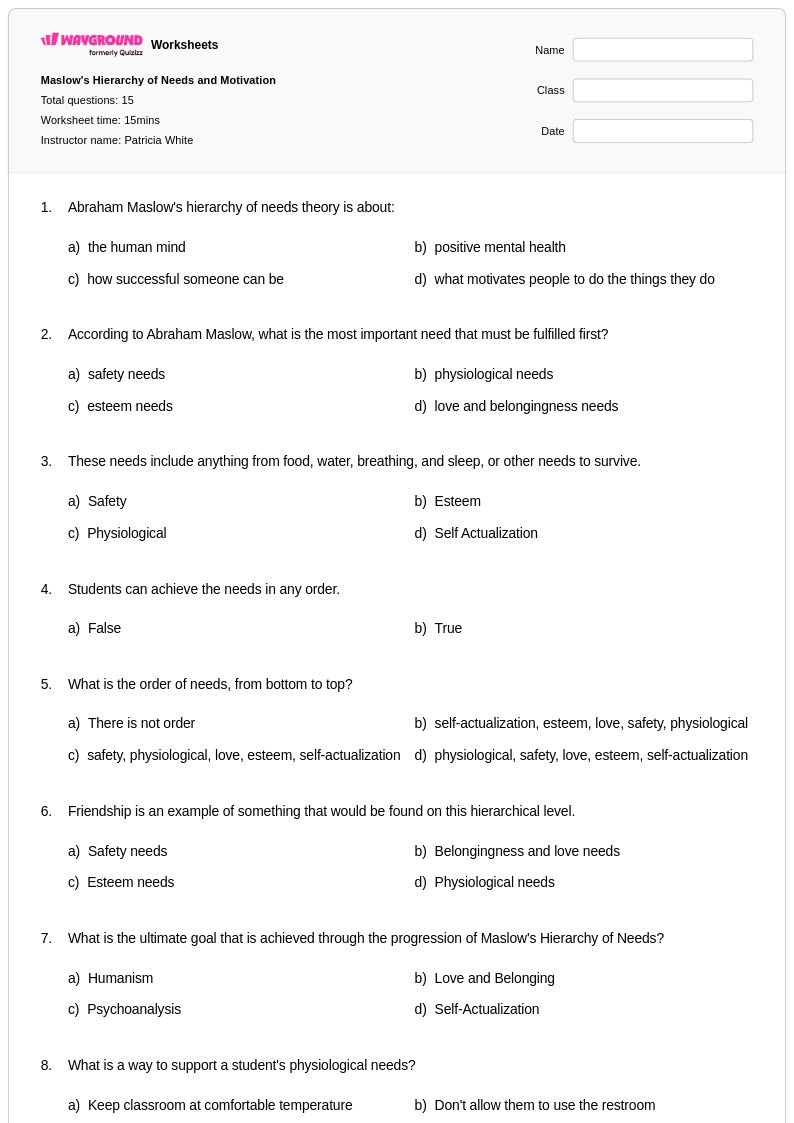
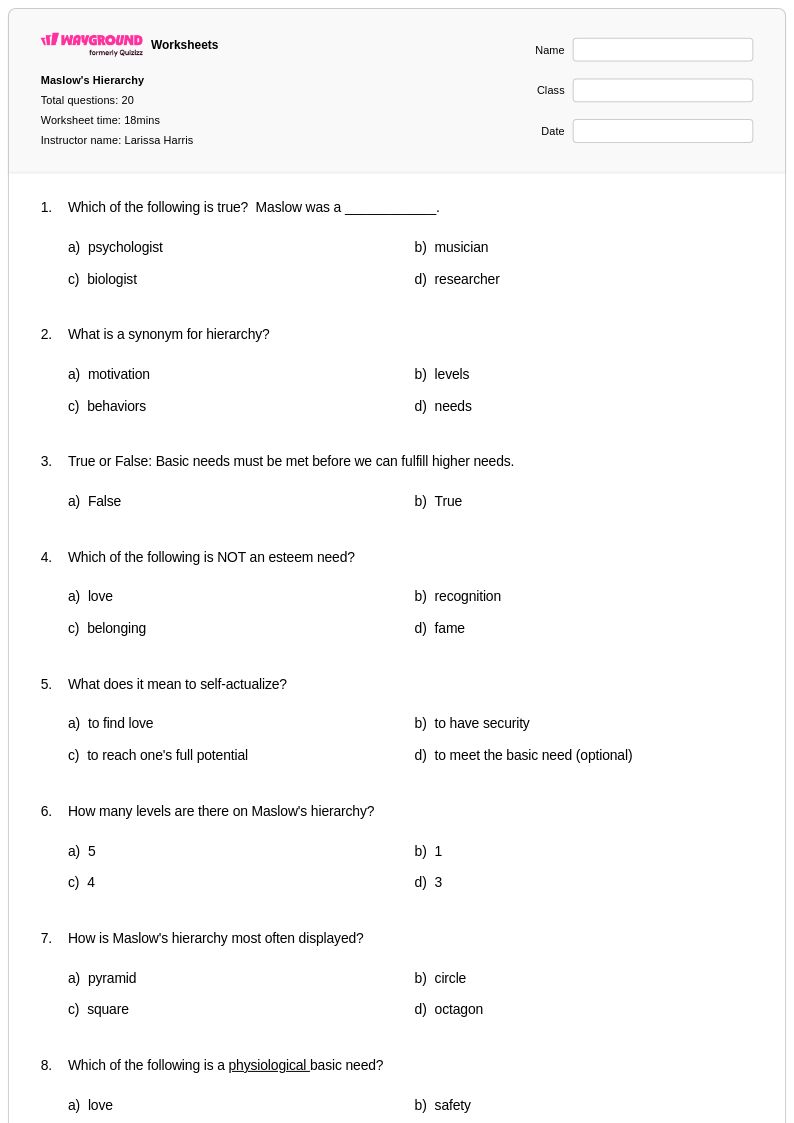
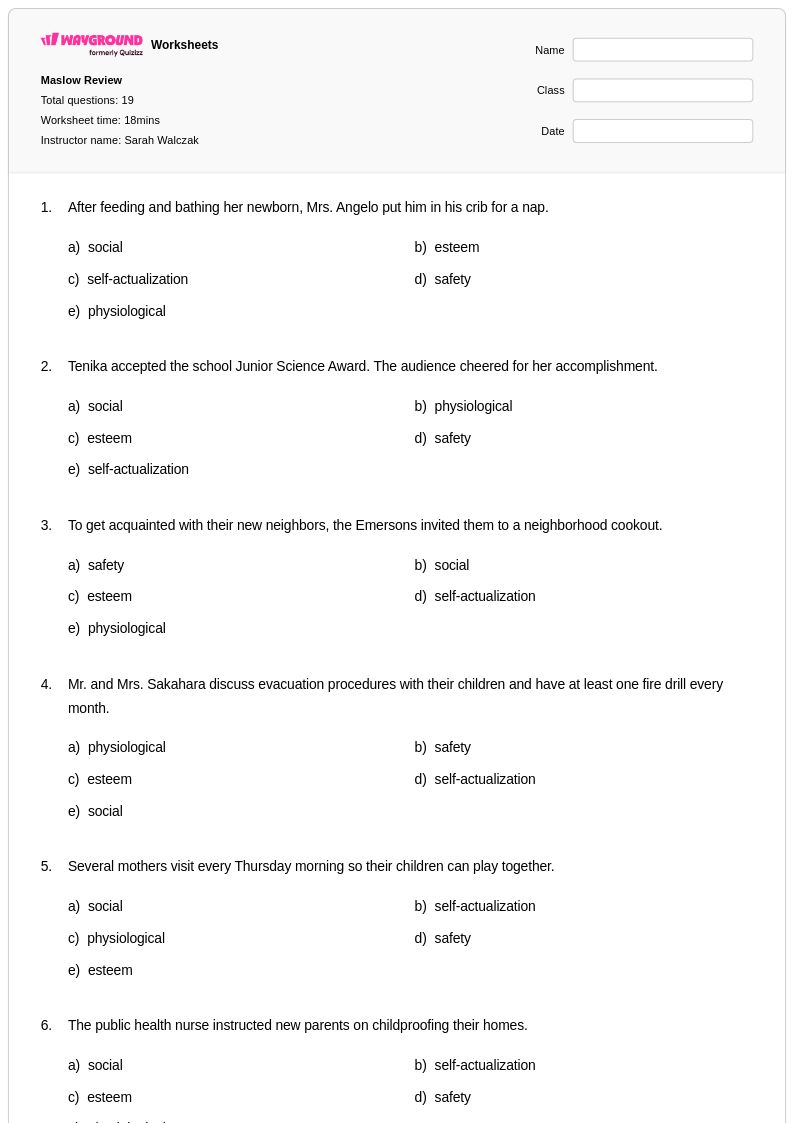
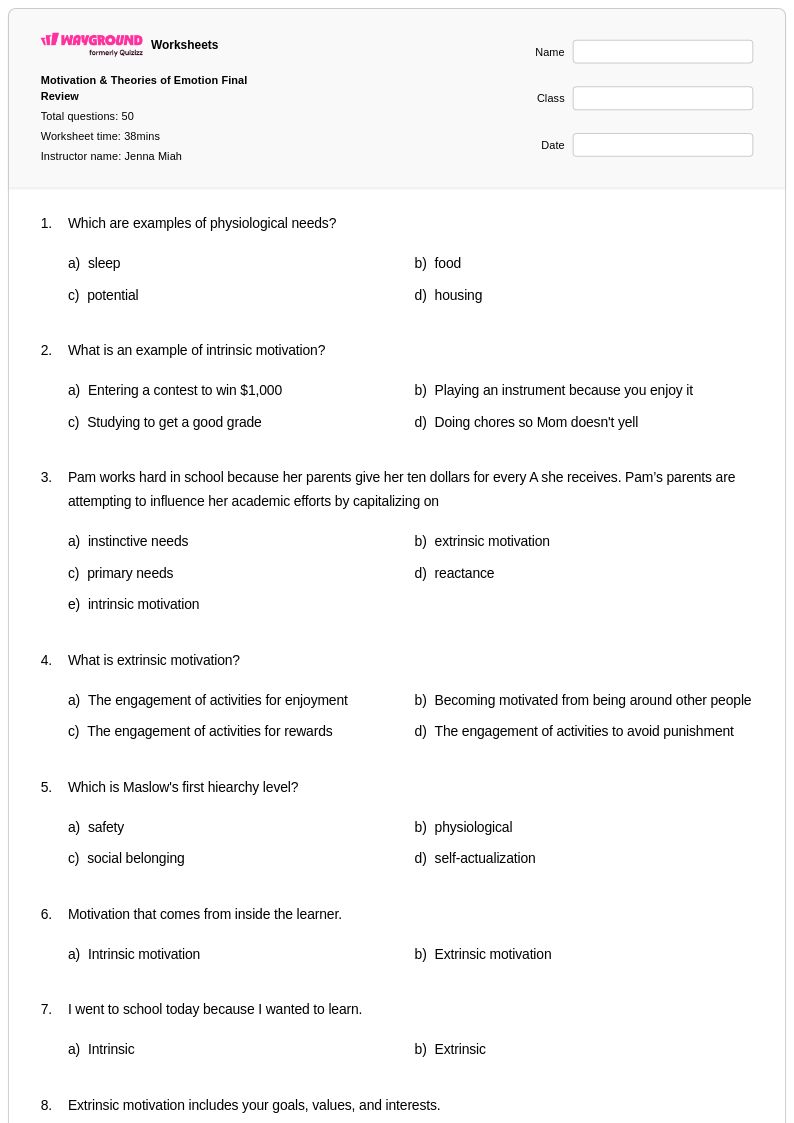
Maslow's Hierarchy of Needs worksheets for Class 10 students provide comprehensive exploration of this fundamental psychological theory within social studies curriculum. These educational resources guide students through the five-tier pyramid structure, examining physiological needs, safety, love and belonging, esteem, and self-actualization in both theoretical and practical contexts. Students engage with practice problems that require them to categorize real-world scenarios, analyze case studies of individuals at different hierarchy levels, and evaluate how unmet needs impact human behavior and decision-making. The worksheets strengthen critical thinking skills as students learn to identify motivational factors in historical events, contemporary social issues, and personal relationships. Each printable resource includes detailed answer keys that support both independent study and classroom instruction, with free pdf formats ensuring accessibility for diverse learning environments.
Wayground (formerly Quizizz) empowers educators with an extensive collection of teacher-created Maslow's Hierarchy of Needs worksheets specifically designed for Class 10 social studies instruction. The platform's millions of educational resources include standards-aligned materials that support differentiated instruction through customizable difficulty levels, varied question formats, and adaptable content that meets diverse student needs. Teachers benefit from robust search and filtering capabilities that enable quick identification of appropriate materials for lesson planning, targeted remediation, and enrichment activities. These digital and printable resources seamlessly integrate into curriculum pacing guides, allowing educators to provide focused skill practice through interactive exercises, discussion prompts, and application scenarios. The flexible format options ensure teachers can deliver content through traditional printable worksheets or engaging digital activities, supporting both in-person and remote learning environments while maintaining rigorous academic standards.
FAQs
How do I teach Maslow's Hierarchy of Needs to students?
Start by grounding the theory in students' own lived experiences before introducing the five-tier model. Present each level — physiological, safety, love and belonging, esteem, and self-actualization — with concrete real-world examples, then ask students to identify which needs are being met or unmet in given scenarios. Moving from personal reflection to case study analysis helps students internalize the theory rather than simply memorize the pyramid's structure.
What activities help students practice categorizing Maslow's levels?
The most effective practice tasks require students to apply the framework to realistic scenarios rather than recall definitions. Categorization exercises where students assign real-world situations — such as a person losing their job, forming a friendship, or earning a promotion — to the correct tier build analytical fluency. Case study analysis, where students evaluate how a single individual's needs shift across different life circumstances, is especially effective for developing deeper understanding of the model's dynamic nature.
What misconceptions do students commonly have about Maslow's Hierarchy of Needs?
The most common misconception is that needs must be fully satisfied at one level before a person can pursue the next — Maslow's original theory describes these as dominant needs, not strict prerequisites. Students also frequently confuse esteem needs with self-actualization, conflating external validation with personal fulfillment. Another common error is treating the hierarchy as universal, when in practice cultural, socioeconomic, and individual factors significantly shape which needs are prioritized and how they are met.
How does Maslow's Hierarchy of Needs connect to Social Studies curriculum?
Maslow's framework offers a psychological lens for analyzing social structures, policy decisions, and historical events within Social Studies. Teachers can use it to examine how societies organize resources to meet population needs, why certain groups face systemic barriers to higher-order fulfillment, and how leaders and governments respond to collective need hierarchies. This makes the theory a versatile analytical tool across units on government, economics, sociology, and human rights.
How can I use Maslow's Hierarchy of Needs worksheets from Wayground in my classroom?
Wayground's Maslow's Hierarchy of Needs worksheets are available as printable PDFs for traditional classroom use and in digital formats for technology-integrated learning environments, and can also be hosted as a quiz directly on the Wayground platform. Each worksheet includes a complete answer key, making them practical for independent practice, formative assessment, or guided group work. The digital format allows teachers to assign worksheets remotely, while the printable version suits in-class instruction or homework without requiring device access.
How can I differentiate Maslow's Hierarchy of Needs instruction for students at different ability levels?
For students who need additional support, reduce the complexity of scenarios used in categorization tasks and focus instruction on the three foundational tiers before introducing esteem and self-actualization. When using Wayground's digital worksheets, teachers can apply built-in accommodations such as reduced answer choices to lower cognitive load for selected students, or enable the Read Aloud feature for students who benefit from audio support — without affecting the experience of other students in the class.