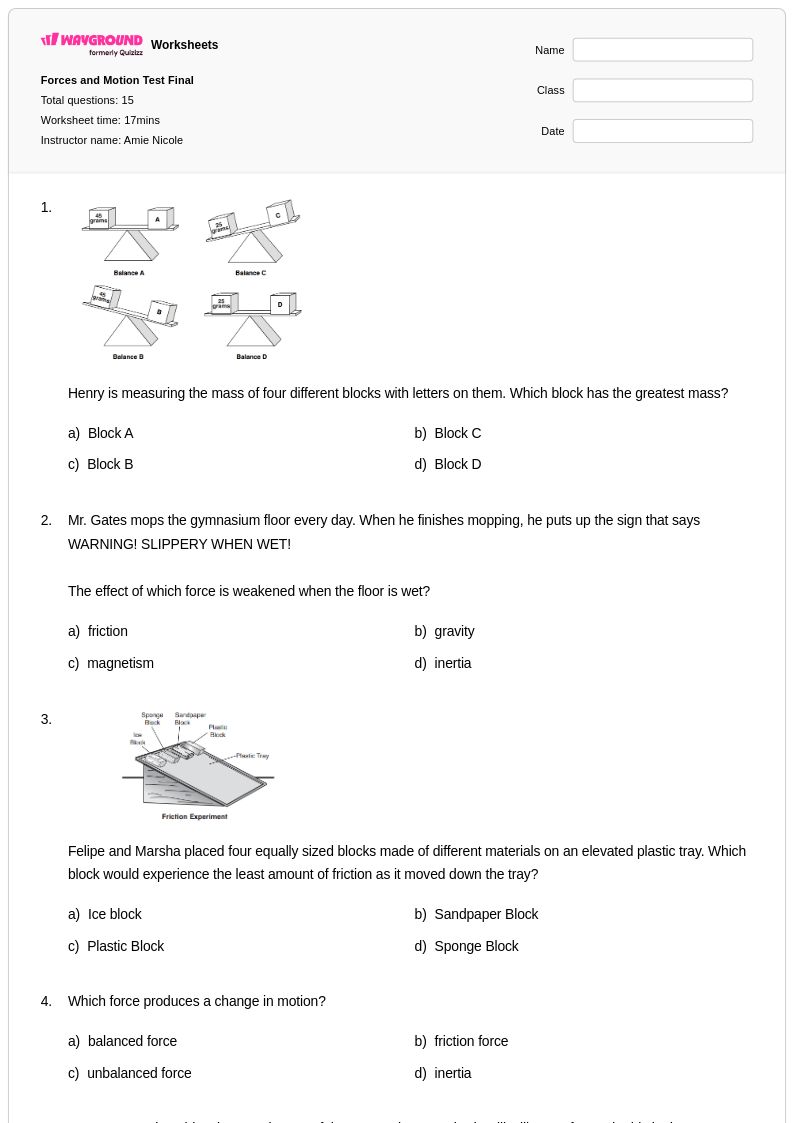
Free Printable Mass and Inertia Worksheets for Class 4
Explore our free Class 4 mass and inertia worksheets and printables that help students understand how objects resist changes in motion through engaging practice problems with complete answer keys.
Explore printable Mass and Inertia worksheets for Class 4
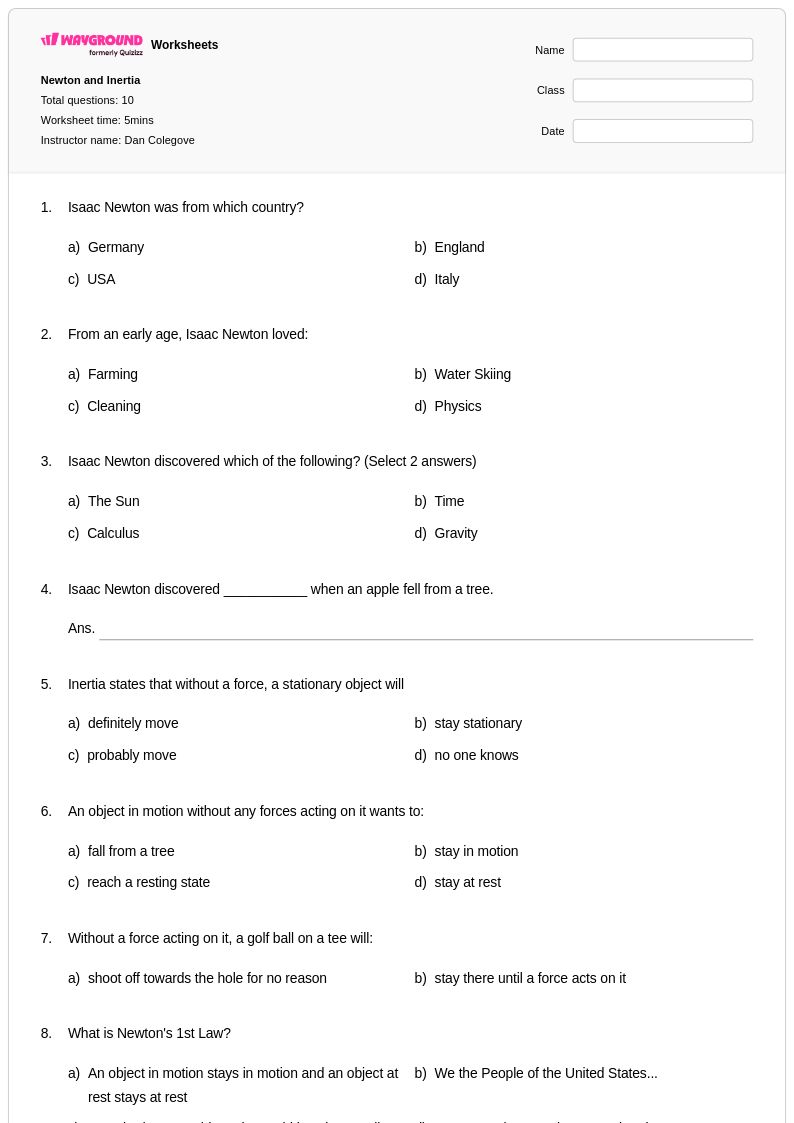
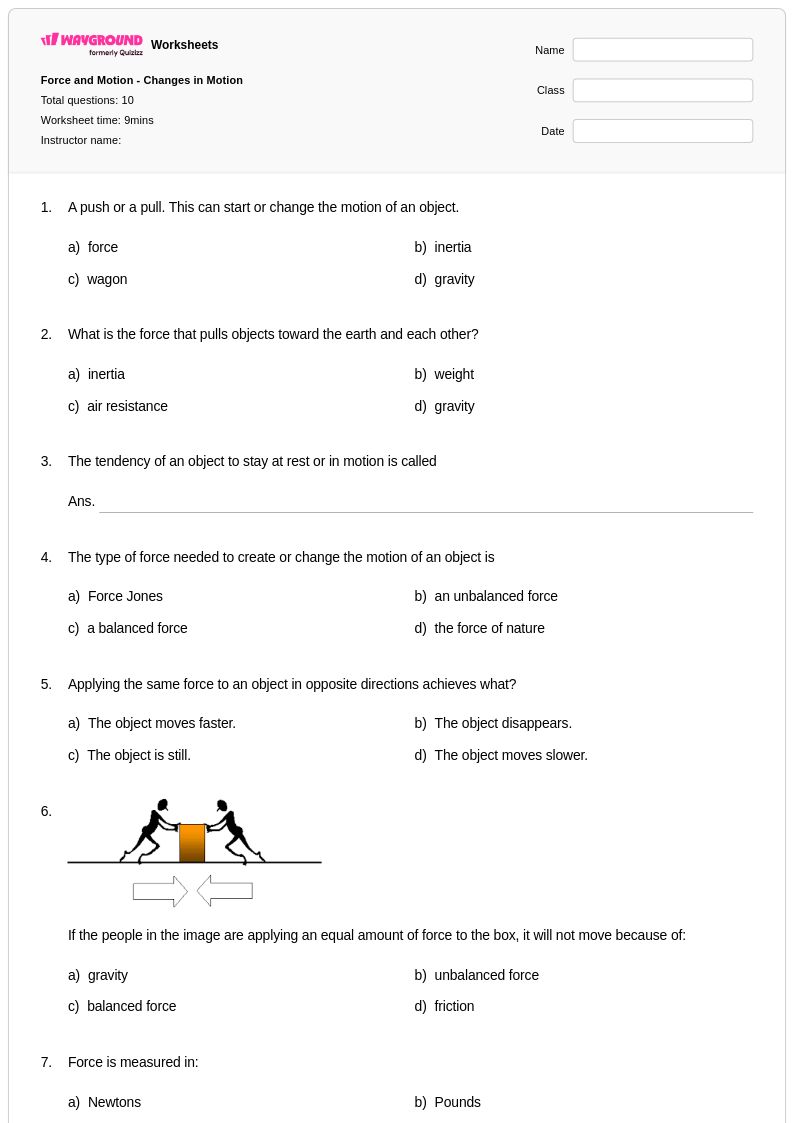
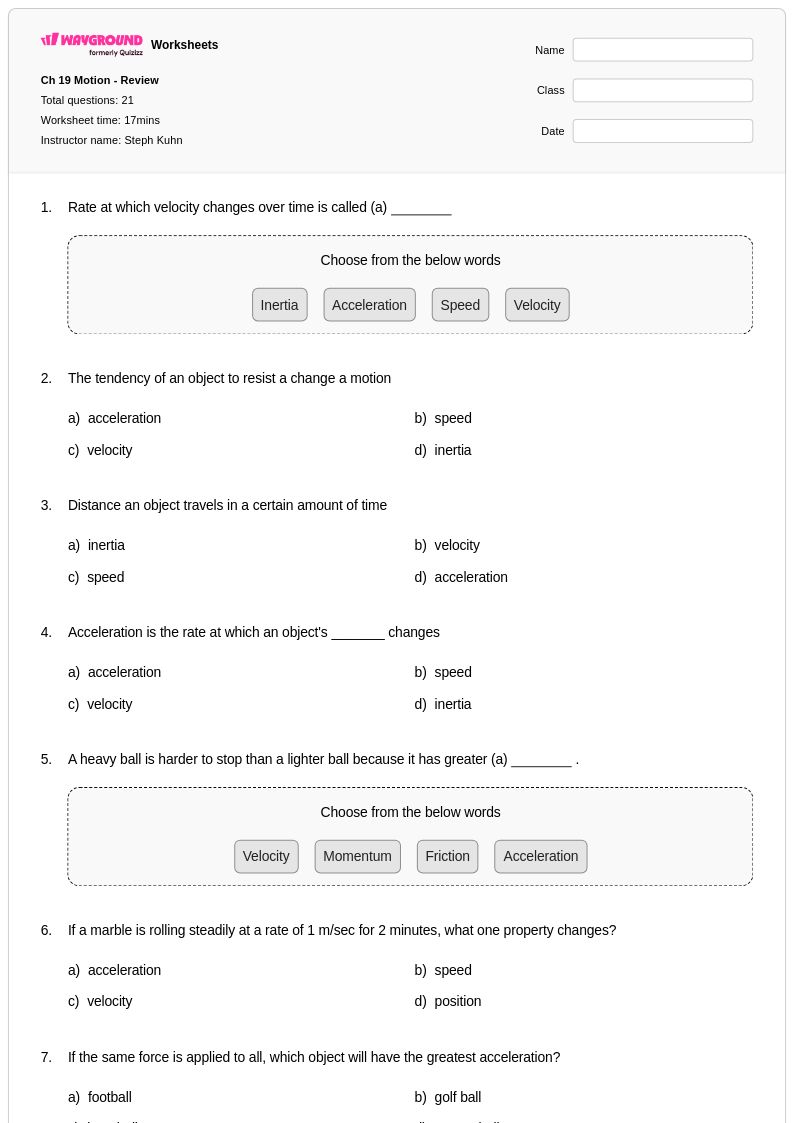
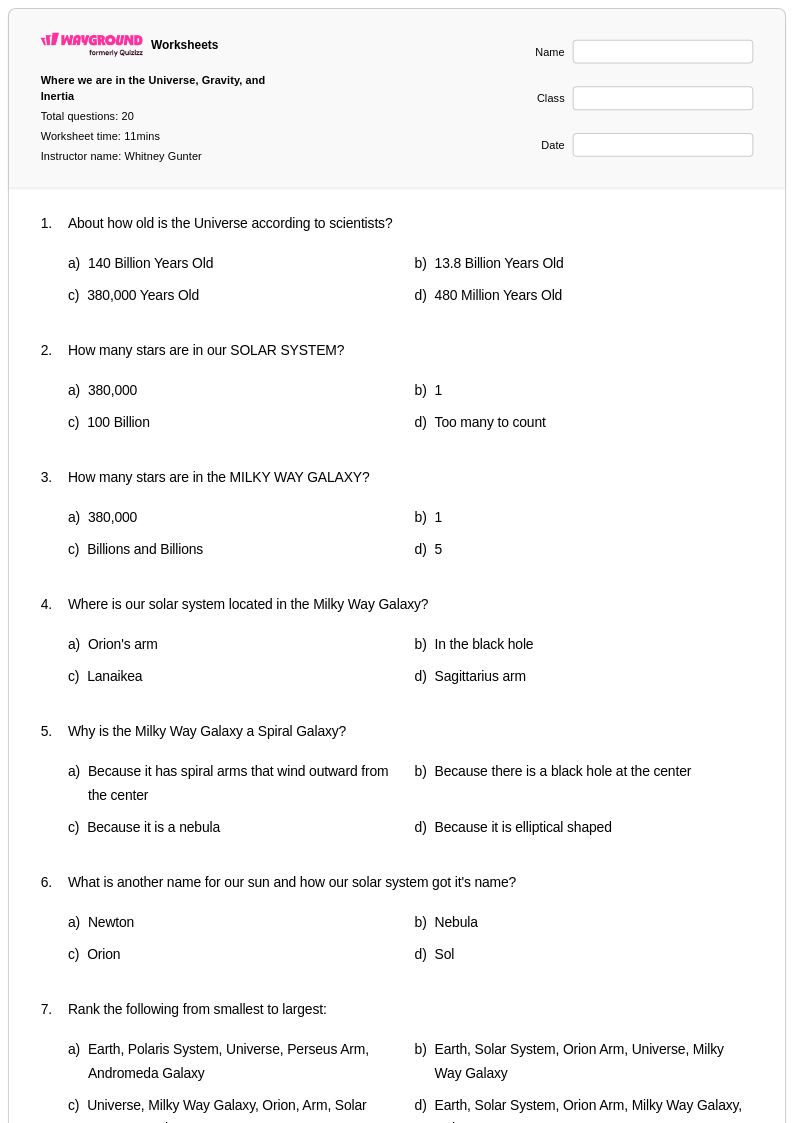
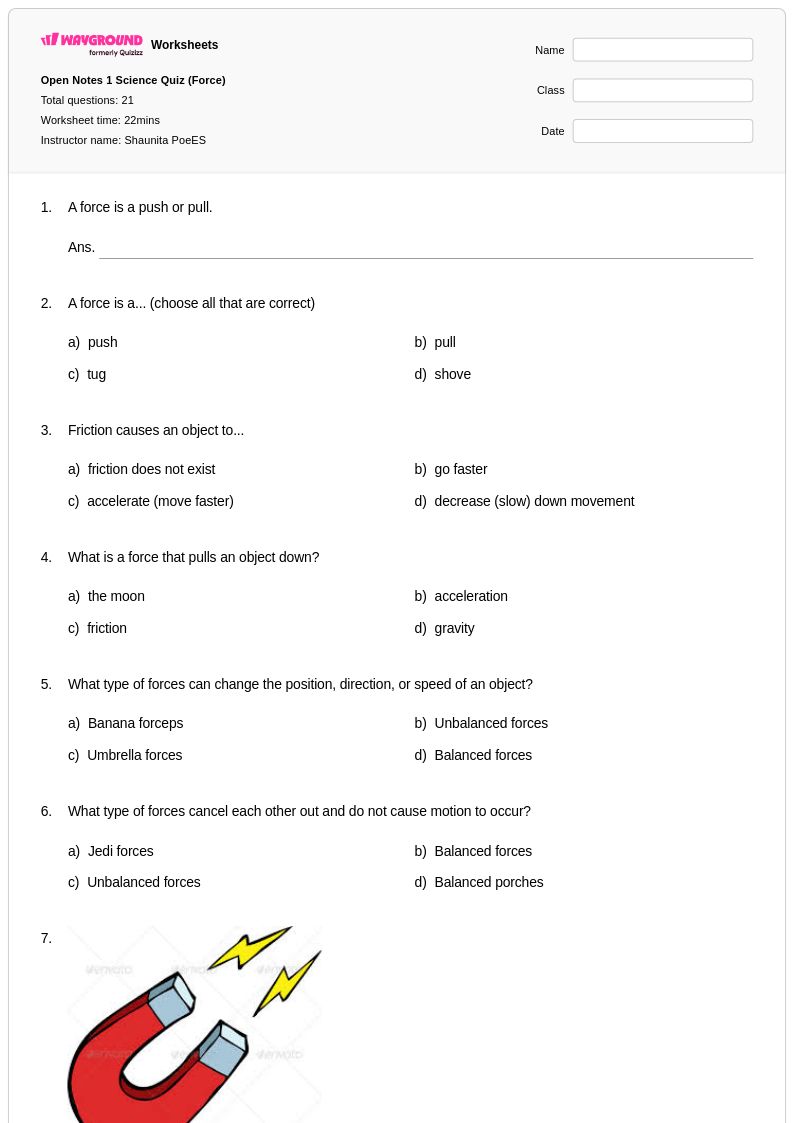
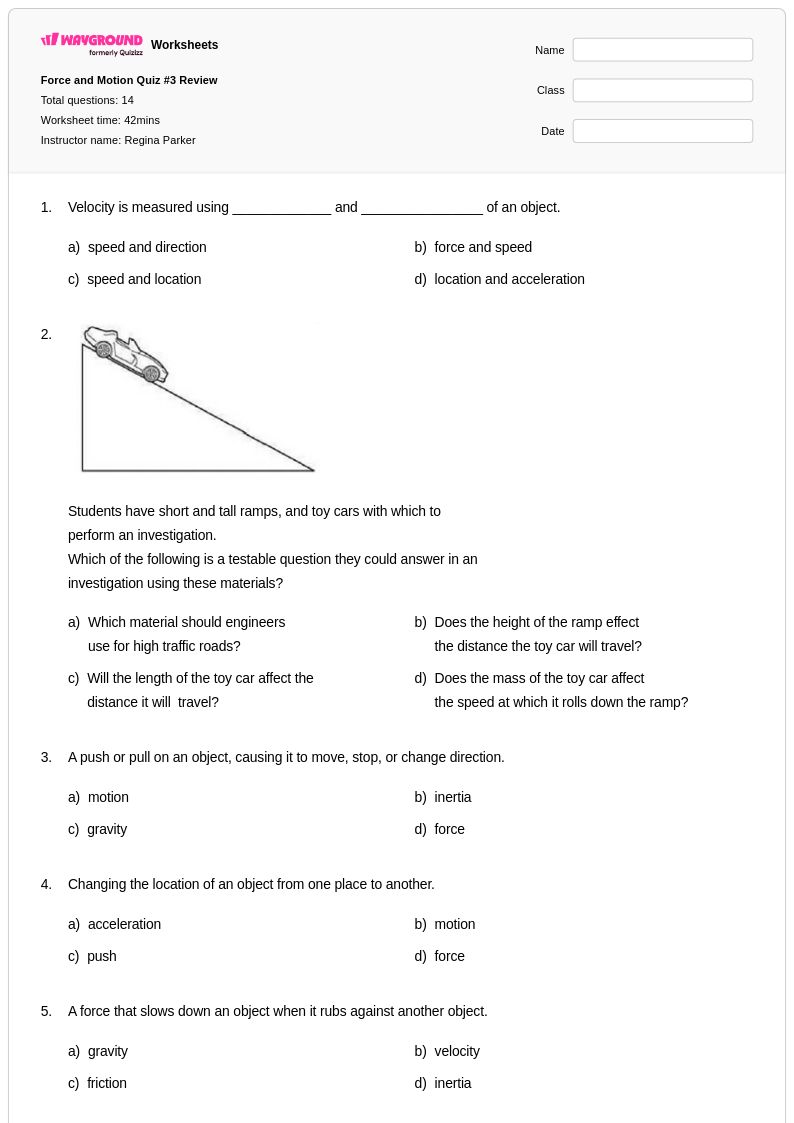
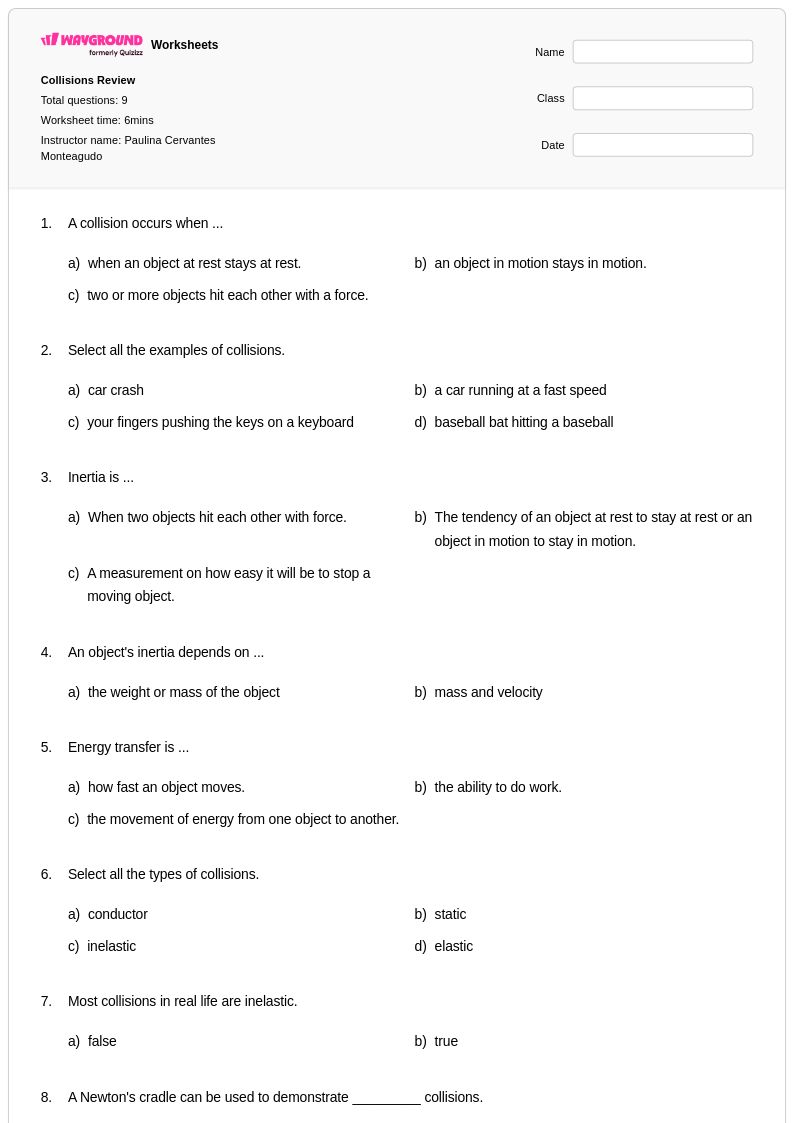
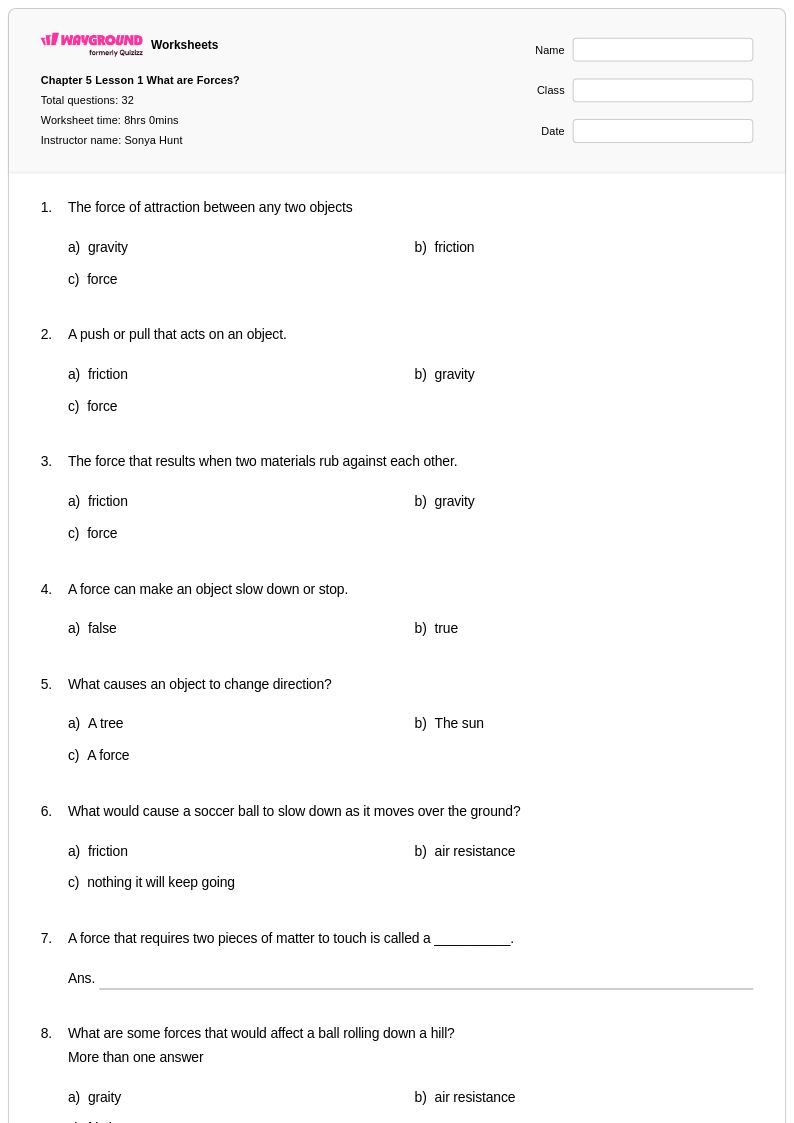
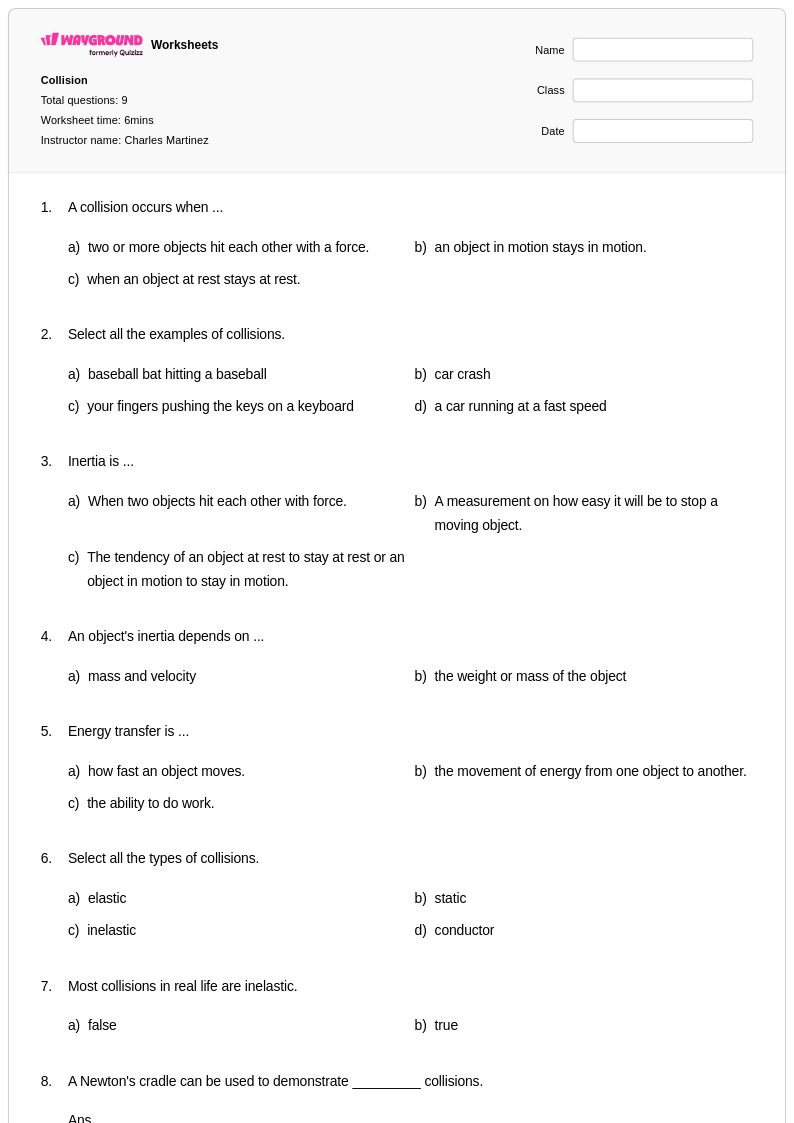
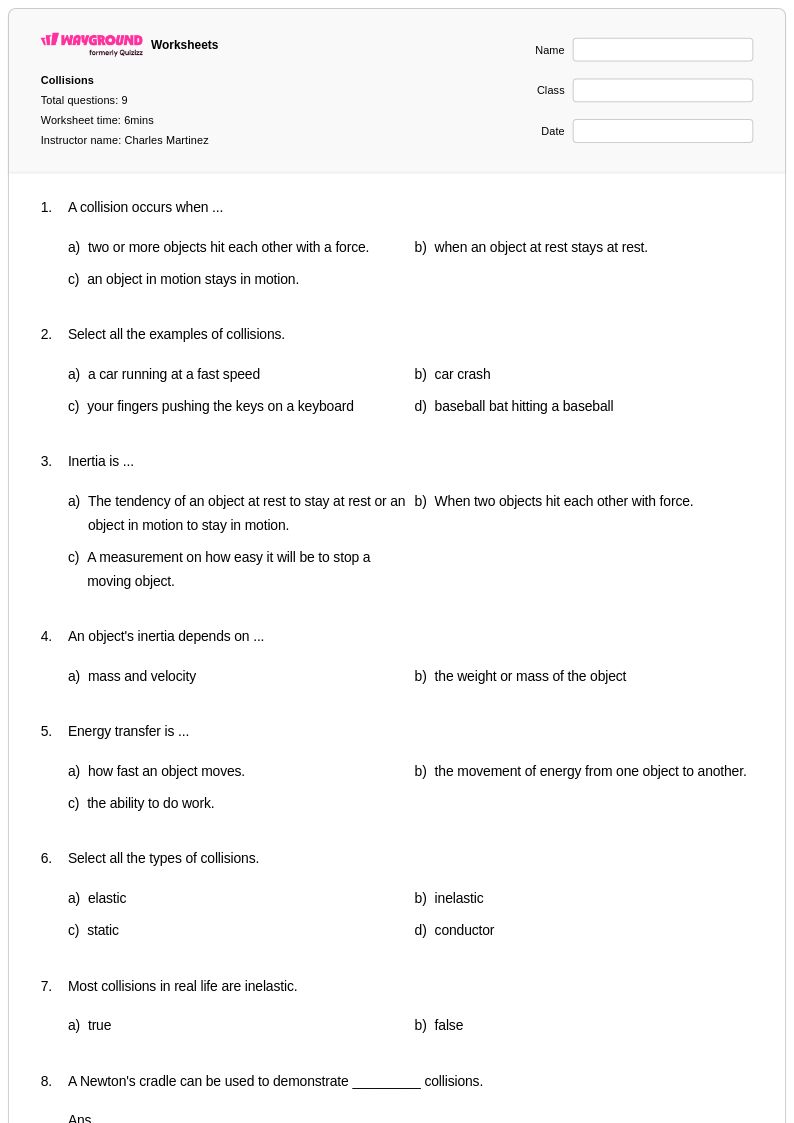
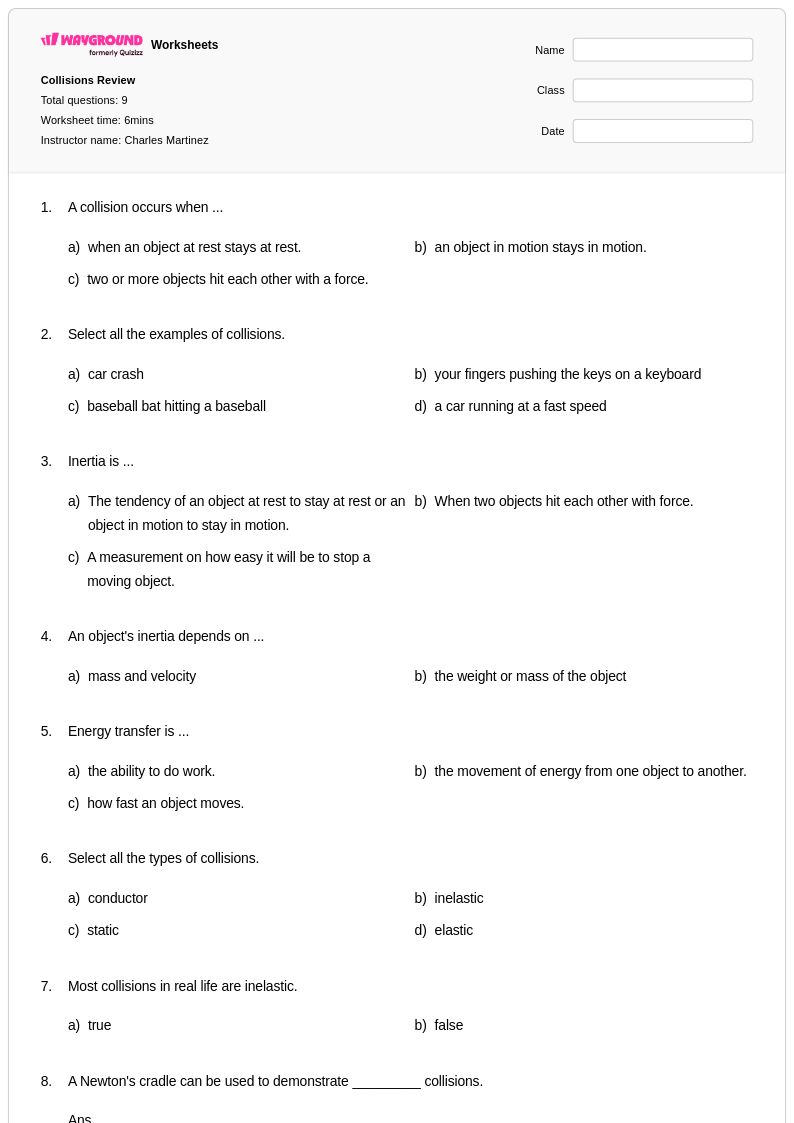
Mass and inertia worksheets for Class 4 students available through Wayground (formerly Quizizz) provide essential foundational practice in understanding how objects resist changes in motion. These carefully designed printables help young learners grasp the relationship between an object's mass and its tendency to maintain its current state of motion or rest through engaging practice problems and hands-on exercises. Students strengthen critical thinking skills by exploring real-world scenarios involving everyday objects of different masses, from rolling balls to sliding blocks, while building conceptual understanding through structured activities that include comprehensive answer keys. The free pdf resources feature age-appropriate investigations that allow fourth graders to predict, observe, and analyze how heavier objects require more force to start moving or change direction, establishing crucial physics concepts that will support their continued scientific learning.
Wayground (formerly Quizizz) empowers teachers with millions of educator-created mass and inertia worksheet collections that streamline lesson planning and differentiated instruction for Class 4 physics concepts. The platform's robust search and filtering capabilities enable teachers to quickly locate standards-aligned resources that match their specific curriculum requirements and student ability levels. These versatile worksheet collections support both remediation for struggling learners and enrichment opportunities for advanced students through customizable practice sets that can be easily modified to target individual learning needs. Available in both printable and digital pdf formats, these resources facilitate seamless integration into classroom instruction, homework assignments, and assessment preparation, giving teachers the flexibility to deliver engaging mass and inertia practice that builds conceptual understanding and scientific reasoning skills across diverse learning environments.
FAQs
How do I teach mass and inertia to students who struggle with the concept?
Start with concrete, real-world examples before introducing formal definitions — demonstrate how a heavy textbook is harder to push than a pencil, then connect that experience to Newton's First Law. Help students distinguish between mass as a measure of matter and inertia as the resistance to changes in motion, since conflating the two is a common source of confusion. Once students grasp the conceptual relationship, introduce quantitative problems that link mass, force, and acceleration so the abstract becomes measurable.
What practice exercises help students understand the relationship between mass and inertia?
Effective practice moves from conceptual questions to calculation-based problems in a deliberate sequence. Start with scenarios asking students to predict which object will be harder to stop or start moving, then progress to problems involving Newton's Second Law where they calculate acceleration given different masses and forces. Including problems that involve rotational inertia alongside linear motion helps students see that the mass-inertia relationship extends beyond straight-line scenarios.
What mistakes do students commonly make when solving mass and inertia problems?
The most common error is treating mass and weight as interchangeable — students often substitute gravitational force where mass is required, leading to incorrect calculations especially in problems set in non-Earth contexts. Another frequent mistake is misapplying Newton's First Law by assuming a moving object always needs a continuous force to keep it moving, which reflects a pre-Newtonian intuition that direct instruction must explicitly address. In rotational problems, students often ignore how the distribution of mass around an axis affects rotational inertia, treating all objects of equal mass as having identical rotational resistance.
How do I differentiate mass and inertia instruction for students at different levels?
For students who need additional support, focus on conceptual questions with visual diagrams and reduce the number of variables in each problem so they can isolate the mass-inertia relationship without cognitive overload. Advanced students are ready to explore angular momentum and rotational inertia scenarios that require multi-step calculations. On Wayground, teachers can apply accommodations such as reduced answer choices or read-aloud support to individual students, so differentiation happens at the student level without disrupting the rest of the class.
How do I use Wayground's mass and inertia worksheets in my classroom?
Wayground's mass and inertia worksheets are available as printable PDFs for traditional classroom use and in digital formats for technology-integrated environments, giving teachers flexibility for homework, in-class practice, or lab follow-up activities. Teachers can also host worksheets directly as a quiz on Wayground, enabling real-time tracking of student responses. Each worksheet includes a complete answer key, so students can self-check during independent practice or teachers can use them for efficient grading.
How does mass relate to inertia, and how should I explain this to students?
Mass is the quantitative measure of the amount of matter in an object, and inertia is the property that describes an object's resistance to any change in its state of motion — the greater the mass, the greater the inertia. A useful classroom explanation is that mass is what you measure on a scale, while inertia is what you feel when you try to push a stopped car or stop a rolling one. This distinction matters because inertia has no unit of its own — it is a consequence of mass, not a separate property to calculate independently.