
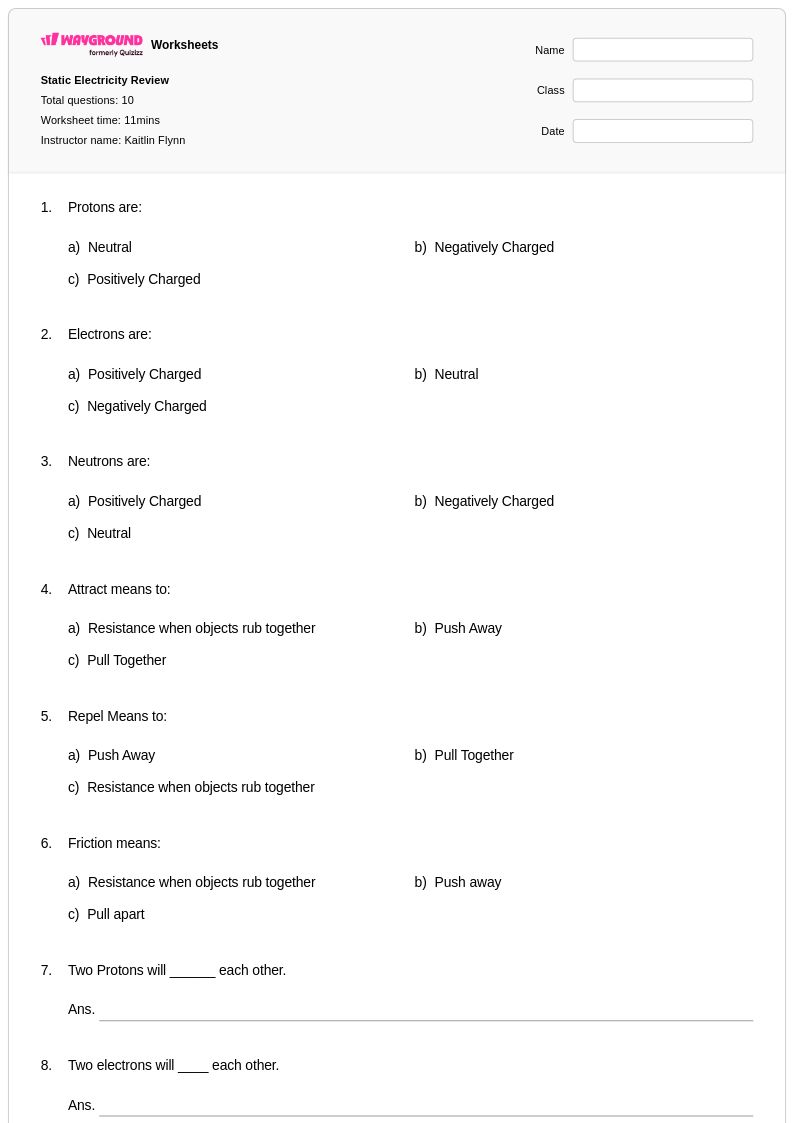
10 Q
4th
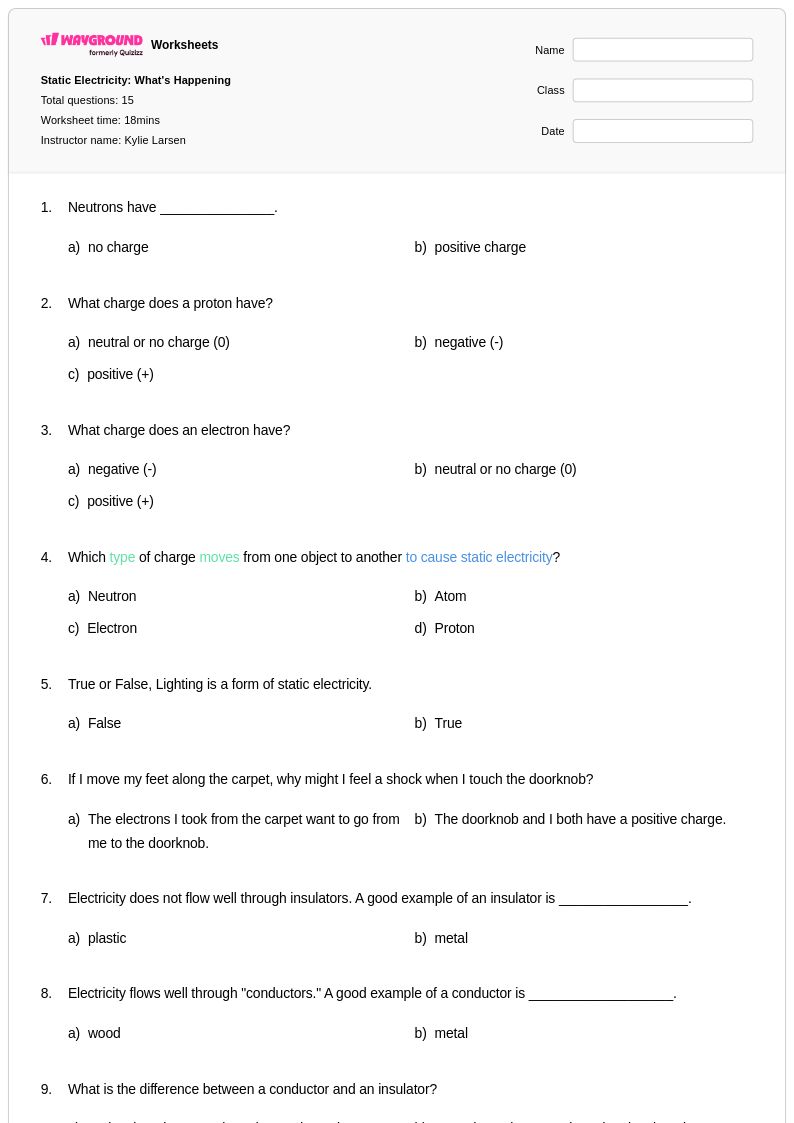
15 Q
4th
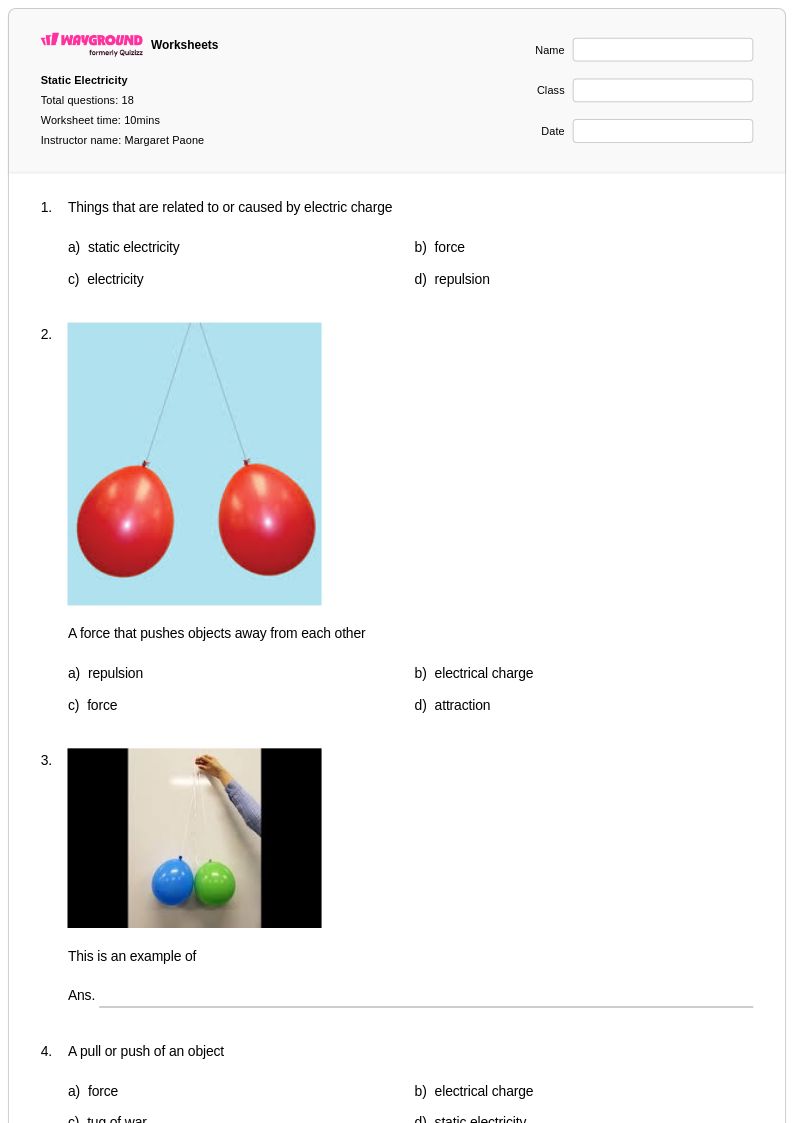
18 Q
3rd - 5th
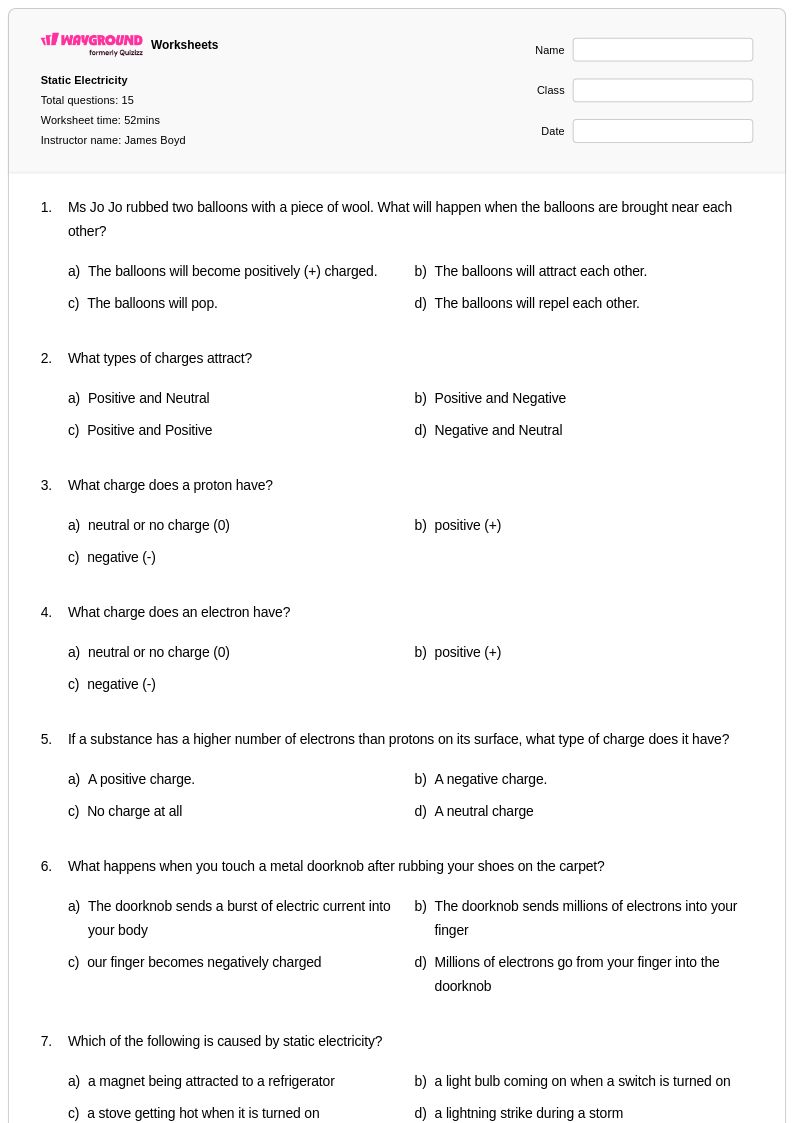
15 Q
3rd - 5th
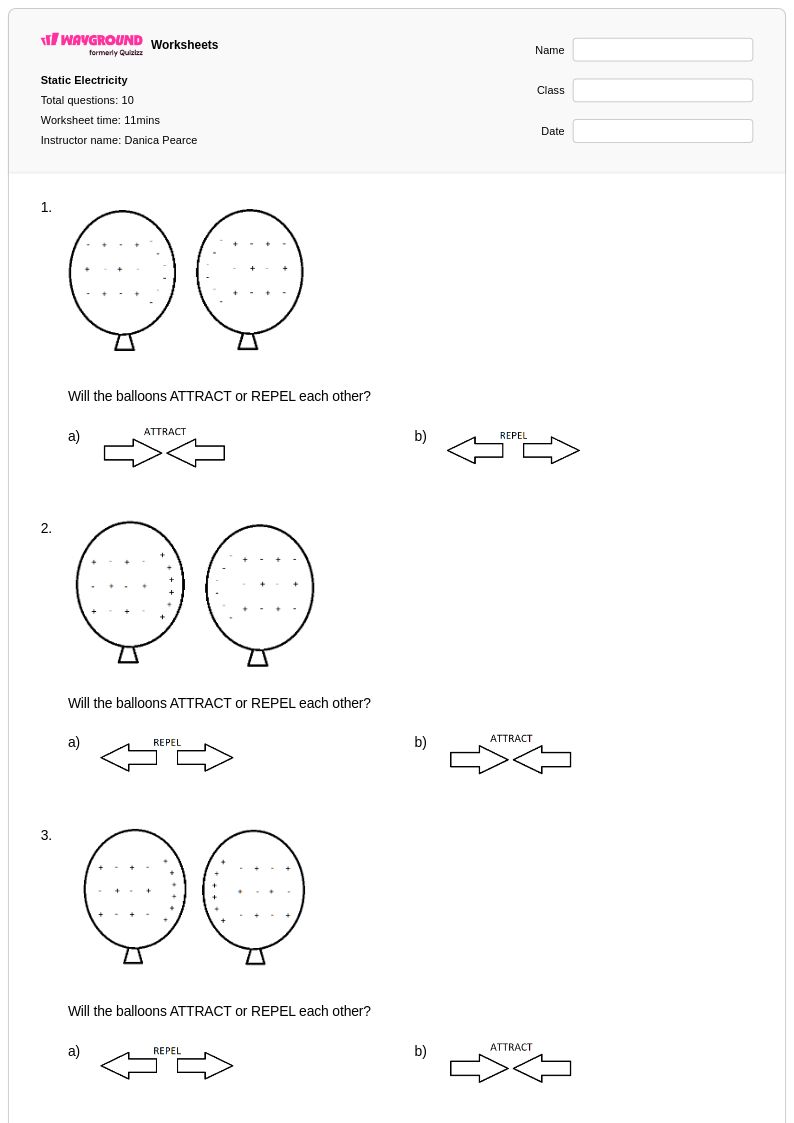
10 Q
4th
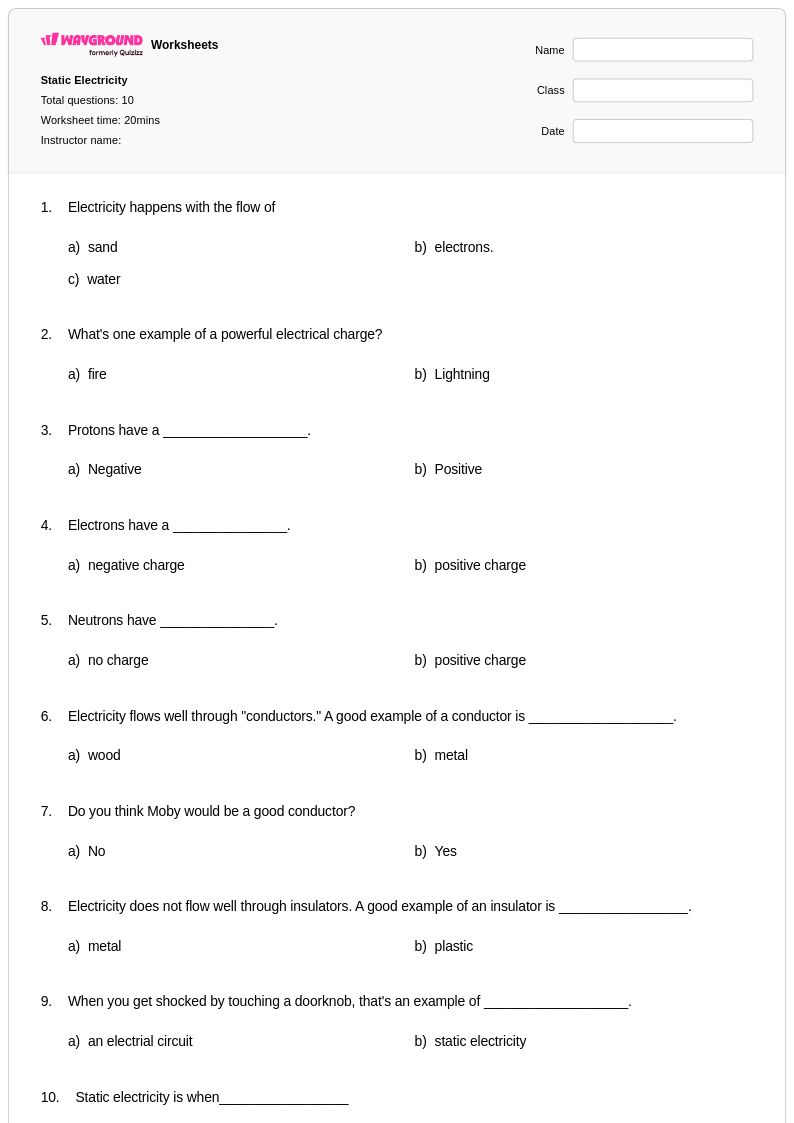
10 Q
4th
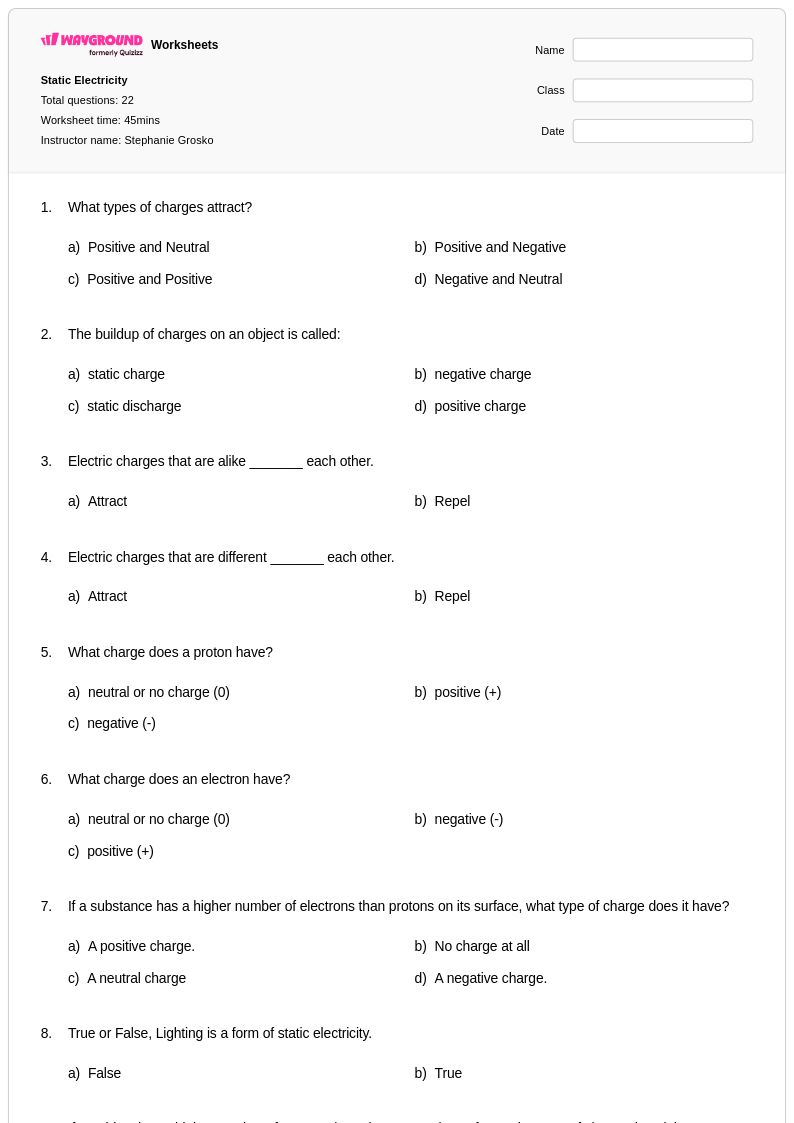
22 Q
4th
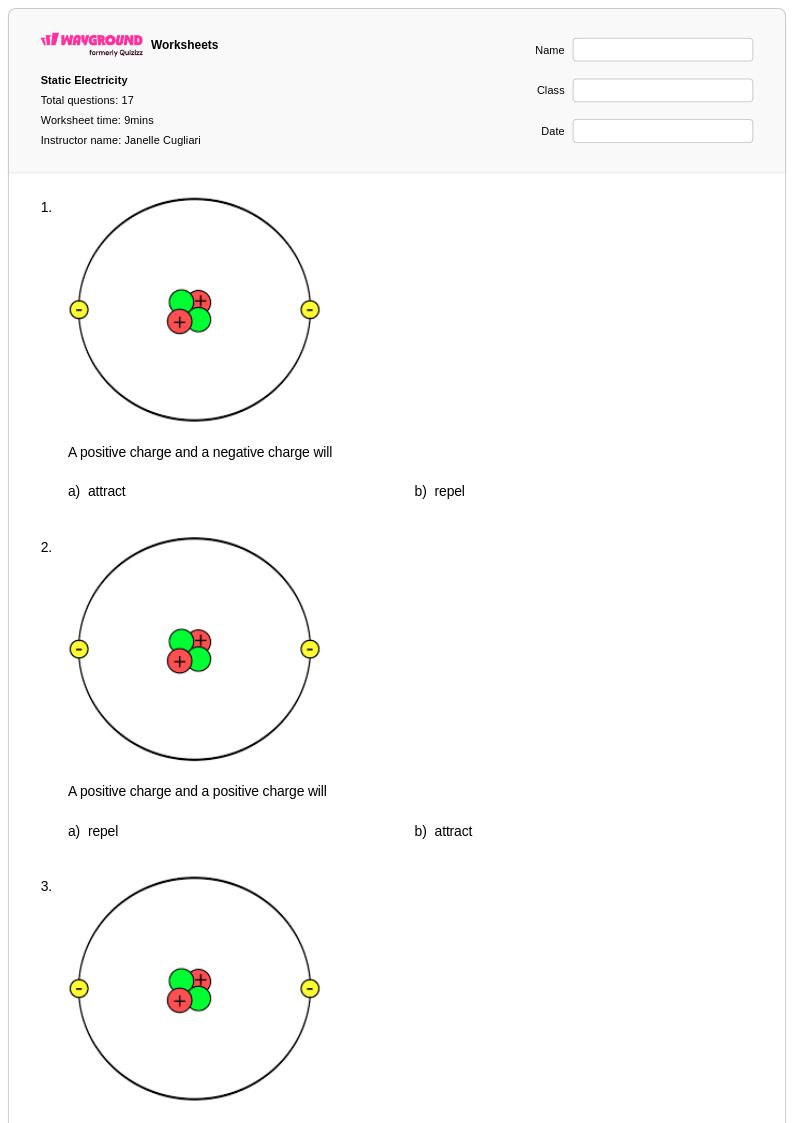
17 Q
4th
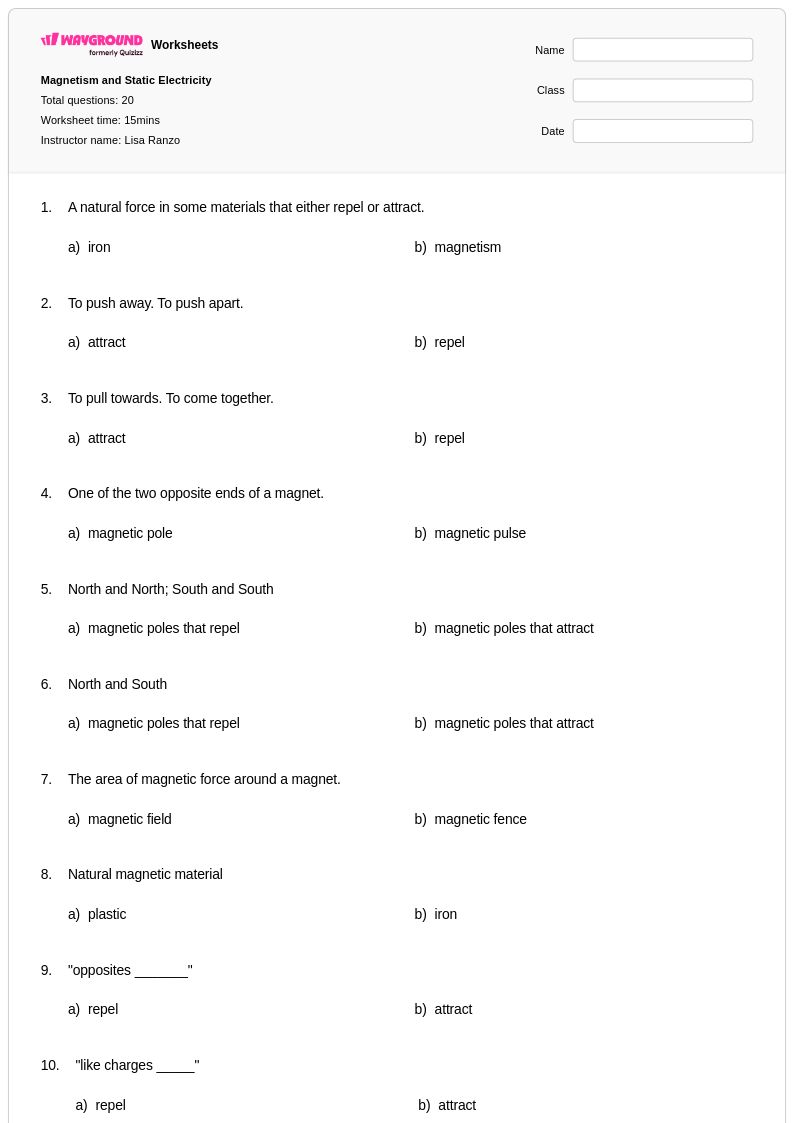
20 Q
4th
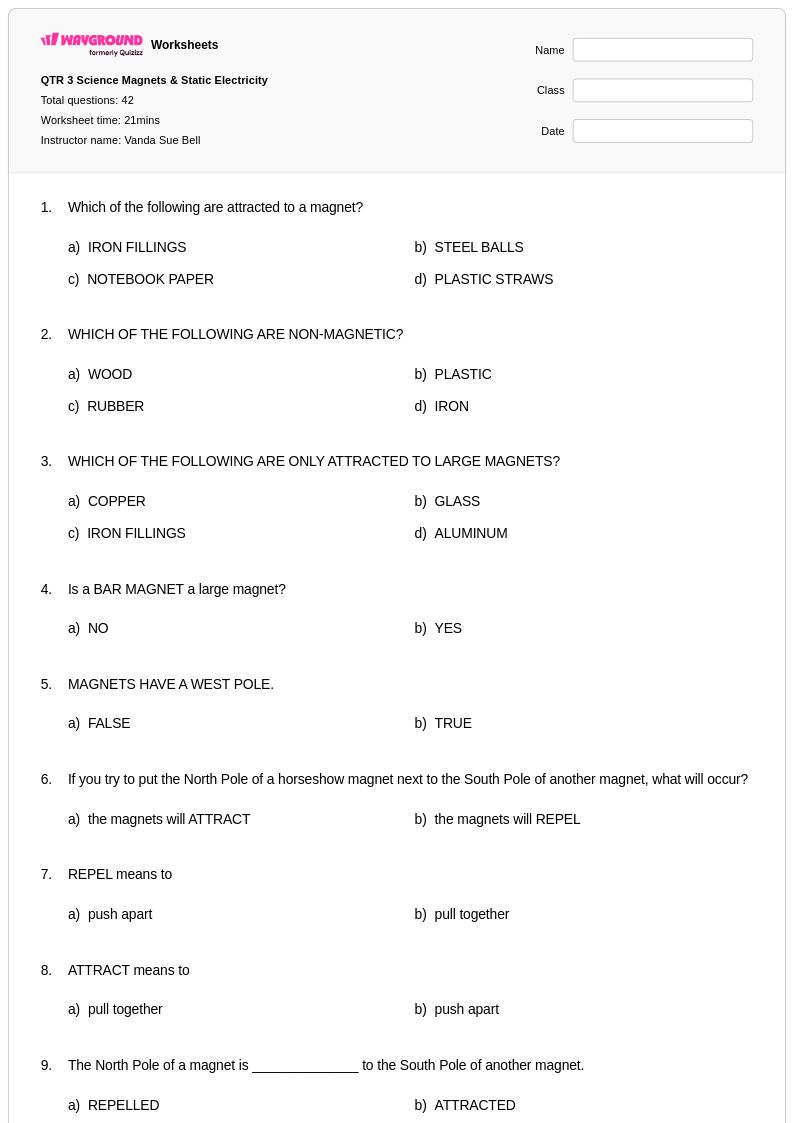
42 Q
4th
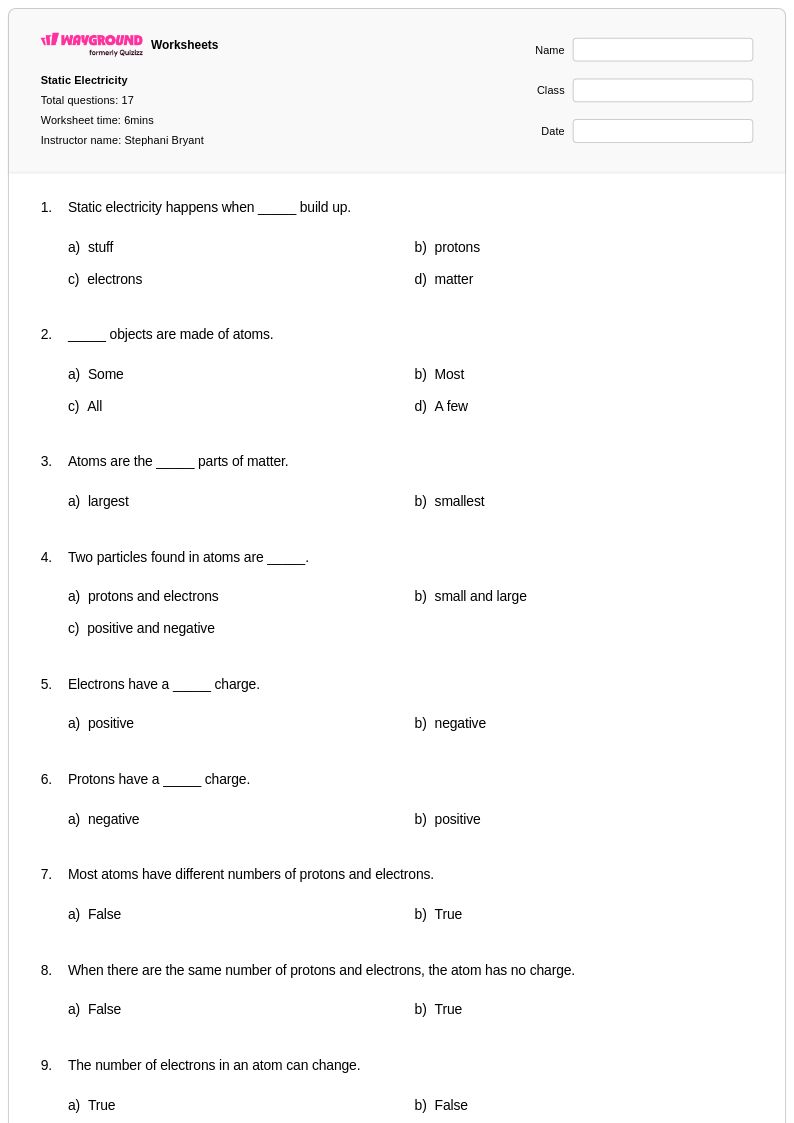
17 Q
3rd - 4th
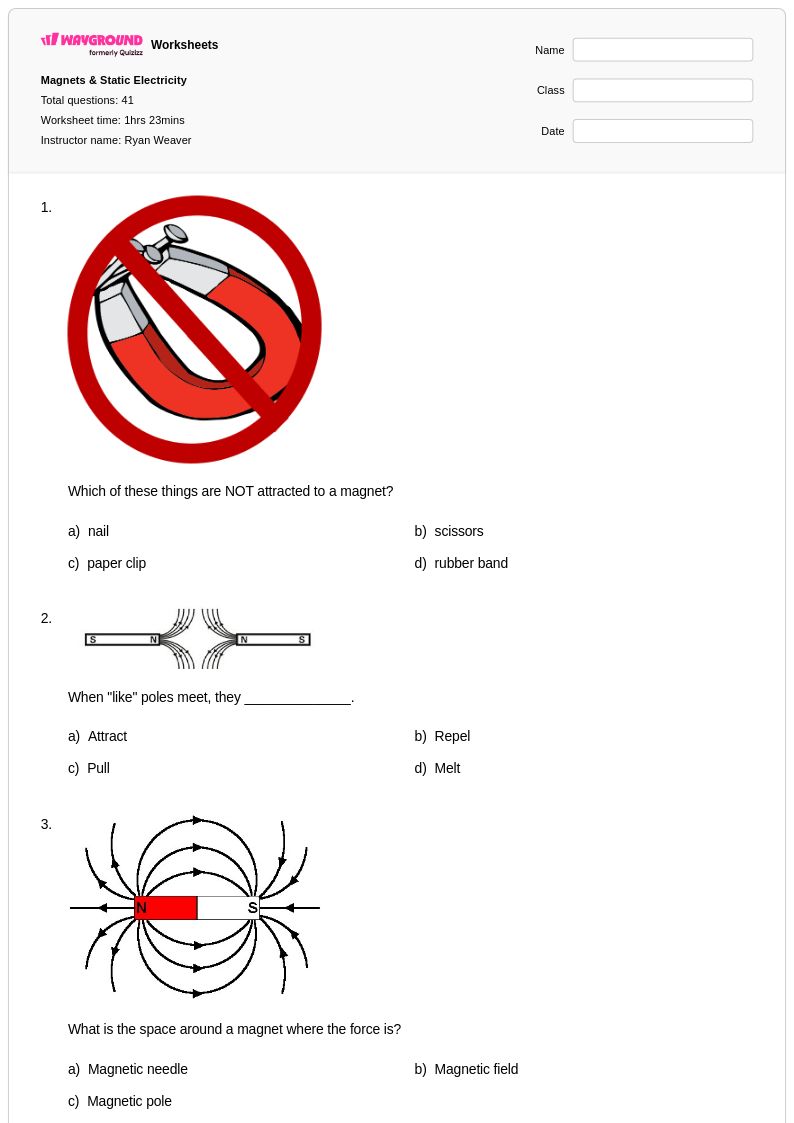
41 Q
3rd - 5th
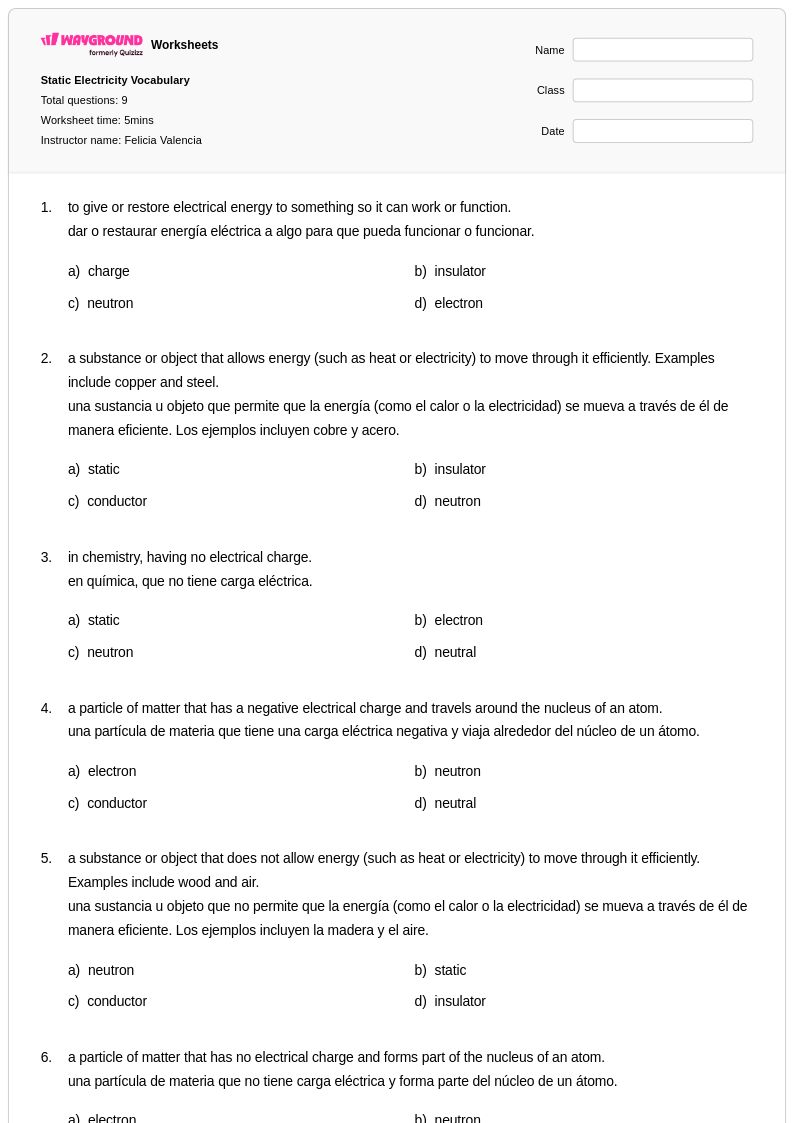
9 Q
3rd - 5th
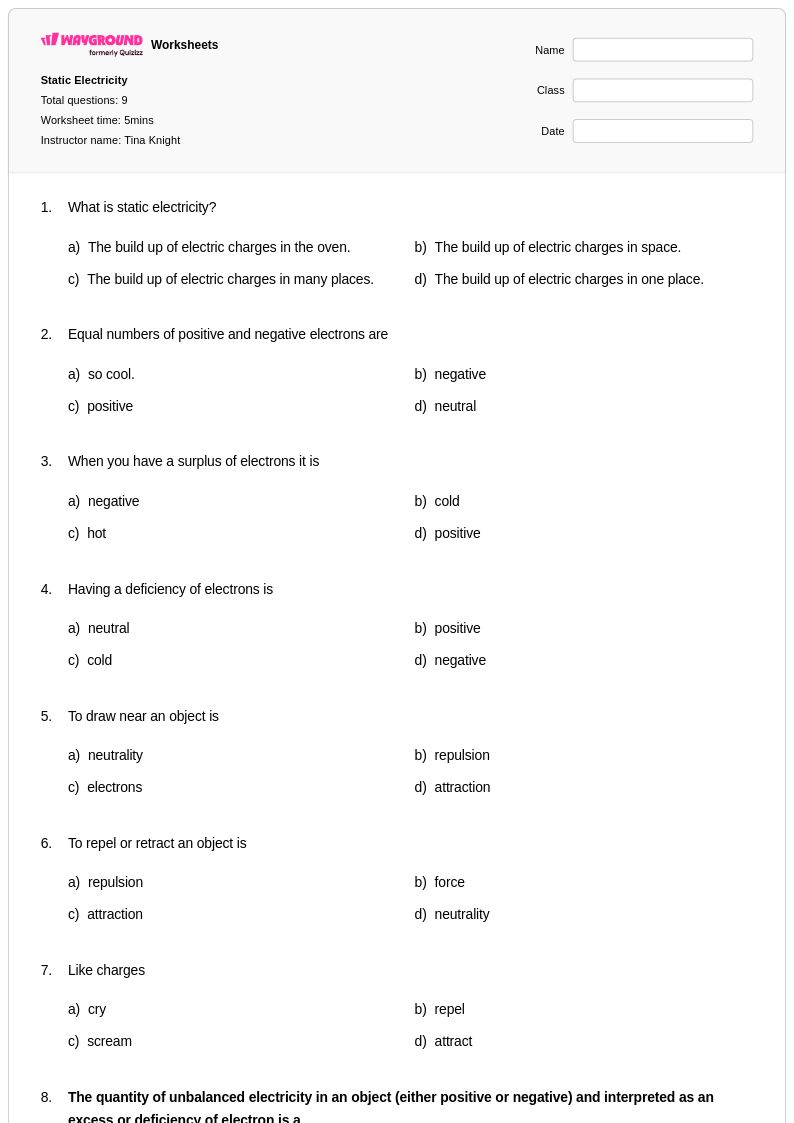
9 Q
4th - 7th
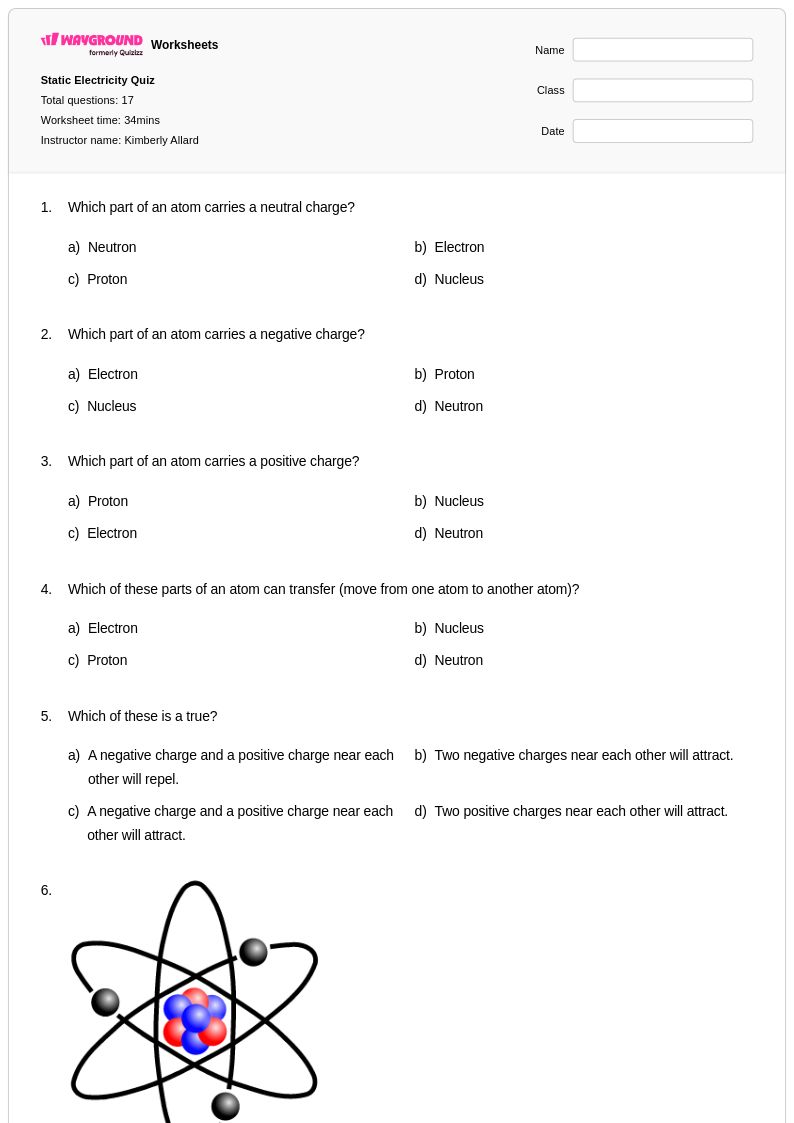
17 Q
4th
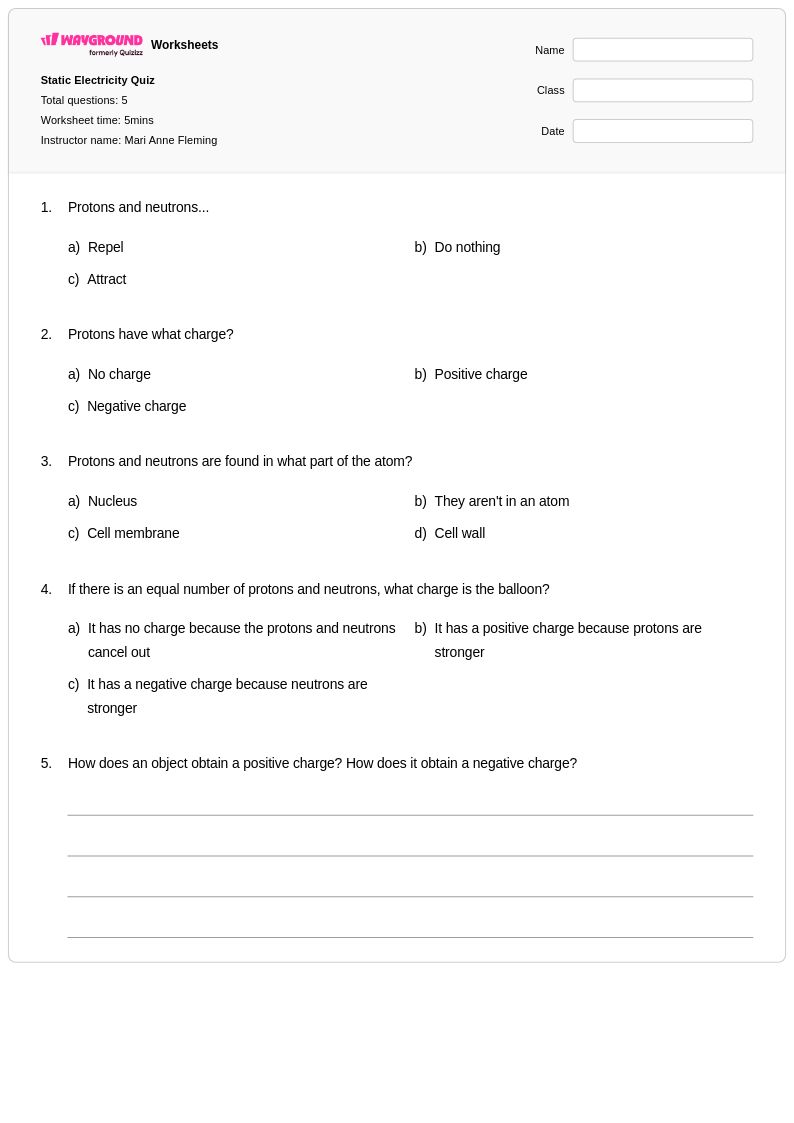
5 Q
2nd - 5th
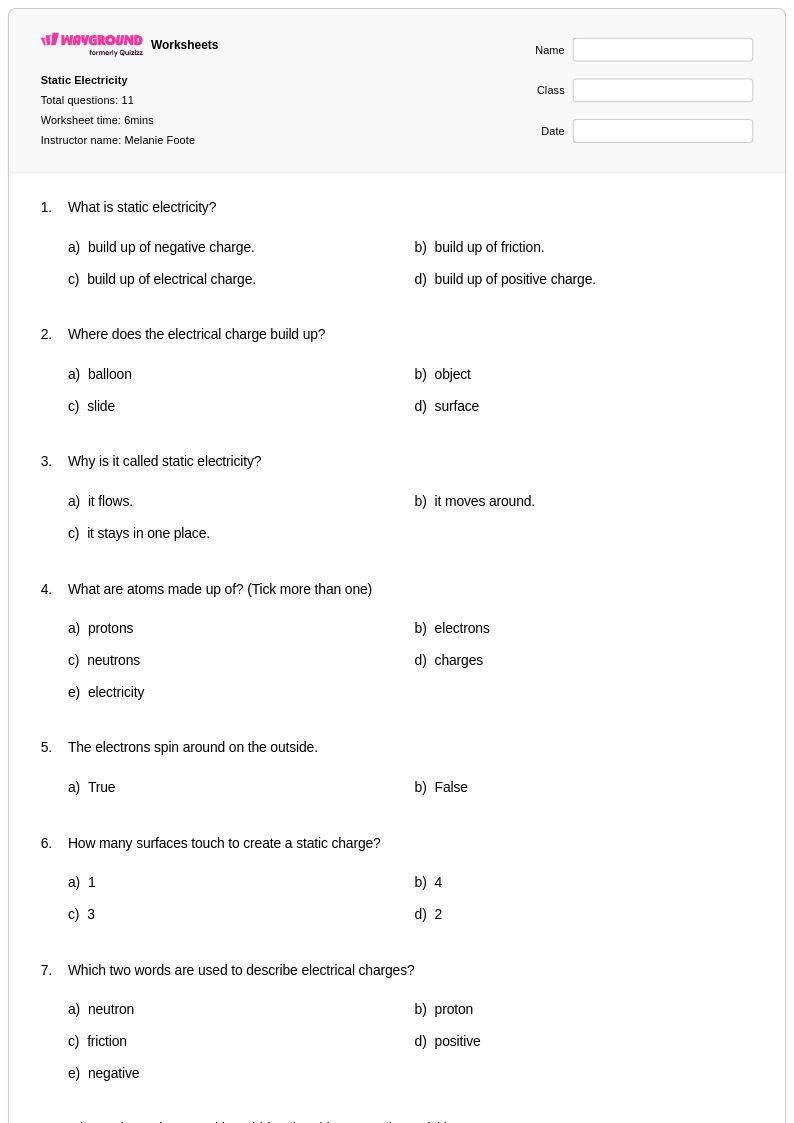
11 Q
4th
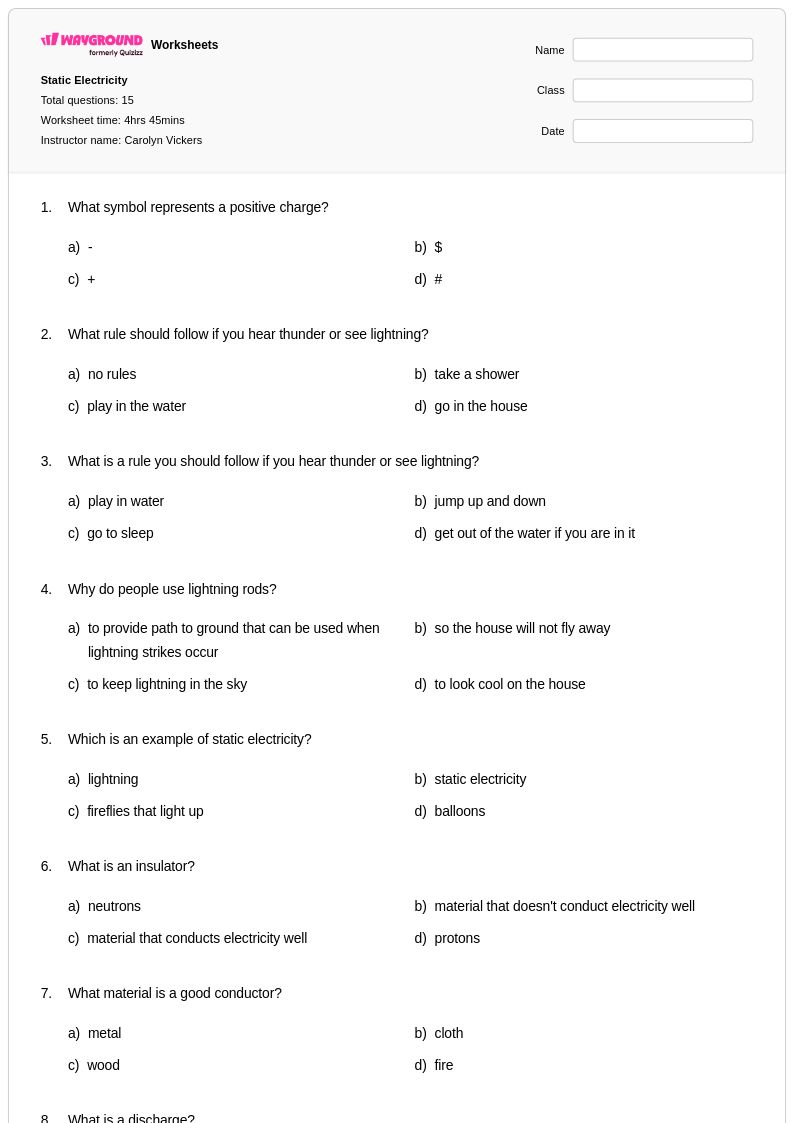
15 Q
4th
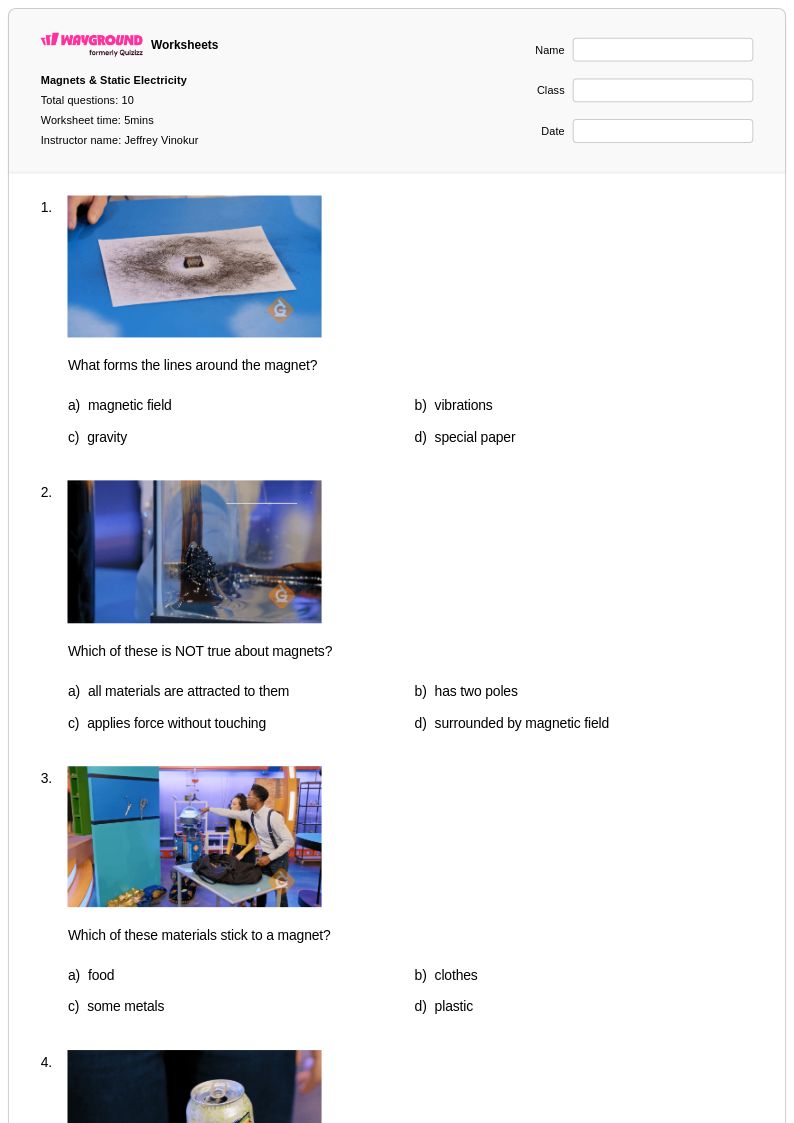
10 Q
3rd - 5th
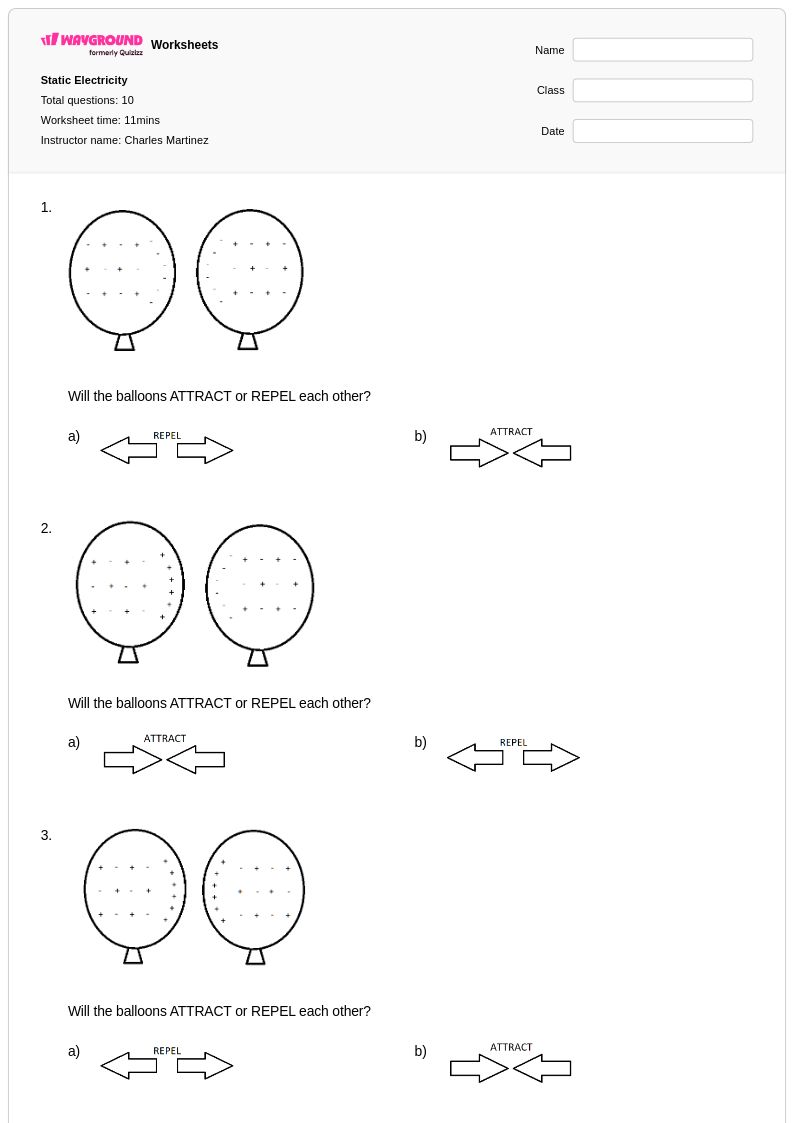
10 Q
4th
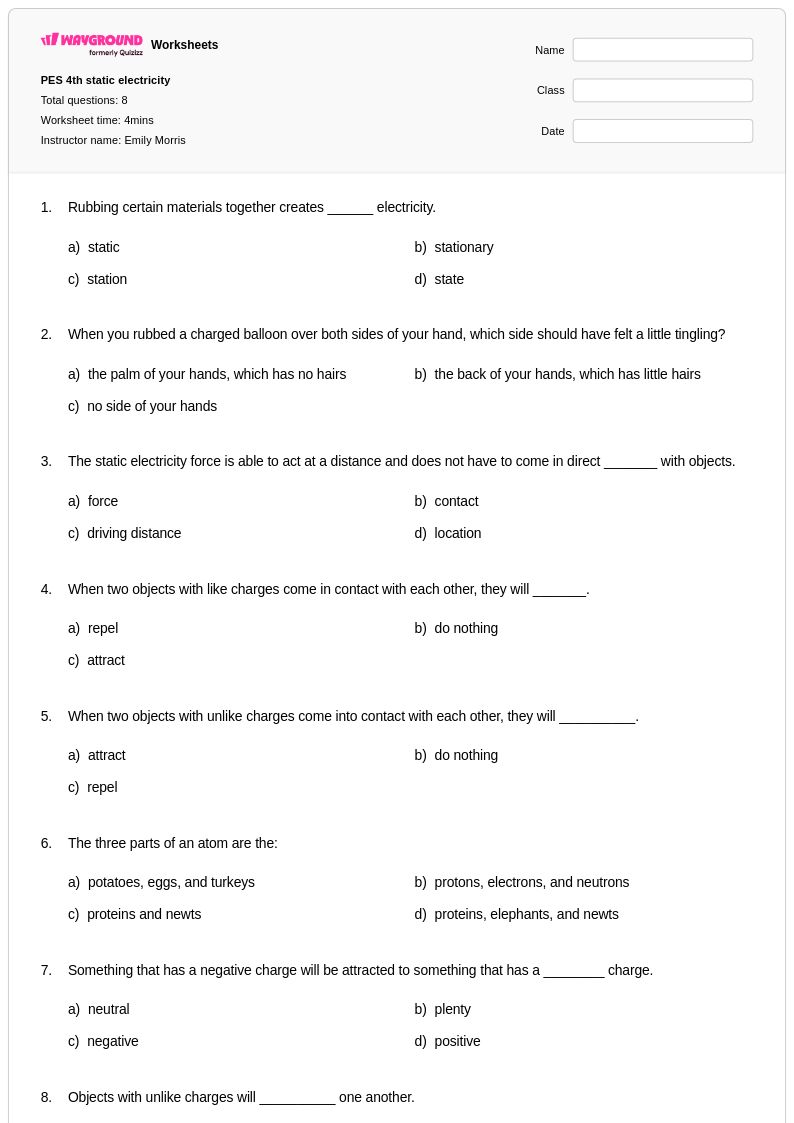
8 Q
4th
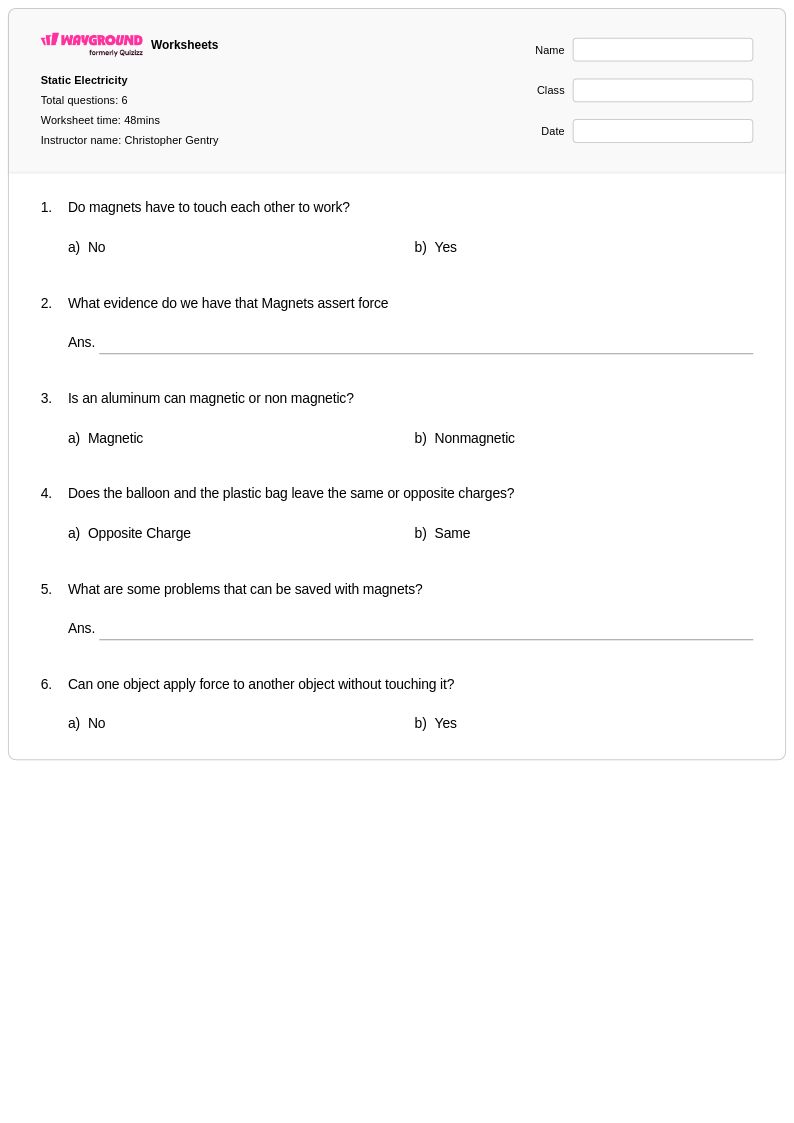
6 Q
4th
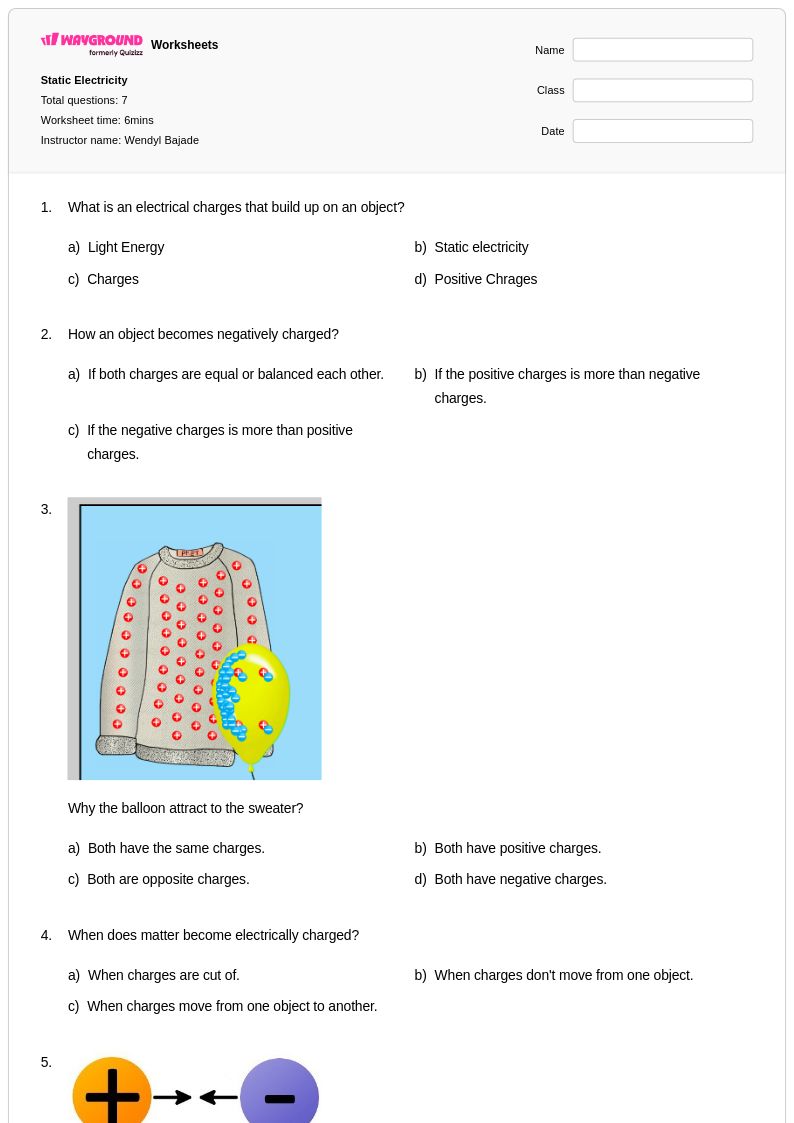
7 Q
4th - 5th
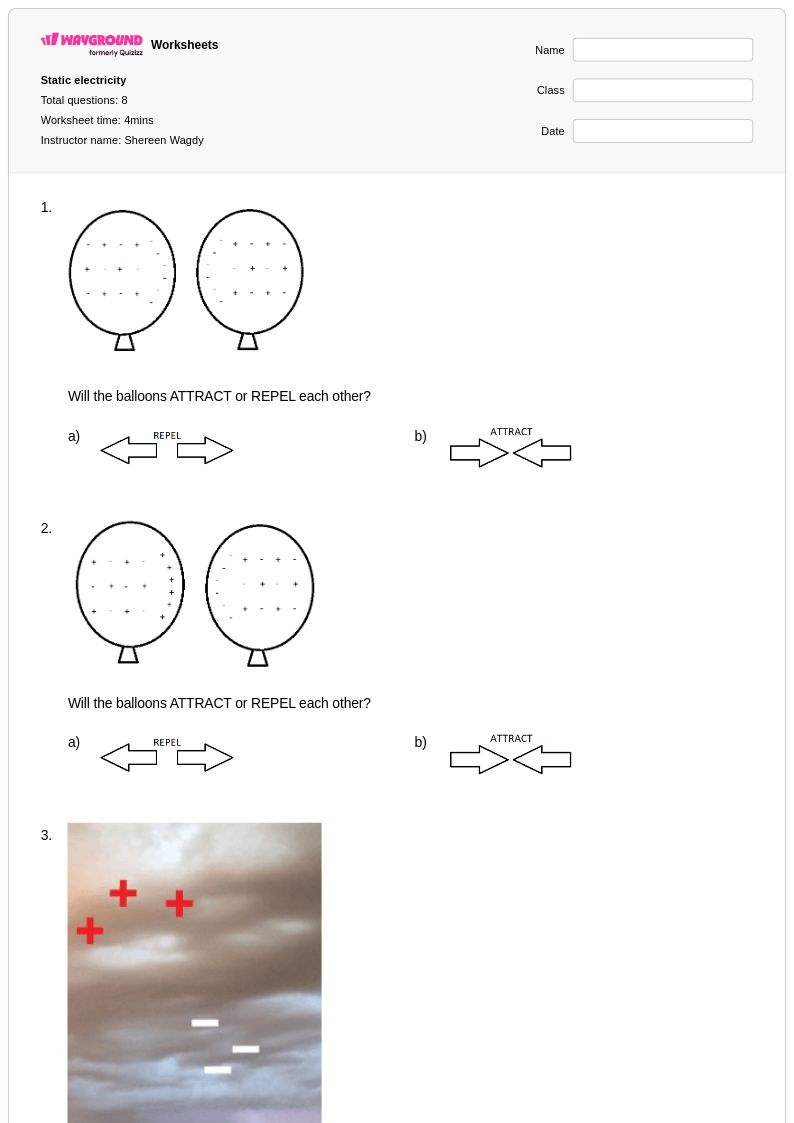
8 Q
4th
Explore Static Electricity Worksheets by Grades
Explore Other Subject Worksheets for class 4
Explore printable Static Electricity worksheets for Class 4
Static electricity worksheets for Class 4 students available through Wayground (formerly Quizizz) provide comprehensive coverage of fundamental electrostatic concepts that form the foundation of physics education at the elementary level. These carefully crafted resources help students understand how static charges build up on objects through friction, why certain materials attract or repel each other, and how electrical energy can transfer between different surfaces. The worksheets strengthen critical thinking skills through hands-on practice problems that challenge students to predict outcomes of static electricity experiments, identify conductors versus insulators, and explain everyday phenomena like hair standing up after sliding down a plastic slide. Each worksheet collection includes detailed answer keys and is available as free printables in convenient pdf format, making it easy for educators to incorporate engaging static electricity activities into their science curriculum while ensuring students master essential concepts through repeated practice.
Wayground (formerly Quizizz) empowers teachers with an extensive library of millions of teacher-created static electricity resources specifically designed for Class 4 physics instruction. The platform's robust search and filtering capabilities allow educators to quickly locate worksheets aligned with specific learning standards, while built-in differentiation tools enable seamless customization for students with varying ability levels. Teachers can easily modify existing content or combine multiple worksheet elements to create targeted practice sessions for remediation or enrichment purposes, ensuring every student receives appropriate challenge levels. The flexible format options include both printable pdf versions for traditional classroom use and digital formats for interactive learning environments, supporting diverse teaching styles and technology integration. These comprehensive planning tools help educators efficiently develop lesson sequences that build conceptual understanding of static electricity through systematic skill practice, from basic charge identification to more complex problem-solving scenarios involving electrostatic interactions.
FAQs
How do I teach static electricity to middle or high school students?
What topics should a static electricity worksheet cover?
What mistakes do students commonly make when learning about static electricity?
How can I differentiate static electricity instruction for students at different skill levels?
How do I use Wayground's static electricity worksheets in my classroom?
How do I help students who are struggling with Coulomb's law calculations?