
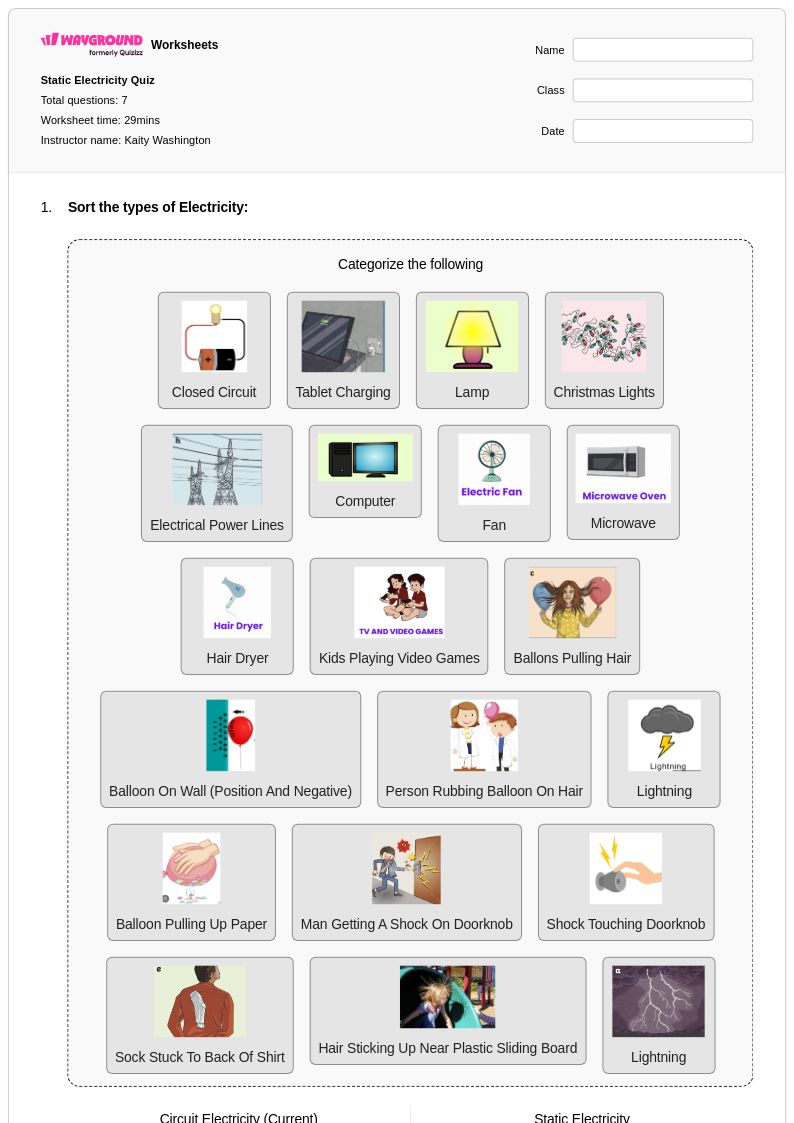
7 คิว
3rd
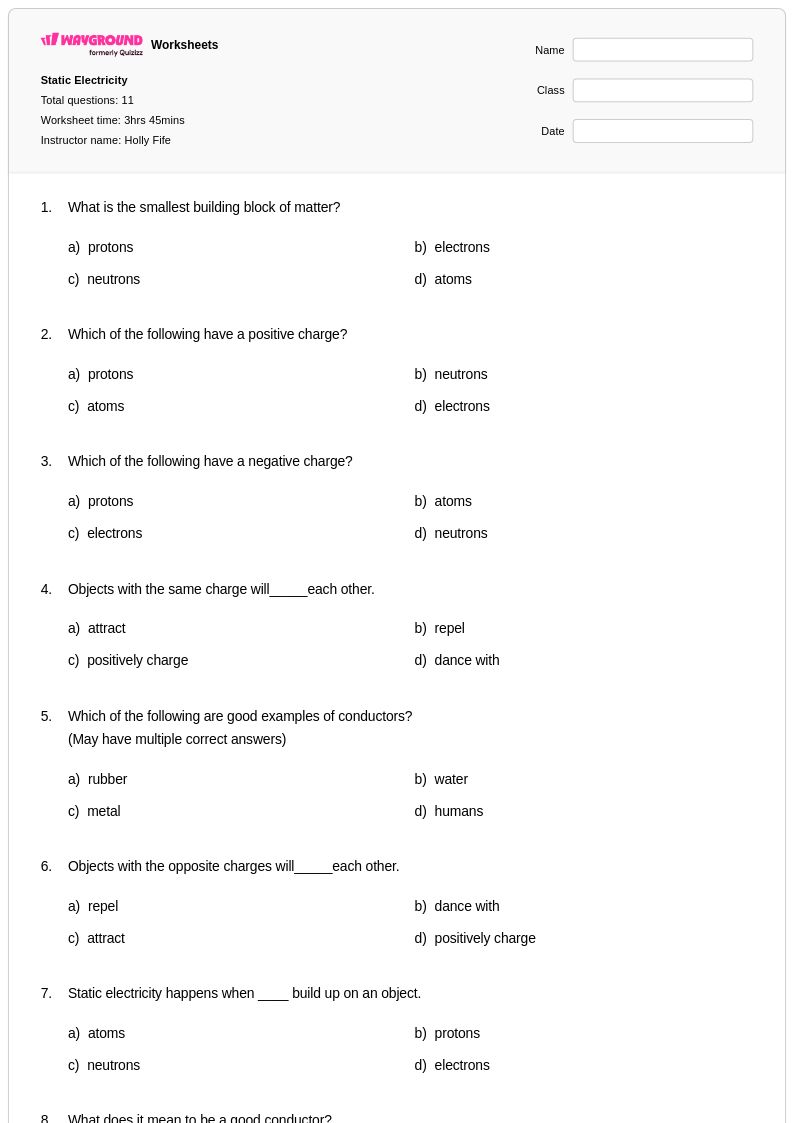
11 คิว
3rd
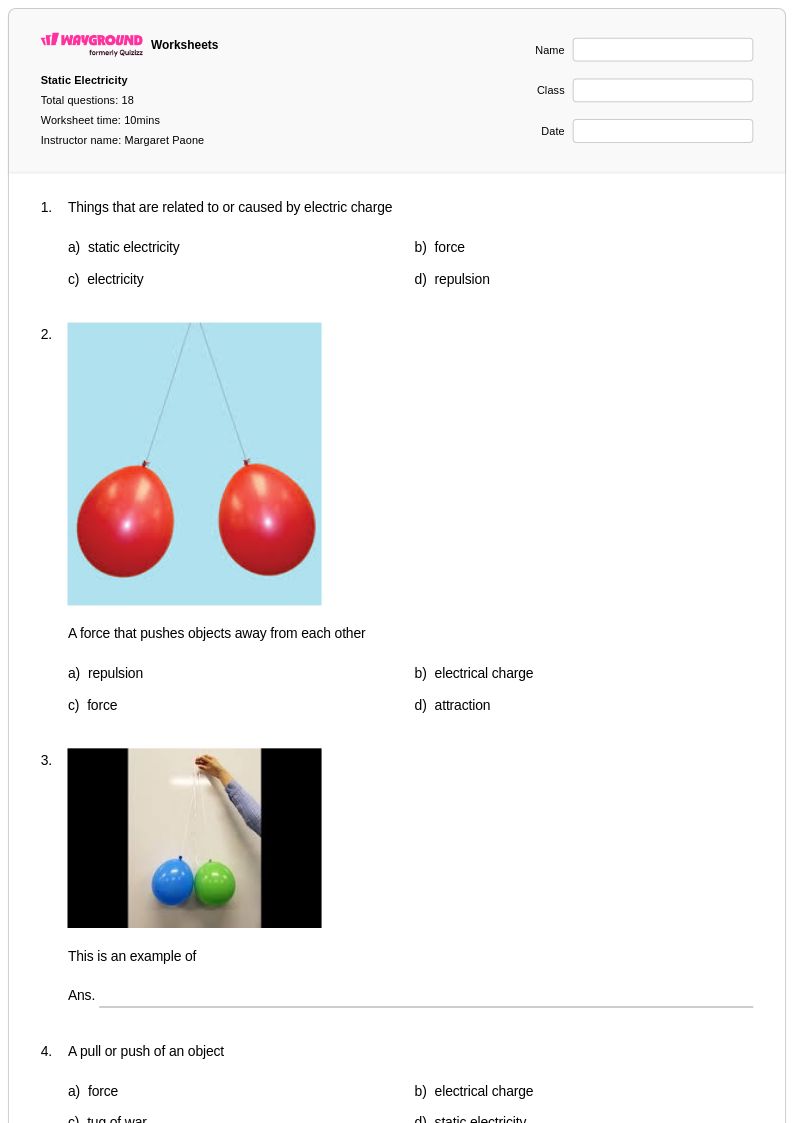
18 คิว
3rd - 5th
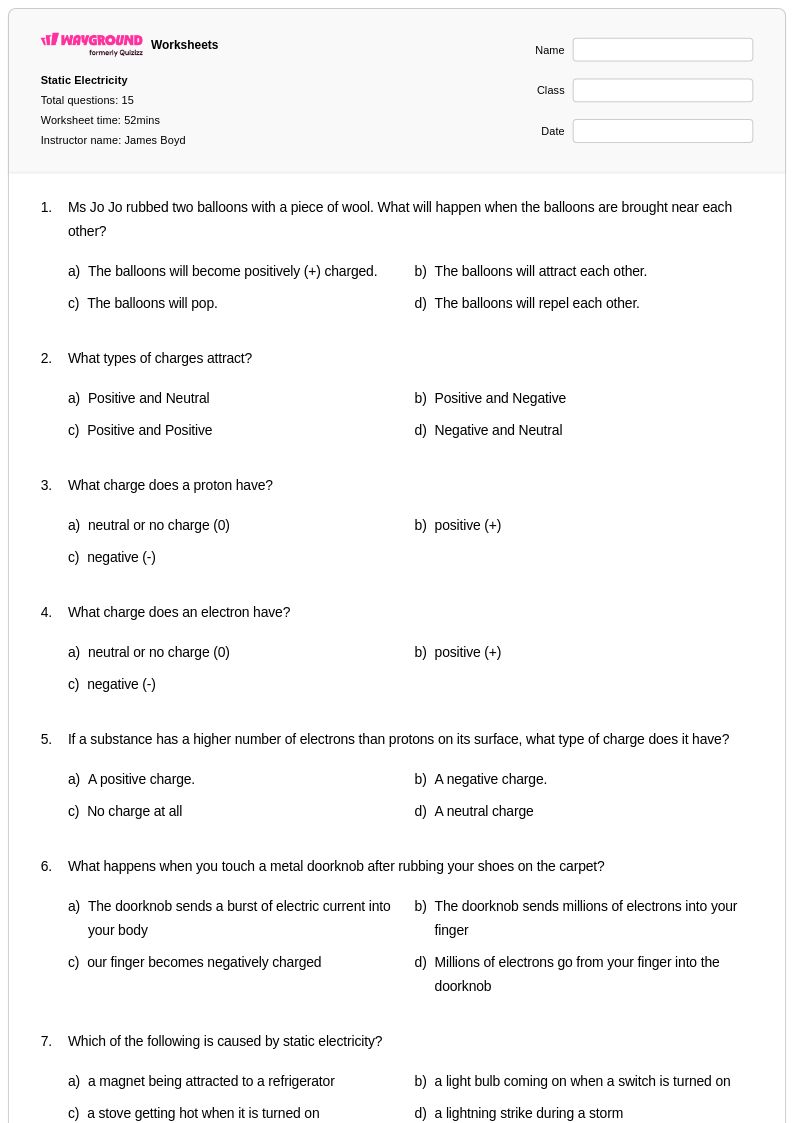
15 คิว
3rd - 5th
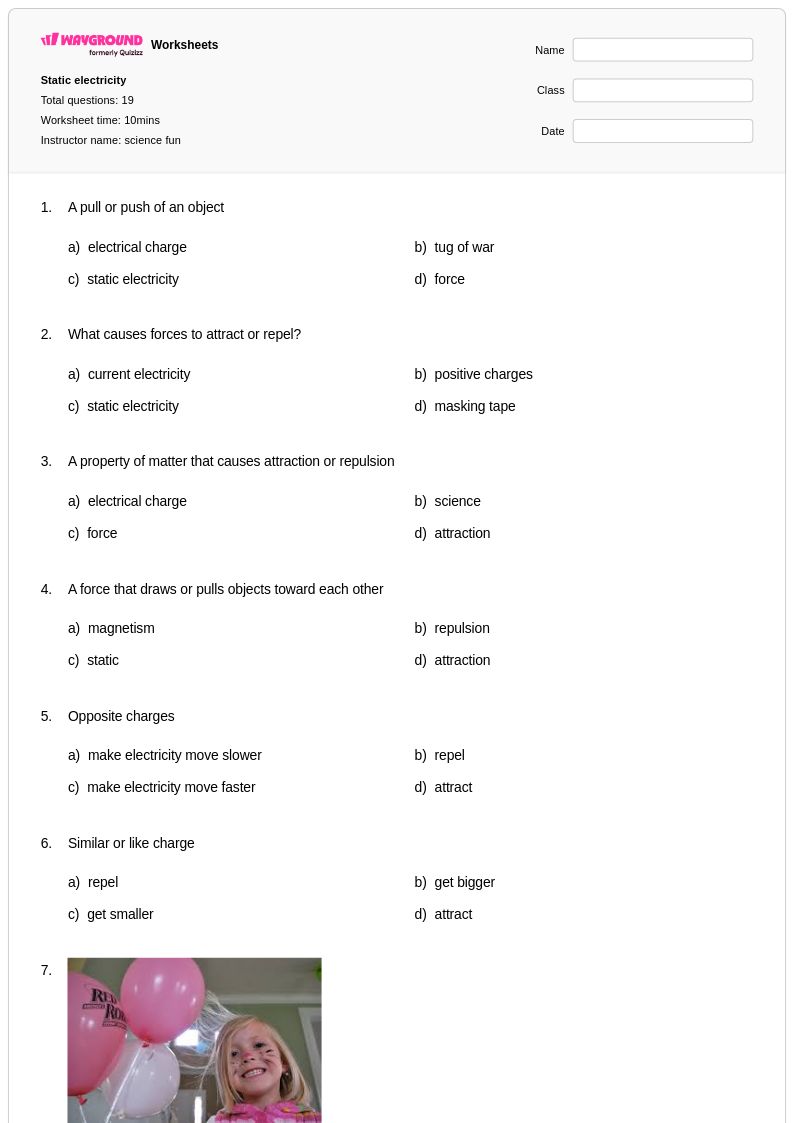
19 คิว
3rd
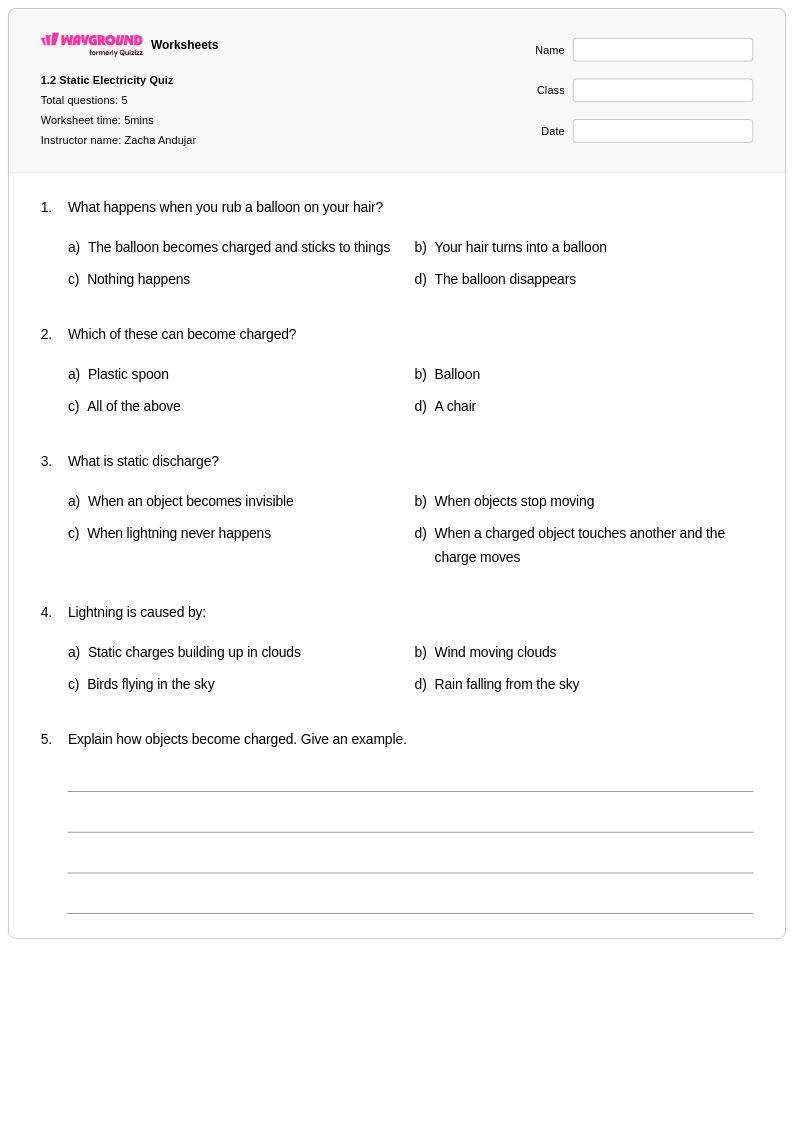
5 คิว
3rd
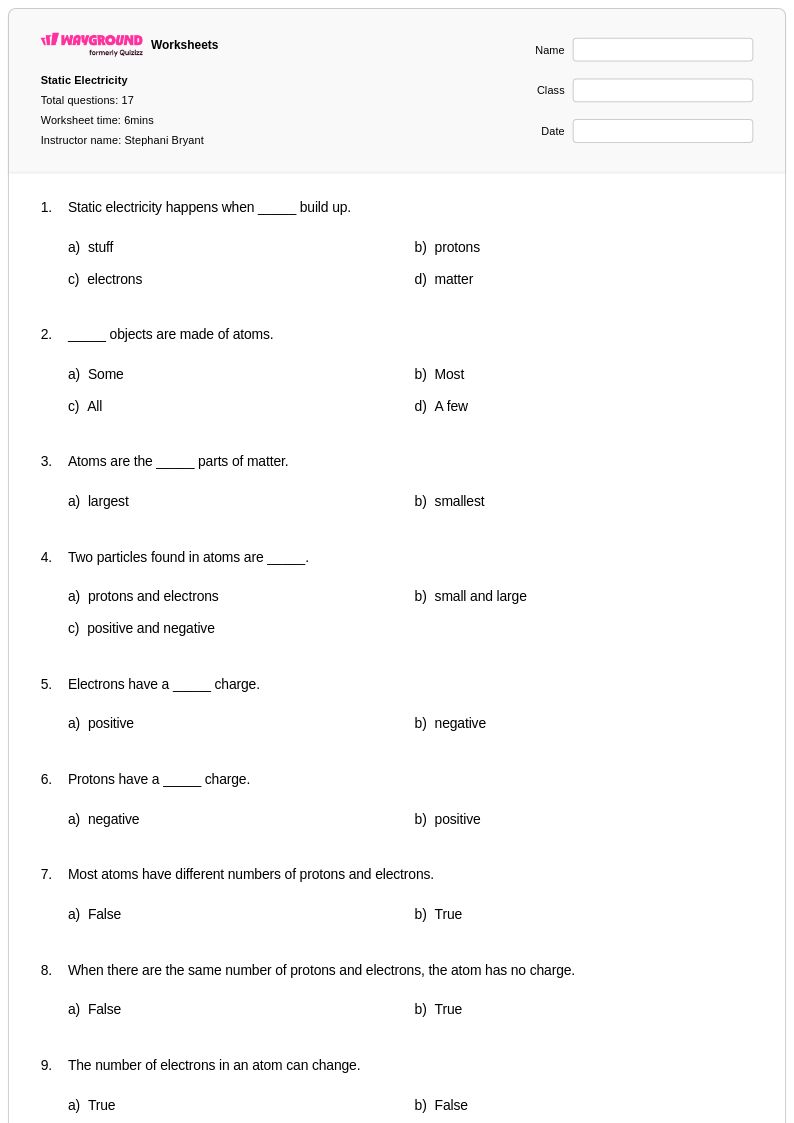
17 คิว
3rd - 4th
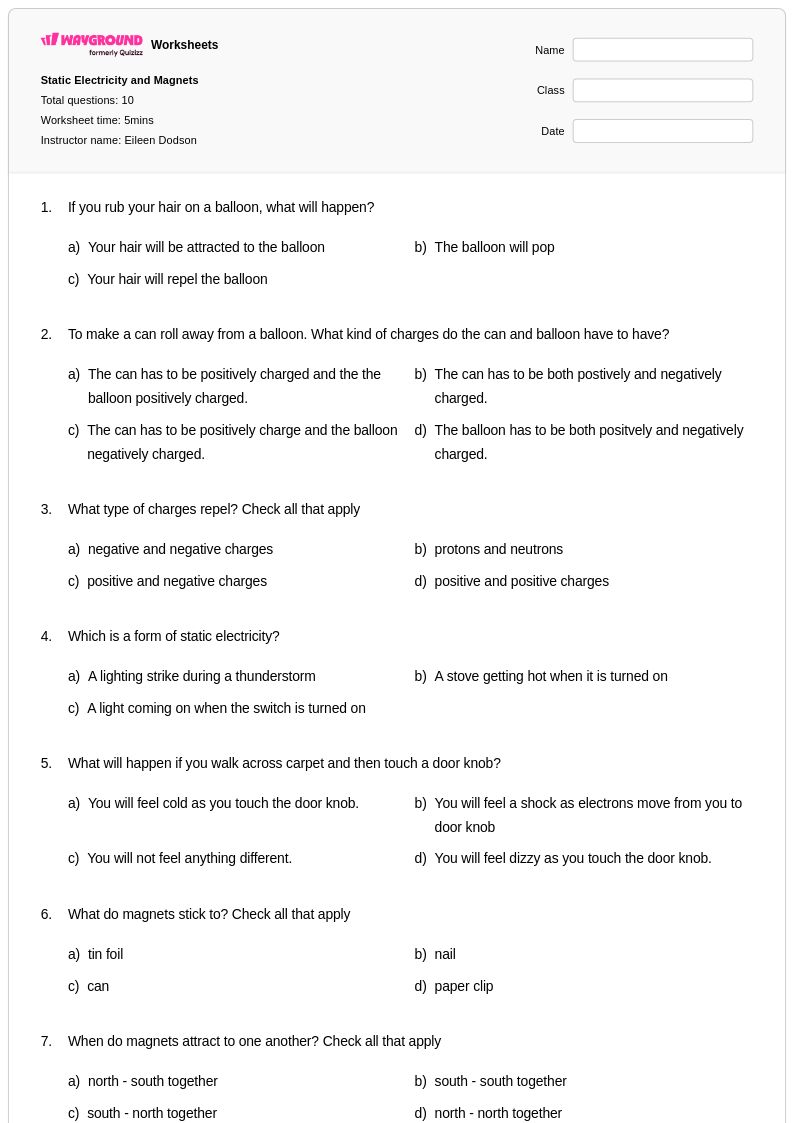
10 คิว
3rd
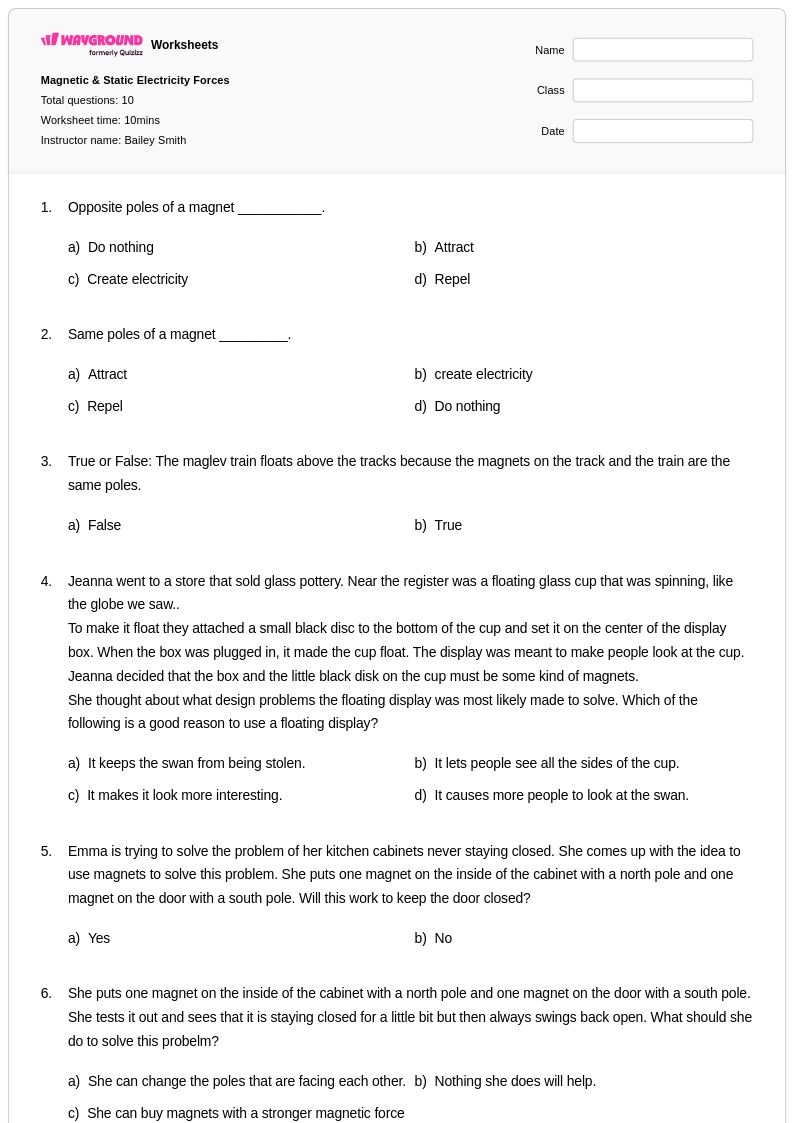
10 คิว
3rd
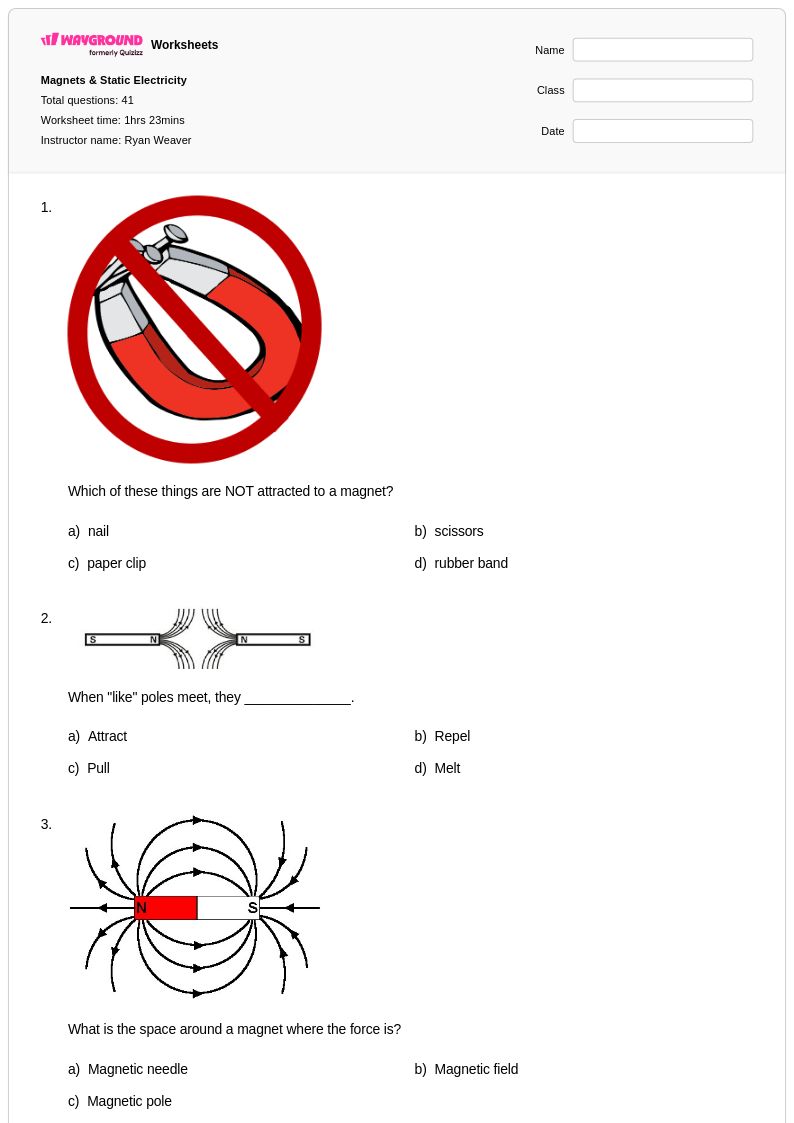
41 คิว
3rd - 5th
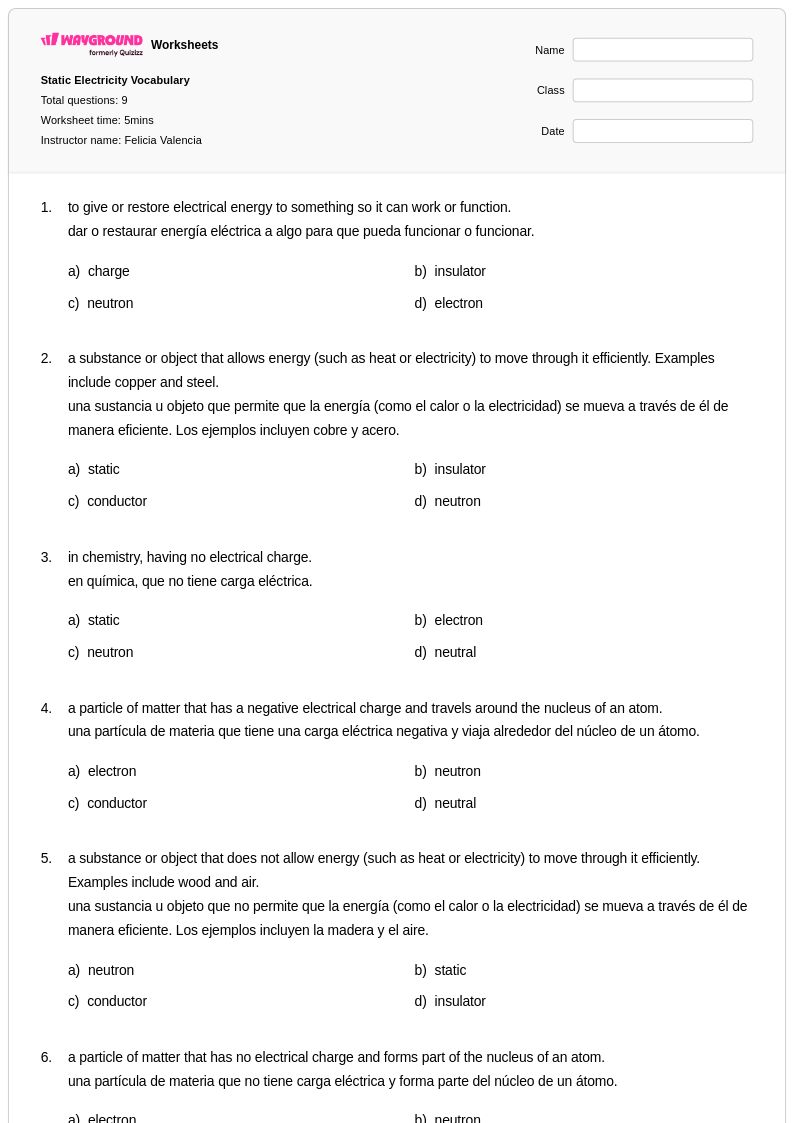
9 คิว
3rd - 5th
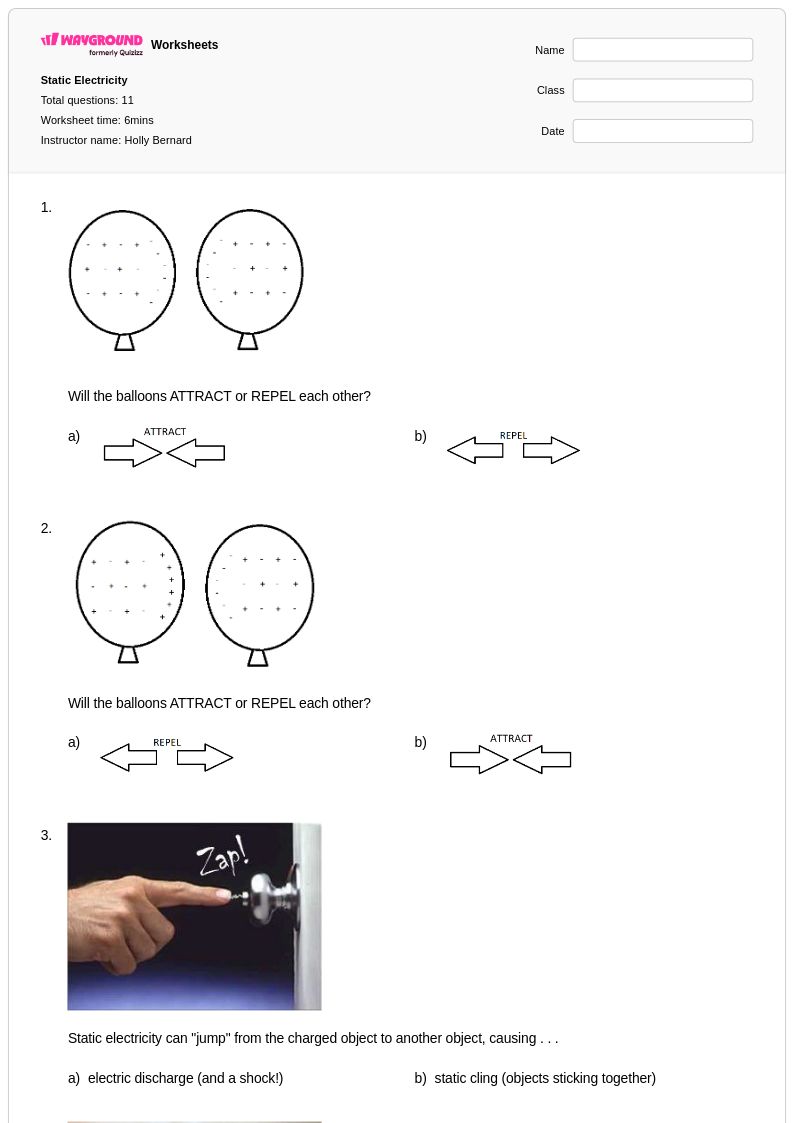
11 คิว
3rd
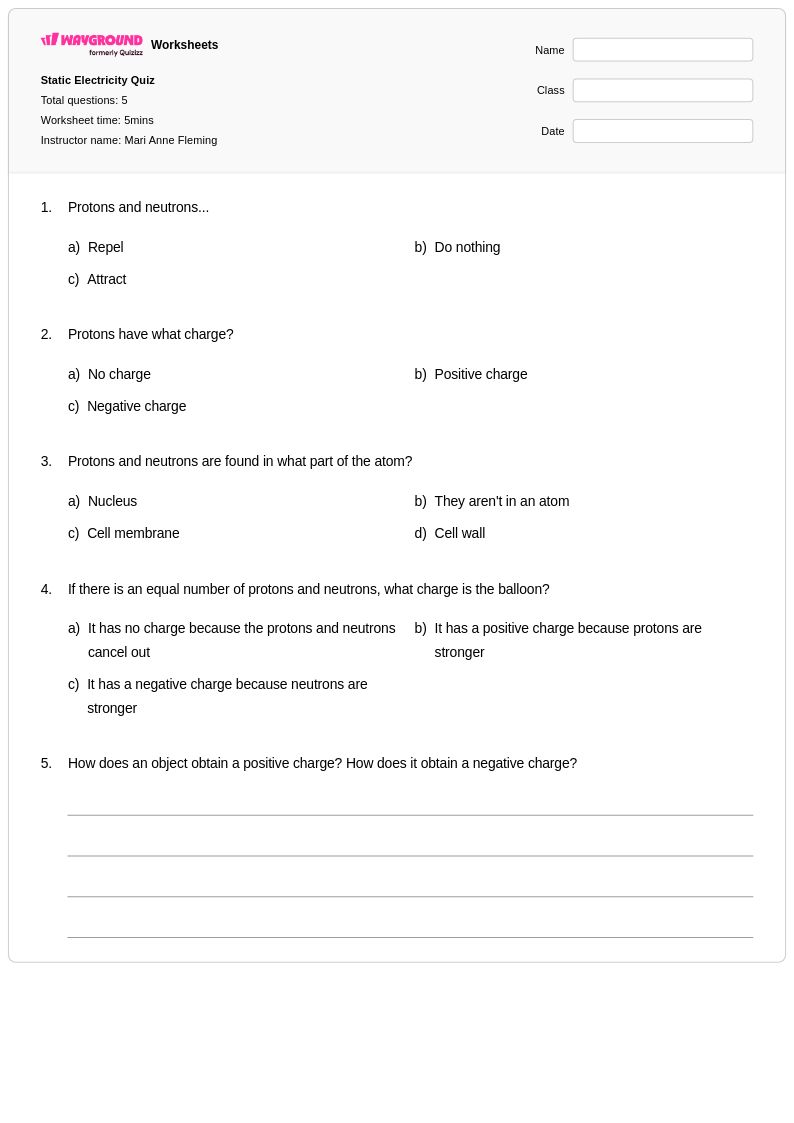
5 คิว
2nd - 5th
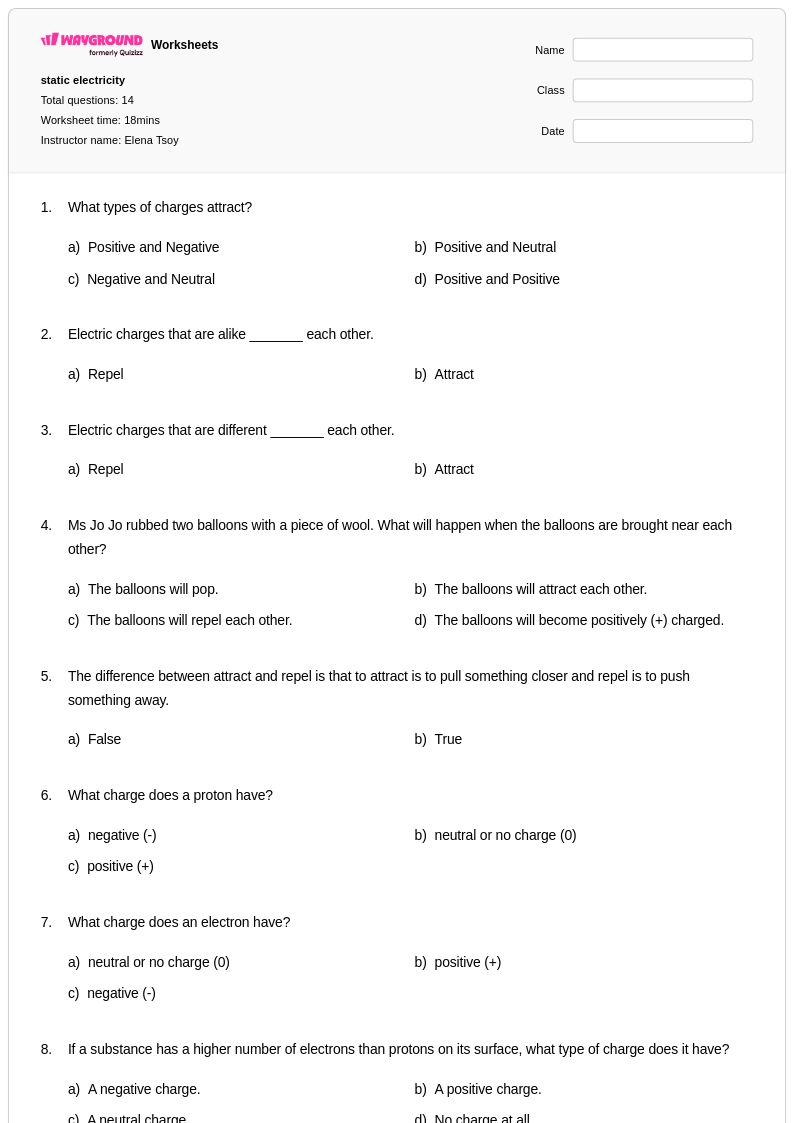
14 คิว
3rd
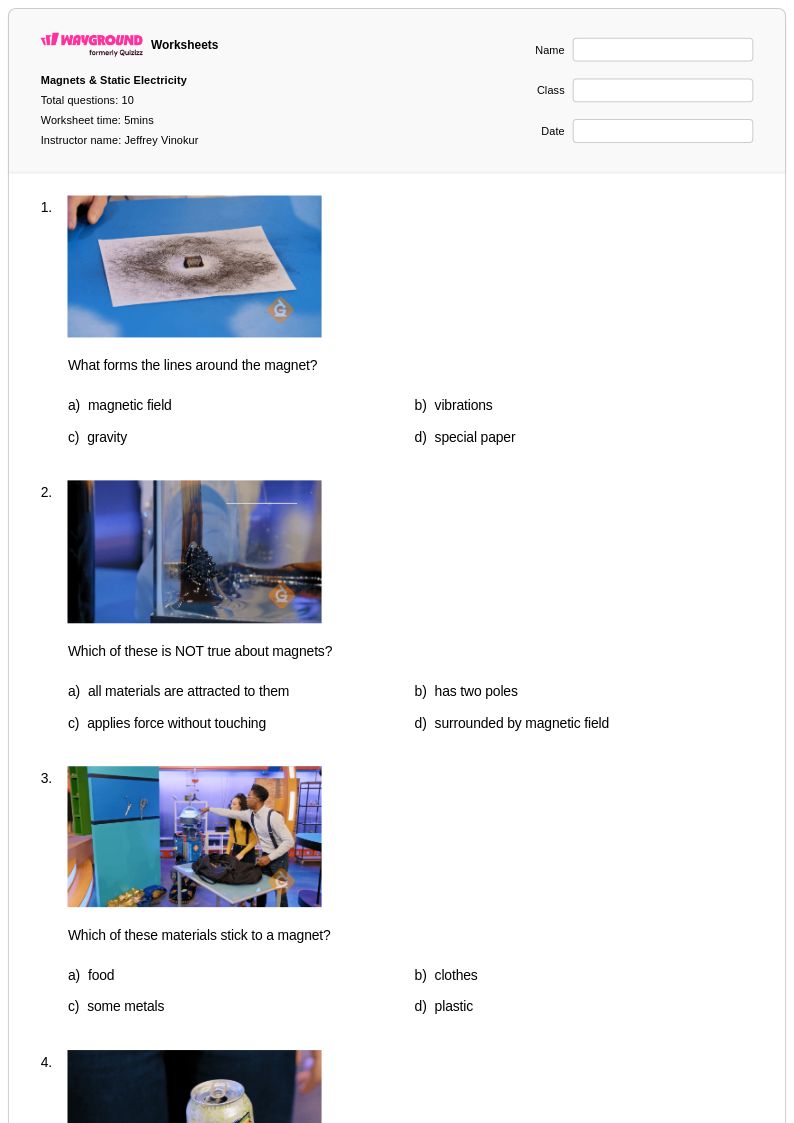
10 คิว
3rd - 5th
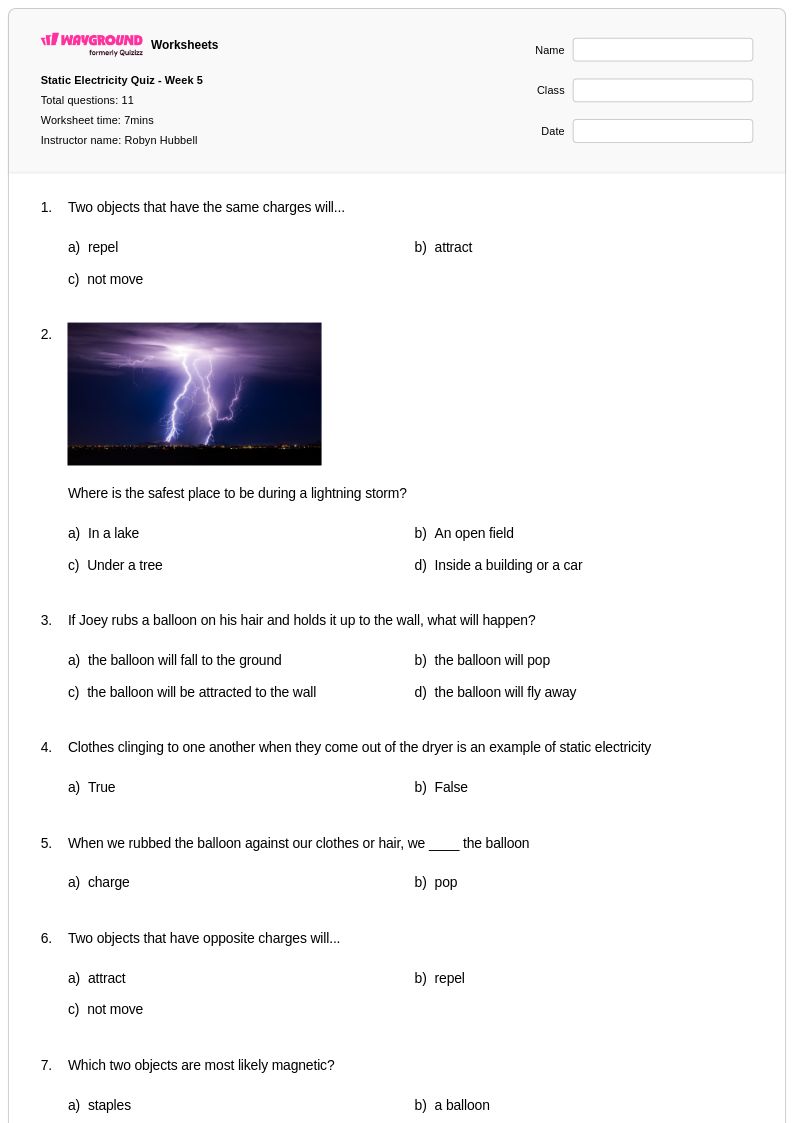
11 คิว
3rd
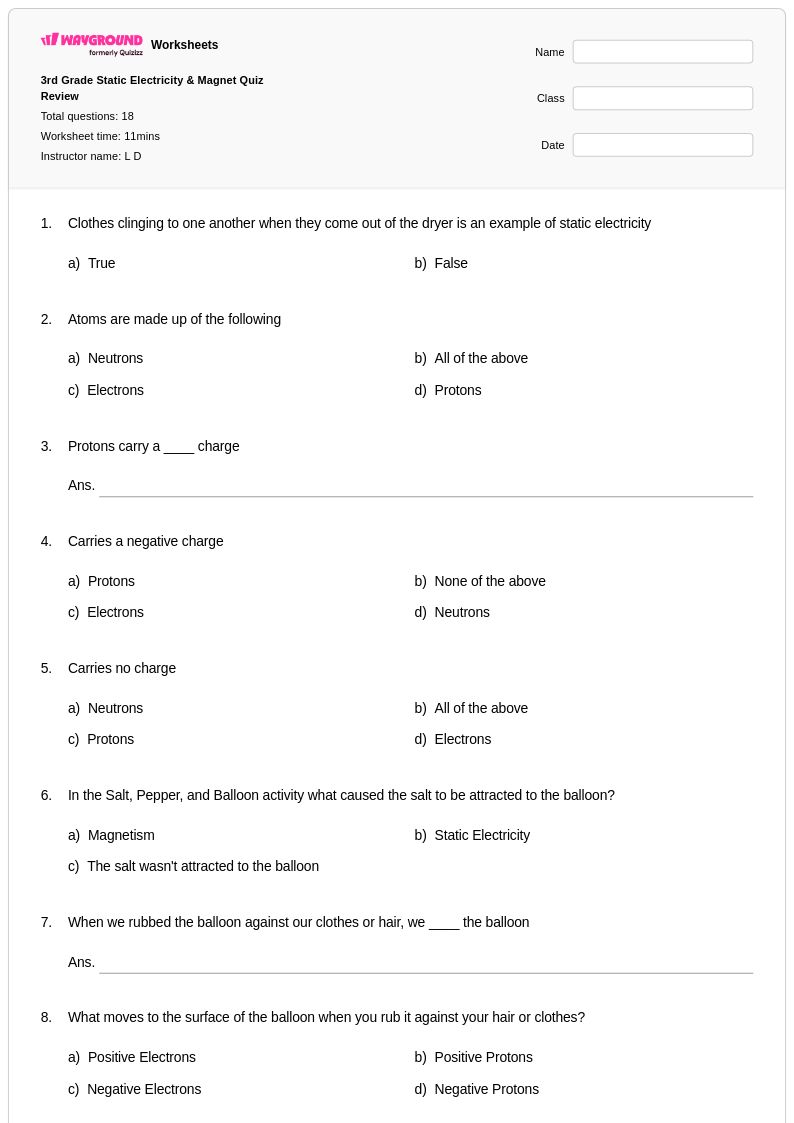
18 คิว
3rd
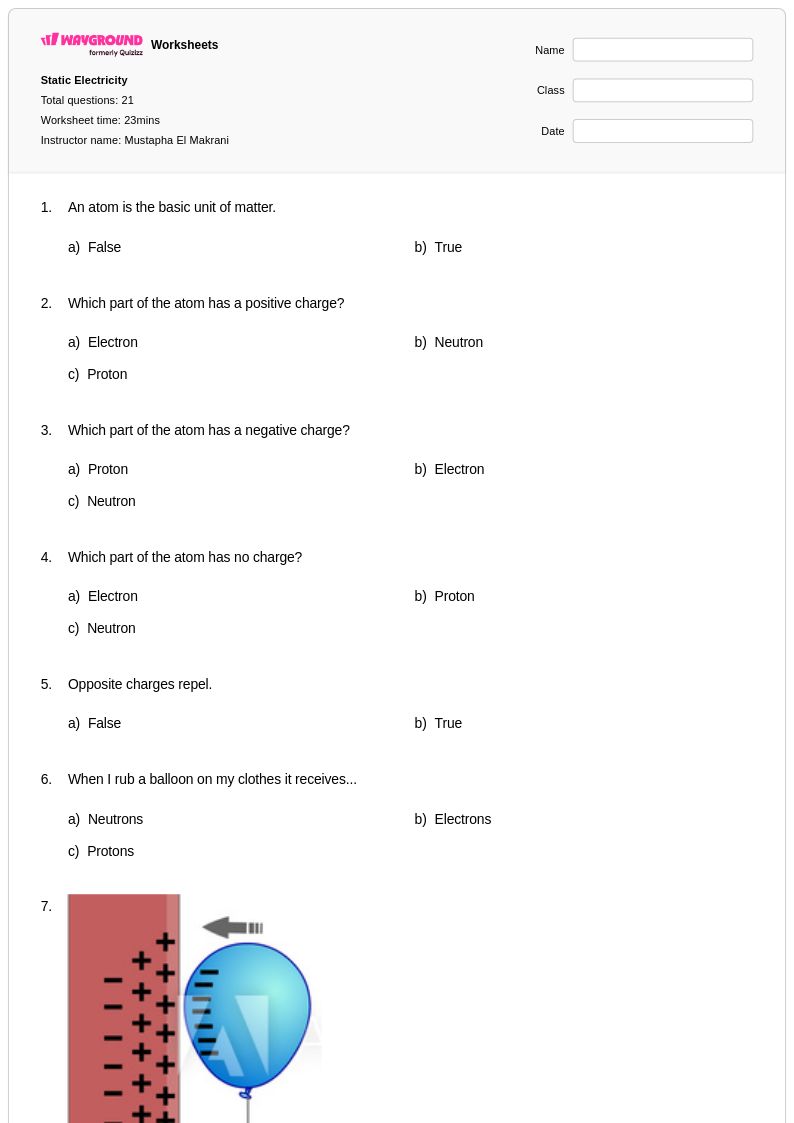
21 คิว
3rd
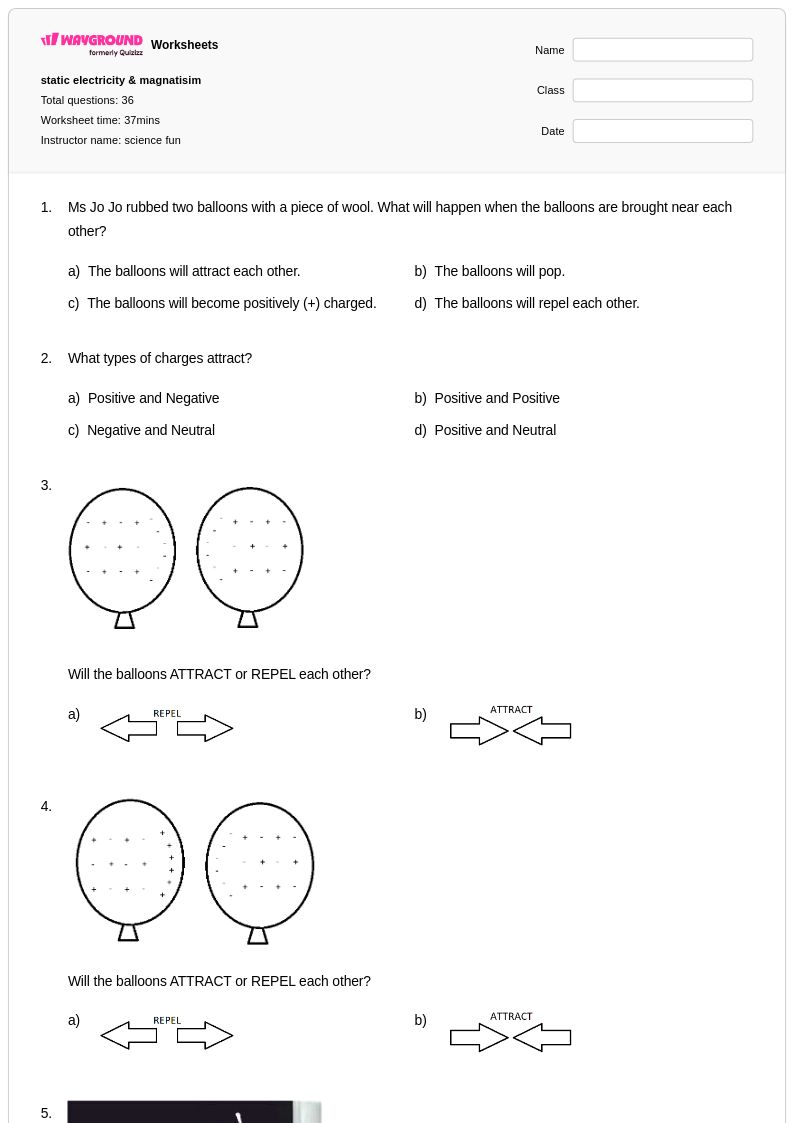
36 คิว
3rd
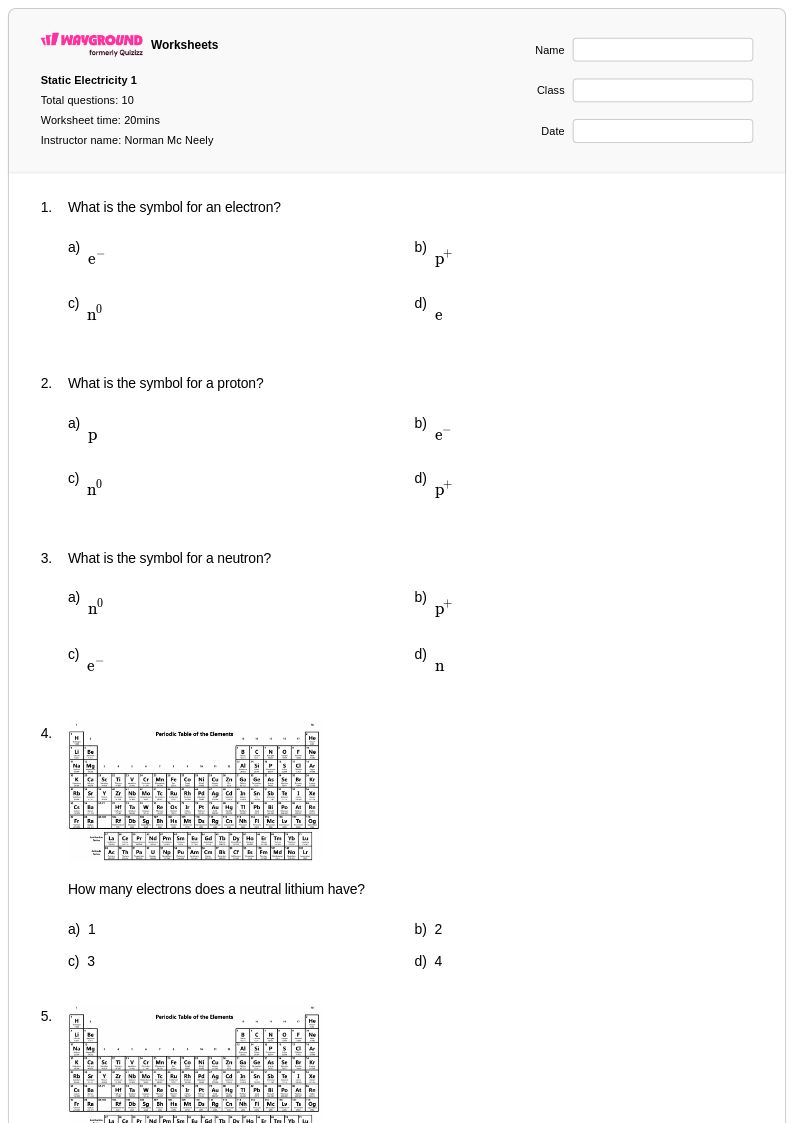
10 คิว
3rd - 5th
12 คิว
3rd - 5th
17 คิว
3rd - 5th
17 คิว
3rd - 4th
6 คิว
3rd - 5th
สำรวจแผ่นงาน Static Electricity ตามเกรด
สำรวจใบงานวิชาอื่นๆ สำหรับ class 3
Explore printable Static Electricity worksheets for Class 3
Static electricity worksheets for Class 3 students available through Wayground (formerly Quizizz) provide young learners with engaging opportunities to explore fundamental electrostatic concepts through hands-on investigations and scientific observations. These carefully designed educational resources help third-grade students develop critical thinking skills as they discover how objects become charged through friction, observe attraction and repulsion between different materials, and connect static electricity phenomena to everyday experiences like hair standing up after sliding down a plastic slide or socks clinging to clothing from the dryer. Each worksheet collection includes comprehensive practice problems that guide students through systematic observations, simple experiments with balloons and paper scraps, and reflection questions that deepen conceptual understanding. Teachers can access complete answer keys and free printable pdf versions that support both classroom instruction and independent study, ensuring students build solid foundational knowledge about electrical charges and their interactions in age-appropriate ways.
Wayground (formerly Quizizz) empowers educators with an extensive library of millions of teacher-created static electricity resources specifically designed to meet Class 3 learning objectives and align with elementary science standards. The platform's robust search and filtering capabilities enable teachers to quickly locate worksheets that match their students' specific needs, whether for initial concept introduction, skill reinforcement, or assessment preparation. Advanced differentiation tools allow educators to modify content complexity, adjust reading levels, and customize activities for diverse learners, while flexible formatting options provide both digital and printable pdf versions to accommodate various teaching environments. These comprehensive worksheet collections support strategic lesson planning by offering structured progressions from basic charge identification to more complex prediction activities, making them invaluable resources for remediation with struggling students, enrichment for advanced learners, and consistent skill practice that builds scientific literacy and observational abilities essential for elementary physics understanding.
FAQs
How do I teach static electricity to middle or high school students?
What topics should a static electricity worksheet cover?
What mistakes do students commonly make when learning about static electricity?
How can I differentiate static electricity instruction for students at different skill levels?
How do I use Wayground's static electricity worksheets in my classroom?
How do I help students who are struggling with Coulomb's law calculations?