Free Printable Velocity and Acceleration Worksheets for Class 3
Explore Class 3 velocity and acceleration printables and free worksheets through Wayground that help young students understand basic motion concepts with engaging practice problems and comprehensive answer keys.
Explore printable Velocity and Acceleration worksheets for Class 3
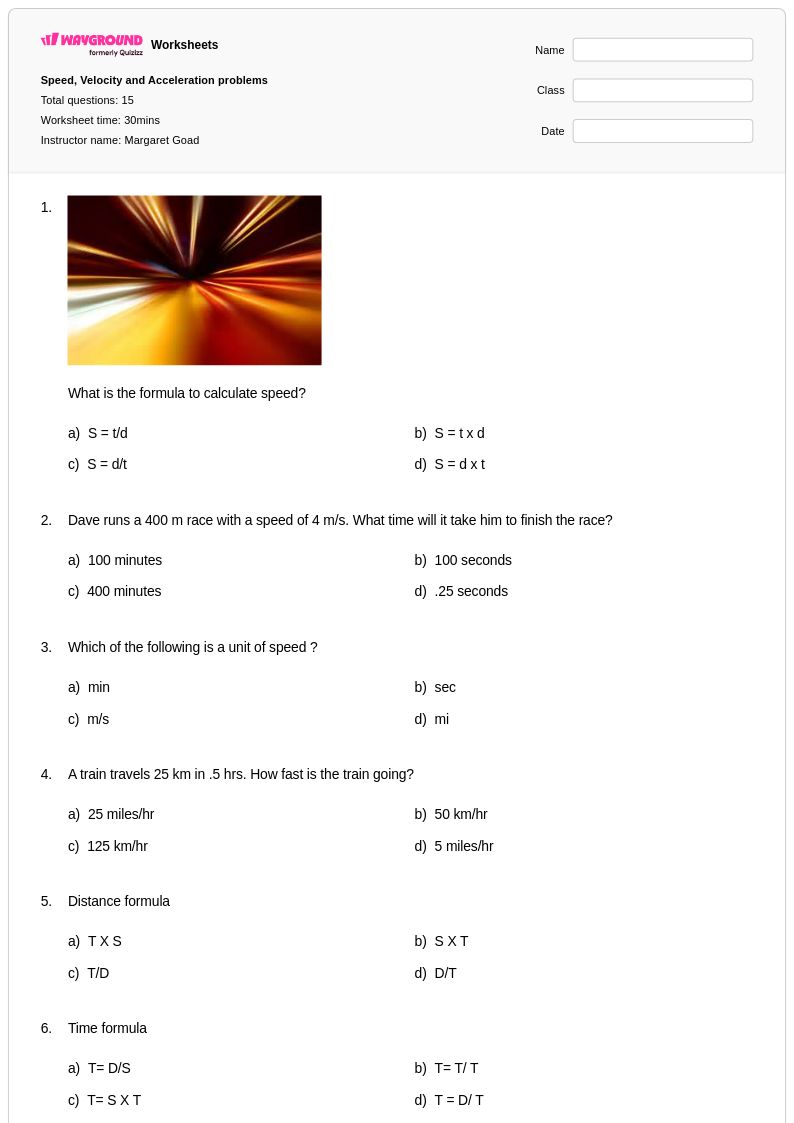
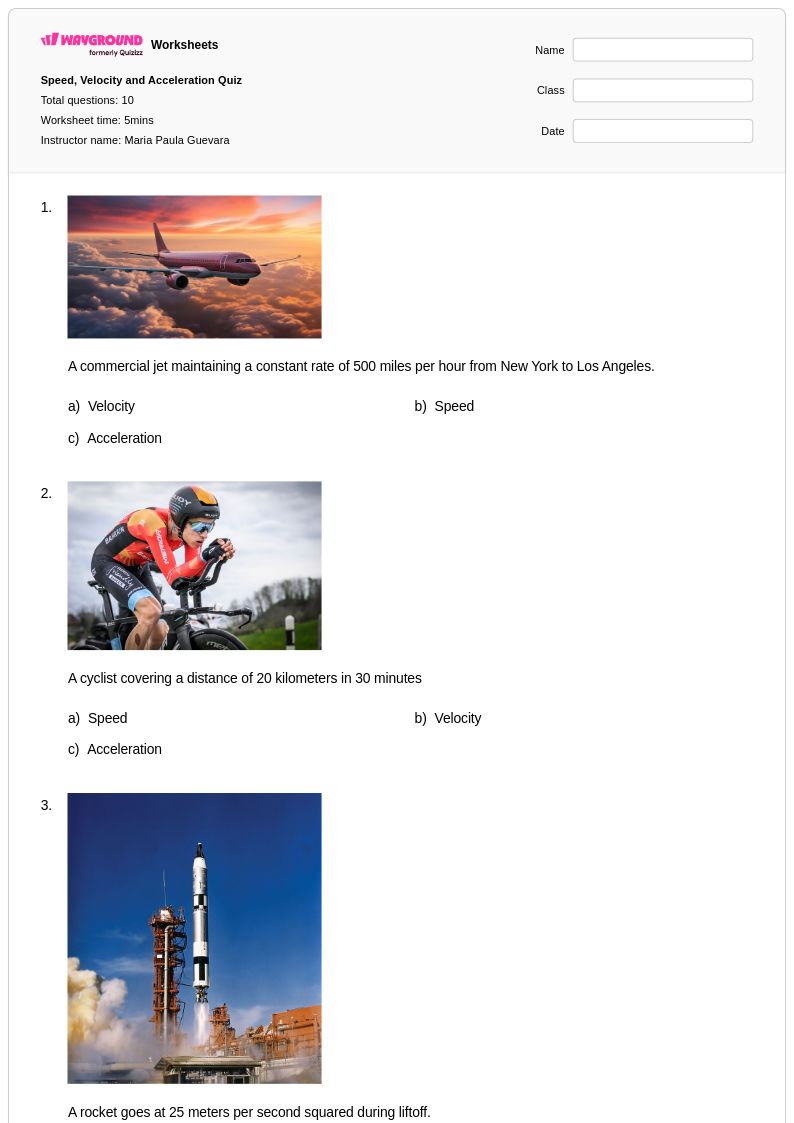
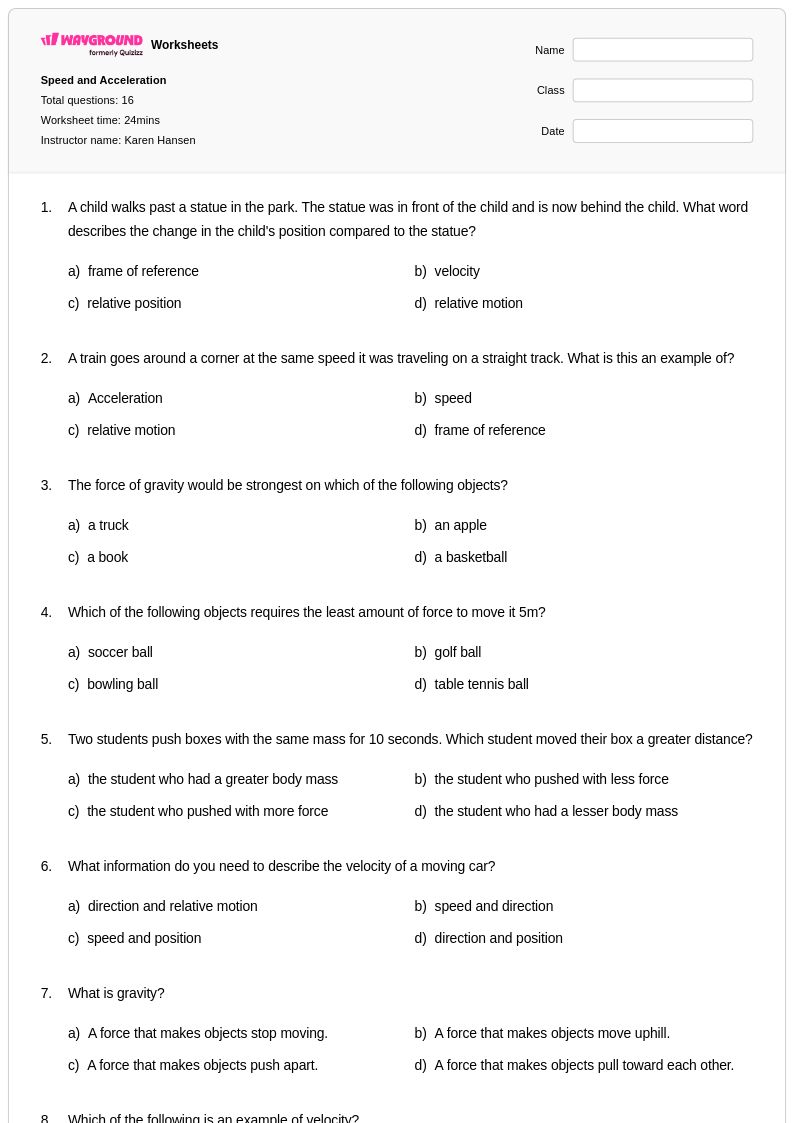
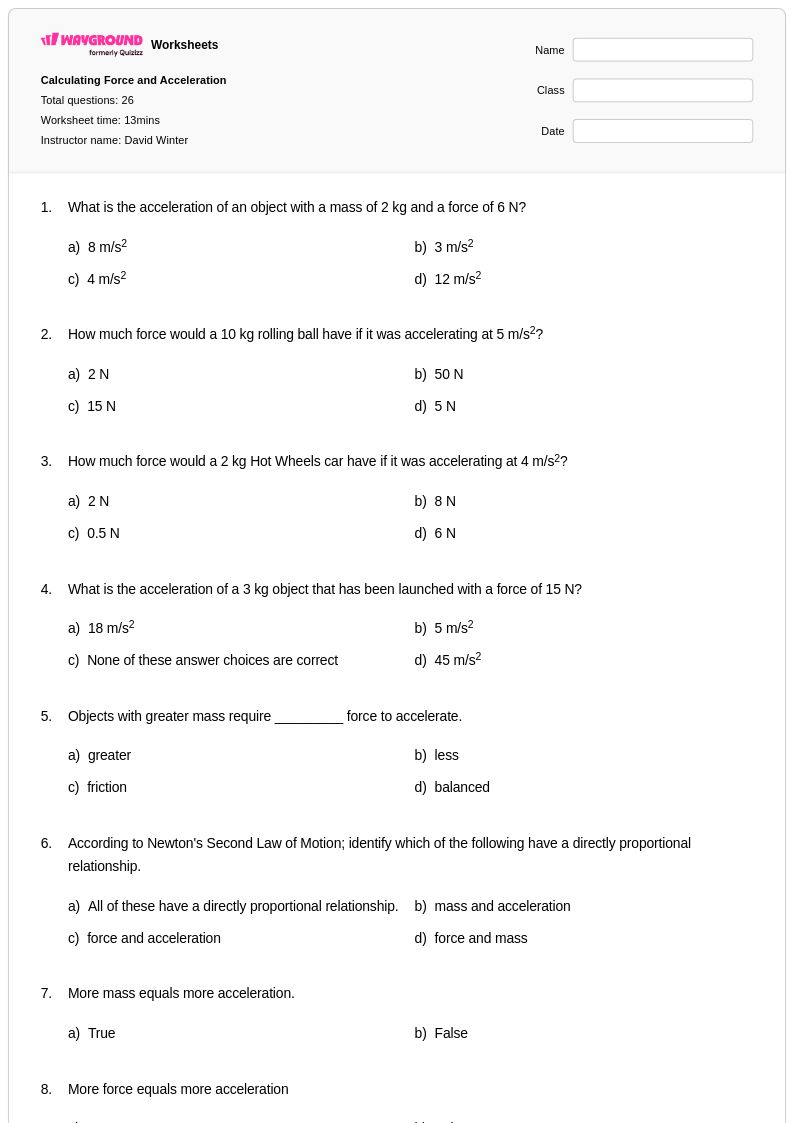
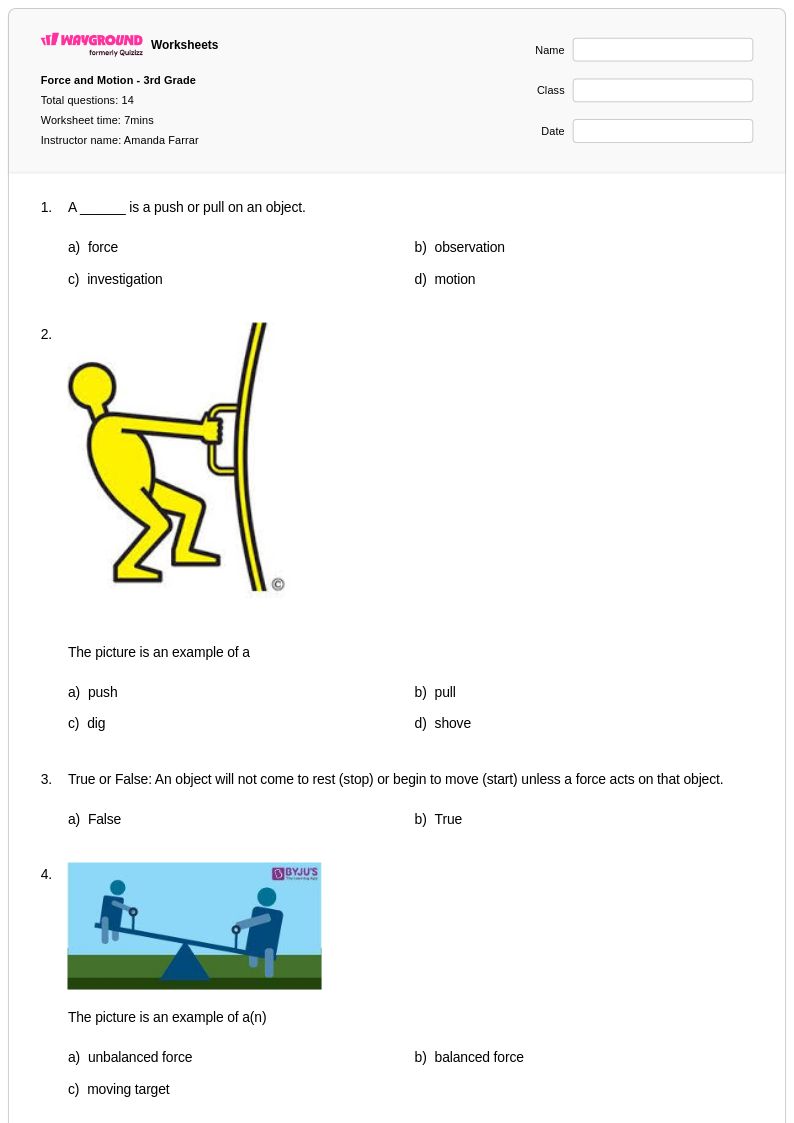
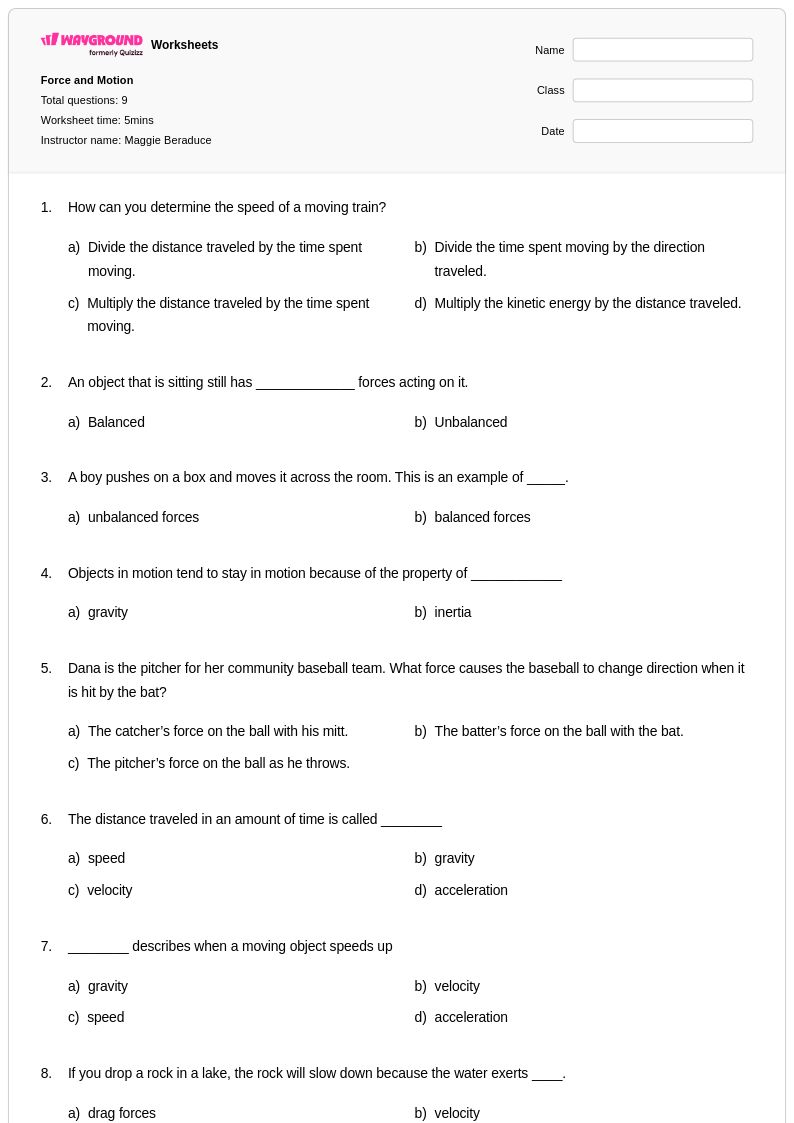
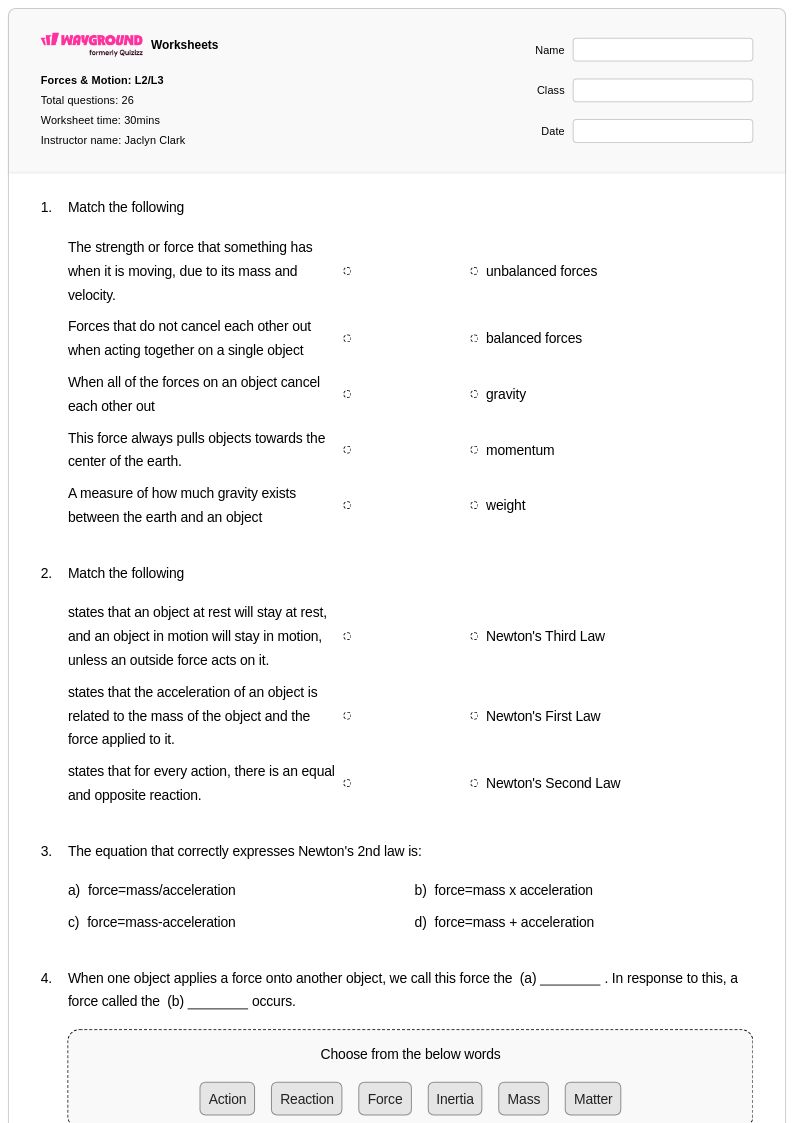
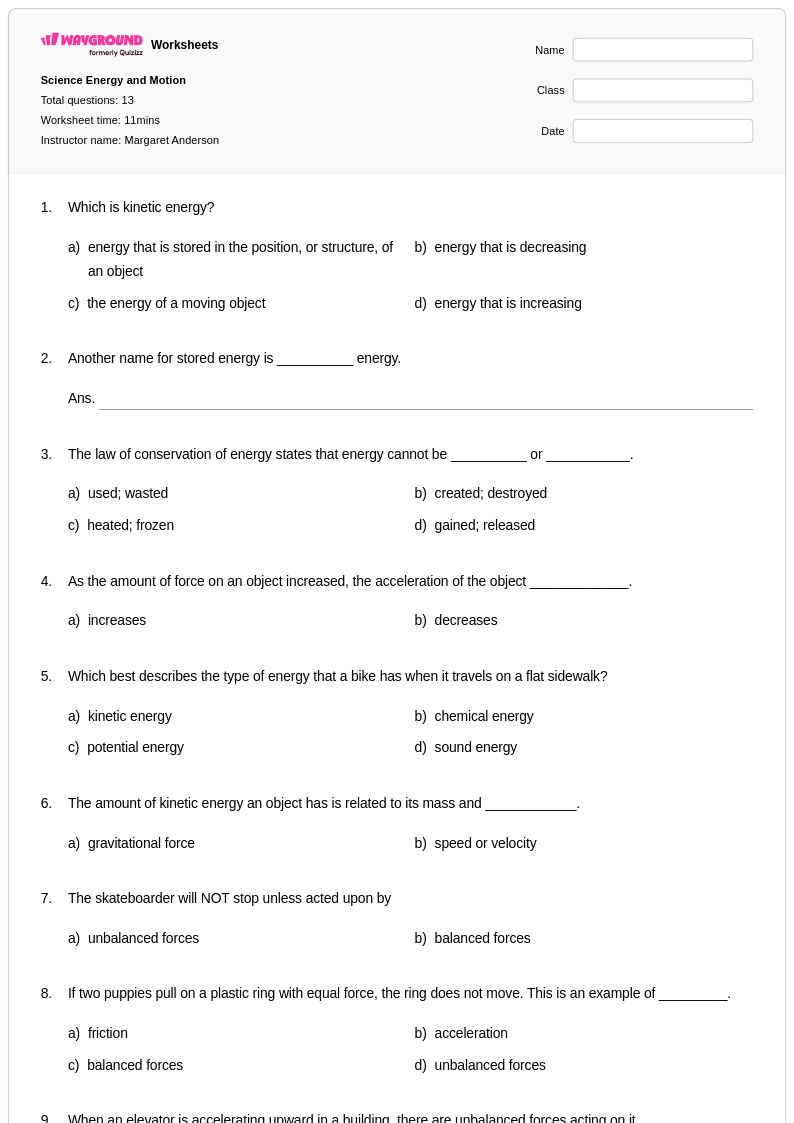
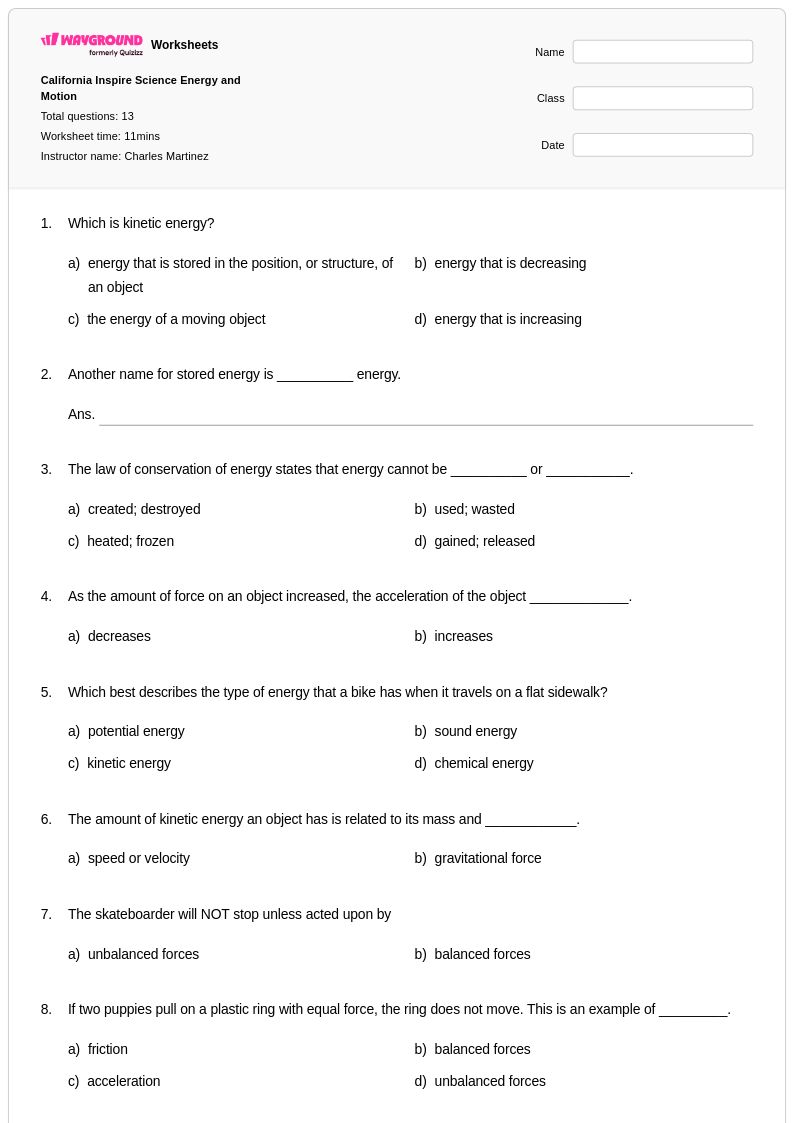
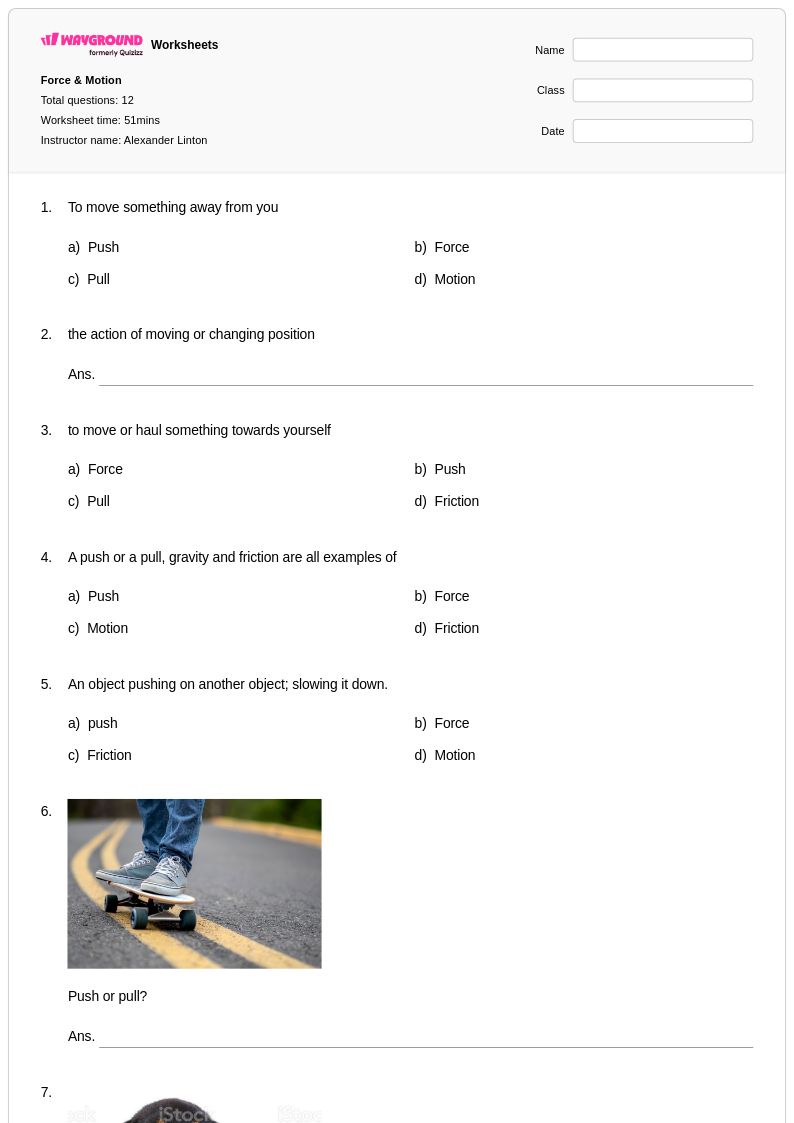
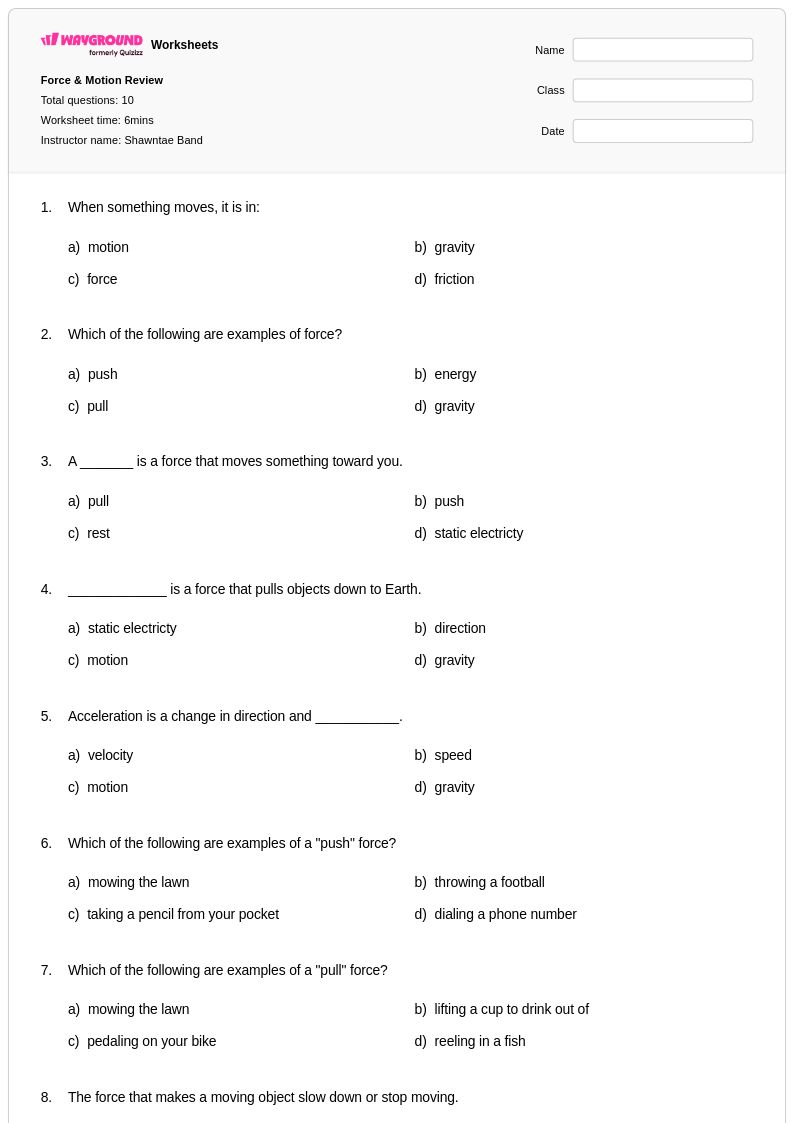
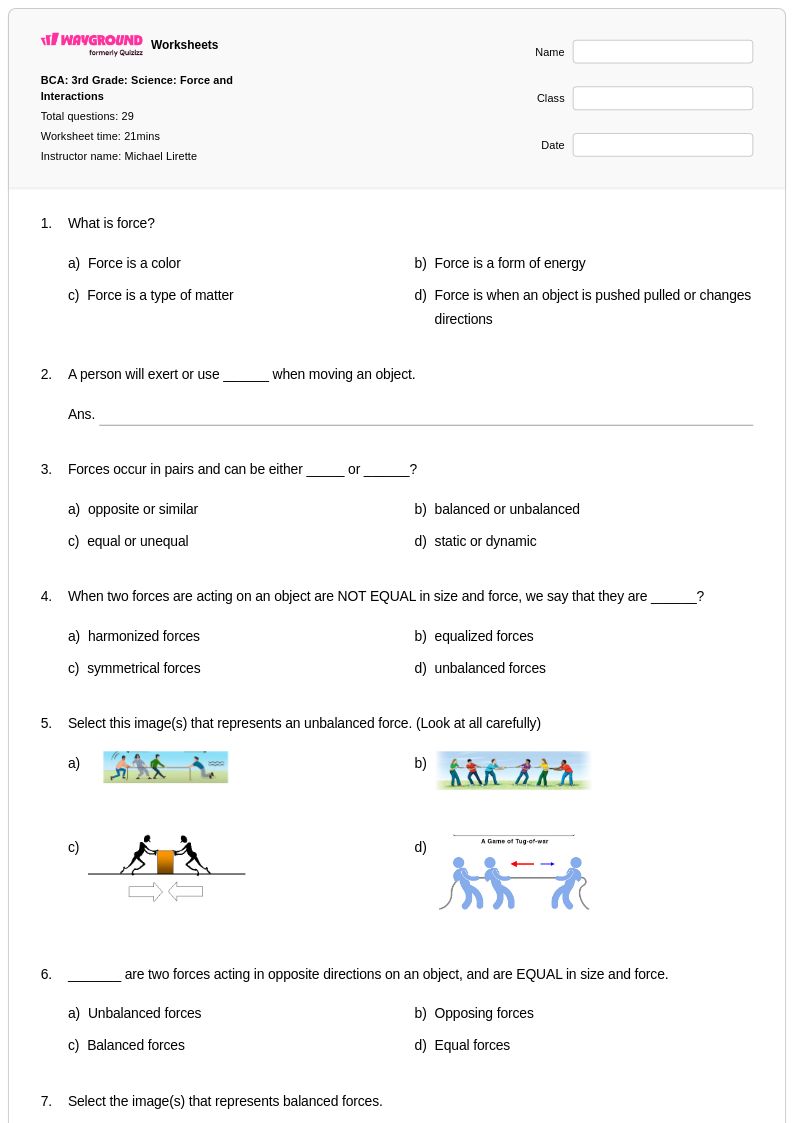
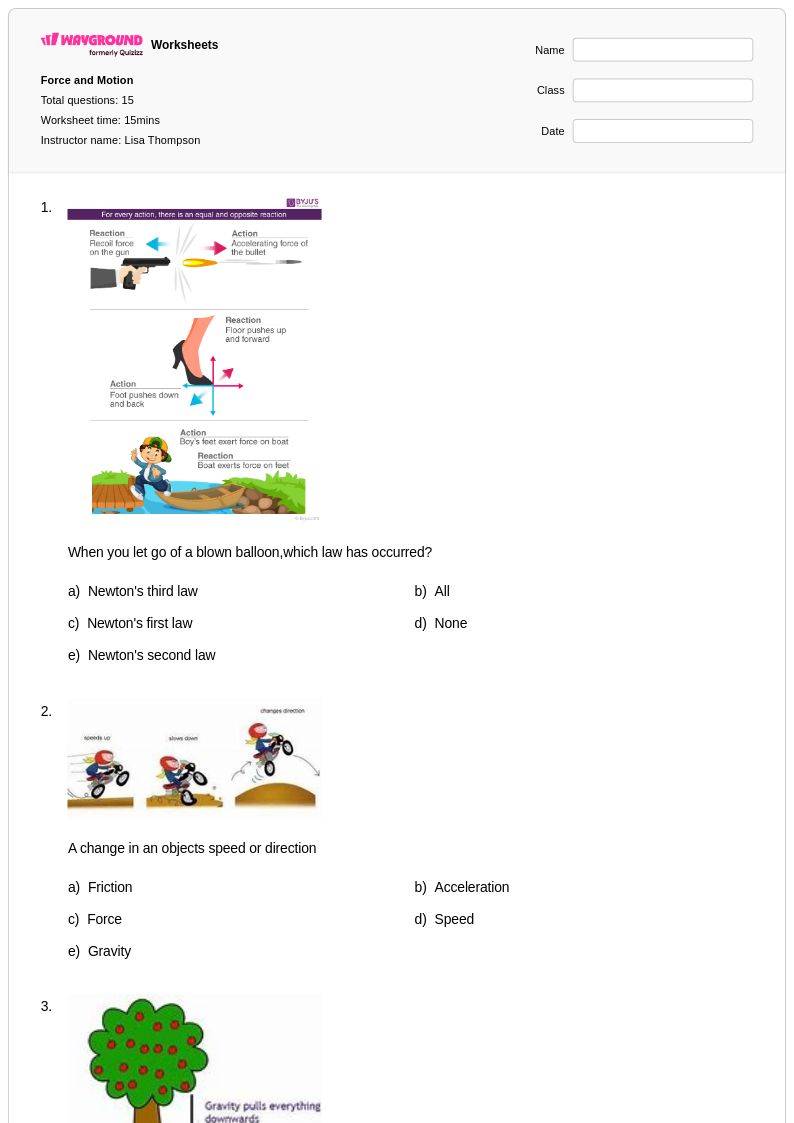
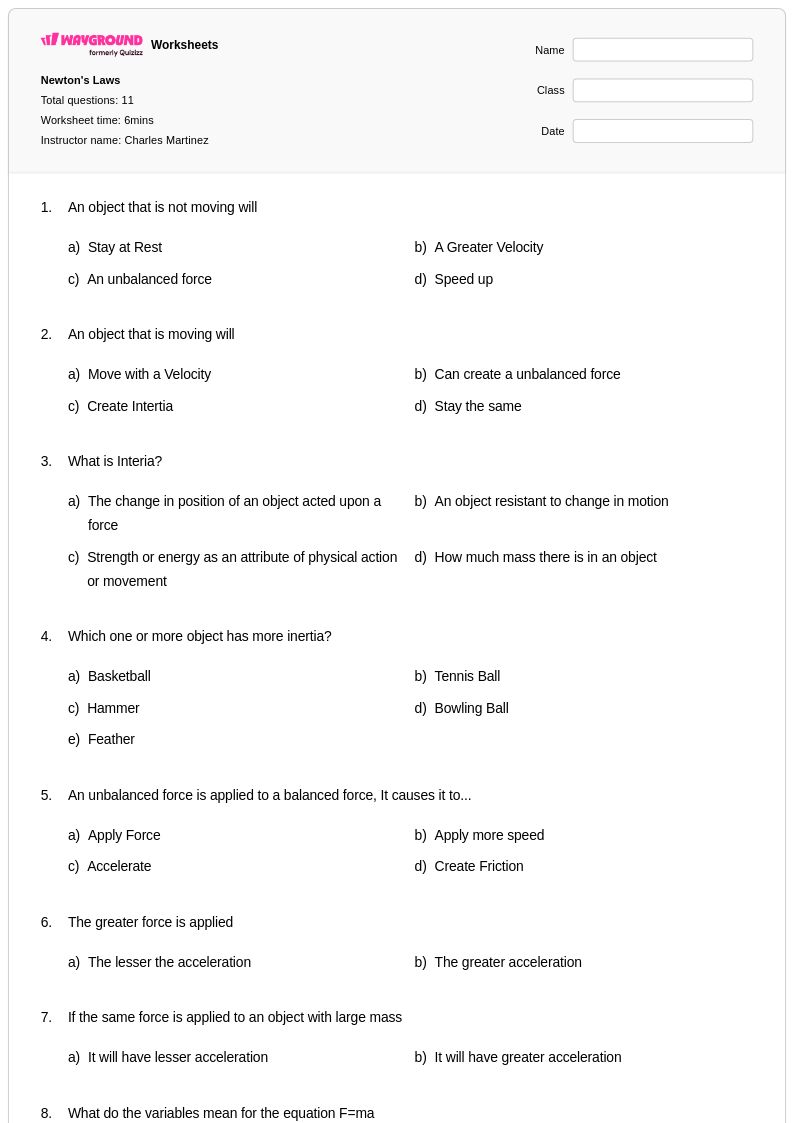
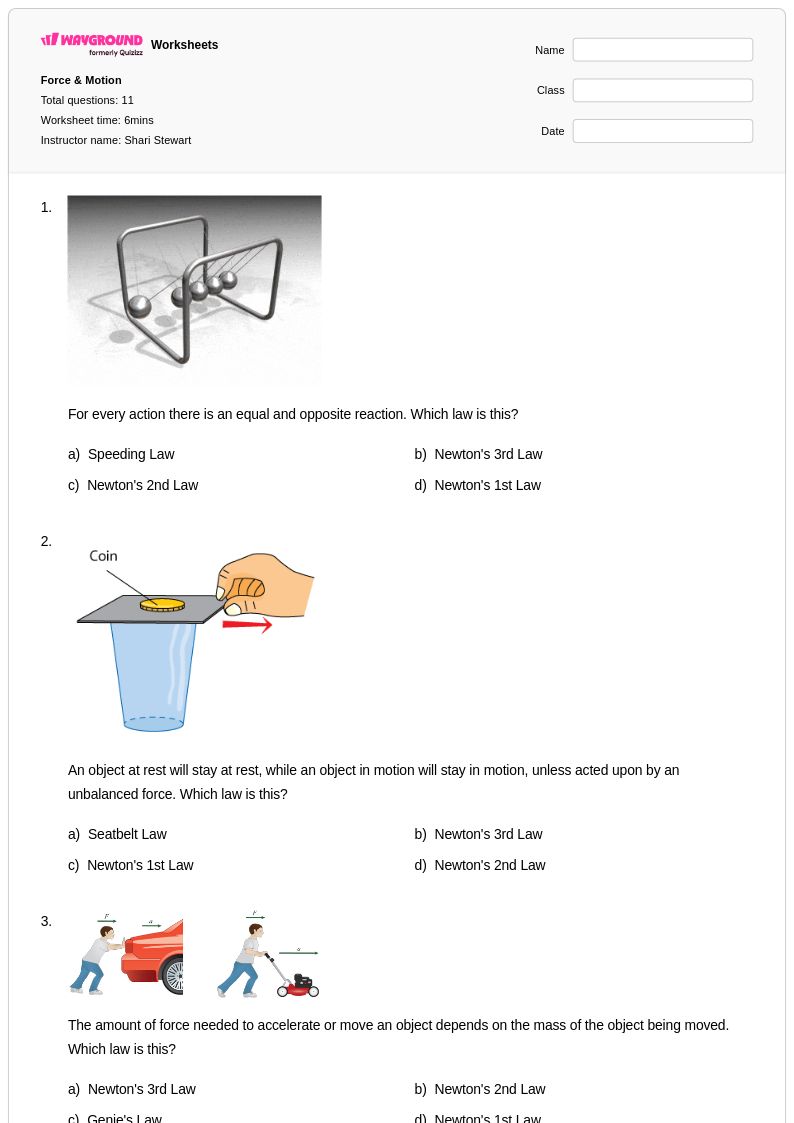
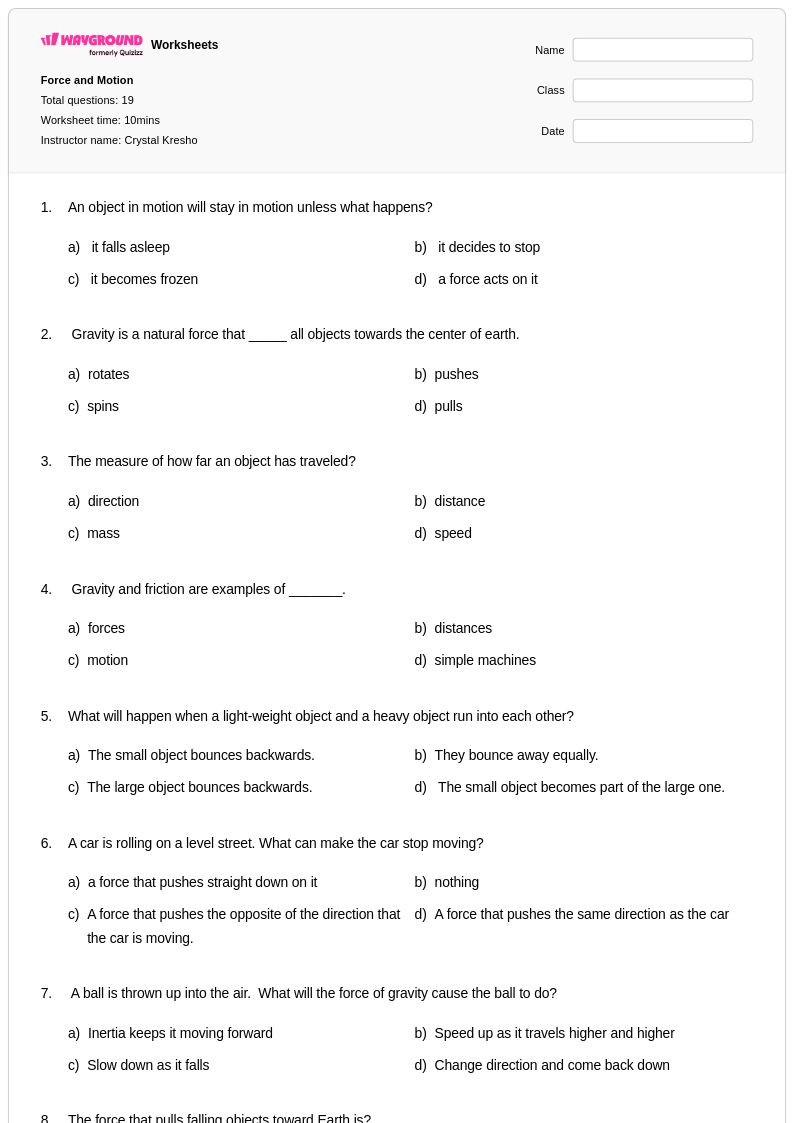
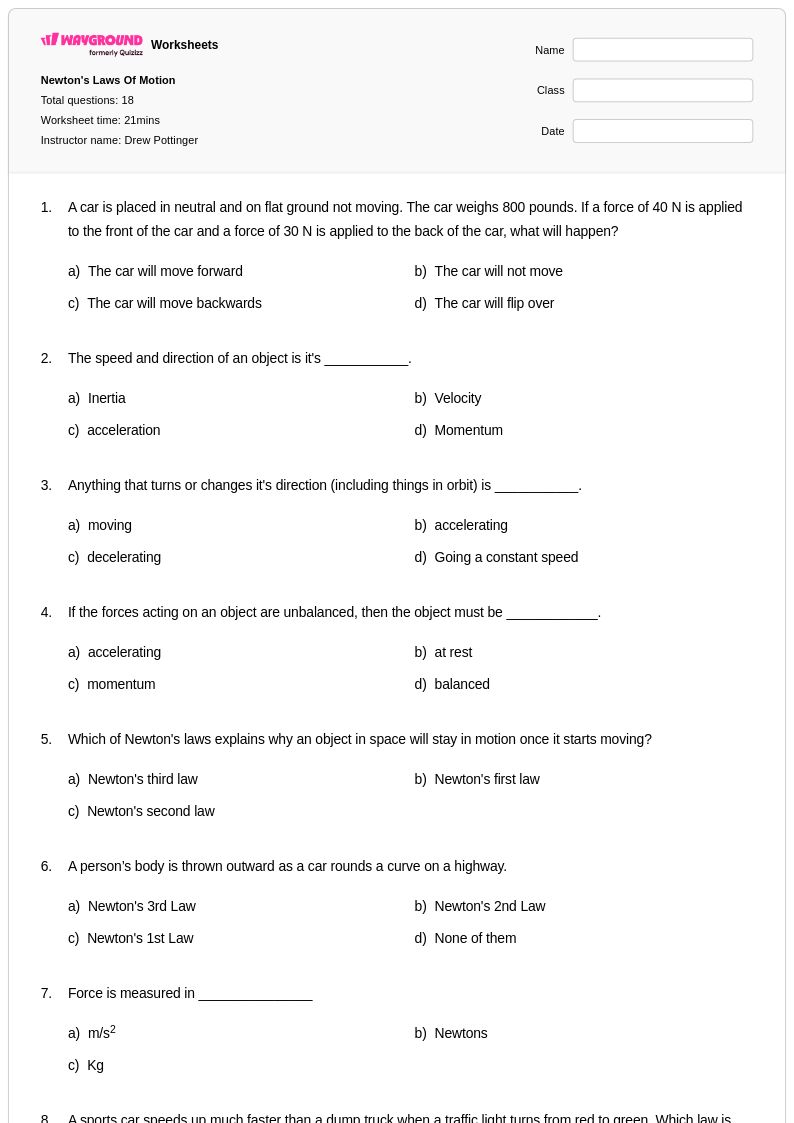
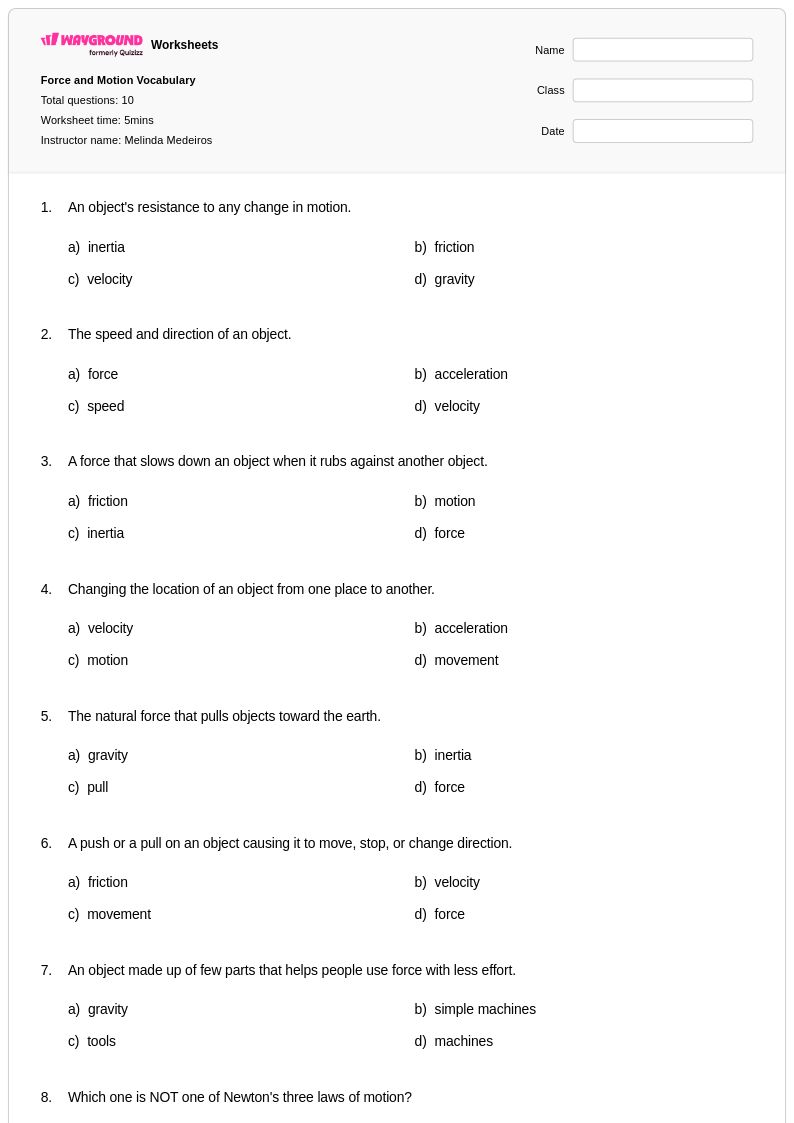
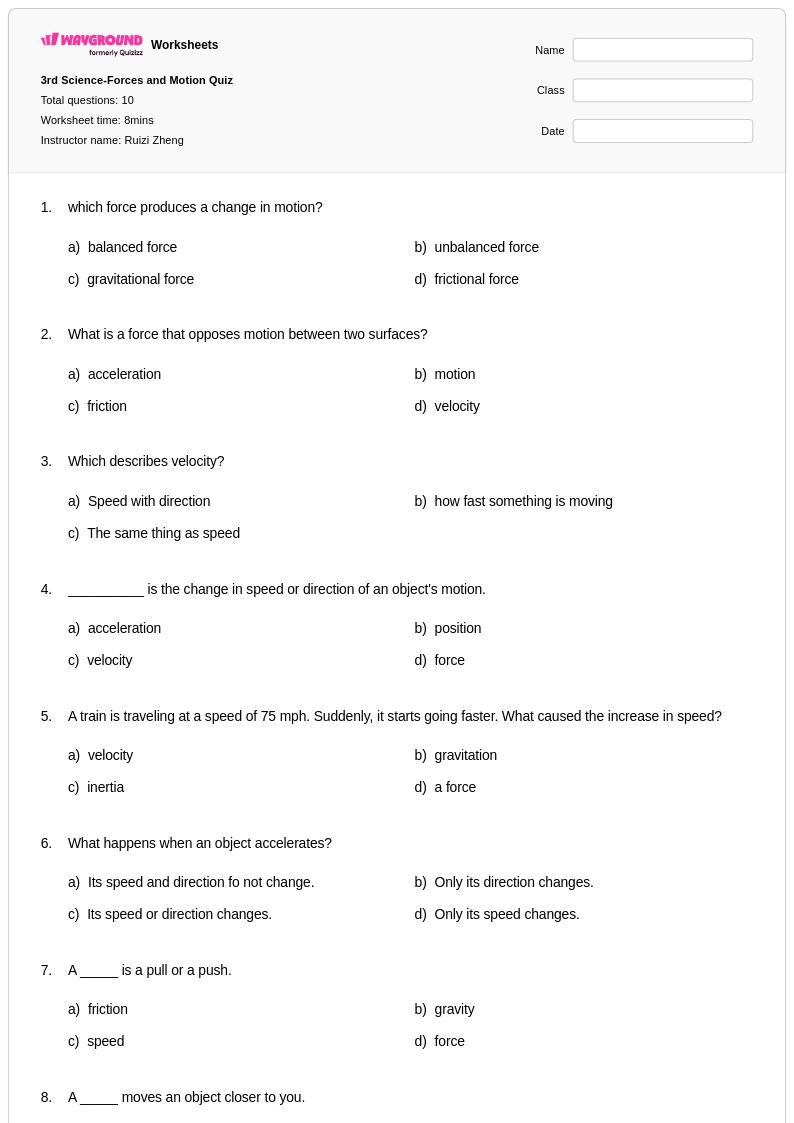
Class 3 velocity and acceleration worksheets available through Wayground (formerly Quizizz) introduce young learners to fundamental concepts of motion through age-appropriate activities and visual demonstrations. These educational resources help third-grade students develop foundational understanding of how objects move at different speeds and change their motion over time, building essential scientific observation and measurement skills. The comprehensive worksheet collection includes hands-on practice problems that guide students through identifying fast and slow moving objects, comparing speeds of different vehicles, and recognizing when objects speed up or slow down in everyday situations. Each printable resource comes with a detailed answer key to support accurate assessment, and the free pdf format ensures easy access for both classroom instruction and home learning activities.
Wayground (formerly Quizizz) empowers educators with millions of teacher-created velocity and acceleration worksheets specifically designed for elementary science instruction. The platform's robust search and filtering capabilities allow teachers to quickly locate resources that align with state science standards and match their students' developmental needs. Advanced differentiation tools enable instructors to customize worksheet difficulty levels, ensuring appropriate challenge for learners across varying ability ranges within the same Class 3 classroom. These versatile resources are available in both printable and digital formats, including downloadable pdf versions, making them ideal for diverse teaching scenarios from traditional paper-based activities to interactive digital lessons. Teachers can seamlessly integrate these materials into lesson planning, use them for targeted skill remediation, provide enrichment opportunities for advanced learners, and offer consistent practice that reinforces key physics concepts throughout the academic year.
FAQs
How do I teach the difference between velocity and acceleration to physics students?
Start by firmly establishing velocity as a vector quantity that describes both speed and direction, then introduce acceleration as the rate of change of velocity over time rather than simply "speeding up." Use concrete examples like a car turning at constant speed (changing direction means changing velocity, which means acceleration is occurring) to challenge the common misconception that acceleration only means going faster. Building this conceptual foundation before introducing kinematic equations helps students avoid persistent calculation errors later.
What kinds of practice problems help students get better at velocity and acceleration calculations?
Effective practice starts with single-variable kinematic equation problems, where students solve for one unknown given three known quantities, before progressing to multi-step problems involving projectile motion or objects under constant acceleration. Problems that require students to first identify the correct kinematic equation to apply — rather than just plug values in — build the reasoning skills needed for more complex scenarios. Mixing conceptual questions with numerical calculations in the same practice set prevents students from relying on formula memorization alone.
What mistakes do students most commonly make when working with velocity and acceleration?
The most persistent misconception is treating velocity and speed as interchangeable, which causes errors whenever direction changes are involved. Students also frequently confuse the sign convention for acceleration — assuming negative acceleration always means slowing down, when it actually depends on the direction of motion relative to the chosen positive axis. A third common error is misapplying kinematic equations to situations where acceleration is not constant, such as free fall with air resistance.
How can I use velocity and acceleration worksheets to identify gaps in student understanding?
Look for patterns in student errors rather than individual mistakes: if multiple students incorrectly treat velocity as a scalar in vector problems, the conceptual distinction between speed and velocity needs revisiting before moving forward. Problems that ask students to interpret or sketch velocity-time graphs are especially diagnostic because they reveal whether students understand what acceleration looks like graphically, not just algebraically. Using a mix of calculation and interpretation questions on the same worksheet gives a more complete picture of where understanding breaks down.
How do I use Wayground's velocity and acceleration worksheets in my classroom?
Wayground's velocity and acceleration worksheets are available as printable PDFs for traditional classroom use and in digital formats for technology-integrated environments, giving teachers flexibility based on their instructional context. Teachers can also host the worksheets as a live quiz on Wayground, making them suitable for in-class practice sessions or formative assessment. Each worksheet includes a complete answer key, which supports self-paced work, homework assignments, or station-based learning without requiring teacher intervention for every question.
How do I support students who struggle with kinematic equations in a mixed-ability physics class?
For students who need additional support, reducing the number of answer choices on practice problems can lower cognitive load while still requiring conceptual engagement. Wayground allows teachers to assign accommodations like reduced answer choices and read-aloud support to individual students without notifying the rest of the class, so differentiation happens quietly in the background. Pairing these accommodations with scaffolded problems that build complexity incrementally helps struggling students build procedural fluency before tackling multi-step applications.