
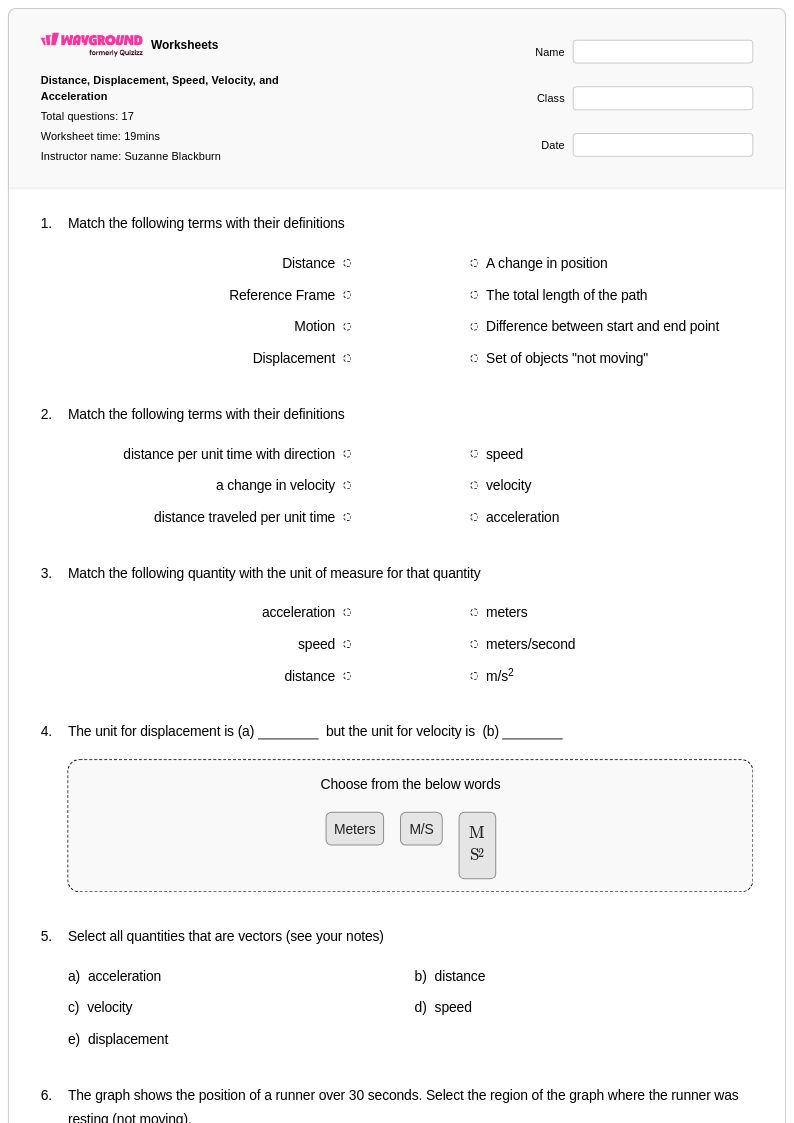
17 Q
6th - 8th
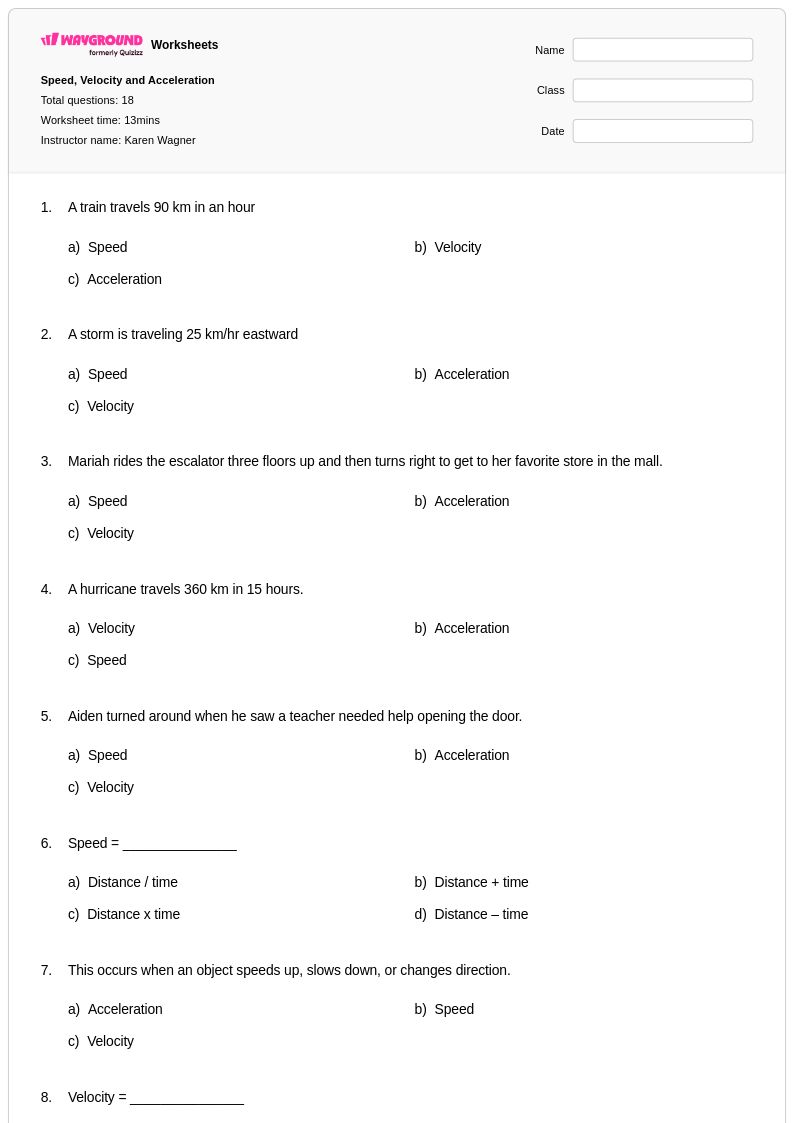
18 Q
5th - 7th
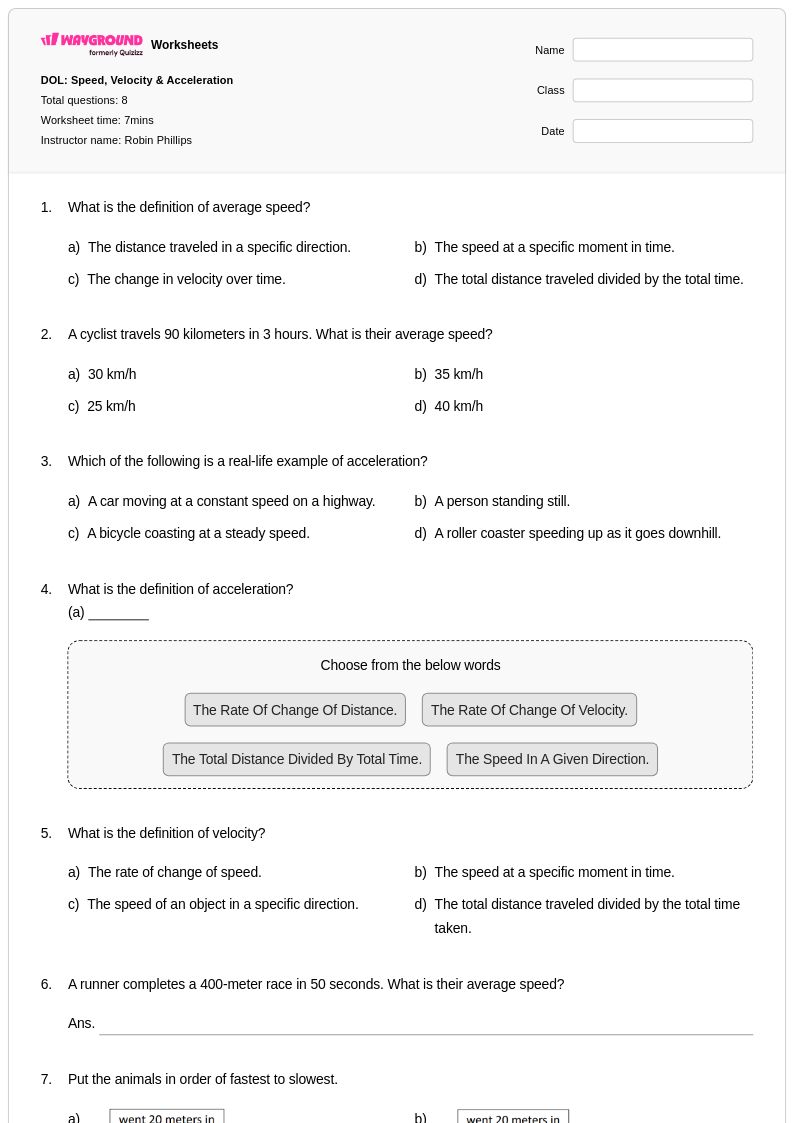
8 Q
7th
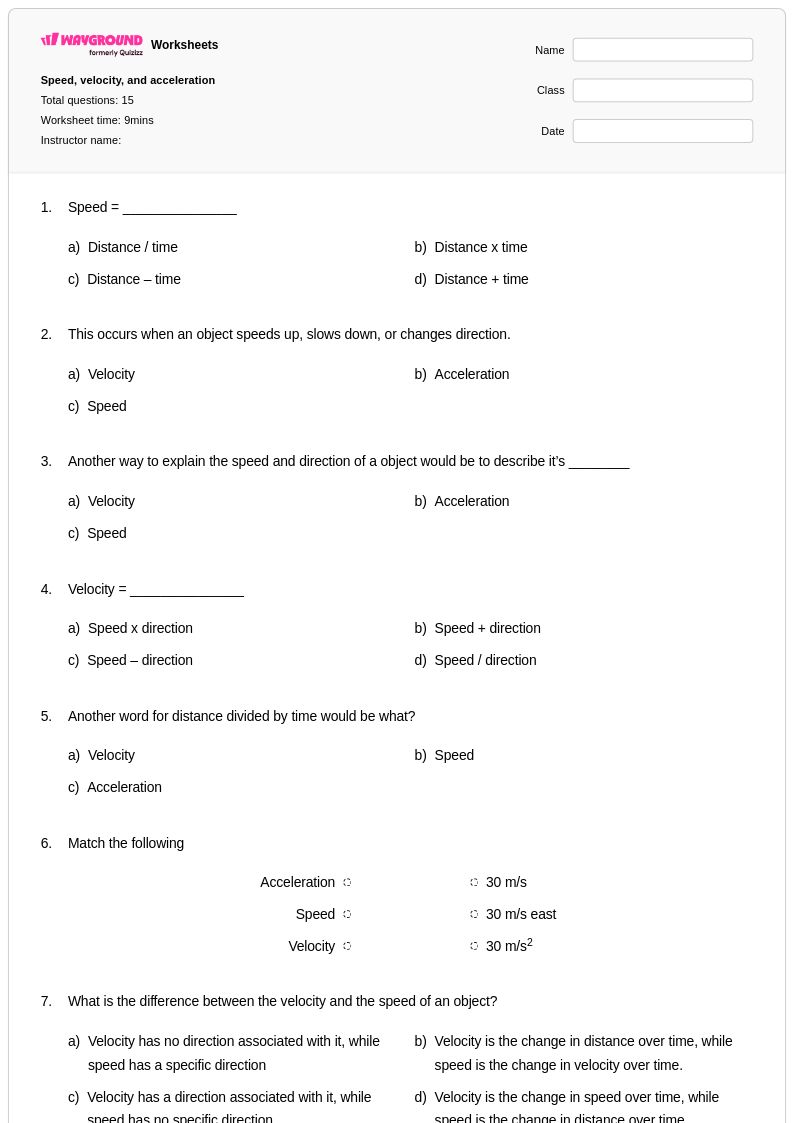
15 Q
7th
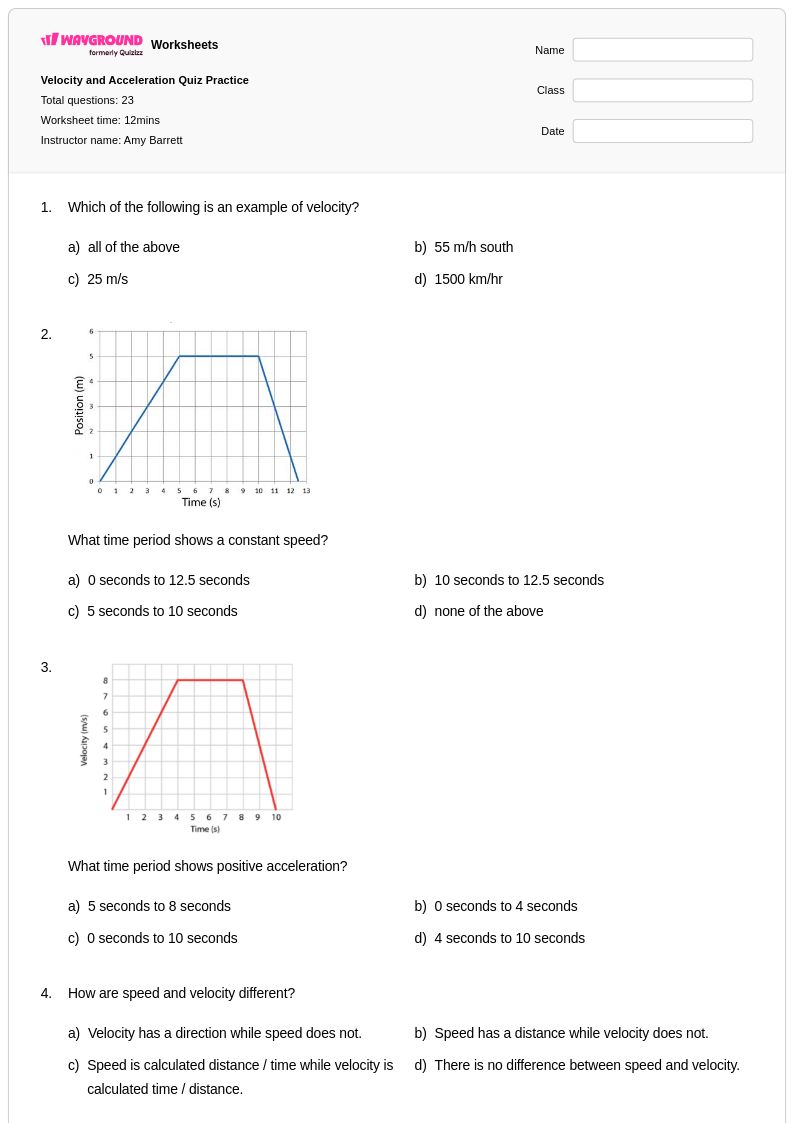
23 Q
7th
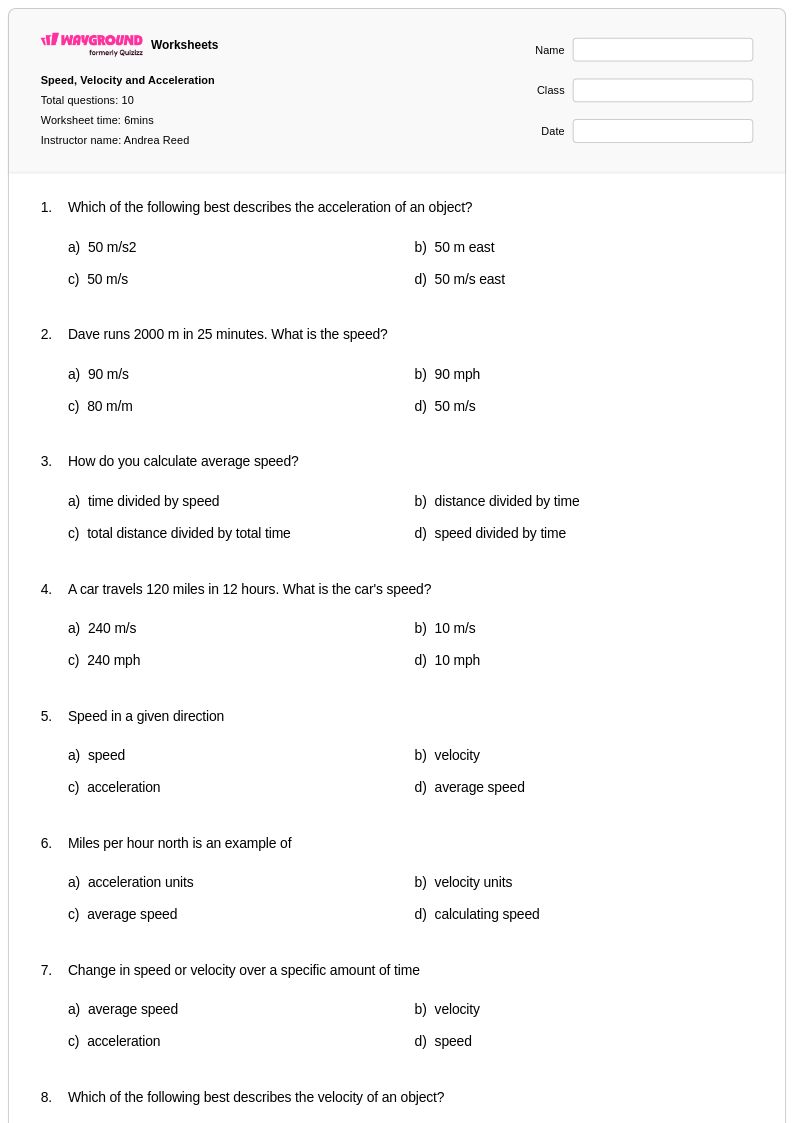
10 Q
6th - 8th
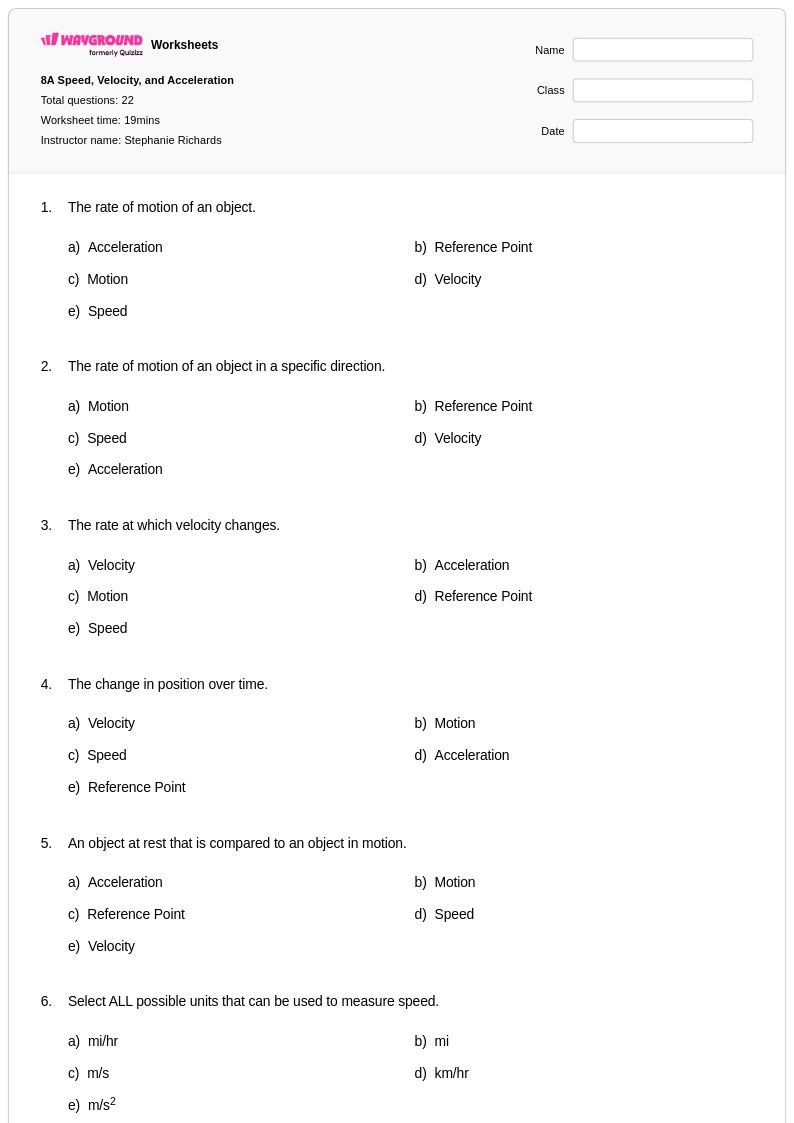
22 Q
6th - 8th
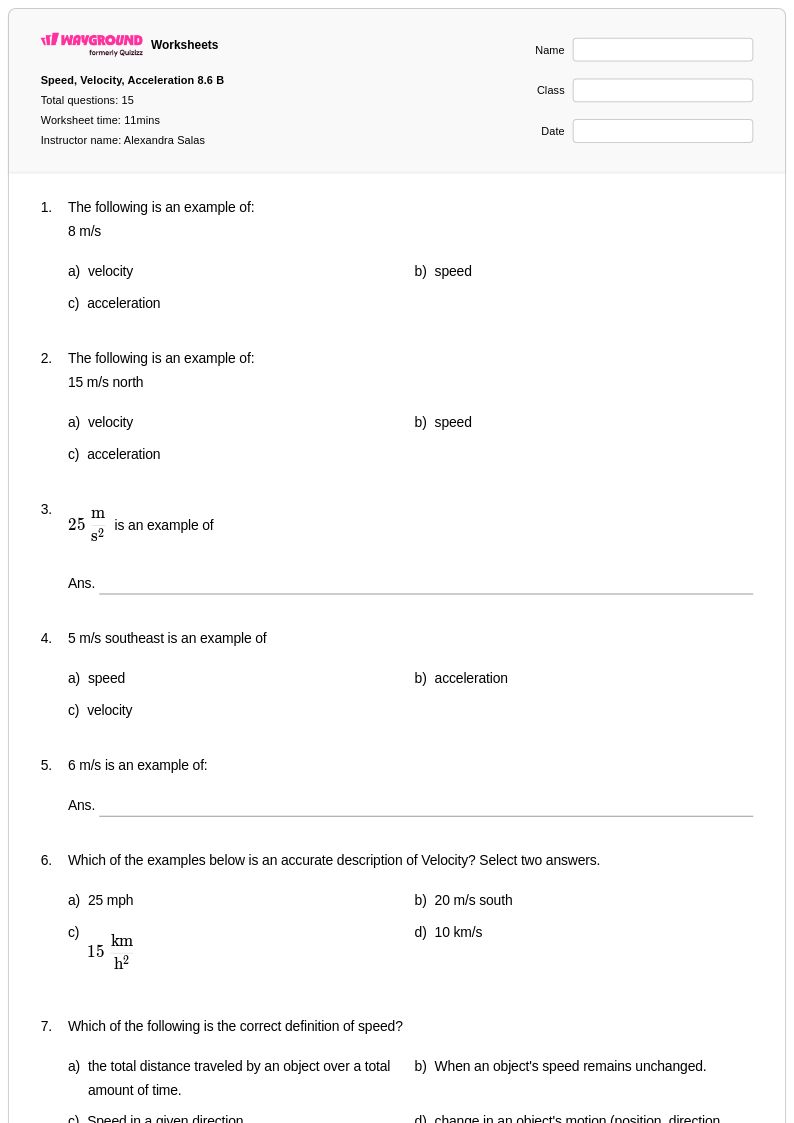
15 Q
6th - 8th
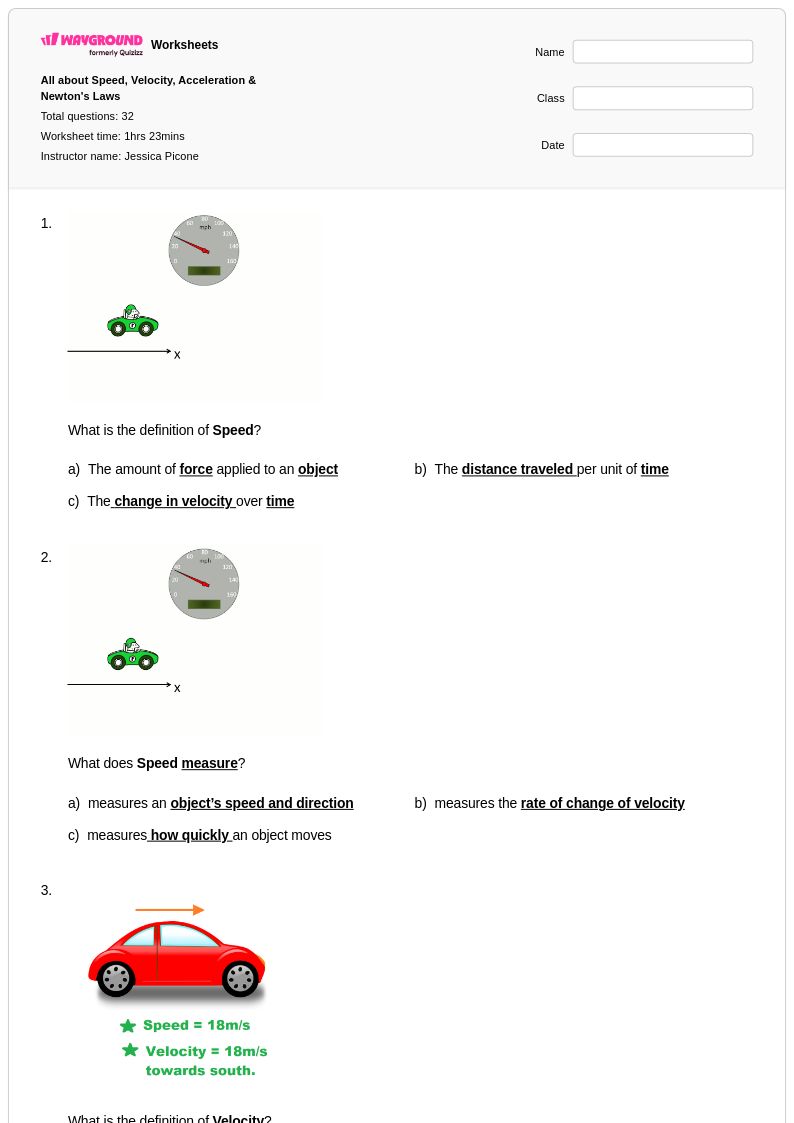
32 Q
7th
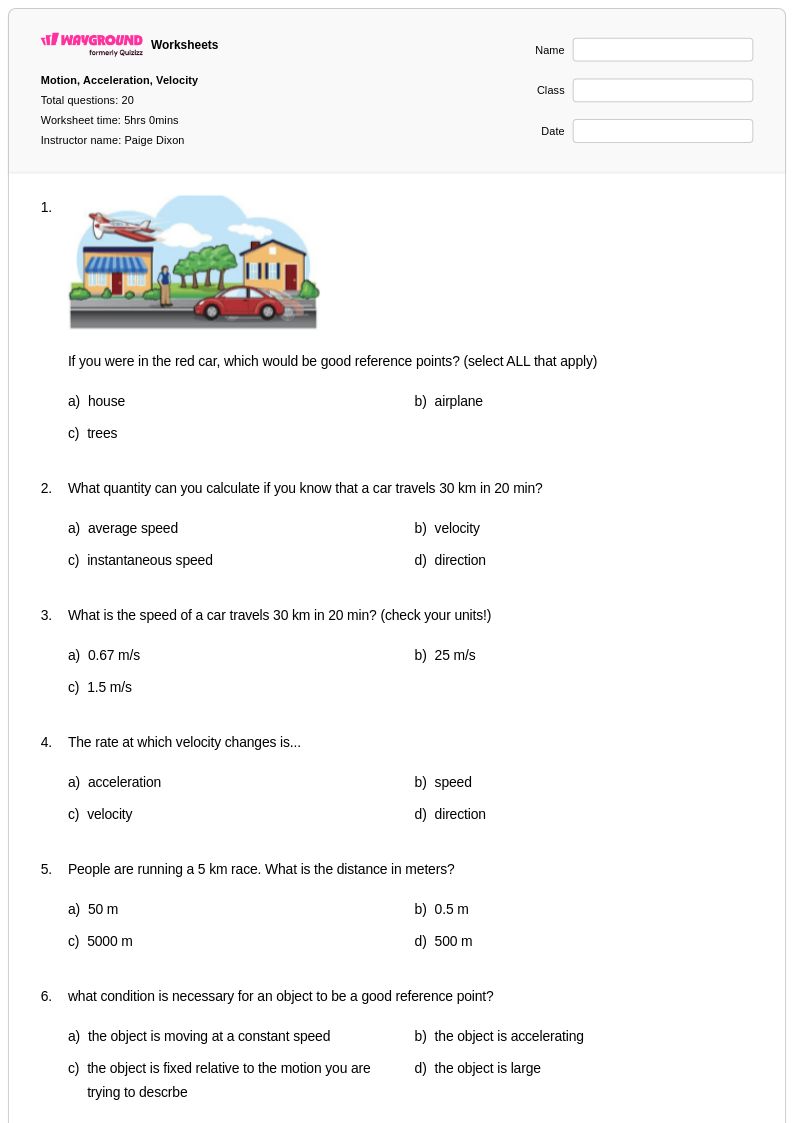
20 Q
7th
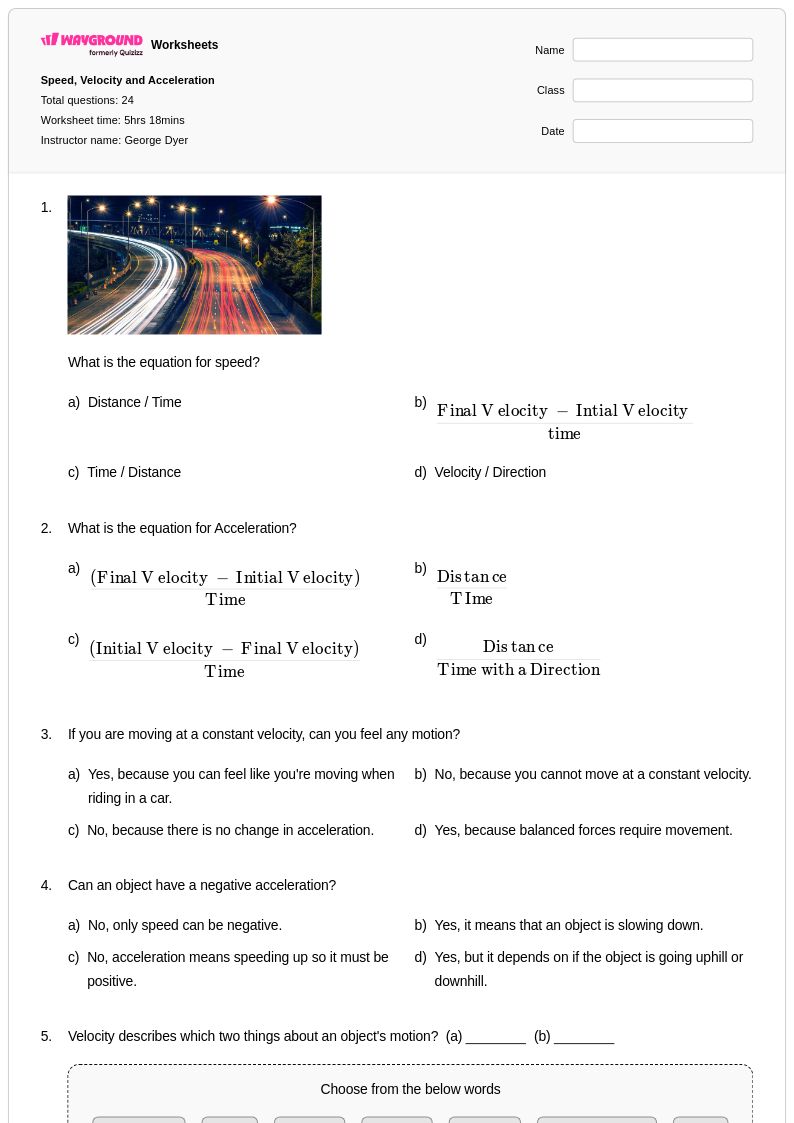
24 Q
7th
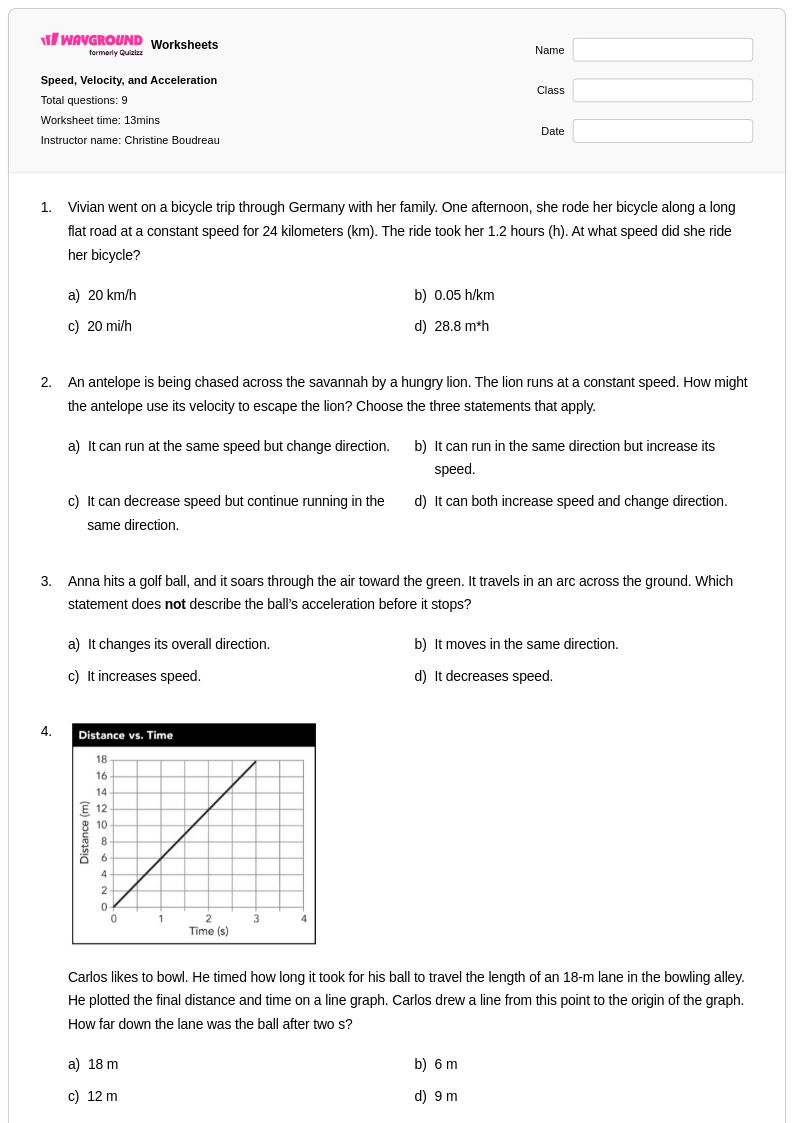
9 Q
6th - 8th
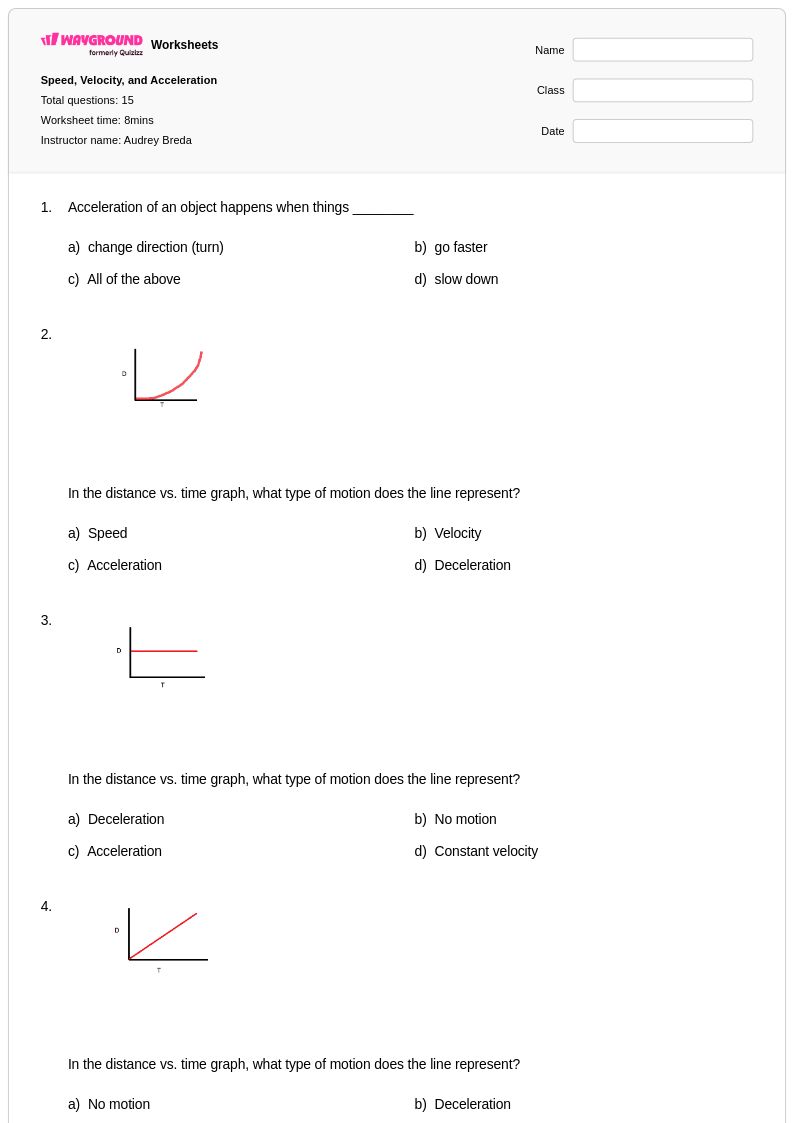
15 Q
6th - 8th
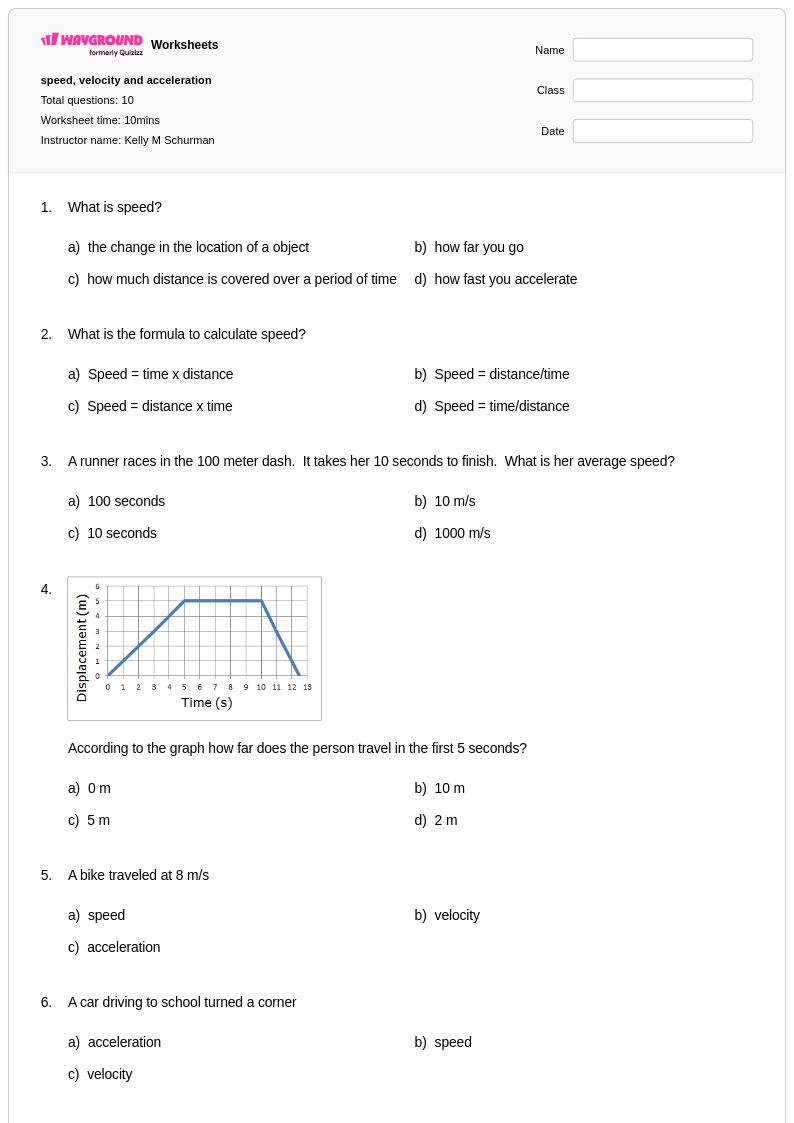
10 Q
6th - 8th
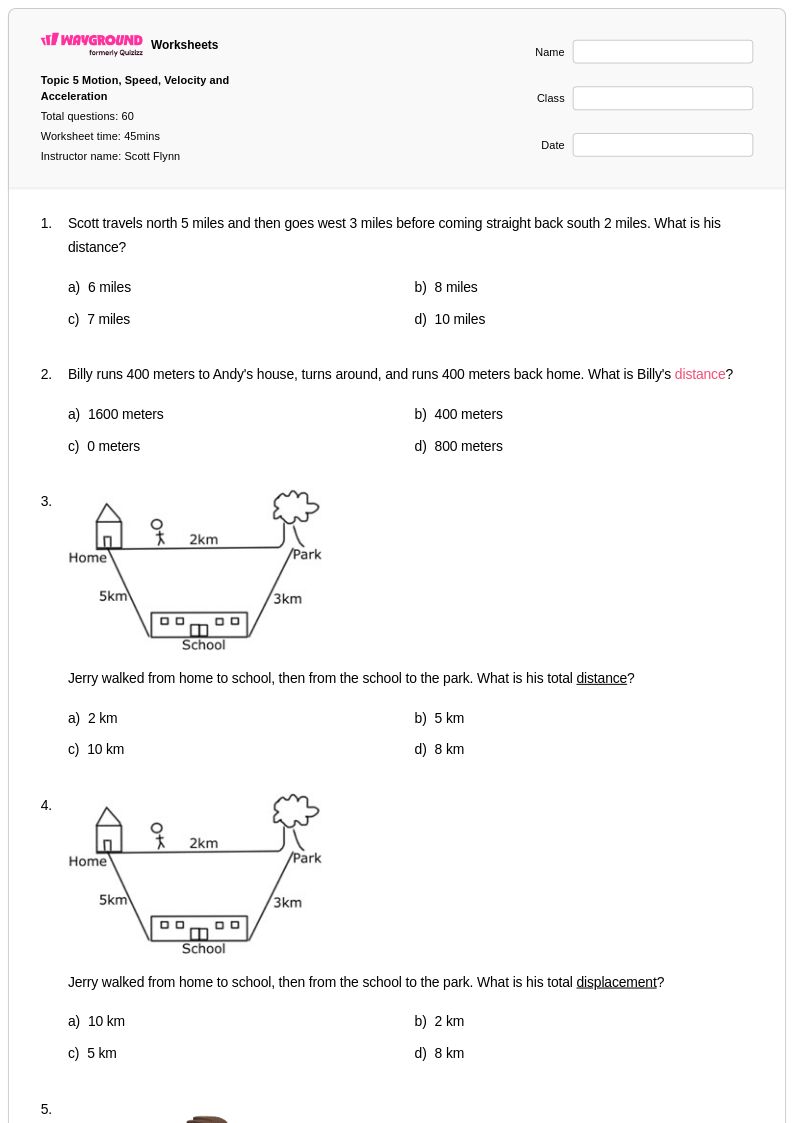
60 Q
7th - 8th
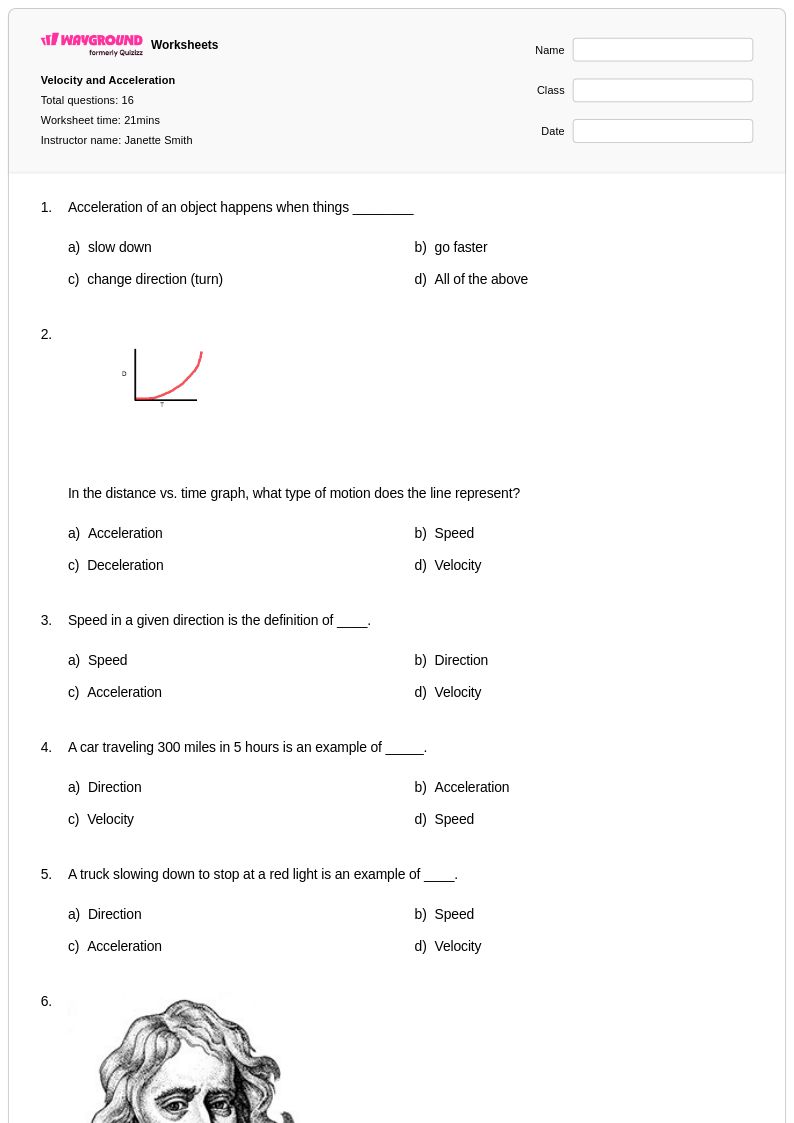
16 Q
7th - 8th
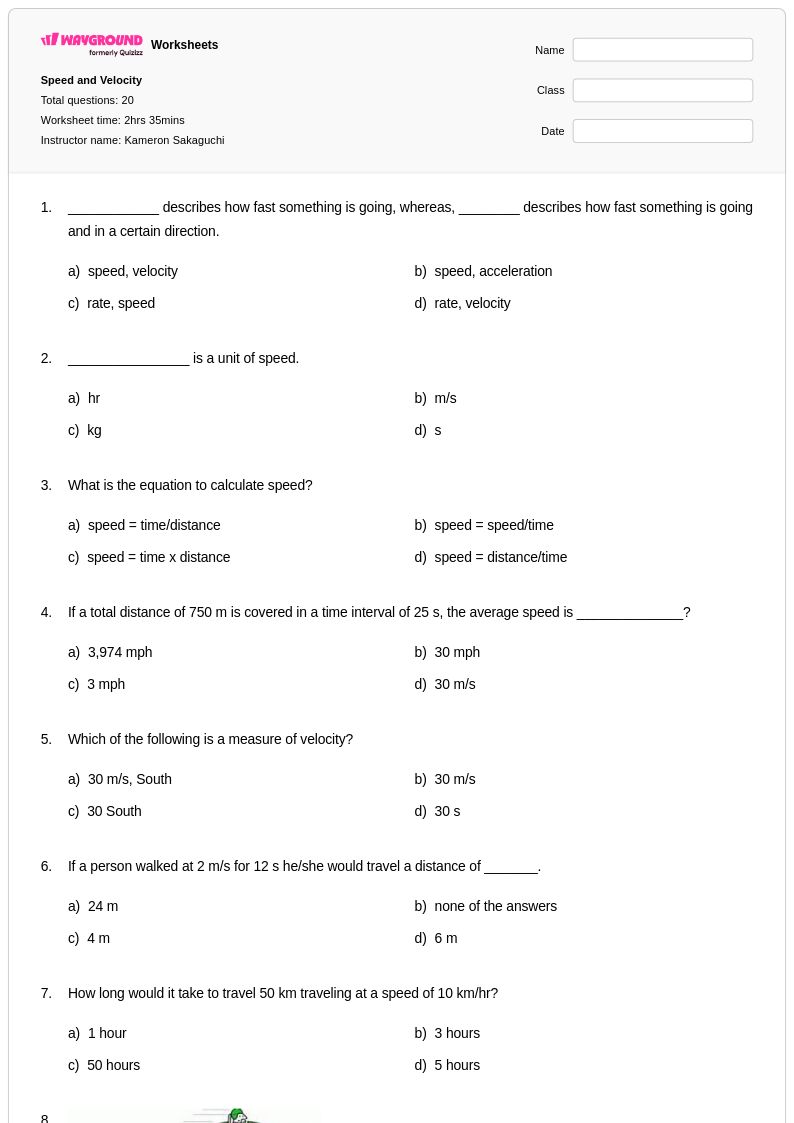
20 Q
7th
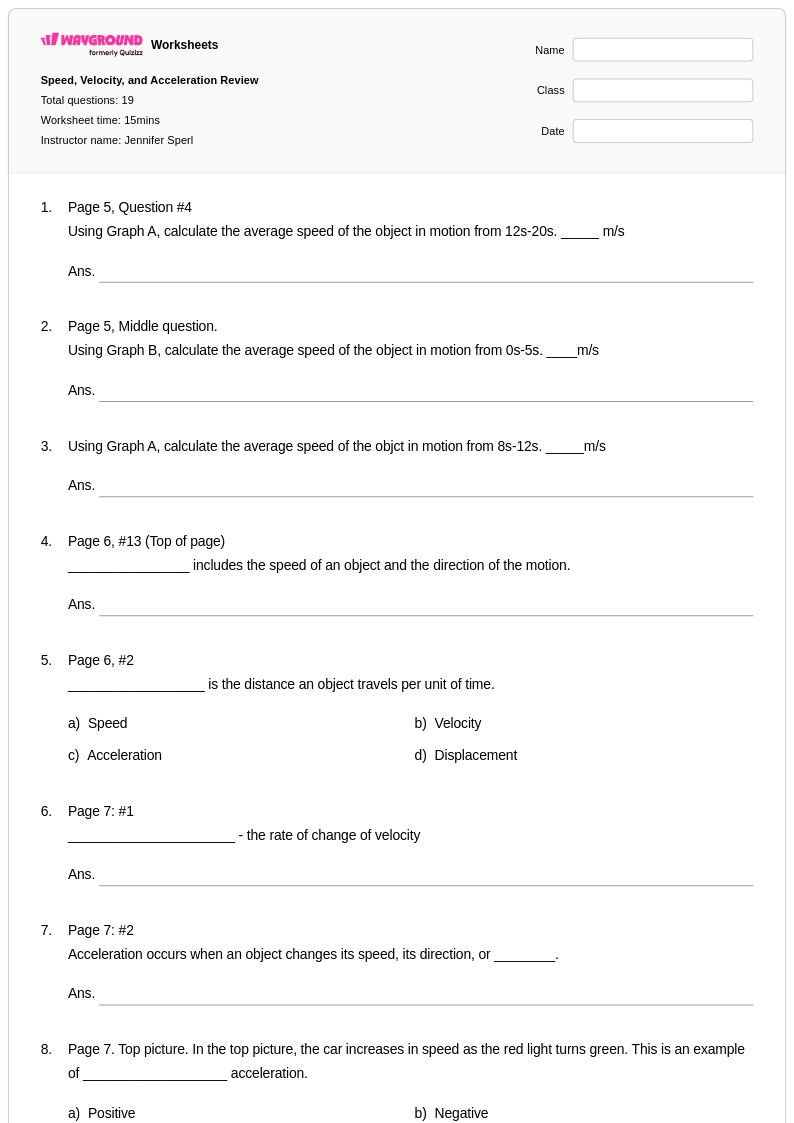
19 Q
7th - 9th
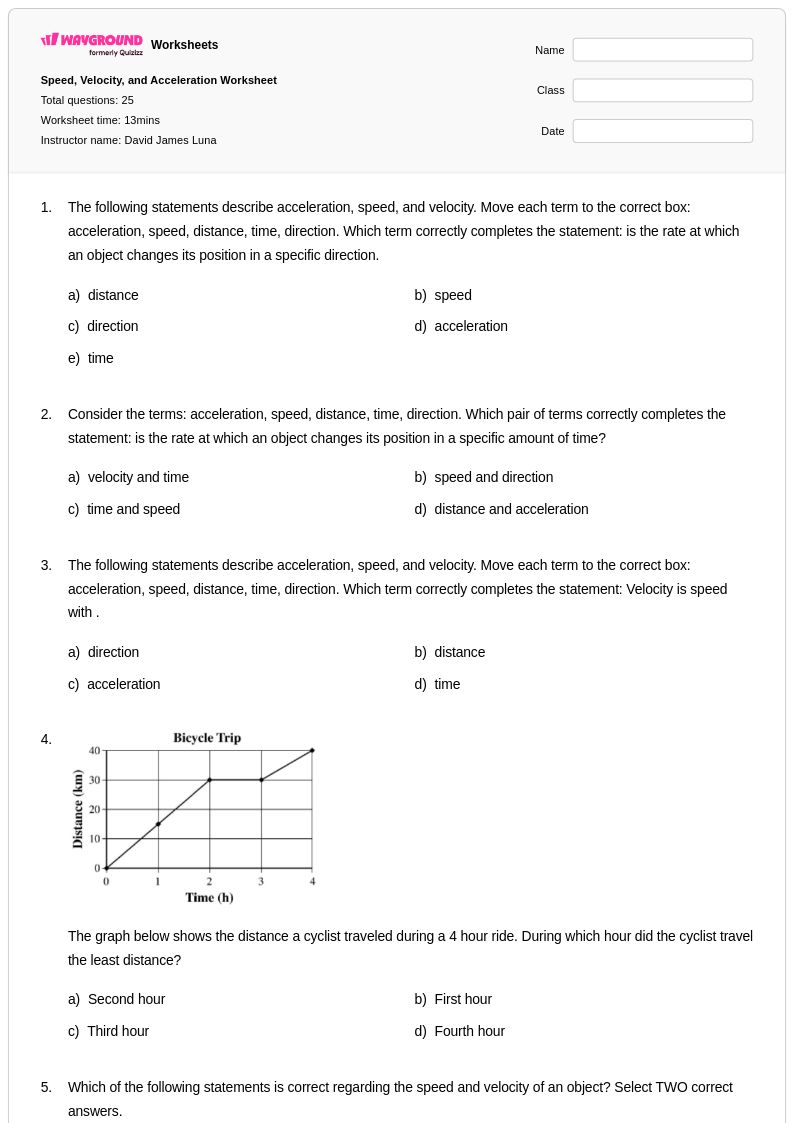
25 Q
7th
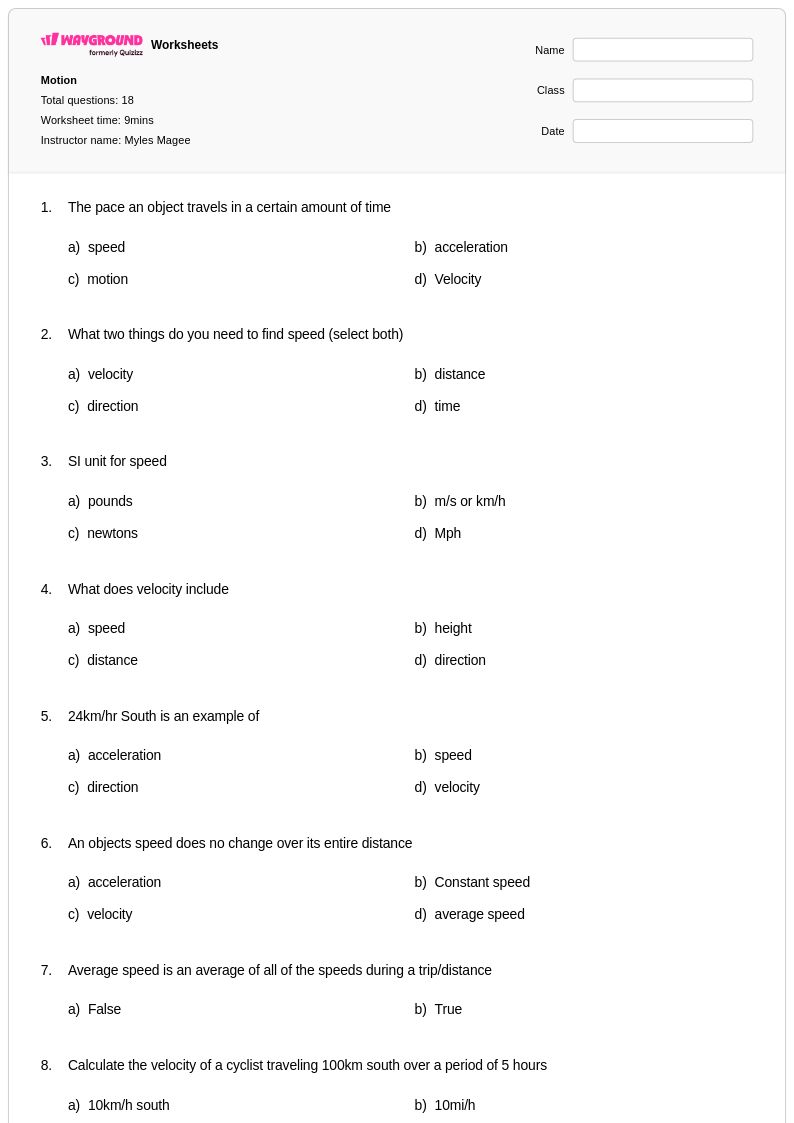
18 Q
7th
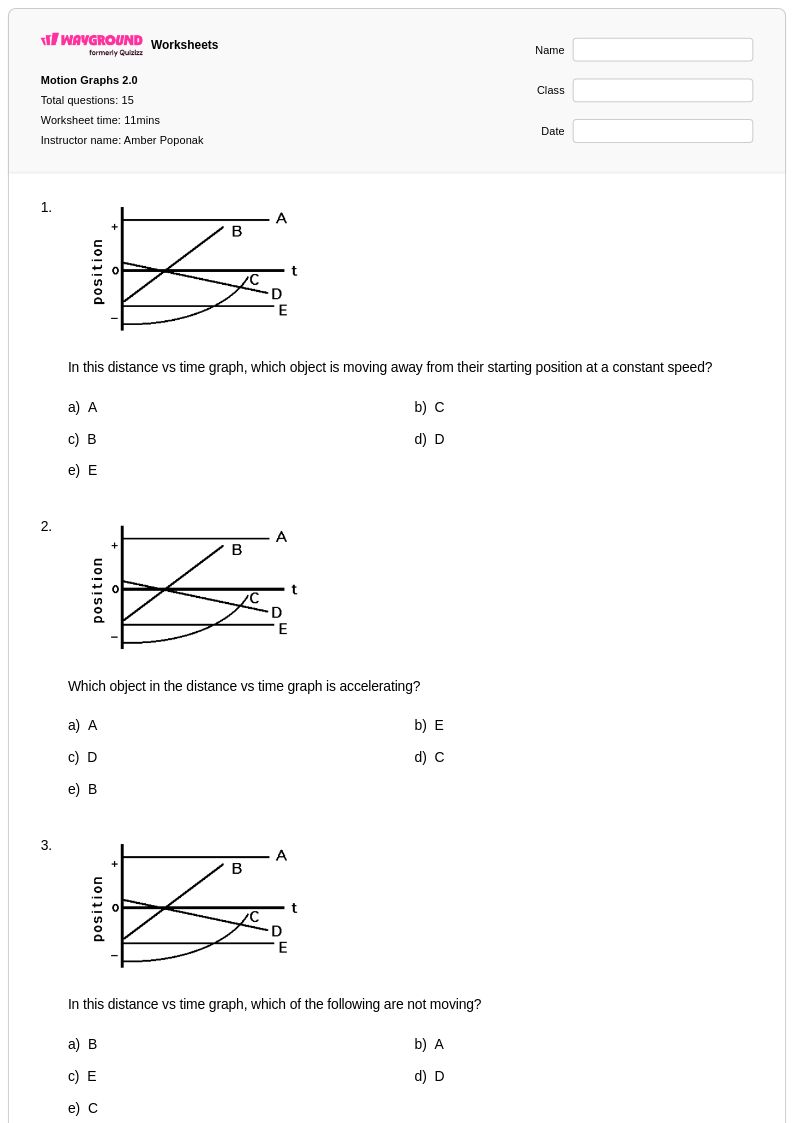
15 Q
7th - 9th
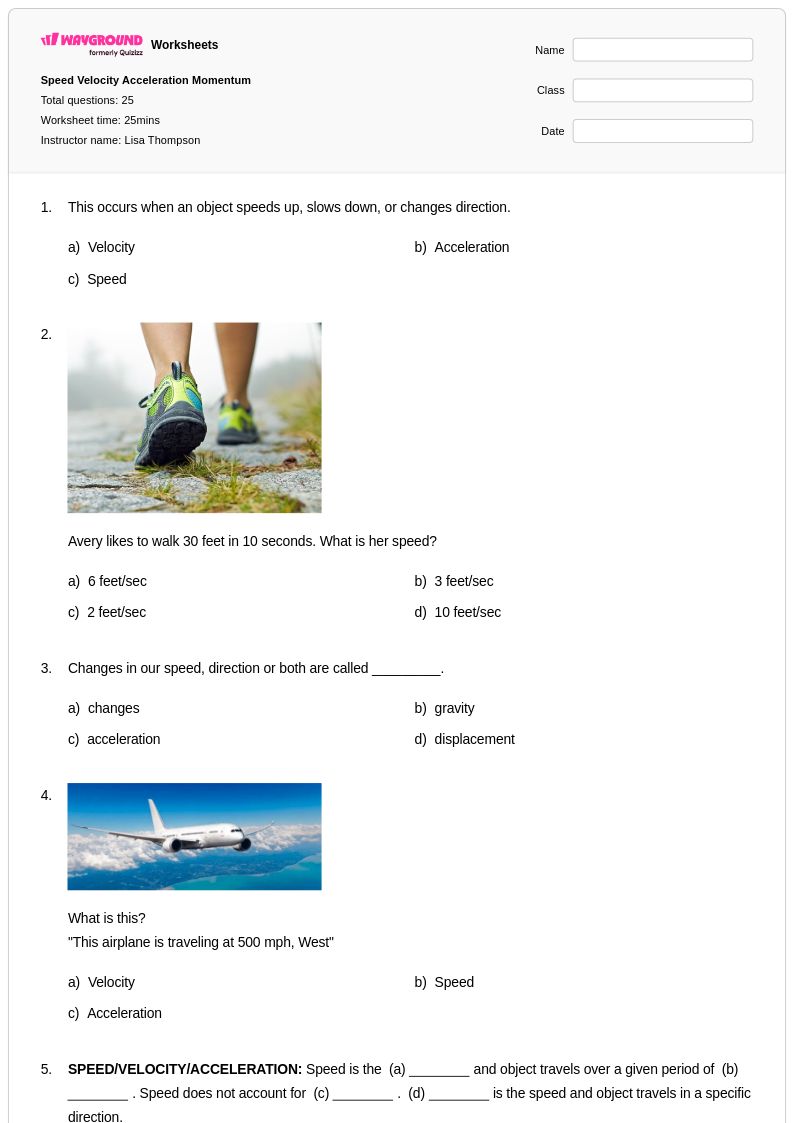
25 Q
5th - Uni
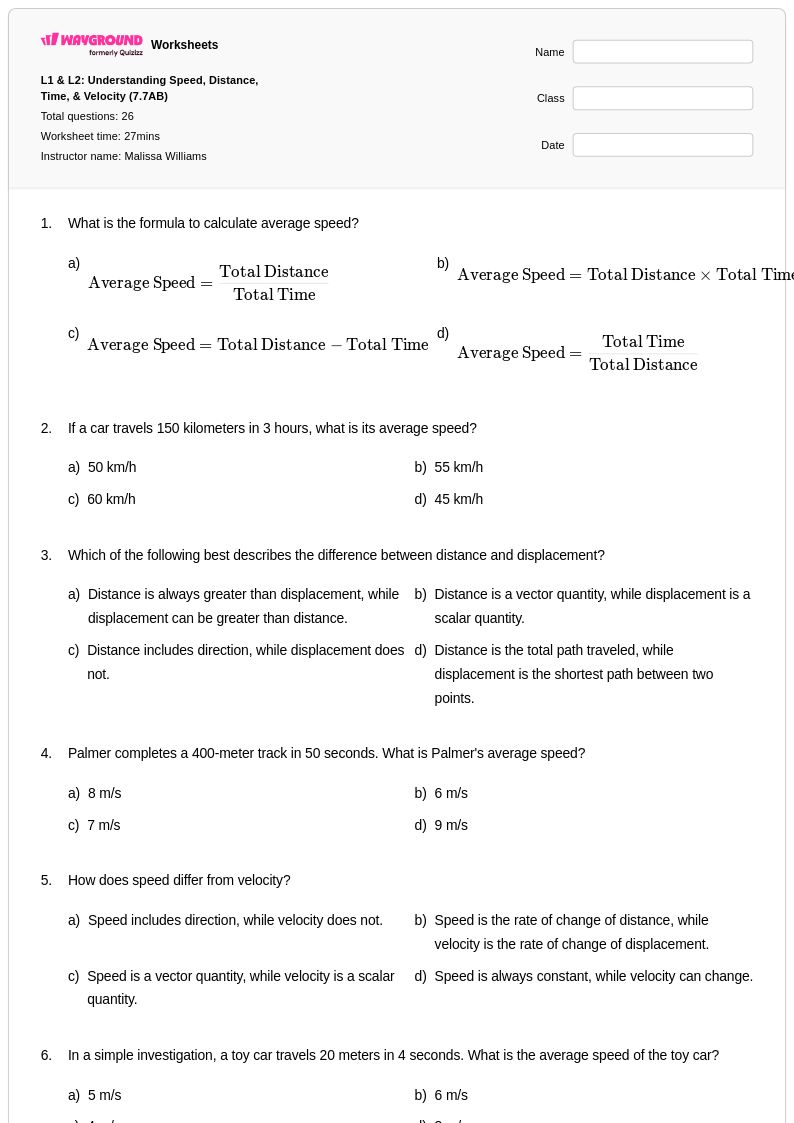
26 Q
7th
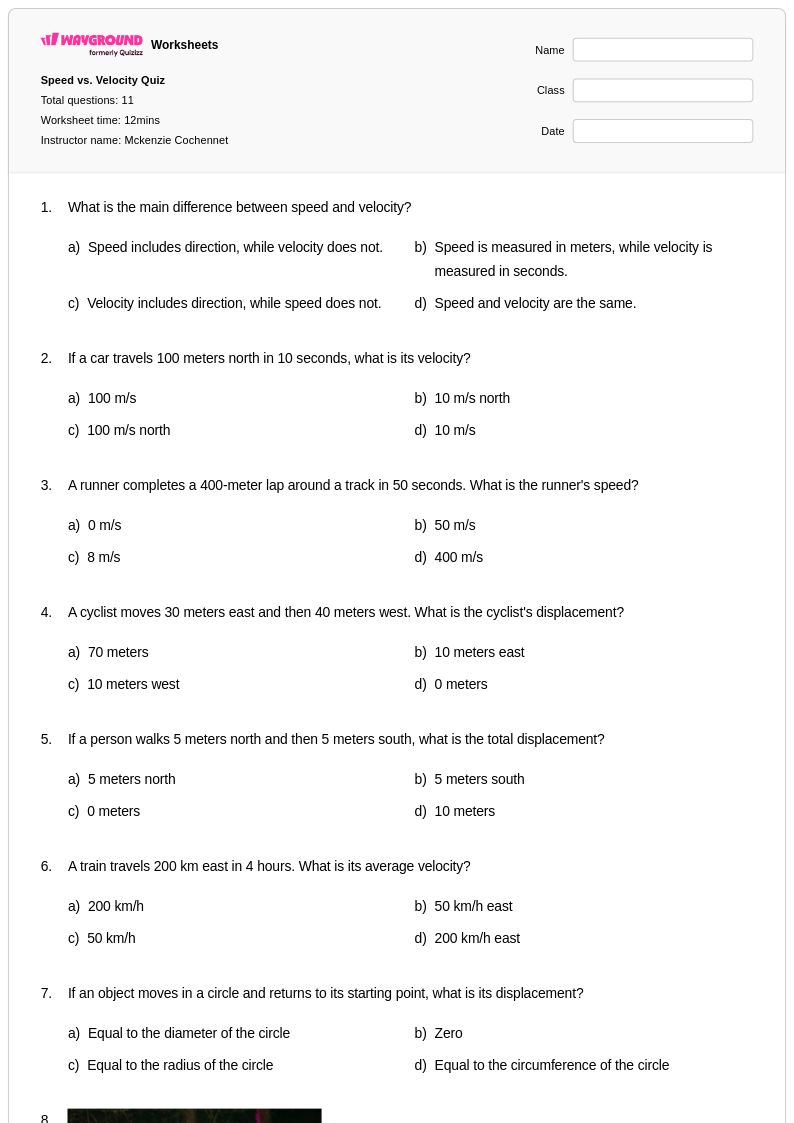
11 Q
7th - Uni
Explore Other Subject Worksheets for class 7
Explore printable Velocity and Acceleration worksheets for Class 7
Class 7 velocity and acceleration worksheets available through Wayground (formerly Quizizz) provide comprehensive practice opportunities for students mastering these fundamental physics concepts. These carefully designed educational resources focus on building essential skills including calculating velocity using distance and time measurements, distinguishing between speed and velocity as vector quantities, analyzing acceleration through velocity changes over time, and interpreting motion graphs to understand object movement patterns. The worksheet collections feature diverse practice problems that guide students through real-world applications such as calculating the acceleration of moving vehicles, determining final velocities of falling objects, and solving multi-step kinematics problems. Each worksheet includes detailed answer keys that support both independent study and classroom instruction, with many resources available as free printables in convenient pdf format for immediate classroom use.
Wayground (formerly Quizizz) empowers educators with an extensive library of millions of teacher-created velocity and acceleration worksheets specifically tailored for Class 7 physics instruction. The platform's robust search and filtering capabilities enable teachers to quickly locate resources aligned with specific learning standards and curriculum requirements, while built-in differentiation tools allow for seamless customization based on individual student needs and learning levels. These versatile worksheet collections are available in both printable pdf format and interactive digital versions, providing flexibility for various instructional approaches including traditional classroom lessons, homework assignments, and remote learning environments. Teachers can efficiently utilize these comprehensive resources for lesson planning, targeted skill remediation, advanced student enrichment, and ongoing assessment preparation, ensuring that all students develop strong foundational understanding of motion concepts essential for success in higher-level physics coursework.
FAQs
How do I teach the difference between velocity and acceleration to physics students?
What kinds of practice problems help students get better at velocity and acceleration calculations?
What mistakes do students most commonly make when working with velocity and acceleration?
How can I use velocity and acceleration worksheets to identify gaps in student understanding?
How do I use Wayground's velocity and acceleration worksheets in my classroom?
How do I support students who struggle with kinematic equations in a mixed-ability physics class?