Free Printable Physics Equations Worksheets for Class 7
Enhance Class 7 students' understanding of physics equations with Wayground's comprehensive collection of free worksheets, printables, and practice problems that include detailed answer keys for mastering fundamental scientific calculations.
Explore printable Physics Equations worksheets for Class 7
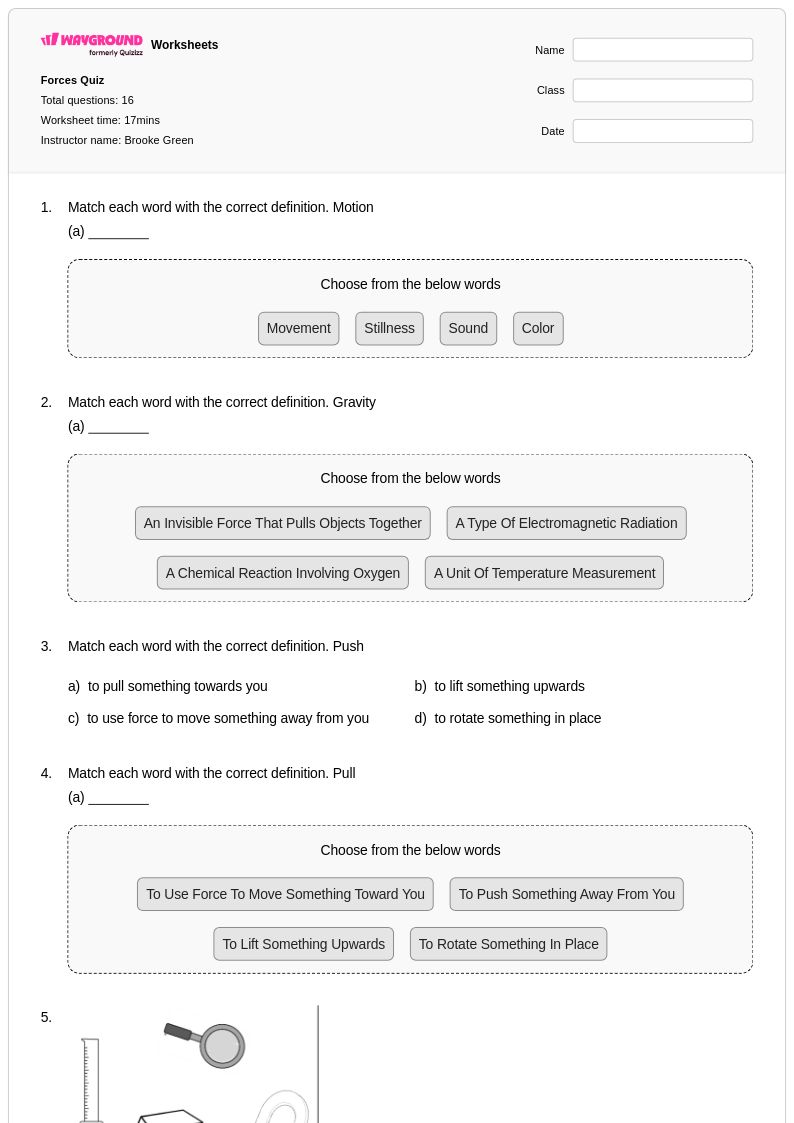
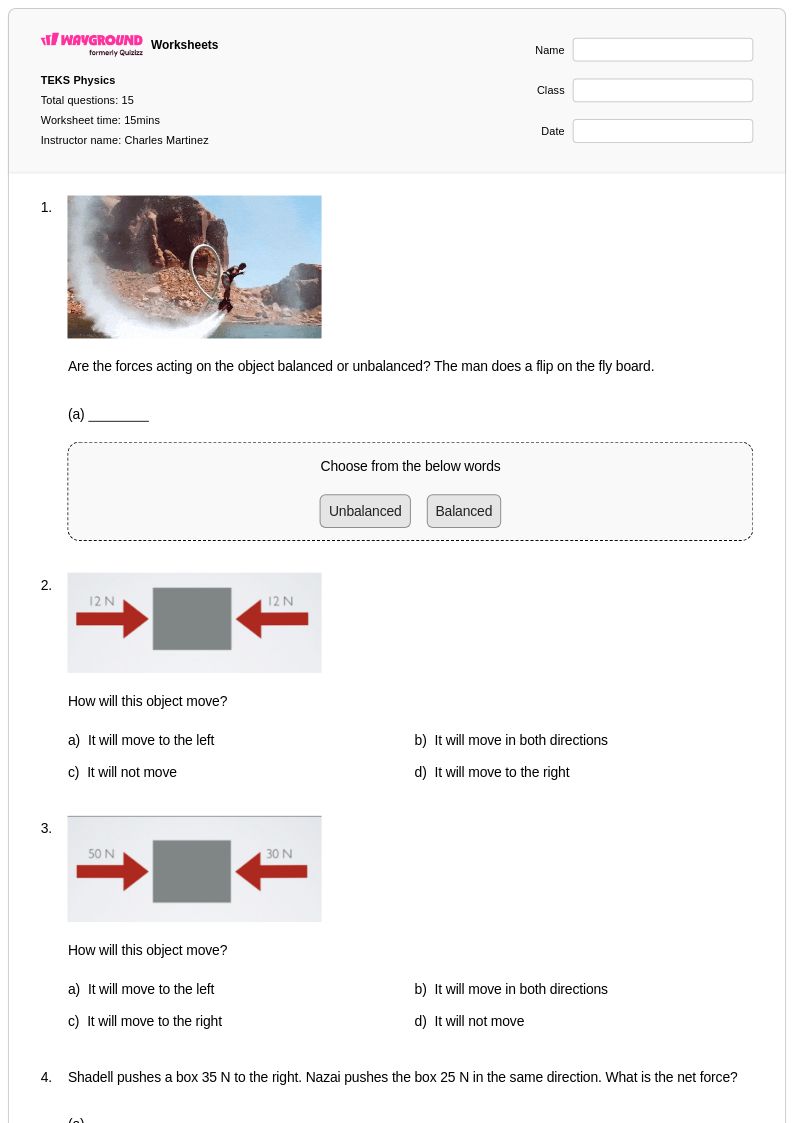
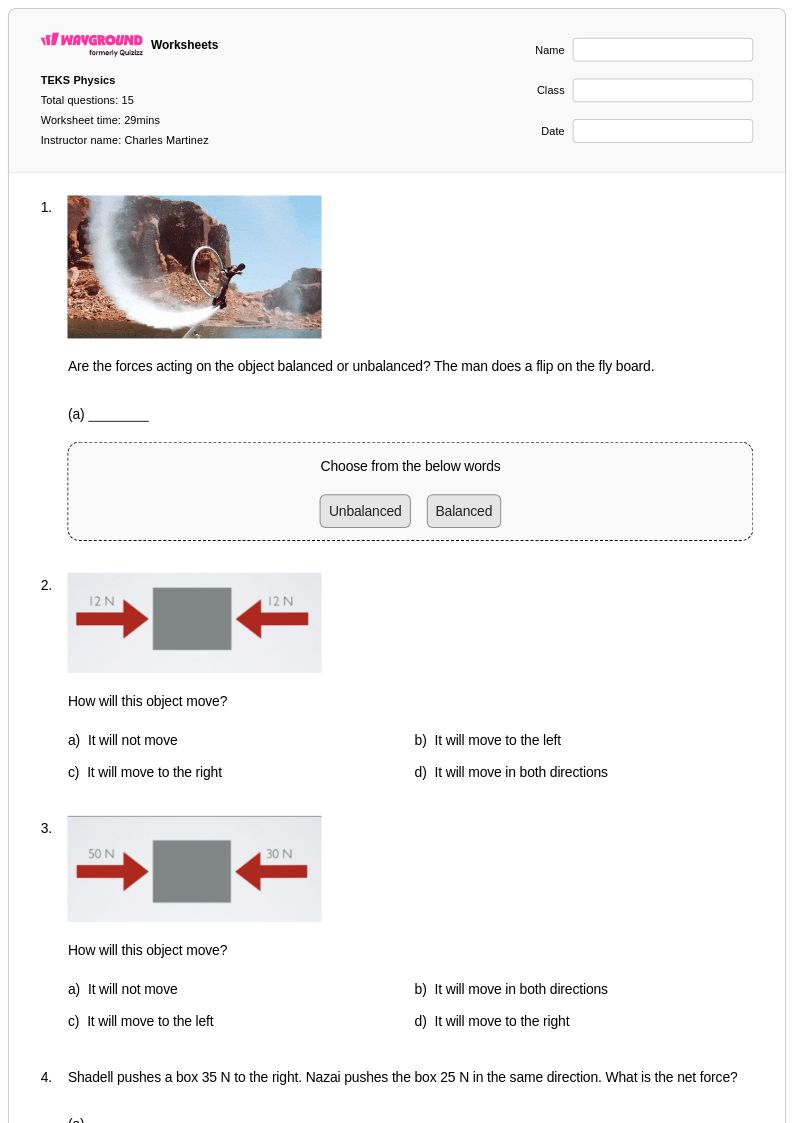
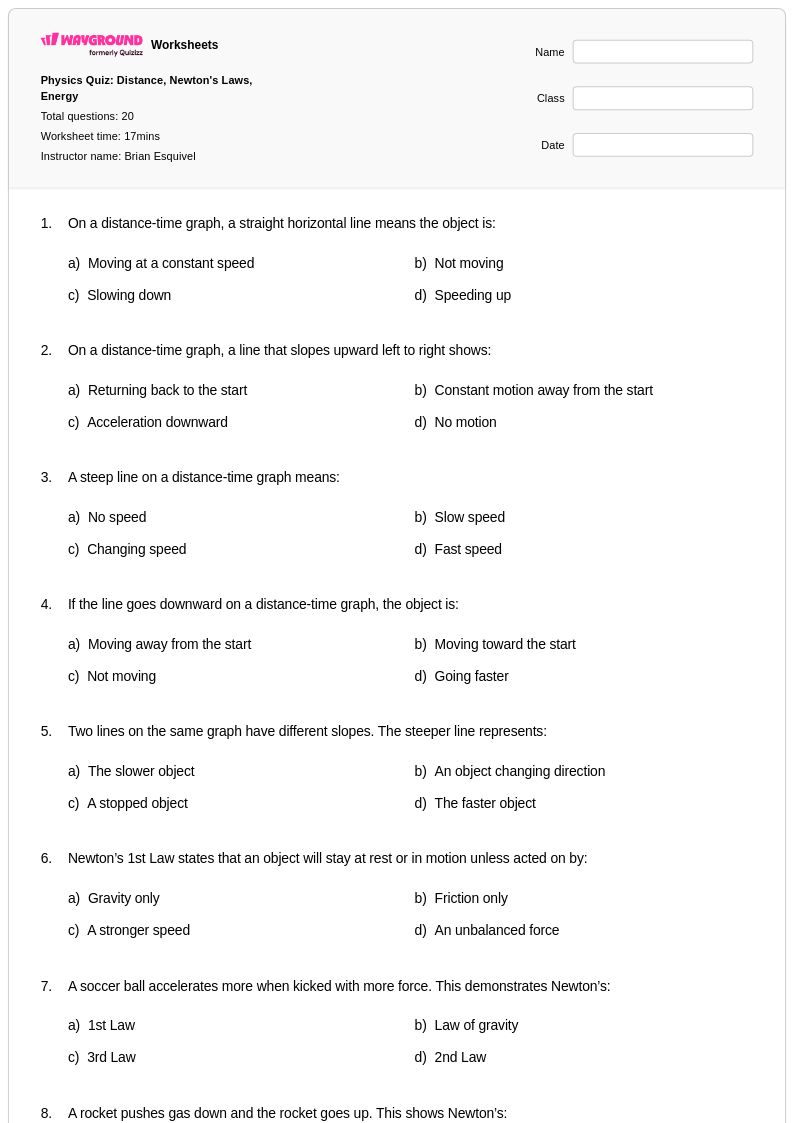
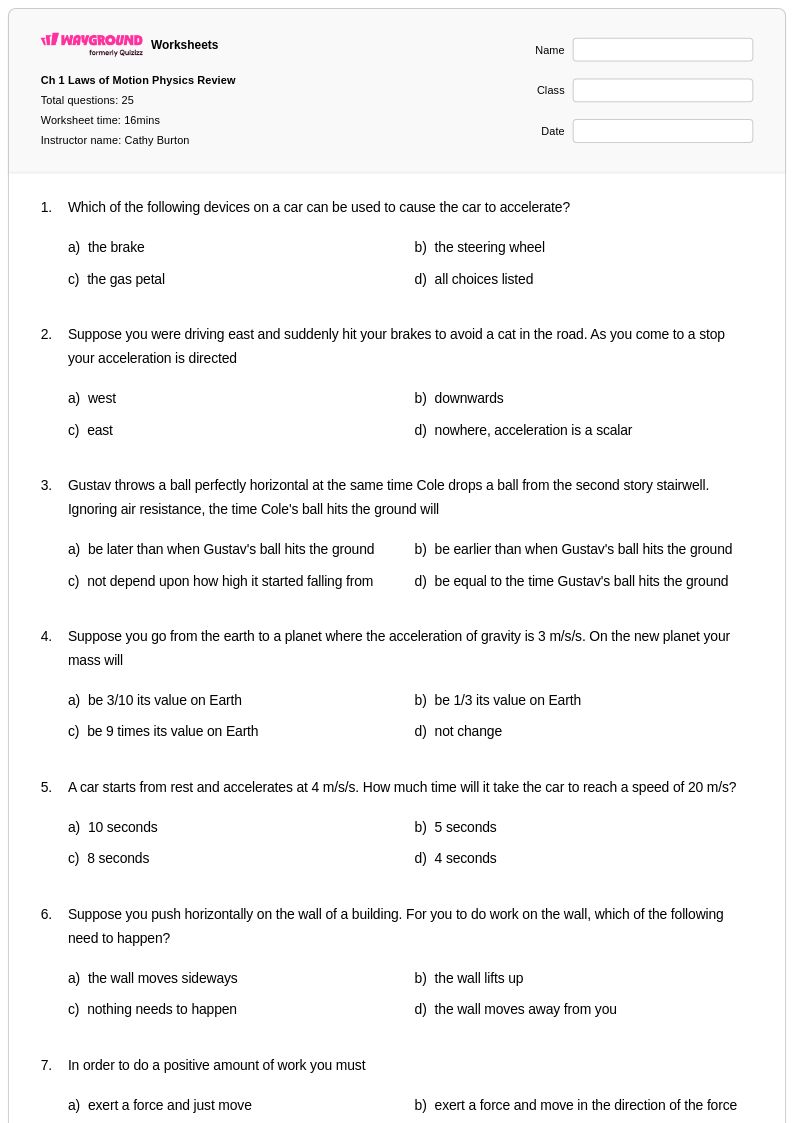
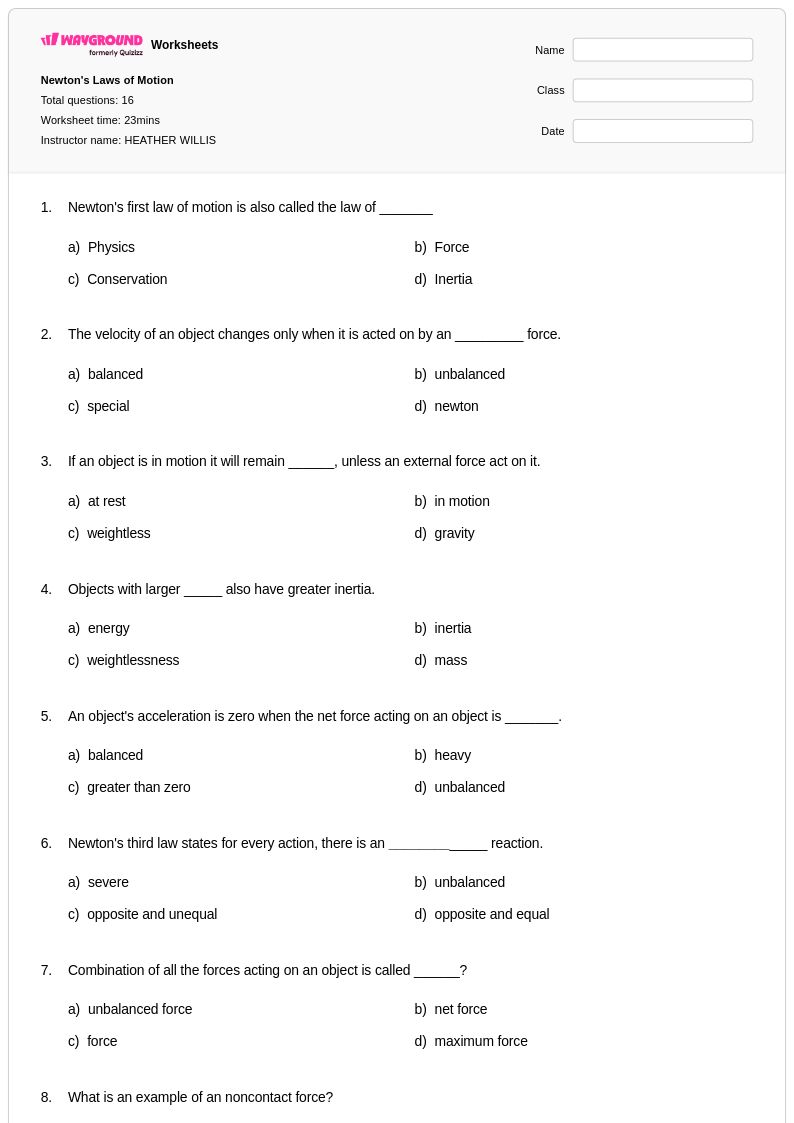
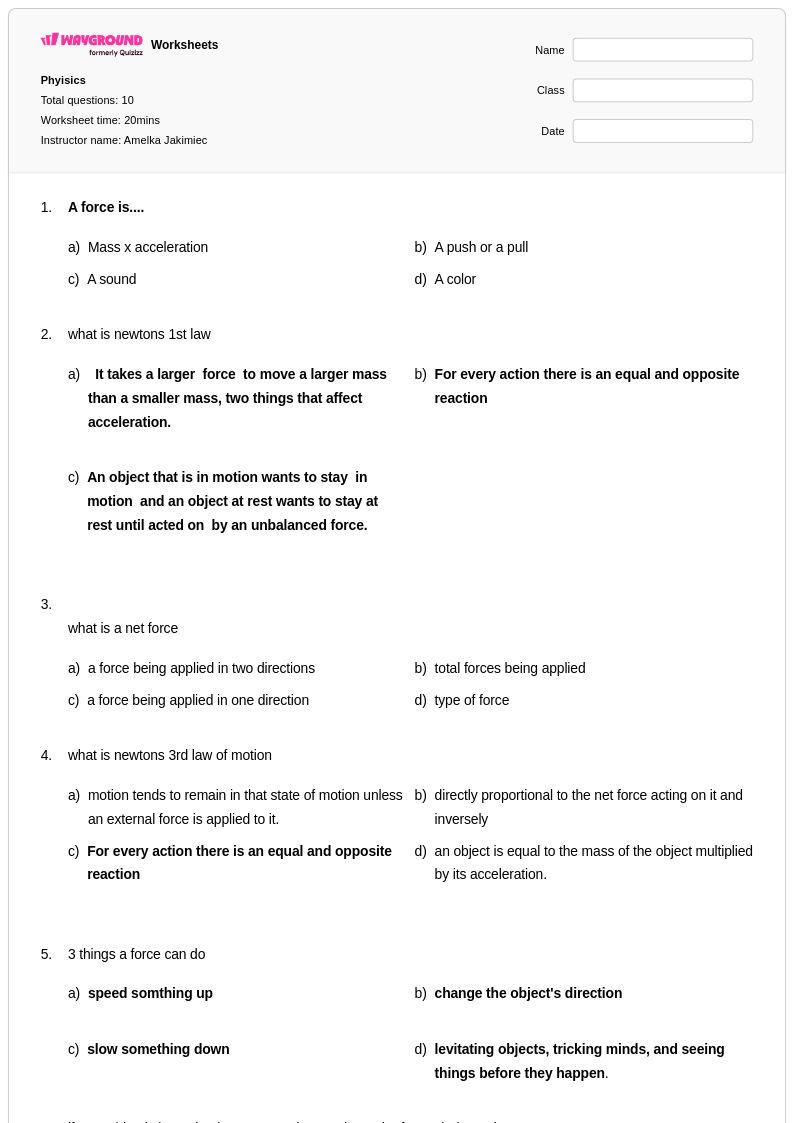
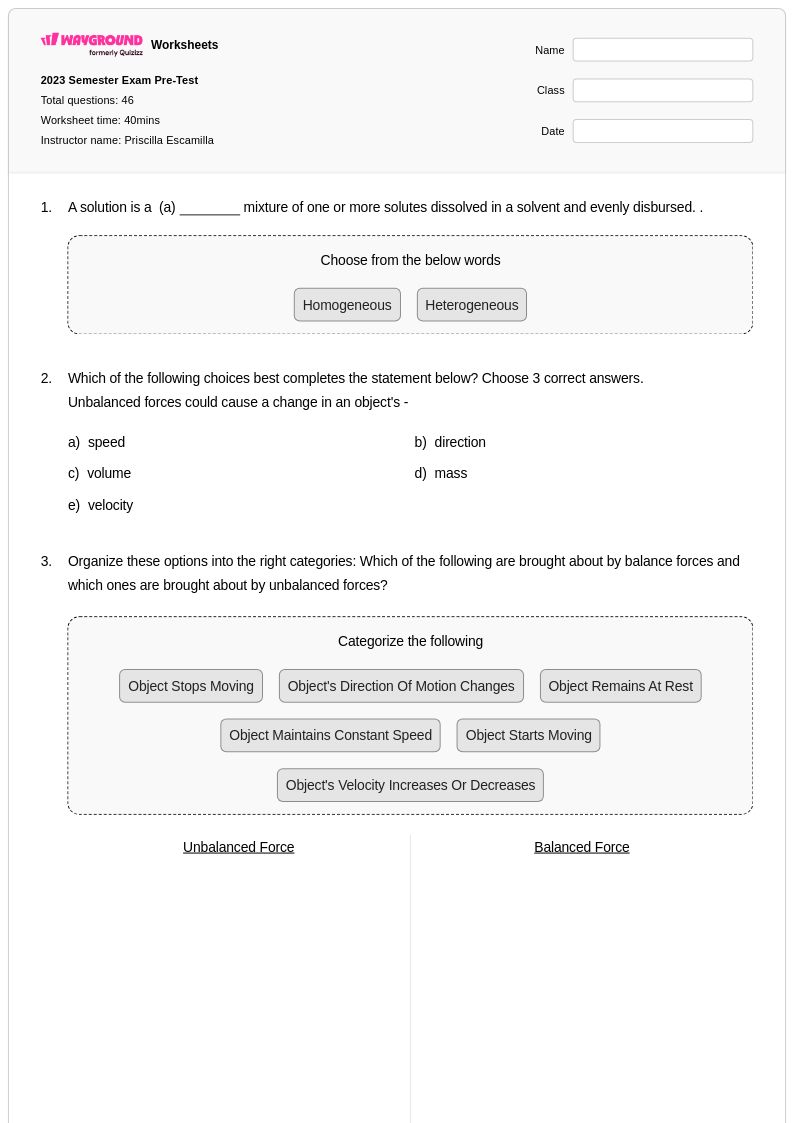
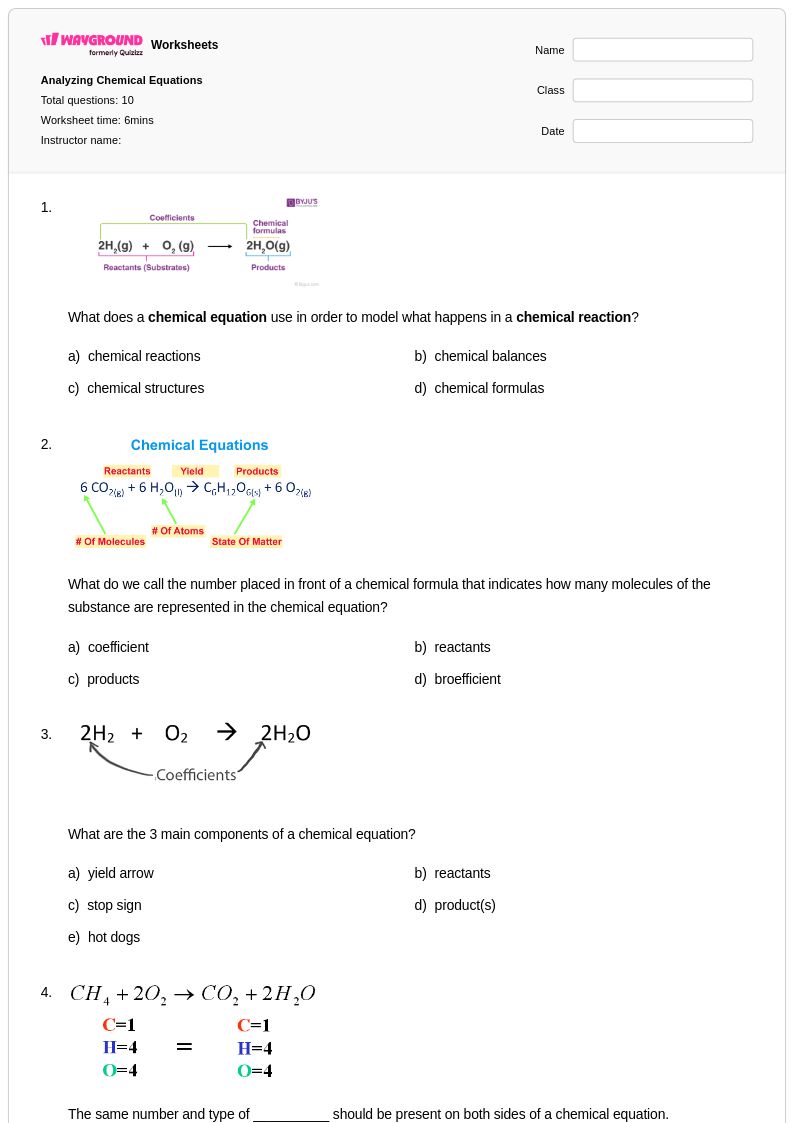
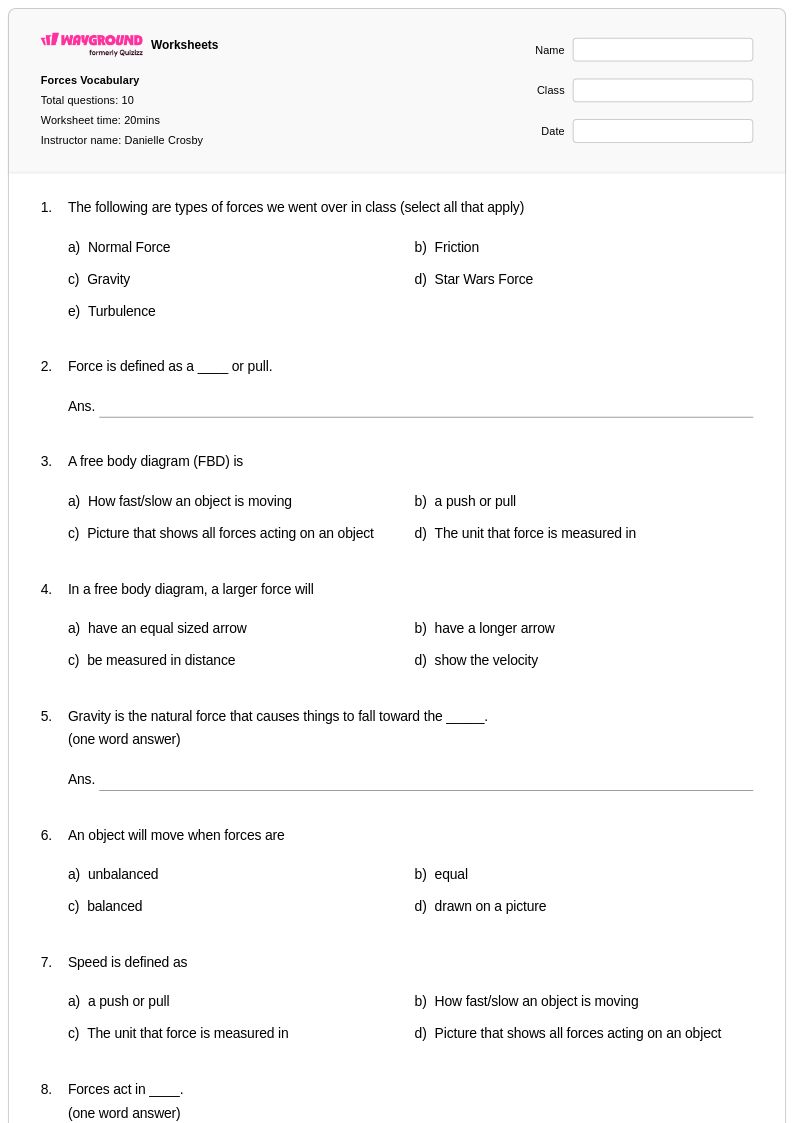
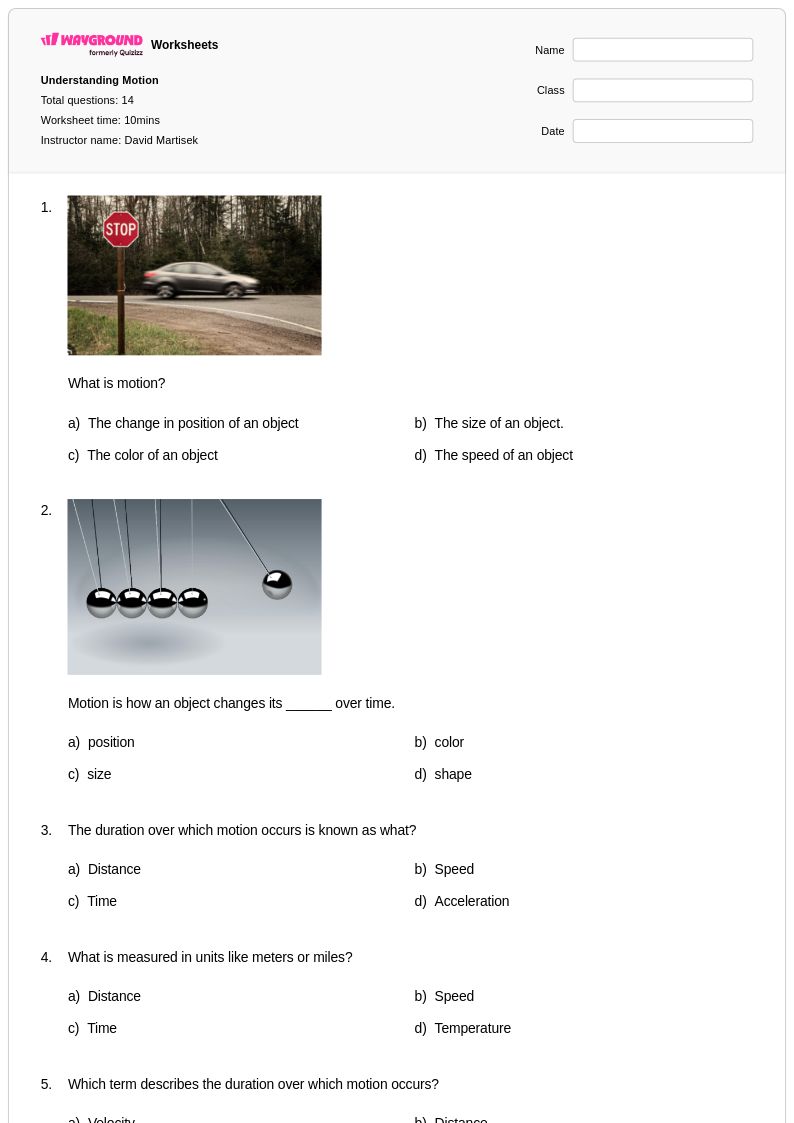
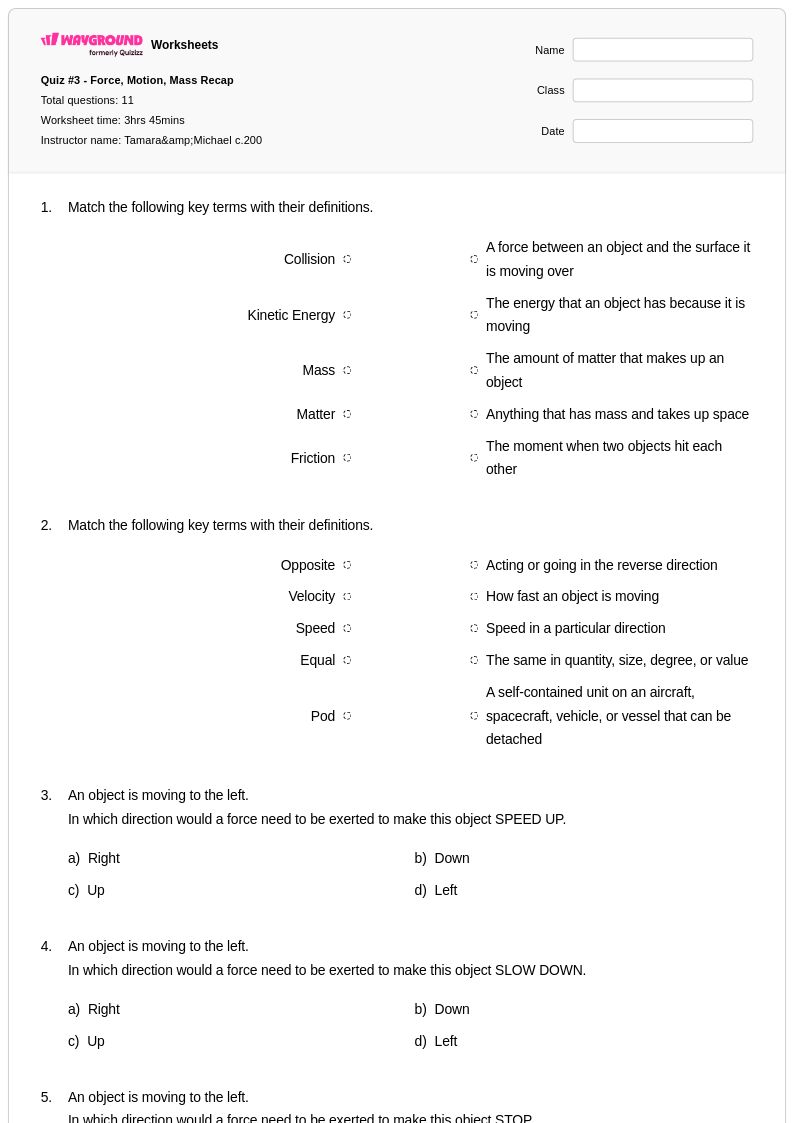
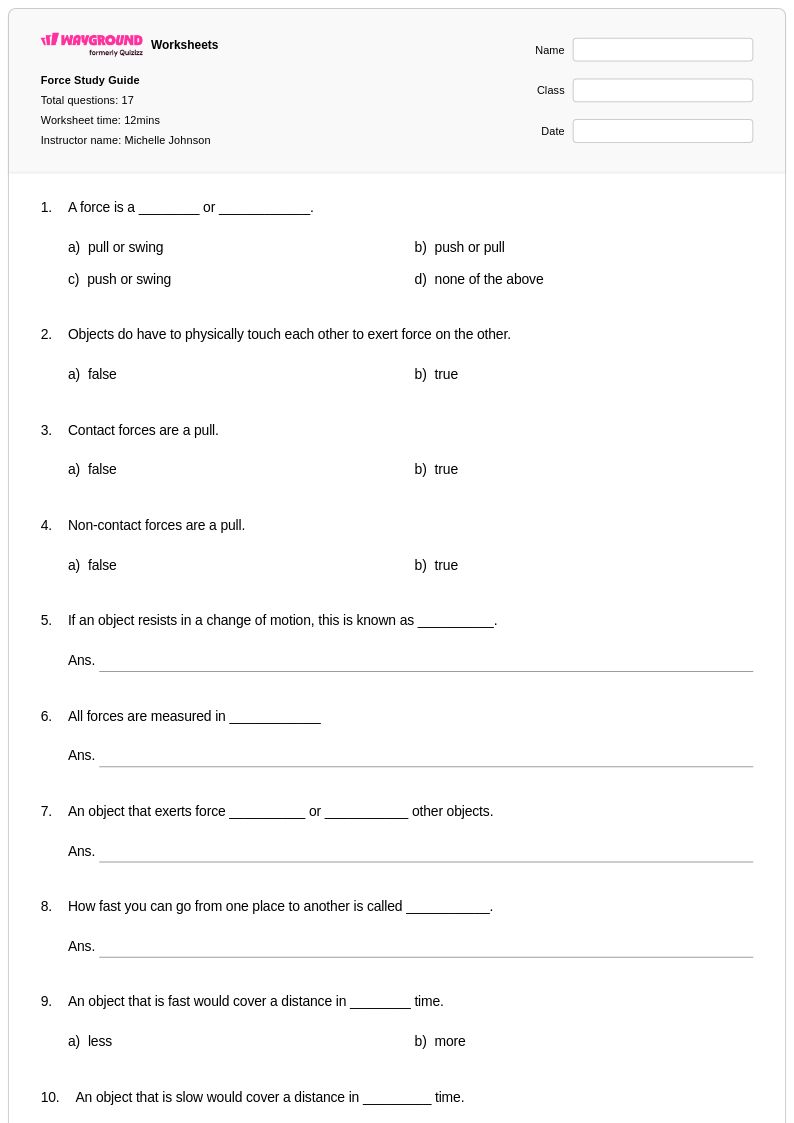
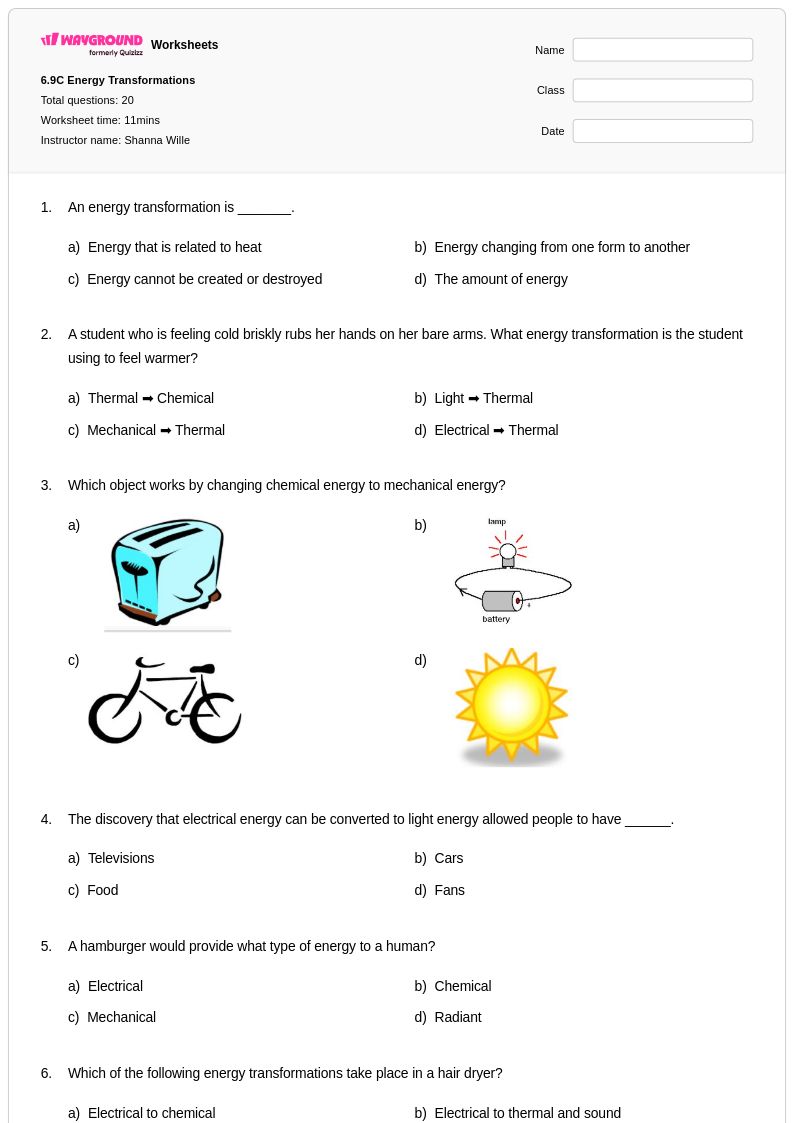
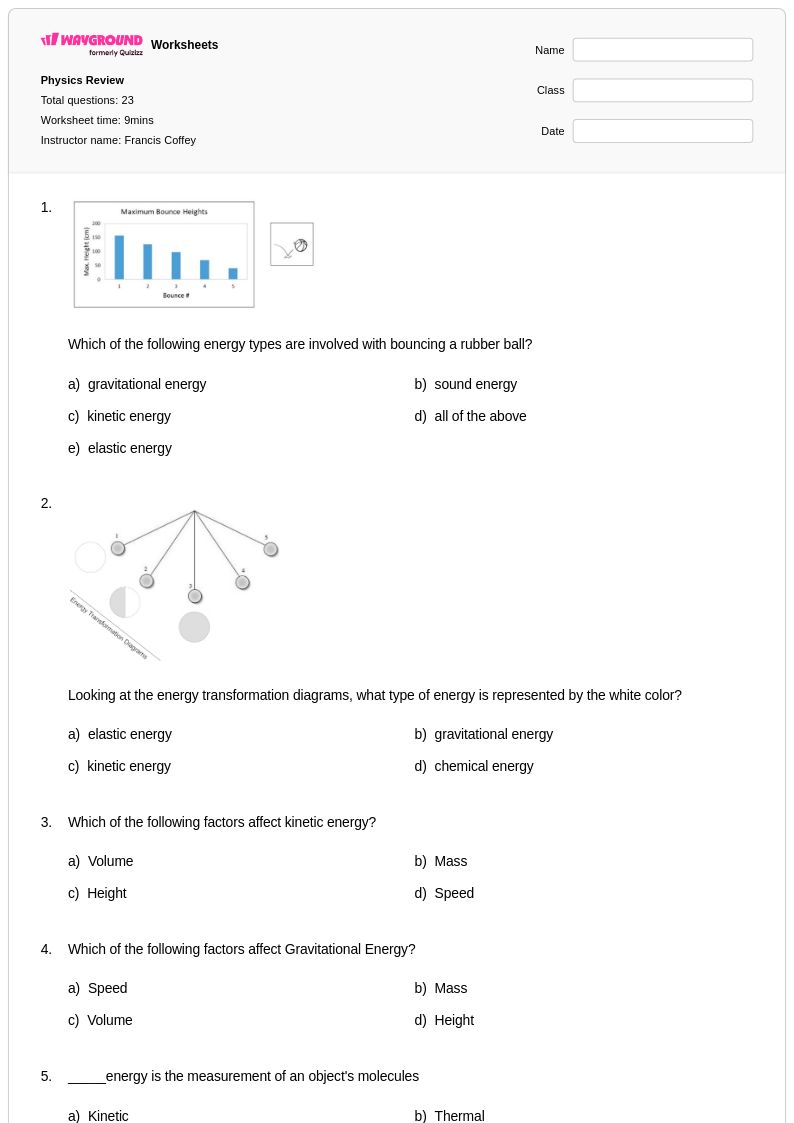
Physics equations worksheets for Class 7 students available through Wayground (formerly Quizizz) provide comprehensive practice with fundamental formulas that form the foundation of physical science understanding. These carefully designed worksheets help seventh-grade students master essential equations for motion, force, energy, and basic mechanics while developing critical problem-solving skills and mathematical reasoning abilities. Each worksheet collection includes detailed answer keys and step-by-step solutions, allowing students to self-assess their progress and identify areas needing additional focus. The printable pdf format ensures easy classroom distribution and homework assignments, while the free practice problems cover real-world applications that make abstract physics concepts more accessible and engaging for middle school learners.
Wayground (formerly Quizizz) empowers educators with millions of teacher-created physics equation resources specifically tailored for Class 7 instruction, featuring robust search and filtering capabilities that allow quick identification of worksheets aligned with specific learning standards and curriculum requirements. The platform's differentiation tools enable teachers to customize worksheet difficulty levels and problem types to meet diverse student needs, supporting both remediation for struggling learners and enrichment opportunities for advanced students. Available in both printable and digital formats including downloadable pdfs, these worksheet collections streamline lesson planning while providing flexible options for in-class practice, homework assignments, and assessment preparation. Teachers can efficiently track student progress through integrated answer keys and use the extensive resource library to create targeted skill practice sessions that reinforce physics equation mastery and build confidence in mathematical problem-solving within scientific contexts.
FAQs
How do I teach physics equations so students actually understand when to use them?
The most effective approach is to anchor each equation to the physical scenario it describes before introducing the formula itself. Start with a real-world example, such as a ball in free fall, and have students reason about which variables are changing before presenting the kinematic equation. Once students understand the conceptual logic, move into algebraic manipulation and dimensional analysis so they can verify their setups are correct. This sequence builds equation fluency rather than rote memorization.
What are the most common mistakes students make when solving physics equations?
The most frequent errors are unit inconsistency, incorrect algebraic rearrangement, and choosing the wrong equation for the scenario. Students often plug numbers into a formula without converting units first, which produces answers that are numerically wrong even when the method is right. A second common mistake is failing to isolate the correct variable before substituting values, leading to circular or invalid solutions. Building in a dimensional analysis check step as a classroom norm addresses both issues consistently.
What practice problems help students get better at rearranging and applying physics equations?
Scaffolded problems that progress from direct substitution to multi-step rearrangement are most effective for building fluency. Start students with problems where the unknown variable is already isolated, then move to problems requiring one algebraic manipulation, then multi-step problems involving two or more equations. Including problems that require students to identify which equation to use, rather than prescribing it, is critical for developing real problem-solving skills. Physics equations worksheets that sequence problems this way help students consolidate both procedural and conceptual understanding.
How can I support students who struggle with the math side of physics equations?
Students who struggle with physics equations often have underlying gaps in algebraic manipulation rather than physics comprehension itself. Targeted practice on isolating variables and substituting values, separated from the physics context initially, can rebuild that foundation. On Wayground, teachers can apply accommodations such as reduced answer choices to decrease cognitive load for specific students, or enable Read Aloud so that problem text is accessible to students with reading difficulties, without affecting the experience of other students in the class.
How do I use physics equations worksheets from Wayground in my classroom?
Wayground physics equations worksheets are available as printable PDFs for traditional classroom use and in digital formats for technology-integrated environments, making them suitable for in-class practice, homework, or test preparation. Teachers can also host the worksheet as a quiz directly on Wayground, which enables real-time tracking of student responses and progress. The included answer keys provide complete solution methods, so these materials work equally well for guided instruction, independent practice, or self-directed remediation.
How do I align physics equation practice to state or national science standards?
Physics equation topics such as Newton's laws, energy conservation, kinematics, and wave properties are core content areas in both NGSS-aligned and traditional physics standards across middle and high school. When selecting worksheets, match the equation domain to the specific disciplinary core idea your unit targets, and verify that the mathematical complexity matches your grade band's expectations. Wayground's collection of physics equations resources aligns with national and state science standards, allowing teachers to filter for materials that match their specific instructional objectives.