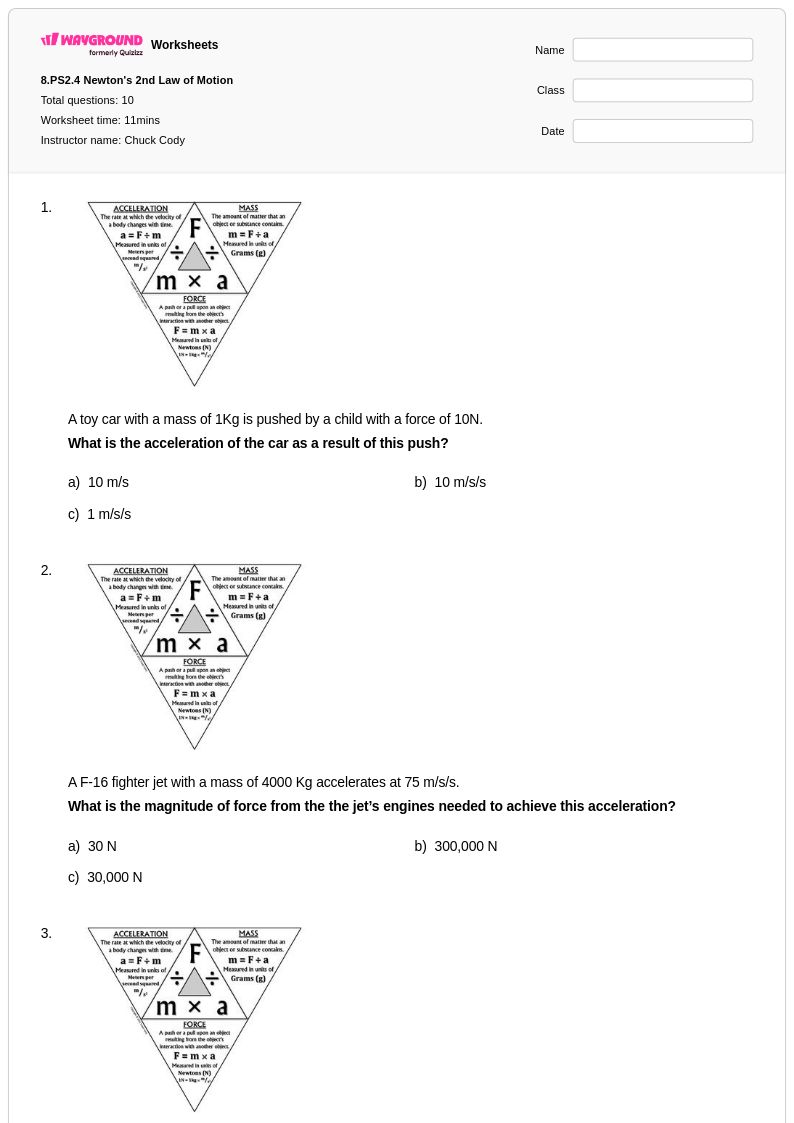
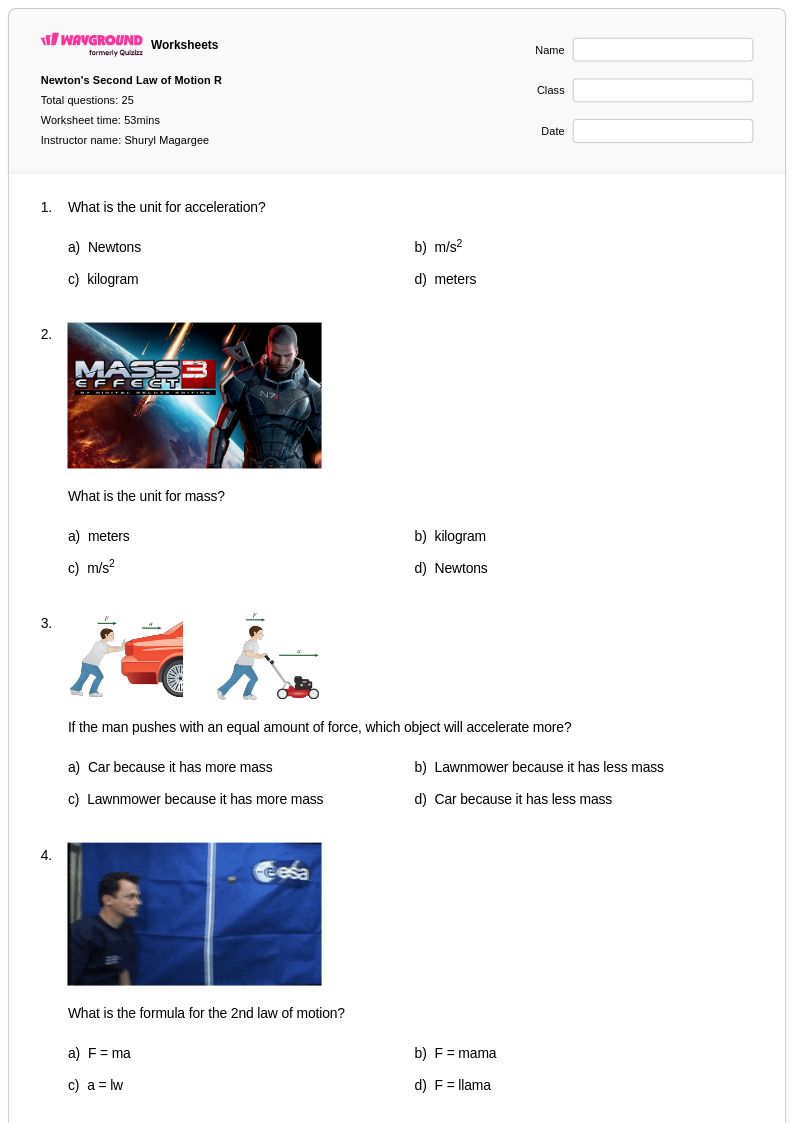
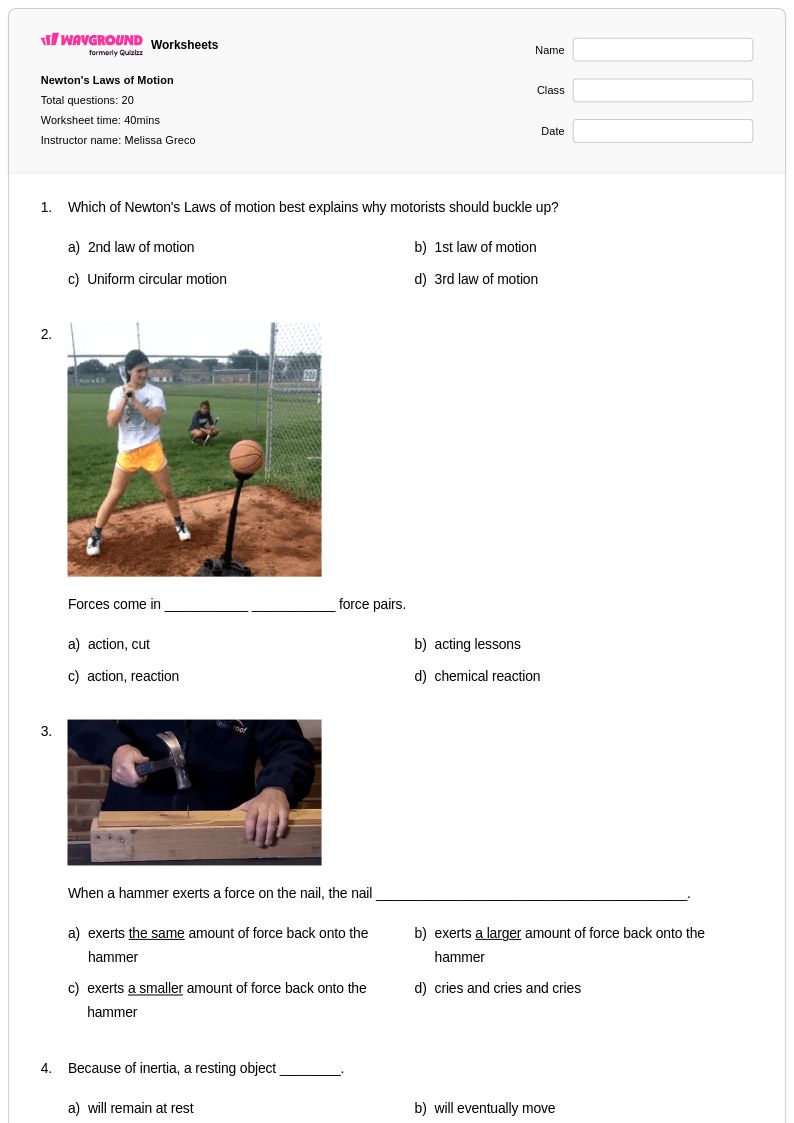
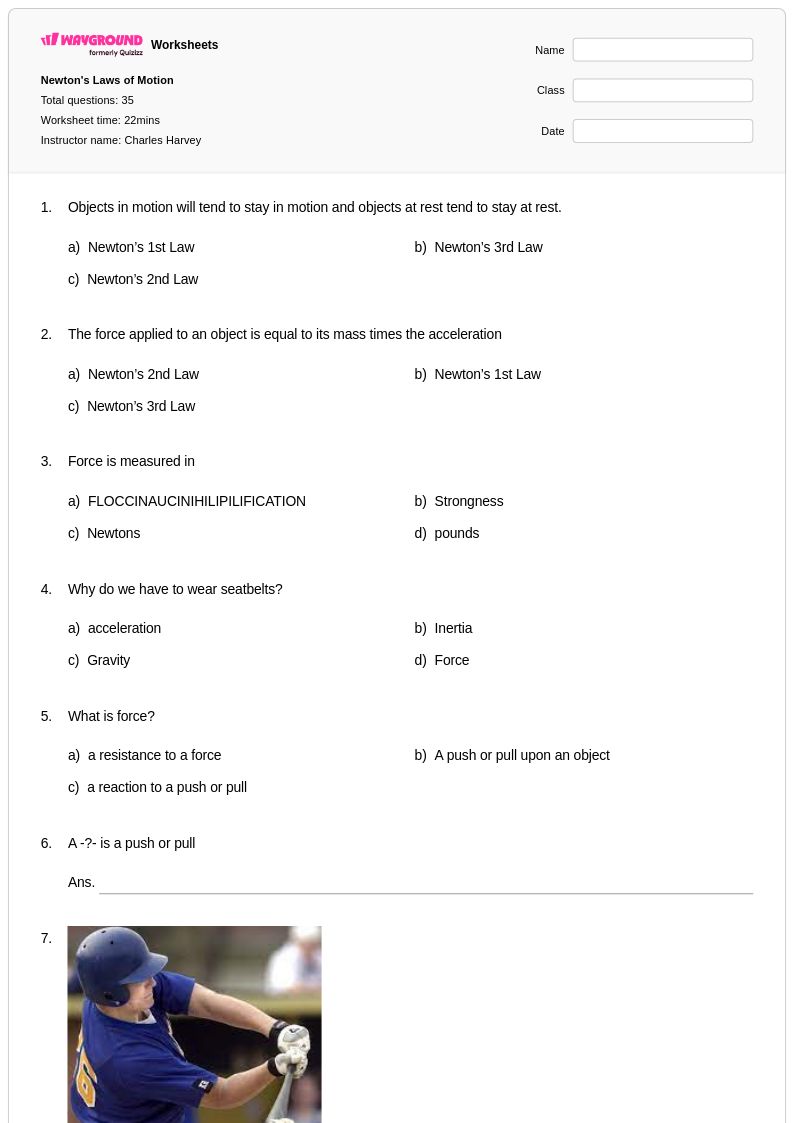
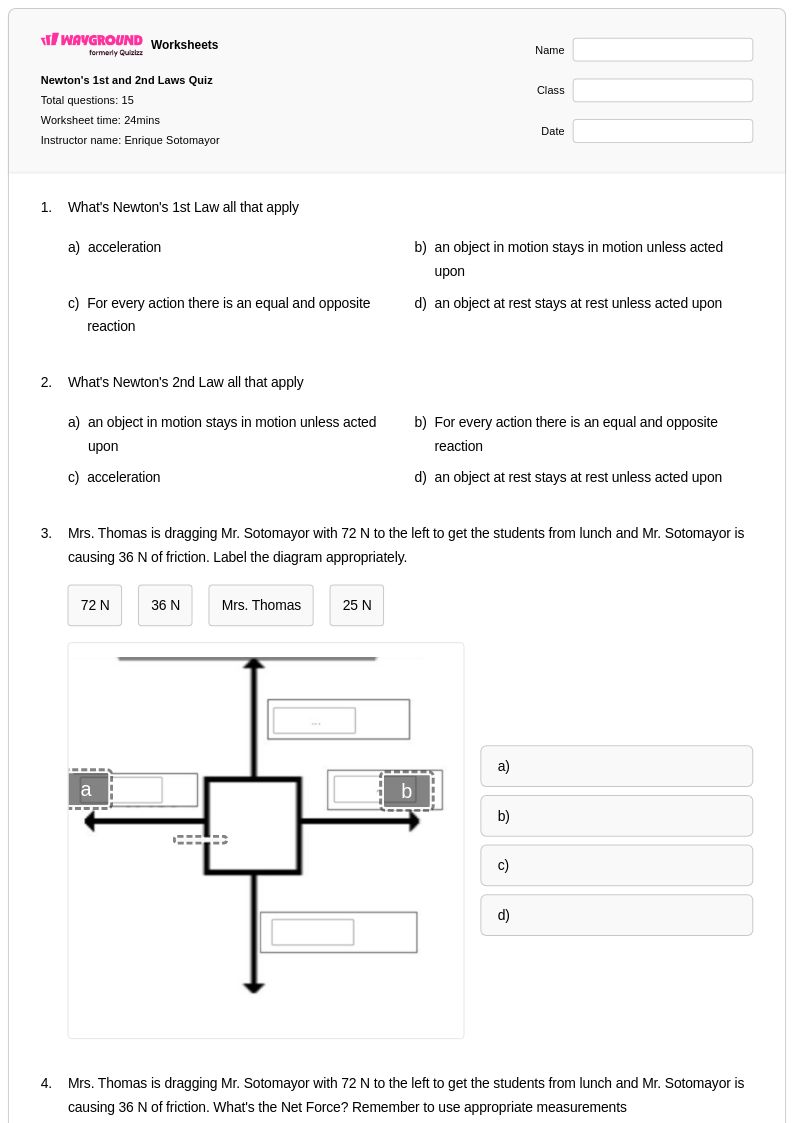
Free Printable Newton's Second Law of Motion Worksheets for Class 7
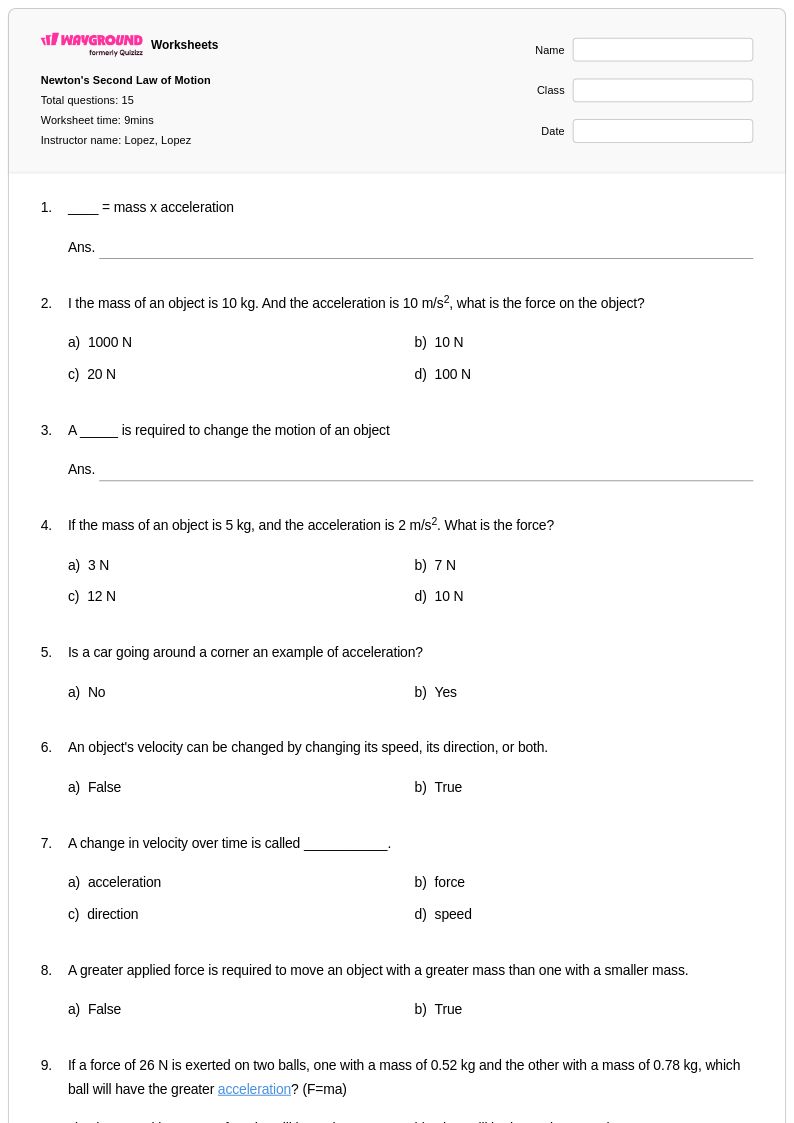
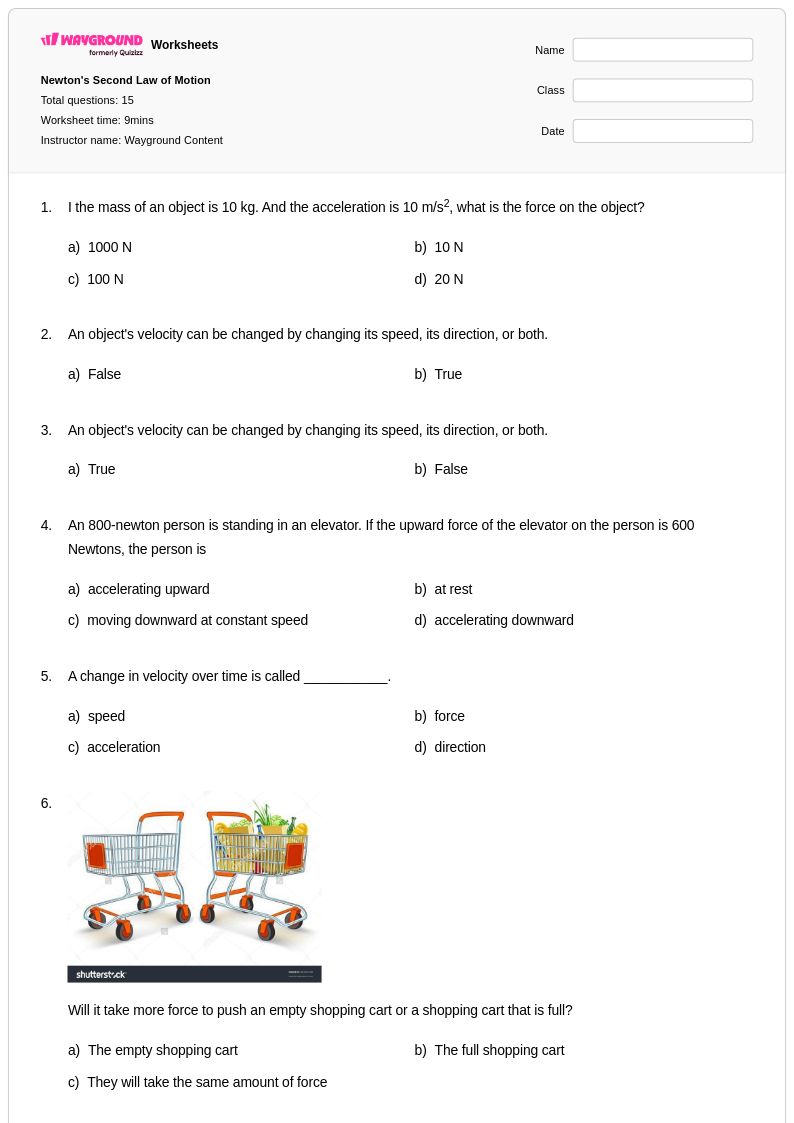
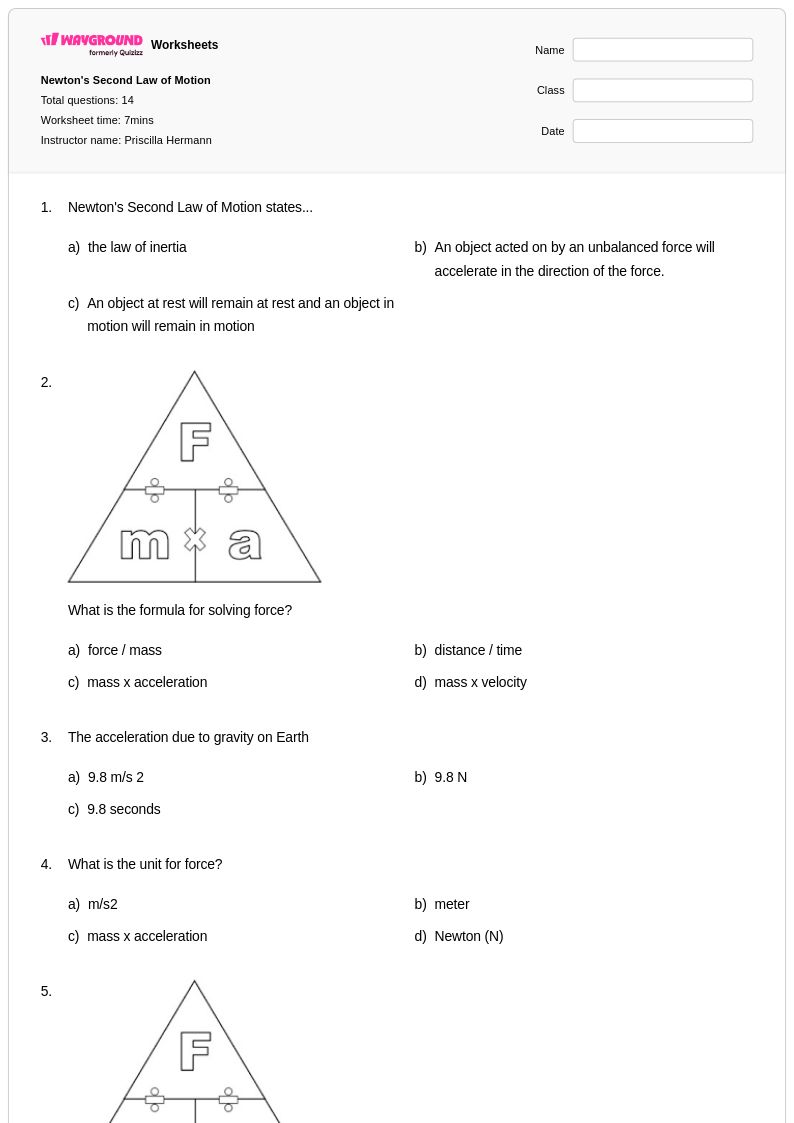
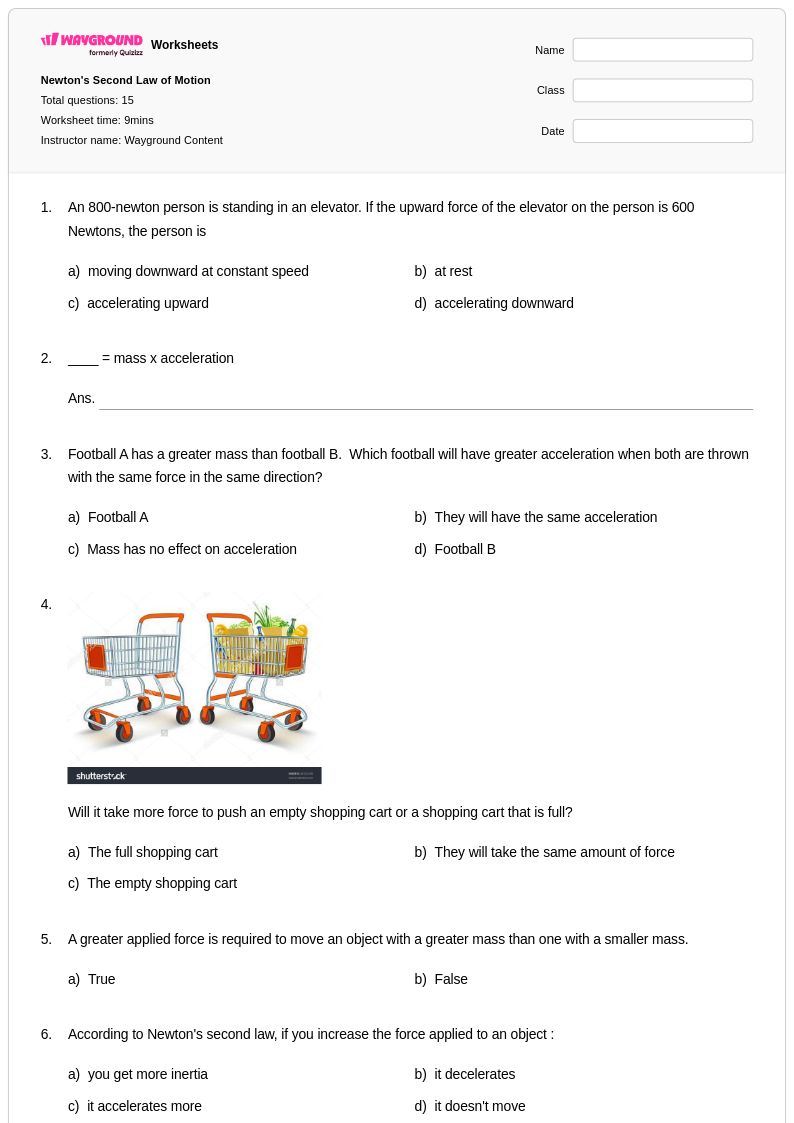
Class 7 Newton's Second Law of Motion worksheets from Wayground provide comprehensive printables and practice problems with answer keys to help students master force, mass, and acceleration relationships through engaging PDF activities.
Explore printable Newton's Second Law of Motion worksheets for Class 7
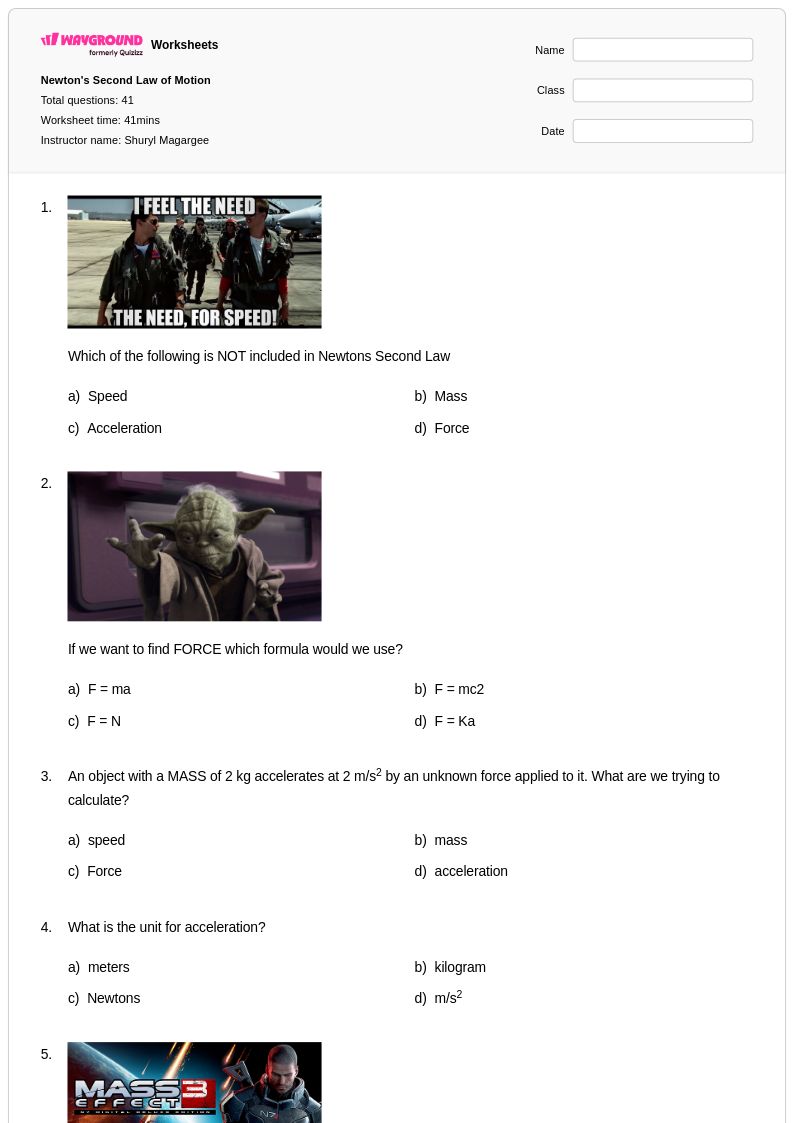
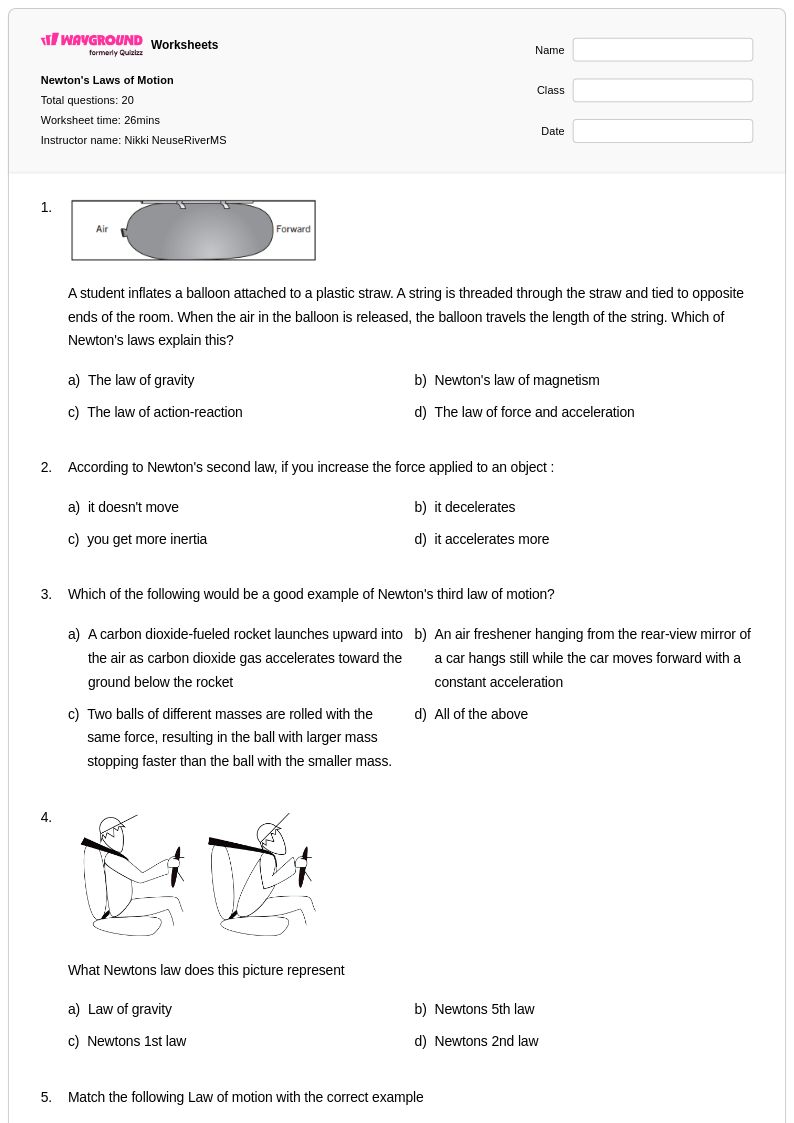
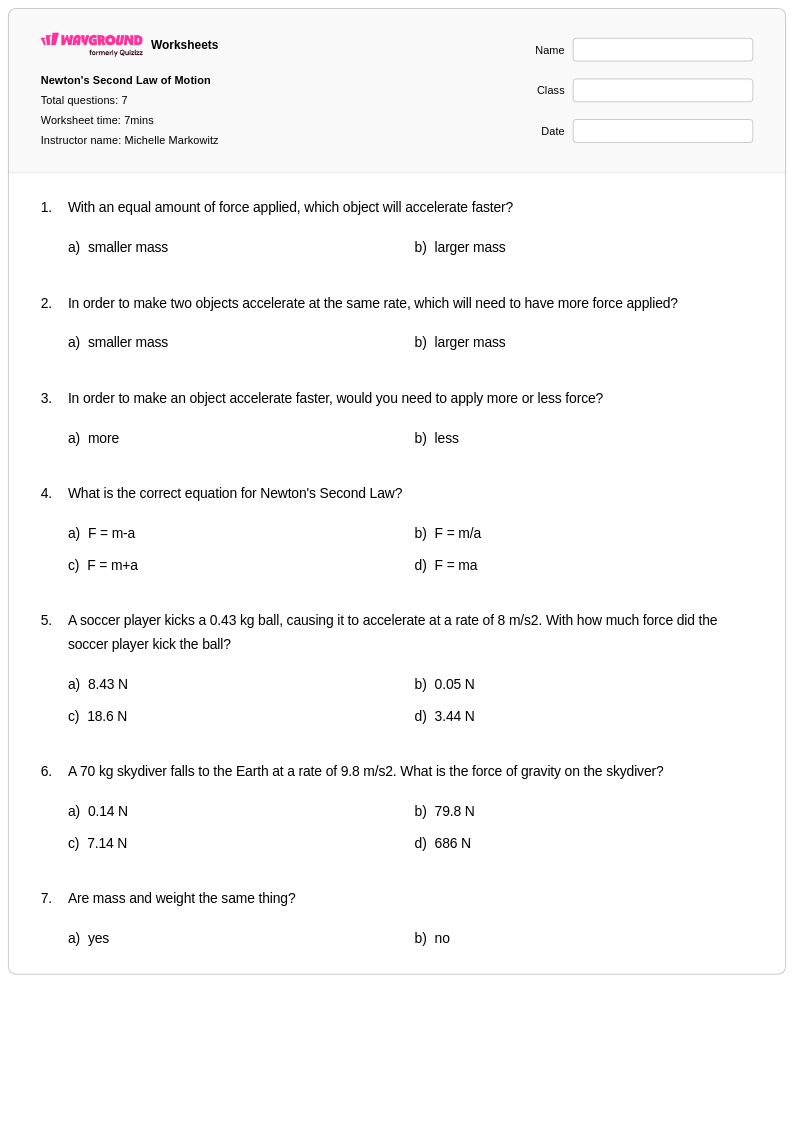
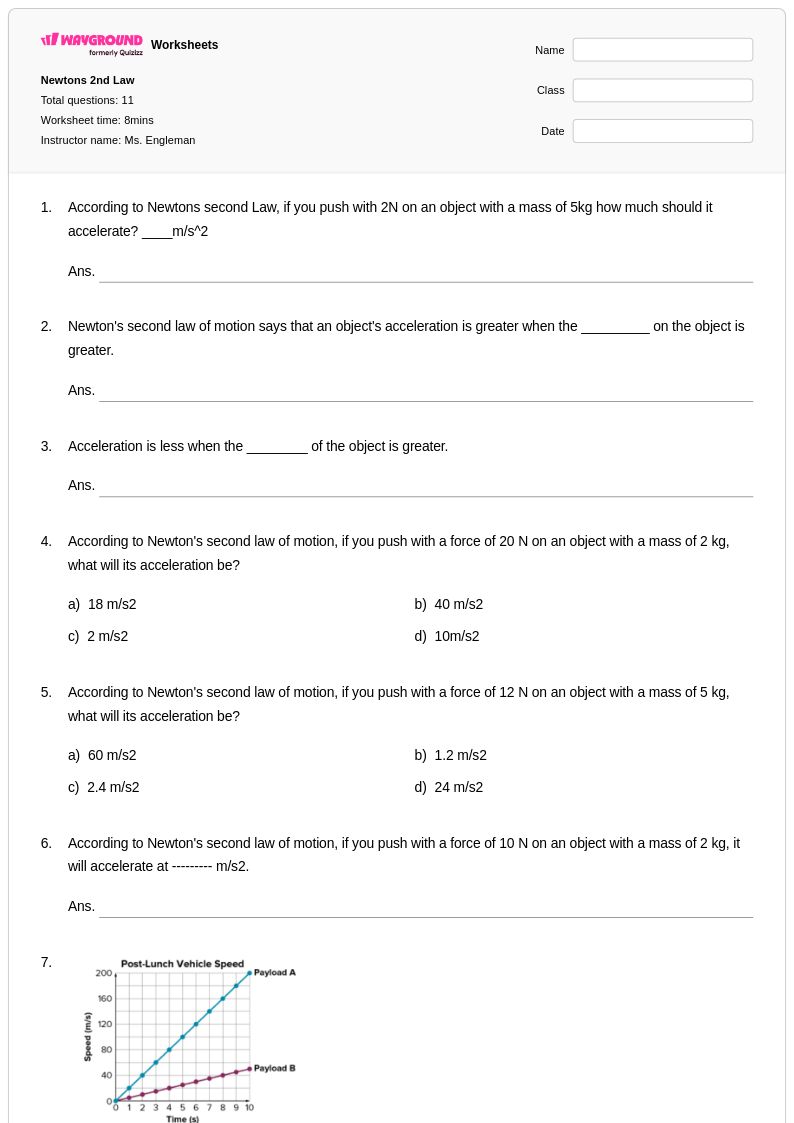
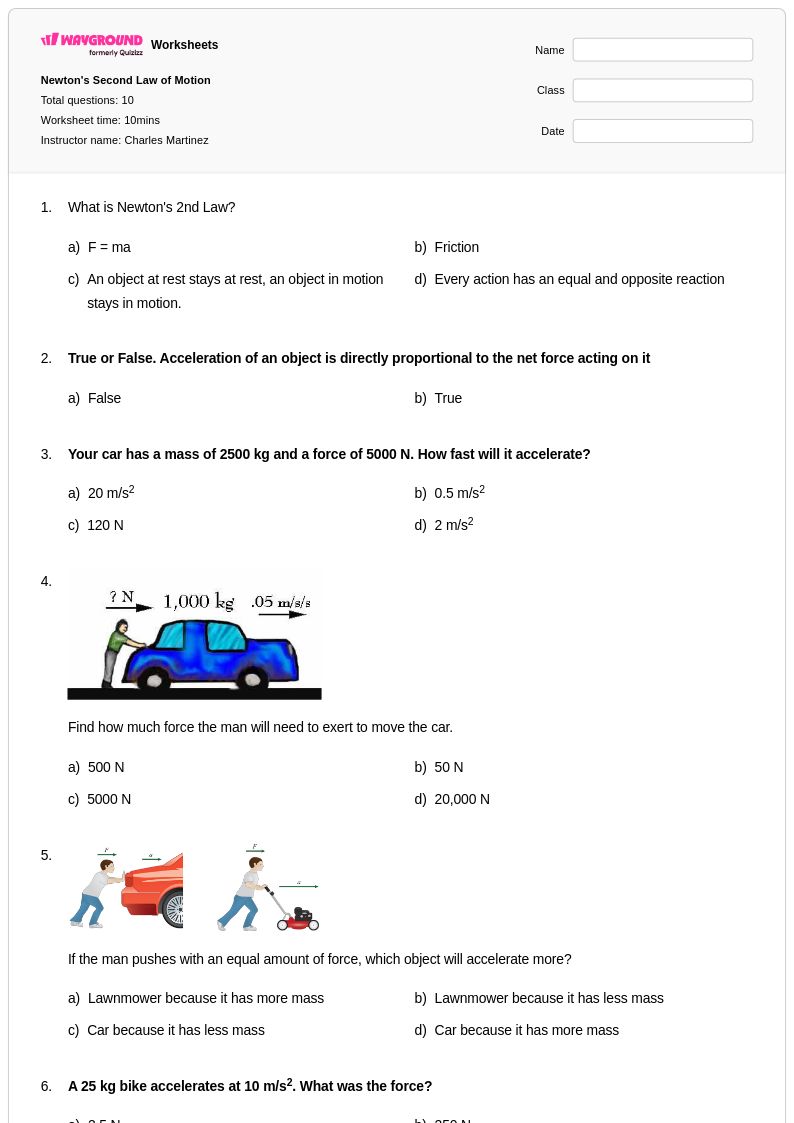
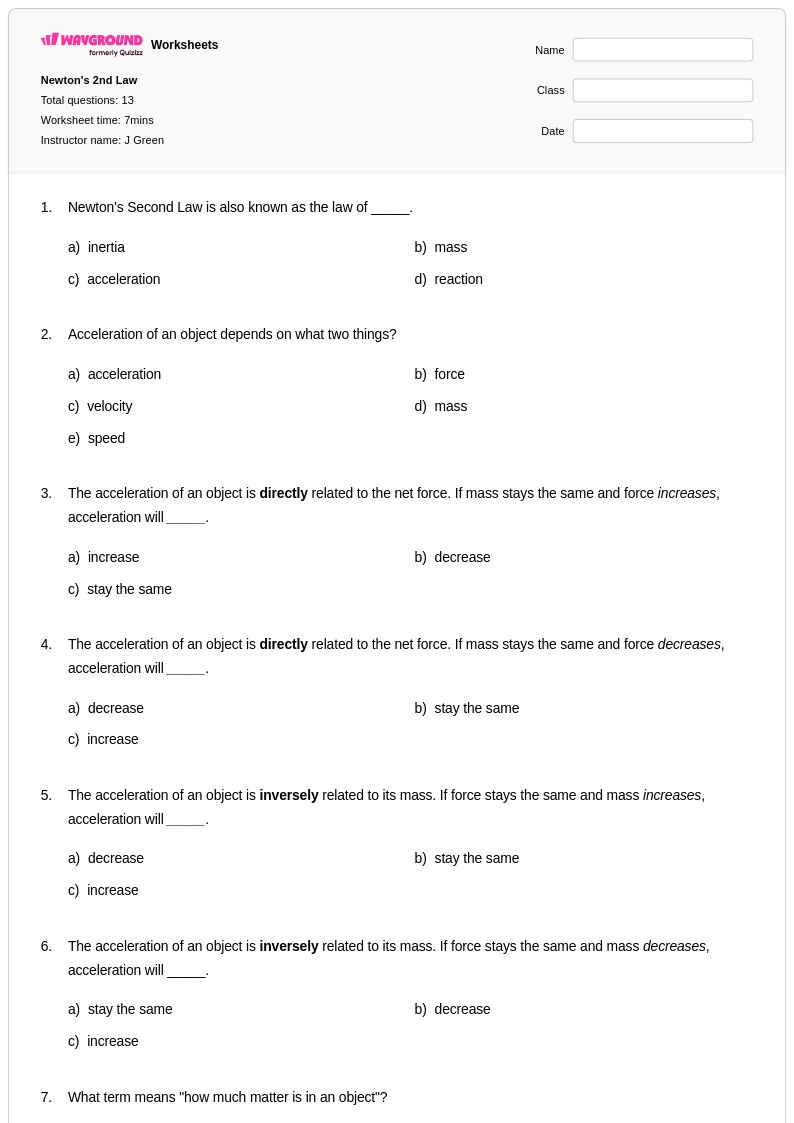
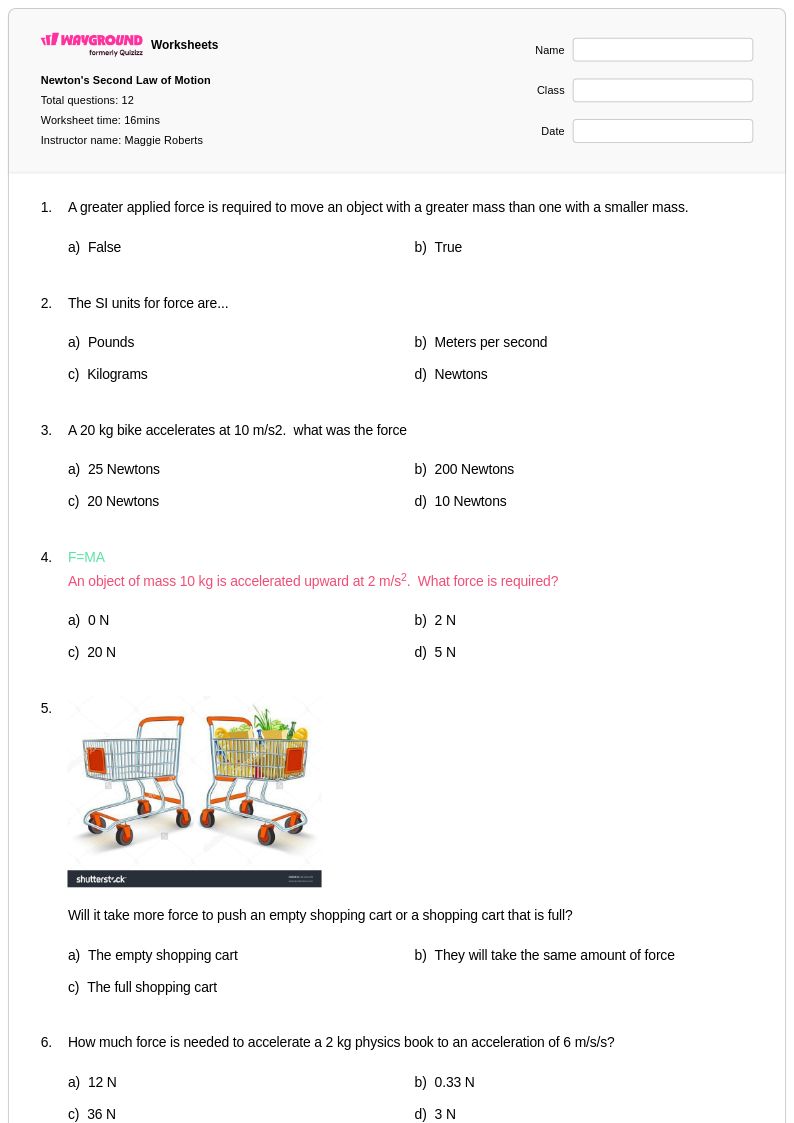
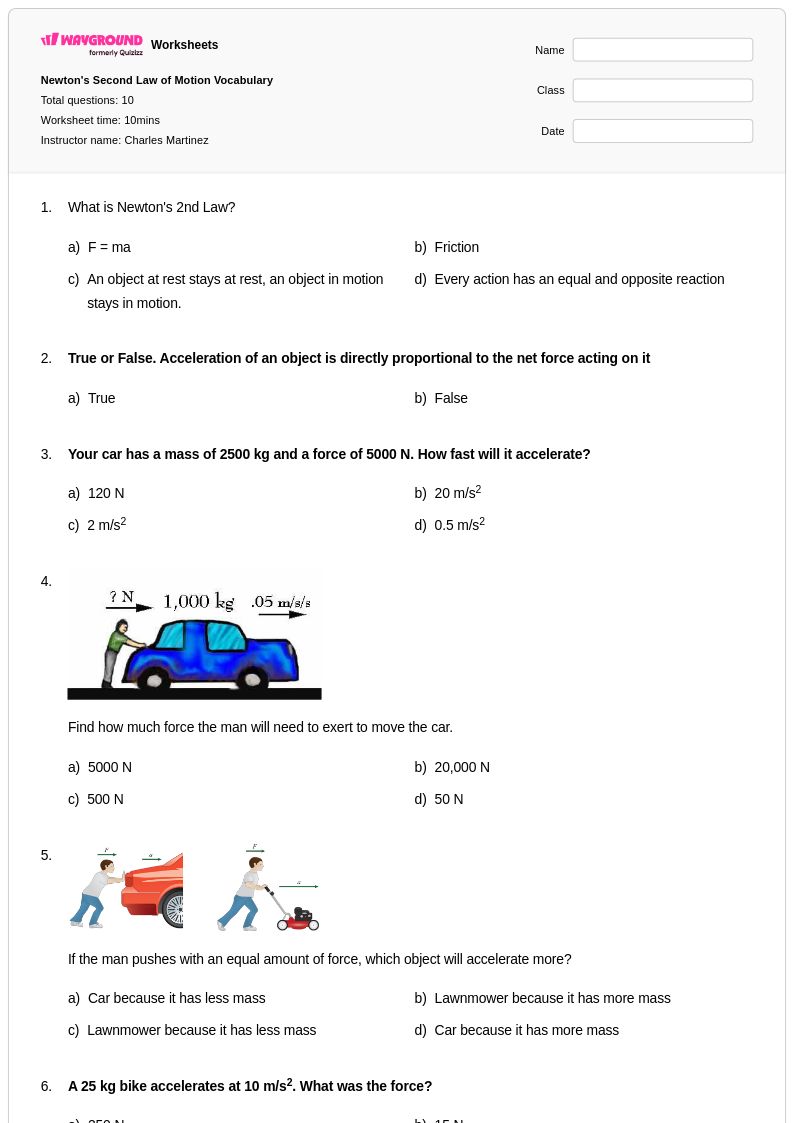
Newton's Second Law of Motion worksheets for Class 7 students through Wayground (formerly Quizizz) provide comprehensive practice with one of physics' most fundamental principles. These educational resources help seventh-grade students master the relationship between force, mass, and acceleration through carefully designed practice problems that reinforce the mathematical formula F=ma. Students develop critical thinking skills as they analyze real-world scenarios involving pushes, pulls, and resulting motion changes, while building confidence through structured exercises that progress from basic conceptual understanding to more complex calculations. The free printable worksheets include detailed answer keys that support independent learning and allow students to check their work, making these pdf resources invaluable for both classroom instruction and homework assignments.
Wayground (formerly Quizizz) empowers educators with millions of teacher-created resources specifically designed to support Class 7 Newton's Second Law of Motion instruction through robust search and filtering capabilities that help locate age-appropriate content aligned with science standards. Teachers can easily differentiate instruction by selecting from various difficulty levels and problem types, while the platform's flexible customization tools allow educators to modify existing worksheets or create entirely new ones tailored to their students' specific needs. Available in both printable pdf format and interactive digital versions, these worksheet collections streamline lesson planning and provide versatile options for skill practice, remediation sessions, and enrichment activities that accommodate diverse learning styles and classroom environments.
FAQs
How do I teach Newton's Second Law of Motion to my students?
Start by grounding students in the relationship between force, mass, and acceleration before introducing the F=ma equation. Use concrete examples like pushing objects of different masses to build intuition, then transition to numerical problems where students solve for one unknown variable at a time. Scaffolding from conceptual questions to multi-step calculations helps students develop both understanding and procedural fluency.
What kinds of practice problems help students master F=ma?
Effective practice includes problems that require students to isolate each variable — solving for force, mass, and acceleration separately — before tackling problems where they must identify the unknown themselves. Multi-step problems that involve calculating net force before applying F=ma are particularly valuable for building problem-solving stamina. A range of problem types, from conceptual scenarios to quantitative calculations, ensures students develop both conceptual understanding and computational skill.
What common mistakes do students make when applying Newton's Second Law?
The most frequent error is confusing net force with individual forces, leading students to apply F=ma with an incorrect force value. Students also commonly misidentify units, mixing up Newtons, kilograms, and meters per second squared in ways that produce nonsensical answers. Another persistent misconception is believing that a larger mass always means greater acceleration, without accounting for proportional changes in applied force.
How do I differentiate Newton's Second Law instruction for students at different skill levels?
For students who are still building foundational skills, start with single-variable problems using whole numbers and explicit unit labels before introducing decimals or multi-step scenarios. Advanced learners benefit from problems that involve friction, multiple forces acting simultaneously, or real-world contexts like vehicle braking distances. On Wayground, teachers can apply accommodations such as reduced answer choices or read-aloud support to individual students, making the same worksheet accessible across a range of learners without disrupting the rest of the class.
How do I use Newton's Second Law of Motion worksheets on Wayground?
Wayground's Newton's Second Law worksheets are available as printable PDFs for traditional classroom use and in digital formats for technology-integrated environments, including the option to host them as a live quiz on the platform. Teachers can use the search and filtering tools to find worksheets aligned to specific curriculum standards and skill levels, from introductory force concepts to complex dynamics problems. Digital sessions support per-student accommodations such as extended time and read-aloud, which can be configured without notifying other students.
How do I assess whether my students truly understand Newton's Second Law versus just memorizing the formula?
True understanding shows when students can correctly identify which variable is unknown in a novel problem, rather than always solving for the same quantity. Assessment tasks that present real-world scenarios — such as describing the motion of a shopping cart on a slope — reveal whether students grasp the conceptual relationship between force, mass, and acceleration. Problems requiring students to explain why increasing mass decreases acceleration for a constant force are particularly effective at surfacing rote memorization versus genuine understanding.