Class 7 fluids worksheets and printables help students master liquid and gas properties through engaging practice problems, free PDF downloads, and comprehensive answer keys from Wayground's science collection.
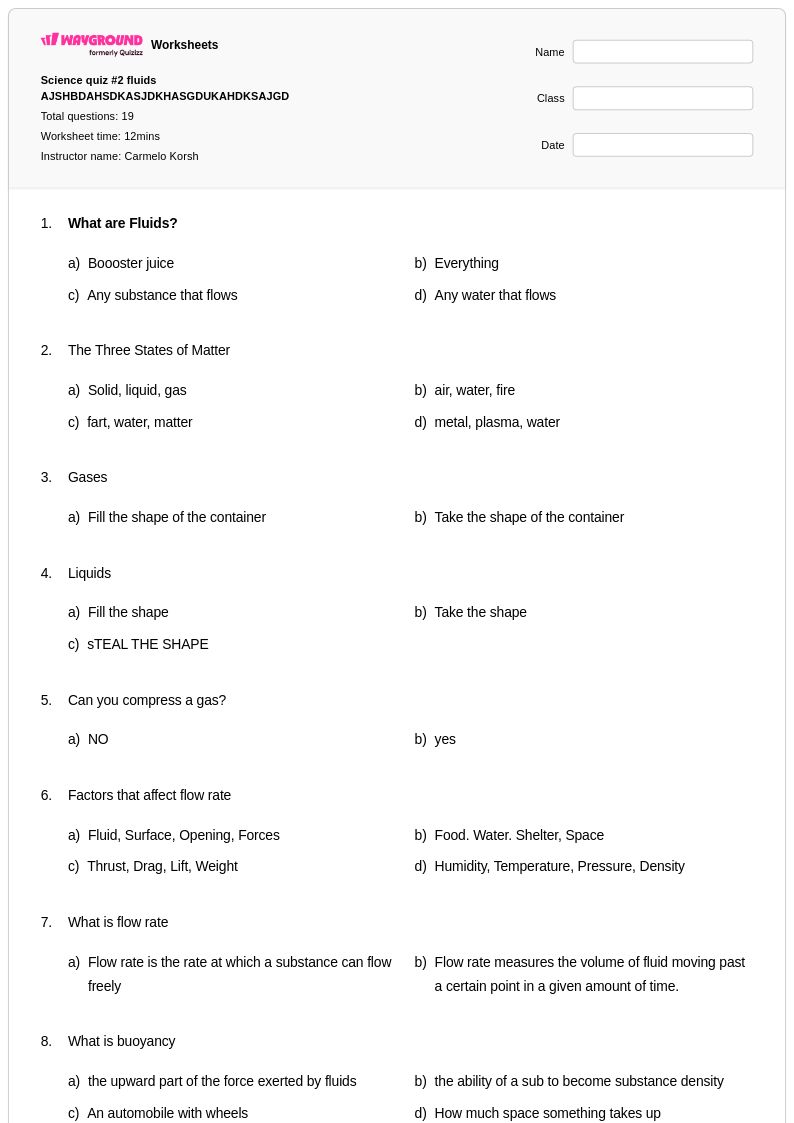
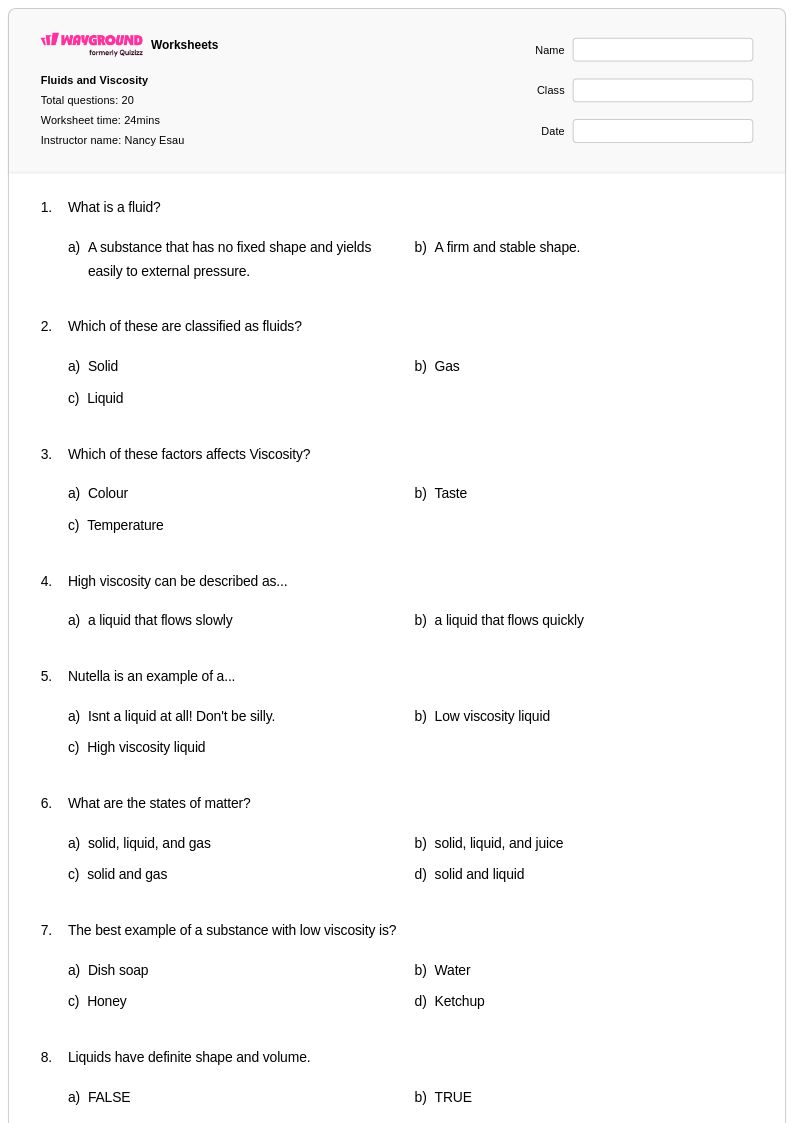
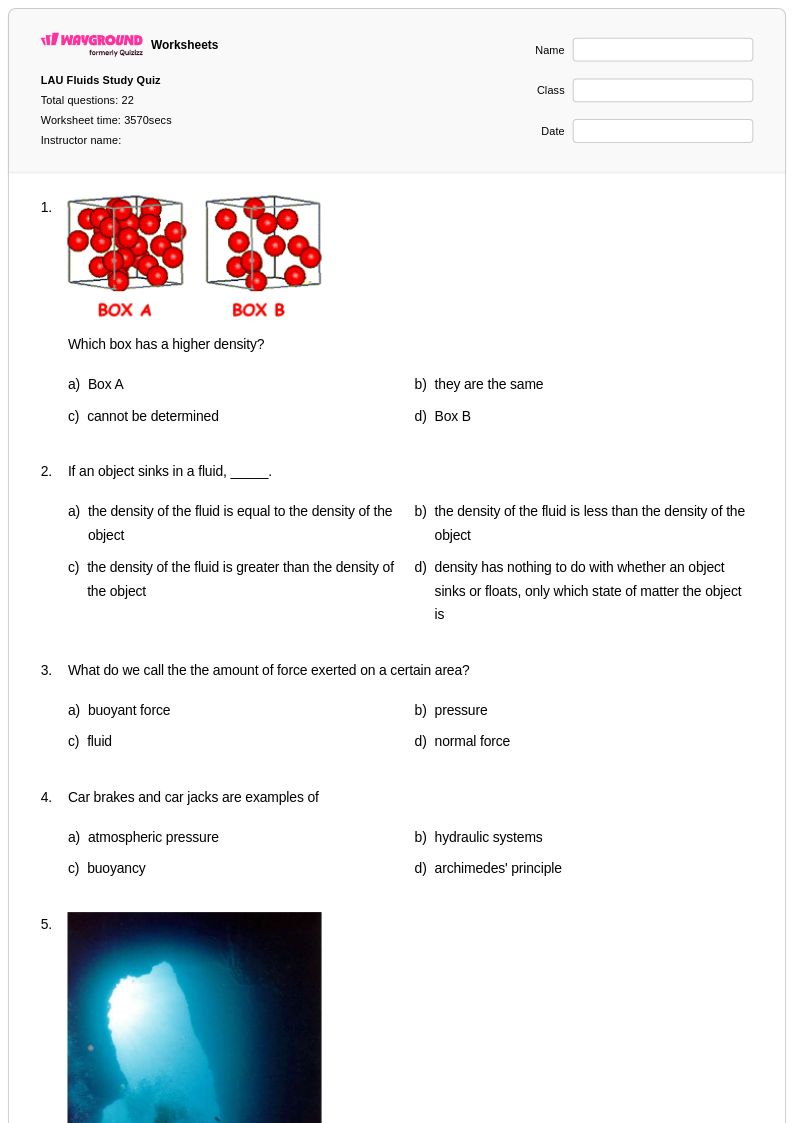
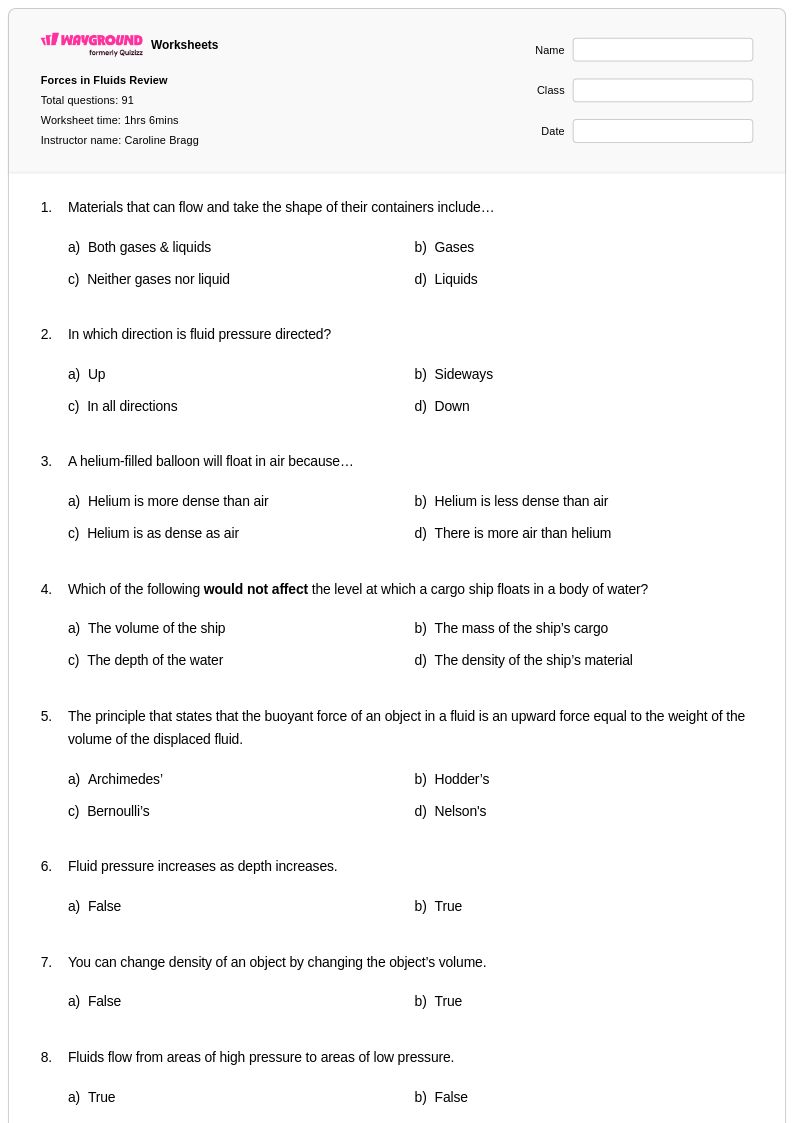
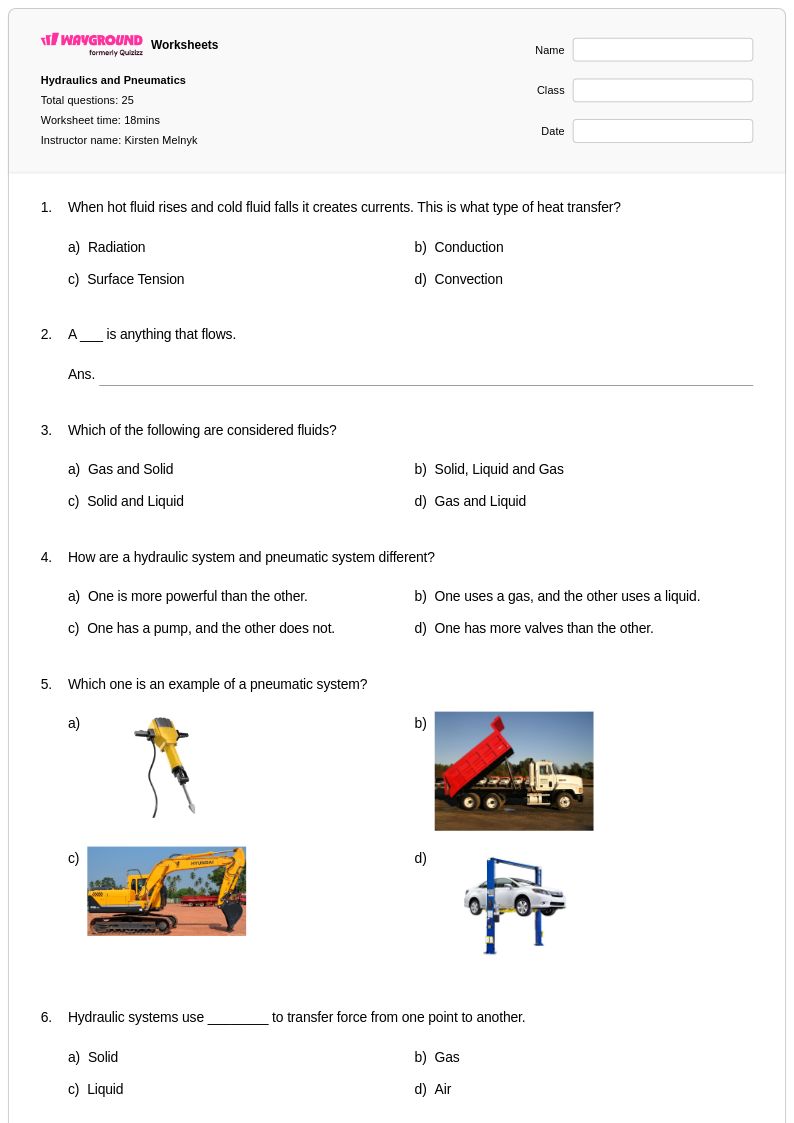
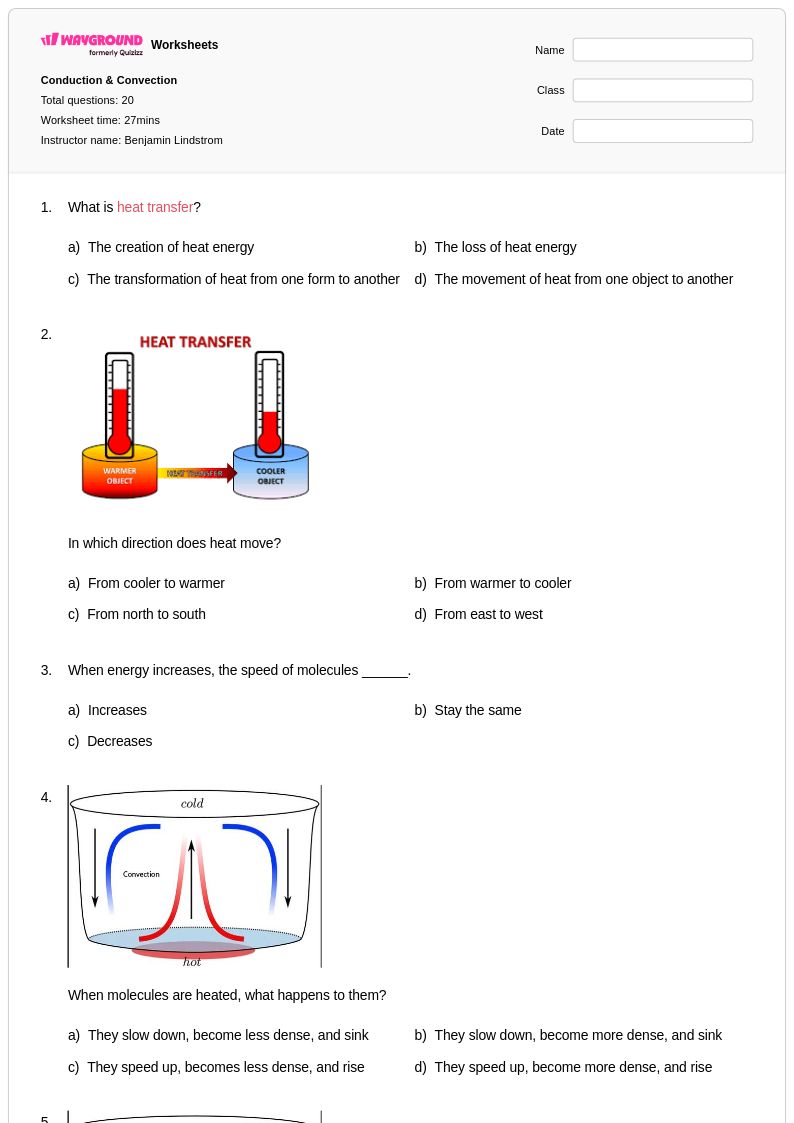
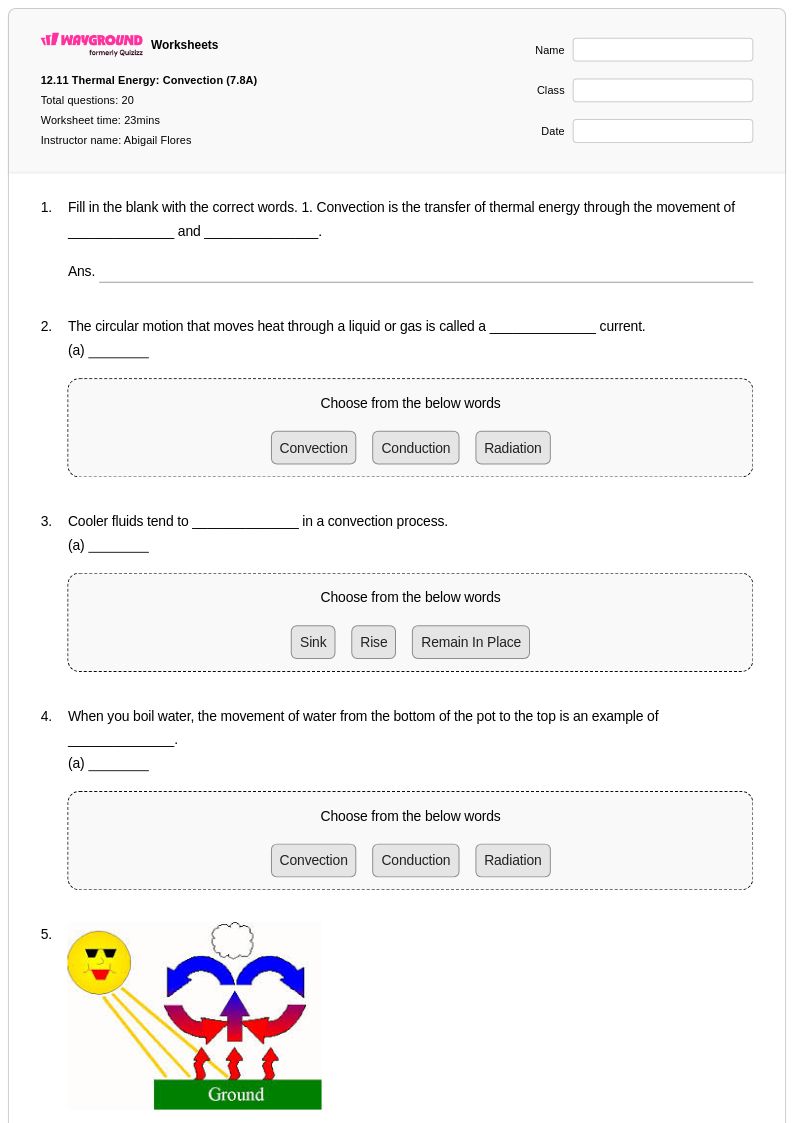
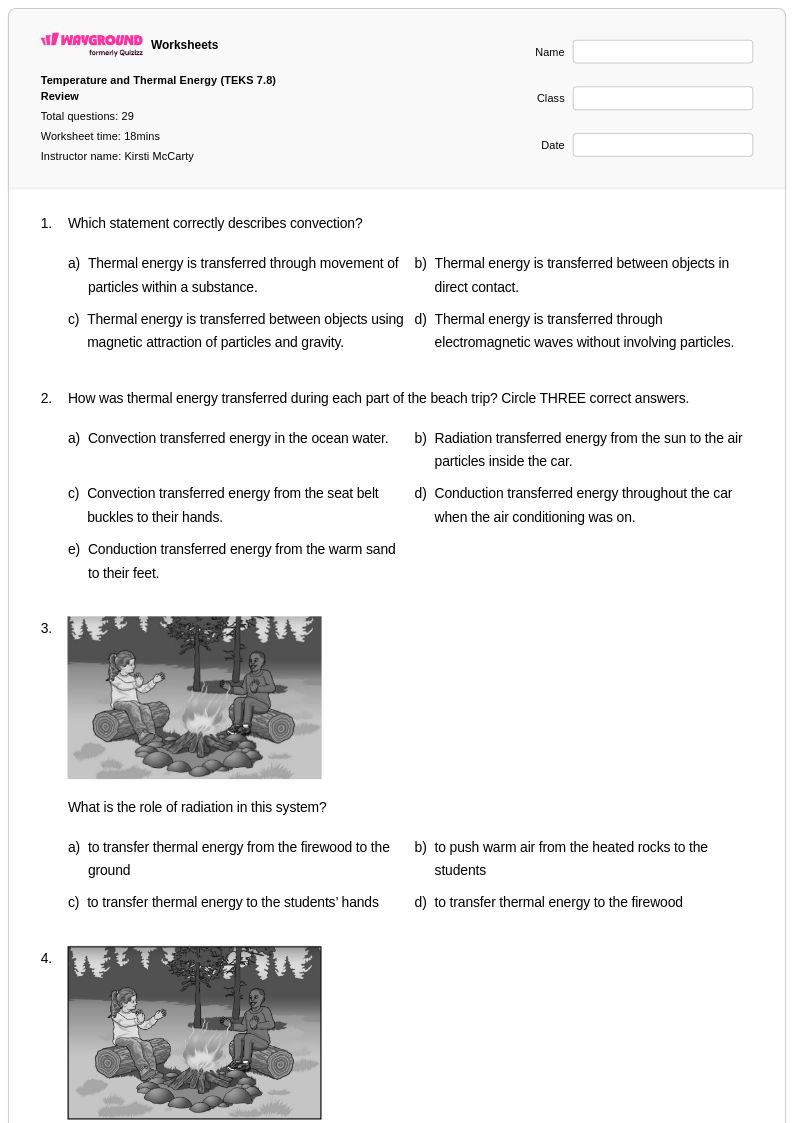
Class 7 fluids worksheets available through Wayground (formerly Quizizz) provide comprehensive coverage of fundamental fluid mechanics concepts that seventh-grade students encounter in their physics curriculum. These carefully designed educational resources help students develop critical understanding of fluid properties, pressure relationships, buoyancy principles, and fluid flow dynamics through structured practice problems that reinforce theoretical knowledge with practical applications. The worksheet collection strengthens essential scientific skills including data analysis, mathematical problem-solving, and conceptual reasoning while offering complete answer keys that support independent learning and self-assessment. Teachers can access these free printable resources in convenient PDF format, making them ideal for classroom instruction, homework assignments, and targeted skill practice sessions that build student confidence in fluid mechanics fundamentals.
Wayground (formerly Quizizz) empowers educators with an extensive library of millions of teacher-created Class 7 fluids worksheets that streamline lesson planning and enhance instructional effectiveness. The platform's robust search and filtering capabilities allow teachers to quickly locate resources aligned with specific learning standards and curriculum requirements, while built-in differentiation tools enable seamless customization for diverse student needs and ability levels. These versatile worksheet collections are available in both printable and digital formats, including downloadable PDFs, providing maximum flexibility for various teaching environments and learning preferences. Teachers leverage these comprehensive resources for targeted remediation of challenging fluid concepts, enrichment activities for advanced learners, and systematic skill practice that ensures all students master essential physics principles through engaging, standards-aligned content.
FAQs
How do I teach fluid mechanics concepts like pressure and buoyancy to physics students?
Effective fluid mechanics instruction typically begins with concrete, observable phenomena before moving to mathematical relationships. Start with demonstrations of buoyancy using everyday objects in water, then introduce Archimedes' principle formally. From there, progress to Pascal's principle and pressure calculations at varying depths, reinforcing each concept with practice problems that require students to apply formulas to real-world scenarios such as hydraulic systems or submerged objects.
What practice problems help students master Bernoulli's equation and fluid flow?
Students benefit most from problems that connect Bernoulli's equation to tangible contexts, such as calculating fluid velocity in pipes of varying diameter or explaining how airplane wings generate lift. Effective practice sequences move from identifying variables (pressure, velocity, height) to solving multi-step problems involving the continuity equation alongside Bernoulli's equation. Including pipe-flow diagrams alongside numerical problems helps students visualize the relationship between cross-sectional area and flow rate.
What mistakes do students commonly make when solving fluid pressure and buoyancy problems?
A frequent misconception is confusing mass with weight when applying Archimedes' principle, leading students to use mass in buoyant force calculations instead of the weight of the displaced fluid. Students also commonly misapply the pressure-depth formula by forgetting to account for atmospheric pressure at the surface or by using incorrect unit conversions between pascals and other pressure units. Another persistent error is assuming that a denser object always sinks regardless of its shape, which reveals a misunderstanding of how displaced volume determines buoyant force.
How can I differentiate fluids instruction for students at different skill levels?
For struggling learners, focus on conceptual problems and guided scaffolding before introducing multi-variable calculations, ensuring students understand what each variable in an equation physically represents. Advanced students can be challenged with compound problems that combine Bernoulli's equation with continuity equations or that involve real engineering applications like pump efficiency and pipe network analysis. On Wayground, teachers can apply accommodations such as reduced answer choices or read-aloud support to individual students while the rest of the class works through standard problem sets, all without drawing attention to those receiving support.
How do I use Wayground's fluids worksheets in my classroom?
Wayground's fluids worksheets are available as printable PDFs for traditional classroom use and in digital formats for technology-integrated environments, making them adaptable to both in-person and remote instruction. Teachers can also host worksheets directly as a quiz on Wayground, enabling real-time tracking of student responses. Each worksheet includes a complete answer key, so they function equally well as guided practice, independent work, or formative assessment tools.
How do I help students understand the difference between fluid statics and fluid dynamics?
Fluid statics deals with fluids at rest, covering concepts like hydrostatic pressure and buoyancy, while fluid dynamics examines fluids in motion, including flow rate, continuity, and Bernoulli's principle. A useful classroom strategy is to present the same physical setup, such as water in a tank, first as a static problem (calculating pressure at the bottom) and then as a dynamic one (determining exit velocity when a hole is opened). This side-by-side comparison helps students recognize which governing equations apply in each context.