
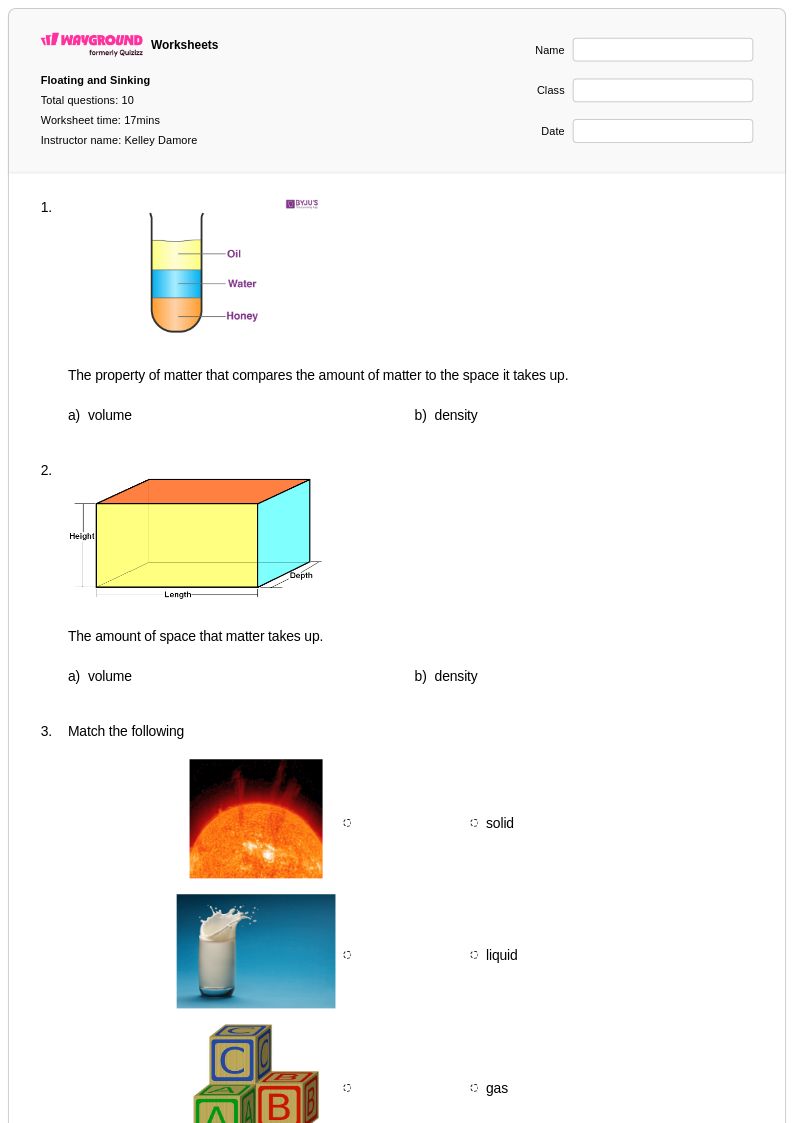
10 Q
4th
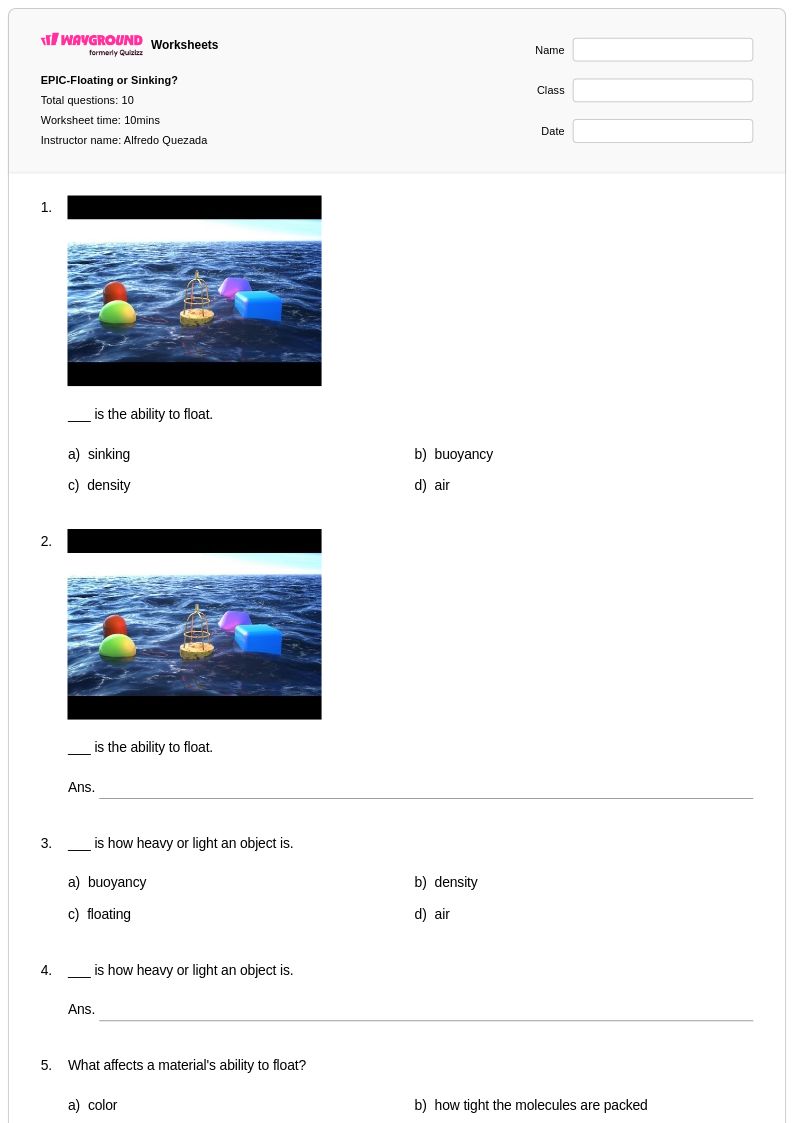
10 Q
3rd - 4th
6 Q
1st - 5th
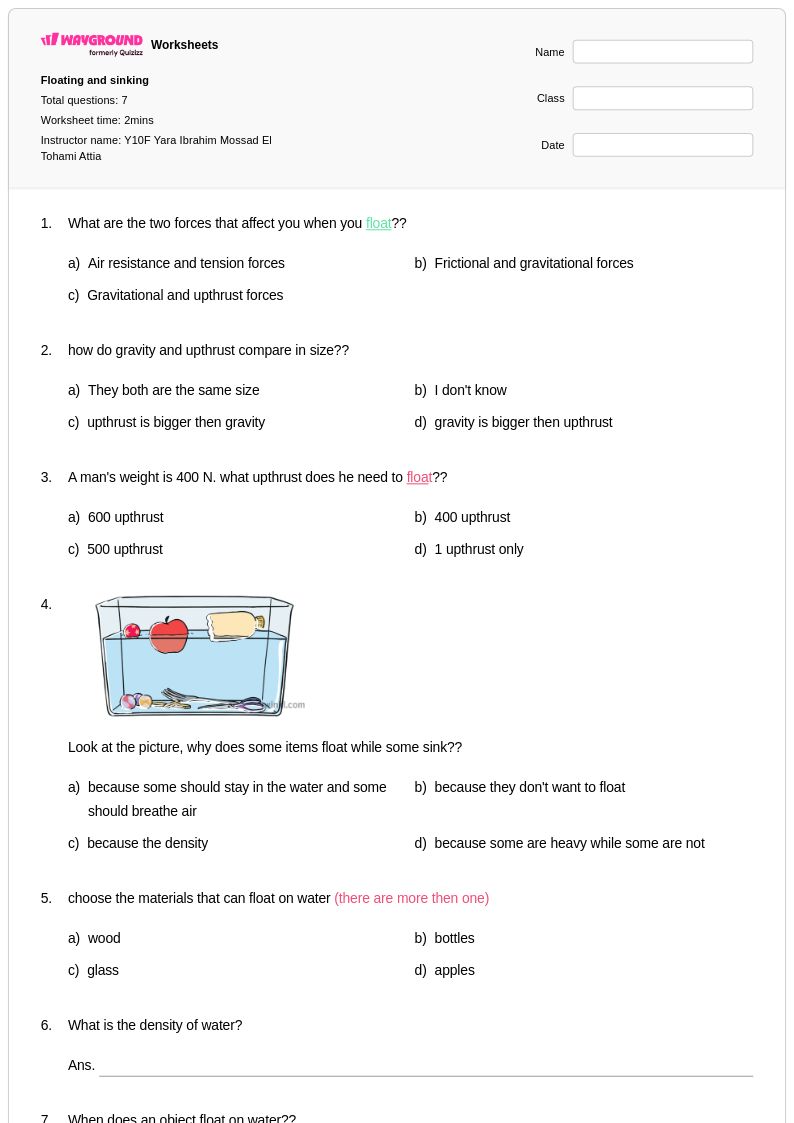
7 Q
4th - 8th
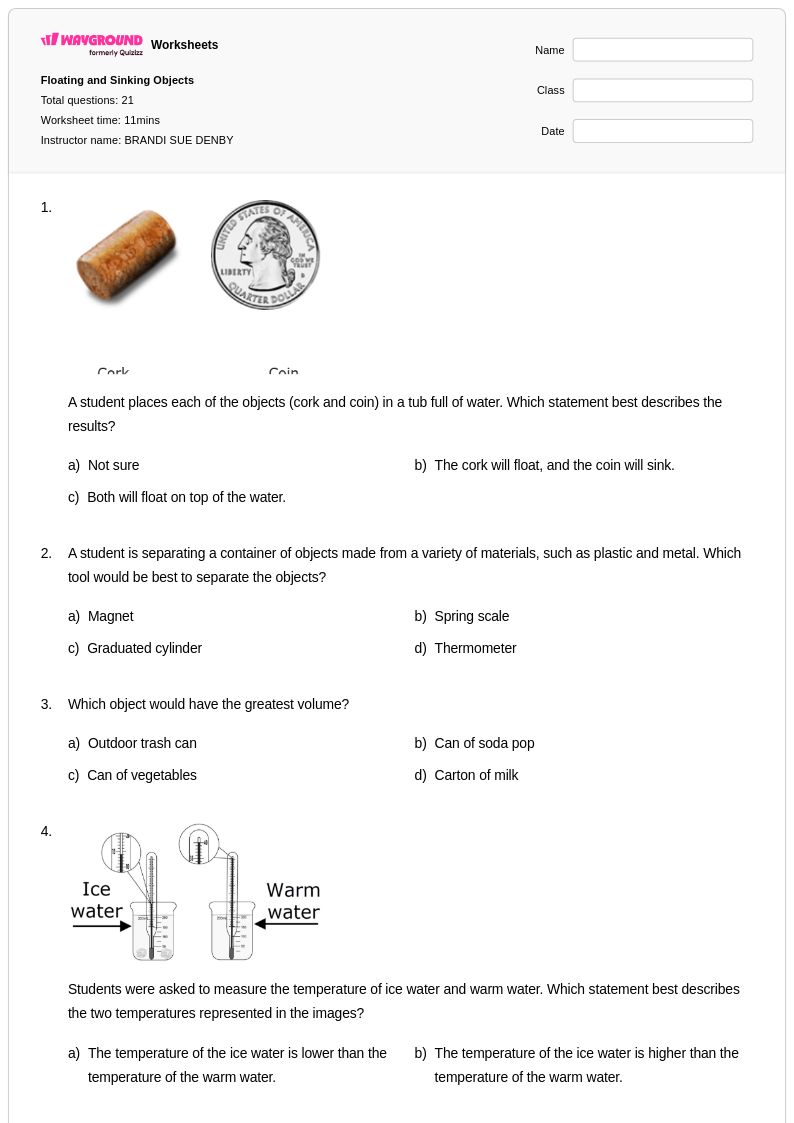
21 Q
4th
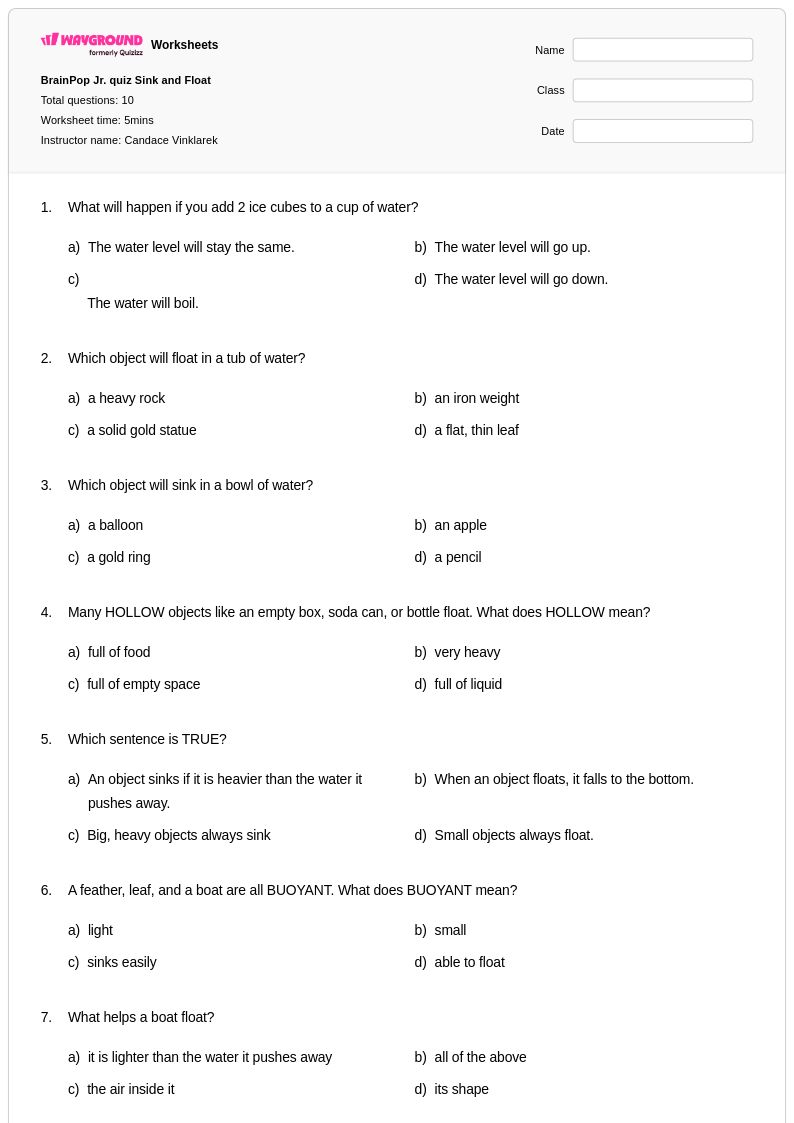
10 Q
4th
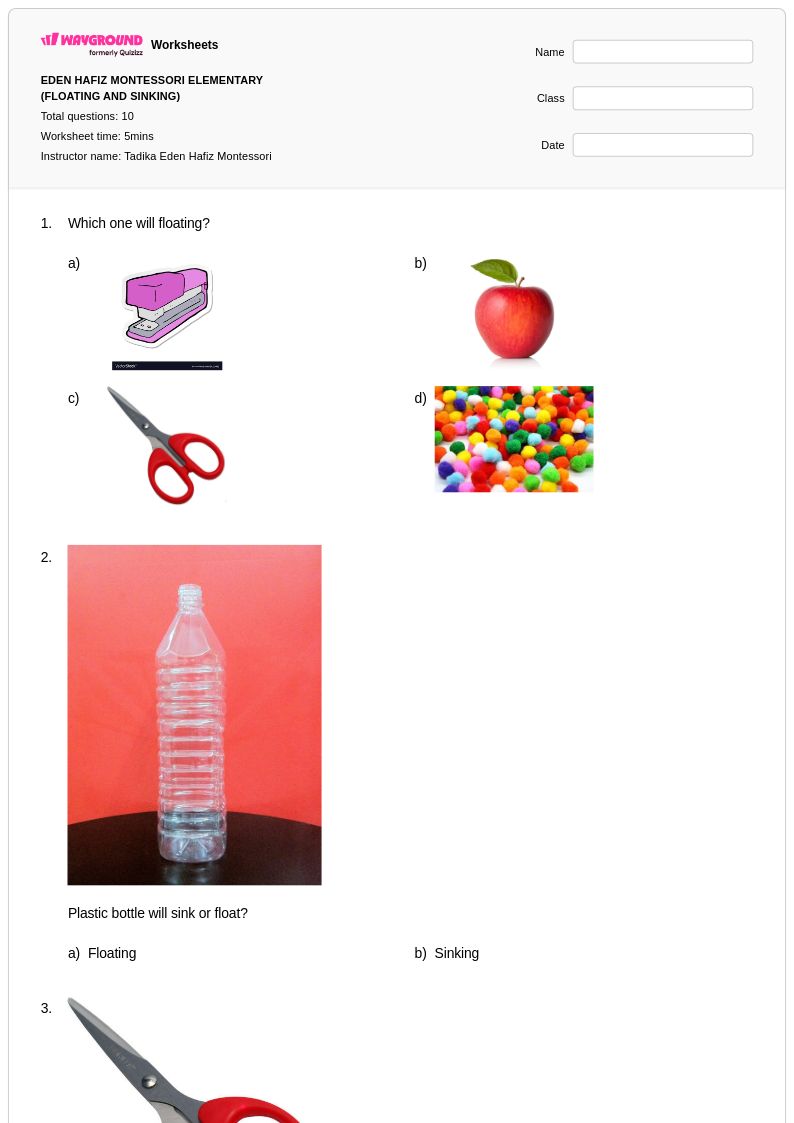
10 Q
4th
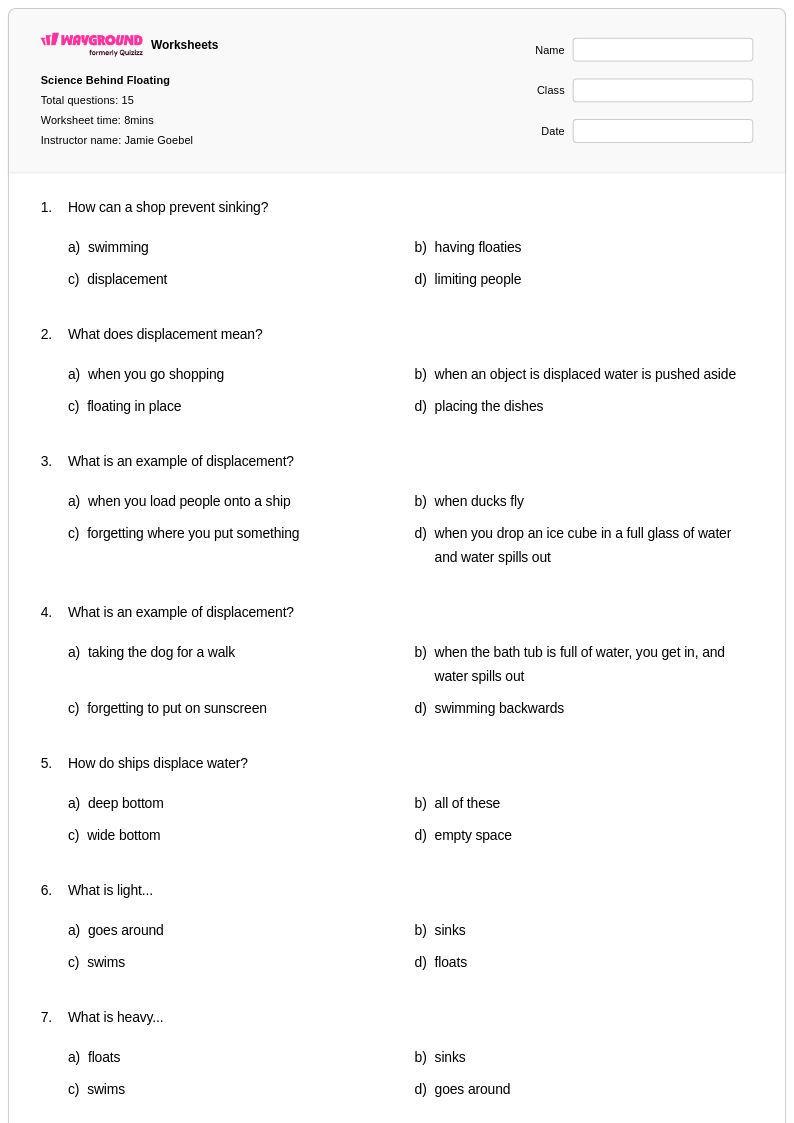
15 Q
2nd - 4th
10 Q
1st - 6th
17 Q
4th
23 Q
4th
14 Q
2nd - 5th
15 Q
3rd - 5th
10 Q
1st - 5th
10 Q
1st - 4th
10 Q
4th
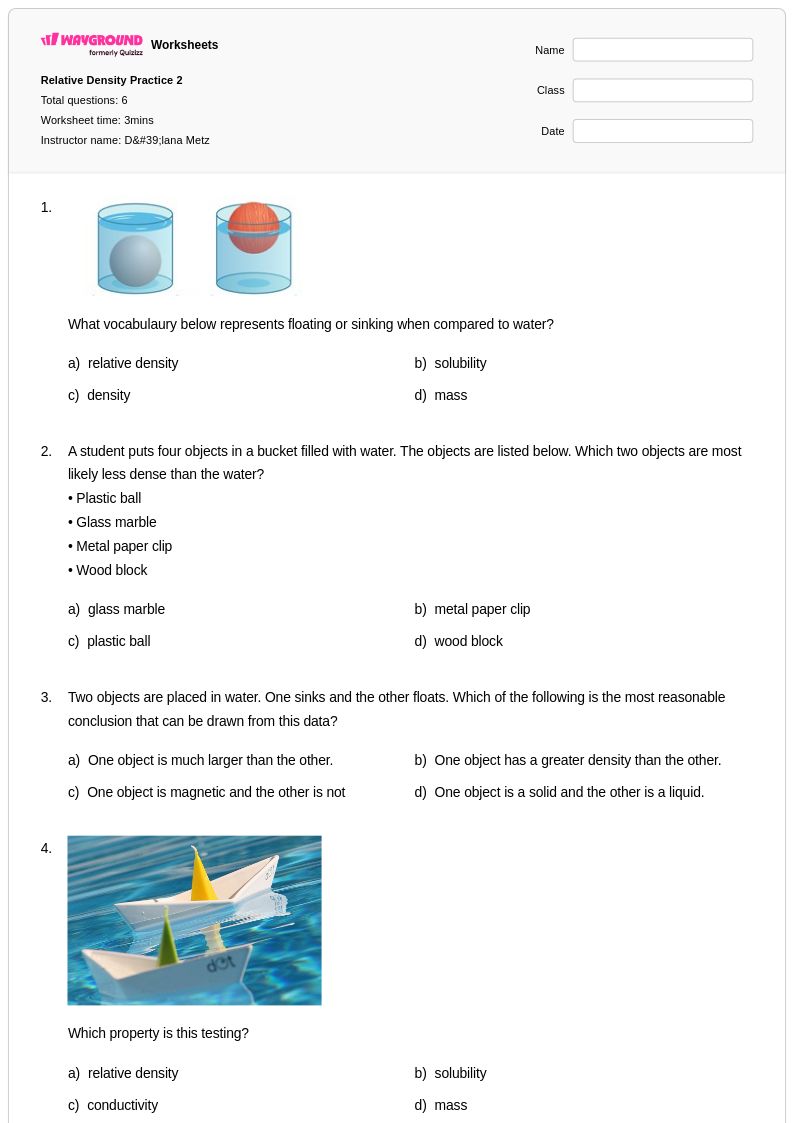
6 Q
4th
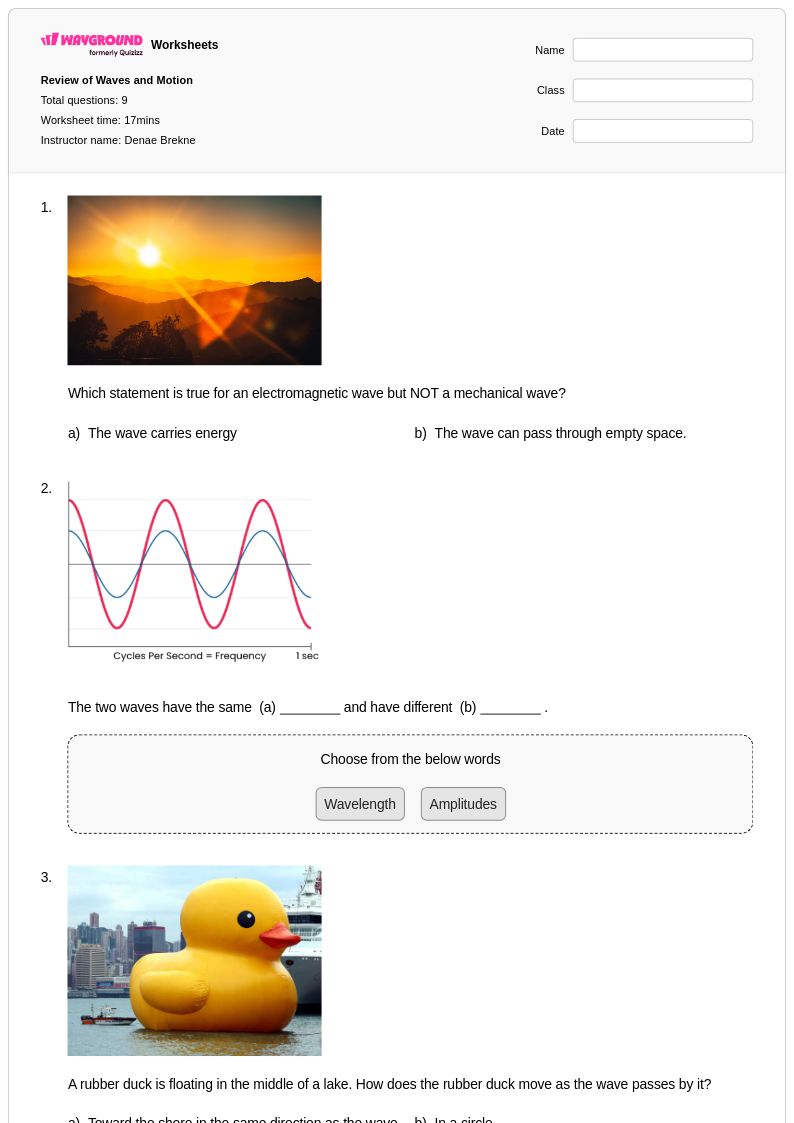
9 Q
4th

11 Q
3rd - 5th
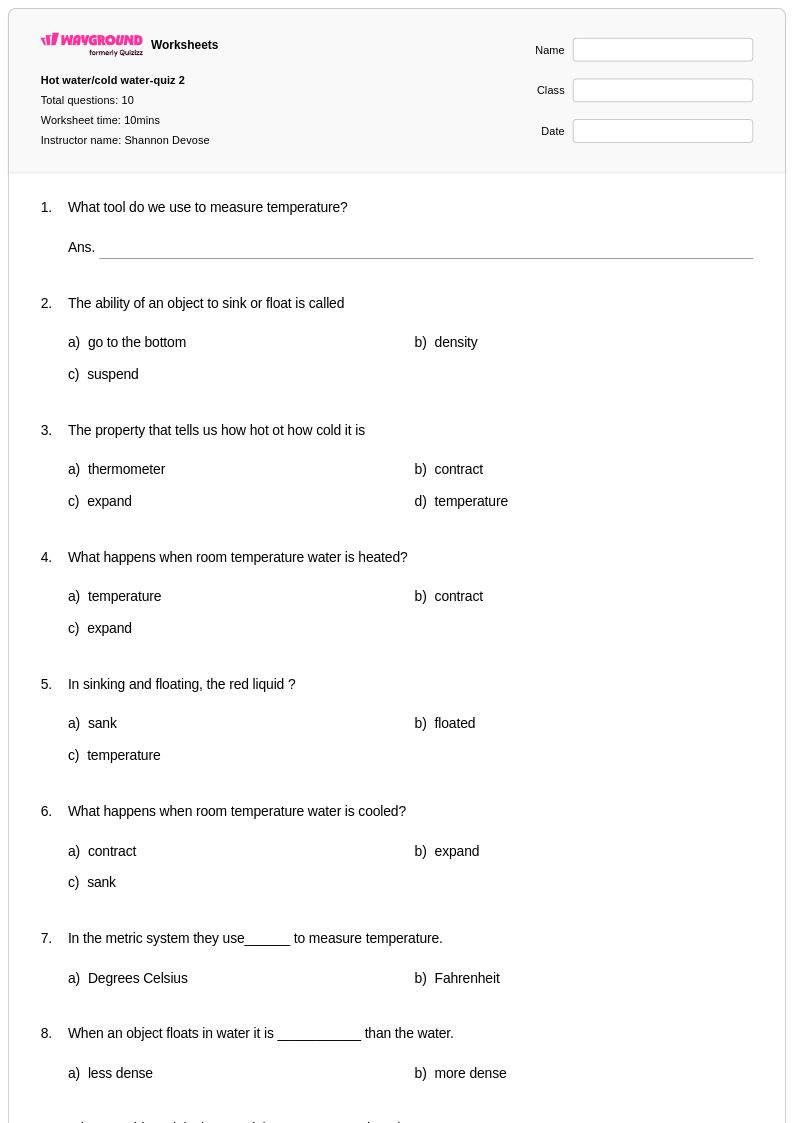
10 Q
3rd - 4th
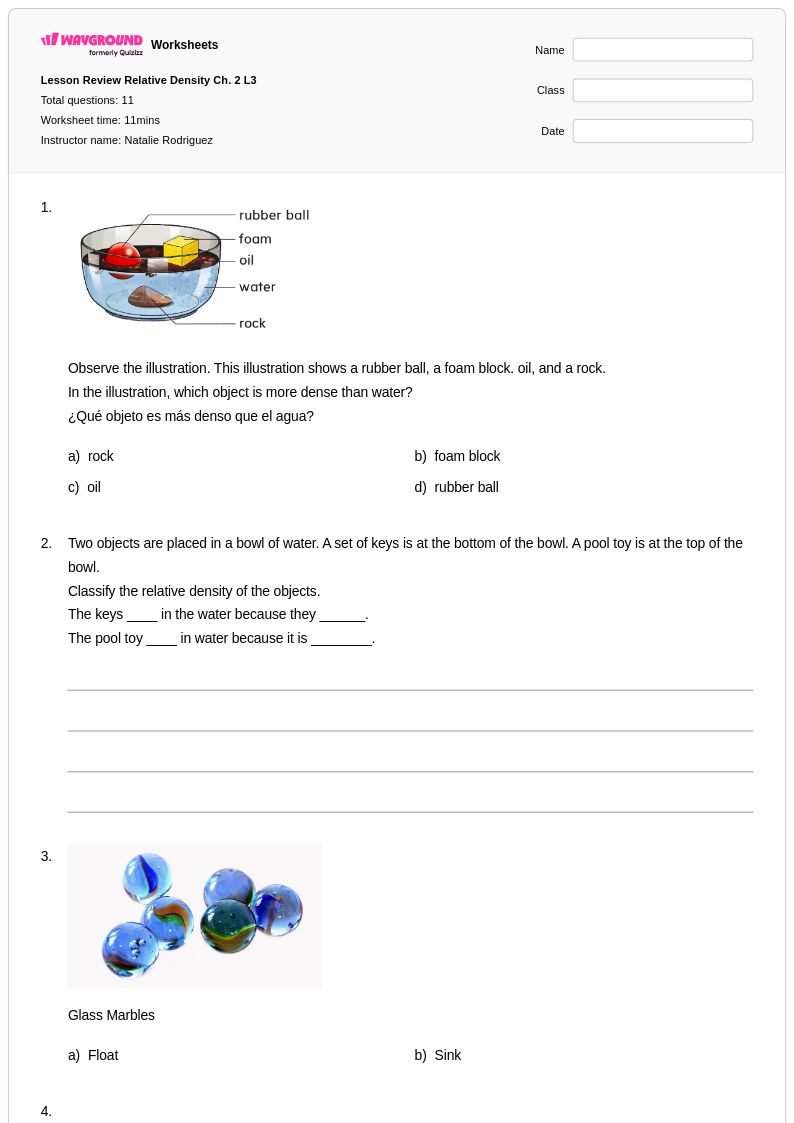
11 Q
4th
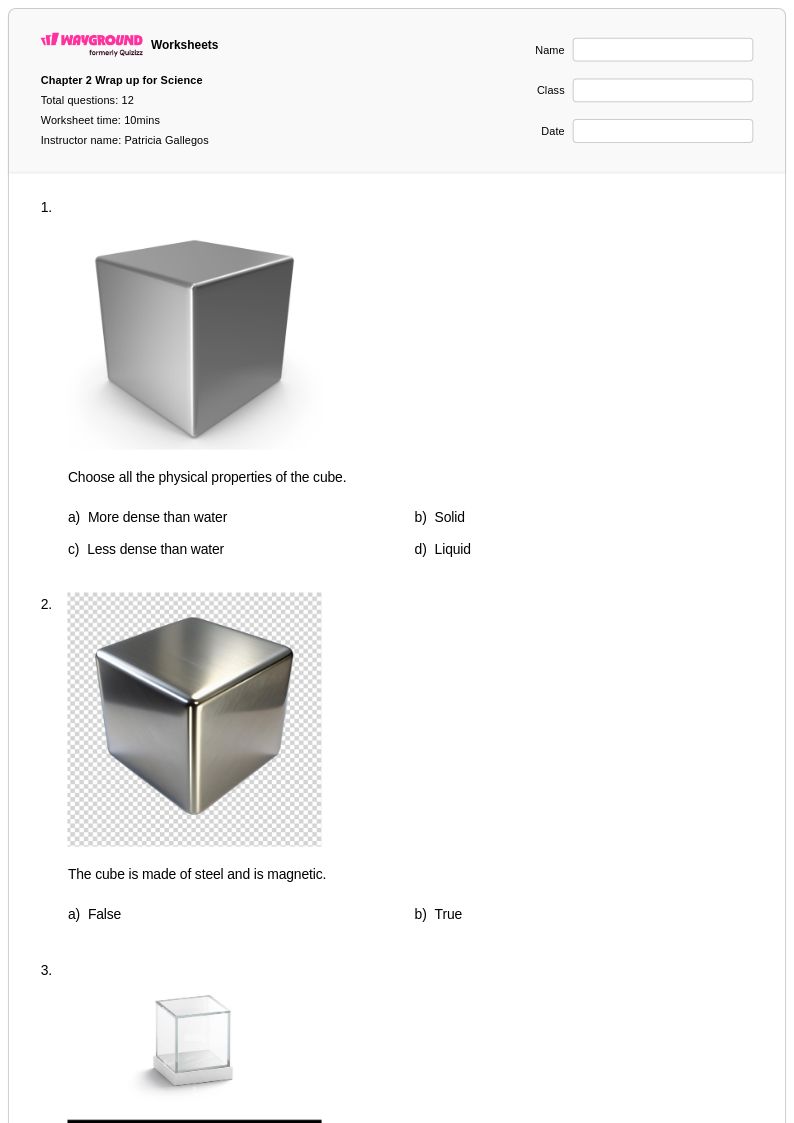
12 Q
4th
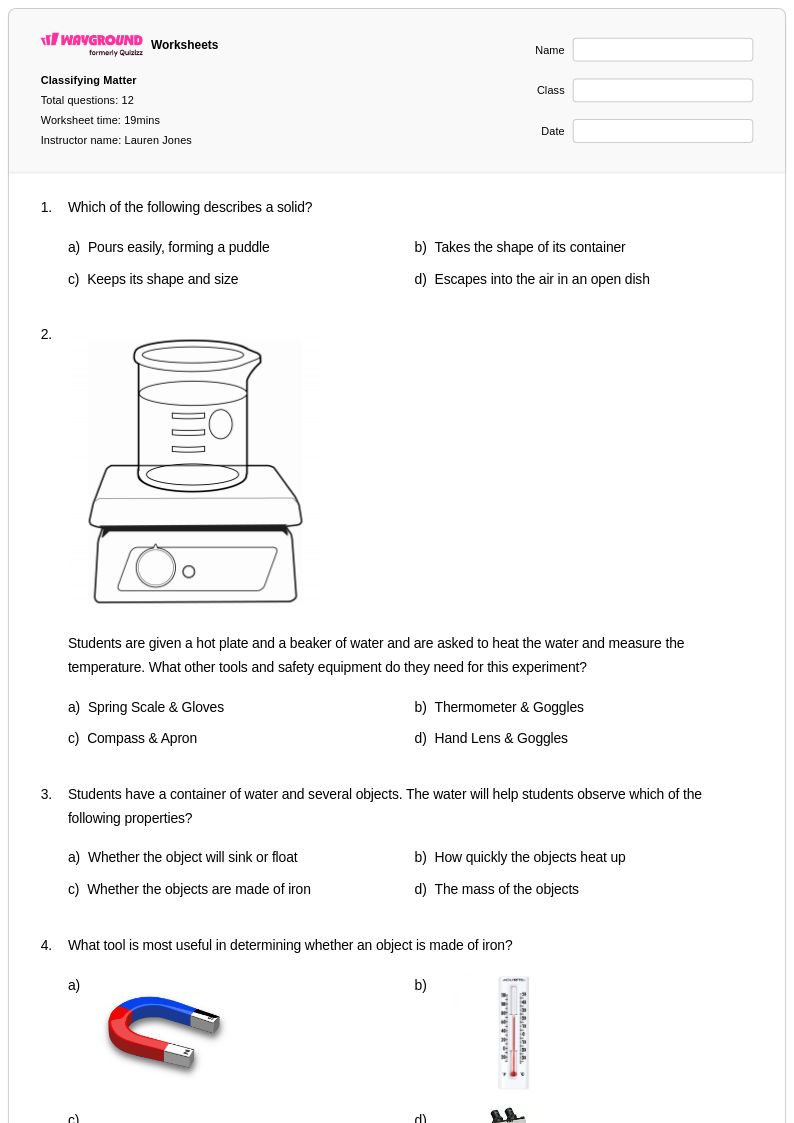
12 Q
2nd - 4th
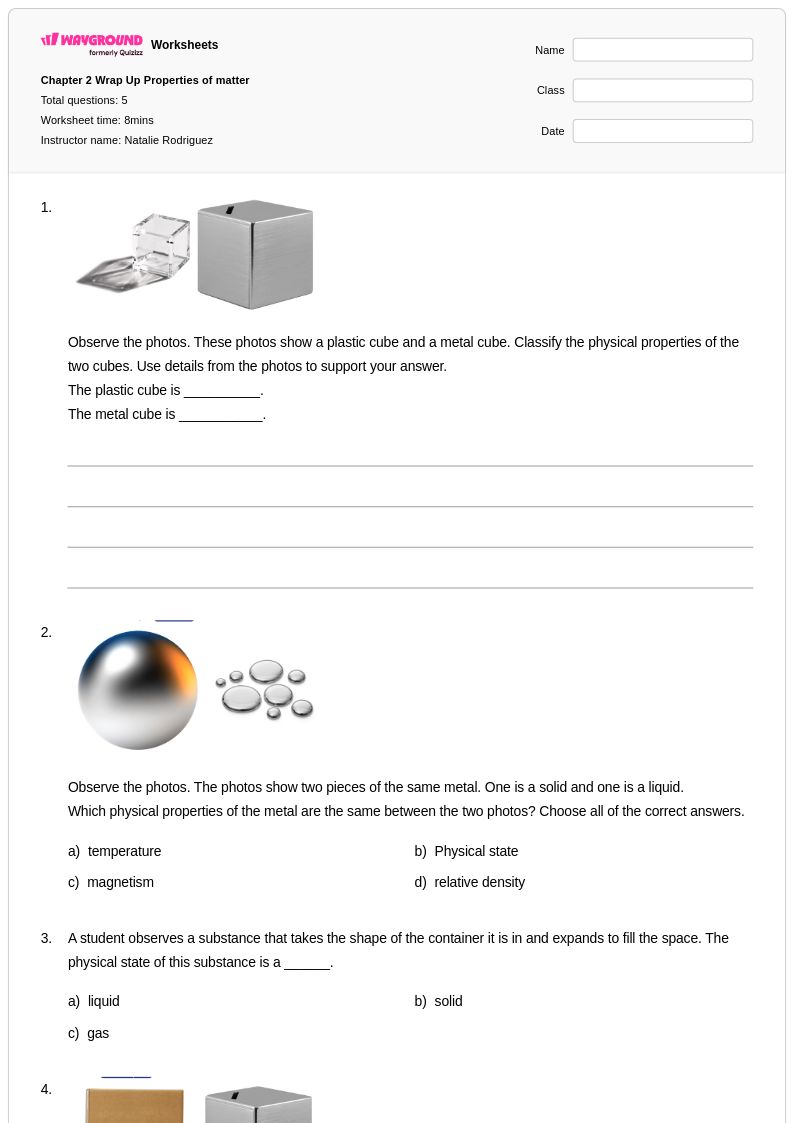
5 Q
4th
Explore Other Subject Worksheets for class 4
Explore printable Sinking and Floating worksheets for Class 4
Sinking and floating worksheets for Class 4 students available through Wayground (formerly Quizizz) provide comprehensive exploration of fundamental physics concepts that govern how objects behave in water and other liquids. These educational resources strengthen critical thinking skills as students investigate density, buoyancy, and material properties through hands-on prediction activities and systematic observation exercises. The worksheet collection includes practice problems that challenge students to hypothesize why certain objects sink while others float, analyze the relationship between an object's weight and volume, and explore how shape affects buoyancy. Teachers can access complete answer keys and free printable versions in pdf format, making it simple to incorporate these investigations into classroom instruction or assign as independent practice to reinforce scientific reasoning abilities.
Wayground (formerly Quizizz) supports educators with an extensive collection of teacher-created sinking and floating resources, drawing from millions of classroom-tested materials that align with elementary science standards. The platform's robust search and filtering capabilities allow teachers to quickly locate worksheets that match specific learning objectives, whether focusing on basic concepts like heavy versus light objects or more advanced topics such as water displacement and density comparisons. Differentiation tools enable instructors to customize content for diverse learning needs, while the availability of both printable and digital formats, including downloadable pdf versions, provides maximum flexibility for lesson planning. These features streamline the process of creating engaging science investigations, supporting targeted remediation for struggling learners, offering enrichment opportunities for advanced students, and providing consistent skill practice that builds scientific literacy throughout the elementary physics curriculum.
FAQs
How do I teach sinking and floating to elementary students?
What exercises help students practice buoyancy and density concepts?
What mistakes do students commonly make when learning about sinking and floating?
How can I differentiate sinking and floating instruction for students at different skill levels?
How do I use Wayground's sinking and floating worksheets in my classroom?