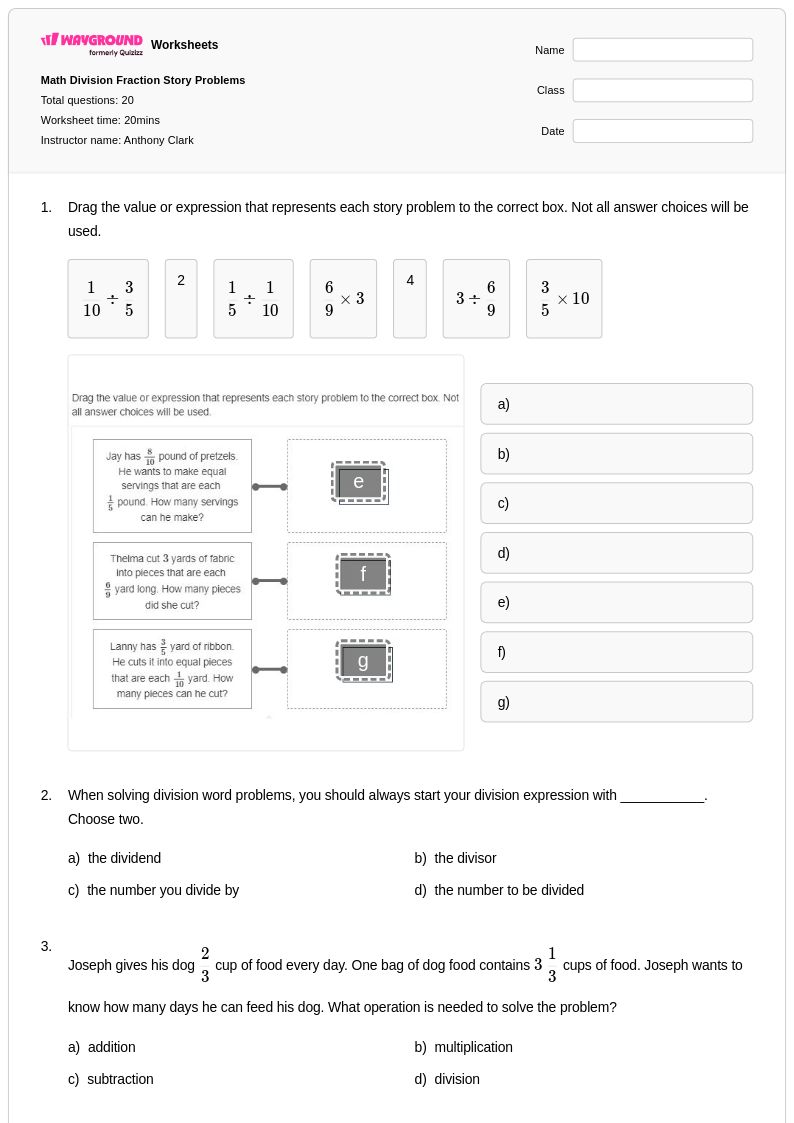
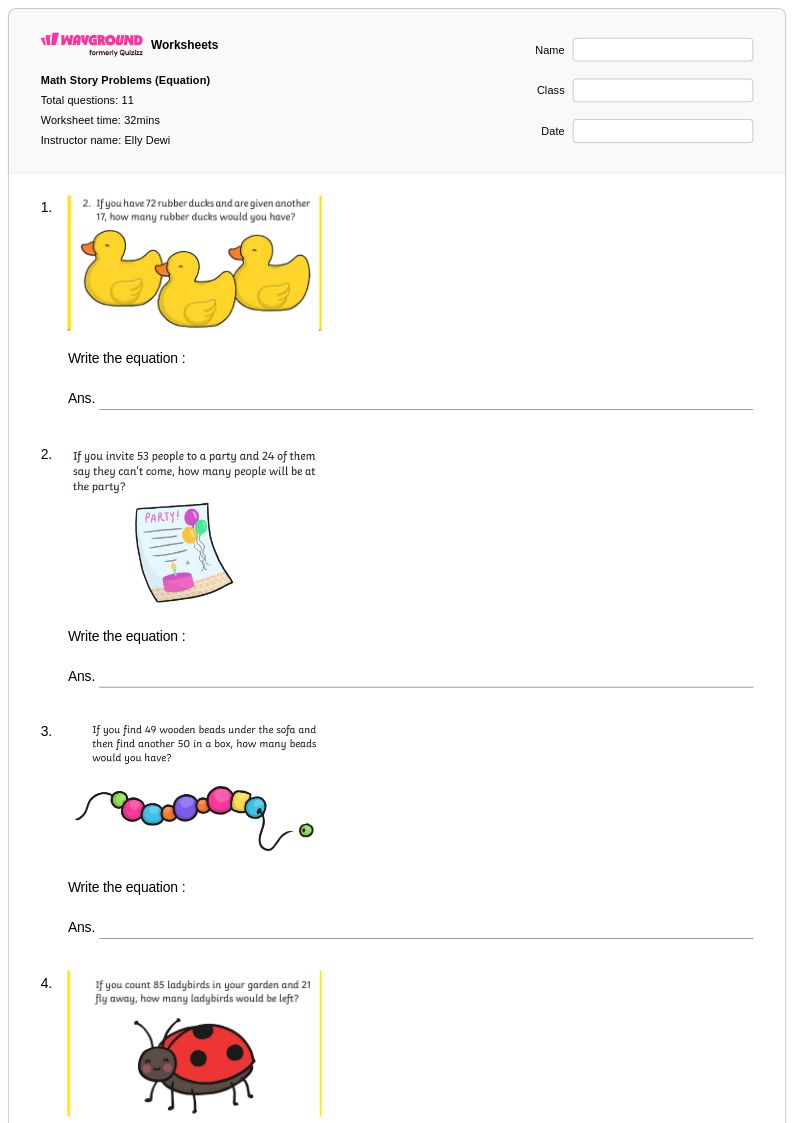
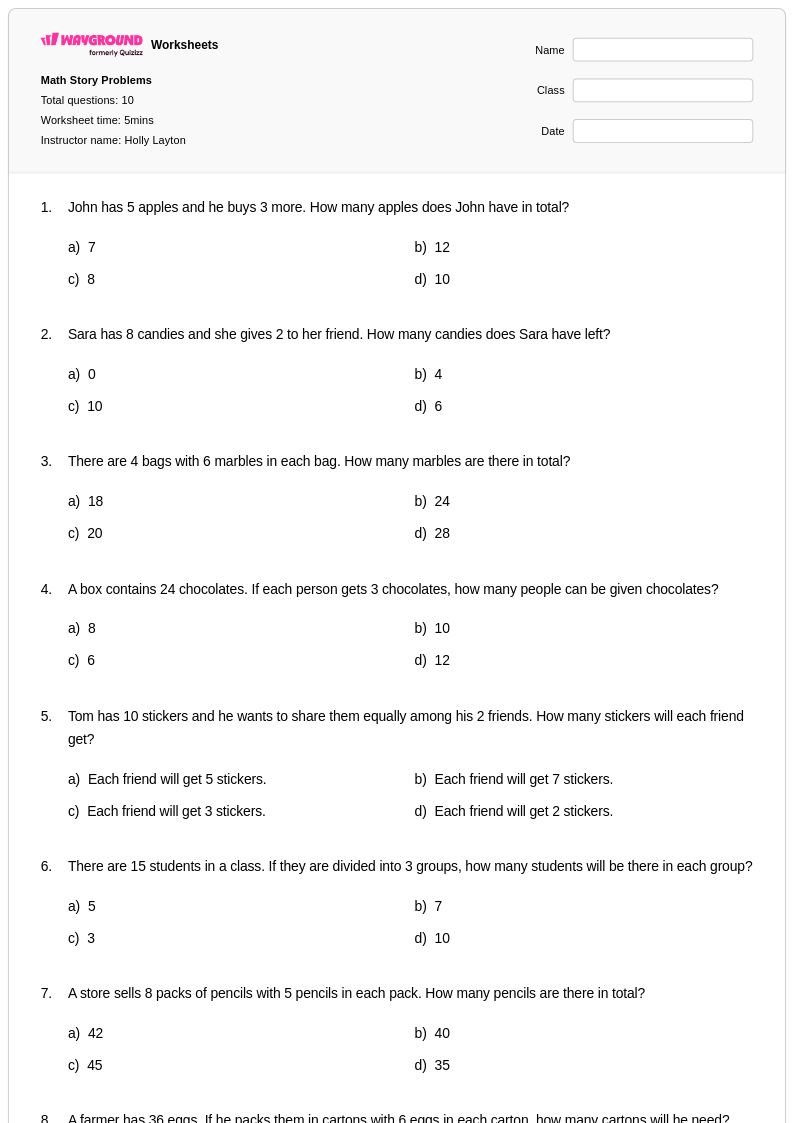
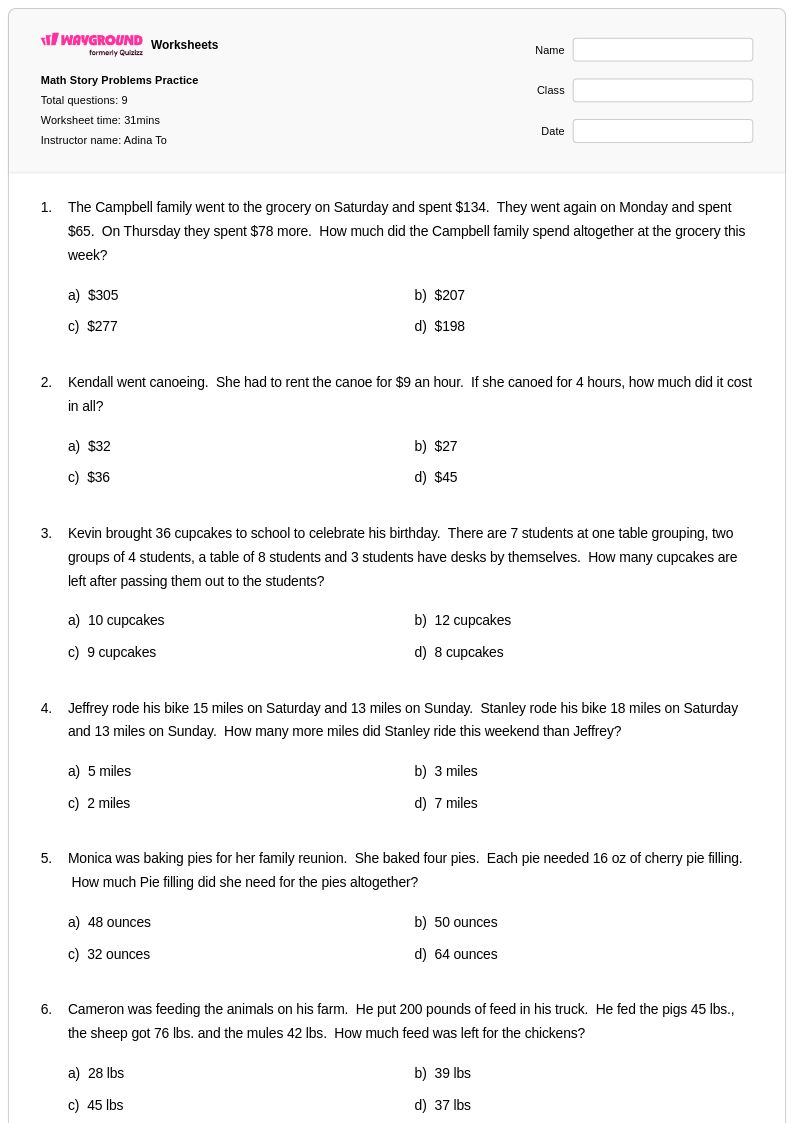
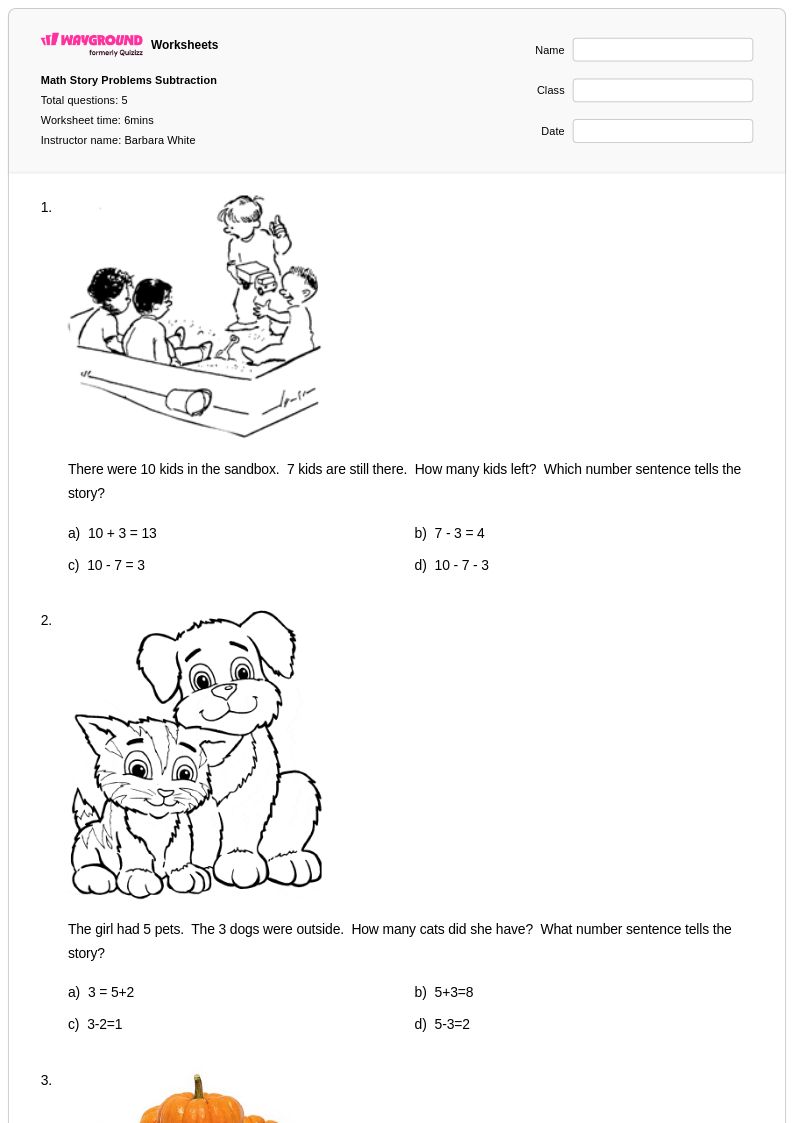
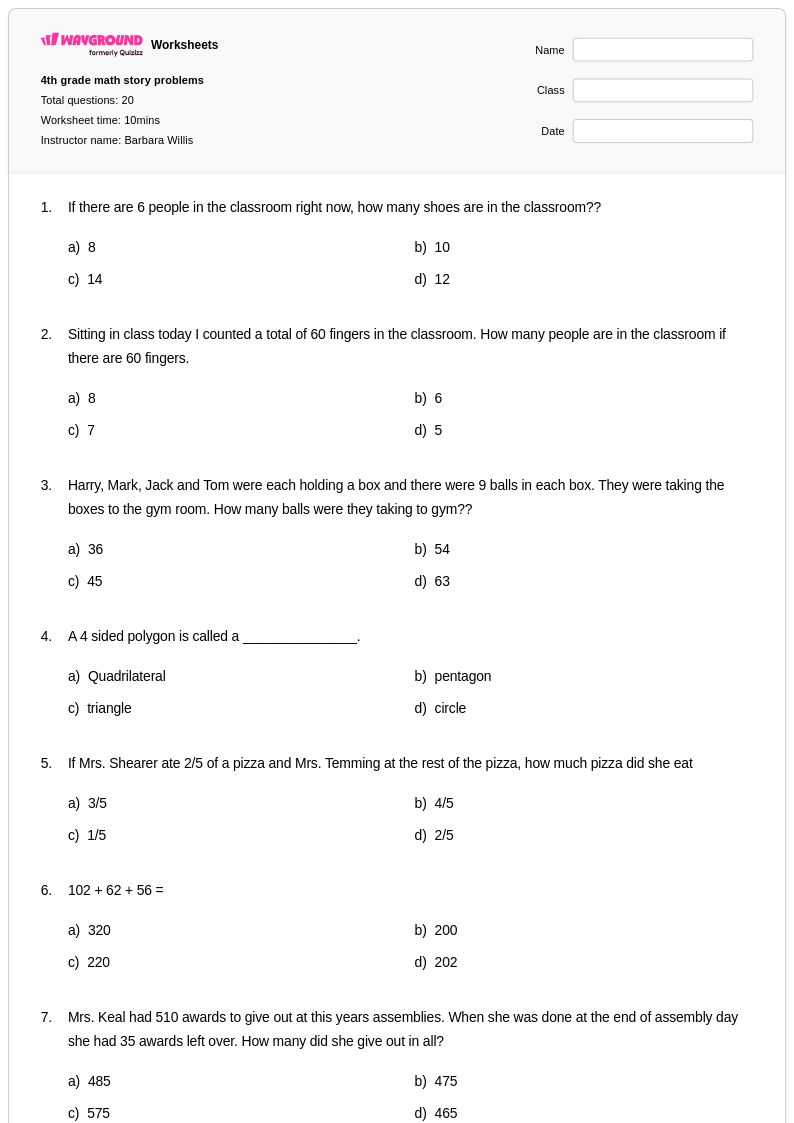
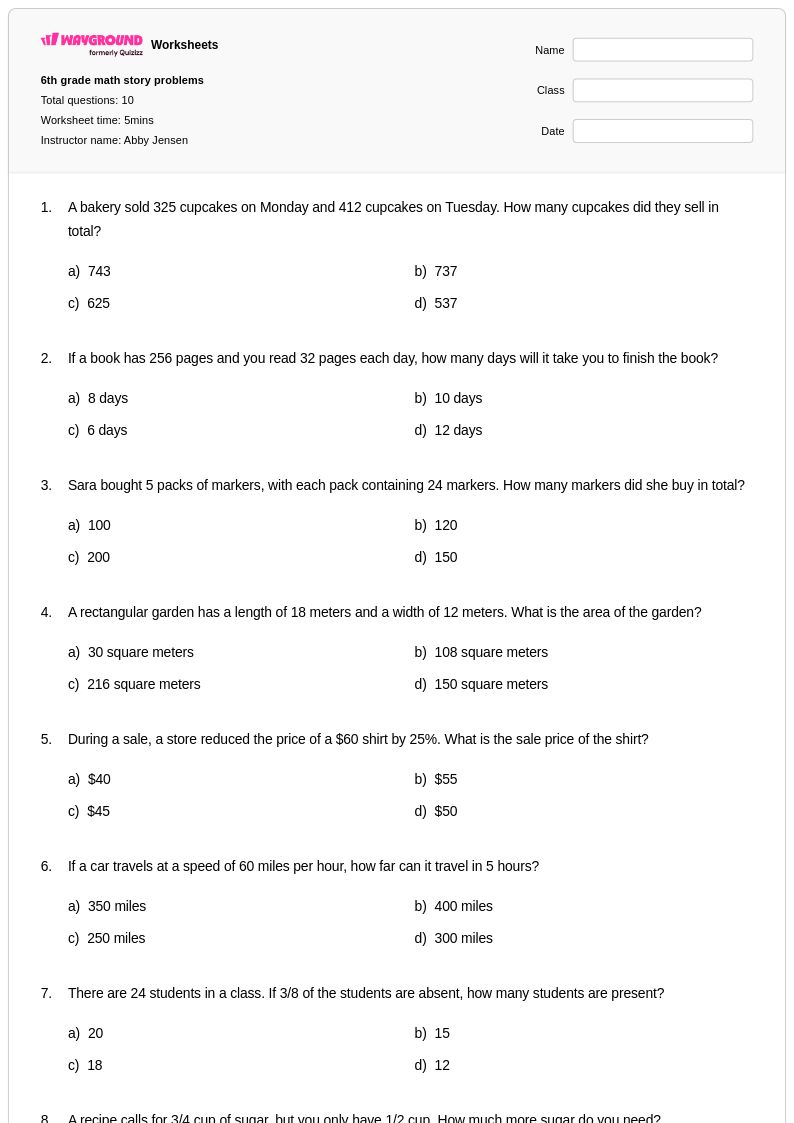
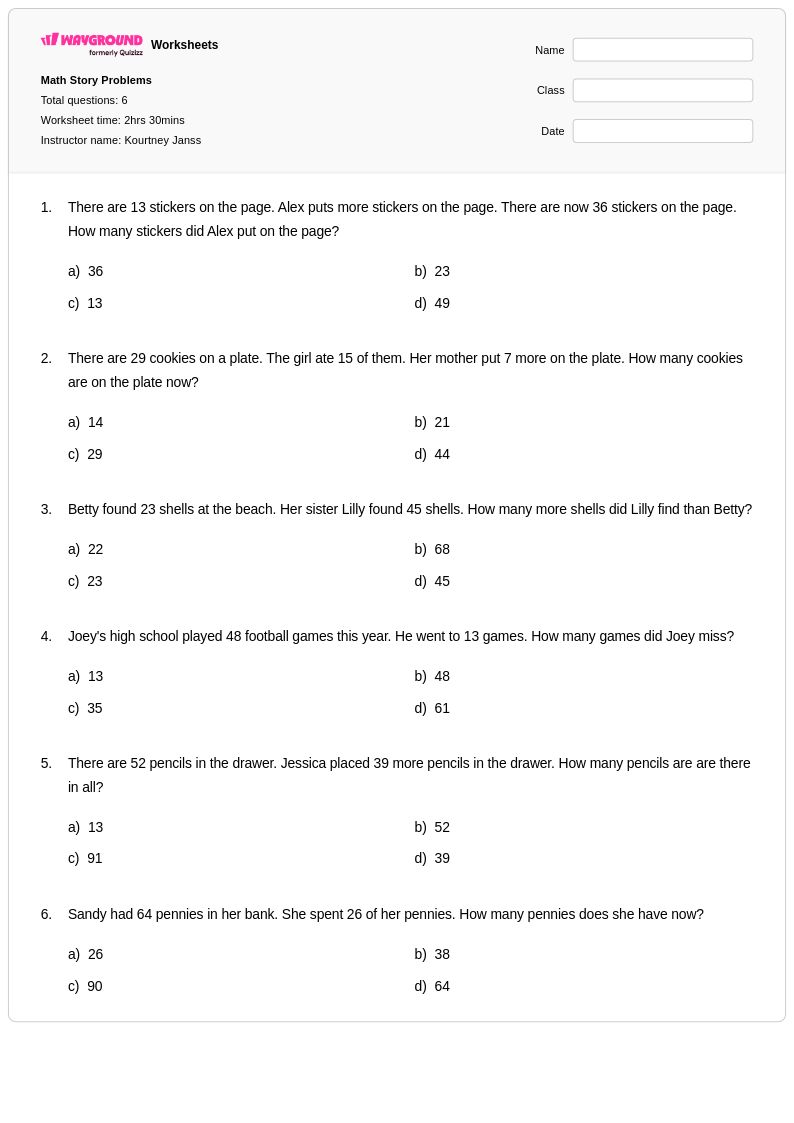
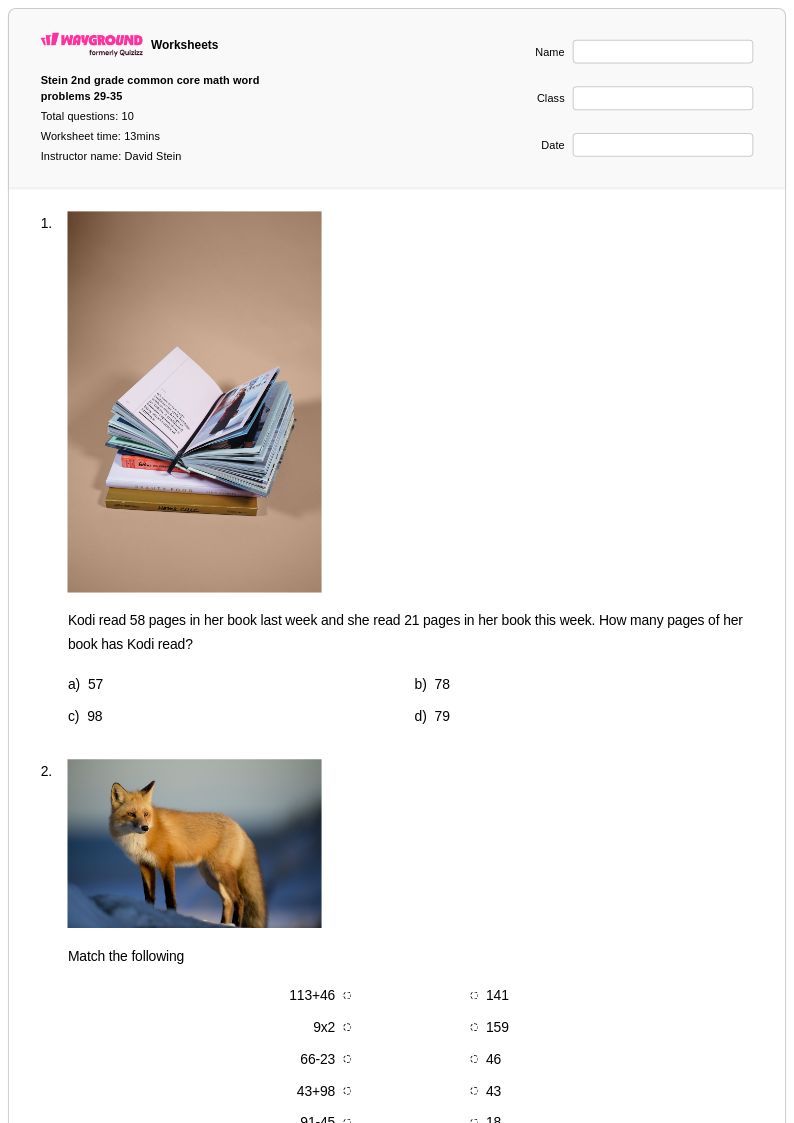
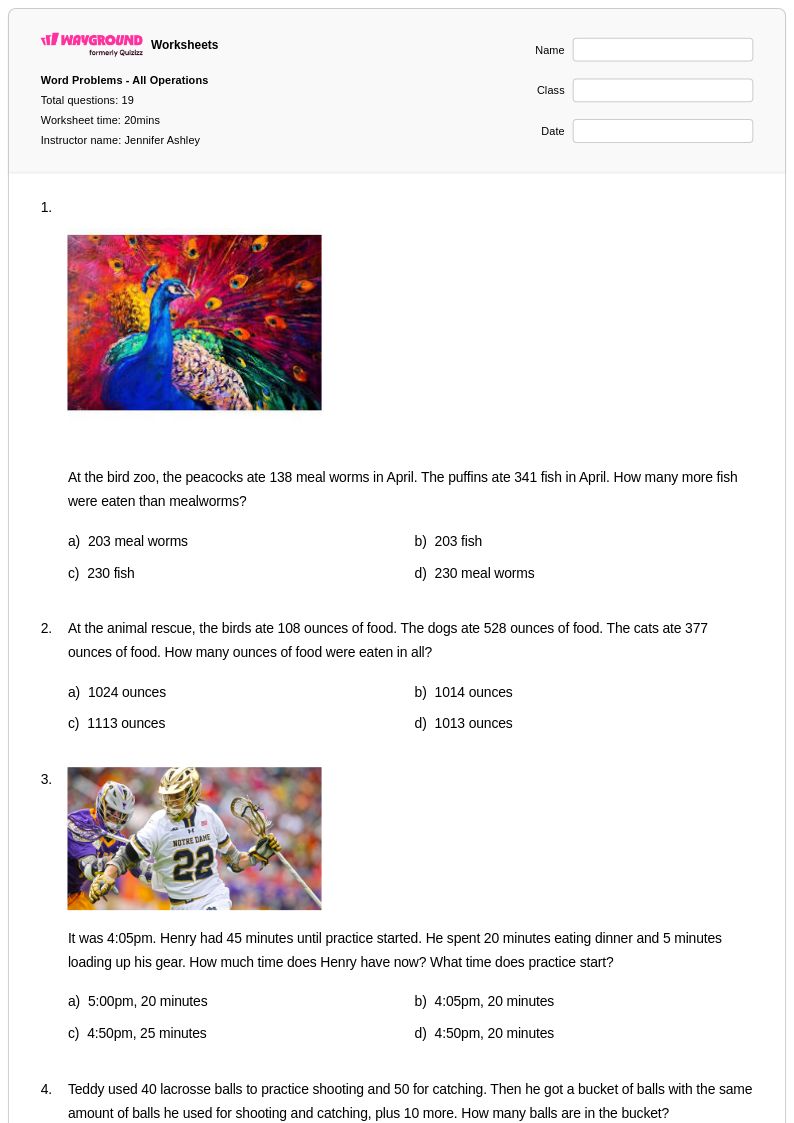
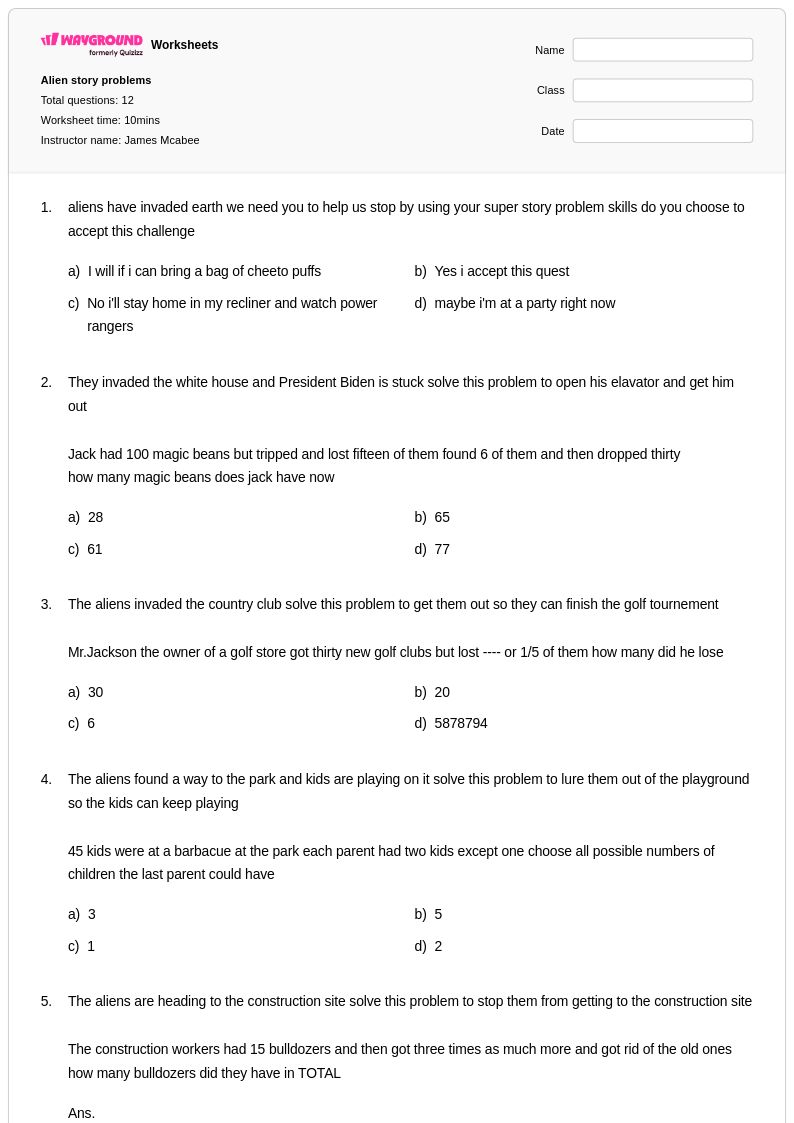
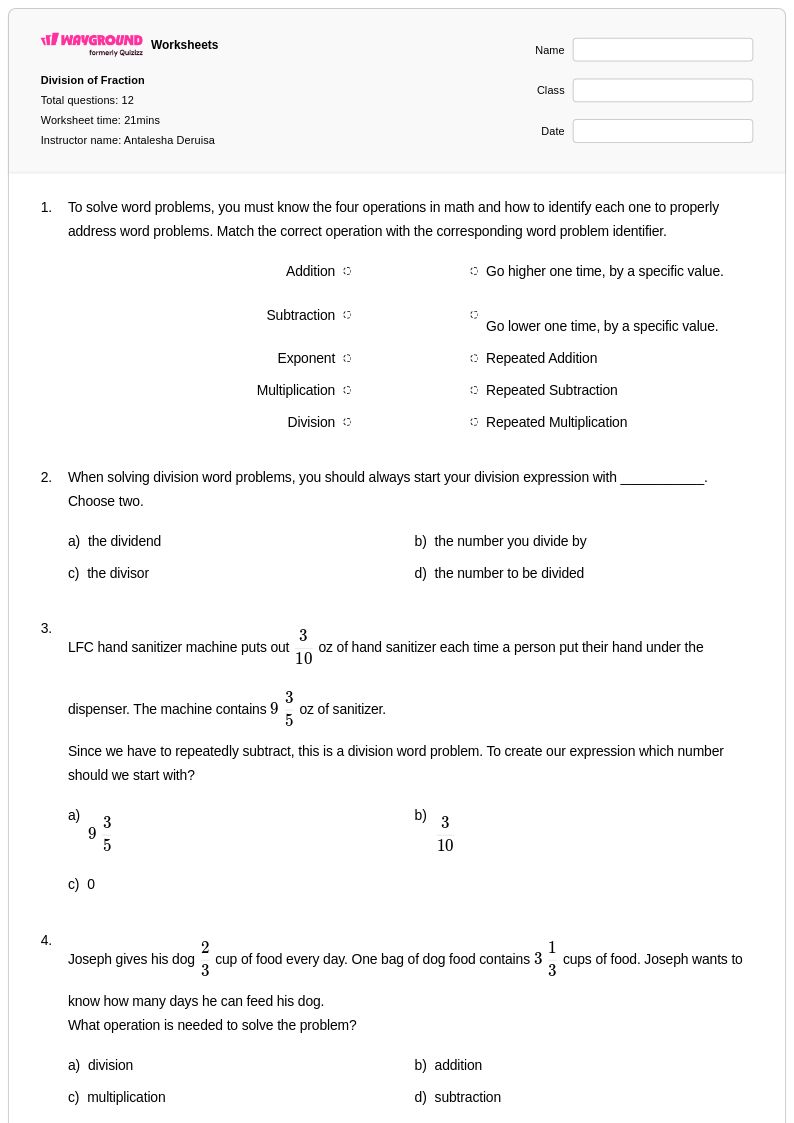
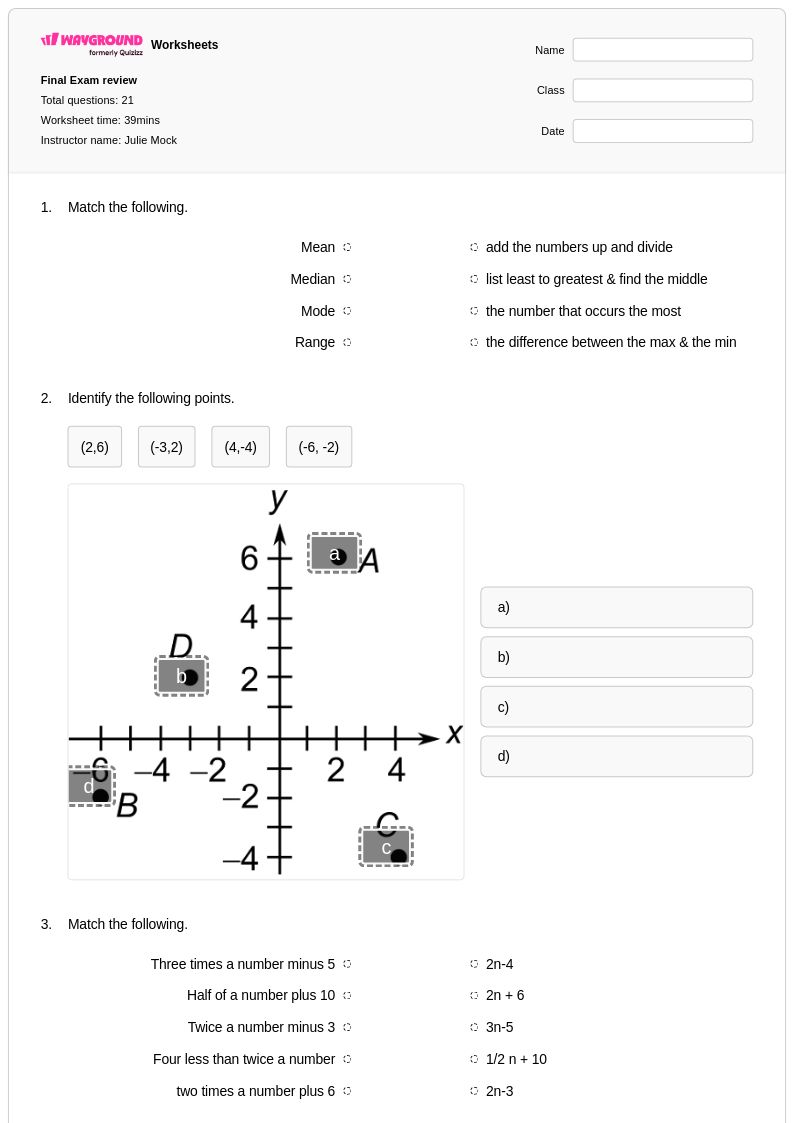
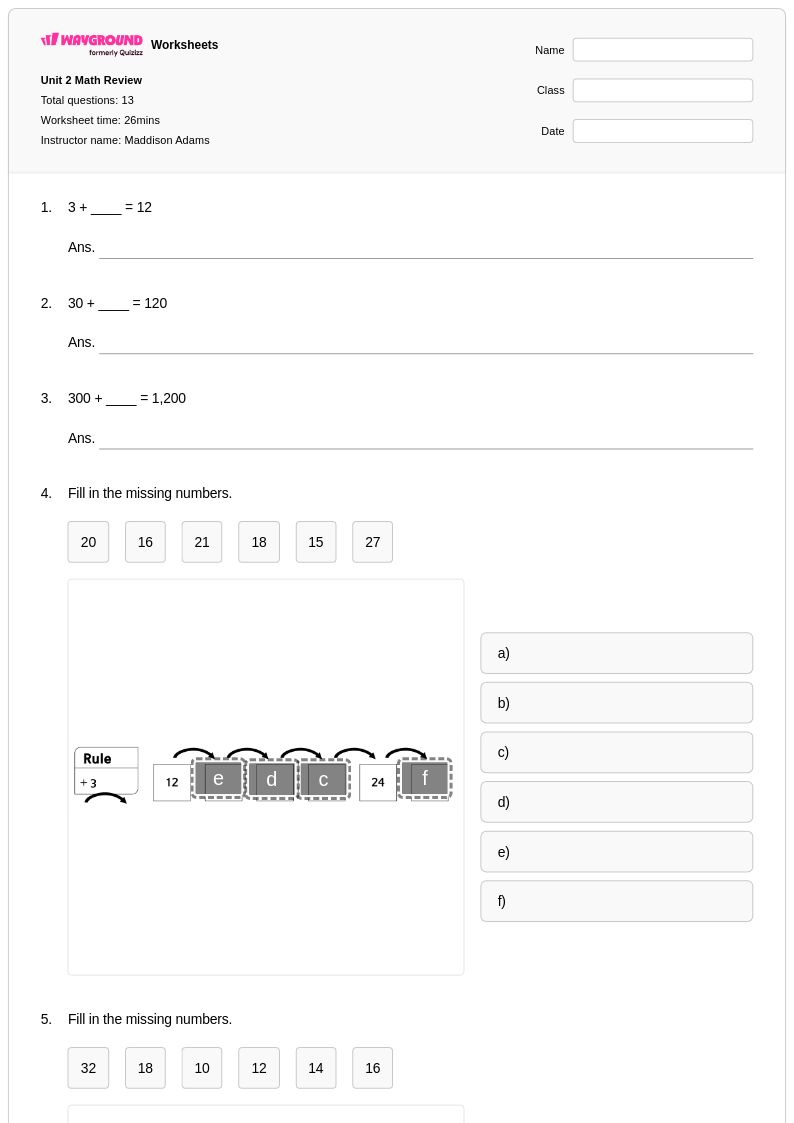
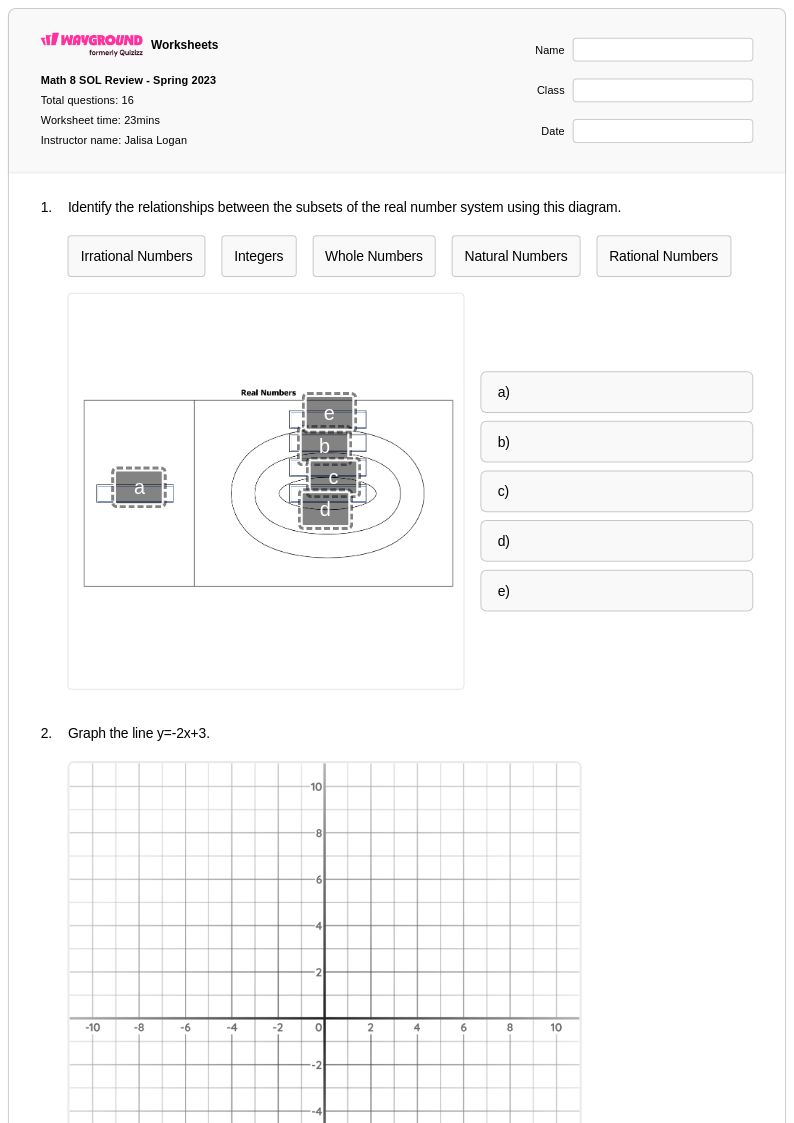
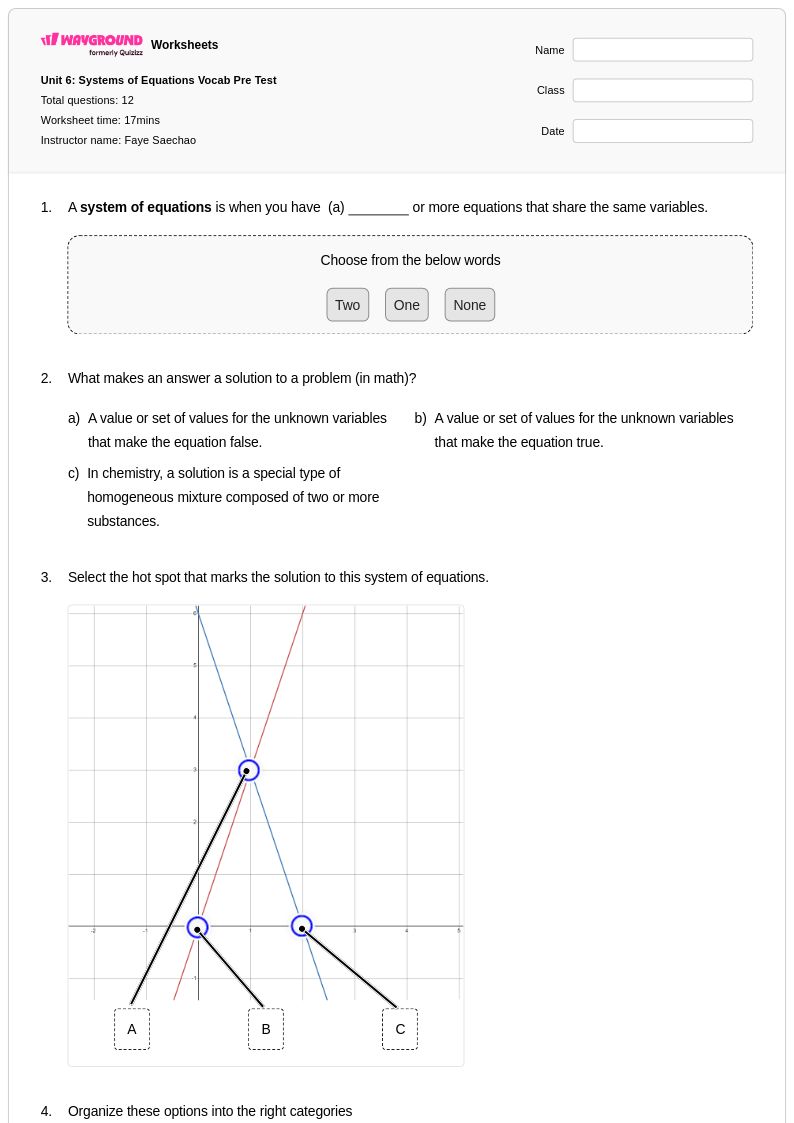
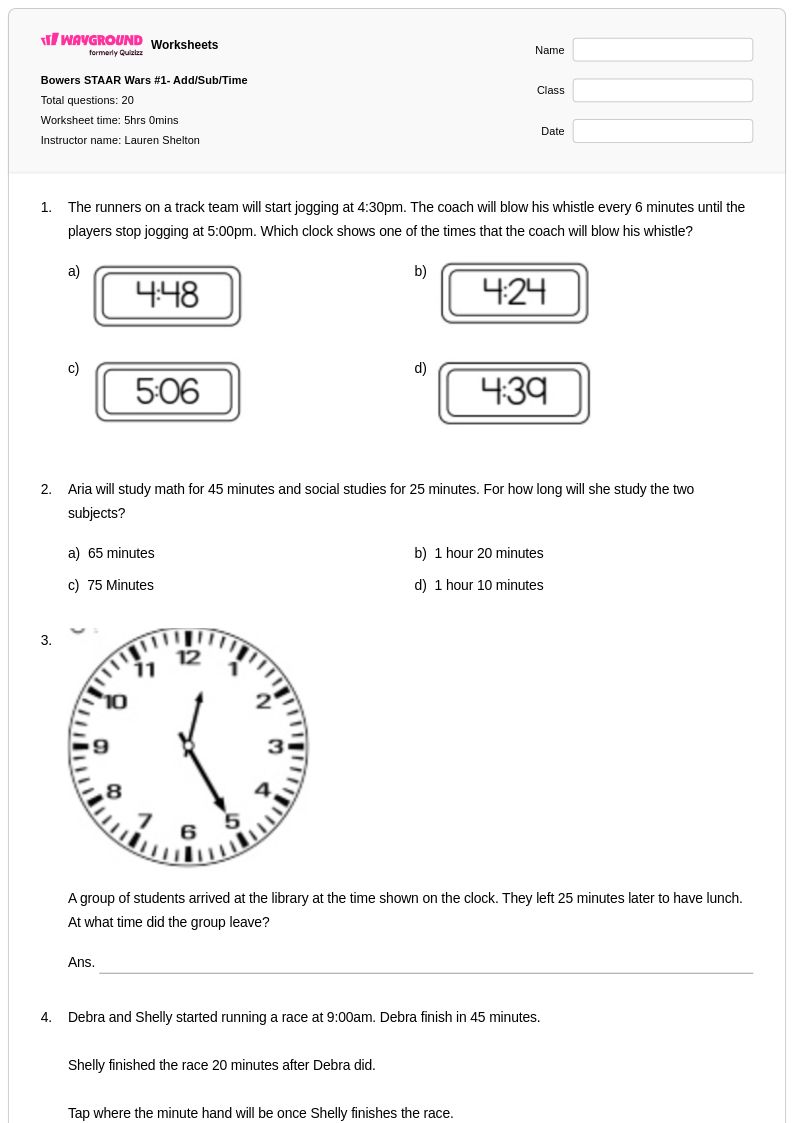
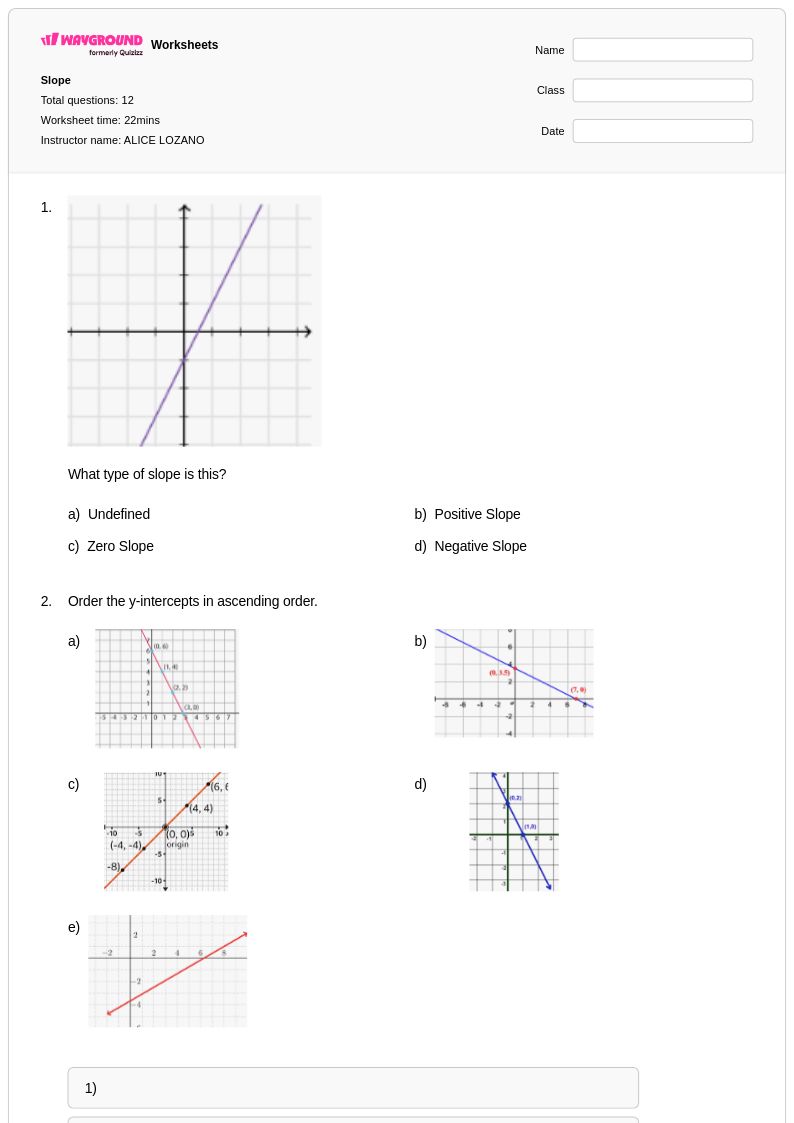
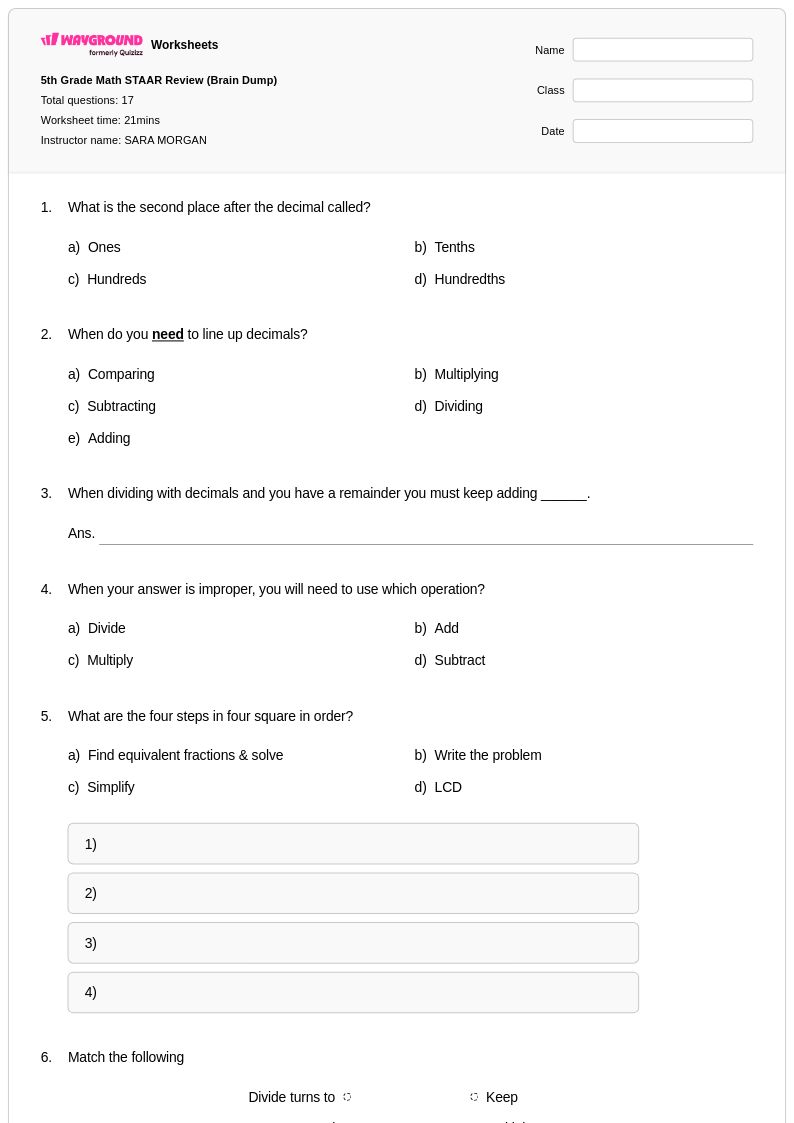
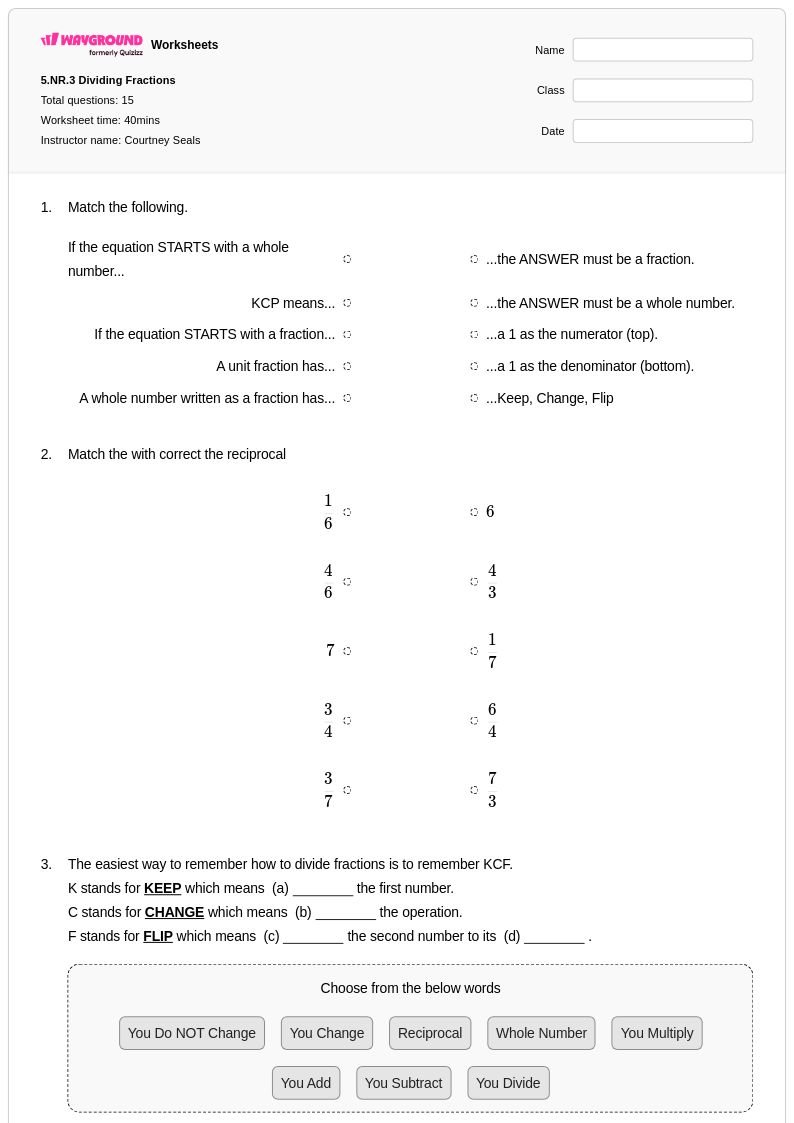
Enhance problem-solving skills with free Math Story Problems worksheets from Wayground, featuring engaging printable PDFs with practice problems and complete answer keys to help students master real-world mathematical applications.
Math story problems represent a crucial bridge between abstract mathematical concepts and real-world applications, helping students develop critical thinking and problem-solving skills through contextual scenarios. Wayground's comprehensive collection of math story problem worksheets provides educators with diverse, engaging problems that challenge students to translate narrative situations into mathematical equations and solutions. These carefully crafted worksheets strengthen essential skills including reading comprehension, analytical reasoning, multi-step problem solving, and mathematical communication. Each worksheet comes complete with detailed answer keys and is available as free printable pdf resources, offering teachers convenient access to practice problems that span various mathematical domains from basic arithmetic to complex algebraic thinking.
Wayground, formerly Quizizz, empowers educators with millions of teacher-created math story problem resources that can be easily accessed through robust search and filtering capabilities. The platform's extensive worksheet collection aligns with educational standards and provides differentiation tools that allow teachers to customize content for diverse learning needs and skill levels. Whether delivered in traditional printable format or engaging digital presentations, these flexible resources support comprehensive lesson planning while offering targeted options for remediation and enrichment activities. Teachers can efficiently identify appropriate story problems for skill practice, create differentiated assignments, and provide students with meaningful mathematical experiences that demonstrate the practical relevance of mathematical thinking in everyday situations.
FAQs
How do I teach students to solve math story problems?
A helpful strategy is to teach students a simple three-step process: 1) Read the problem to understand the story and identify what question is being asked. 2) Find the key numbers and clue words (e.g., 'in total,' 'how many are left'). 3) Choose the correct operation (add, subtract, etc.) to solve the problem and check if the answer makes sense in the context of the story.
What are common mistakes students make with story problems?
Students often struggle with reading comprehension, focusing on the numbers but missing what the question is actually asking. Another common error is choosing the wrong operation, such as adding when subtraction is needed, especially in problems that involve comparing quantities ('how many more').
How do these worksheets help students practice story problems?
These worksheets provide a wide variety of scenarios that require students to translate real-world situations into mathematical equations. This repeated practice helps them move beyond simple computation and develop the critical thinking skills needed to identify relevant information and select the correct problem-solving strategy.
How can I use this Wayground worksheet with my class?
You can assign this resource in the format that best fits your classroom. It is available as a printable PDF for hands-on, offline practice; you can then use the Wayground for Teachers app to quickly scan and grade paper submissions. Alternatively, you can host it as a digital activity on the Wayground platform. Every worksheet includes a complete answer key.
How do story problems fit into the math curriculum?
Aligned with Common Core principles, story problems are essential for teaching mathematical application and reasoning. The curriculum progression starts in early grades with simple addition and subtraction scenarios and builds toward multi-step problems involving all four operations, ensuring students can apply their math skills in practical contexts.
How can I differentiate story problem practice for diverse learners?
For students who struggle with reading, use Wayground's Read Aloud feature to have problems read to them. For those overwhelmed by complex problems, you can create a scaffolded version of a worksheet by breaking a multi-step problem into several single-step questions. These accommodations can be assigned to individual students.