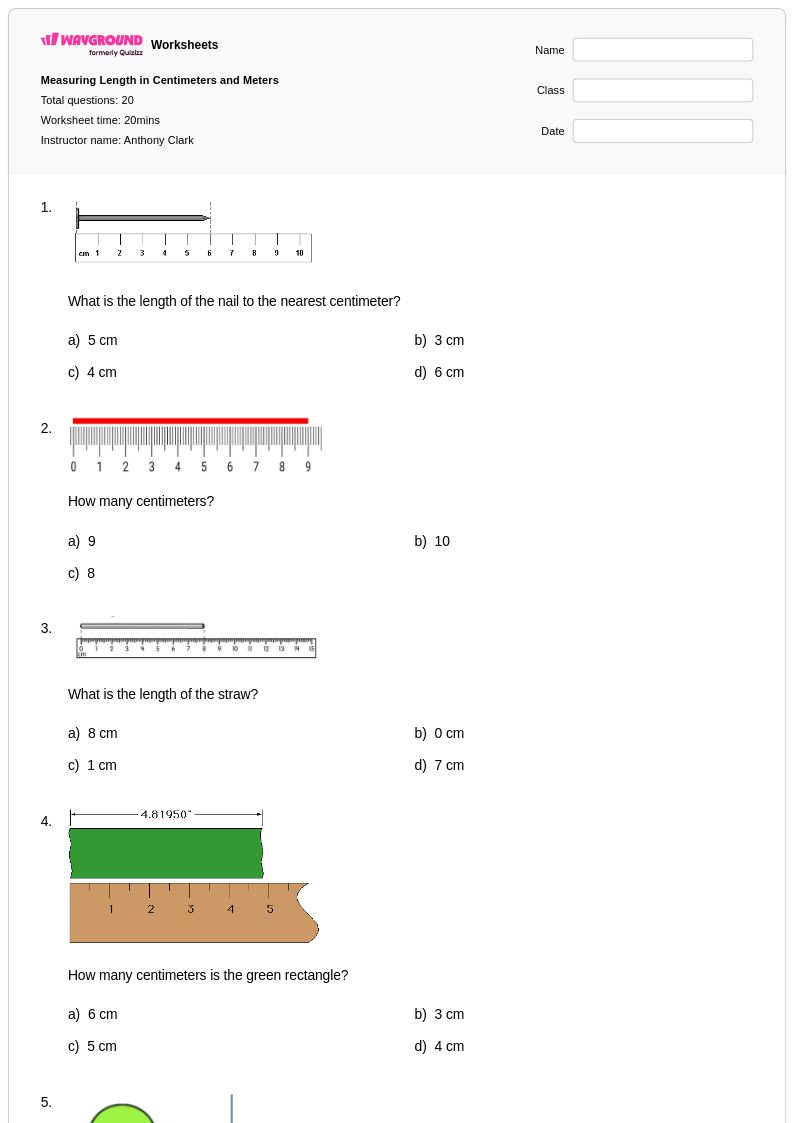
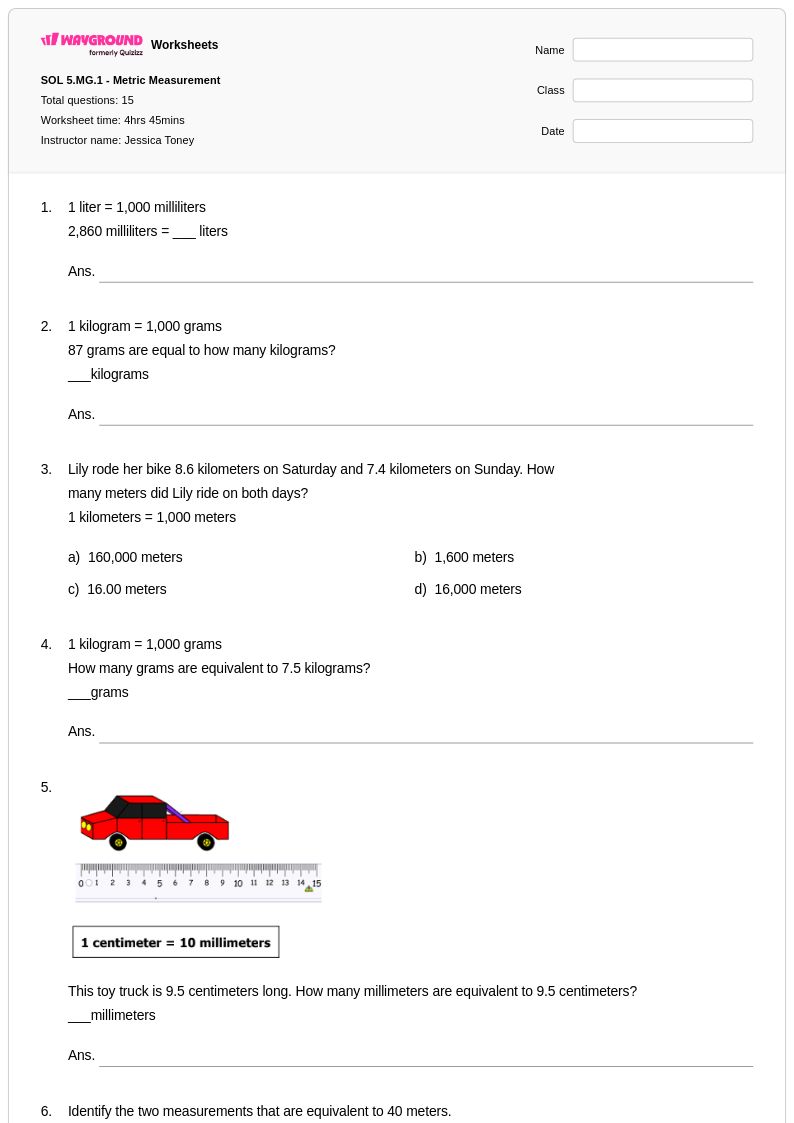
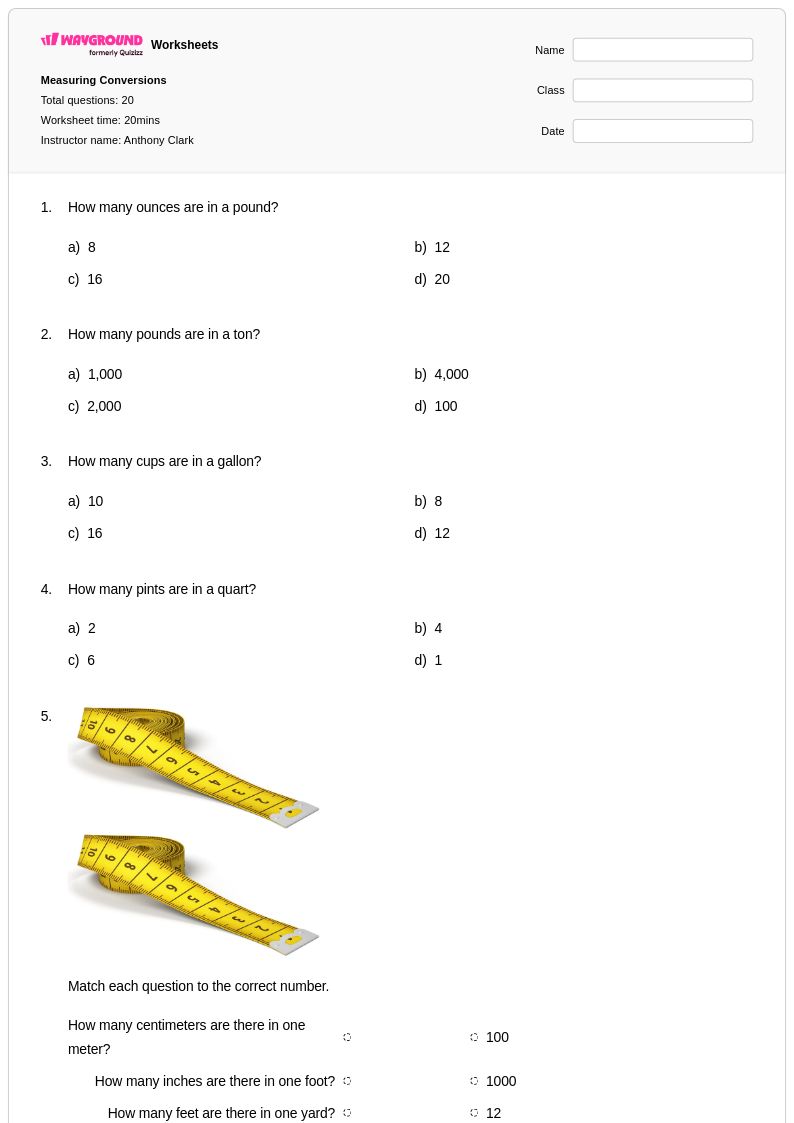
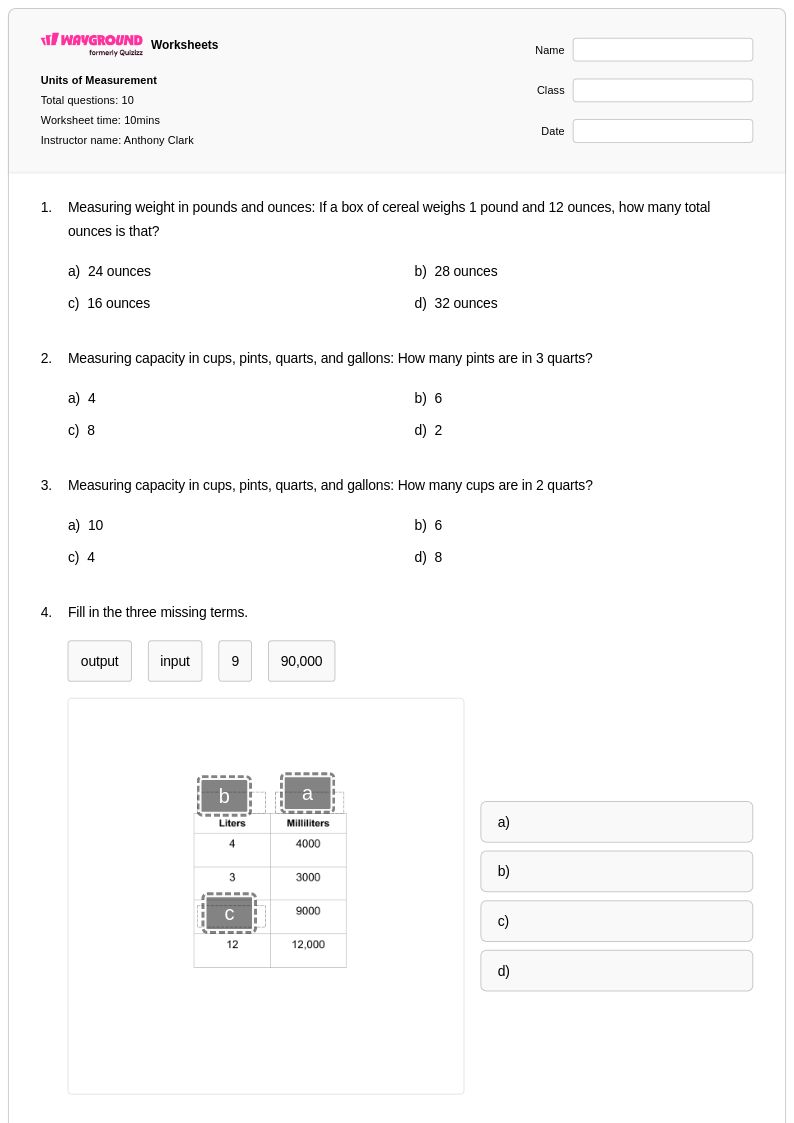
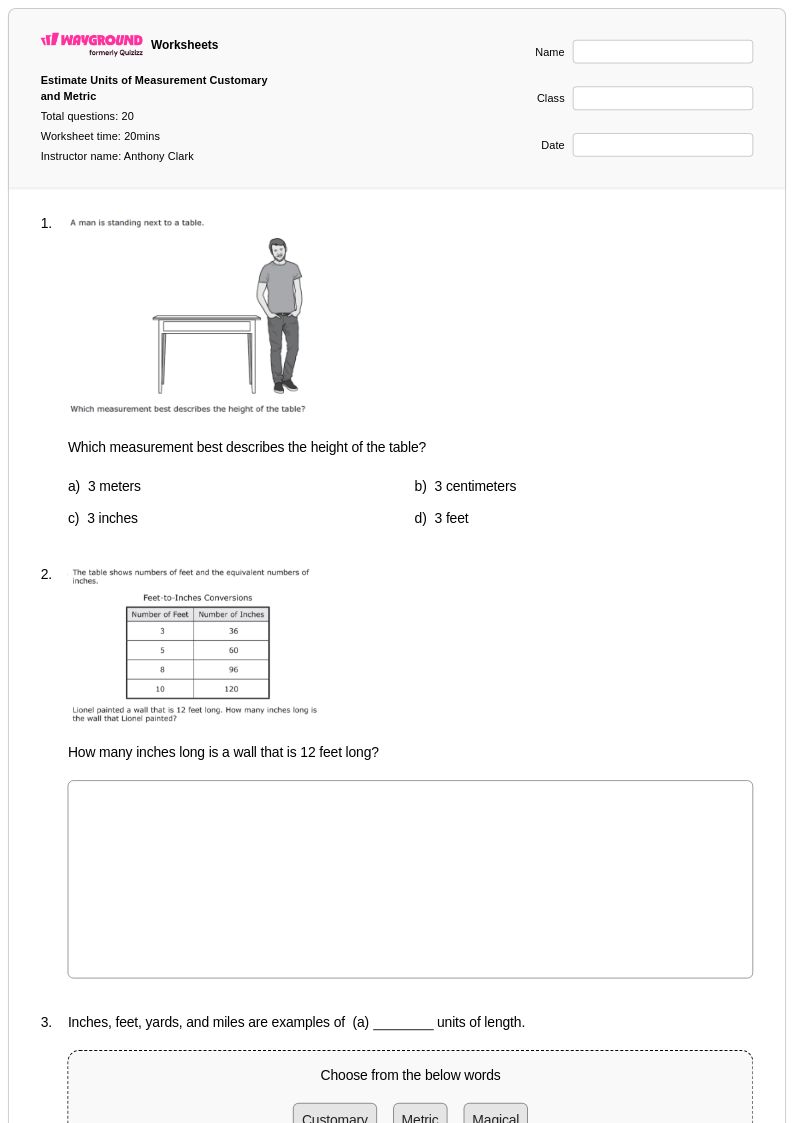
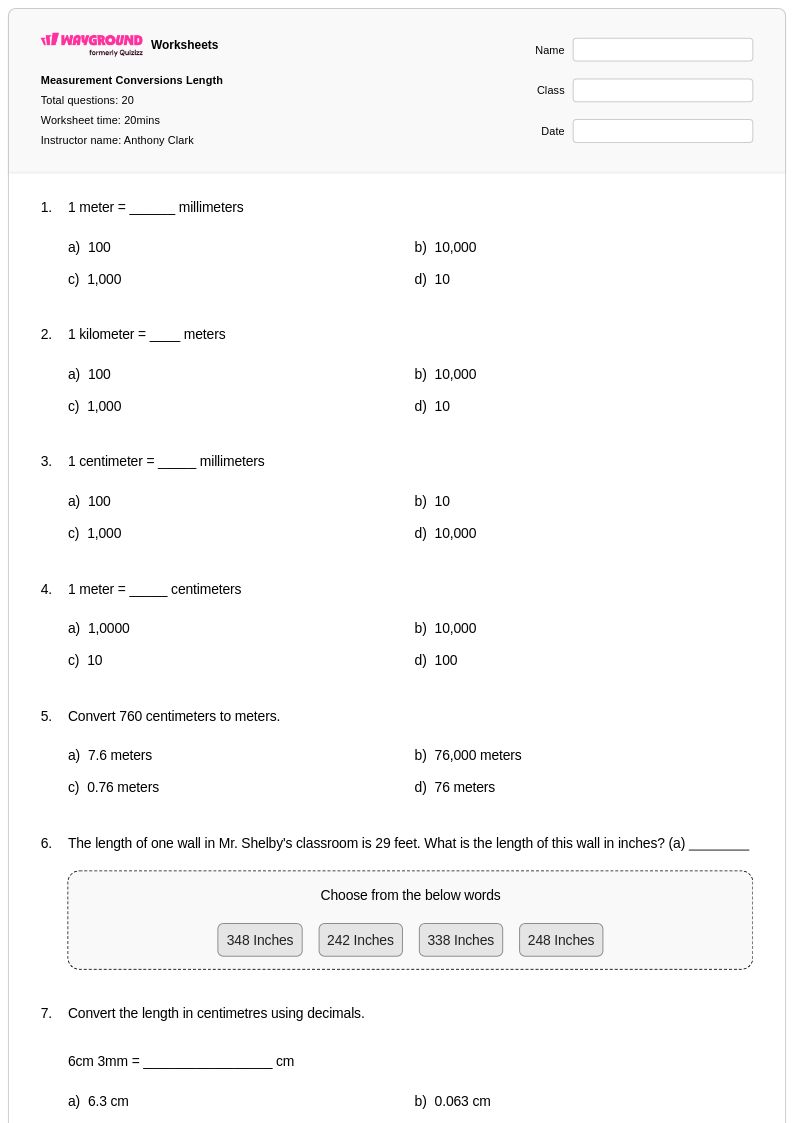
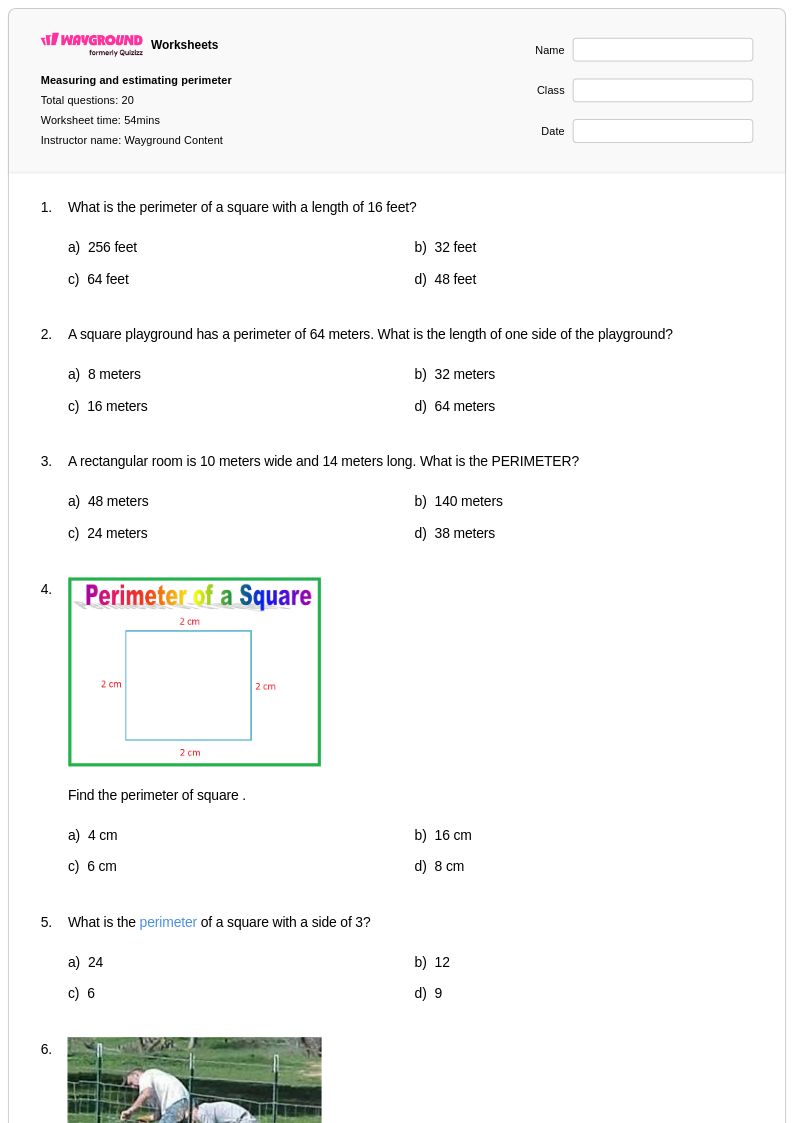
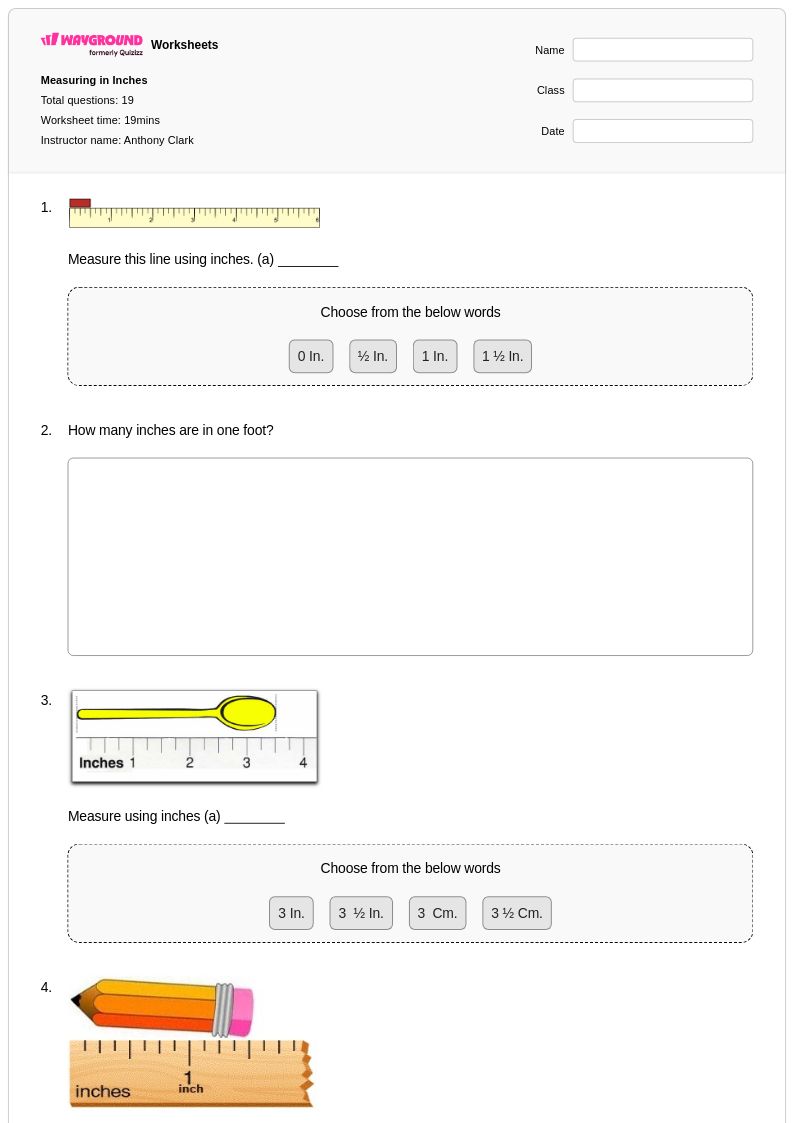
Wayground's free measuring in meters worksheets provide students with printable practice problems and answer keys to master metric measurement skills through hands-on activities and exercises.
Measuring in meters worksheets available through Wayground (formerly Quizizz) provide comprehensive practice opportunities for students to develop proficiency with the fundamental metric unit of length. These carefully crafted resources strengthen essential skills including meter-to-meter conversions, estimation techniques, real-world measurement applications, and understanding the relationship between meters and other metric units. Students work through engaging practice problems that range from basic meter identification to complex measurement scenarios involving distances, heights, and lengths commonly expressed in meters. Each worksheet collection includes detailed answer keys and is available as free printables in convenient PDF format, making it simple for educators to distribute materials and support independent learning.
Wayground (formerly Quizizz) empowers teachers with millions of educator-created measuring in meters resources that feature robust search and filtering capabilities aligned to curriculum standards. The platform's differentiation tools allow instructors to customize worksheets based on individual student needs, while flexible formatting options provide both printable PDF versions and interactive digital alternatives. These comprehensive features streamline lesson planning by offering ready-to-use materials for skill practice, targeted remediation for struggling learners, and enrichment opportunities for advanced students. Teachers can efficiently locate age-appropriate measuring activities, modify content difficulty levels, and seamlessly integrate meter measurement practice into their mathematics instruction through this extensive worksheet library.
FAQs
How do I teach the concept of a meter?
Start with a physical meter stick to establish a concrete benchmark. Have students find objects in the classroom that are about one meter long, shorter than a meter, and longer than a meter. This hands-on comparison helps build an intuitive sense of the unit's scale before moving to abstract measurement tasks.
What exercises help students practice measuring in meters?
Effective practice includes a mix of estimation and precise measurement. Start with estimating the length of large objects (like a whiteboard or a hallway) in meters, then measuring to check. Progress to word problems that involve adding or subtracting lengths in meters and converting between meters and other metric units like centimeters.
What are common mistakes when students learn to measure in meters?
A frequent error is confusing meters with other units, especially centimeters or yards. Students may also struggle with estimation, often making guesses that are orders of magnitude off. Another common issue is incorrectly reading a measuring tape, either by starting from the '1' mark instead of the zero point or misinterpreting the markings between whole meters.
How can I use these measuring in meters worksheets?
Wayground worksheets are flexible for any classroom setup. You can assign them as an interactive digital quiz on the platform or download them as printable PDFs for hands-on, offline practice. Every worksheet includes a complete answer key for quick grading. For paper assignments, you can use the Wayground for Teachers app to scan and grade student work.
How does measuring in meters fit into the math curriculum?
In curricula aligned with Common Core, measurement concepts progress from non-standard units in early grades to standard units like the meter around first and second grade. Students first learn to measure and estimate lengths. Later, they solve word problems involving measurement and begin converting between larger and smaller units within the same system, such as from meters to centimeters, which builds a foundation for understanding the base-ten structure of the metric system.
How can I differentiate measurement practice for my students?
For students needing support, use Wayground's tools to reduce the number of answer choices on digital assignments or provide a dyslexia-friendly font on printable worksheets. For an extra challenge, assign problems that require multi-step conversions or comparing measurements in different metric units.