Free Printable Minerals and Rocks Worksheets for Class 4
Explore Wayground's free Class 4 minerals and rocks worksheets and printables that help students discover different rock types, mineral properties, and geological formations through engaging practice problems with complete answer keys.
Explore printable Minerals and Rocks worksheets for Class 4
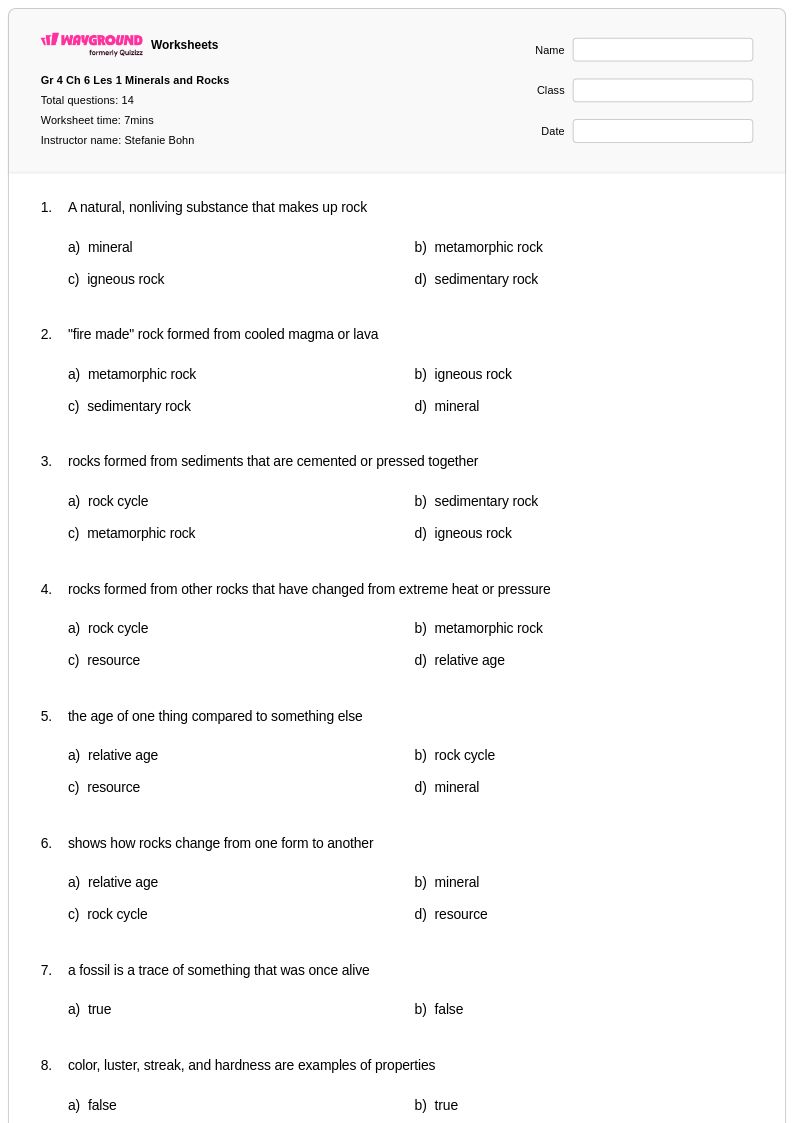
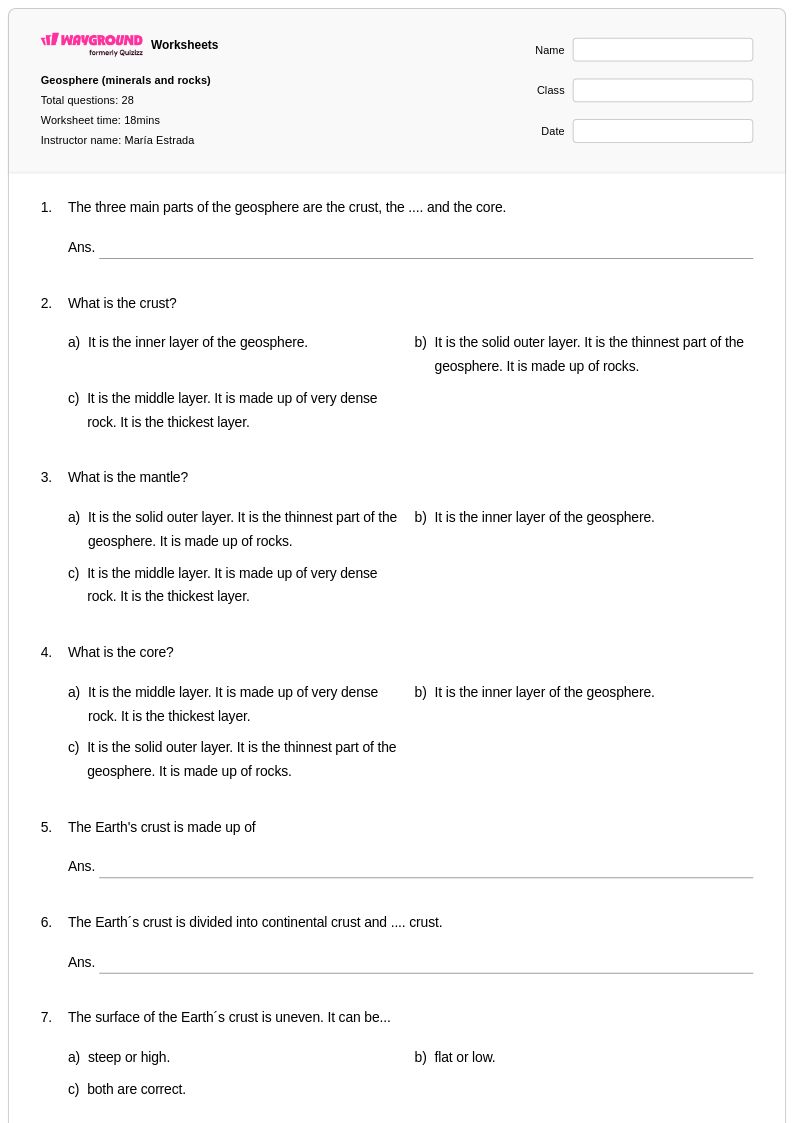
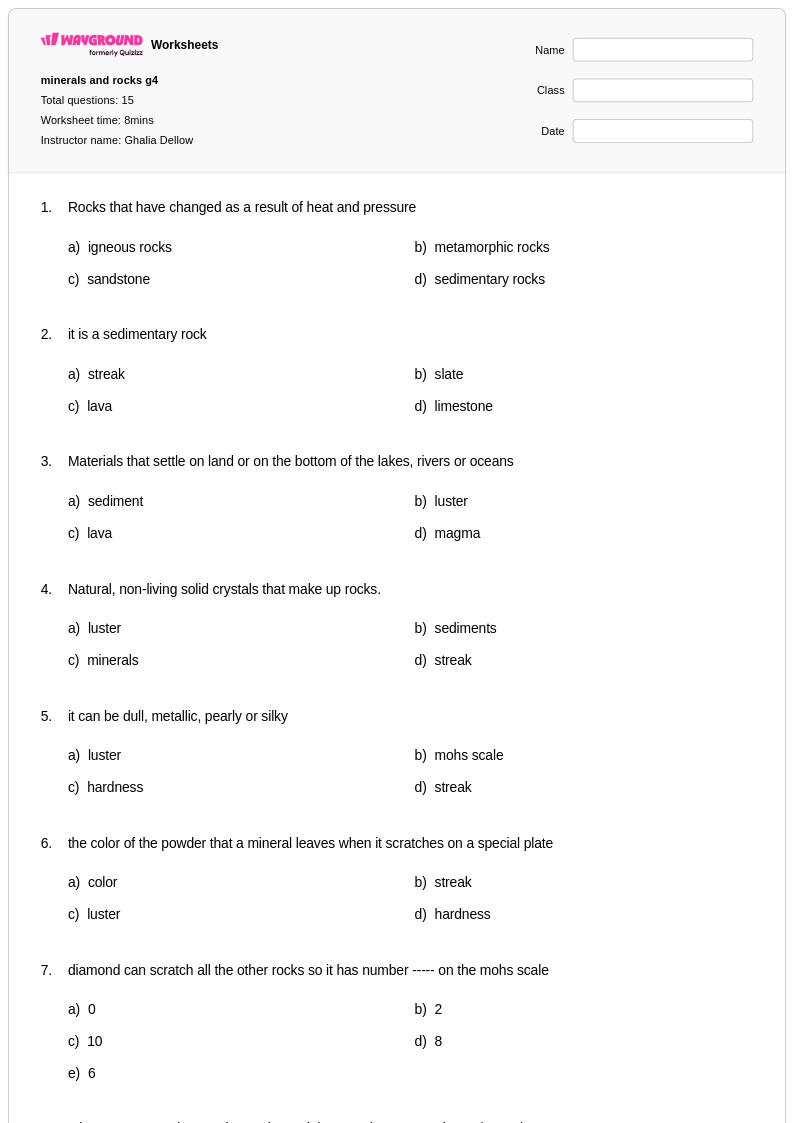
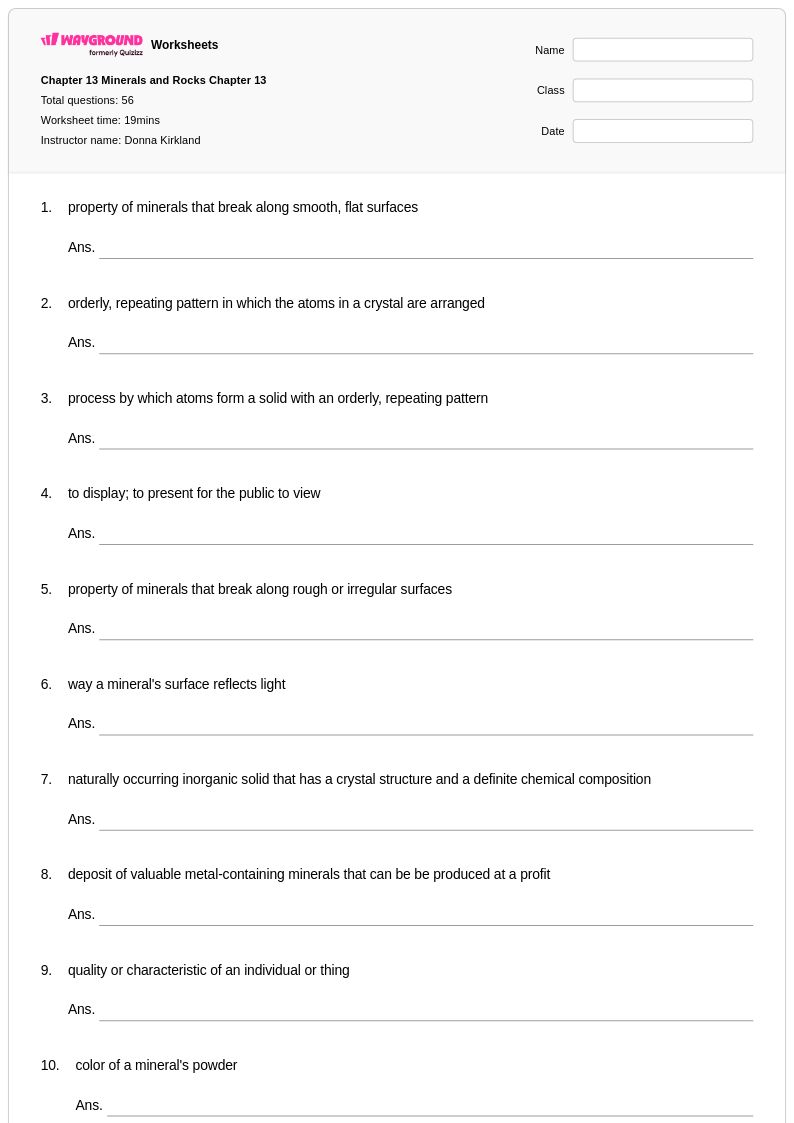
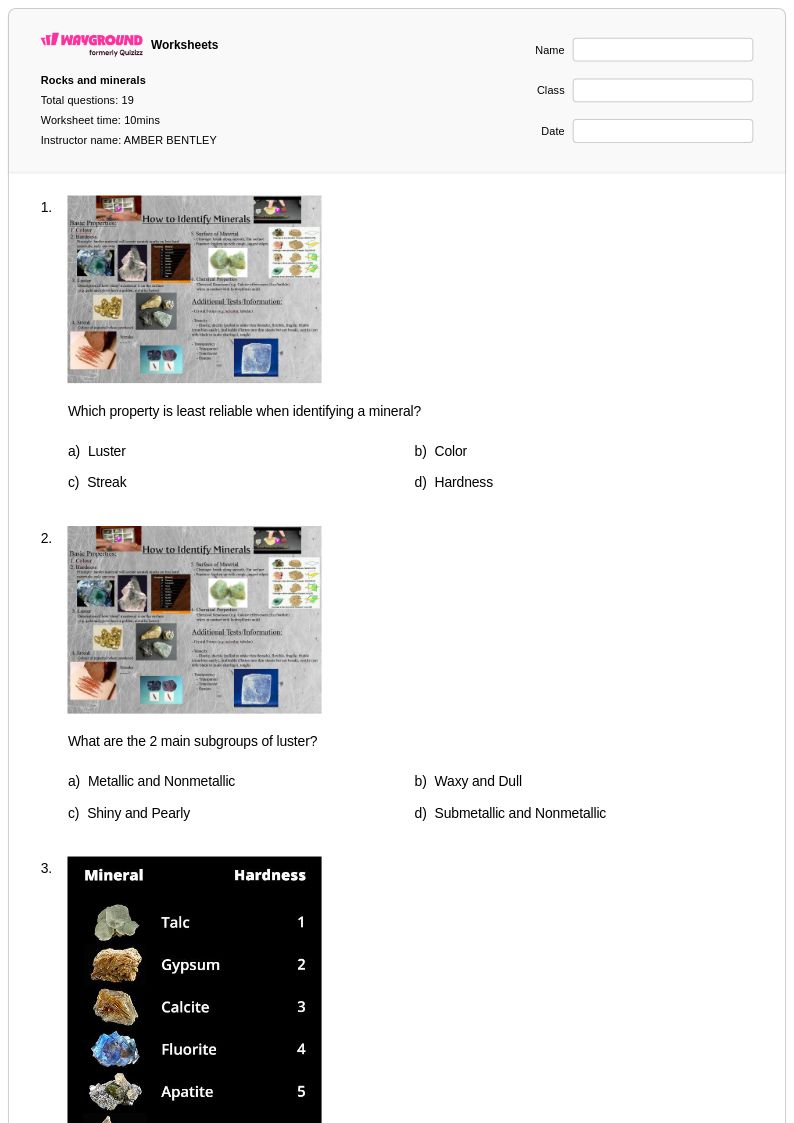
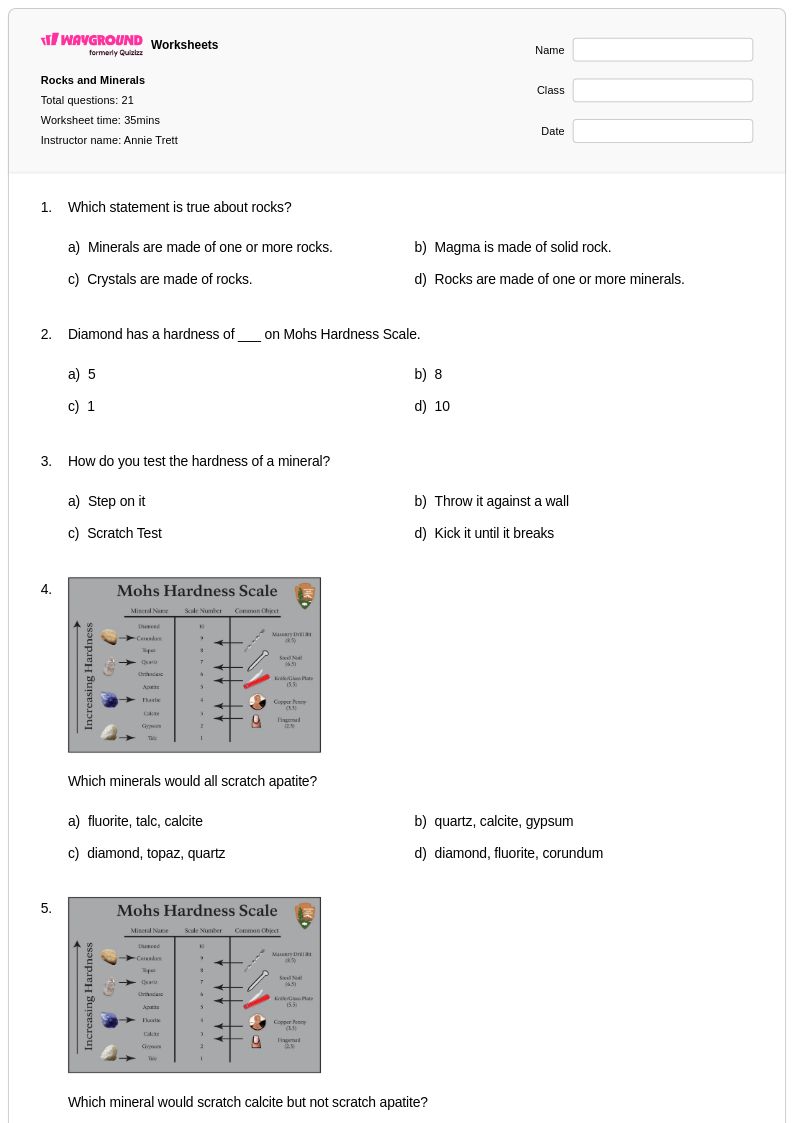
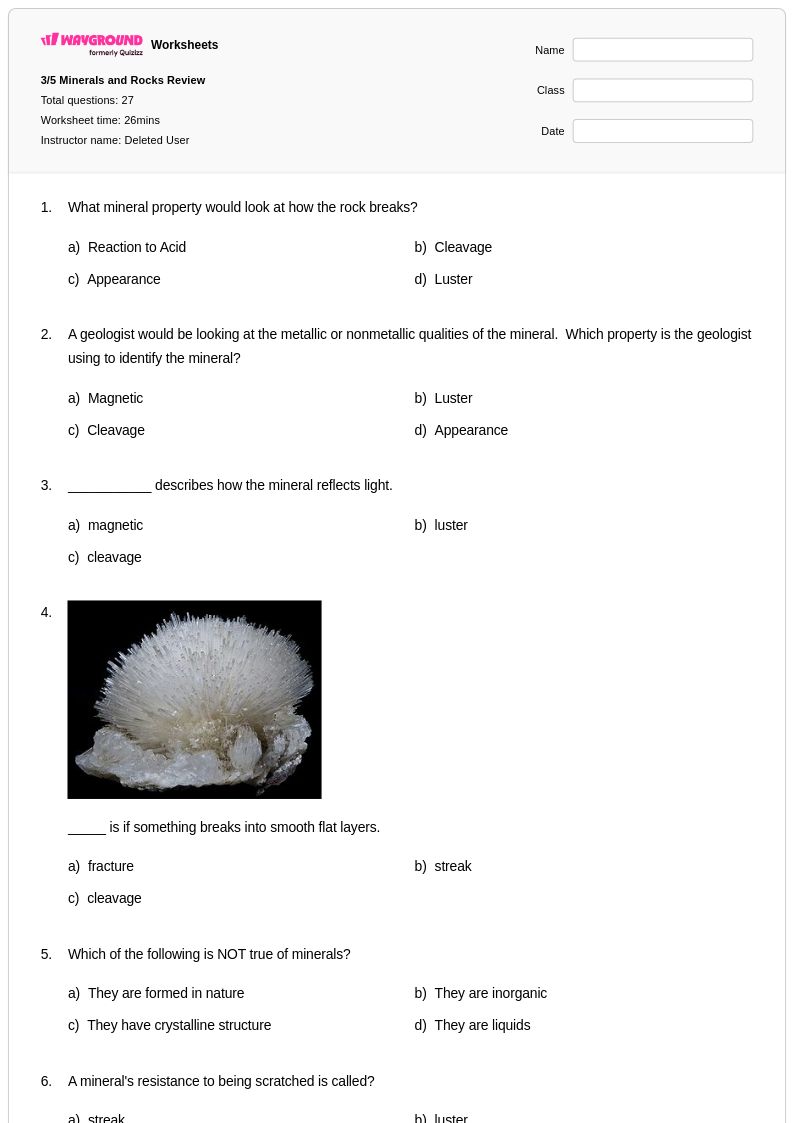
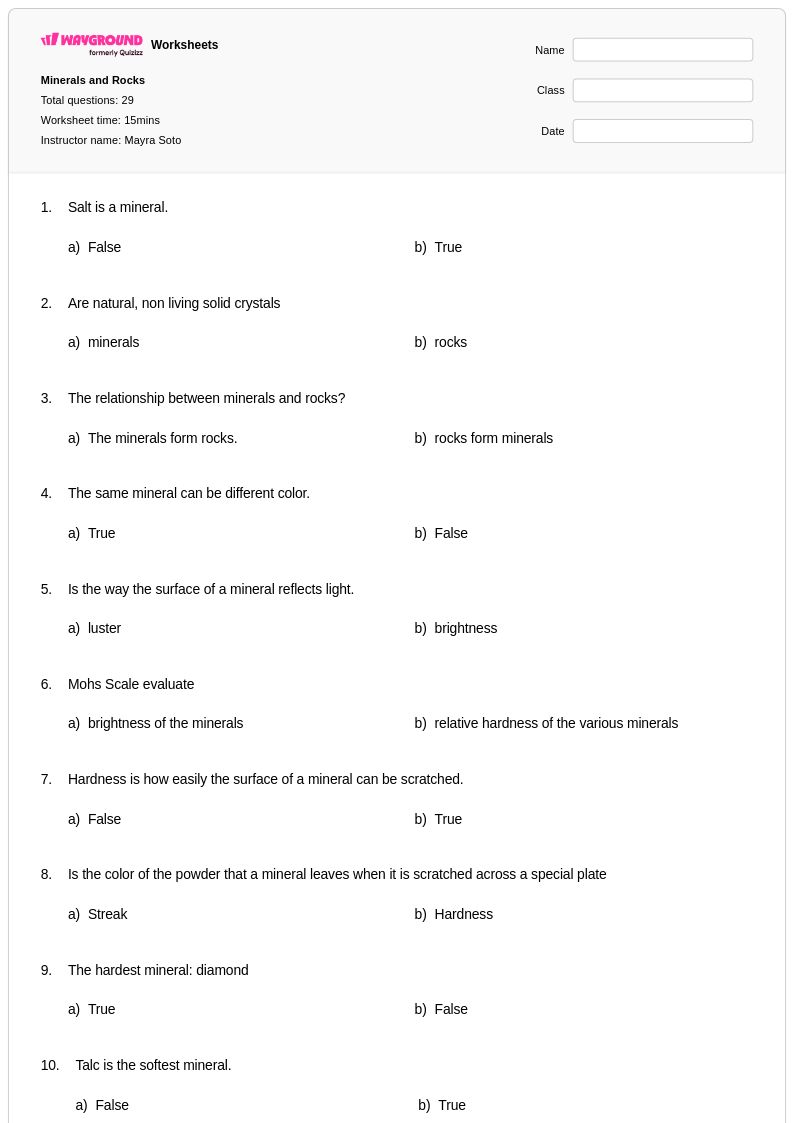
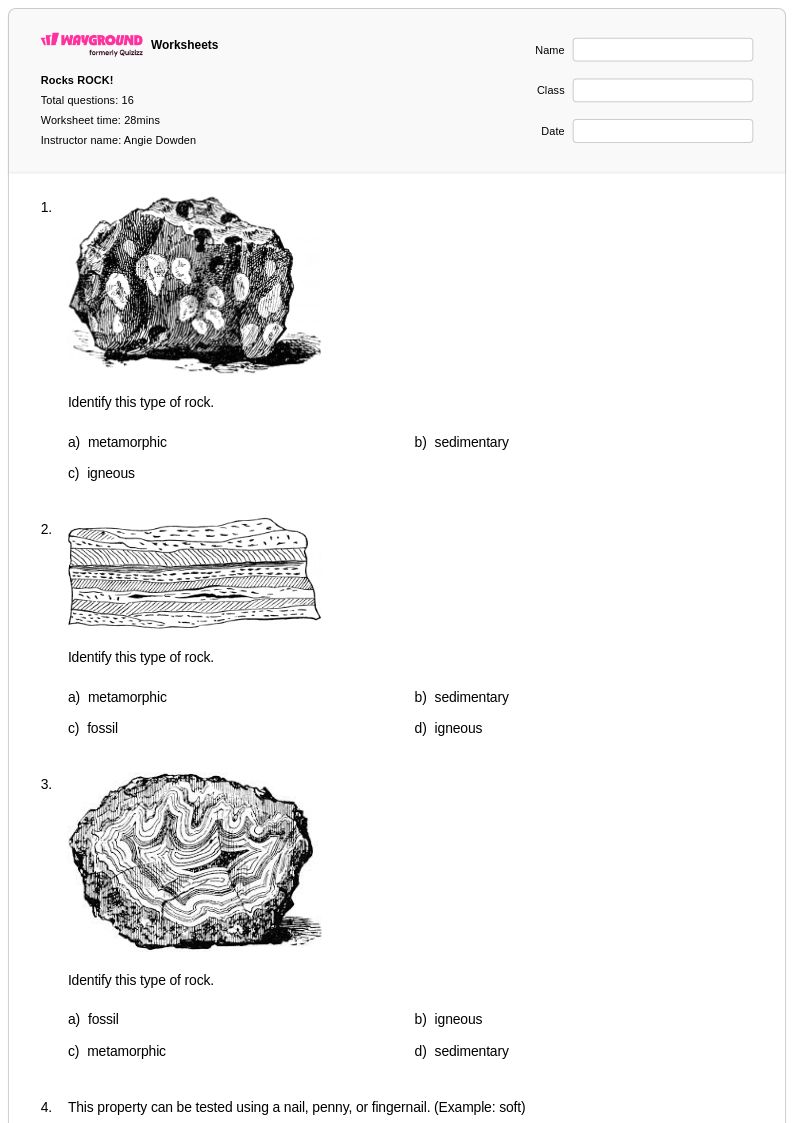
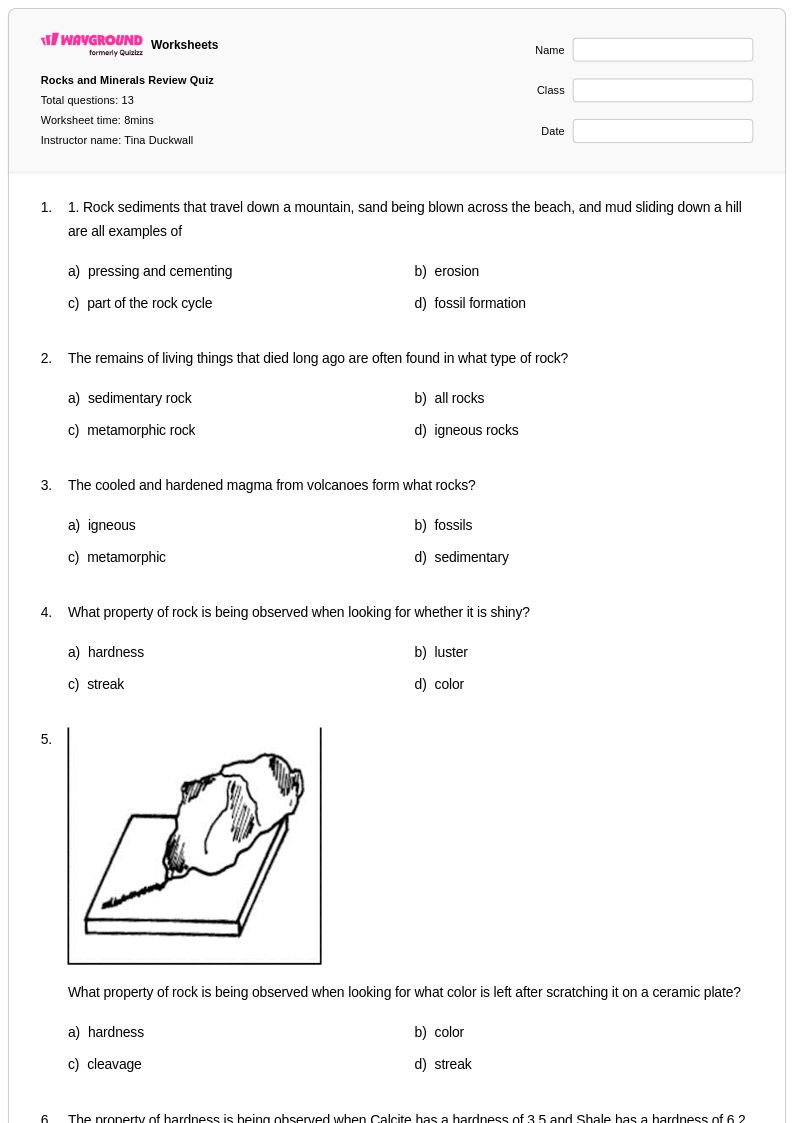
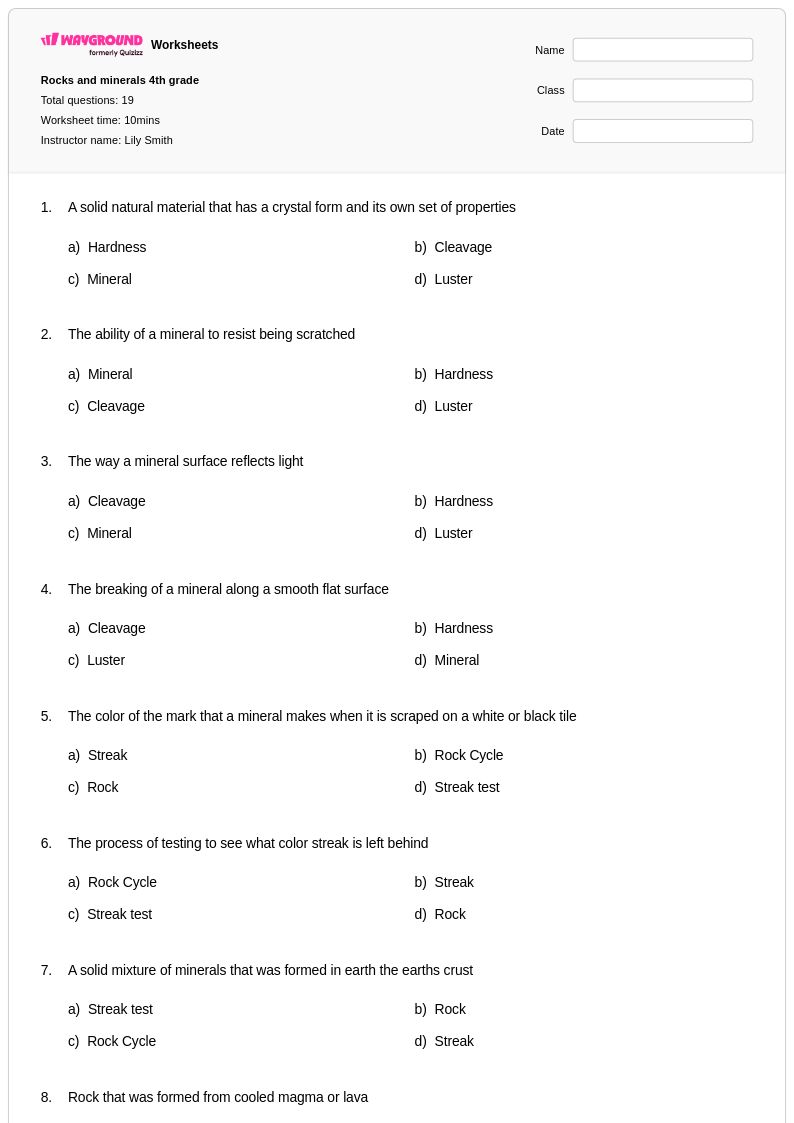
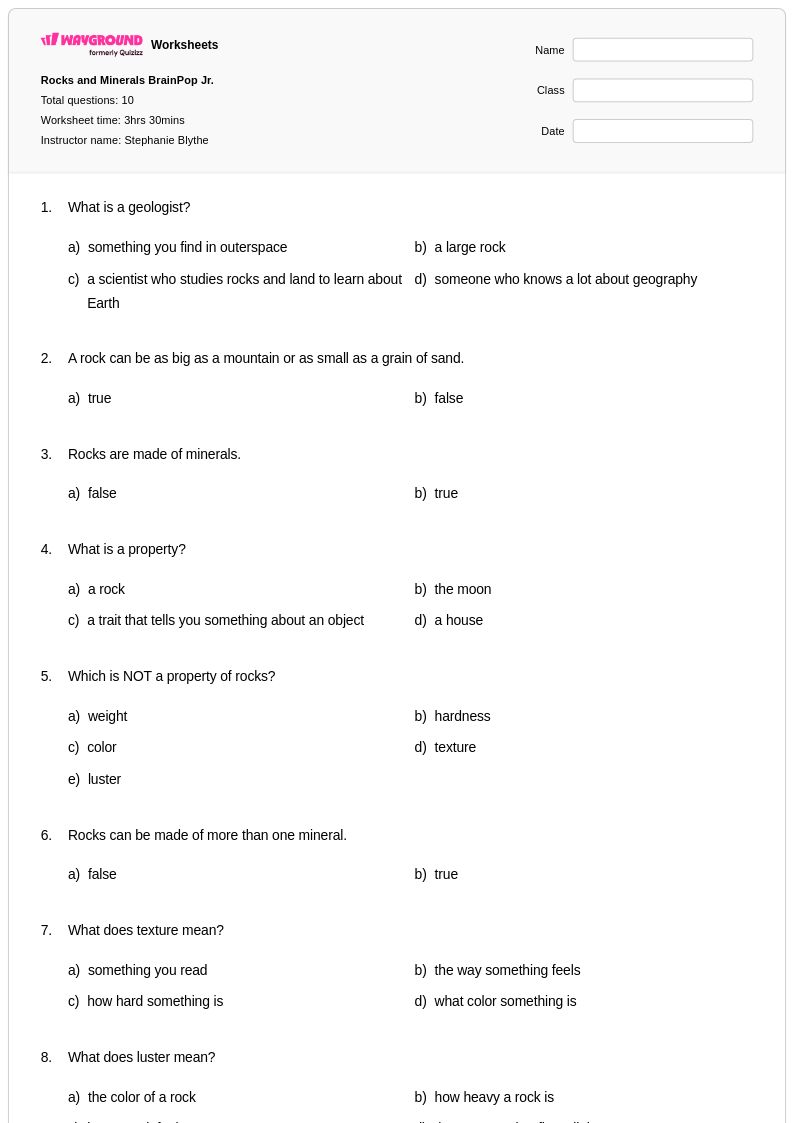
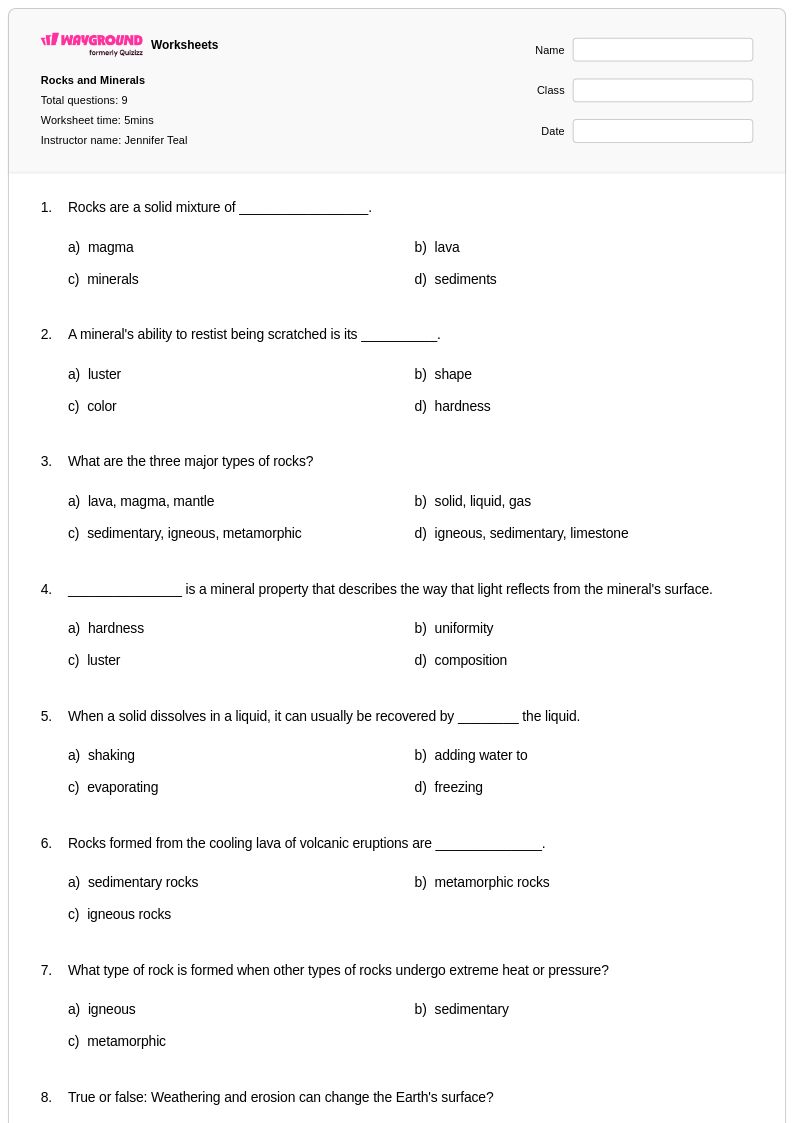
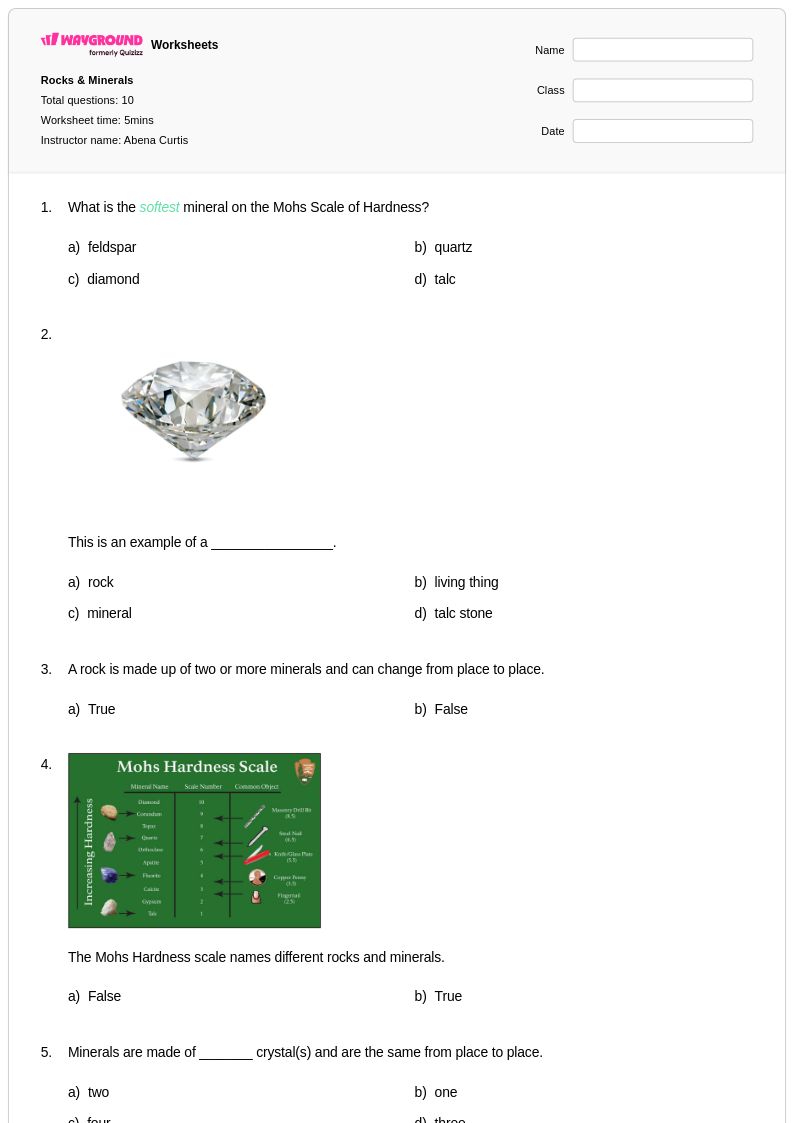
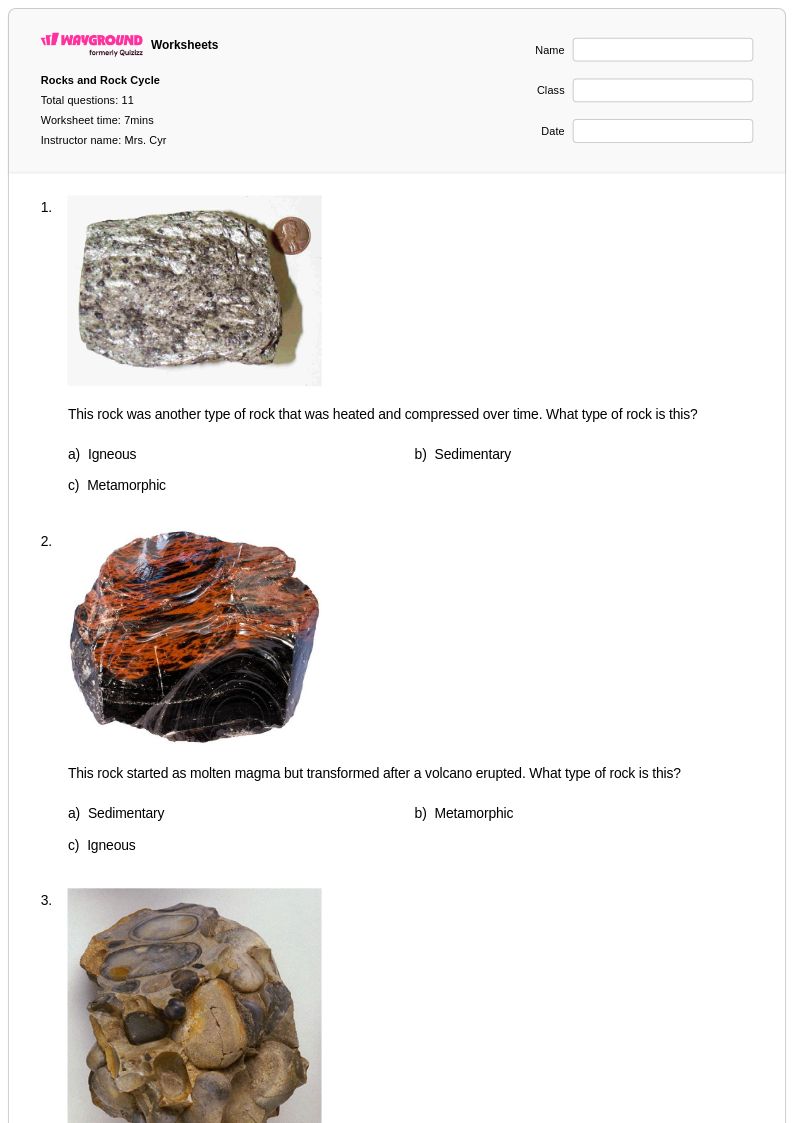
Minerals and rocks worksheets for Class 4 students available through Wayground (formerly Quizizz) provide comprehensive exploration of Earth's geological building blocks through engaging, age-appropriate activities. These carefully crafted resources strengthen foundational earth science skills by guiding fourth graders through the identification, classification, and formation processes of various minerals and rock types including igneous, sedimentary, and metamorphic rocks. Students develop critical observation skills as they work through practice problems that challenge them to analyze mineral properties such as hardness, color, and luster, while simultaneously building vocabulary essential for geological understanding. Each worksheet collection includes detailed answer keys that support both independent learning and teacher-guided instruction, with free printables available in convenient PDF format for seamless classroom integration and home study support.
Wayground (formerly Quizizz) empowers educators with millions of teacher-created minerals and rocks worksheet resources that streamline lesson planning and enhance Class 4 earth science instruction. The platform's robust search and filtering capabilities allow teachers to quickly locate materials aligned with specific learning standards while accessing differentiation tools that accommodate diverse student needs and learning styles. Flexible customization features enable educators to modify existing worksheets or create targeted practice materials for remediation and enrichment purposes, ensuring every fourth grader can engage meaningfully with geological concepts. Available in both printable and digital formats including downloadable PDFs, these comprehensive worksheet collections support varied instructional approaches from traditional paper-based activities to technology-enhanced learning experiences, making it simple for teachers to provide consistent skill practice across different learning environments.
FAQs
How do I teach the rock cycle to middle school students?
The rock cycle is most effectively taught by anchoring each stage to a real-world process students can visualize, such as volcanic eruptions for igneous rock formation, sediment layering in riverbeds for sedimentary rocks, and heat and pressure deep underground for metamorphic rocks. Use diagrams that show directional arrows between rock types so students understand that transformation is continuous, not linear. Connecting each stage to a tangible example before introducing vocabulary helps students build conceptual understanding before memorizing terminology.
What exercises help students practice mineral identification?
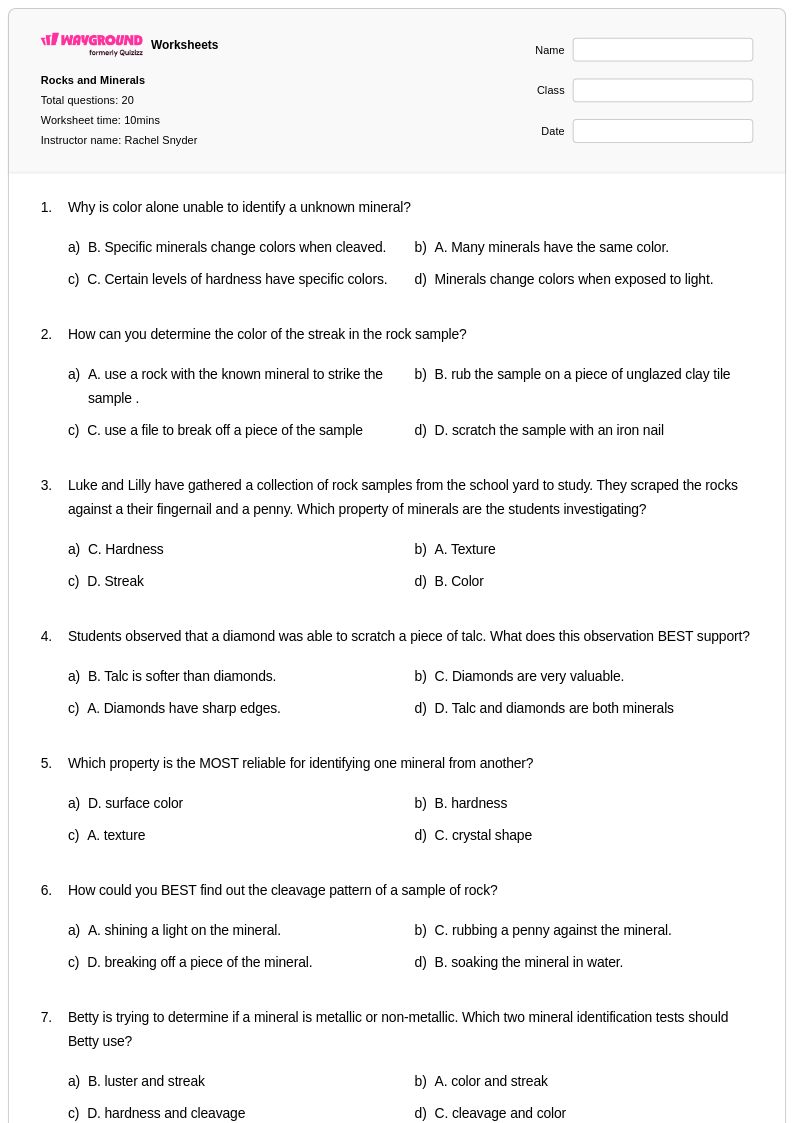
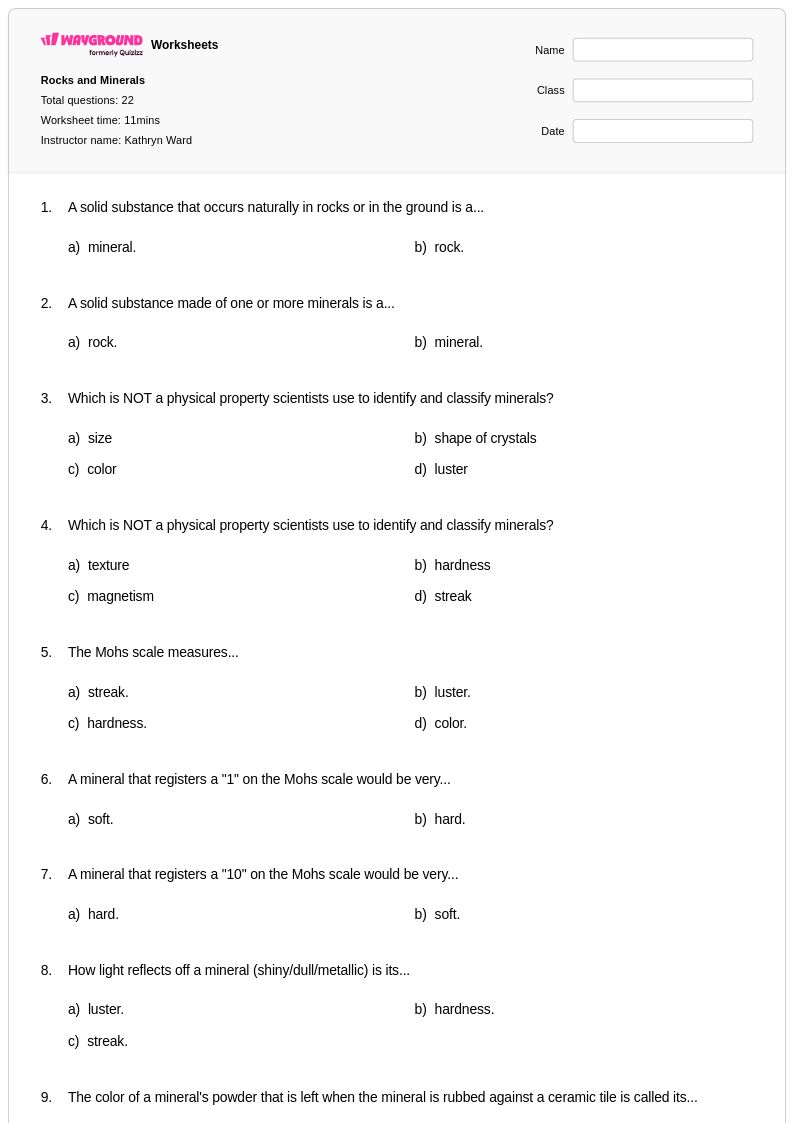
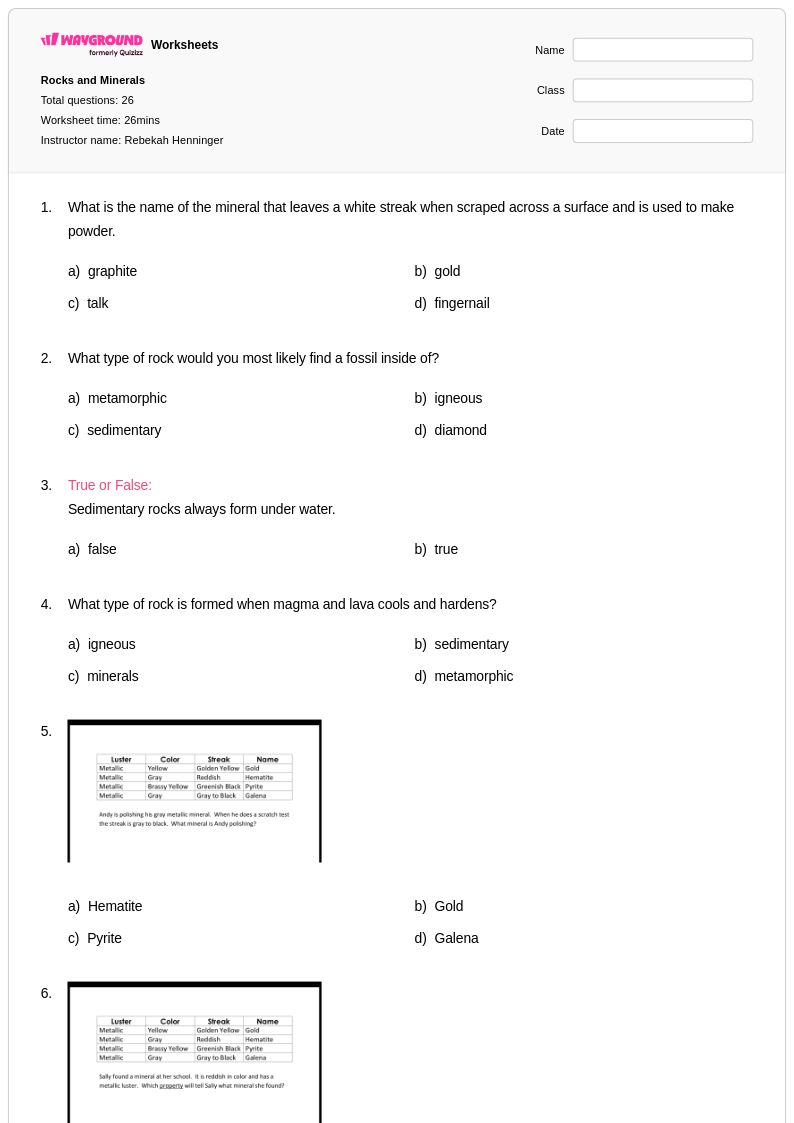
Effective mineral identification practice focuses on applying the standard physical property tests: hardness using the Mohs scale, streak color on a ceramic plate, luster classification, cleavage versus fracture, and specific gravity. Worksheets that present unknown mineral descriptions and ask students to identify the mineral using a properties table are especially useful for building analytical reasoning. Practice problems that require students to explain why a mineral matches a given property, rather than just circling an answer, reinforce deeper understanding.
What mistakes do students commonly make when classifying igneous, sedimentary, and metamorphic rocks?
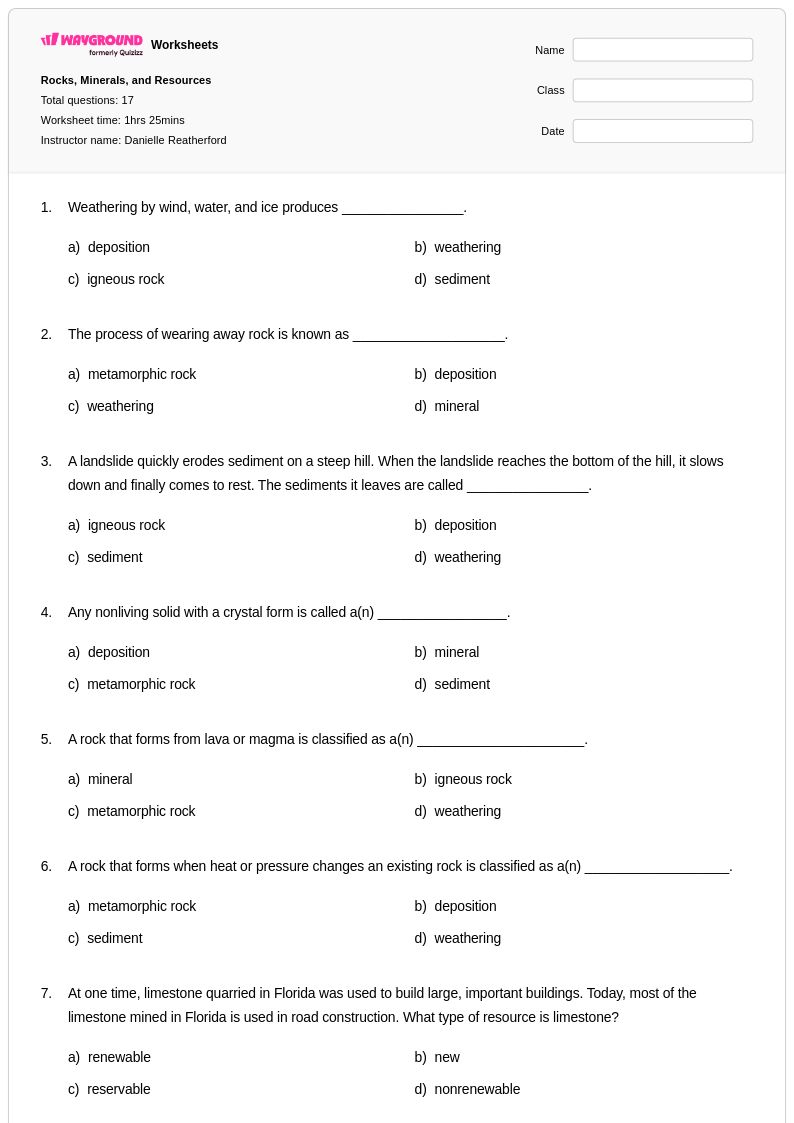
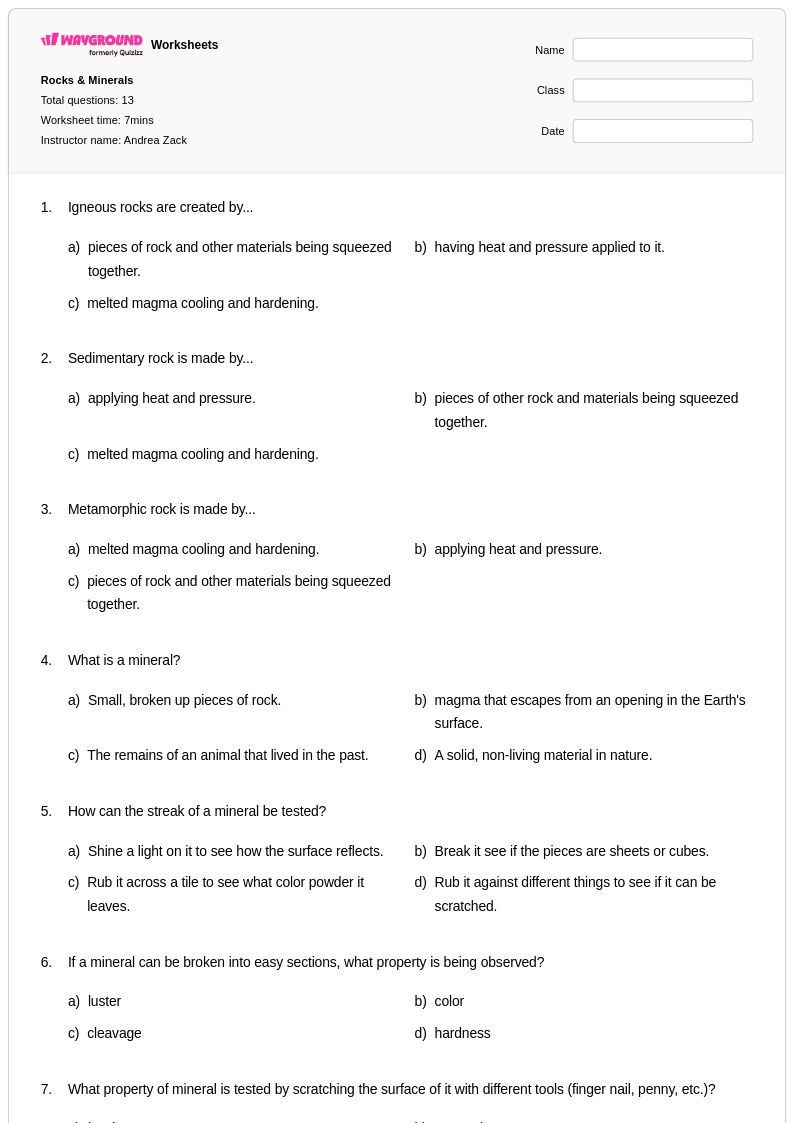
The most common misconception is confusing how a rock looks with how it formed, leading students to misclassify rocks based on color or texture rather than formation process. Students frequently mix up intrusive and extrusive igneous rocks, not understanding that cooling rate determines crystal size. Another persistent error is assuming metamorphic rocks always look dramatically different from their parent rock, when in practice the changes can be subtle and require knowledge of the original material.
How can I use minerals and rocks worksheets to assess student understanding?
Minerals and rocks worksheets work well as formative assessments when they ask students to apply classification criteria to unfamiliar samples, interpret rock cycle diagrams, or explain the economic uses of specific minerals. Using short-answer formats alongside multiple choice ensures students demonstrate reasoning, not just recall. Reviewing common errors after returning completed worksheets, particularly around rock formation processes and mineral properties, gives teachers precise data for targeted re-teaching.
How do I use Wayground's minerals and rocks worksheets in my classroom?
Wayground's minerals and rocks worksheets are available as printable PDFs for traditional classroom use and in digital formats for technology-integrated learning environments, including the option to host them as a quiz directly on Wayground. Teachers can use them for direct instruction, independent practice, or review sessions without additional preparation, since each worksheet includes a complete answer key. The digital format also allows teachers to assign accommodations to individual students, such as read aloud support or extended time, making it straightforward to differentiate within a single assignment.
How do I differentiate minerals and rocks instruction for students at different levels?
For struggling learners, simplify rock cycle activities by focusing on one transformation at a time and providing a labeled reference diagram before asking students to work independently. Advanced students benefit from extension tasks such as analyzing how tectonic processes drive the rock cycle or researching the industrial applications of specific minerals. On Wayground, teachers can apply individual accommodations like reduced answer choices or read aloud support to specific students while the rest of the class works with standard settings, keeping differentiation seamless and private.