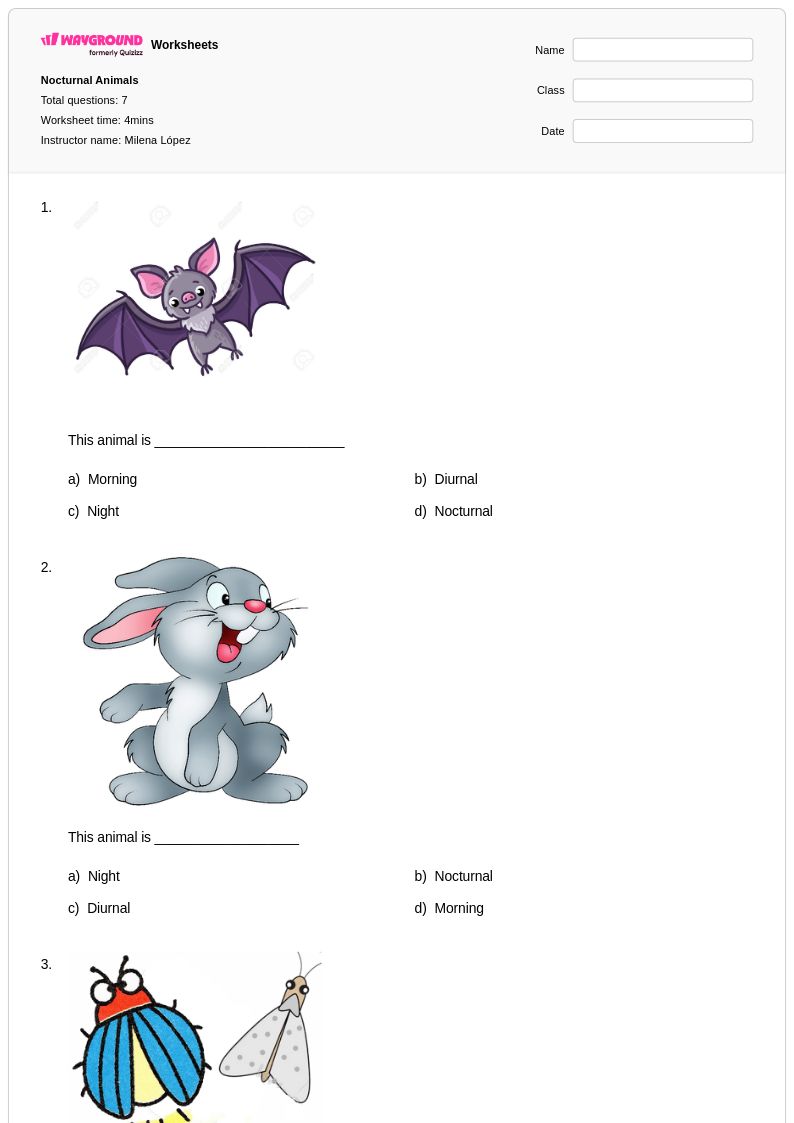
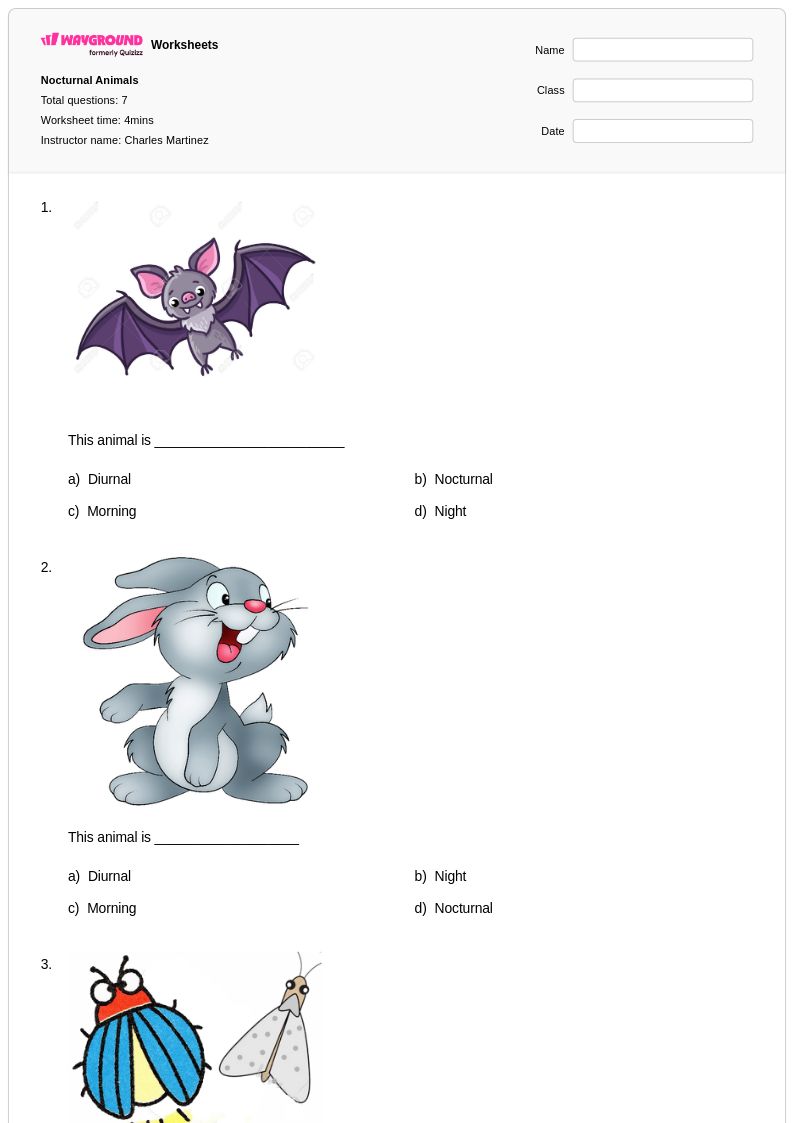
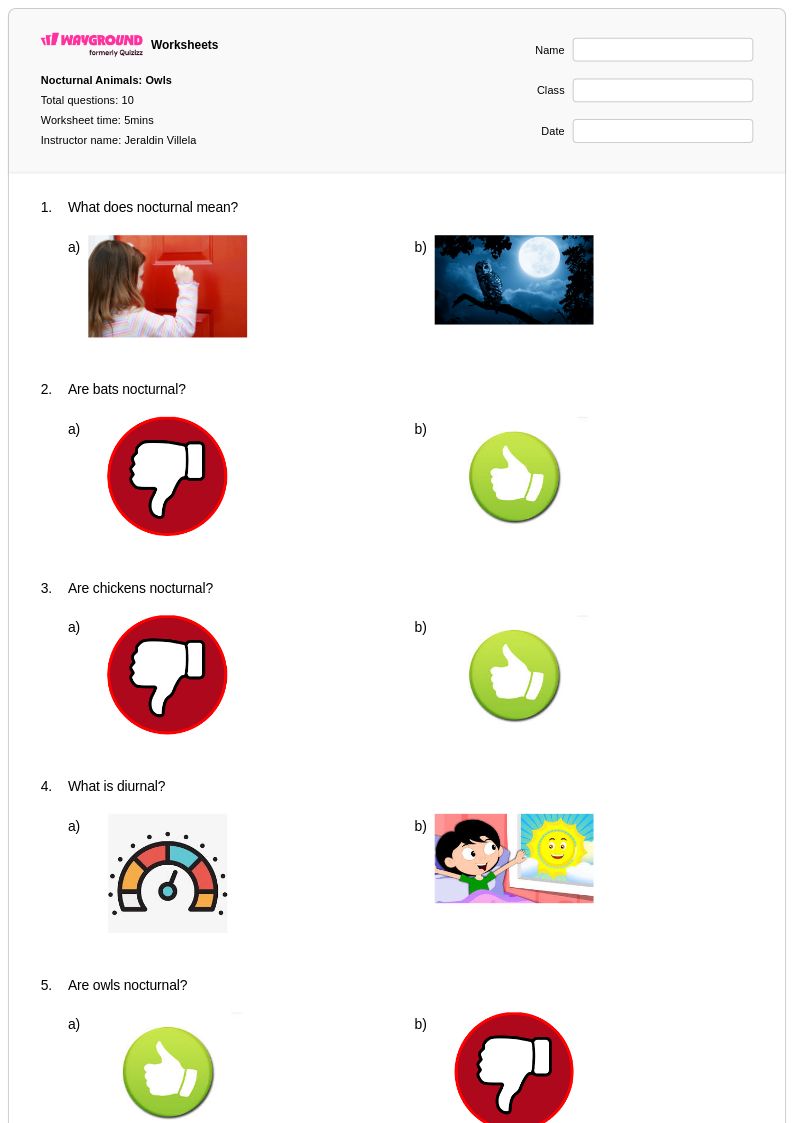
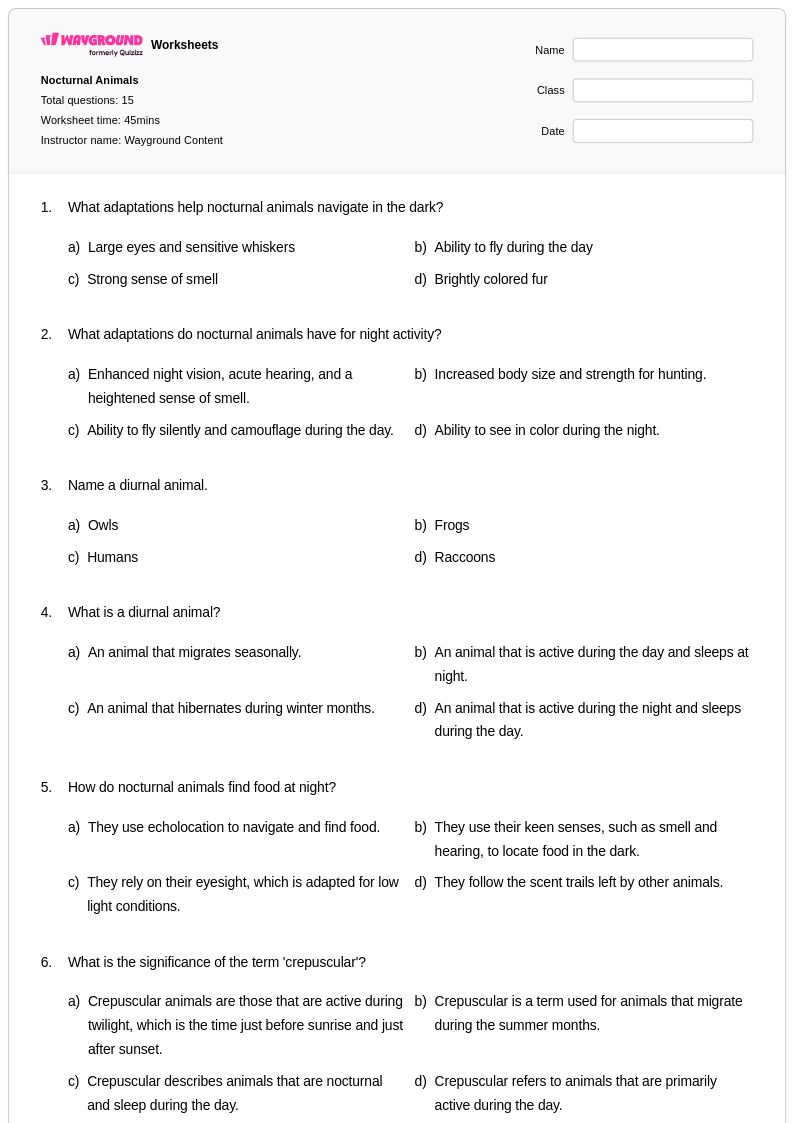
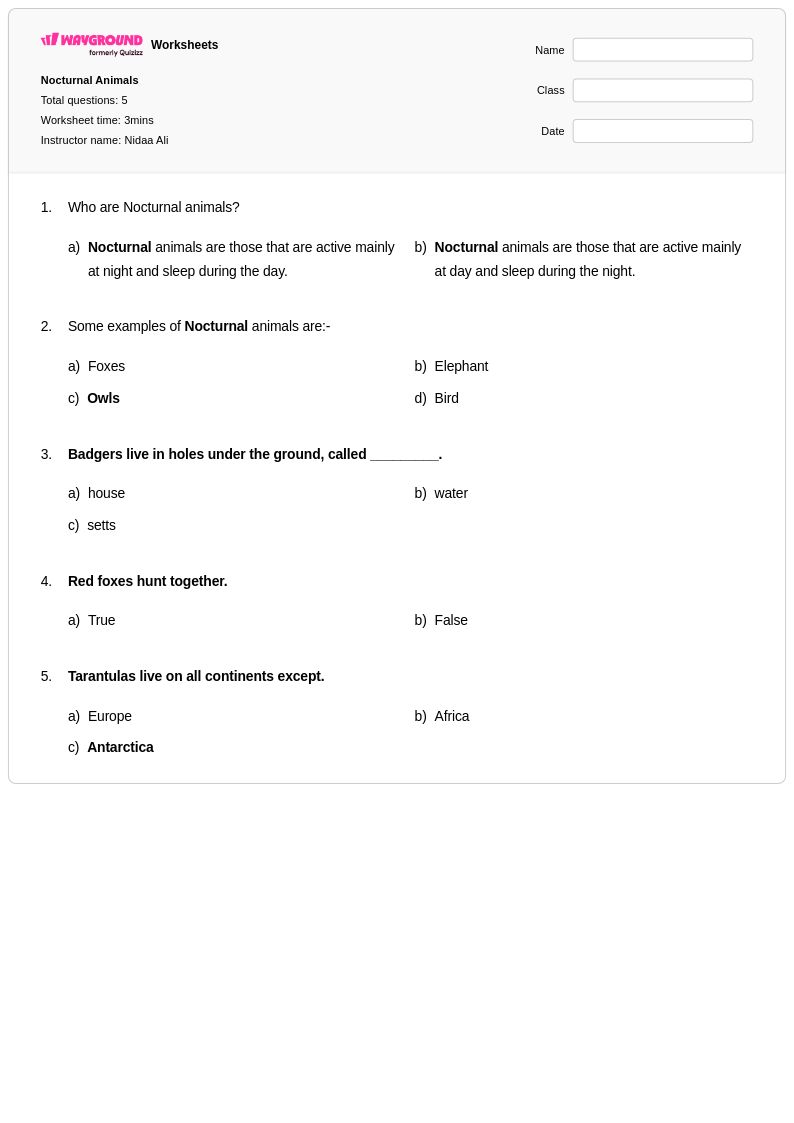
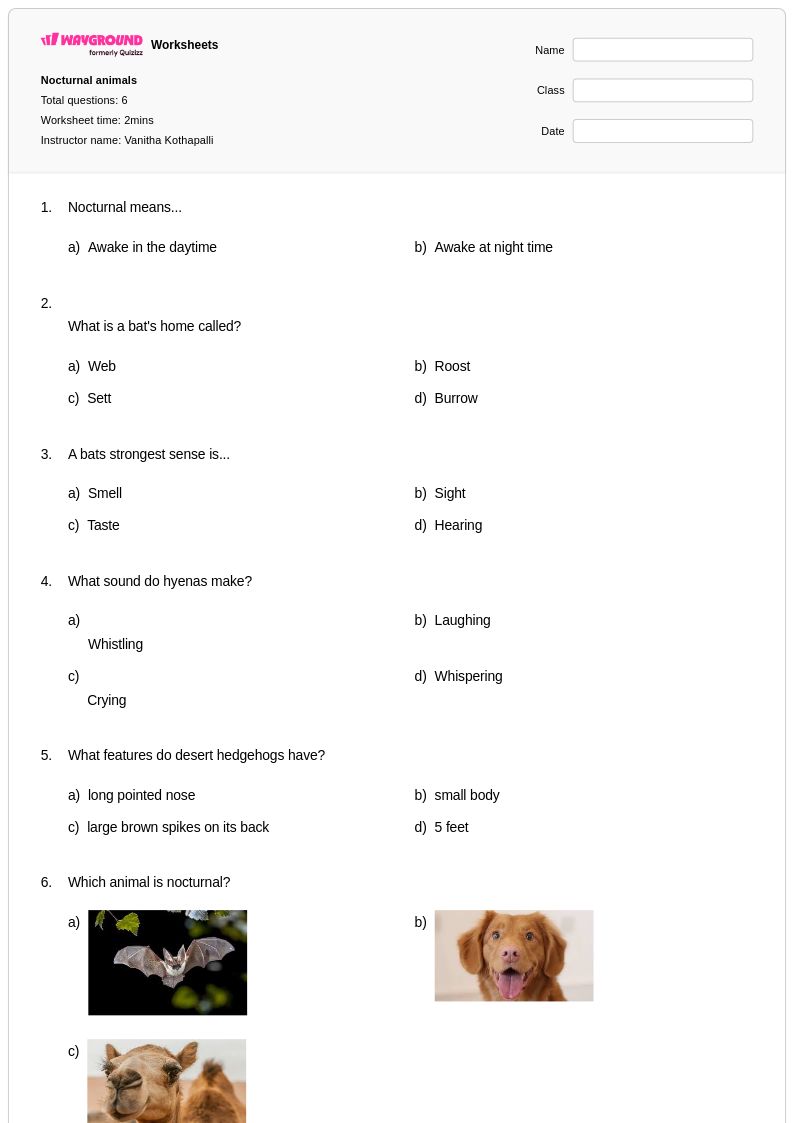
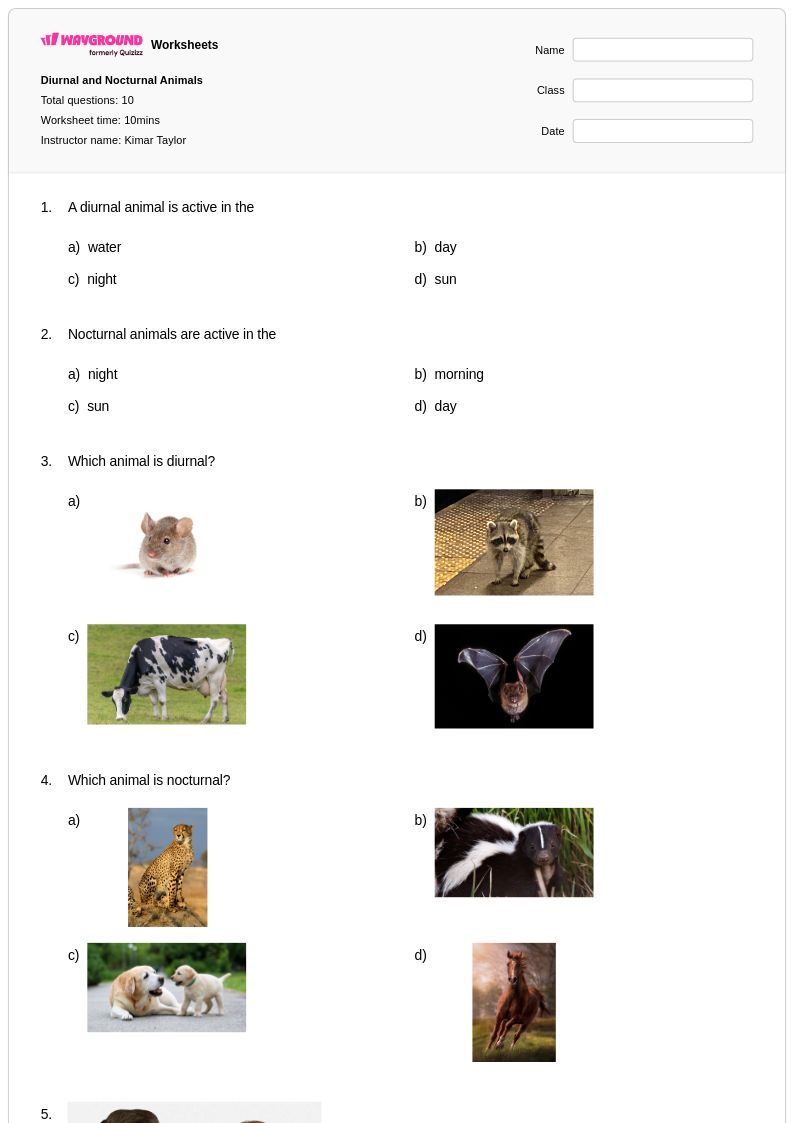
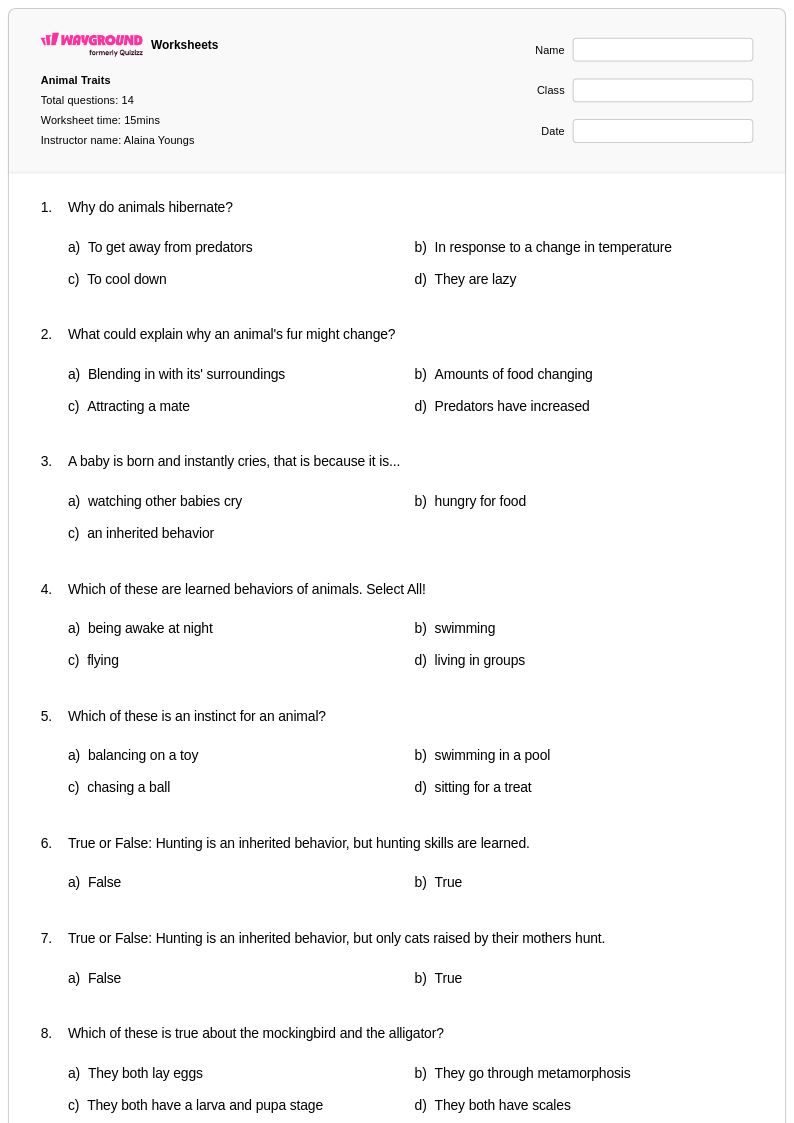
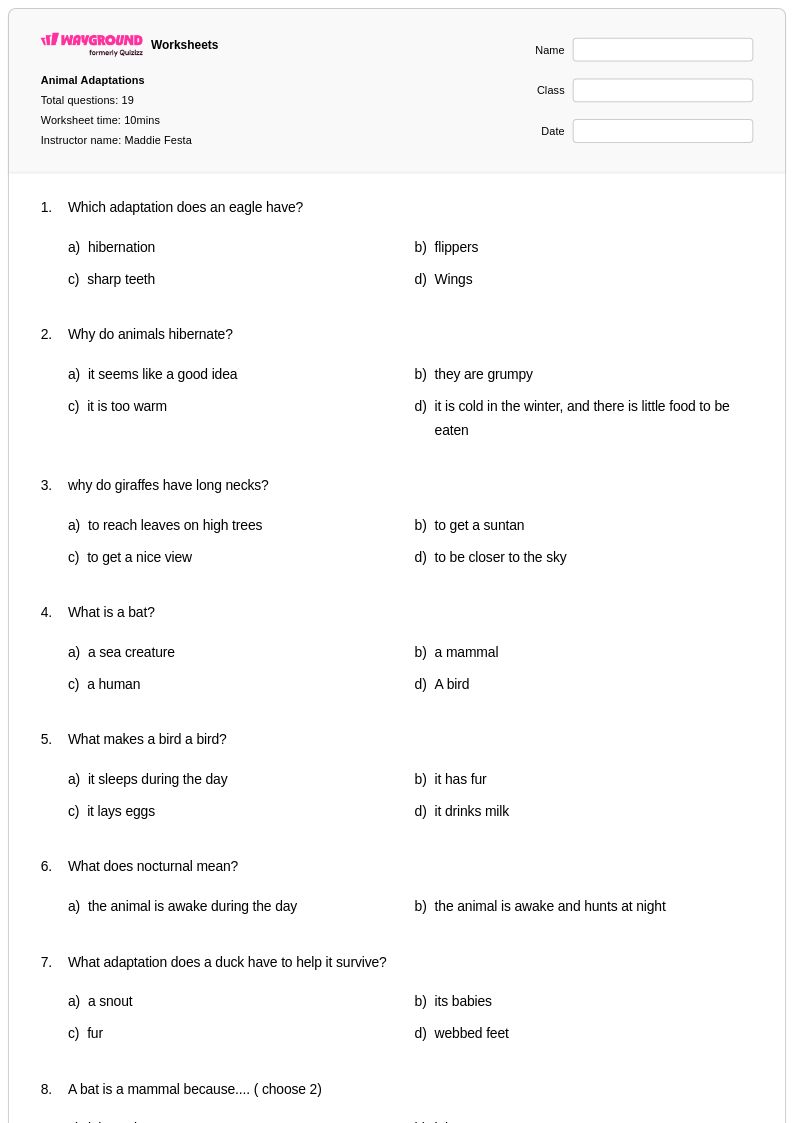
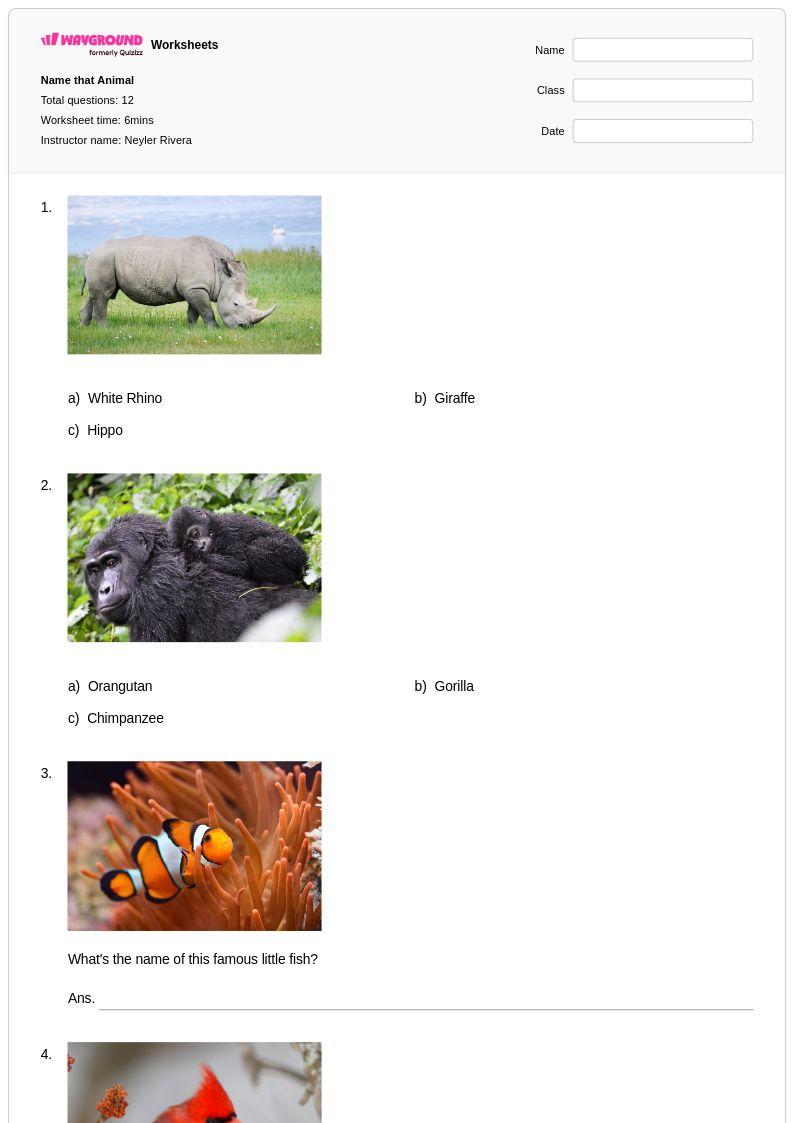
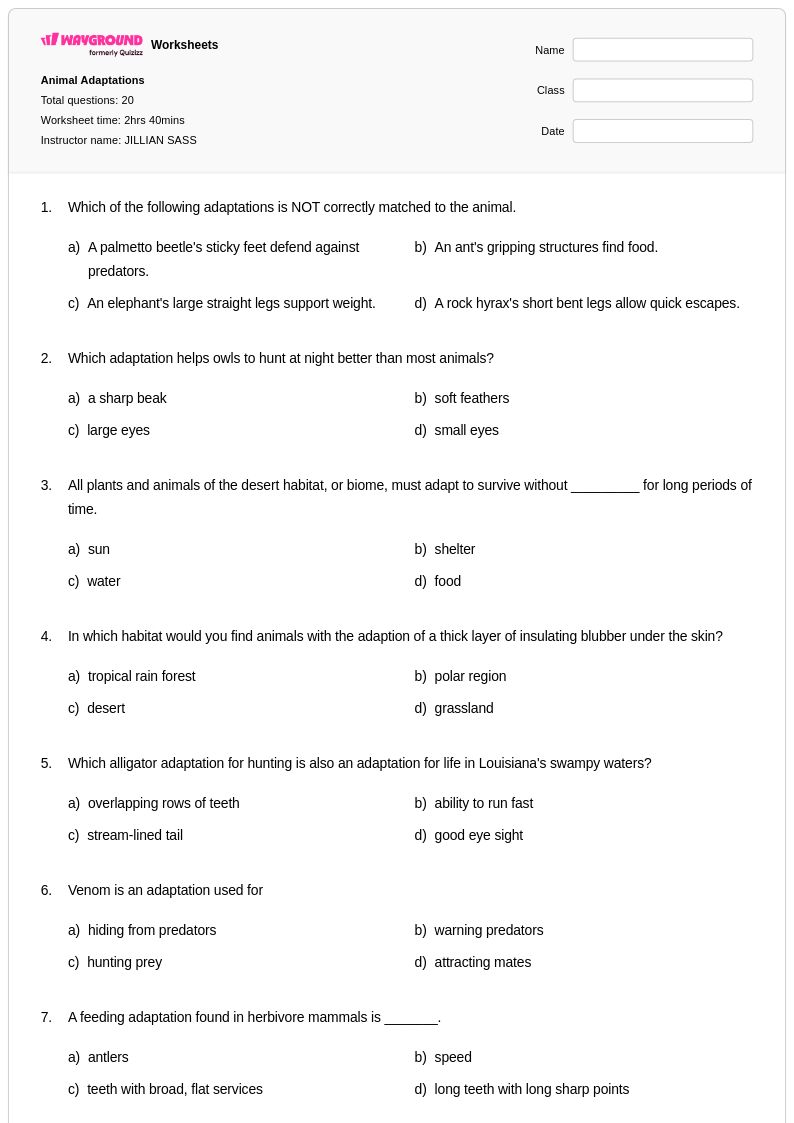
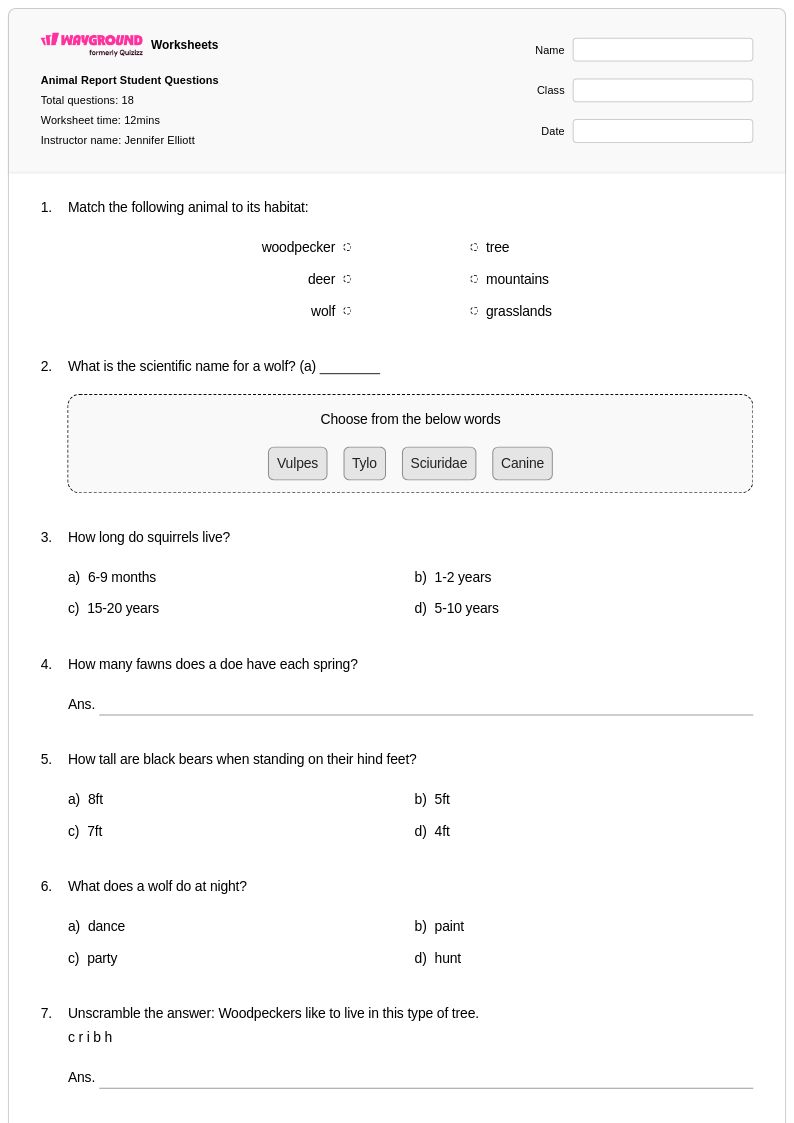
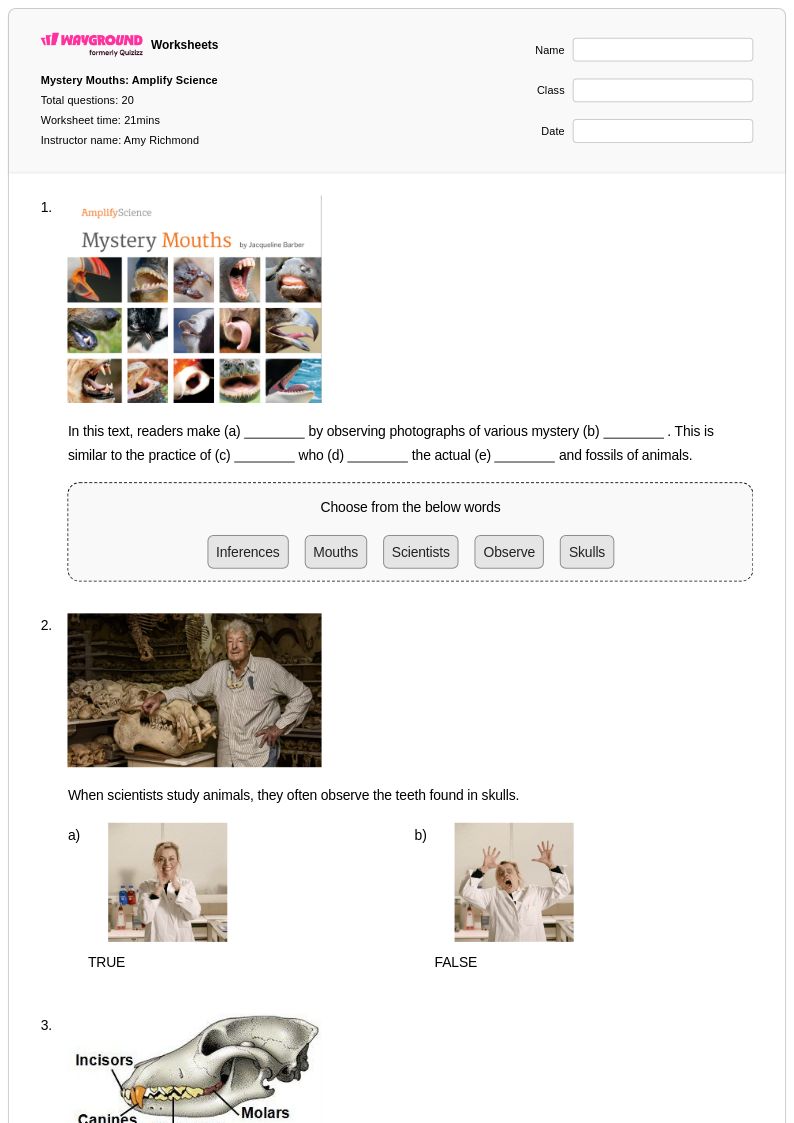
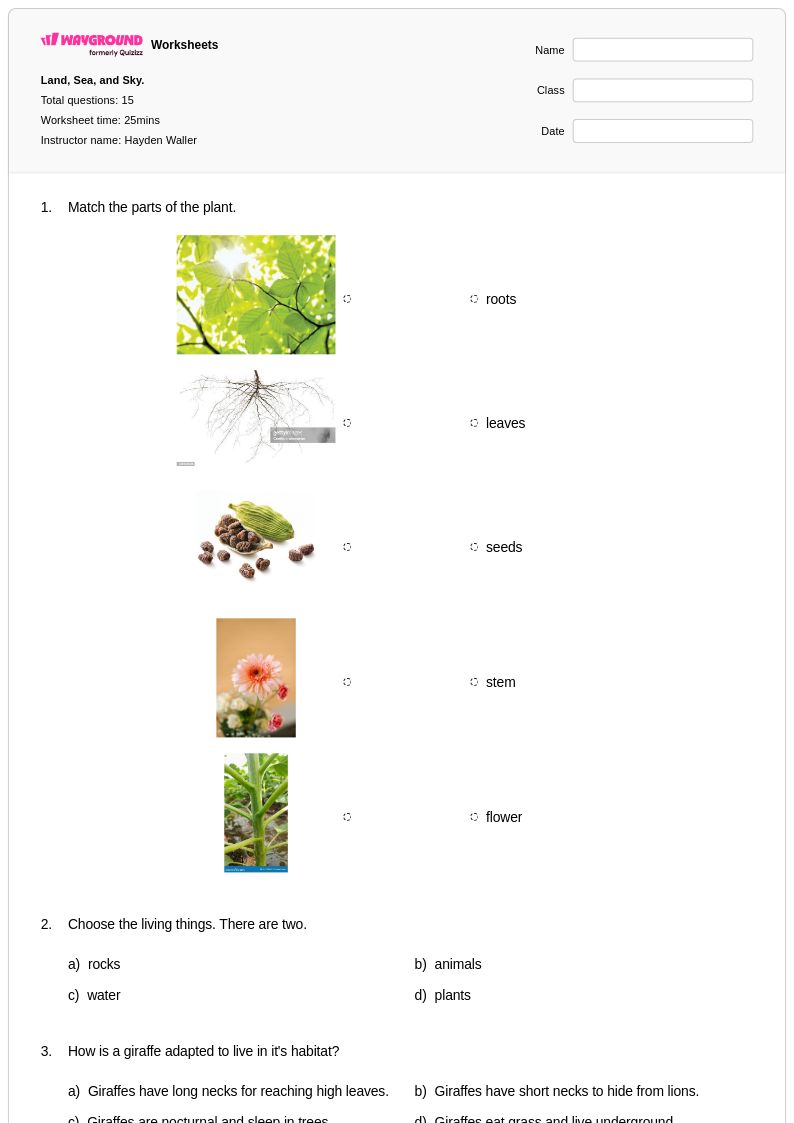
Explore Wayground's comprehensive collection of nocturnal animals worksheets featuring engaging printables and practice problems that help students discover the fascinating world of night-active creatures through free PDF resources with complete answer keys.
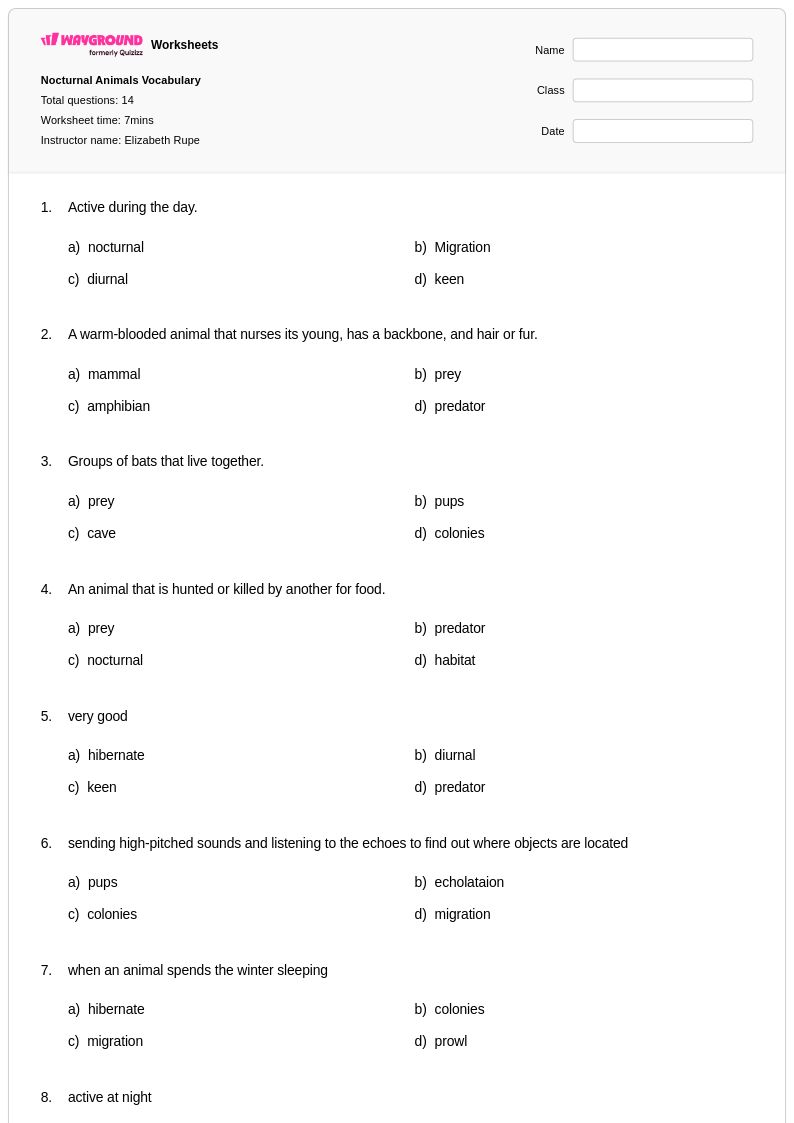
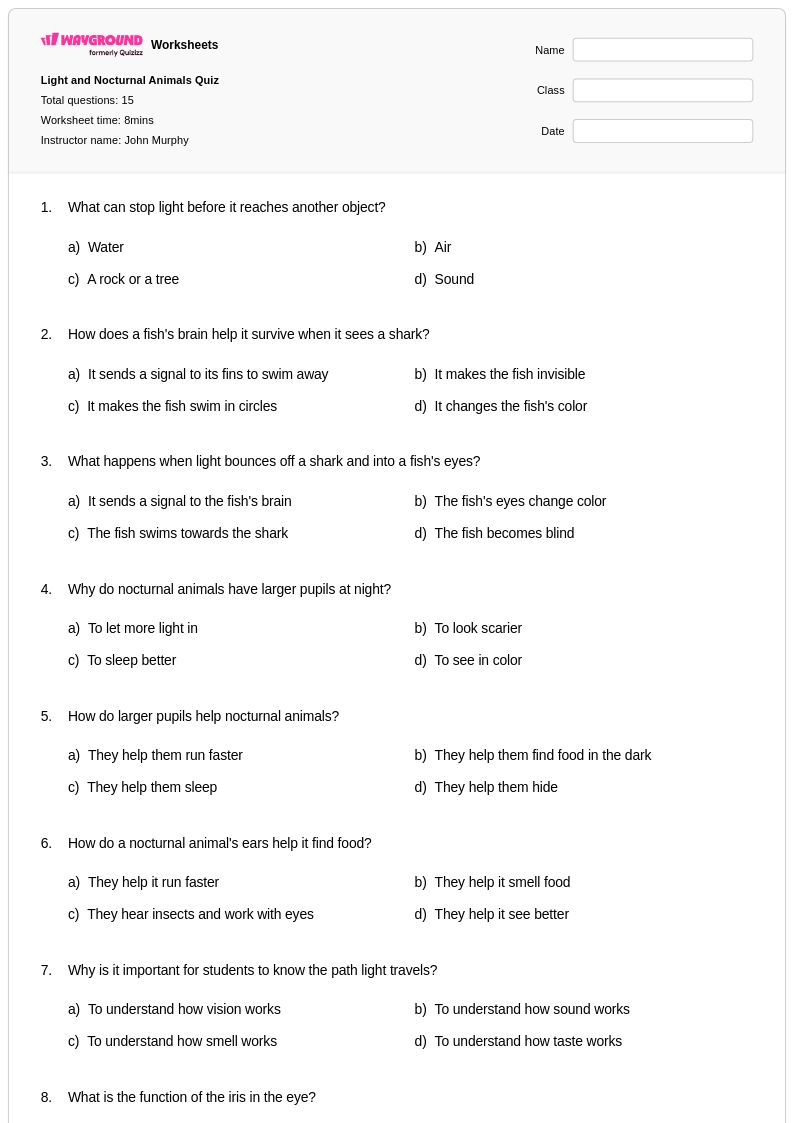
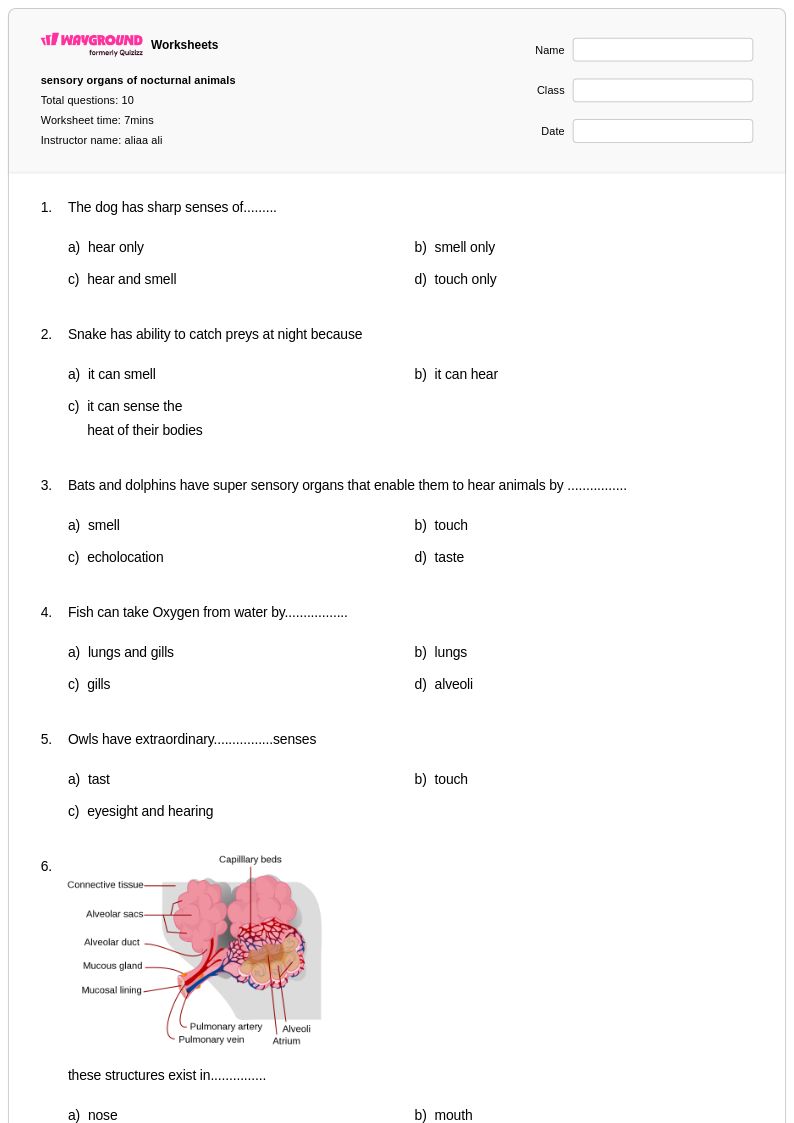
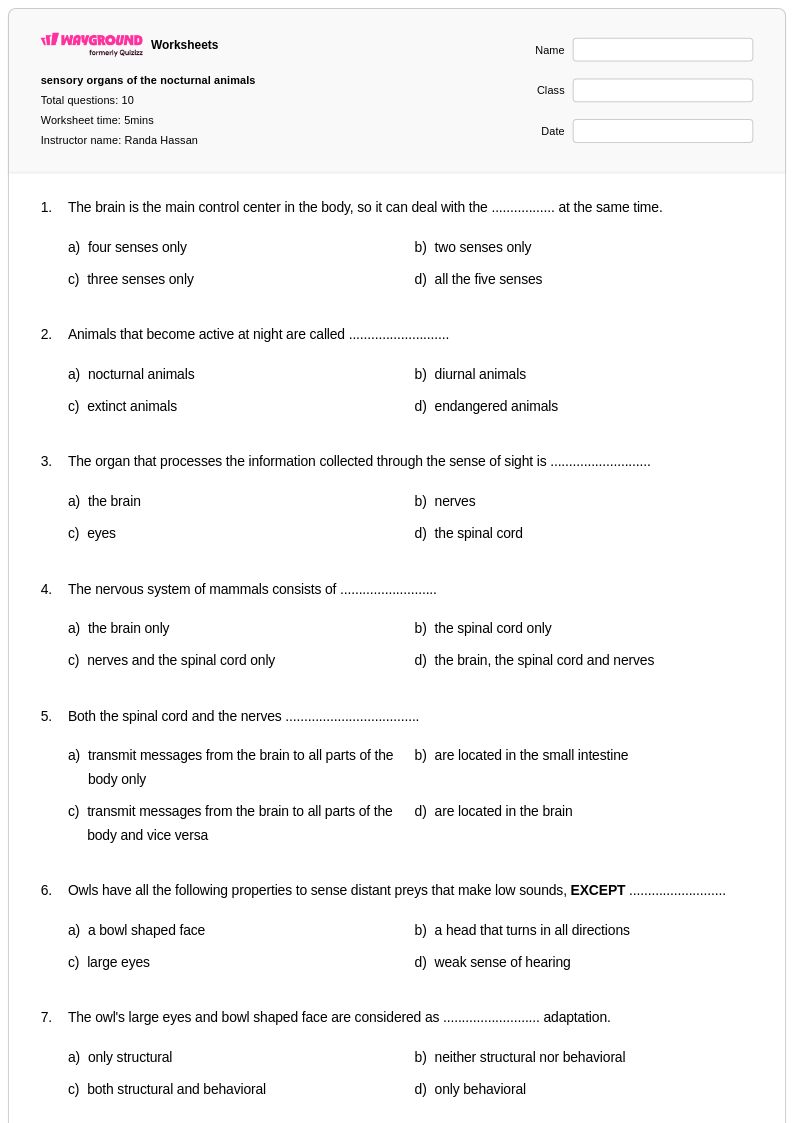
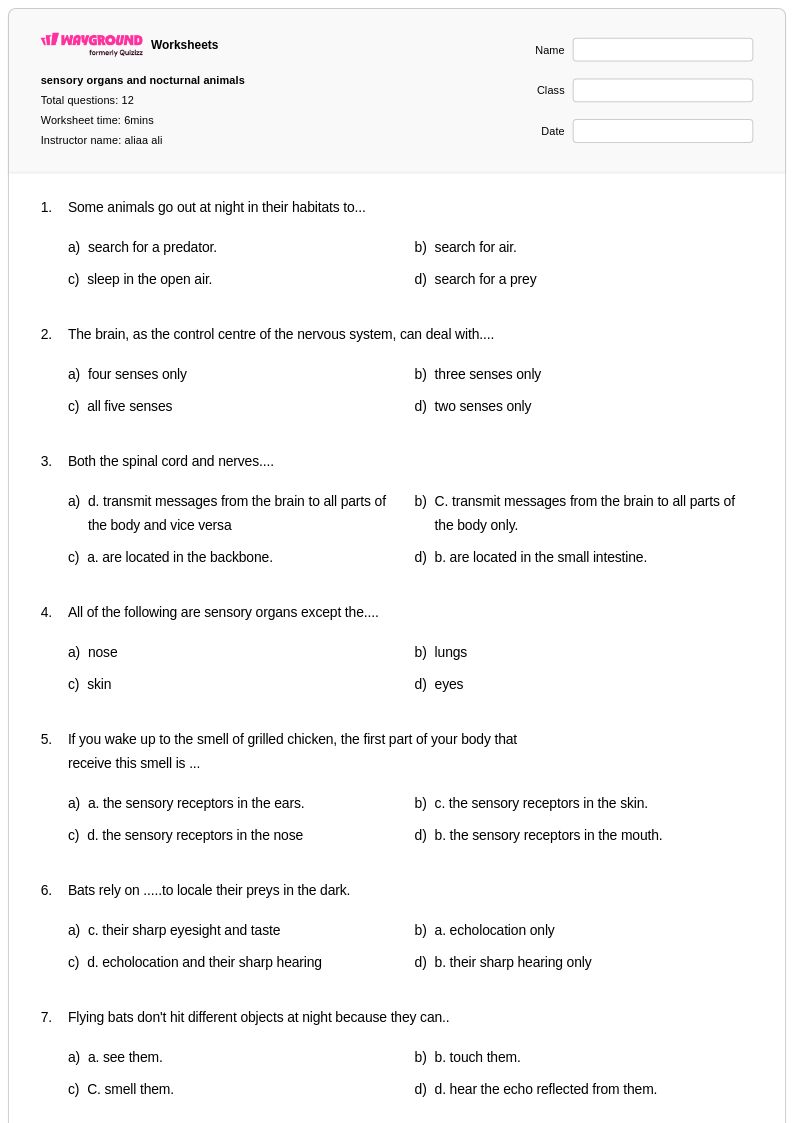
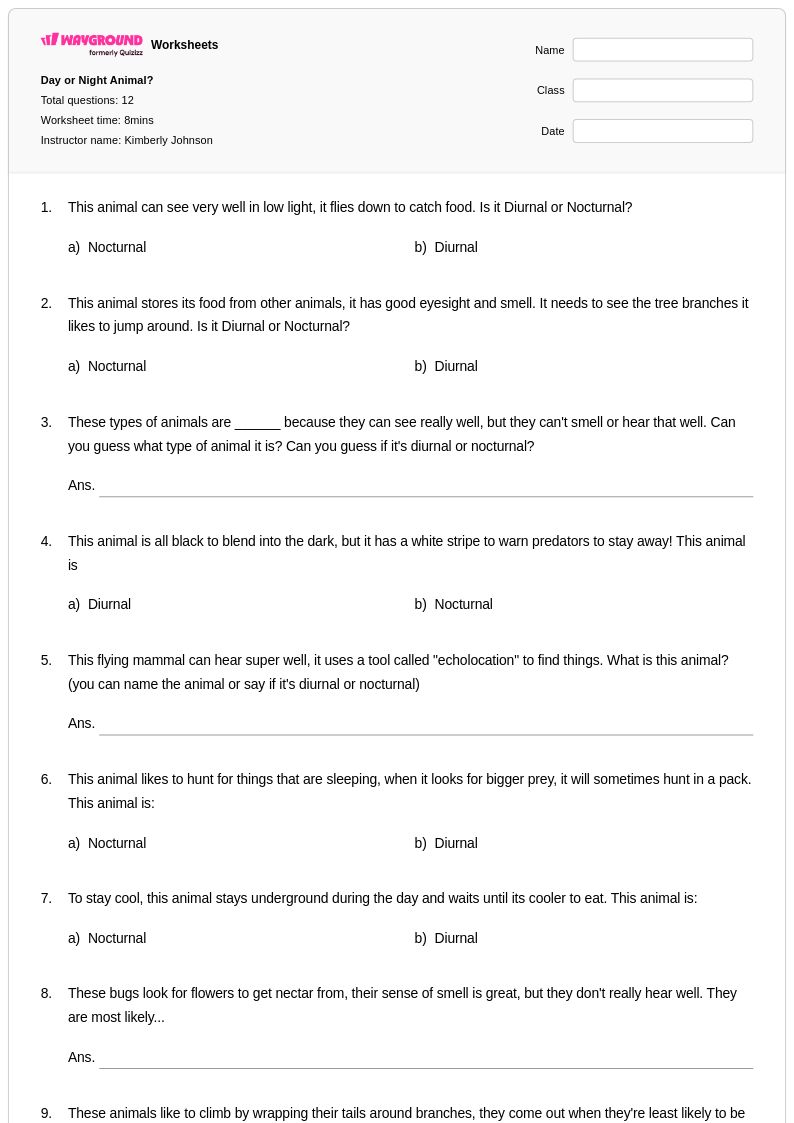
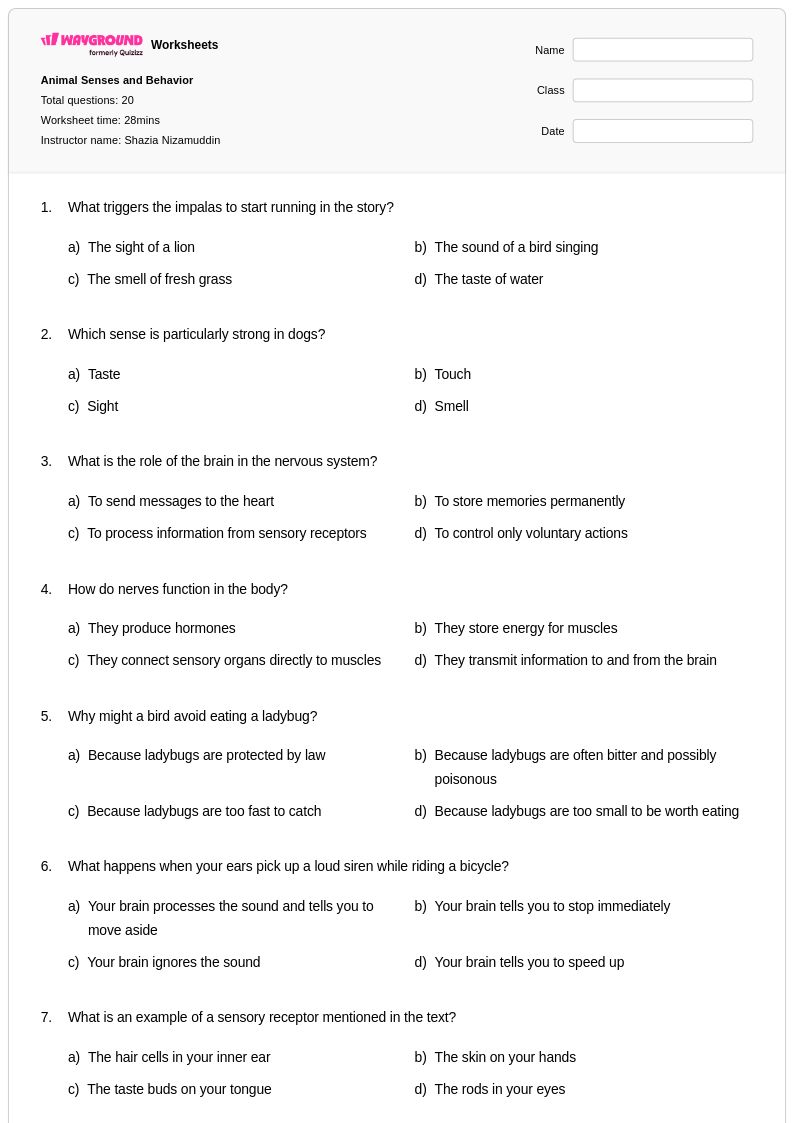
Nocturnal animals worksheets available through Wayground (formerly Quizizz) provide students with comprehensive learning materials that explore the fascinating world of creatures active during nighttime hours. These expertly crafted resources help students develop critical thinking skills while investigating animal adaptations, behavioral patterns, and ecological relationships specific to nocturnal species such as owls, bats, raccoons, and nocturnal insects. The worksheets strengthen observation skills, scientific vocabulary, and understanding of biological concepts through engaging practice problems that challenge students to analyze how physical characteristics like enhanced hearing, night vision, and specialized hunting techniques enable these animals to thrive in darkness. Each worksheet includes a detailed answer key and is available as a free printable pdf, making it easy for educators to incorporate these valuable resources into their life science curriculum.
Wayground (formerly Quizizz) supports science educators with an extensive collection of teacher-created nocturnal animals worksheets, drawing from millions of high-quality resources that have been developed and refined by classroom professionals. The platform's robust search and filtering capabilities allow teachers to quickly locate materials that align with specific learning standards and match their students' academic needs, while differentiation tools enable customization for various skill levels within the same classroom. These nocturnal animals worksheets are available in both printable and digital formats, including convenient pdf downloads, providing educators with the flexibility to adapt their instruction for in-person, remote, or hybrid learning environments. Teachers can effectively use these resources for lesson planning, targeted remediation for struggling learners, enrichment activities for advanced students, and regular skill practice that reinforces key life science concepts about animal behavior and adaptation.
FAQs
How do I teach nocturnal animals to elementary students?
Start by contrasting nocturnal animals with diurnal ones students already know, such as dogs and birds, then introduce specific examples like owls, bats, and raccoons. Focus on the adaptations that make night-active life possible: enhanced hearing, night vision, and specialized hunting behaviors. Hands-on observation activities, such as comparing eye size in nocturnal versus diurnal species using images, help students connect physical traits to ecological function. Building scientific vocabulary alongside these concepts prepares students for deeper life science study.
What activities help students practice identifying nocturnal animal adaptations?
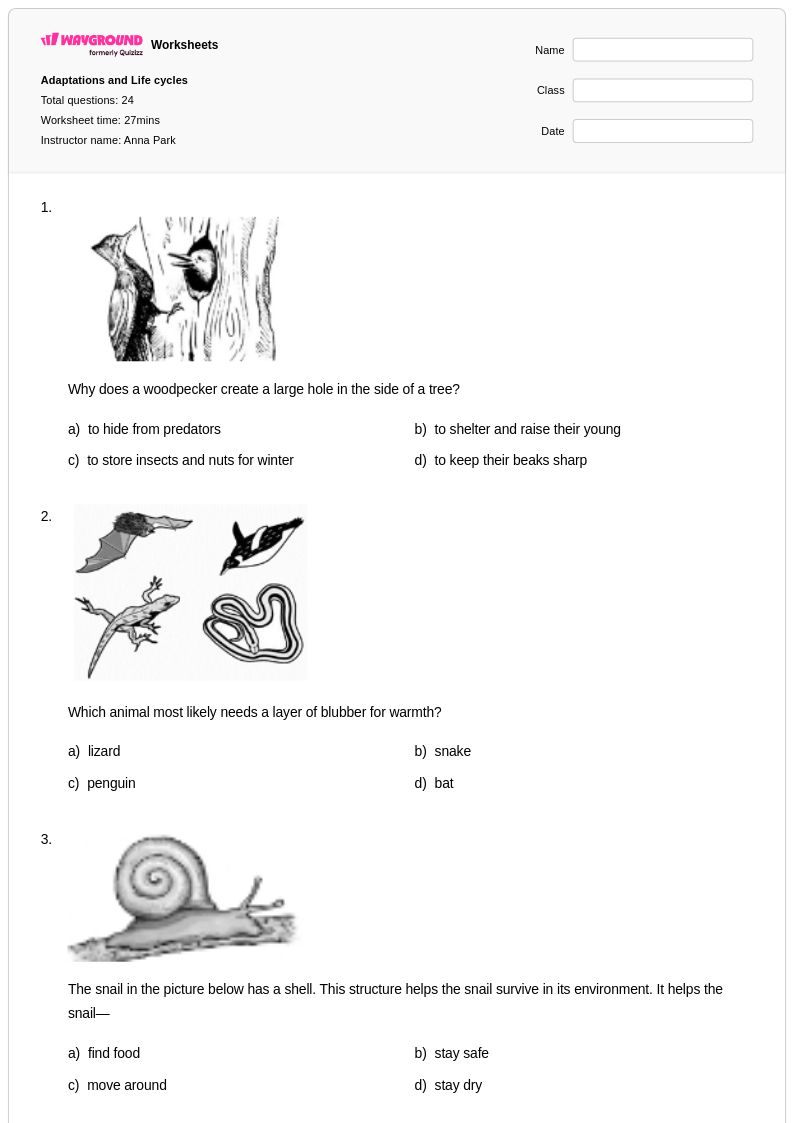
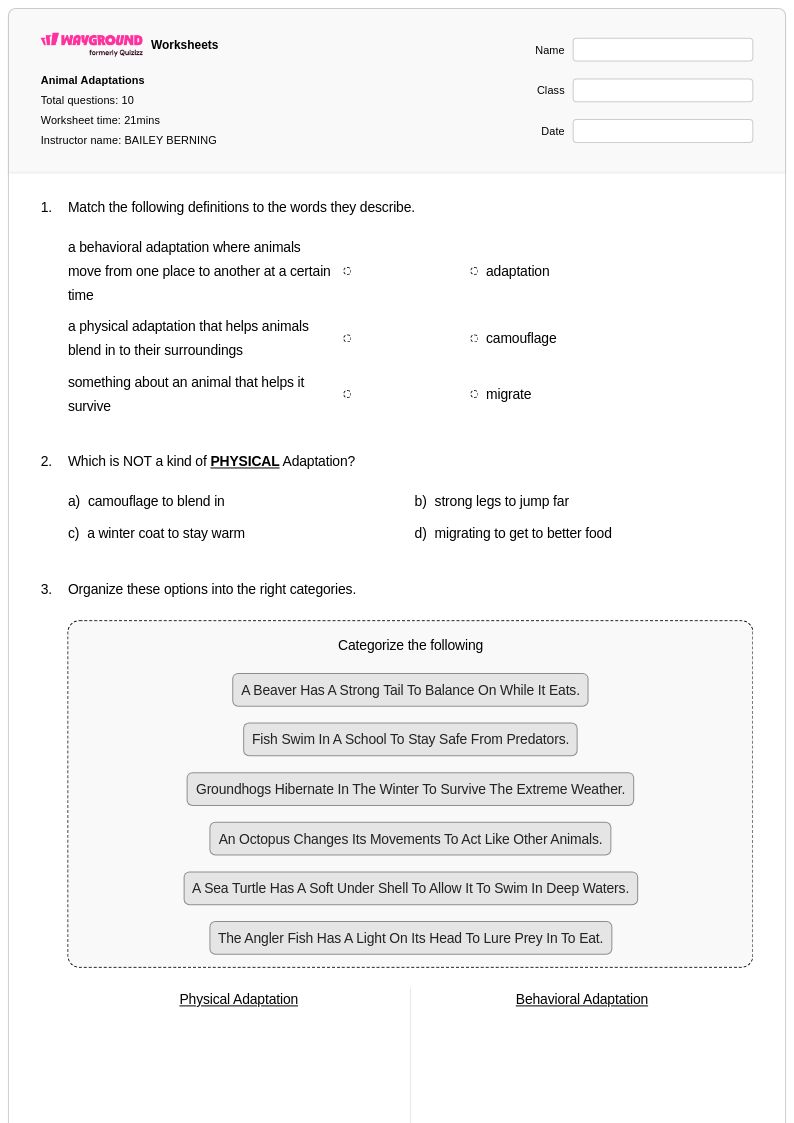
Worksheets that ask students to match physical traits to specific animals are highly effective, for example linking a barn owl's asymmetrical ears to directional hearing or a bat's echolocation to prey detection in darkness. Labeling diagrams of nocturnal species and completing structured analysis of behavioral patterns reinforces both vocabulary and conceptual understanding. Practice problems that challenge students to explain why an adaptation is advantageous push thinking beyond simple recall toward scientific reasoning.
What misconceptions do students commonly have about nocturnal animals?
A common misconception is that nocturnal animals are completely blind in daylight, when in fact most simply have eyes optimized for low-light conditions rather than no-light conditions. Students also frequently assume all bats are blind, conflating the colloquial phrase with reality when bats actually have functional eyes and use echolocation as a supplement. Another error is treating nocturnal behavior as uniform across species, when in fact the triggers and degrees of night-activity vary significantly. Worksheets that require students to compare and contrast specific species help address these overgeneralizations directly.
How can I differentiate nocturnal animals worksheets for different skill levels in my class?
For struggling learners, reduce the complexity of answer choices or provide a word bank so students can focus on concept recognition rather than recall under pressure. Advanced students benefit from open-ended analysis prompts that ask them to predict how a nocturnal species might adapt if its habitat changed. On Wayground, teachers can apply individual accommodations such as reduced answer choices or read-aloud support to specific students while the rest of the class receives standard settings, keeping differentiation seamless and private.
How do I use Wayground's nocturnal animals worksheets in my classroom?
Wayground's nocturnal animals worksheets are available as printable PDFs for traditional classroom use and in digital formats for technology-integrated or remote learning environments. Teachers can also host worksheets directly as a quiz on Wayground, enabling real-time student response and instant feedback. Every worksheet includes a complete answer key, reducing grading time and allowing teachers to use results for targeted remediation or enrichment planning.
How do nocturnal animals fit into a life science curriculum?
Nocturnal animals are an engaging entry point into broader life science concepts including animal adaptation, ecological niches, food webs, and behavioral biology. Studying species like owls, bats, and nocturnal insects allows students to see how physical characteristics and behaviors are shaped by environmental pressures, reinforcing the principle that form follows function. This topic connects naturally to units on ecosystems, biodiversity, and the relationship between organism and habitat.