Free Printable Oxidation State Worksheets for Class 12
Master Class 12 oxidation state concepts with Wayground's comprehensive collection of free chemistry worksheets, featuring printable PDFs, practice problems, and detailed answer keys to strengthen your understanding.
Explore printable Oxidation State worksheets for Class 12
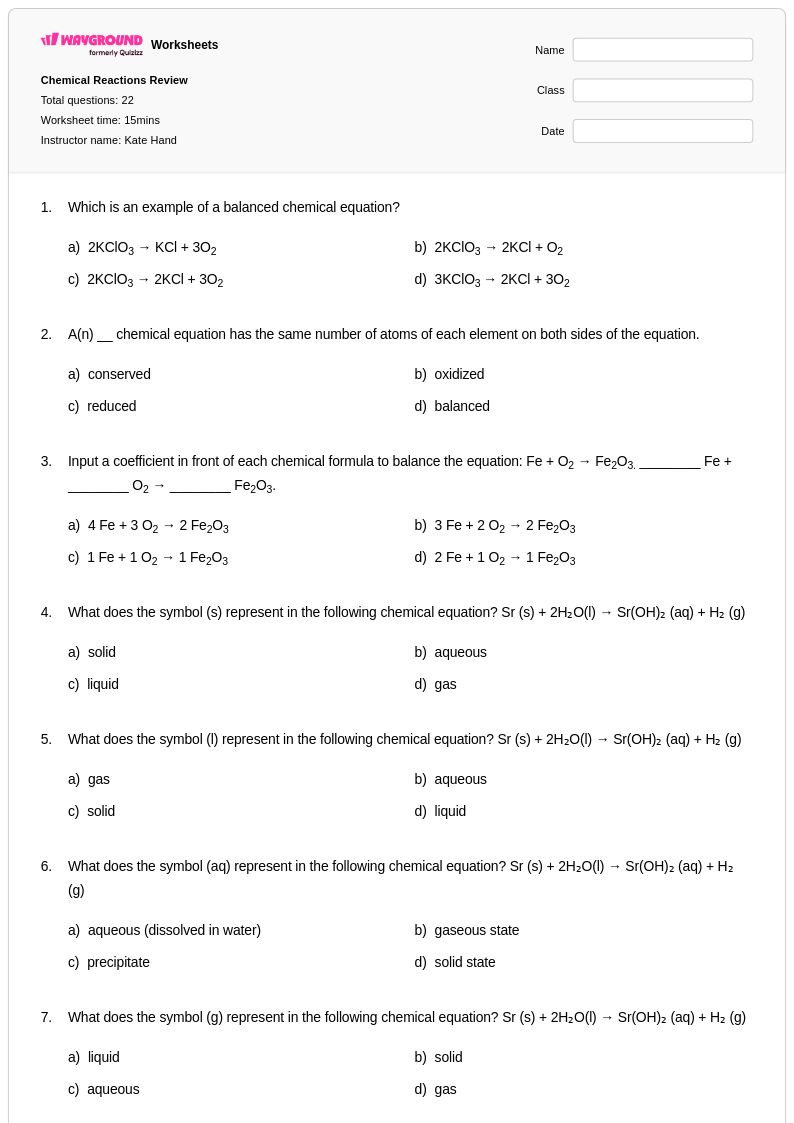
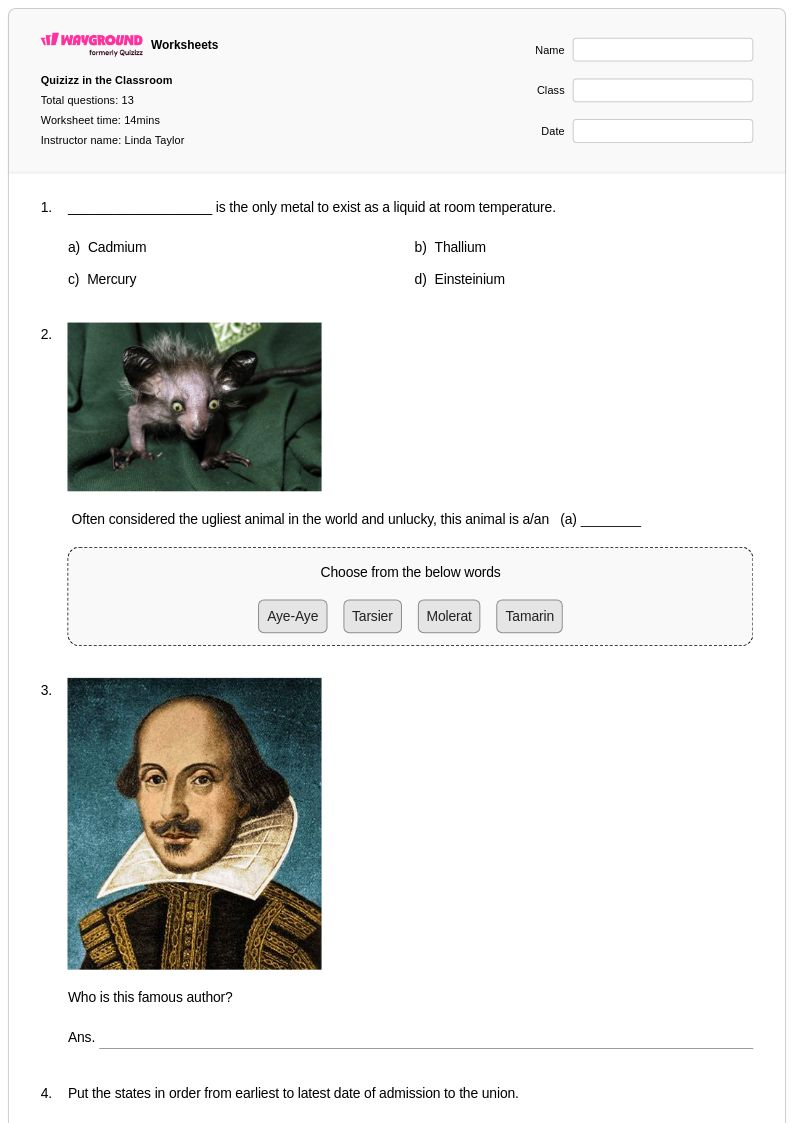
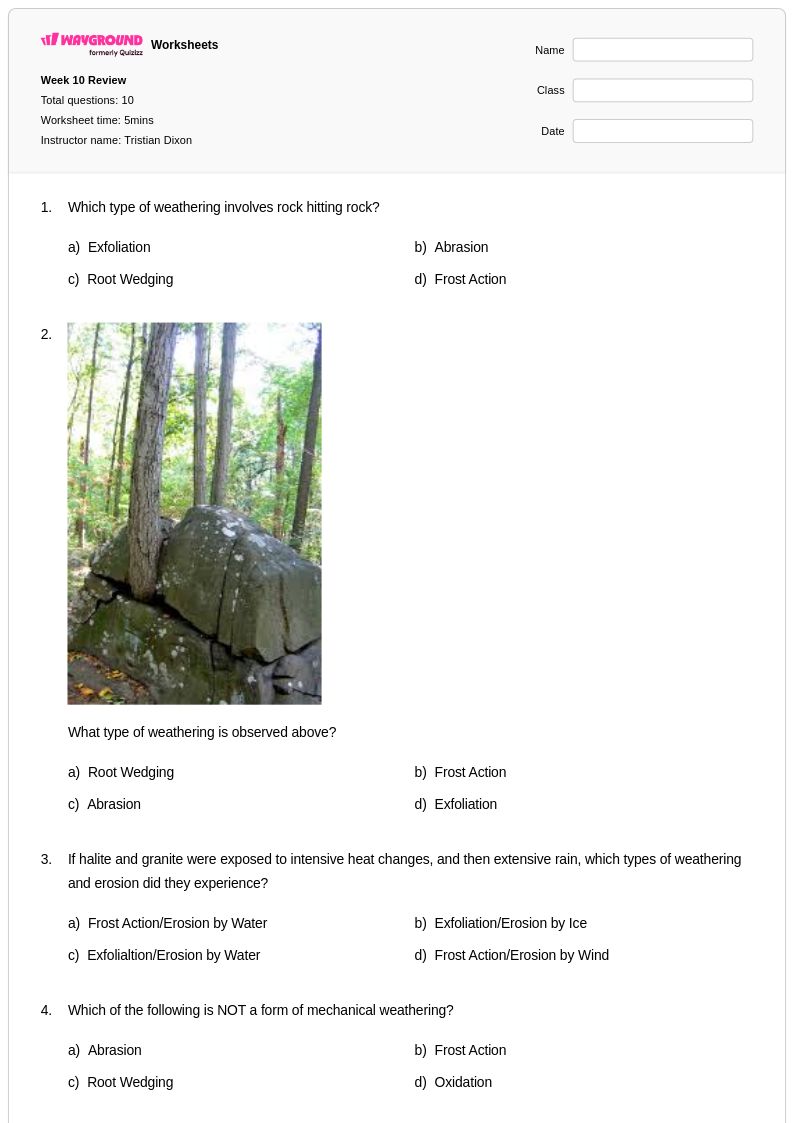
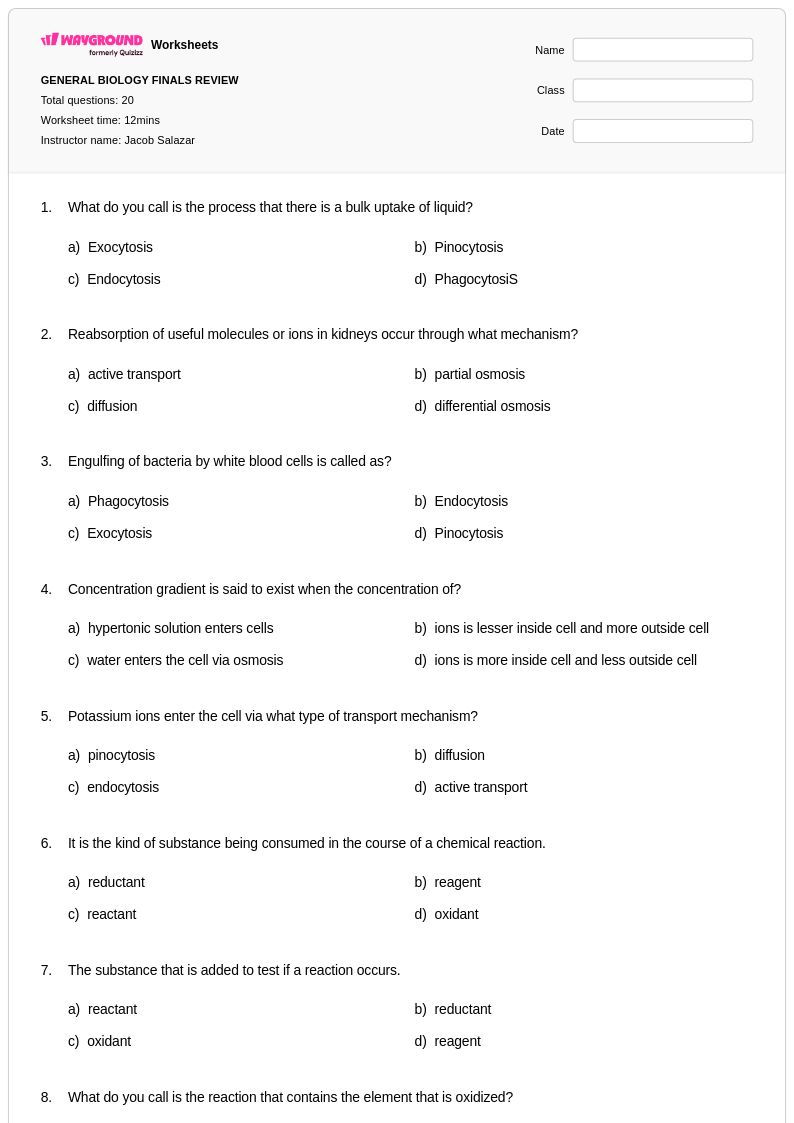
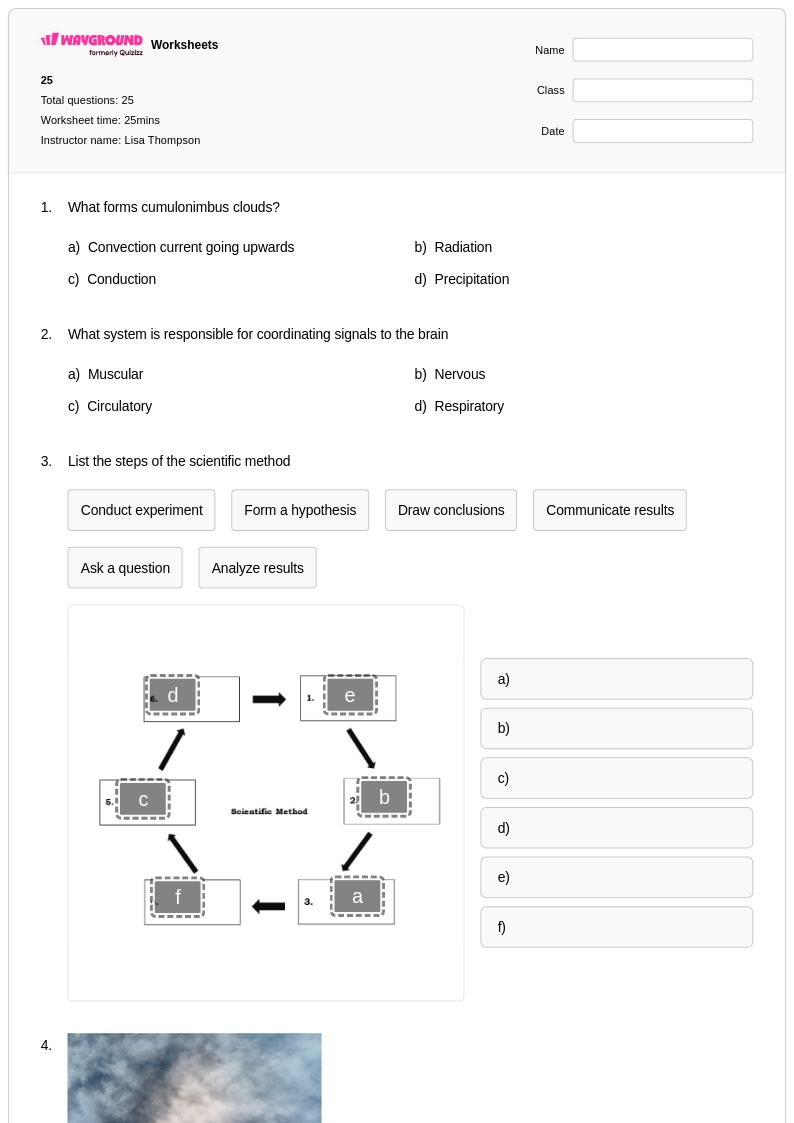
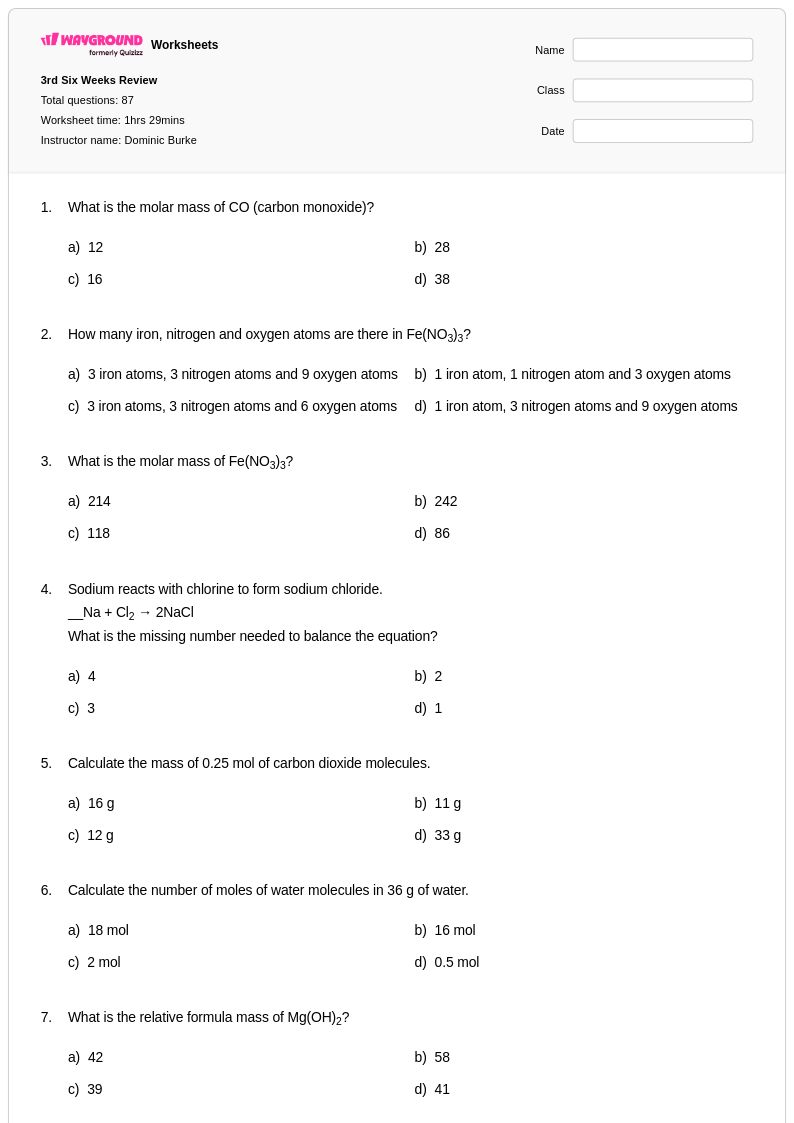
Oxidation state worksheets for Class 12 chemistry students through Wayground (formerly Quizizz) provide comprehensive practice in determining and applying oxidation numbers across various chemical compounds and reactions. These expertly crafted resources strengthen students' abilities to assign oxidation states using fundamental rules, analyze redox reactions, and balance complex chemical equations involving electron transfer. The worksheet collections include detailed practice problems that progress from simple ionic compounds to more challenging coordination complexes and organic molecules, ensuring students master this critical concept before advancing to college-level chemistry. Each worksheet comes with a complete answer key and is available as free printables in convenient PDF format, making them accessible for both classroom instruction and independent study.
Wayground (formerly Quizizz) supports chemistry educators with an extensive library of millions of teacher-created oxidation state worksheets that can be easily searched and filtered by specific learning objectives and difficulty levels. The platform's robust standards alignment ensures these resources meet Class 12 chemistry curriculum requirements, while built-in differentiation tools allow teachers to customize worksheets for students with varying skill levels. Available in both printable PDF formats and interactive digital versions, these worksheet collections streamline lesson planning and provide flexible options for skill practice, targeted remediation, and enrichment activities. Teachers can efficiently adapt these resources to support diverse learning needs, whether conducting whole-class instruction, small group work, or providing additional practice for students struggling with electron counting and redox reaction analysis.
FAQs
How do I teach oxidation states to chemistry students?
Start by teaching the foundational rules in a fixed priority order: elements in their pure form have an oxidation state of zero, monatomic ions equal their charge, oxygen is almost always -2, and hydrogen is +1 in most compounds. Once students internalize this hierarchy, move to applying the rules in progressively complex compounds, from binary ionic compounds to polyatomic ions. Connecting oxidation states to electron transfer and ionic charge helps students see the concept as logical rather than arbitrary, which significantly improves retention.
What exercises help students practice assigning oxidation numbers?
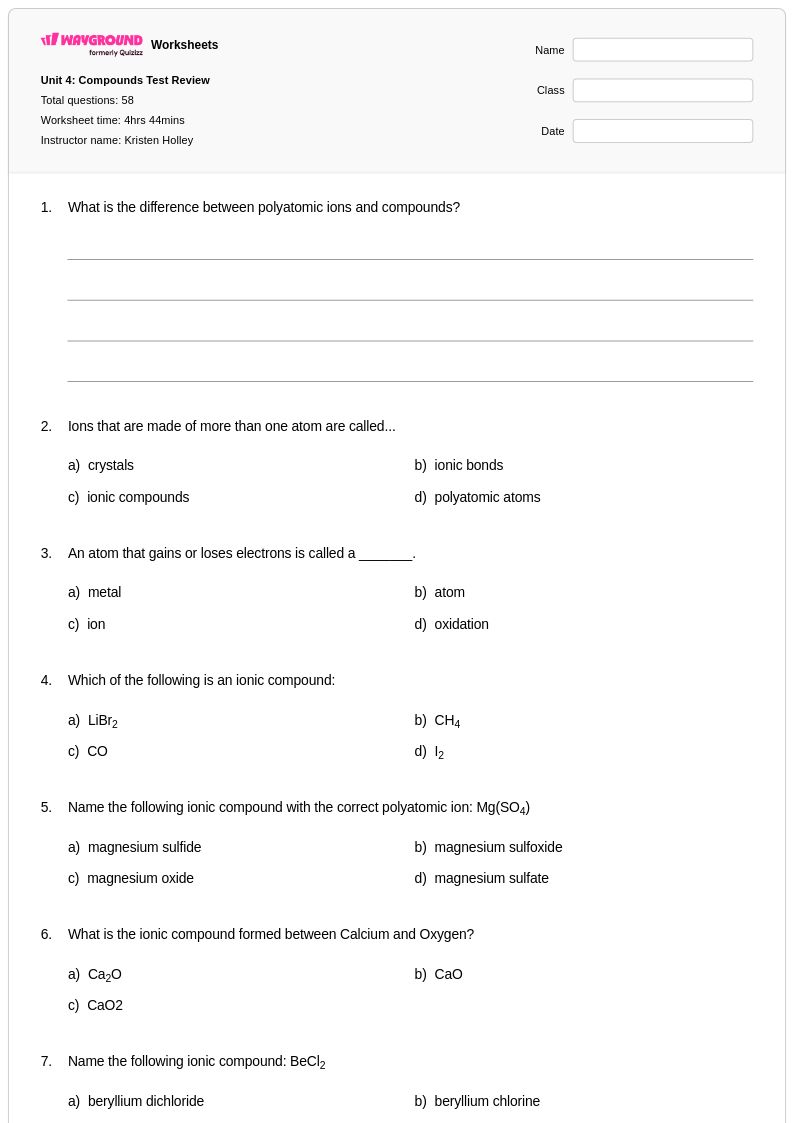
Effective practice begins with simple binary compounds like NaCl and MgO before advancing to polyatomic ions such as sulfate or nitrate, where the charge of the ion must be distributed across multiple atoms. Exercises that ask students to show their work step-by-step, applying each rule explicitly, build the systematic thinking needed for redox chemistry. Oxidation state worksheets that sequence problems by difficulty and include answer keys with annotated solutions are especially useful because students can self-check and understand where their reasoning broke down.
What mistakes do students commonly make when calculating oxidation states?
The most frequent error is confusing the oxidation state of an atom with the charge of a polyatomic ion, leading students to assign the full ionic charge to a single element rather than distributing it algebraically. Students also frequently misapply the oxygen rule, forgetting that in peroxides oxygen carries a -1 state rather than -2. Another common misconception is treating oxidation state as a physical property rather than a bookkeeping convention, which causes confusion when the same element appears in different compounds with different oxidation states.
How do I use oxidation state worksheets to support redox reaction instruction?
Oxidation state worksheets serve as a critical bridge between basic bonding concepts and full redox analysis. Once students can reliably assign oxidation numbers, they can identify which atoms are oxidized or reduced in a reaction by tracking changes in oxidation state across reactants and products. Use worksheets that progress from assigning oxidation numbers in isolation to identifying oxidation and reduction half-reactions, as this sequence directly scaffolds the skills needed for balancing redox equations.
How do I use Wayground's oxidation state worksheets in my classroom?
Wayground's oxidation state worksheets are available as printable PDFs for traditional classroom distribution and in digital formats for technology-integrated learning environments, making them flexible for homework, in-class practice, or assessment prep. You can also host them as a quiz directly on Wayground, which allows for real-time student responses and automatic grading. The included answer keys provide step-by-step solutions so students can review their reasoning independently, and teachers can filter worksheets by difficulty to match the current stage of instruction.
How can I differentiate oxidation state practice for students at different skill levels?
For students who are still building foundational skills, restrict practice to compounds where only one unknown oxidation state exists, such as simple binary compounds or monoatomic ions. More advanced students can be challenged with transition metals, which have variable oxidation states, or organic molecules where carbon oxidation states must be calculated from structural formulas. On Wayground, teachers can modify problem complexity and apply built-in differentiation tools, including reduced answer choices to lower cognitive load for struggling learners or extended time accommodations for students who need additional processing time.