Free Printable Parts of a Book Worksheets for Class 2
Discover free Class 2 parts of a book worksheets and printables from Wayground that help students identify title pages, table of contents, chapters, and other essential book components through engaging practice problems with answer keys.
Explore printable Parts of a Book worksheets for Class 2
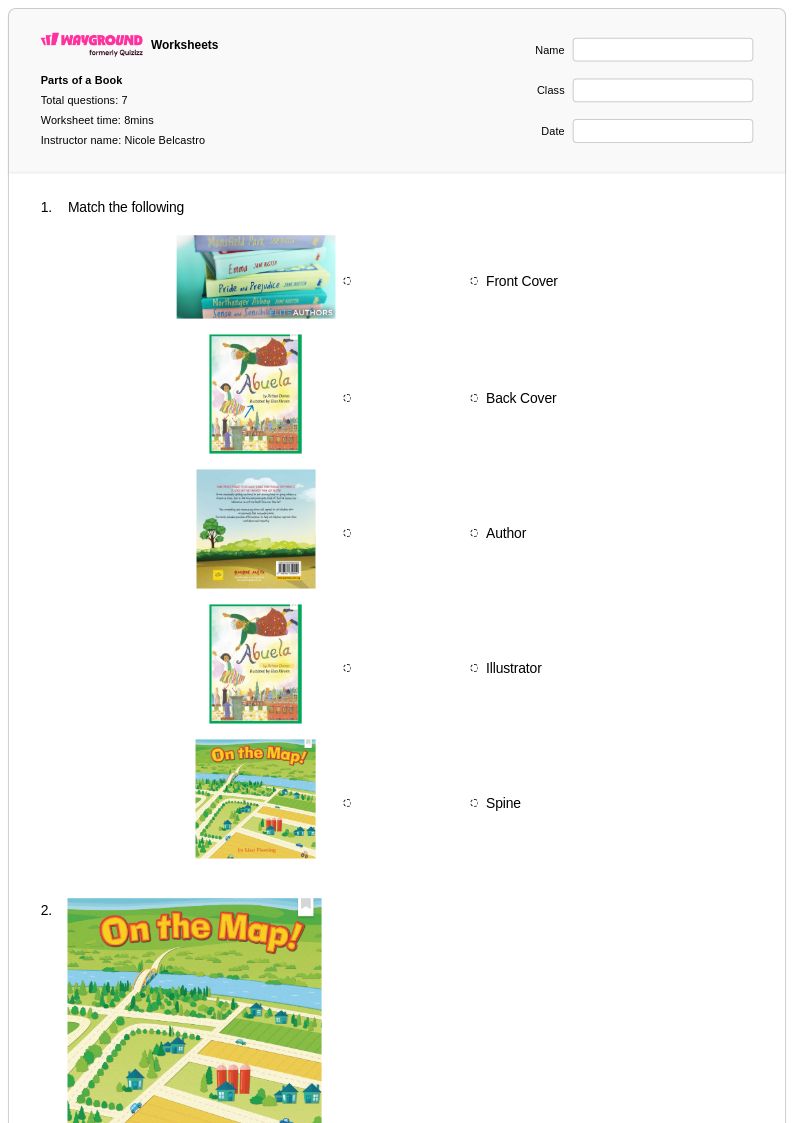
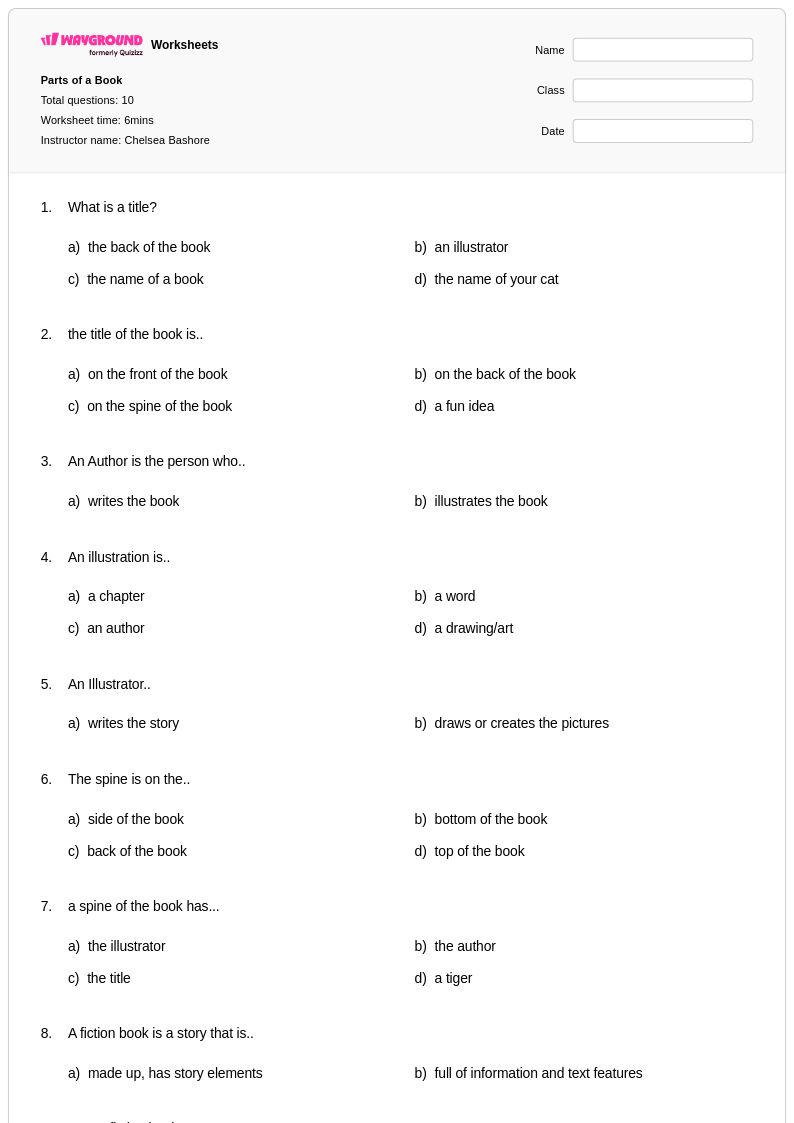
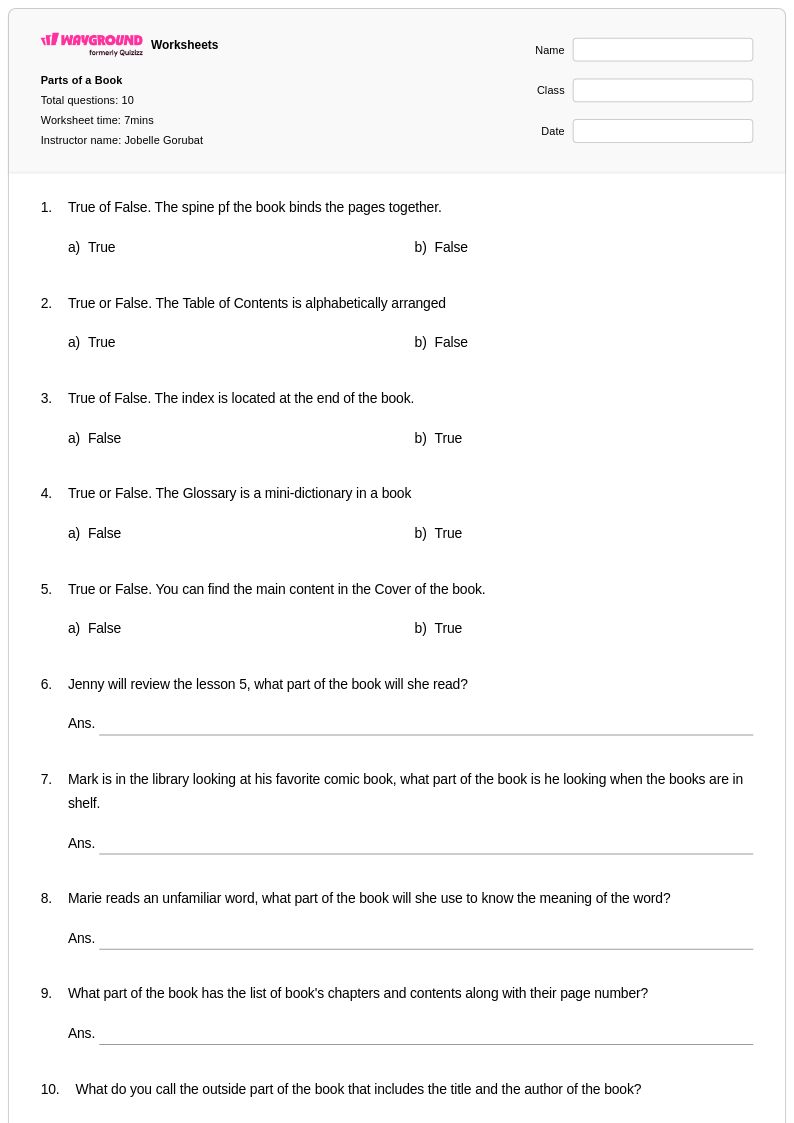
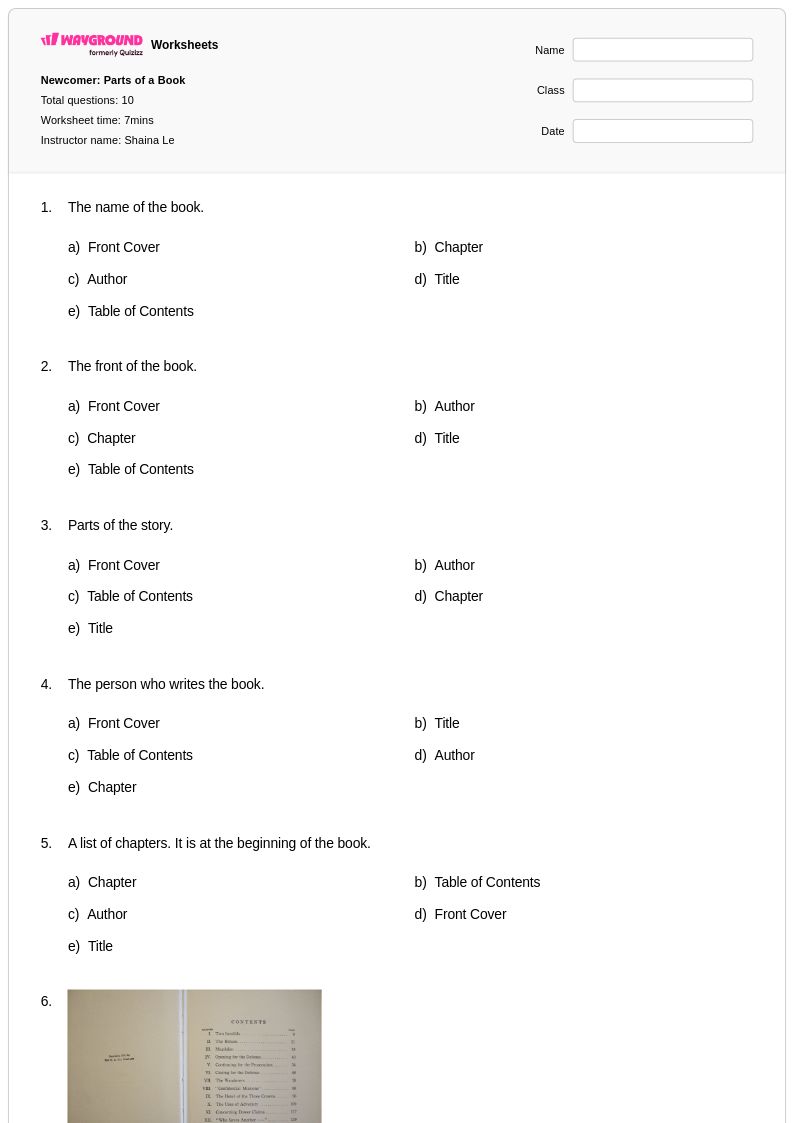
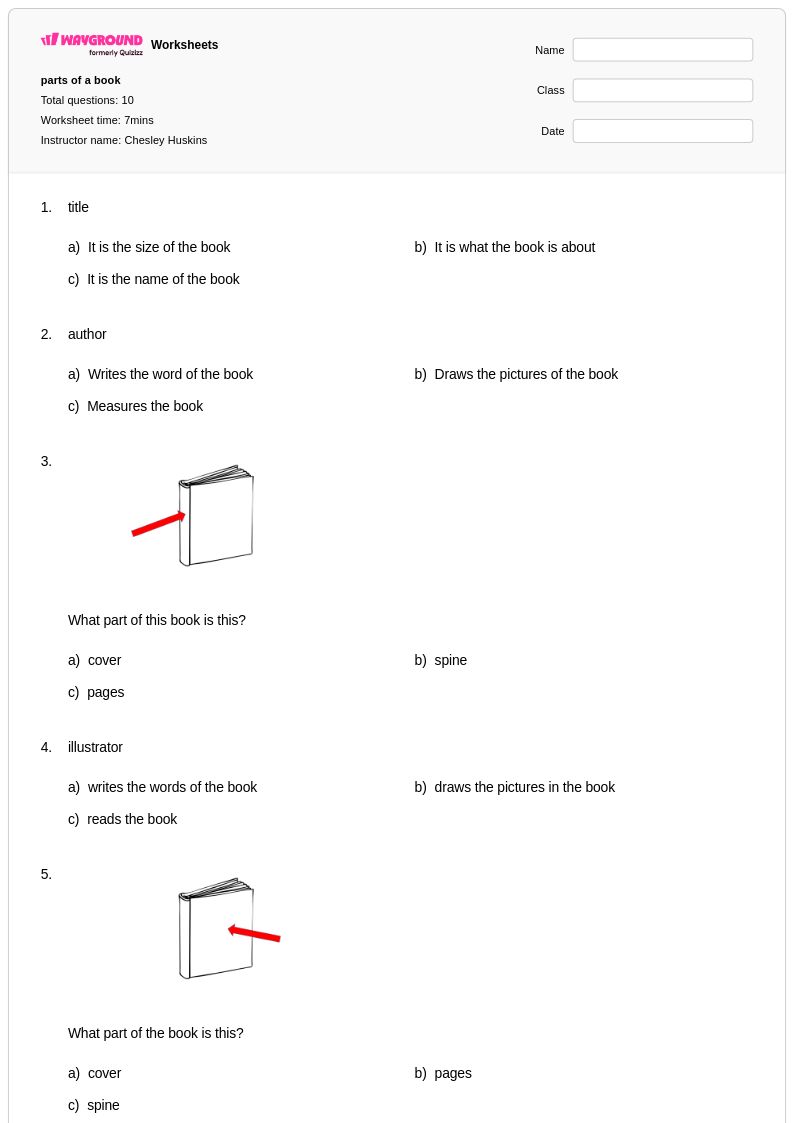
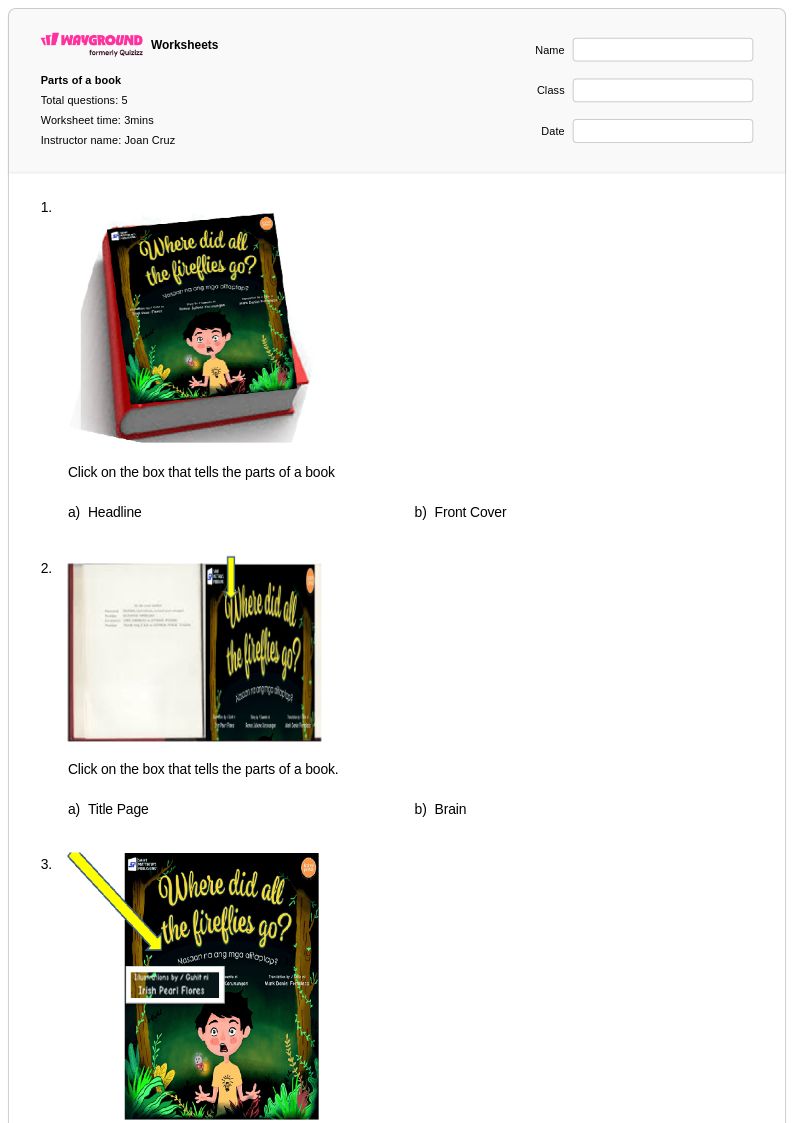
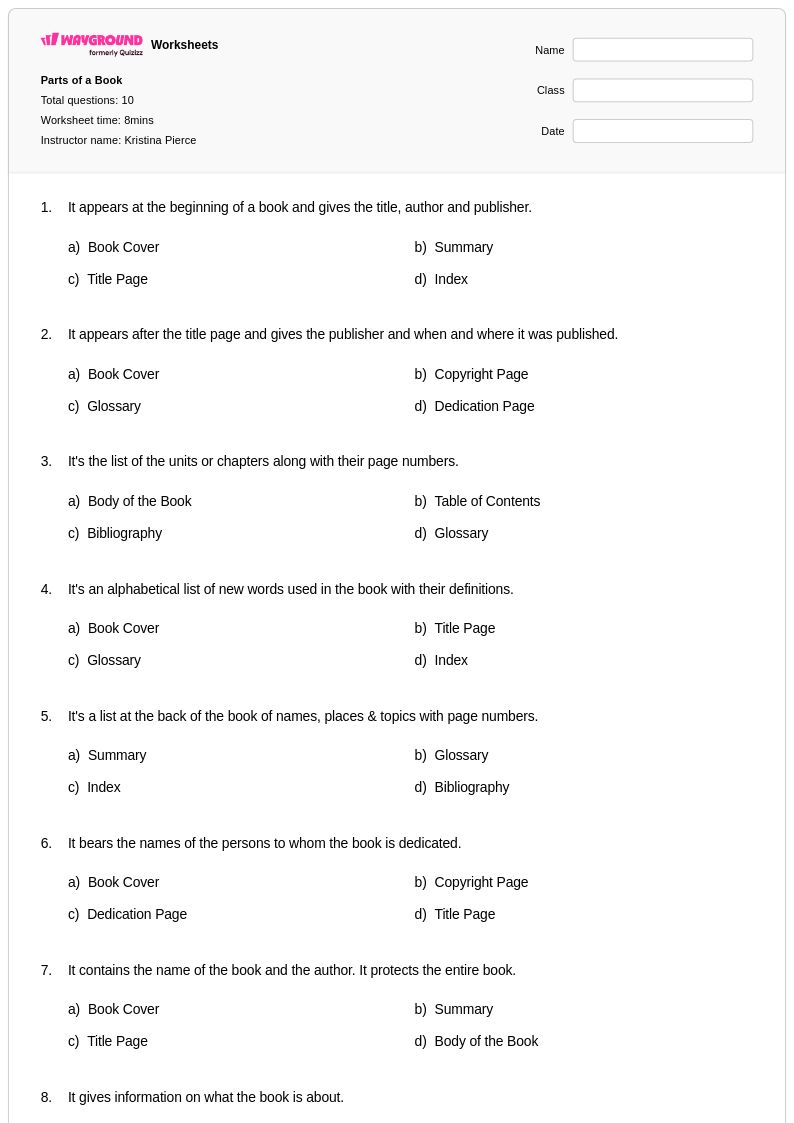
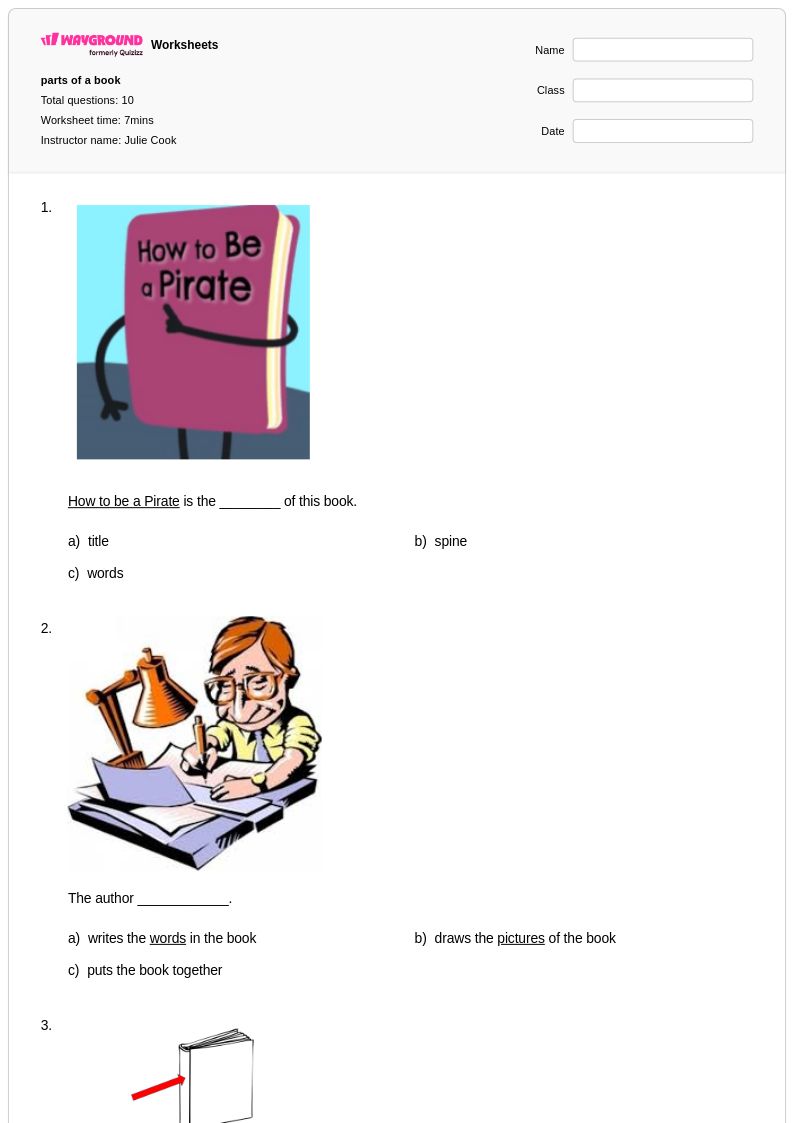
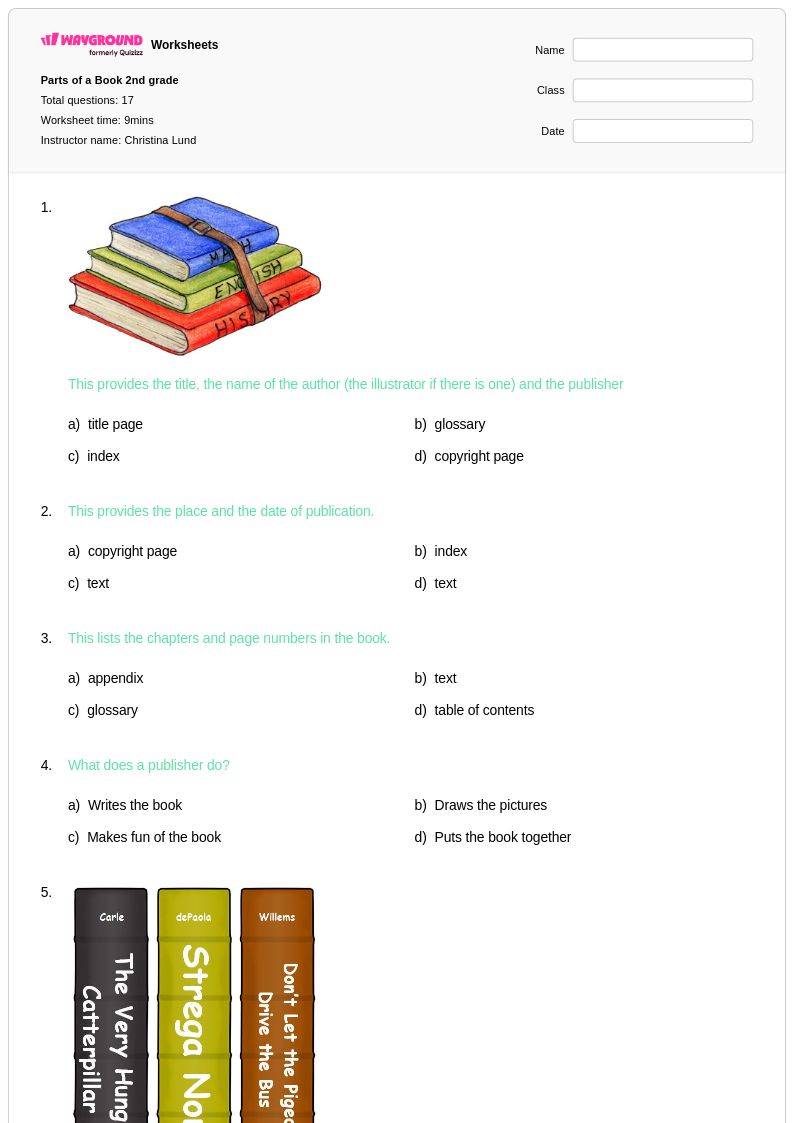
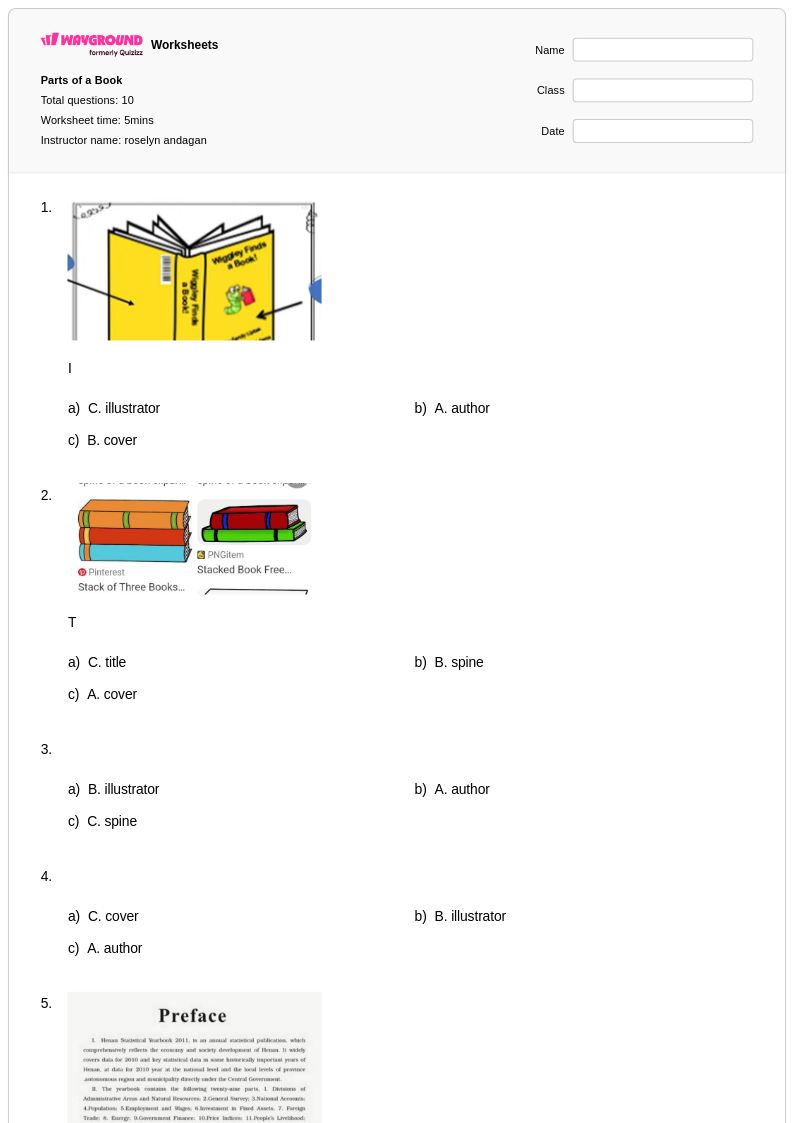
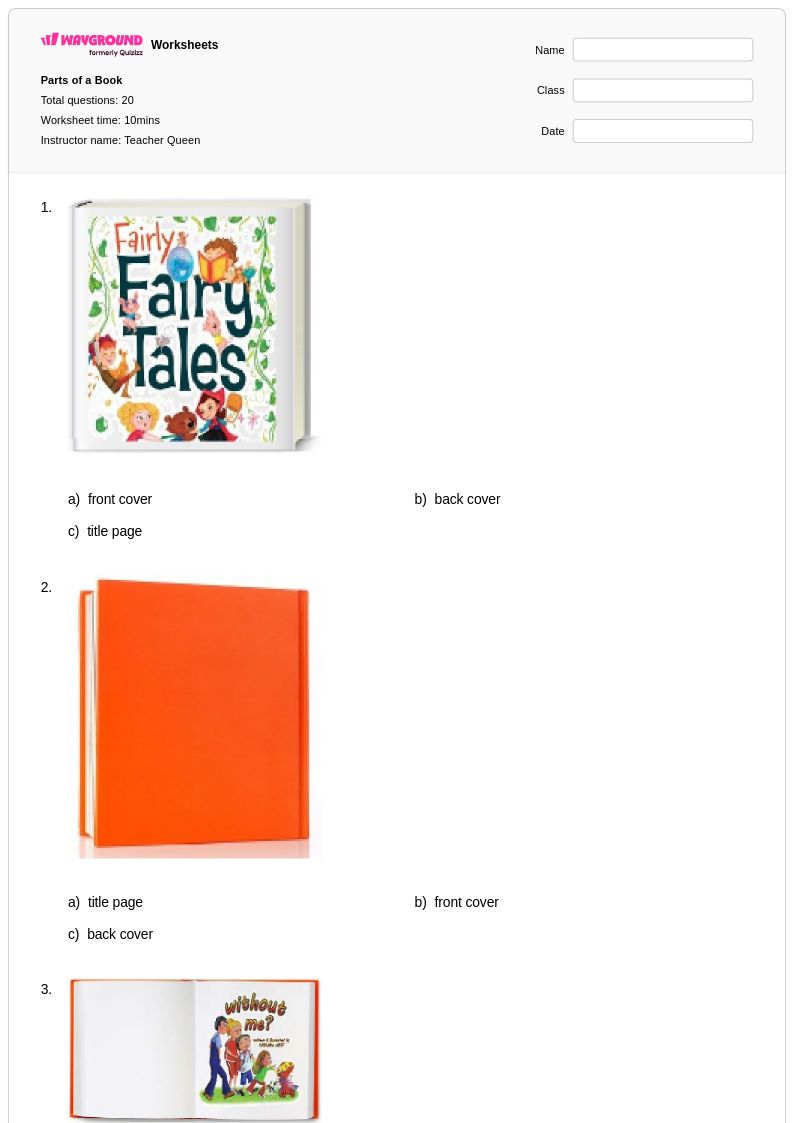
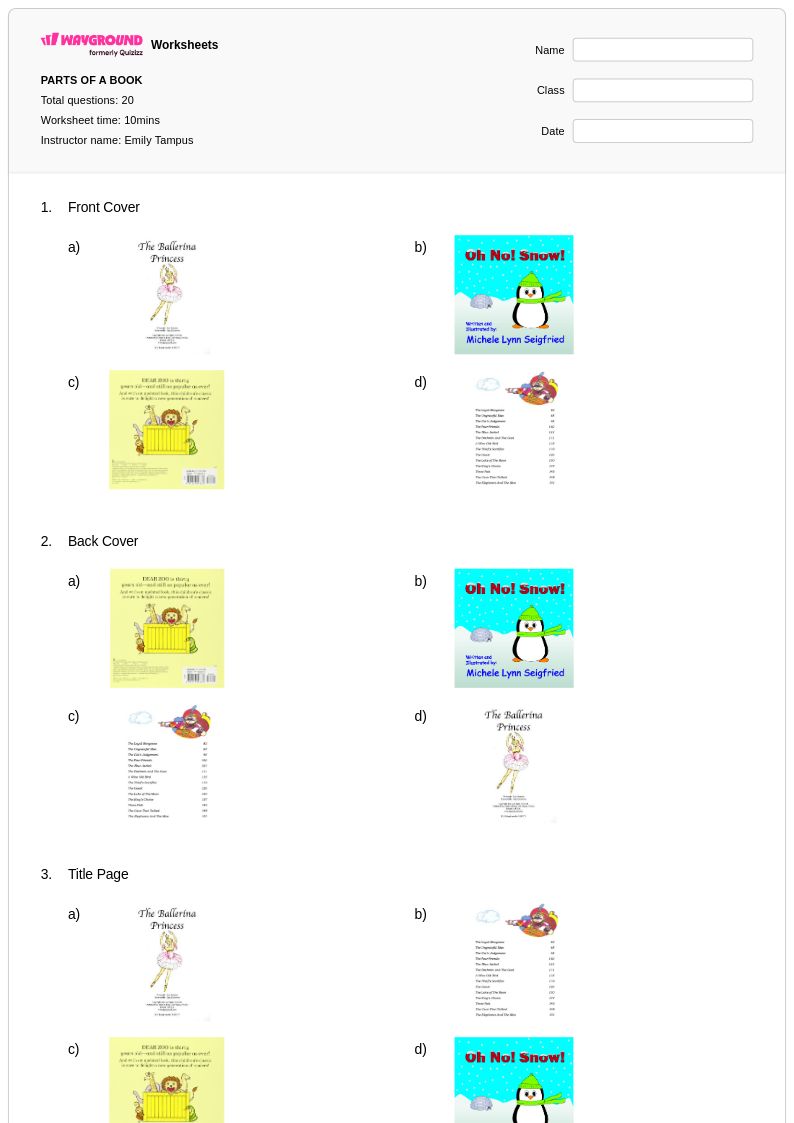
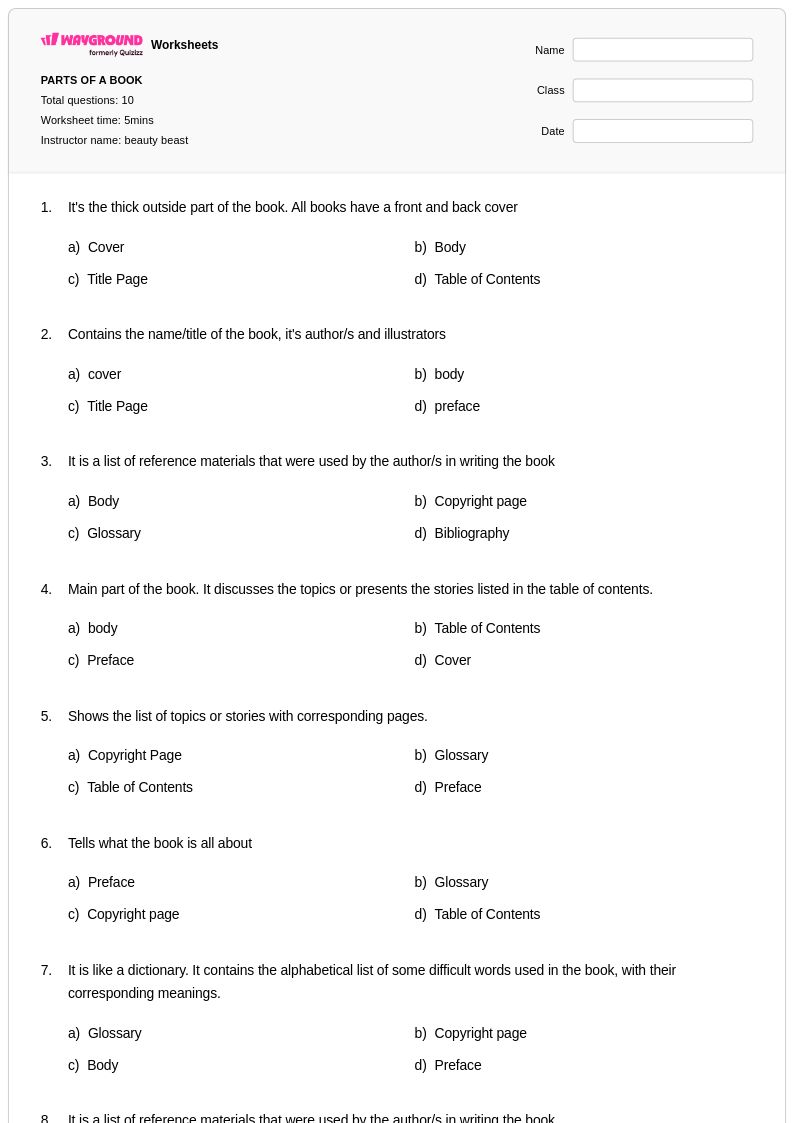
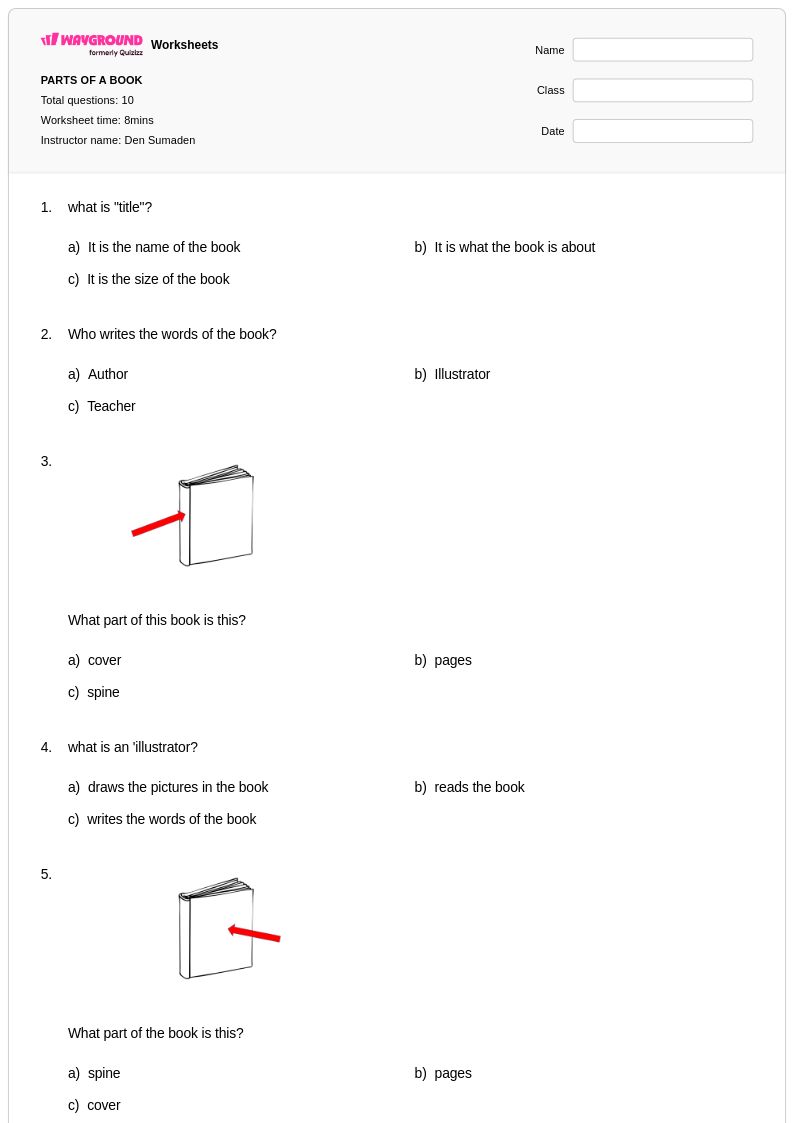
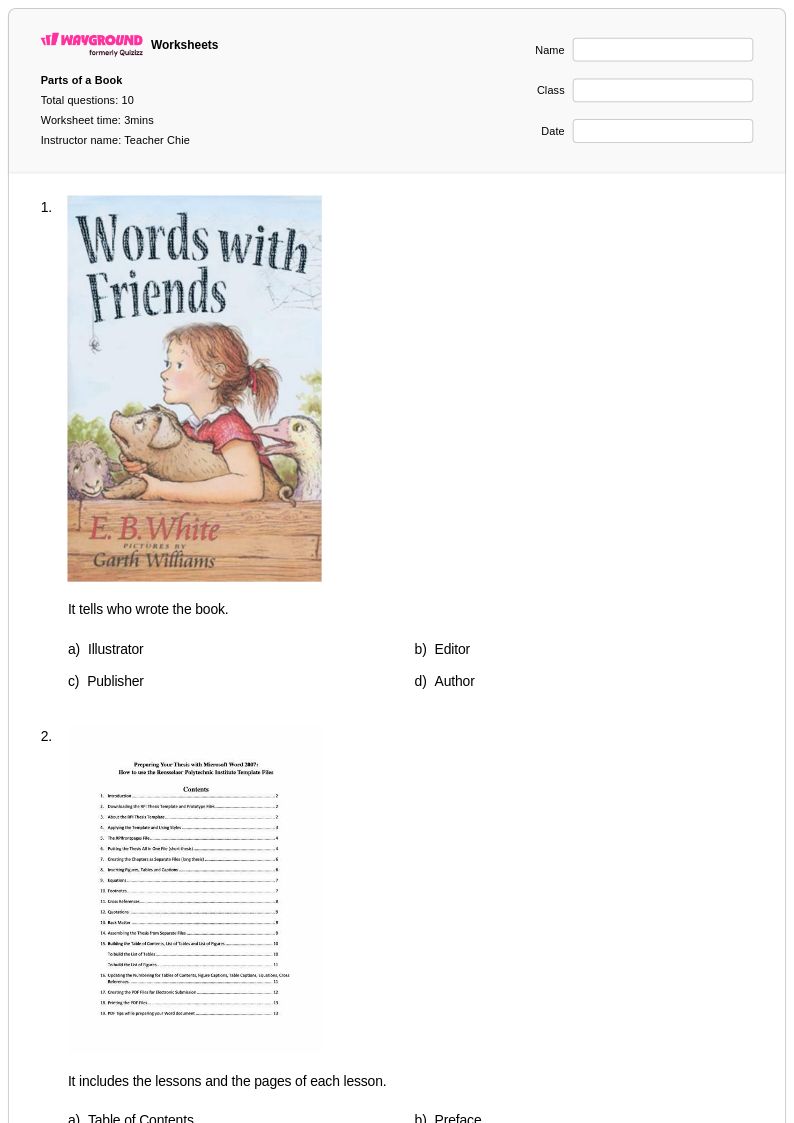
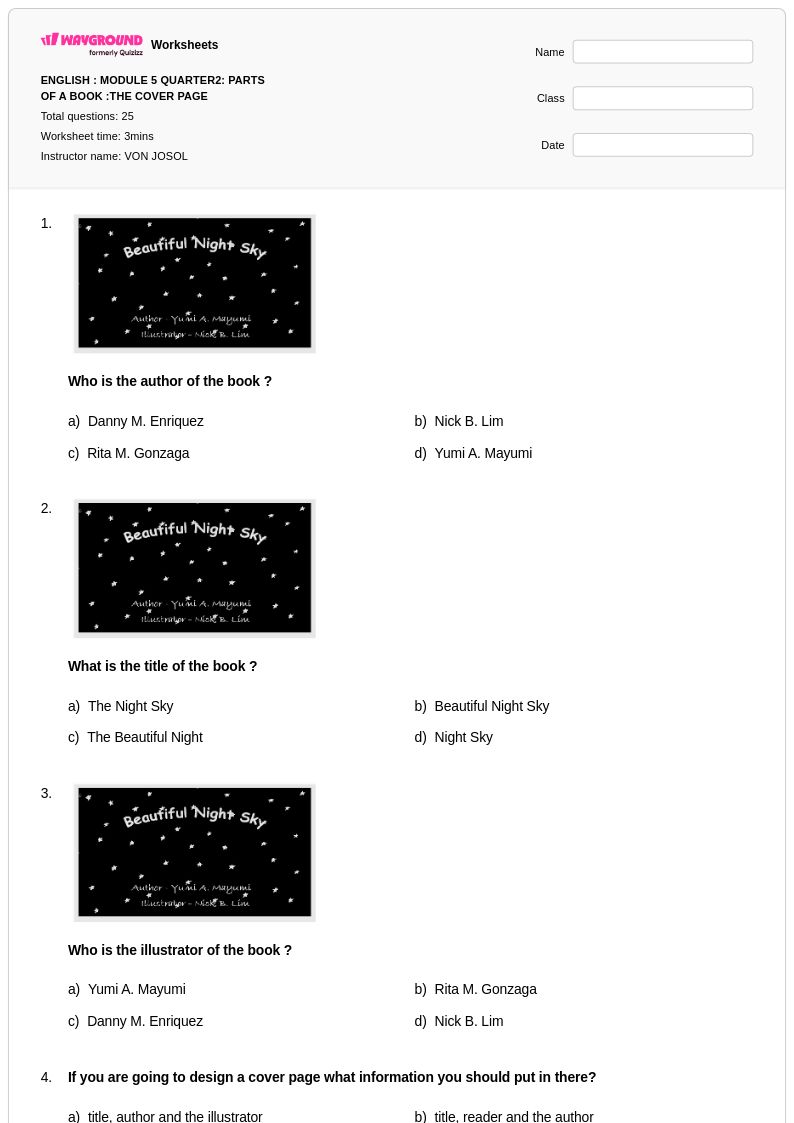
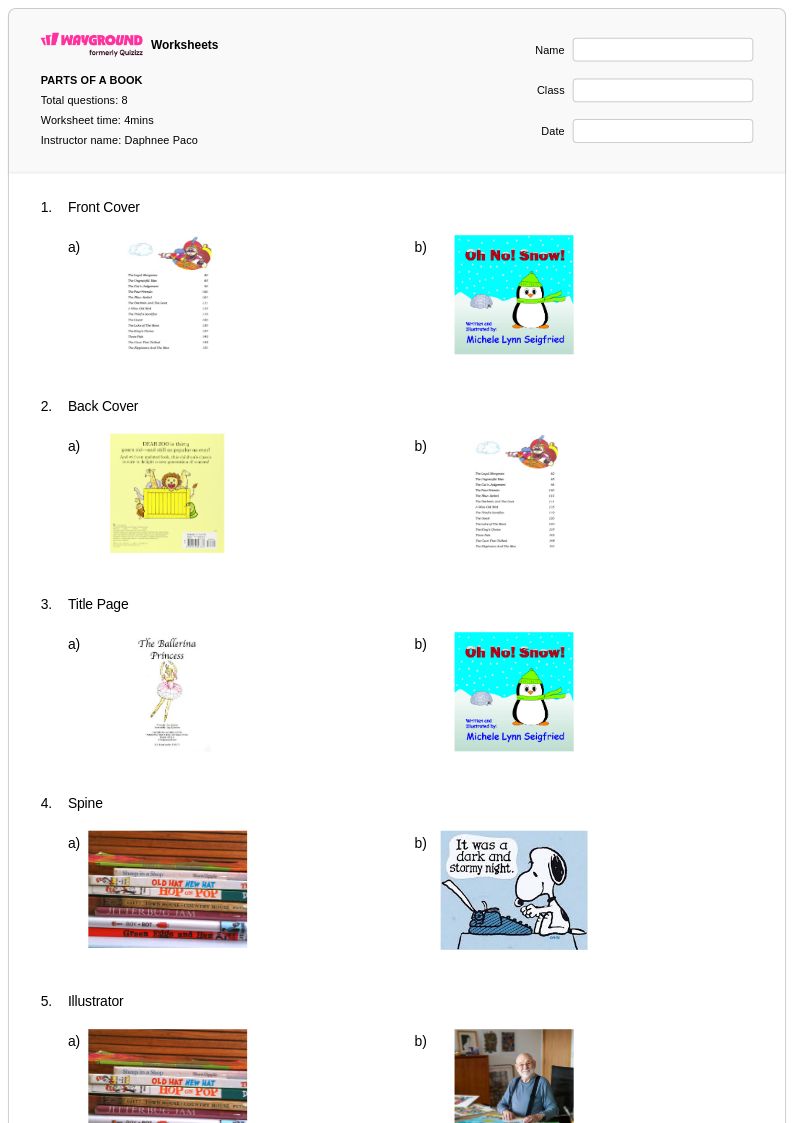
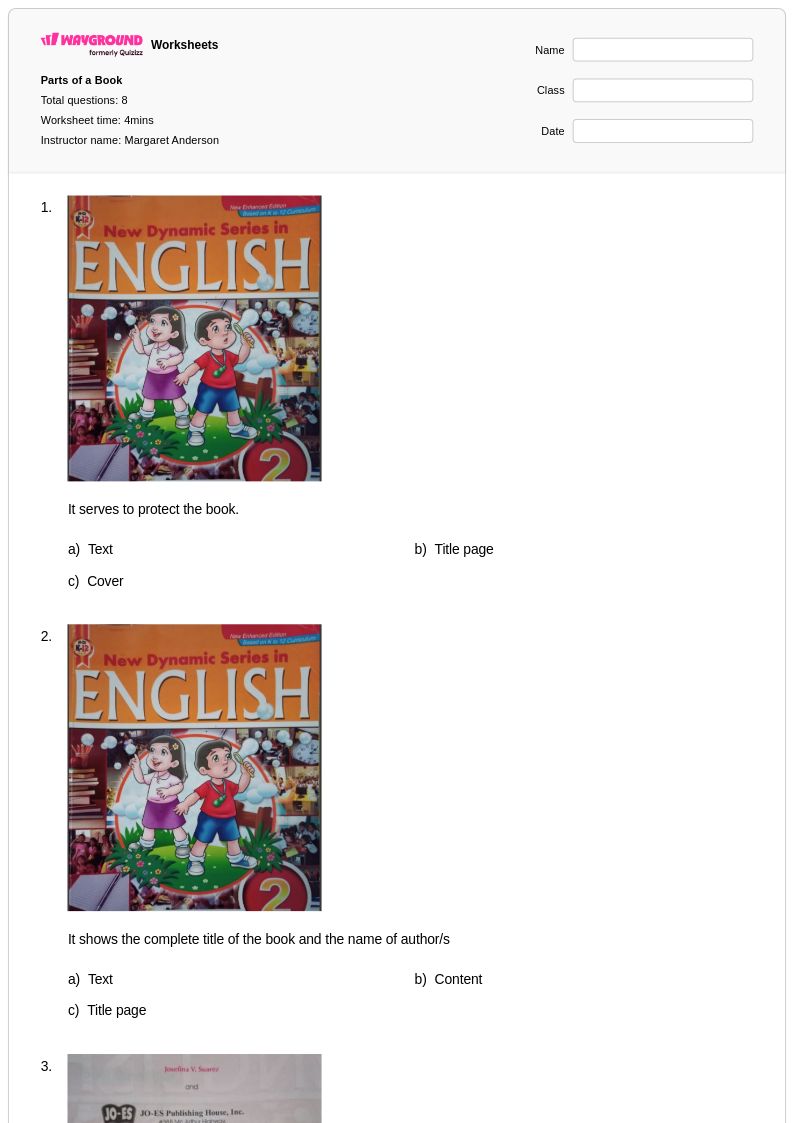
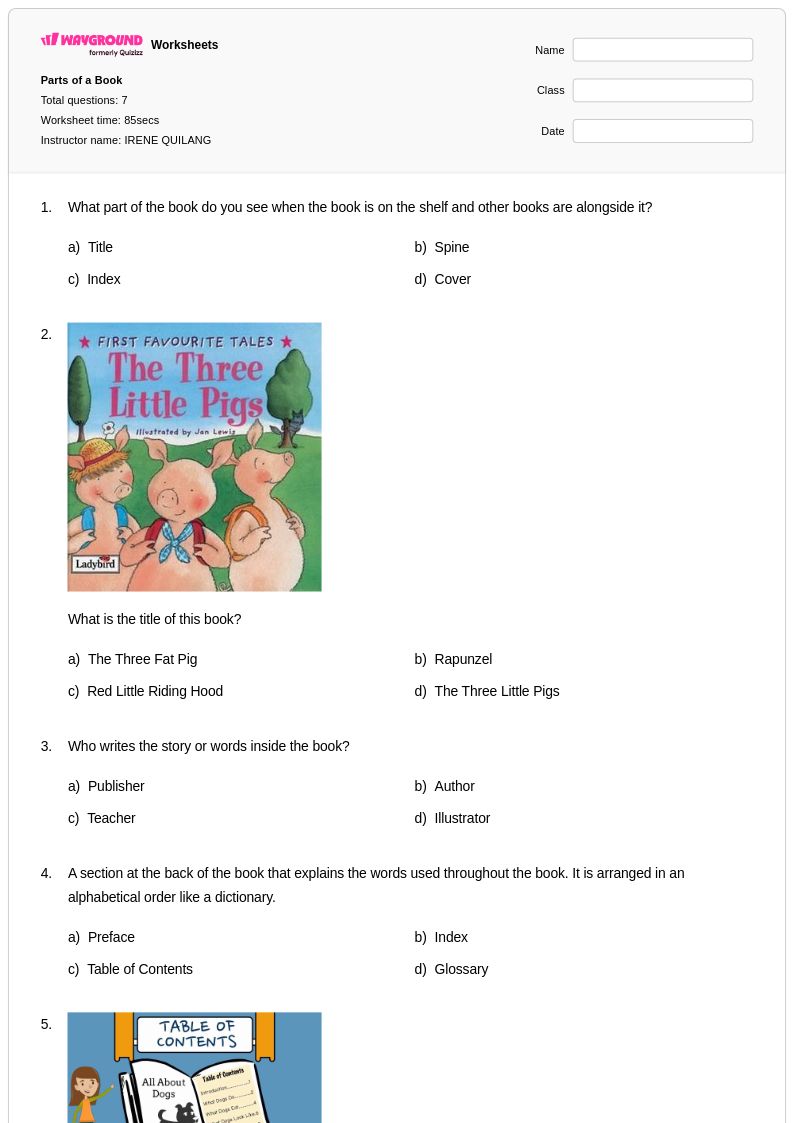
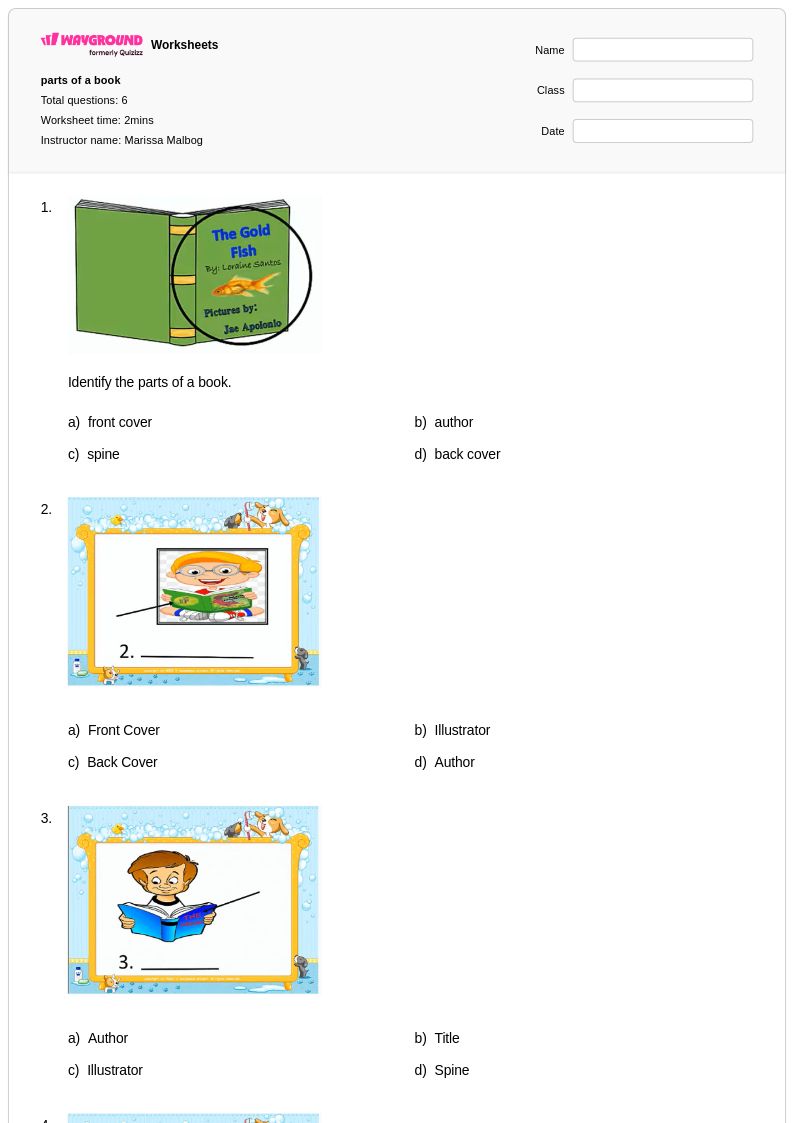
Parts of a book worksheets for Class 2 students available through Wayground (formerly Quizizz) provide essential foundation-building activities that help young learners identify and understand the fundamental components of books. These carefully designed printables guide second graders through recognizing key elements such as the front cover, back cover, title page, table of contents, spine, and author information. Each worksheet strengthens critical pre-reading skills by teaching students how books are organized and how to navigate text effectively. The practice problems included in these free resources systematically build familiarity with book structure, while comprehensive answer keys enable teachers and parents to provide immediate feedback. These pdf worksheets serve as valuable tools for developing book handling skills and print awareness that form the cornerstone of successful reading development.
Wayground (formerly Quizizz) supports educators with an extensive collection of teacher-created resources focused on parts of a book instruction, featuring millions of worksheets that can be easily located through robust search and filtering capabilities. Teachers can access standards-aligned materials that support differentiated instruction, allowing them to customize content based on individual student needs and reading levels. The platform offers flexible formatting options, including both printable pdf versions for traditional classroom use and digital formats for interactive learning experiences. These versatile tools enable educators to seamlessly integrate parts of a book instruction into lesson planning, provide targeted remediation for struggling readers, offer enrichment activities for advanced learners, and deliver consistent skill practice that reinforces fundamental literacy concepts throughout the school year.
FAQs
How do I teach parts of a book to early readers?
Start by introducing one component at a time using a physical book students can hold and explore. Guide them through the front cover, back cover, spine, title page, and table of contents, connecting each part to its purpose — for example, explaining that the spine holds the book together and displays the title for easy shelving. Repeated exposure through read-alouds, shared reading, and hands-on activities helps young learners internalize book structure before they encounter it independently.
What exercises help students practice identifying parts of a book?
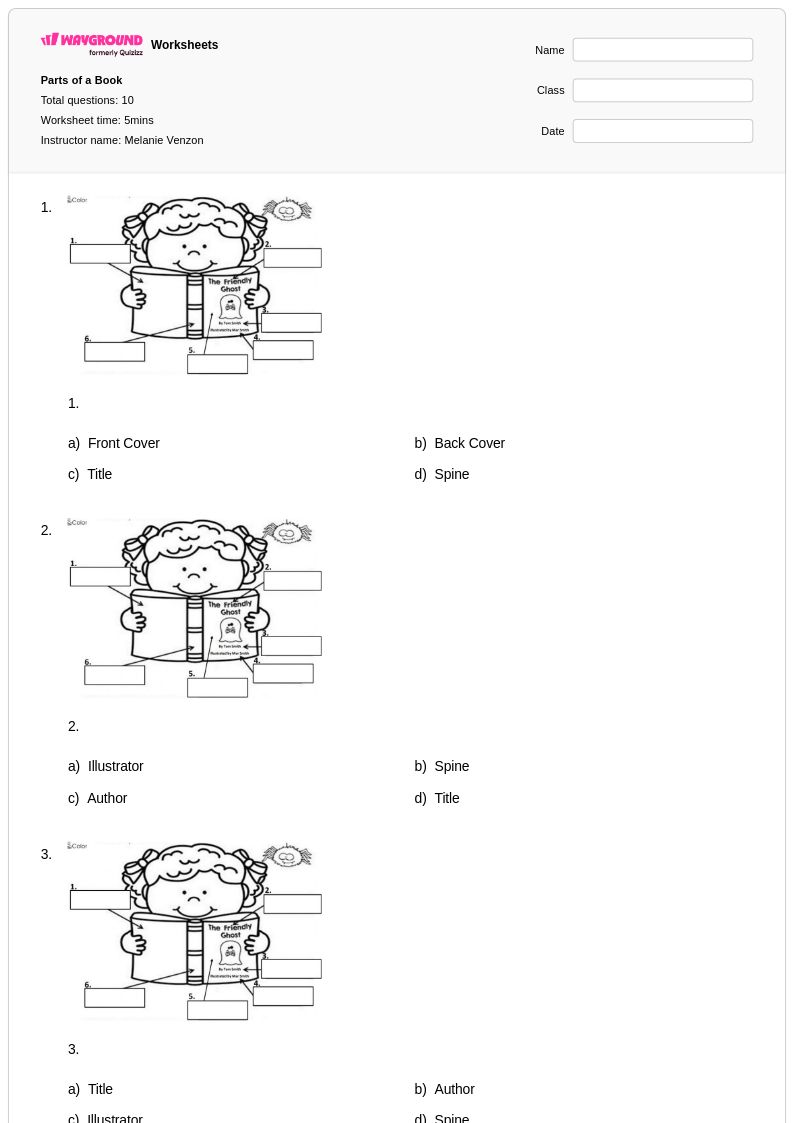
Labeling diagrams of a book's exterior and interior is one of the most effective practice formats, as it requires students to recall and place vocabulary in context rather than simply recognize it. Matching activities that pair part names with descriptions or functions also reinforce understanding. Worksheets that combine both formats give students multiple exposure points to the same vocabulary, which is especially valuable for early literacy learners building foundational print concepts.
What mistakes do students commonly make when learning parts of a book?
Students frequently confuse the author and illustrator, particularly when a single person fills both roles, or when neither role is explained in connection to the book's actual content. Another common error is conflating the title page with the front cover, since both display the title. Students also tend to overlook the spine entirely because it is not a surface they naturally interact with when reading, so explicit instruction on its location and function is important.
How can I differentiate parts of a book instruction for students at different levels?
For students who need additional support, reduce the number of book parts introduced at once and focus first on the most visible components — front cover, back cover, and title. For students who are ready for enrichment, extend the activity to include the dedication page, glossary, or index. On Wayground, teachers can apply individual accommodations such as read-aloud support, reduced answer choices, and extended time to specific students, allowing the same worksheet to serve learners across a range of readiness levels without singling anyone out.
How do I use parts of a book worksheets effectively in my classroom?
Parts of a book worksheets on Wayground are available as printable PDFs for traditional classroom use and in digital formats for technology-integrated learning environments, and can also be hosted as a quiz directly on Wayground. For best results, pair worksheet practice with a physical book so students can reference real examples as they complete labeling or matching tasks. These worksheets work well as an introduction activity, a follow-up to a read-aloud, or as an assessment checkpoint to confirm students have retained key vocabulary.
At what age or grade level should students learn parts of a book?
Parts of a book is typically introduced in kindergarten and first grade as part of foundational print concepts and early literacy instruction. Most students encounter the front cover, back cover, title, author, and illustrator in kindergarten, with components like the table of contents and spine introduced in first grade as reading complexity increases. Revisiting this content in second grade through more detailed worksheets helps reinforce vocabulary for students who need additional exposure.