
20 Q
1st - Uni
6 Q
1st - 2nd
15 Q
1st - 2nd
19 Q
1st - Uni
15 Q
1st - Uni
5 Q
KG - 12th
5 Q
2nd
21 Q
2nd
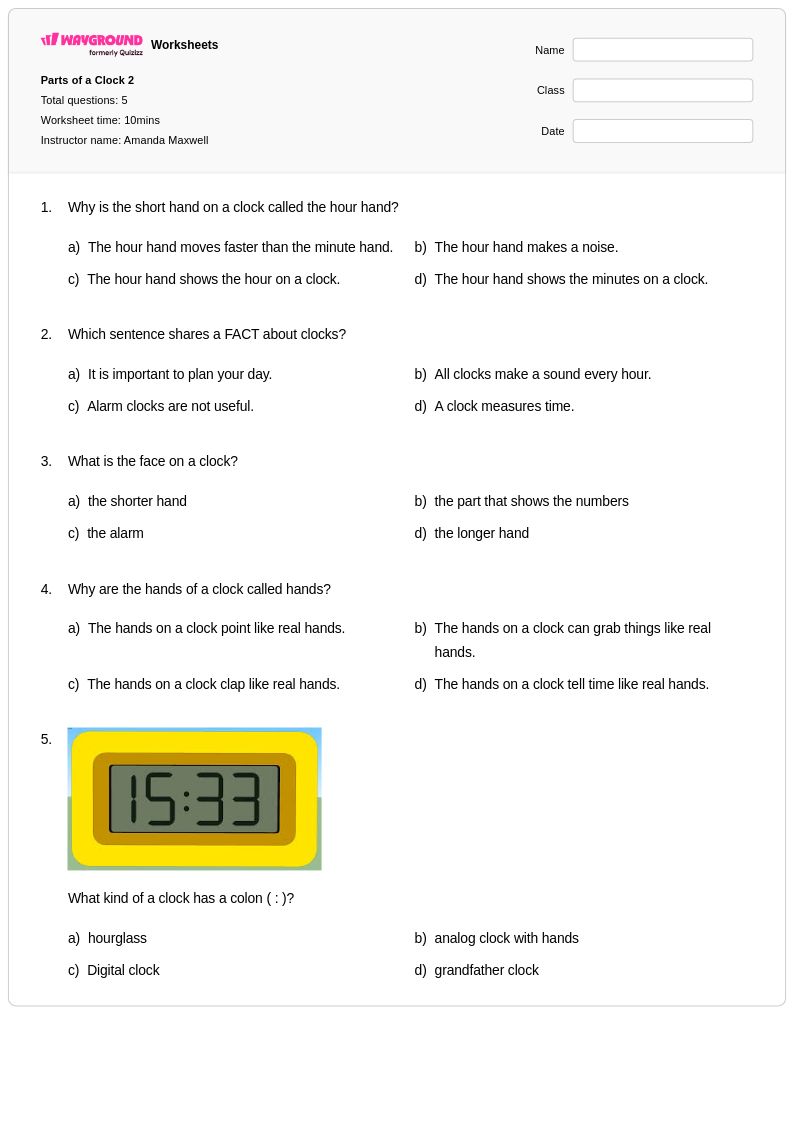
5 Q
KG - 12th
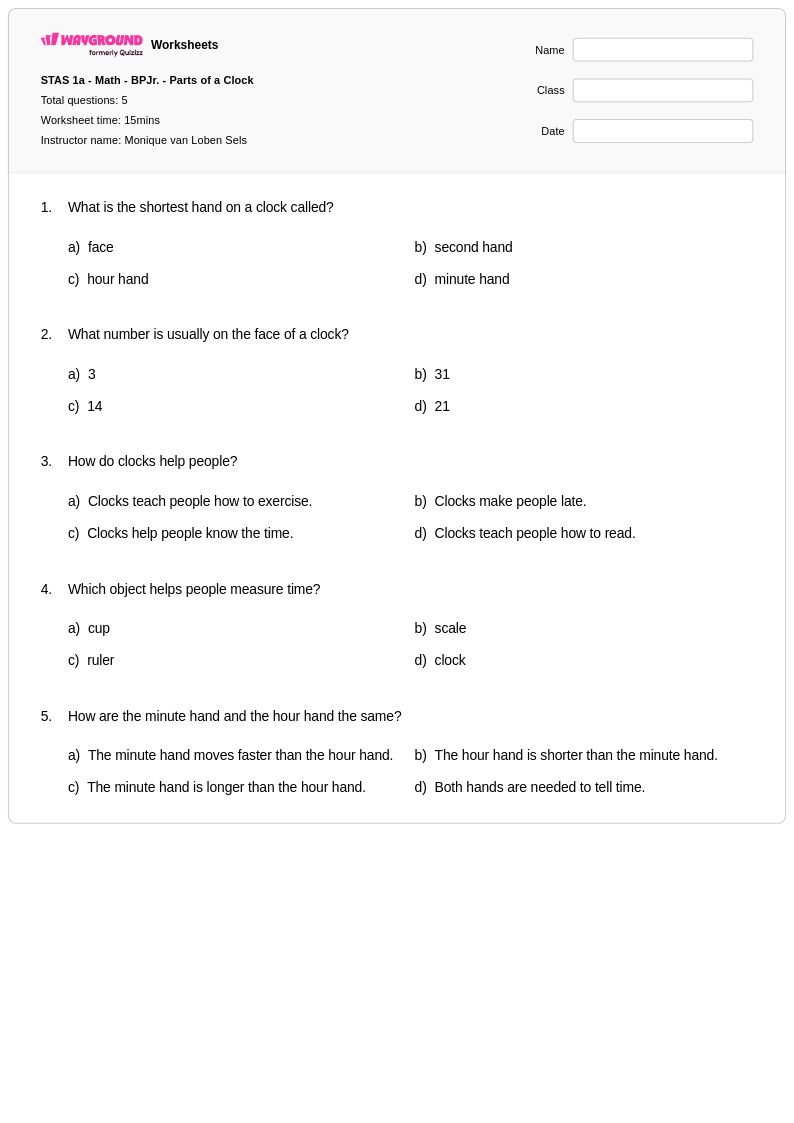
5 Q
1st
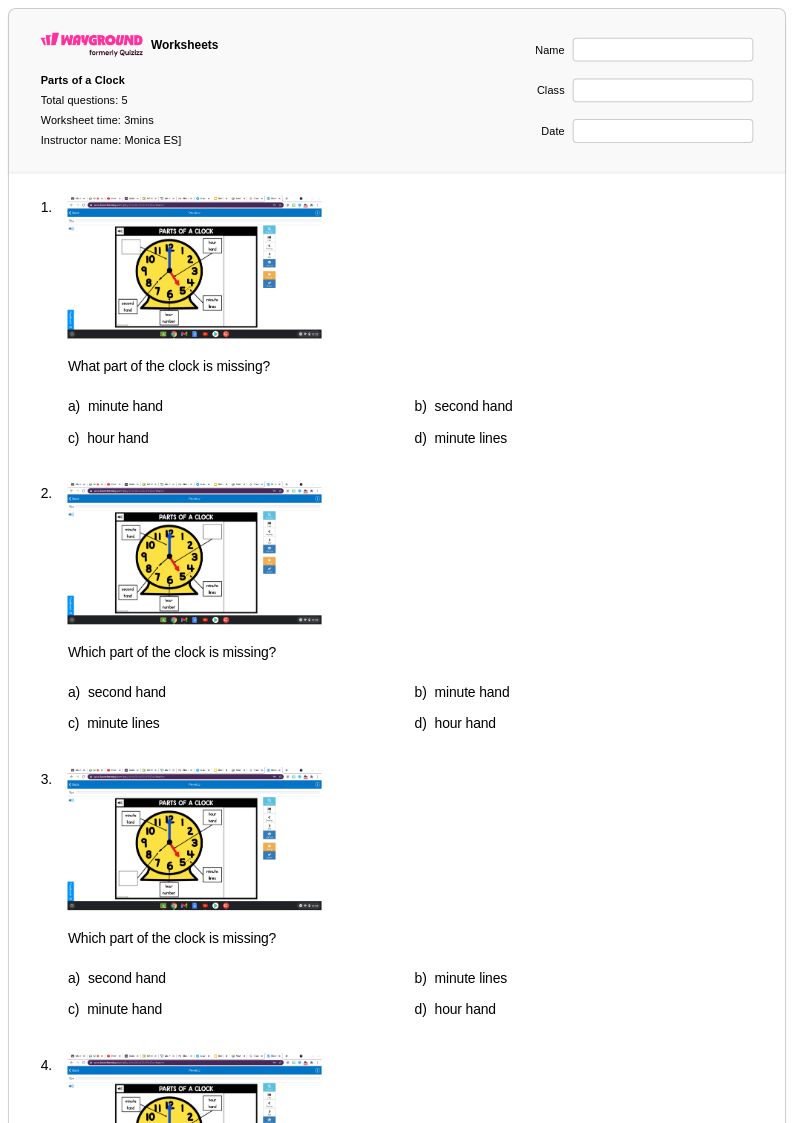
5 Q
KG
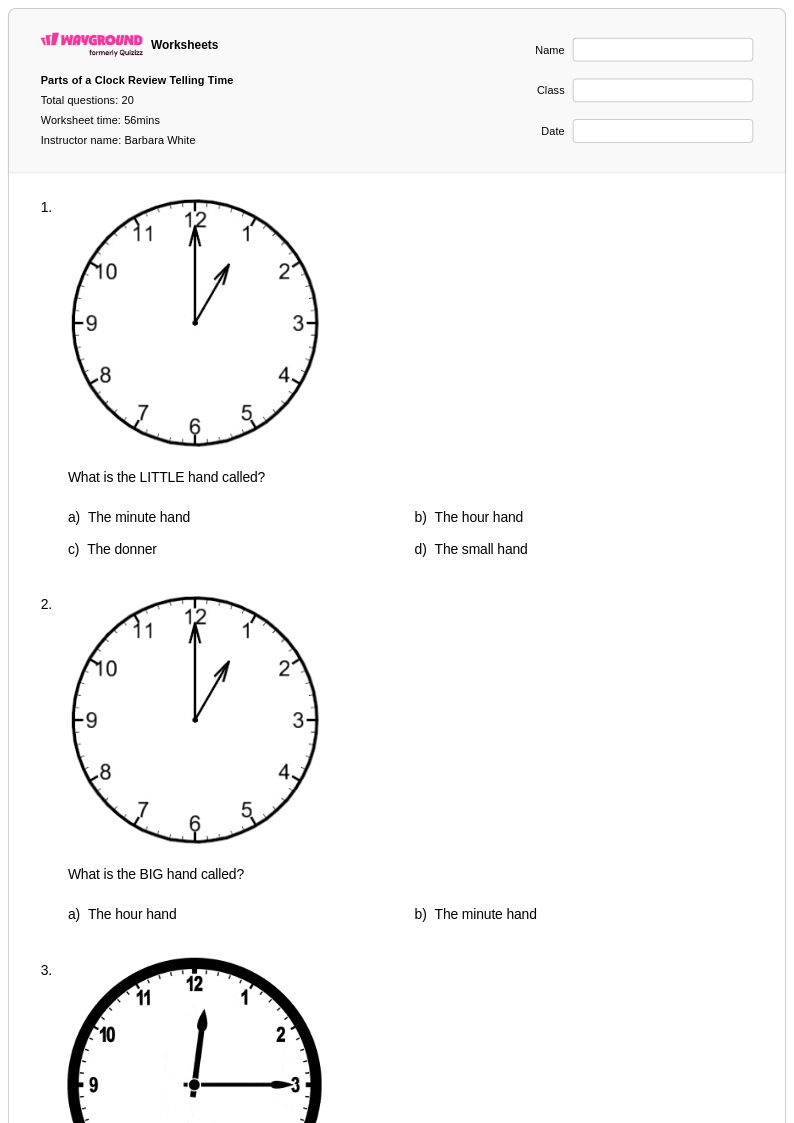
20 Q
3rd - 4th
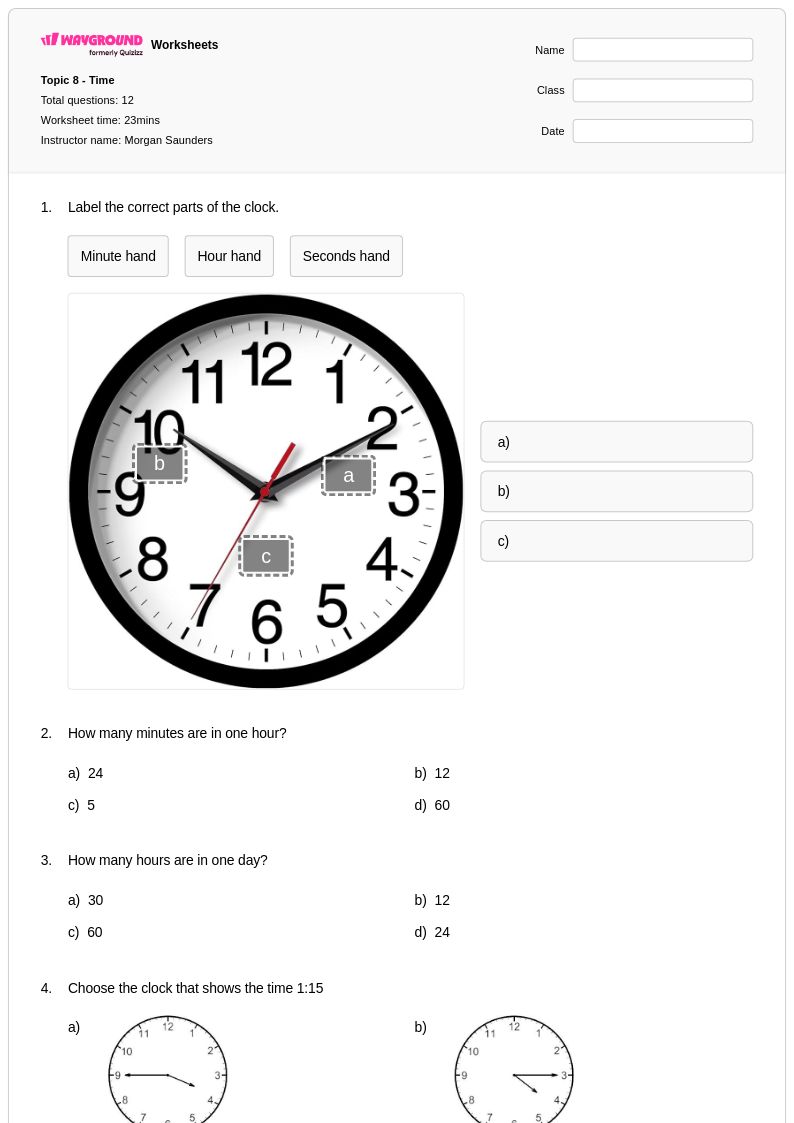
12 Q
2nd
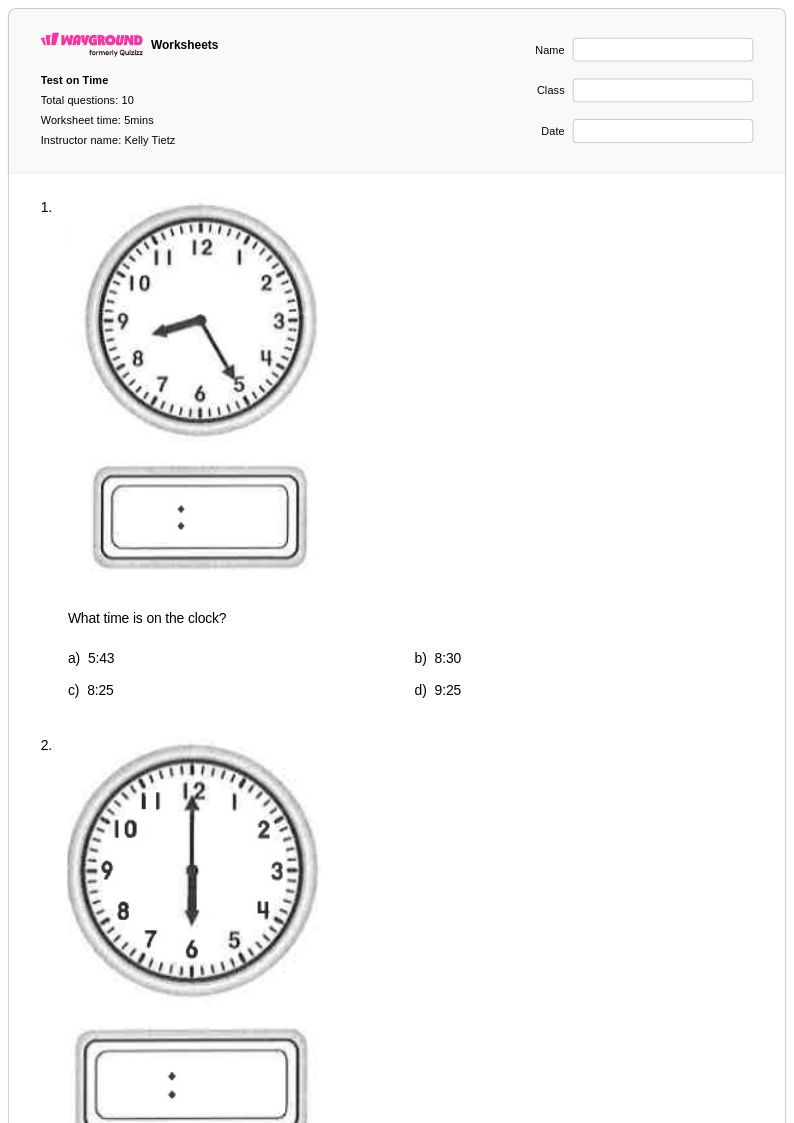
10 Q
2nd
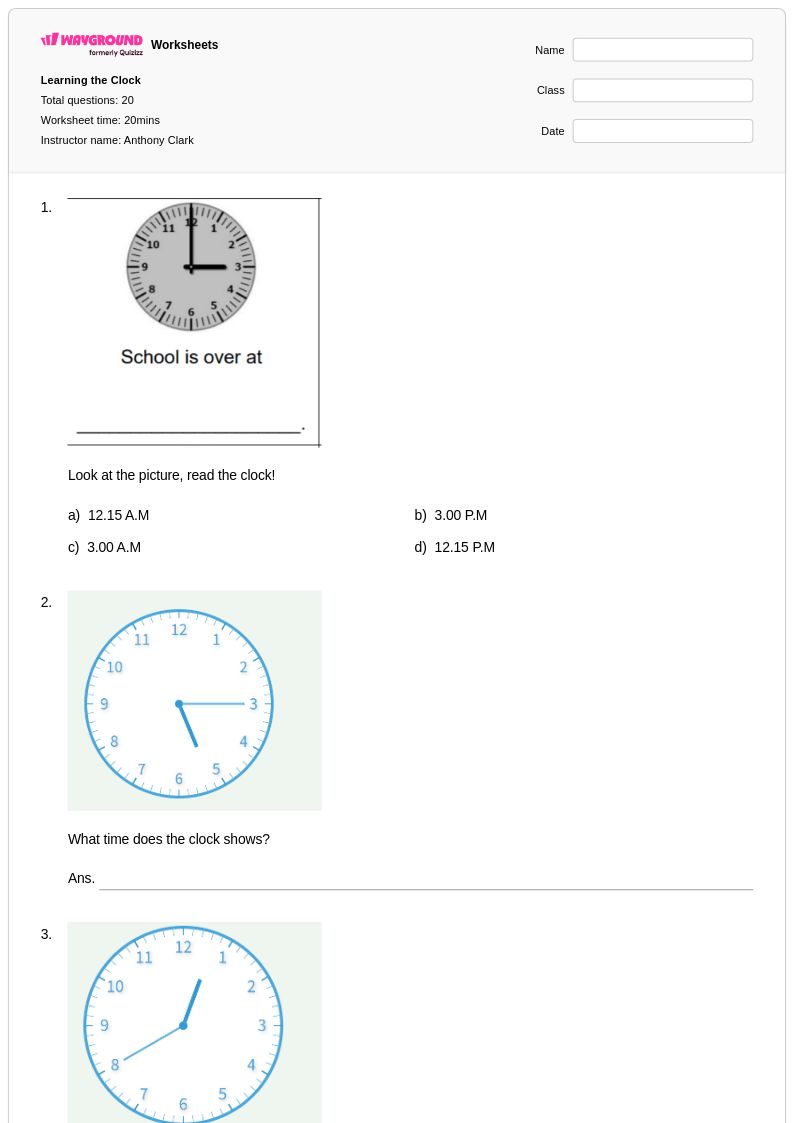
20 Q
2nd - Uni
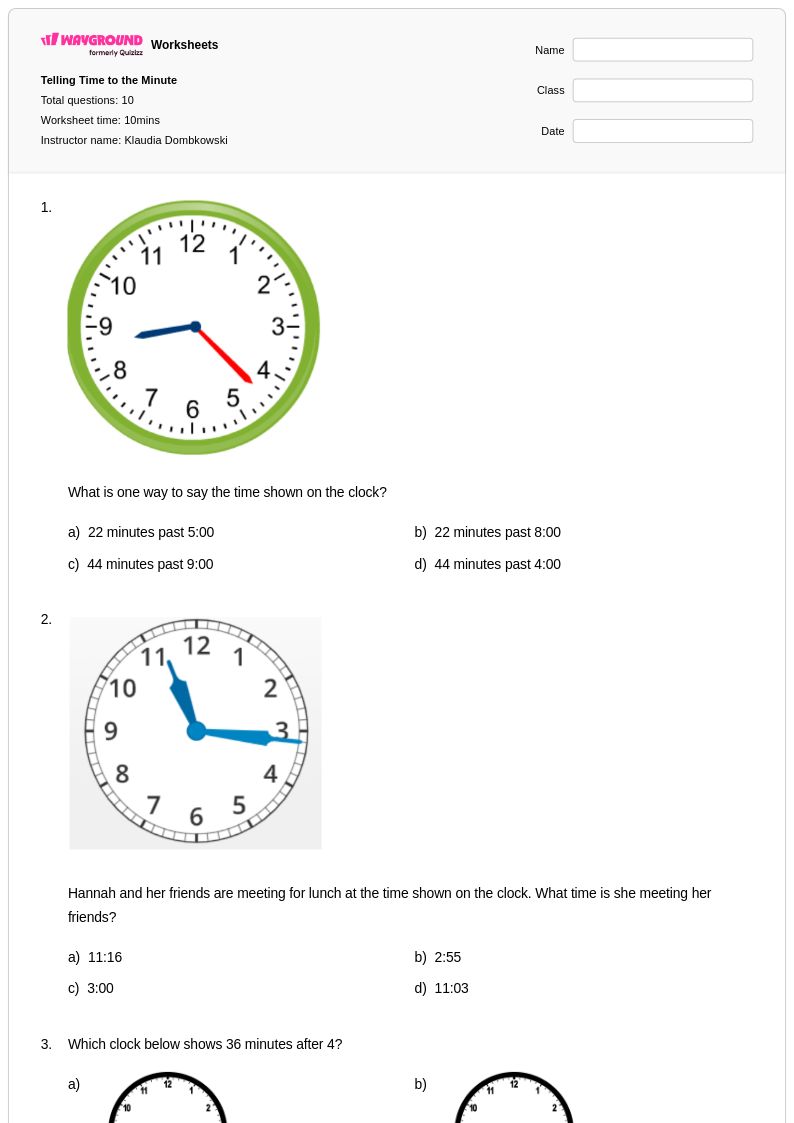
10 Q
3rd
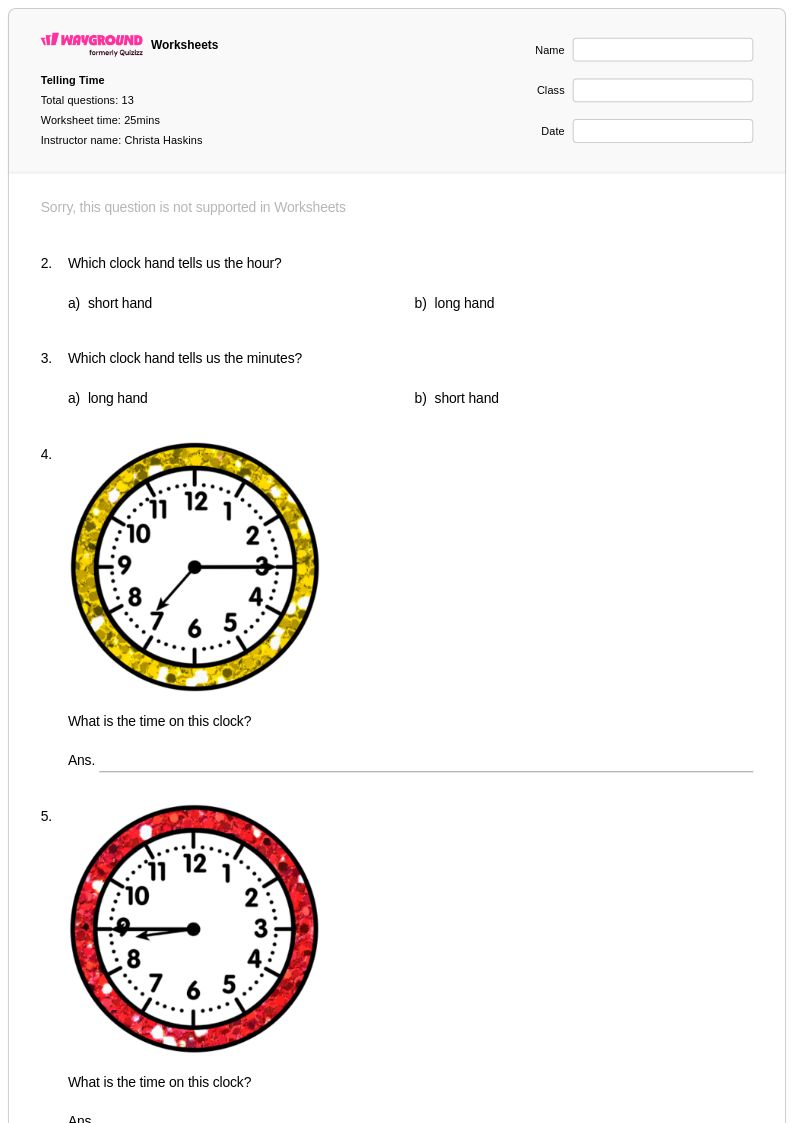
18 Q
3rd
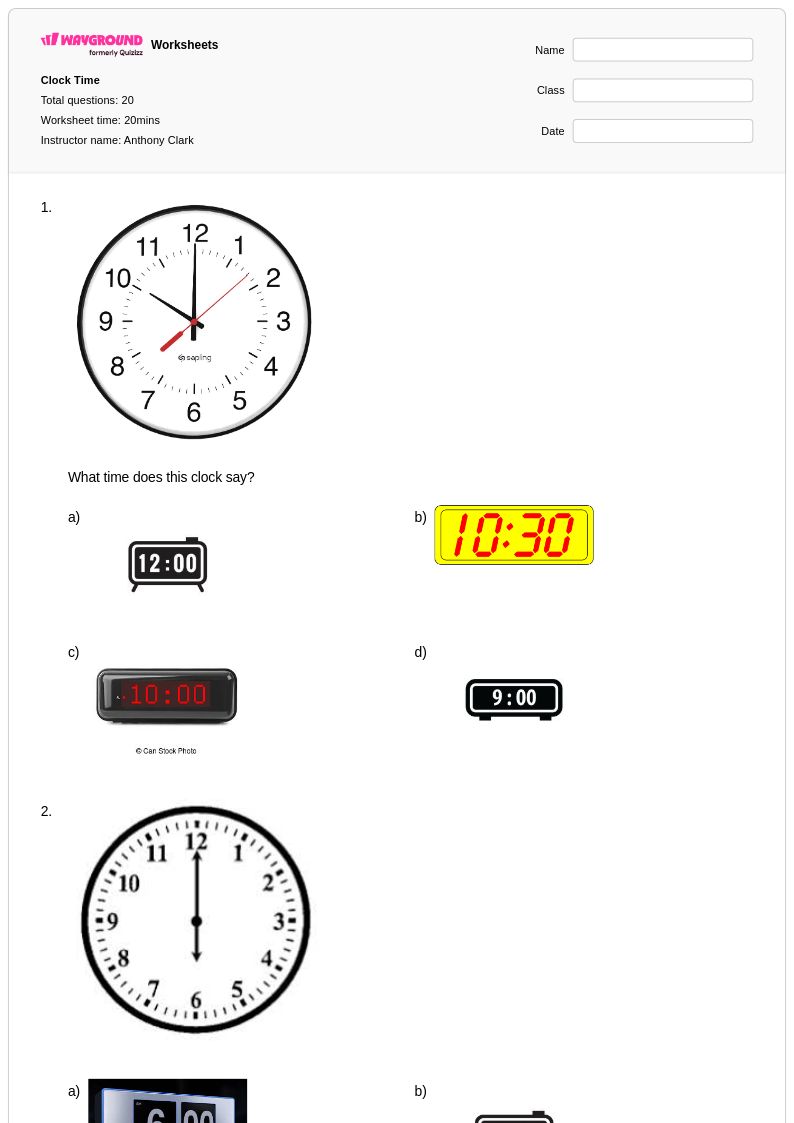
20 Q
2nd - Uni
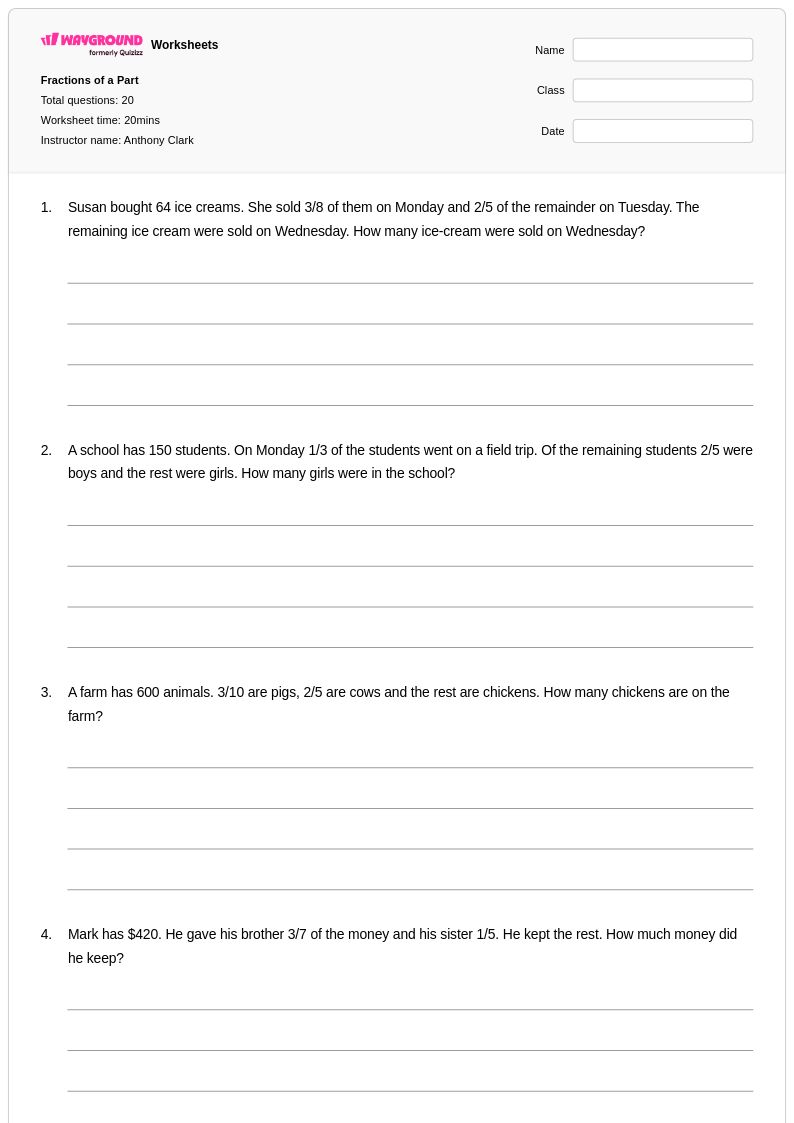
20 Q
3rd - Uni
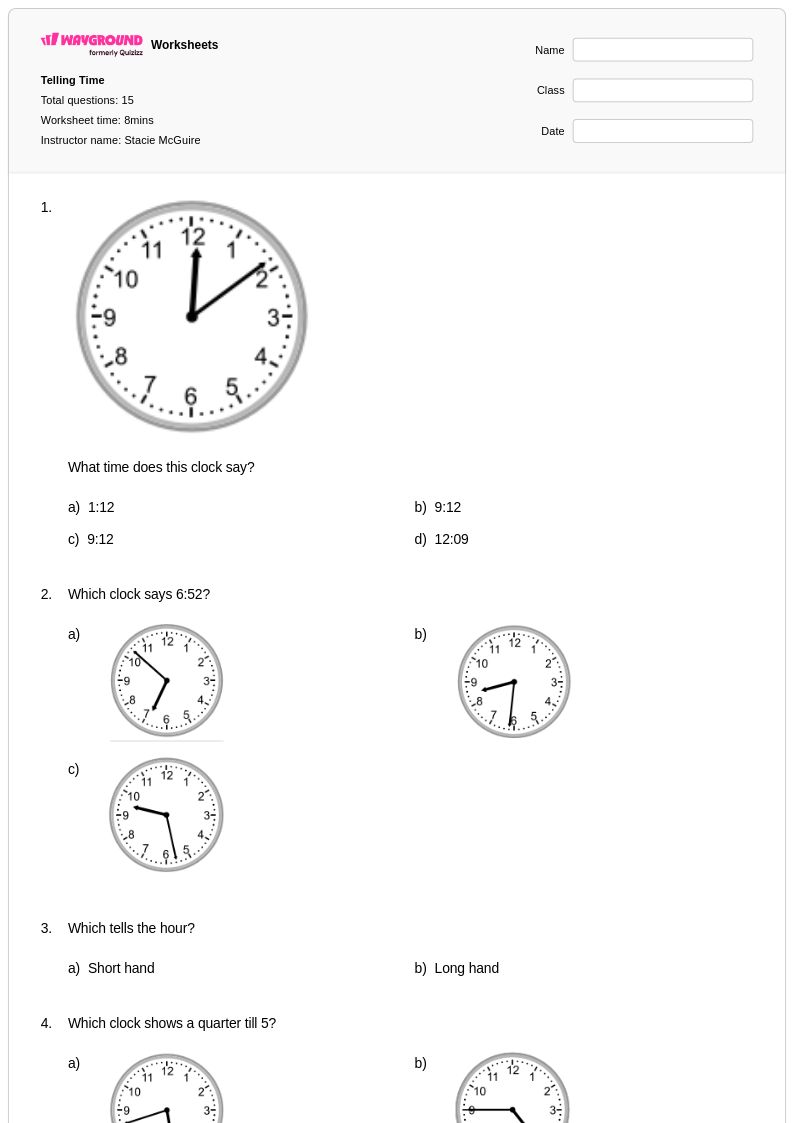
15 Q
3rd
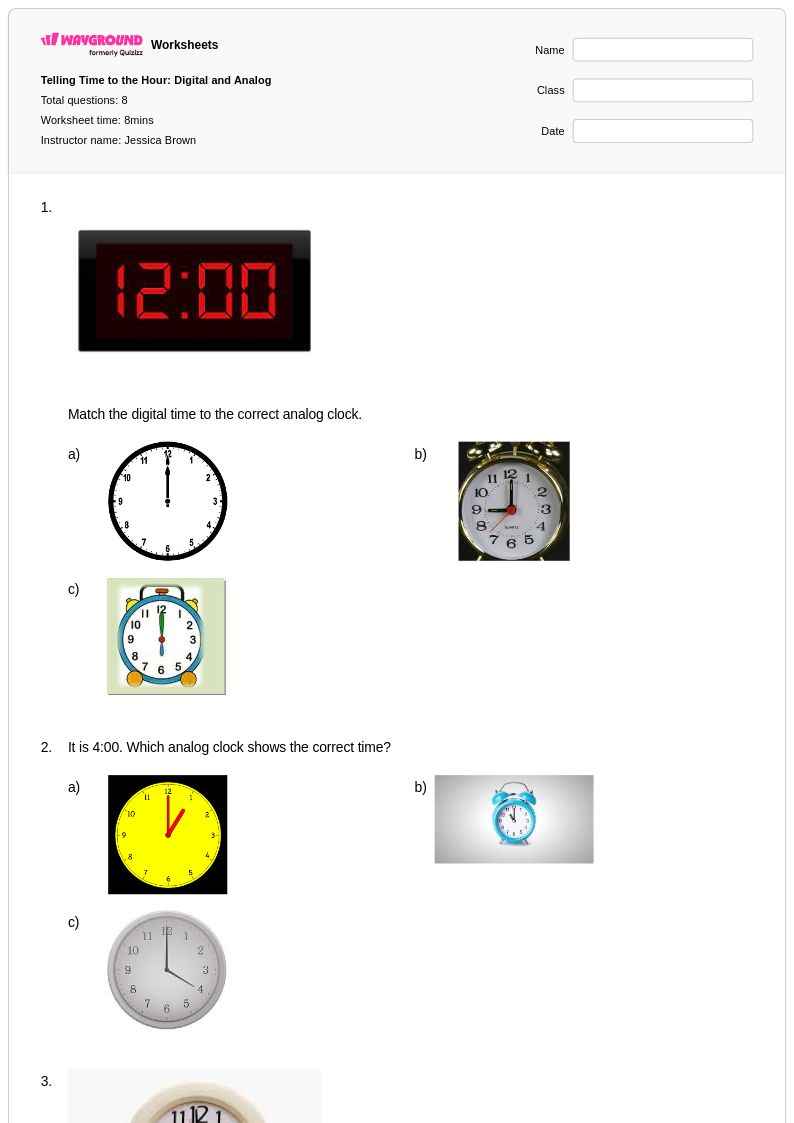
8 Q
1st
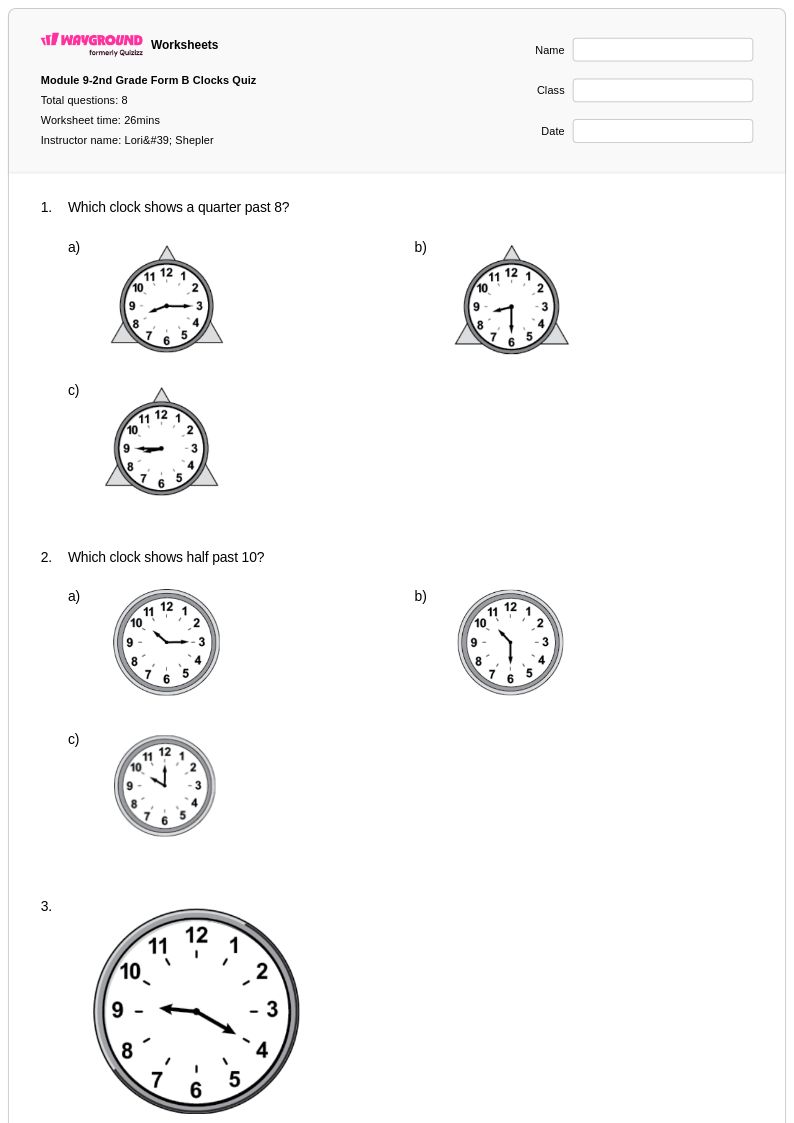
8 Q
2nd
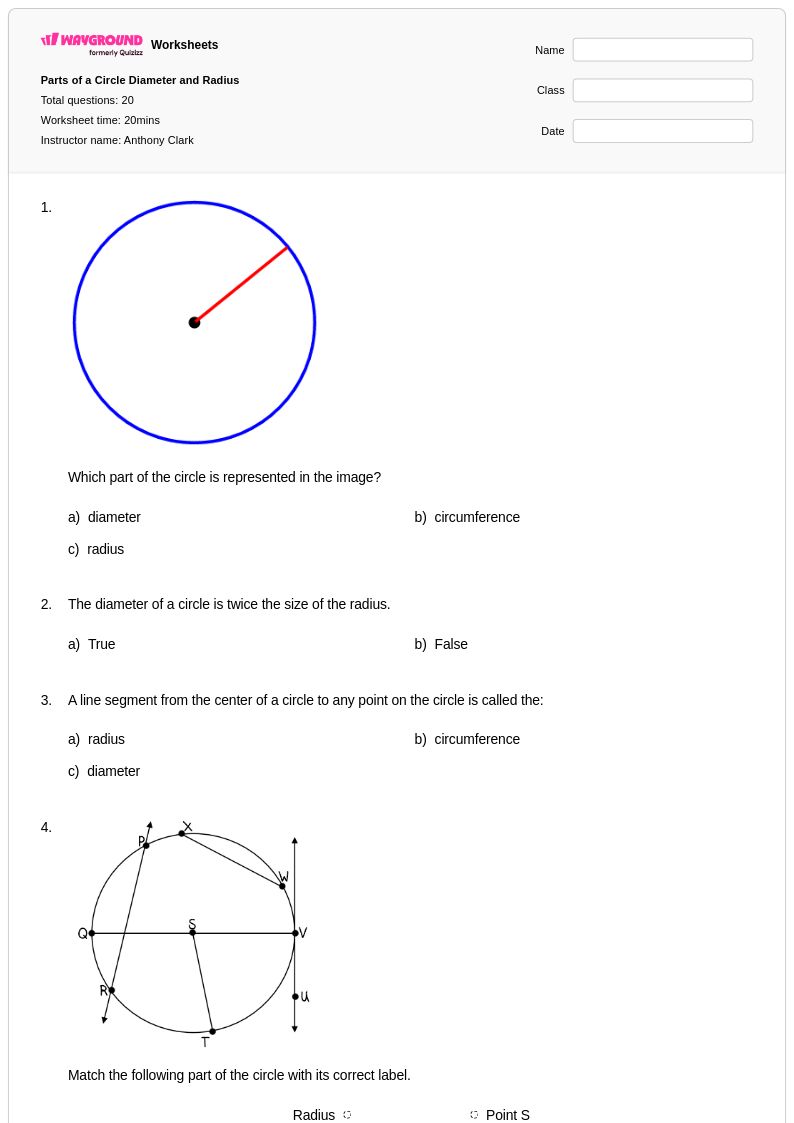
20 Q
7th - Uni
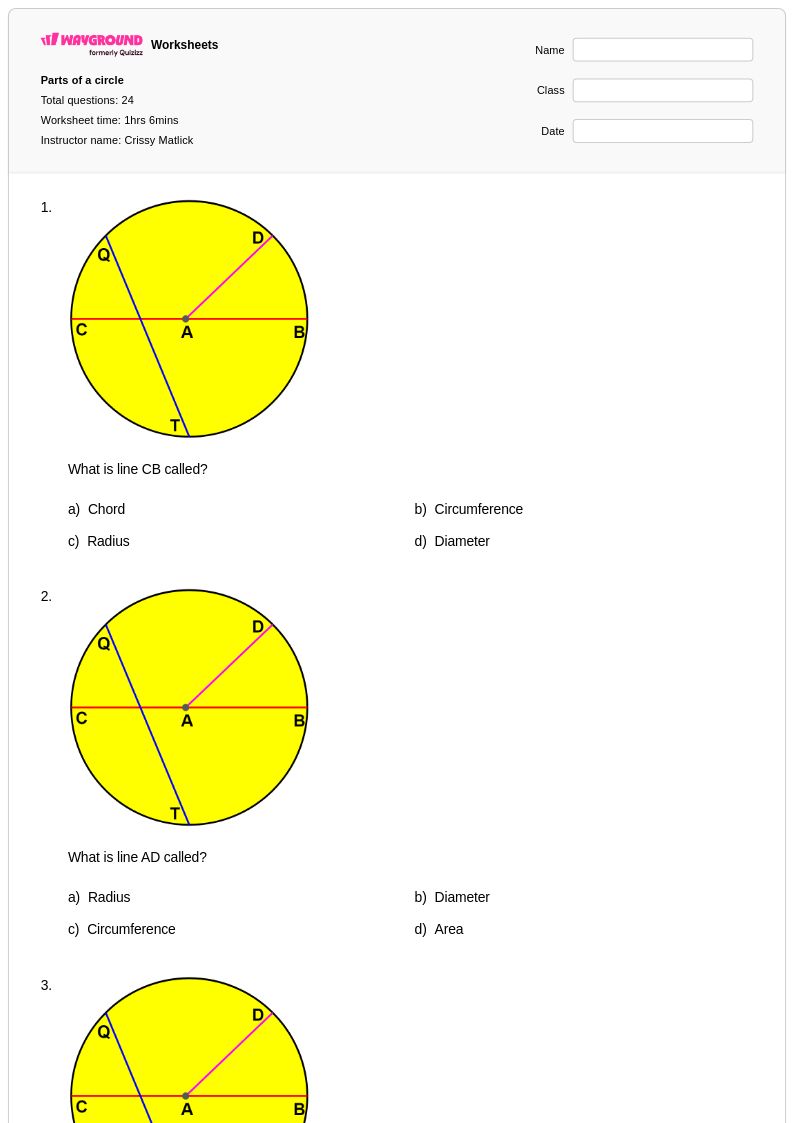
24 Q
10th
Explore Worksheets by Subjects
Explore printable Parts of a Clock worksheets
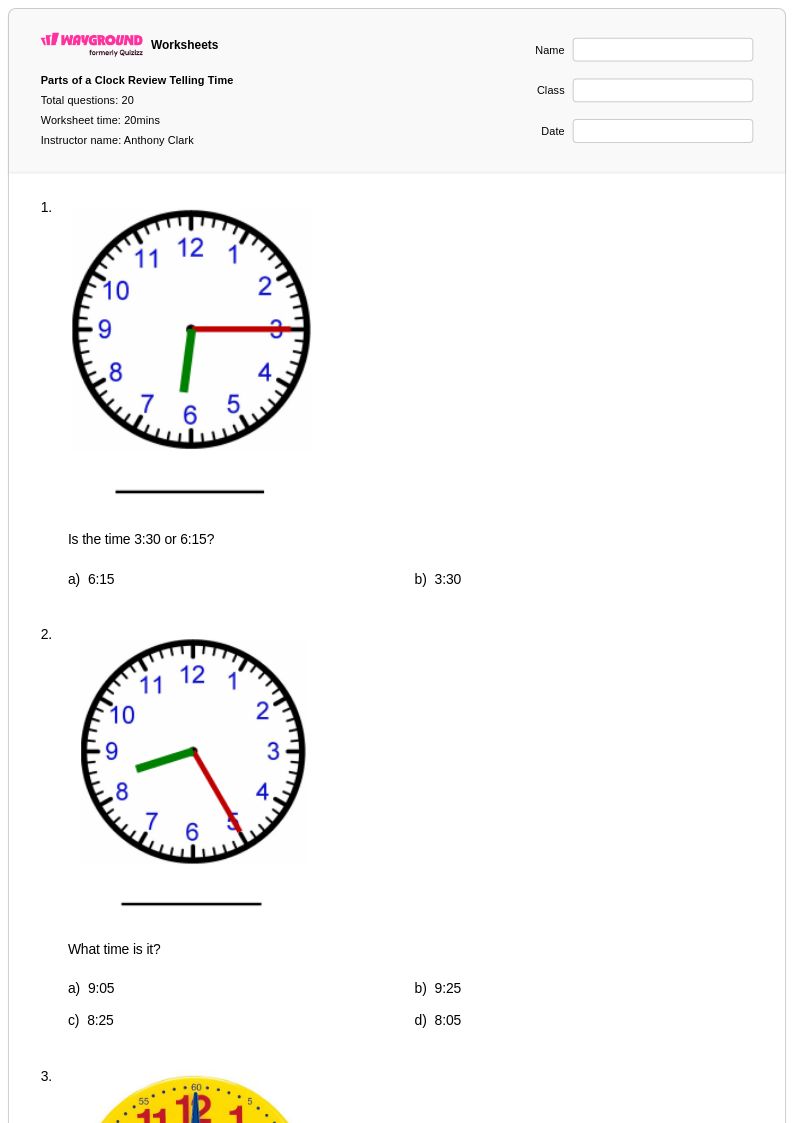
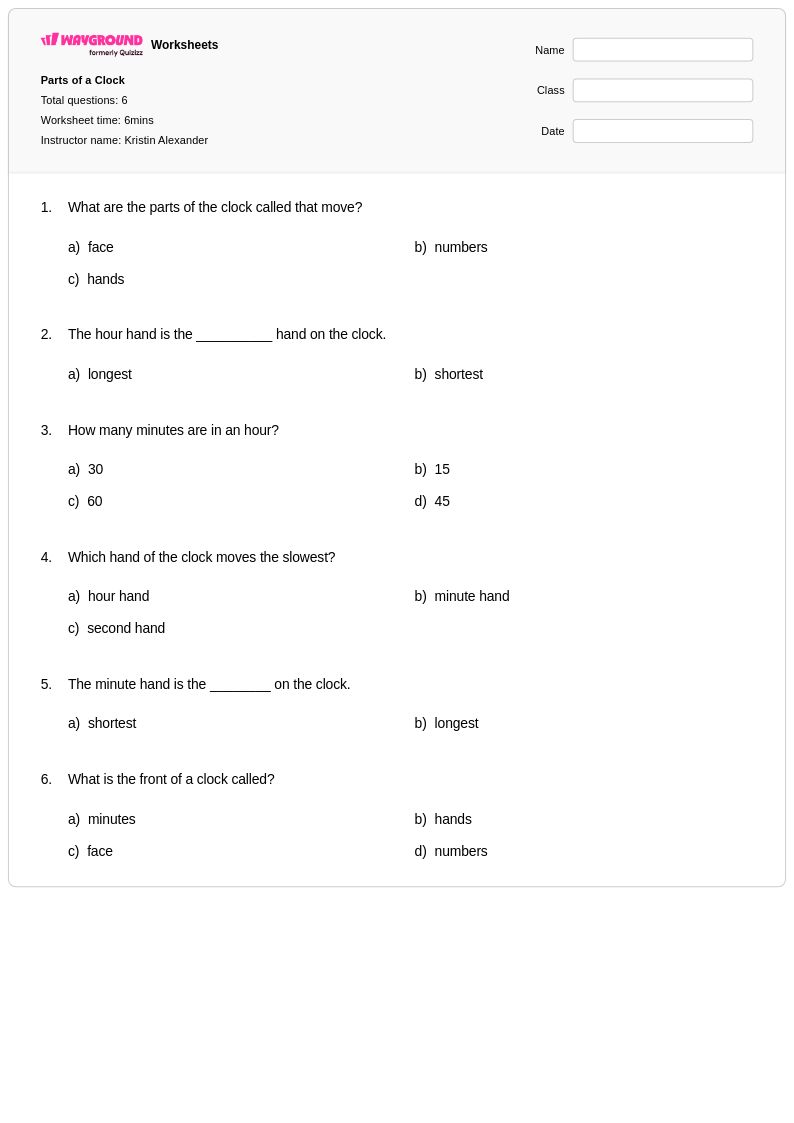
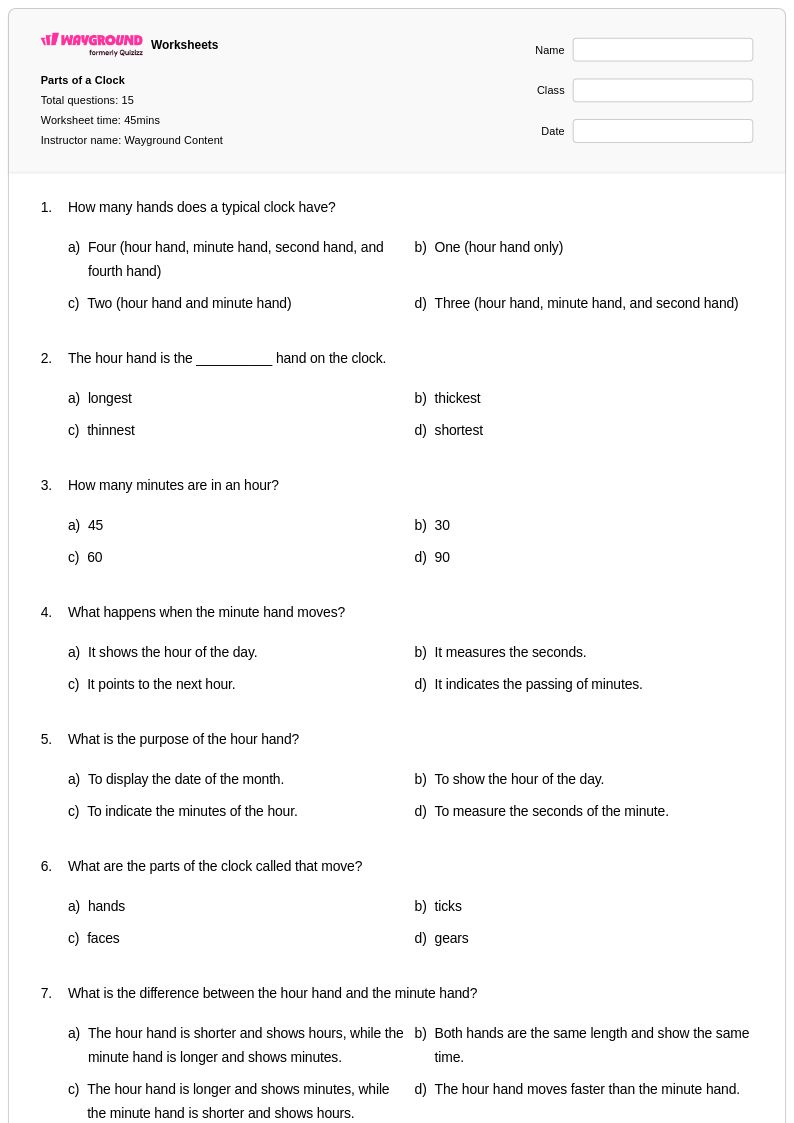
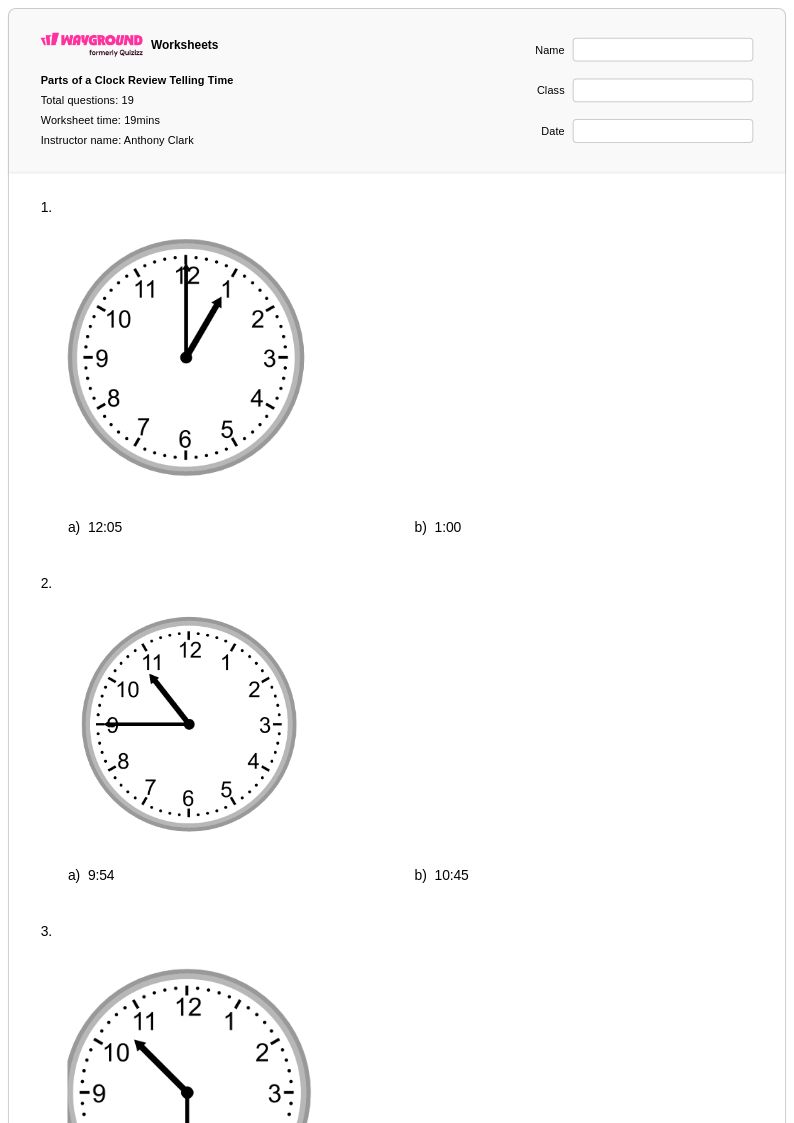
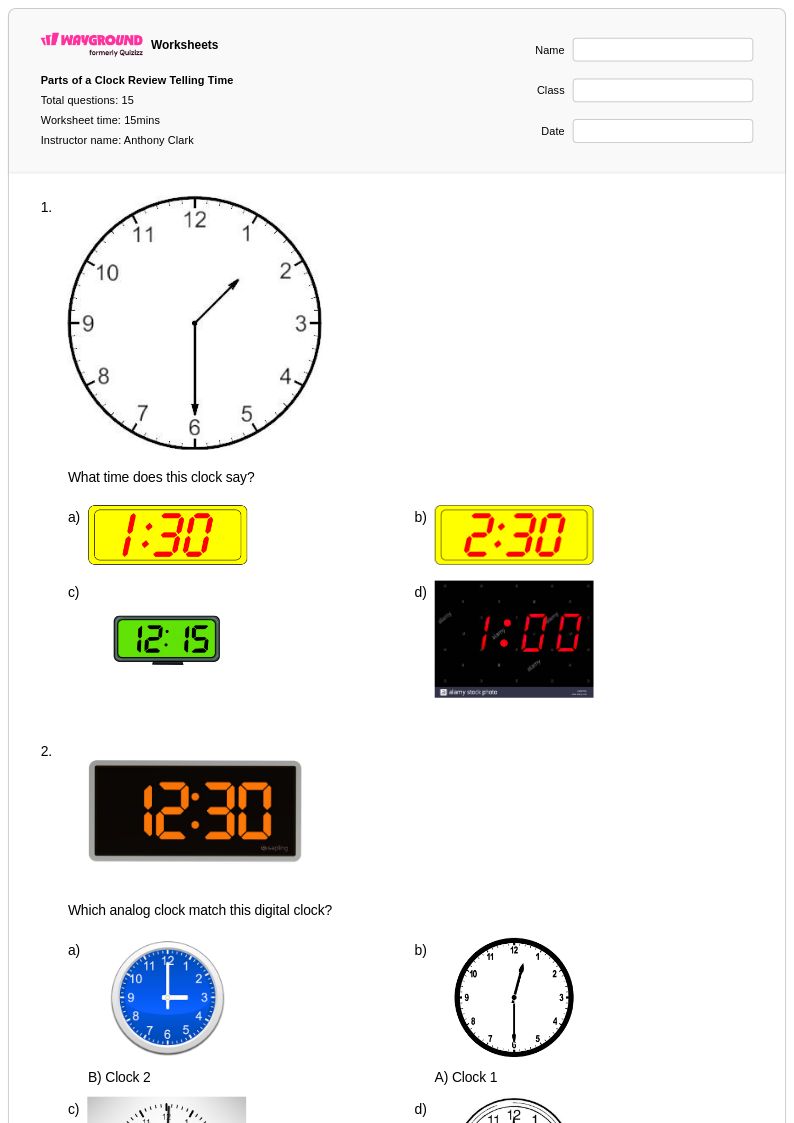
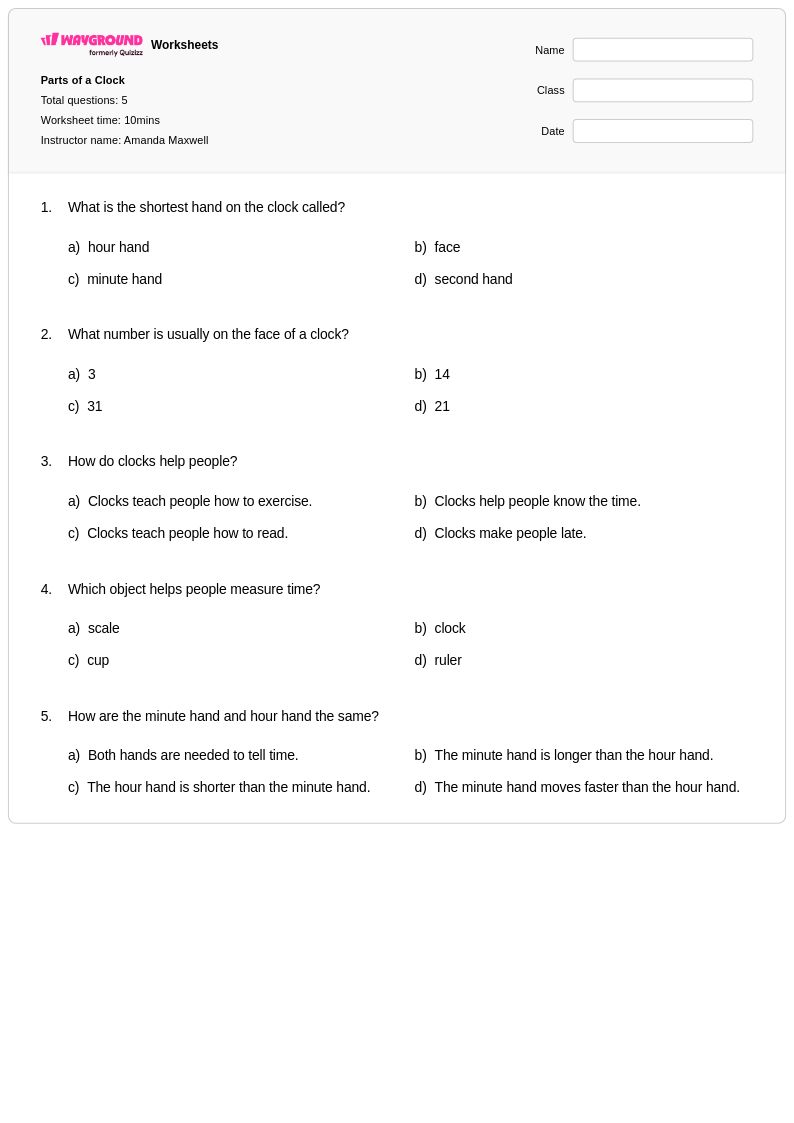
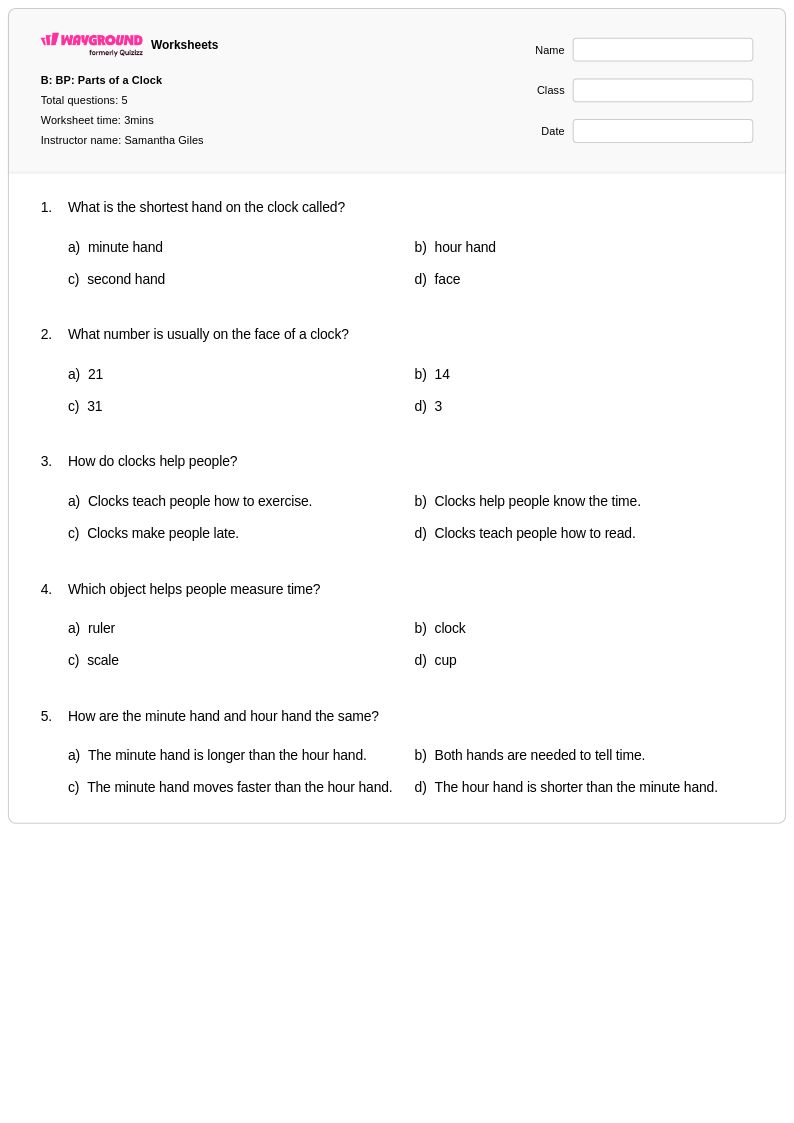
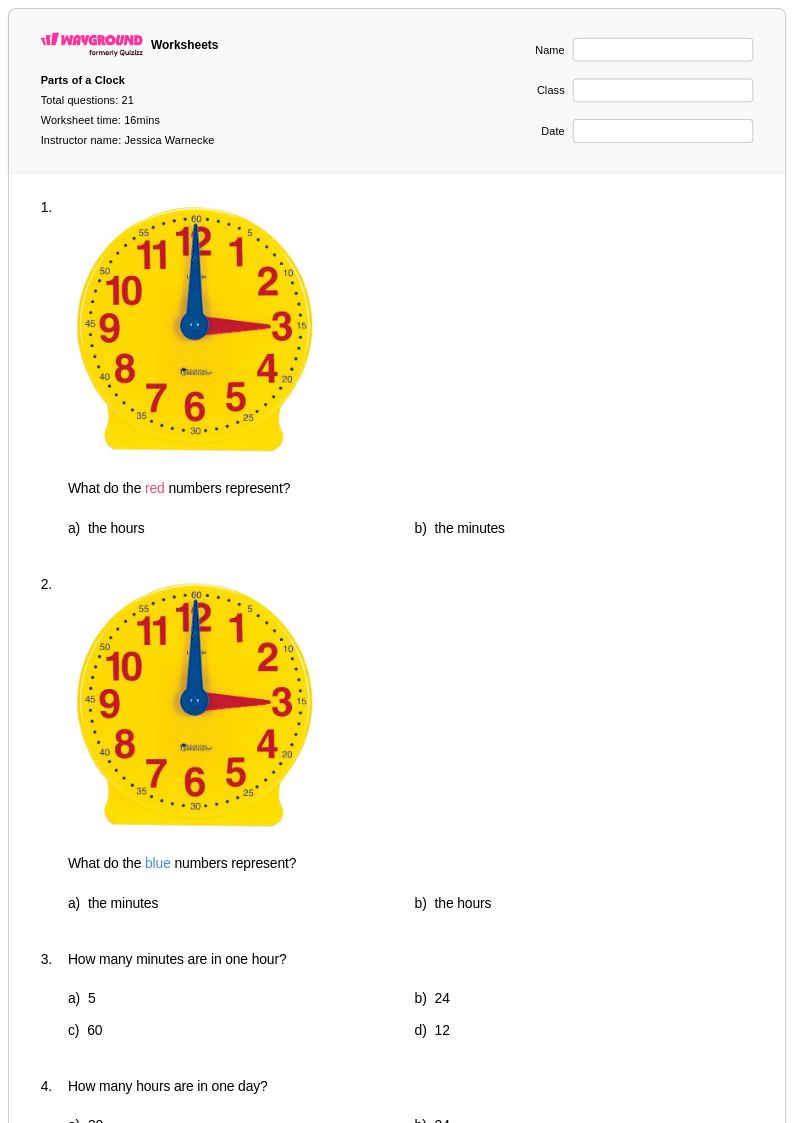
Parts of a Clock worksheets available through Wayground (formerly Quizizz) provide students with essential foundational knowledge for understanding time concepts in mathematics. These comprehensive practice materials focus on identifying and labeling the key components of analog clocks, including the hour hand, minute hand, second hand, clock face, and number positions. Students develop critical time-telling skills by working through carefully designed practice problems that reinforce their ability to recognize how each clock part functions within the broader context of time measurement. The worksheets feature clear visual representations and progressive difficulty levels, with complete answer keys provided to support independent learning and immediate feedback. These free printables serve as invaluable resources for building the prerequisite knowledge students need before advancing to more complex time-related mathematical concepts.
Wayground (formerly Quizizz) empowers educators with an extensive collection of teacher-created Parts of a Clock worksheets, drawn from millions of high-quality educational resources that have been developed and refined by classroom professionals. The platform's robust search and filtering capabilities allow teachers to quickly locate materials that align with specific learning objectives and standards requirements, while built-in differentiation tools enable seamless customization for diverse student needs and ability levels. These versatile worksheets are available in both printable pdf format and interactive digital versions, providing maximum flexibility for various instructional settings and learning preferences. Teachers can efficiently plan targeted lessons, implement remediation strategies for struggling learners, offer enrichment opportunities for advanced students, and provide consistent skill practice that builds mathematical confidence and competency in time concepts.
FAQs
How do I teach the parts of a clock?
What exercises help students practice identifying clock parts?
What are common mistakes students make when learning clock parts?
How can I use this parts of a clock worksheet?
How does learning the parts of a clock fit into the math curriculum?
How can I differentiate this topic for diverse learners?