
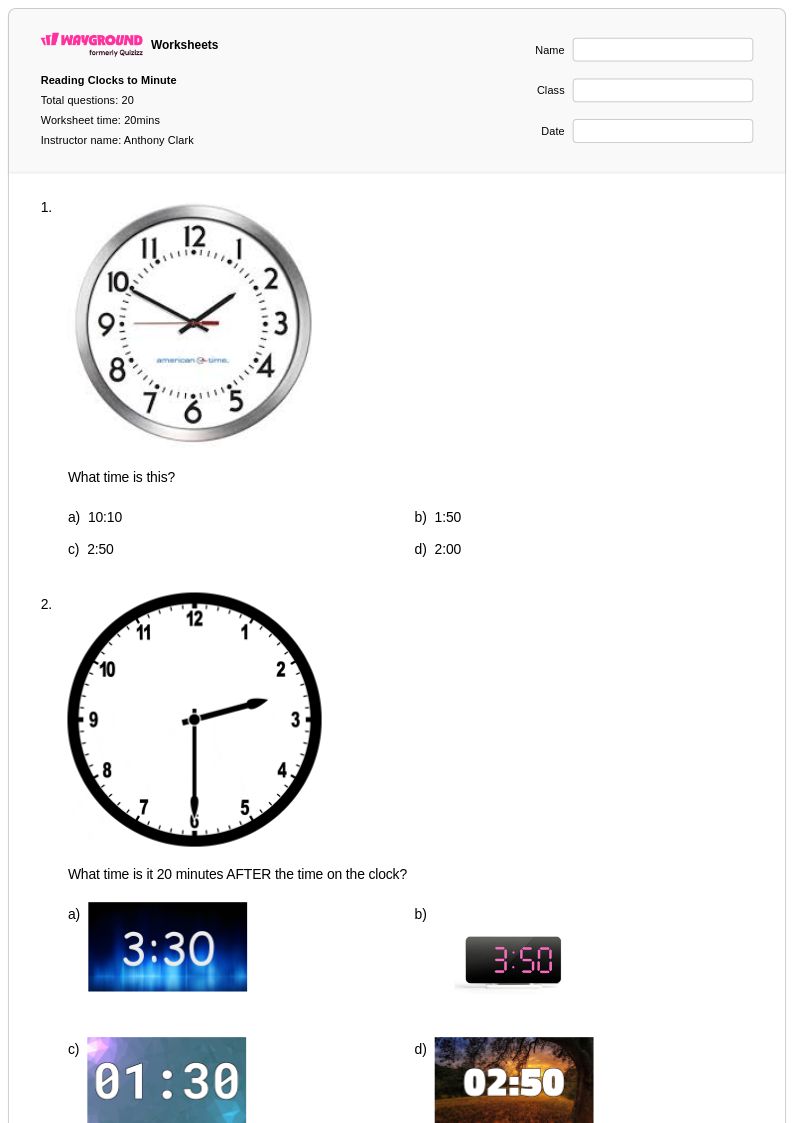
20 Q
3rd - Uni
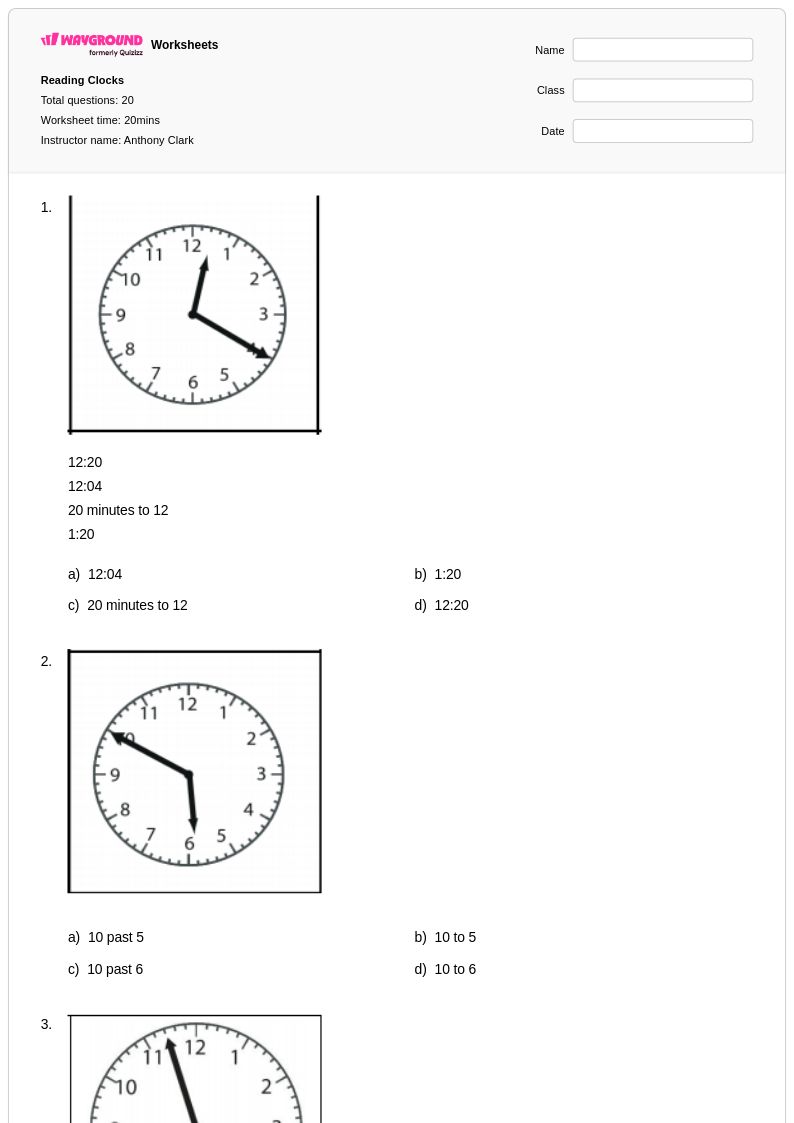
20 Q
3rd - Uni
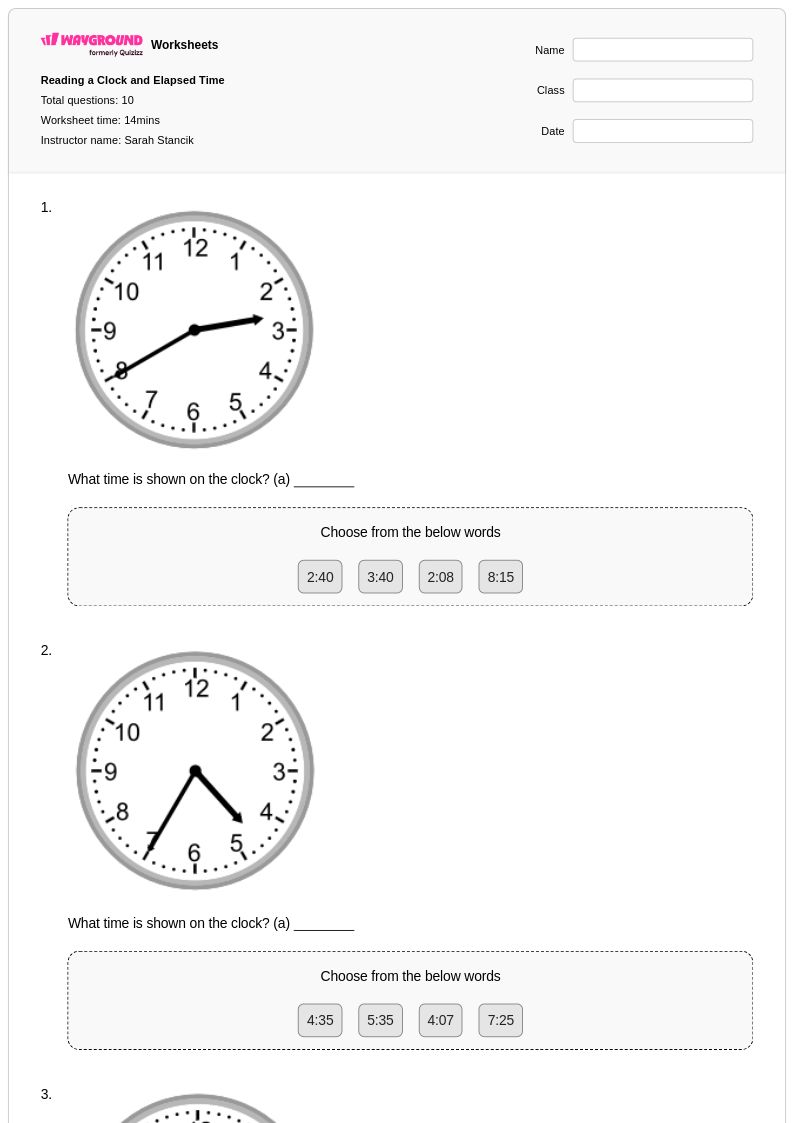
10 Q
3rd
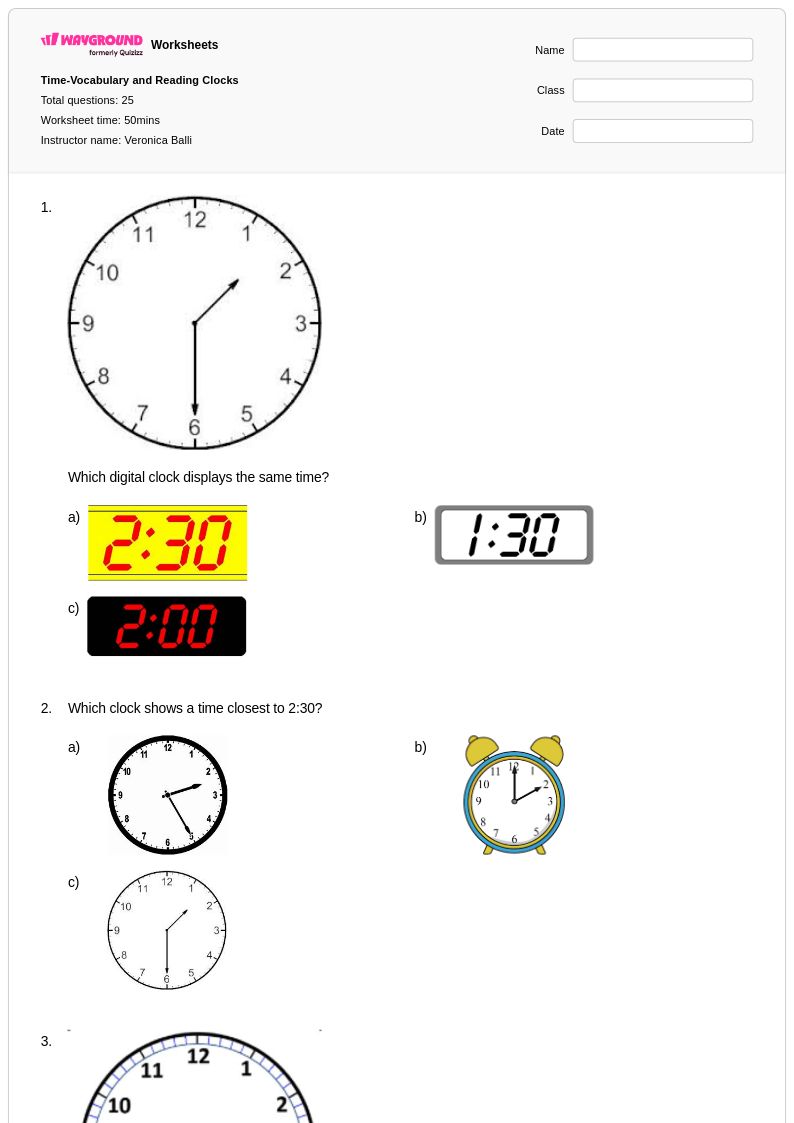
25 Q
3rd
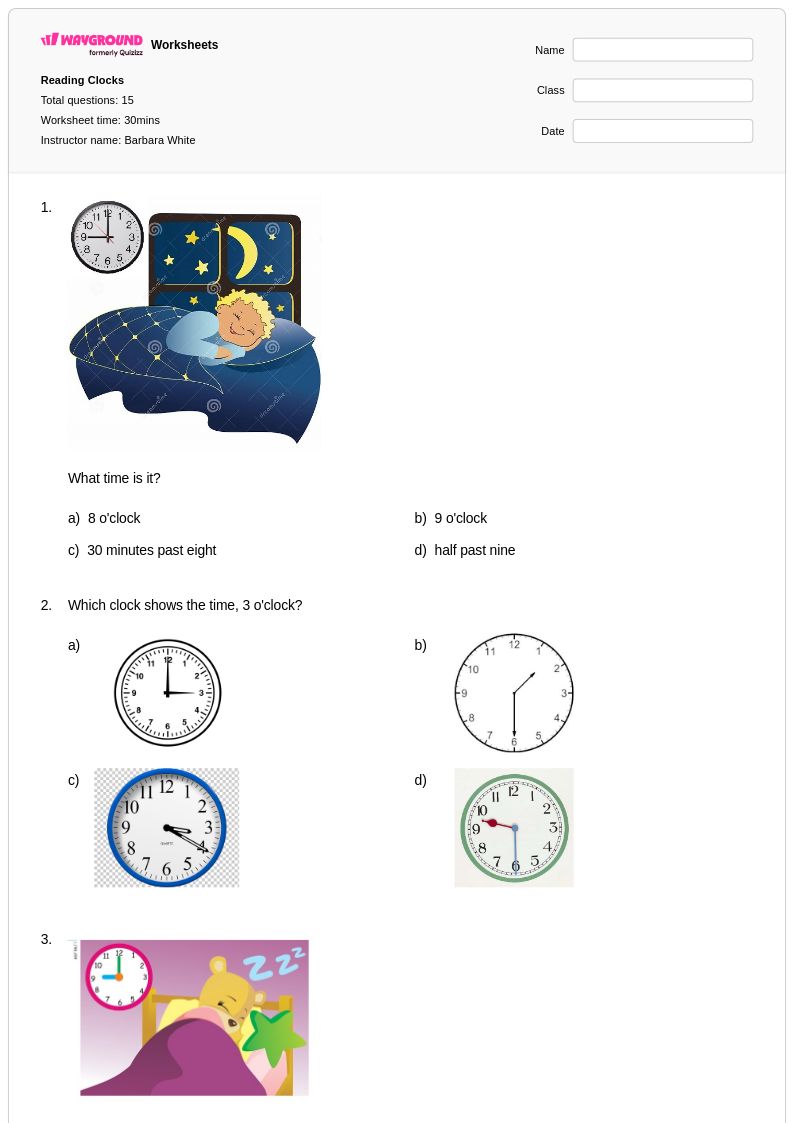
15 Q
2nd
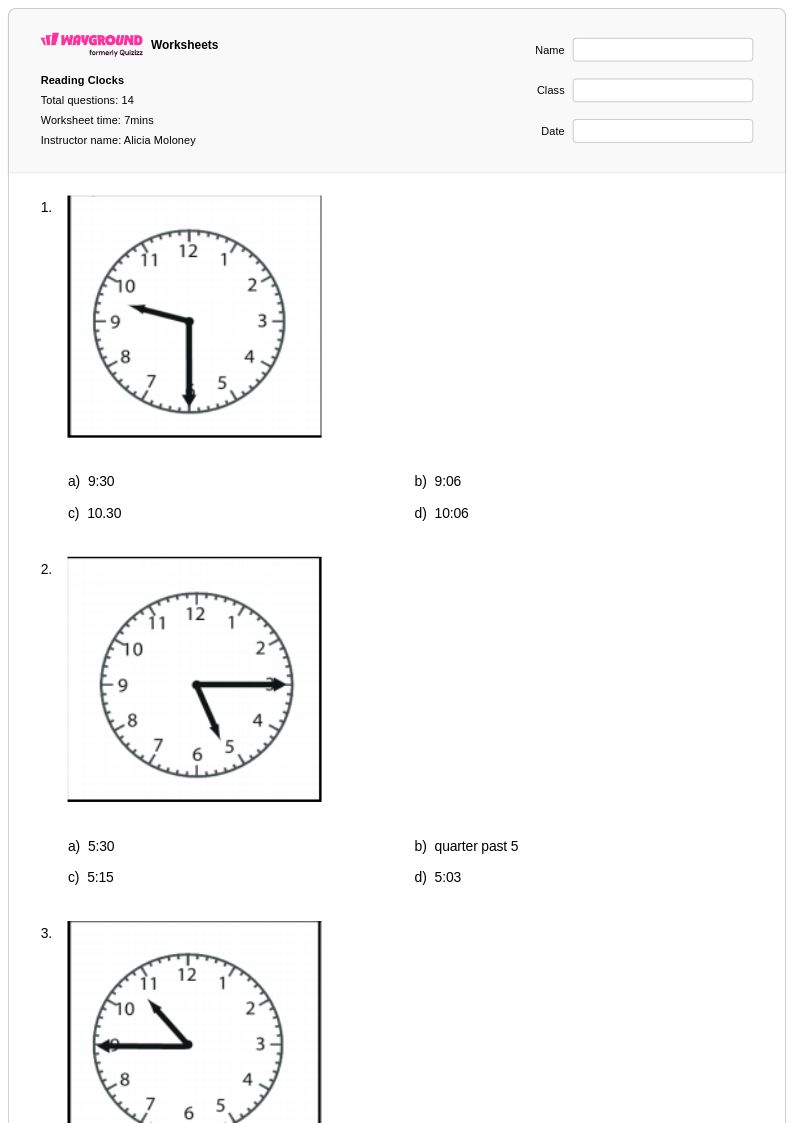
14 Q
4th - 6th
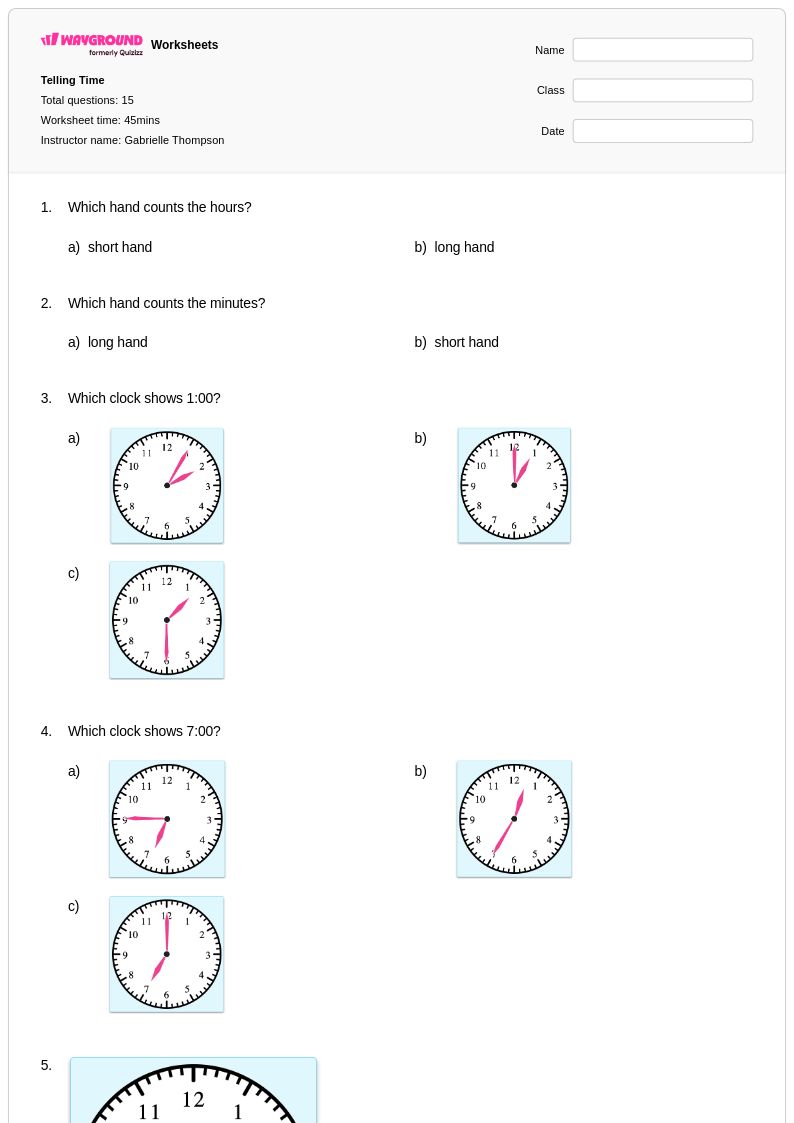
15 Q
2nd
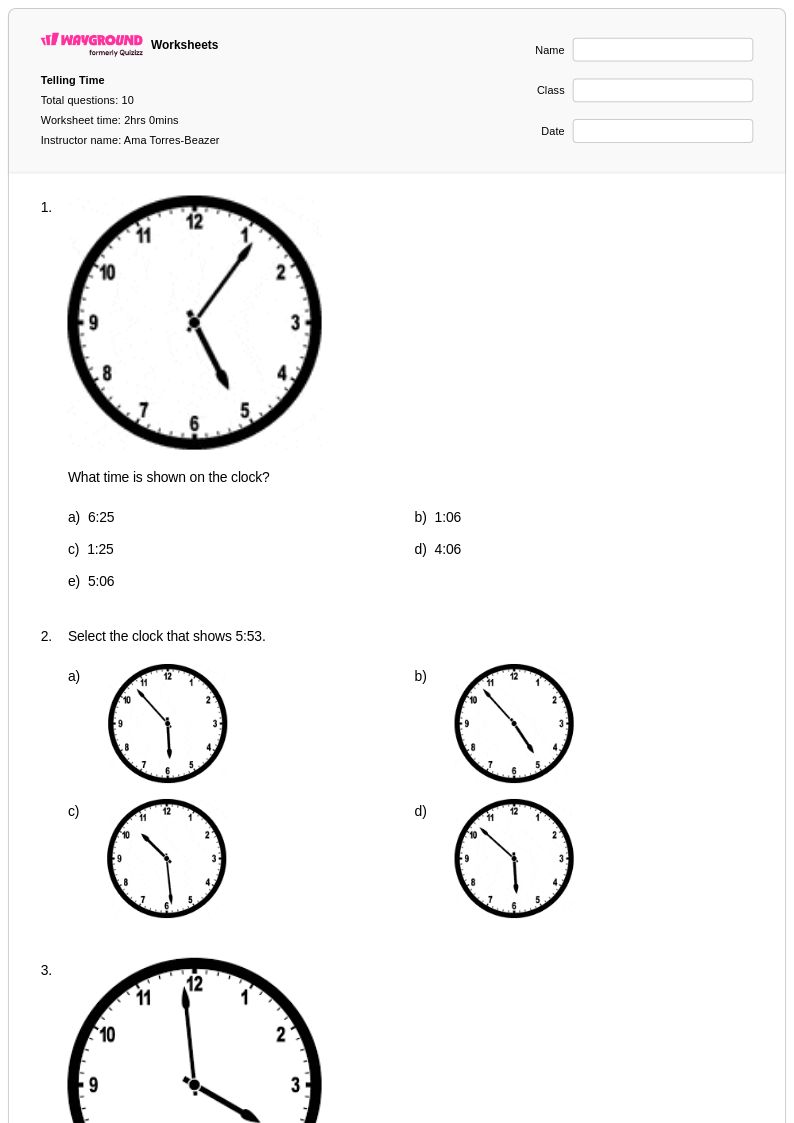
10 Q
3rd - 4th
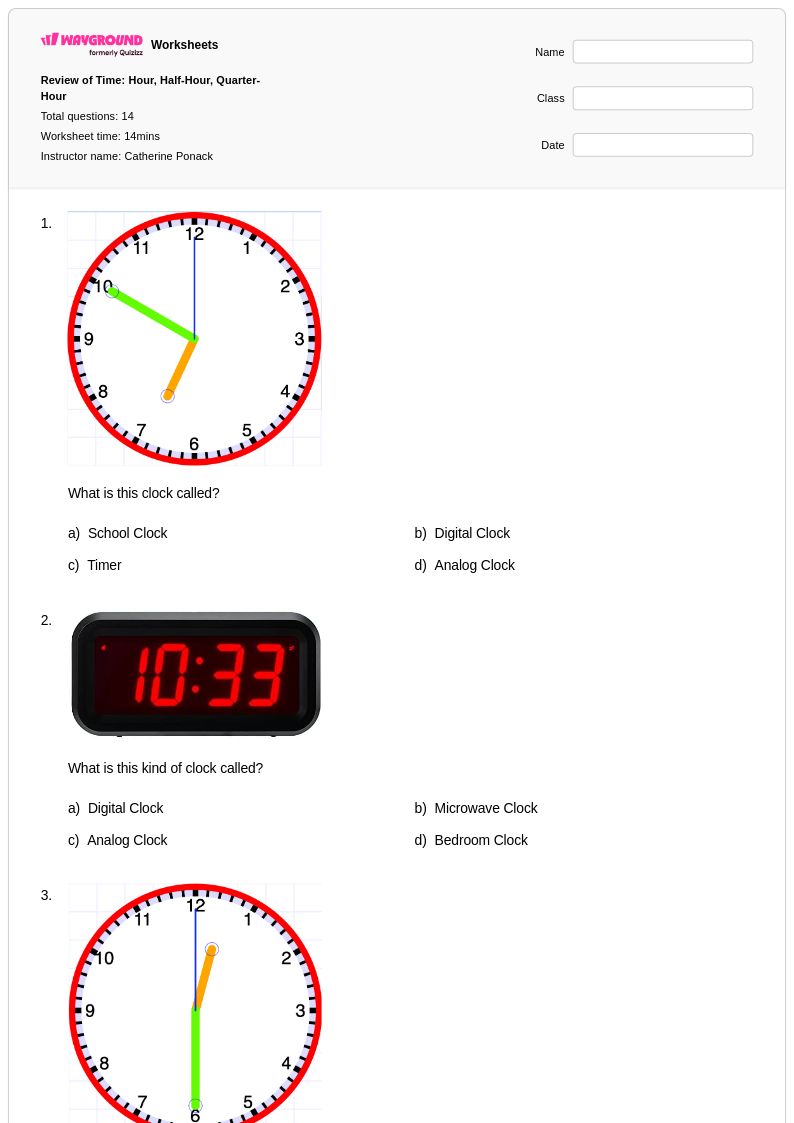
14 Q
1st - 2nd
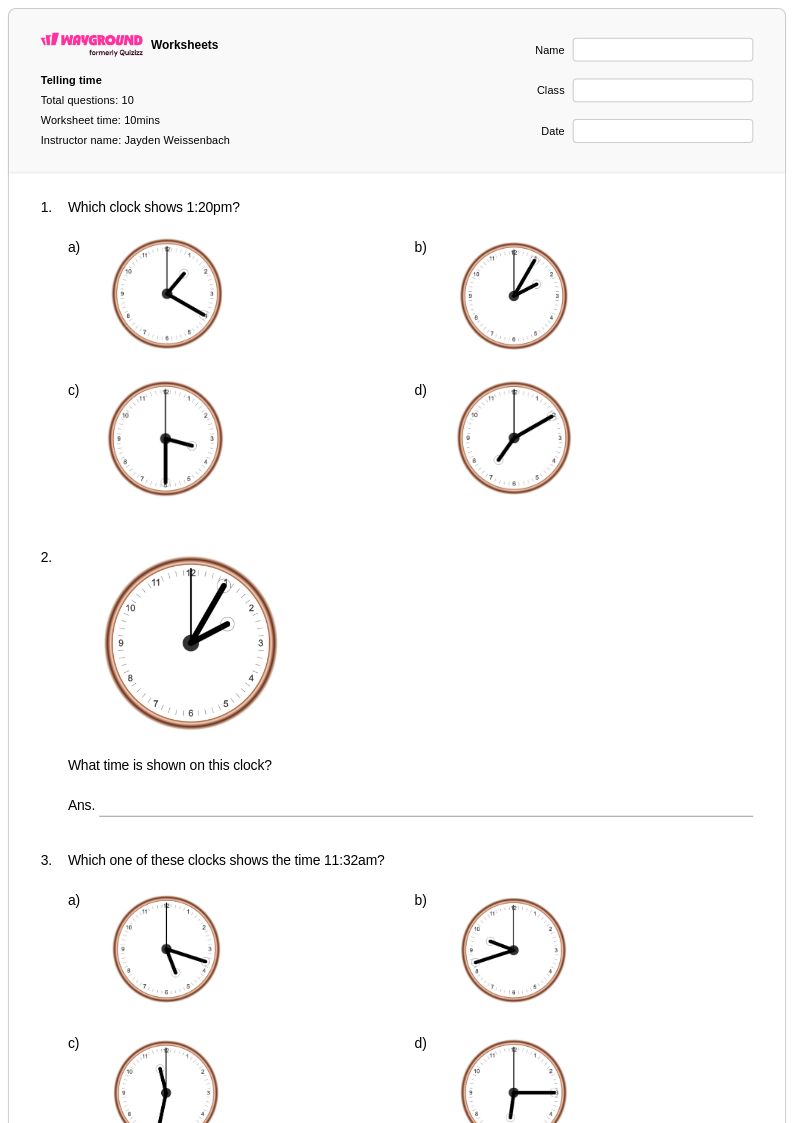
10 Q
3rd
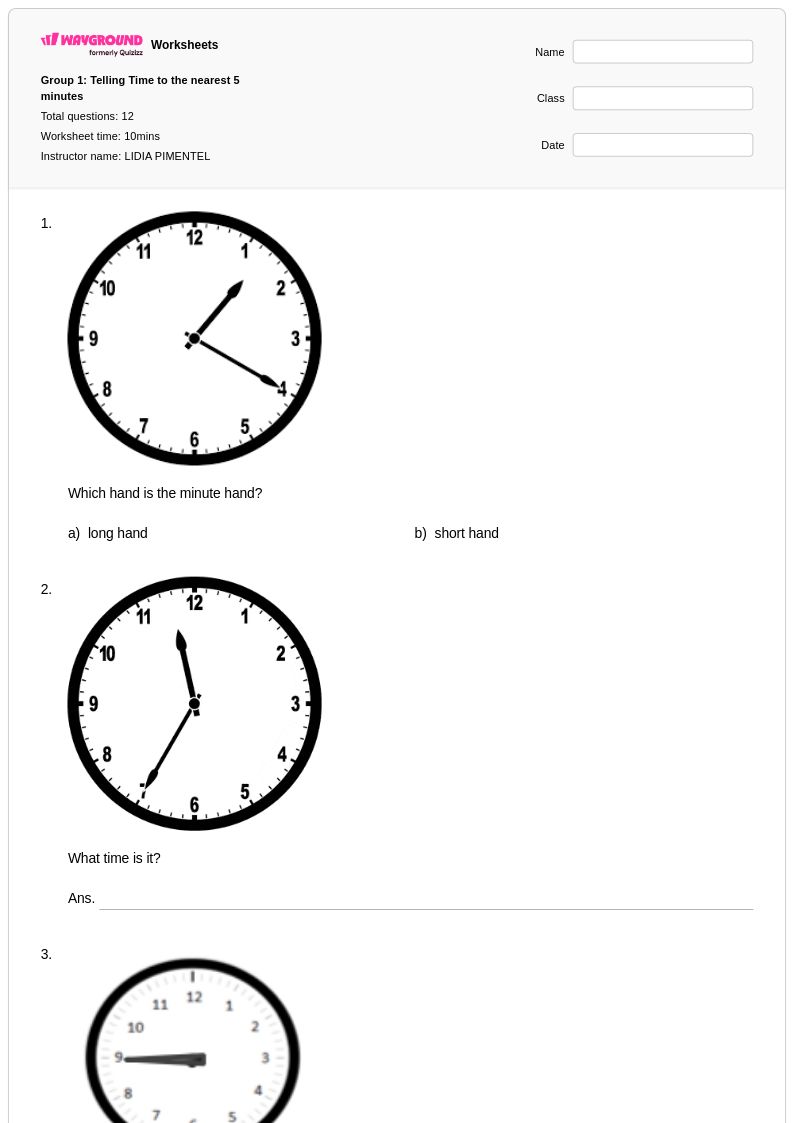
12 Q
1st - 3rd
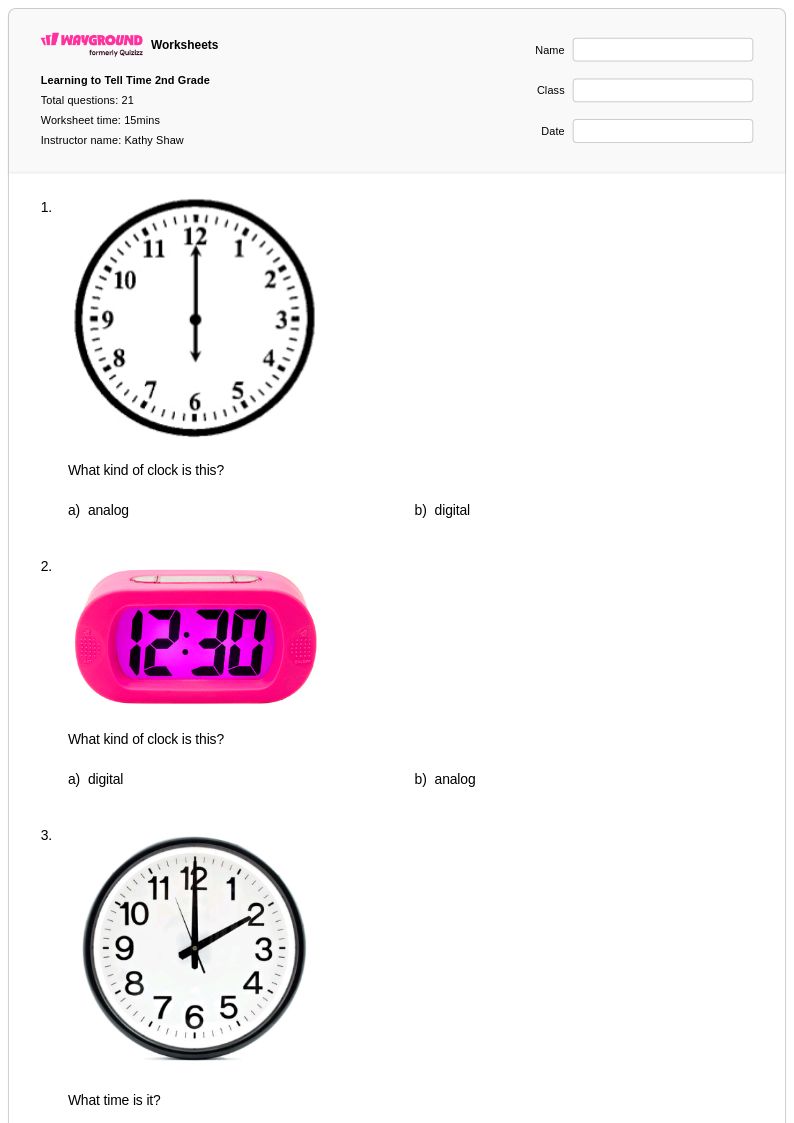
21 Q
2nd
17 Q
3rd - Uni
18 Q
3rd
12 Q
5th

11 Q
3rd
15 Q
3rd
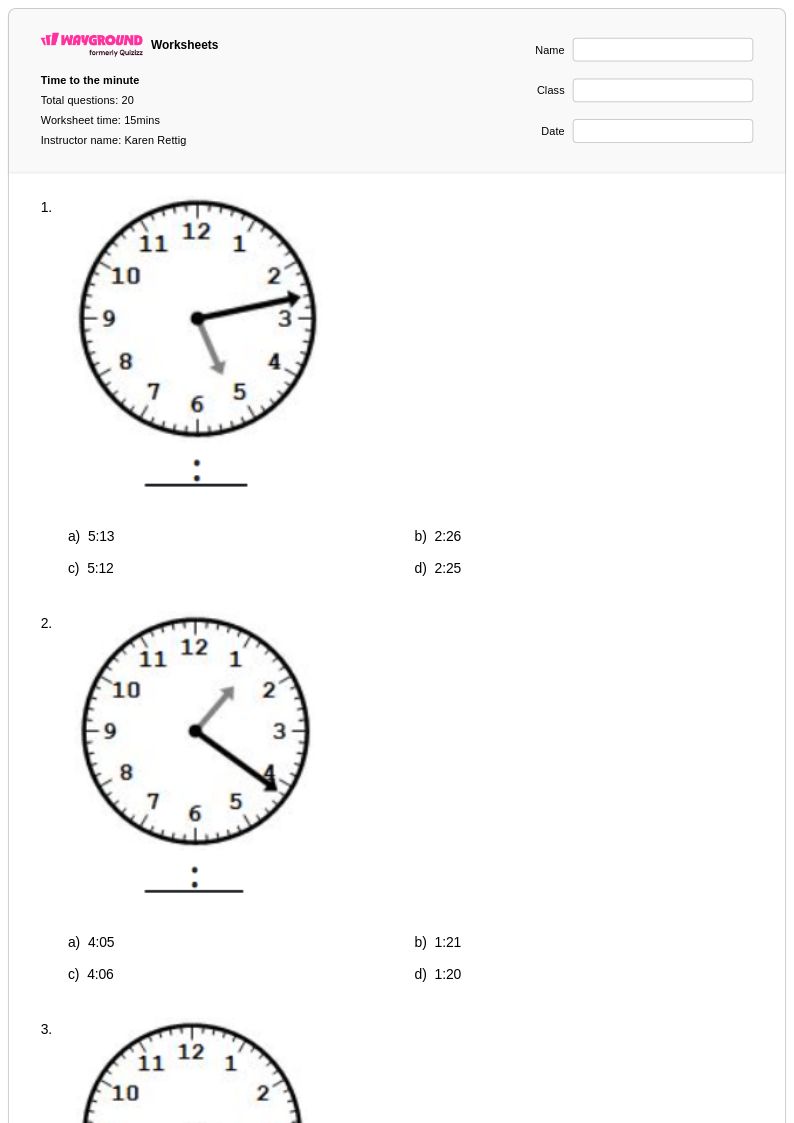
20 Q
2nd - 4th
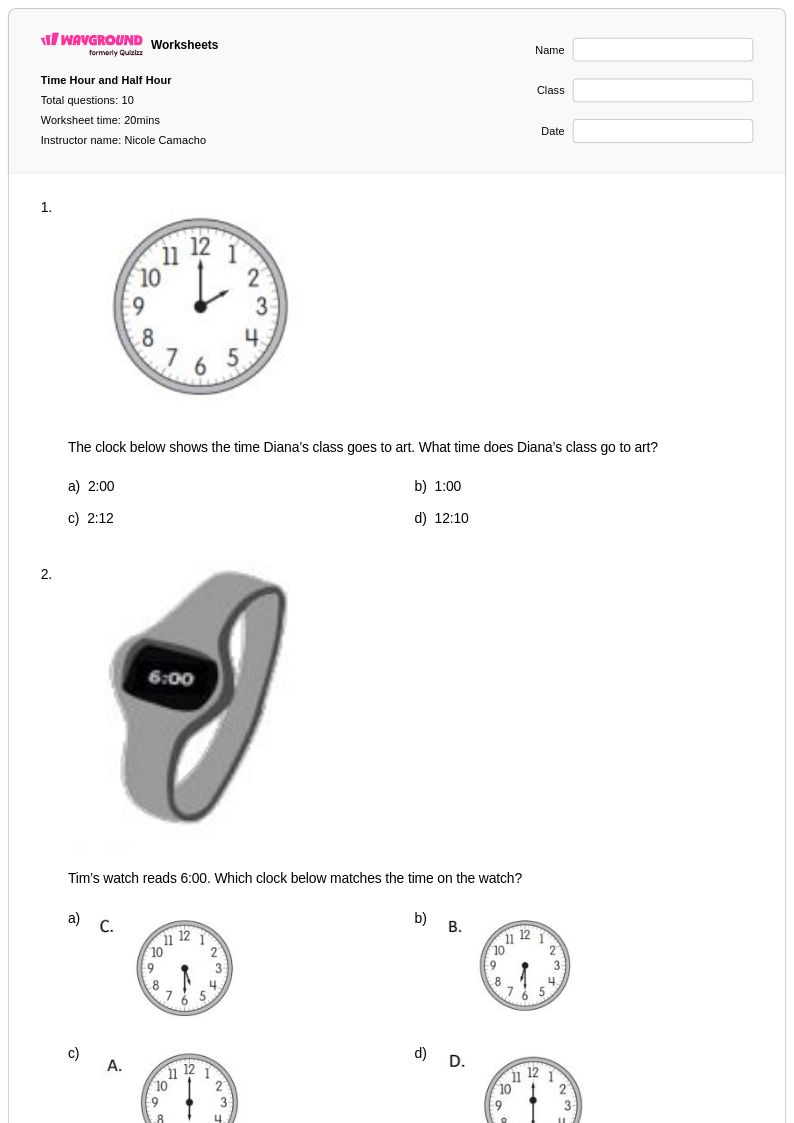
10 Q
1st
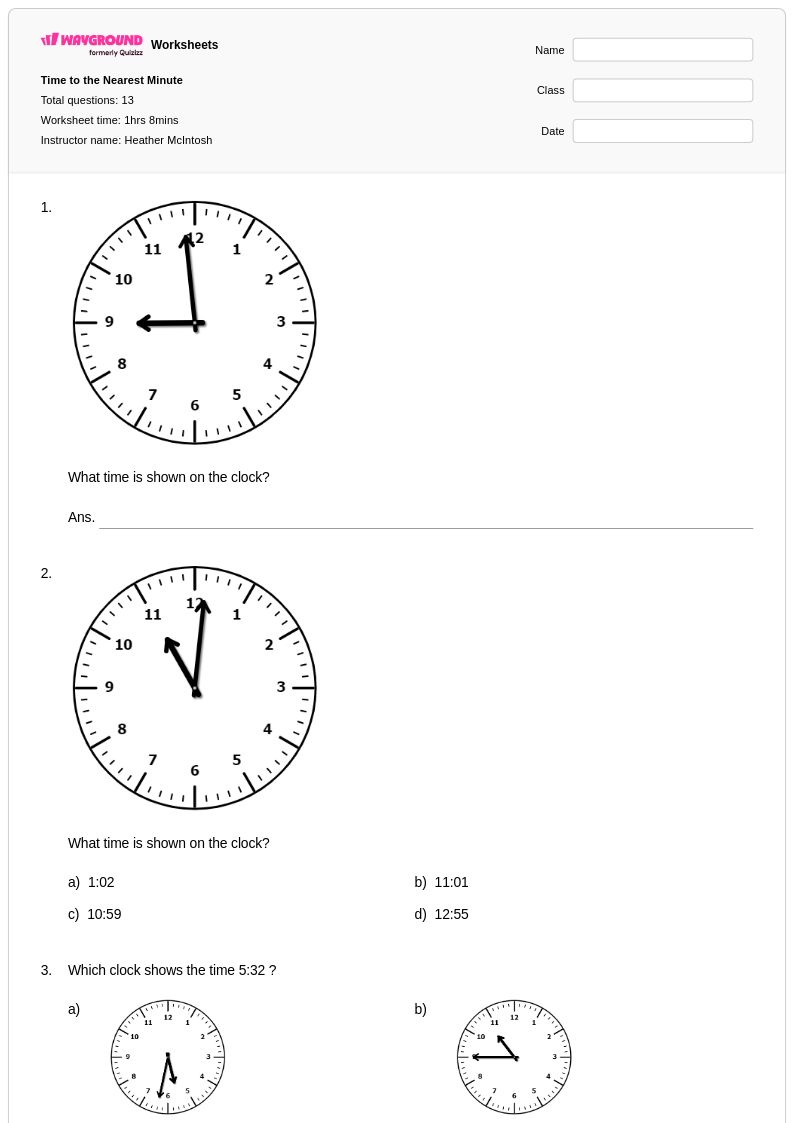
13 Q
3rd
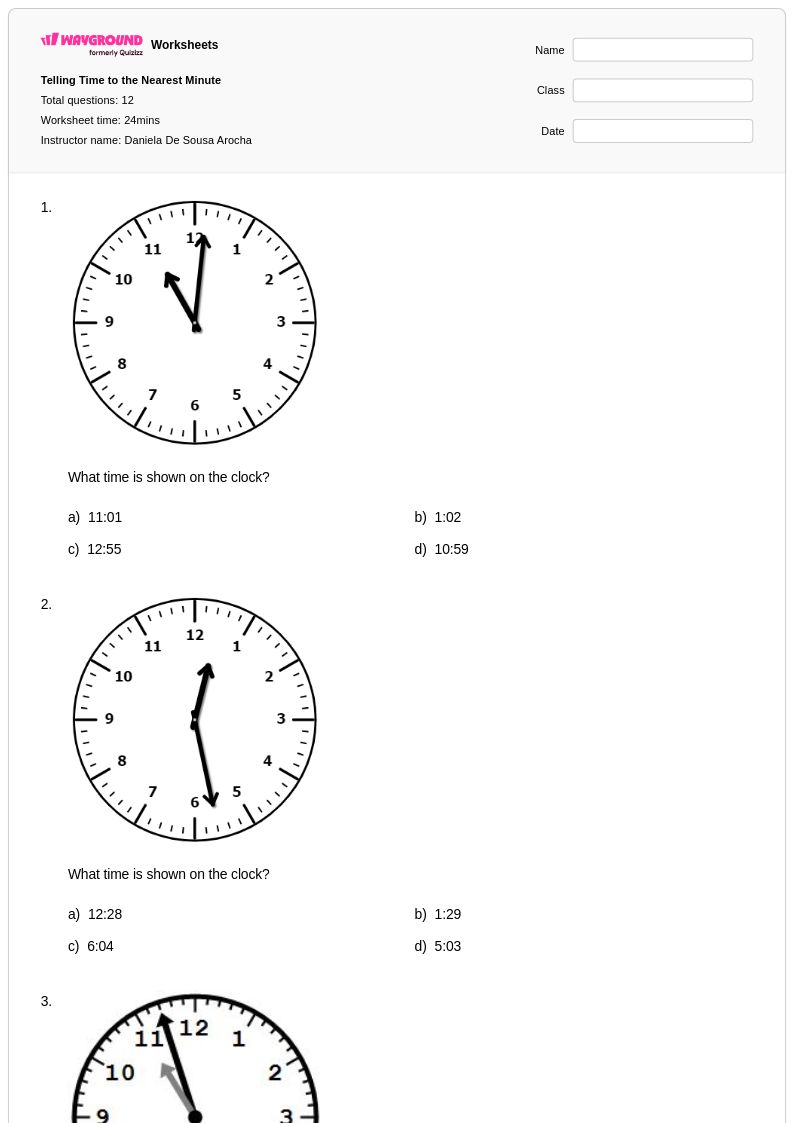
12 Q
3rd
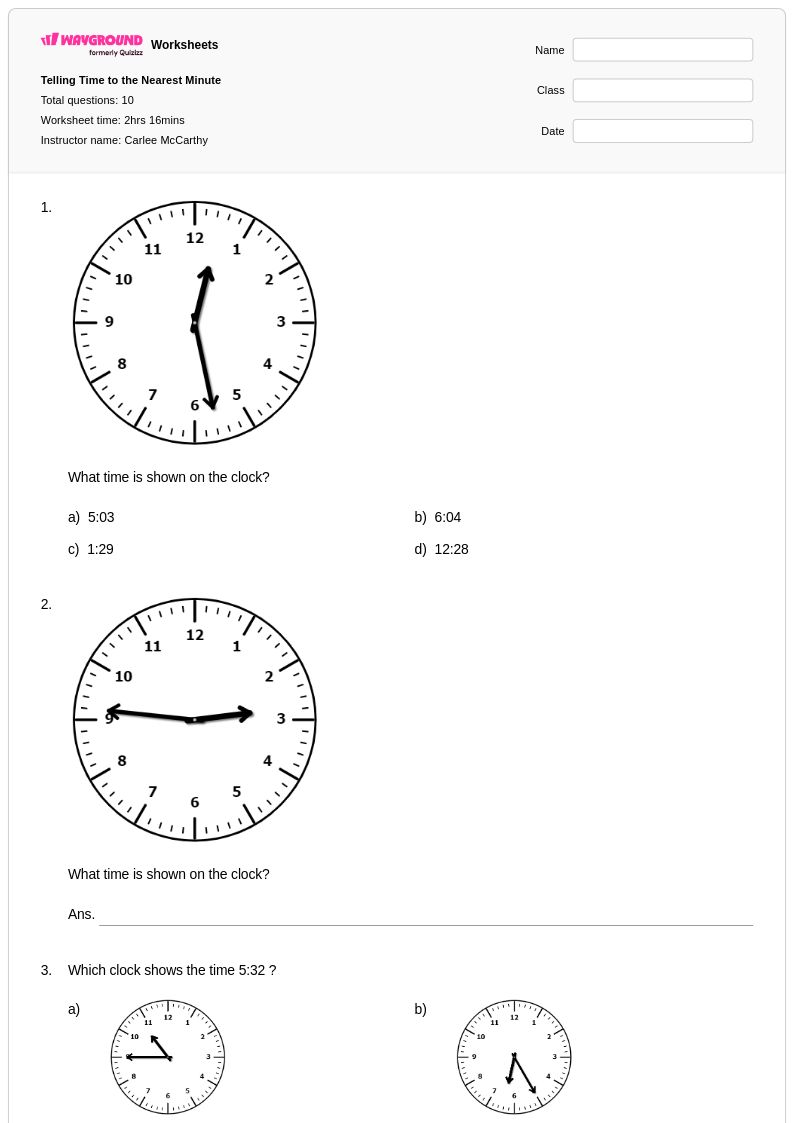
10 Q
3rd - 4th
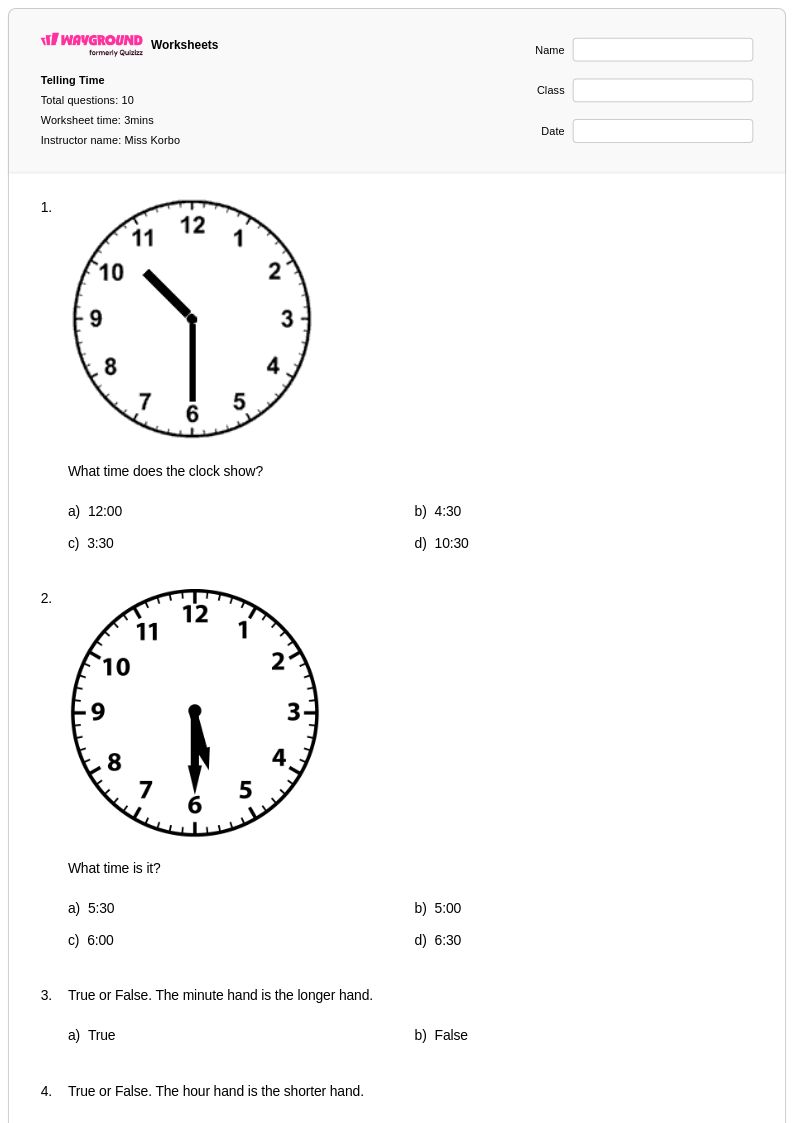
10 Q
3rd
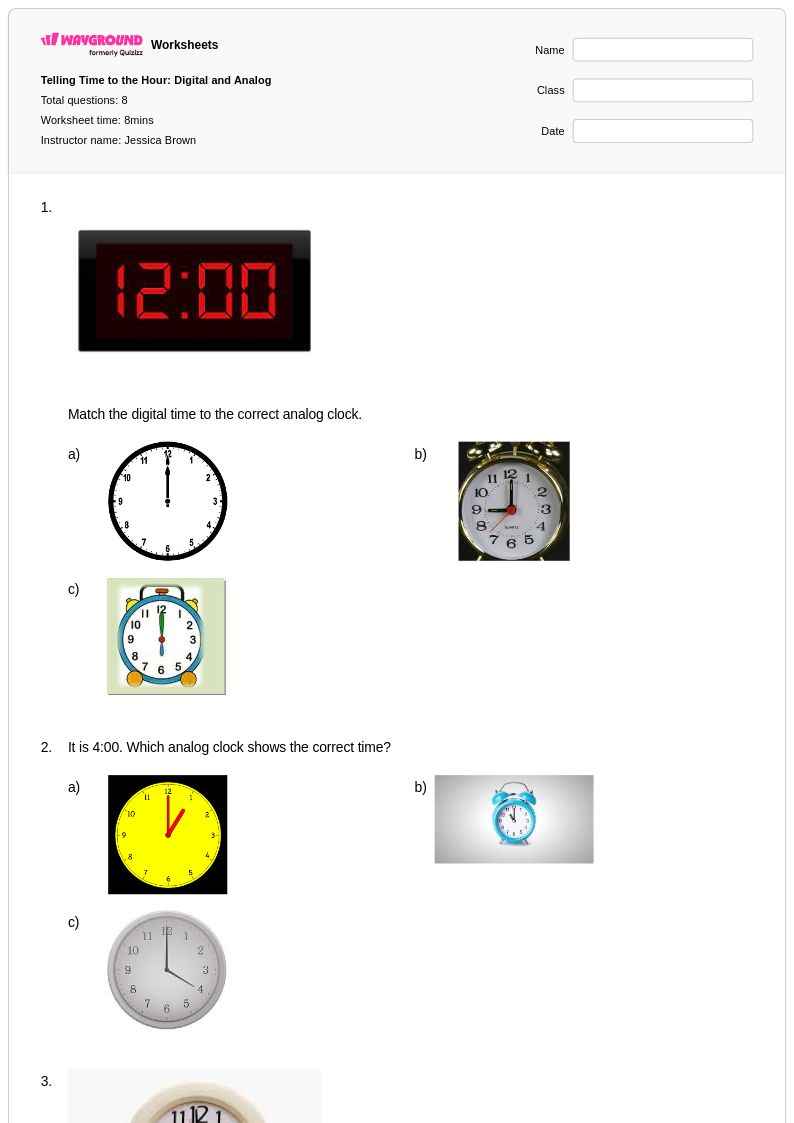
8 Q
1st
Explore Worksheets by Subjects
Explore printable Reading Clocks worksheets
Reading clocks worksheets available through Wayground (formerly Quizizz) provide comprehensive practice opportunities for students to master the fundamental skill of telling time across analog and digital formats. These educational resources strengthen critical time-reading abilities including identifying hour and minute hands, understanding clock face positioning, converting between 12-hour and 24-hour formats, and interpreting time to the nearest minute, quarter-hour, and half-hour intervals. The collection includes diverse practice problems that progress from basic hour recognition to more complex time calculations, with each worksheet featuring a complete answer key for immediate feedback and assessment. Teachers can access these free printables in convenient pdf format, making it simple to distribute targeted practice materials that reinforce classroom instruction and support independent learning.
Wayground (formerly Quizizz) empowers educators with millions of teacher-created resources specifically designed for clock reading instruction, featuring robust search and filtering capabilities that allow quick identification of worksheets aligned to specific learning objectives and academic standards. The platform's differentiation tools enable teachers to customize existing materials or create new variations that meet diverse student needs, from remedial support for struggling learners to enrichment activities for advanced students. These flexible resources are available in both printable and digital formats, including downloadable pdf files, facilitating seamless integration into lesson planning whether for in-class practice, homework assignments, or assessment preparation. The extensive collection supports ongoing skill development through varied problem types and difficulty levels, helping educators efficiently address individual learning gaps while building classroom-wide proficiency in essential time-telling competencies.
FAQs
How do I teach students to read an analog clock?
What exercises help students practice telling time?
What are common mistakes when learning to read a clock?
How does learning to tell time fit into the math curriculum?
How can I use these reading clocks worksheets in my class?
How can I support students who struggle with reading clocks?