Free Printable Phoneme Segmentation Worksheets for Class 2
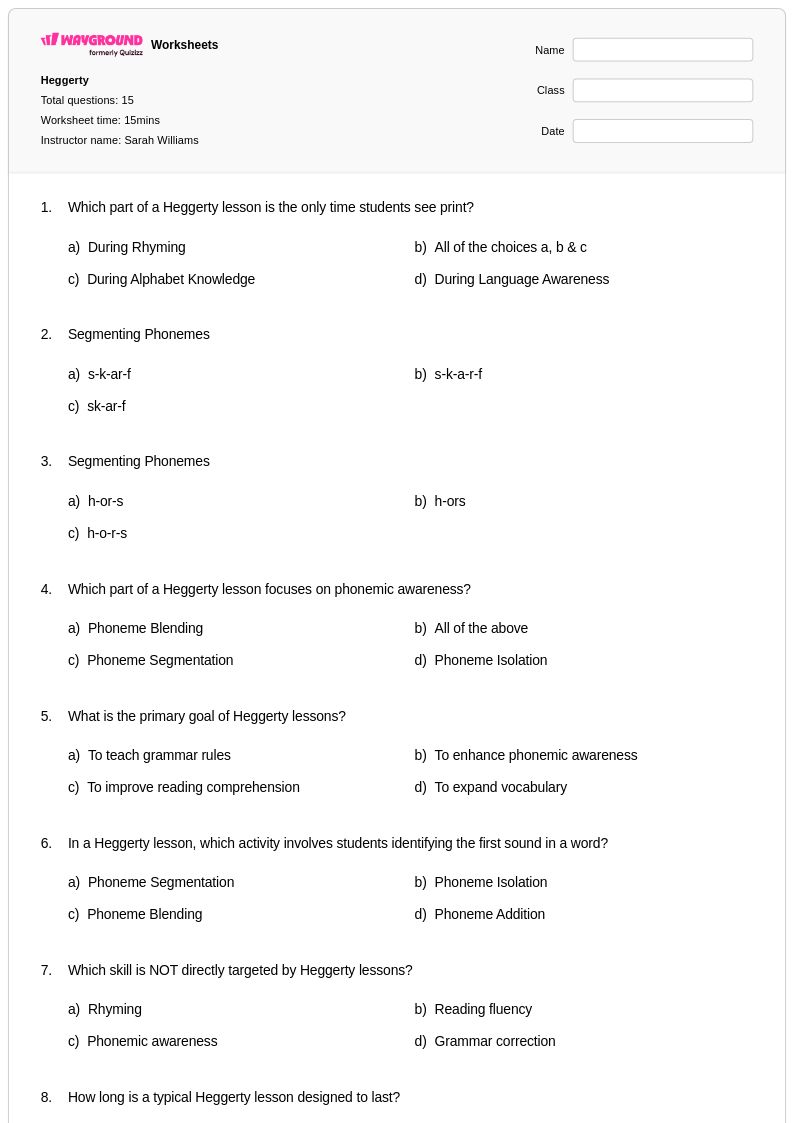
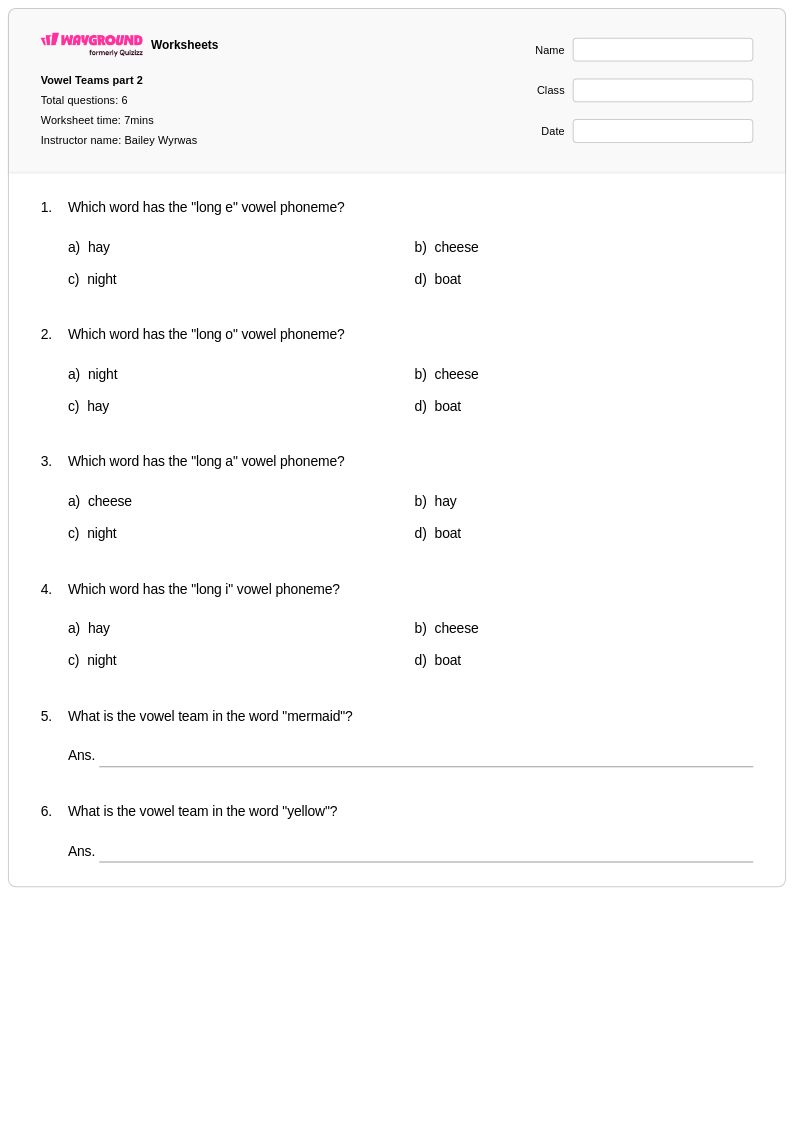
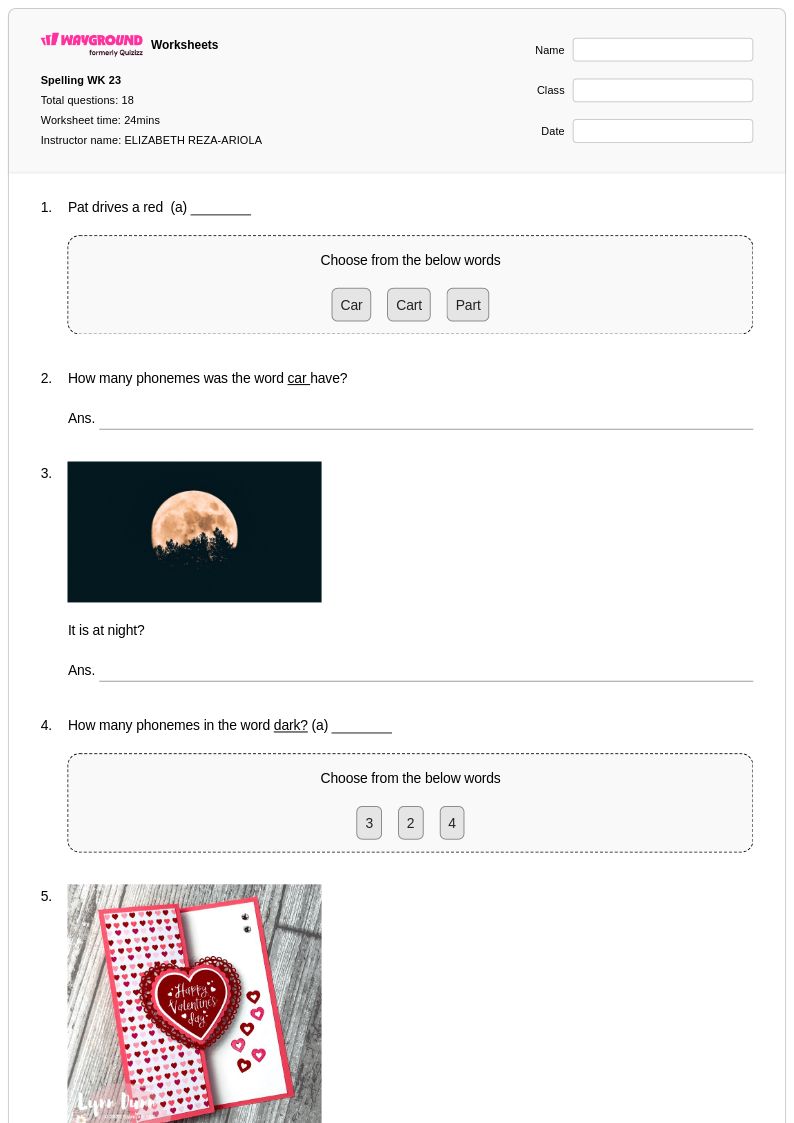
Class 2 phoneme segmentation worksheets from Wayground help students practice breaking words into individual sounds through engaging printables and free practice problems with complete answer keys.
Explore printable Phoneme Segmentation worksheets for Class 2
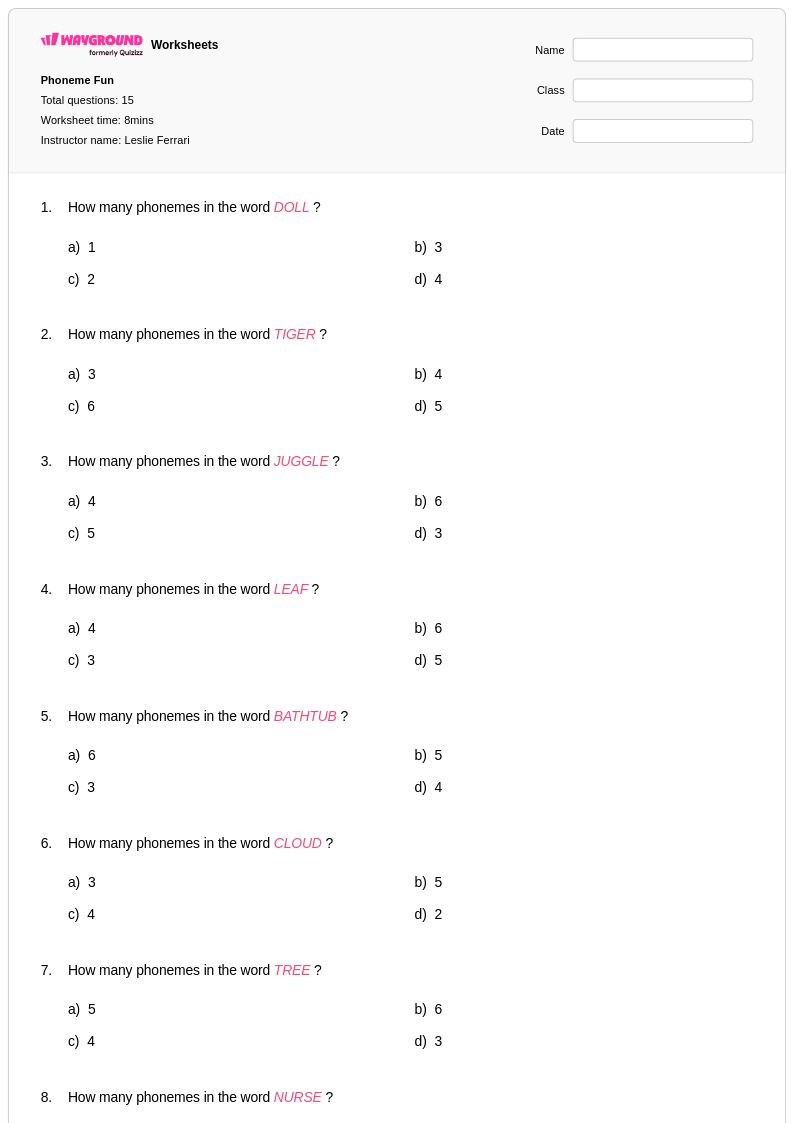
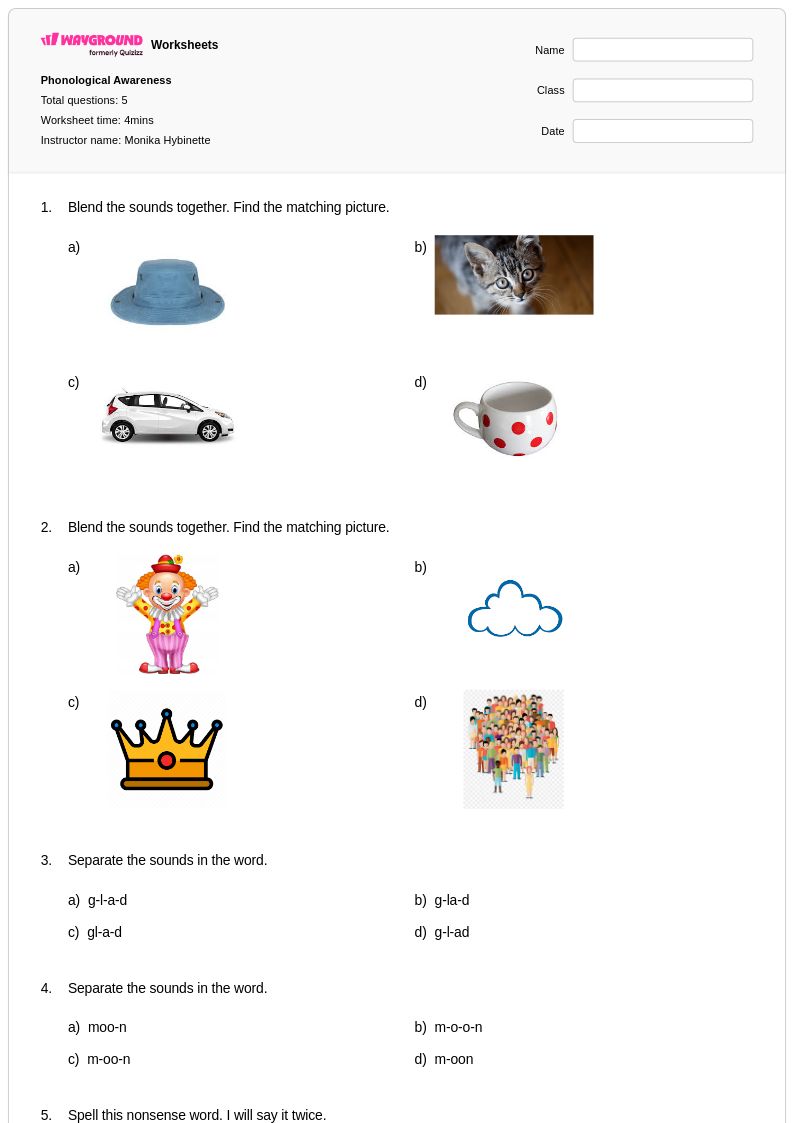
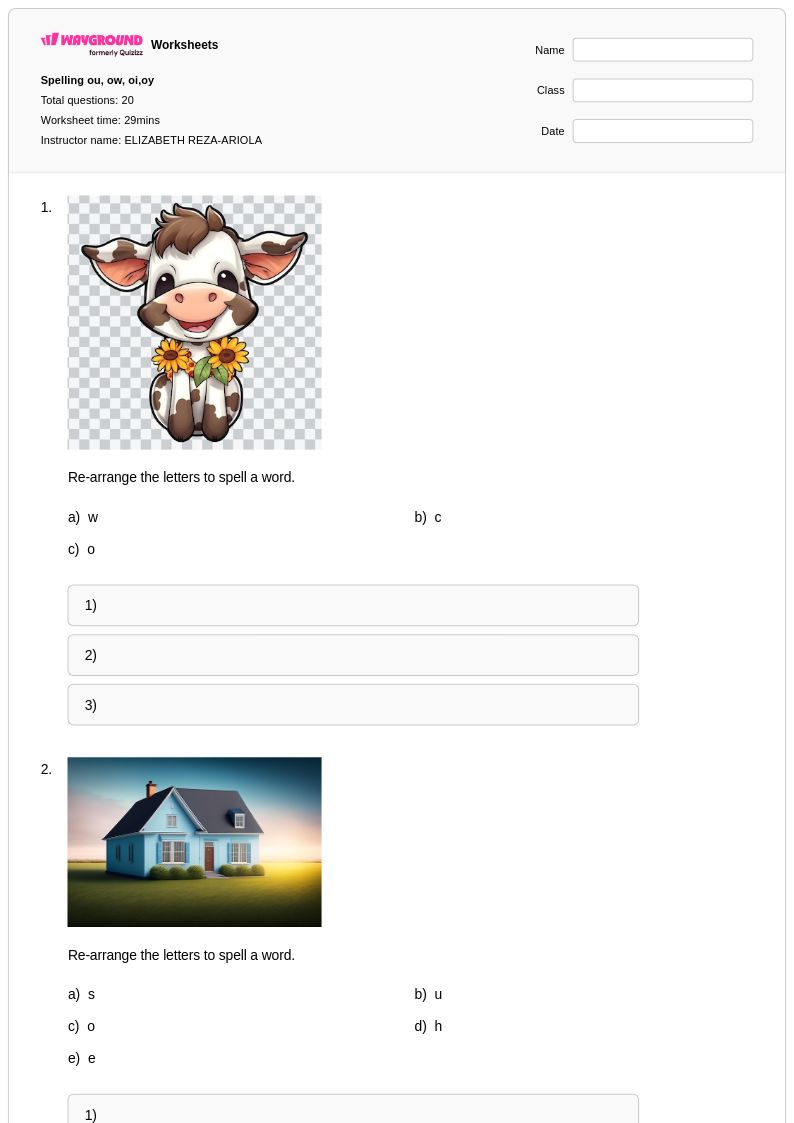
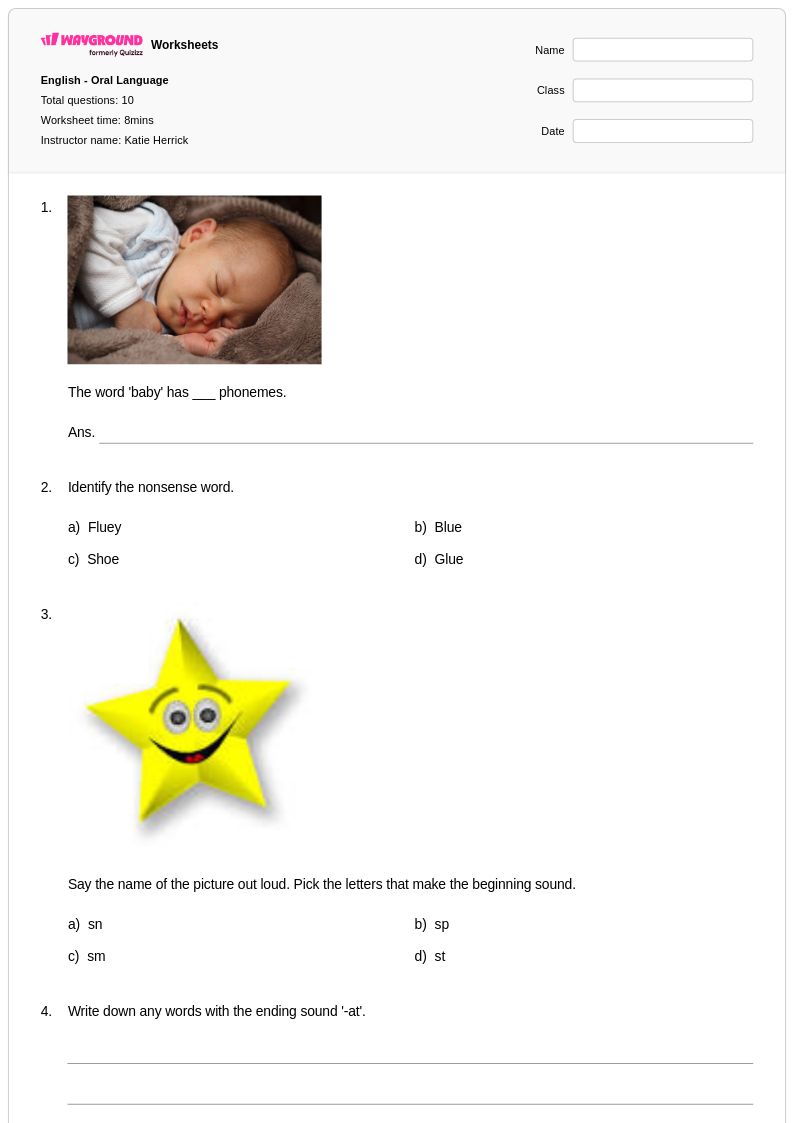
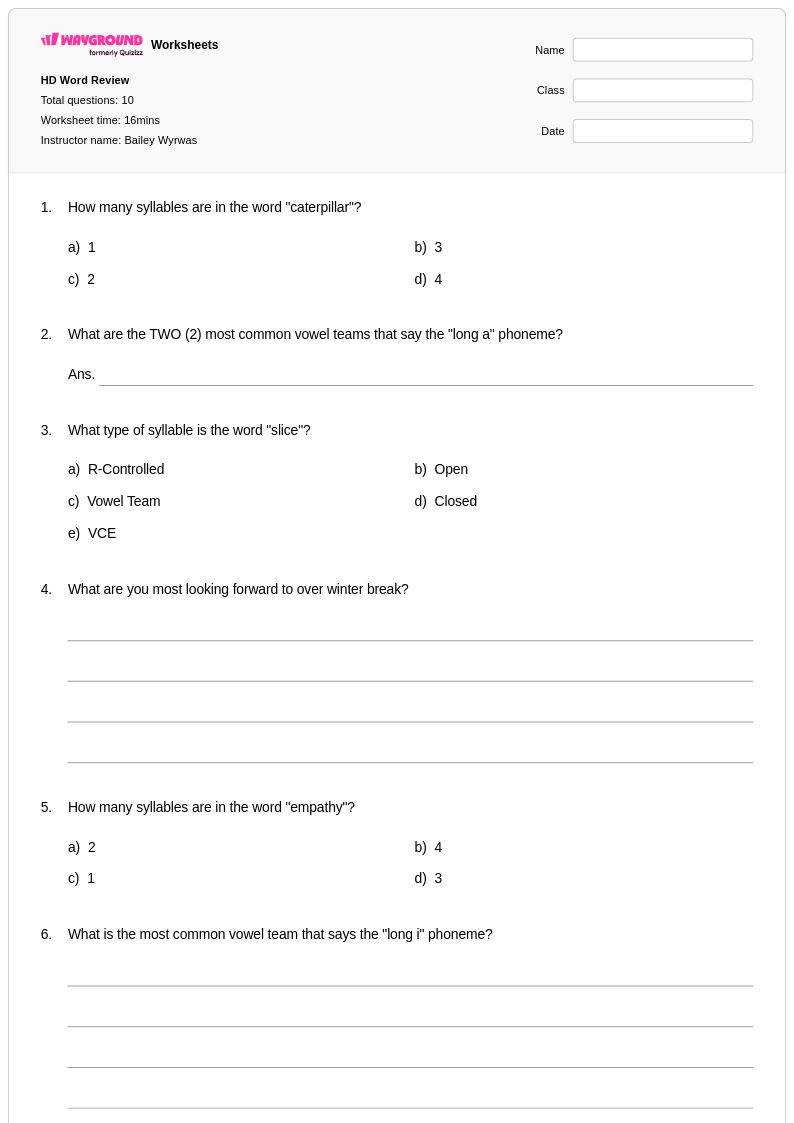
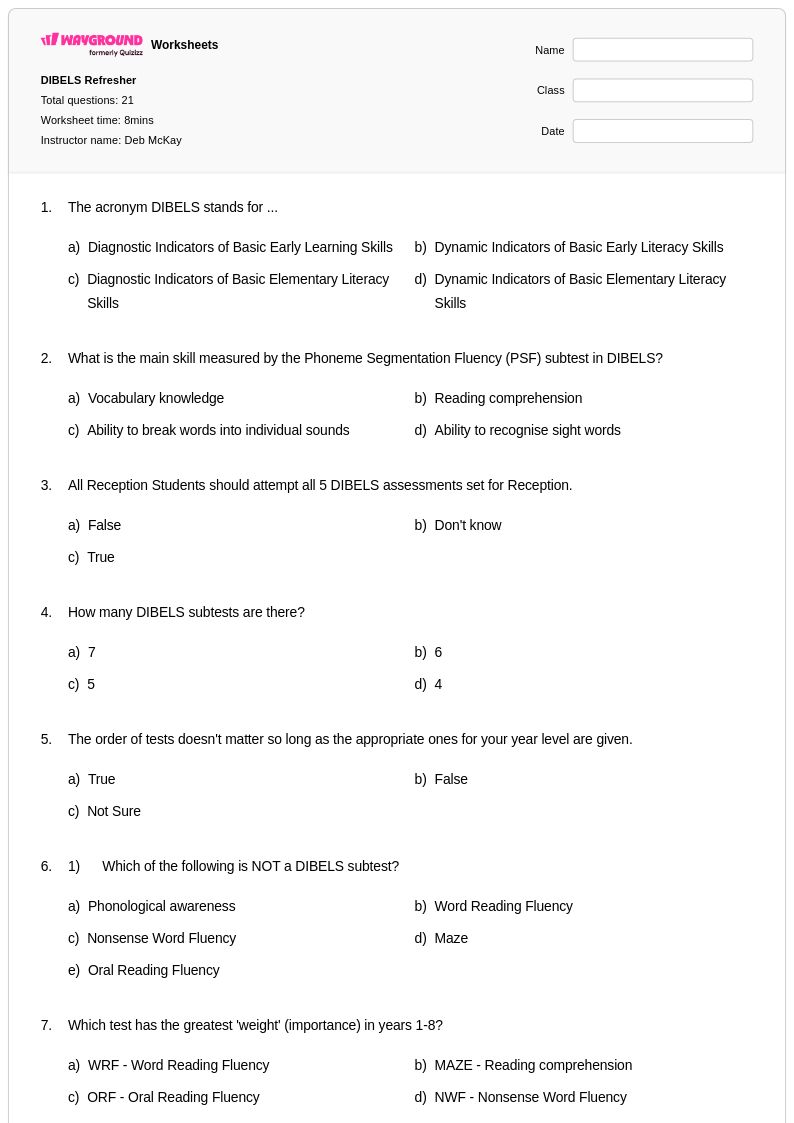
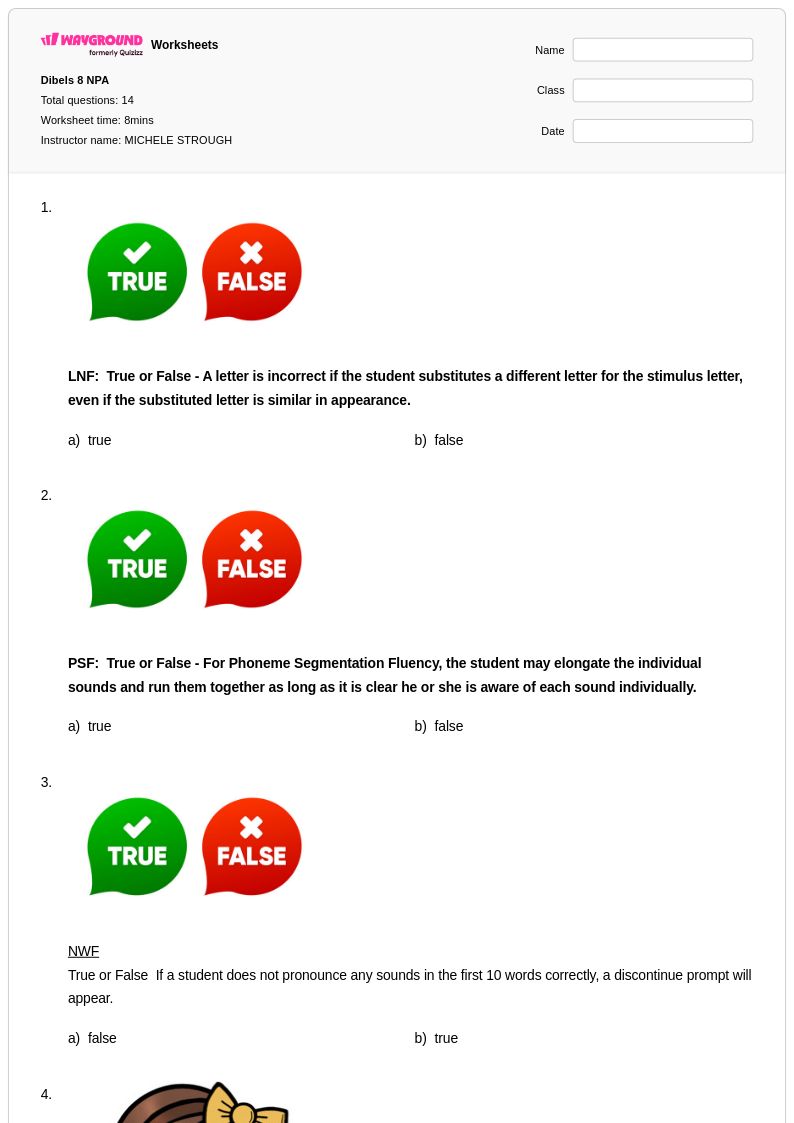
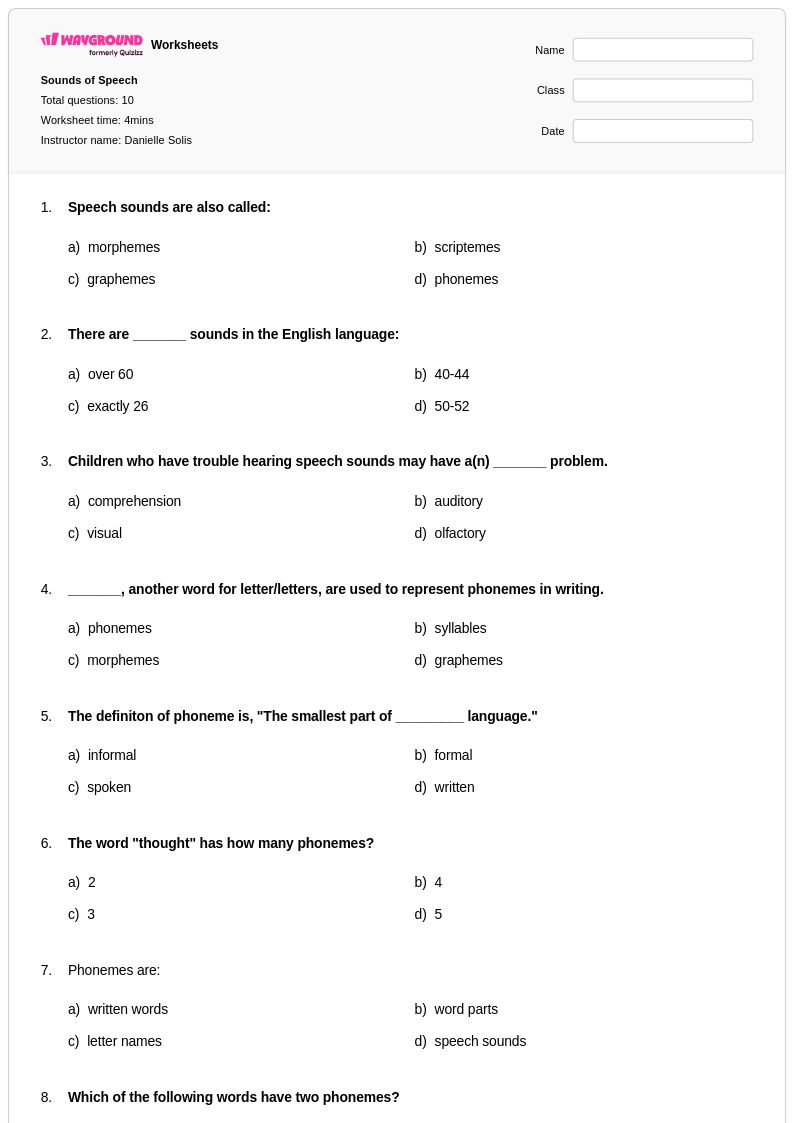
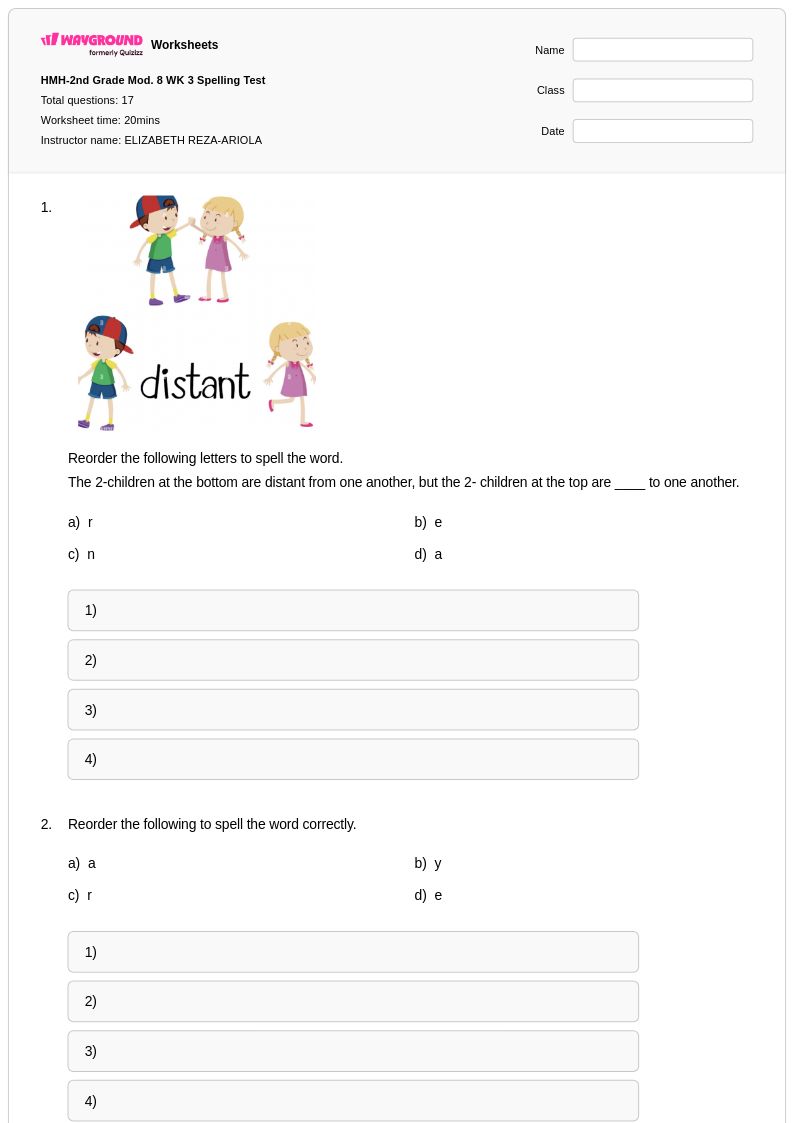
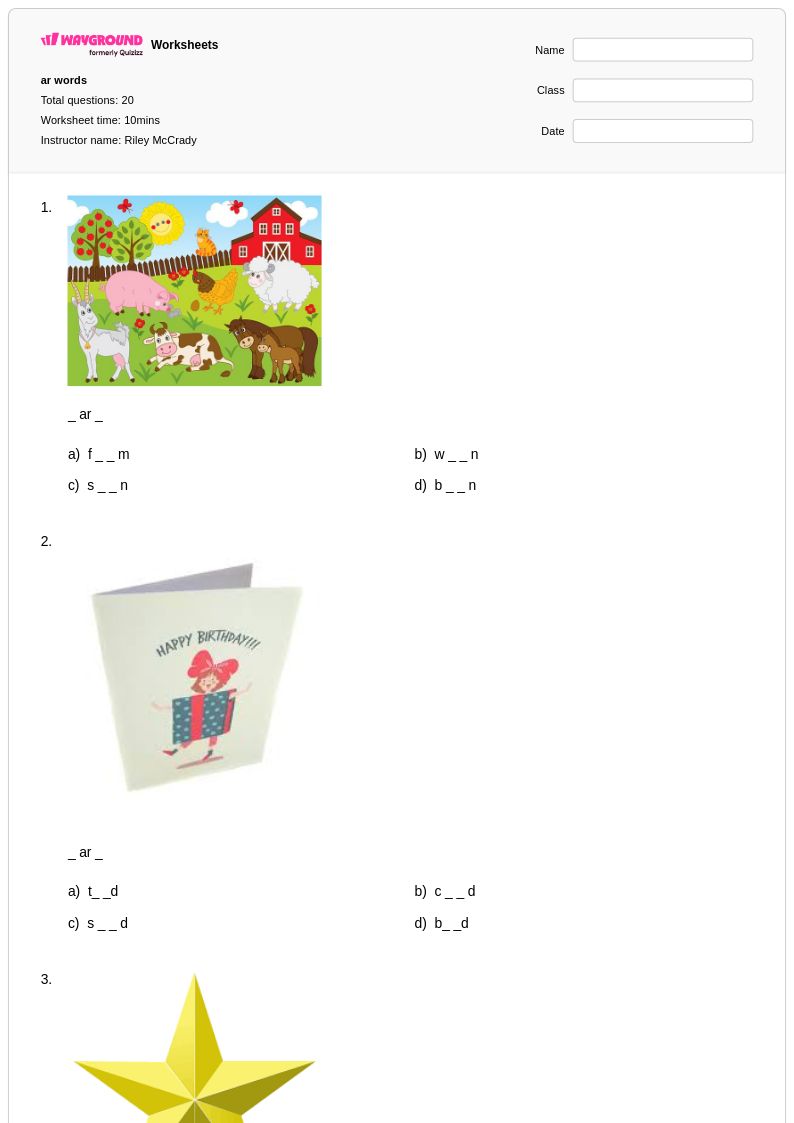
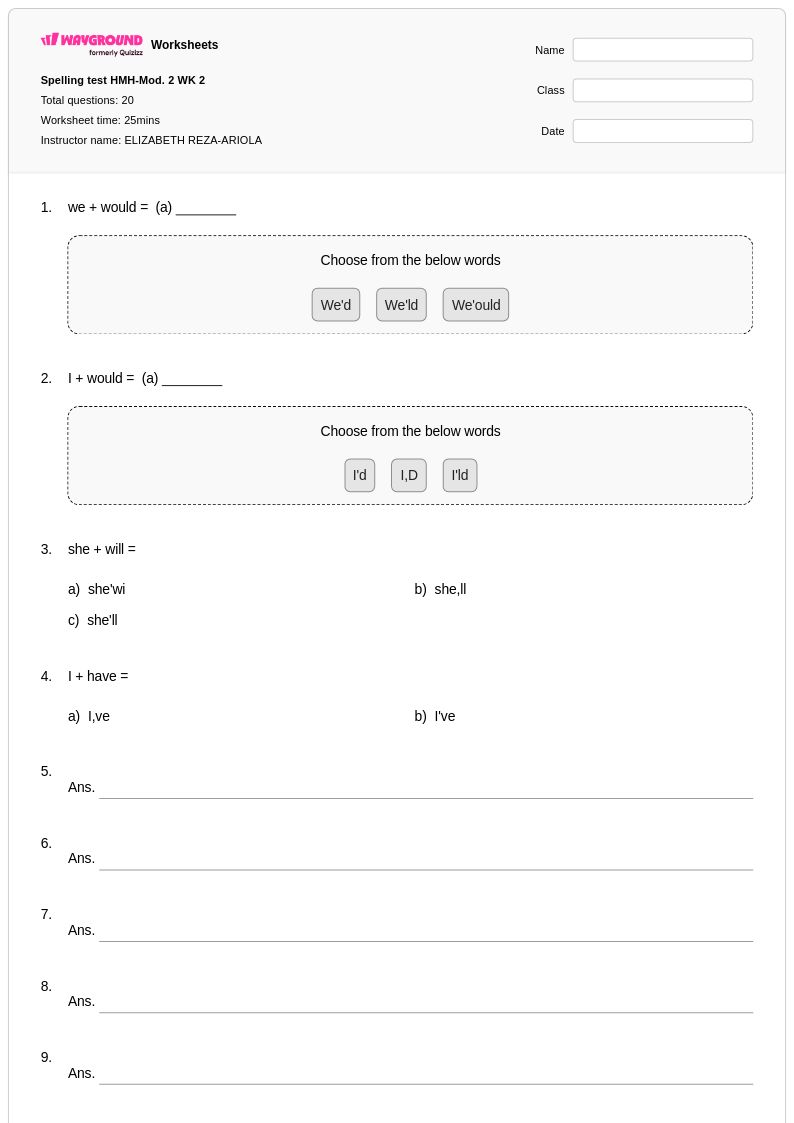
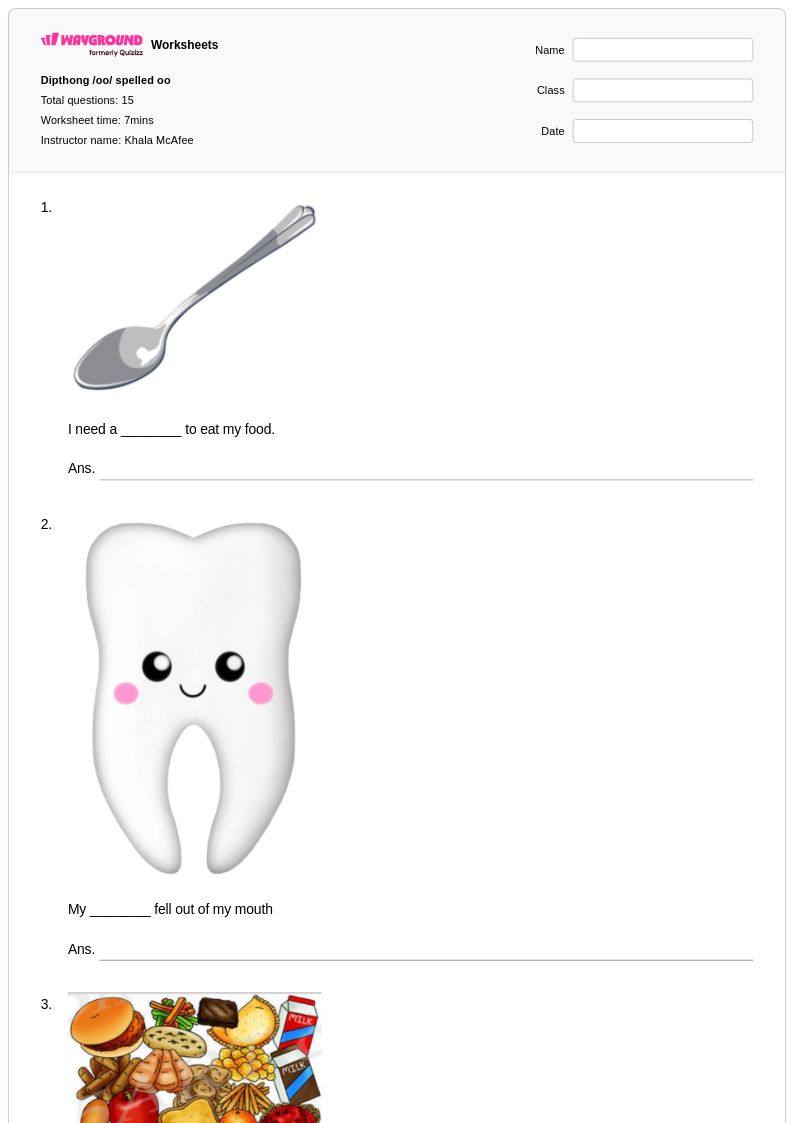
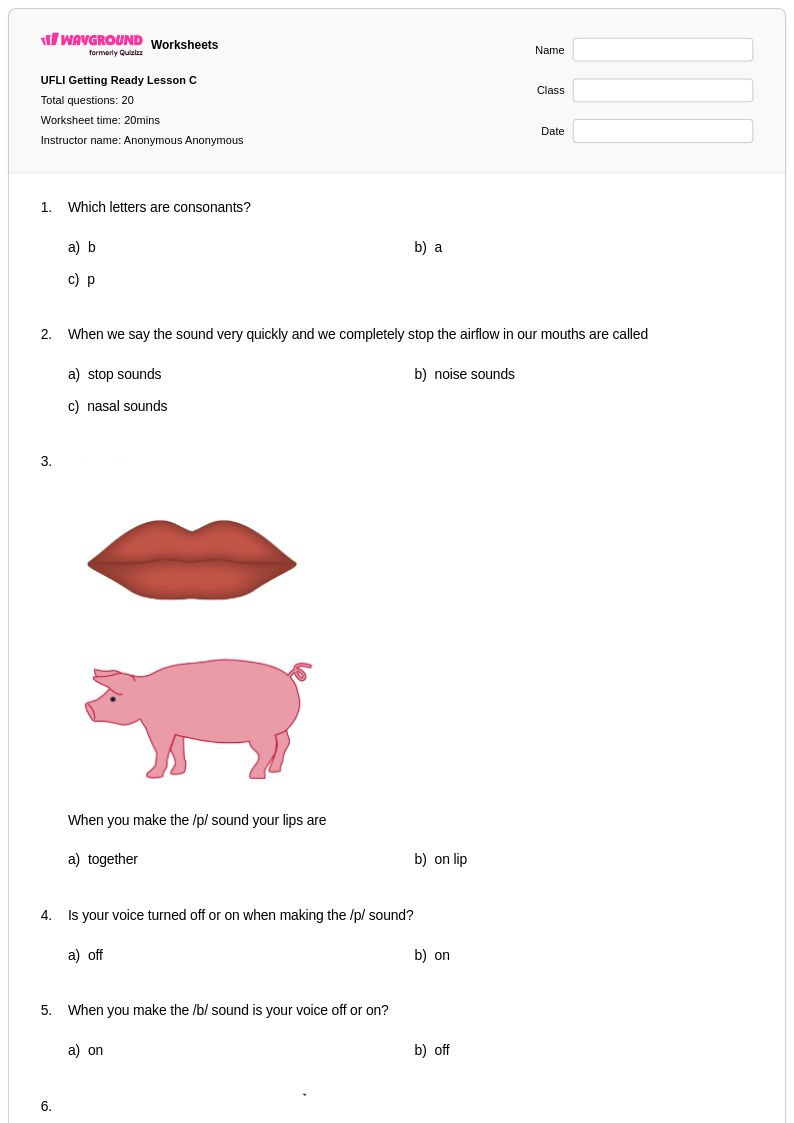
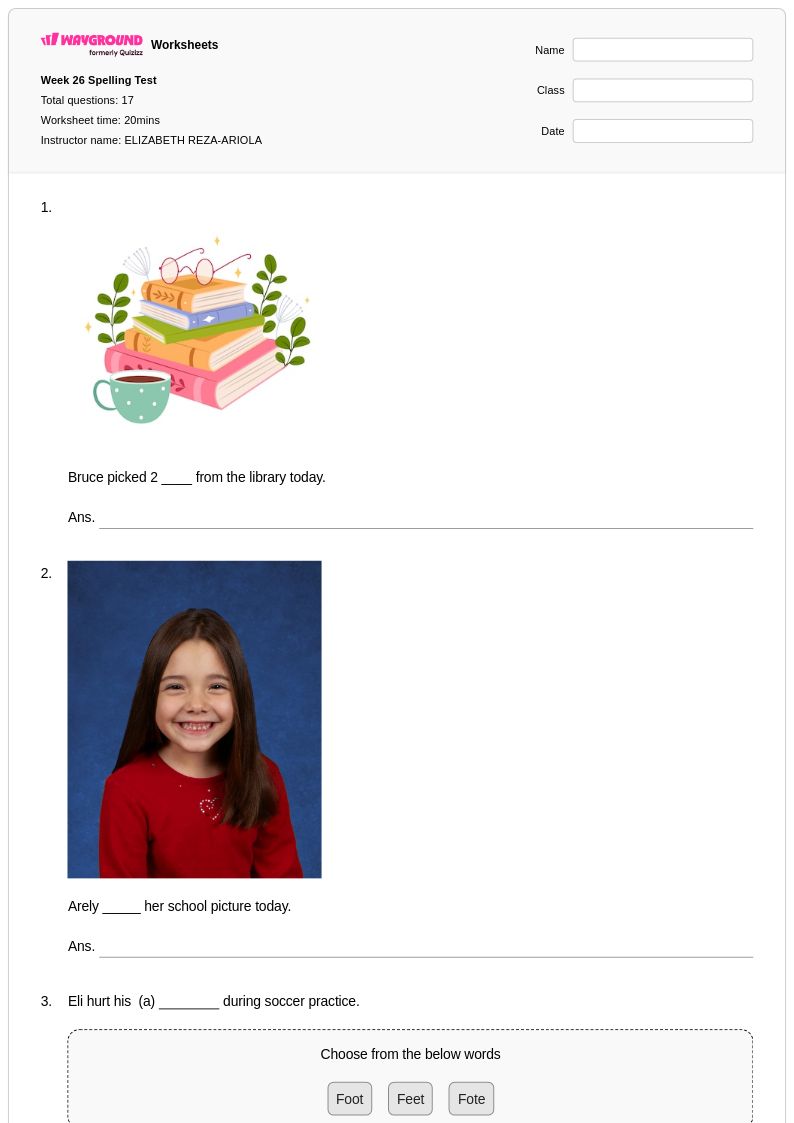
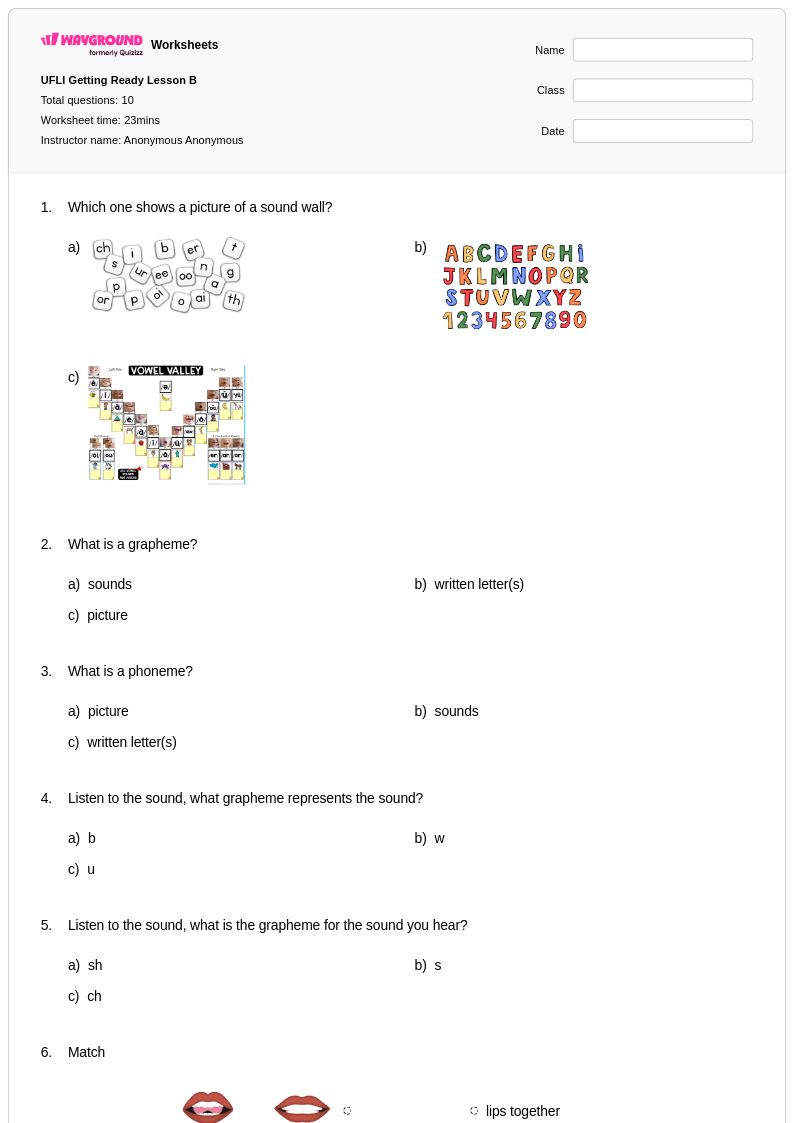
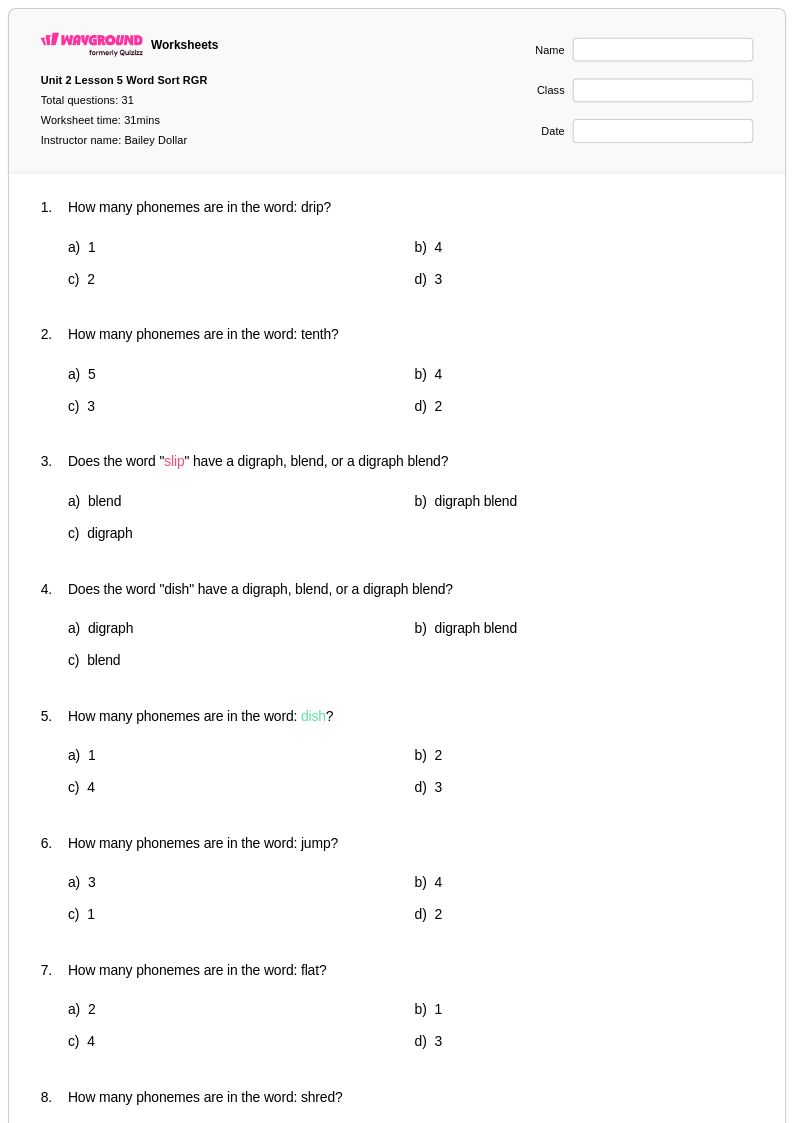
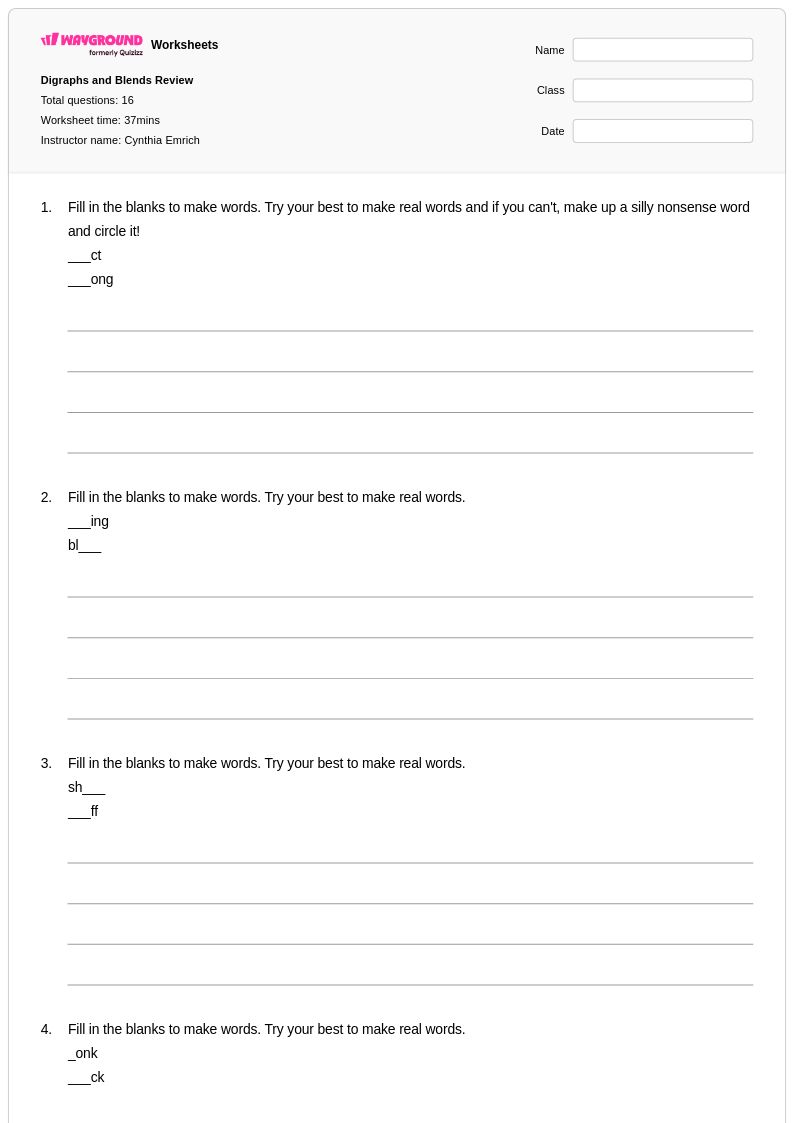
Phoneme segmentation worksheets for Class 2 students available through Wayground (formerly Quizizz) provide systematic practice in breaking spoken words into their individual sound units, a critical foundational skill for reading development. These comprehensive resources help second-grade learners develop phonemic awareness by teaching them to identify, isolate, and manipulate the smallest units of sound in spoken language. Students work through carefully structured practice problems that progress from simple two-phoneme words to more complex multi-syllable combinations, strengthening their ability to hear distinct sounds within words. Each worksheet collection includes detailed answer keys and is available as free printables in convenient pdf format, allowing educators to seamlessly integrate phoneme segmentation activities into daily literacy instruction and provide targeted support for developing readers.
Wayground (formerly Quizizz) empowers teachers with an extensive library of millions of teacher-created phoneme segmentation resources specifically designed for Class 2 phonics instruction. The platform's robust search and filtering capabilities enable educators to quickly locate worksheets that align with specific phonics standards and match their students' developmental needs. Teachers can customize existing materials or create differentiated versions to support learners at various skill levels, from students requiring remediation in basic sound recognition to those ready for enrichment activities involving complex phoneme manipulation. These versatile resources are available in both printable and digital formats, including downloadable pdfs, making lesson planning efficient while providing flexibility for classroom instruction, homework assignments, and targeted skill practice sessions that strengthen students' phonological processing abilities.
FAQs
How do I teach phoneme segmentation to early readers?
Phoneme segmentation is best taught through explicit, systematic instruction that moves from simple to complex words. Start with two-phoneme words (e.g., 'at', 'up') before progressing to three- and four-phoneme words, using physical manipulatives like counters or sound boxes to make abstract sound units concrete. Modeling segmentation by stretching sounds aloud while students repeat and record each phoneme builds both auditory and written automaticity. Consistent daily practice in short sessions produces stronger retention than infrequent longer sessions.
What exercises help students practice breaking words into individual sounds?
Effective phoneme segmentation practice includes Elkonin (sound box) activities where students push a token into a box for each phoneme they hear, as well as written segmentation tasks where students write each sound separately. Worksheets that progress from two-phoneme words to multisyllabic structures allow students to build confidence incrementally. Timed fluency drills, partner-read-and-segment tasks, and sorting activities by phoneme count all reinforce segmentation accuracy in varied contexts.
What mistakes do students commonly make when segmenting phonemes?
The most frequent error is confusing letters with sounds — students often segment by syllable or by spelling unit rather than by individual phoneme (e.g., segmenting 'ship' as /sh/-/i/-/p/ but writing three letters instead of recognizing the digraph as one sound). Students also frequently blend adjacent consonants rather than isolating them, particularly in consonant clusters like 'str' or 'bl'. Another common misconception is treating a silent letter as a separate phoneme. Teachers should watch for these patterns during guided practice and use corrective feedback immediately.
How do phoneme segmentation worksheets support phonics instruction?
Phoneme segmentation worksheets give students structured, repeated practice isolating individual sounds within words, which directly reinforces the phoneme-grapheme correspondence taught in phonics lessons. By working through exercises that range from simple two-phoneme words to more complex multisyllabic structures, students internalize the habit of attending to each sound before mapping it to a letter. This skill is a critical precursor to accurate decoding and spelling, making segmentation practice a core component of any systematic phonics program.
How can I differentiate phoneme segmentation practice for students at different readiness levels?
Differentiation for phoneme segmentation should be based on word complexity and support level. Emerging learners benefit from two- and three-phoneme CVC words with visual scaffolds like sound boxes, while more advanced students can work with blends, digraphs, and multisyllabic words. On Wayground, teachers can select worksheets matched to individual student readiness levels and apply accommodations such as Read Aloud support for students who need audio reinforcement of word sounds, or reduced answer choices to lower cognitive load for students who need additional scaffolding.
How do I use Wayground's phoneme segmentation worksheets in my classroom?
Wayground's phoneme segmentation worksheets are available as printable PDFs for traditional classroom use and in digital formats for technology-integrated learning environments. Teachers can download and print worksheets for independent seatwork, small group instruction, or homework, while the digital format allows students to complete activities on devices. Worksheets can also be hosted as a quiz directly on Wayground, enabling real-time monitoring of student responses. Each worksheet includes a complete answer key, reducing preparation time and making it straightforward to provide immediate feedback.