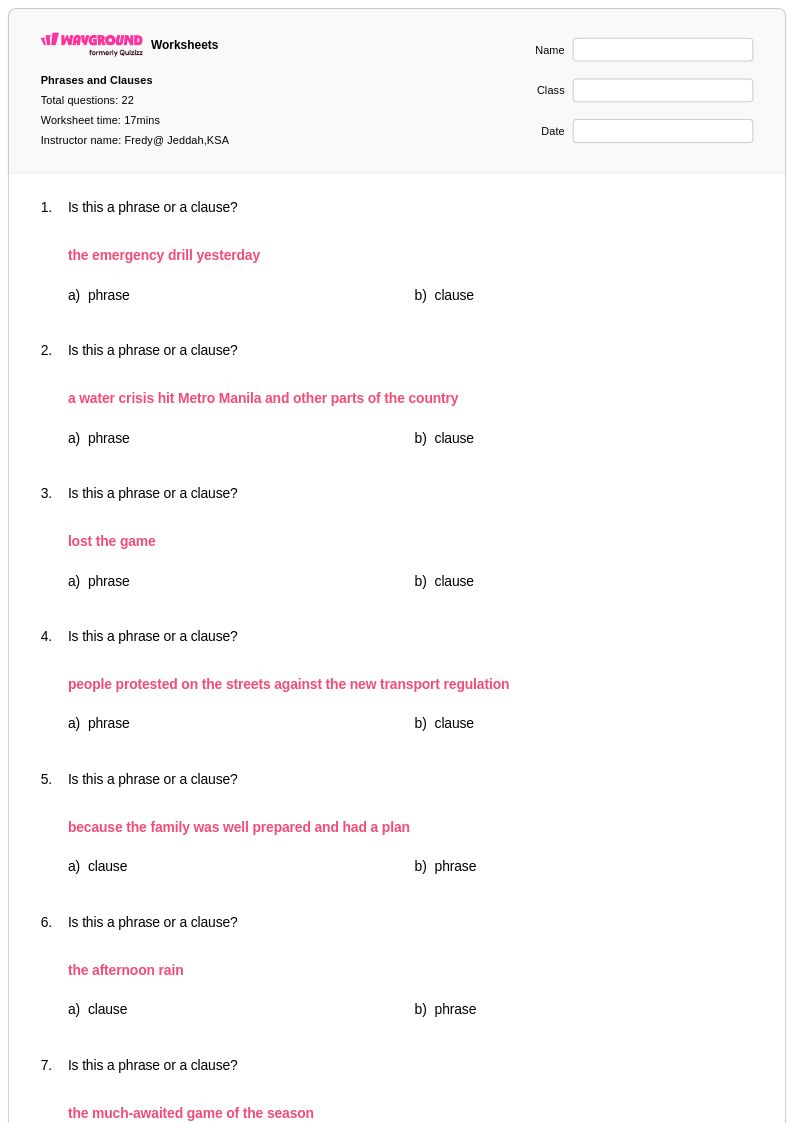
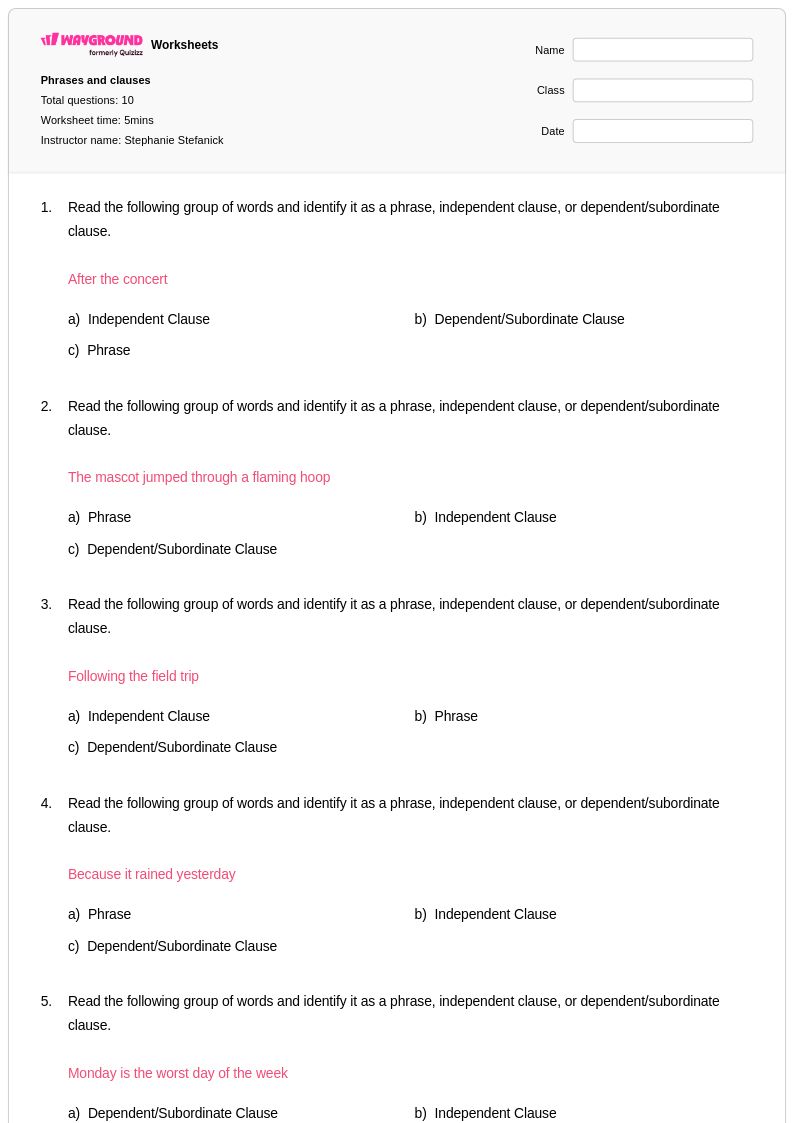
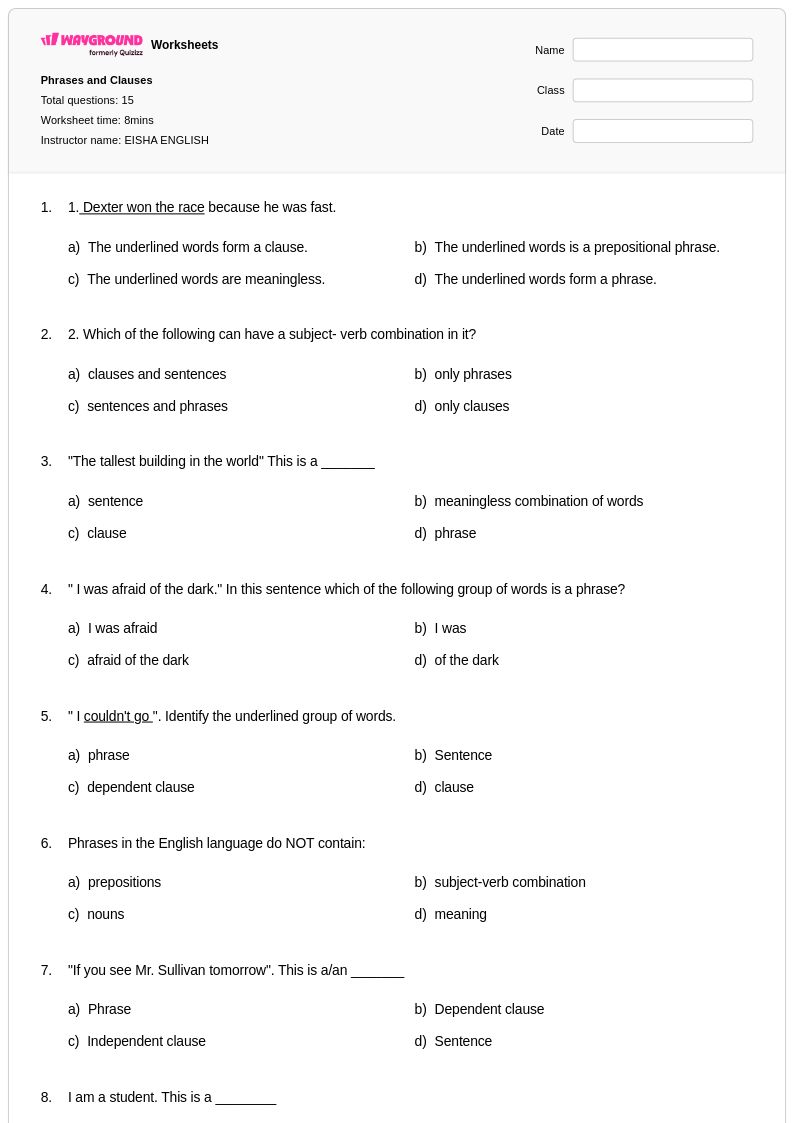
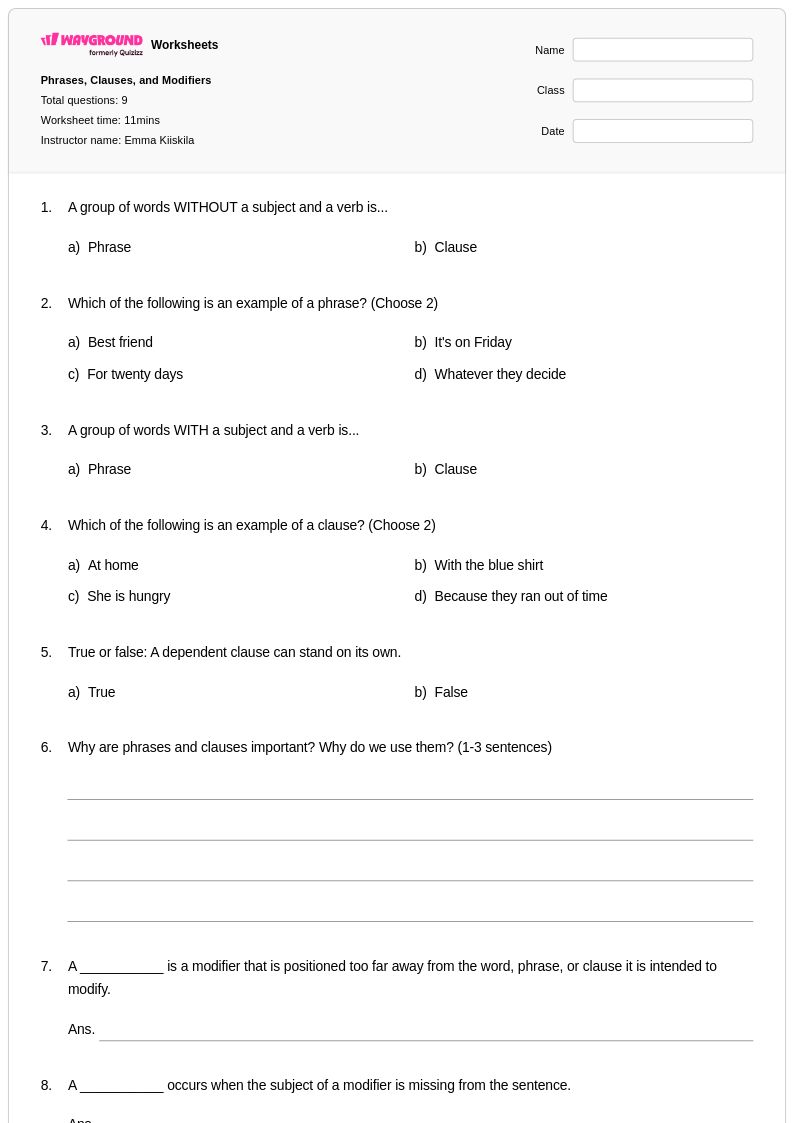
Free Printable Phrases and Clauses Worksheets for Class 8
Explore Wayground's free Class 8 phrases and clauses worksheets with printable PDFs, practice problems, and answer keys to help students master identifying and using different sentence components effectively.
Explore printable Phrases and Clauses worksheets for Class 8
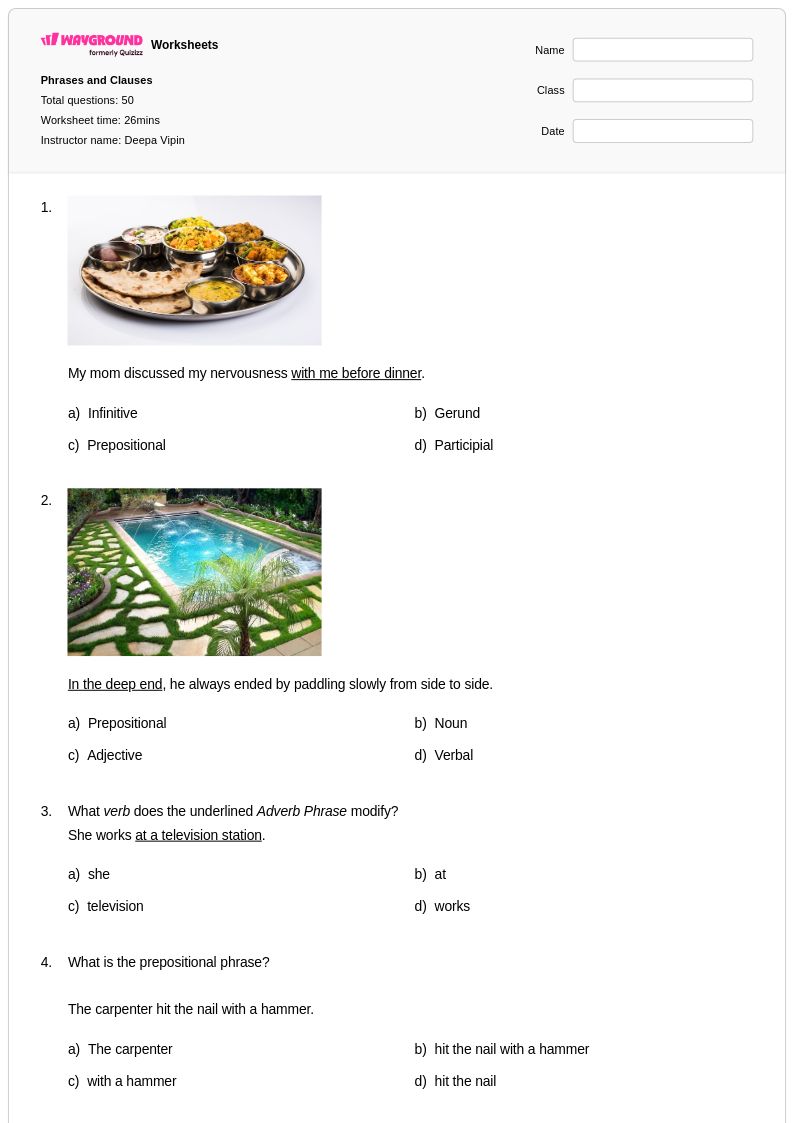
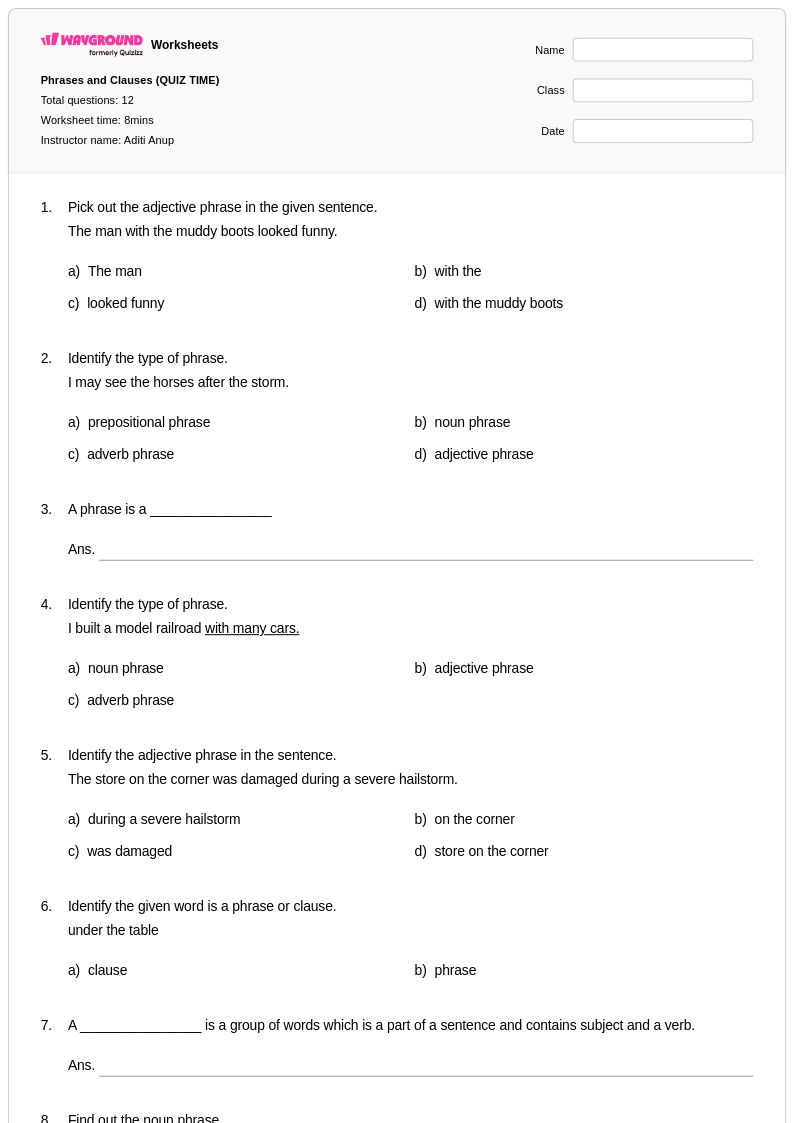
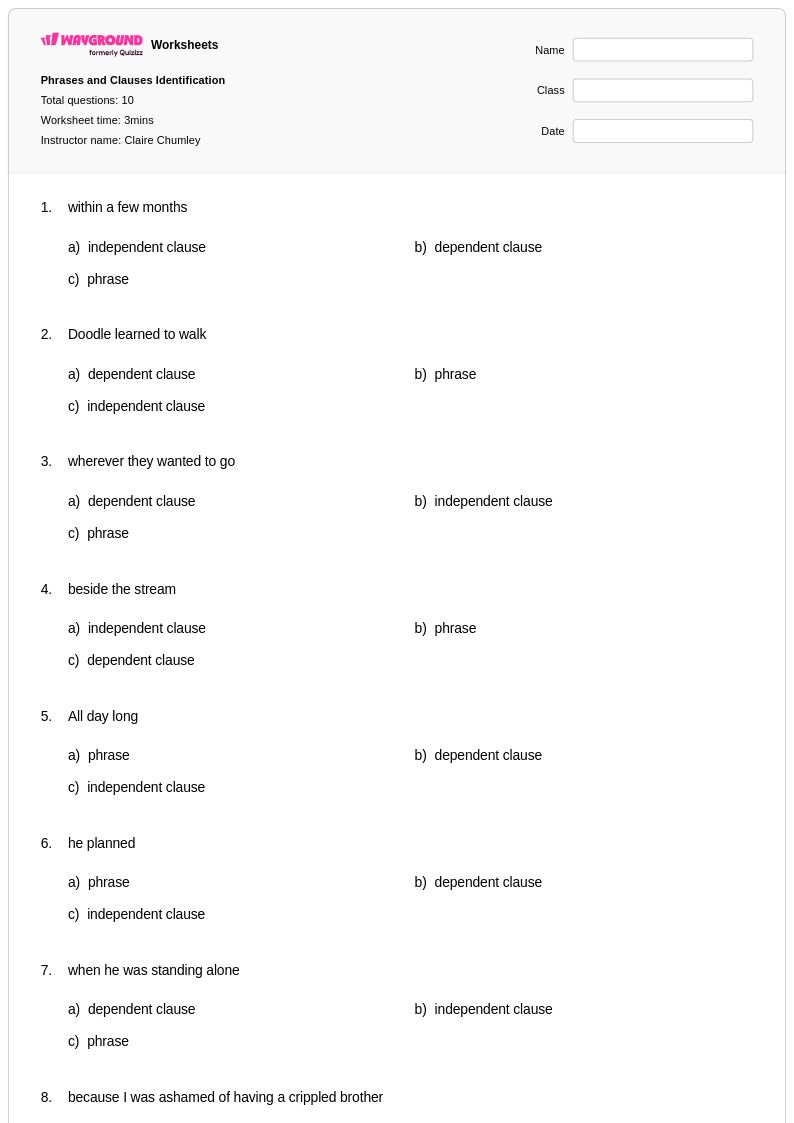
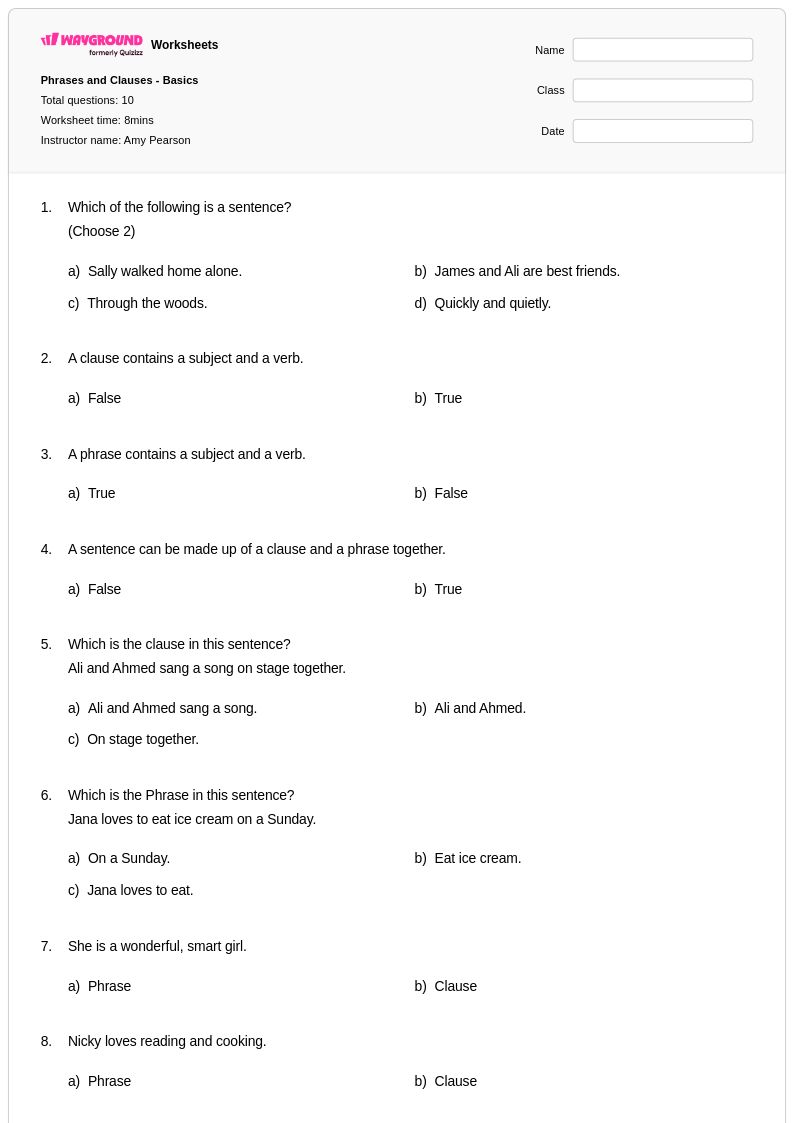
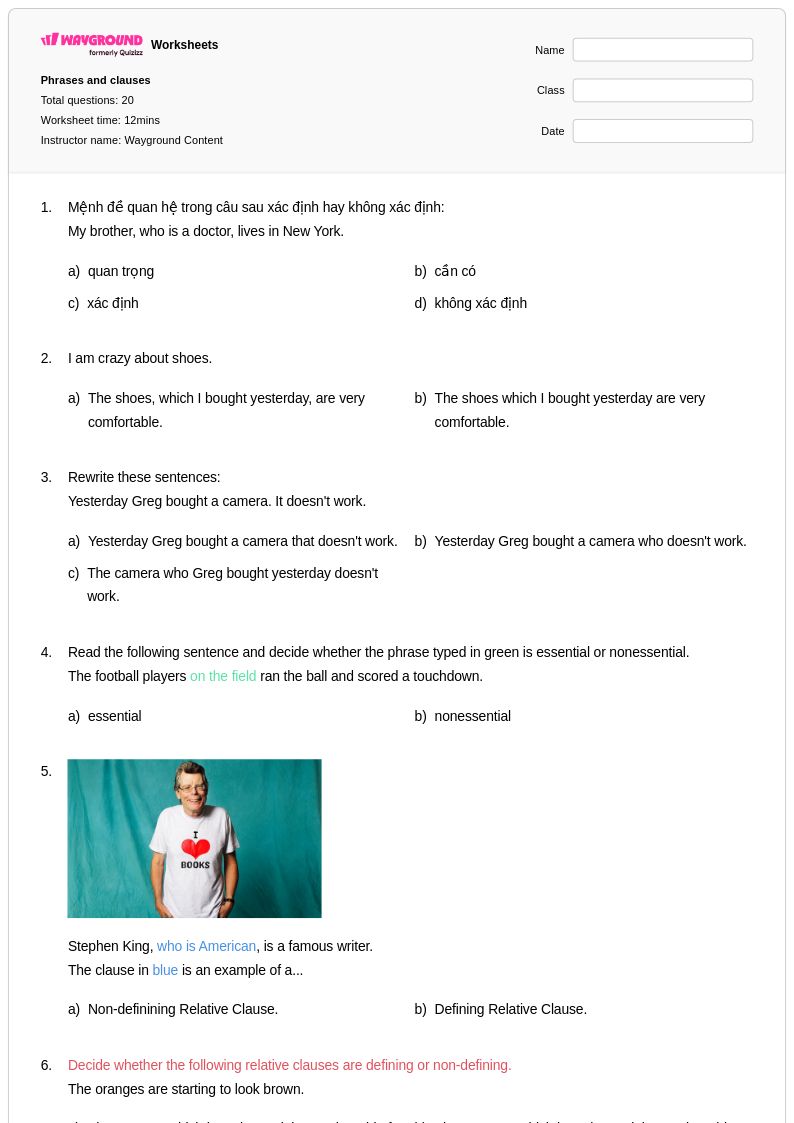
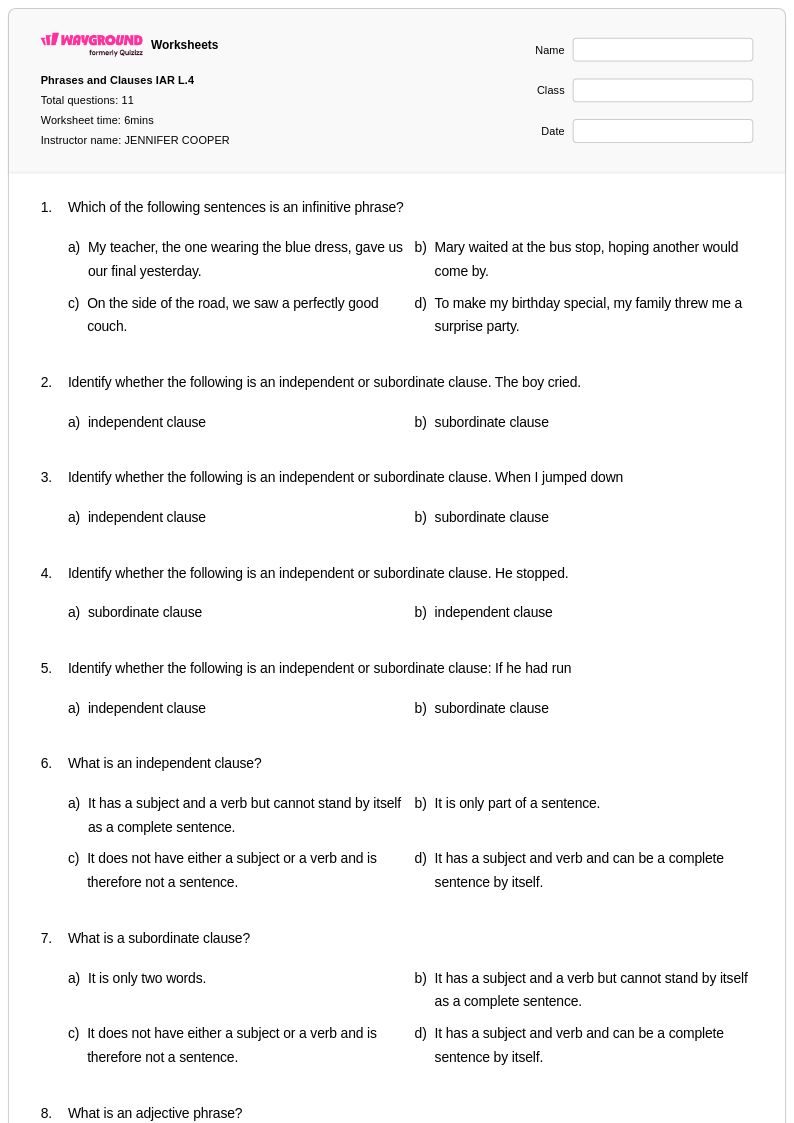
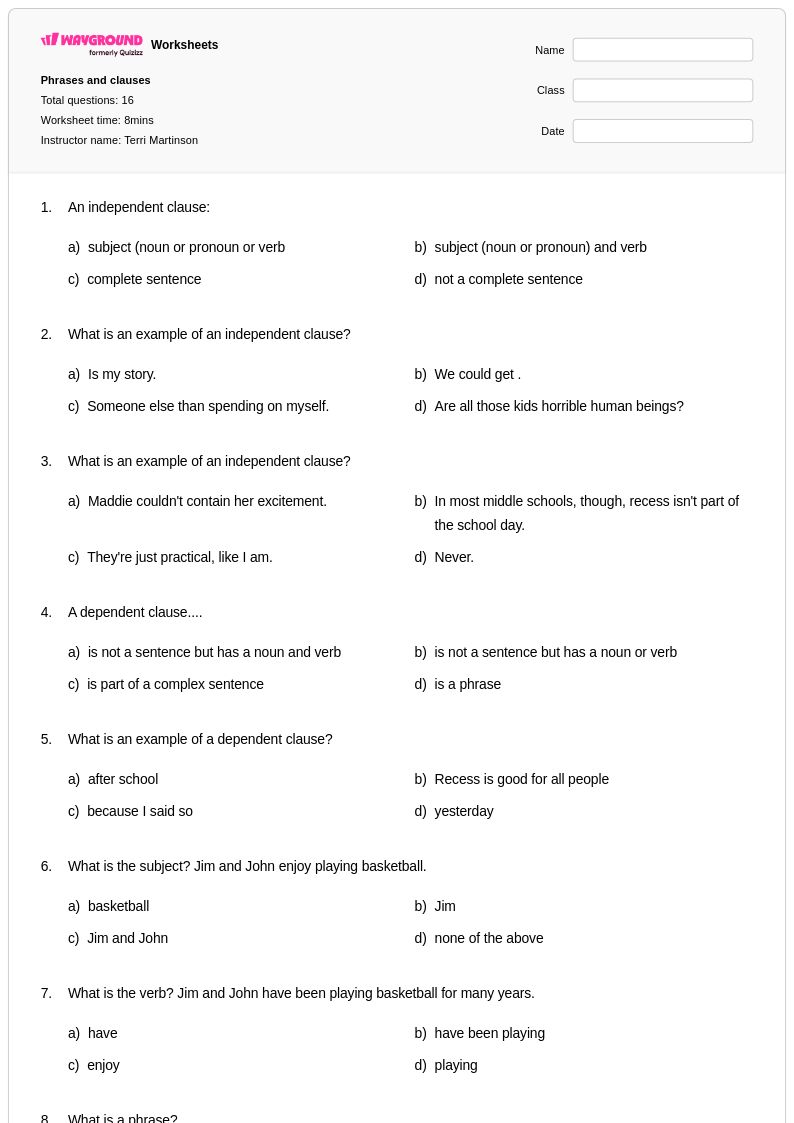
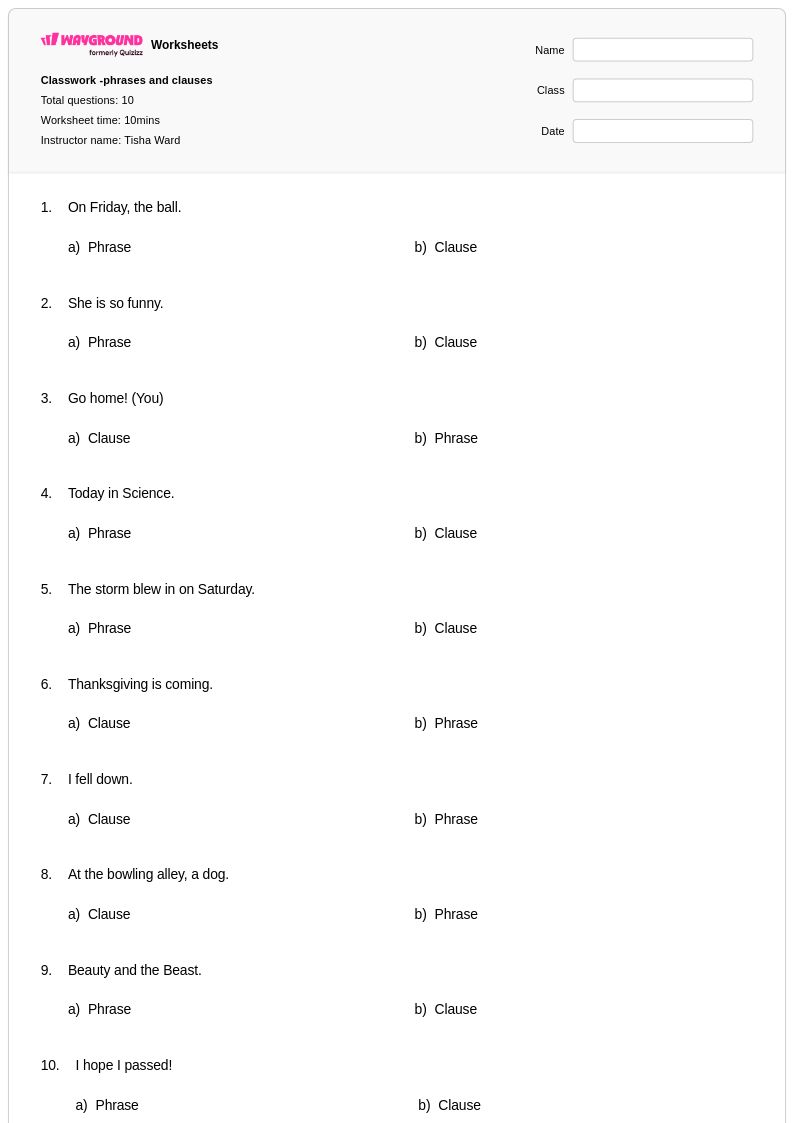
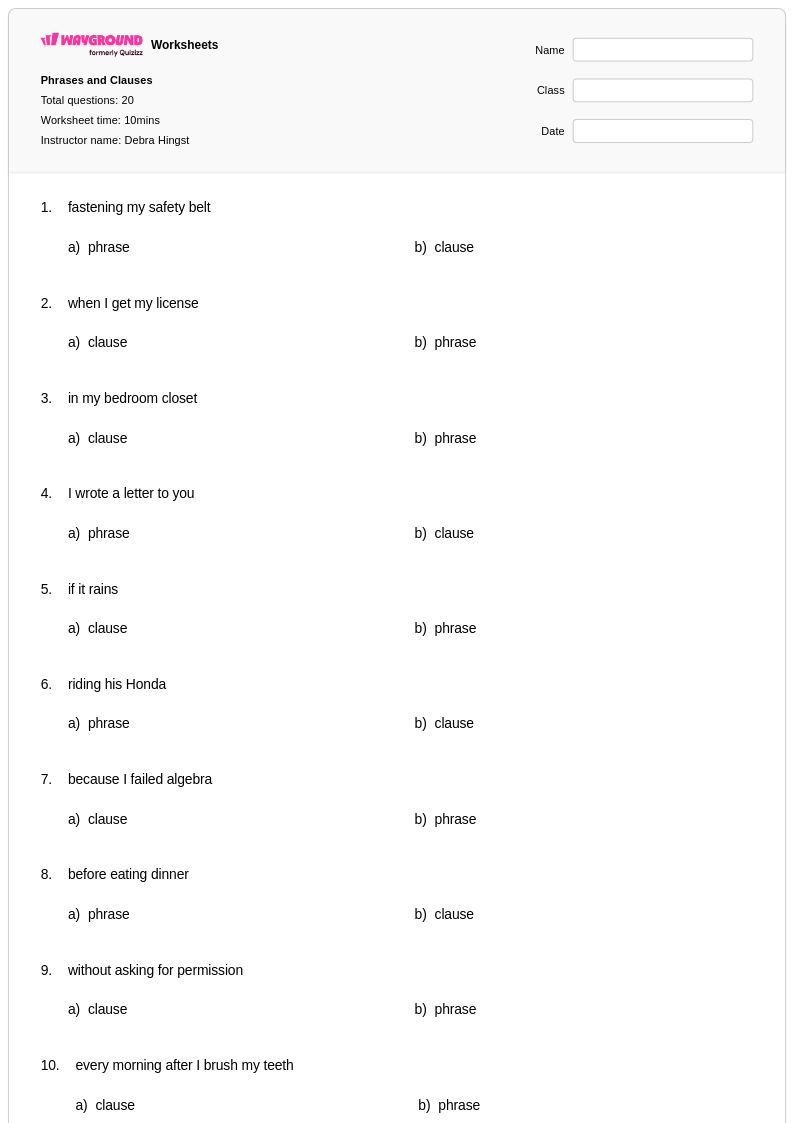
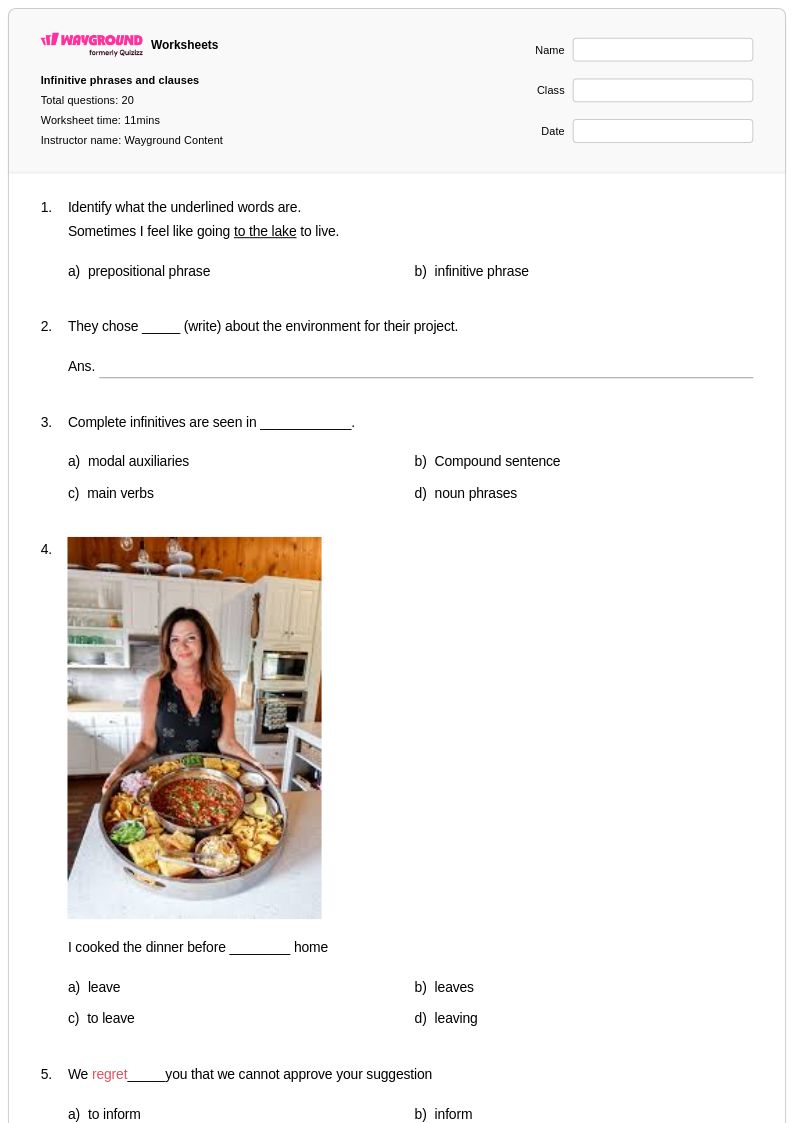
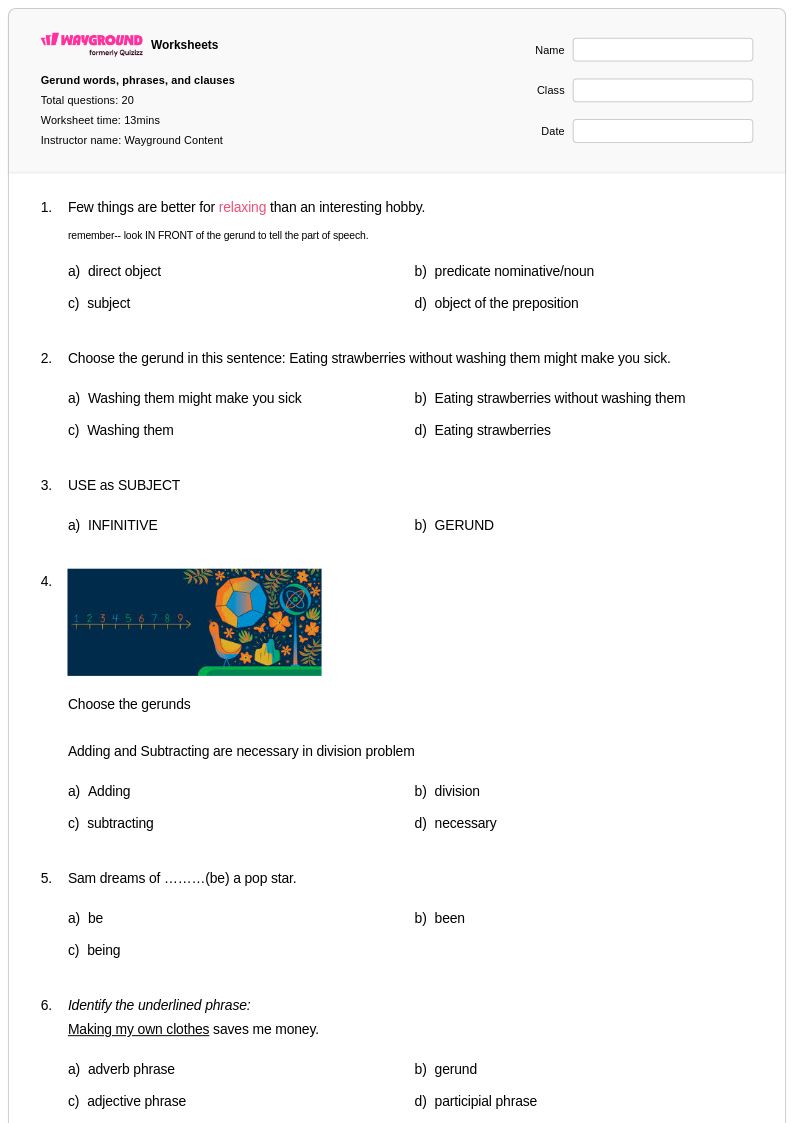
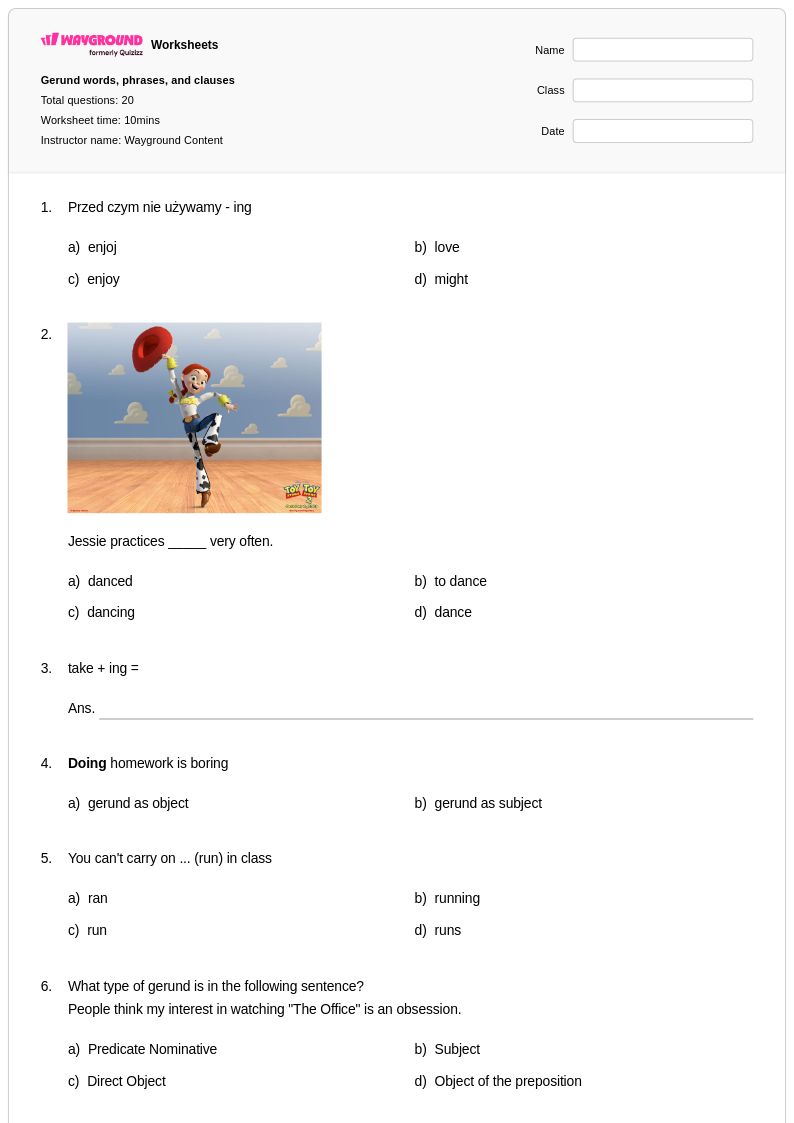
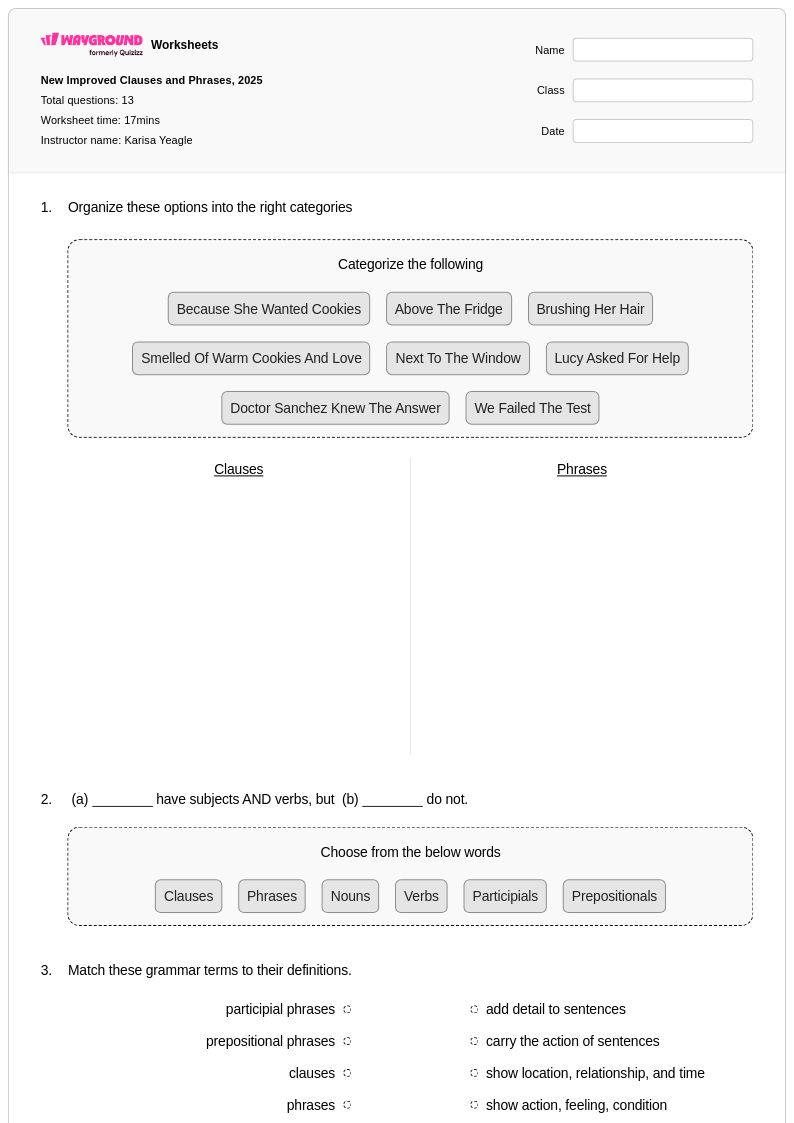
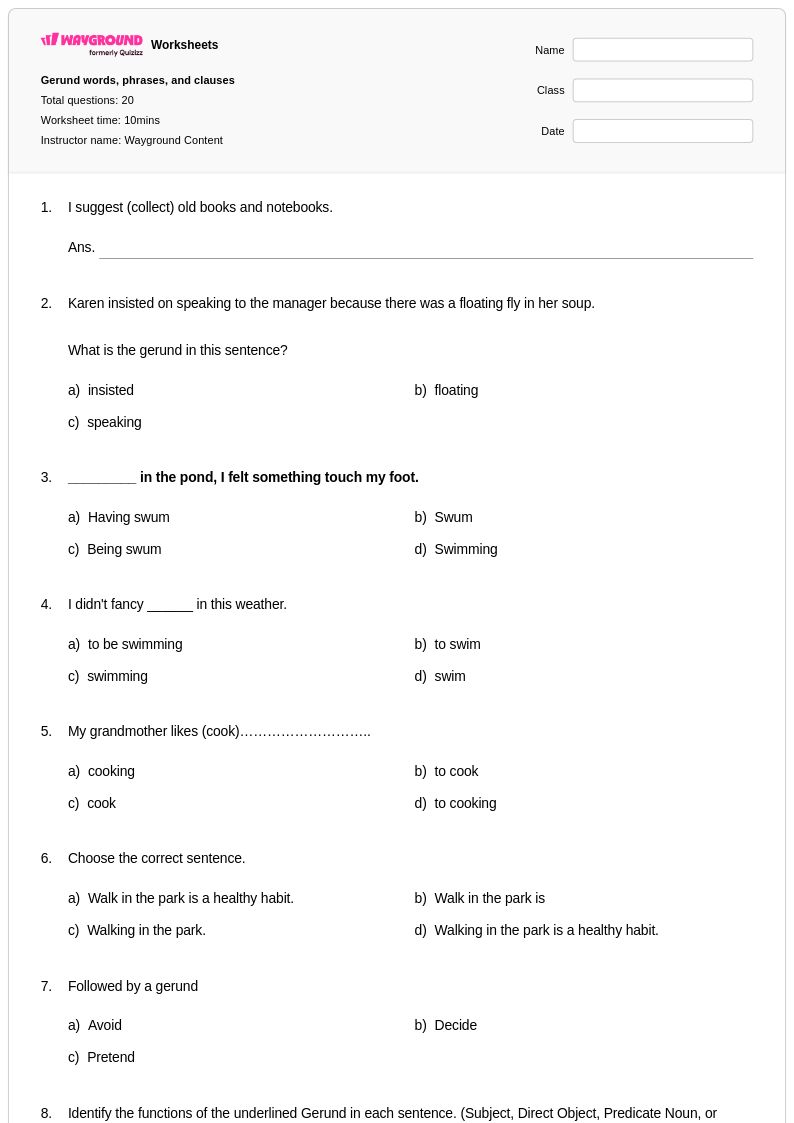
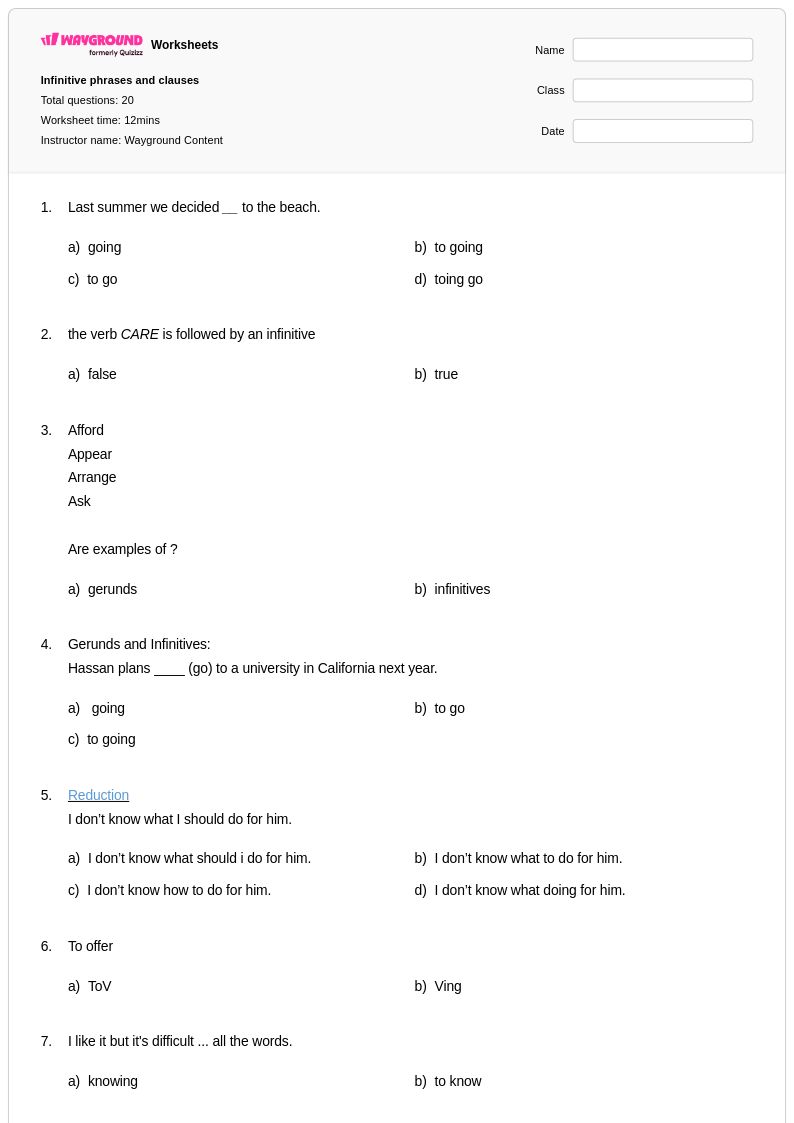
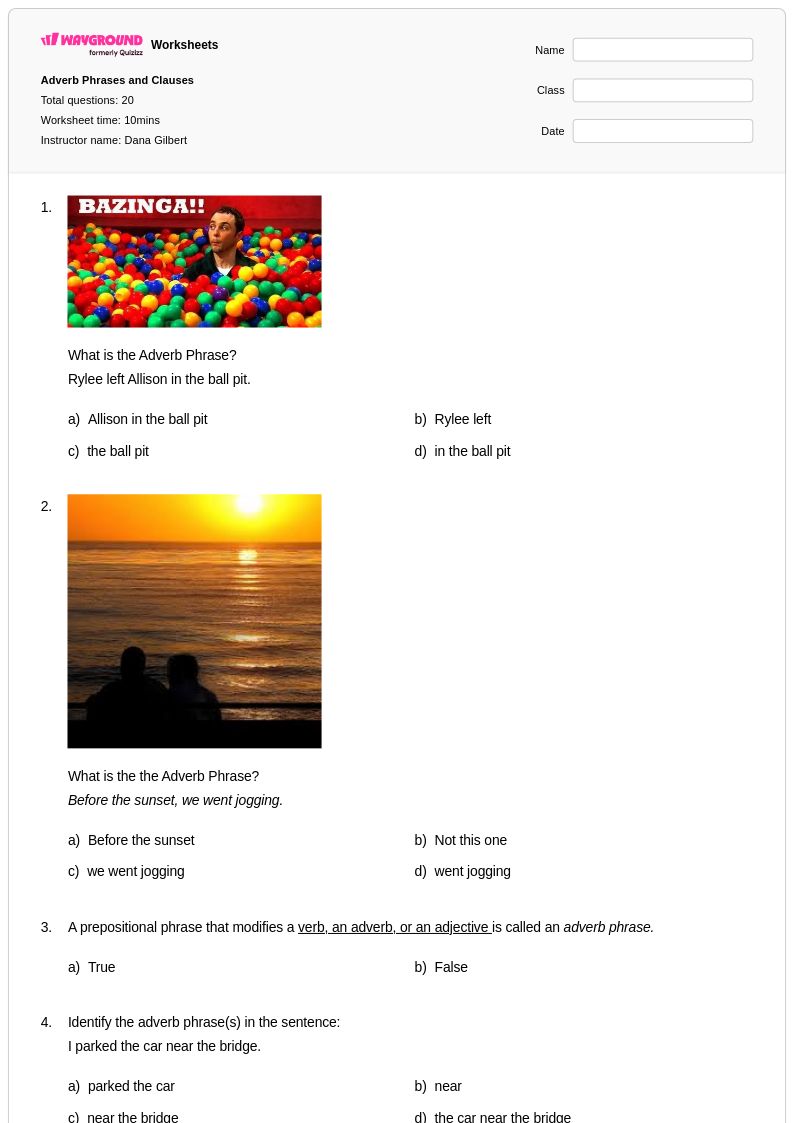
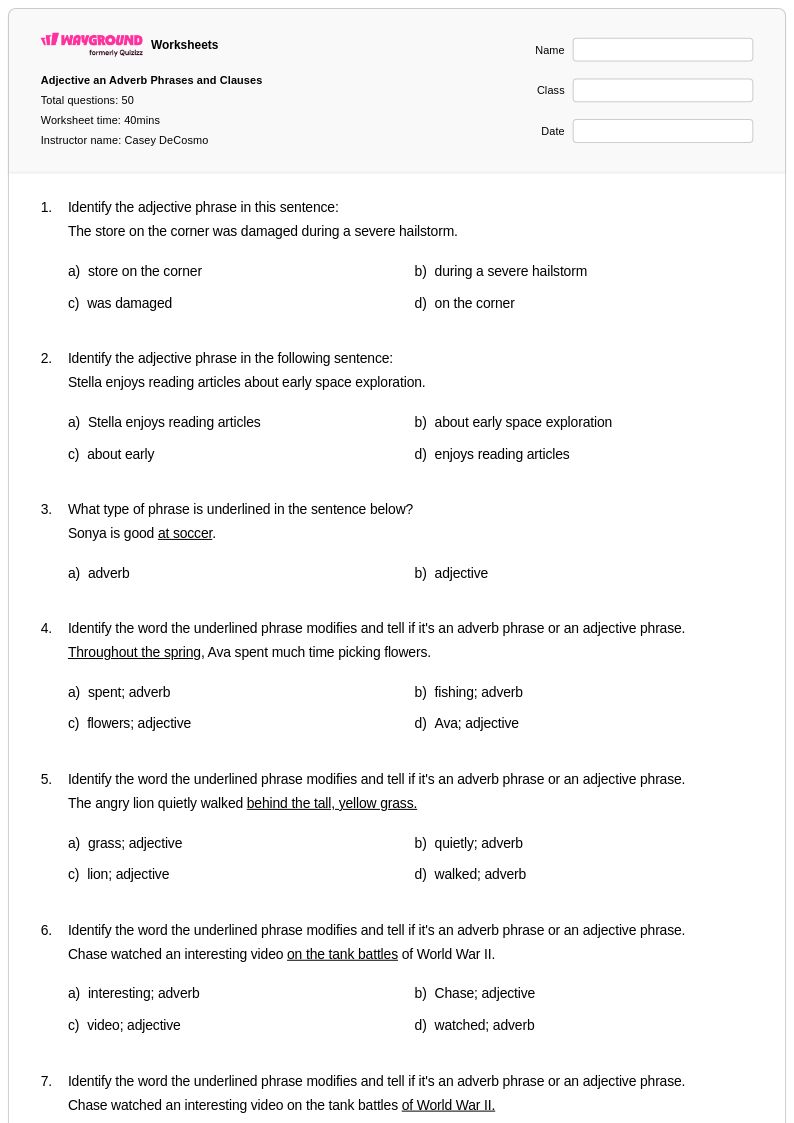
Phrases and clauses worksheets for Class 8 students available through Wayground (formerly Quizizz) provide comprehensive practice in identifying, analyzing, and constructing these fundamental components of sentence structure. These educational resources strengthen students' ability to distinguish between dependent and independent clauses, recognize various phrase types including prepositional, participial, and appositive phrases, and understand how these elements function within complex sentences. Each worksheet collection includes detailed answer keys and is available as free printables in convenient pdf format, offering practice problems that progress from basic identification exercises to more sophisticated sentence combining and analysis tasks that challenge eighth-grade students to apply their knowledge of grammatical relationships.
Wayground (formerly Quizizz) empowers educators with millions of teacher-created resources specifically designed to support phrases and clauses instruction at the Class 8 level. The platform's robust search and filtering capabilities allow teachers to quickly locate worksheets aligned with specific standards and learning objectives, while built-in differentiation tools enable customization for students at varying skill levels. These comprehensive collections are available in both printable pdf and interactive digital formats, providing flexible options for classroom instruction, homework assignments, and assessment preparation. Teachers can efficiently plan targeted lessons, provide focused remediation for struggling students, offer enrichment opportunities for advanced learners, and ensure consistent skill practice through carefully scaffolded exercises that build grammatical competency systematically.
FAQs
How do I teach the difference between phrases and clauses?
The clearest entry point is the subject-verb test: a clause contains both a subject and a verb, while a phrase does not. Start by having students identify the verb in a sentence, then ask whether there is a subject performing that action. Once students can reliably apply this test, move to distinguishing independent clauses (complete thoughts) from dependent clauses (incomplete thoughts that rely on the main clause). Introduce phrase types — prepositional, participial, infinitive — one at a time, always in the context of real sentences rather than in isolation.
What exercises help students practice identifying phrases and clauses?
Sentence parsing exercises are the most effective, where students label each underlined portion of a sentence as a specific phrase or clause type. Combining exercises — where students merge two simple sentences using a subordinating conjunction or relative clause — reinforce how clauses function structurally, not just definitionally. Targeted practice on specific phrase types, such as circling all prepositional phrases in a paragraph, builds recognition before students tackle mixed identification tasks.
What mistakes do students commonly make when identifying clauses?
The most frequent error is misidentifying a dependent clause as an independent one because it contains both a subject and a verb — students forget that the presence of a subordinating conjunction (e.g., 'because', 'although', 'when') makes the clause dependent. Students also confuse participial phrases with clauses because participial phrases contain verb forms; reinforcing that a participle is not a finite verb helps correct this. A third common error is treating any long phrase as a clause, so consistent practice returning to the subject-verb test is essential.
How do I help struggling students tell phrases apart from each other?
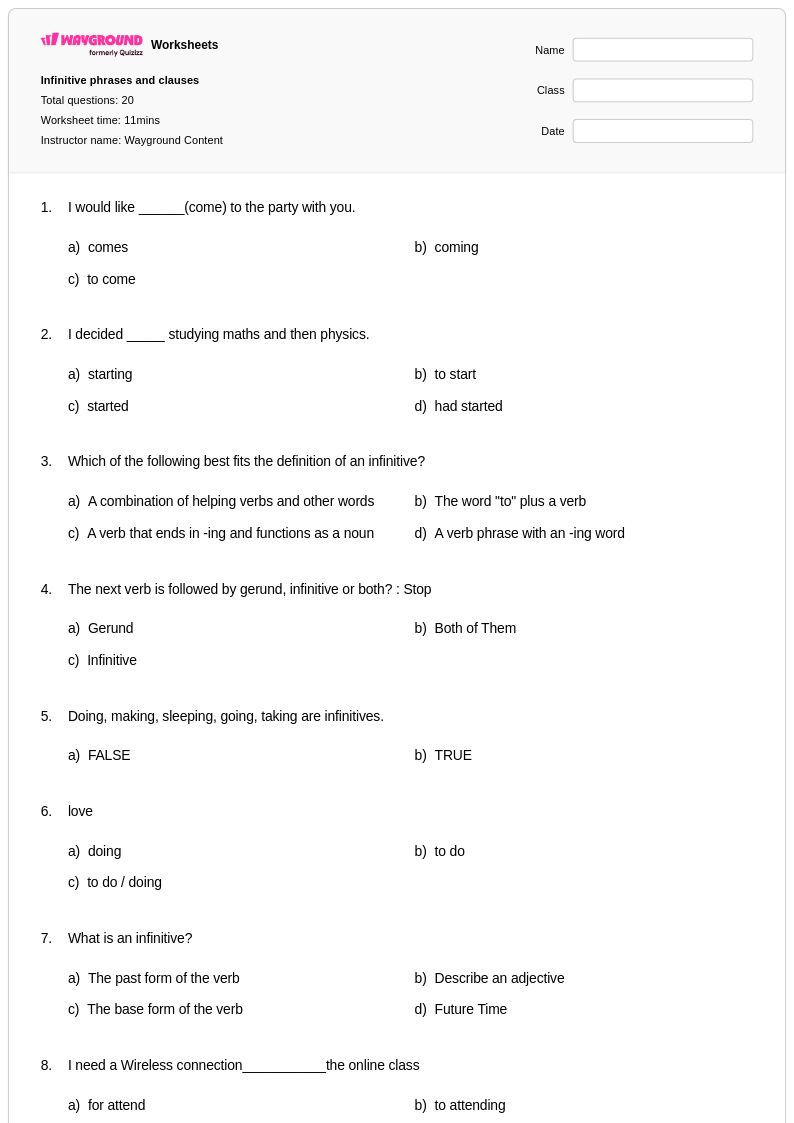
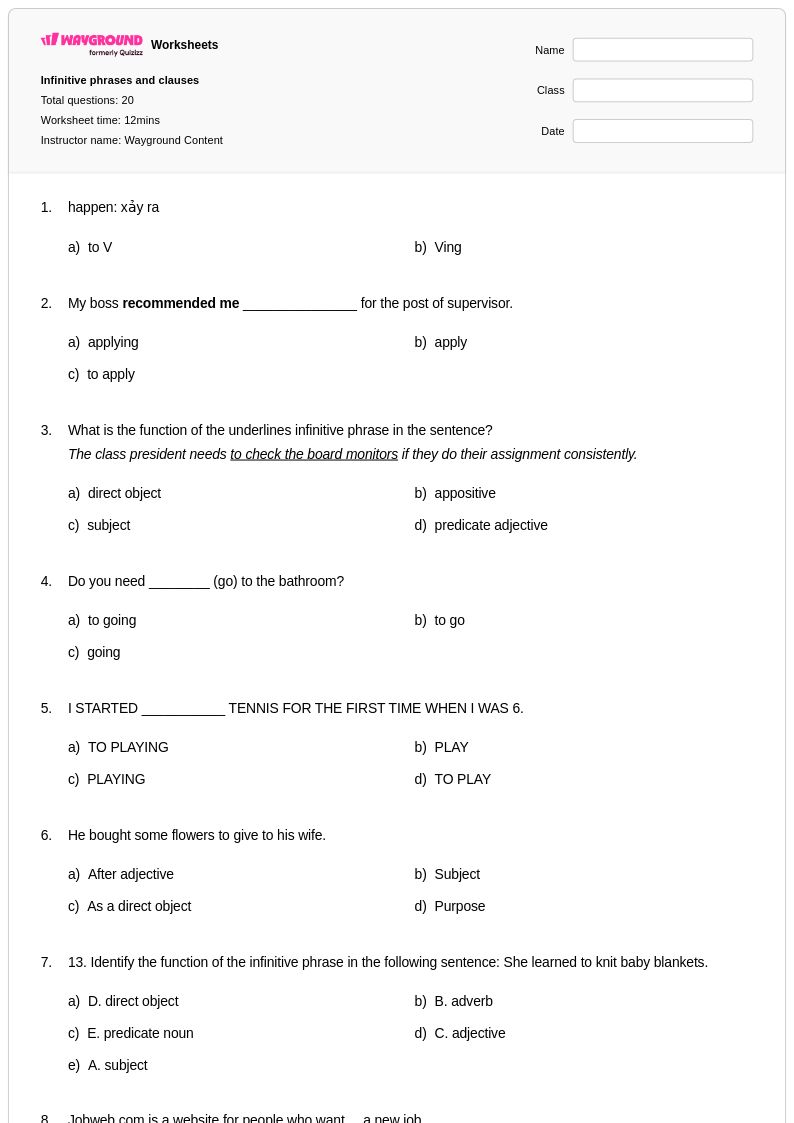
Teach one phrase type at a time using a single anchor question: prepositional phrases begin with a preposition and end before a noun, infinitive phrases begin with 'to' plus a base verb, and participial phrases begin with a present or past participle. Color-coding or underlining different phrase types within the same sentence gives visual learners a concrete tool. For students who need additional support, Wayground allows teachers to enable the Read Aloud accommodation so questions are read to students, and Reduced Answer Choices to lower cognitive load during practice.
How do phrases and clauses connect to student writing?
Understanding phrases and clauses directly improves sentence variety and syntactic maturity in student writing. Students who can deliberately use introductory participial phrases, embedded relative clauses, and stacked prepositional phrases move beyond simple subject-verb-object sentences toward the more complex constructions expected in middle and high school writing. Teaching grammar in the context of mentor sentences — showing how published writers use these structures — reinforces the connection between analysis and application.
How do I use Wayground's phrases and clauses worksheets in my classroom?
Wayground's phrases and clauses worksheets are available as printable PDFs for traditional classroom use and in digital formats for technology-integrated environments, giving teachers flexibility across in-person, hybrid, and remote settings. Teachers can also host worksheets as a quiz directly on Wayground, enabling real-time progress tracking. Complete answer keys are included with every worksheet, so teachers can assess student work efficiently without additional preparation.