Free Printable Plant Biology Worksheets for Class 2
Explore our free Class 2 plant biology worksheets and printables that help young students discover how plants grow, their parts, and basic life cycles through engaging practice problems and comprehensive answer keys.
Explore printable Plant Biology worksheets for Class 2
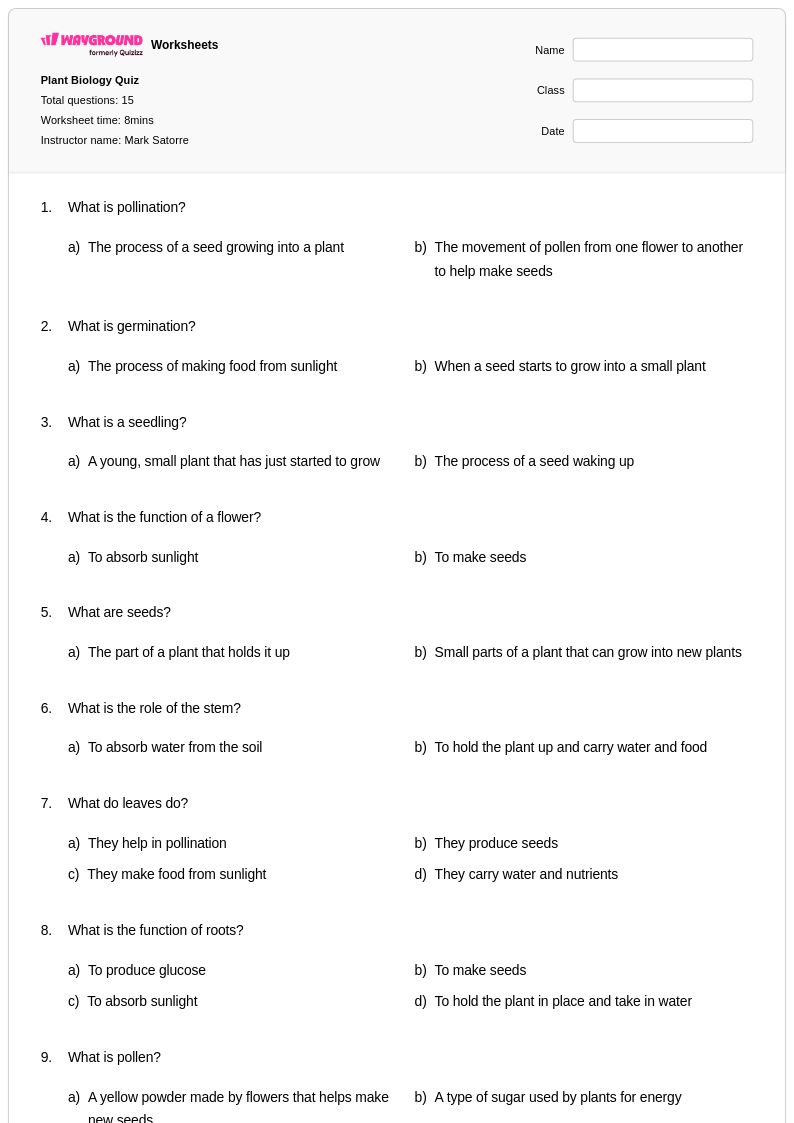
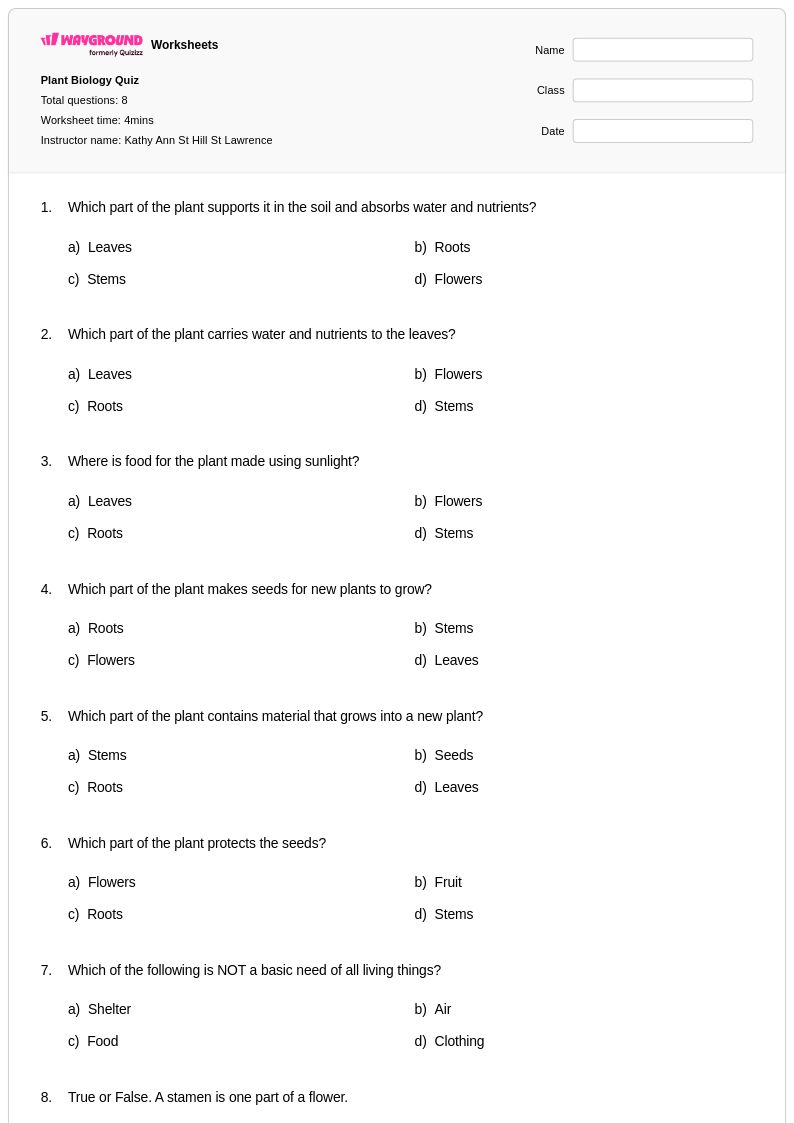
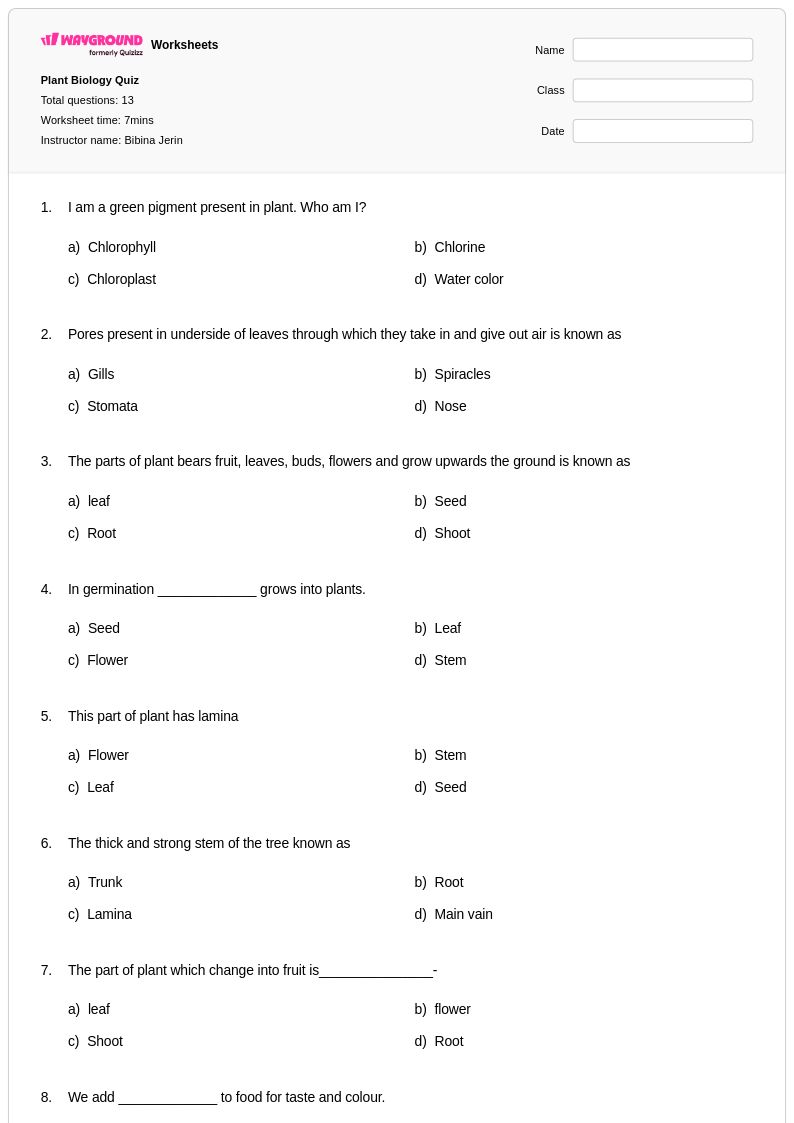
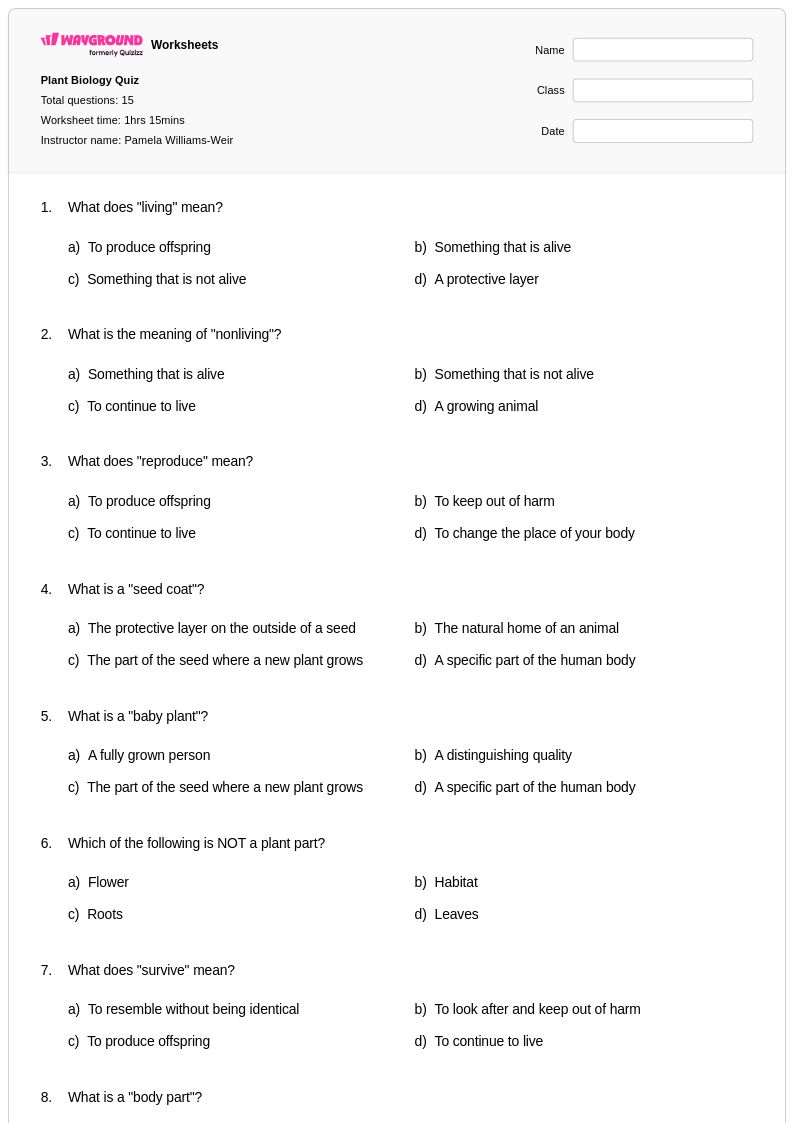
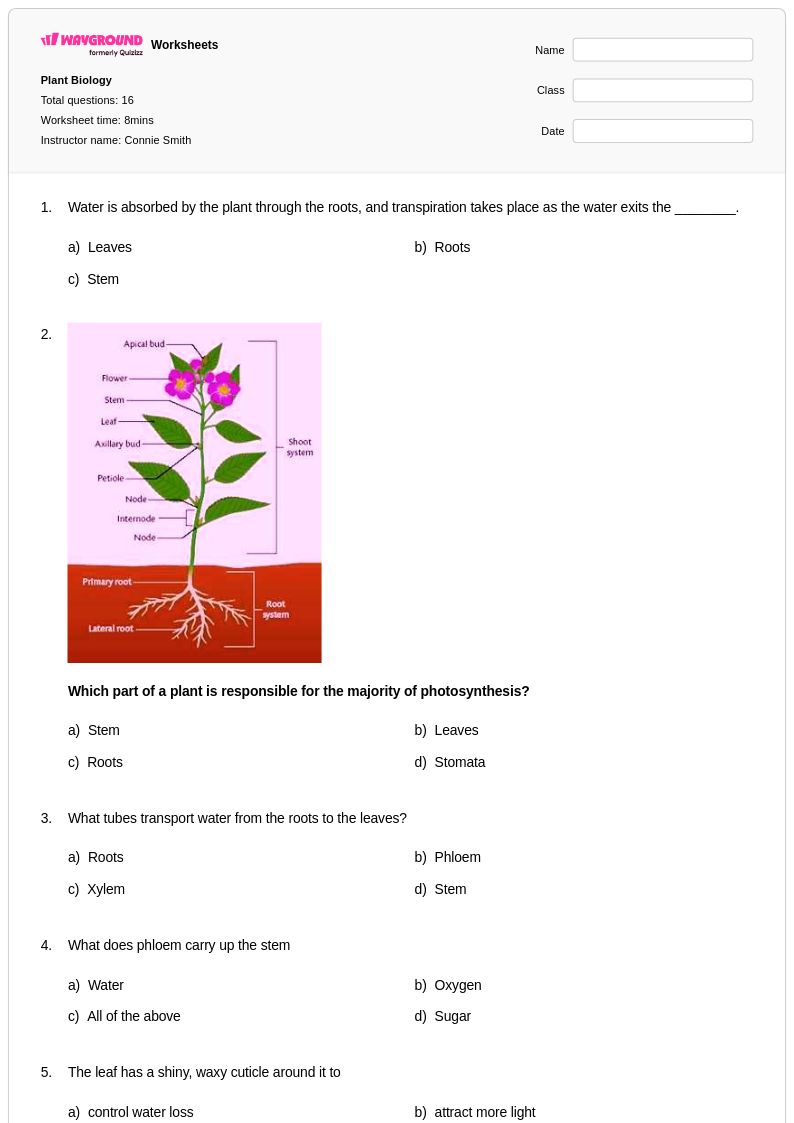
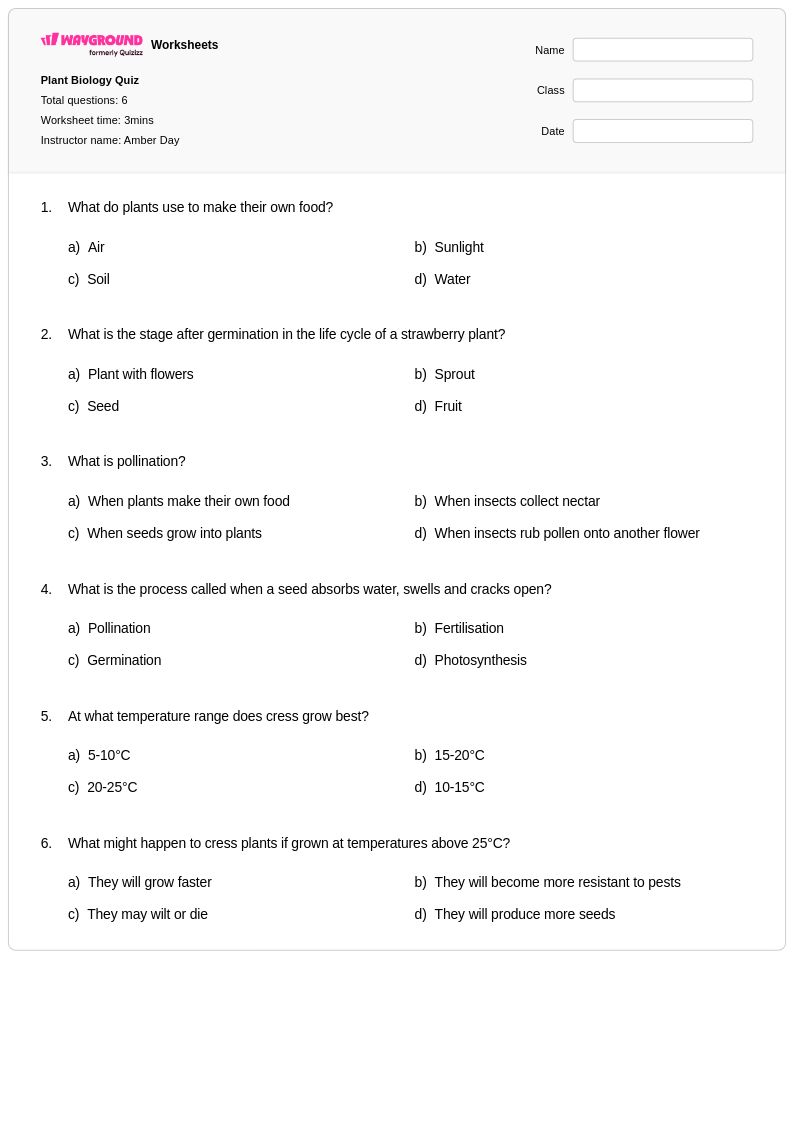
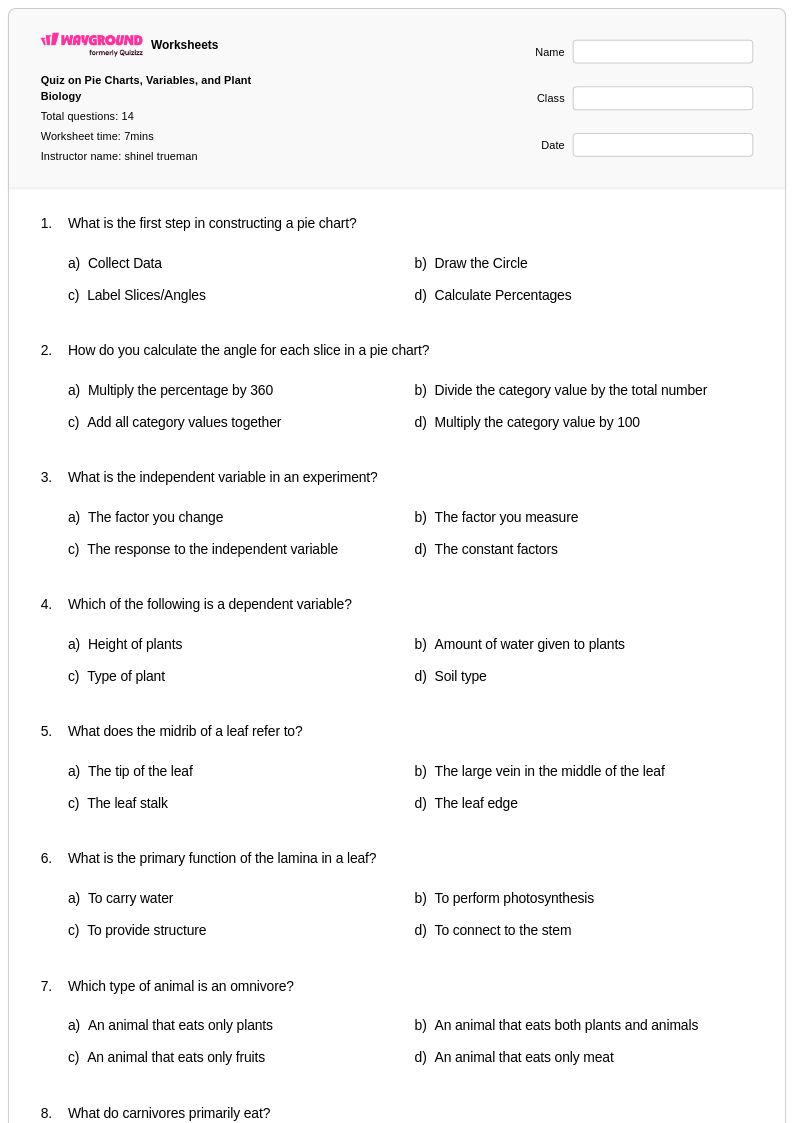
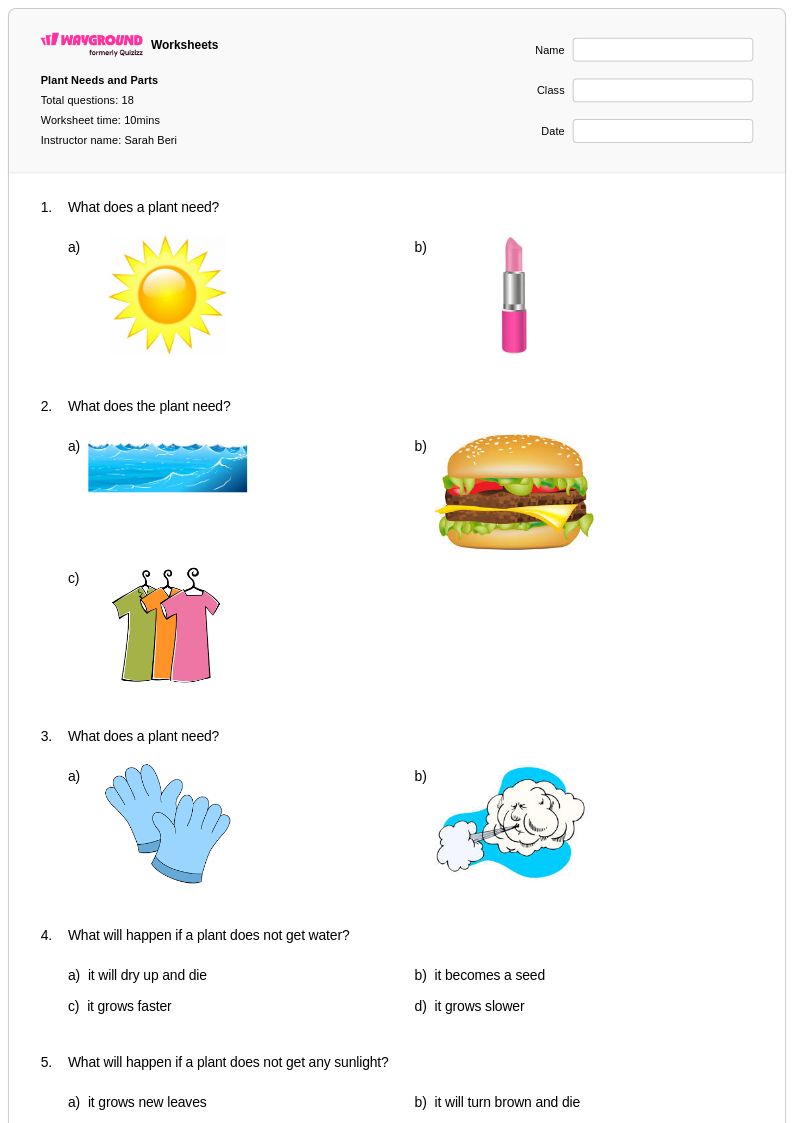
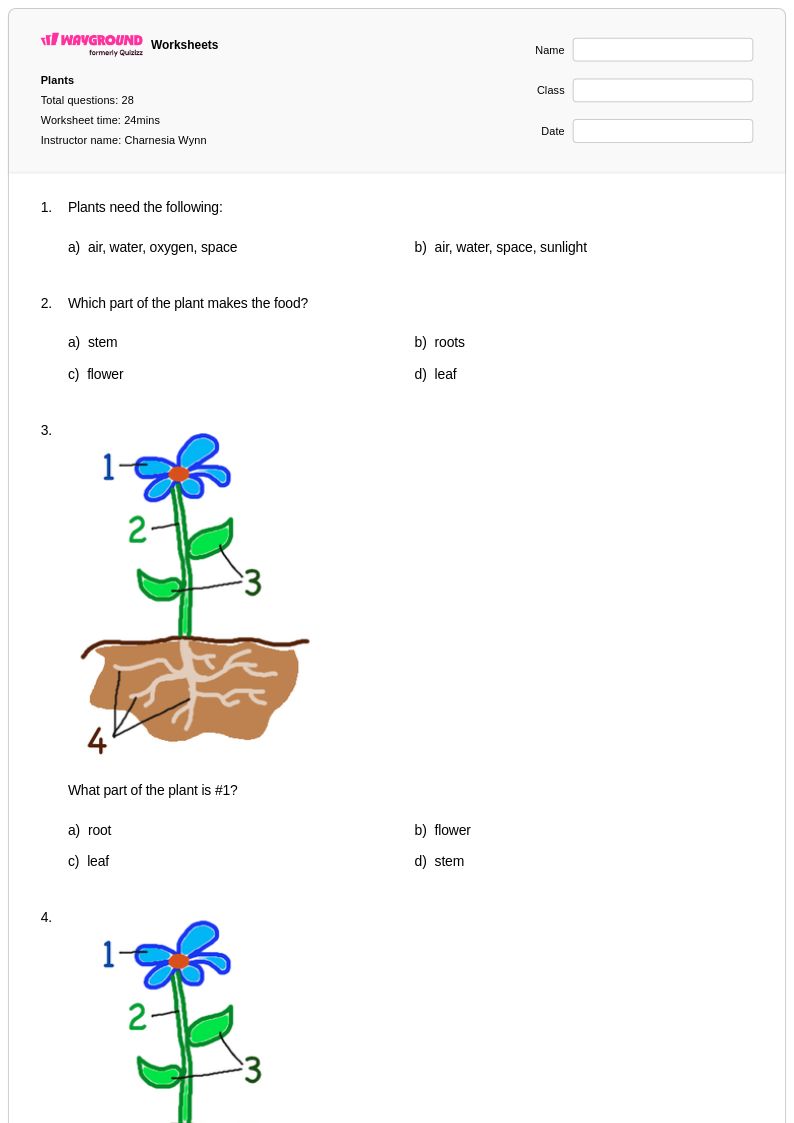
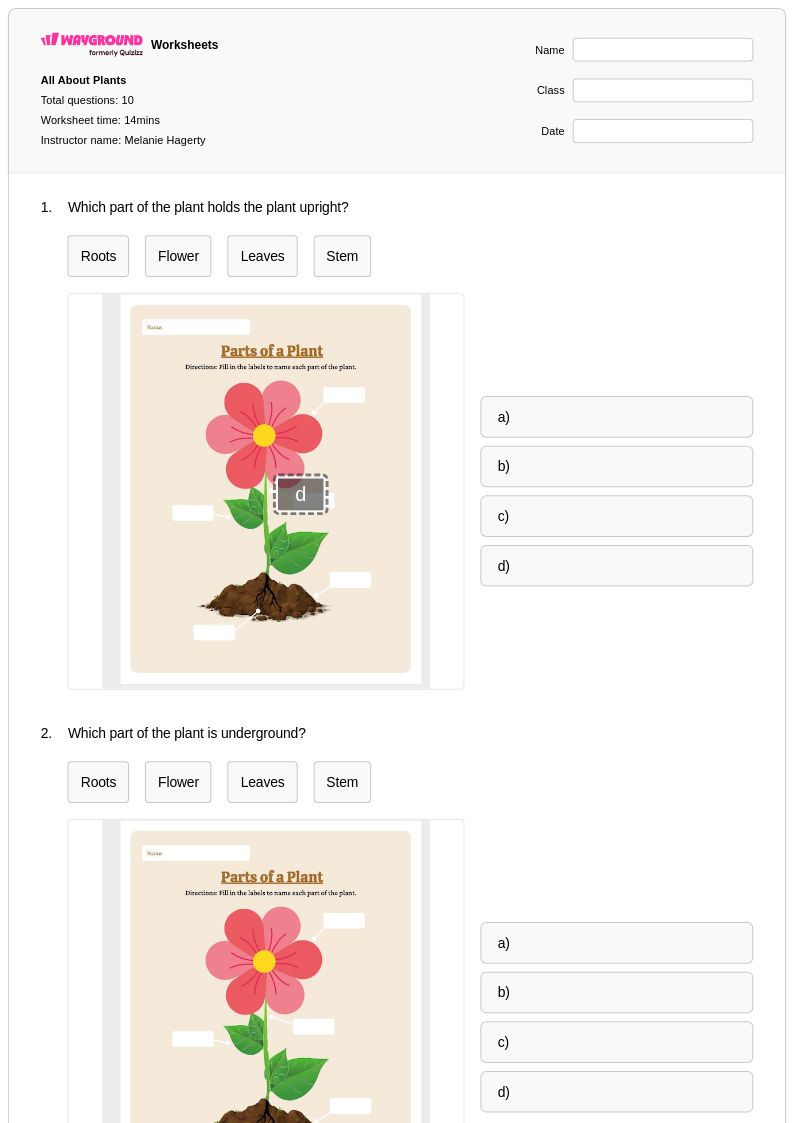
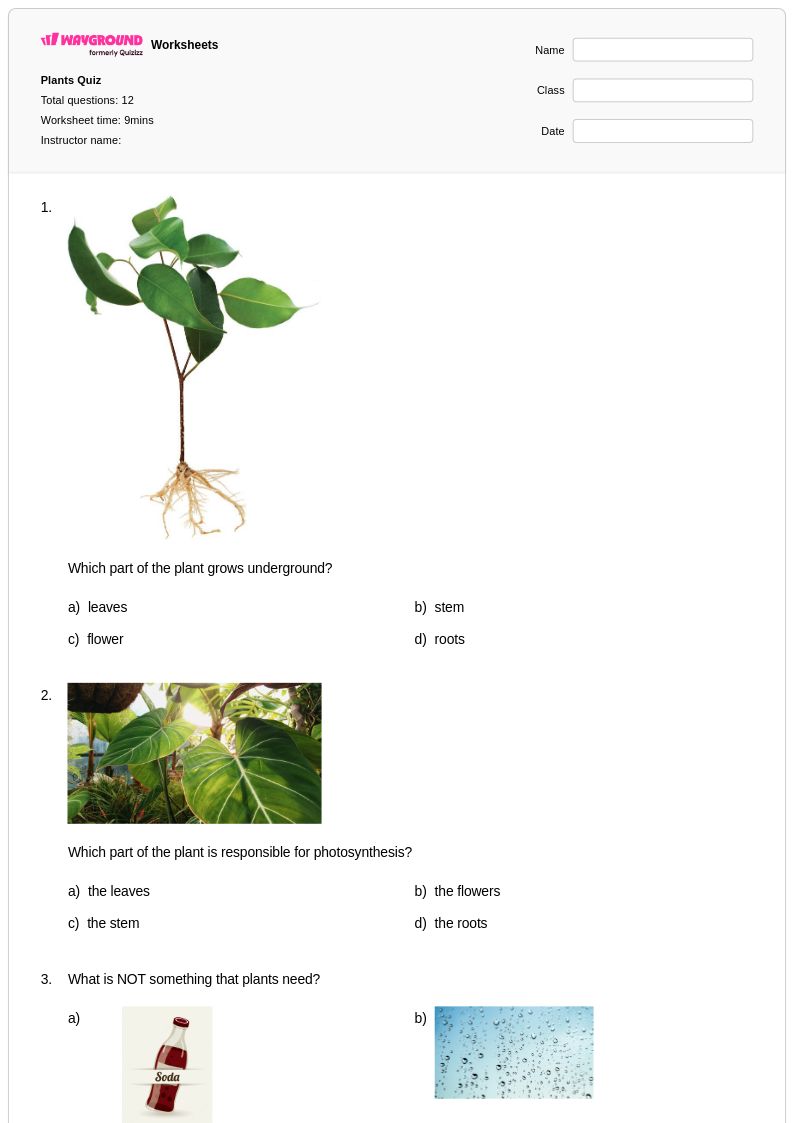
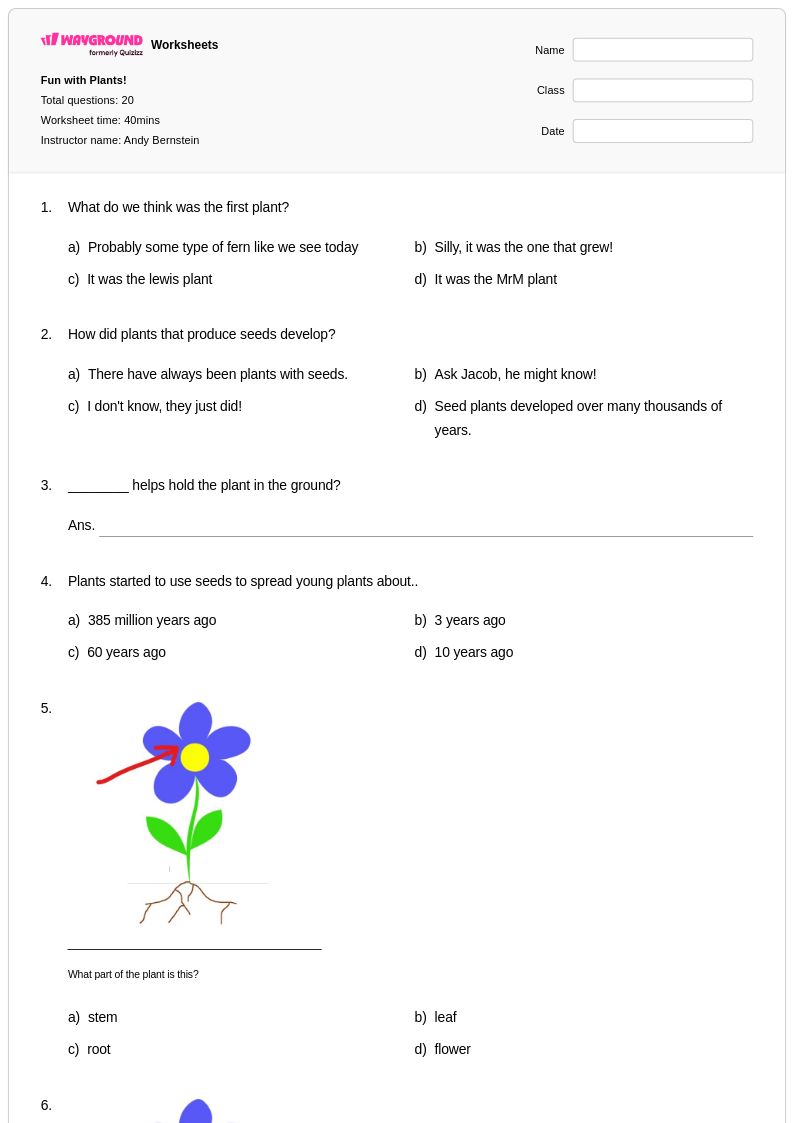
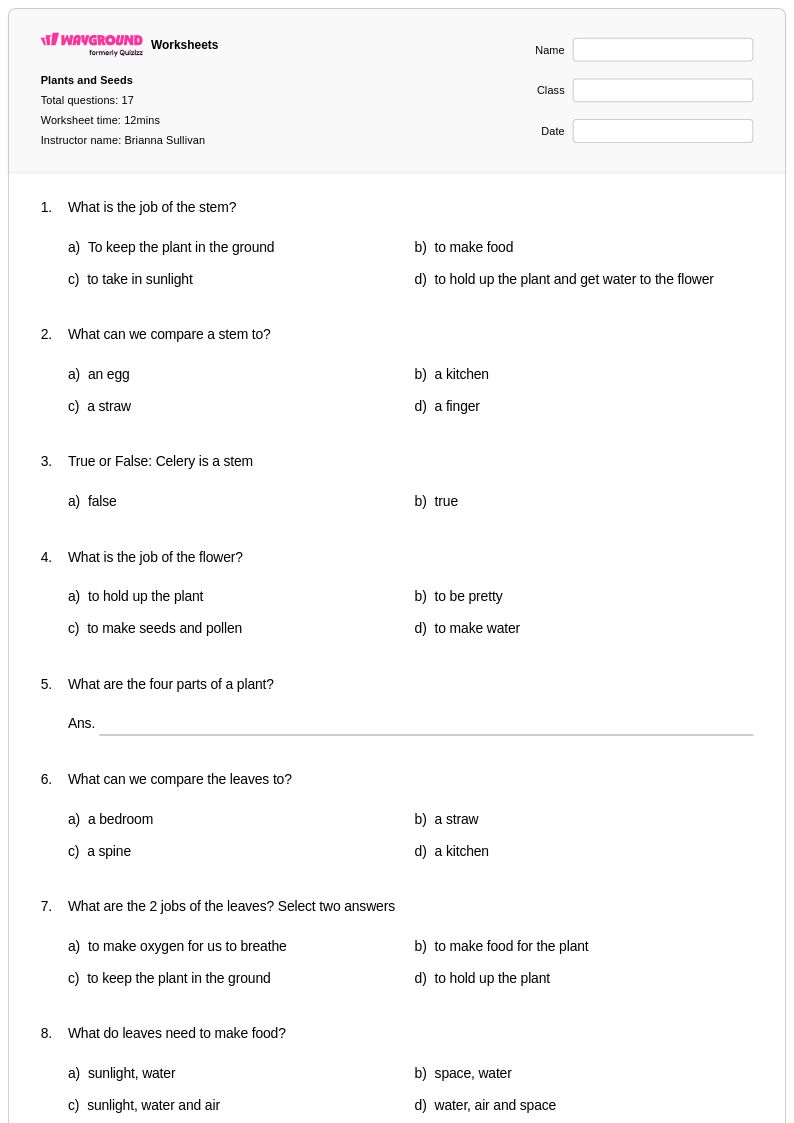
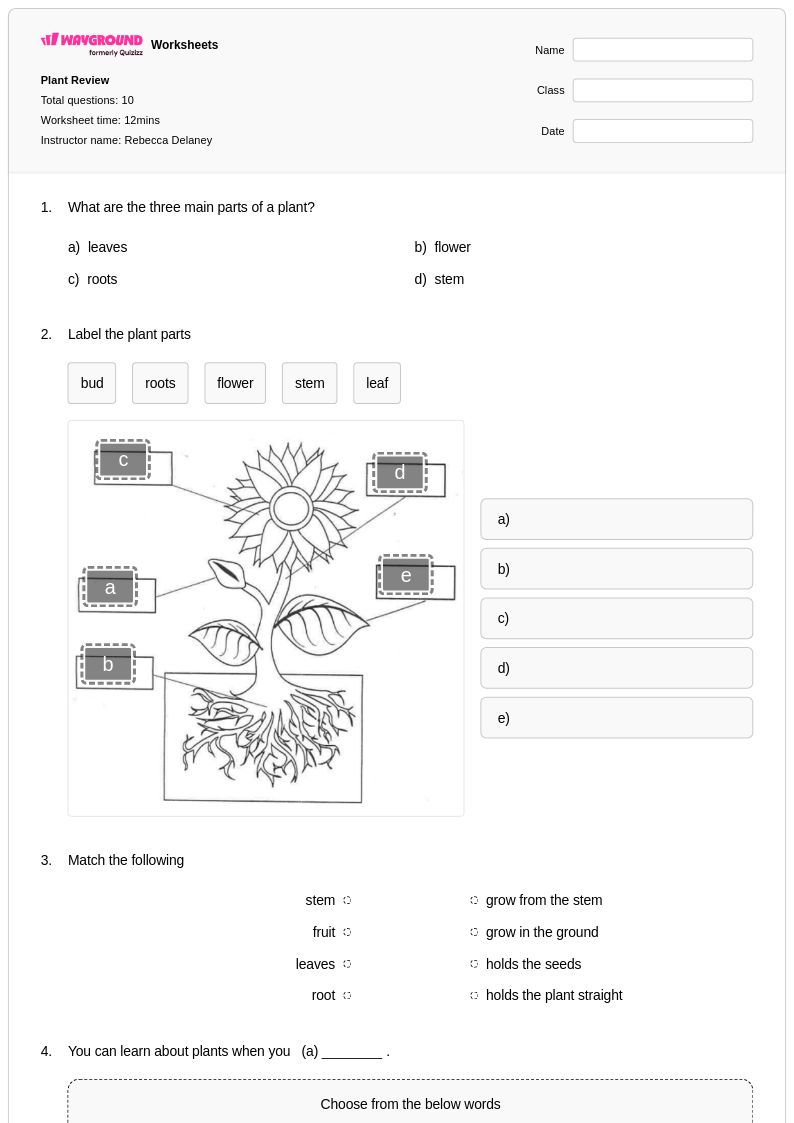
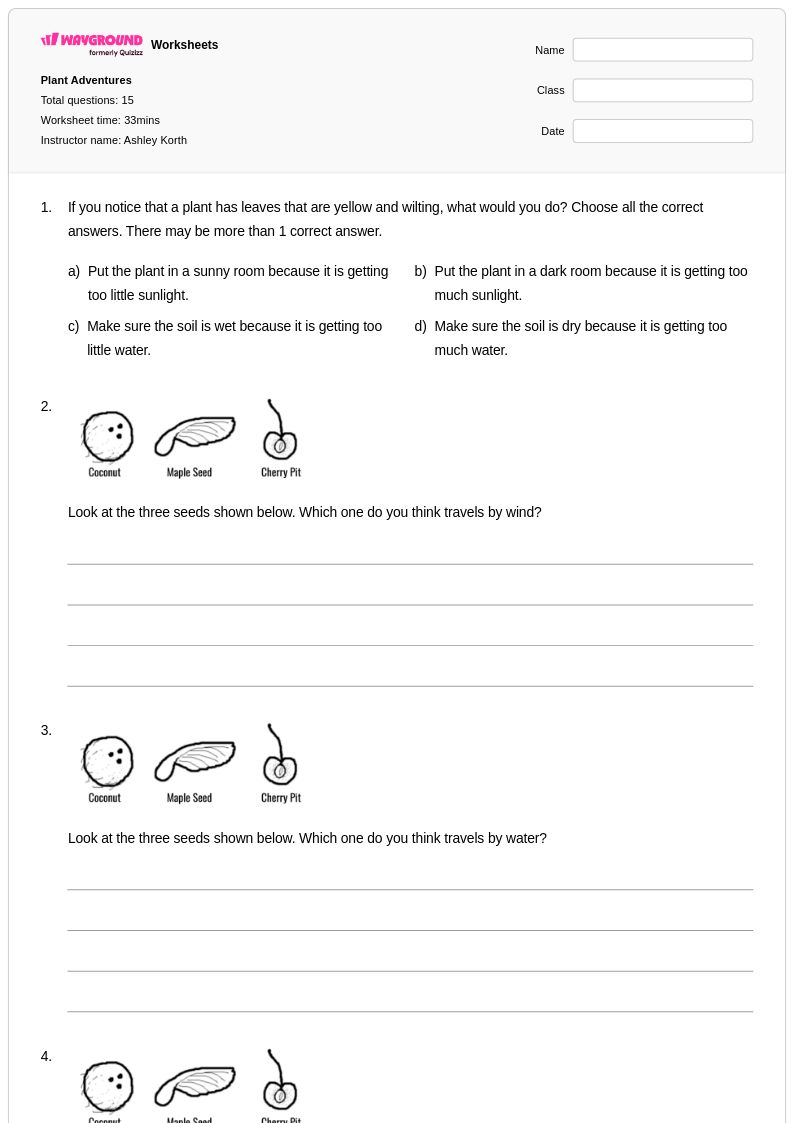
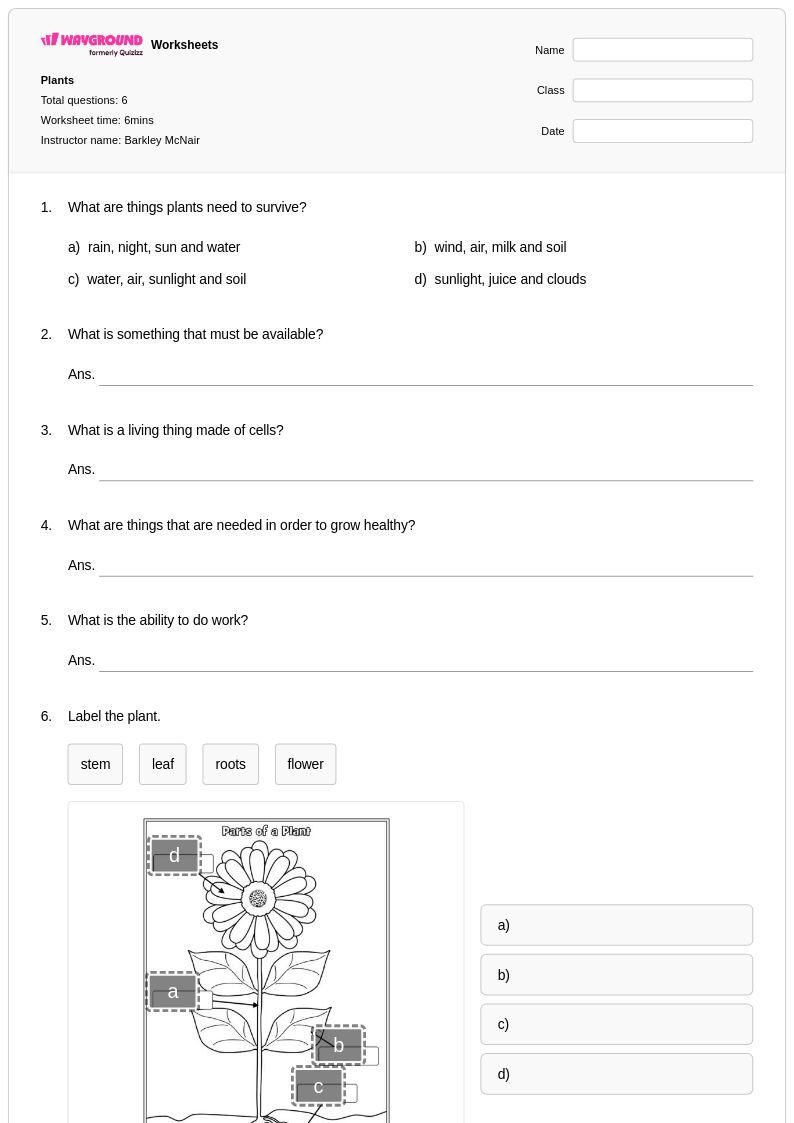
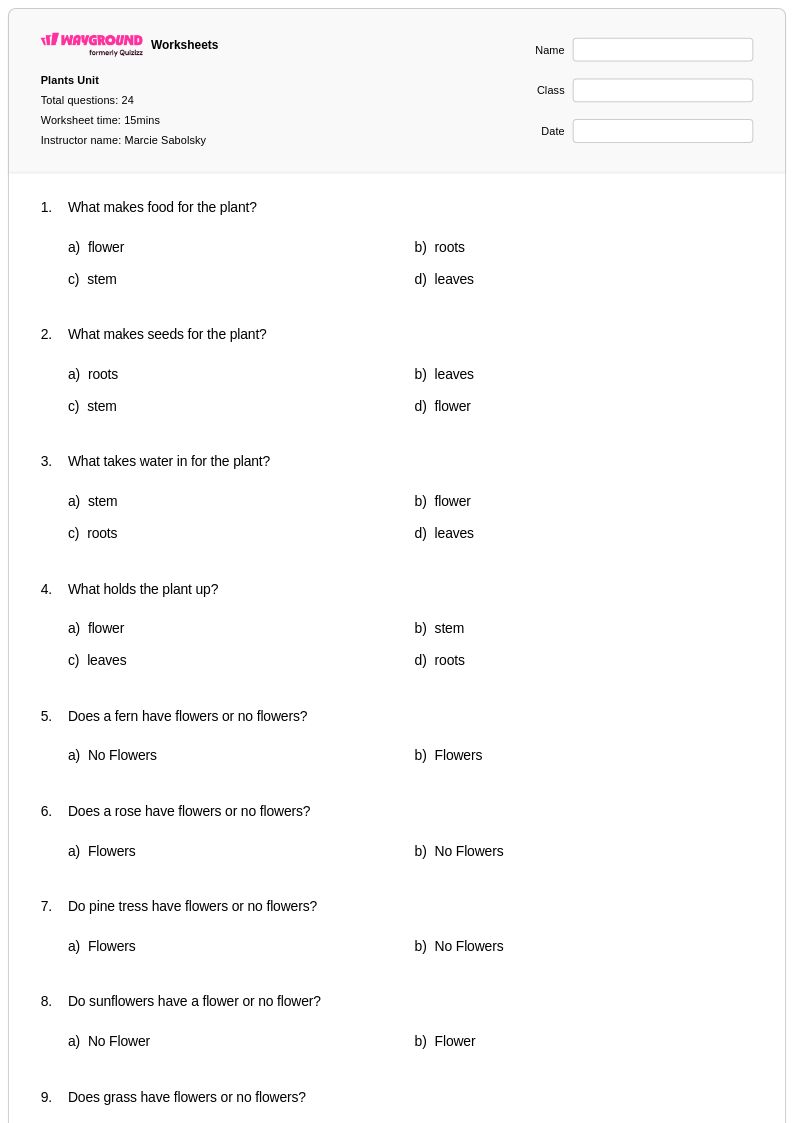
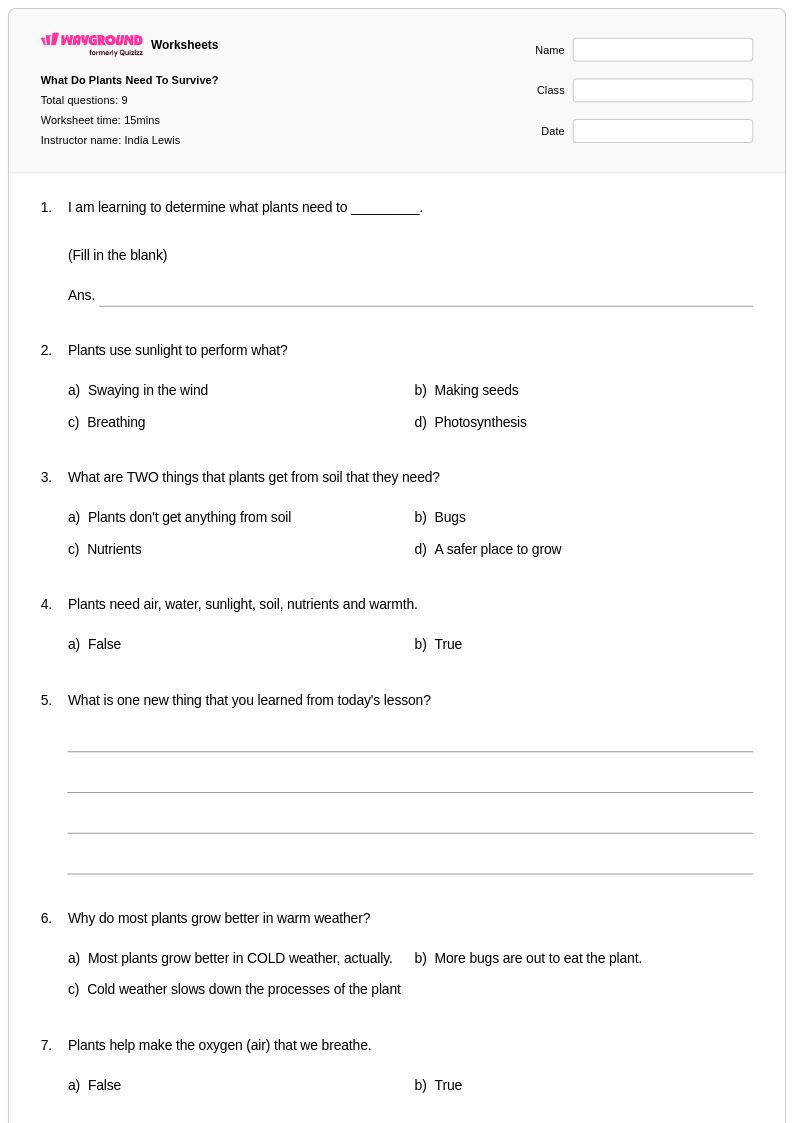
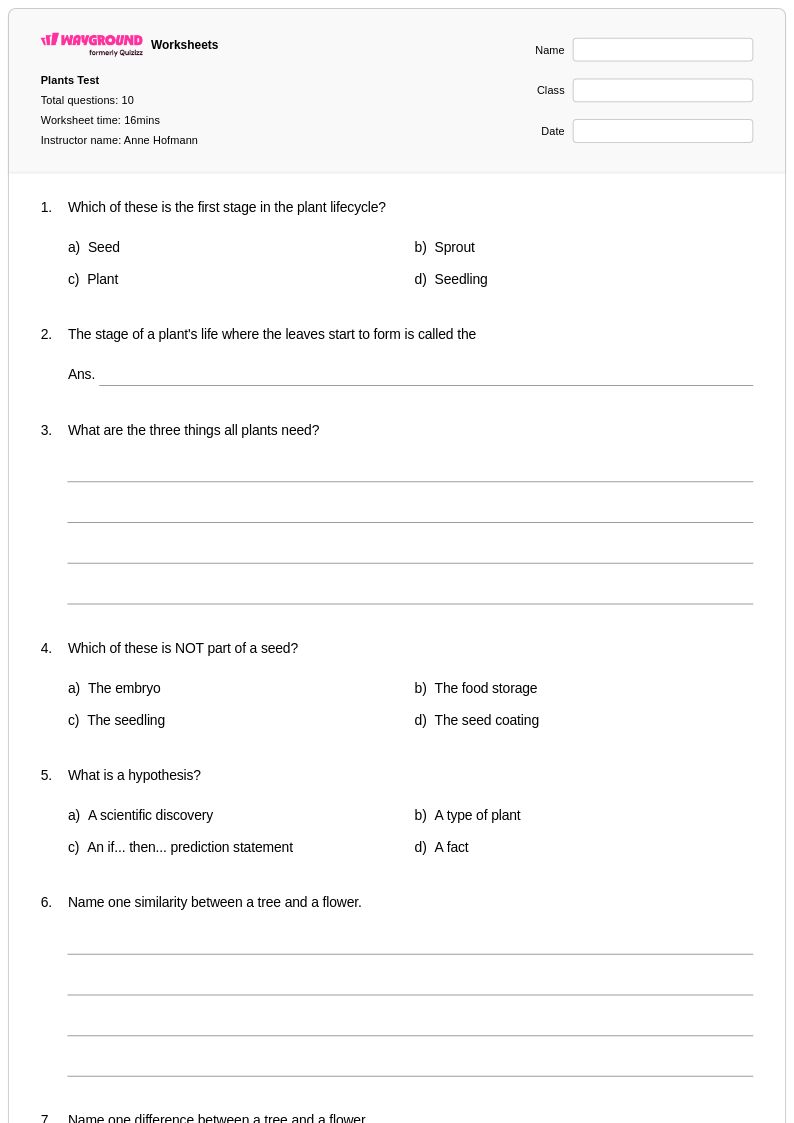
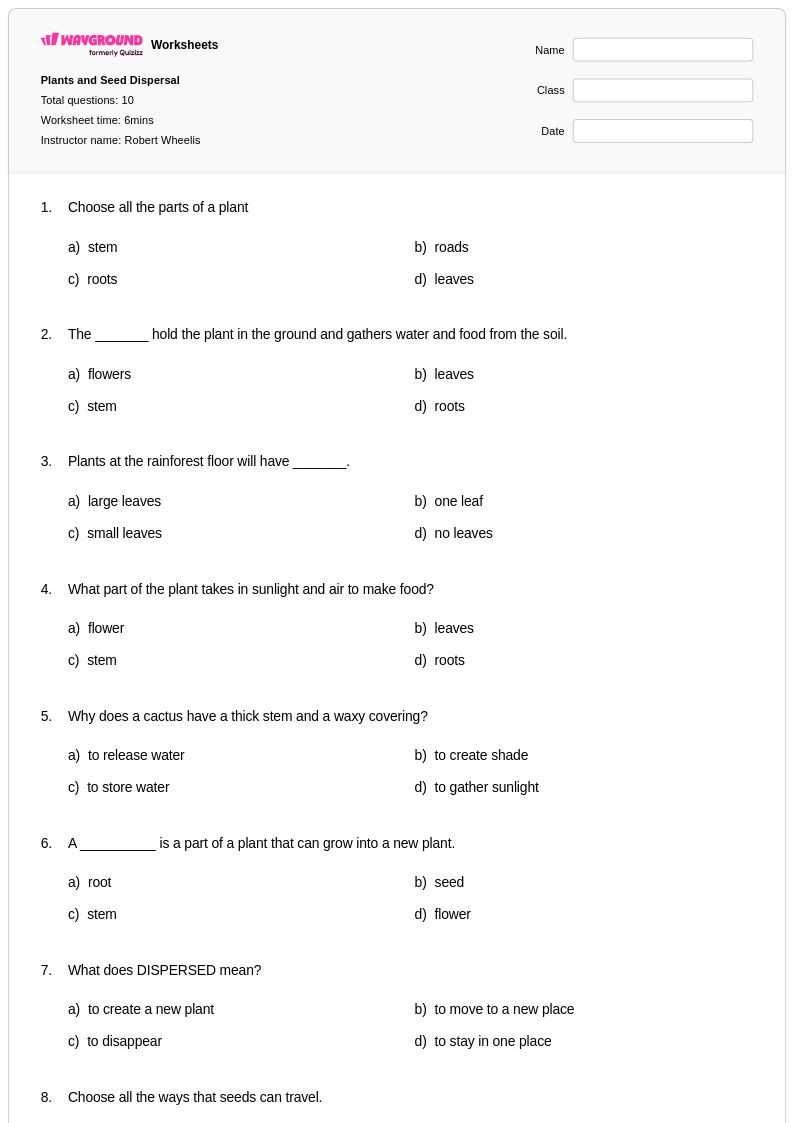
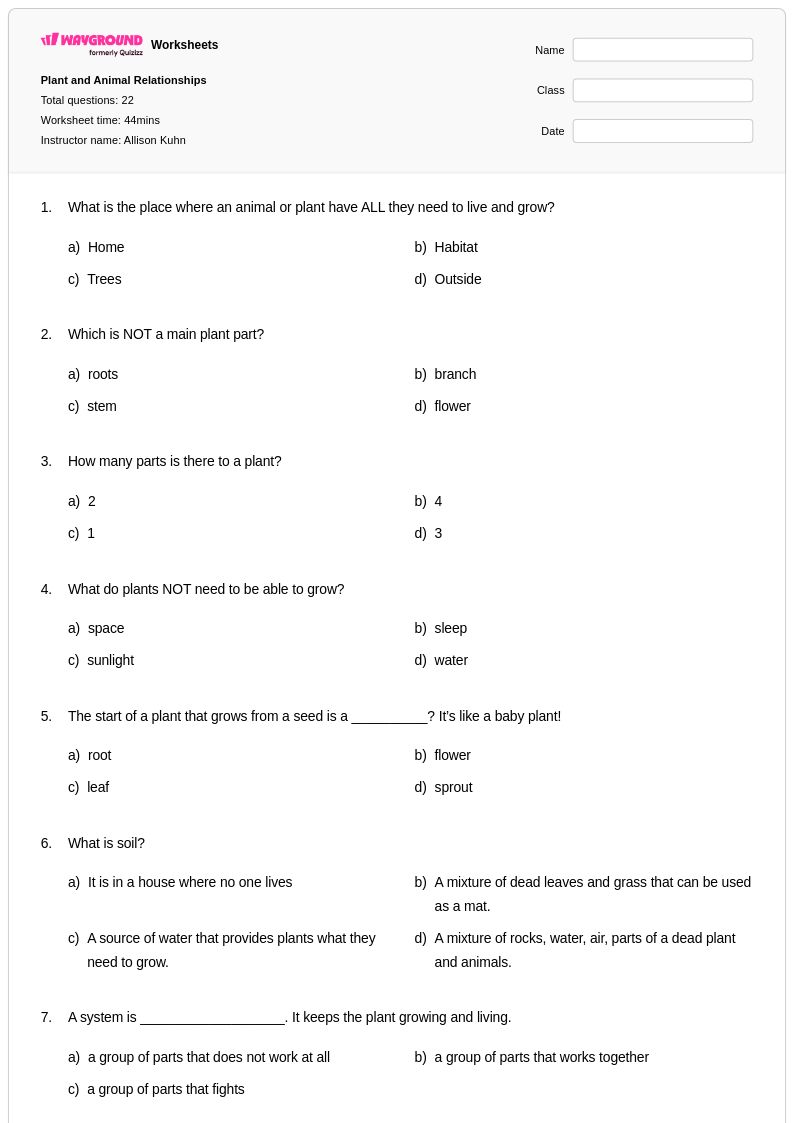
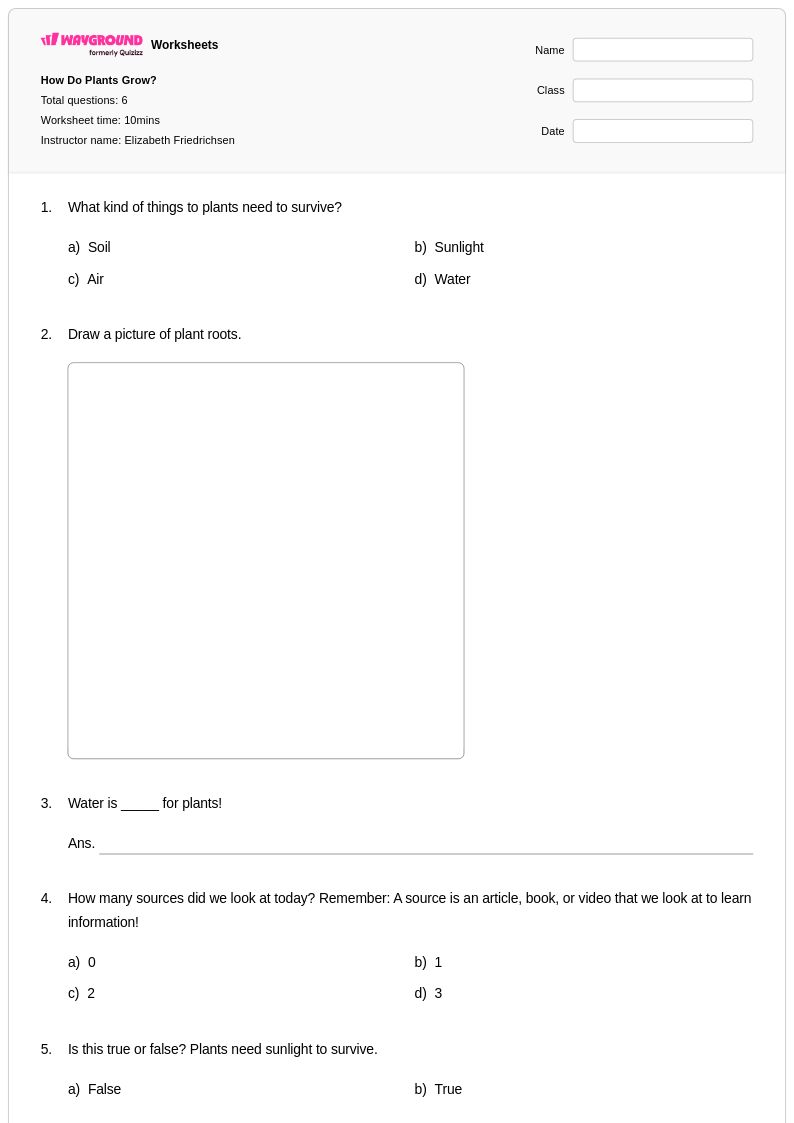
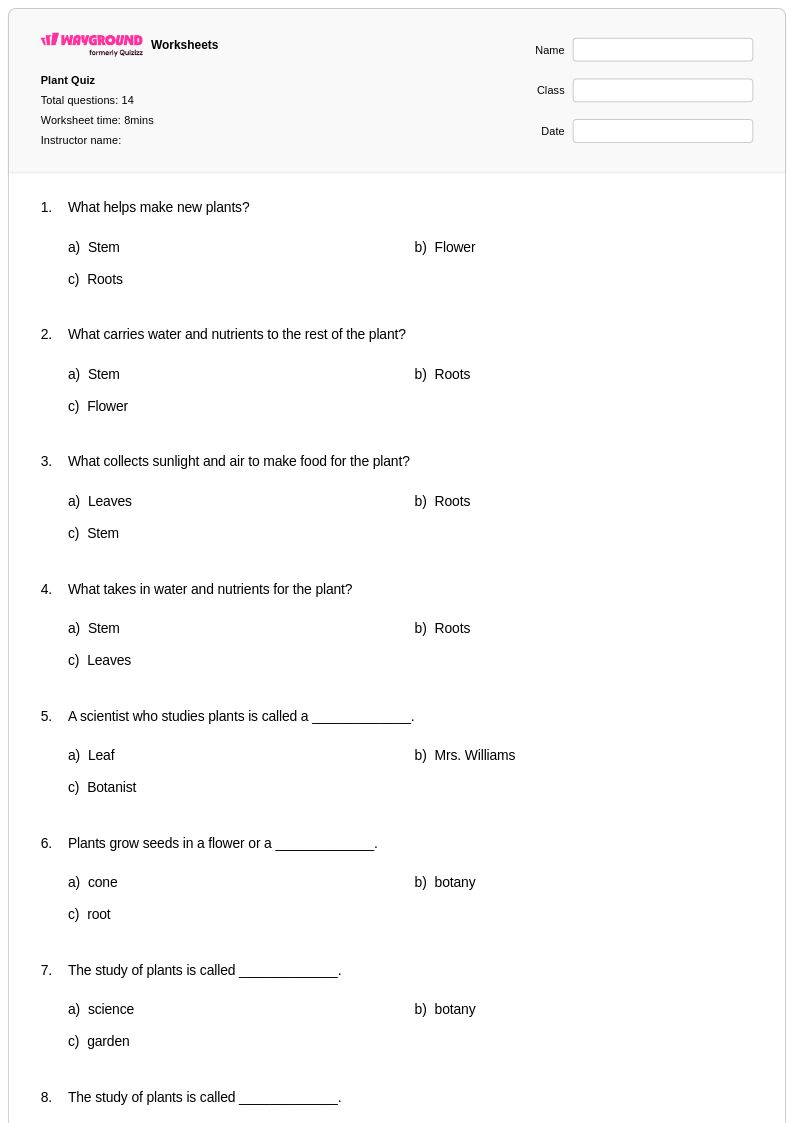
Plant biology worksheets for Class 2 students available through Wayground (formerly Quizizz) provide young learners with engaging, age-appropriate activities that build foundational understanding of how plants grow, function, and interact with their environment. These carefully designed resources strengthen essential scientific observation skills while introducing concepts such as plant parts and their functions, basic plant needs like water and sunlight, seed germination processes, and the differences between various types of plants. Each worksheet collection includes comprehensive answer keys and practice problems that allow students to explore botanical concepts through hands-on activities, visual identification exercises, and simple experiments that make plant science accessible and memorable for developing minds. The free printables offer structured learning opportunities that help second graders develop scientific vocabulary and begin to understand the natural world around them.
Wayground (formerly Quizizz) supports educators with millions of teacher-created plant biology resources specifically curated for elementary science instruction, featuring robust search and filtering capabilities that allow teachers to quickly locate materials aligned with their curriculum standards and learning objectives. The platform's differentiation tools enable instructors to customize worksheets for varying ability levels within their Class 2 classrooms, while flexible formatting options provide both printable pdf versions for traditional paper-based activities and digital formats for interactive learning experiences. These comprehensive collections facilitate effective lesson planning by offering ready-to-use materials for skill practice, targeted remediation for students who need additional support with plant concepts, and enrichment activities that challenge advanced learners to explore botanical topics in greater depth, ensuring that every student can successfully engage with fundamental plant biology principles.
FAQs
How do I teach plant biology effectively in a middle or high school classroom?
Effective plant biology instruction typically moves from structure to function — start with plant anatomy (roots, stems, leaves, reproductive organs) before introducing physiological processes like photosynthesis, transpiration, and cellular respiration. Connecting each structure to its ecological role helps students build a coherent mental model rather than memorizing isolated facts. Incorporating visual labeling activities and diagram analysis reinforces spatial understanding of plant organization.
What exercises help students practice photosynthesis and other plant processes?
Practice problems that require students to trace the inputs and outputs of photosynthesis, transpiration, and cellular respiration are particularly effective because they force active recall rather than passive recognition. Diagram labeling, tissue organization tasks, and plant classification exercises build procedural fluency alongside conceptual understanding. Worksheet sets that include both guided problems and open-ended analysis questions support students at different readiness levels.
What common mistakes do students make when learning about plant biology?
A frequent misconception is that plants only perform photosynthesis and not cellular respiration — students often fail to recognize that plants respire continuously while photosynthesizing only in light. Another common error is conflating plant structure with animal analogues, such as assuming roots function identically to animal digestive systems. Students also regularly confuse the roles of xylem and phloem, reversing which tissue transports water versus sugars.
How can I differentiate plant biology worksheets for students with different learning needs?
For students who need additional support, simplifying diagram complexity and reducing the number of answer choices on identification tasks can lower cognitive load without removing rigor. On Wayground, teachers can apply individual accommodations such as reduced answer choices, read aloud support, and extended time to specific students while the rest of the class works with standard settings. Advanced learners can be challenged with enrichment problems focused on plant adaptations, ecological relationships, and complex physiological interactions.
How do I use Wayground's plant biology worksheets in my classroom?
Wayground's plant biology worksheets are available as printable PDFs for traditional classroom use and in digital formats for technology-integrated environments, giving teachers flexibility for homework, in-class practice, or formative assessment. You can also host any worksheet as a live quiz directly on Wayground, which enables real-time participation and automatic grading. Each worksheet includes a detailed answer key, so they work equally well for teacher-led instruction or independent student study.
How do I assess student understanding of plant anatomy and botanical processes?
Formative assessment in plant biology works well when tasks require students to explain relationships — for example, describing how leaf morphology supports a plant's adaptation to its environment — rather than simply labeling parts. Error analysis is also a useful assessment approach: presenting students with an incorrectly labeled diagram and asking them to identify and correct mistakes reveals depth of understanding. Practice problems with detailed answer keys allow teachers to quickly identify where students are applying concepts incorrectly.