

18 Q
3rd - Uni
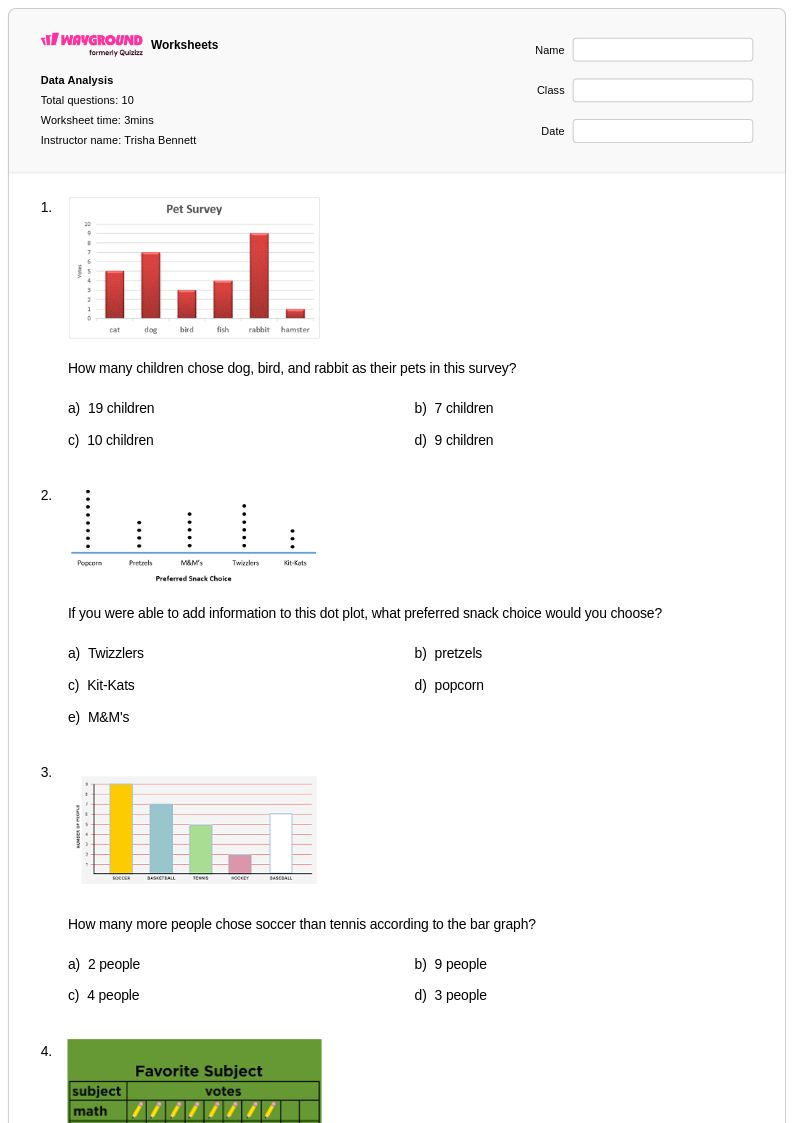
10 Q
3rd
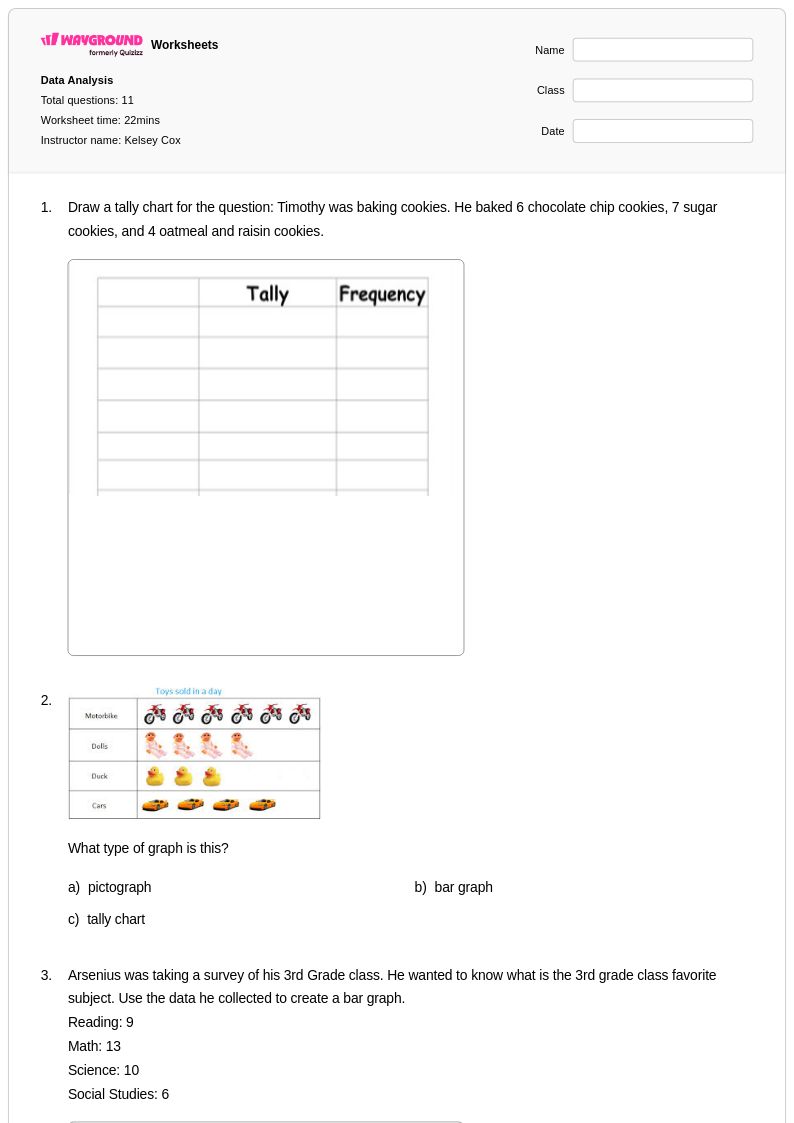
11 Q
3rd
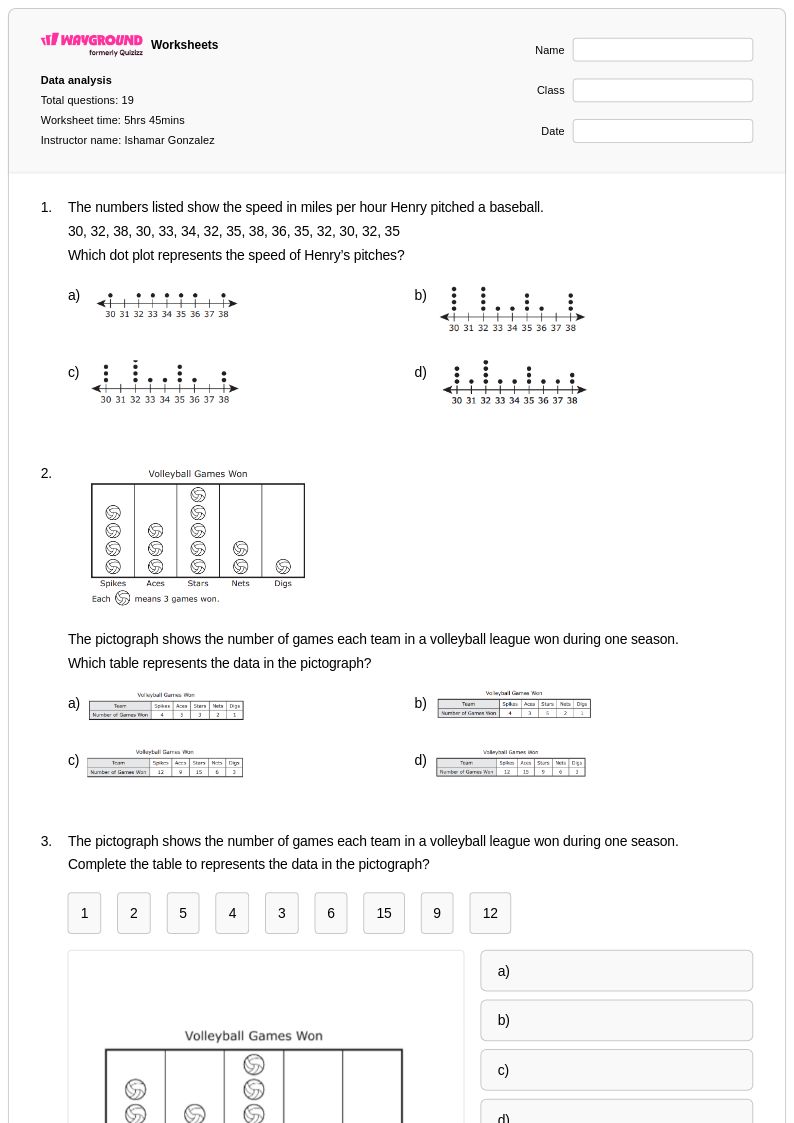
19 Q
3rd
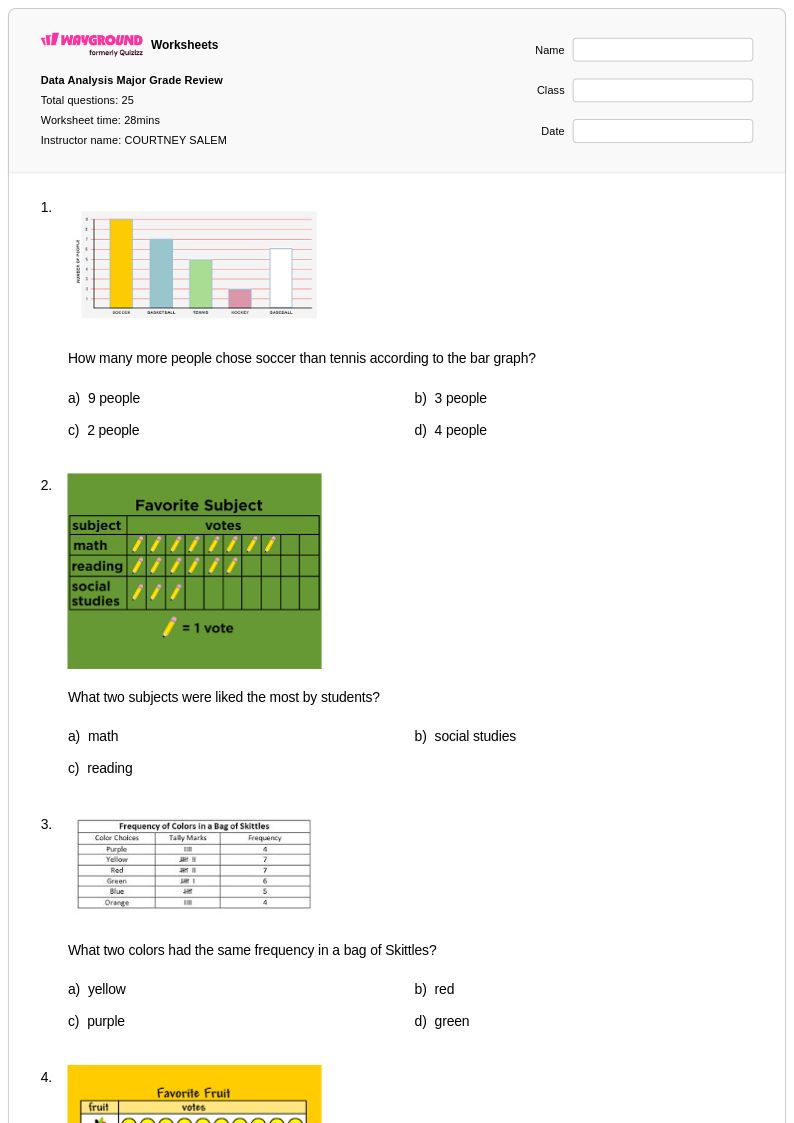
25 Q
3rd

18 Q
3rd - 5th
10 Q
3rd

20 Q
3rd - Uni

20 Q
3rd - Uni

10 Q
3rd - Uni
9 Q
2nd - 3rd
7 Q
3rd
10 Q
3rd - 4th
20 Q
3rd - Uni
10 Q
3rd - Uni
13 Q
3rd
24 Q
3rd
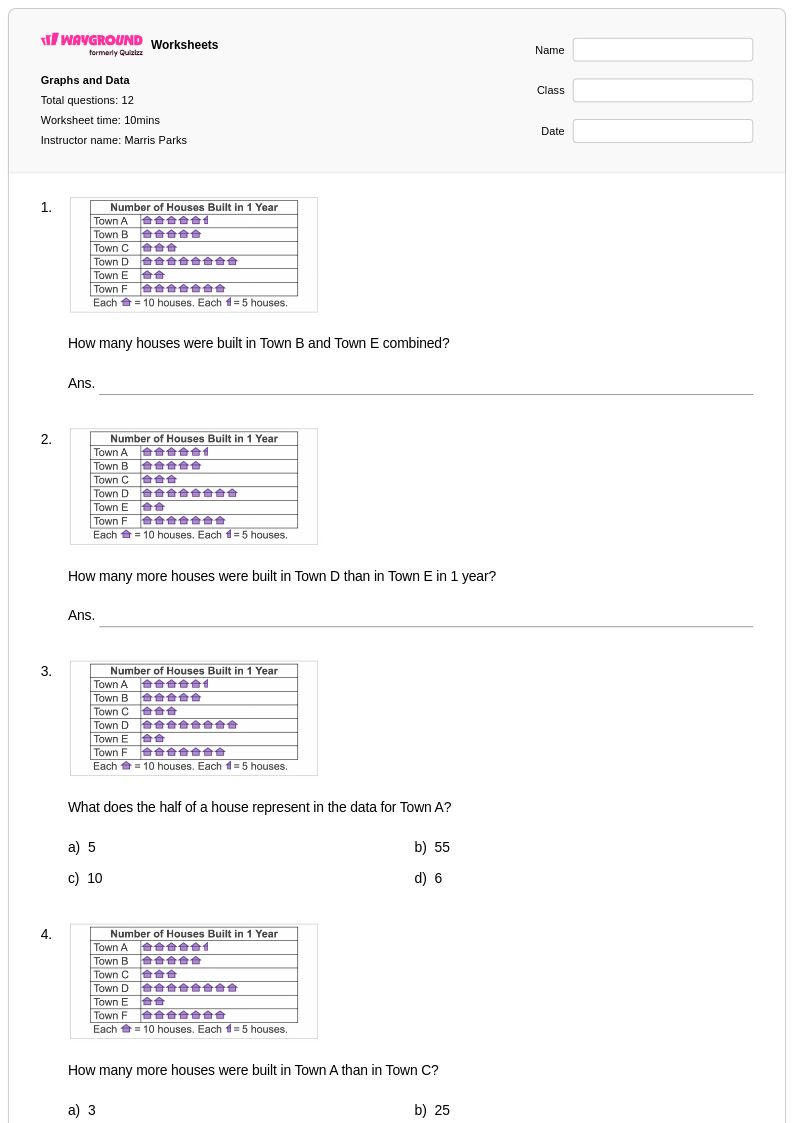
12 Q
3rd
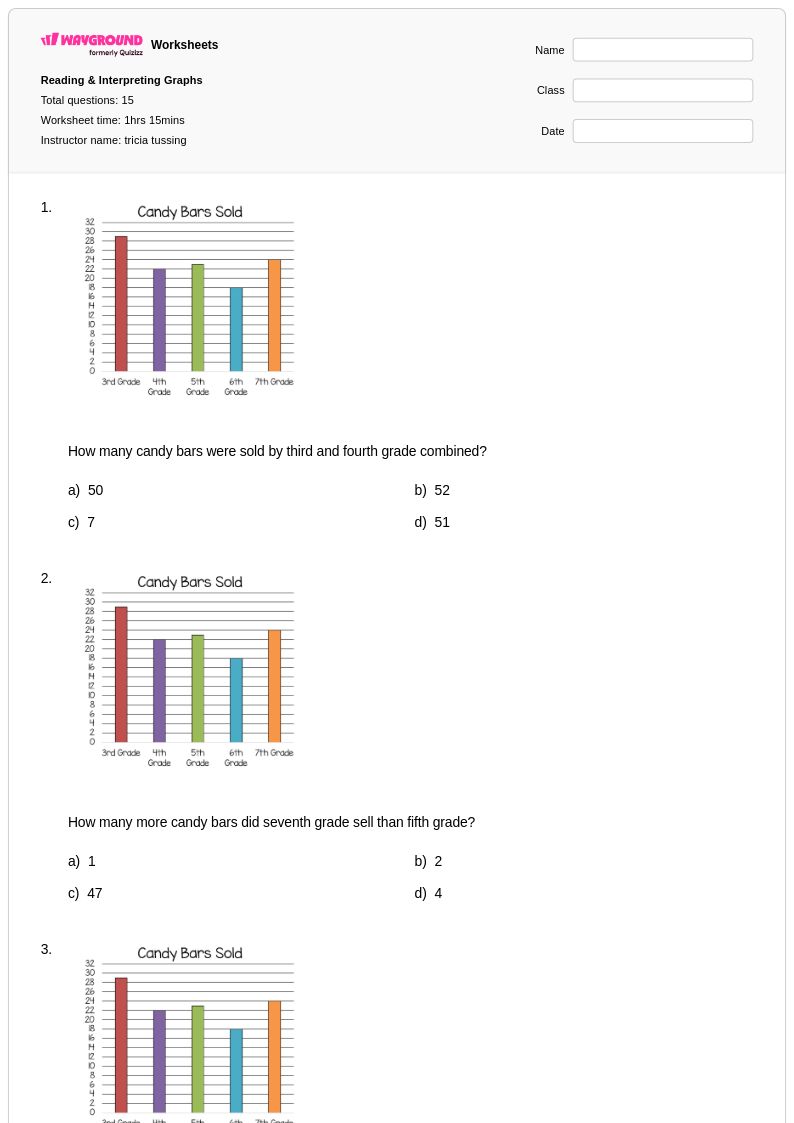
15 Q
3rd
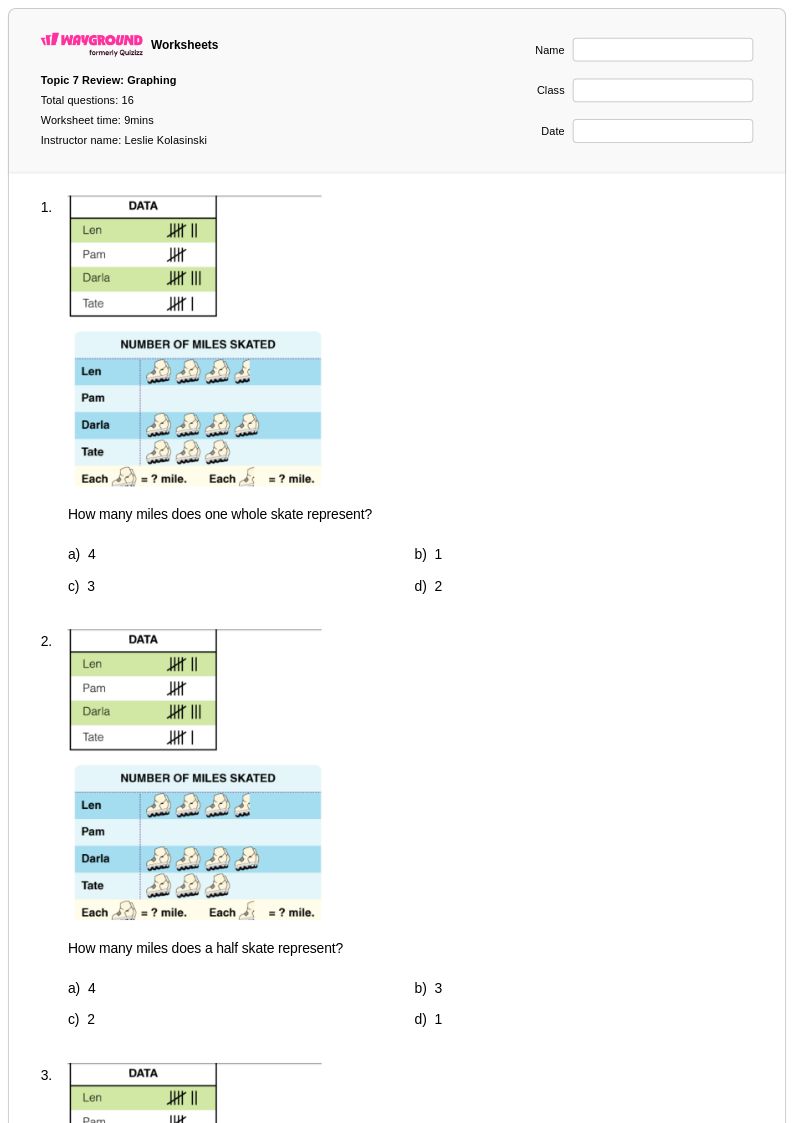
16 Q
3rd
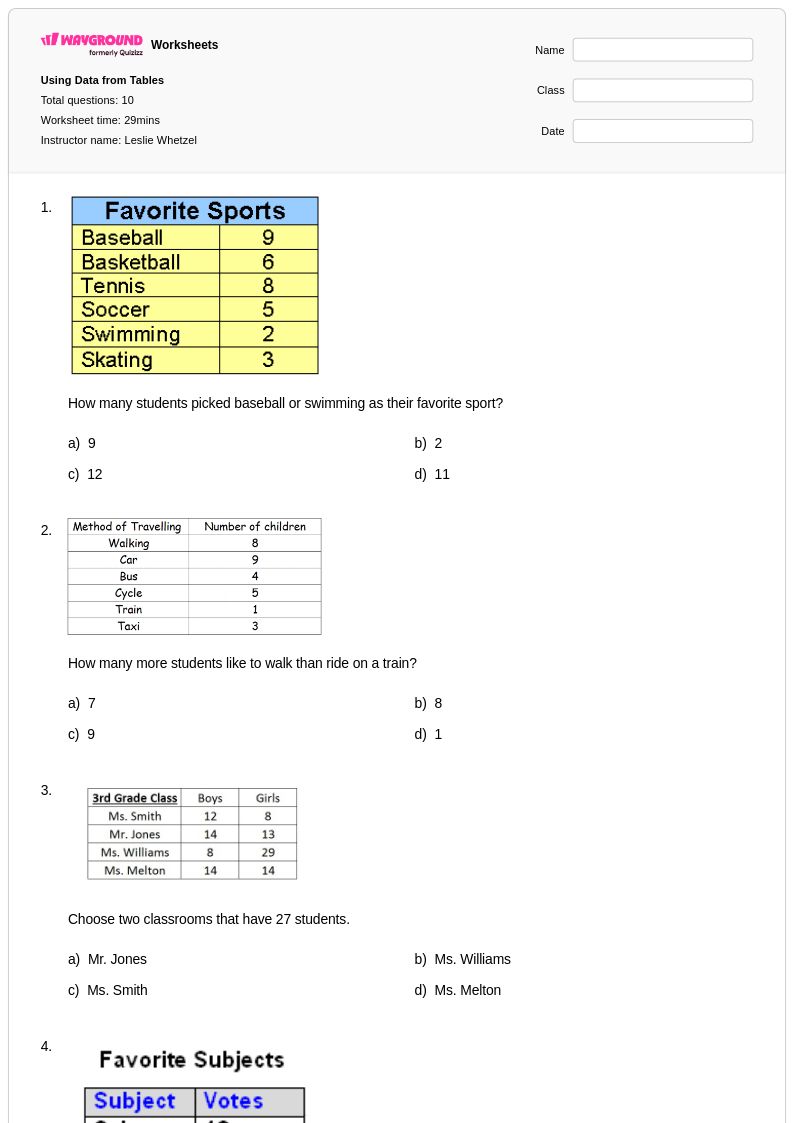
10 Q
2nd - 4th
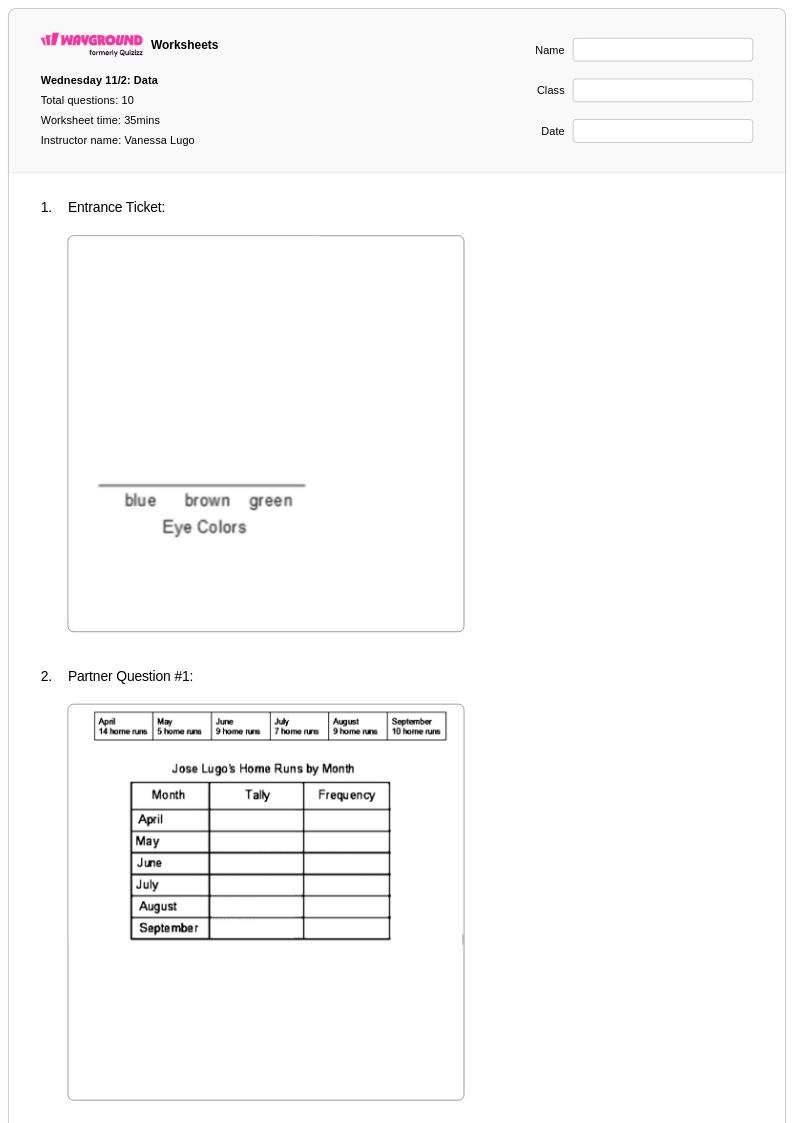
10 Q
3rd
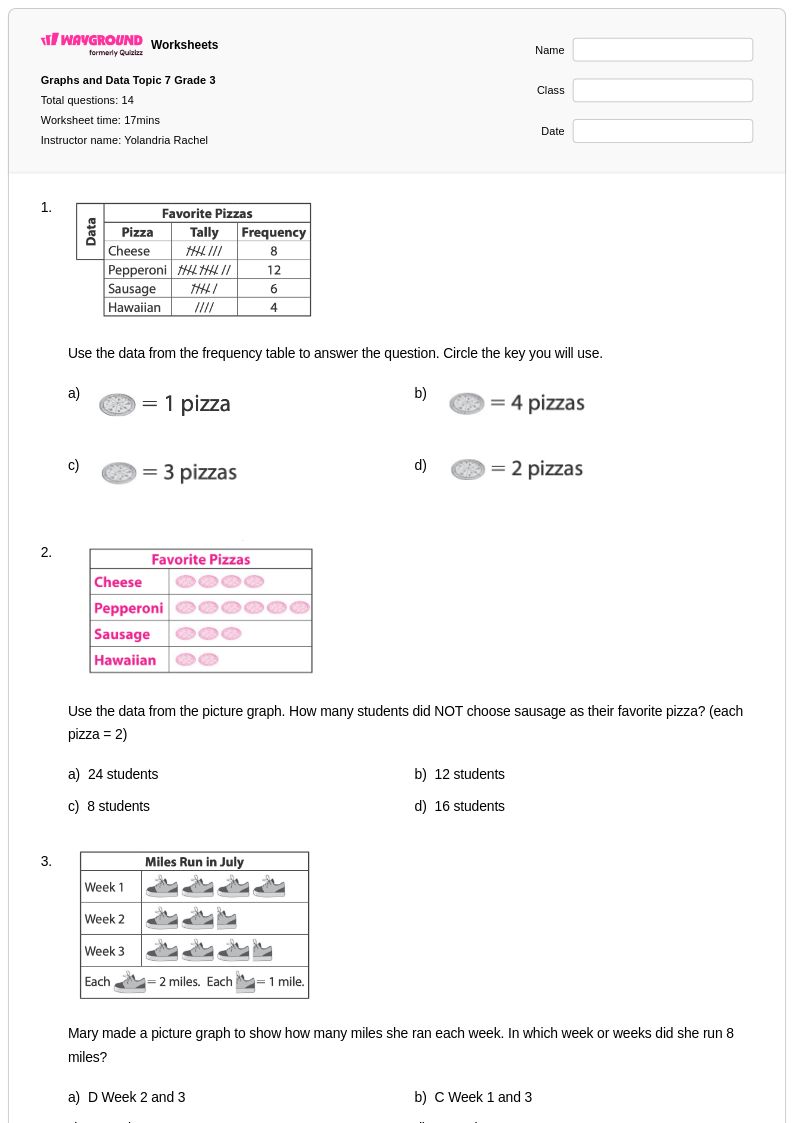
14 Q
3rd
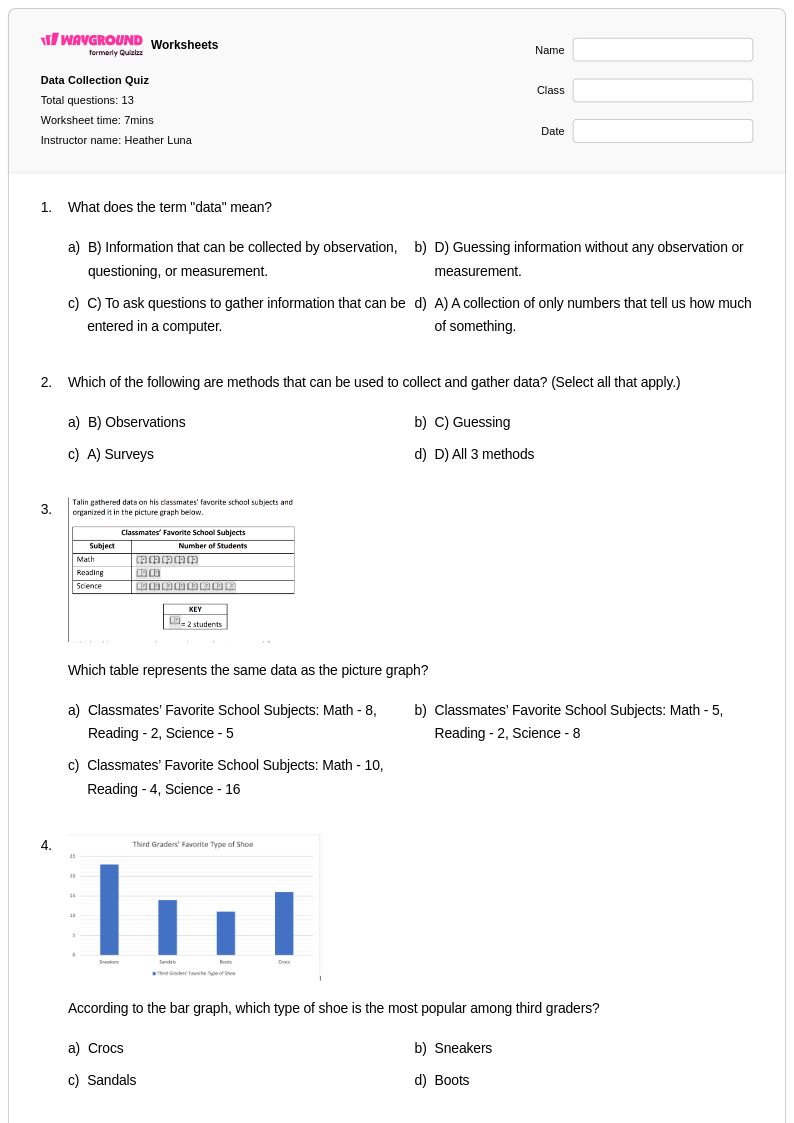
13 Q
3rd
Explore Other Subject Worksheets for class 3
Explore printable Predicting in Data Analysis worksheets for Class 3
Predicting in data analysis worksheets for Class 3 students available through Wayground (formerly Quizizz) provide essential practice in developing critical mathematical reasoning skills that bridge observation and inference. These comprehensive printables focus on teaching young learners how to examine data patterns, identify trends, and make logical predictions based on collected information from charts, graphs, and tables. Students engage with practice problems that require them to analyze existing data sets and forecast likely outcomes, strengthening their ability to think analytically about mathematical relationships. Each worksheet includes a detailed answer key that supports both independent learning and guided instruction, while the free pdf format ensures accessibility for classroom and home use.
Wayground (formerly Quizizz) empowers educators with millions of teacher-created resources specifically designed to support Class 3 data analysis and prediction skills through robust search and filtering capabilities that align with mathematical standards. Teachers can easily differentiate instruction by selecting from various difficulty levels and problem types, while the platform's flexible customization tools allow for modifications that meet individual student needs. Available in both printable and digital pdf formats, these worksheet collections streamline lesson planning and provide targeted resources for remediation, enrichment, and regular skill practice. The comprehensive nature of the platform ensures that educators have access to high-quality materials that support systematic development of predictive reasoning abilities essential for mathematical literacy and logical thinking.
FAQs
What does 'predicting from data' mean for a 3rd grader?
How can I introduce data prediction to my 3rd grade class?
What kinds of practice problems are best for 3rd graders learning to predict?
What mistakes do 3rd graders make when predicting from data?
How can I use this Grade 3 worksheet in my classroom?
How does this topic align with Grade 3 math standards?