
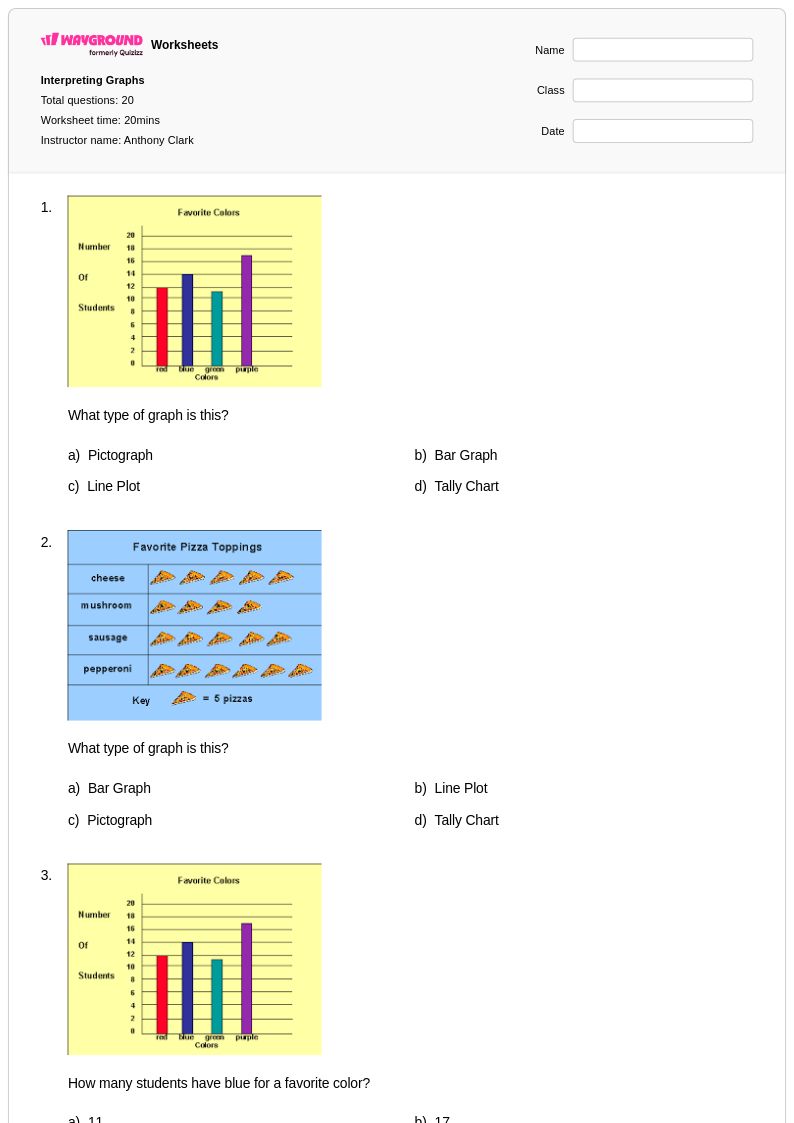
20 Q
3rd - Uni
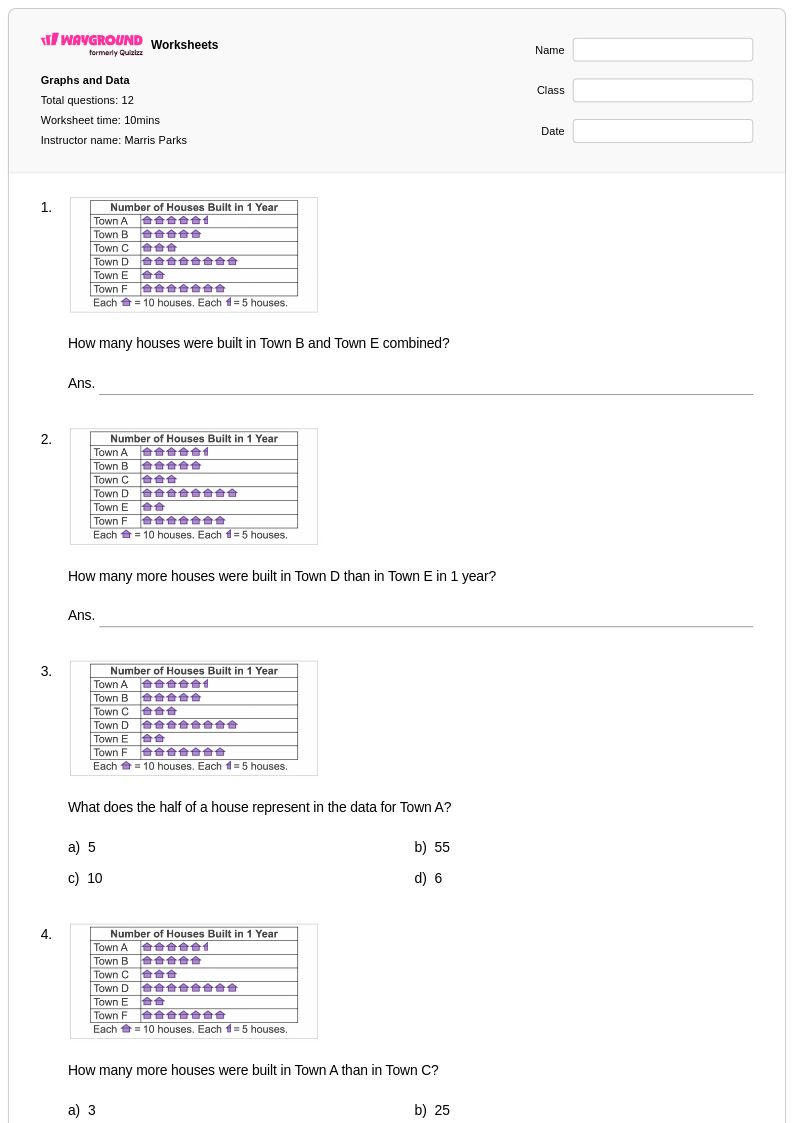
12 Q
3rd
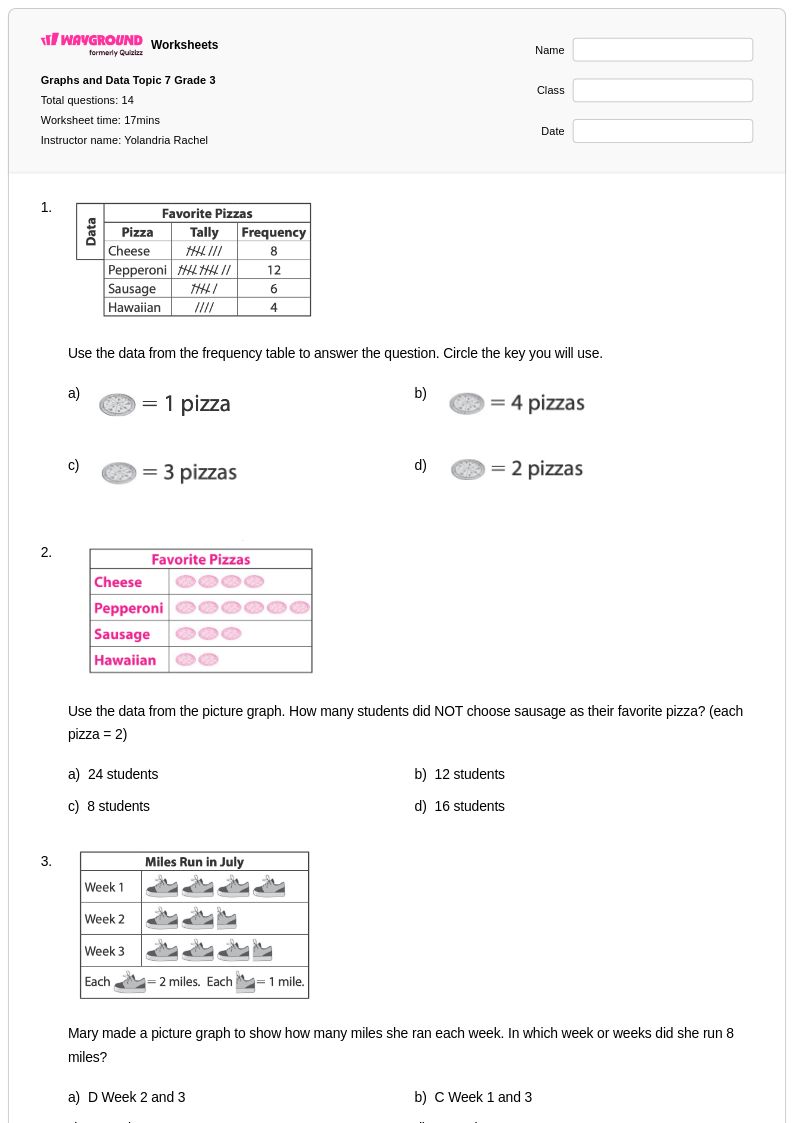
14 Q
3rd
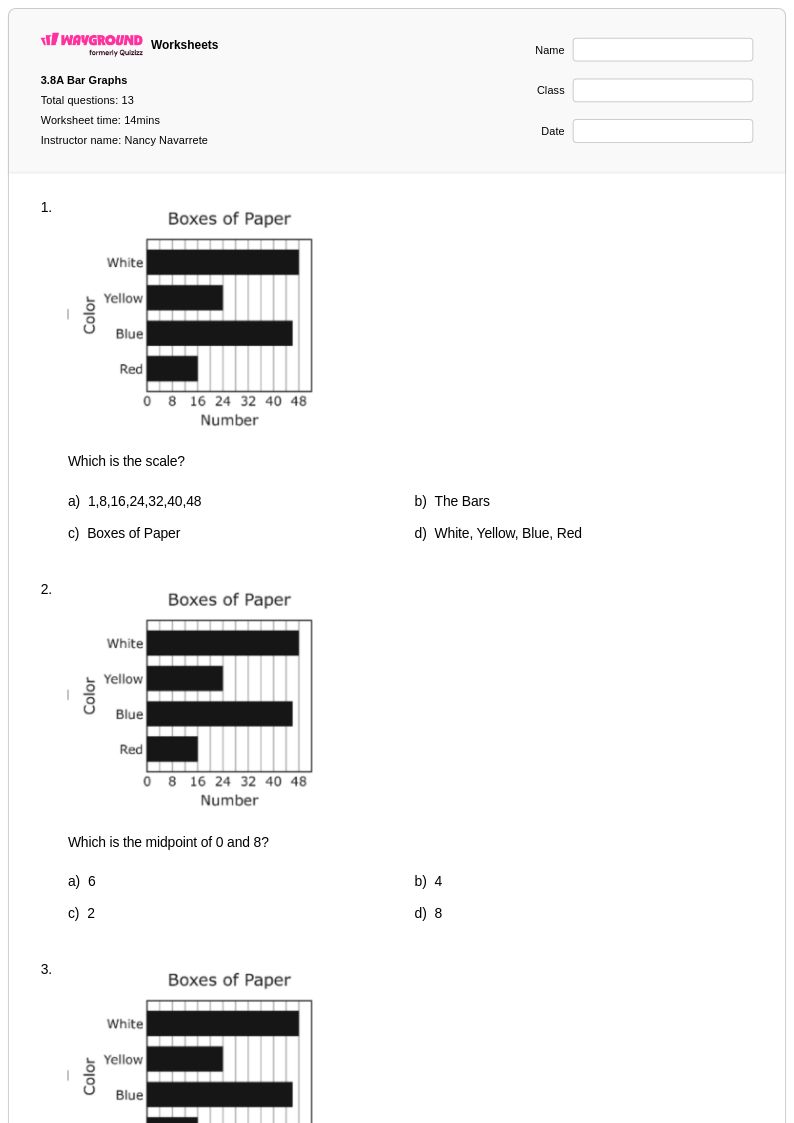
13 Q
3rd
16 Q
3rd - 5th
20 Q
3rd
26 Q
3rd
8 Q
3rd
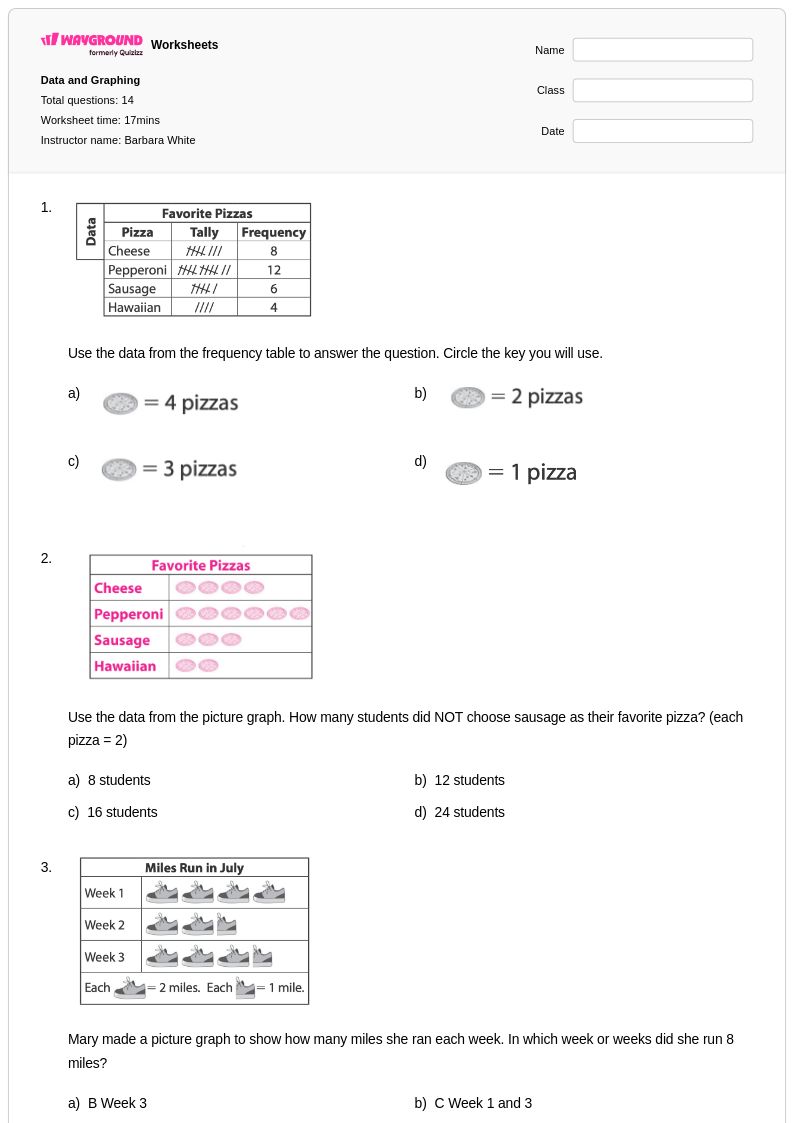
14 Q
3rd
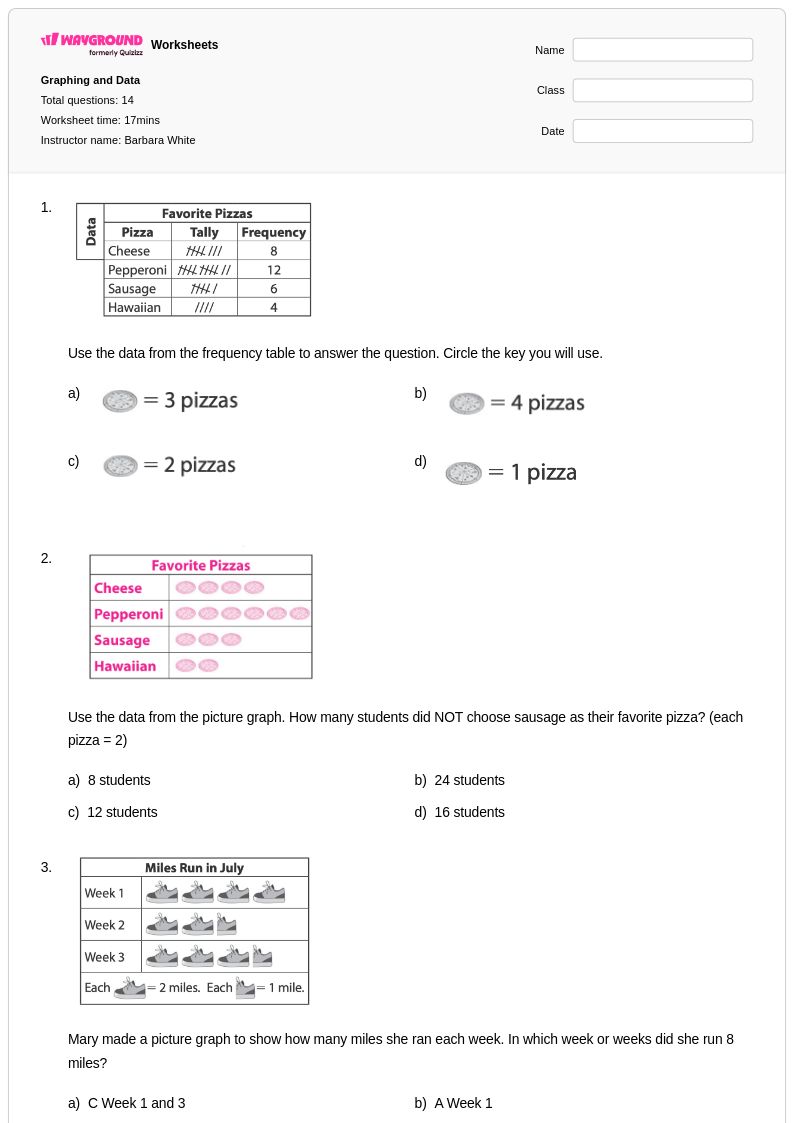
14 Q
3rd
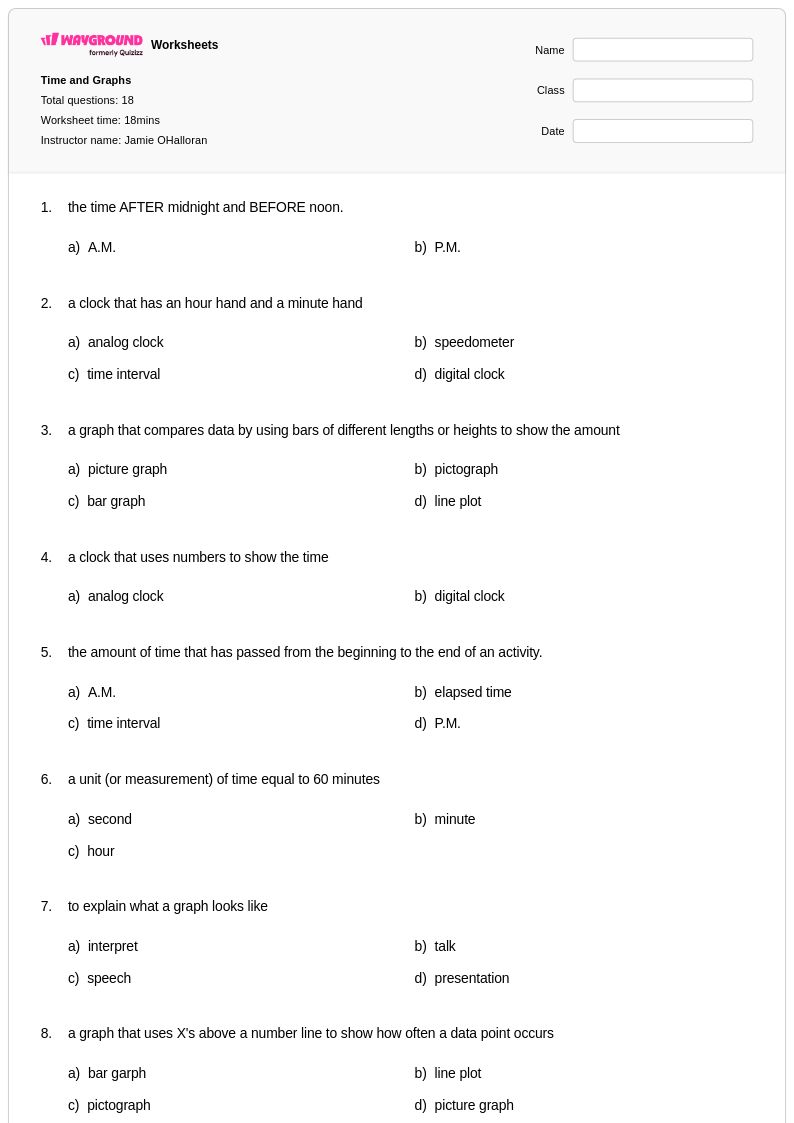
18 Q
3rd
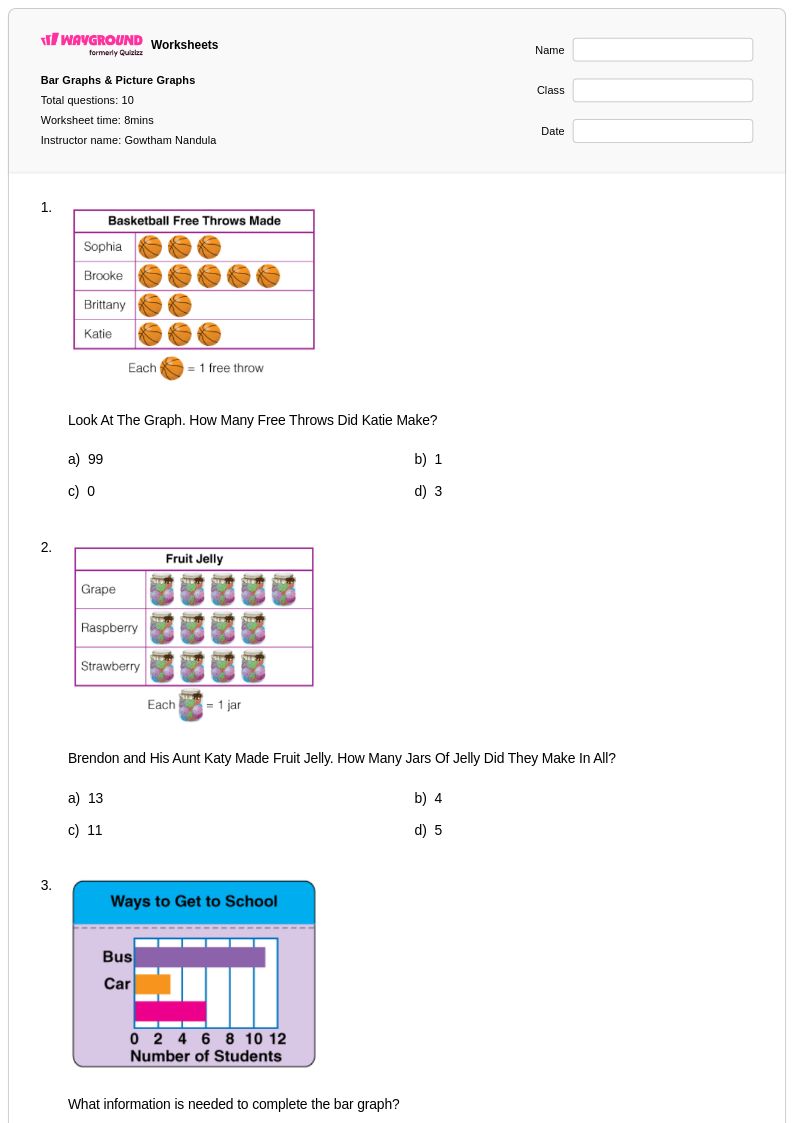
10 Q
3rd - PD
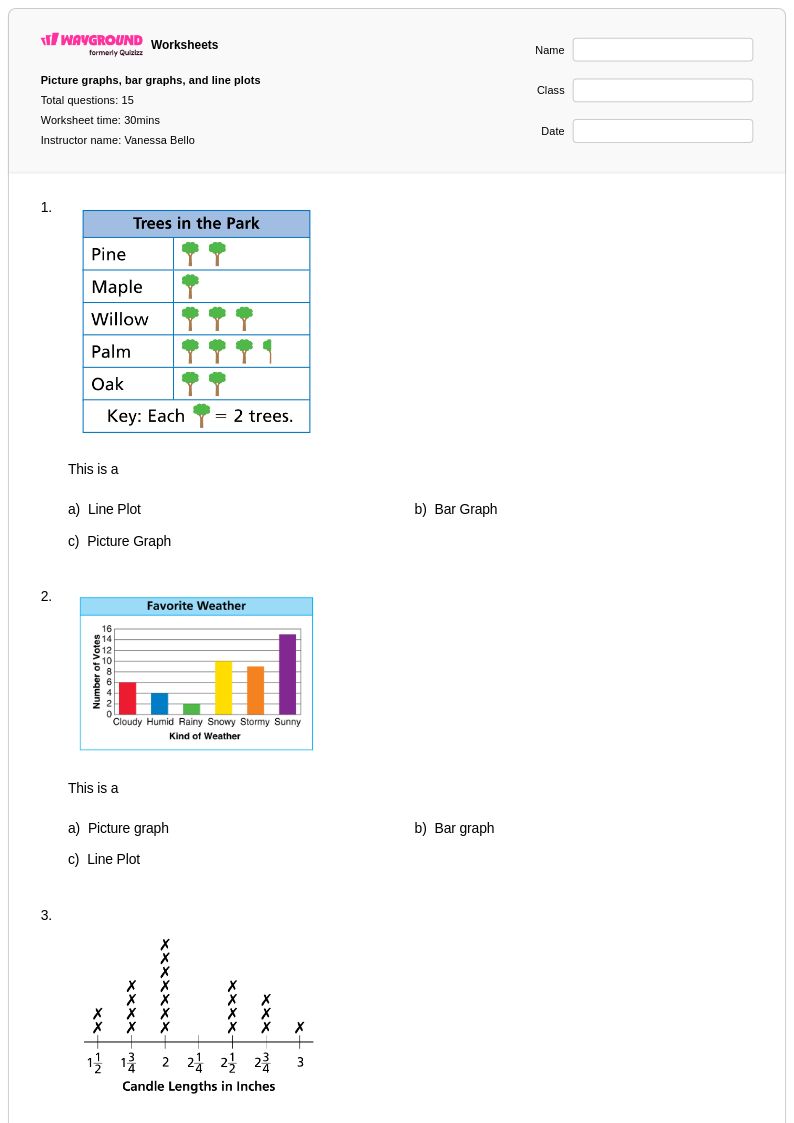
15 Q
3rd
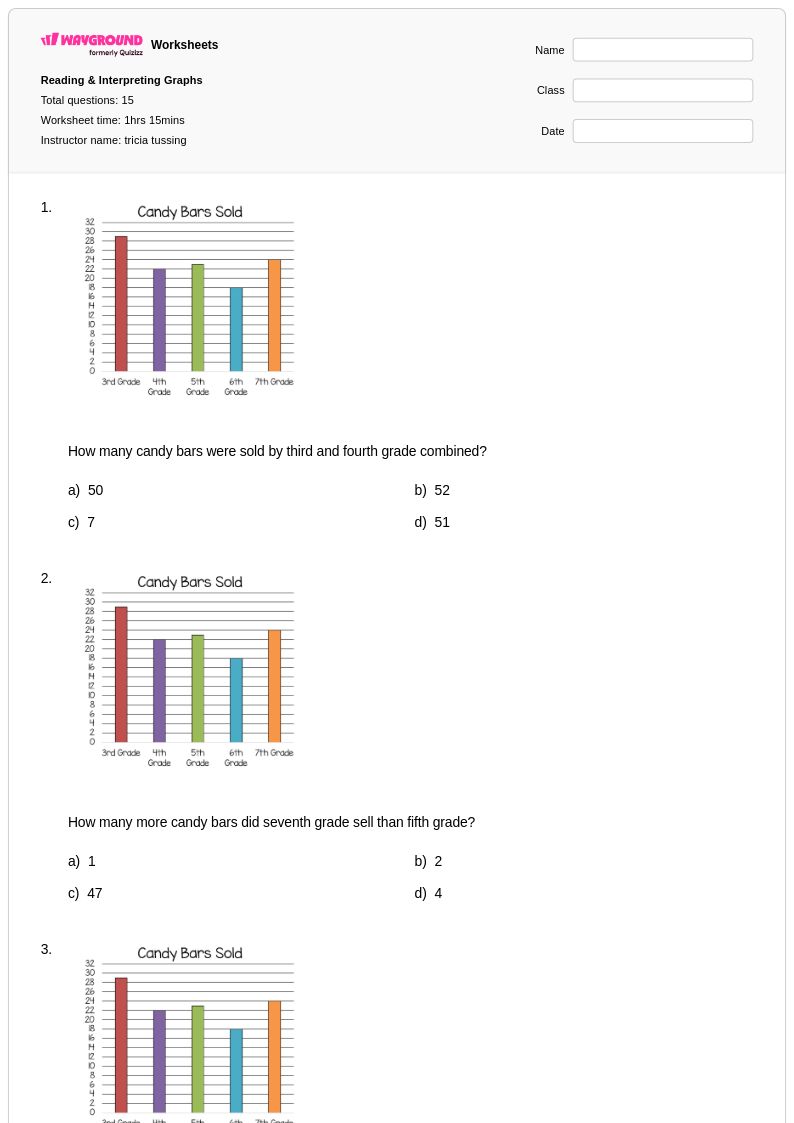
15 Q
3rd
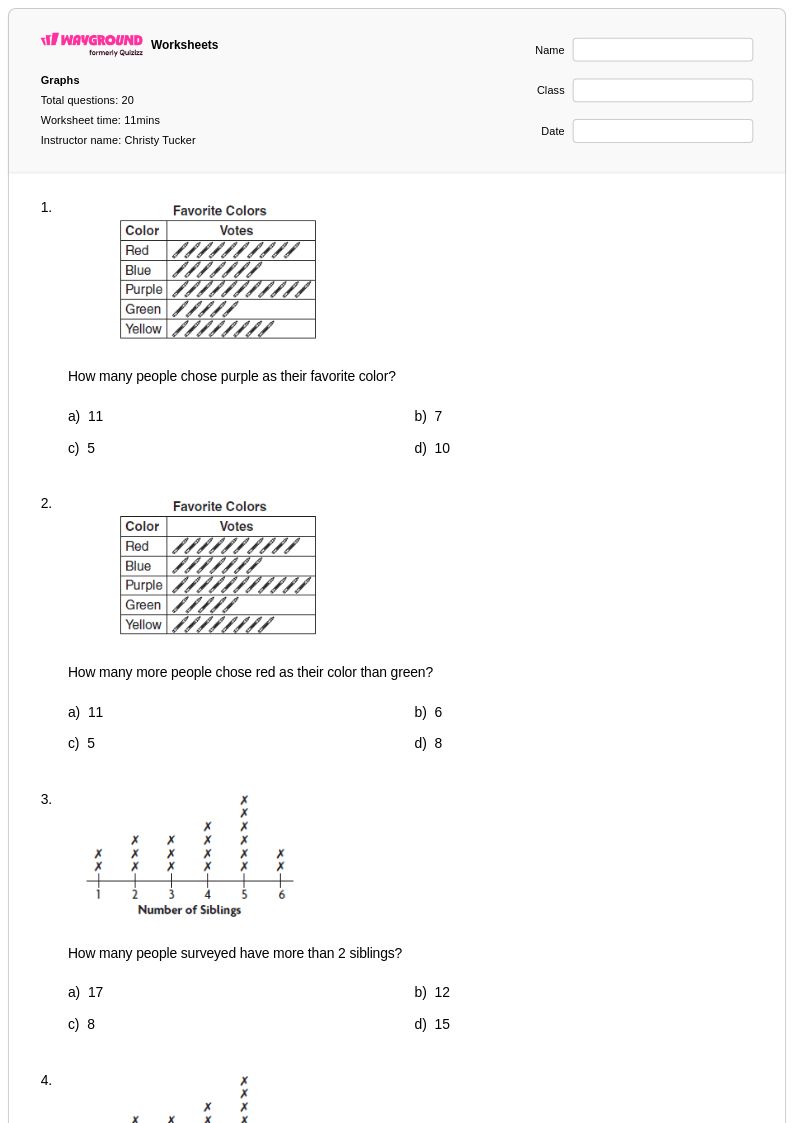
20 Q
3rd
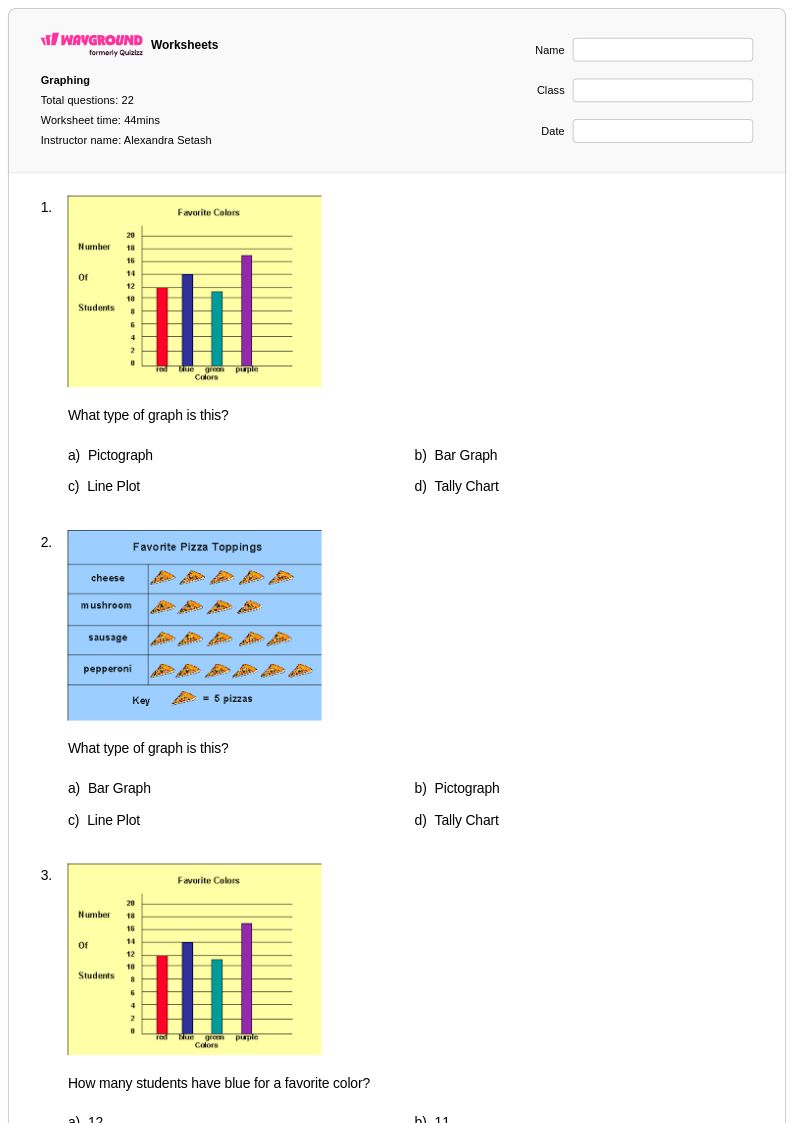
22 Q
3rd - 5th
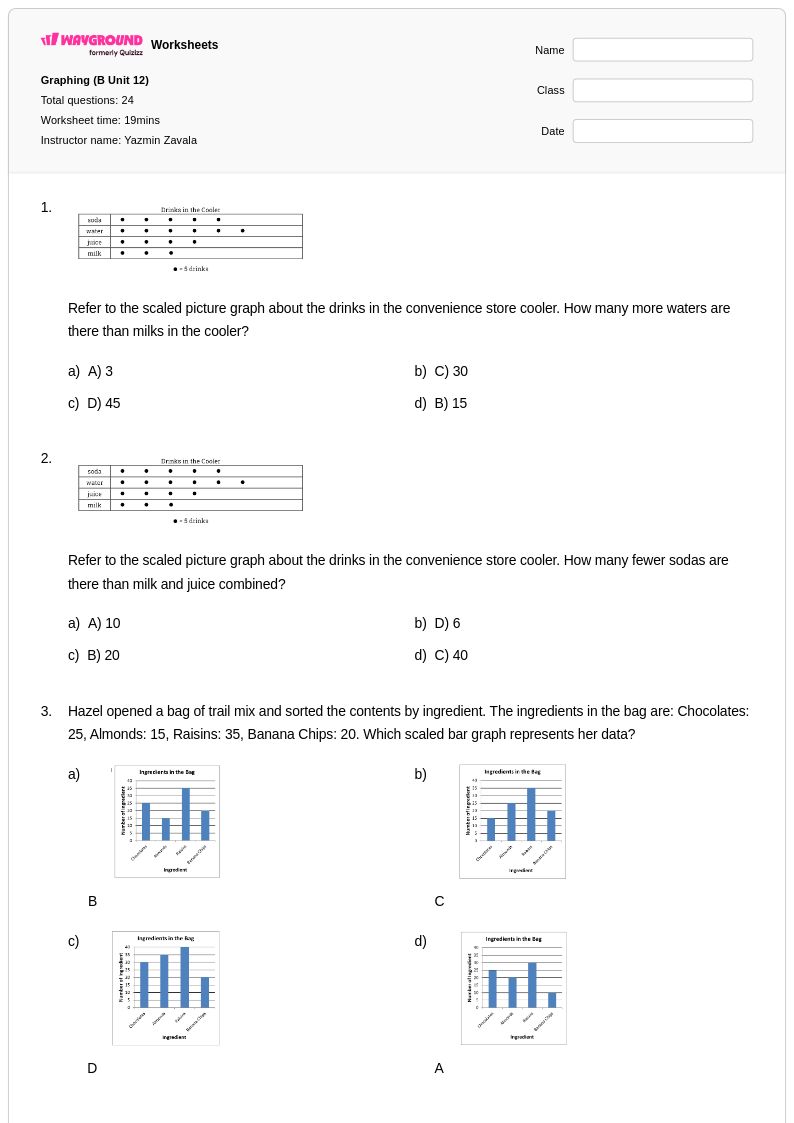
24 Q
3rd
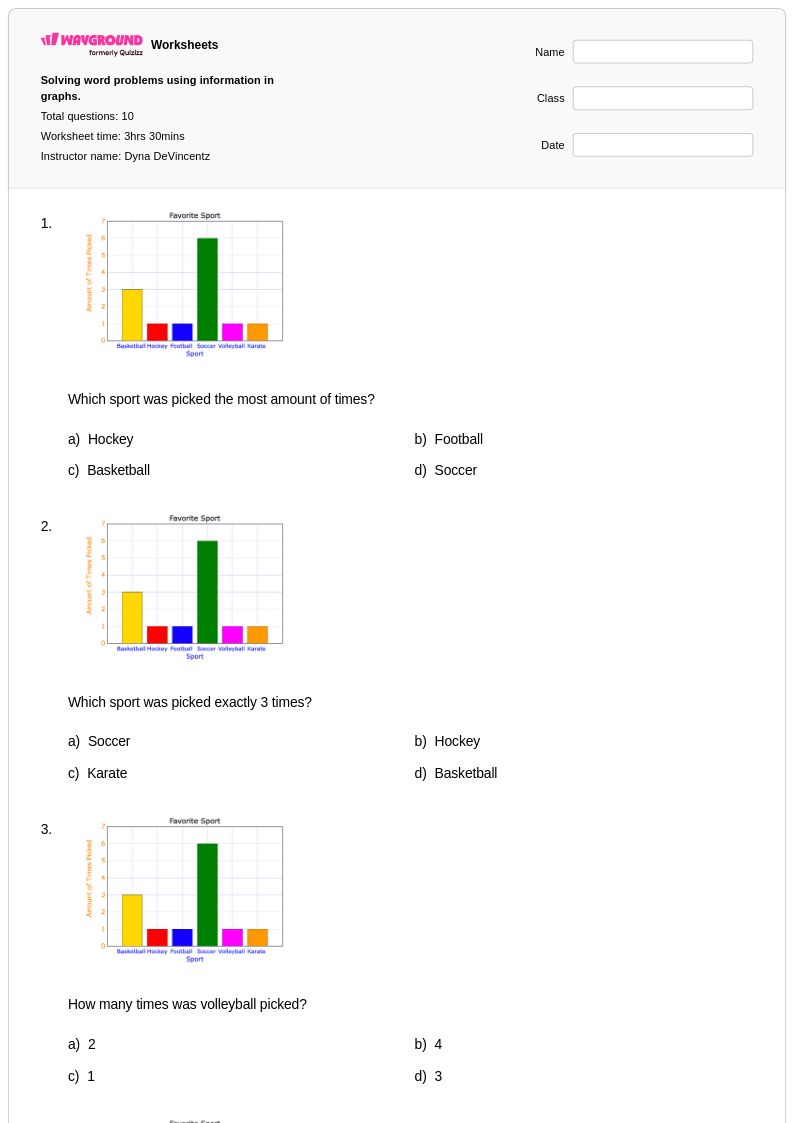
10 Q
3rd
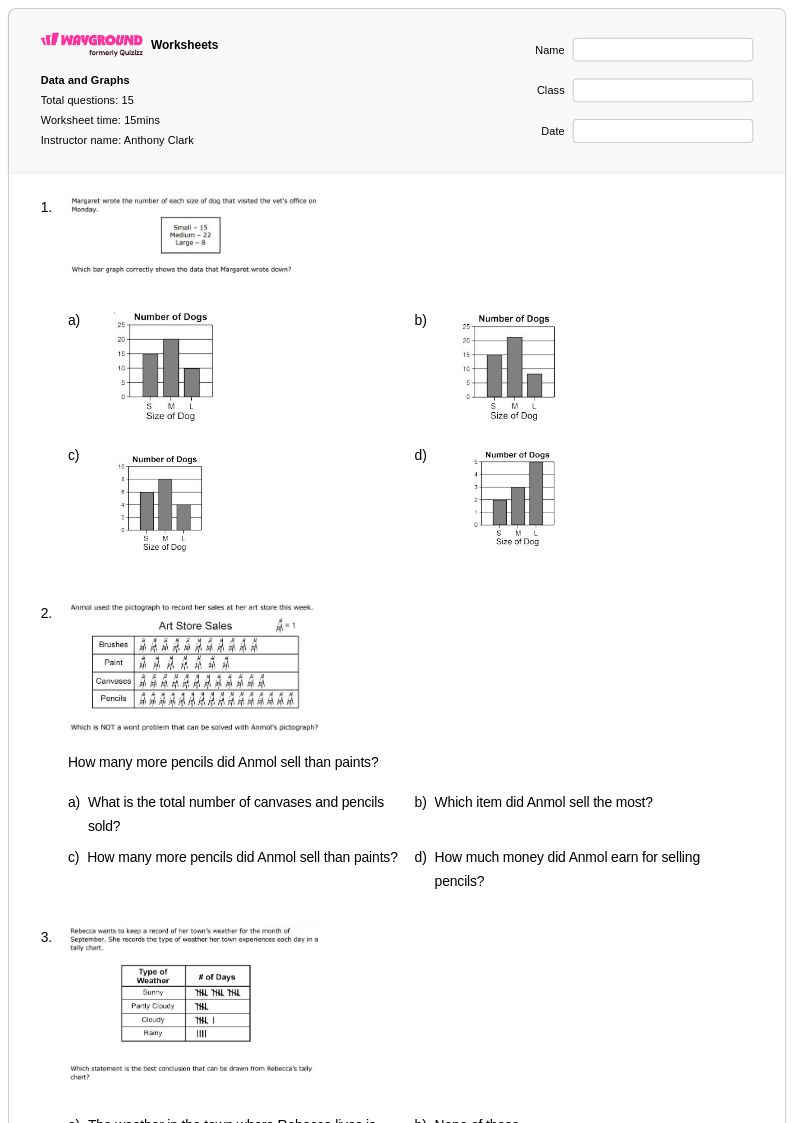
15 Q
2nd - Uni
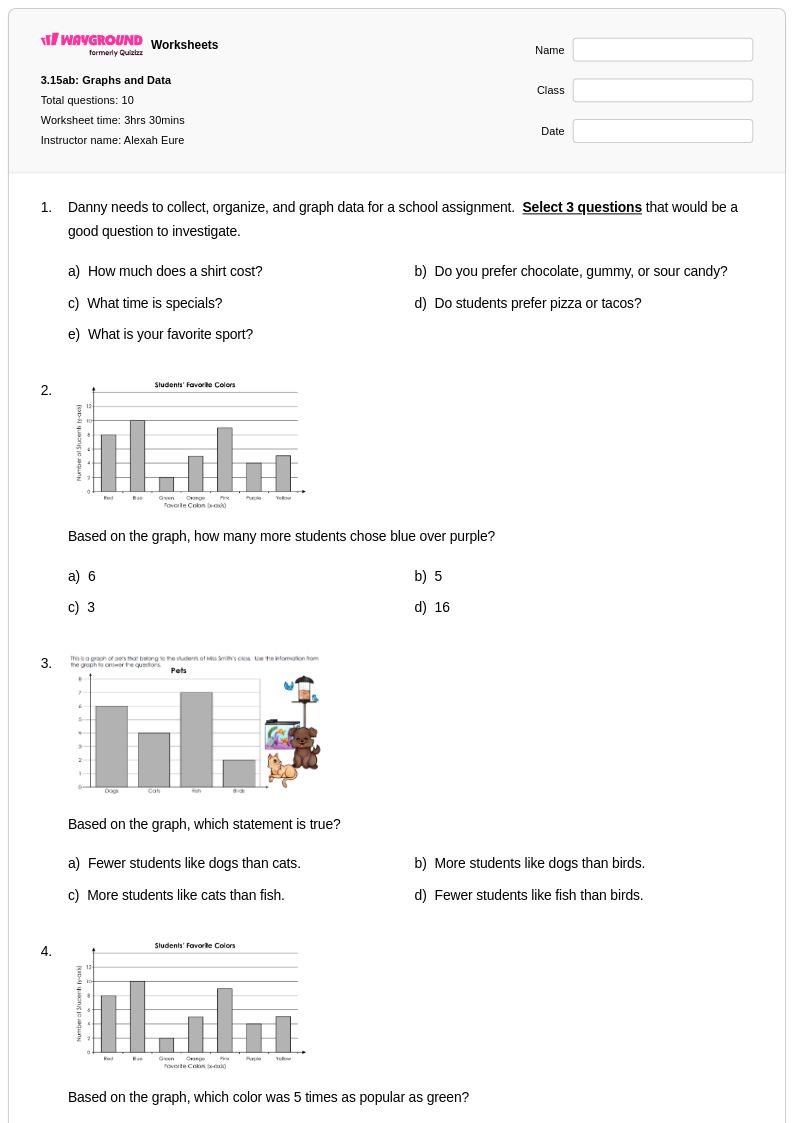
10 Q
3rd
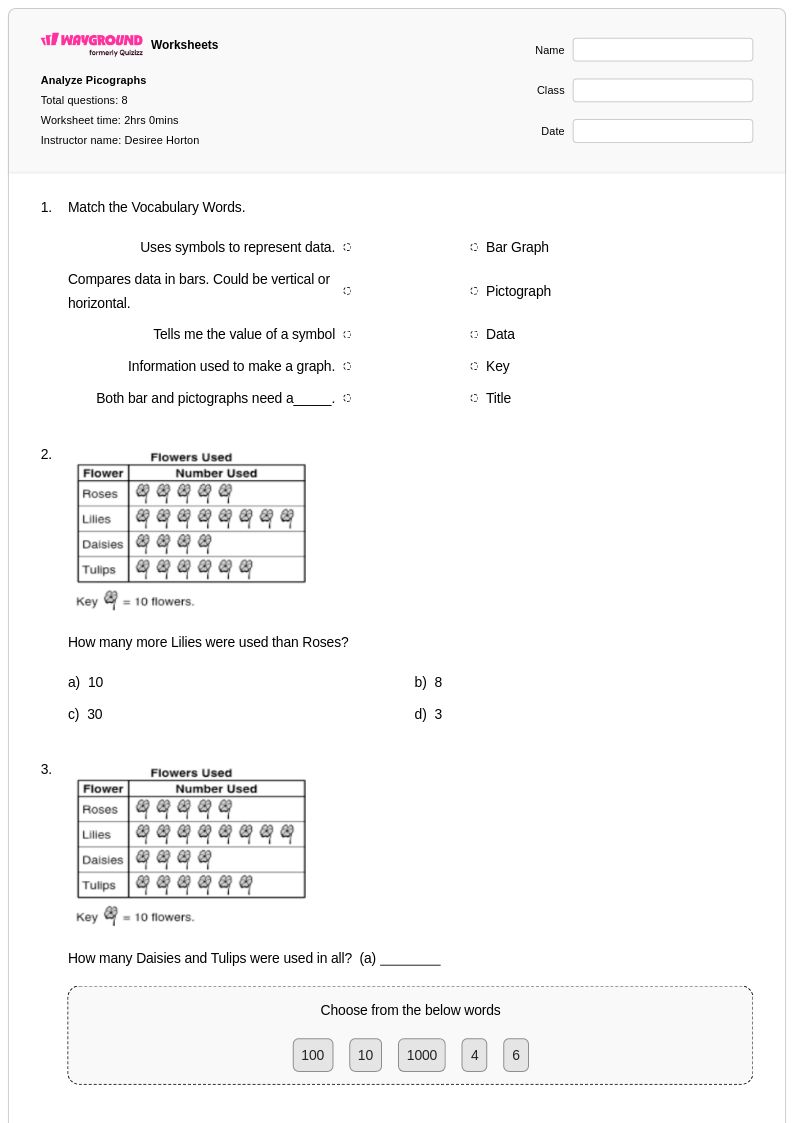
8 Q
3rd
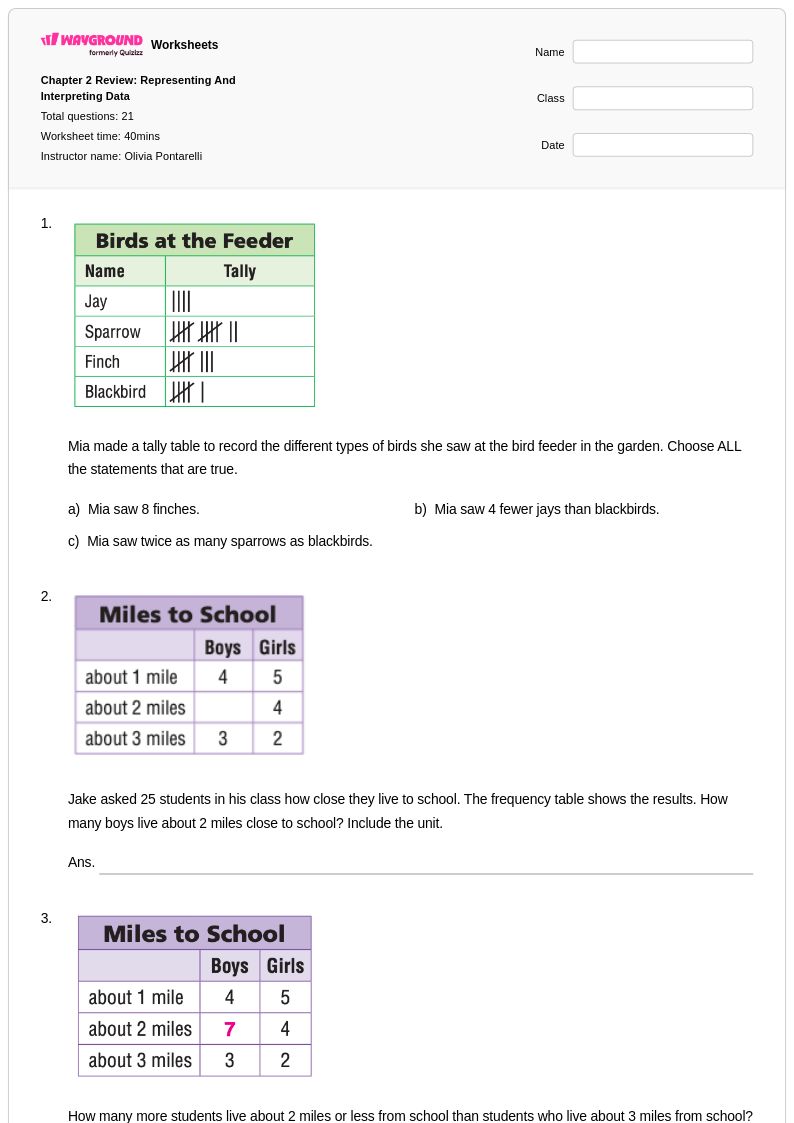
21 Q
3rd
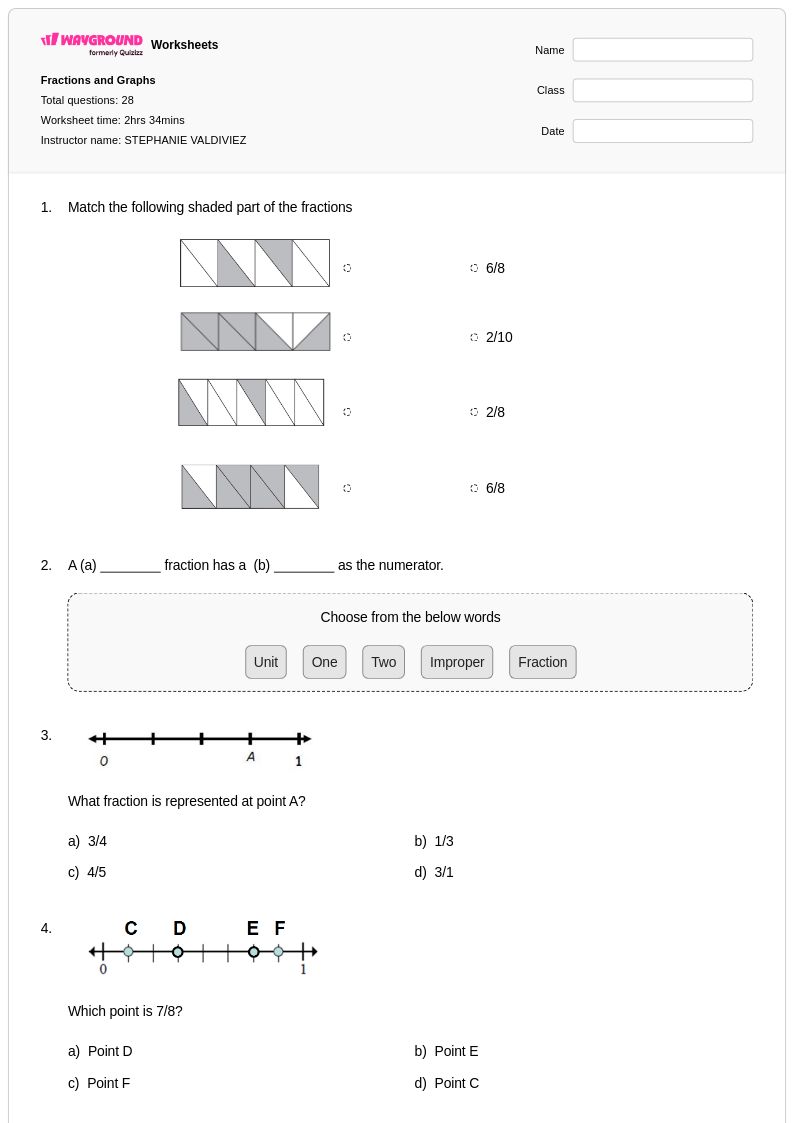
28 Q
3rd - Uni
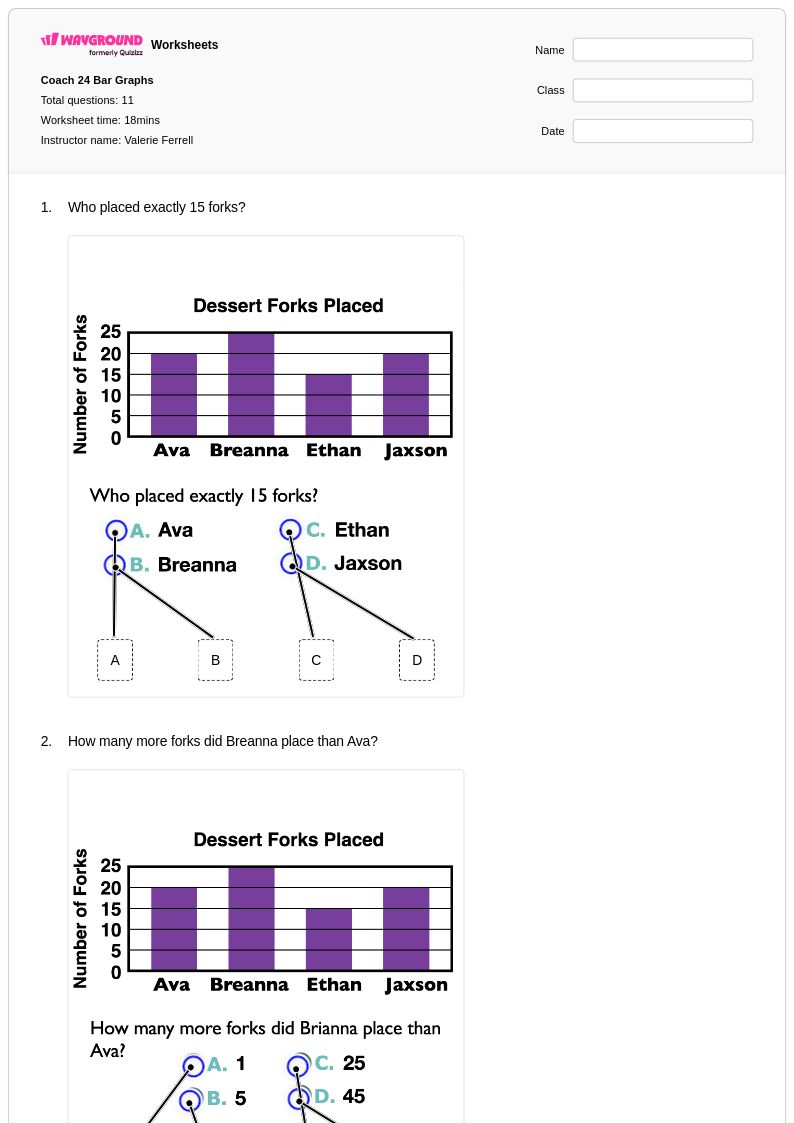
11 Q
3rd
Explore Other Subject Worksheets for class 3
Explore printable Qualitative Graphs worksheets for Class 3
Qualitative graphs for Class 3 students provide essential foundational skills in data representation and interpretation that form the cornerstone of mathematical literacy. Wayground's comprehensive collection of qualitative graphing worksheets helps young learners understand how to organize, display, and analyze non-numerical data through pictographs, bar graphs, and simple charts. These carefully designed practice problems guide students through creating graphs from real-world scenarios like favorite foods, pets, or seasons, while building critical thinking skills needed to draw conclusions from visual data. Each worksheet includes a complete answer key and is available as a free printable pdf, making it easy for educators to incorporate meaningful graphing activities that strengthen students' ability to collect, categorize, and represent qualitative information systematically.
Wayground, formerly Quizizz, empowers educators with millions of teacher-created qualitative graphing resources specifically designed to meet Class 3 learning objectives and standards alignment requirements. The platform's robust search and filtering capabilities enable teachers to quickly locate worksheets that match their specific classroom needs, whether for initial skill introduction, targeted remediation, or enrichment activities for advanced learners. Teachers can customize these digital and printable materials to differentiate instruction, adjusting complexity levels and data sets to accommodate diverse learning styles and abilities. This flexible approach to qualitative graph instruction supports comprehensive lesson planning by providing educators with ready-to-use resources that seamlessly integrate into both digital learning environments and traditional classroom settings, ensuring every student develops strong foundational skills in data representation and analysis.
FAQs
What kind of graphing do 3rd graders learn?
What's a good way to teach graphing to 3rd graders?
What types of graphs are best for 3rd-grade practice?
What common errors do 3rd graders make when creating graphs?
How does this worksheet align with 3rd-grade math standards?
How can I use this 3rd-grade graphing worksheet?