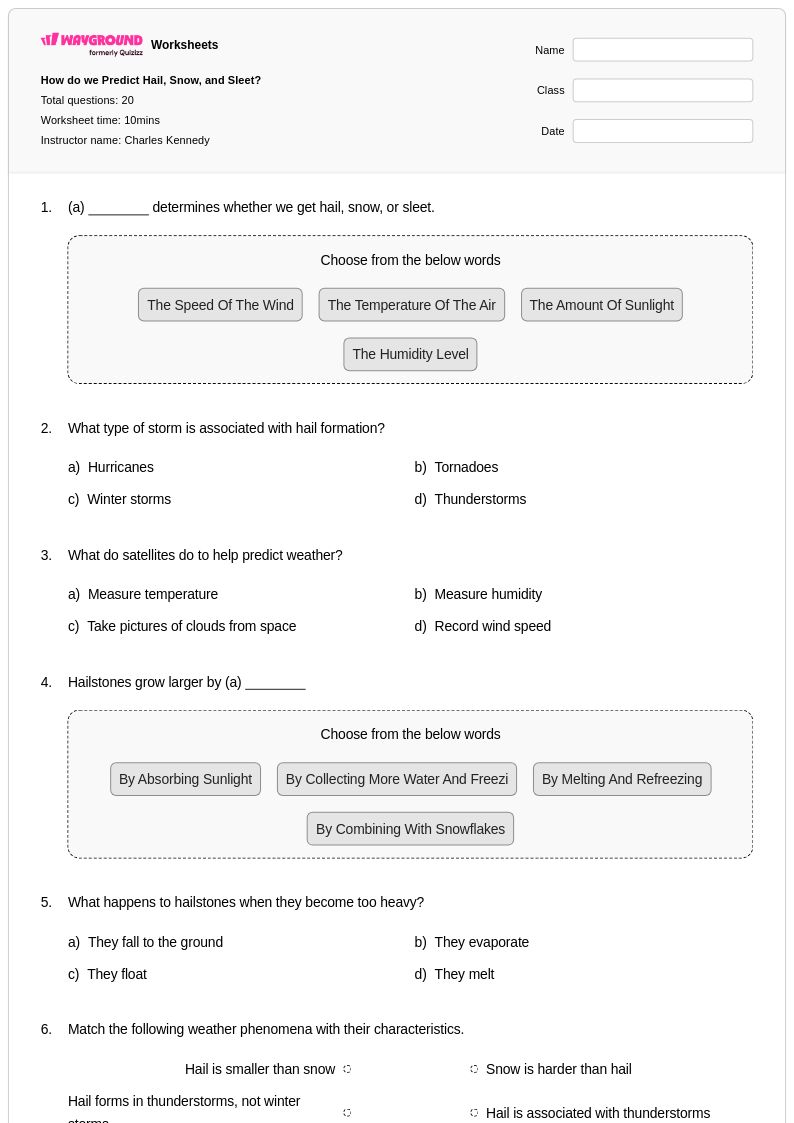
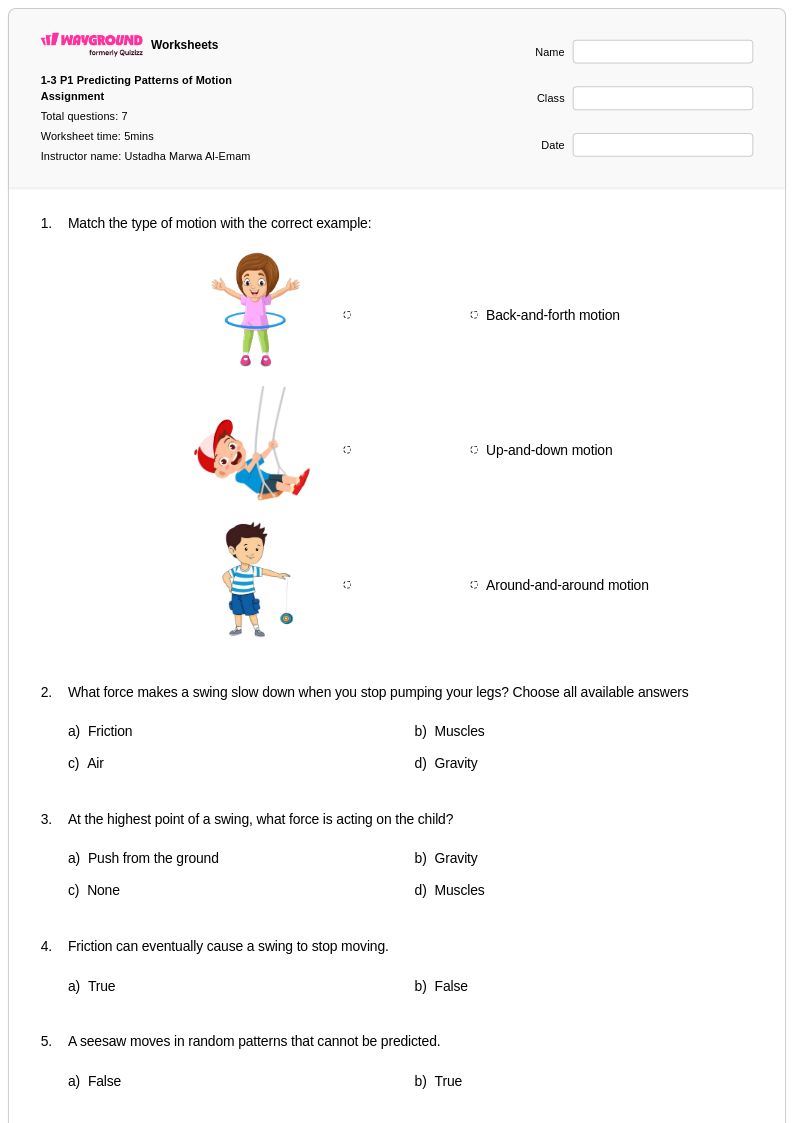
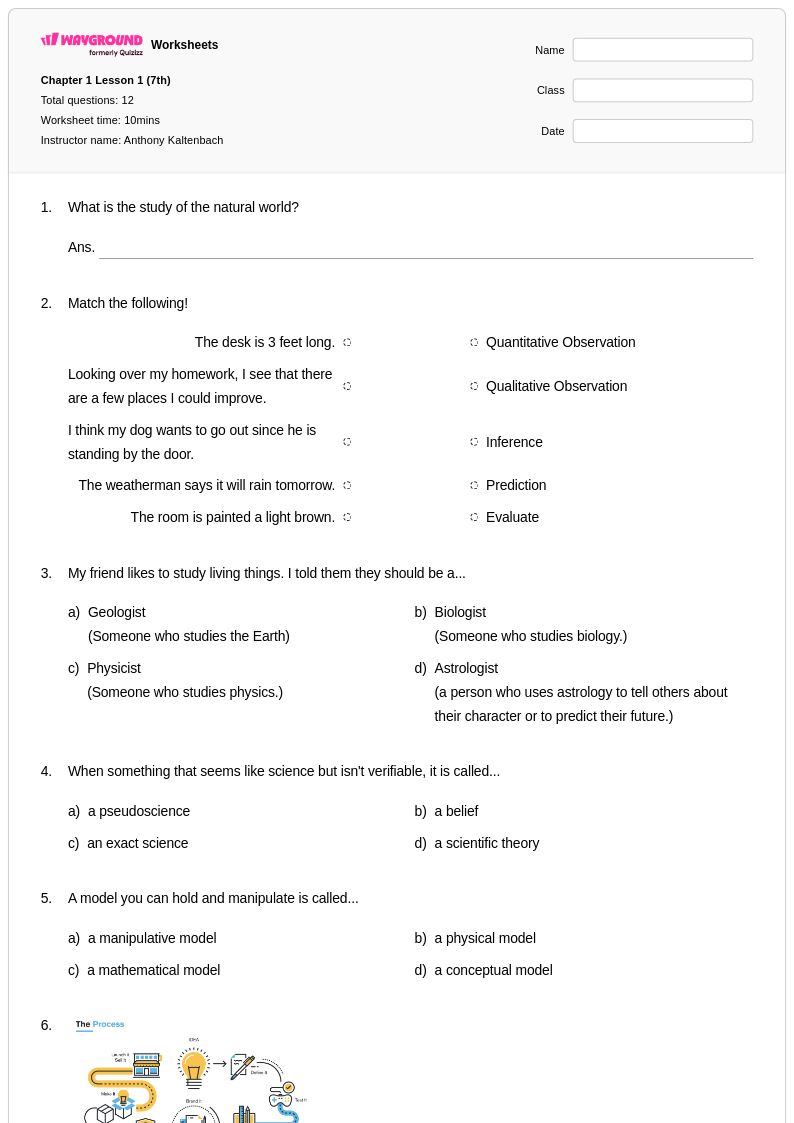
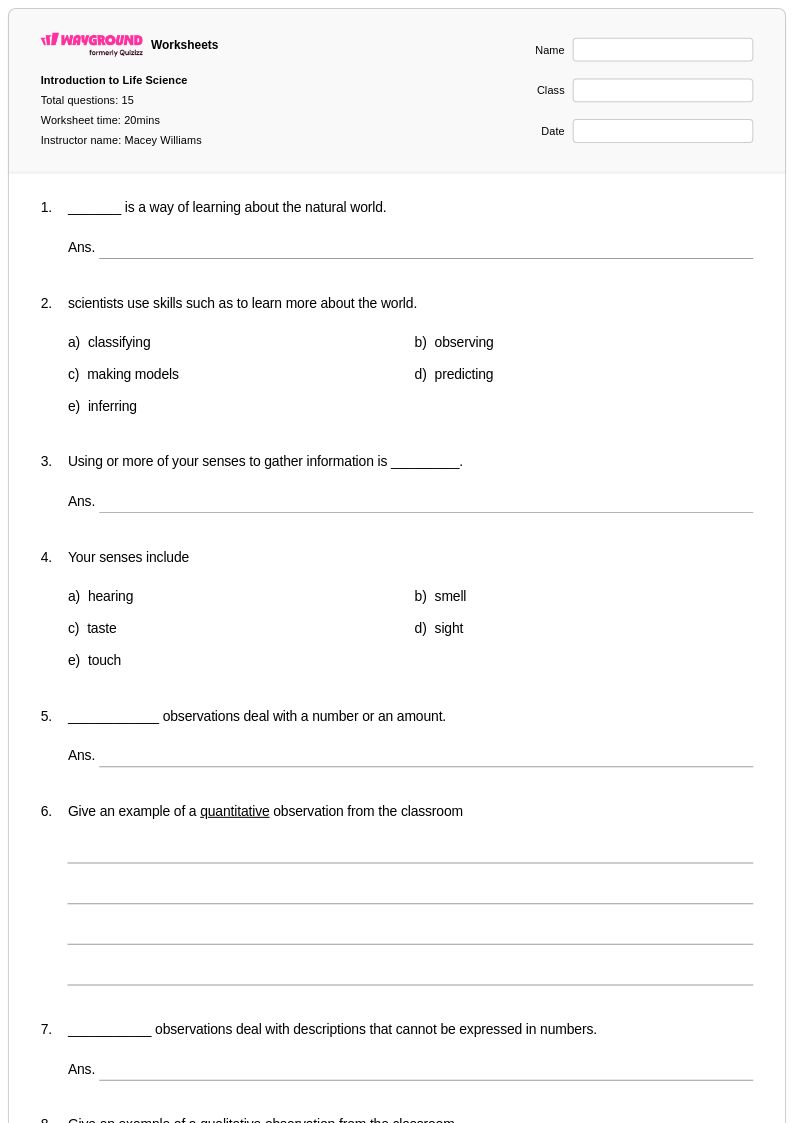
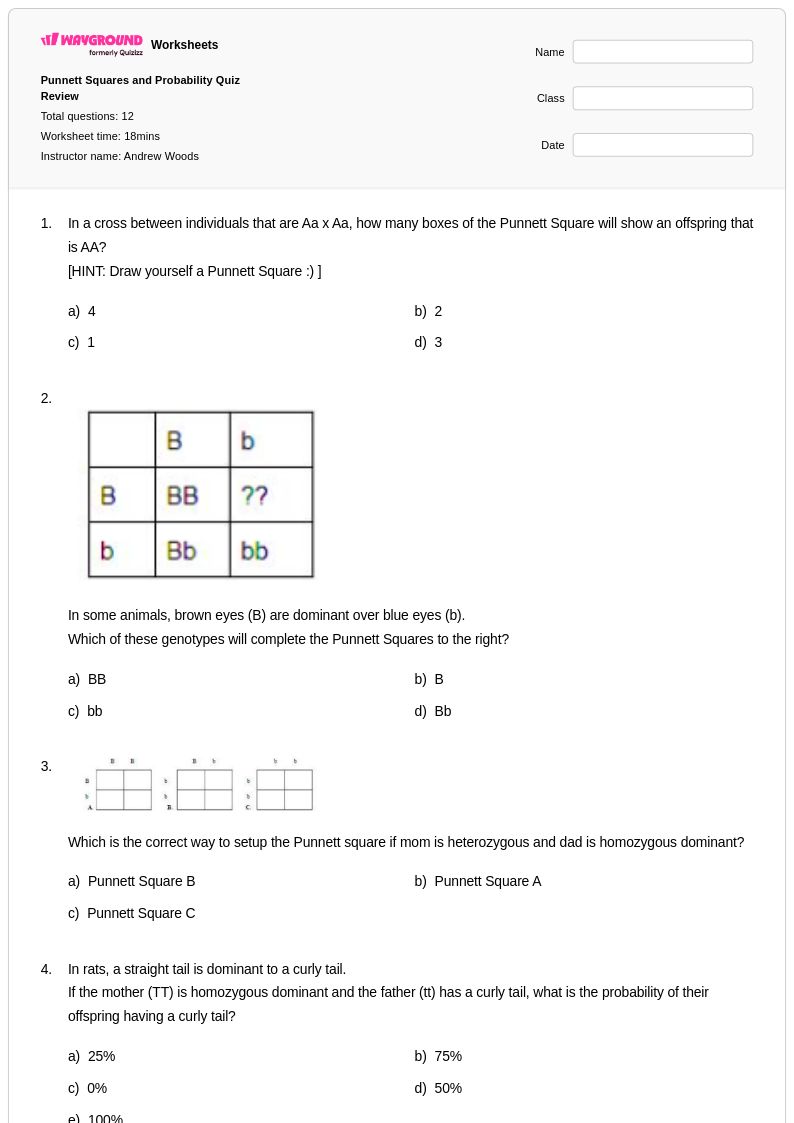
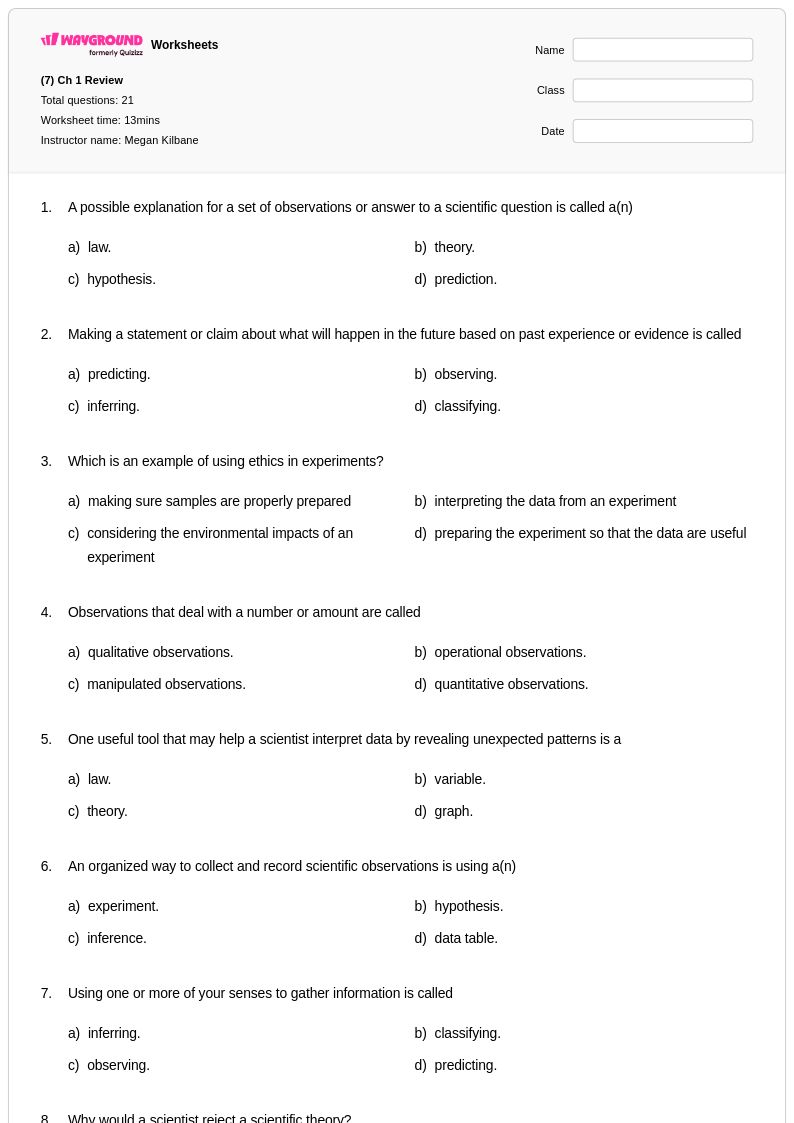
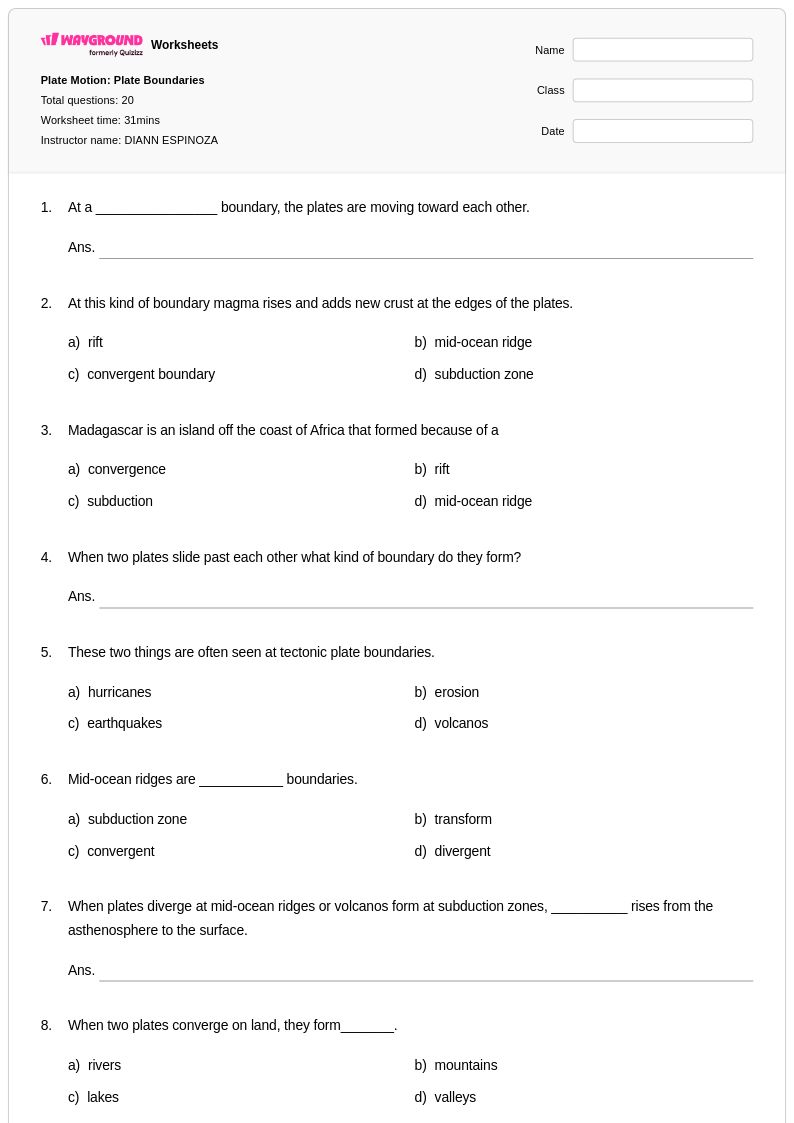
Enhance Class 7 students' predicting skills in Earth & Space Science with Wayground's comprehensive collection of free worksheets, printables, and practice problems featuring detailed answer keys and engaging PDF activities.
Explore printable Predicting worksheets for Class 7
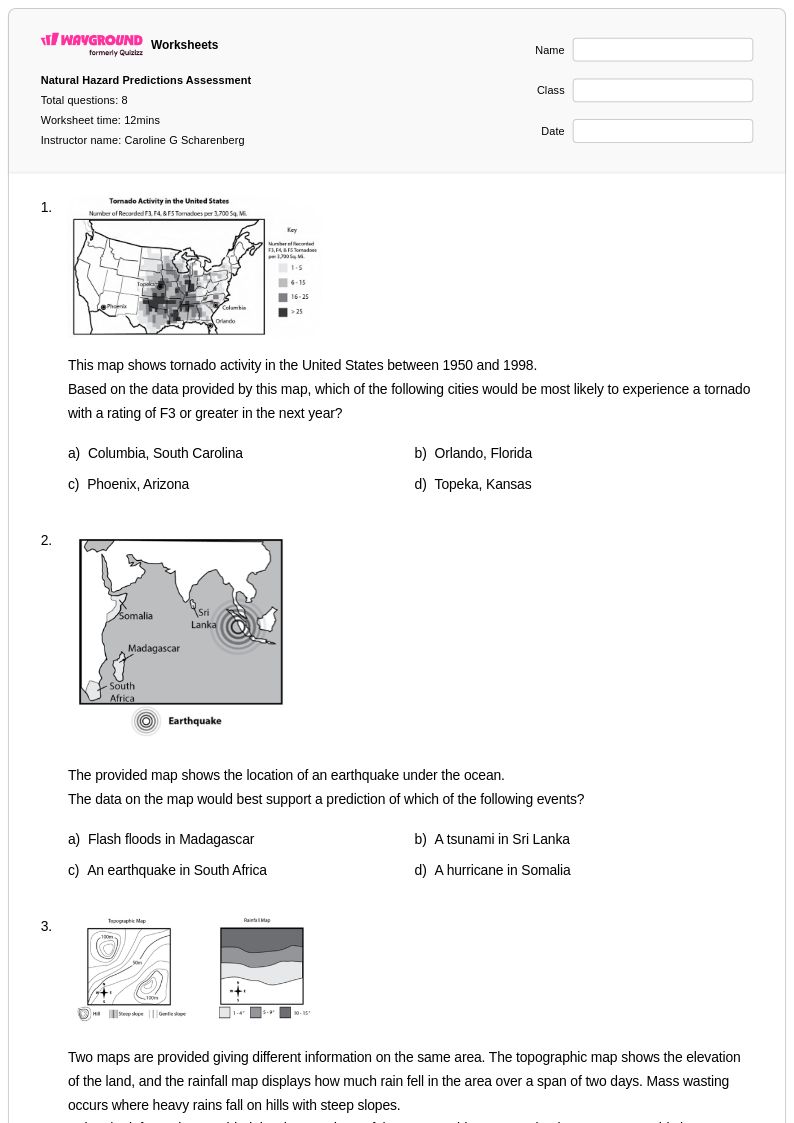
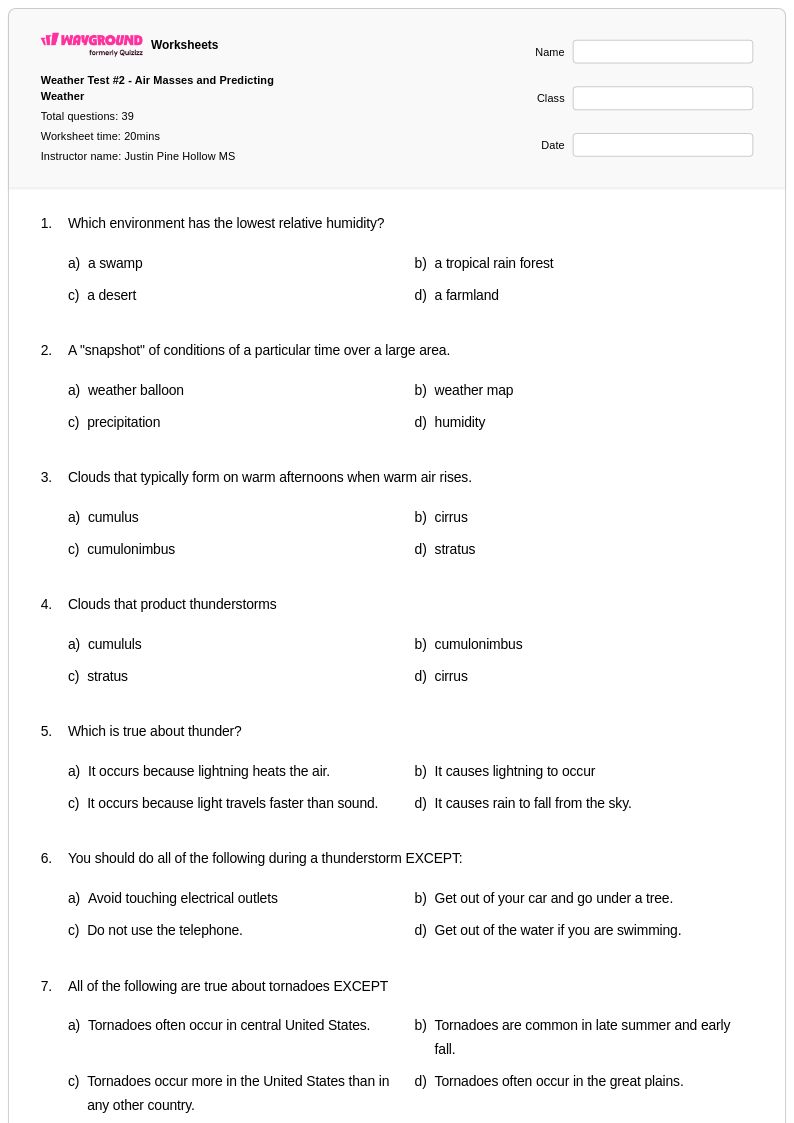
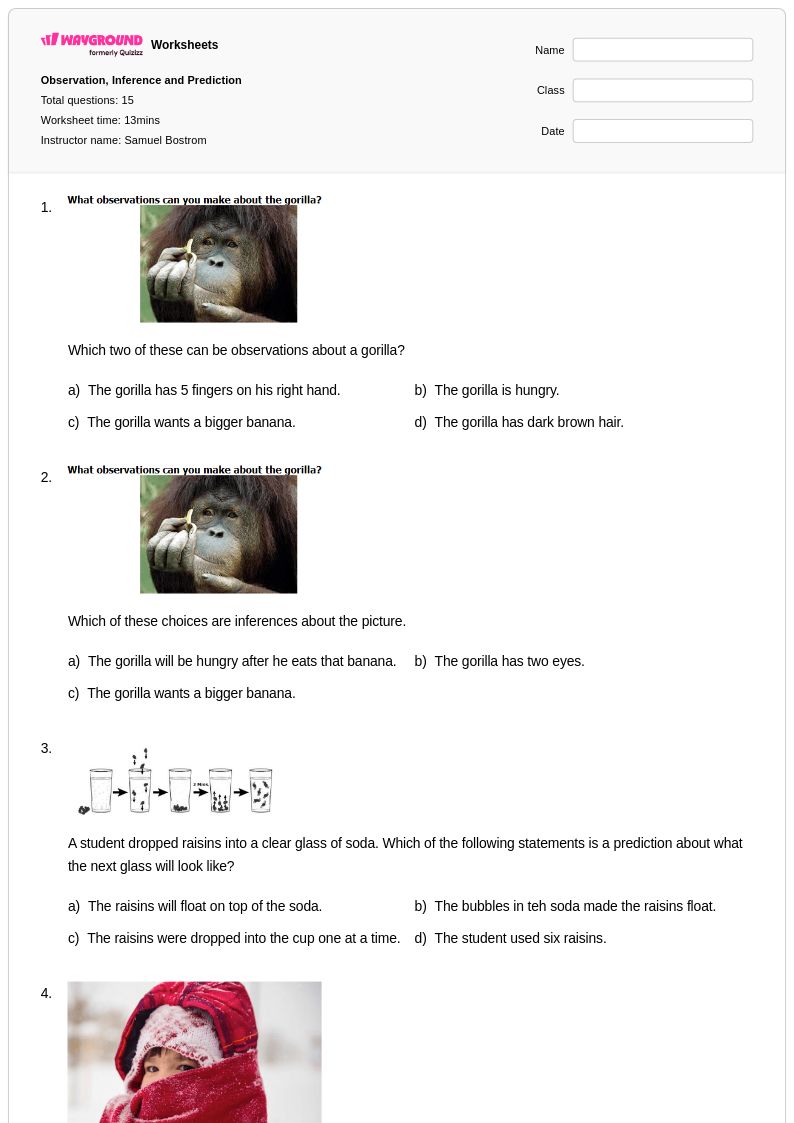
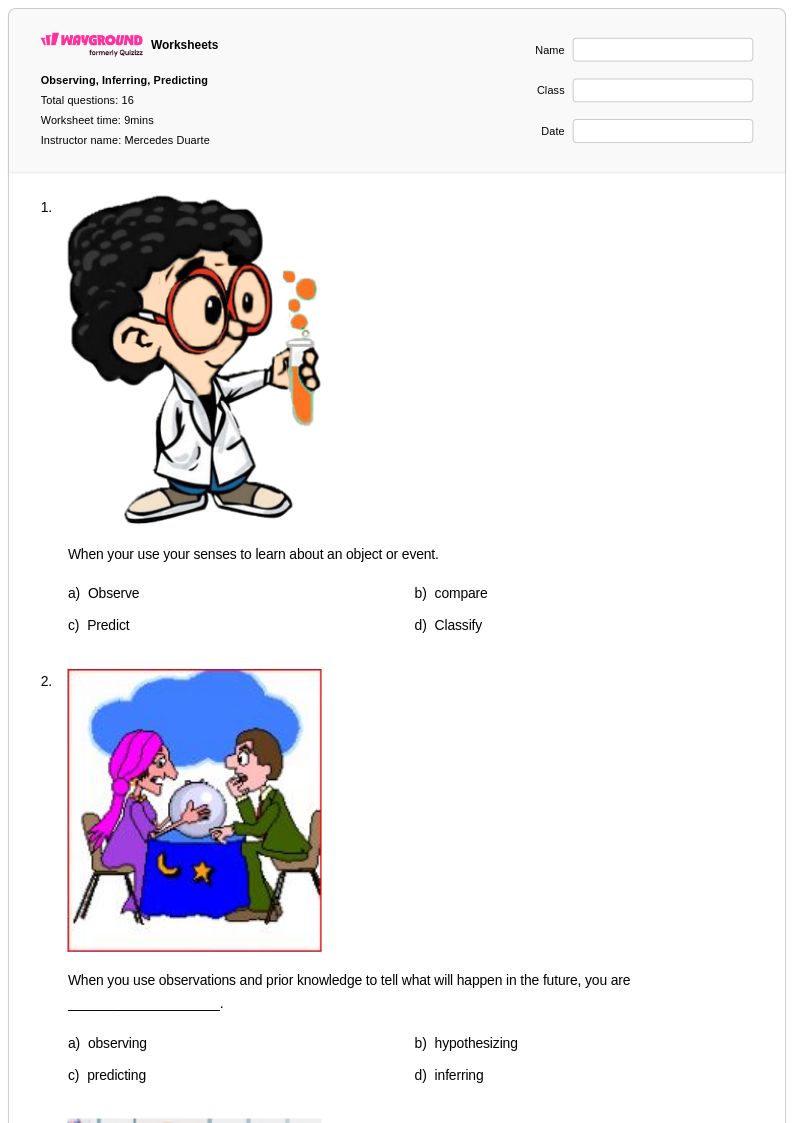
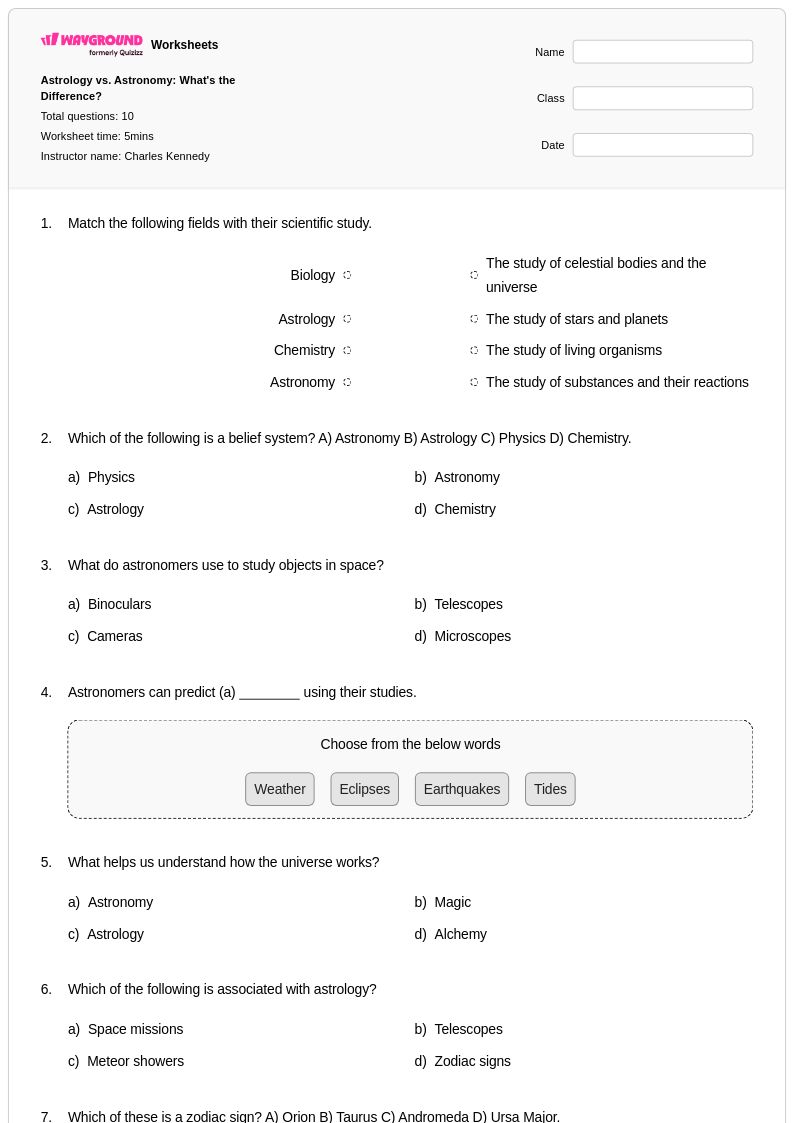
Class 7 predicting worksheets available through Wayground (formerly Quizizz) provide comprehensive practice for students developing critical scientific forecasting skills in Earth and Space Science contexts. These educational resources focus on building students' ability to analyze patterns in geological processes, weather systems, astronomical phenomena, and environmental changes to make informed predictions about future outcomes. The worksheets strengthen essential scientific thinking skills including data interpretation, pattern recognition, hypothesis formation, and evidence-based reasoning. Teachers can access complete answer keys and printable pdf formats alongside interactive digital versions, making these free practice problems adaptable to various classroom settings and learning preferences.
Wayground (formerly Quizizz) supports educators with millions of teacher-created predicting resources that offer robust search and filtering capabilities to locate materials perfectly aligned with specific Earth and Space Science standards and learning objectives. The platform's comprehensive collection enables teachers to differentiate instruction effectively, providing advanced students with complex prediction scenarios involving climate modeling and astronomical calculations, while offering foundational practice problems for students still developing core scientific reasoning skills. These customizable worksheets are available in both printable and digital pdf formats, allowing for seamless integration into lesson planning, targeted remediation sessions, and enrichment activities. The extensive filtering system helps educators quickly identify resources that match their students' skill levels and curricular needs, streamlining the process of providing meaningful practice opportunities that reinforce prediction strategies across diverse Earth and Space Science topics.
FAQs
How do I teach predicting skills in Earth and Space Science?
Teaching predicting in Earth and Space Science works best when students are anchored to observable data before making any forecast. Start by presenting real atmospheric readings, tide charts, or lunar cycle diagrams and ask students to identify patterns before stating a prediction. Explicitly modeling the difference between a guess and an evidence-based prediction is key — students need to practice citing the specific data point that supports their forecast, not just stating an outcome.
What exercises help students practice scientific predicting?
Predicting exercises that require students to interpret graphs, data tables, and scientific diagrams are the most effective for building this skill. Activities where students analyze weather patterns to forecast conditions, use tidal data to anticipate high and low tides, or examine planetary positions to predict celestial events reinforce the connection between data analysis and scientific reasoning. Structured worksheets with answer keys allow students to compare their predictions against established scientific models, which builds accuracy over time.
What mistakes do students commonly make when learning to make scientific predictions?
The most common error is confusing prediction with personal opinion — students often state what they think will happen without referencing any data or scientific principle. A related misconception is treating all predictions as binary right-or-wrong outcomes rather than understanding that predictions exist on a spectrum of probability based on available evidence. Students also frequently overlook variables, such as ignoring a cold front when predicting tomorrow's weather, which leads to incomplete or inaccurate forecasts.
How can I differentiate predicting worksheets for students at different skill levels?
For developing learners, reduce the complexity of data sets used in prediction tasks — a simple two-variable graph is more accessible than a multi-layered climate chart. Advanced students benefit from open-ended prompts where they must select and justify which data is most relevant to their prediction. On Wayground, teachers can apply accommodations such as reduced answer choices and read-aloud support to individual students, making the same core worksheet accessible across a range of skill levels without requiring separate materials.
How do I use Wayground's predicting worksheets in my classroom?
Wayground's predicting worksheets are available as printable PDFs for traditional classroom use and in digital formats for technology-integrated environments, including the option to host them as a quiz directly on Wayground. Teachers can use the platform's search and filtering tools to locate worksheets aligned to specific standards, whether the focus is weather forecasting, astronomical events, or geological processes. Each worksheet includes a complete answer key, making them practical for independent work, homework assignments, or small-group instruction.
How do predicting skills connect to broader scientific reasoning in K-12?
Predicting is a foundational scientific process skill that underpins hypothesis formation, experimental design, and data interpretation across all science disciplines. In Earth and Space Science specifically, students who develop strong predictive reasoning are better equipped to understand systems thinking — recognizing that atmospheric conditions, tidal cycles, and celestial movements are governed by consistent, observable patterns. Building this skill early creates a transferable analytical framework students apply across chemistry, biology, and environmental science contexts.