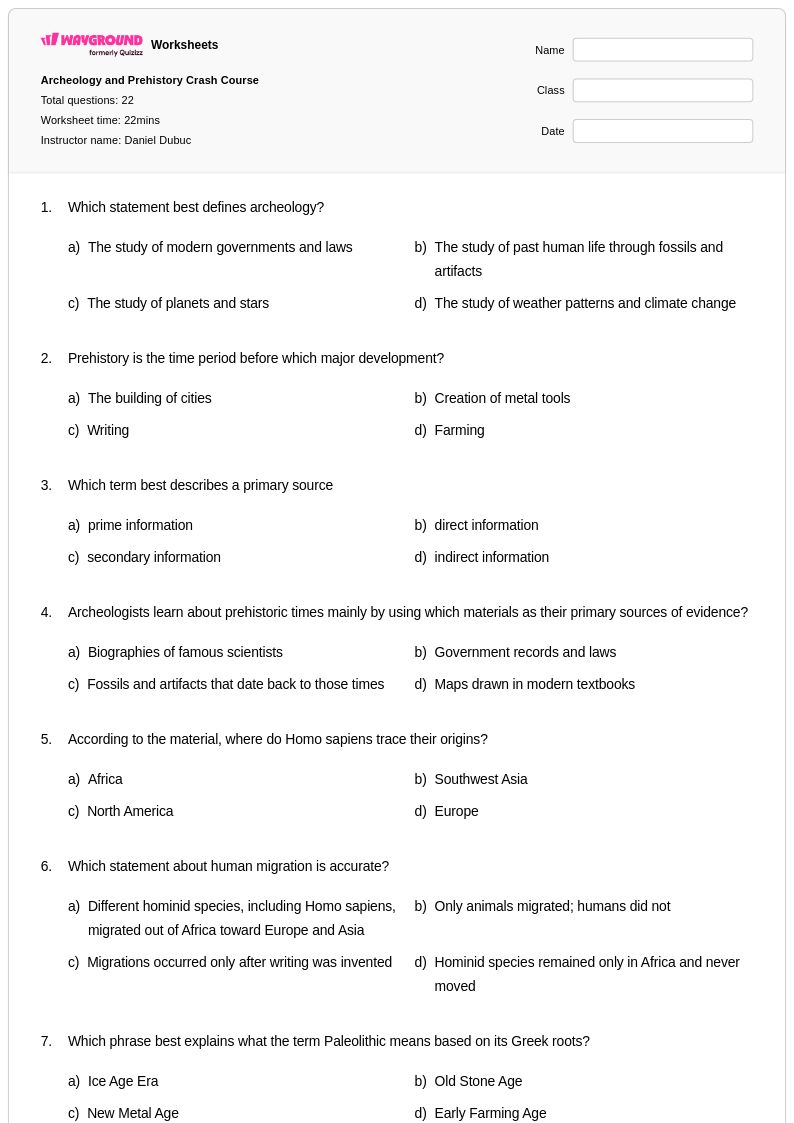
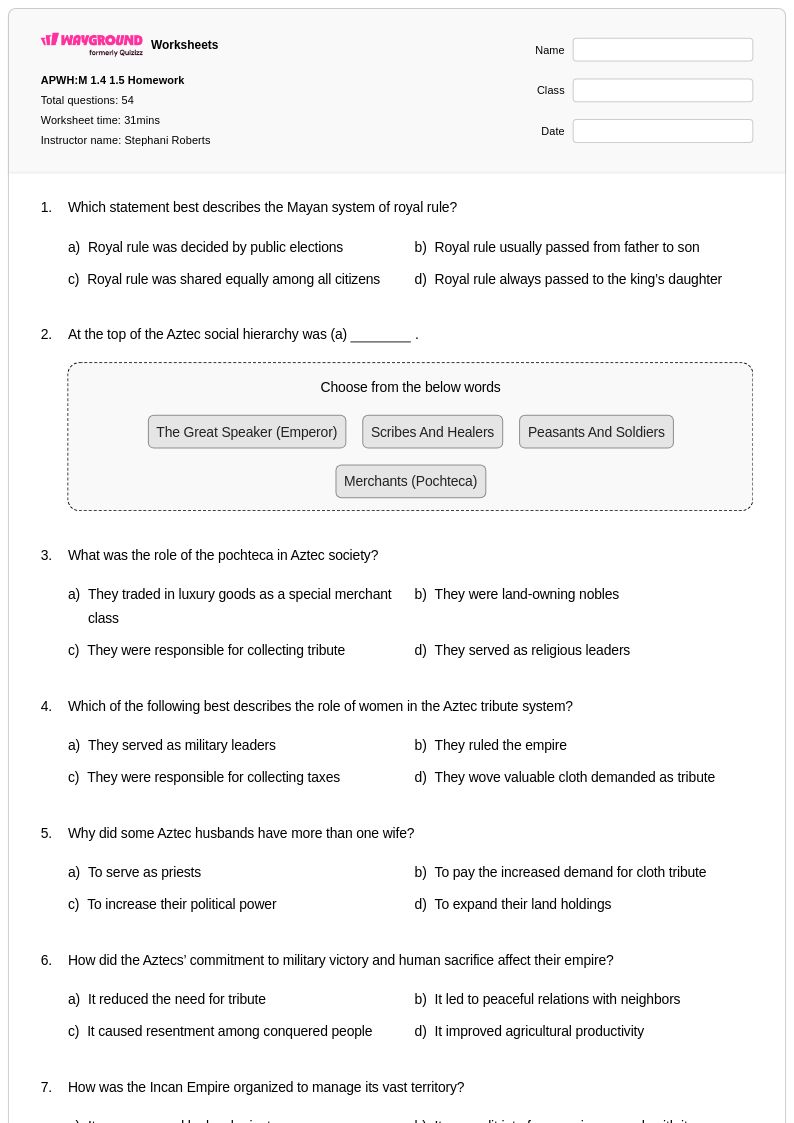
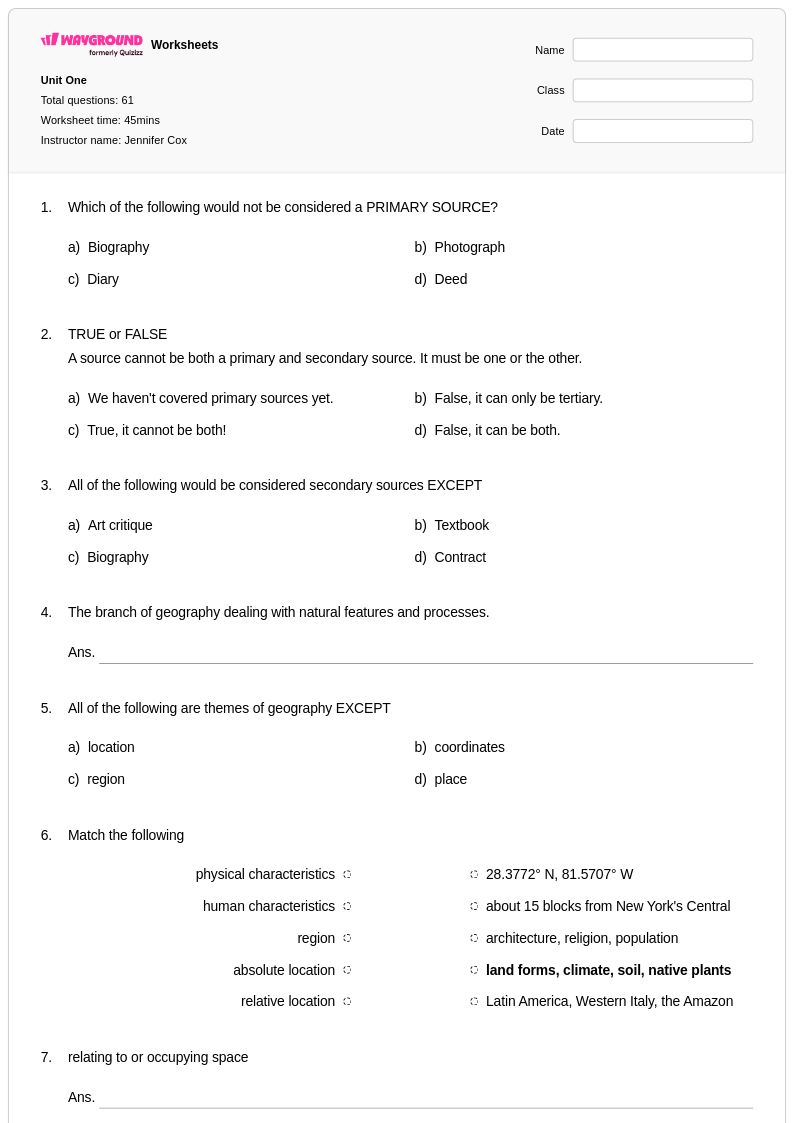
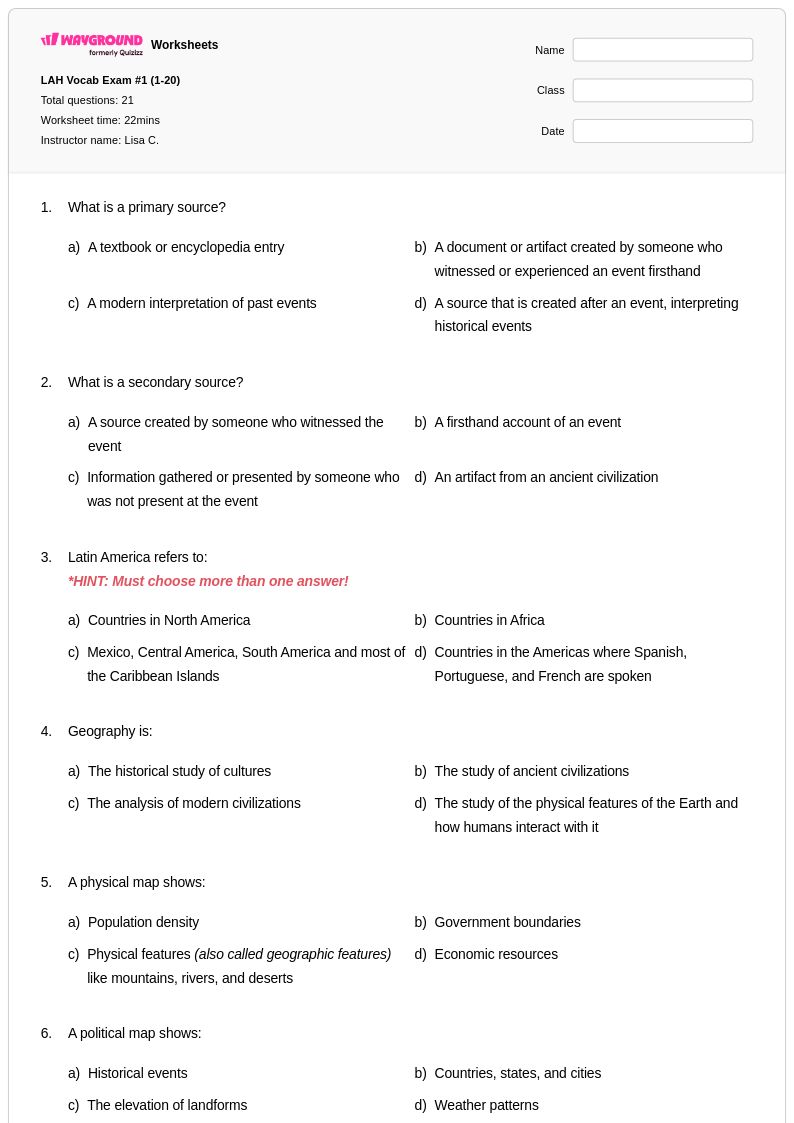
Free Printable Primary Source Analysis Worksheets for Class 10
Free Class 10 primary source analysis worksheets and printables help students develop critical thinking skills by examining historical documents, with comprehensive practice problems and answer keys included.
Explore printable Primary Source Analysis worksheets for Class 10
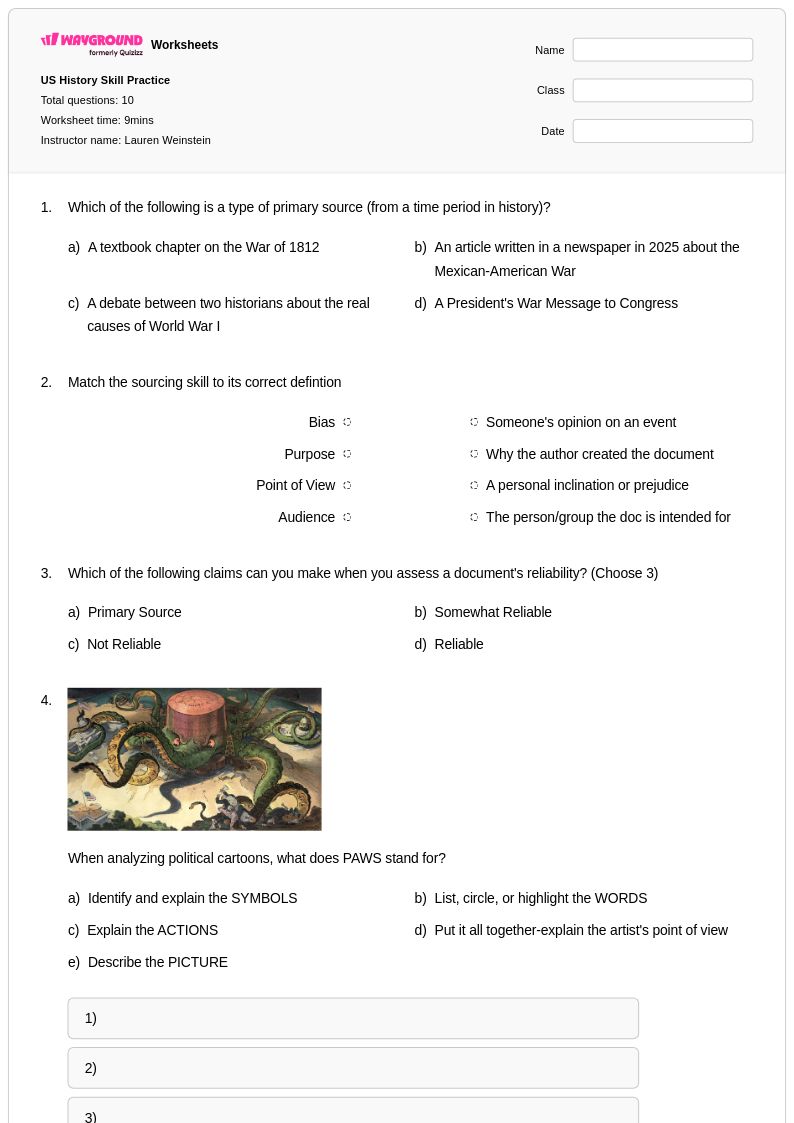
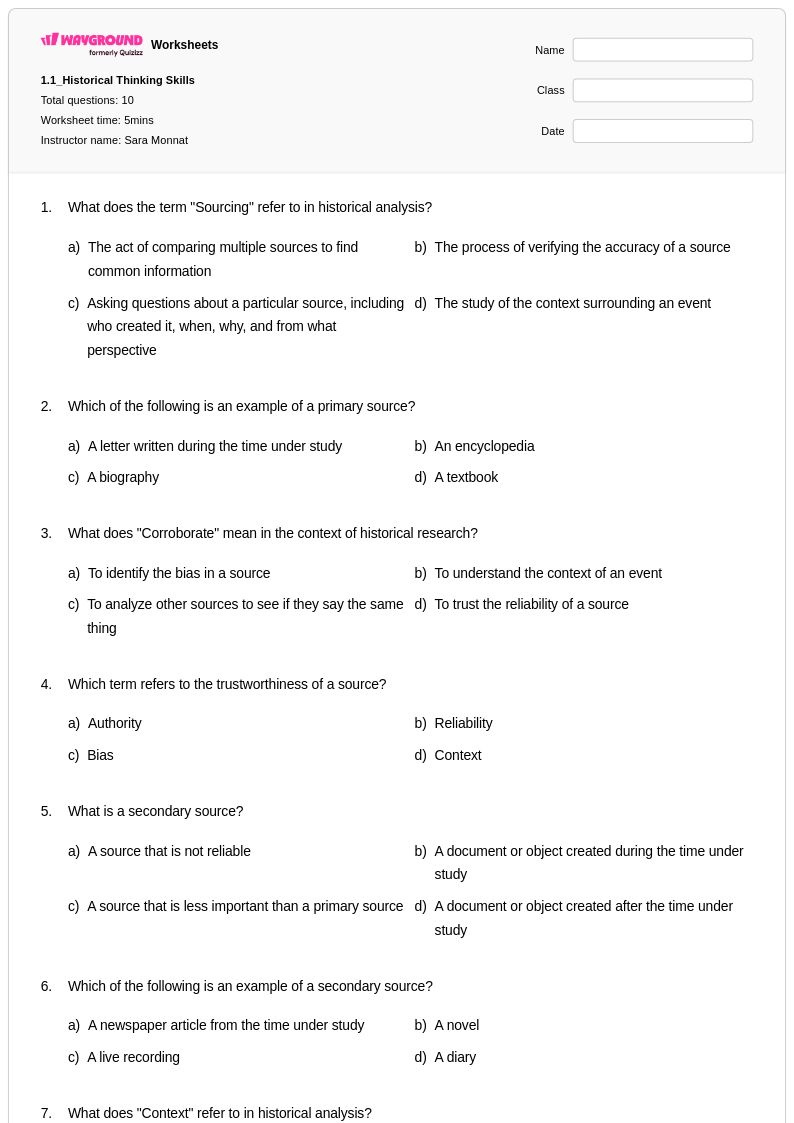
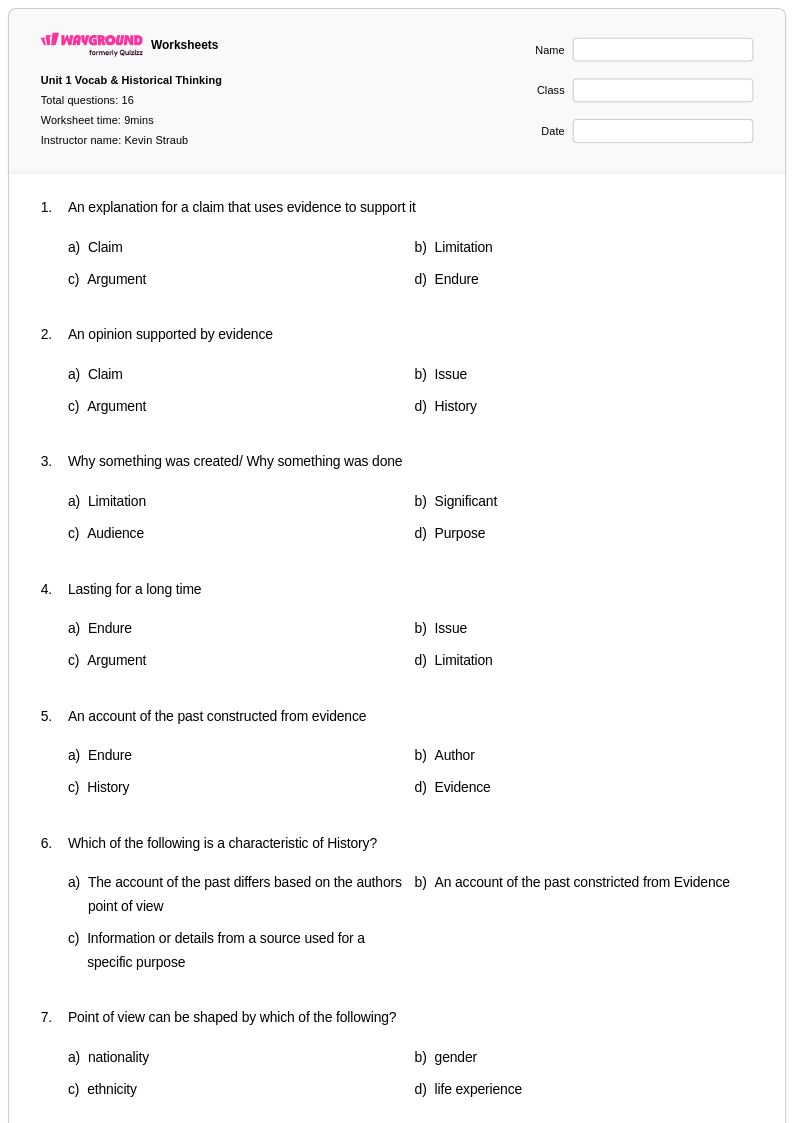
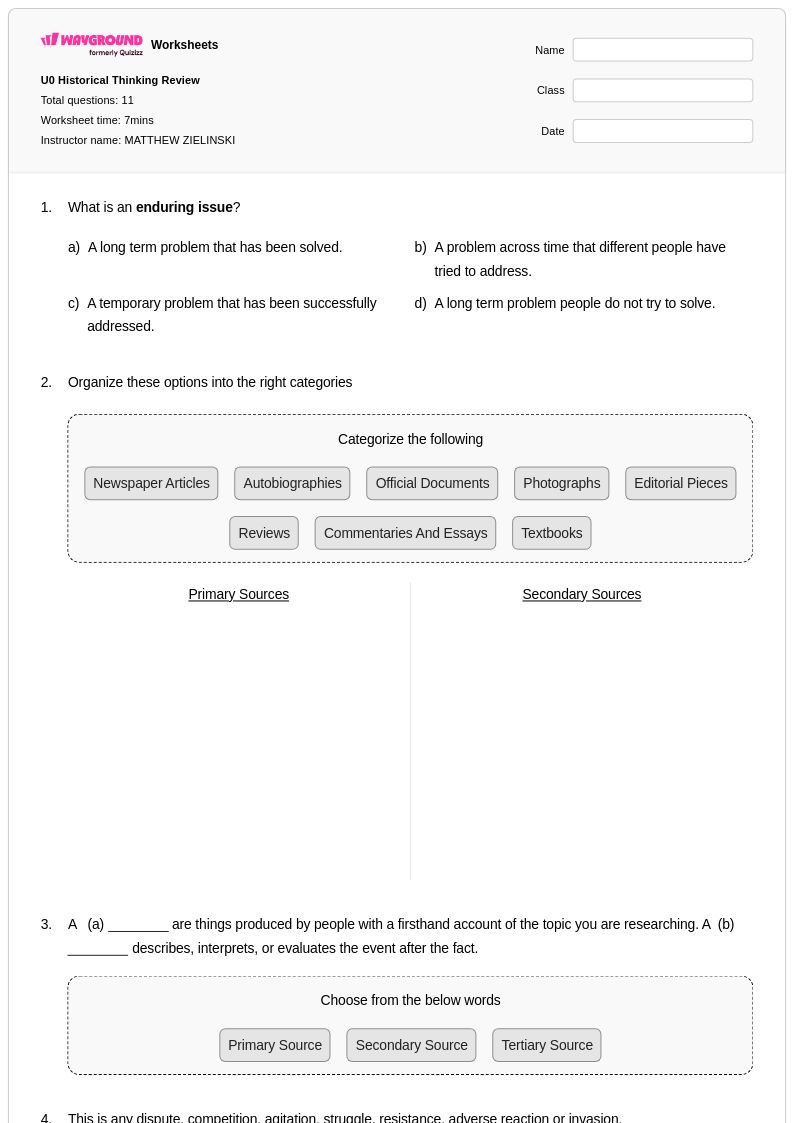
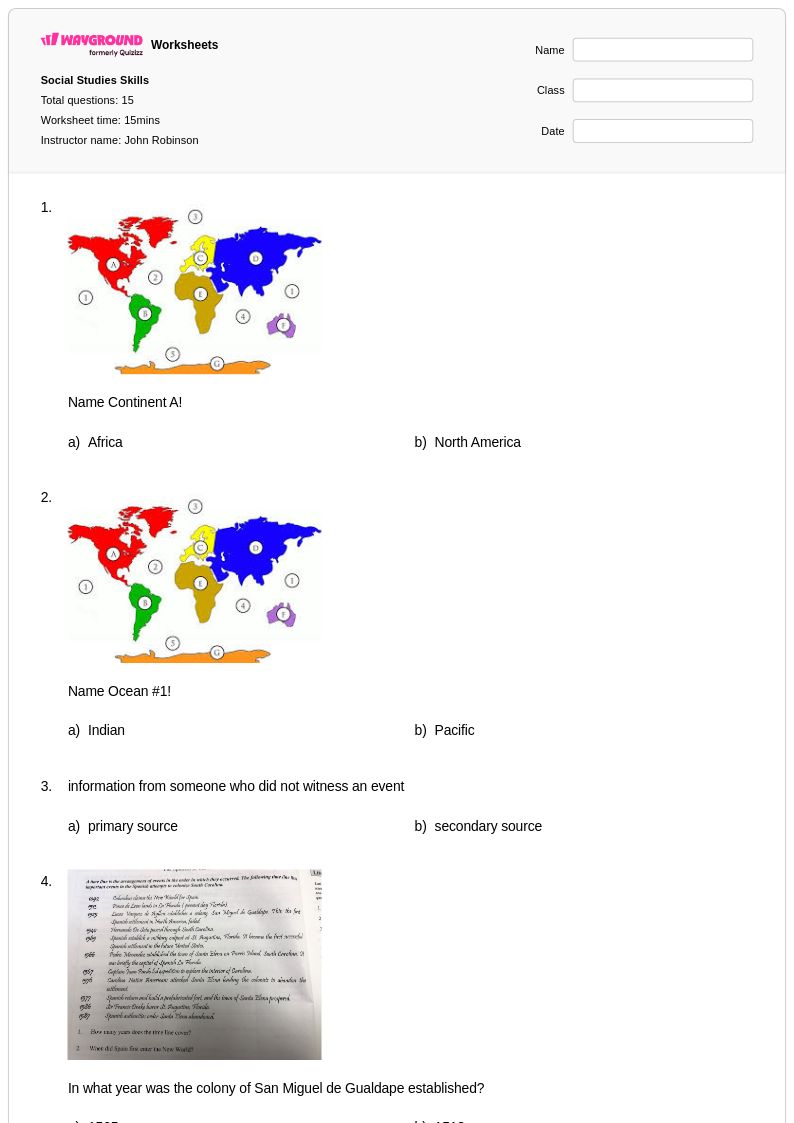
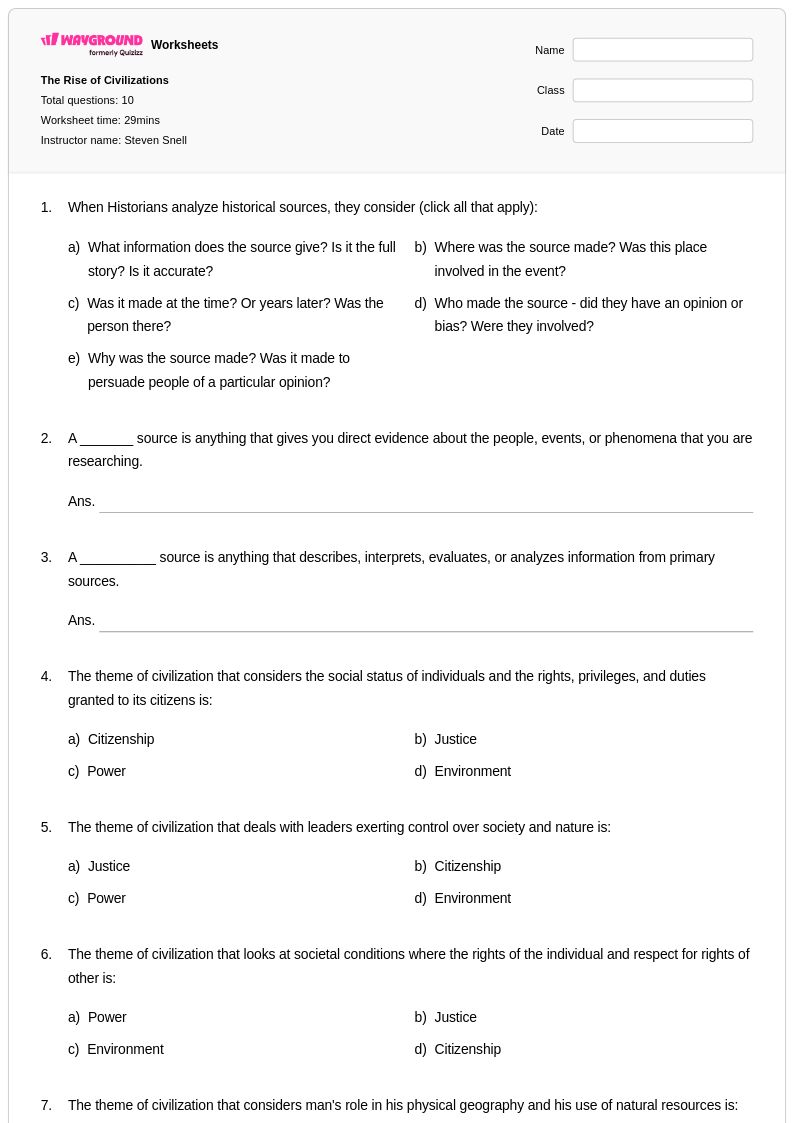
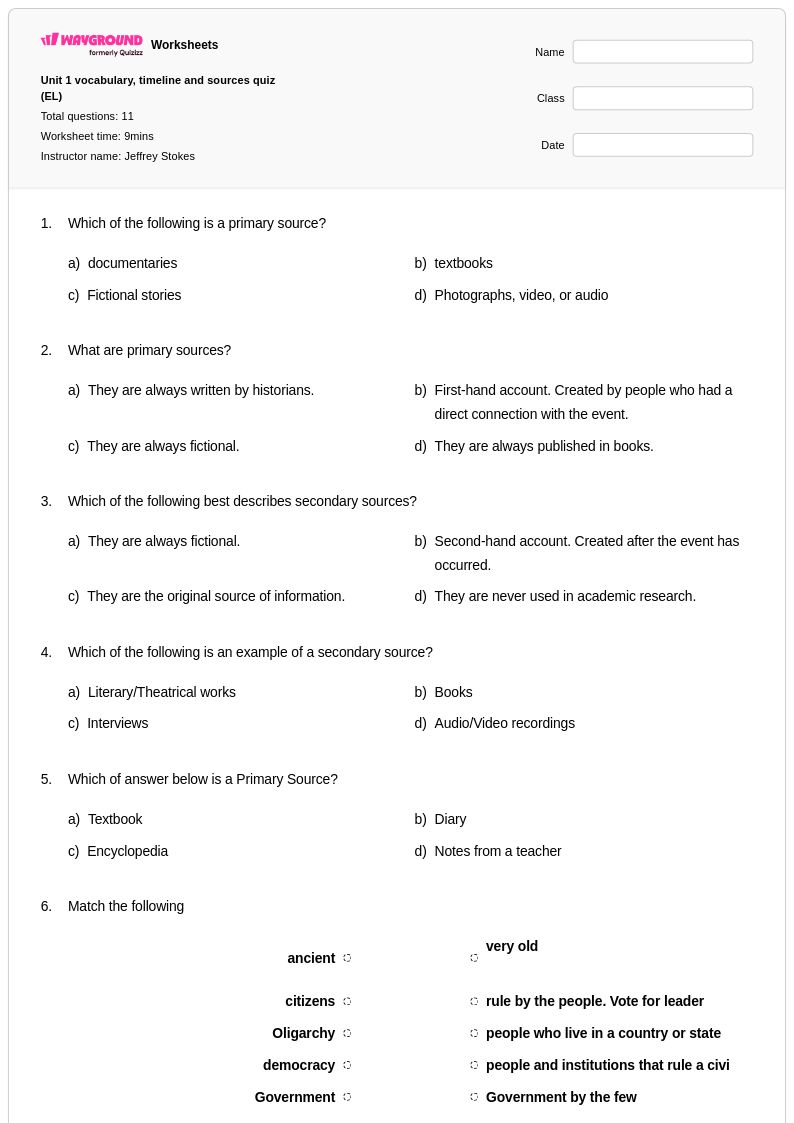
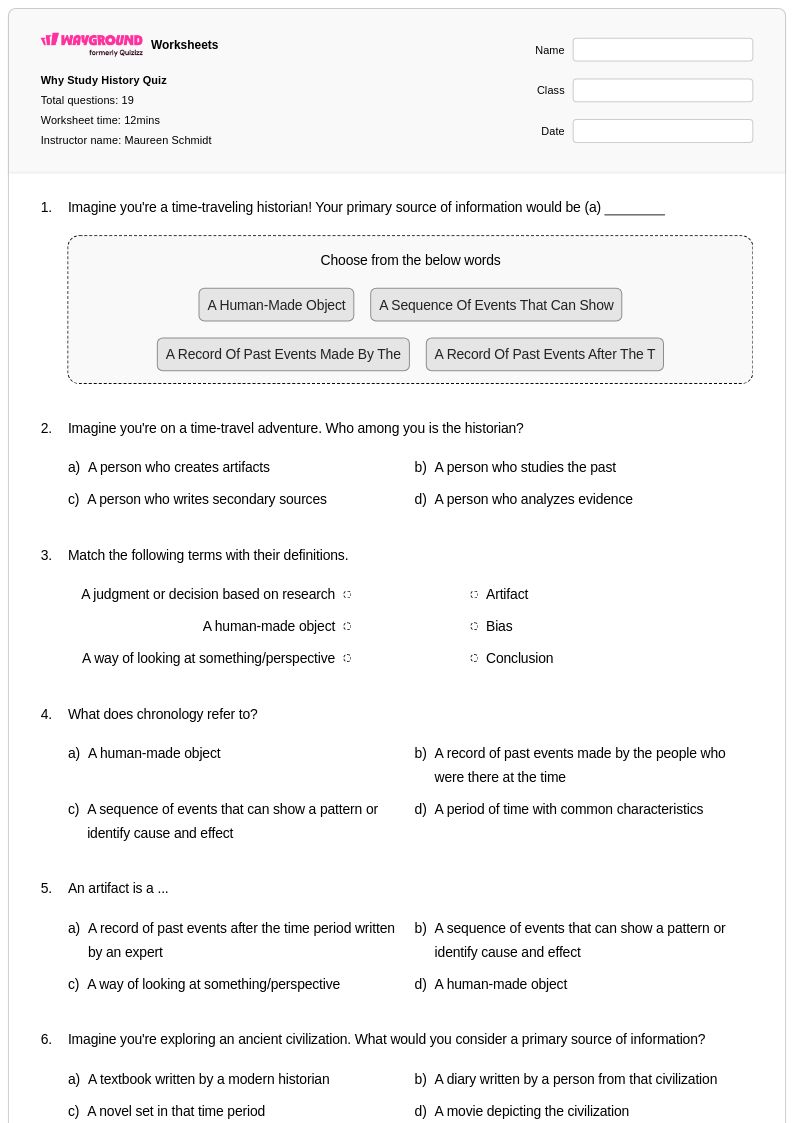
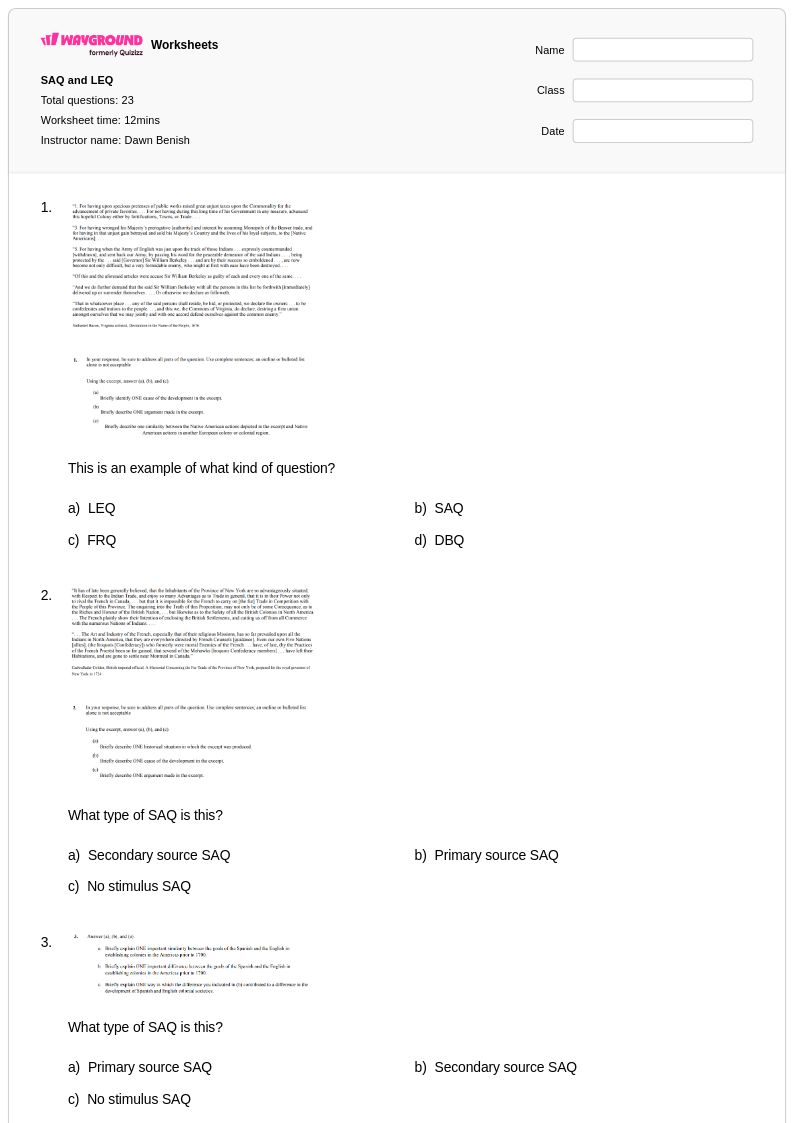
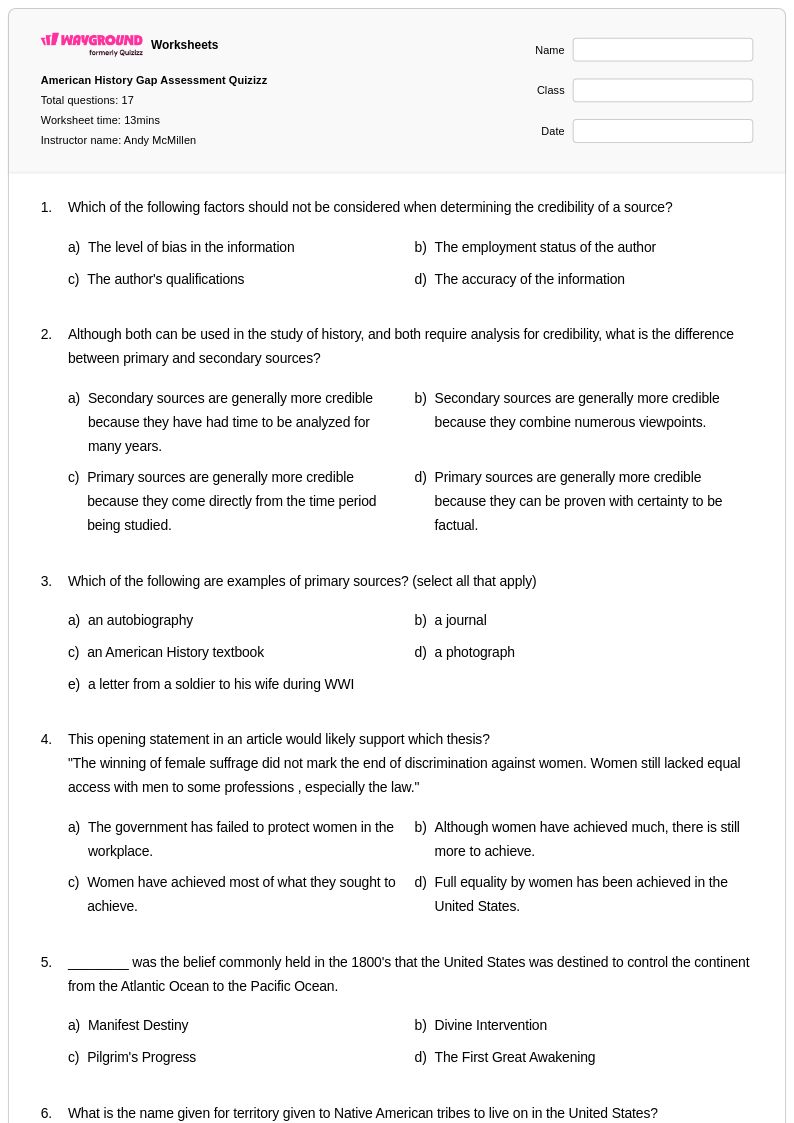
Primary source analysis worksheets for Class 10 students available through Wayground provide essential practice in examining historical documents, artifacts, and firsthand accounts that form the foundation of historical understanding. These comprehensive worksheets guide students through the critical process of evaluating primary sources by teaching them to identify bias, assess reliability, contextualize evidence within historical periods, and draw informed conclusions about past events and perspectives. Students develop advanced analytical skills as they work through practice problems that require them to compare multiple sources, distinguish between primary and secondary materials, and synthesize evidence to support historical arguments. Each worksheet includes detailed answer keys that help educators assess student comprehension while providing free, printable resources that can be easily integrated into classroom instruction or assigned as independent study materials.
Wayground's extensive collection of teacher-created primary source analysis worksheets offers educators access to millions of carefully curated resources designed specifically for Class 10 social studies instruction. The platform's robust search and filtering capabilities enable teachers to locate materials aligned with specific historical periods, document types, or learning standards, while built-in differentiation tools allow for seamless customization based on individual student needs and reading levels. These versatile resources are available in both digital and pdf formats, providing flexibility for classroom instruction, remote learning, or hybrid teaching environments. Teachers can efficiently plan comprehensive units that build source analysis skills progressively, use targeted worksheets for remediation when students struggle with document interpretation, and provide enrichment opportunities for advanced learners ready to tackle more complex historical sources and argumentation tasks.
FAQs
How do I teach students to analyze primary sources?
Effective primary source analysis instruction begins by teaching students a structured framework: identify the author, date, audience, and purpose before interpreting content. From there, guide students to contextualize the source within its historical moment, evaluate potential bias, and assess credibility. Modeling this process with familiar documents before moving to unfamiliar ones helps students internalize the steps. Consistent practice with diverse source types, including letters, photographs, speeches, and artifacts, builds transferable analytical habits.
What exercises help students practice primary source analysis?
Structured document analysis worksheets that walk students through guided questions are among the most effective practice tools for this skill. Exercises that require source comparison, where students examine two accounts of the same event, reinforce bias detection and perspective-taking. Practice problems focused on identifying the author's purpose and intended audience help students move beyond surface-level reading toward historical reasoning. Repeated exposure to varied document types, with scaffolded support, builds the analytical fluency students need for independent work.
What mistakes do students commonly make when analyzing primary sources?
One of the most common errors is taking primary sources at face value without questioning the author's perspective, bias, or purpose. Students also frequently struggle to contextualize a document, analyzing its words in isolation rather than connecting it to the broader historical moment in which it was created. Another common misconception is treating a single source as definitive evidence, rather than recognizing that multiple sources must be weighed against each other. Worksheets that build in explicit prompts for bias evaluation and contextualization help students correct these patterns.
How do I differentiate primary source analysis instruction for students at different skill levels?
For struggling students, providing pre-annotated documents with vocabulary support and simplified guiding questions reduces cognitive load while preserving the analytical challenge. Advanced learners benefit from complex or contradictory sources that require them to reconcile competing accounts and construct evidence-based arguments. On Wayground, teachers can apply accommodations such as read aloud, reduced answer choices, and extended time to individual students, allowing the same worksheet to serve the full range of learners without singling anyone out.
How do I use Wayground's primary source analysis worksheets in my classroom?
Wayground's primary source analysis worksheets are available as printable PDFs for traditional classroom use and in digital formats for technology-integrated or remote learning environments. Teachers can also host worksheets directly as a quiz on Wayground, enabling real-time student response tracking. Each worksheet includes answer keys, making them practical for independent practice, guided instruction, or assessment. The digital format supports accommodations like read aloud and extended time, which can be configured per student from the Students or Classes tab.
How do I assess whether students have mastered primary source analysis?
Strong mastery indicators include a student's ability to independently identify bias, articulate an author's purpose, and situate a document within its historical context without teacher prompting. Assessment tasks that ask students to compare two primary sources and explain which is more reliable, and why, reveal deeper analytical thinking than comprehension questions alone. Using structured analysis worksheets with answer keys allows teachers to identify specific gaps, such as contextualization or sourcing, and target those skills in follow-up instruction.