Free Printable Qualitative and Quantitative Observations worksheets
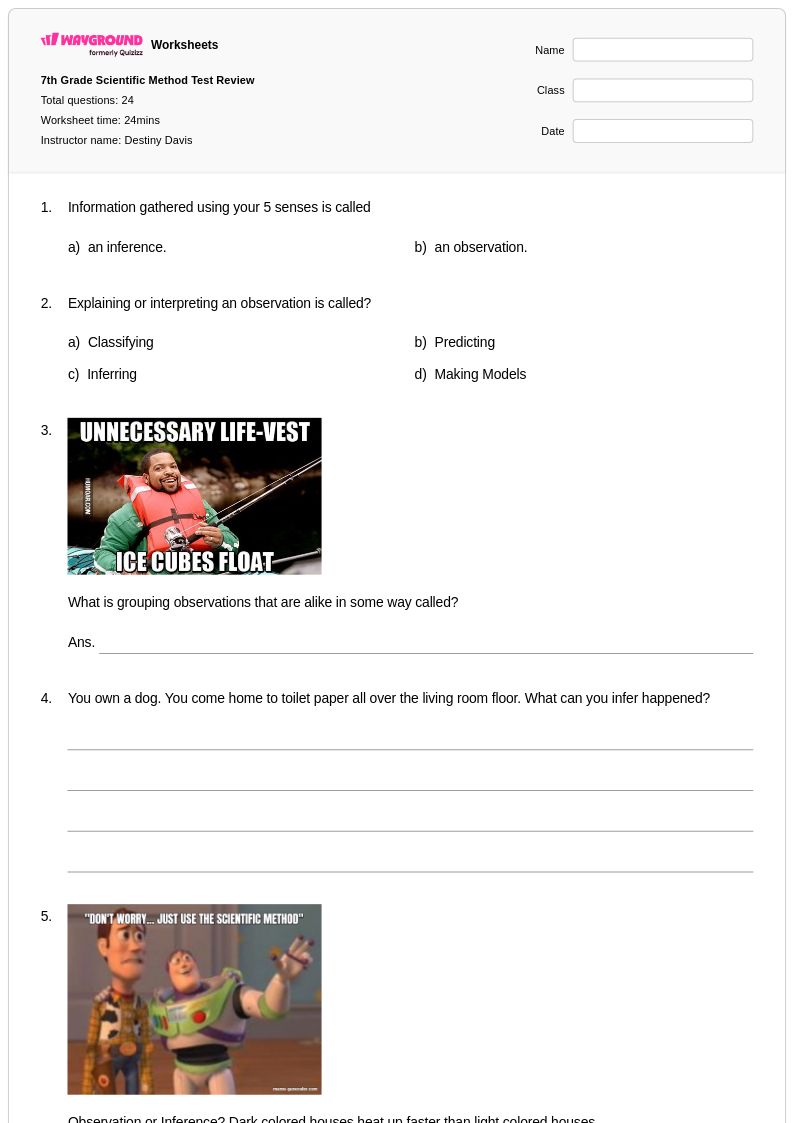
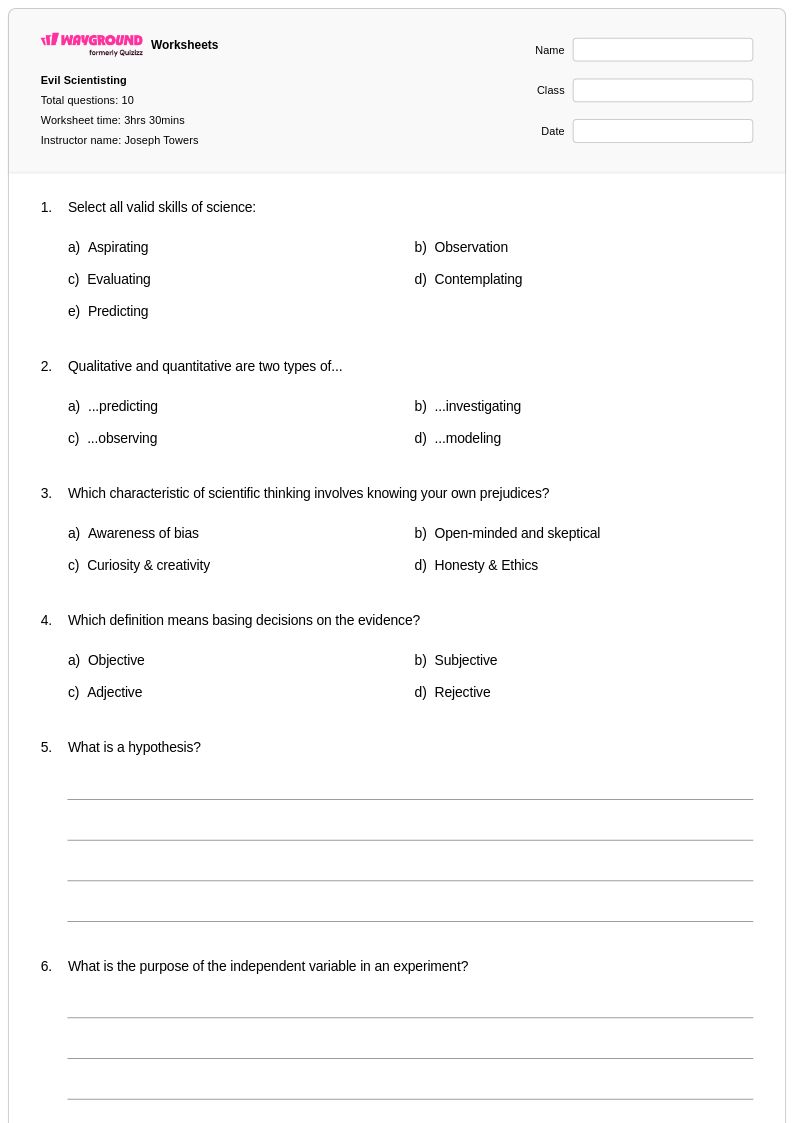
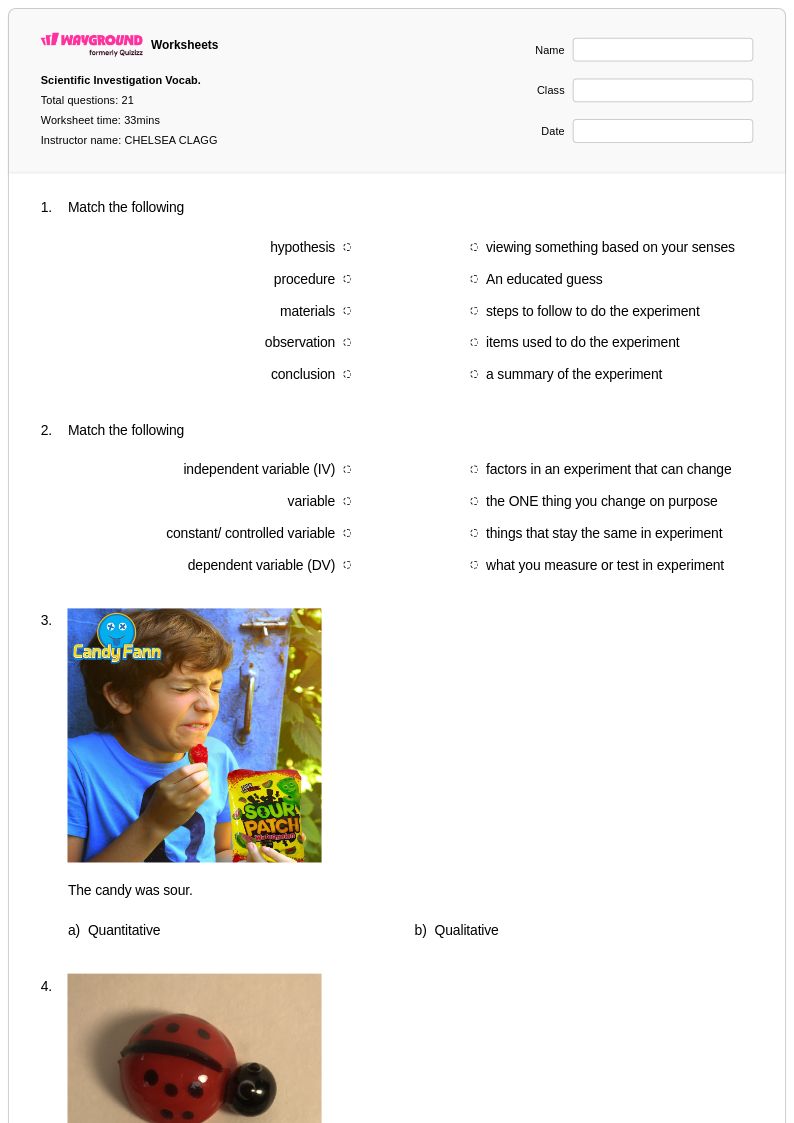
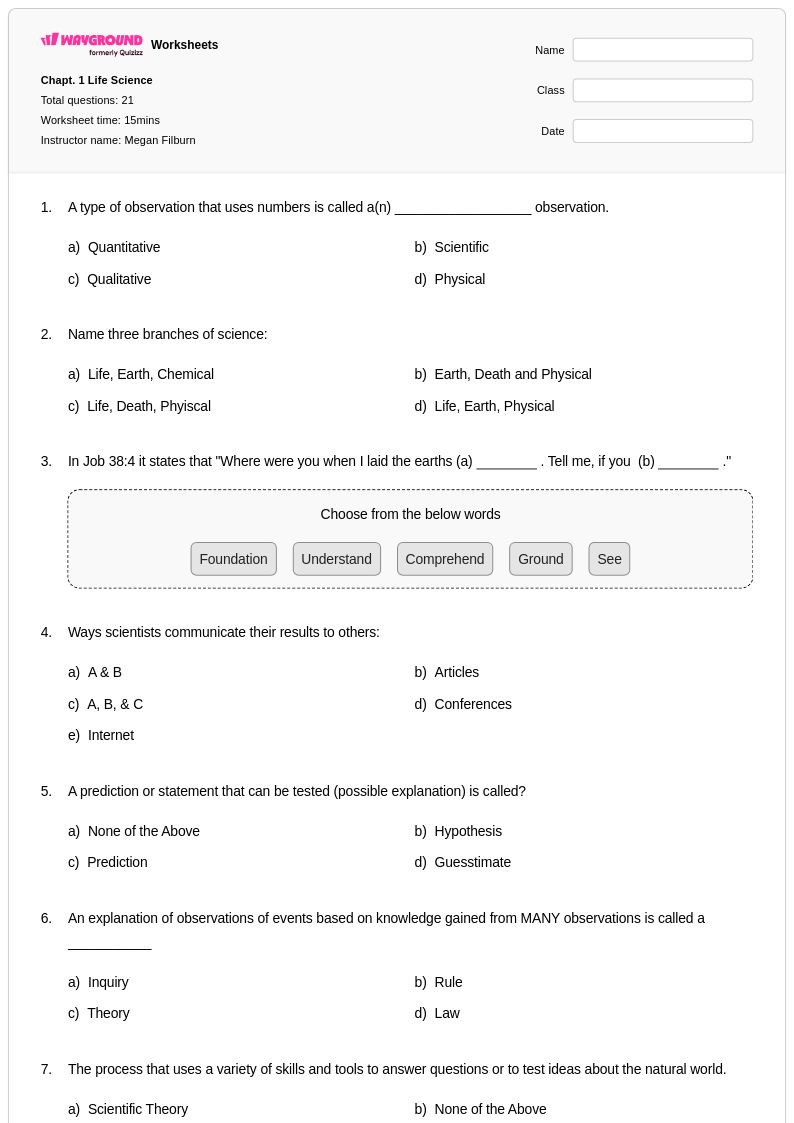
Explore free qualitative and quantitative observations worksheets and printables from Wayground that help students master the essential skill of making detailed scientific observations through engaging practice problems and comprehensive answer keys.
Explore printable Qualitative and Quantitative Observations worksheets
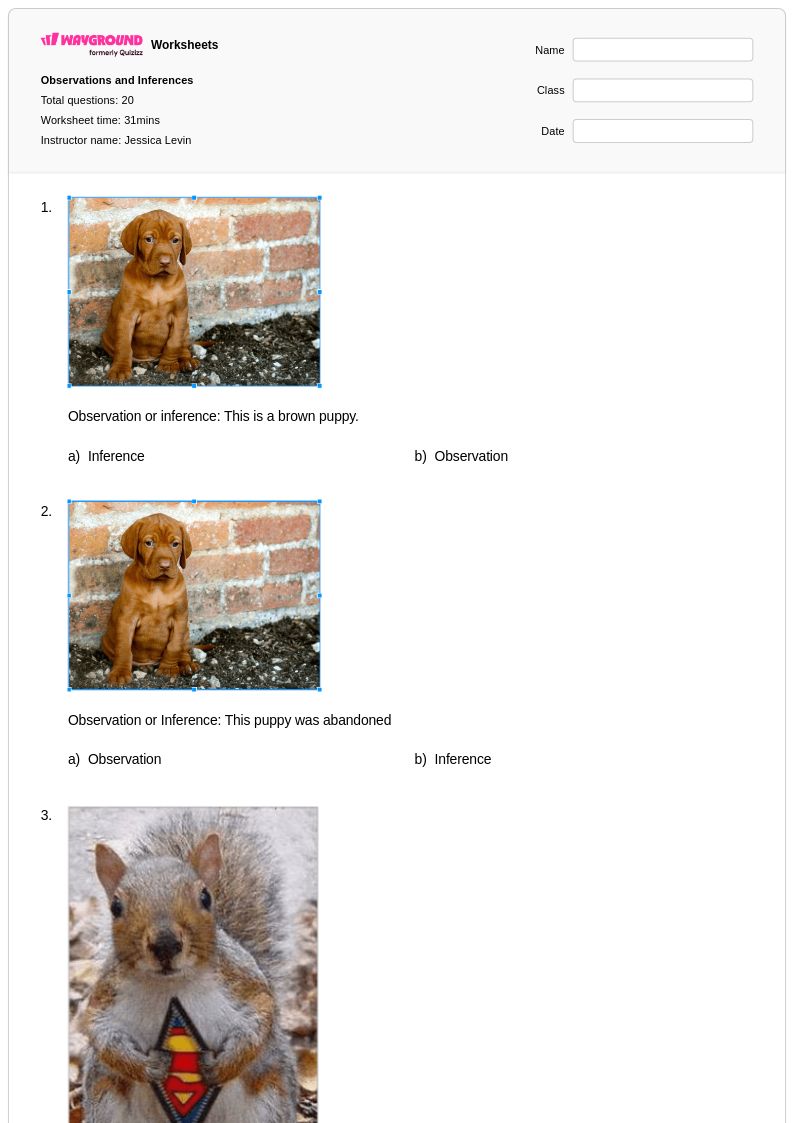
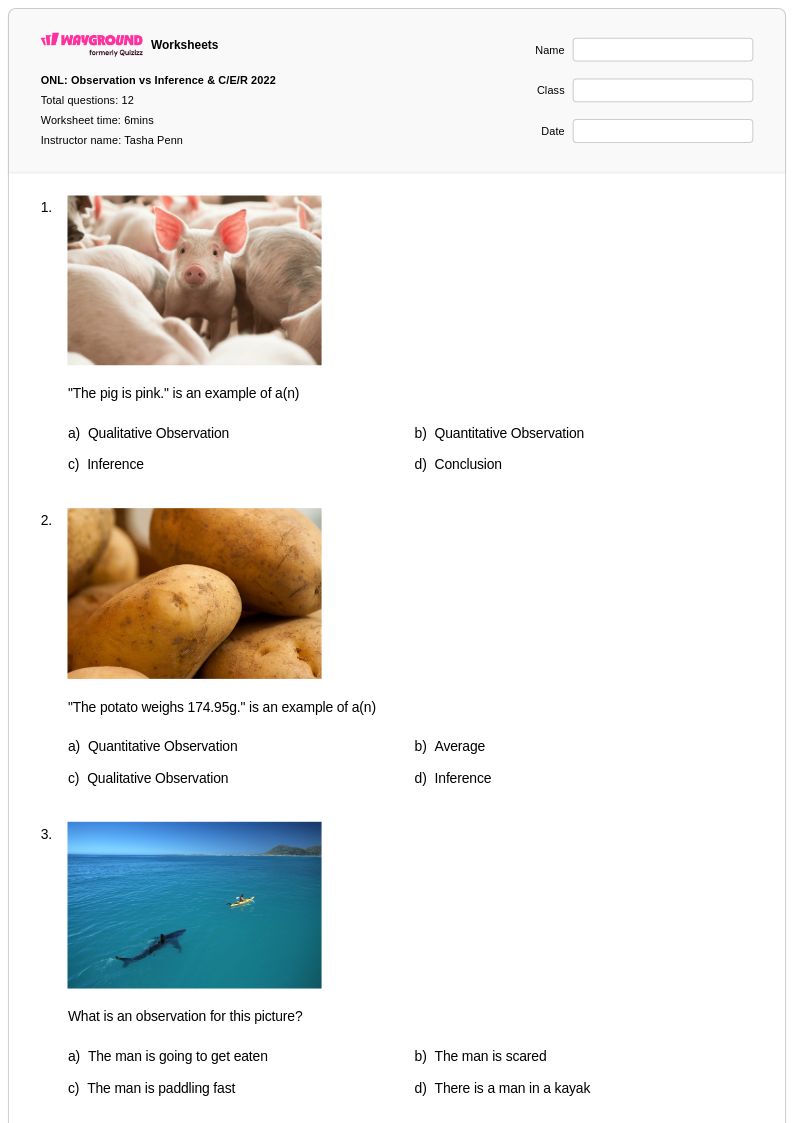
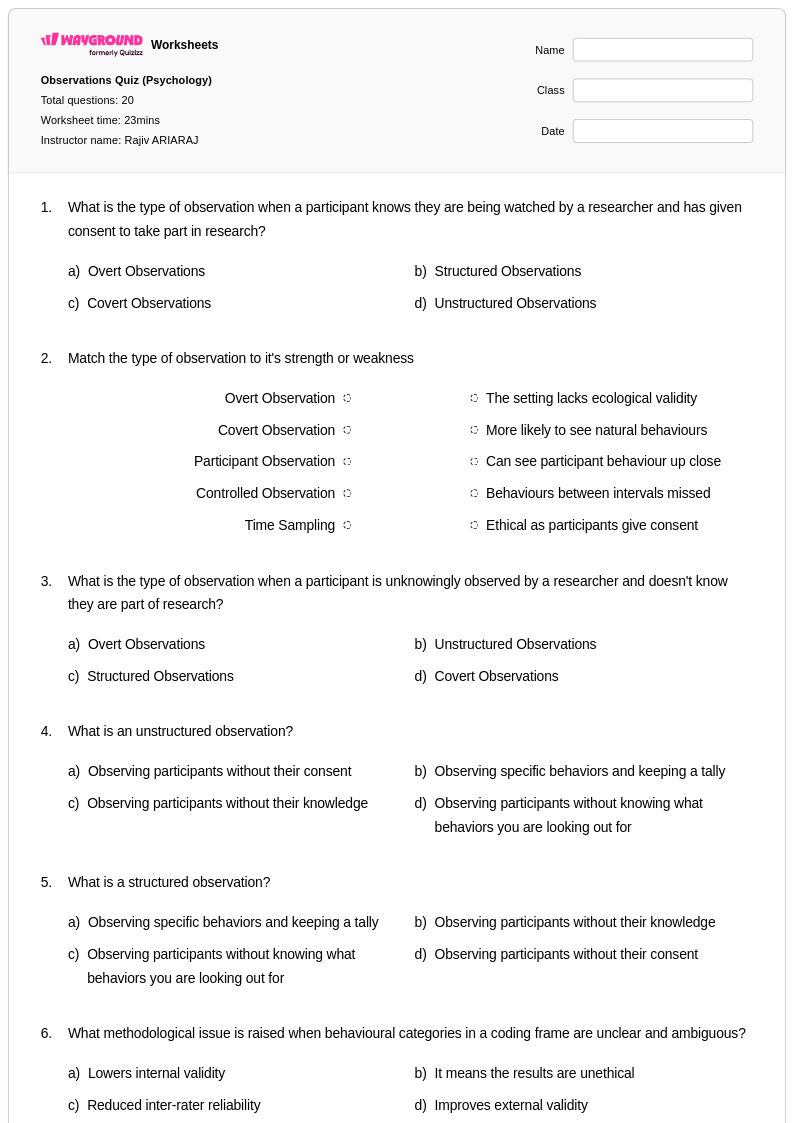
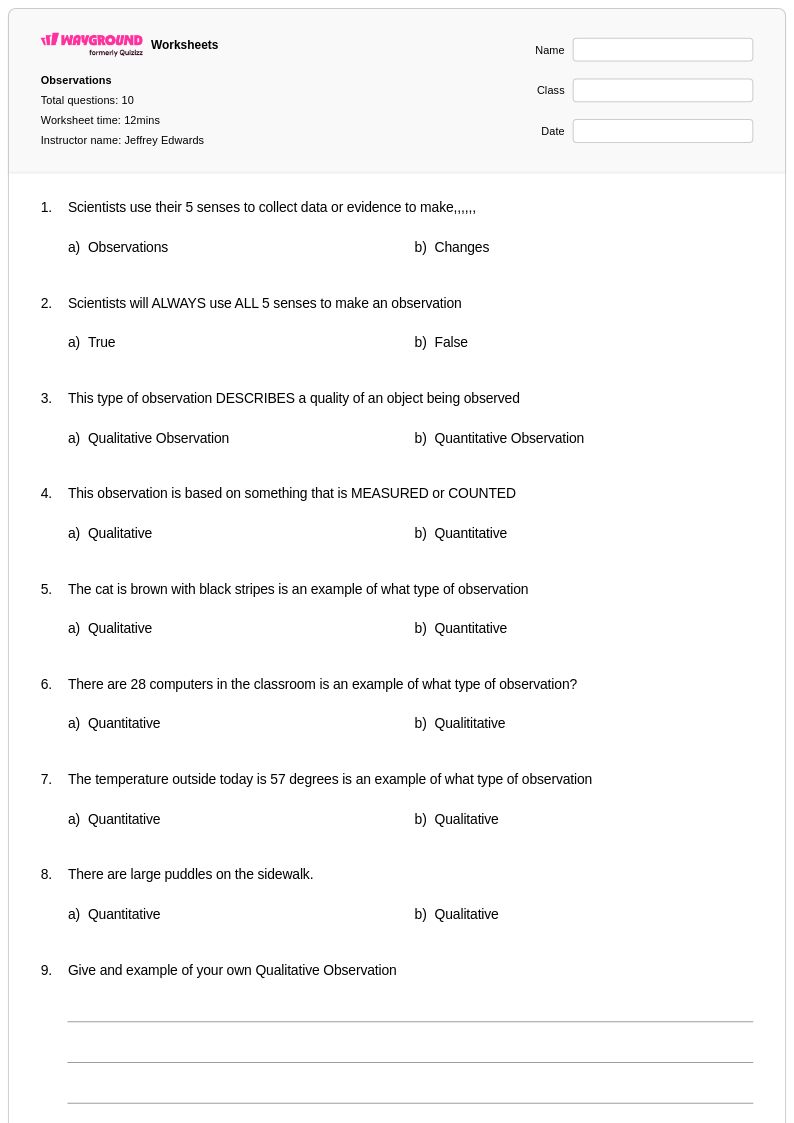
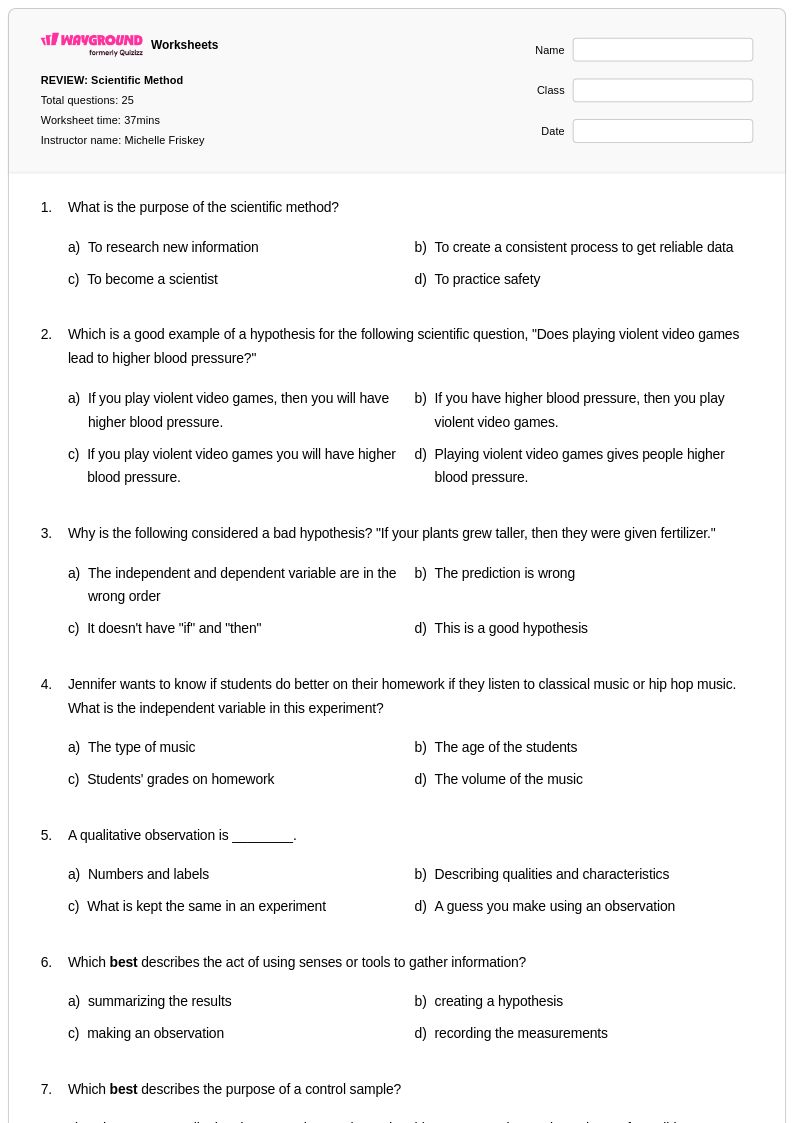
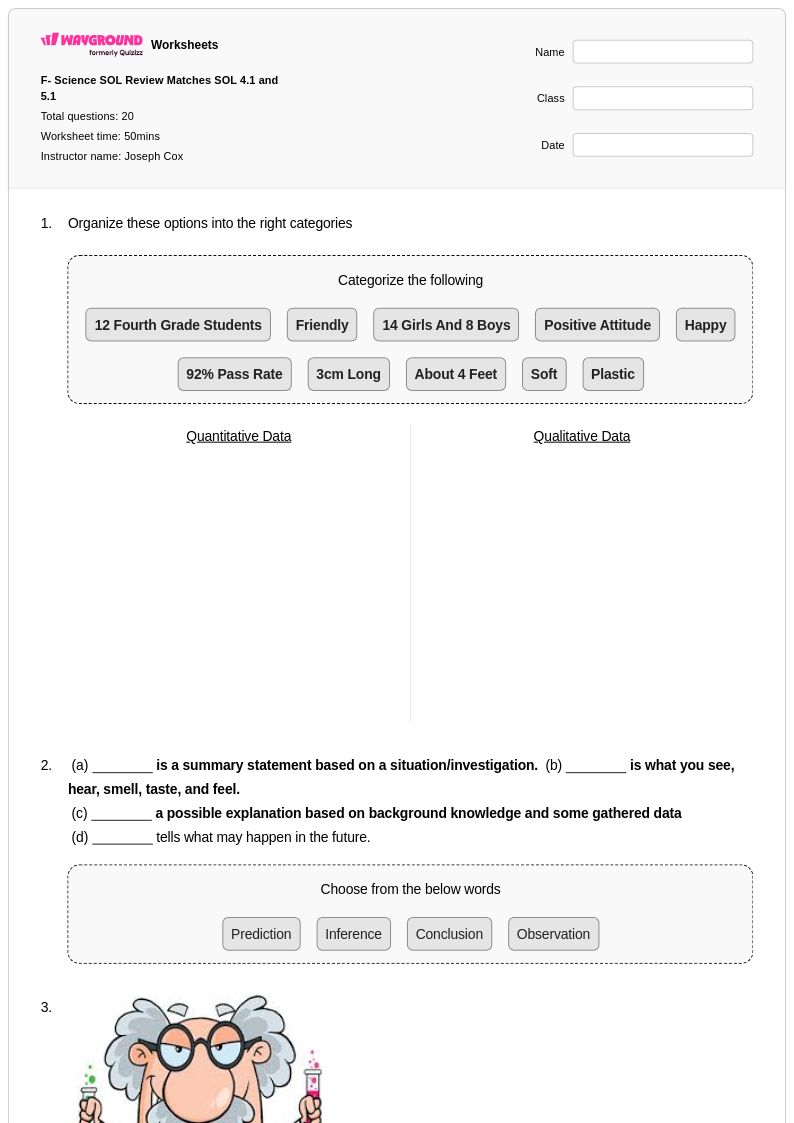
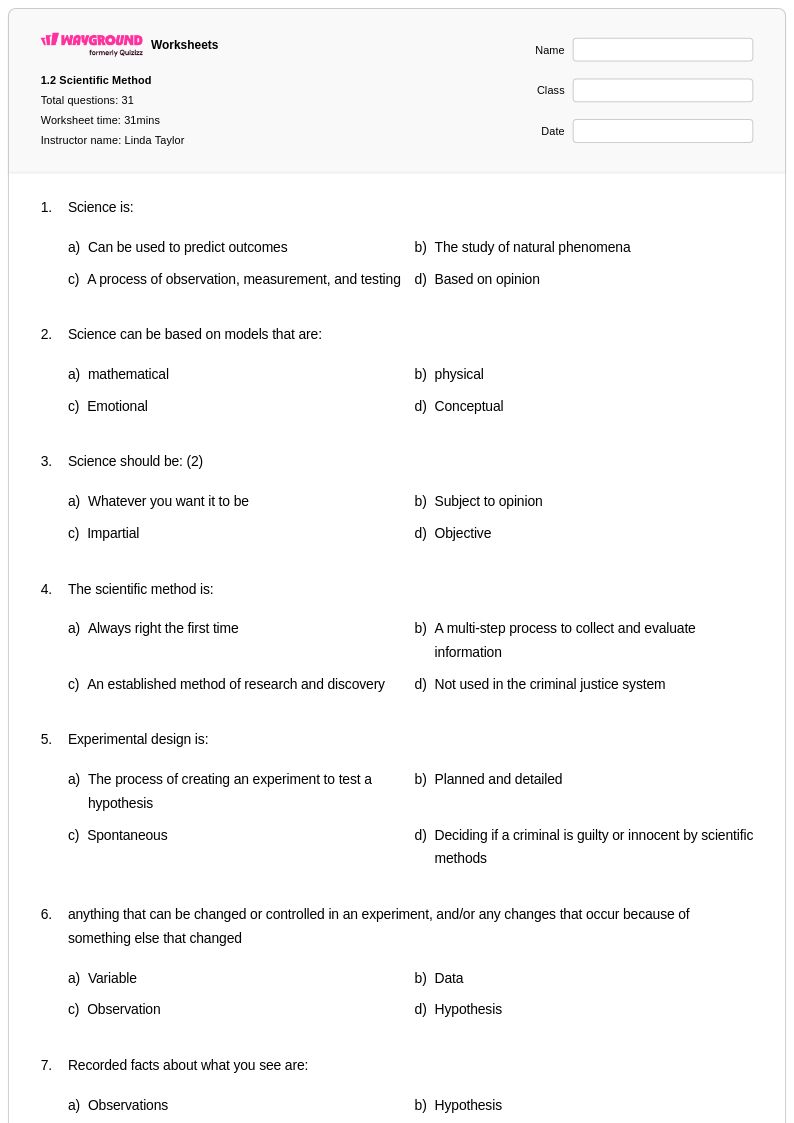
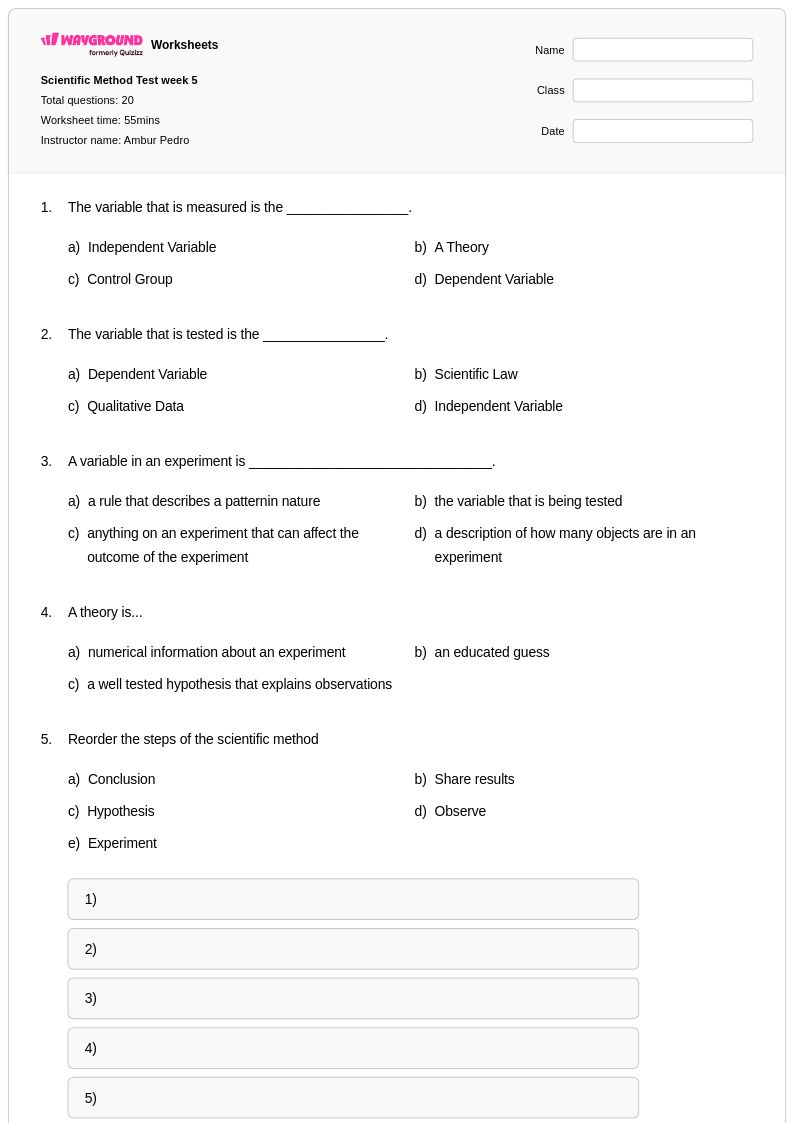
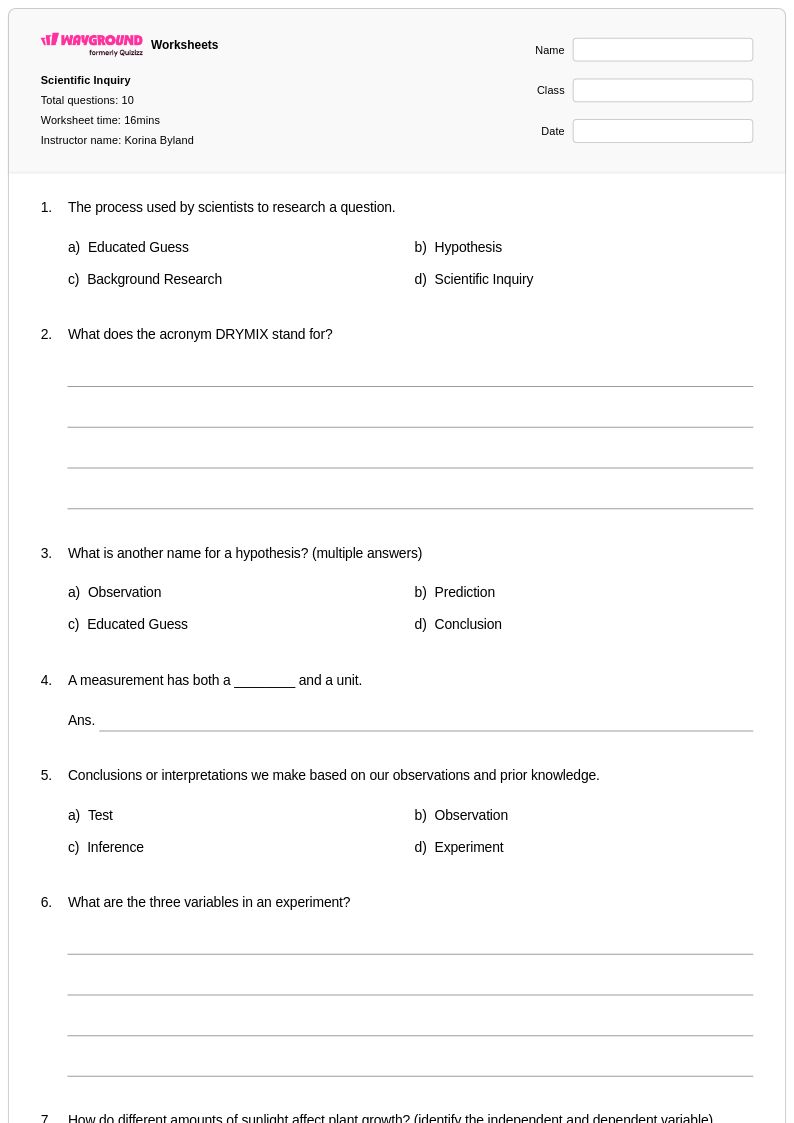
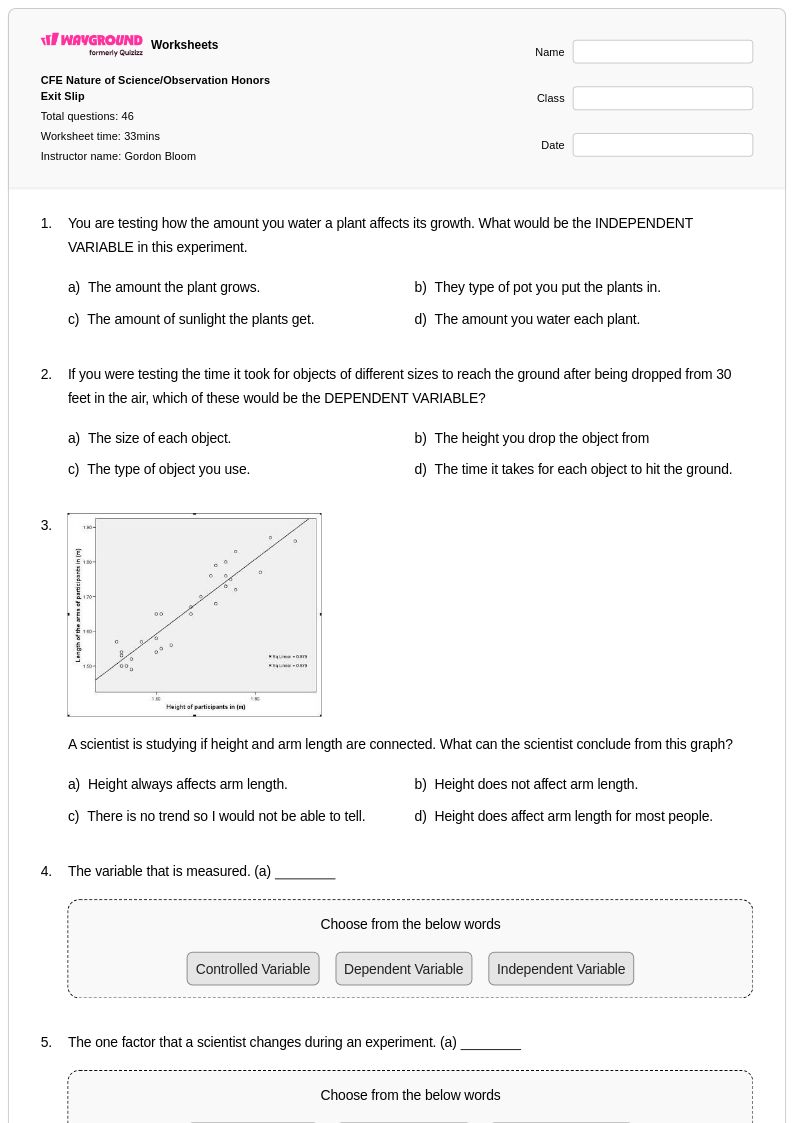
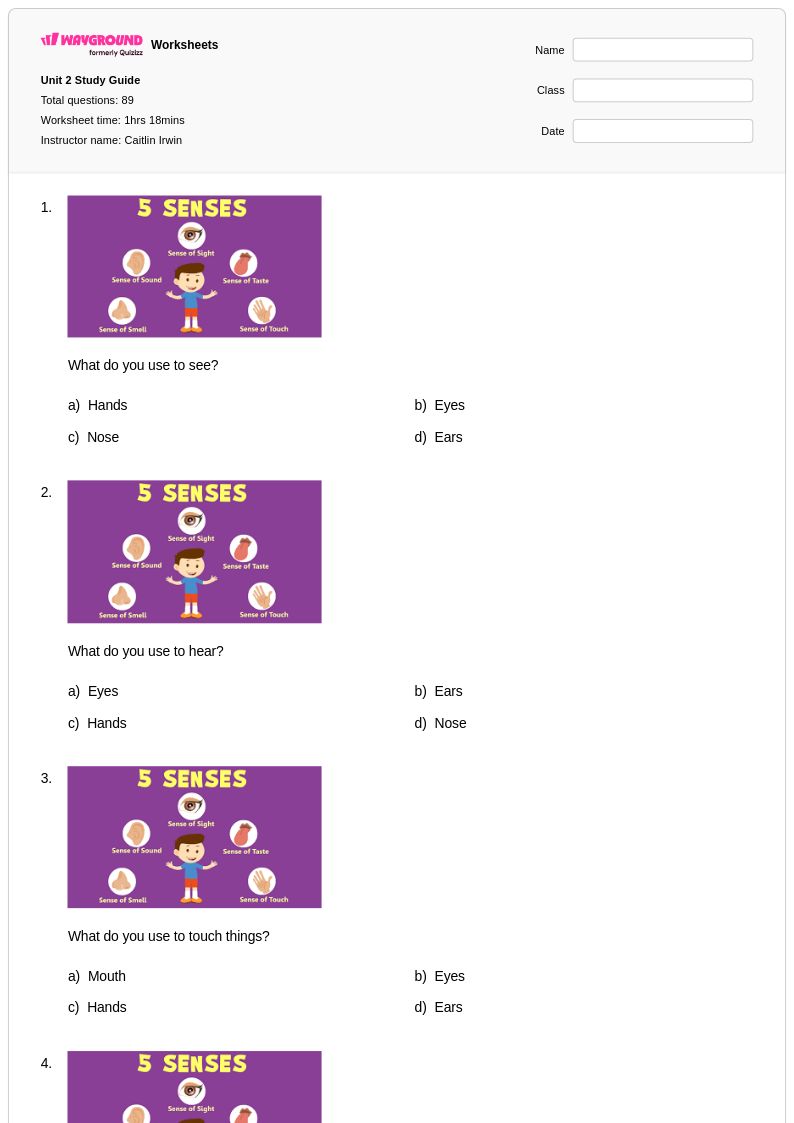
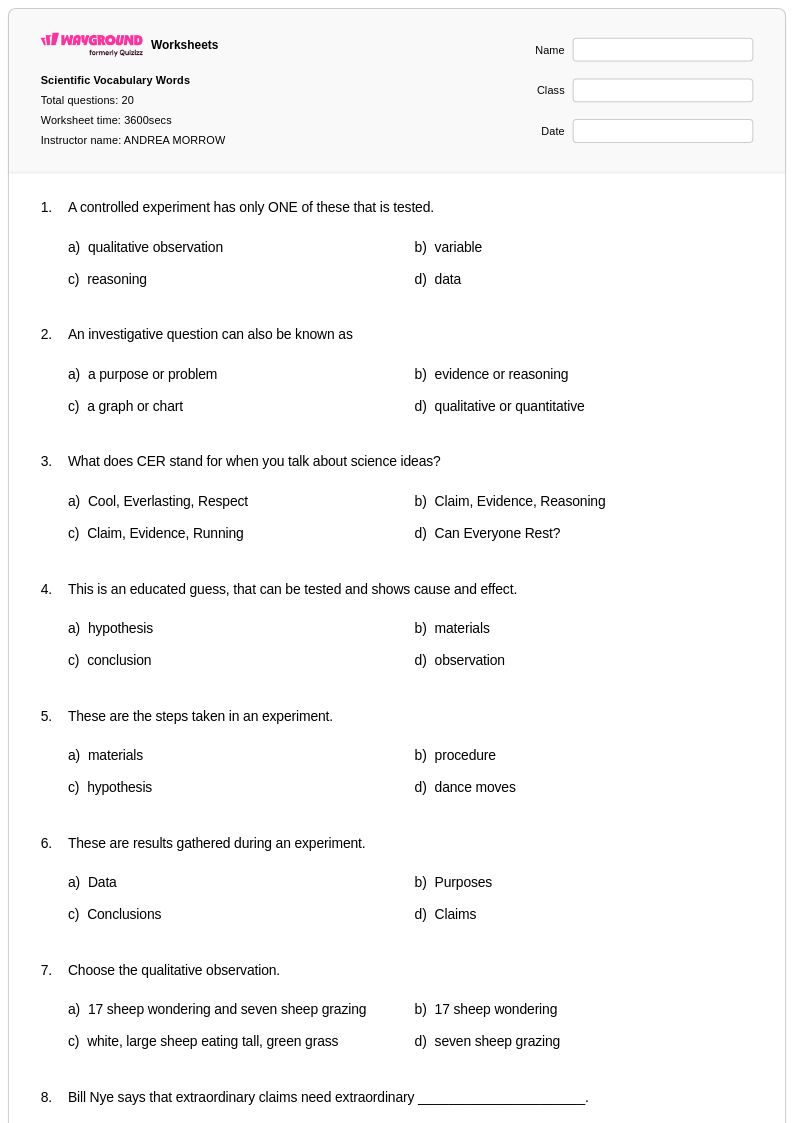
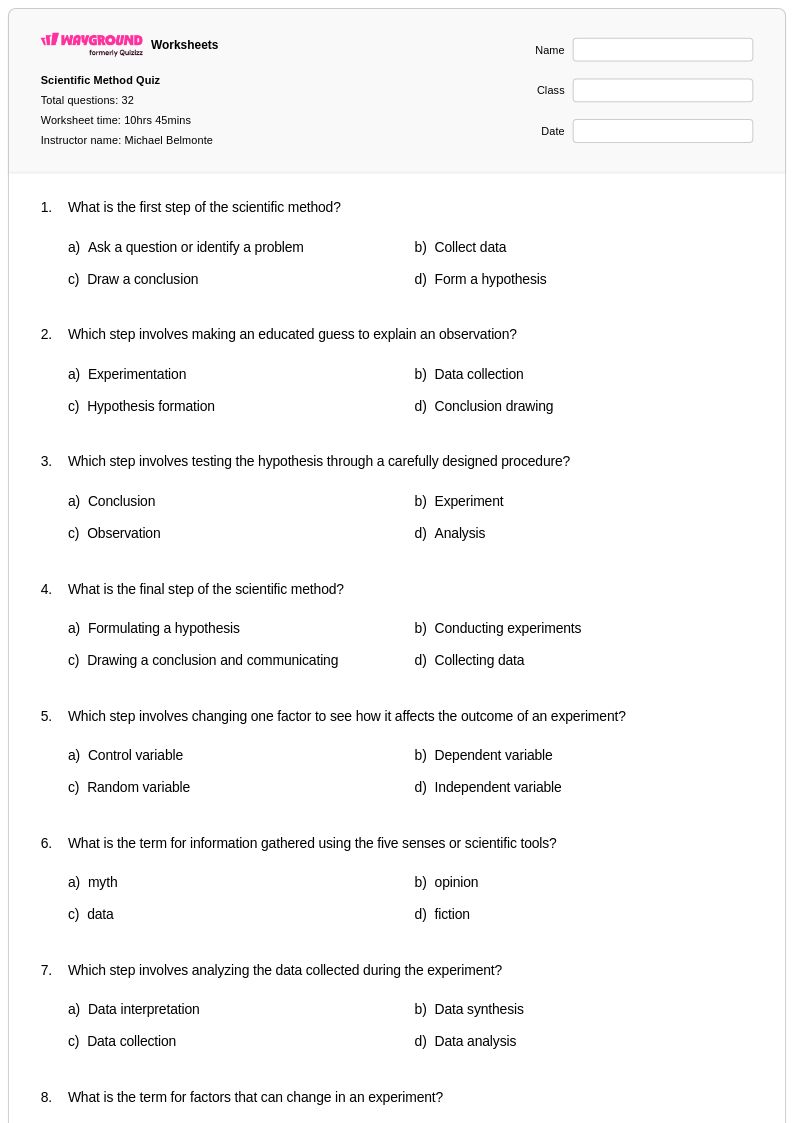
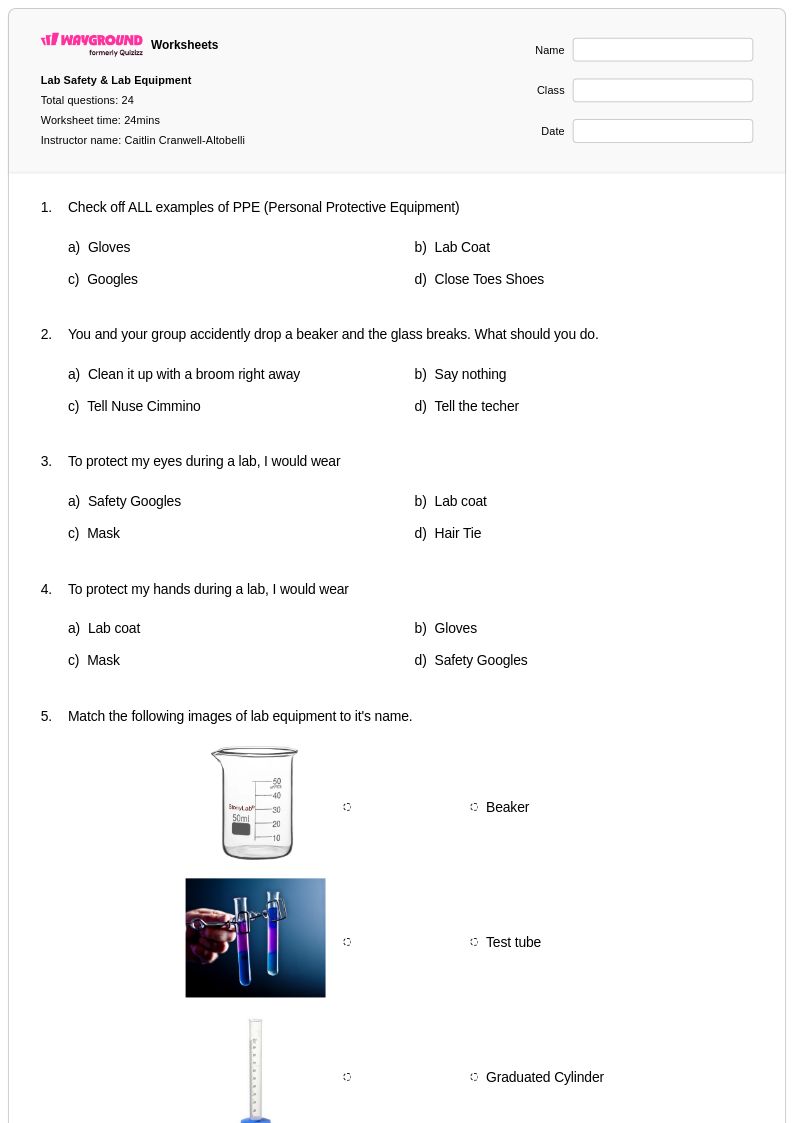
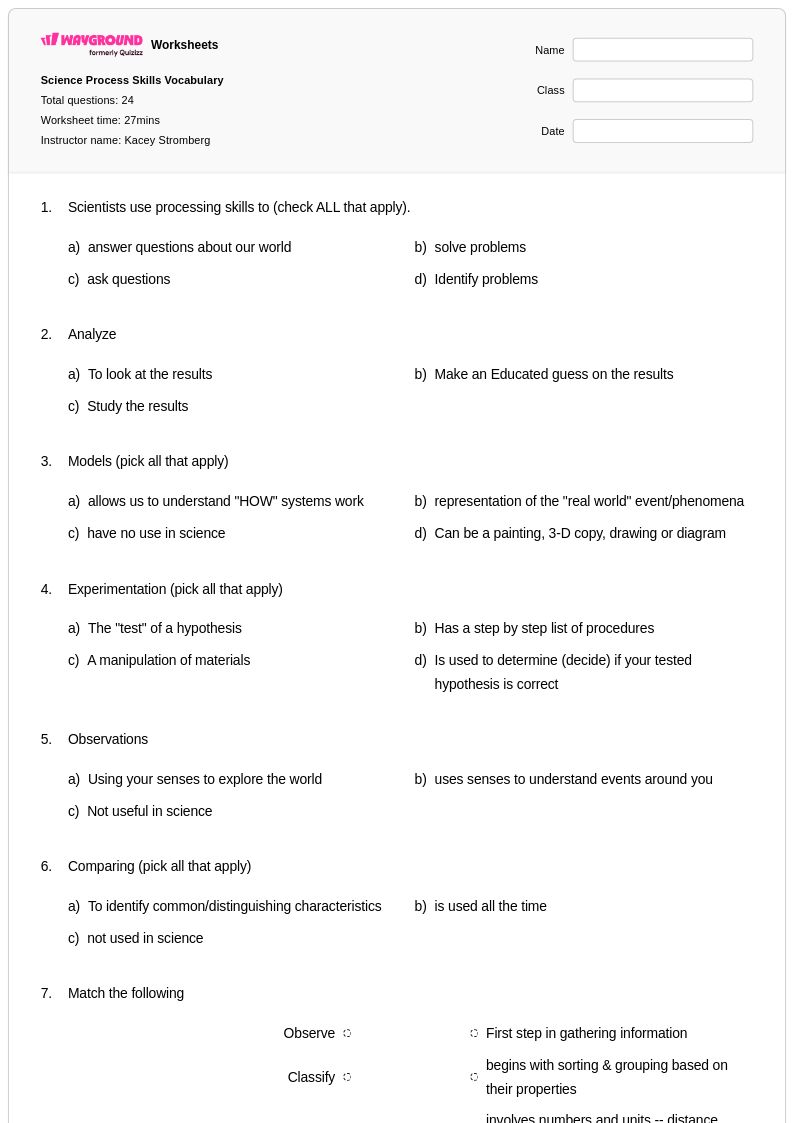
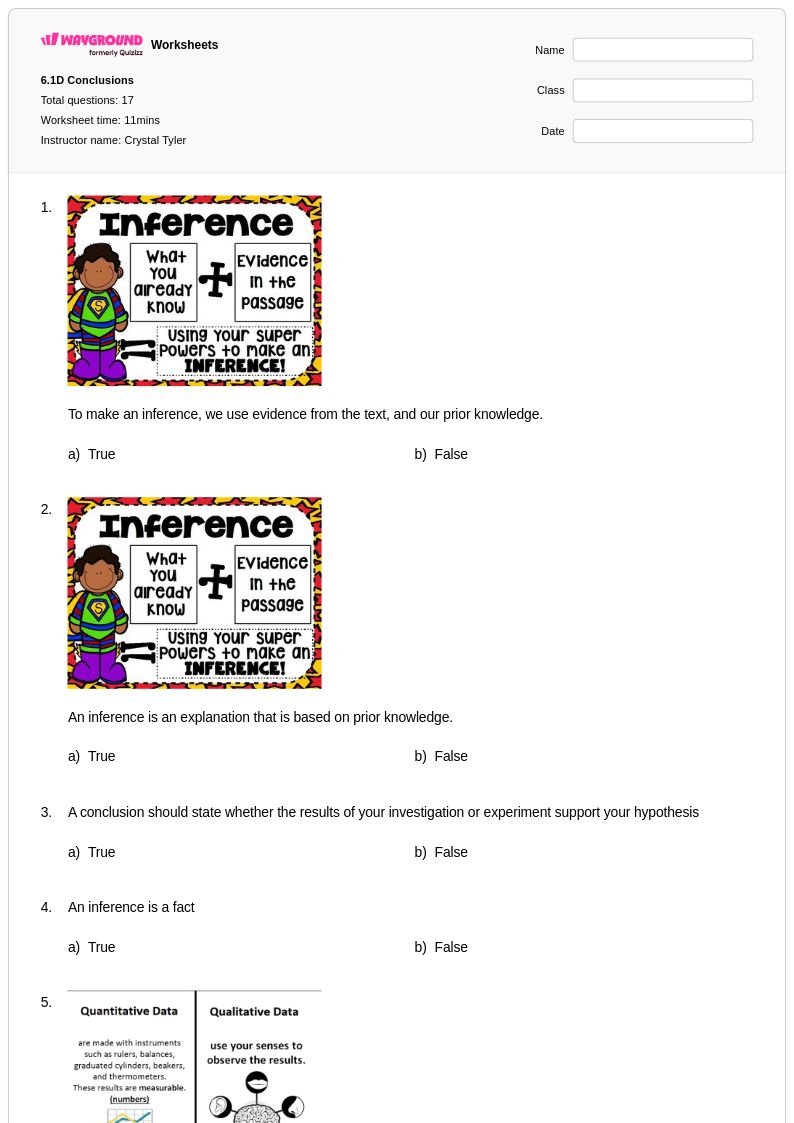
Qualitative and quantitative observations form the foundation of scientific inquiry, and Wayground's comprehensive worksheet collection helps students master these essential data collection and analysis skills. These carefully designed worksheets guide learners through the process of making detailed qualitative observations using their senses to describe properties like color, texture, and behavior, while simultaneously teaching them to collect quantitative data through precise measurements and numerical recordings. Students engage with practice problems that challenge them to distinguish between subjective descriptions and objective measurements, developing the critical thinking skills necessary for scientific investigation. Each worksheet comes with a complete answer key and is available as a free printable pdf, making it easy for educators to incorporate meaningful observation activities into their science curriculum.
Wayground, formerly Quizizz, empowers teachers with millions of educator-created resources specifically focused on qualitative and quantitative observation skills, featuring robust search and filtering capabilities that allow instructors to quickly locate materials aligned with their specific learning objectives and standards. The platform's differentiation tools enable teachers to customize worksheets based on individual student needs, while flexible formatting options provide both digital and printable pdf versions to accommodate diverse classroom environments. These comprehensive resources support effective lesson planning by offering varied approaches to observation skill development, from basic sensory descriptions to complex data collection protocols, while also providing targeted materials for remediation and enrichment activities that strengthen students' ability to gather and interpret scientific evidence systematically.
FAQs
How do I teach students the difference between qualitative and quantitative observations?
Start by anchoring the distinction in familiar, concrete examples: describing a leaf as 'dark green and waxy' is qualitative, while measuring it as '7.3 centimeters long' is quantitative. Have students practice categorizing both types using everyday objects before moving to lab settings. Reinforcing that qualitative observations rely on the senses and qualitative language while quantitative observations require measurement tools and numerical data helps students internalize the difference rather than just memorize definitions.
What exercises help students practice making qualitative and quantitative observations?
Effective practice involves giving students a physical object or image and asking them to generate a set number of qualitative descriptions and quantitative measurements about it. Sorting activities where students classify a mixed list of observation statements into the correct category also build discrimination skills. Worksheets that present real or simulated scientific scenarios and ask students to identify or complete both types of observations are particularly useful for reinforcing this skill in context.
What mistakes do students commonly make when distinguishing qualitative from quantitative observations?
The most frequent error is treating any numerical statement as quantitative — for example, students may label 'the rock looks like it weighs a lot' as quantitative simply because it references weight. Another common misconception is believing qualitative observations are less scientific or less valid than quantitative ones, which can cause students to undervalue descriptive data. Students also frequently confuse inferences with observations, recording conclusions like 'the plant is unhealthy' rather than the observable evidence, such as 'the leaves are yellow and wilting.'
How can I use qualitative and quantitative observation worksheets in my science class?
These worksheets work well as warm-up activities before a lab, as standalone practice during a scientific inquiry unit, or as a formative check after initial instruction. They are available as printable PDFs for traditional classroom use and in digital formats for technology-integrated environments, and can also be hosted as a quiz on Wayground to collect student responses and monitor understanding in real time. Using them before a lab primes students to think systematically about the types of data they will collect, while using them after a lab reinforces the difference between what was observed and what was inferred.
How do I support students who struggle to make precise quantitative observations?
Students who struggle with quantitative observations often need more explicit instruction on selecting the right measurement tool for a given property and recording data with appropriate units. Pairing measurement practice with structured recording tables helps scaffold this skill. On Wayground, teachers can apply accommodations such as read aloud and reduced answer choices for students who need additional support, reducing cognitive load so they can focus on the measurement concept itself.
At what grade level should students learn to distinguish qualitative and quantitative observations?
This skill is typically introduced in upper elementary grades and reinforced through middle school as students begin formal scientific inquiry. By grades 5 through 8, students are expected to collect and record both types of data independently as part of lab investigations. However, the foundational concept of using senses to describe versus using tools to measure can be introduced meaningfully as early as second or third grade with appropriately simplified examples.