
15 Q
9th - 10th
35 Q
12th - Uni
15 Q
9th
12 Q
11th - 12th
17 Q
7th
23 Q
9th

15 Q
4th
16 Q
3rd - 5th
9 Q
11th - 12th
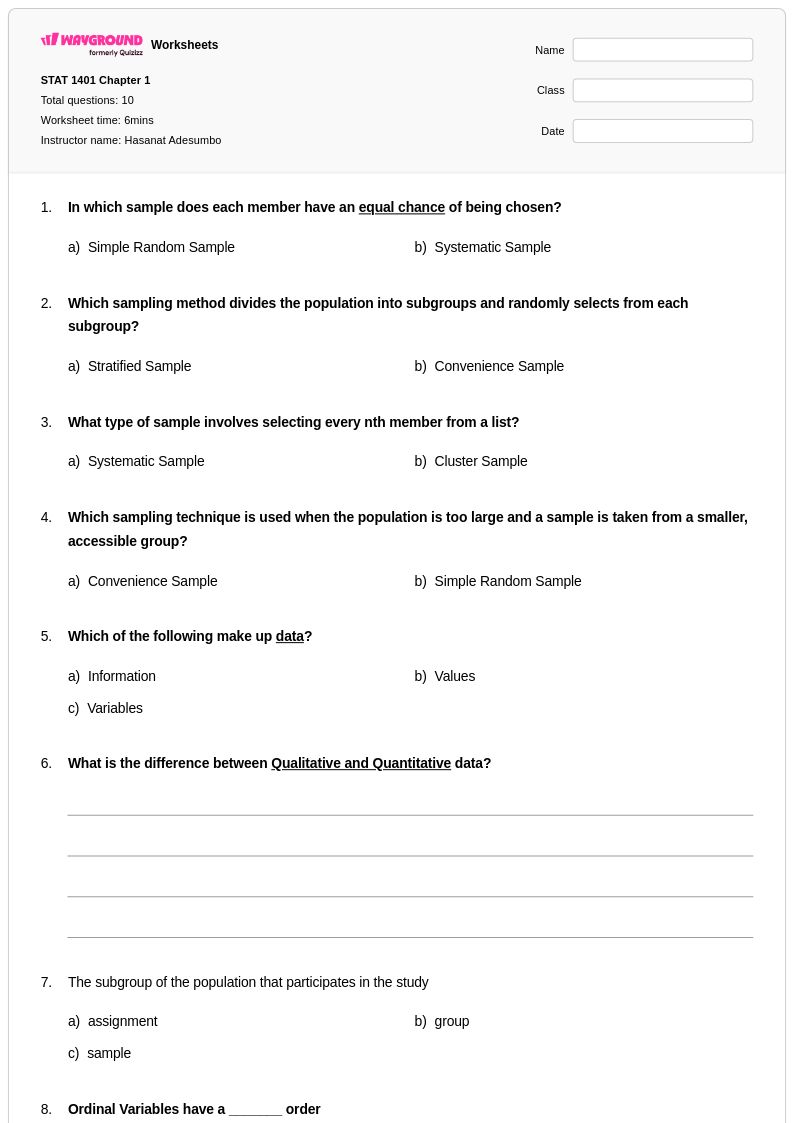
10 Q
Uni

15 Q
5th
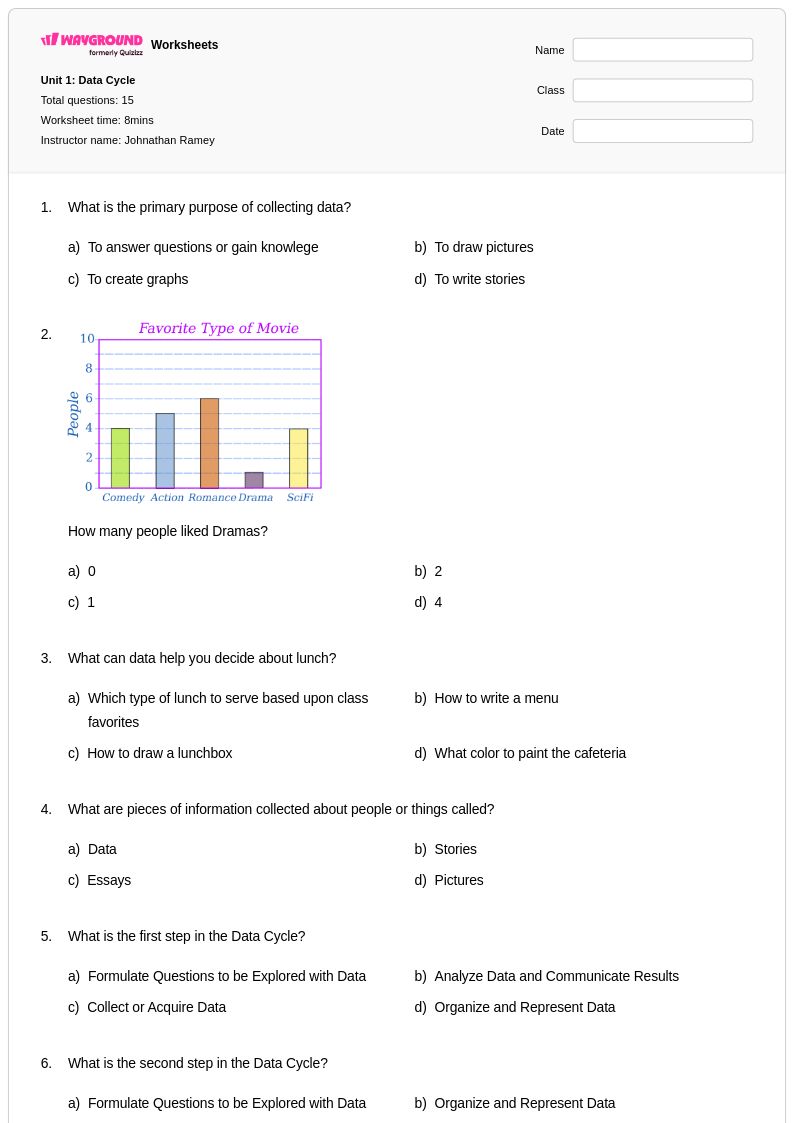
15 Q
4th
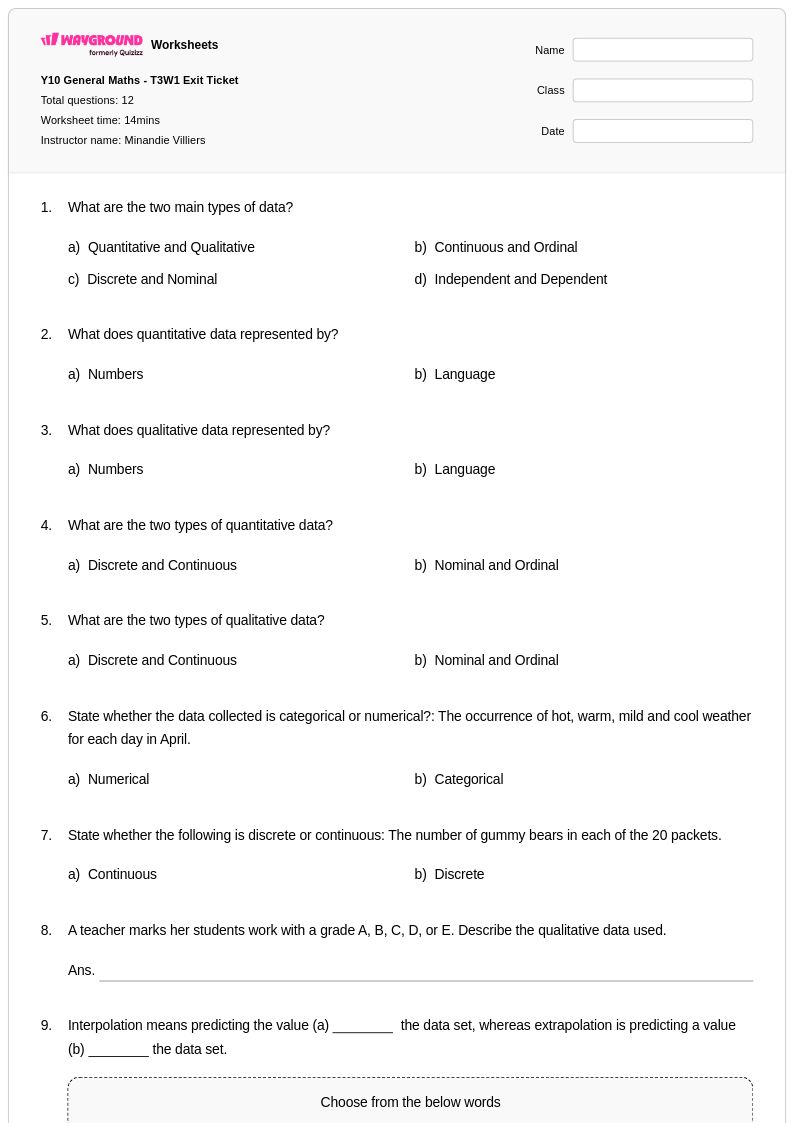
12 Q
10th
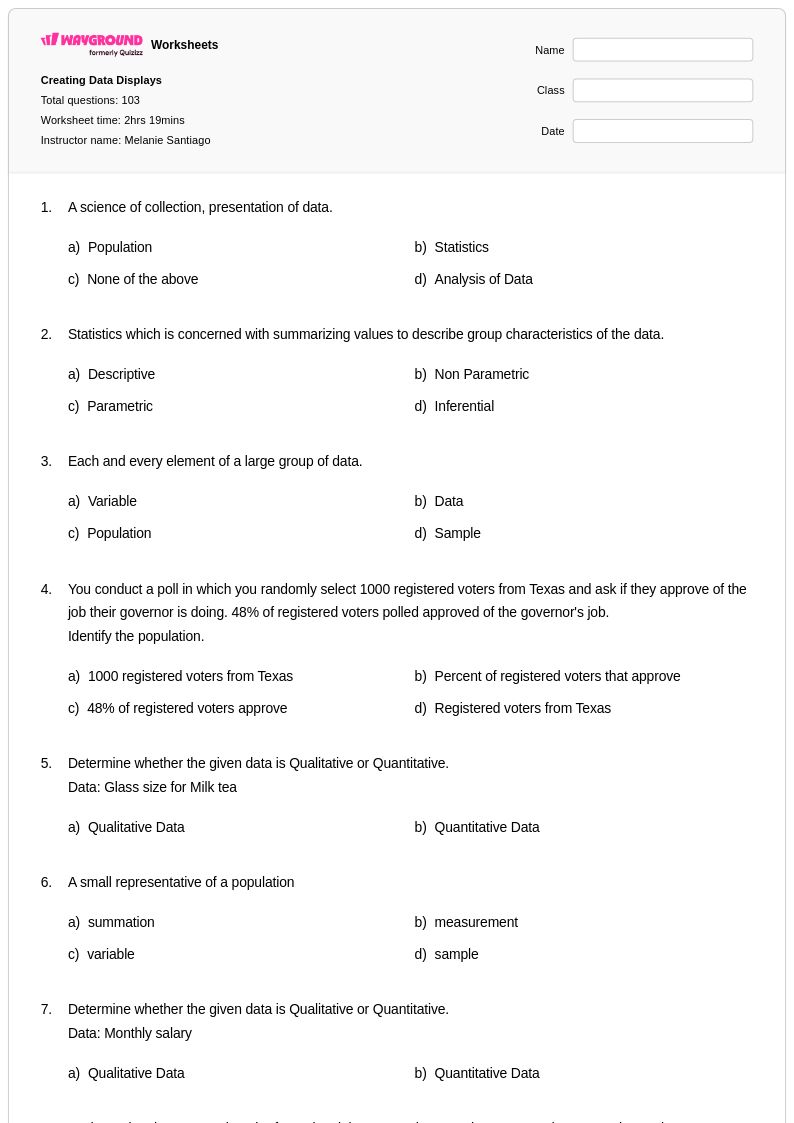
103 Q
9th - 12th
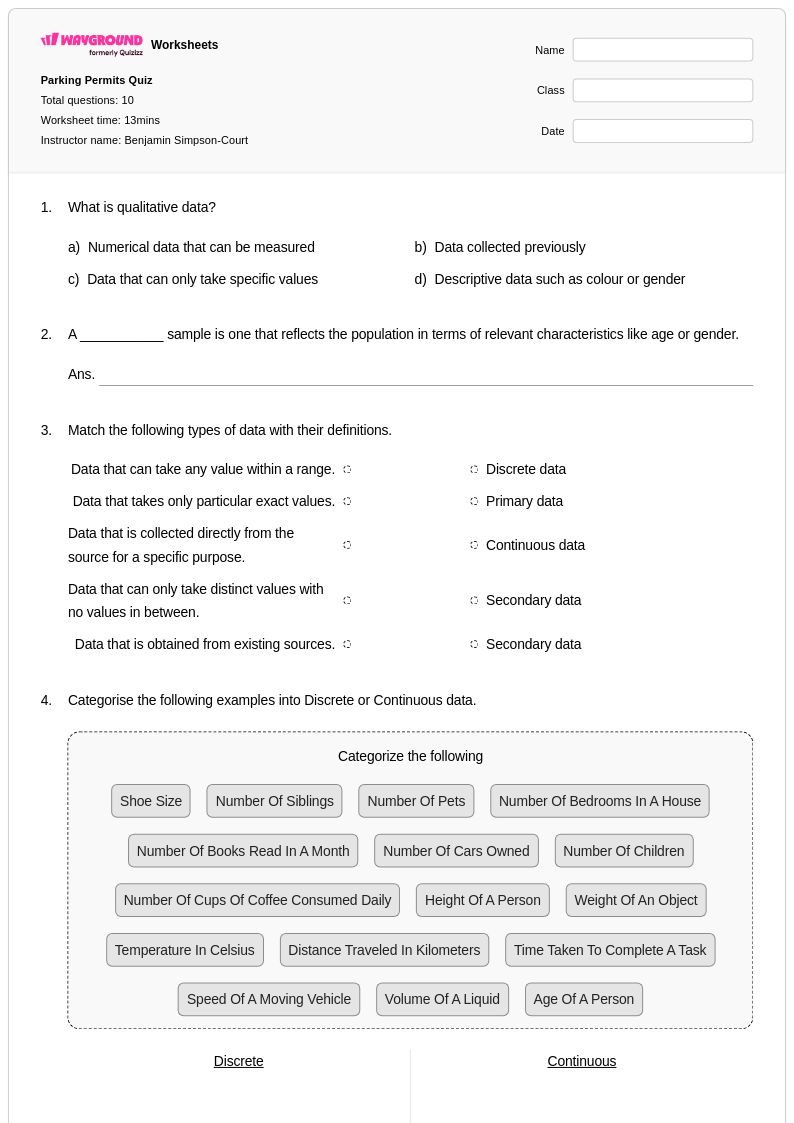
10 Q
11th
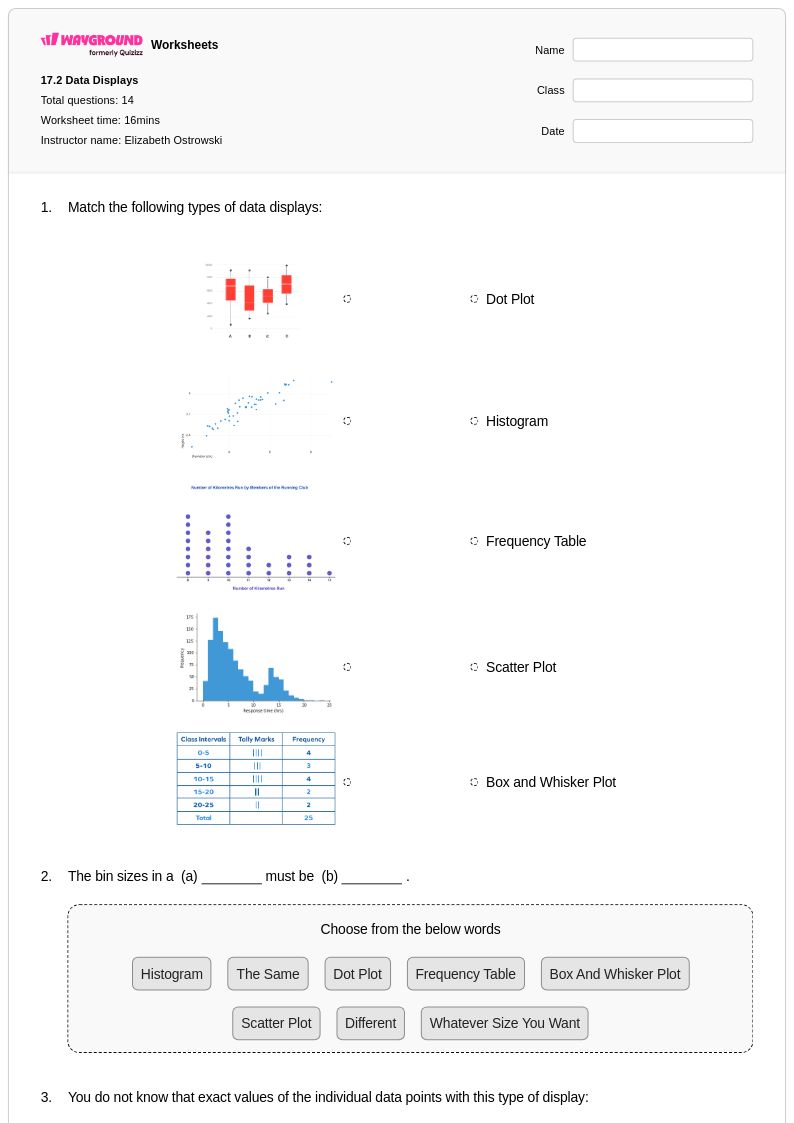
14 Q
9th

14 Q
5th
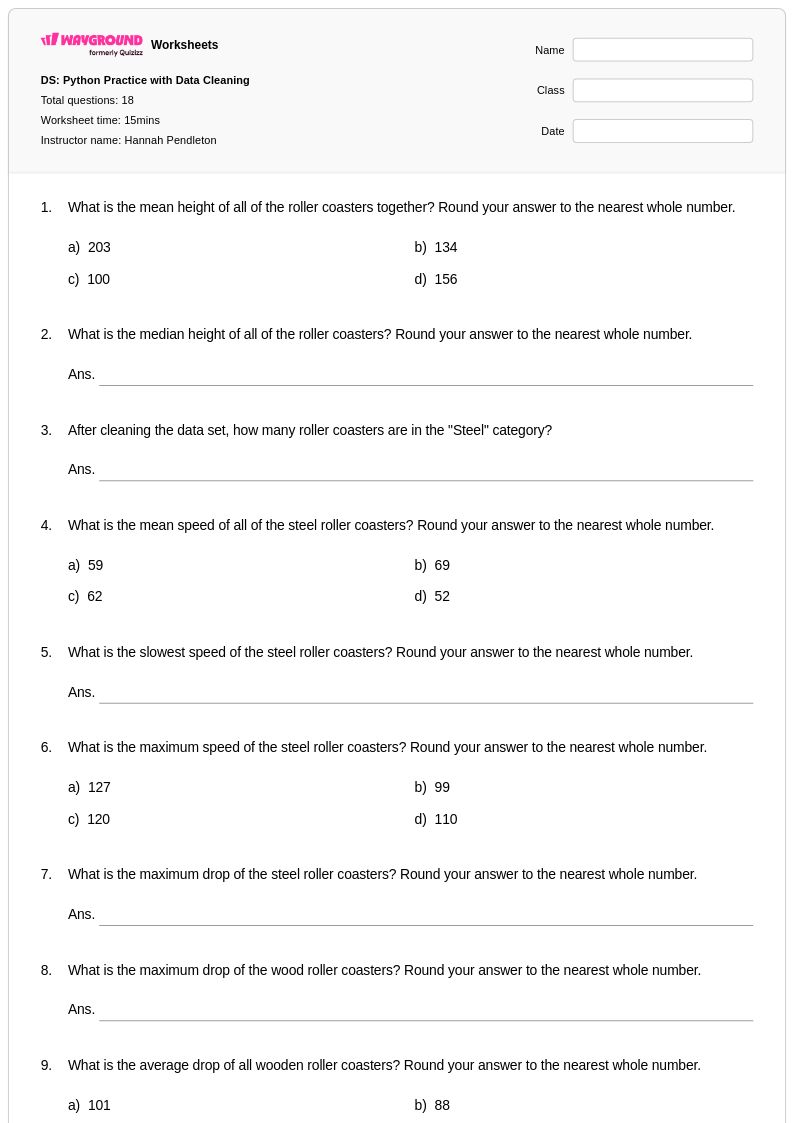
18 Q
10th
![Quiz 1 V1 [Ch. 1, 2] - Printable Qualitative-data Worksheets - Wayground](https://quizizz-static.s3.amazonaws.com/_media/worksheets-new/61eb372aedf55b001e7a8e45-quiz-1-v1-ch-1-2)
20 Q
Uni
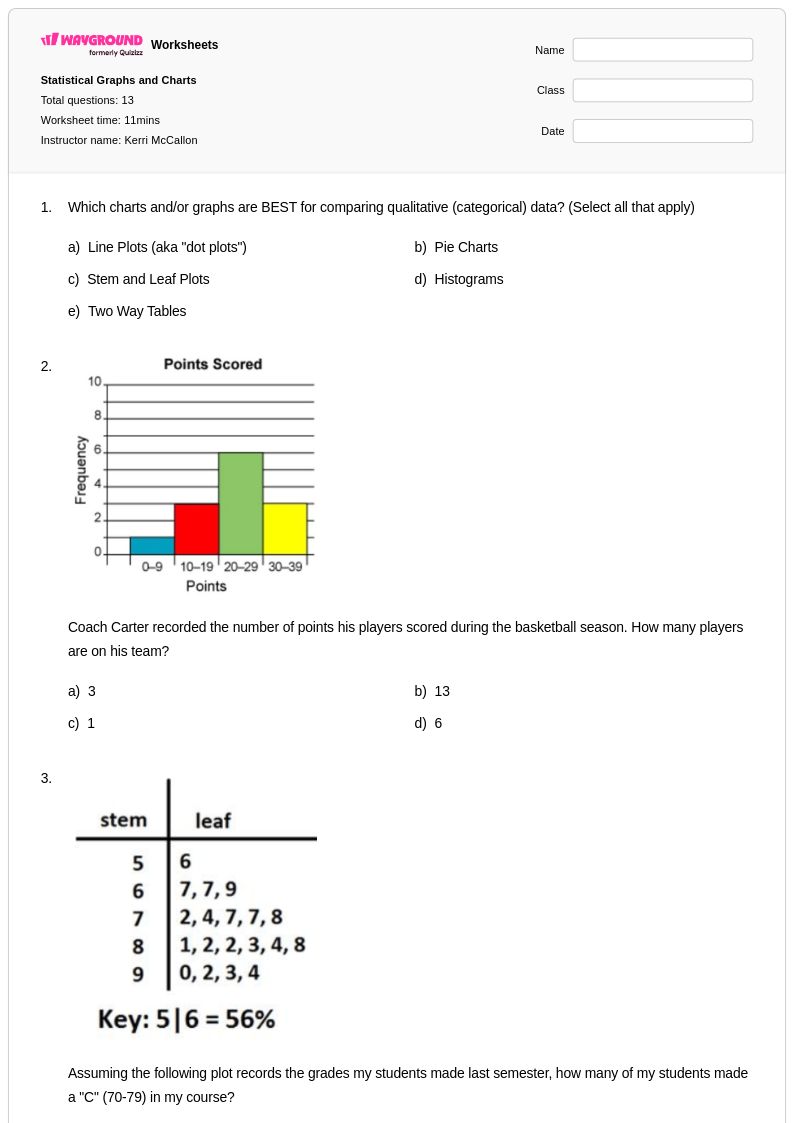
13 Q
10th - 12th
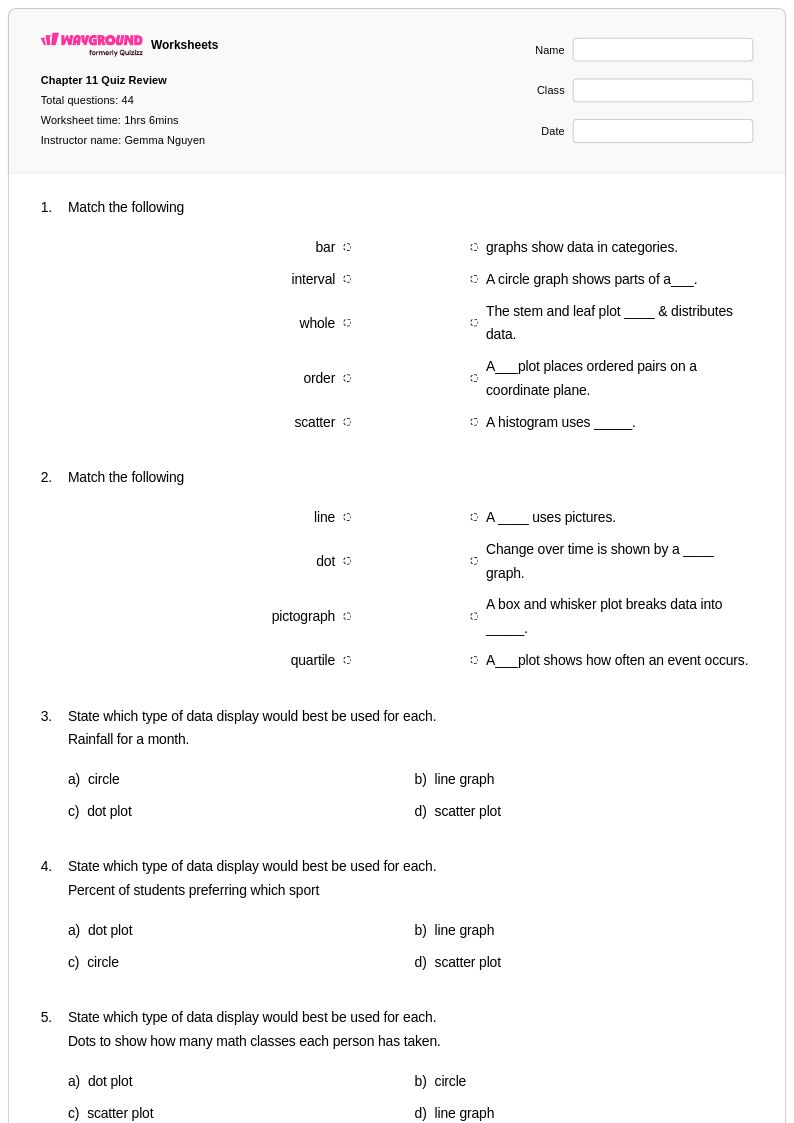
44 Q
9th
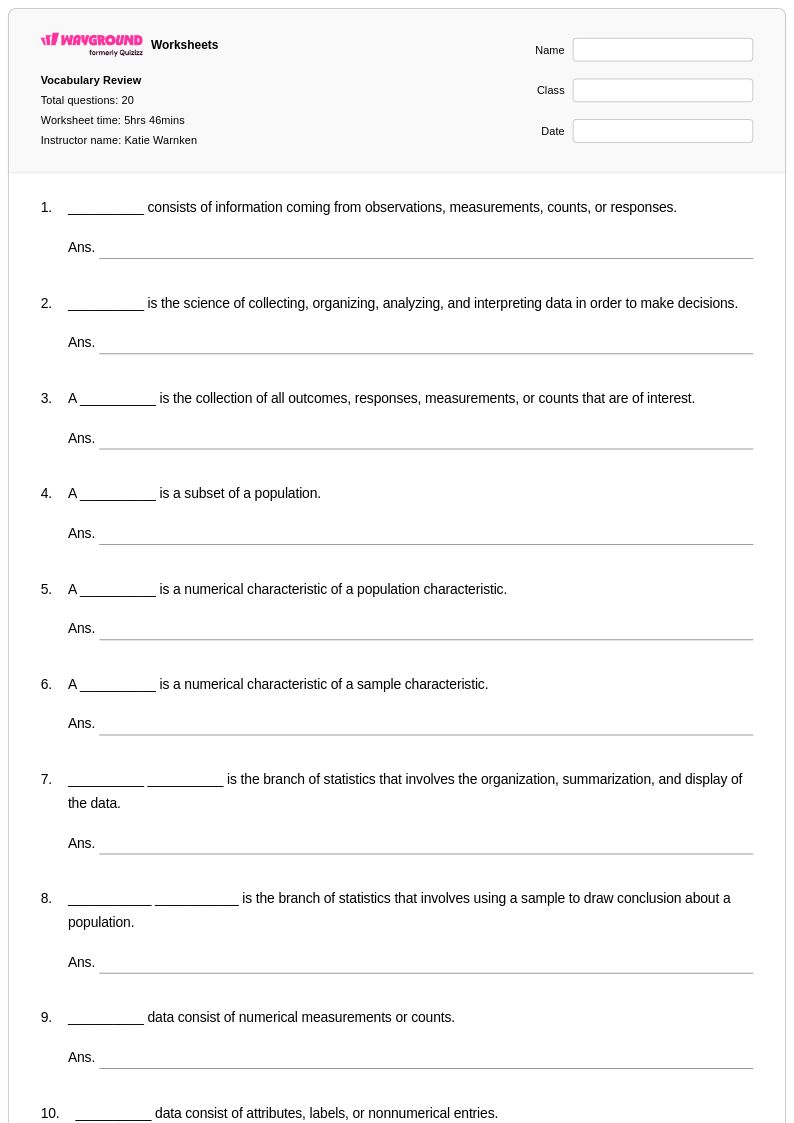
20 Q
10th - 12th
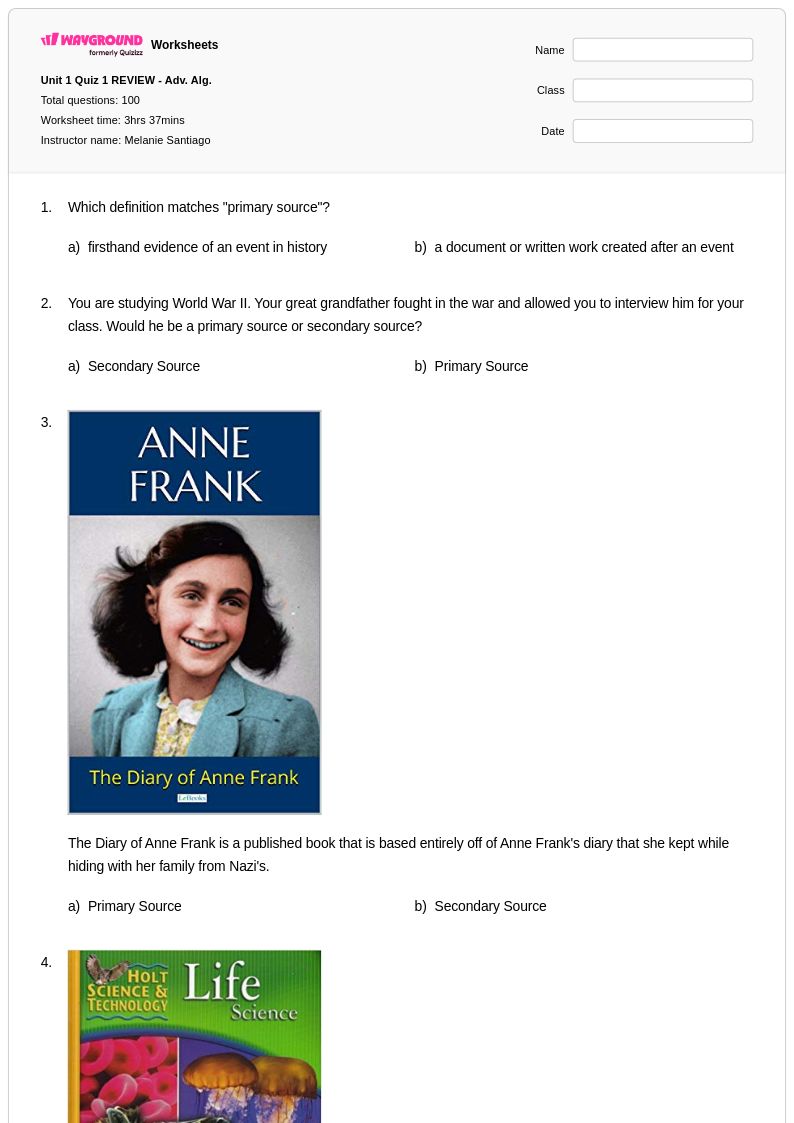
91 Q
9th - 12th

20 Q
7th
Explore Worksheets by Subjects
Explore printable Qualitative Data worksheets
Qualitative data worksheets available through Wayground (formerly Quizizz) provide students with essential practice in categorizing, analyzing, and interpreting non-numerical information across various mathematical contexts. These comprehensive worksheet collections focus on developing critical thinking skills as students learn to organize data into meaningful categories, create appropriate visual representations, and draw logical conclusions from observational information. The practice problems systematically guide learners through identifying characteristics of qualitative data sets, distinguishing between different types of categorical variables, and understanding how to effectively communicate findings from non-numerical data analysis. Each worksheet includes detailed answer keys and is available as free printables, allowing students to work independently while building confidence in their data interpretation abilities.
Wayground (formerly Quizizz) supports mathematics educators with an extensive library of millions of teacher-created qualitative data resources that streamline lesson planning and enhance student learning outcomes. The platform's robust search and filtering capabilities enable teachers to quickly locate worksheets aligned with specific curriculum standards, while built-in differentiation tools allow for seamless customization based on individual student needs and learning levels. These versatile resources are available in both printable pdf formats and interactive digital versions, providing flexibility for classroom instruction, homework assignments, remediation sessions, and enrichment activities. Teachers can efficiently modify existing worksheets or combine multiple resources to create targeted practice sessions that address specific skill gaps in qualitative data analysis, ensuring students develop strong foundational understanding of categorical data concepts and graphical representation techniques.
FAQs
How can I introduce qualitative data to my students?
What exercises help students practice analyzing qualitative data?
What are common student misconceptions with qualitative data?
How can I use this qualitative data worksheet with my class?
How does understanding qualitative data fit into the math curriculum?
How can I support diverse learners with this worksheet?