
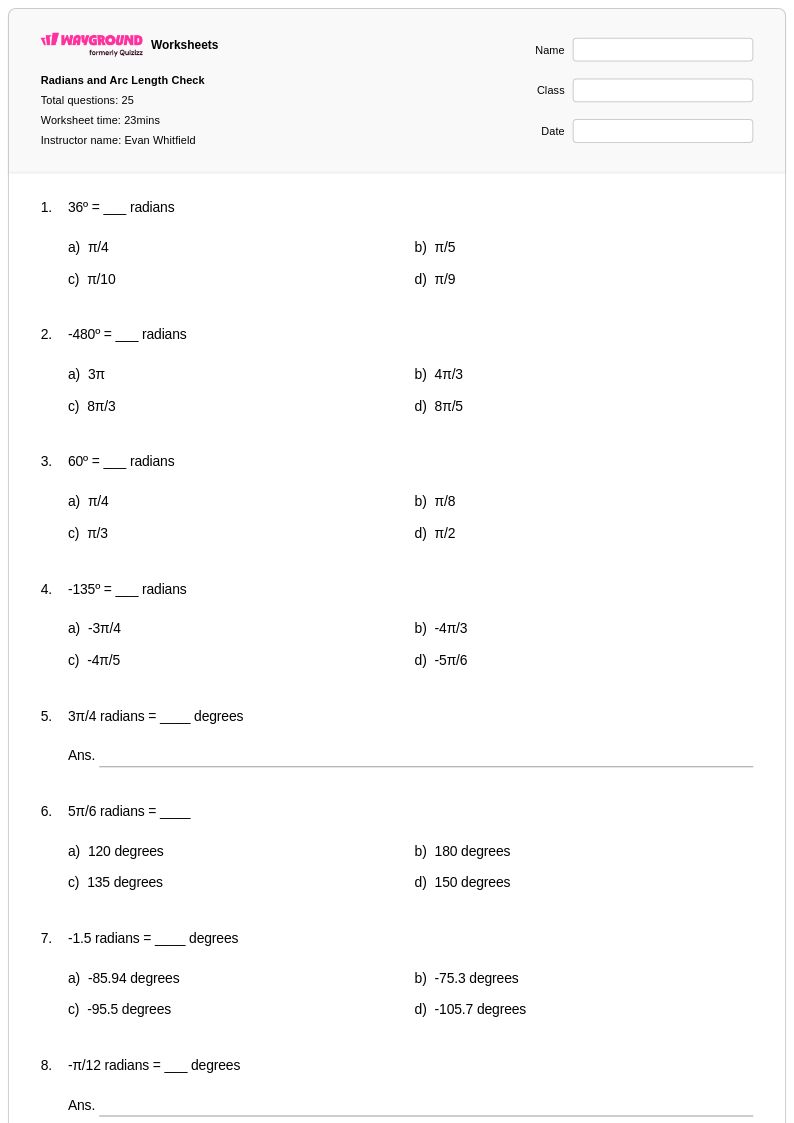
25 Q
12th
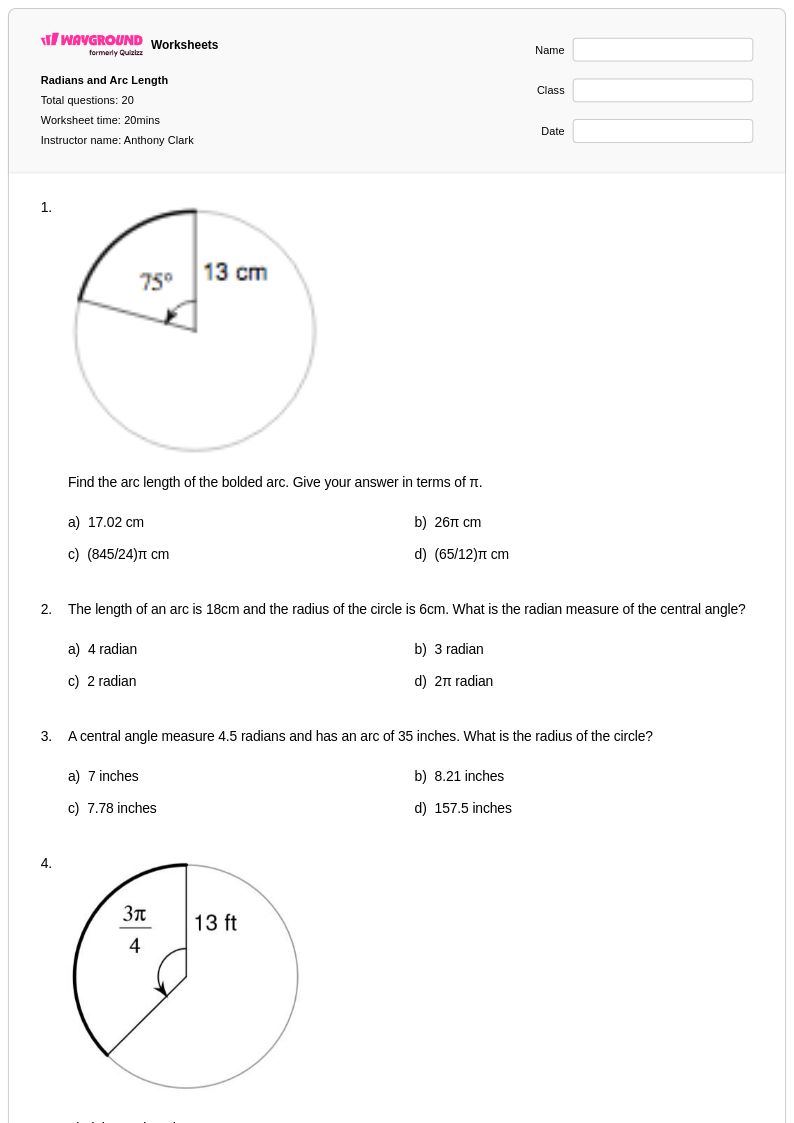
20 Q
10th - Uni
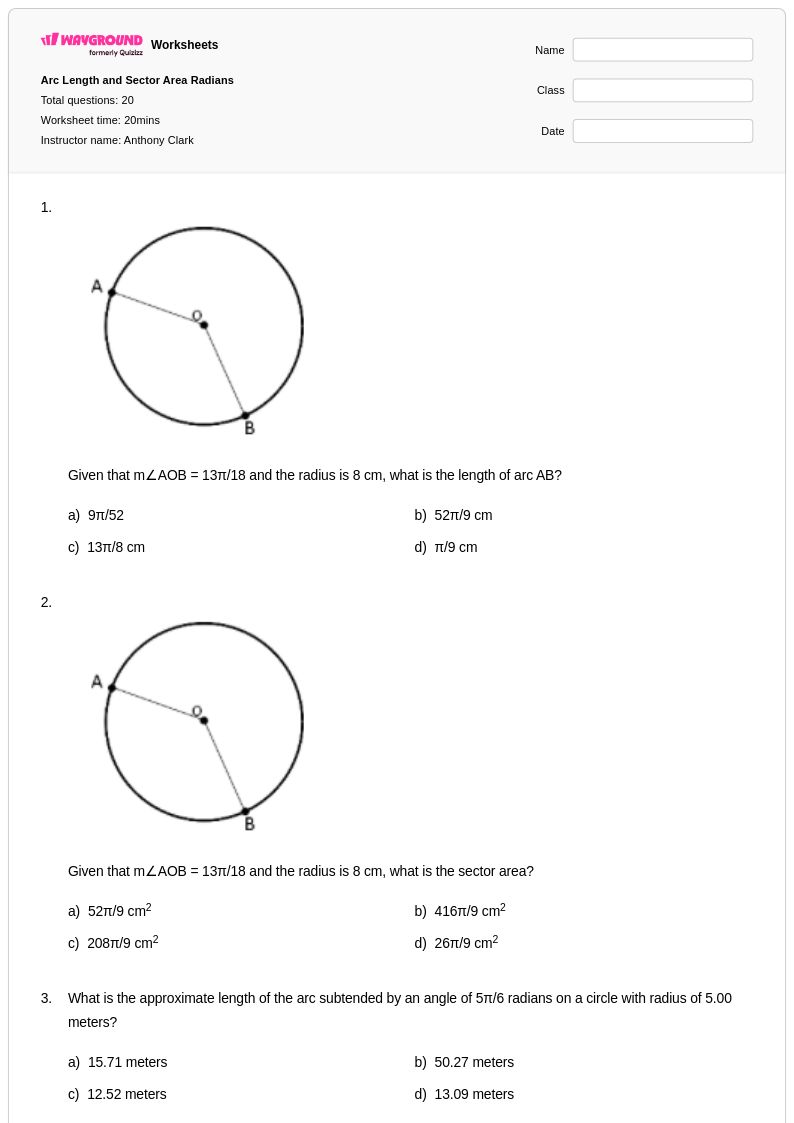
20 Q
10th - Uni
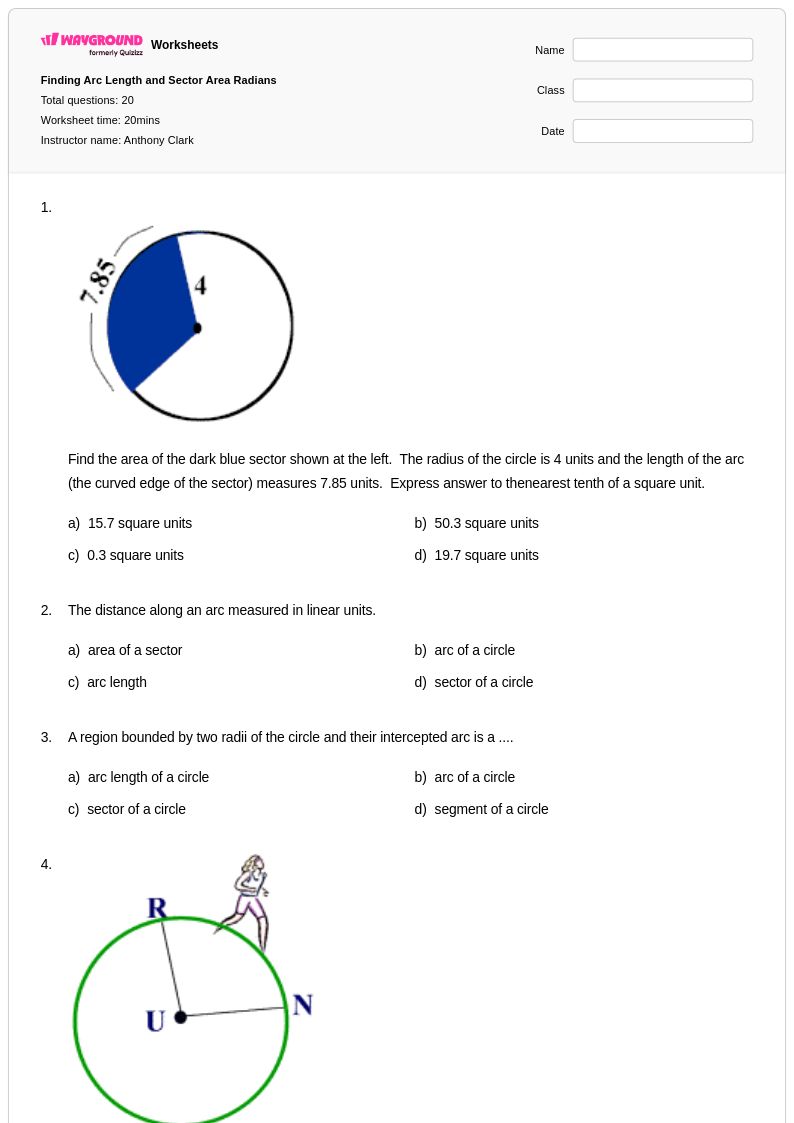
20 Q
10th - Uni
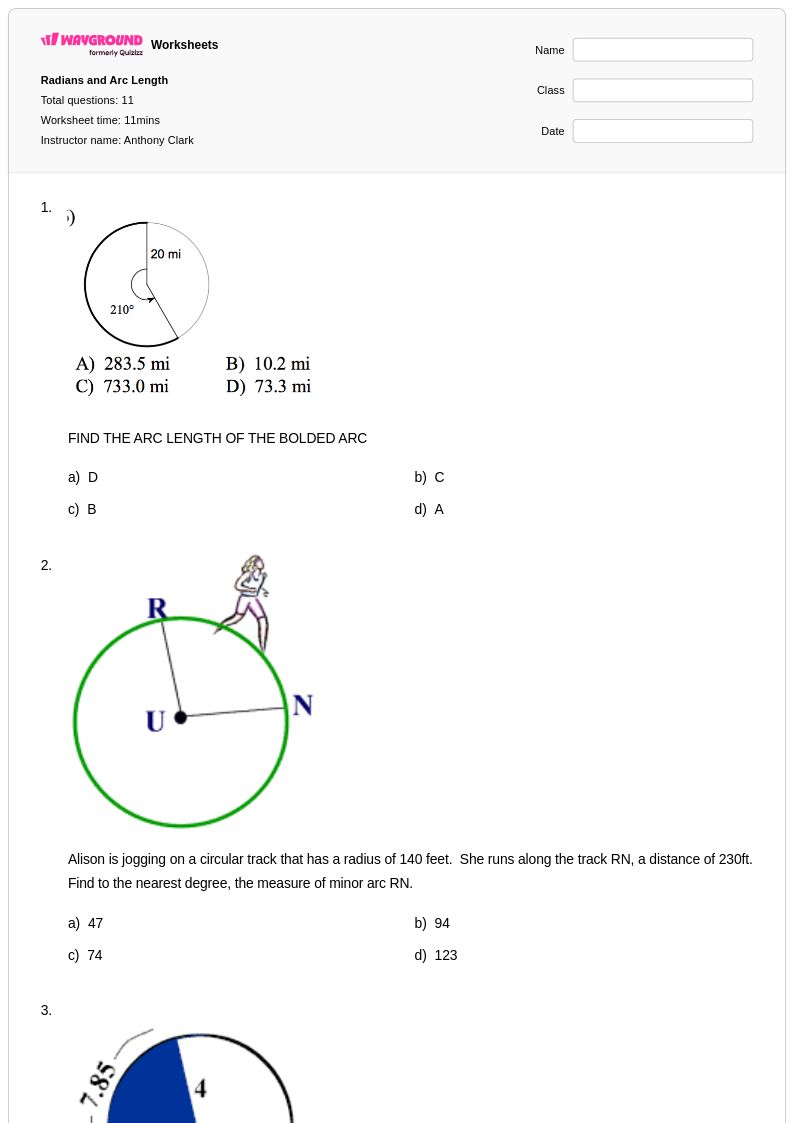
11 Q
10th - Uni
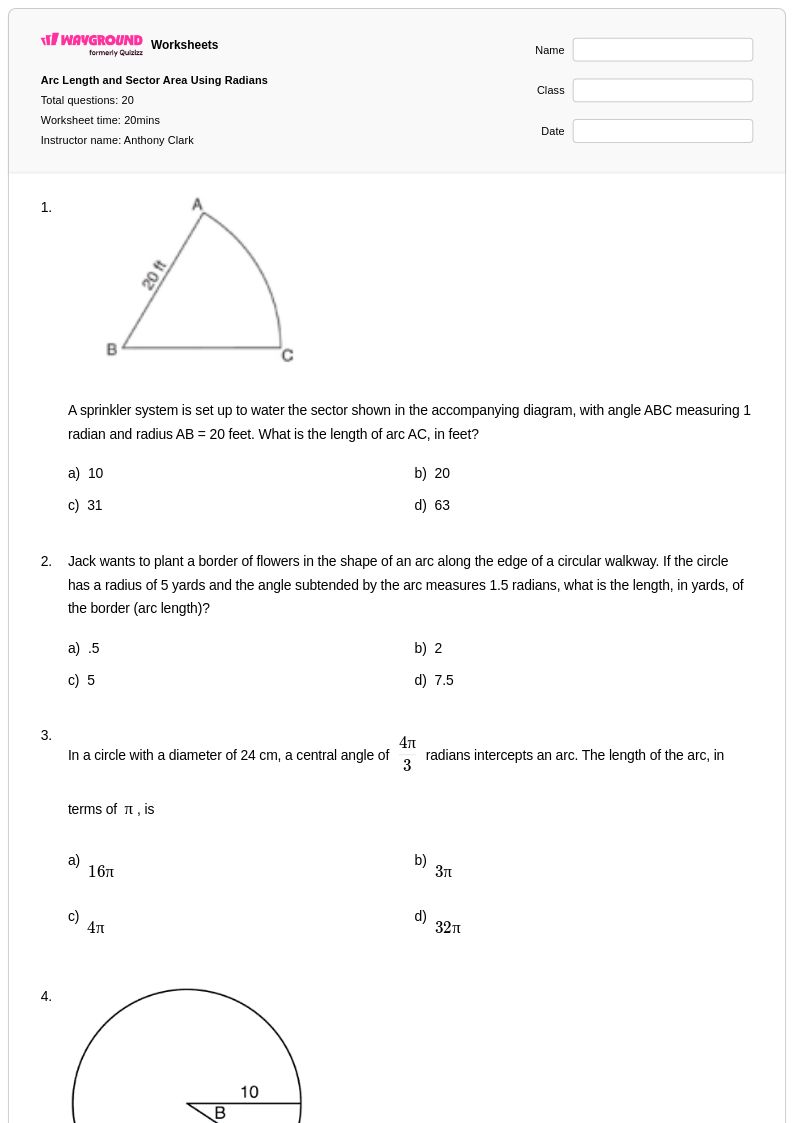
20 Q
10th - Uni
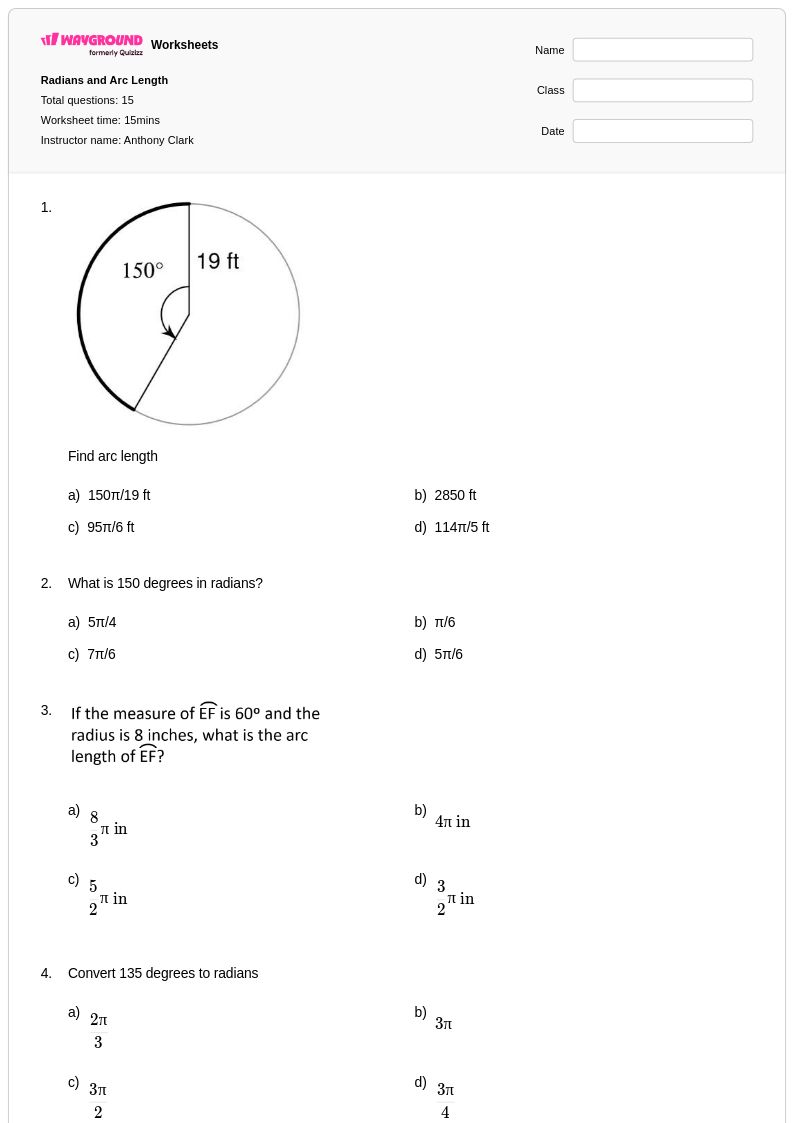
15 Q
10th - Uni
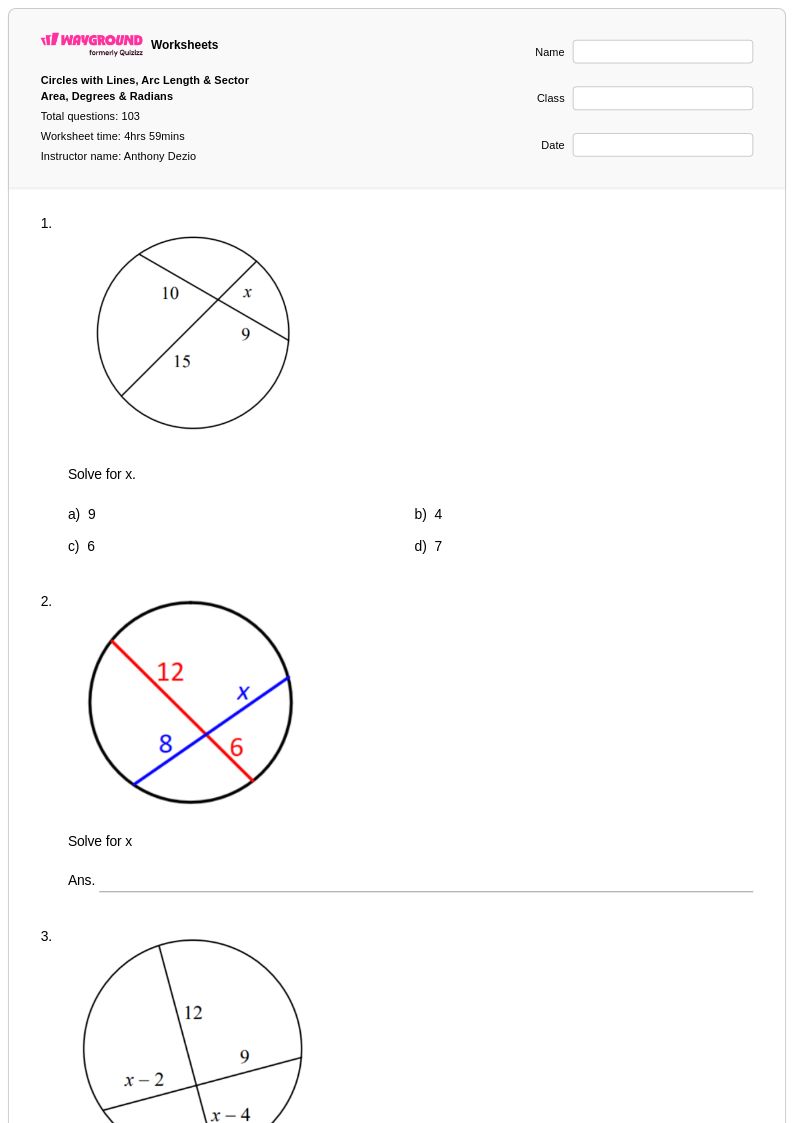
103 Q
12th

50 Q
9th - 12th
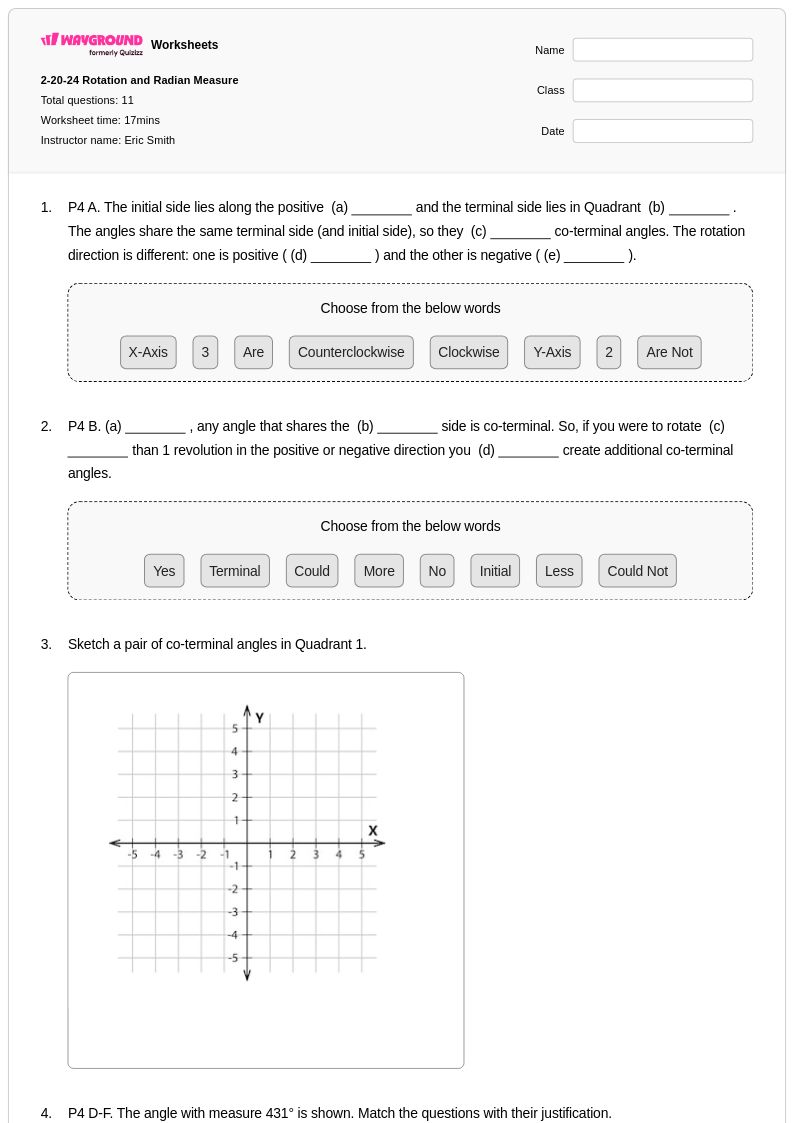
11 Q
11th
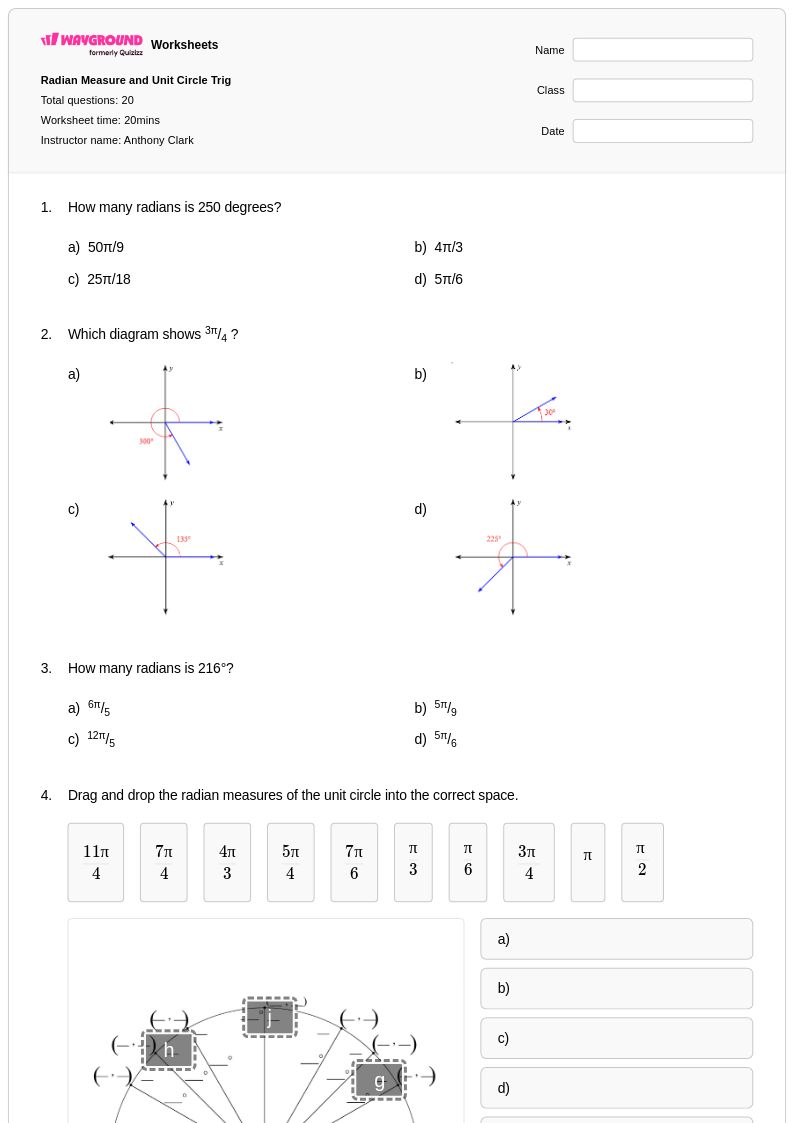
20 Q
12th - Uni
10 Q
9th - 12th
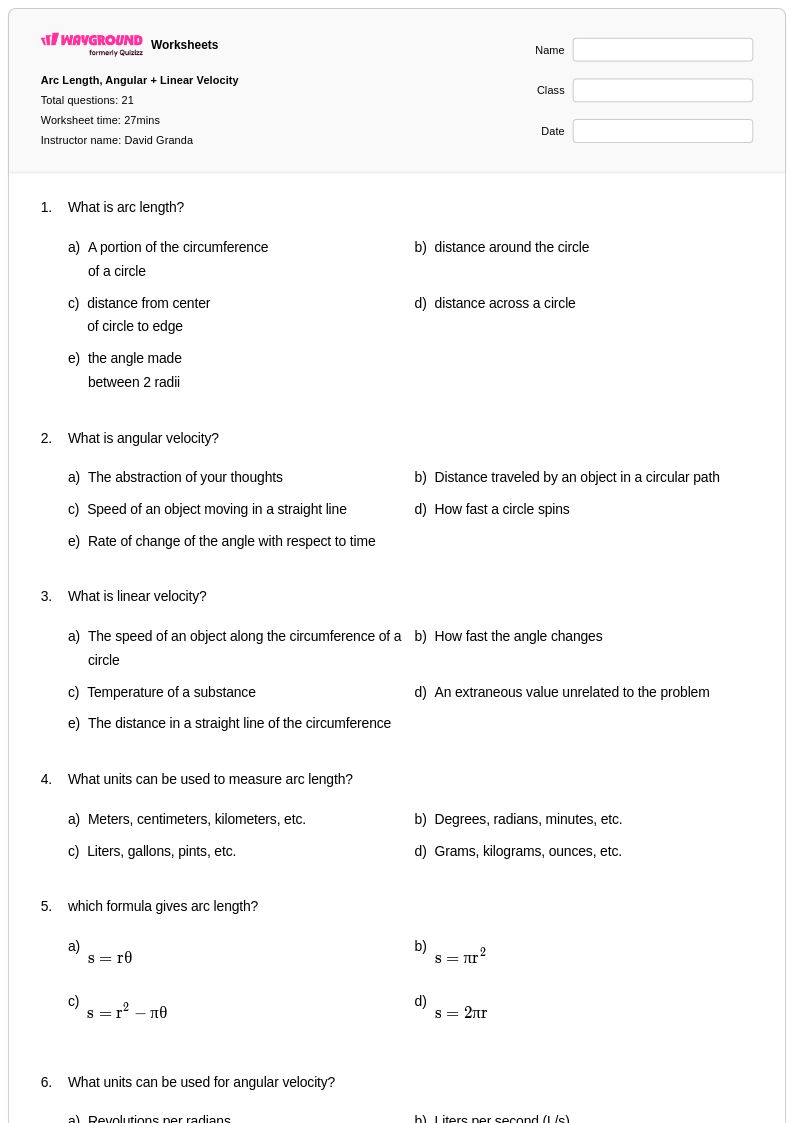
21 Q
12th
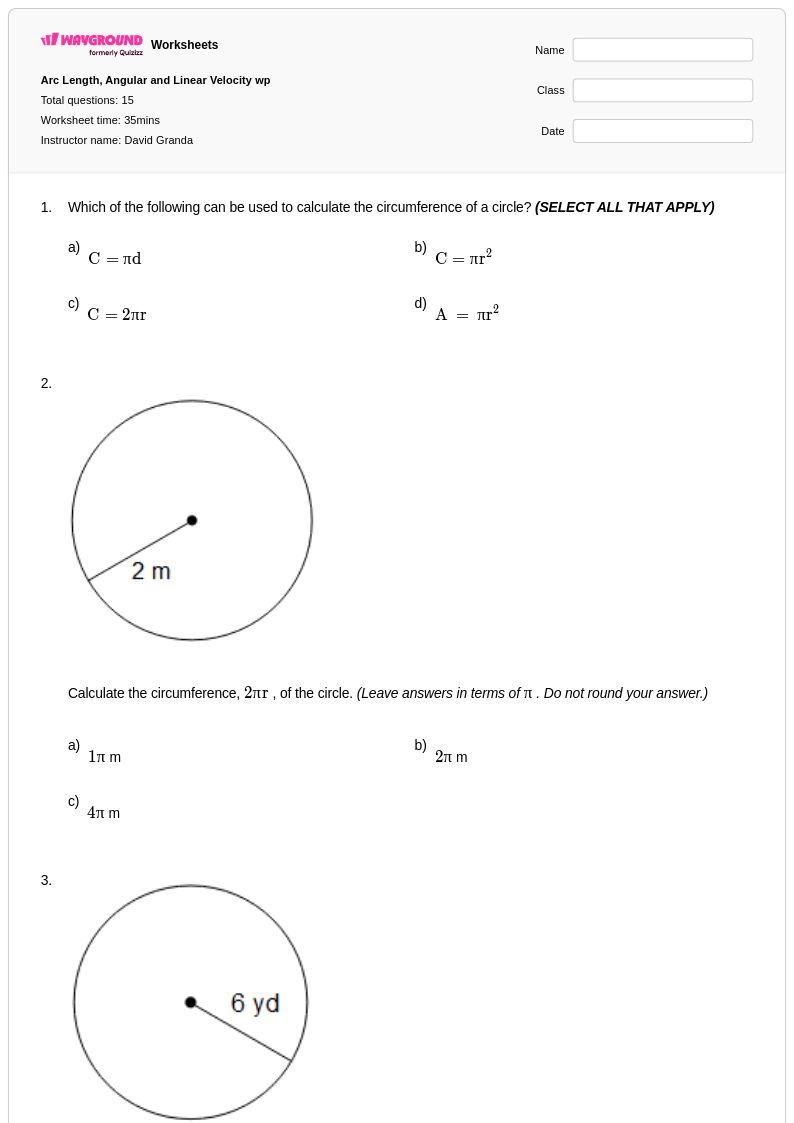
15 Q
12th
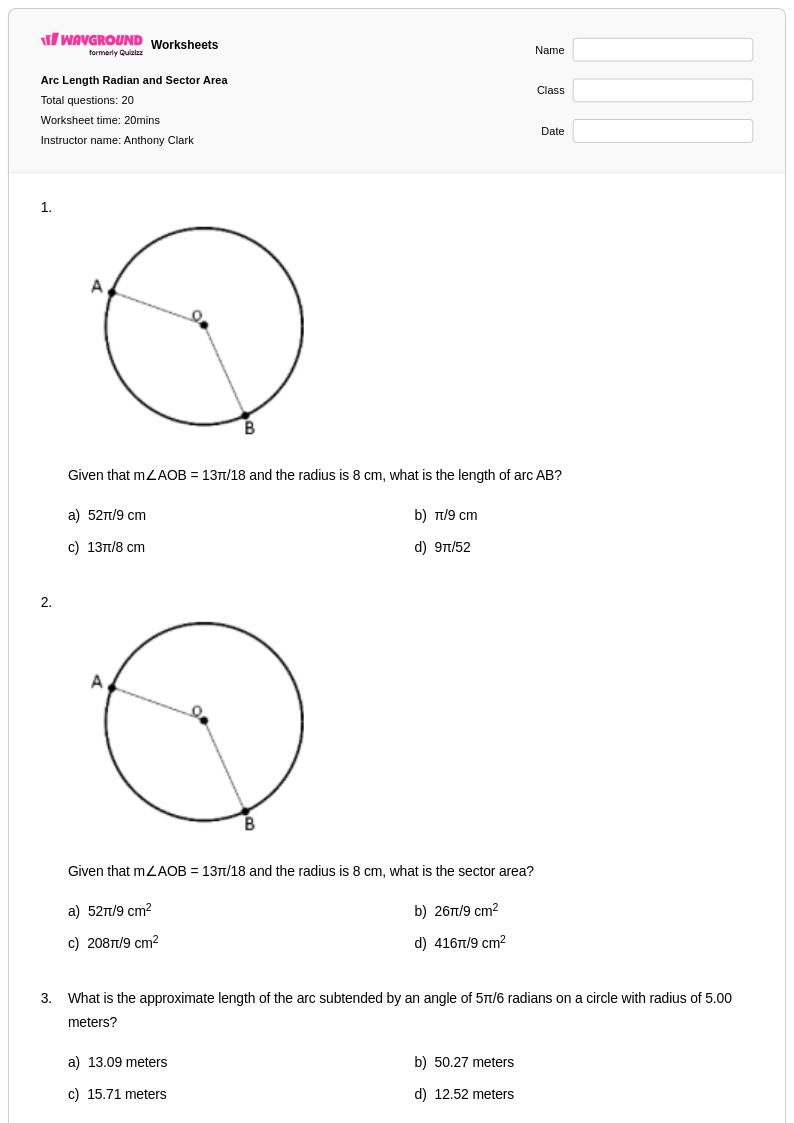
20 Q
9th - Uni
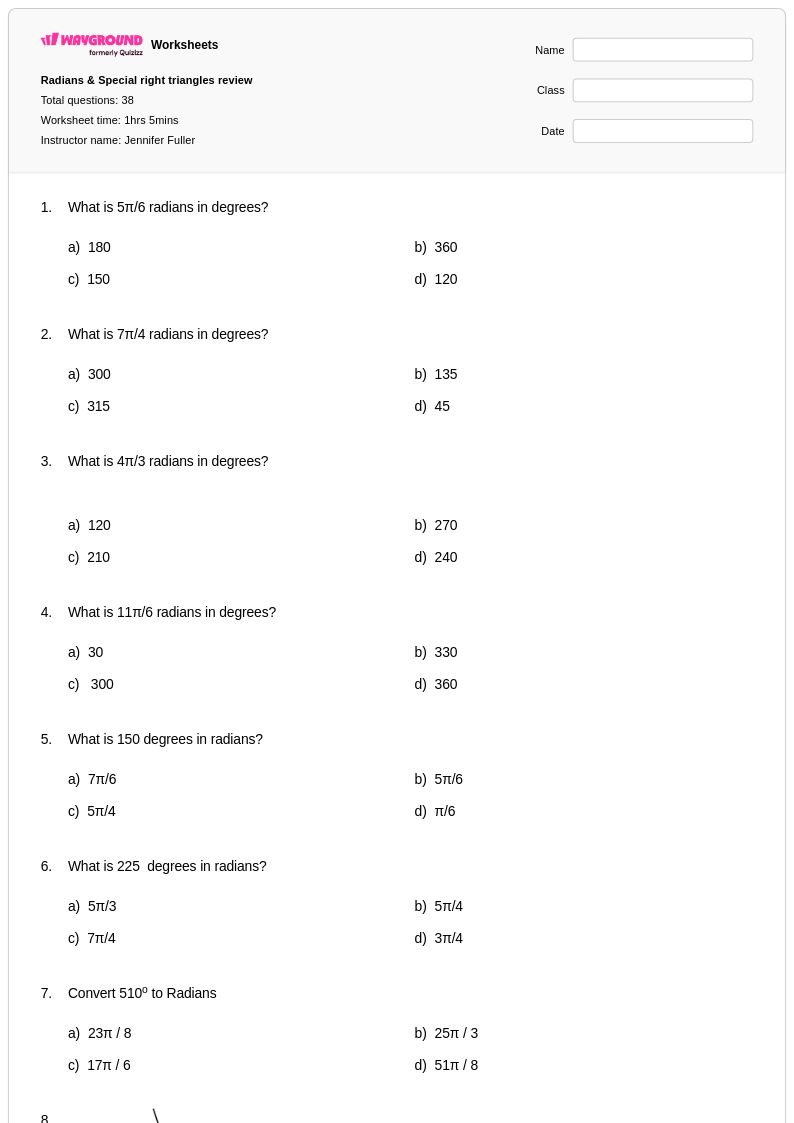
38 Q
9th - 12th
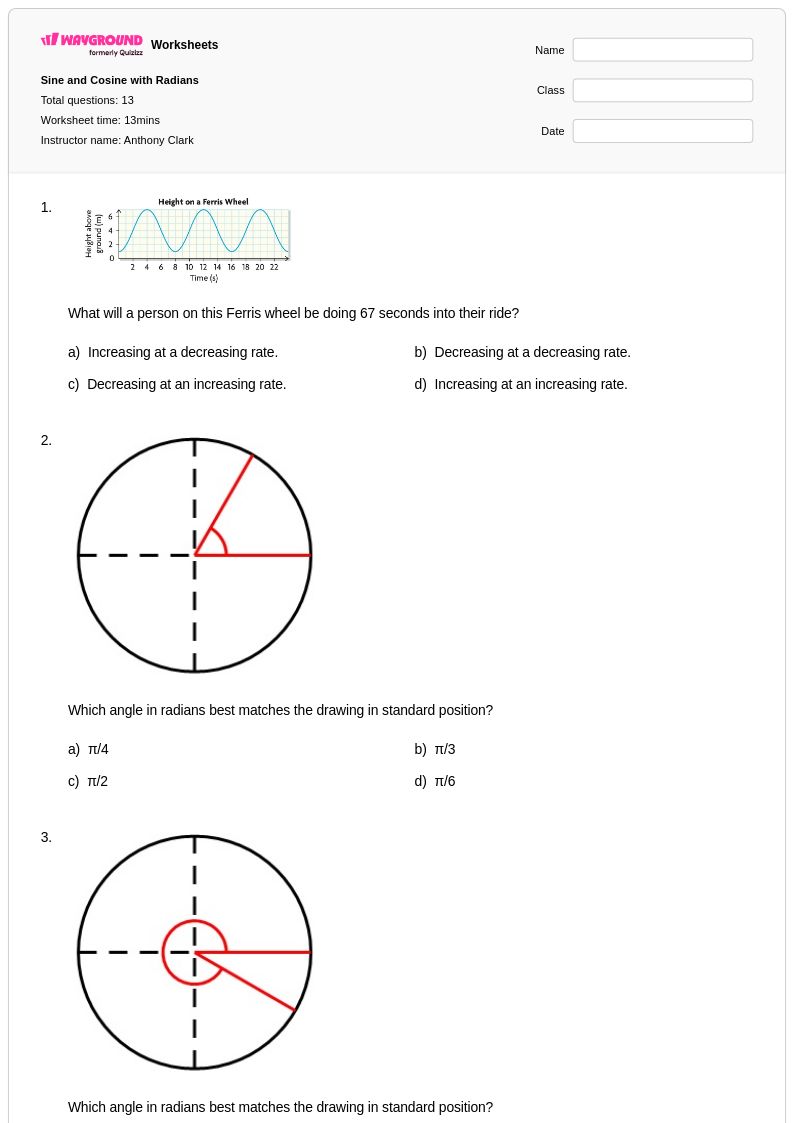
13 Q
12th - Uni
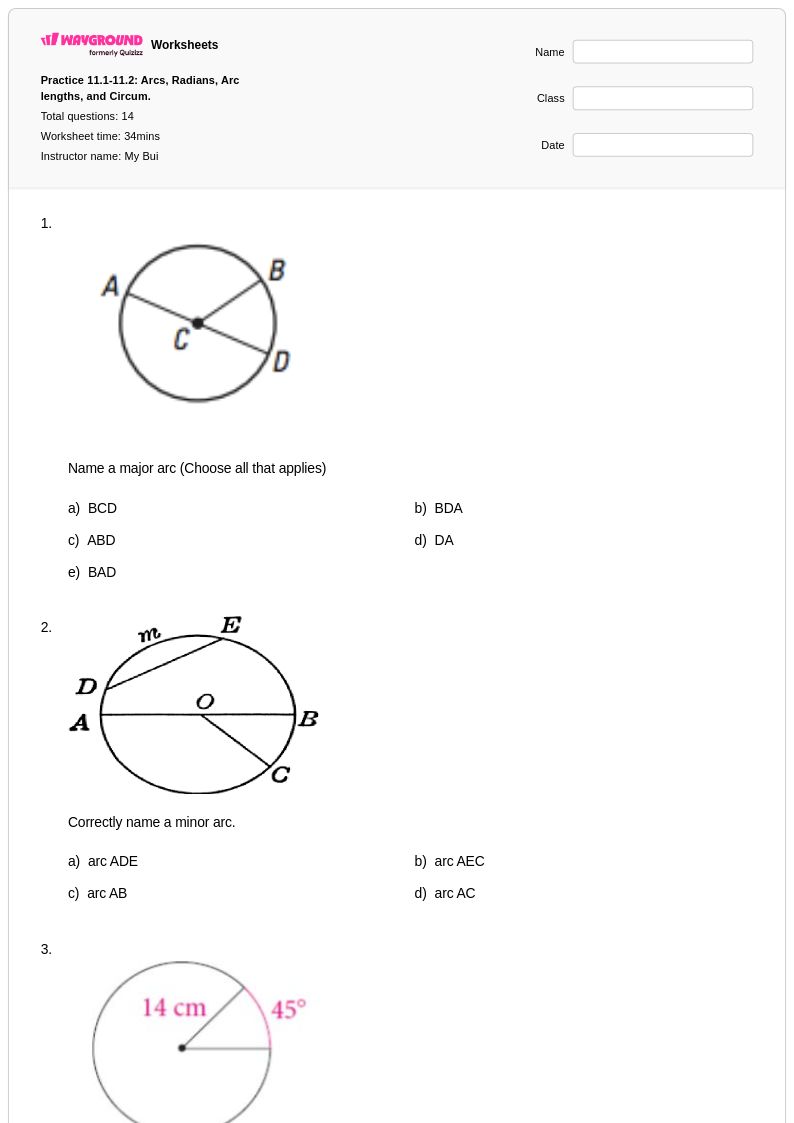
14 Q
9th - 12th
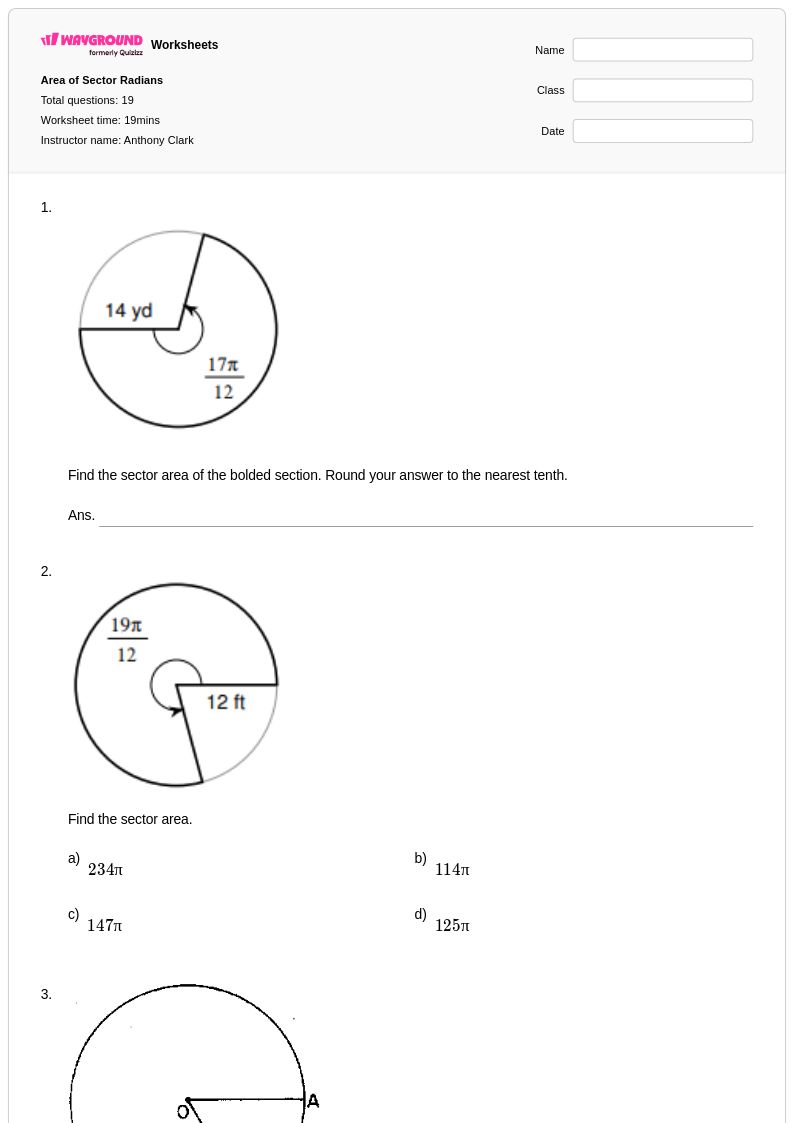
19 Q
10th - Uni
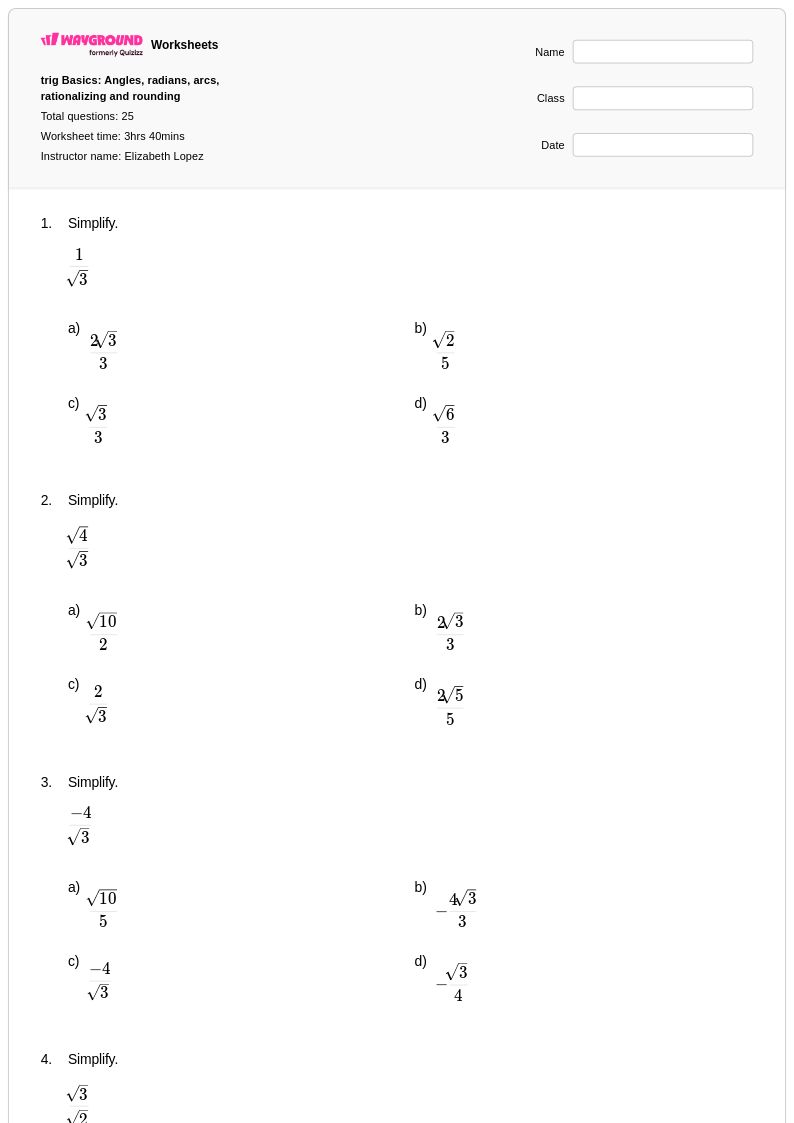
25 Q
11th
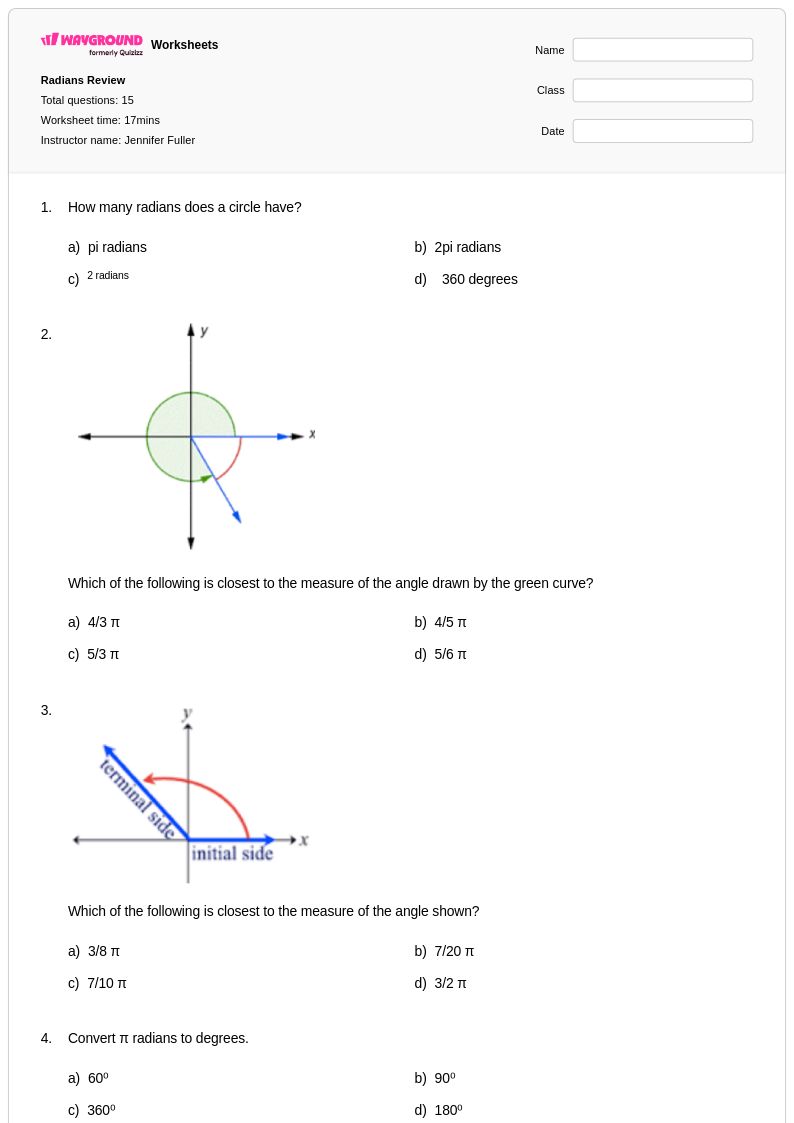
15 Q
9th - 12th
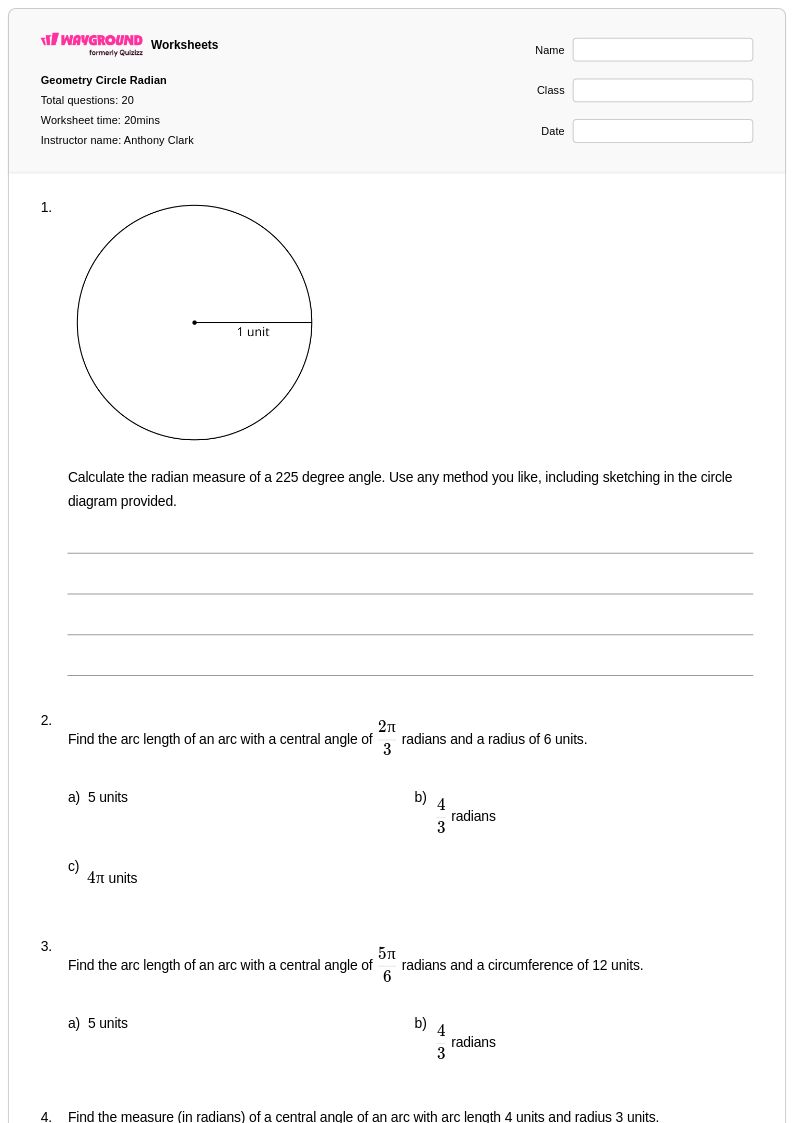
20 Q
6th - Uni
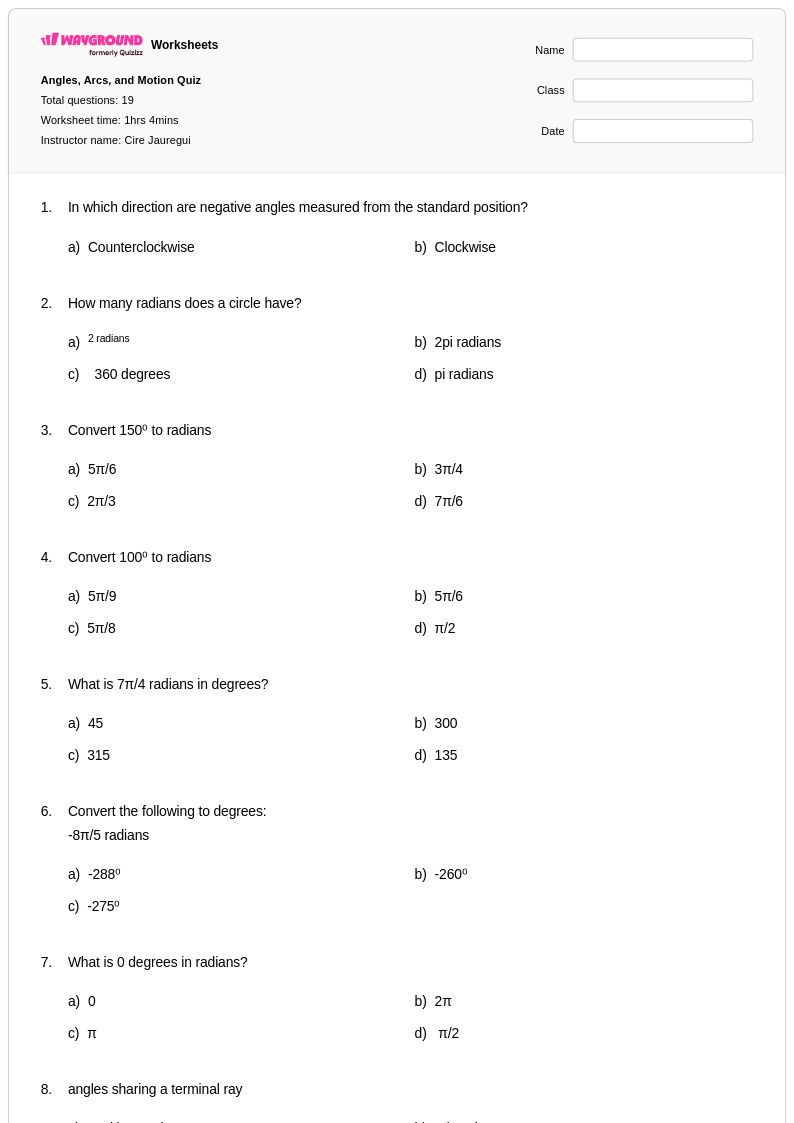
19 Q
12th
Explore Worksheets by Subjects
Explore printable Radians and Arc Length worksheets
Radians and arc length worksheets available through Wayground (formerly Quizizz) provide comprehensive practice materials that help students master the fundamental relationship between angular measurement and circular arc distances. These expertly designed worksheets guide learners through converting between degrees and radians, applying the arc length formula s = rθ, and solving complex problems involving sectors, circles, and rotational motion. Each worksheet collection includes detailed answer keys and step-by-step solutions, allowing students to verify their work and understand the underlying mathematical reasoning. The free printables cover essential skills from basic radian conversion to advanced applications in calculus and physics, ensuring students develop fluency with these critical trigonometric concepts through targeted practice problems.
Wayground (formerly Quizizz) empowers mathematics educators with an extensive library of millions of teacher-created radians and arc length resources that streamline lesson planning and differentiated instruction. The platform's robust search and filtering system enables teachers to quickly locate worksheets aligned with specific curriculum standards, whether targeting introductory trigonometry concepts or advanced pre-calculus applications. These customizable materials are available in both printable pdf format and interactive digital versions, allowing educators to adapt content for individual student needs, small group remediation, or enrichment activities. Teachers can efficiently modify existing worksheets, create custom problem sets, and track student progress while ensuring all learners receive appropriate practice with radian measurement and arc length calculations across various mathematical contexts.
FAQs
How do I introduce the concept of radians to my students?
What types of problems help students practice radians and arc length?
What are common student mistakes when learning arc length?
How can I use this Wayground worksheet in my classroom?
How does learning radians fit into the high school math curriculum?
How can I support struggling students with this topic?