Free Printable Reaction Rates Worksheets for Class 12
Enhance Class 12 chemistry mastery with Wayground's comprehensive reaction rates worksheets, featuring free printables, practice problems, and answer keys to help students understand kinetics and chemical reaction mechanisms.
Explore printable Reaction Rates worksheets for Class 12
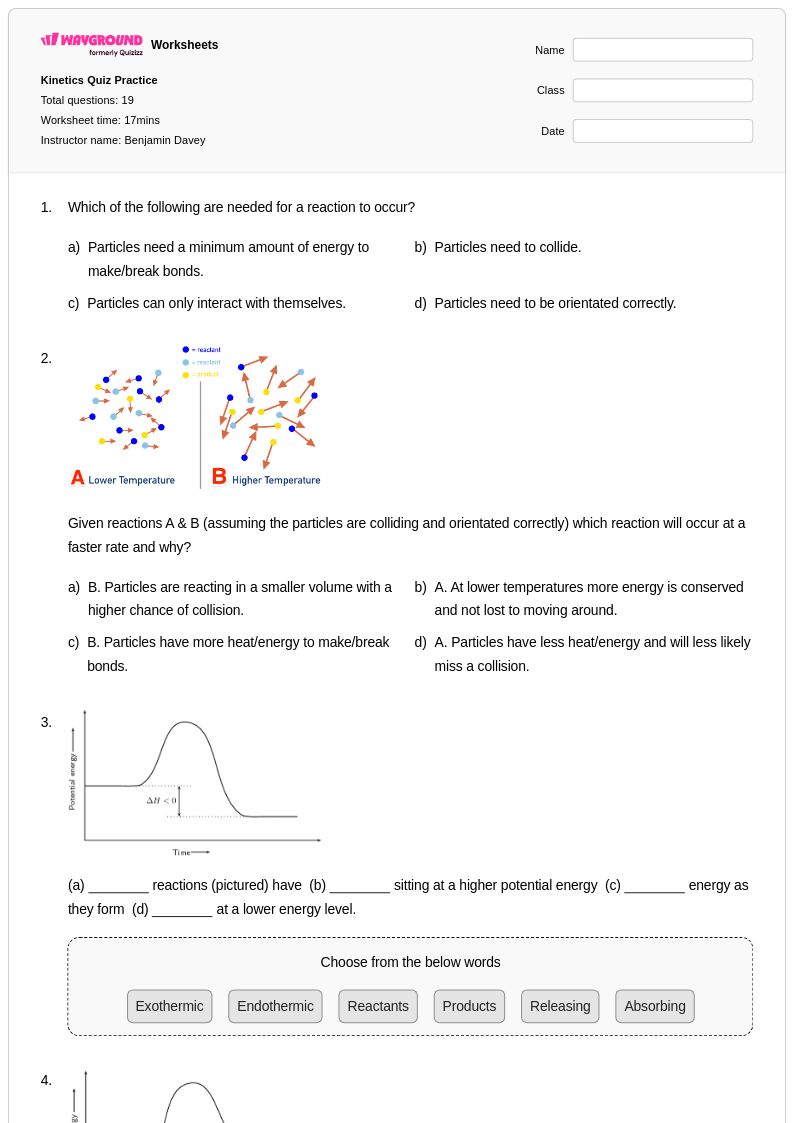
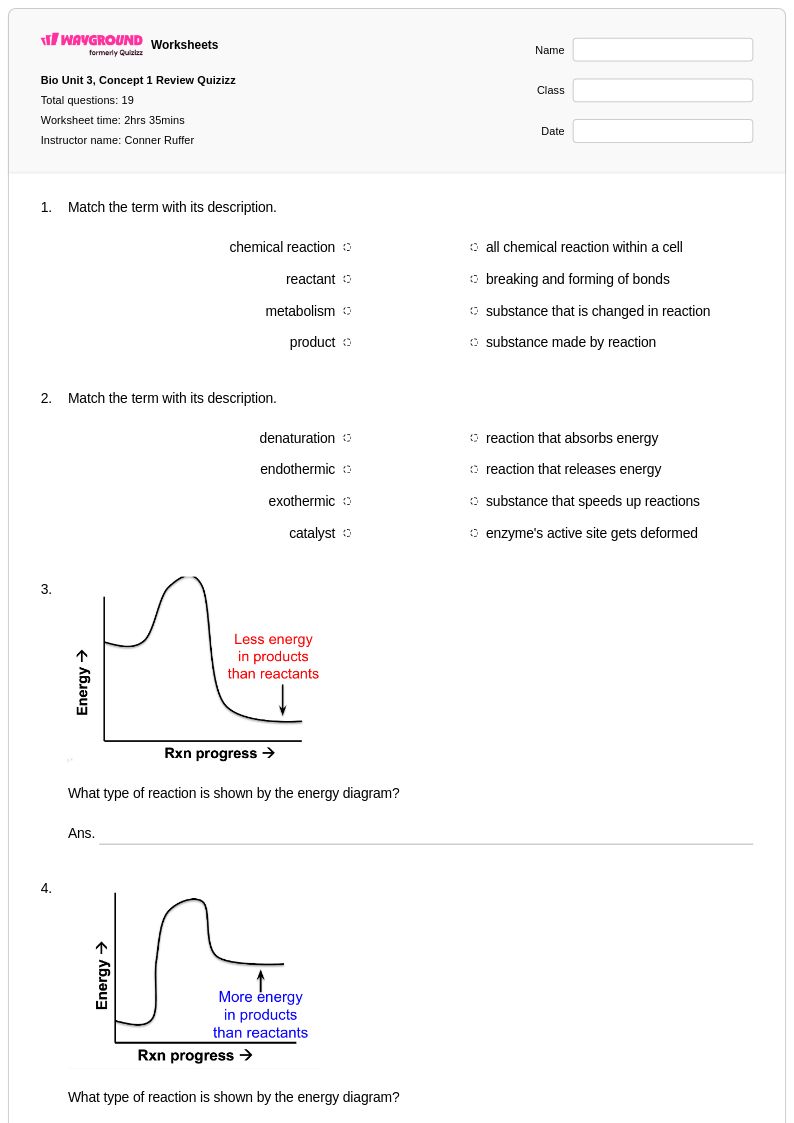
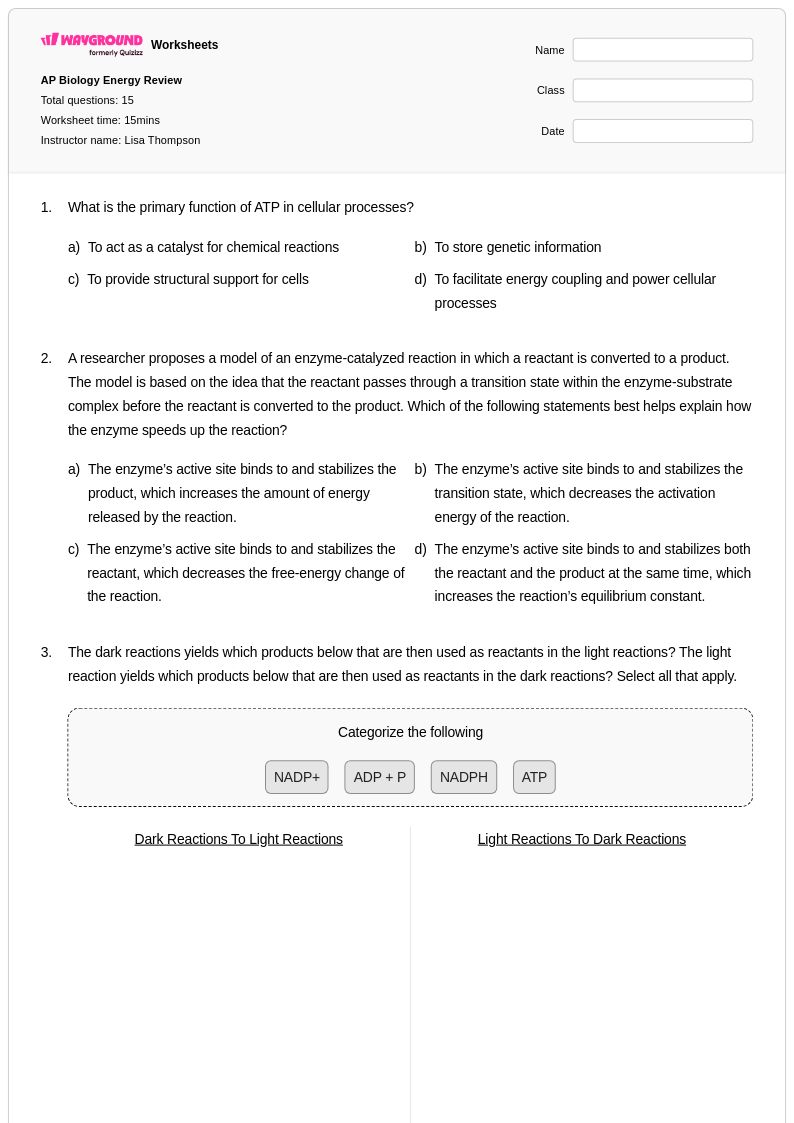
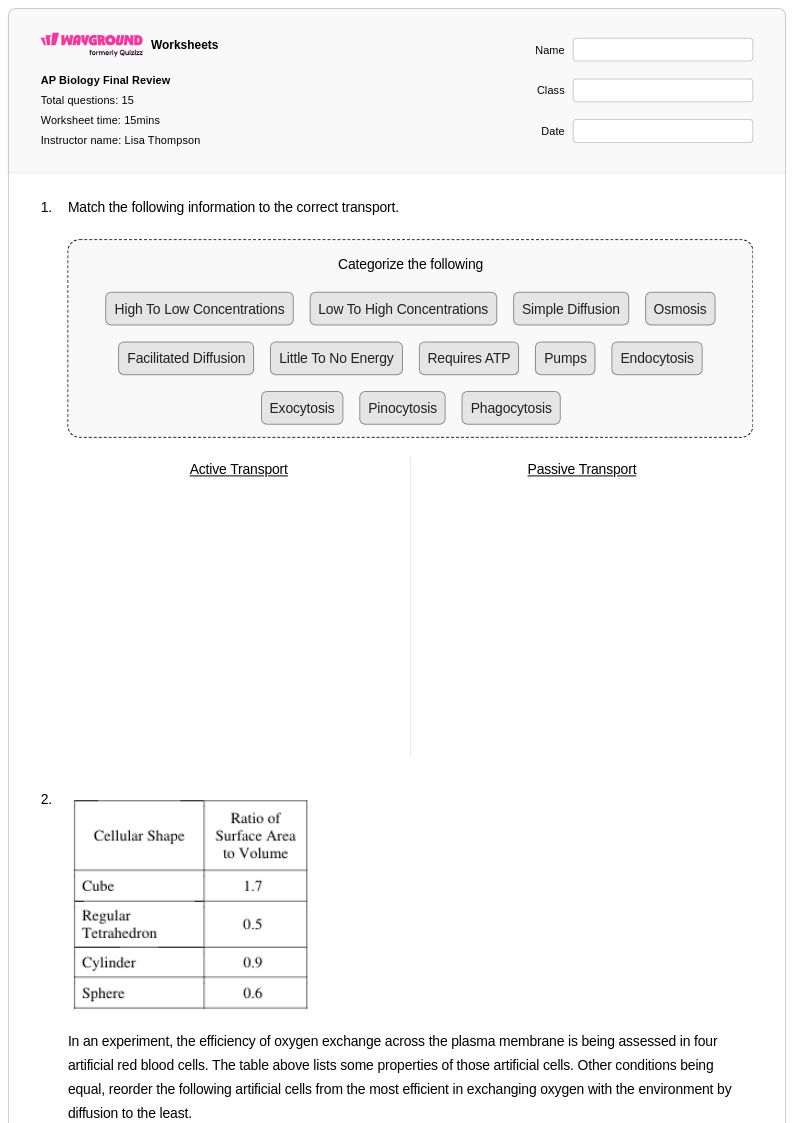
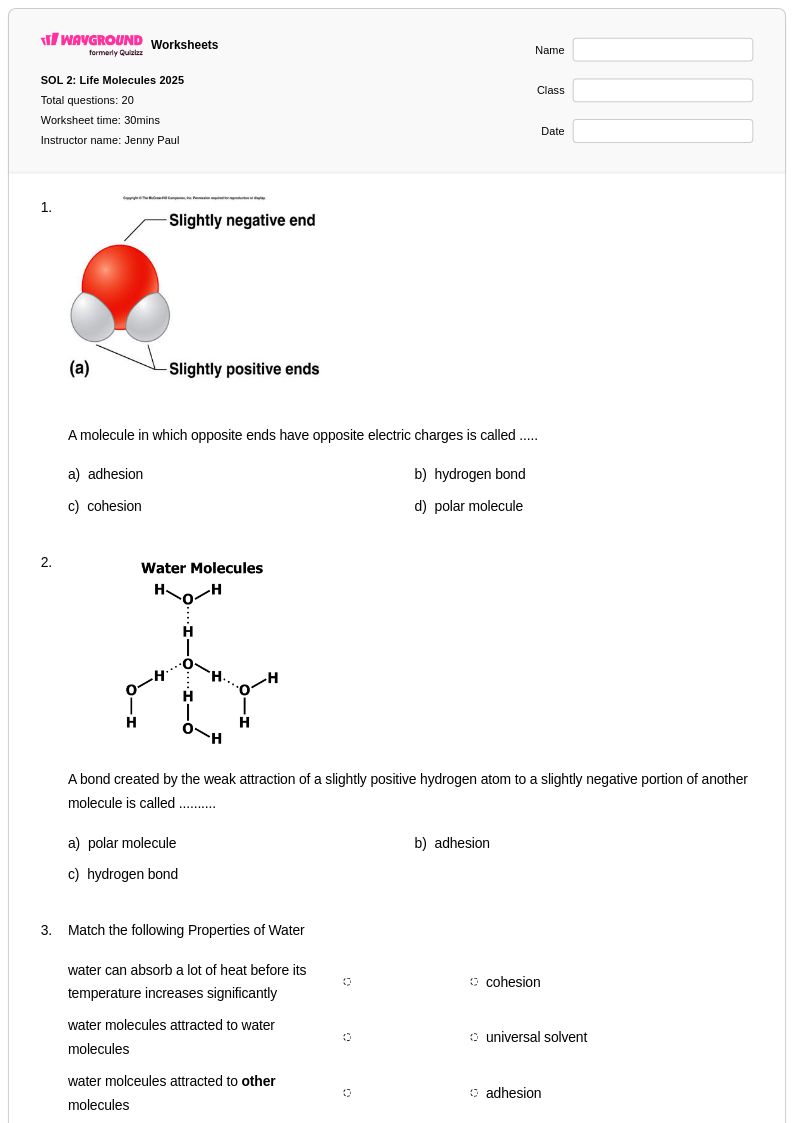
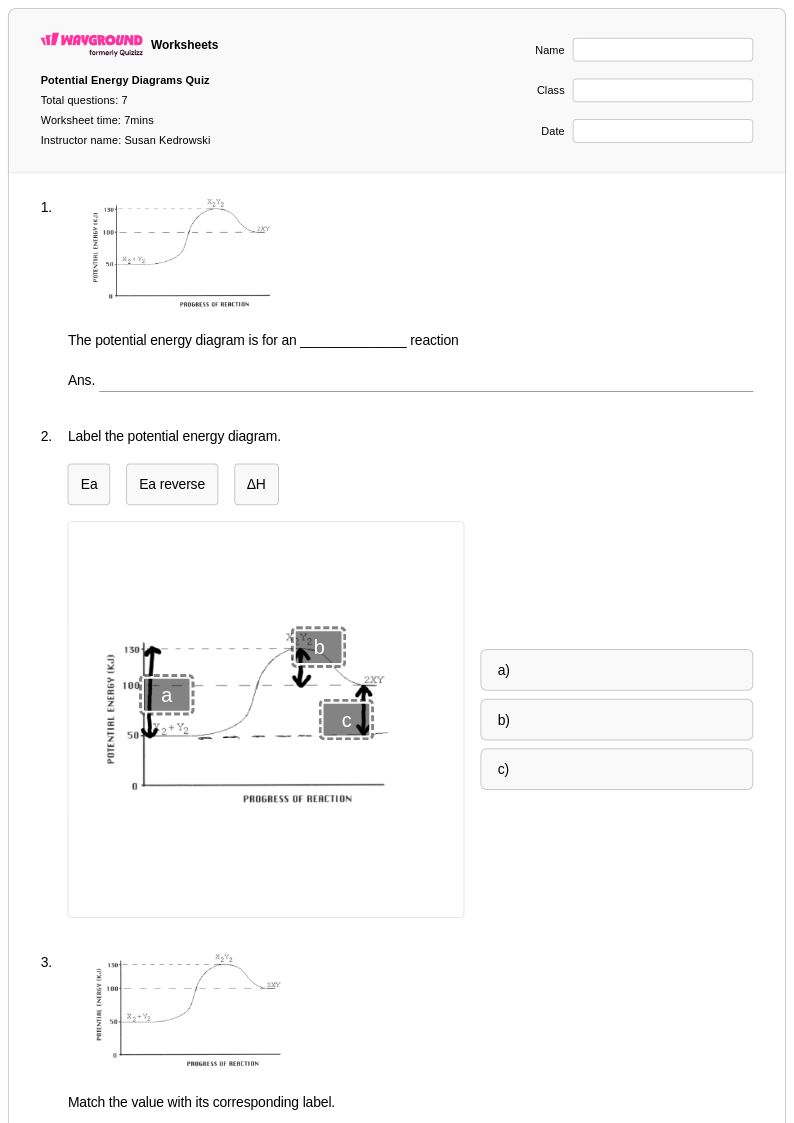
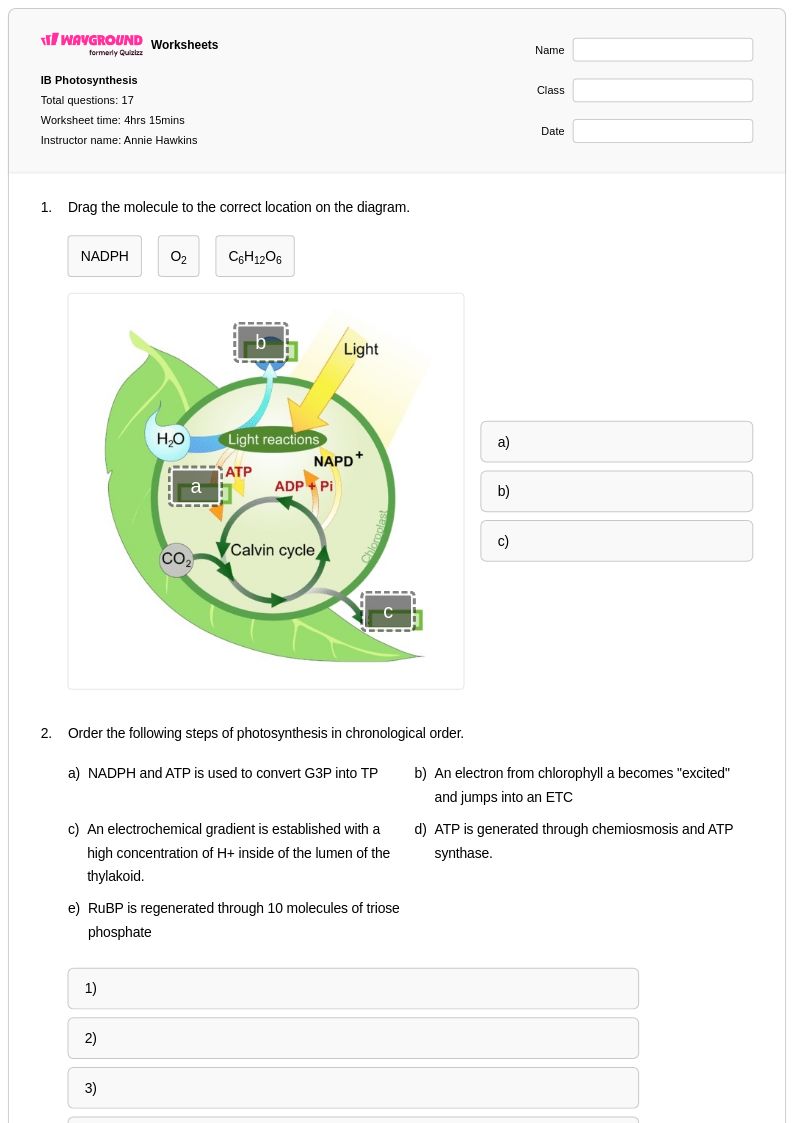
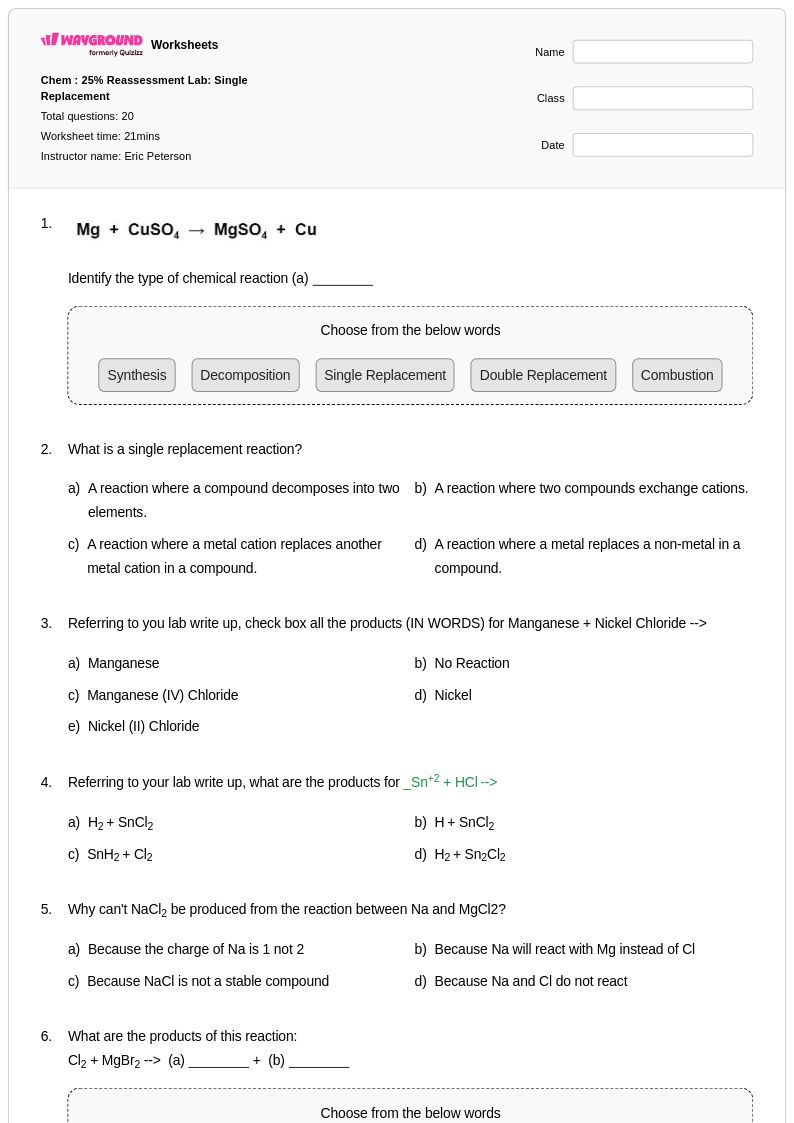
Class 12 reaction rates worksheets available through Wayground (formerly Quizizz) provide comprehensive coverage of chemical kinetics principles essential for advanced high school chemistry students. These expertly crafted resources strengthen critical analytical skills including calculating rate laws, determining reaction orders, interpreting concentration-time graphs, and understanding collision theory and activation energy concepts. Students engage with practice problems that explore factors affecting reaction rates such as temperature, concentration, surface area, and catalysts, while developing proficiency in analyzing experimental data to determine rate constants and mechanisms. Each worksheet includes detailed answer keys and explanations, making these free printables valuable tools for both independent study and classroom instruction, with pdf formats ensuring easy access and distribution.
Wayground (formerly Quizizz) empowers educators with an extensive collection of millions of teacher-created reaction rates resources, featuring robust search and filtering capabilities that allow instructors to quickly locate materials aligned with specific learning objectives and educational standards. The platform's differentiation tools enable teachers to customize worksheets for varying skill levels within their Class 12 chemistry classes, while flexible formatting options support both digital delivery and traditional printable assignments. These comprehensive resources facilitate effective lesson planning by providing ready-to-use materials for introducing new concepts, conducting skill practice sessions, and implementing targeted remediation or enrichment activities. Teachers can seamlessly integrate these worksheets into their kinetics units, confident that students are receiving rigorous practice with fundamental reaction rate calculations and theoretical applications that prepare them for advanced chemistry coursework and standardized assessments.
FAQs
How do I teach reaction rates to high school chemistry students?
Start by grounding students in collision theory before introducing mathematical rate laws, so the conceptual model supports the algebra rather than competes with it. From there, use experimental data sets to show how changes in temperature, concentration, surface area, and catalysts produce measurable changes in reaction speed. Connecting real-world examples, like how refrigeration slows food spoilage or how catalytic converters work, helps students internalize why reaction rate factors matter beyond the classroom.
What exercises help students practice calculating reaction rates?
Effective practice focuses on interpreting concentration-time graphs, calculating average and instantaneous rates from tabular data, and applying rate laws to determine rate constants and reaction orders. Students benefit from working through multi-step problems that require them to integrate several skills at once, such as identifying reaction order from experimental data and then using that order to predict behavior under new conditions. Repeated exposure to varied problem formats builds the fluency needed for assessments and standardized testing.
What mistakes do students commonly make when working with reaction rates?
One of the most persistent errors is confusing the rate of a reaction with the rate constant — students frequently treat k as though it changes with concentration rather than with temperature. Another common misconception is assuming that a higher stoichiometric coefficient always means a faster rate for that species, which conflates stoichiometry with kinetics. Students also often misread concentration-time graphs, calculating average rate over the entire curve rather than using the slope at a specific point for instantaneous rate.
How do I use reaction rates worksheets to differentiate instruction?
Wayground allows teachers to assign the same worksheet with individualized accommodations applied per student, so differentiation happens at the delivery level without requiring separate materials. For students who need additional support, the platform's reduced answer choices feature lowers cognitive load on multiple-choice problems, and Read Aloud can assist students who struggle with dense scientific vocabulary. Extended time can be configured per student for timed practice sets, ensuring all learners can demonstrate understanding without being penalized by pacing differences.
How do I use Wayground's reaction rates worksheets in my classroom?
Wayground's reaction rates worksheets are available as printable PDFs for traditional classroom use and in digital formats for technology-integrated environments, giving teachers flexibility across instructional settings. Teachers can also host worksheets directly as a quiz on Wayground, enabling immediate feedback for students during independent practice or review sessions. Each worksheet includes a complete answer key, making them practical for homework assignments, in-class problem sets, and test preparation.
How do I help students understand the effect of temperature on reaction rates?
Teach temperature's effect through the lens of collision theory: higher temperatures increase both the frequency of collisions and the proportion of particles that meet or exceed the activation energy threshold. Introducing the Arrhenius equation gives students a quantitative framework to connect this conceptual understanding to mathematical prediction. Practice problems that ask students to compare rate constants at different temperatures, or to calculate activation energy from given data, reinforce how temperature functions as more than just a qualitative factor.