Free Printable Readers Theater Worksheets for Class 6
Class 6 Readers Theater free worksheets and printables help students develop performance reading skills through engaging scripts, character analysis practice problems, and comprehensive answer keys available as downloadable PDFs.
Explore printable Readers Theater worksheets for Class 6
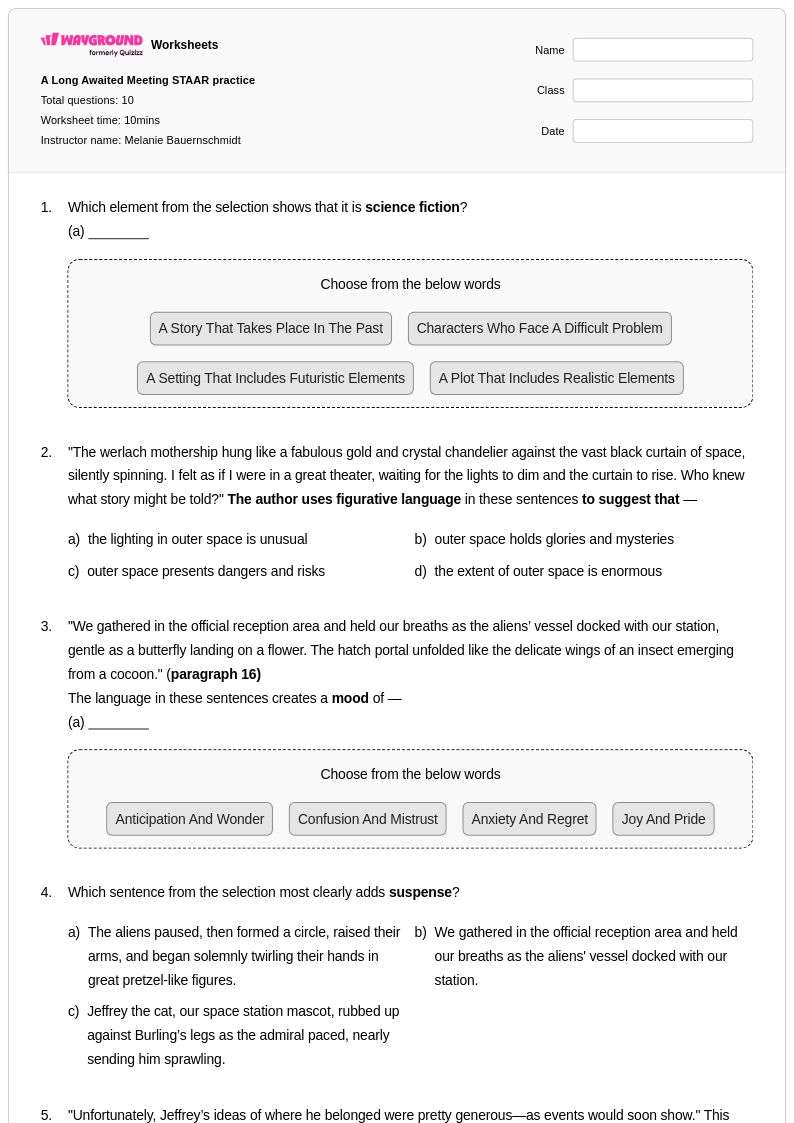
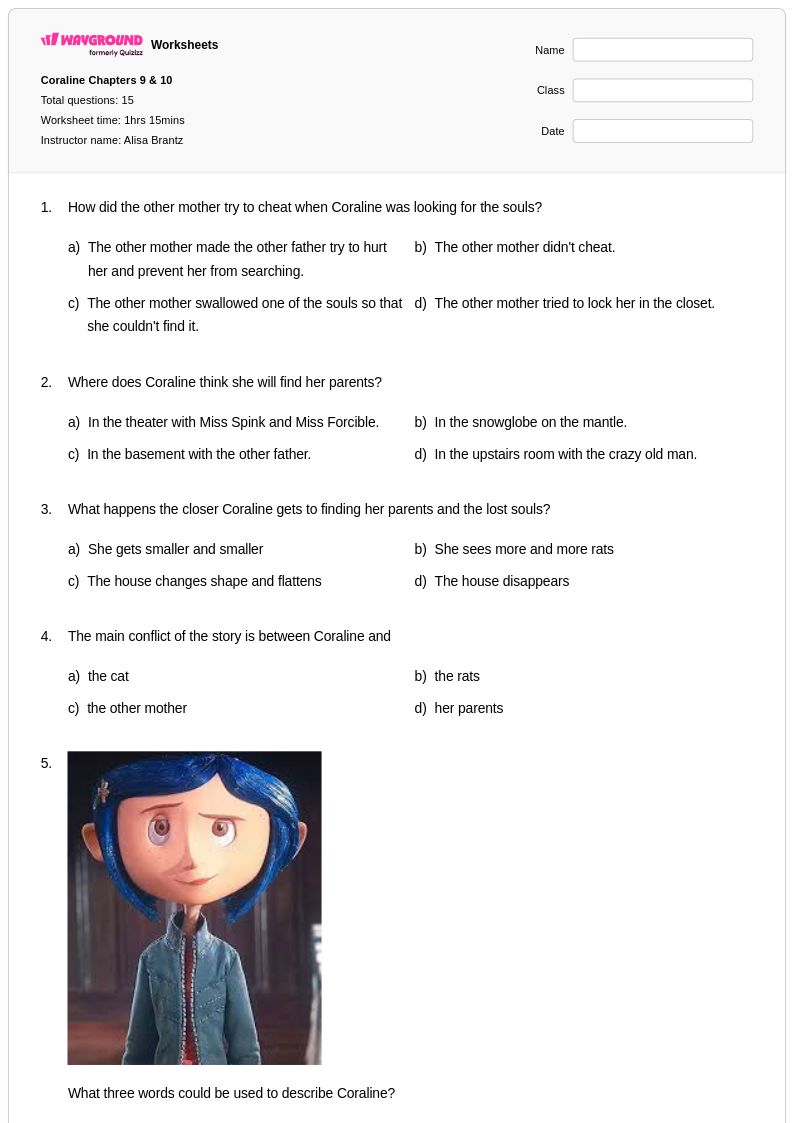
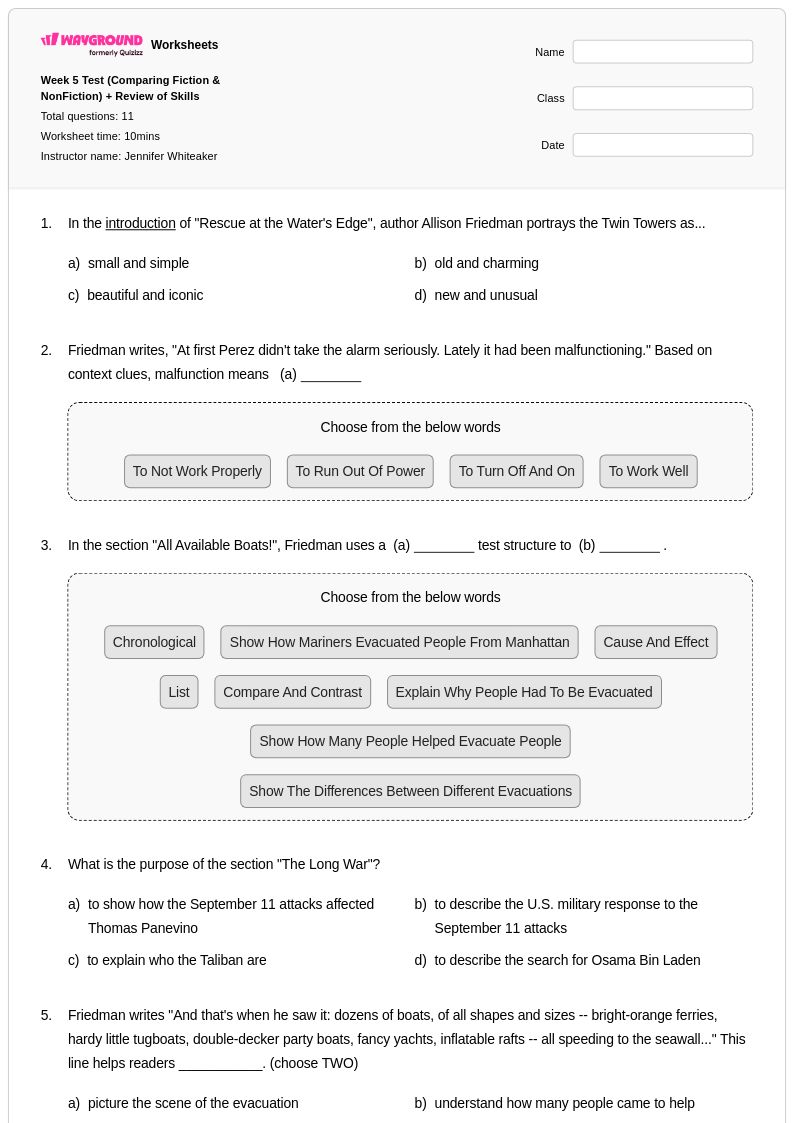
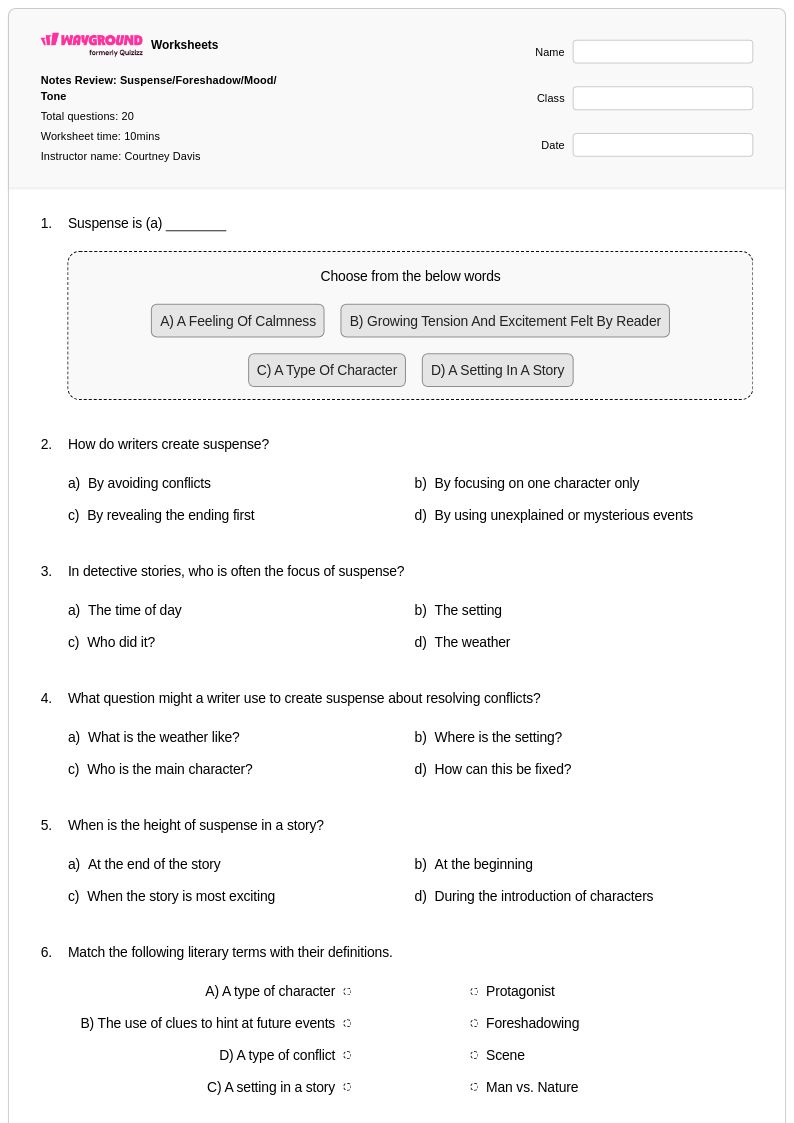
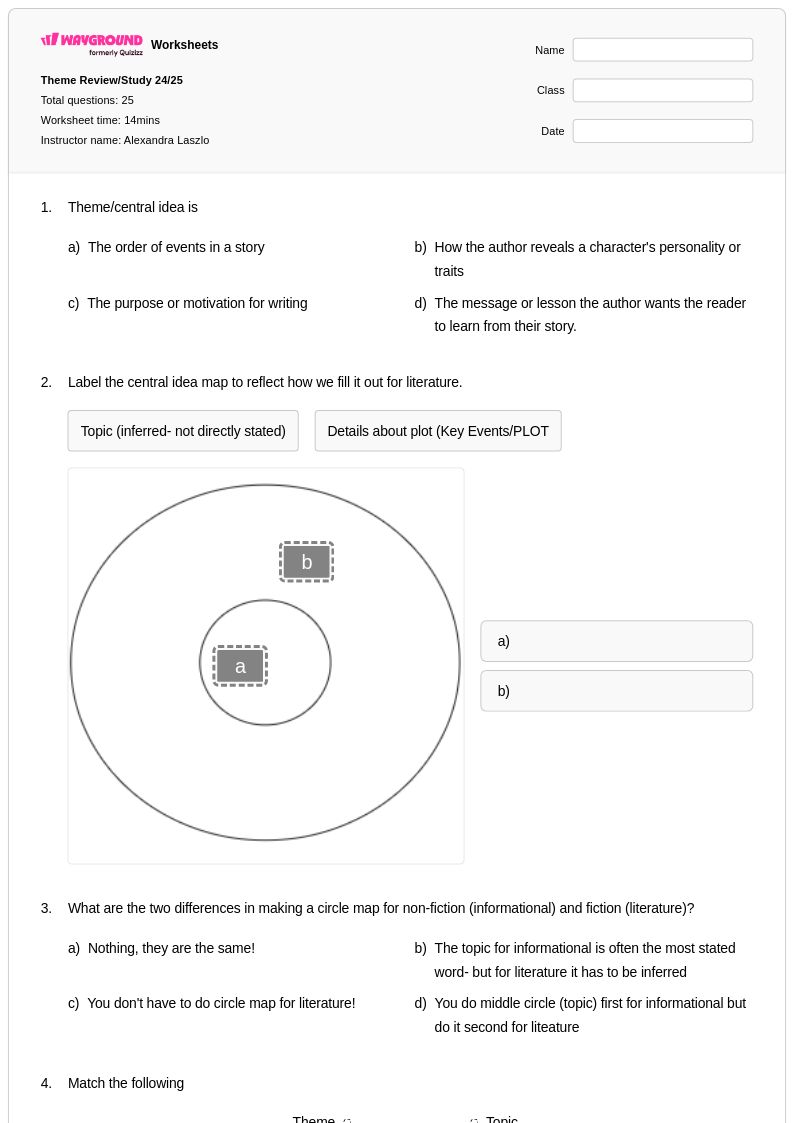
Class 6 Readers Theater worksheets available through Wayground (formerly Quizizz) provide students with engaging opportunities to develop fluency, expression, and comprehension through performance-based reading activities. These carefully designed practice problems focus on script analysis, character development, voice projection techniques, and collaborative interpretation of various literary texts. Students strengthen essential reading skills including prosody, phrasing, and dramatic interpretation while building confidence in oral reading performance. The comprehensive collection includes detailed answer keys and free printable resources that guide educators through script selection, role assignment strategies, and performance assessment criteria, ensuring students master both individual reading skills and ensemble collaboration techniques.
Wayground (formerly Quizizz) supports teachers with an extensive library of millions of teacher-created Readers Theater resources that streamline lesson planning and differentiate instruction for diverse learning needs. The platform's robust search and filtering capabilities allow educators to quickly locate age-appropriate scripts, character analysis worksheets, and performance rubrics that align with reading standards and fluency benchmarks. Teachers can customize materials for remediation by selecting simpler scripts for struggling readers or provide enrichment through complex character studies and advanced performance techniques. Available in both printable PDF formats and interactive digital versions, these resources accommodate various classroom settings while offering flexible options for individual practice, small group rehearsals, and whole-class performances that enhance reading engagement and build essential communication skills.
FAQs
How do I teach Readers Theater in the classroom?
Readers Theater is taught by assigning students specific character roles within a script and guiding them to read aloud with expression, pacing, and vocal variety rather than memorizing lines or staging movement. Begin with a shared read-aloud to model expressive reading, then assign roles and allow rehearsal time before a performance reading. Debrief after each performance by discussing character motivation, tone choices, and how phrasing affects meaning. The goal is to build fluency and comprehension through repeated, purposeful reading of the same text.
What exercises help students practice Readers Theater skills?
Effective practice exercises for Readers Theater include character voice identification, where students annotate scripts with notes on tone and emotion before reading; echo reading, where the teacher models a line and students repeat it with the same expression; and script adaptation tasks, where students convert a prose passage into dialogue format. Repeated readings of the same script improve fluency because students shift focus from decoding to performance with each pass. Character analysis worksheets also help students understand motivation before attempting expressive oral interpretation.
What reading skills does Readers Theater actually build?
Readers Theater directly builds oral reading fluency by giving students a meaningful reason to reread the same text multiple times, which increases both accuracy and rate. It also develops text comprehension because students must understand character motivation and narrative structure to read expressively. Secondary skills include vocabulary development through context-embedded script language, public speaking confidence, and collaborative literacy skills developed through group rehearsal and performance.
What mistakes do students commonly make during Readers Theater?
The most common mistake is monotone reading, where students decode words accurately but apply no expression, tone variation, or pacing, which undermines both fluency goals and audience engagement. Students also frequently lose their place in a script during group reading, especially if they are tracking multiple characters, so teaching script annotation and cue marking helps. A third common error is reading too fast under performance pressure, which reduces clarity and comprehension for listeners. Addressing these explicitly before the first performance reading prevents them from becoming ingrained habits.
How can I differentiate Readers Theater for struggling and advanced readers?
For struggling readers, assign roles with shorter lines, simpler vocabulary, or repetitive refrains, and allow additional rehearsal time before the group performance reading. Advanced readers benefit from roles with complex emotional arcs, longer monologues, or tasks like adapting a prose passage into a script for the class. On Wayground, teachers can apply individual accommodations such as Read Aloud support and extended time for students who need them, while the rest of the class works under standard settings, allowing differentiation without disrupting the group dynamic.
How do I use Wayground's Readers Theater worksheets in my classroom?
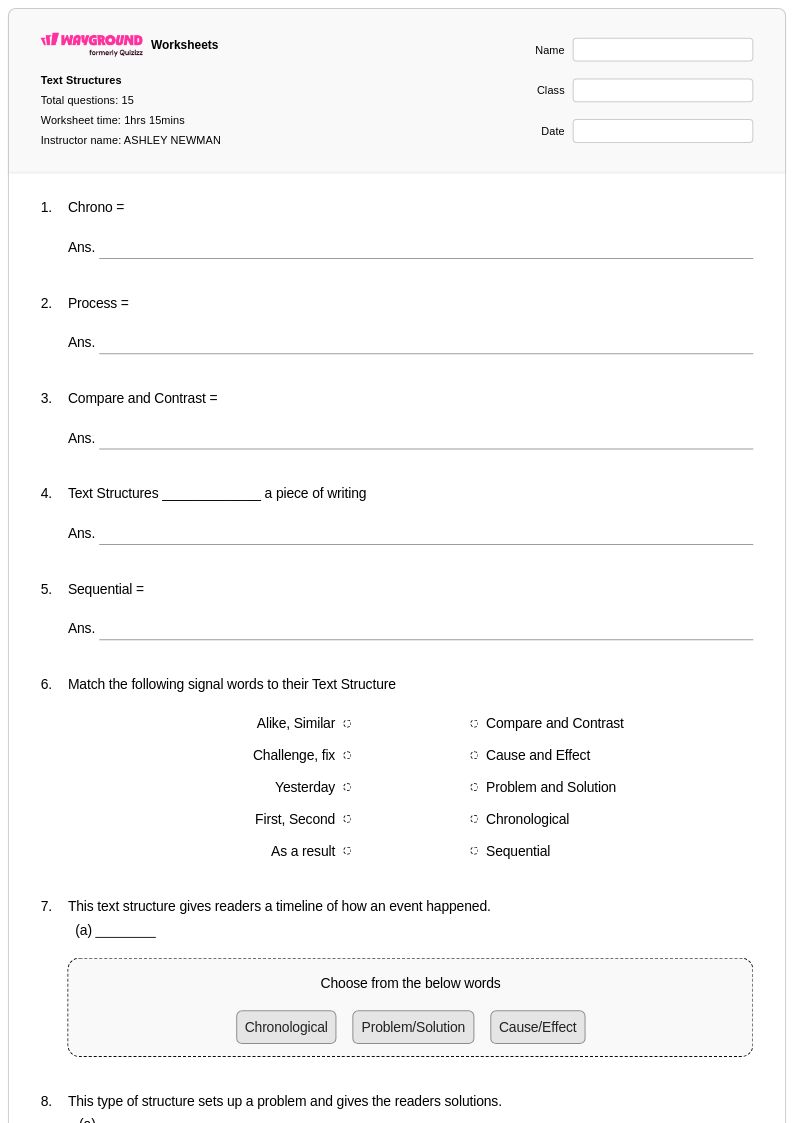
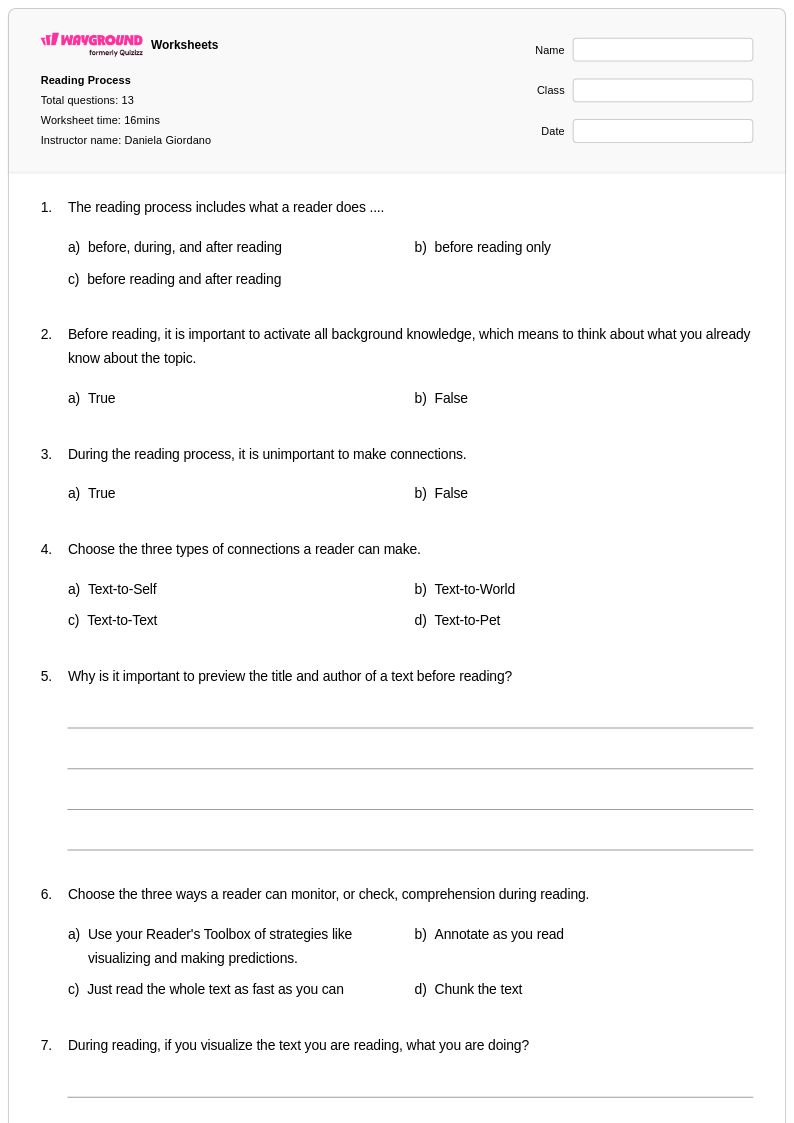
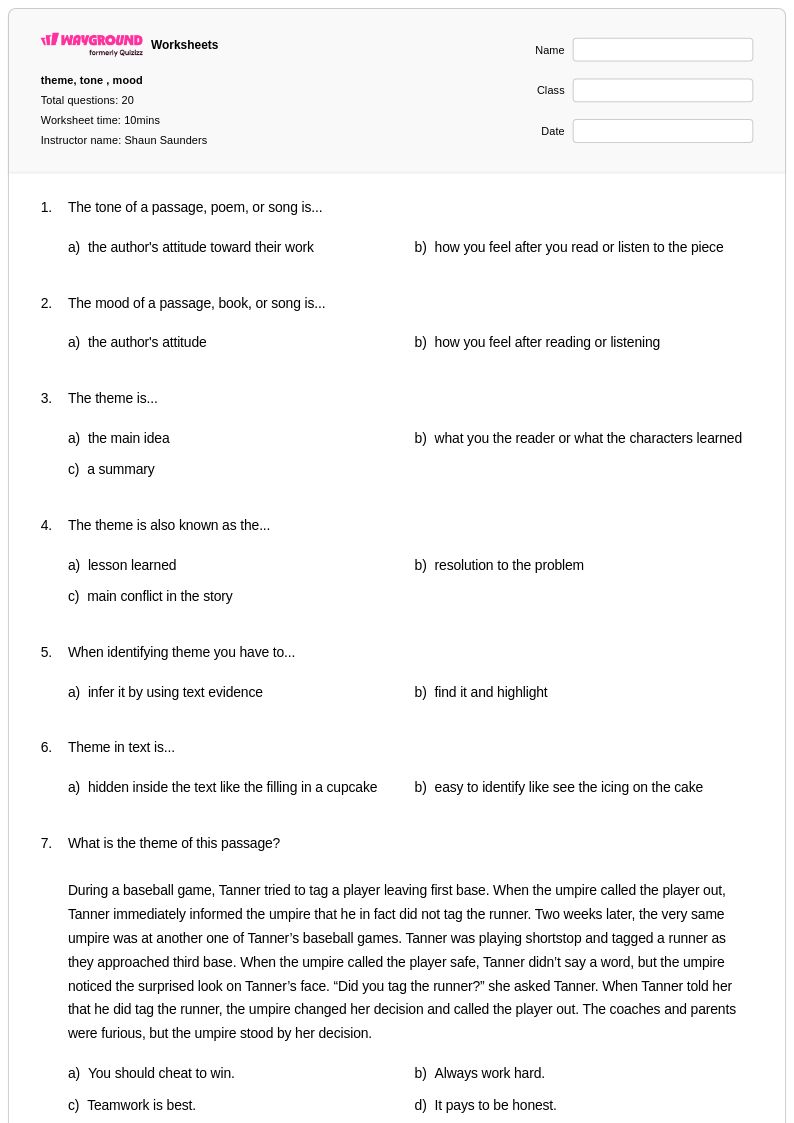
Wayground's Readers Theater worksheets are available as printable PDFs for traditional classroom use and in digital formats for technology-integrated or hybrid learning environments, and can also be hosted as a quiz directly on Wayground. Each worksheet includes a complete answer key, so teachers can use them independently for guided practice, script analysis, or performance assessment without additional preparation. The collection covers character analysis, script adaptation, and performance techniques, making individual worksheets usable as standalone lesson components or as part of a sequenced fluency unit.