
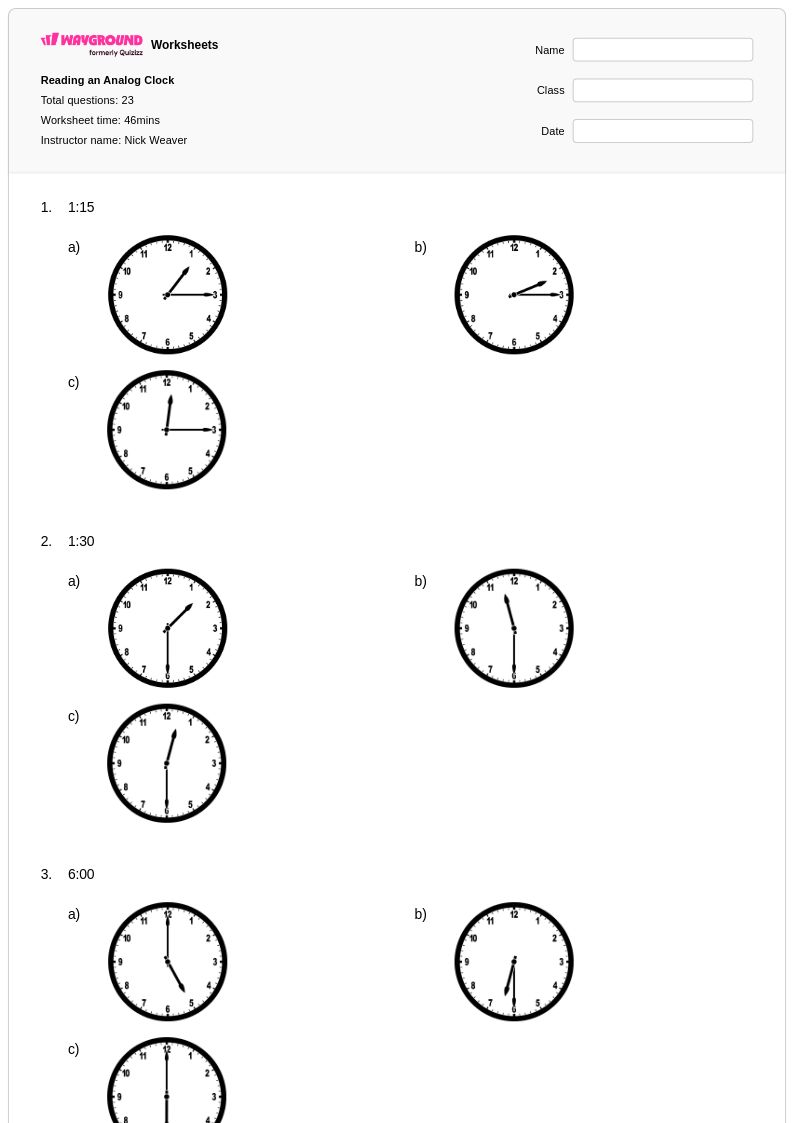
23 Q
2nd
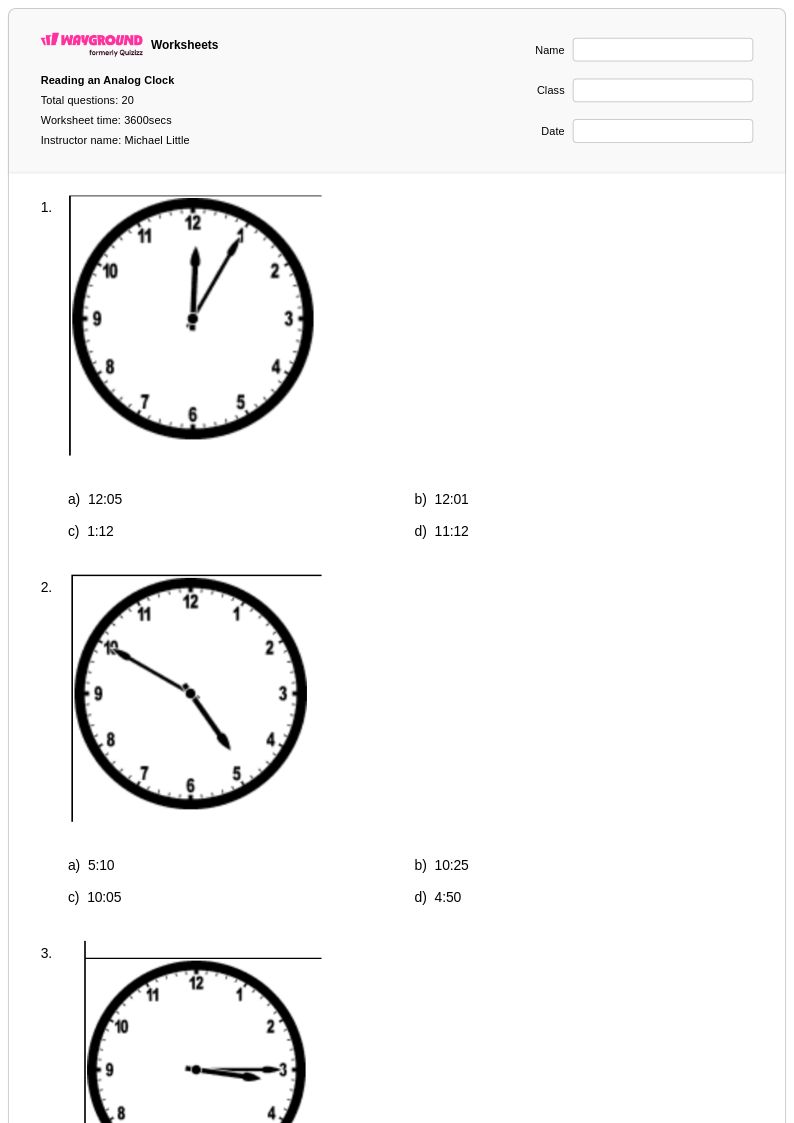
20 Q
4th - 6th
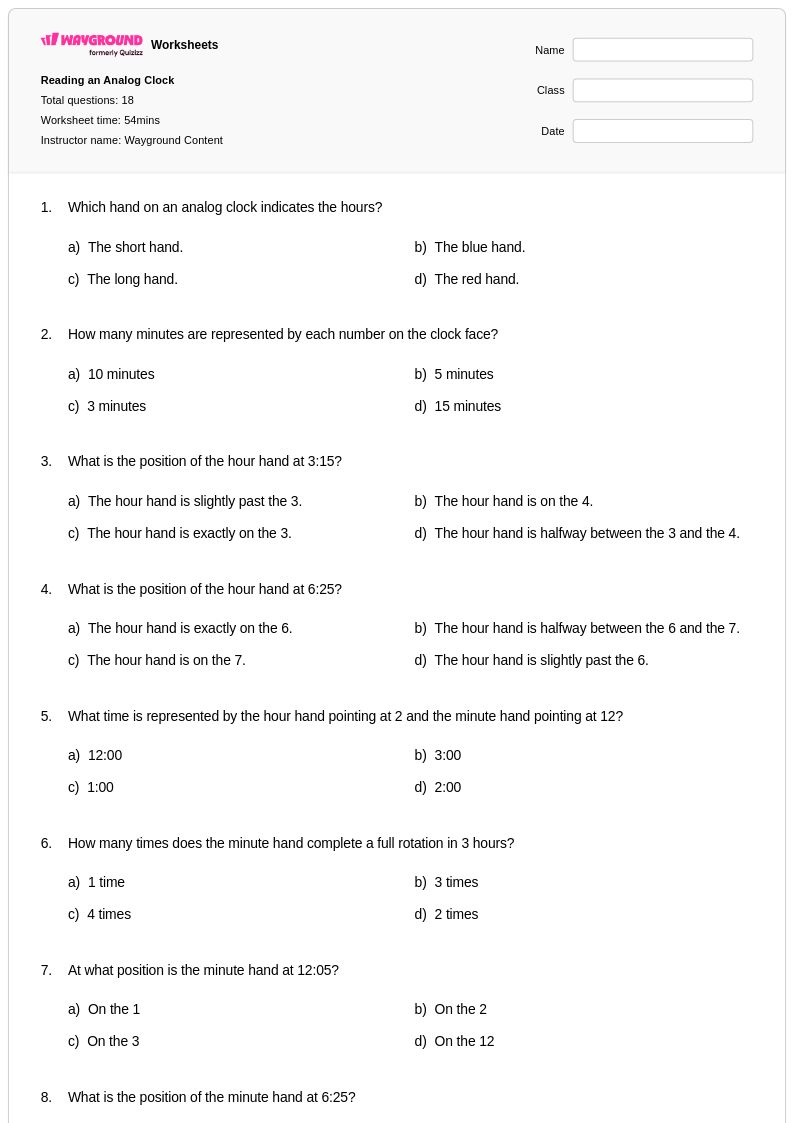
18 Q
4th - 6th
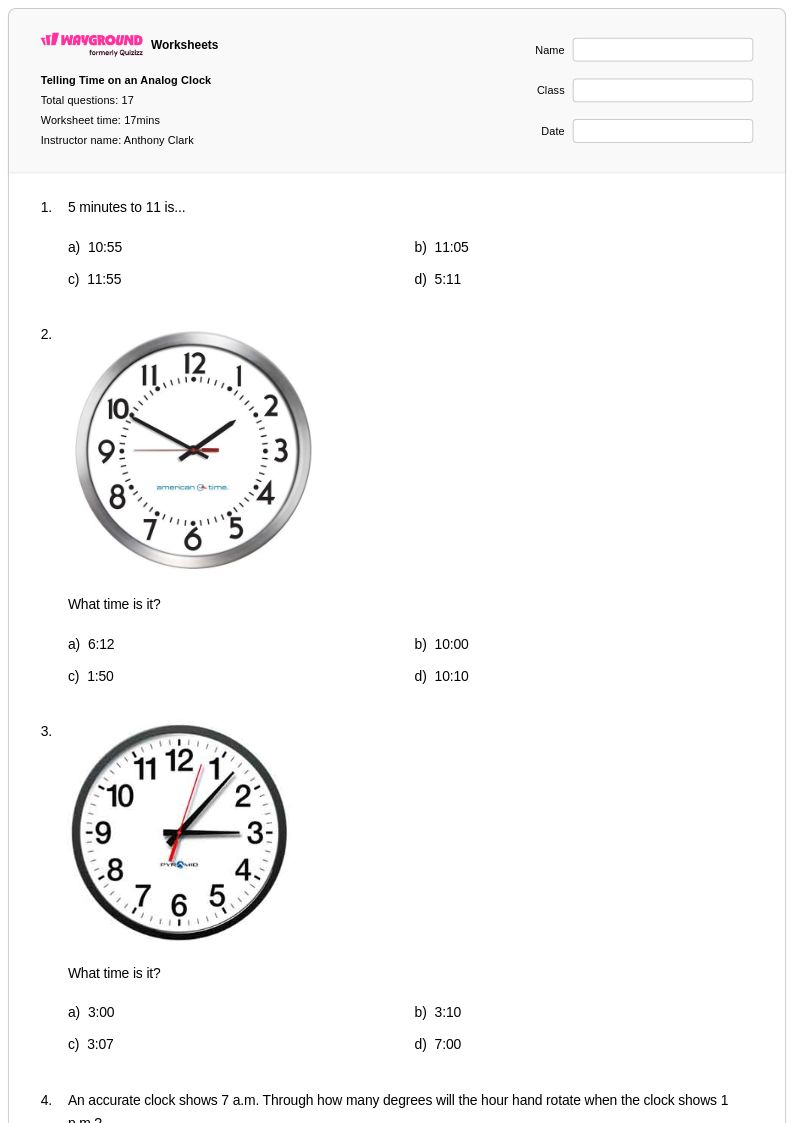
17 Q
3rd - Uni
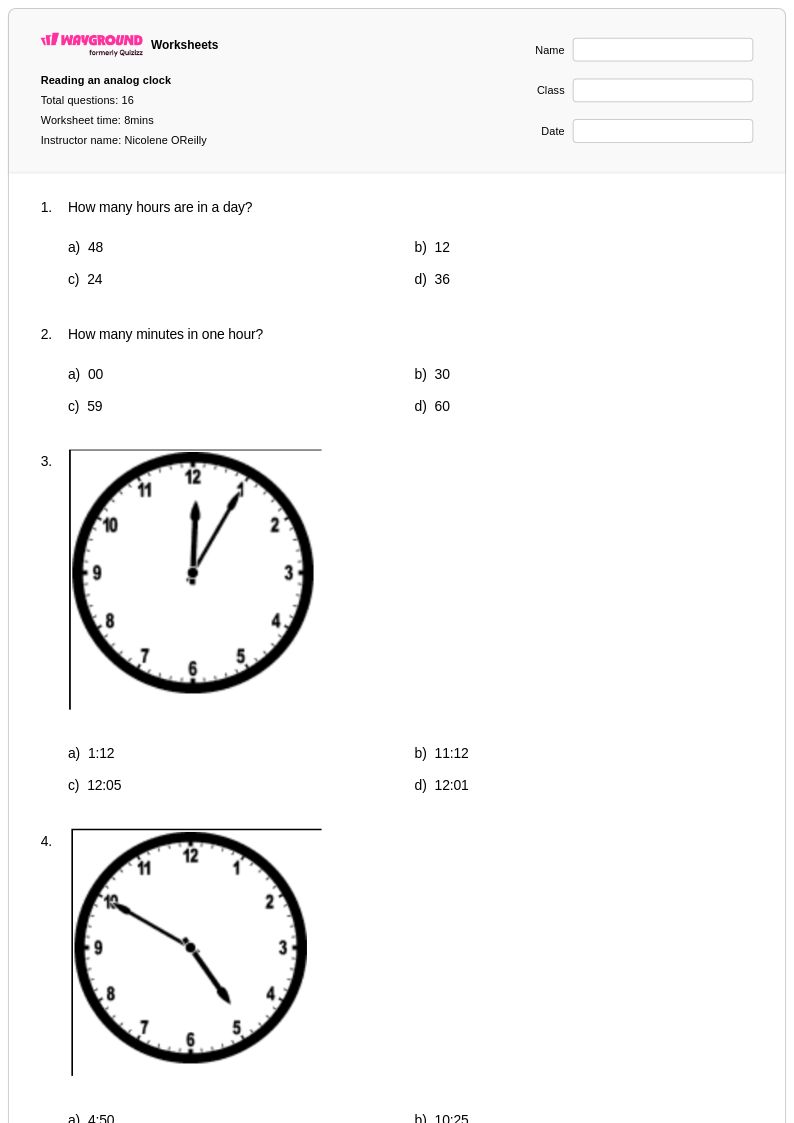
16 Q
2nd
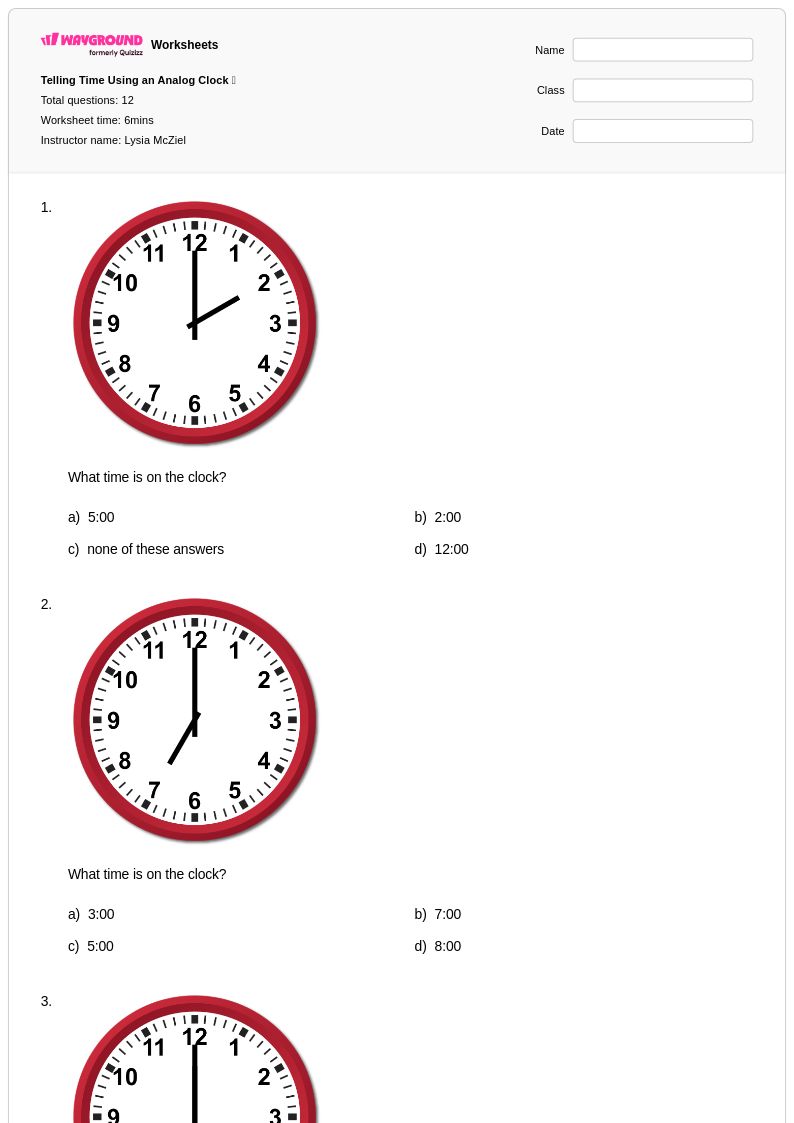
12 Q
PD
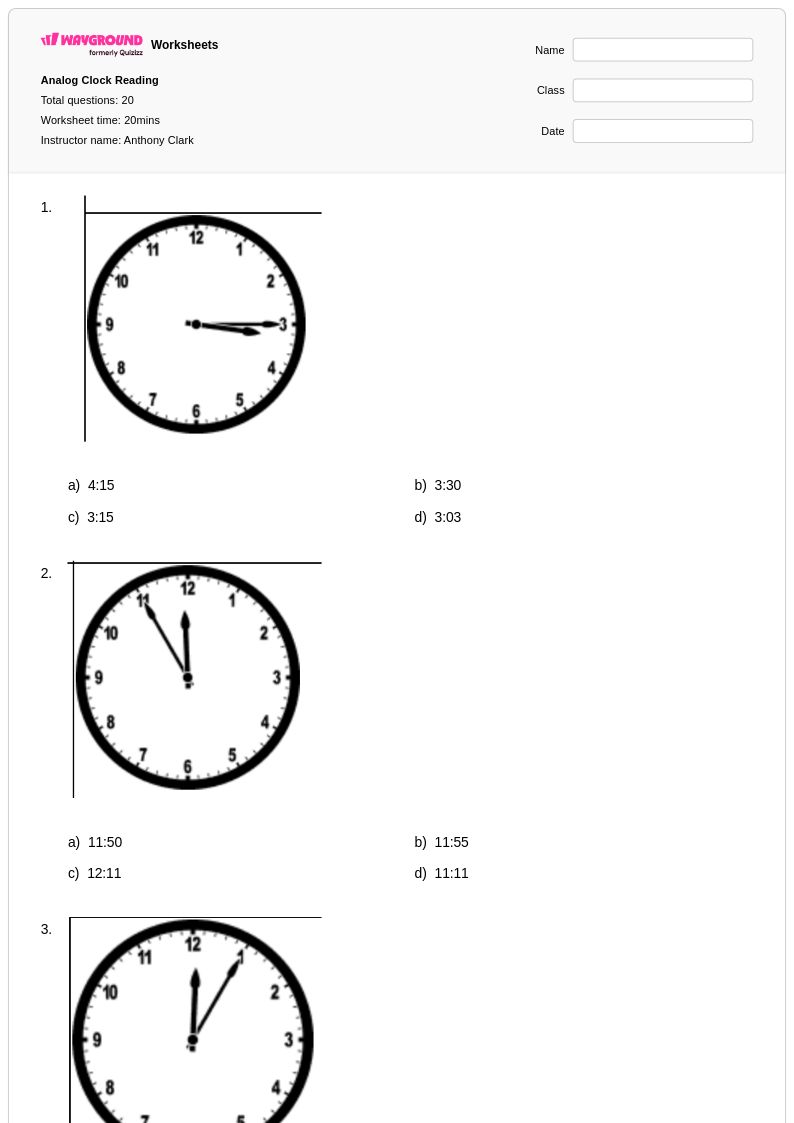
20 Q
2nd - Uni
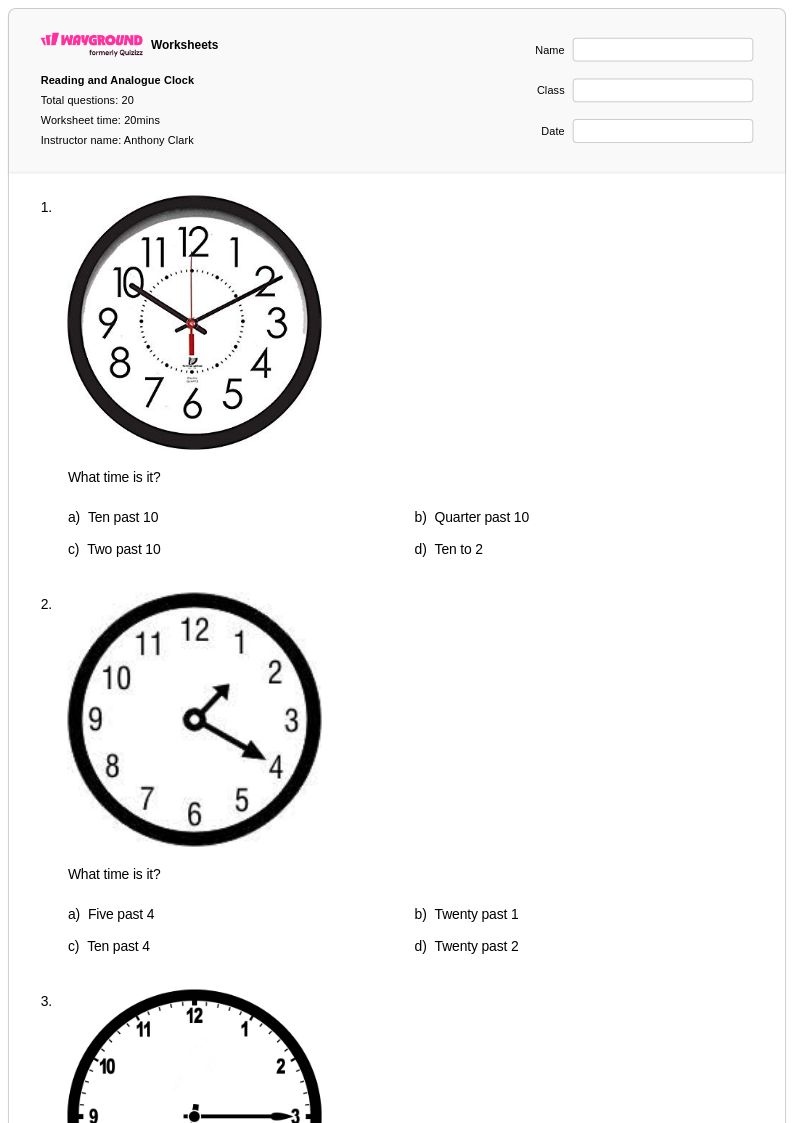
20 Q
2nd - Uni
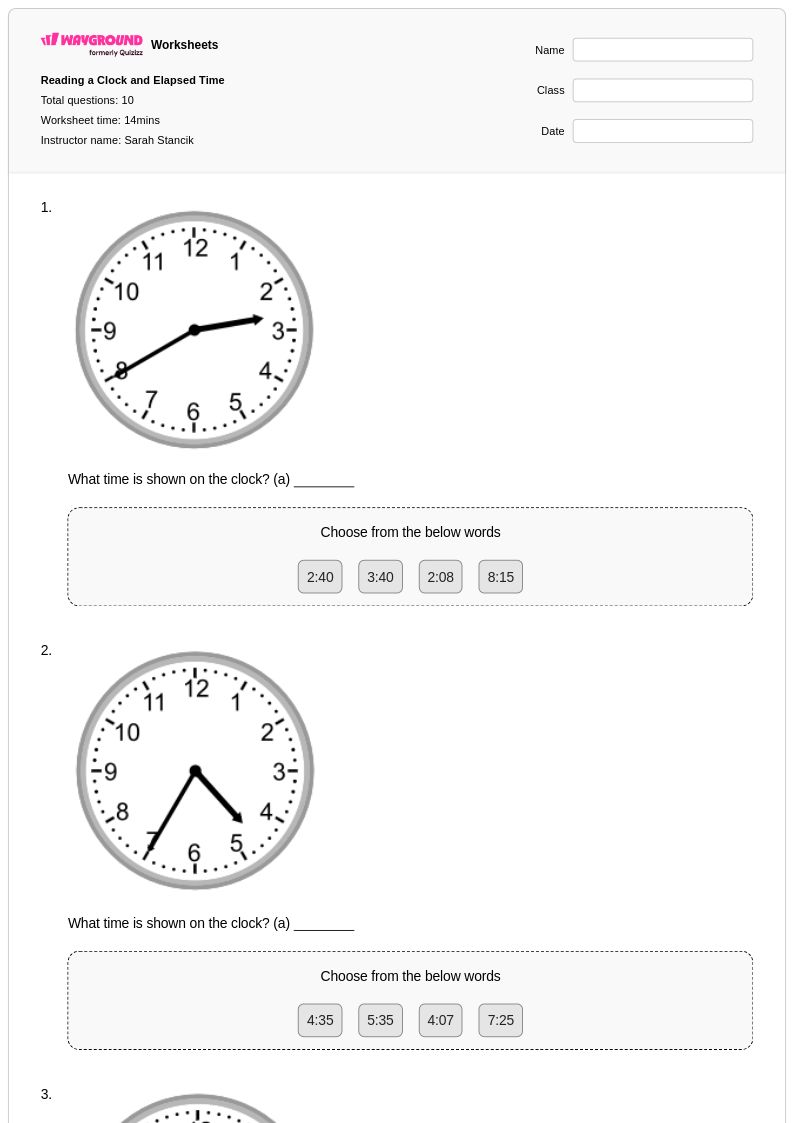
10 Q
3rd
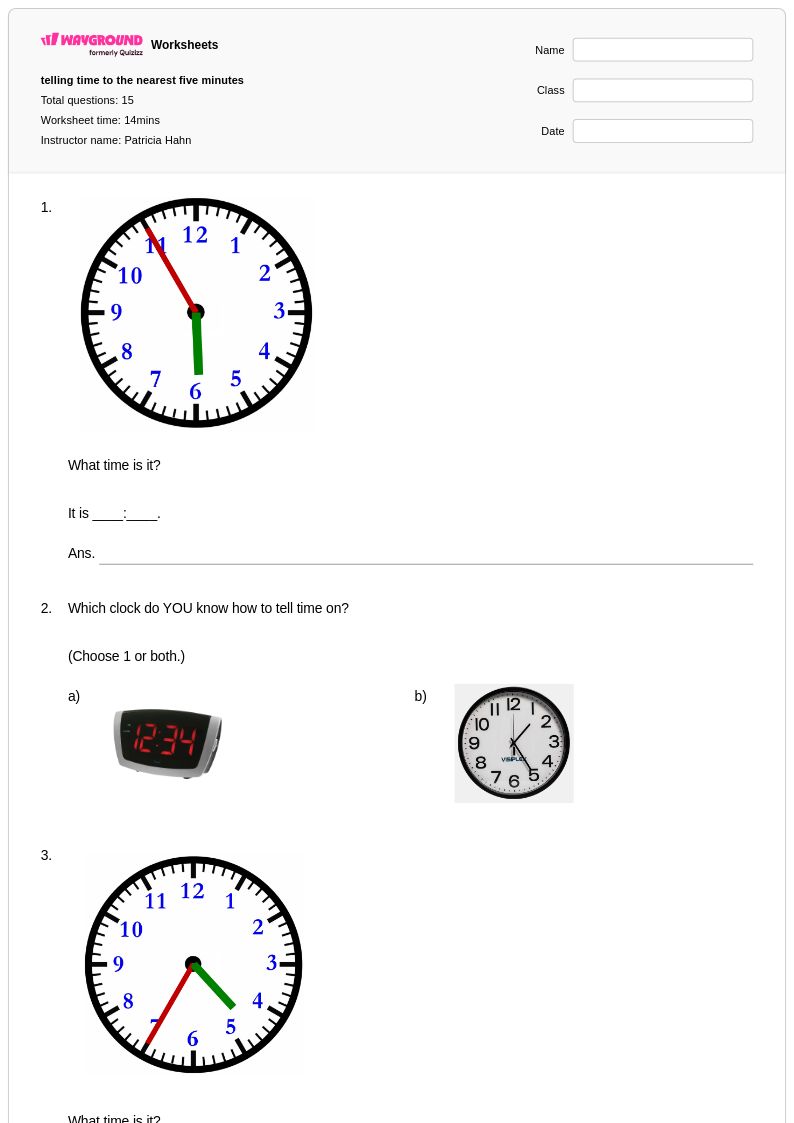
15 Q
9th
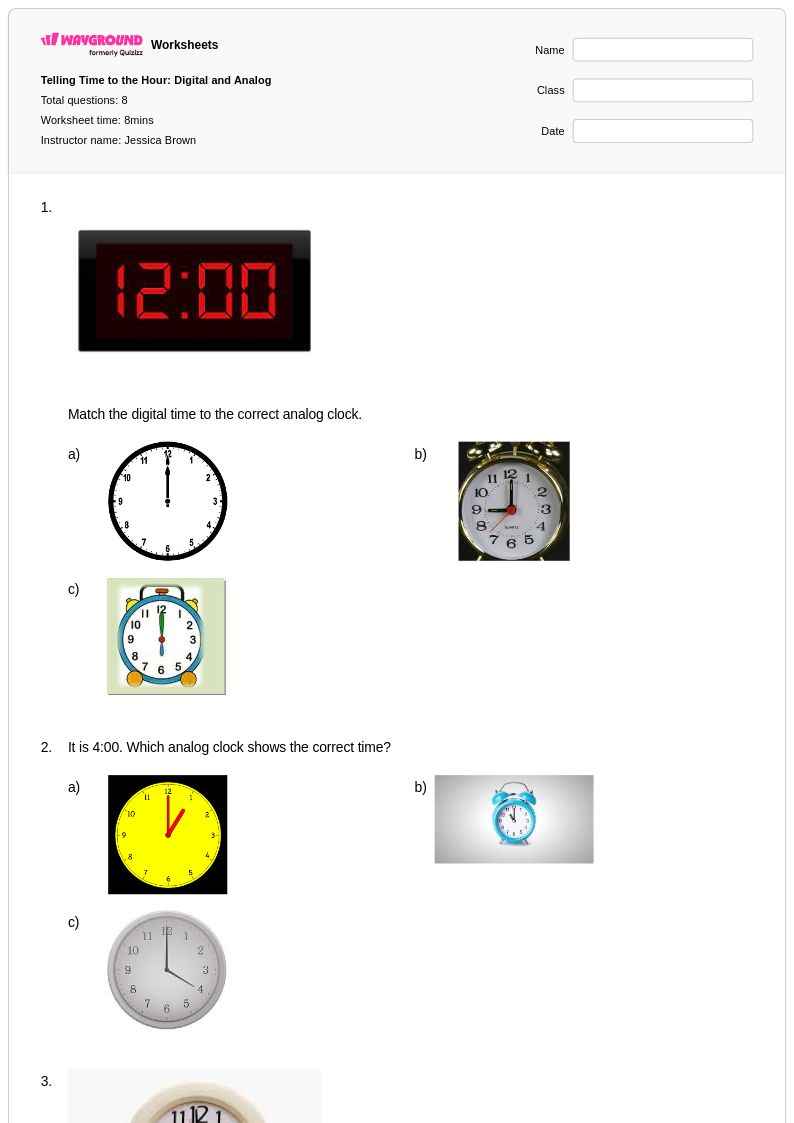
8 Q
1st
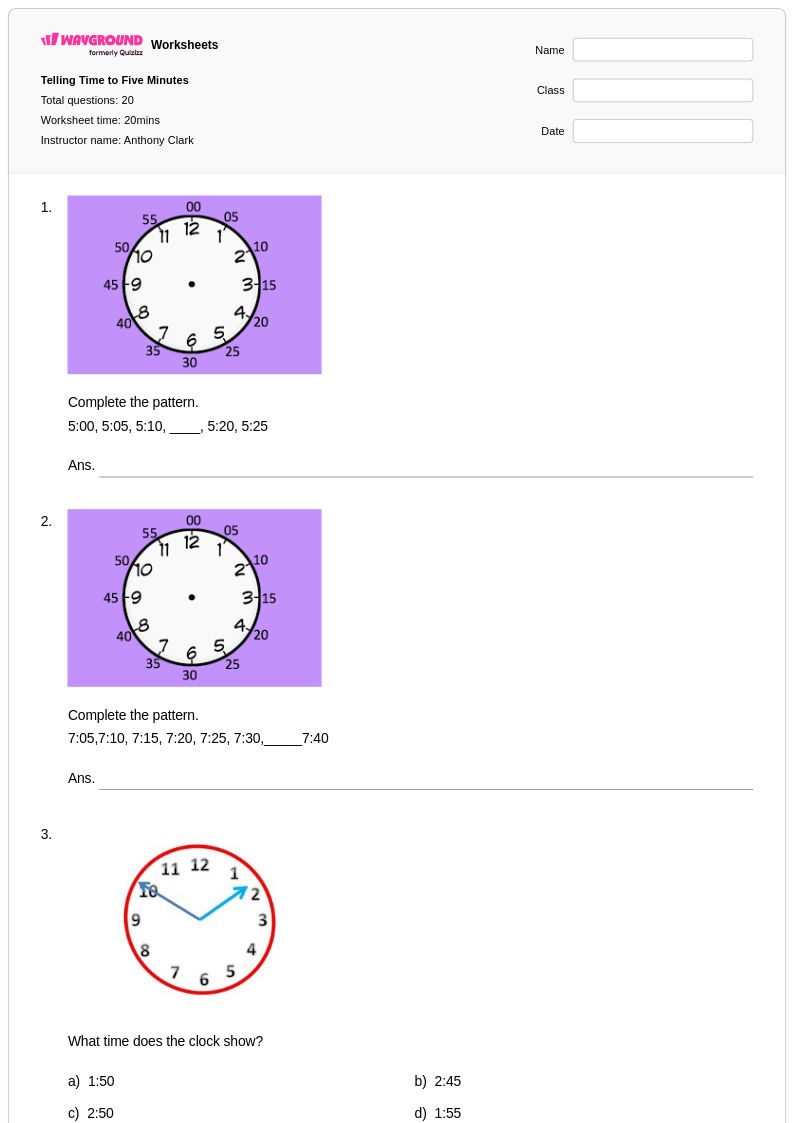
20 Q
2nd - Uni
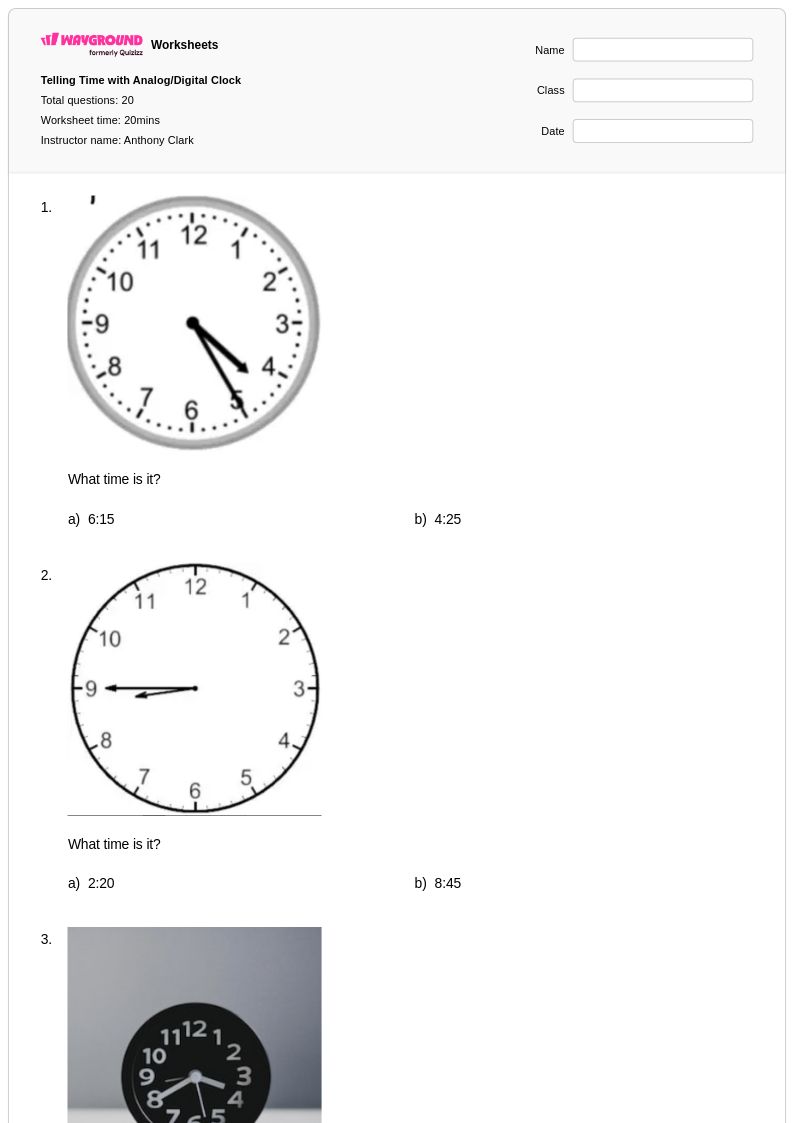
20 Q
2nd - Uni
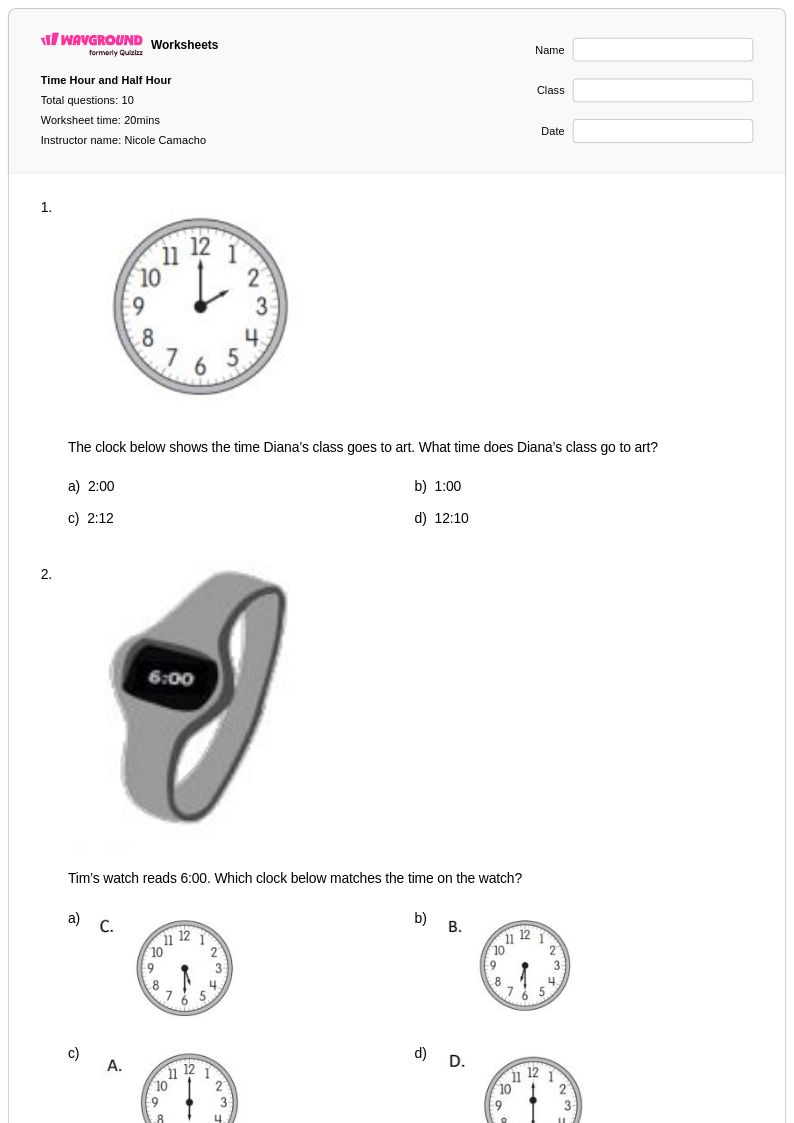
10 Q
1st
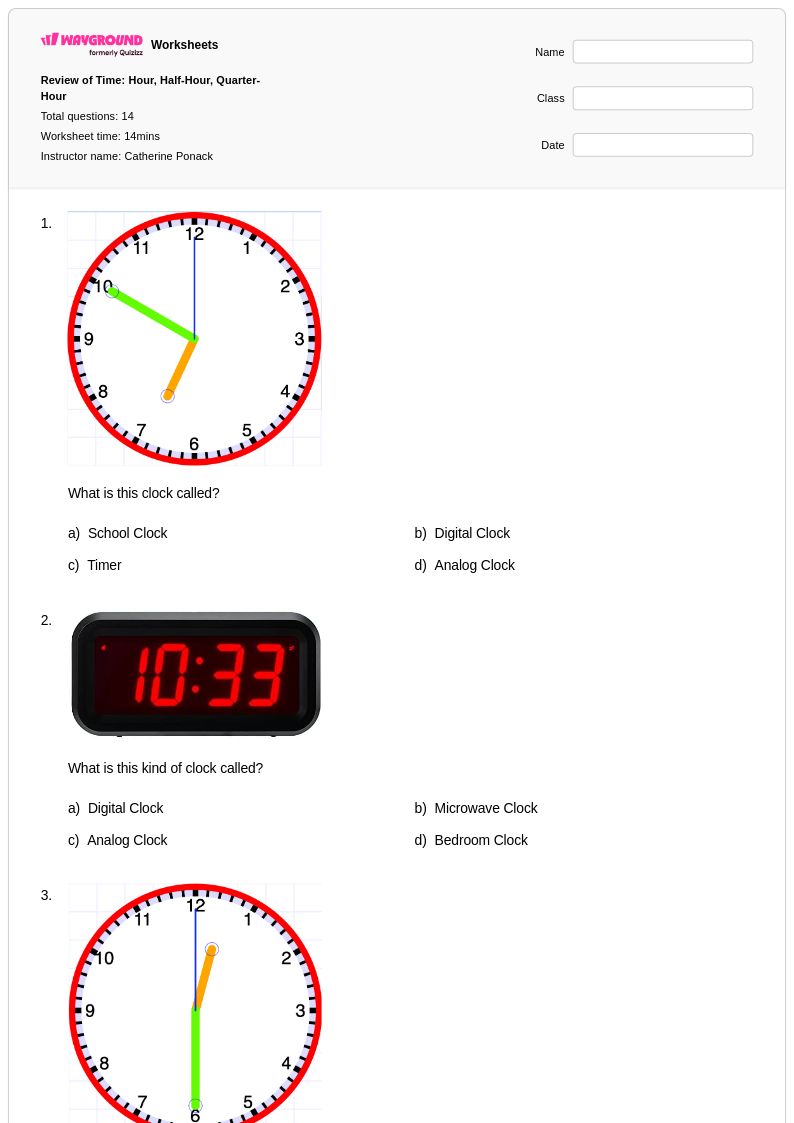
14 Q
1st - 2nd
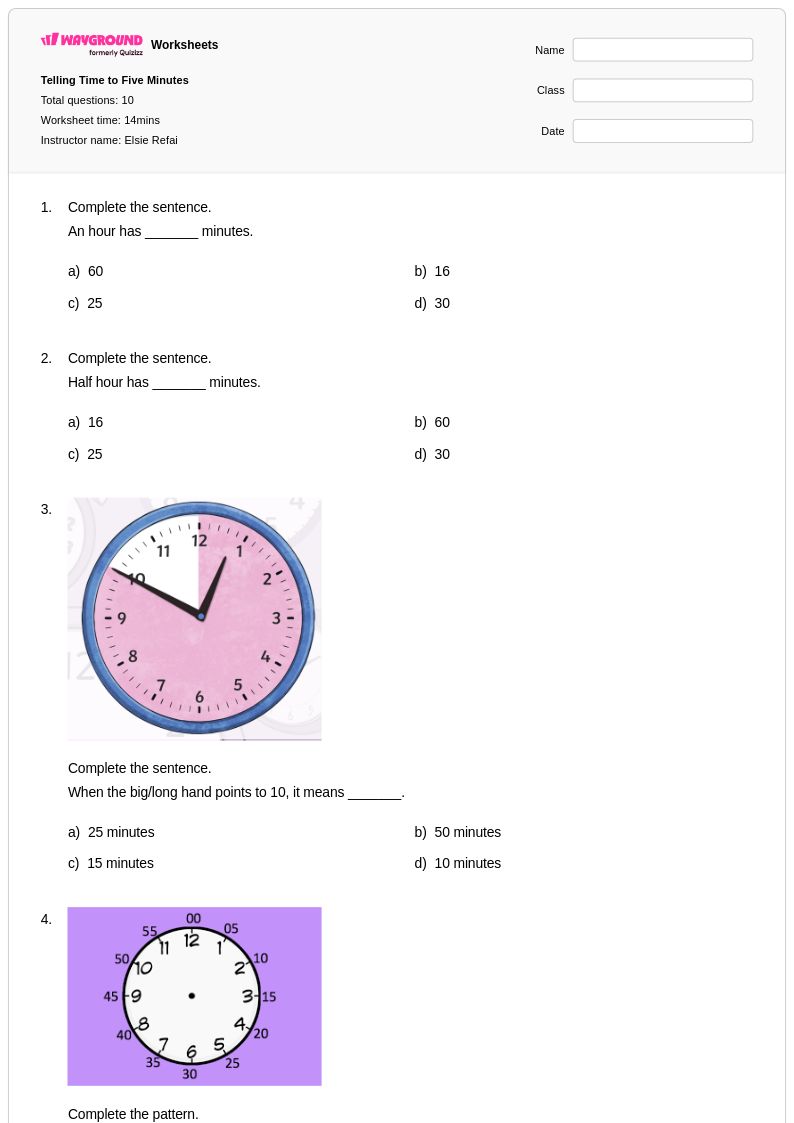
10 Q
2nd
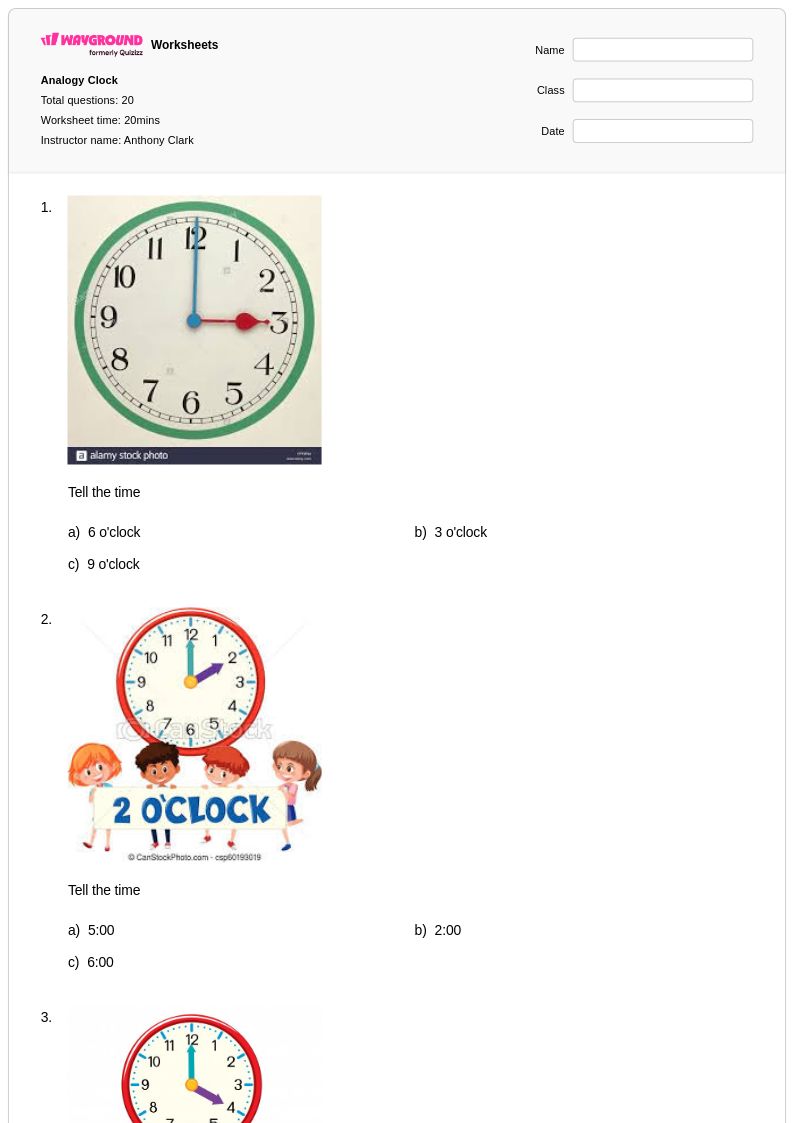
20 Q
2nd - Uni
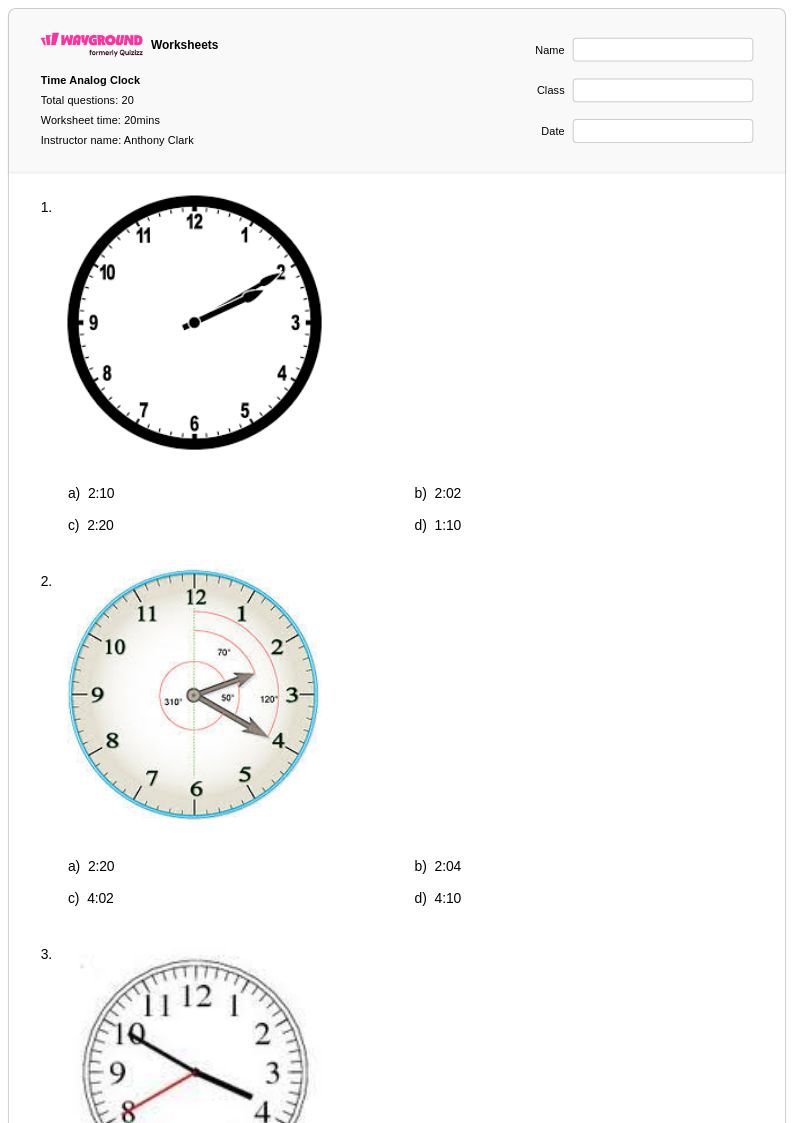
20 Q
2nd - Uni
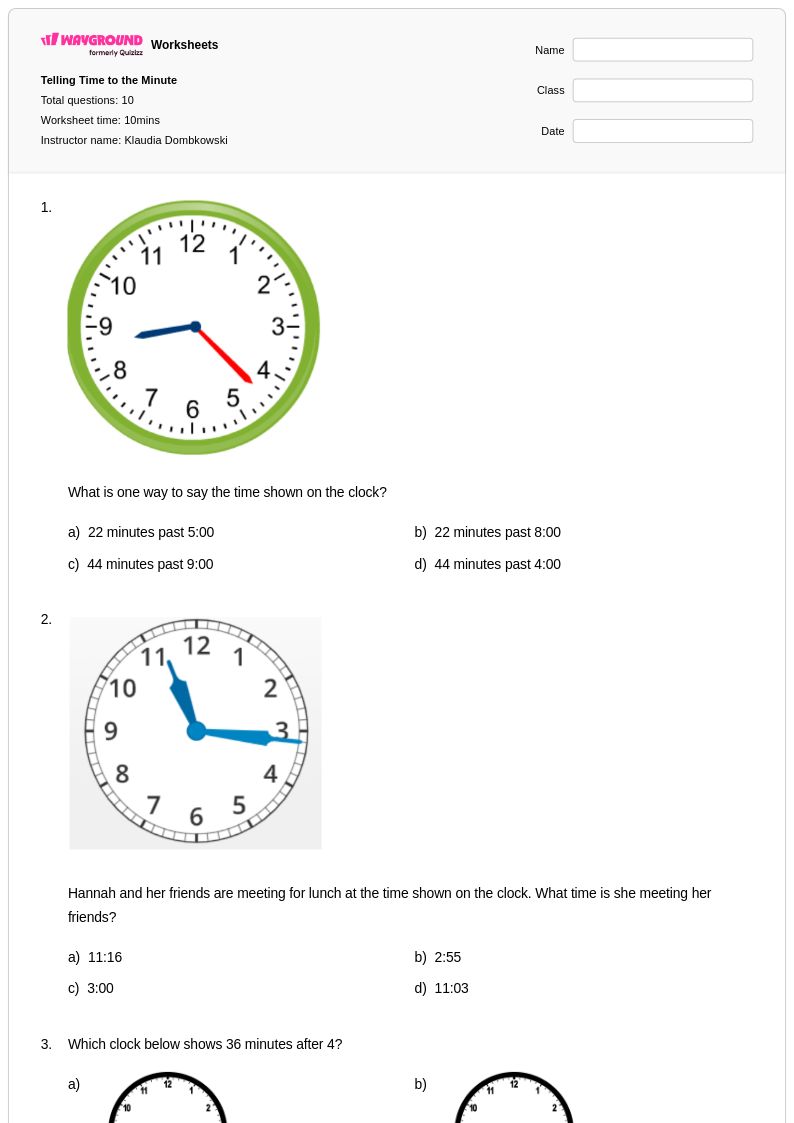
10 Q
3rd
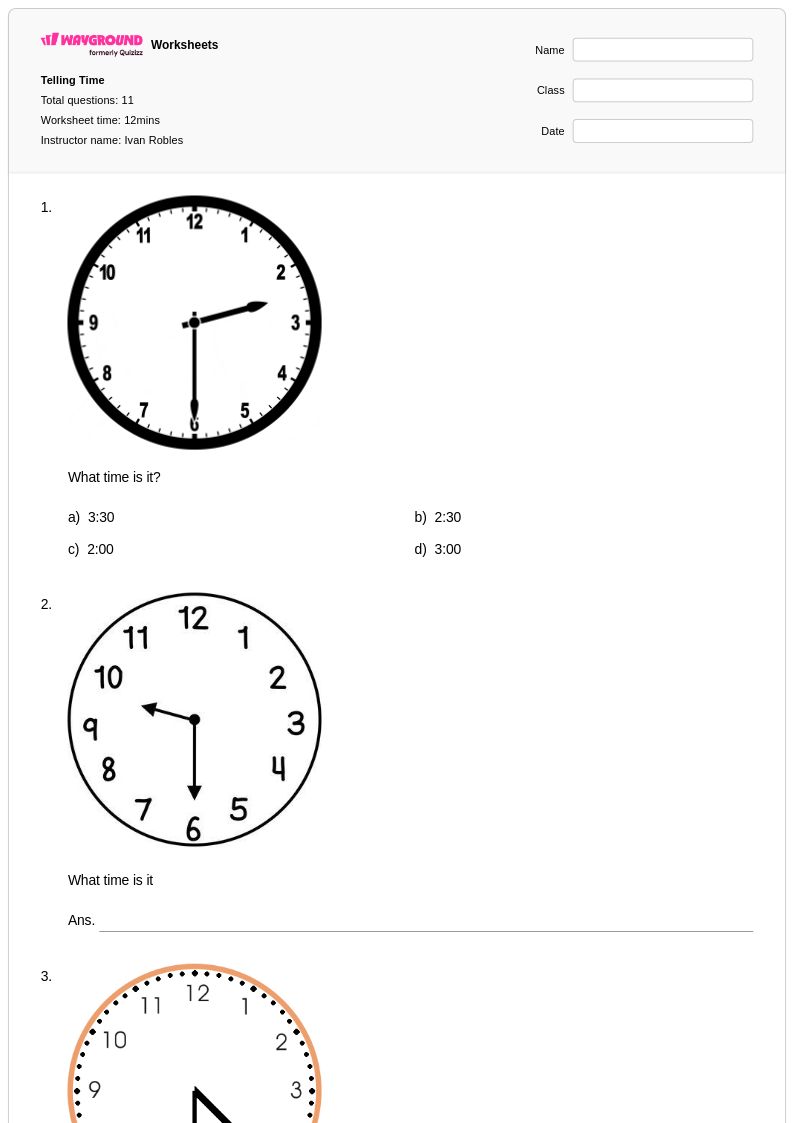
11 Q
1st
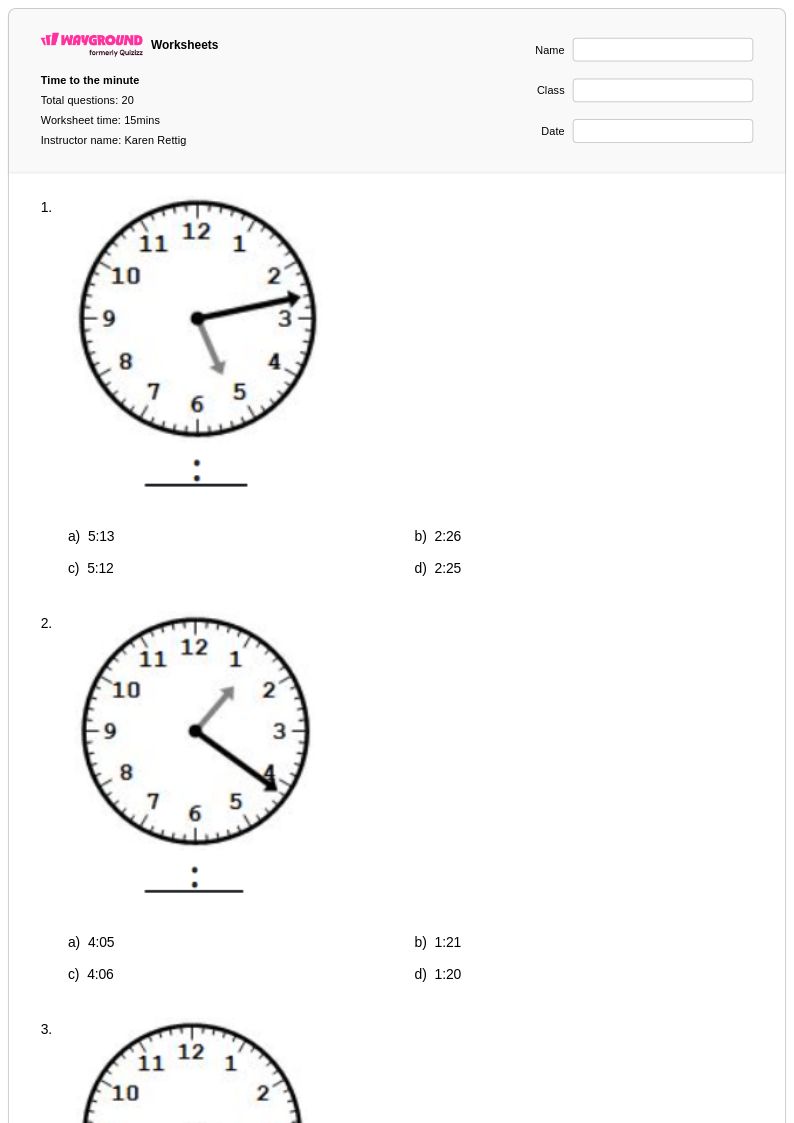
20 Q
2nd - 4th
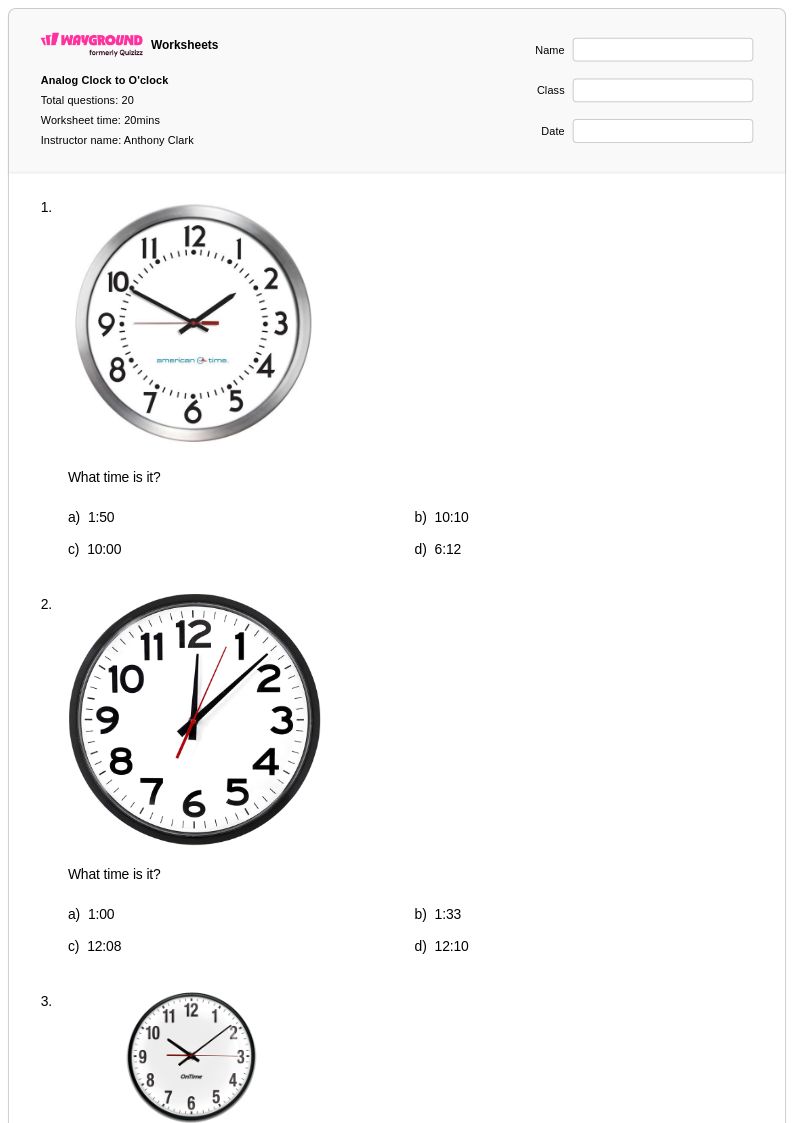
20 Q
2nd - Uni
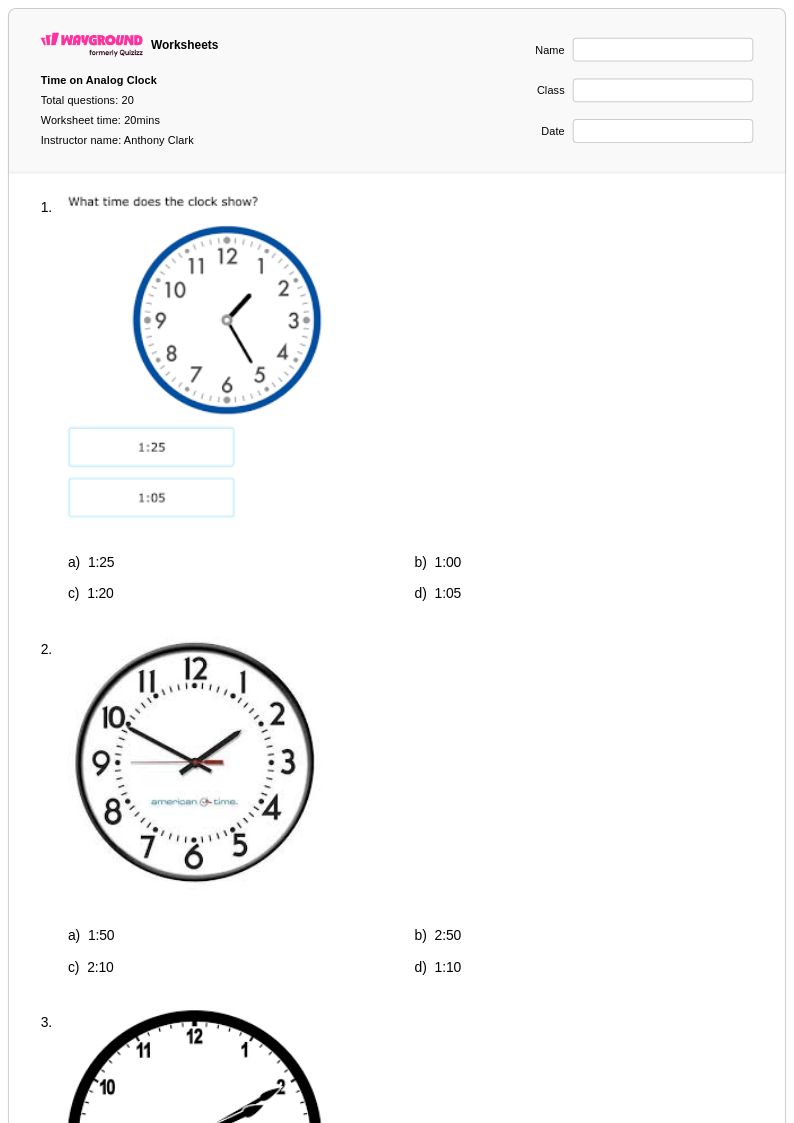
20 Q
2nd - Uni
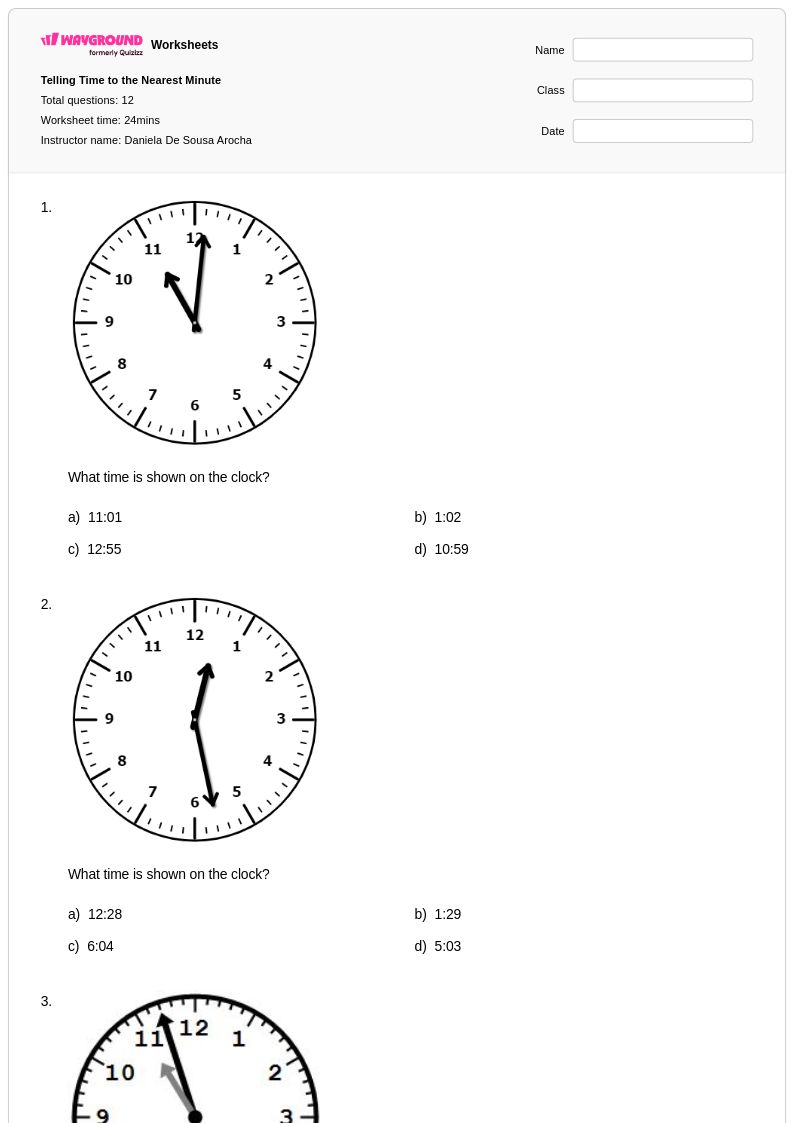
12 Q
3rd
Explore Reading an Analog Clock Worksheets by Grades
Explore Other Subject Worksheets for kindergarten
Explore printable Reading an Analog Clock worksheets for Kindergarten
Reading an analog clock worksheets for kindergarten students through Wayground (formerly Quizizz) provide foundational instruction in time-telling skills that are essential for early mathematical development. These carefully designed practice problems introduce young learners to the basic components of analog clocks, including the hour hand, minute hand, and numbered positions around the clock face. The worksheets systematically guide students through recognizing hour positions, understanding the relationship between clock hands and time periods, and developing visual discrimination skills needed to interpret analog time displays. Each printable resource includes comprehensive answer keys and is available as free downloadable pdf materials, making them accessible for both classroom instruction and home practice sessions.
Wayground (formerly Quizizz) empowers teachers with millions of educator-created worksheet collections specifically focused on analog clock reading instruction for kindergarten learners. The platform's advanced search and filtering capabilities enable educators to quickly locate resources that align with specific learning standards and accommodate diverse student needs through built-in differentiation tools. Teachers can customize existing worksheets or create entirely new materials using flexible editing features, ensuring that content matches their instructional objectives and student ability levels. Available in both printable and digital pdf formats, these resources seamlessly support lesson planning, targeted remediation for struggling students, enrichment activities for advanced learners, and consistent skill practice opportunities that reinforce analog clock reading proficiency throughout the school year.
FAQs
What time-telling skills are taught in kindergarten?
What's the best way to introduce analog clocks to kindergarteners?
What activities help kindergarteners practice telling time?
What are early signs of difficulty with telling time?
How can I use this kindergarten worksheet?
How does this align with early math learning standards?