
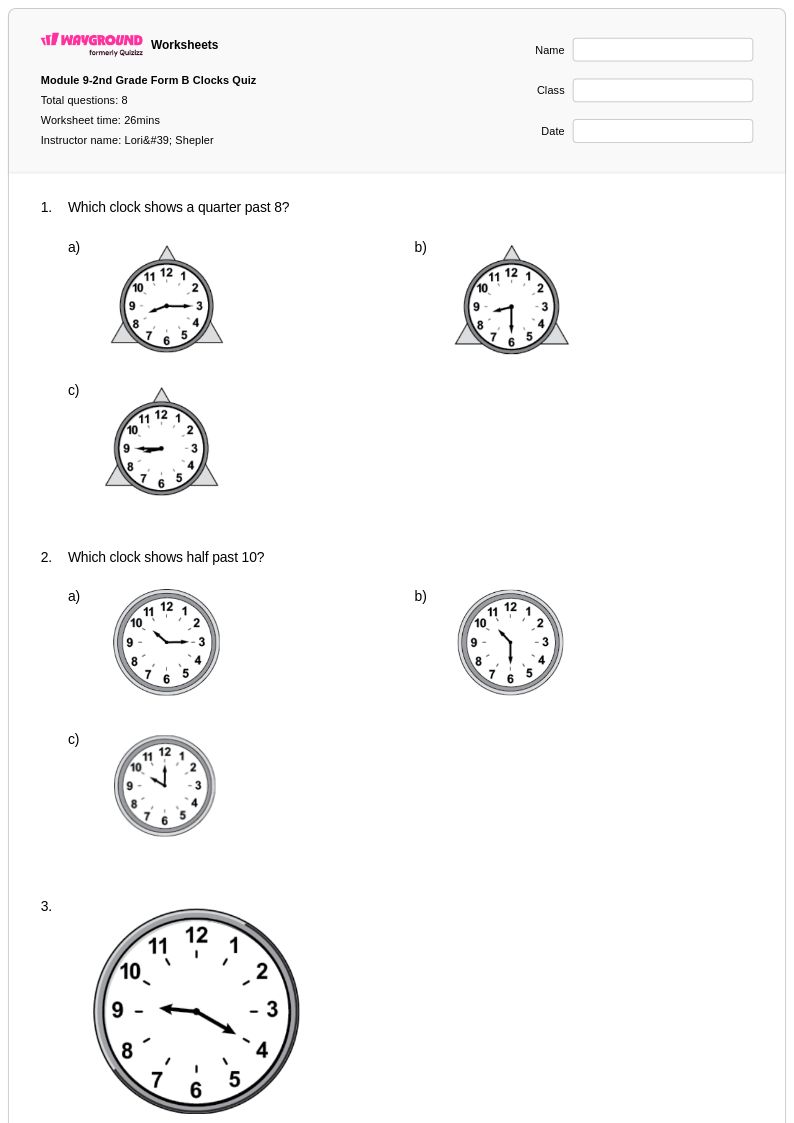
8 Q
2nd
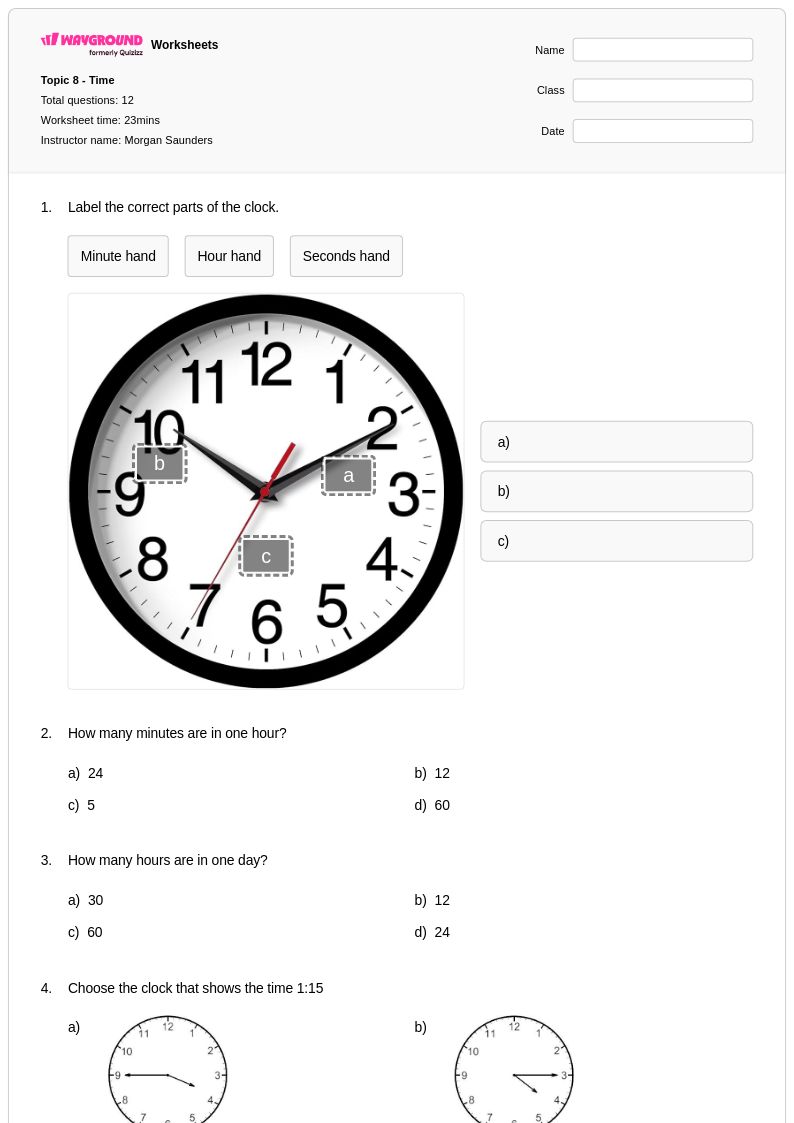
12 Q
2nd
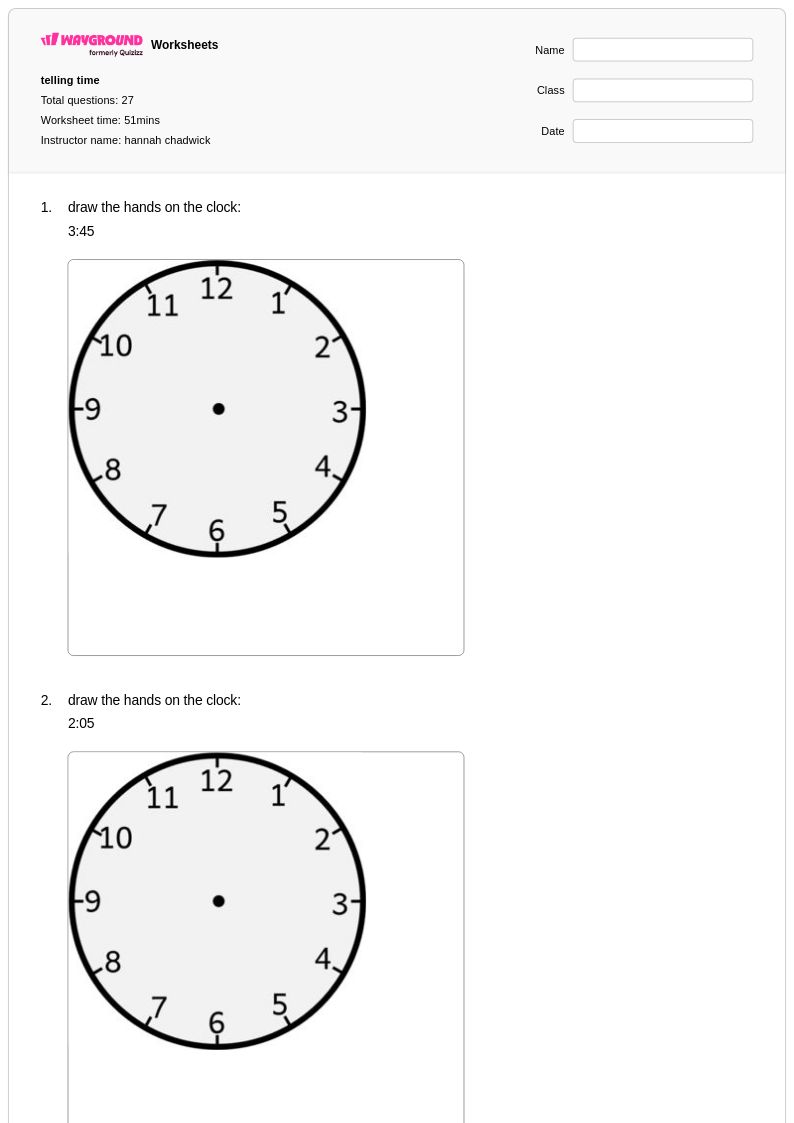
27 Q
2nd
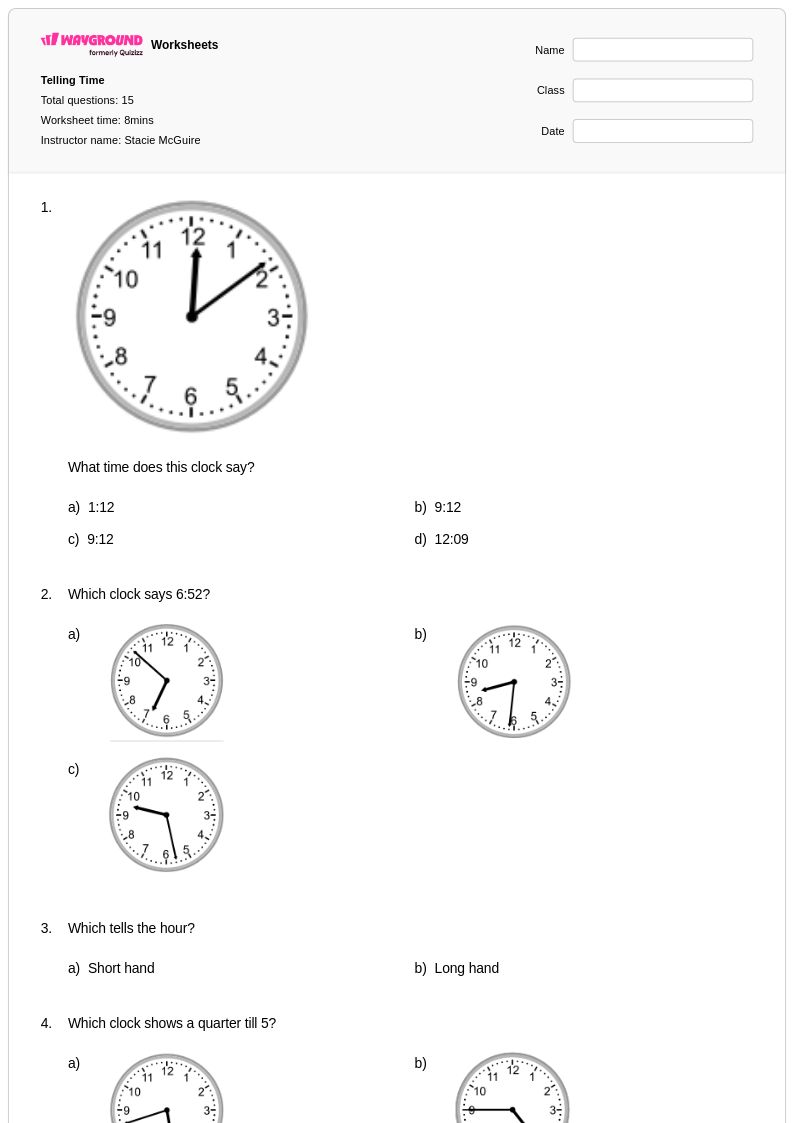
15 Q
3rd
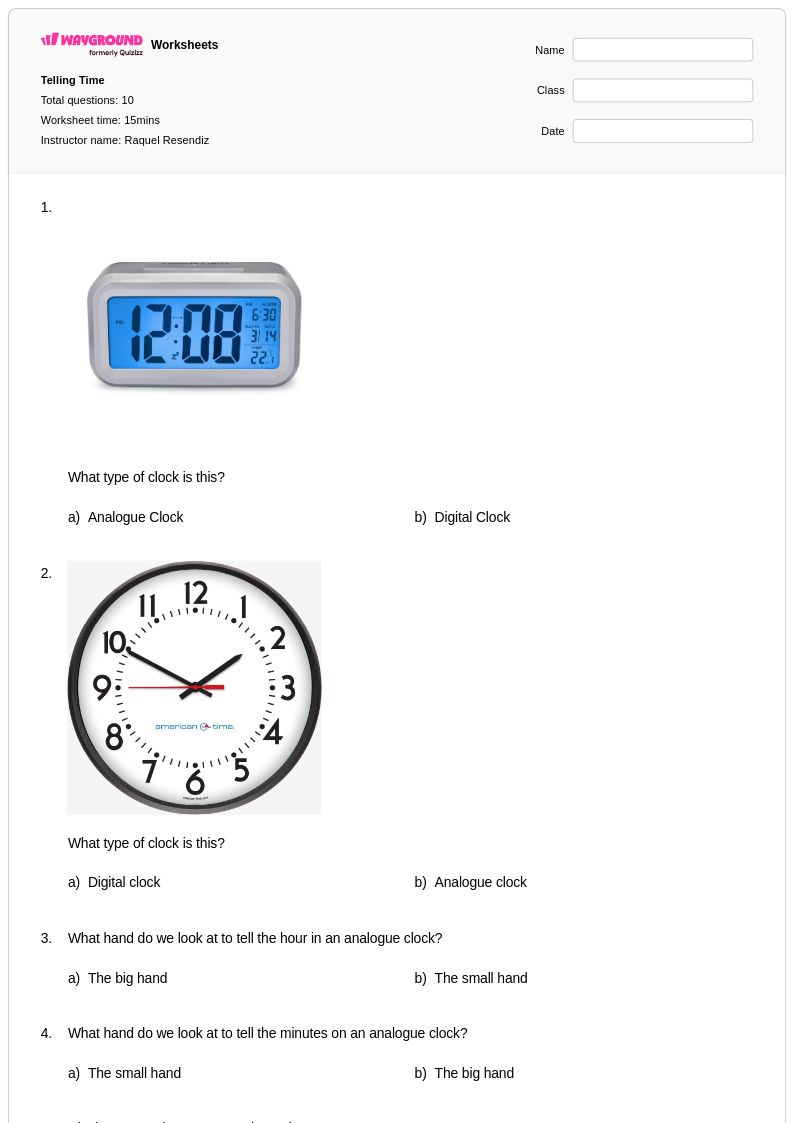
10 Q
2nd - 3rd
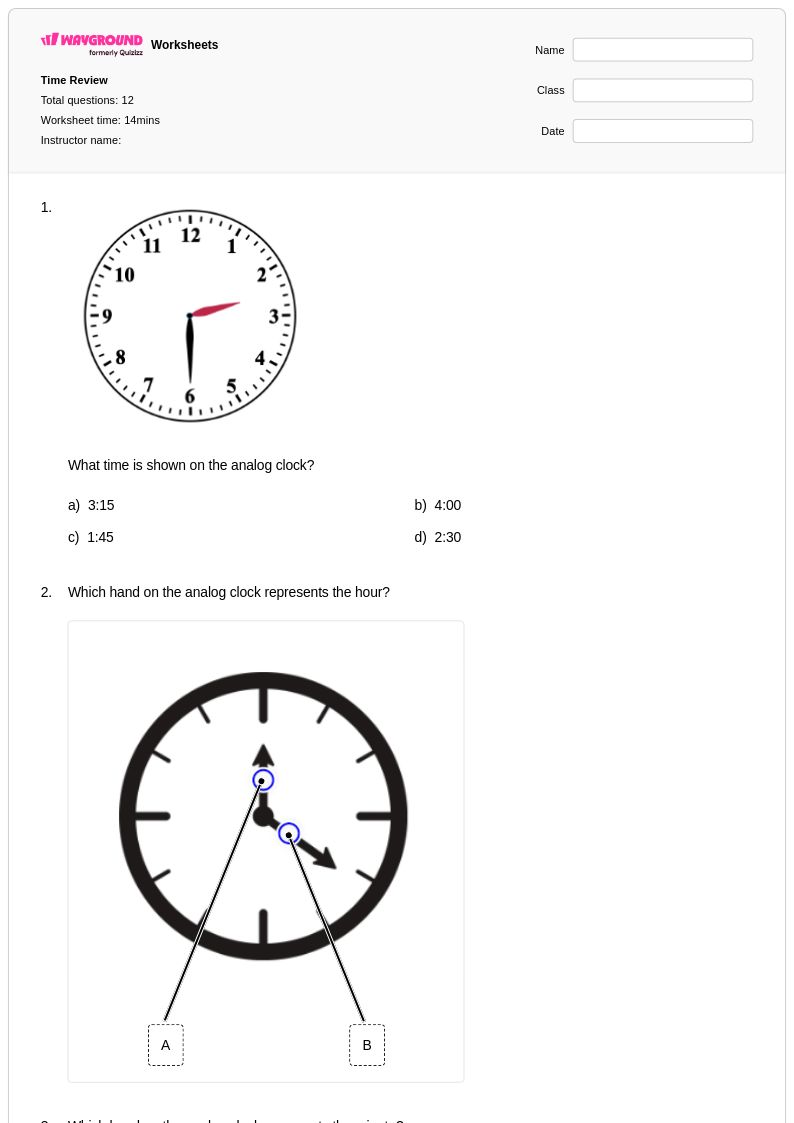
12 Q
2nd
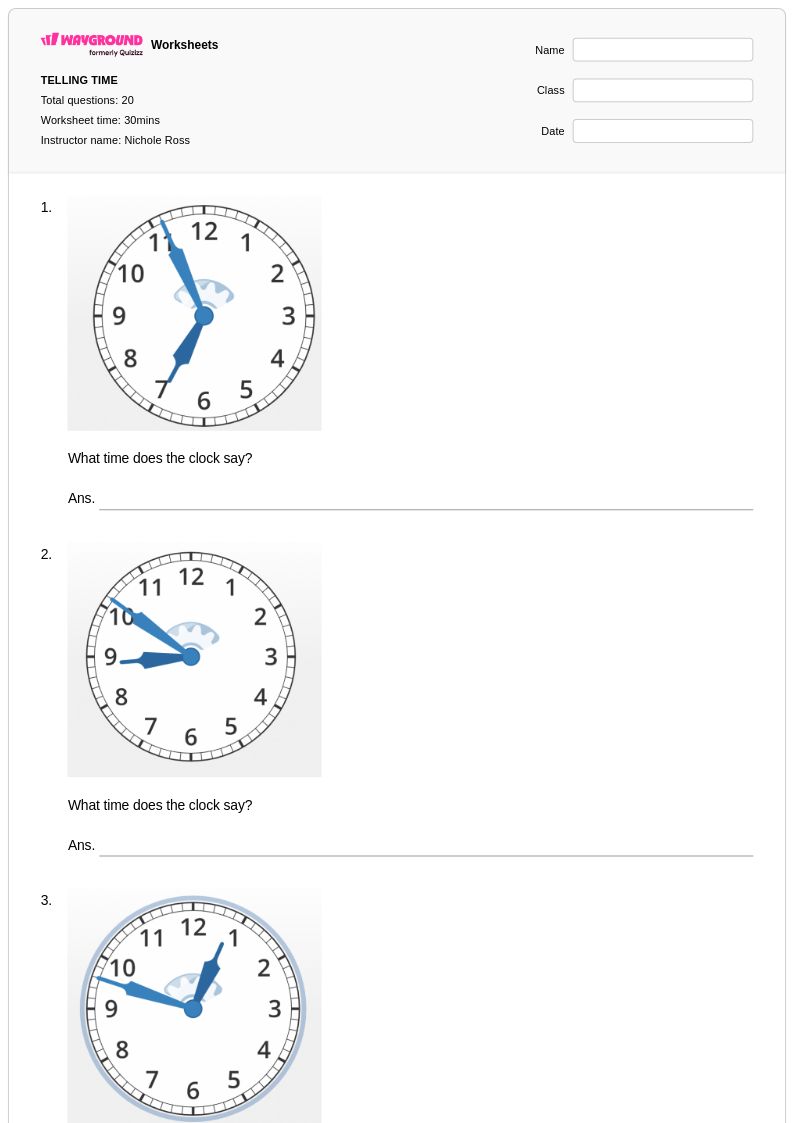
20 Q
3rd
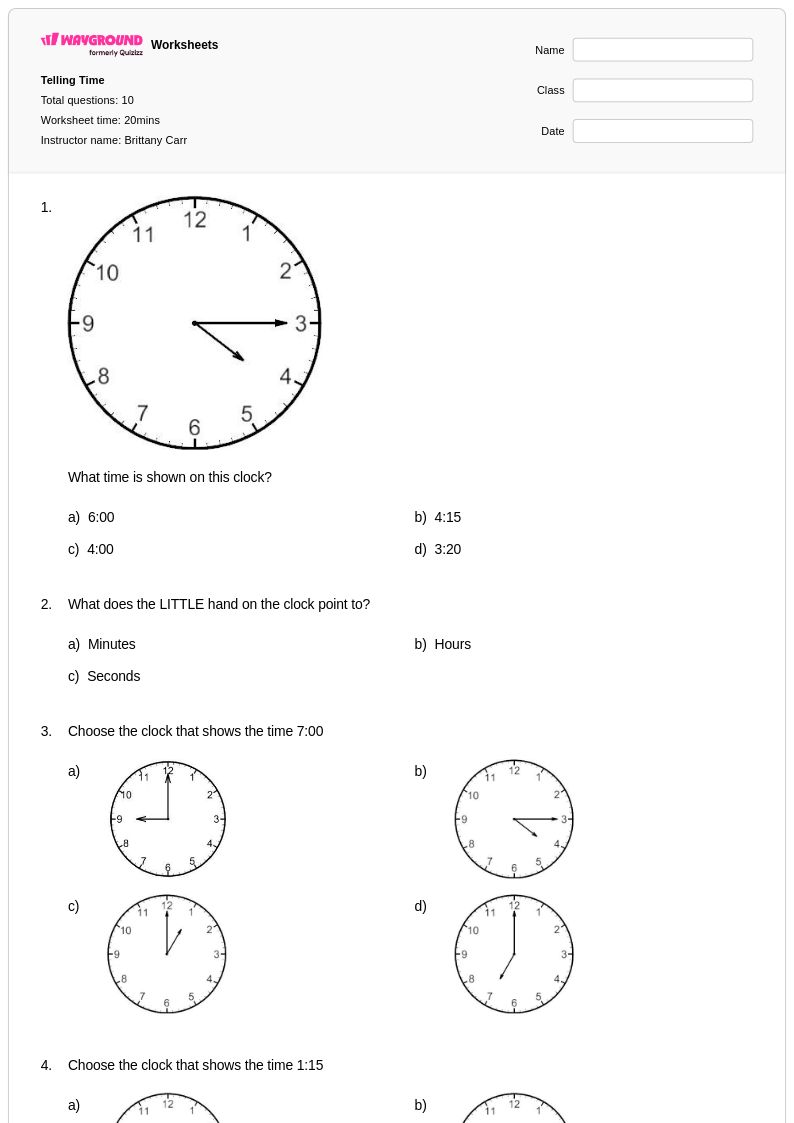
10 Q
2nd - 3rd
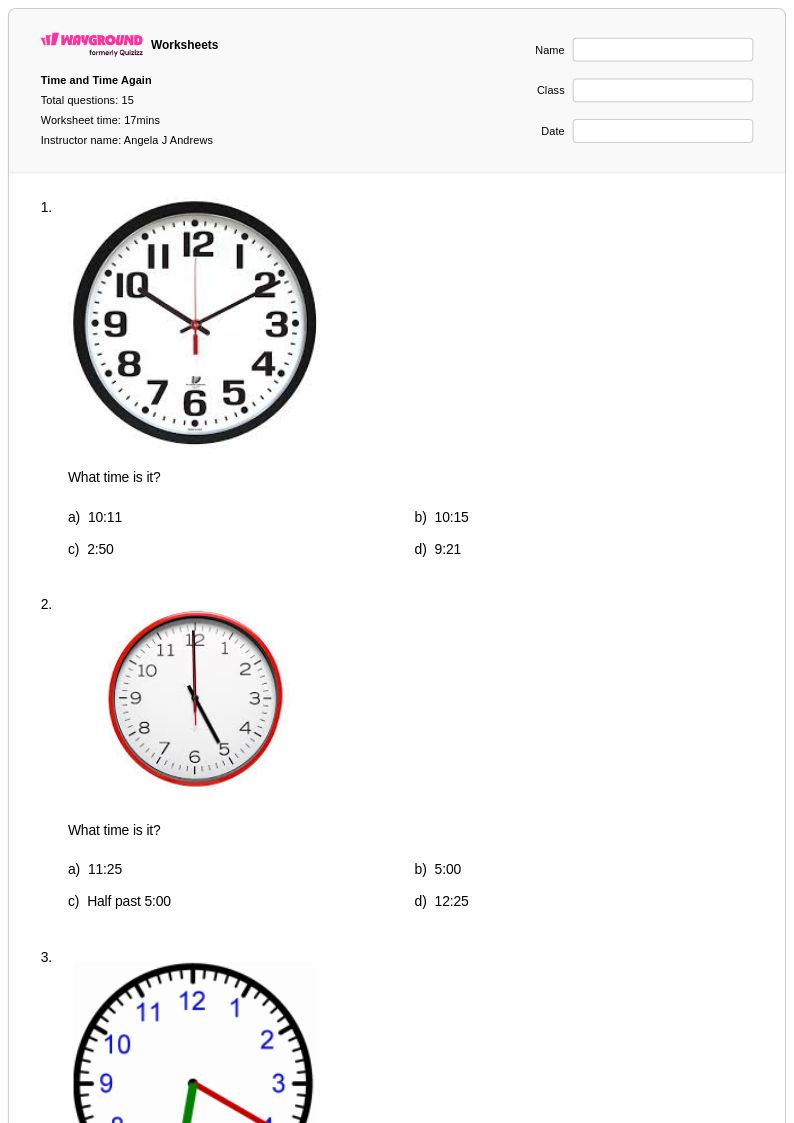
15 Q
2nd
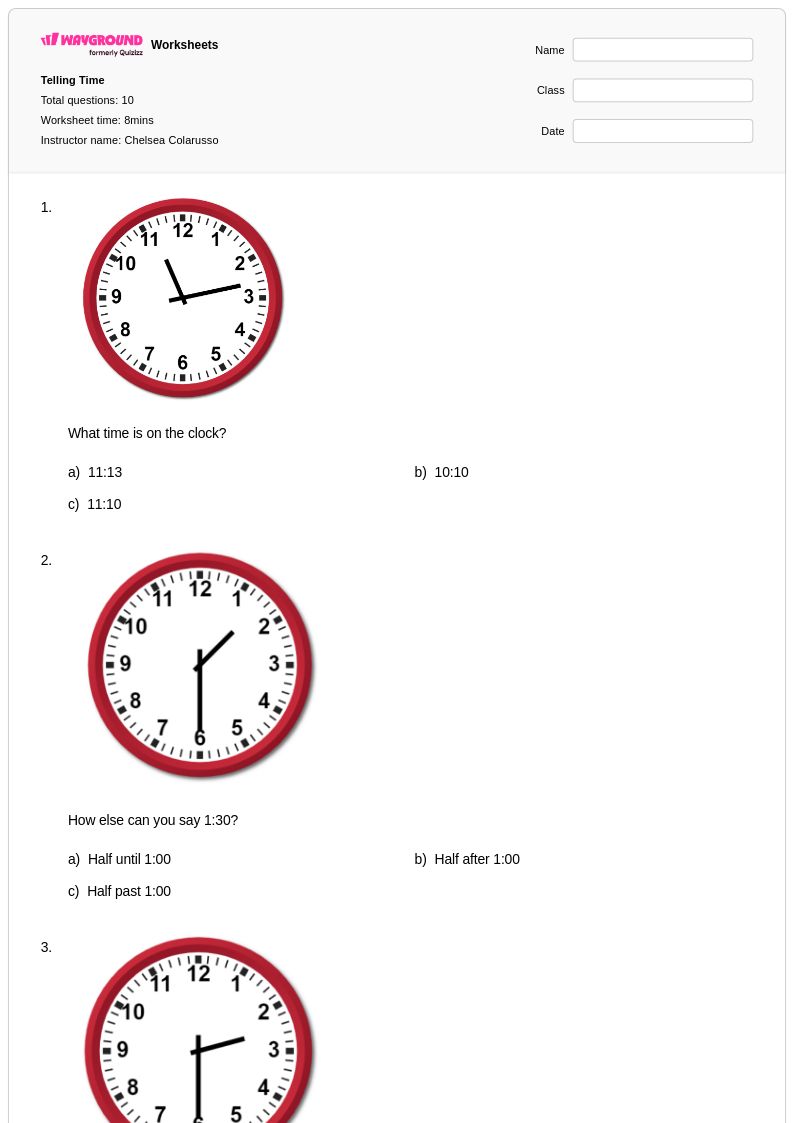
10 Q
KG - 2nd
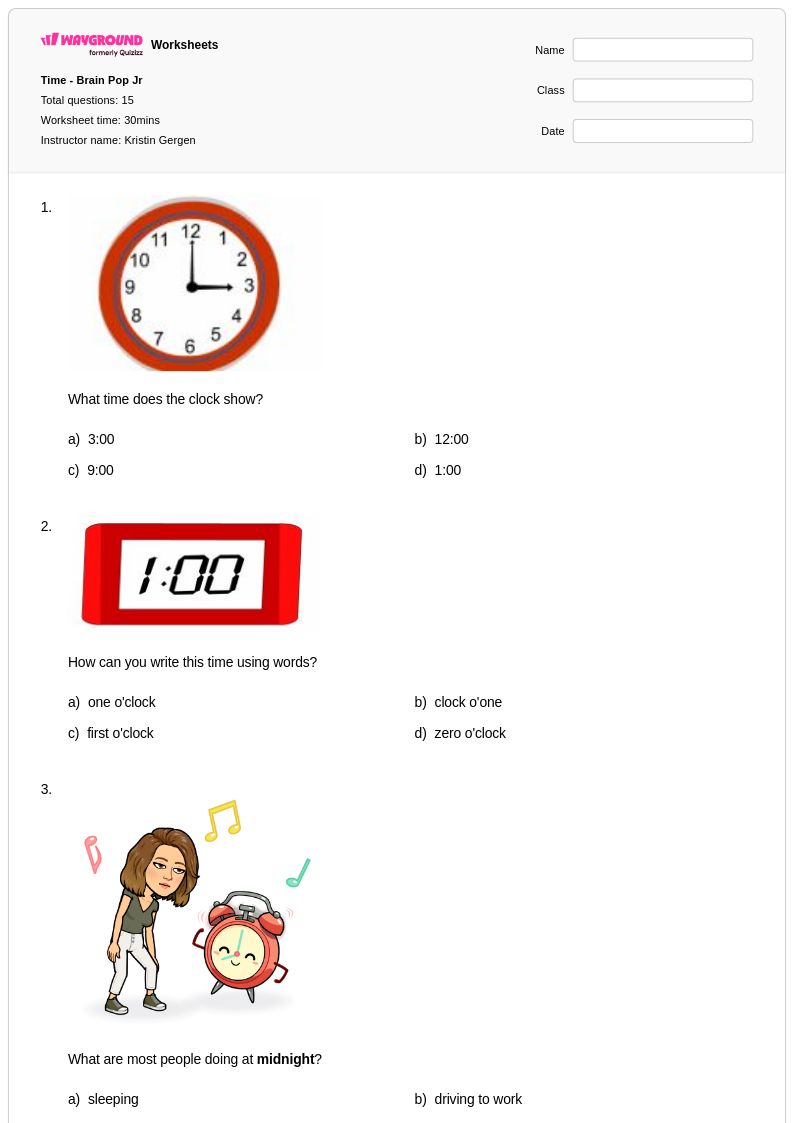
15 Q
2nd - 5th
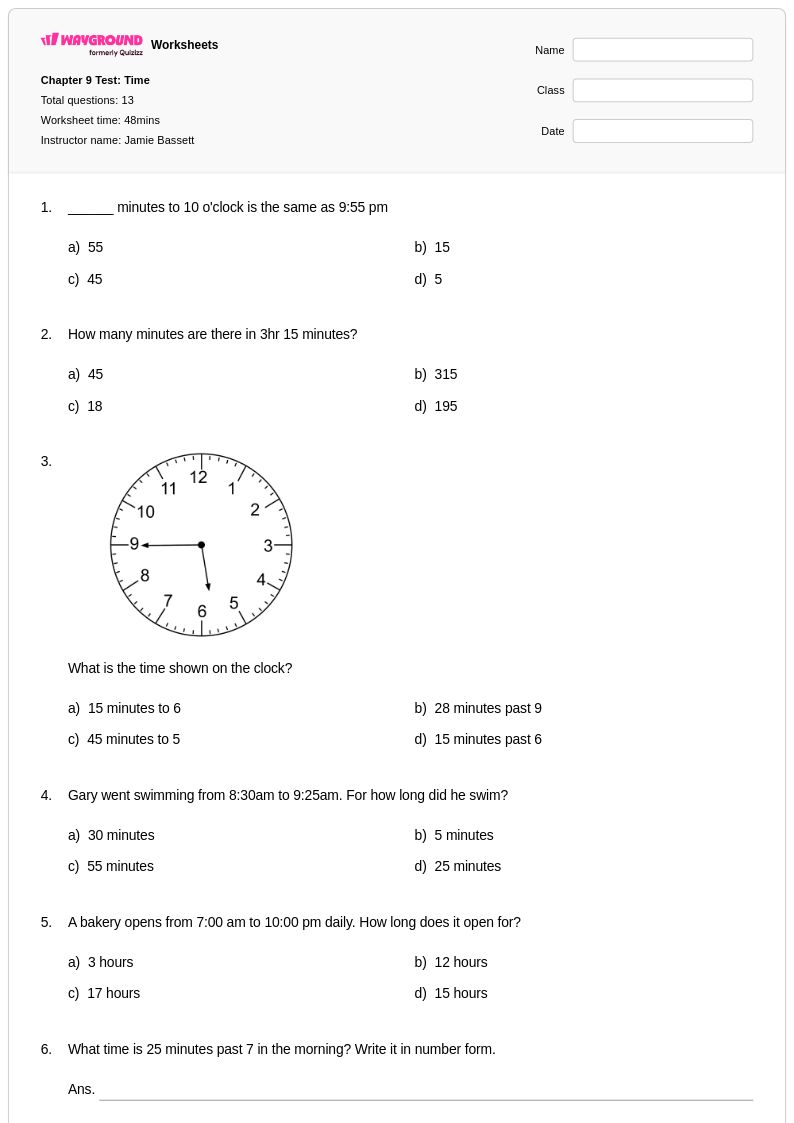
13 Q
3rd
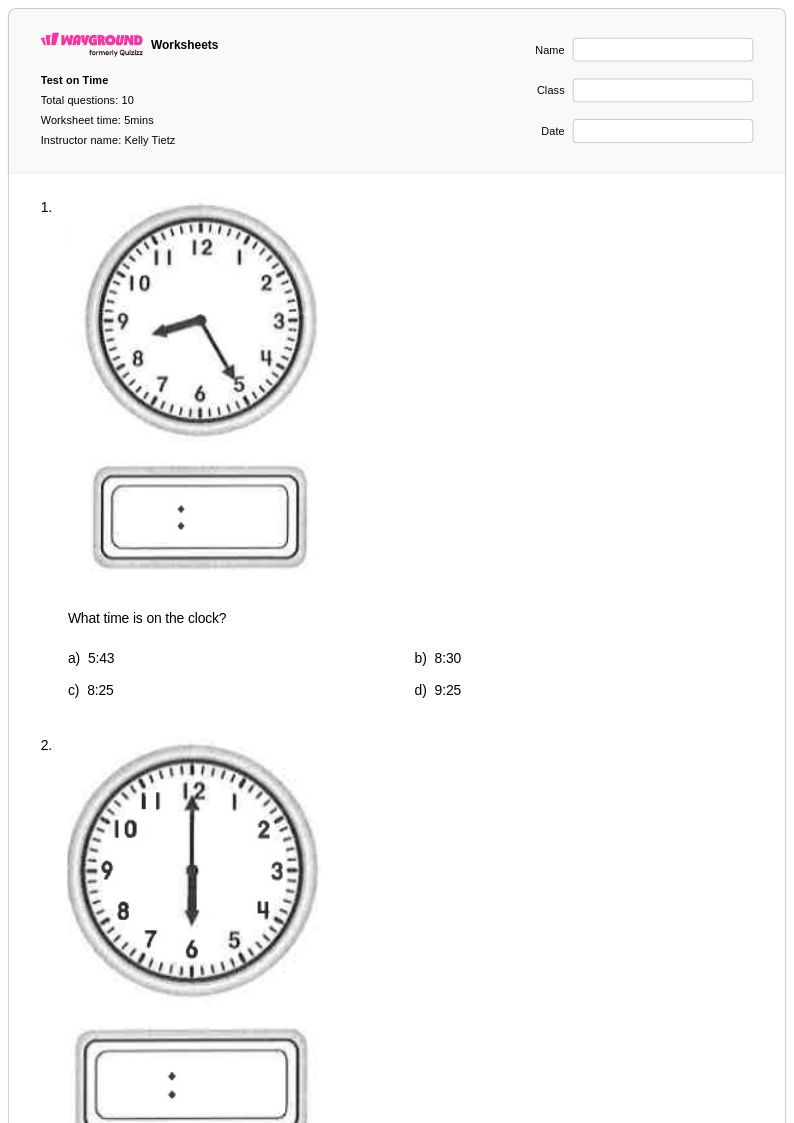
10 Q
2nd
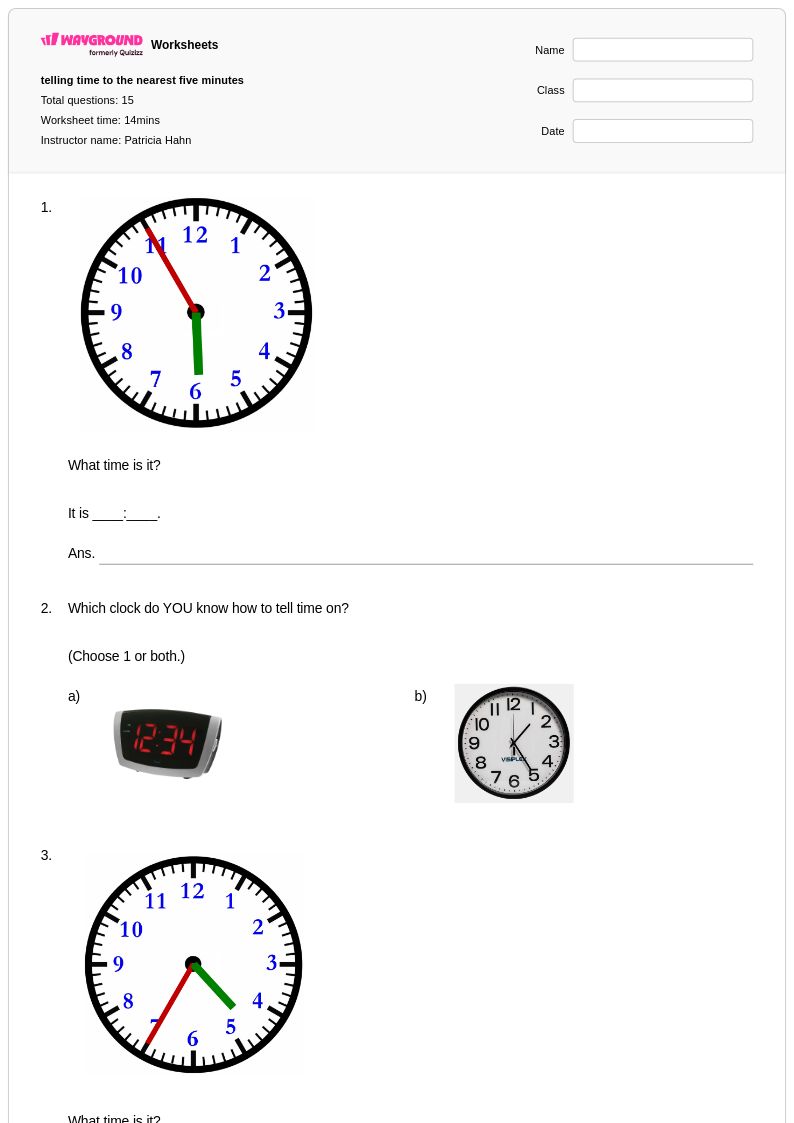
15 Q
9th
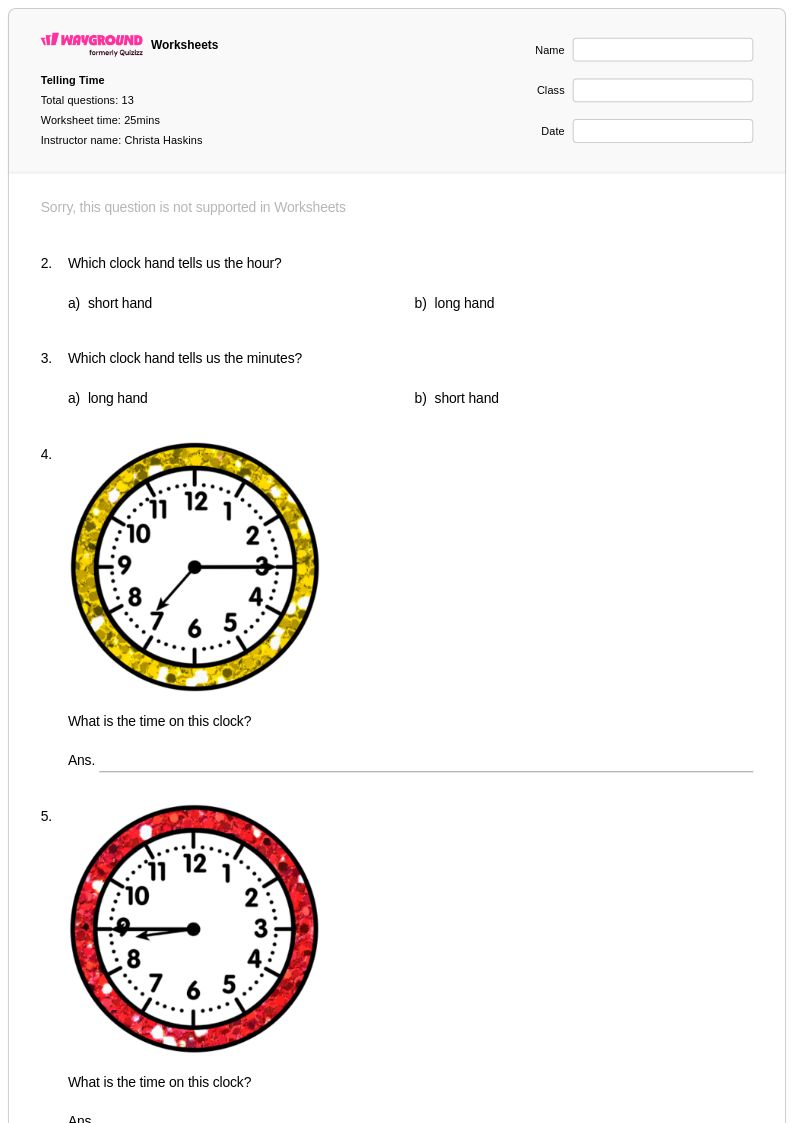
18 Q
3rd
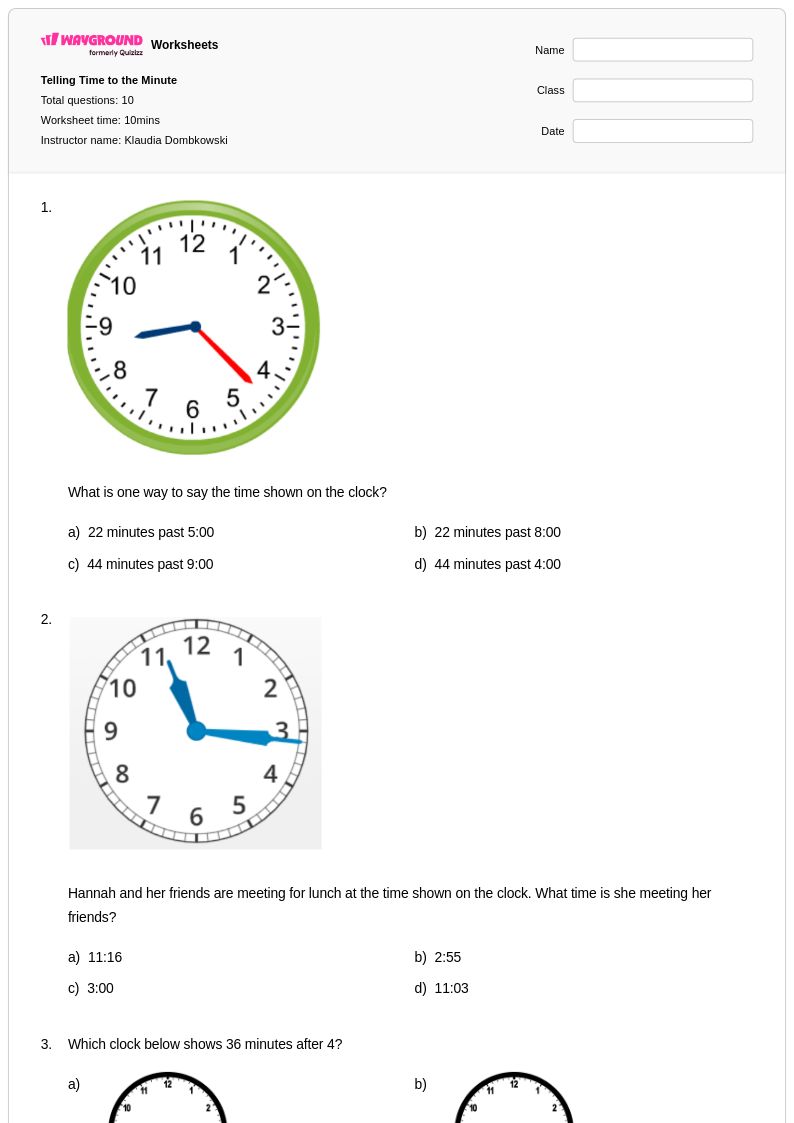
10 Q
3rd
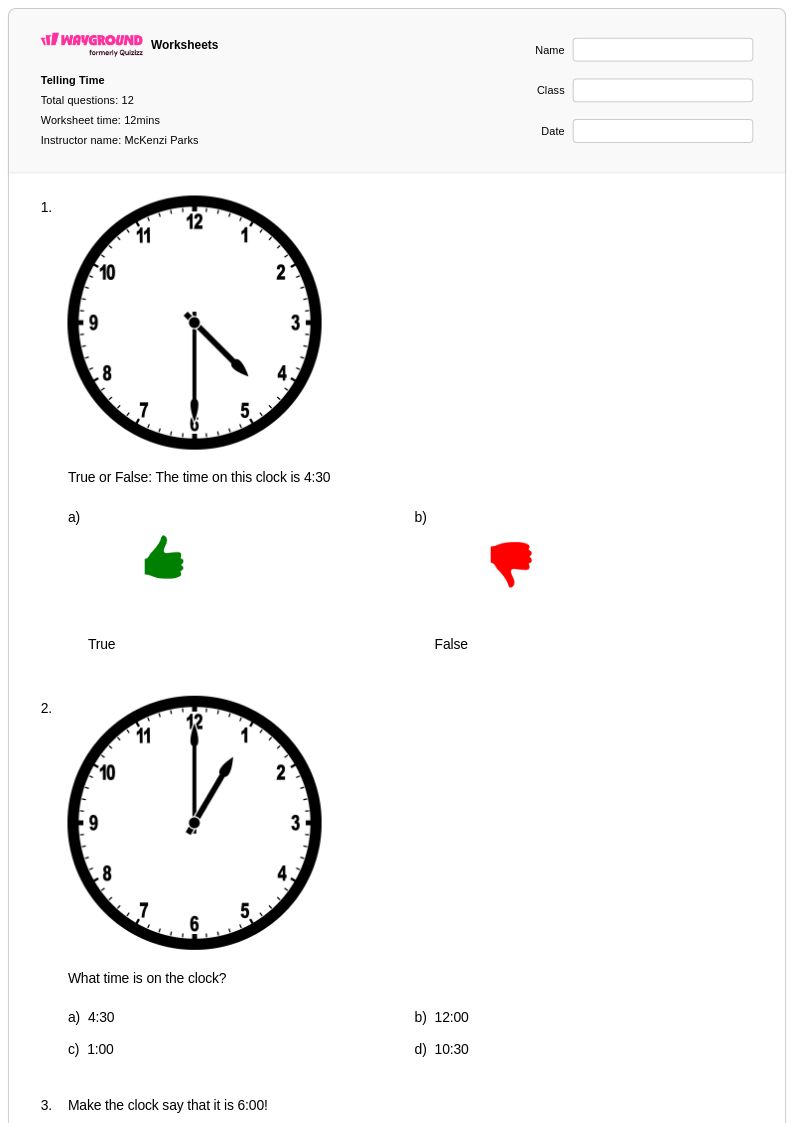
12 Q
5th
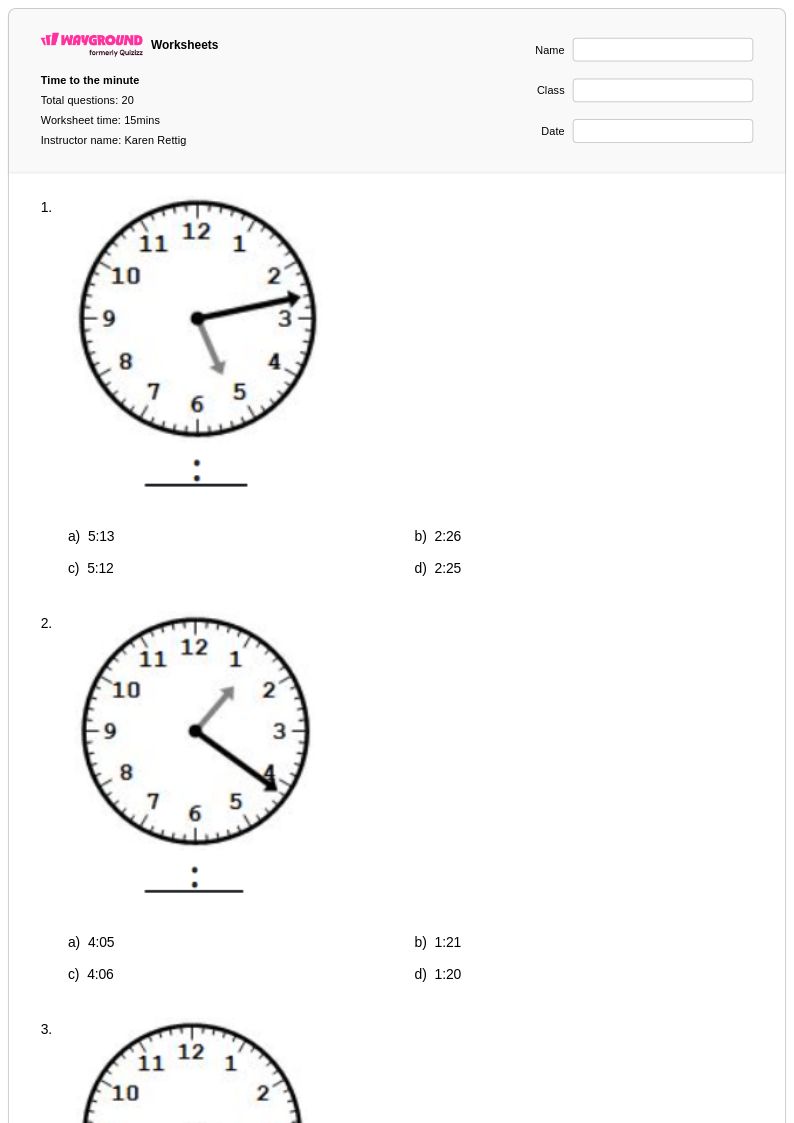
20 Q
2nd - 4th
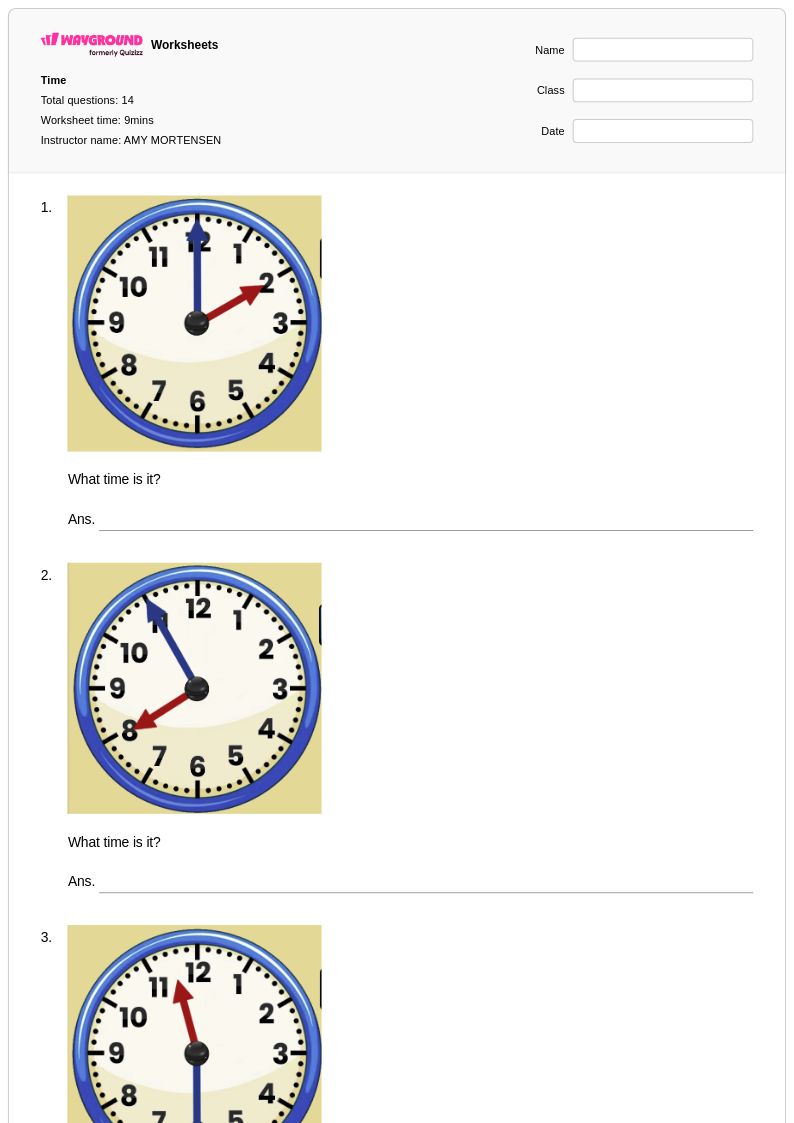
14 Q
2nd

11 Q
3rd
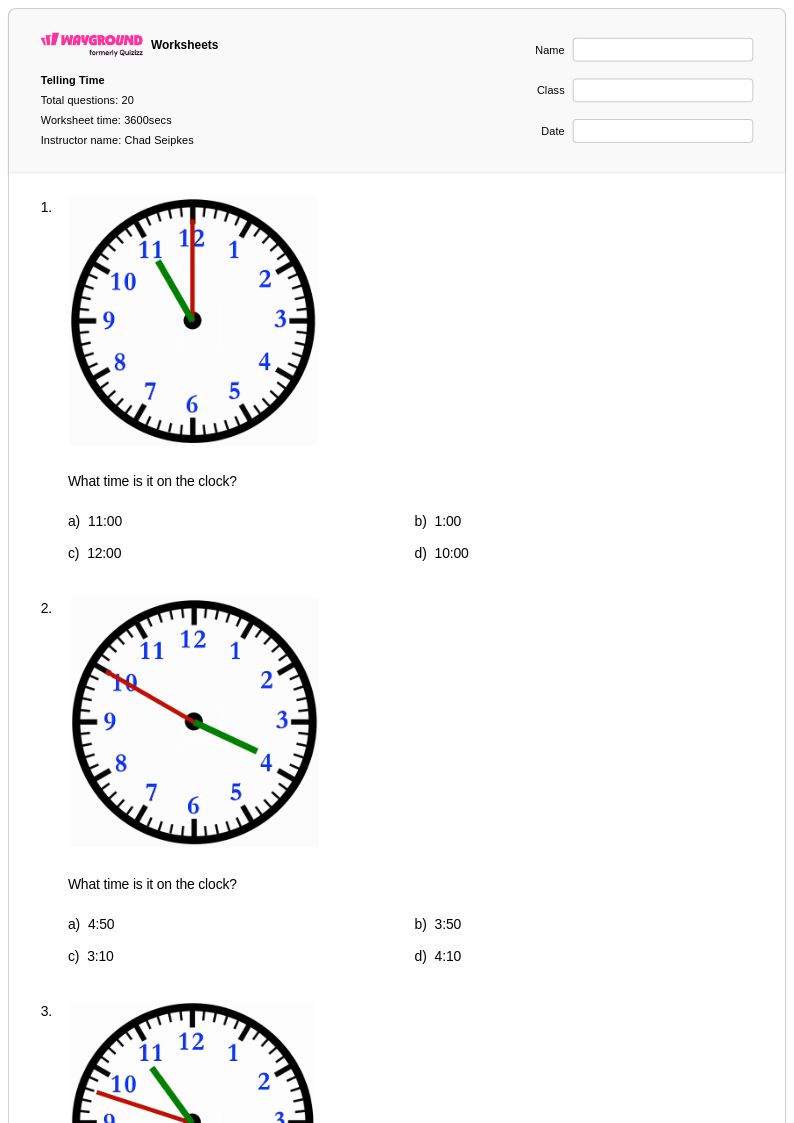
20 Q
3rd - 4th
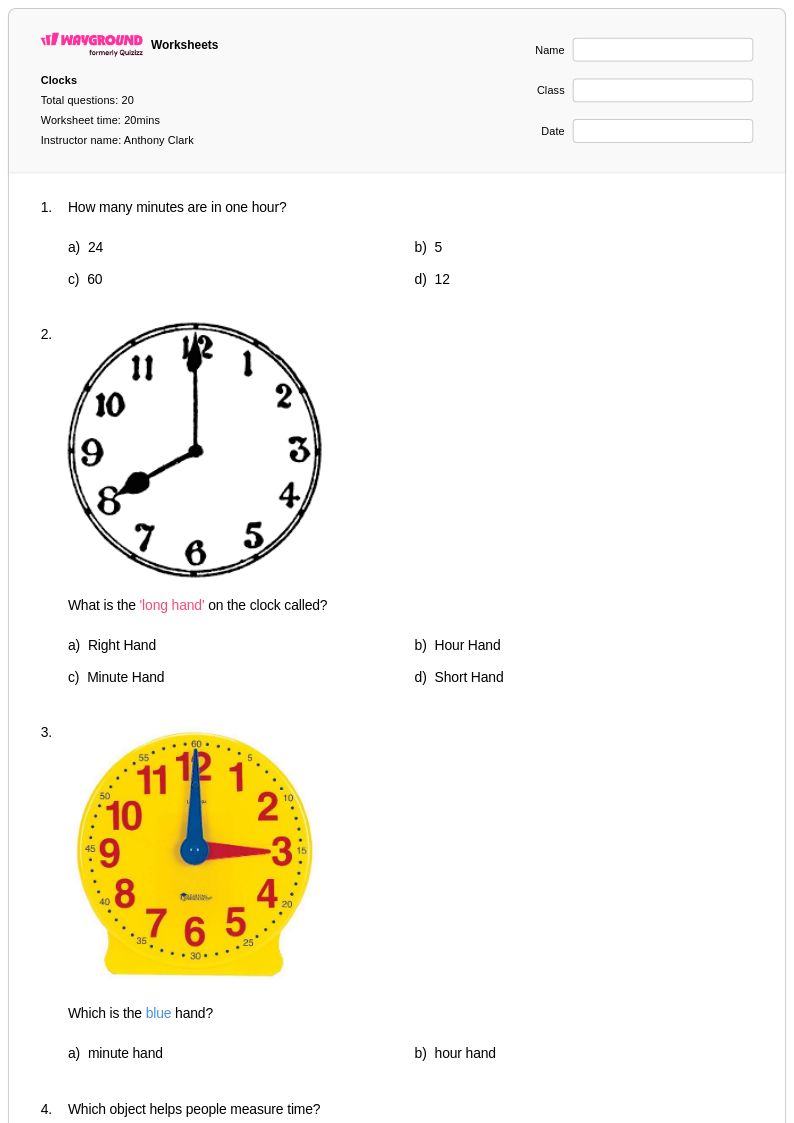
20 Q
1st - Uni
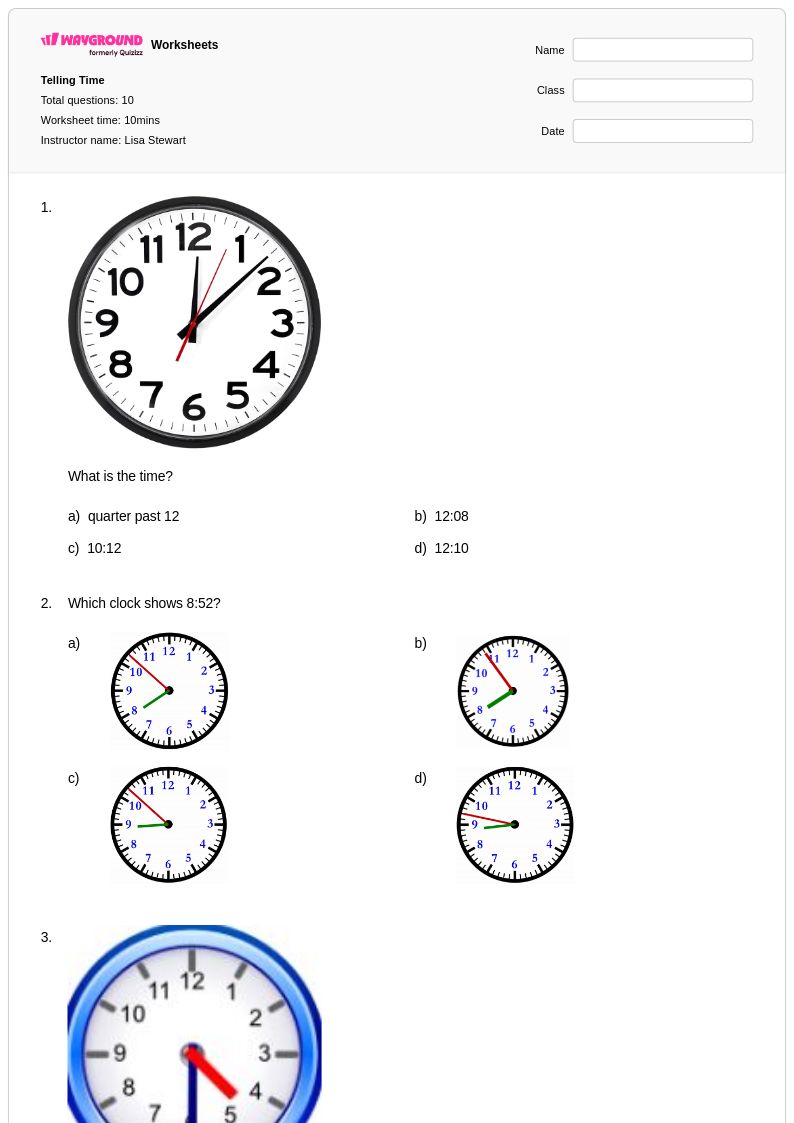
10 Q
2nd
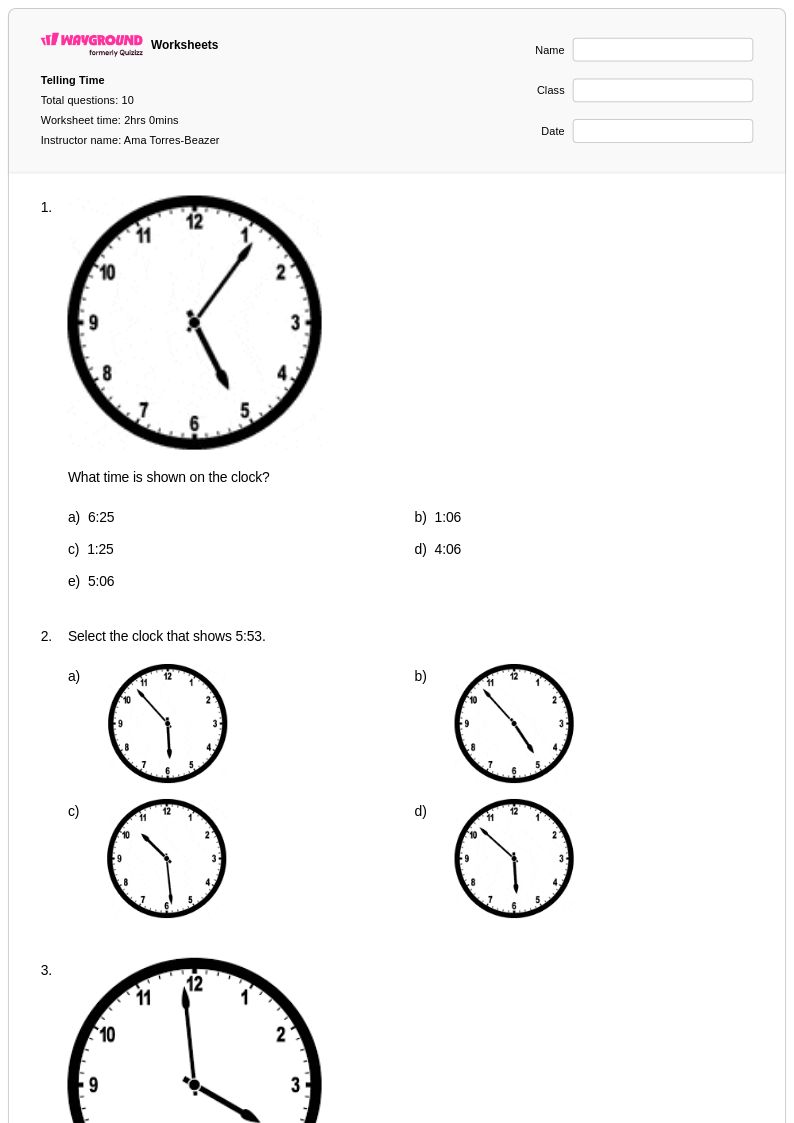
10 Q
3rd - 4th
Explore Other Subject Worksheets for kindergarten
Explore printable Understanding Clocks worksheets for Kindergarten
Understanding clocks forms a fundamental component of kindergarten mathematics education, introducing young learners to the essential life skill of time recognition and basic temporal concepts. Wayground's comprehensive collection of clock understanding worksheets provides kindergarten students with engaging practice problems that focus on identifying clock parts, recognizing hour and half-hour positions, and developing number sequence awareness from 1 to 12. These carefully designed printables strengthen foundational mathematical skills including number recognition, pattern identification, and spatial reasoning while building familiarity with analog clock faces. Each worksheet comes with a complete answer key, making assessment straightforward for educators, and the free pdf format ensures easy classroom distribution and home practice opportunities.
Wayground, formerly Quizizz, empowers teachers with millions of educator-created resources specifically designed to support kindergarten clock understanding instruction through robust search and filtering capabilities that quickly locate age-appropriate materials. The platform's standards alignment features ensure worksheets meet kindergarten mathematics benchmarks, while differentiation tools allow teachers to customize content for varying skill levels within their classrooms. Teachers can seamlessly switch between printable pdf versions for traditional paper-based learning and digital formats for interactive instruction, providing flexibility for diverse learning environments. These comprehensive resources support effective lesson planning by offering ready-to-use materials for skill practice, targeted remediation for students needing additional support, and enrichment activities for advanced learners, ultimately streamlining the process of teaching this crucial early mathematics concept.