
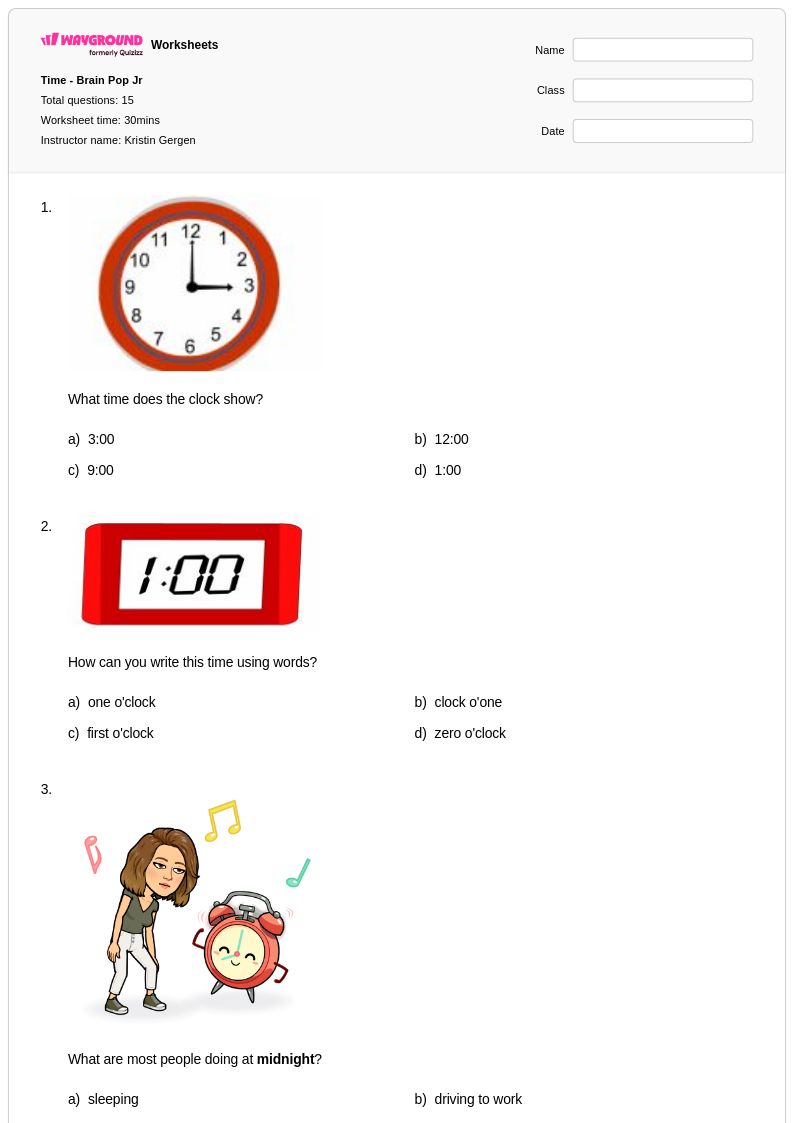
15 Q
2nd - 5th
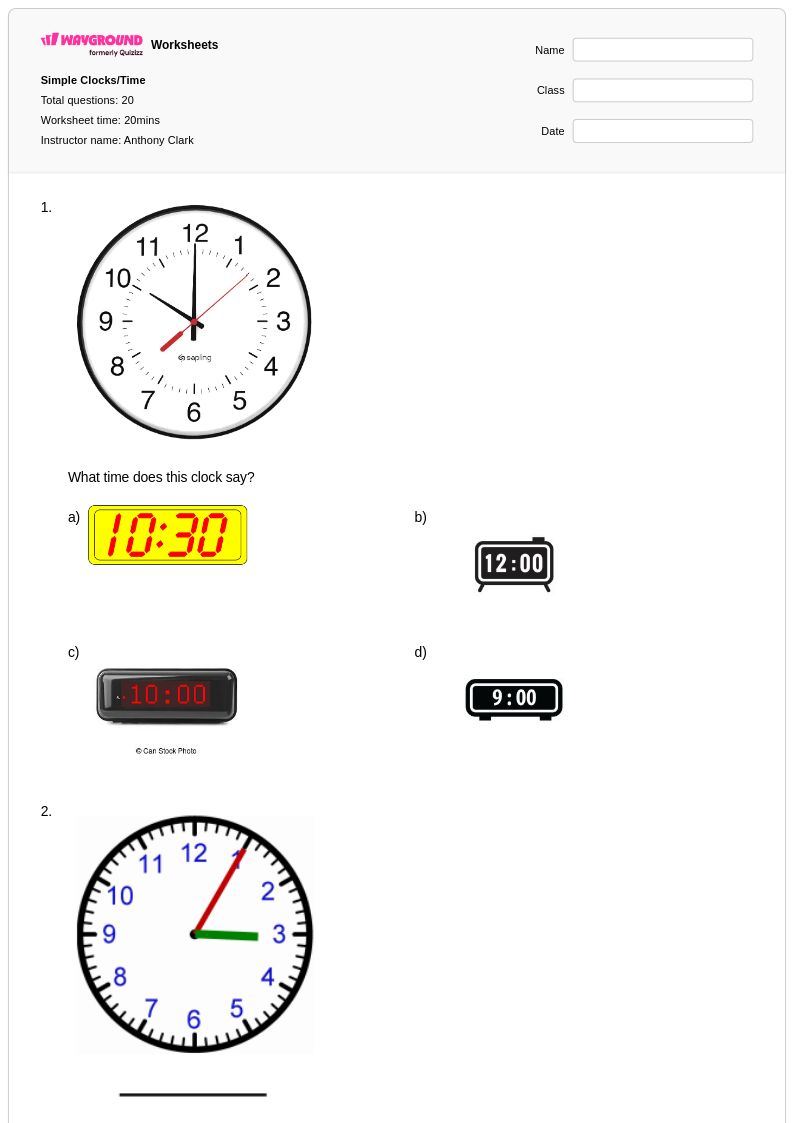
20 Q
2nd - Uni
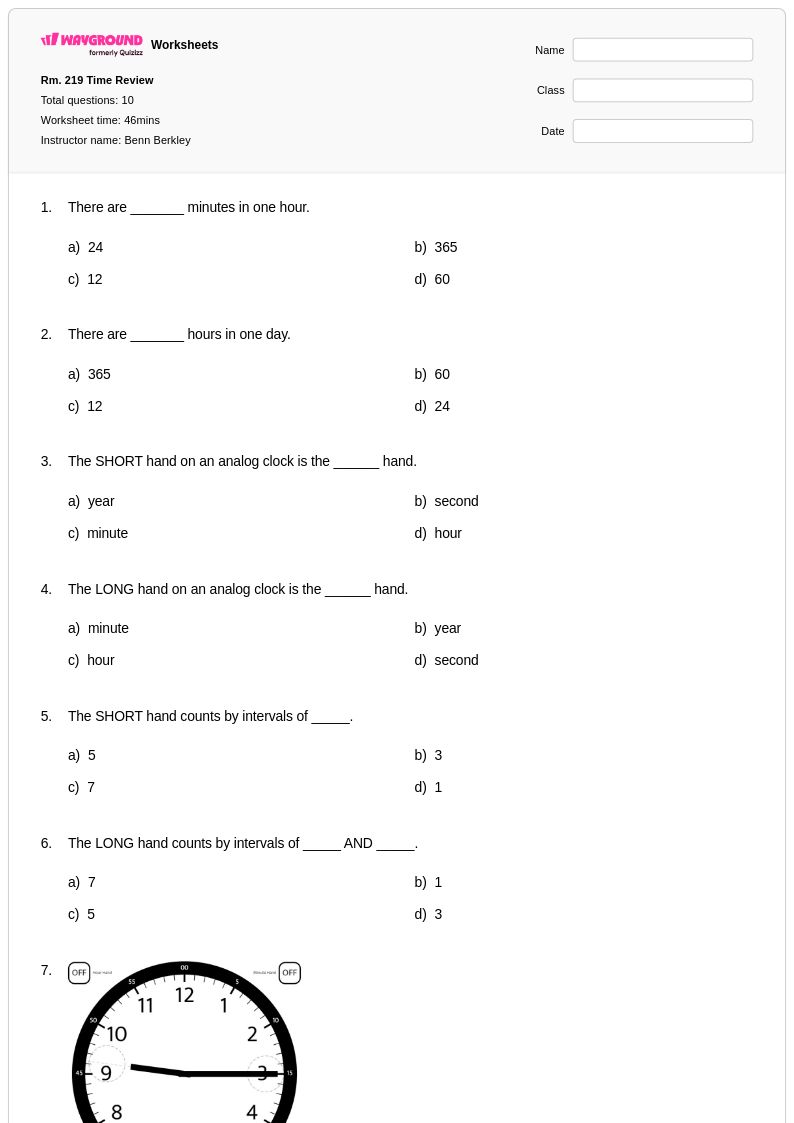
10 Q
2nd - 4th
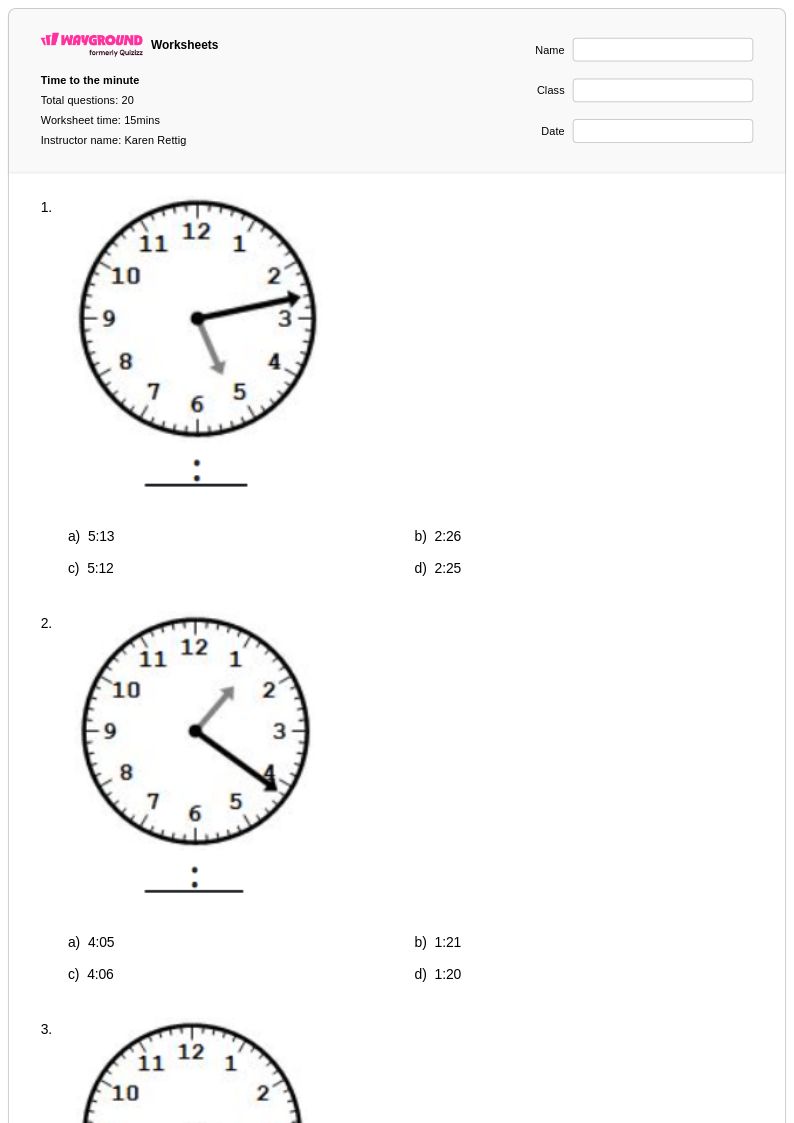
20 Q
2nd - 4th
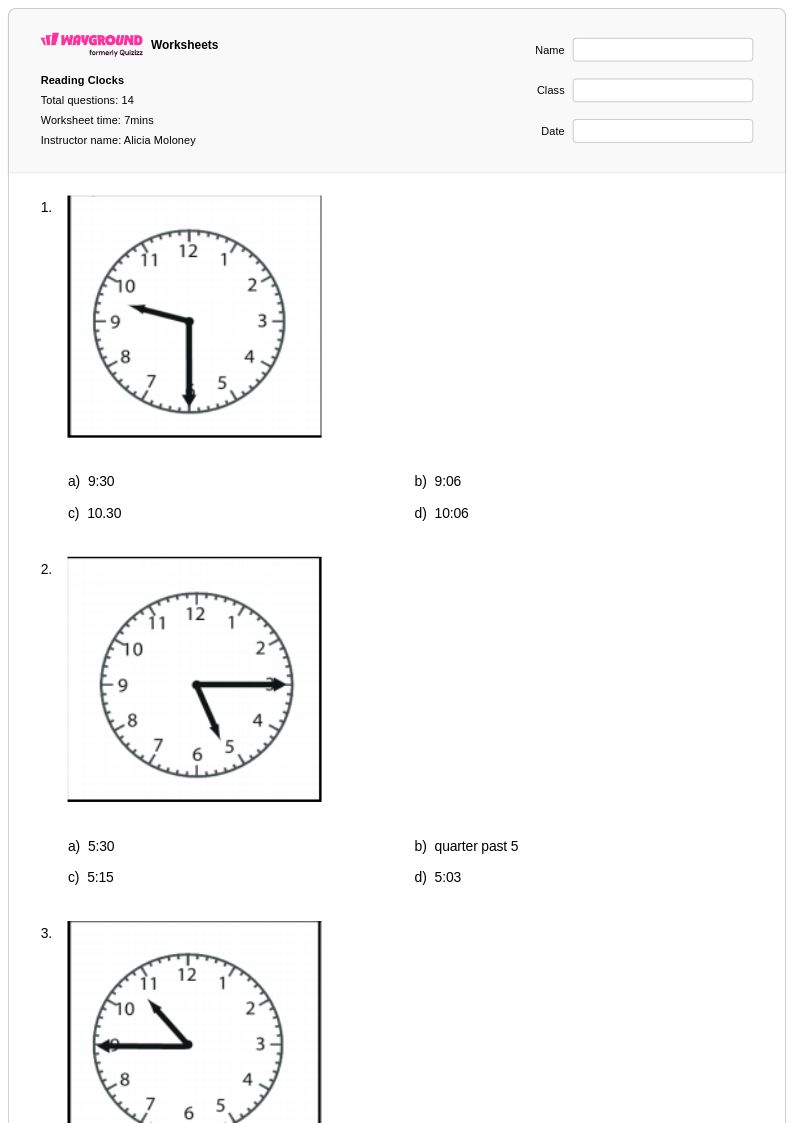
14 Q
4th - 6th
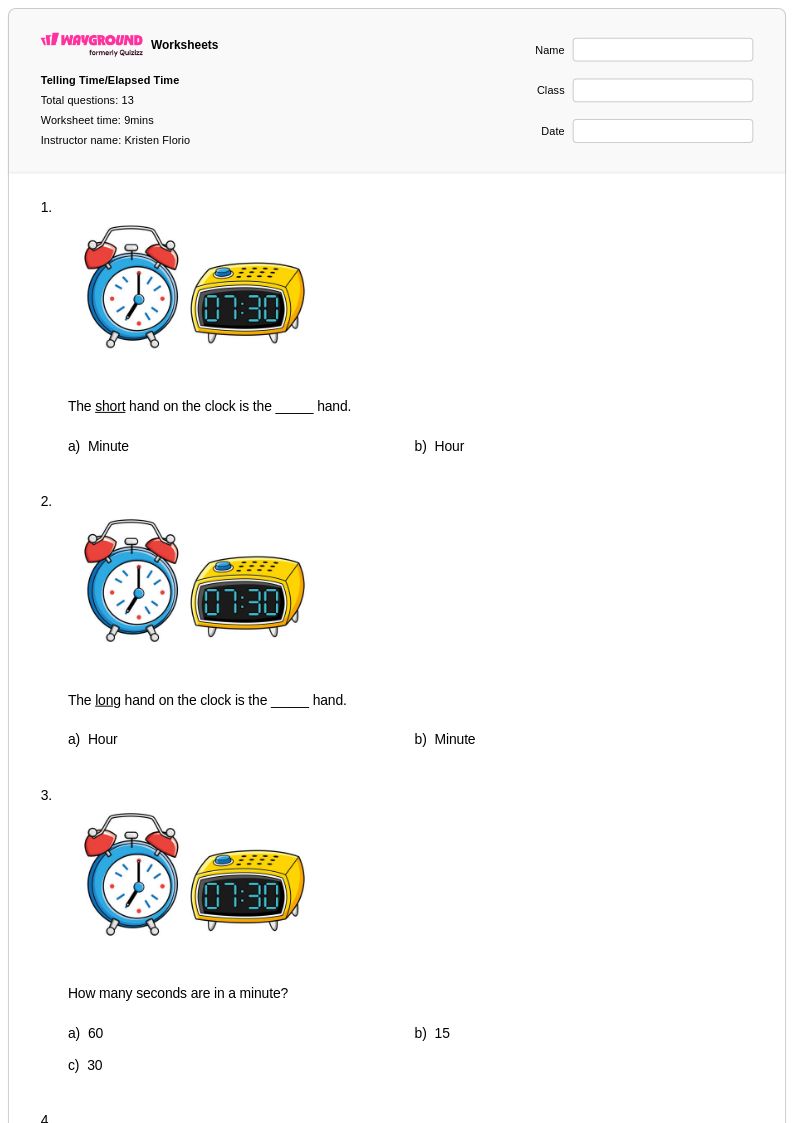
13 Q
3rd - 4th
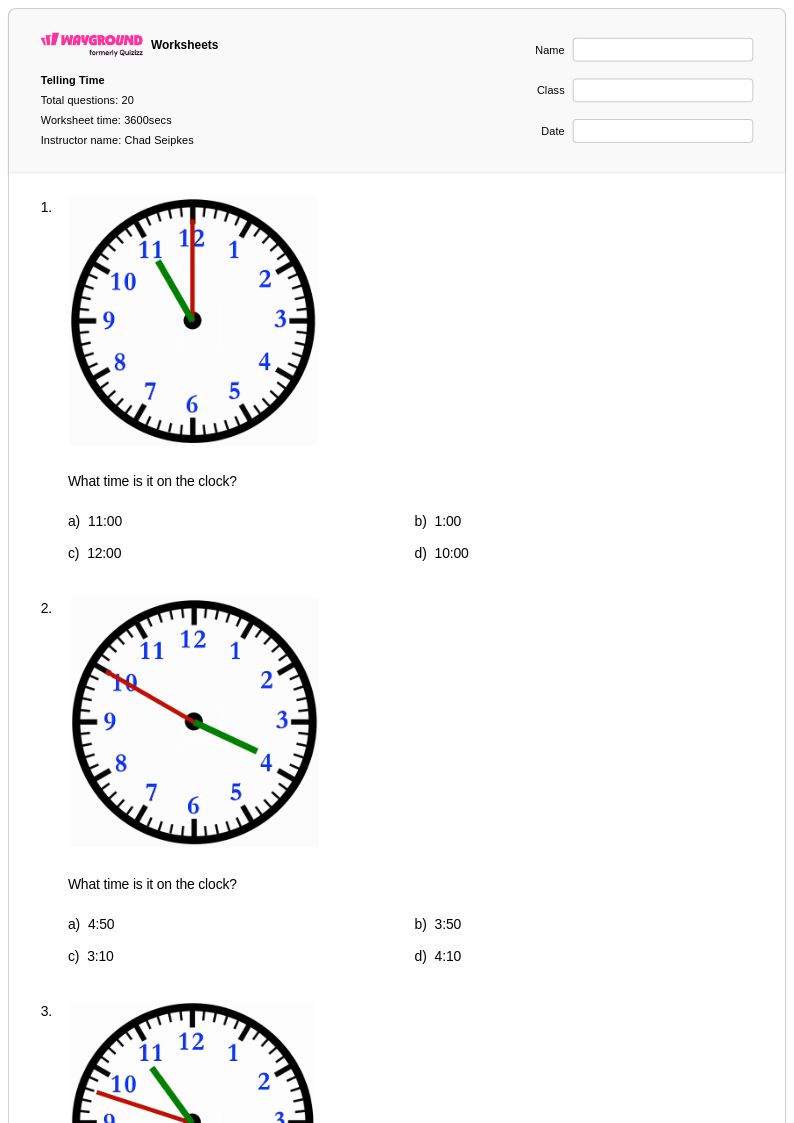
20 Q
3rd - 4th
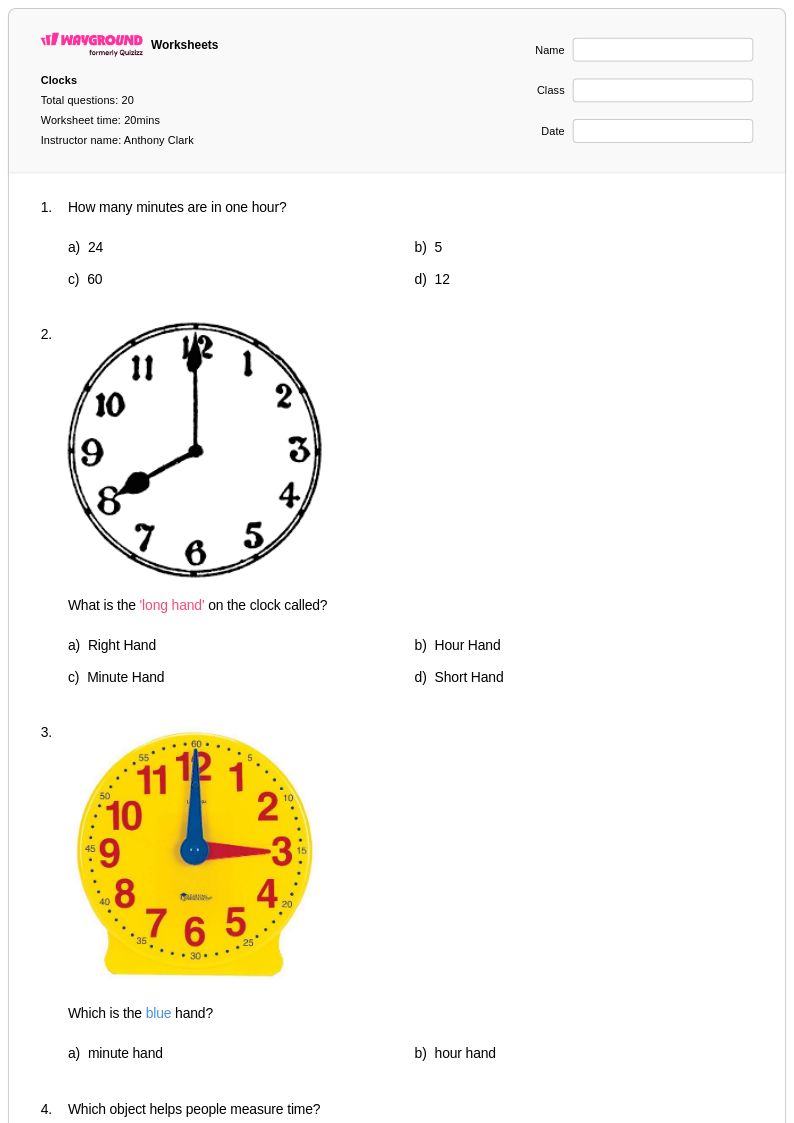
20 Q
1st - Uni
10 Q
3rd - 4th
20 Q
4th - 6th
20 Q
2nd - Uni
20 Q
1st - Uni
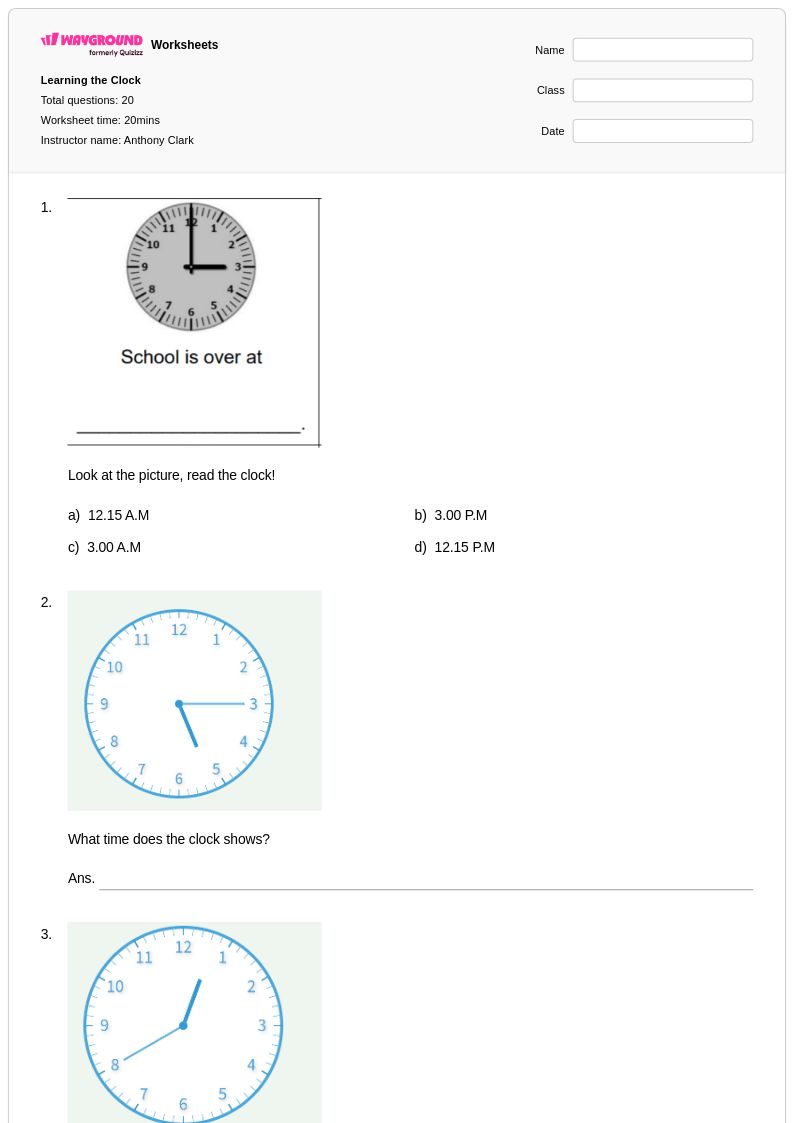
20 Q
2nd - Uni
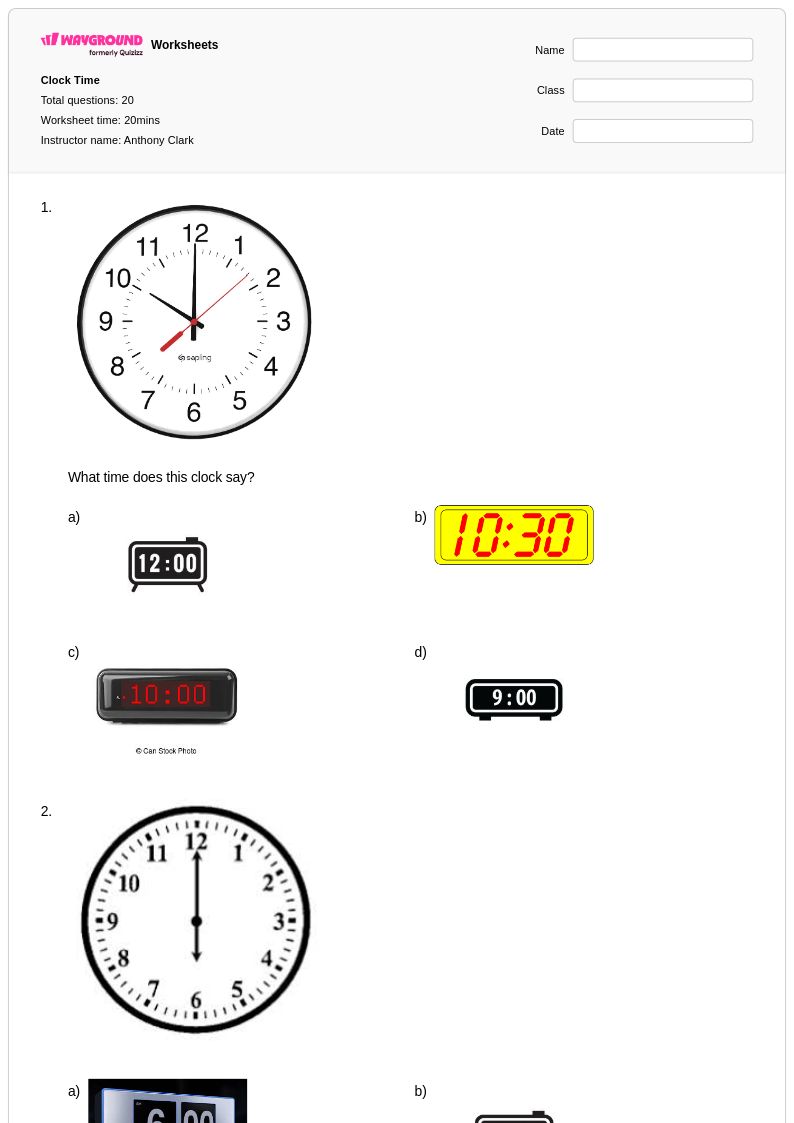
20 Q
2nd - Uni
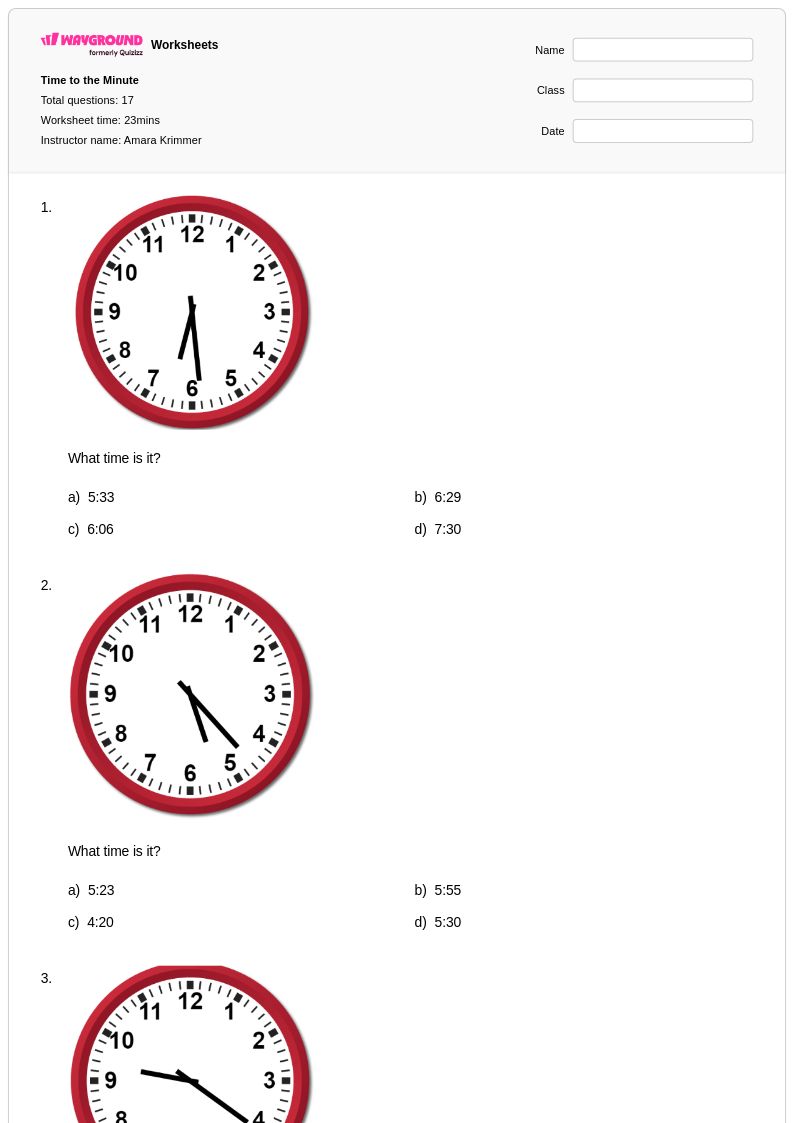
17 Q
3rd - 4th
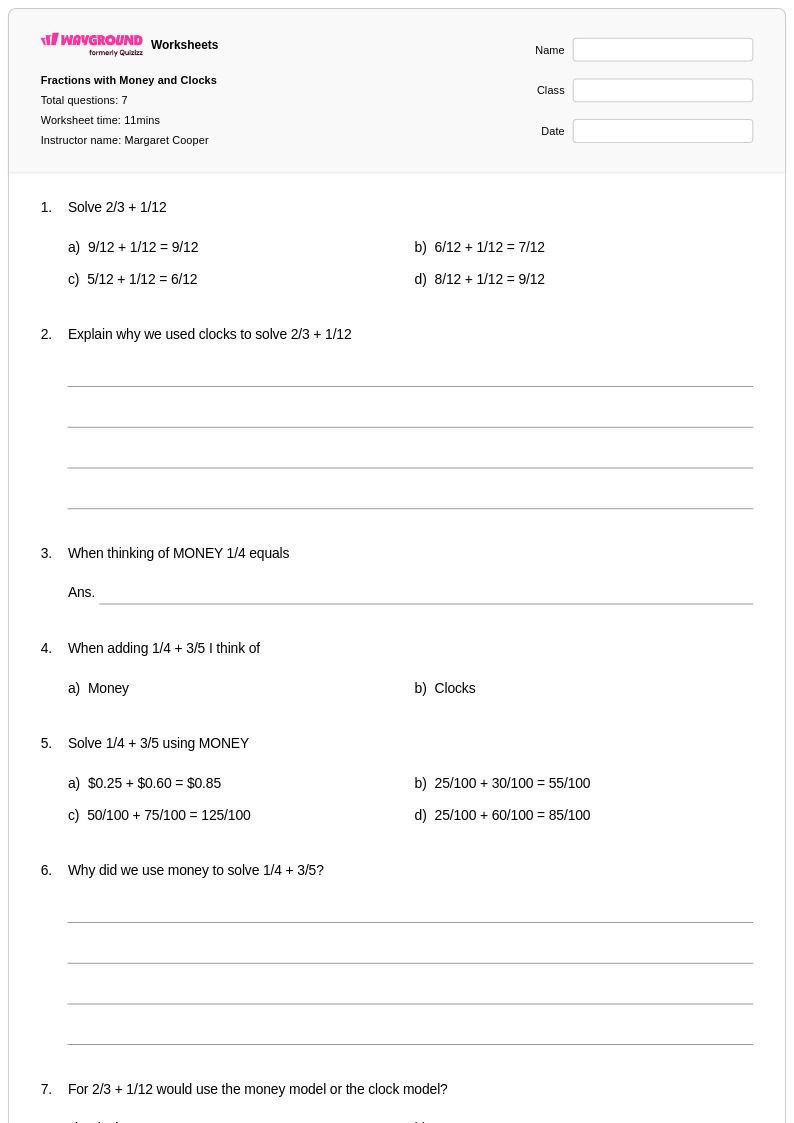
7 Q
4th - 5th
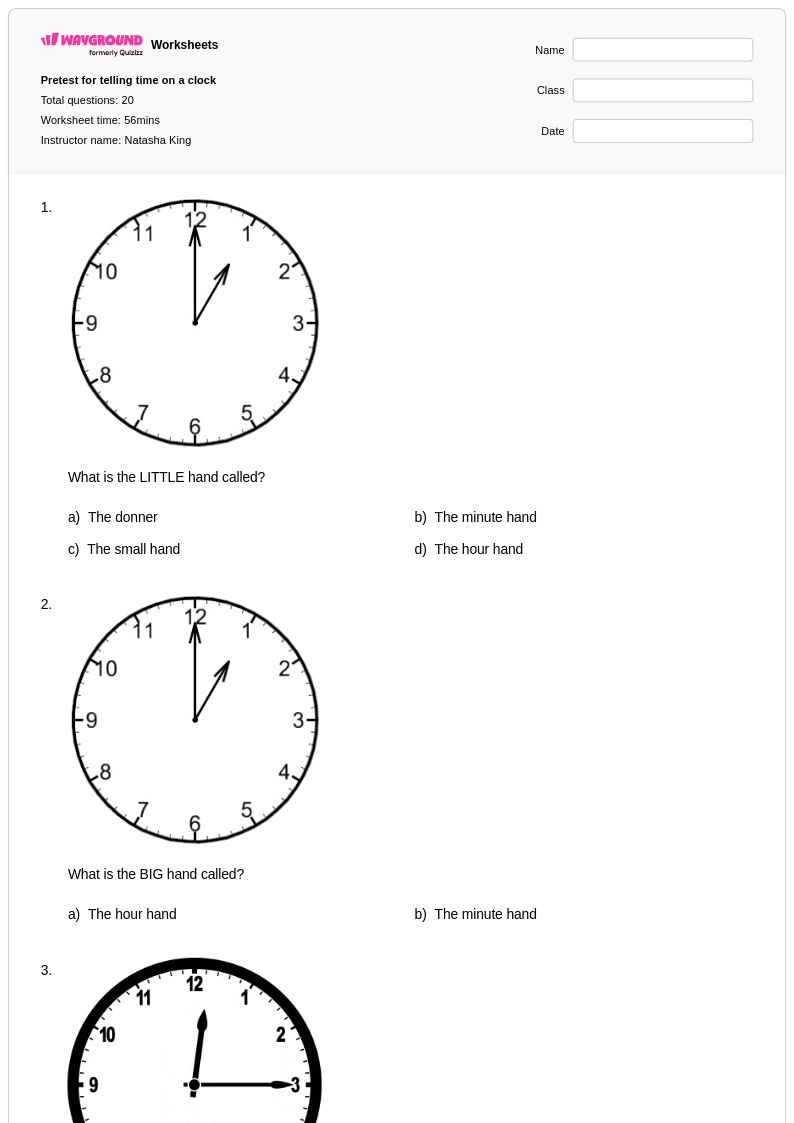
20 Q
3rd - 4th
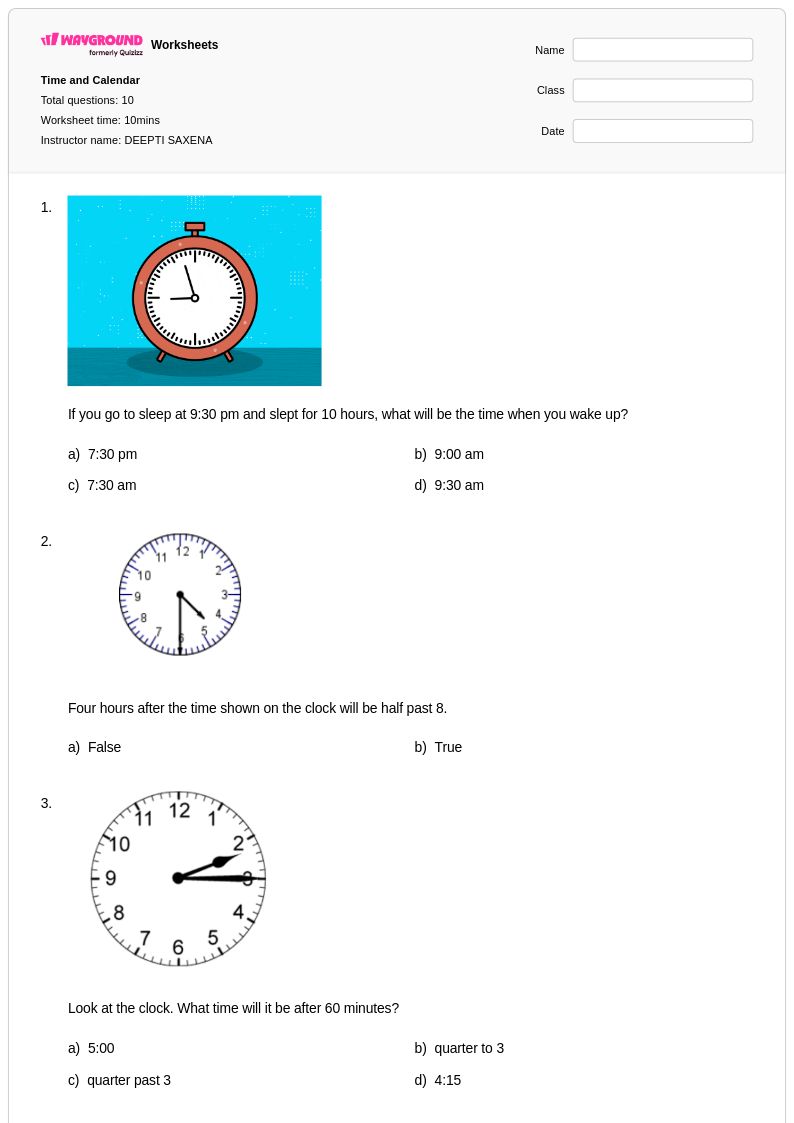
10 Q
3rd - 4th
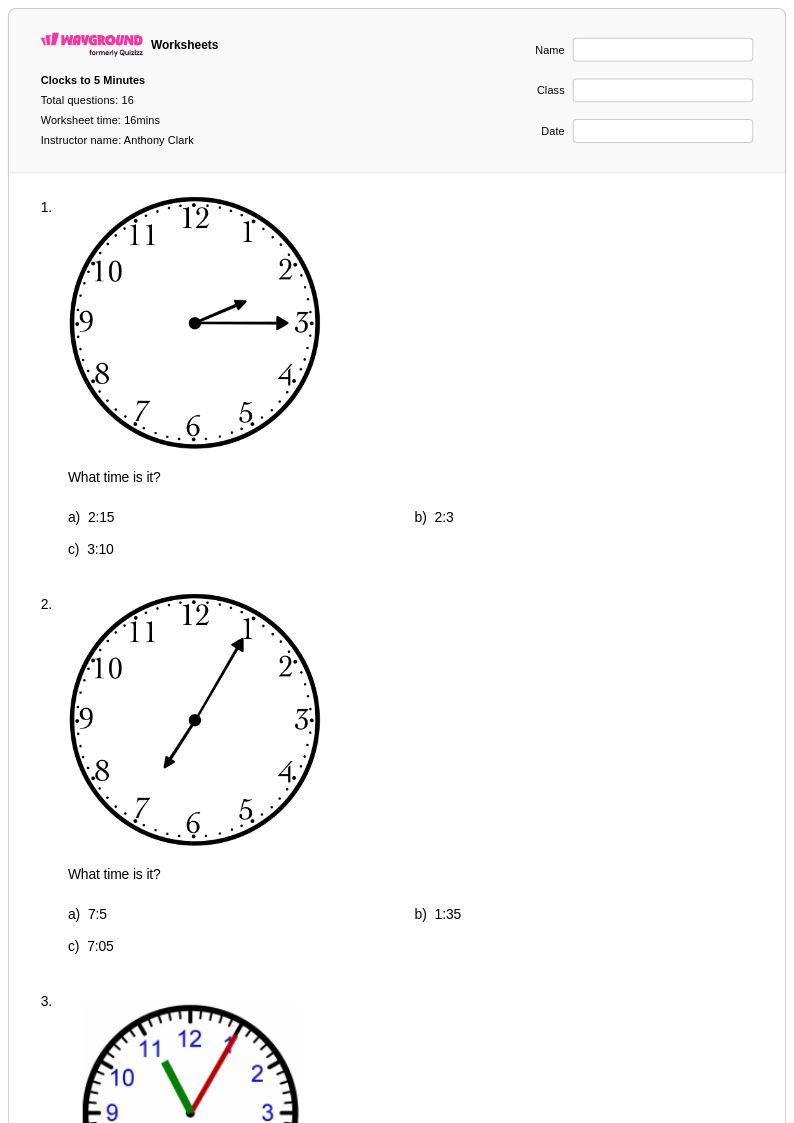
16 Q
4th - Uni
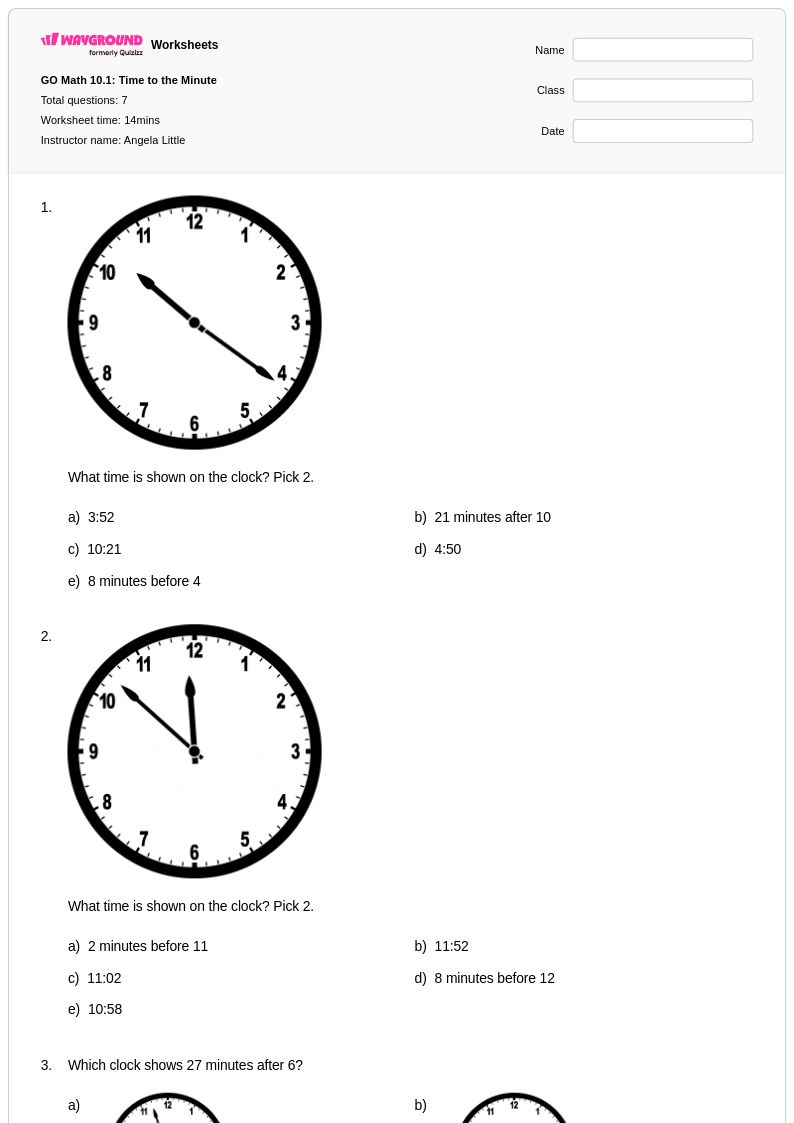
7 Q
3rd - 4th
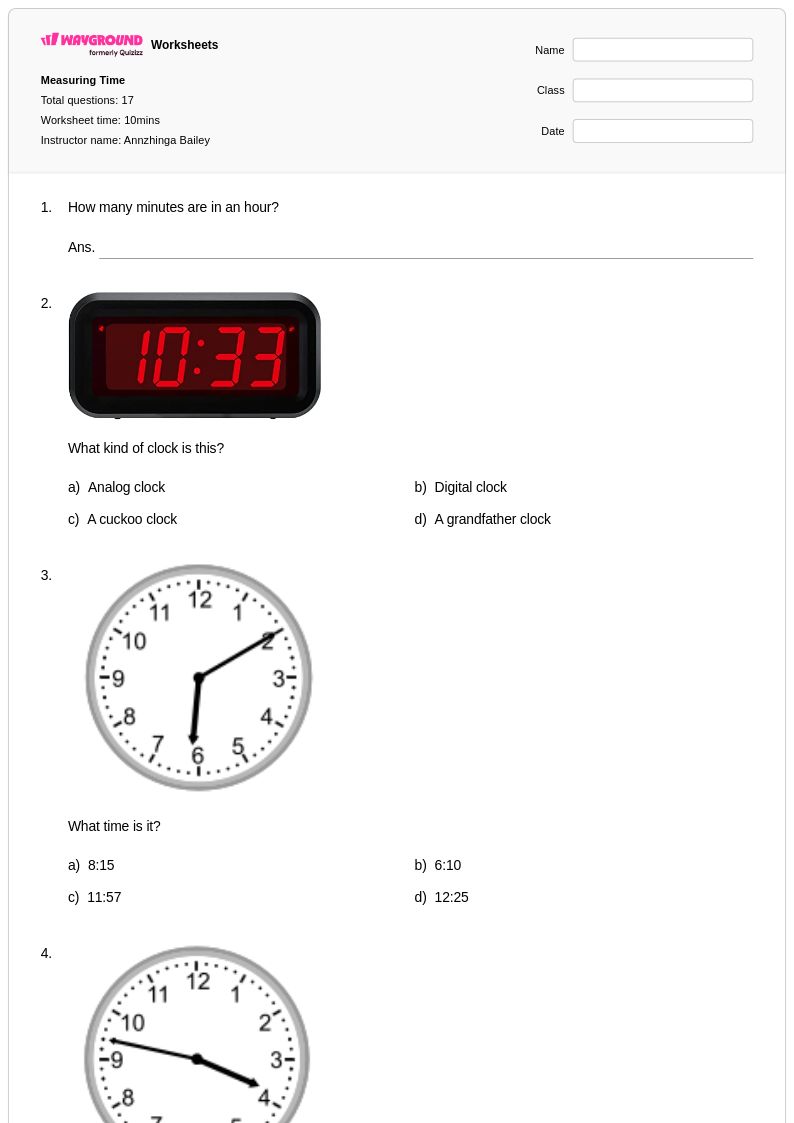
17 Q
1st - 4th
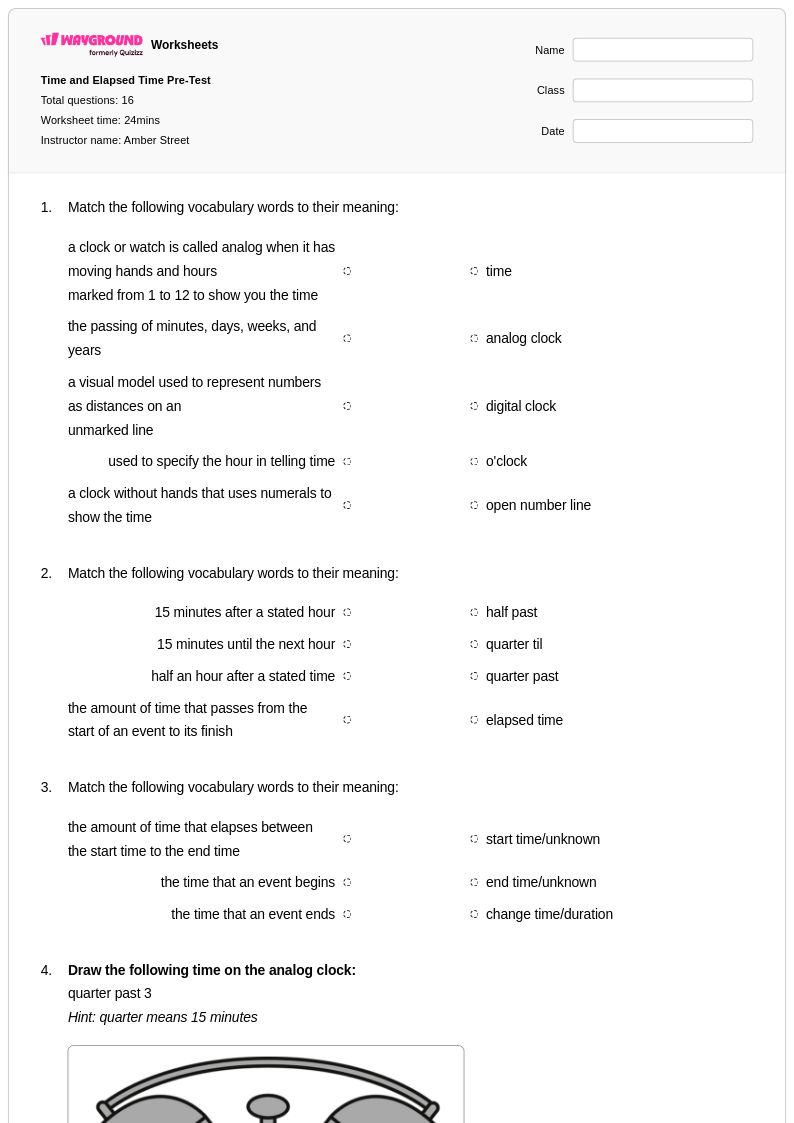
16 Q
4th
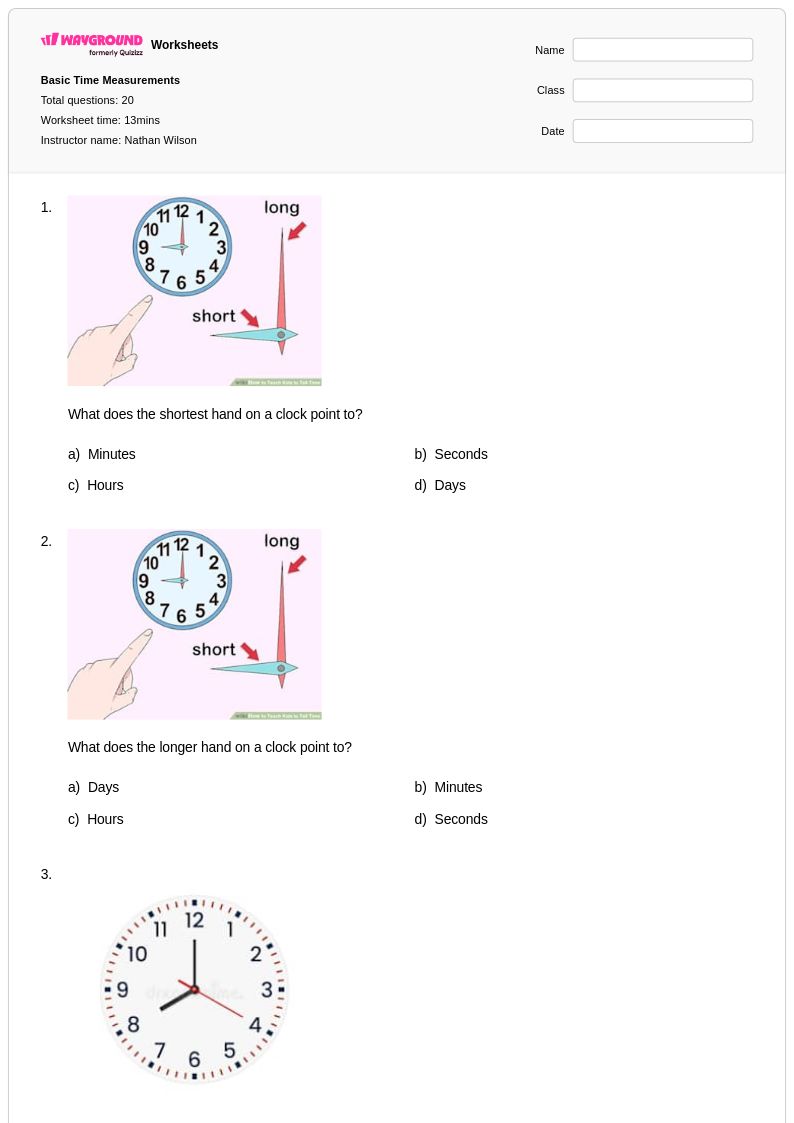
20 Q
4th
Explore Other Subject Worksheets for class 4
Explore printable Understanding Clocks worksheets for Class 4
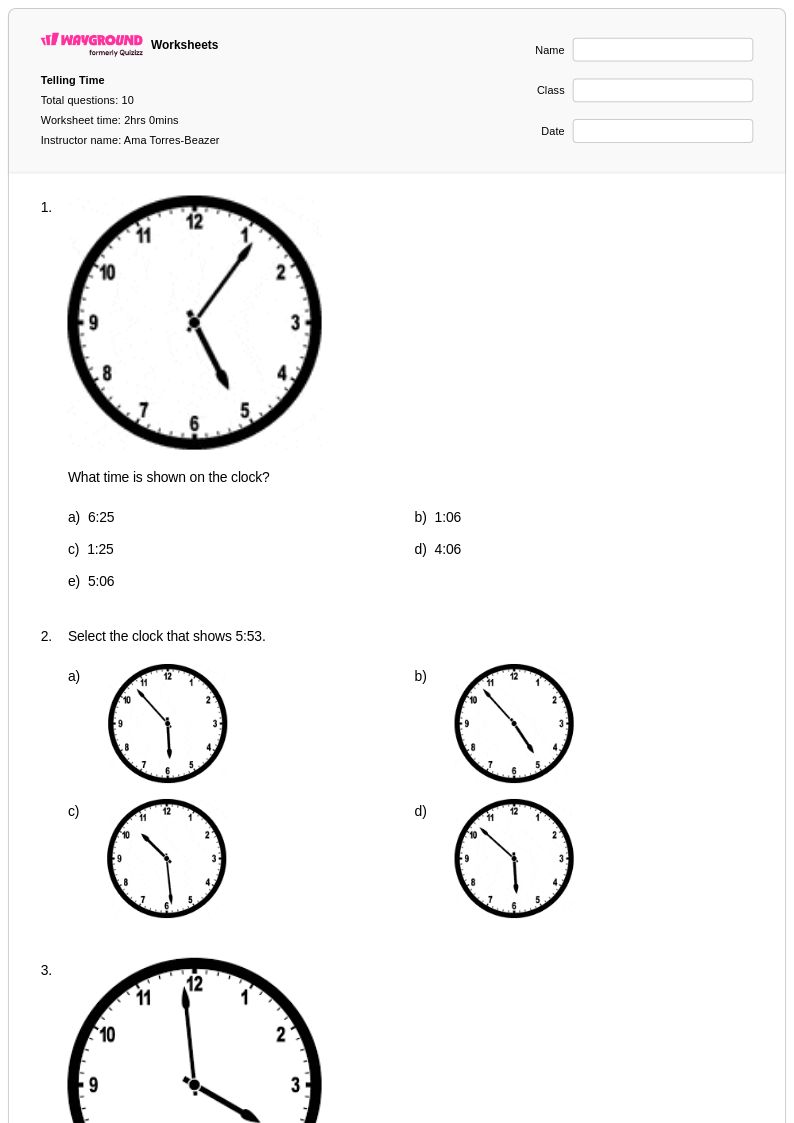
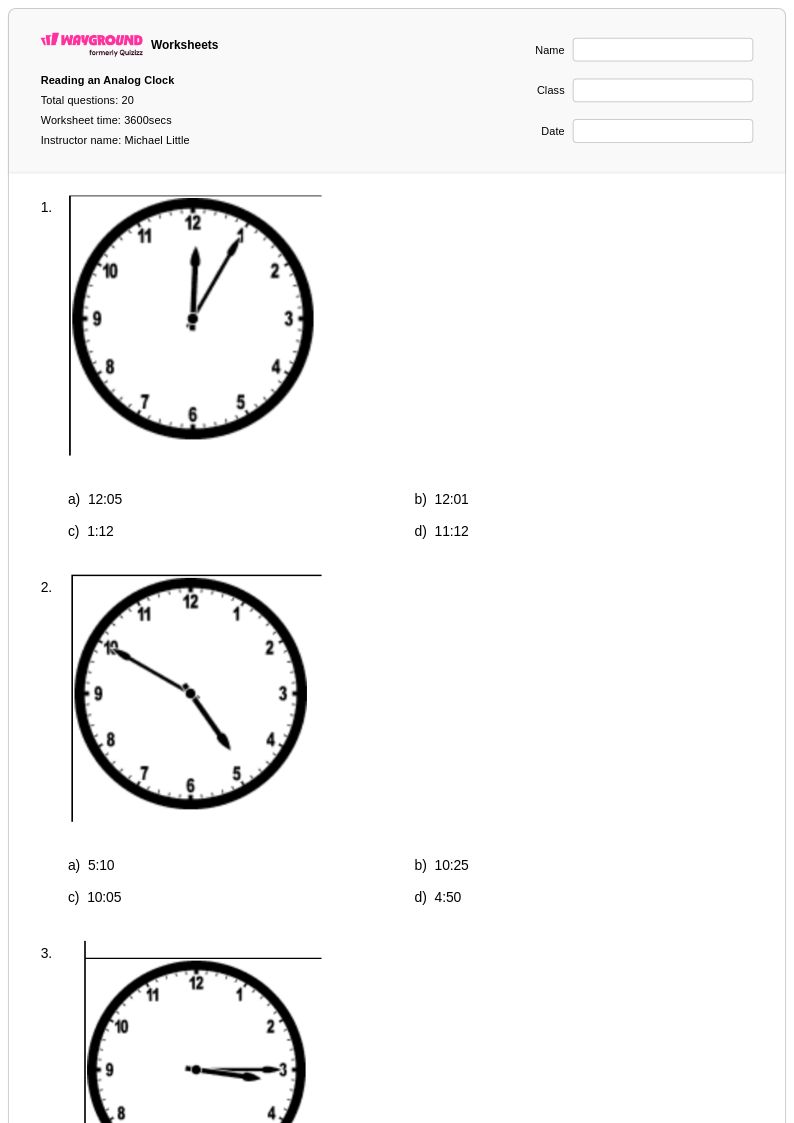
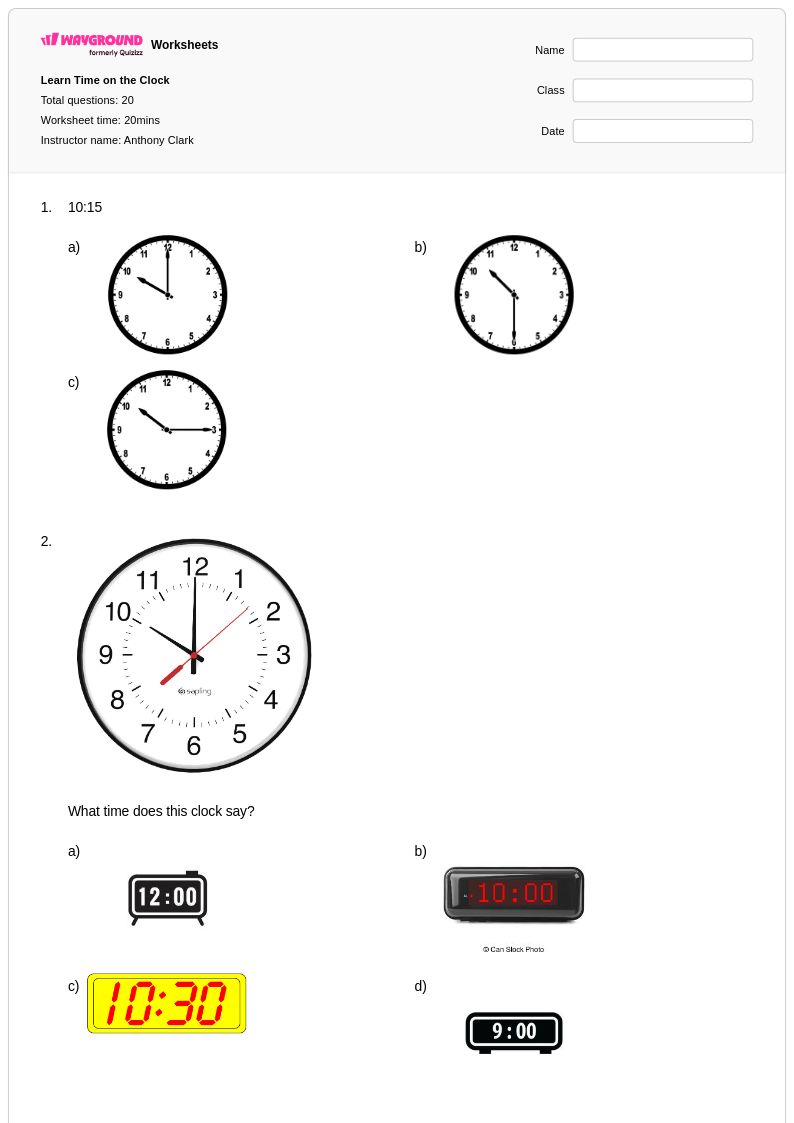
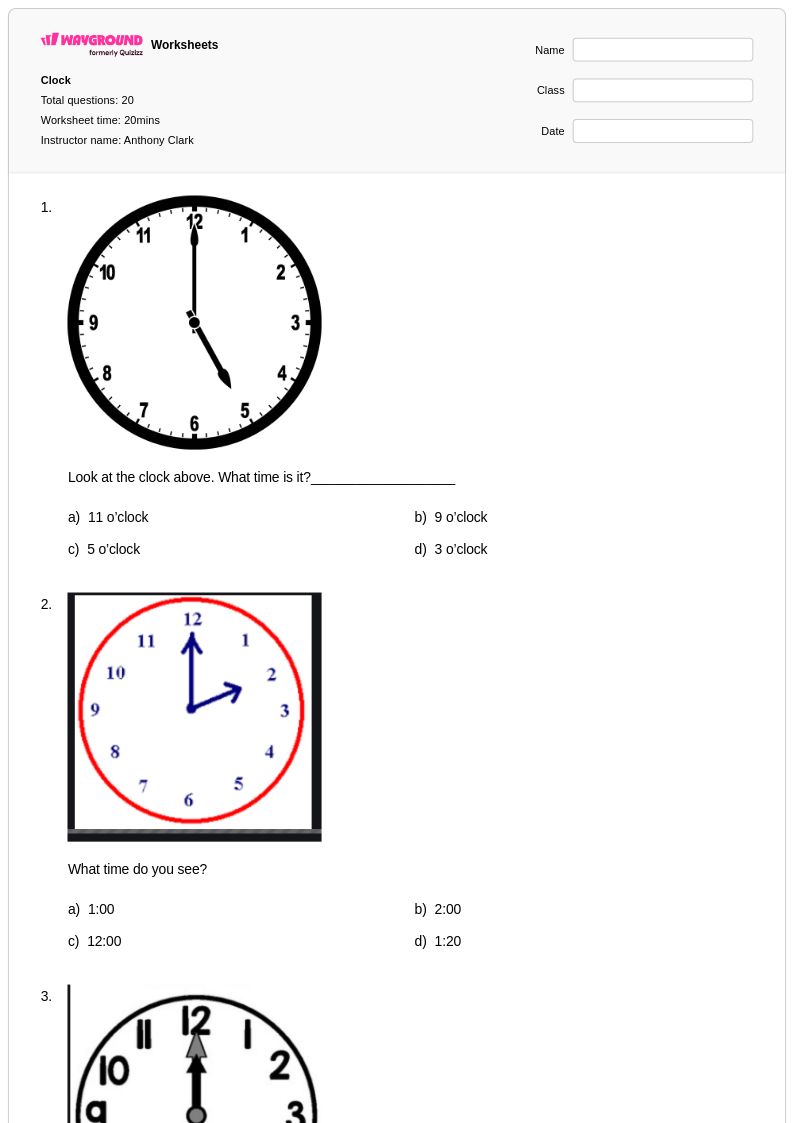
Understanding clocks represents a fundamental milestone in Class 4 mathematics education, as students transition from basic time concepts to more sophisticated clock-reading skills. Wayground's comprehensive collection of understanding clocks worksheets provides fourth-grade students with systematic practice in reading analog and digital clocks, identifying time to the nearest minute, and understanding the relationship between hours, minutes, and seconds. These carefully designed printables strengthen essential mathematical reasoning skills while building confidence in time measurement concepts that students will use throughout their academic careers and daily lives. Each worksheet includes a detailed answer key that supports independent learning and self-assessment, while the free pdf format ensures accessibility for both classroom instruction and home practice problems.
Wayground's extensive library, built from millions of teacher-created resources, offers educators an unparalleled selection of understanding clocks worksheets specifically aligned with Class 4 mathematical standards and learning objectives. The platform's advanced search and filtering capabilities enable teachers to quickly locate materials that match their students' specific skill levels and learning needs, whether for initial instruction, targeted remediation, or advanced enrichment activities. These customizable resources are available in both printable and digital formats, allowing for seamless integration into diverse teaching environments and learning modalities. Teachers can efficiently differentiate instruction by selecting from various difficulty levels and problem types, ensuring that every student receives appropriate challenge and support while developing mastery of clock-reading concepts essential for mathematical literacy and practical life skills.