Free Printable Reframing Negative Thoughts Worksheets for Class 11
Strengthen Class 11 students' emotional intelligence with our free reframing negative thoughts worksheets, featuring printable PDF activities, practice problems, and comprehensive answer keys to develop positive thinking skills.
Explore printable Reframing Negative Thoughts worksheets for Class 11
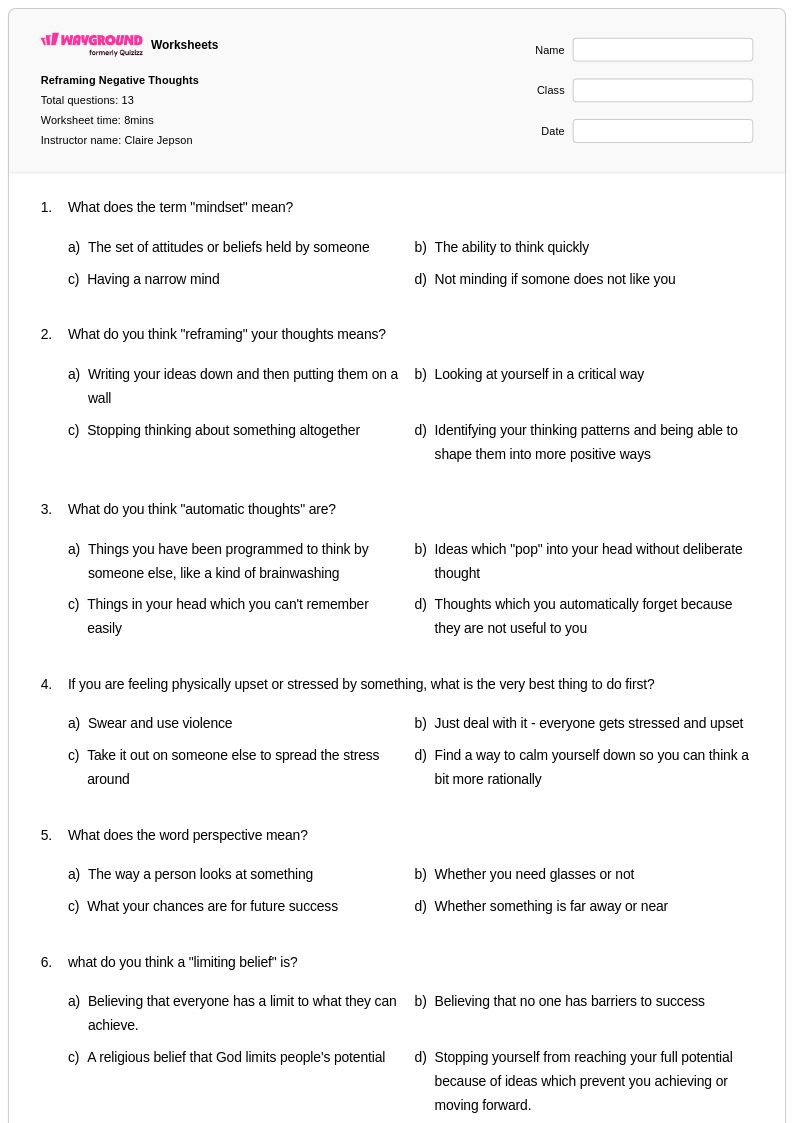
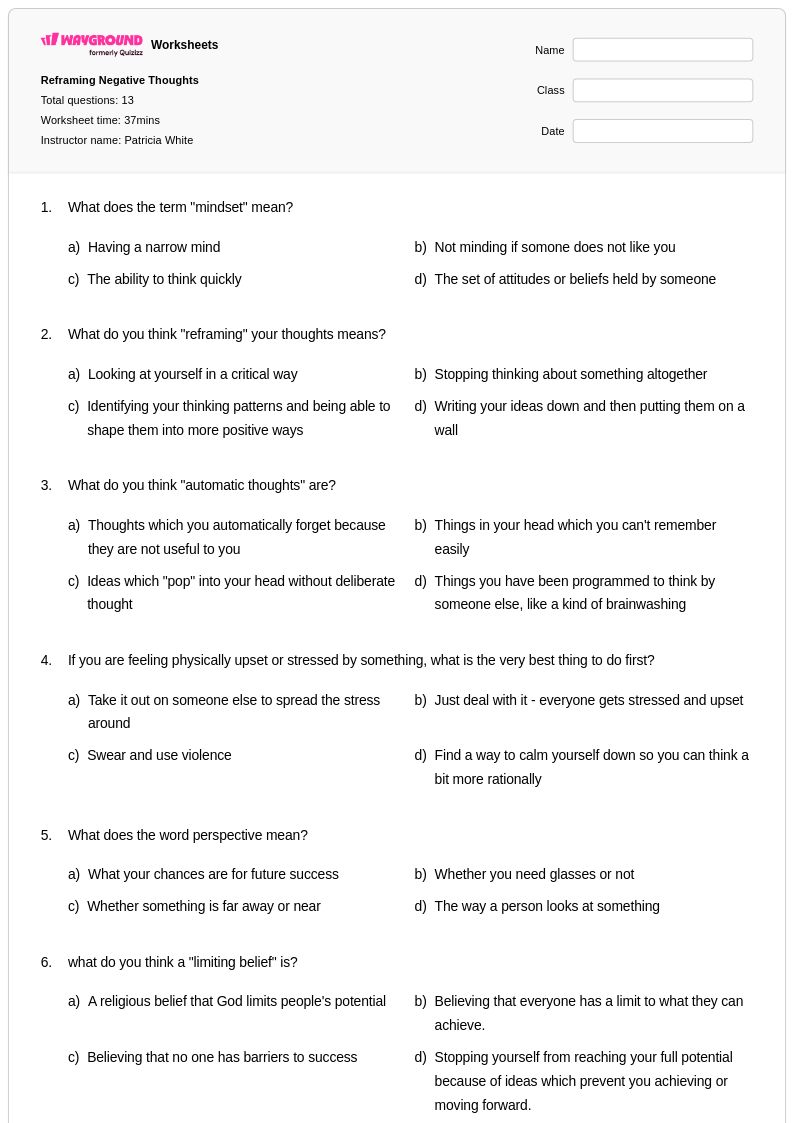
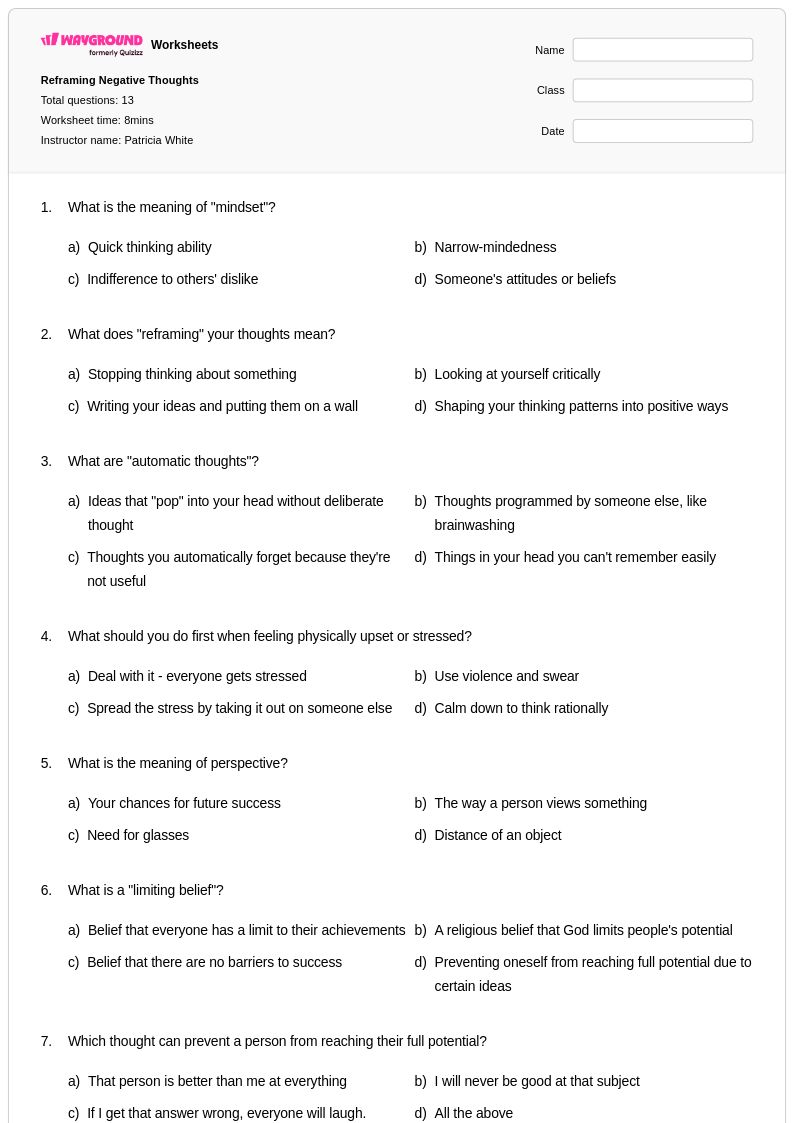
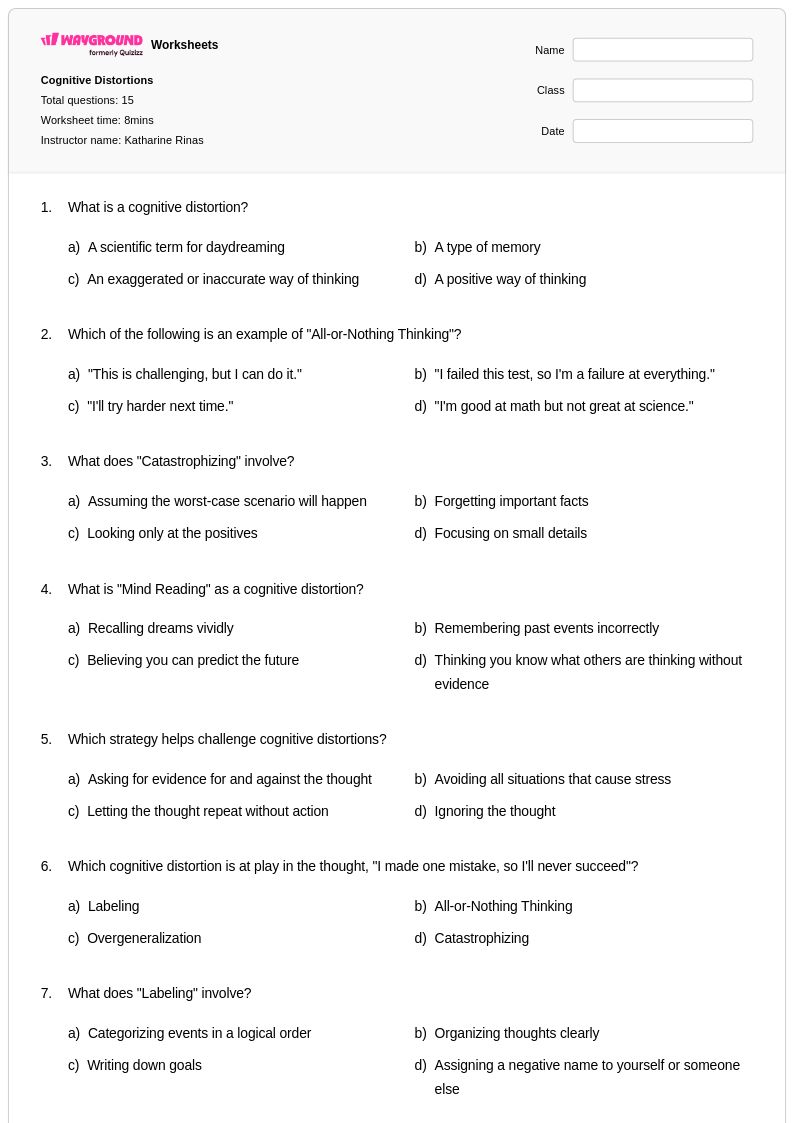
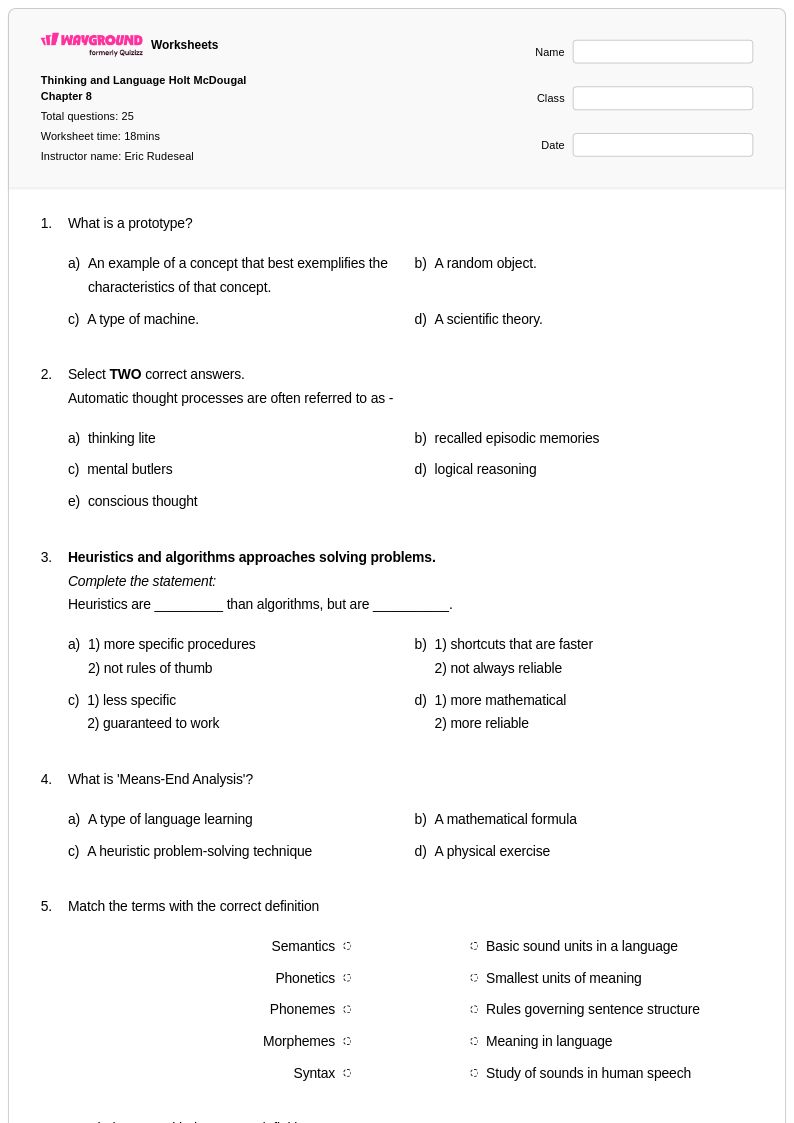
Reframing negative thoughts worksheets for Class 11 students provide essential practice in developing cognitive restructuring skills that are fundamental to emotional intelligence and mental wellness. These comprehensive resources guide eleventh-grade learners through systematic approaches to identify, challenge, and transform pessimistic or self-defeating thought patterns into more balanced and constructive perspectives. Students engage with real-world scenarios and practice problems that teach them to recognize cognitive distortions such as catastrophizing, all-or-nothing thinking, and negative self-talk. Each worksheet collection includes detailed answer keys that help students understand the thought reframing process, while printable pdf formats ensure accessibility for both classroom instruction and independent study. These free resources strengthen critical social-emotional learning competencies including self-awareness, emotional regulation, and resilience building that are crucial for academic success and personal development during the challenging high school years.
Wayground, formerly Quizizz, supports educators with an extensive collection of teacher-created reframing negative thoughts worksheets designed specifically for Class 11 social studies curriculum integration. The platform's millions of educational resources include sophisticated search and filtering capabilities that allow teachers to locate materials aligned with social-emotional learning standards and differentiated for various skill levels within the classroom. Teachers can customize existing worksheets or create new versions to address specific student needs, whether for remediation support, enrichment activities, or targeted skill practice sessions. The flexible digital and printable pdf formats enable seamless integration into lesson planning, while comprehensive answer keys and assessment tools facilitate efficient grading and progress monitoring. These differentiation features prove invaluable for addressing the diverse emotional and cognitive development needs of high school students, allowing educators to provide personalized instruction that builds essential life skills alongside academic content mastery.
FAQs
How do I teach students to reframe negative thoughts?
Teaching students to reframe negative thoughts begins with helping them identify cognitive distortions, such as catastrophizing, all-or-nothing thinking, and overgeneralization. From there, guided practice encourages students to evaluate whether a negative thought is accurate and to generate a more balanced alternative. Structured frameworks like thought records, where students write down a triggering situation, their automatic thought, and a reframed perspective, give learners a repeatable process they can internalize over time. Building in regular reflection exercises reinforces these skills until they become habitual rather than effortful.
What exercises help students practice reframing negative thoughts?
Effective practice exercises include thought record worksheets, cognitive distortion identification activities, and guided journaling prompts that ask students to challenge the evidence for and against a negative belief. Role-play scenarios where students practice responding to a peer's negative self-talk can also deepen understanding. Structured reflection prompts such as 'What would I tell a friend who thought this?' help students access more balanced thinking from a less self-critical vantage point. Repeated, low-stakes practice is key, since cognitive reframing is a skill that strengthens through consistent application.
What common mistakes do students make when learning to reframe negative thoughts?
A frequent mistake is replacing a negative thought with an unrealistically positive one, which students often experience as dismissive or false and therefore resist. The goal of reframing is balance, not forced optimism, so students need explicit instruction on the difference between a realistic alternative and an empty affirmation. Another common error is skipping the identification step and jumping straight to reframing without first naming the cognitive distortion at work. Students also tend to apply reframing only in worksheet contexts and struggle to transfer the skill to real-time emotional situations without scaffolded prompts.
How can I differentiate reframing negative thoughts instruction for students at different skill levels?
For students who are newer to emotional regulation, simplify the task by providing sentence starters and a limited menu of cognitive distortion types to choose from, reducing the cognitive load of open-ended reflection. More advanced students can work with complex scenarios that involve multiple interacting thoughts and be challenged to identify underlying core beliefs. On Wayground, teachers can apply accommodations at the individual student level, including reduced answer choices to support struggling learners, read-aloud functionality for students who benefit from audio support, and extended time for students who need more processing space. These settings can be configured without other students being notified, preserving classroom normalcy.
How do I use Wayground's reframing negative thoughts worksheets in my classroom?
Wayground's reframing negative thoughts worksheets are available as printable PDFs for traditional classroom use and in digital formats for technology-integrated or remote learning environments. Teachers can also host these worksheets as a live quiz on Wayground, making them suitable for whole-class instruction, independent practice, or small-group SEL sessions. Answer keys are included with each worksheet, giving teachers a reliable tool for providing consistent, timely feedback. The digital format allows teachers to assign worksheets to individual students or an entire class and apply tailored accommodations as needed.
At what age or grade level should students start learning to reframe negative thoughts?
Cognitive reframing can be introduced in age-appropriate forms as early as upper elementary school, typically around grades 3 to 5, using simplified language and concrete scenarios relevant to students' daily experiences. By middle school, students have the metacognitive development to engage with more formal frameworks like thought records and cognitive distortion categories. High school students can work with CBT-informed models in greater depth, connecting reframing to stress management, academic resilience, and interpersonal relationships. The key is matching the complexity of the framework to students' developmental stage rather than applying a one-size-fits-all approach.