Free Printable Responsibility Worksheets for Class 7
Class 7 responsibility worksheets and printables help students develop accountability and decision-making skills through engaging practice problems, free PDF activities, and comprehensive answer keys for effective social studies learning.
Explore printable Responsibility worksheets for Class 7
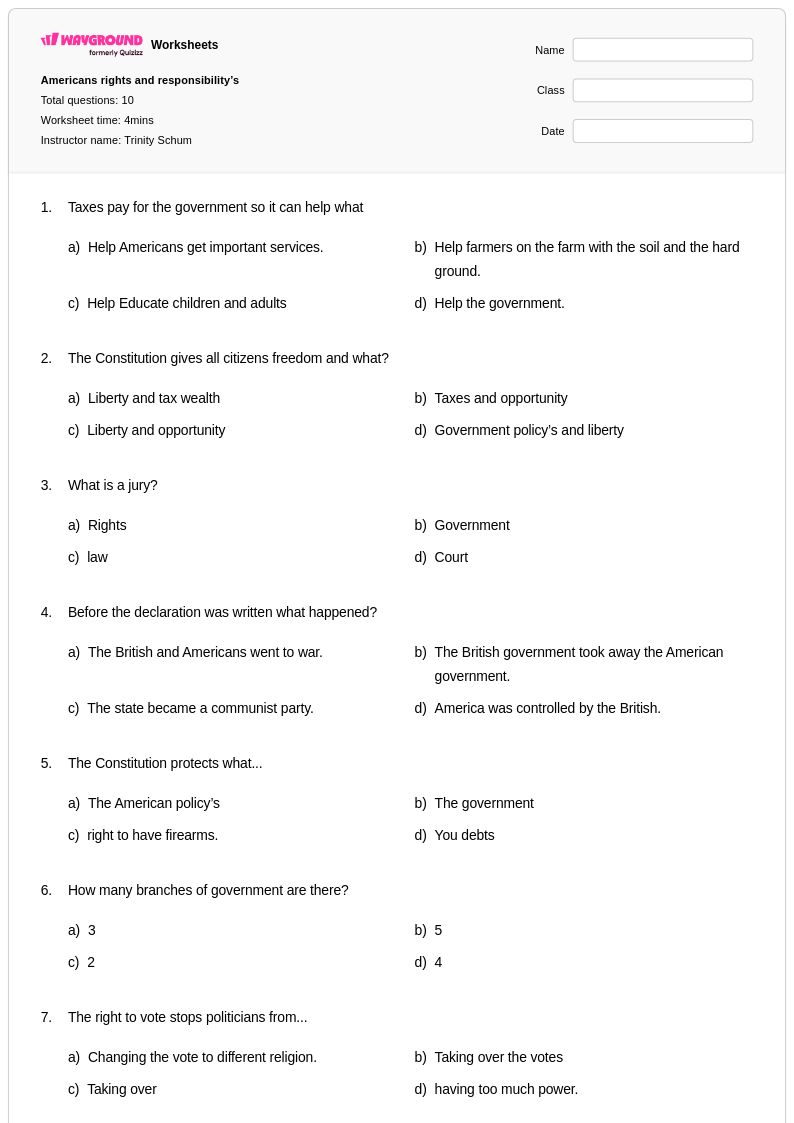
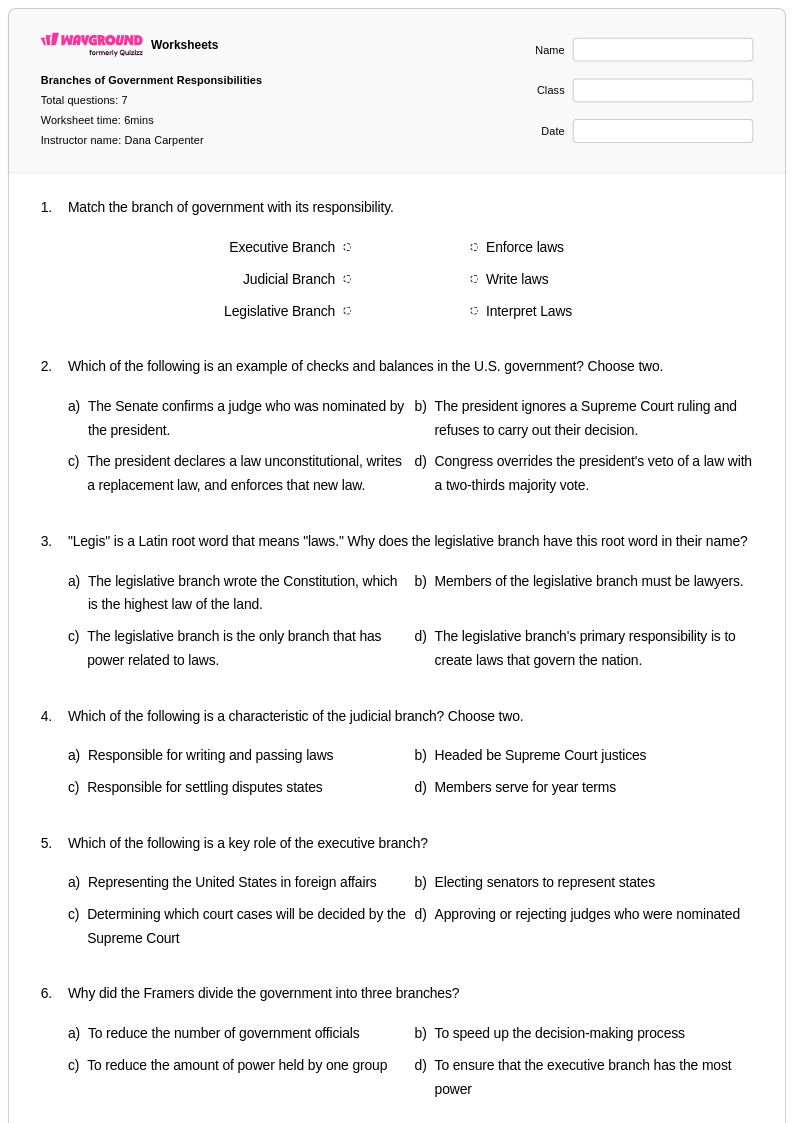
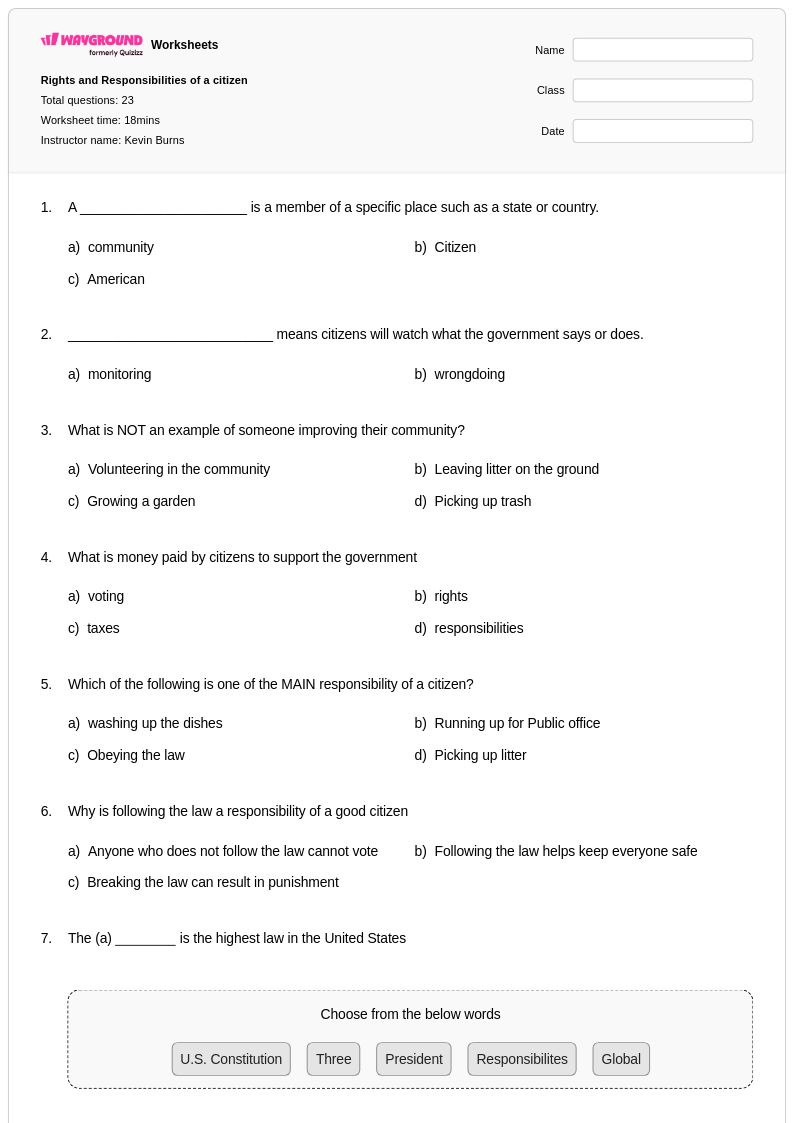
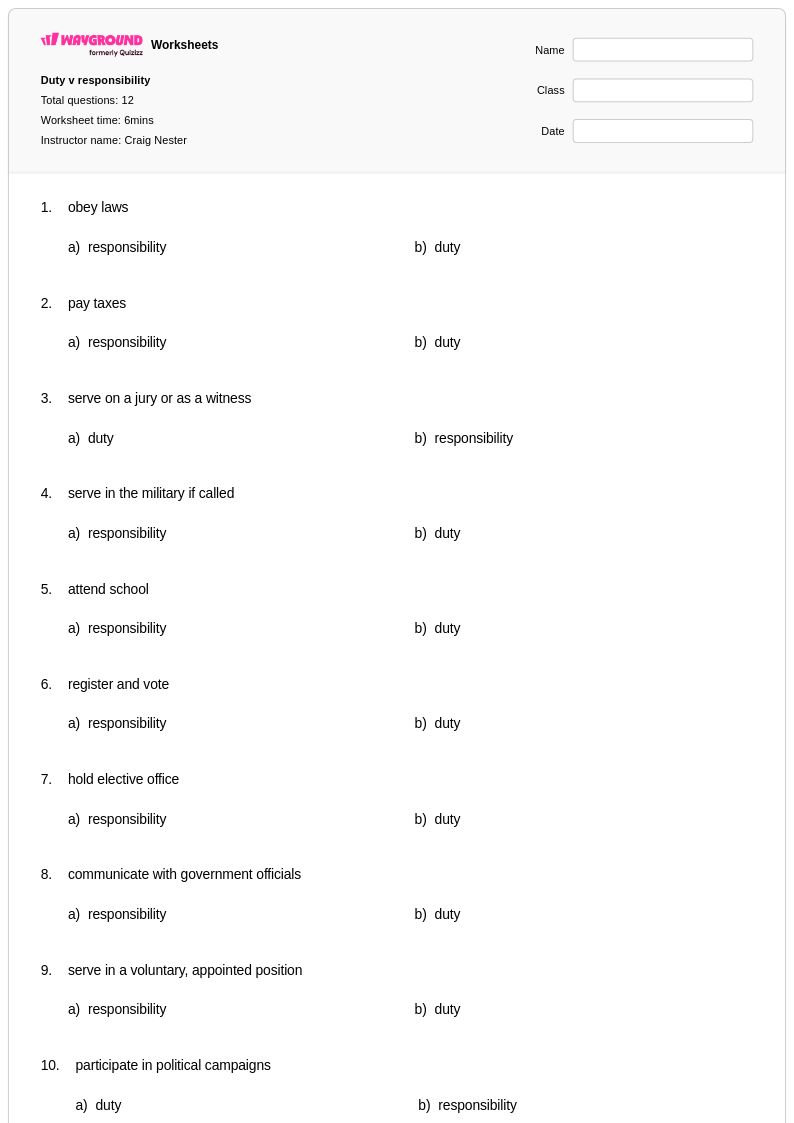
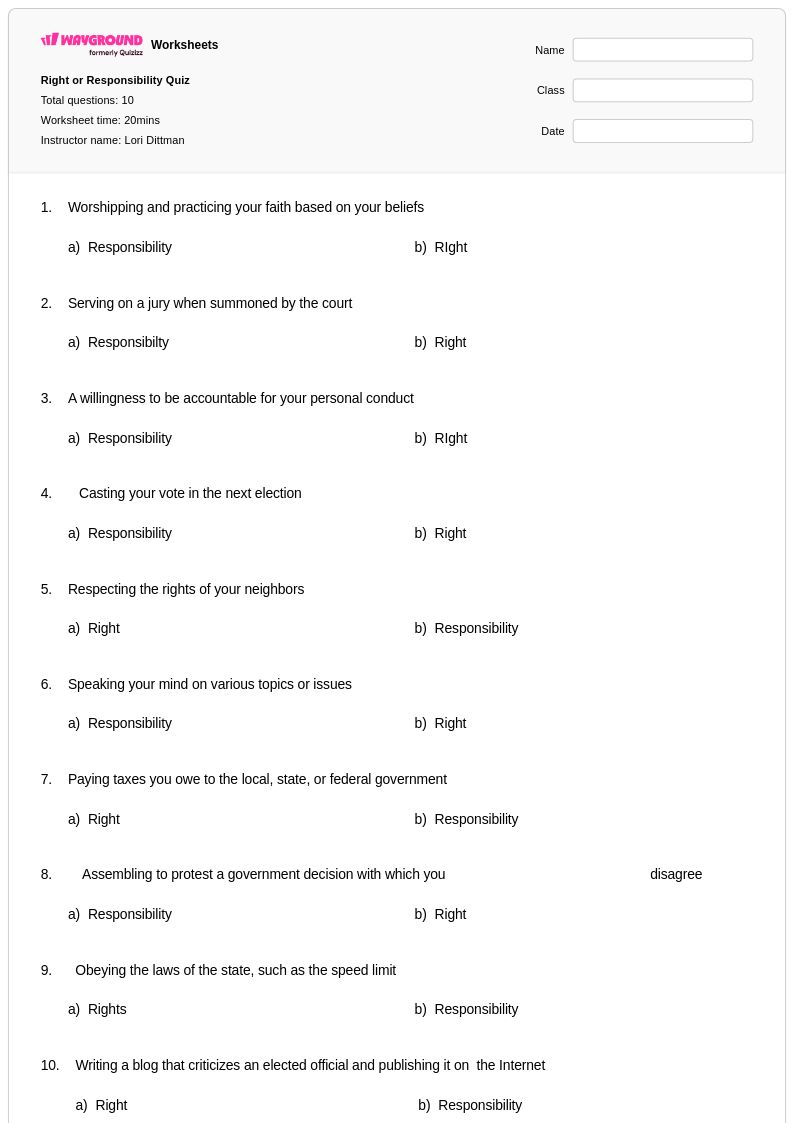
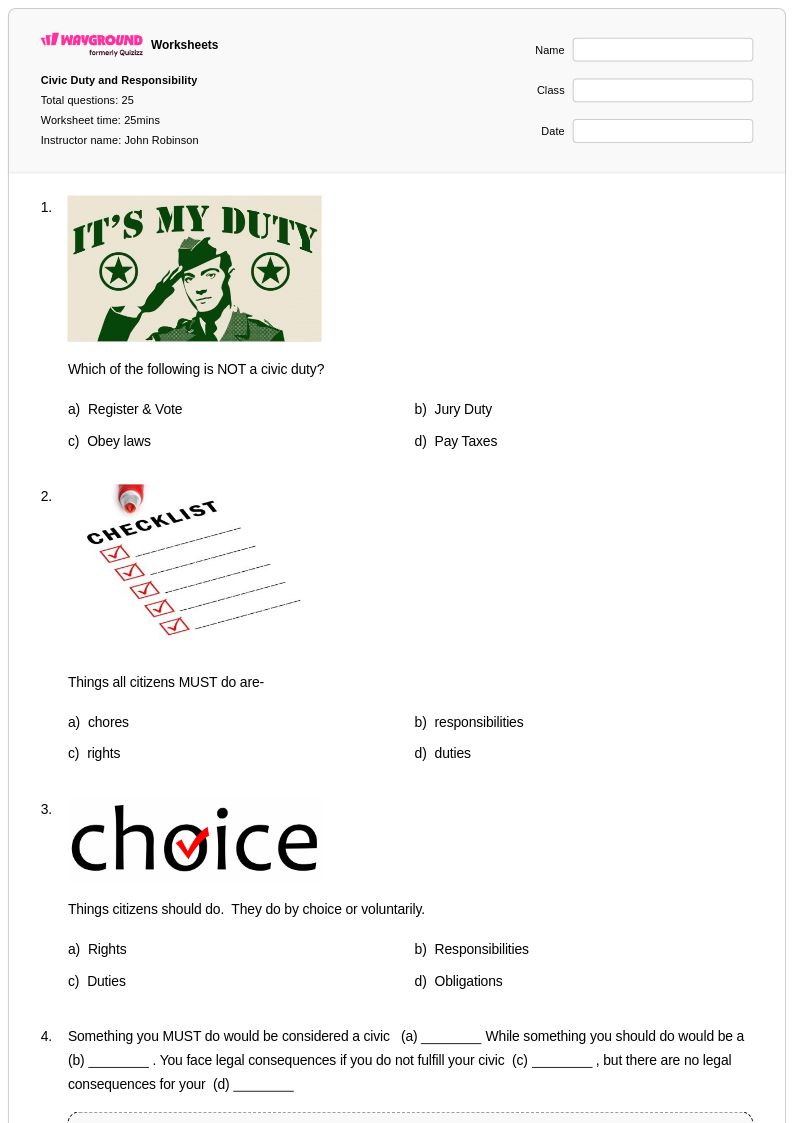
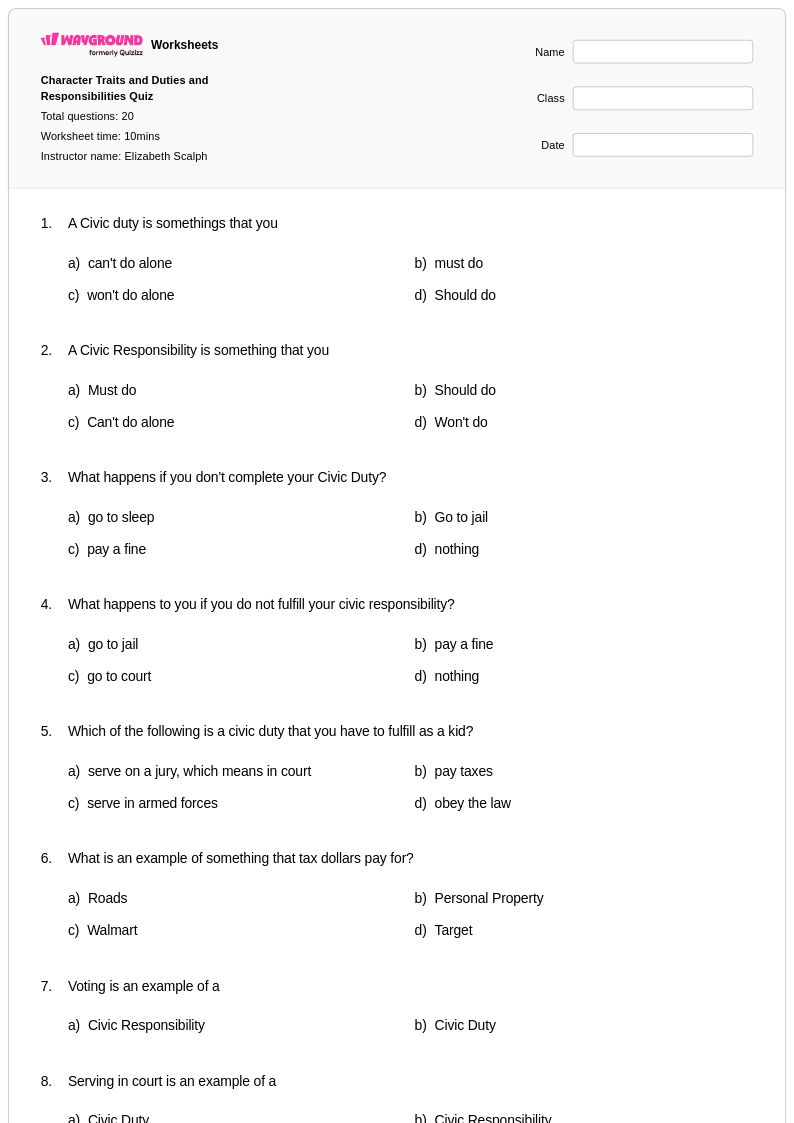
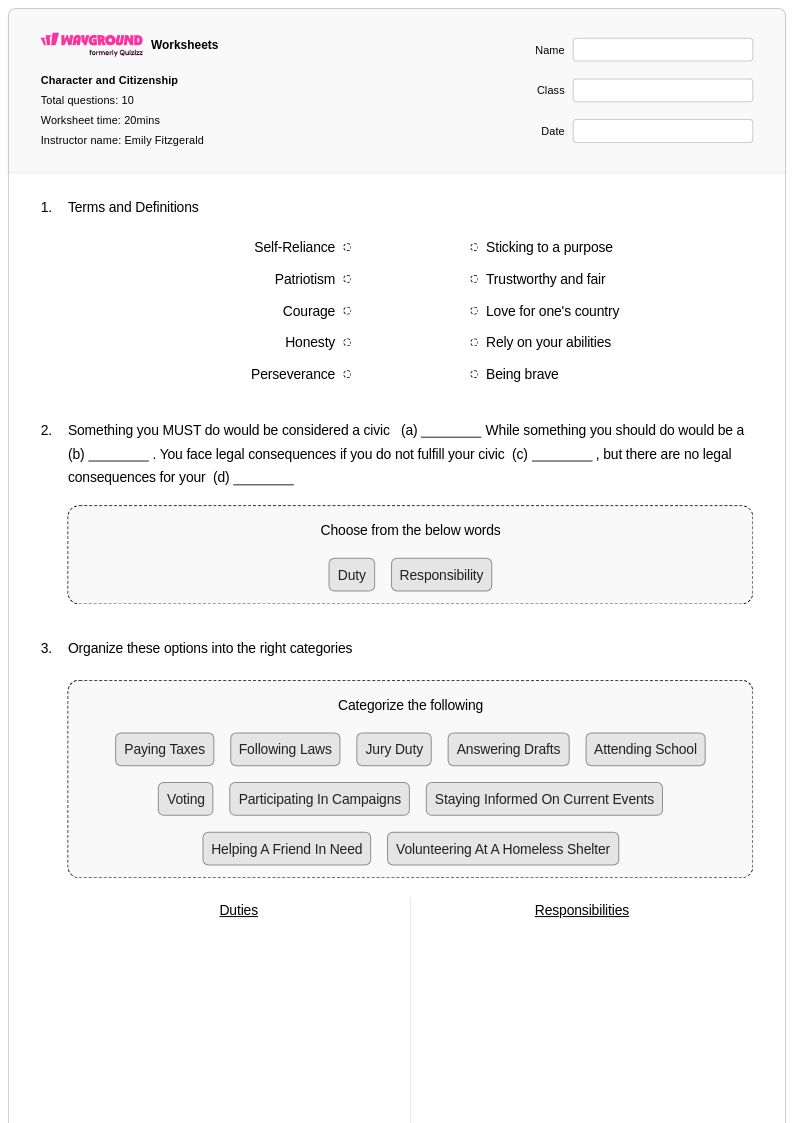
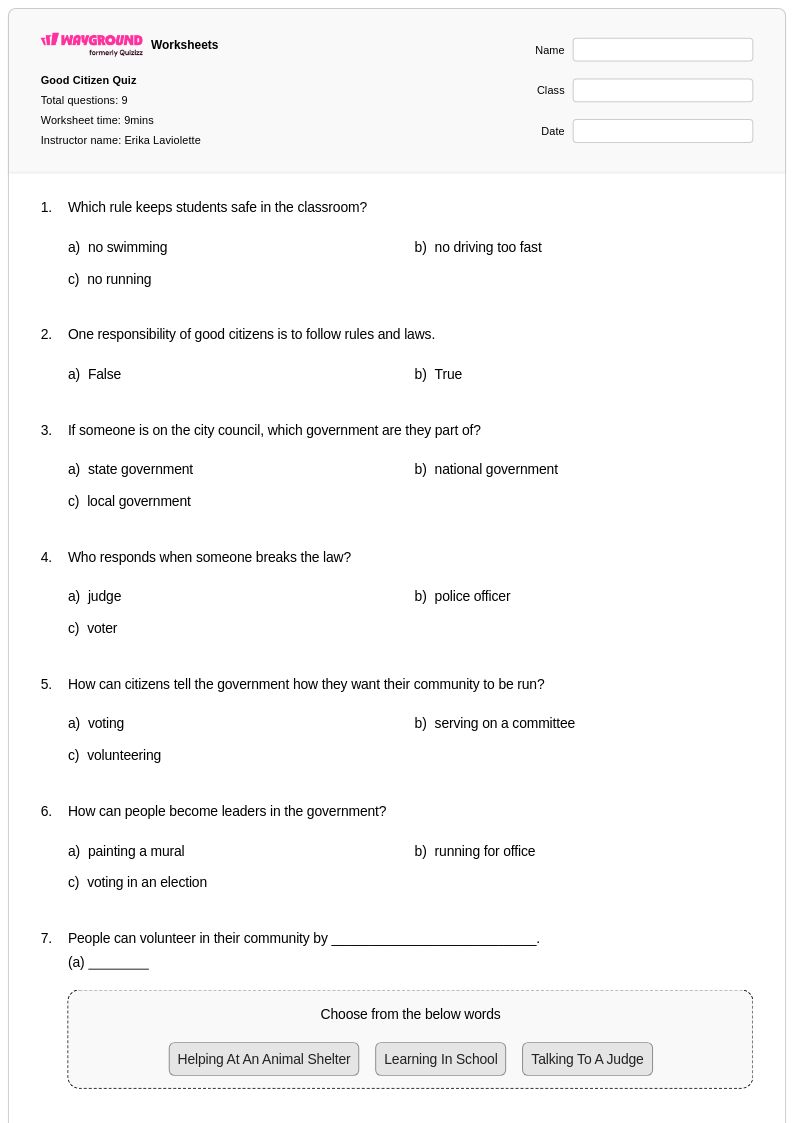
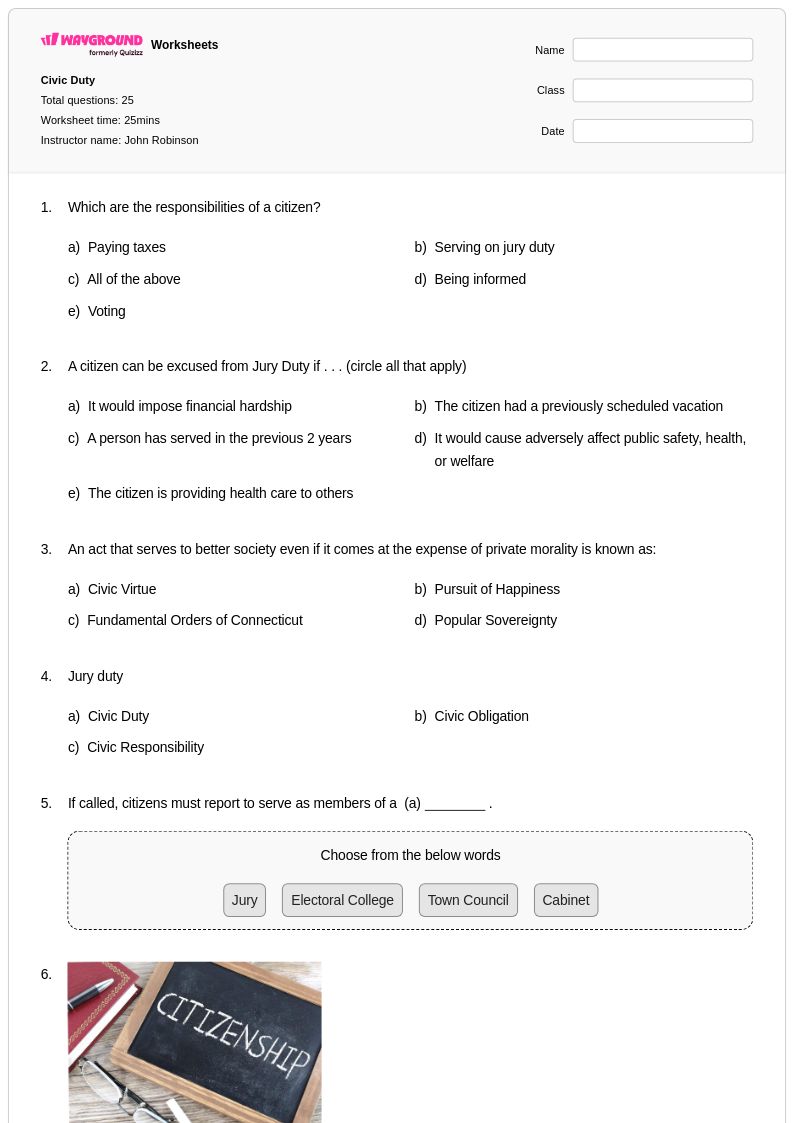
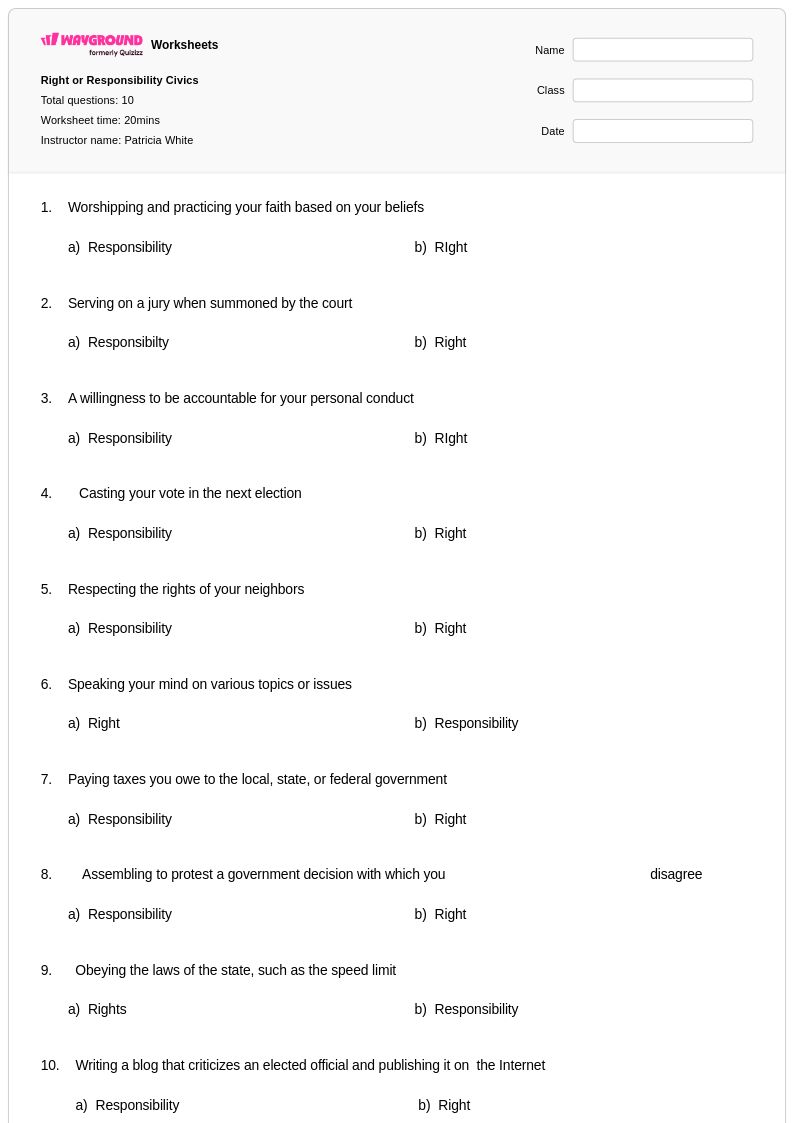
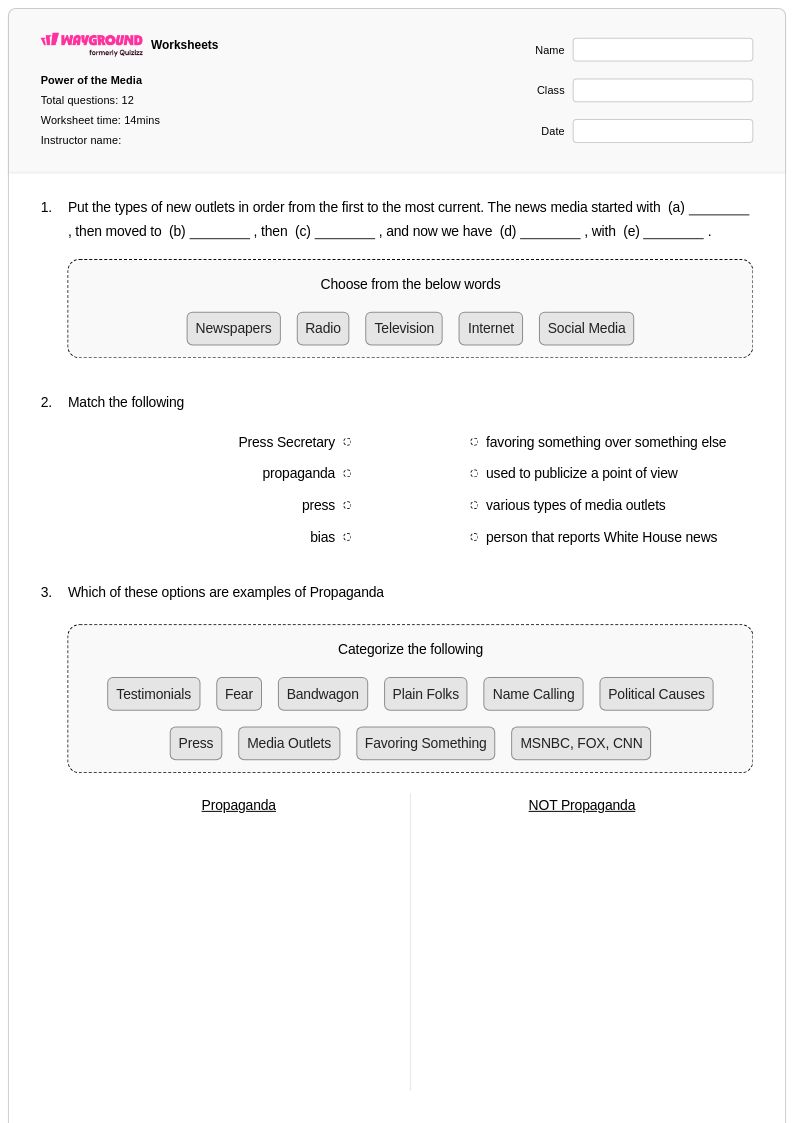
Class 7 responsibility worksheets available through Wayground (formerly Quizizz) provide comprehensive practice materials that help middle school students develop crucial accountability and decision-making skills within their social studies curriculum. These educational resources strengthen students' understanding of personal responsibility, civic duty, and the consequences of individual actions through engaging scenarios, case studies, and reflection exercises. Teachers can access complete worksheet collections that include detailed answer keys, making assessment and feedback more efficient, while students benefit from structured practice problems that encourage critical thinking about responsibility in various contexts. The printable pdf format ensures easy classroom distribution, and the free accessibility of these materials supports diverse learning environments where students can explore concepts like citizenship, community service, and ethical decision-making at their own pace.
Wayground (formerly Quizizz) empowers educators with millions of teacher-created resources specifically designed for Class 7 social skills instruction, featuring advanced search and filtering capabilities that help teachers quickly locate responsibility-focused materials aligned with curriculum standards. The platform's differentiation tools allow instructors to customize worksheets based on individual student needs, supporting both remediation for struggling learners and enrichment opportunities for advanced students. Teachers can seamlessly integrate these resources into their lesson planning, utilizing both printable and digital formats to accommodate various classroom technologies and learning preferences. The extensive collection enables consistent skill practice throughout the academic year, helping educators address diverse learning styles while maintaining rigorous academic standards for responsibility education in middle school social studies programs.
FAQs
How do I teach responsibility to students in a meaningful way?
Teaching responsibility effectively requires moving beyond abstract definitions and grounding the concept in real-world scenarios students recognize. Have students analyze case studies where individual choices affect others, identify personal and community obligations, and reflect on the consequences of their actions. Structured role-play, class discussions around ethical dilemmas, and reflective writing prompts all help students internalize accountability rather than simply memorize it as a vocabulary word.
What kinds of exercises help students practice responsibility concepts?
Practice exercises that work best for responsibility include scenario-based tasks where students evaluate choices and predict consequences, as well as reflective prompts that ask students to connect personal behavior to community outcomes. Case studies drawn from civic or school-based situations help students apply responsibility concepts to contexts they find relevant. Repeated exposure through varied formats, such as written reflection, structured discussion, and guided analysis, reinforces the connection between individual choices and collective well-being.
What misconceptions do students commonly have about responsibility?
A frequent misconception is that responsibility is purely individual, meaning students may not initially recognize how their choices affect others around them. Students also sometimes conflate responsibility with punishment, associating the concept only with consequences rather than with proactive accountability. Worksheets that distinguish between personal obligations and community obligations, and that present responsibility in positive, forward-looking scenarios, help correct these misunderstandings.
How can I use responsibility worksheets to support character development alongside academic learning?
Responsibility worksheets bridge character education and academic content by embedding ethical reasoning into structured academic tasks. When students work through real-world situations, identify personal and community obligations, and reflect on the relationship between individual choices and collective well-being, they build both critical thinking skills and social awareness simultaneously. This integration means responsibility instruction does not need to be treated as a separate add-on but can function naturally within social studies or advisory curricula.
How do I use Wayground's responsibility worksheets in my classroom?
Wayground's responsibility worksheets are available as printable PDFs for traditional classroom use and in digital formats for technology-integrated environments, giving teachers flexibility depending on their setup. Each worksheet includes a complete answer key, which supports efficient and accurate assessment without additional preparation. Teachers can also host worksheets as a quiz directly on Wayground, making it straightforward to assign, track, and review student responses in one place.
How can I differentiate responsibility worksheets for students with different learning needs?
Wayground supports student-level accommodations that can be applied individually without affecting the rest of the class. For students who need additional support, teachers can enable Read Aloud so questions are read to them, reduce answer choices to lower cognitive load, or grant extended time on timed tasks. Font sizes and display themes can also be adjusted through Reading Mode for students with accessibility needs, and all accommodation settings are saved and reusable across future sessions.