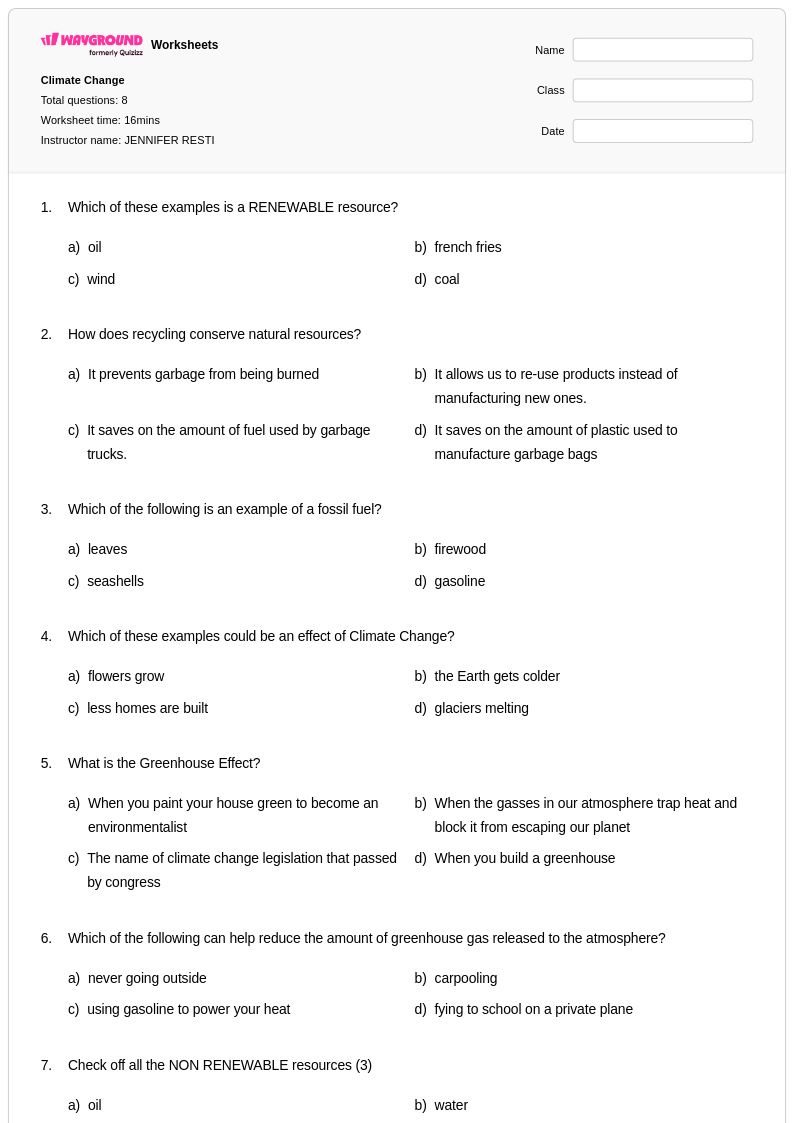
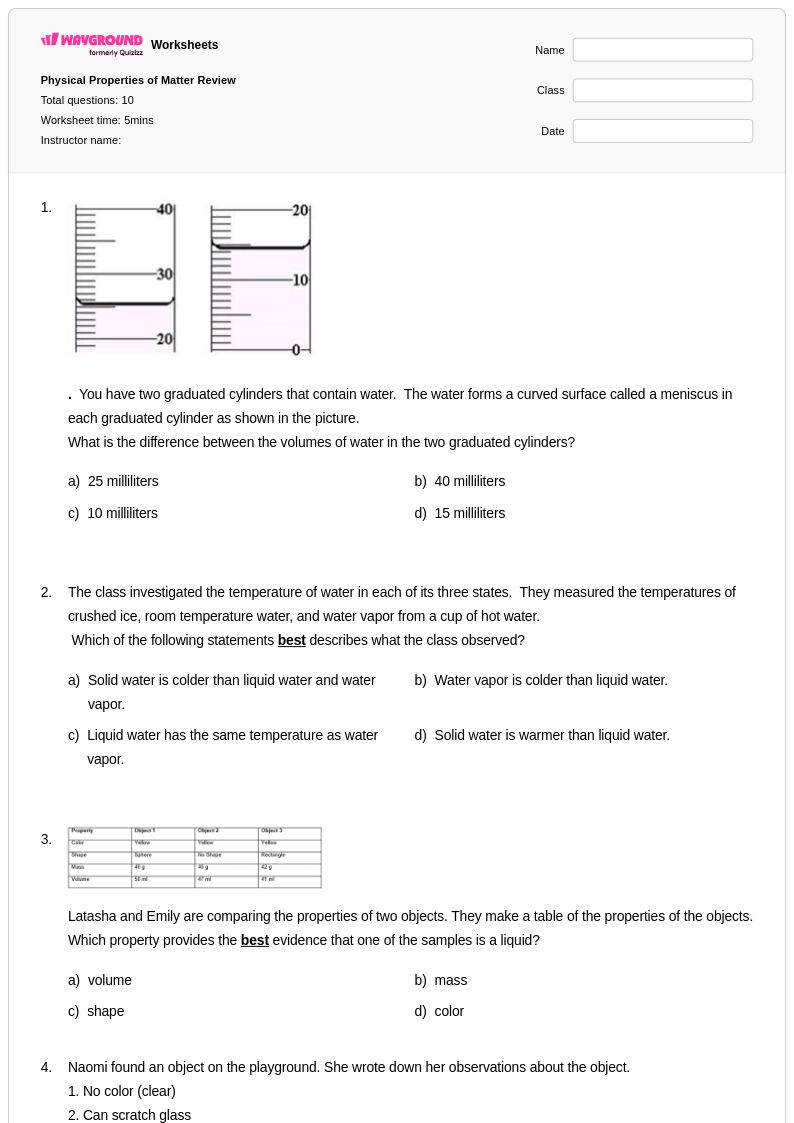
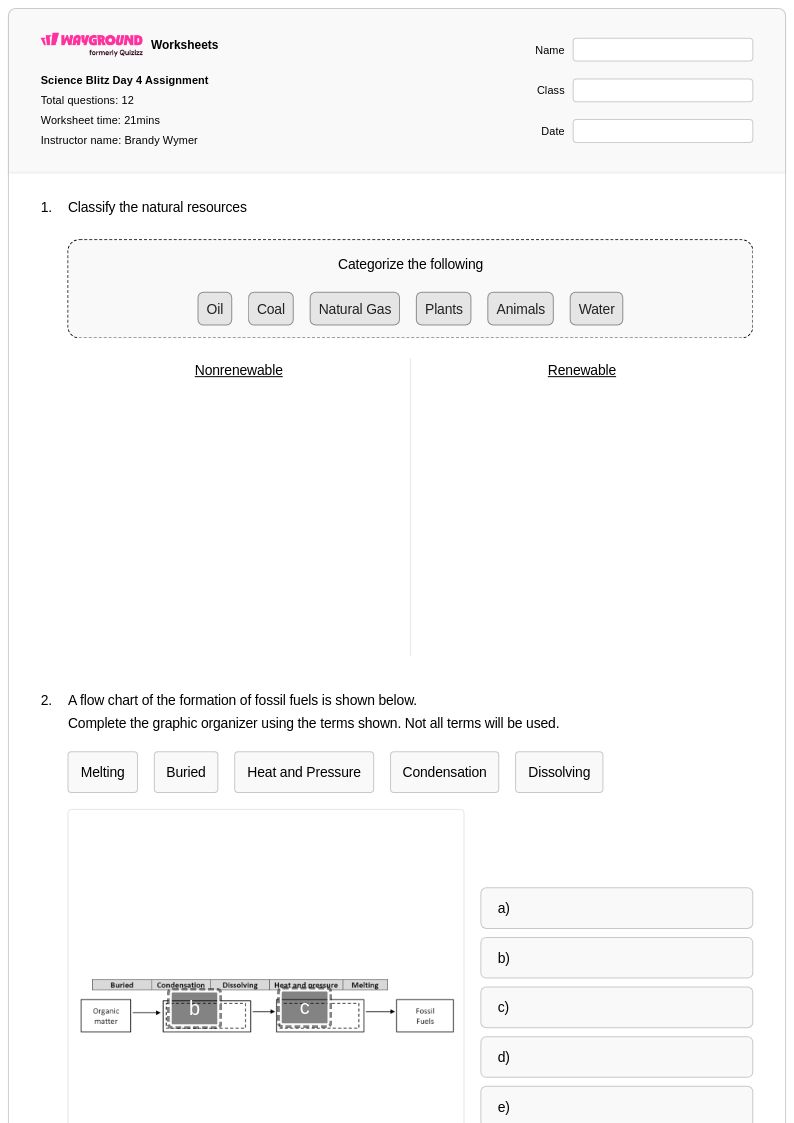
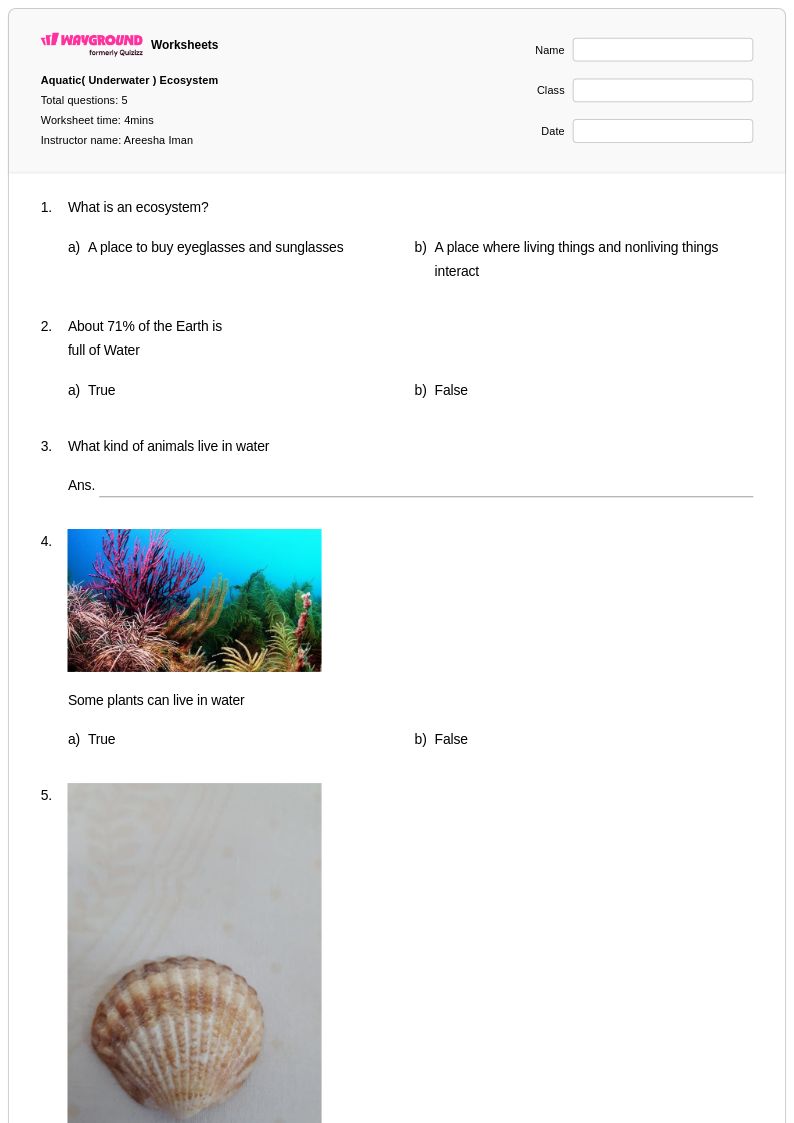
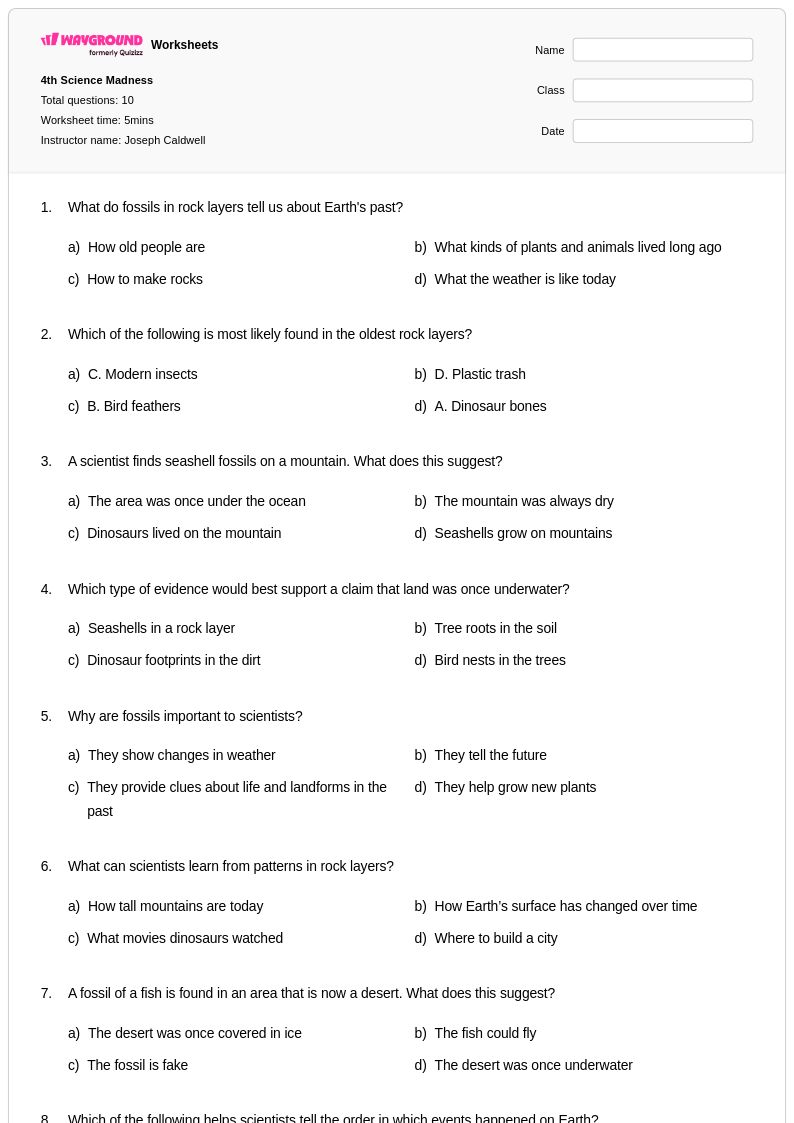
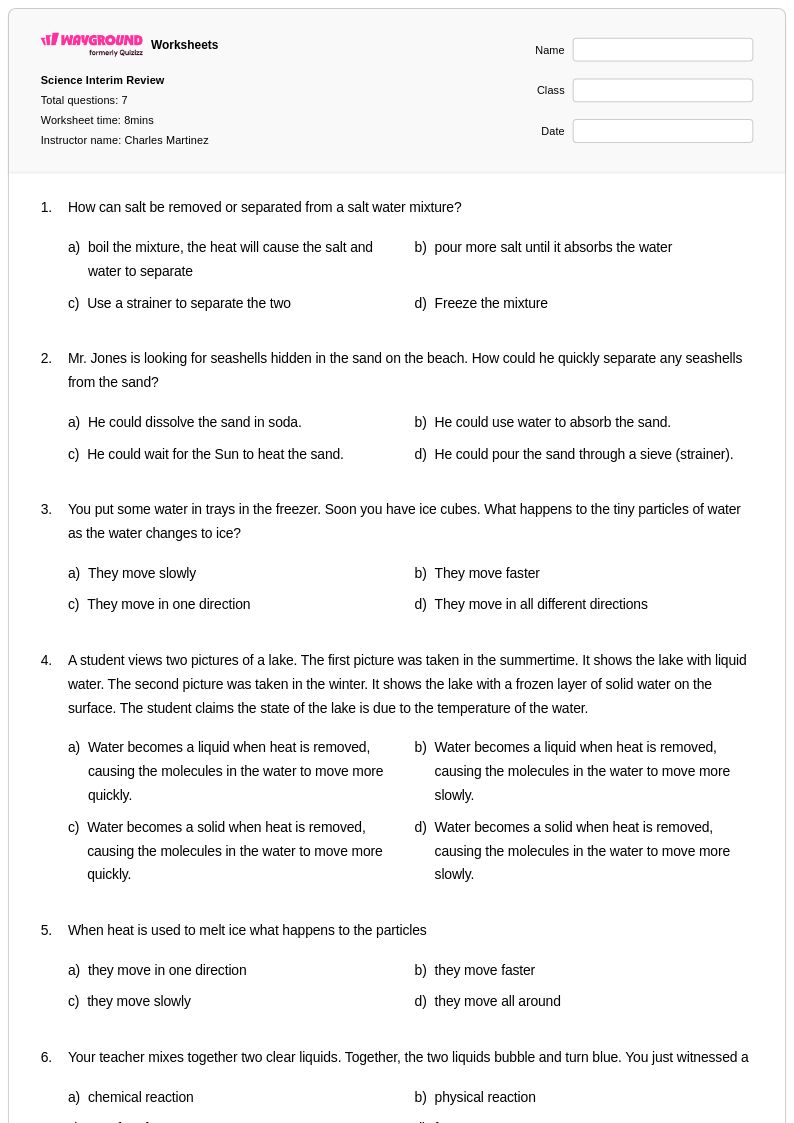
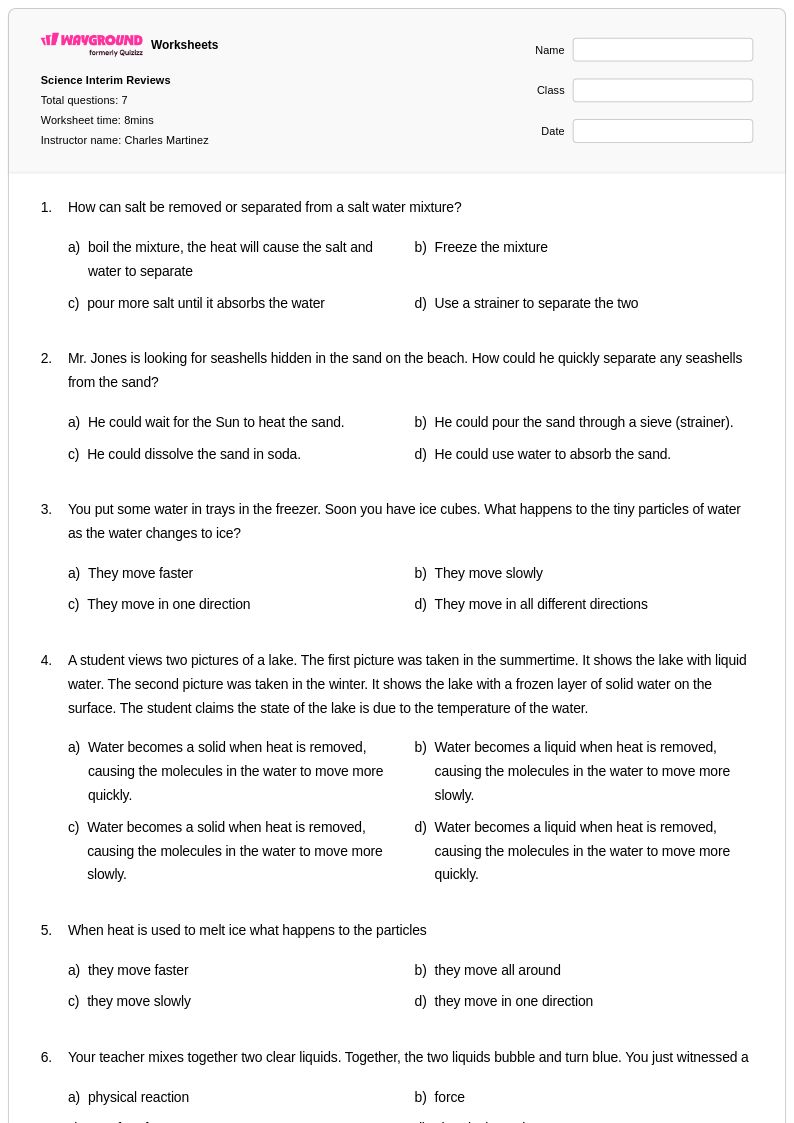
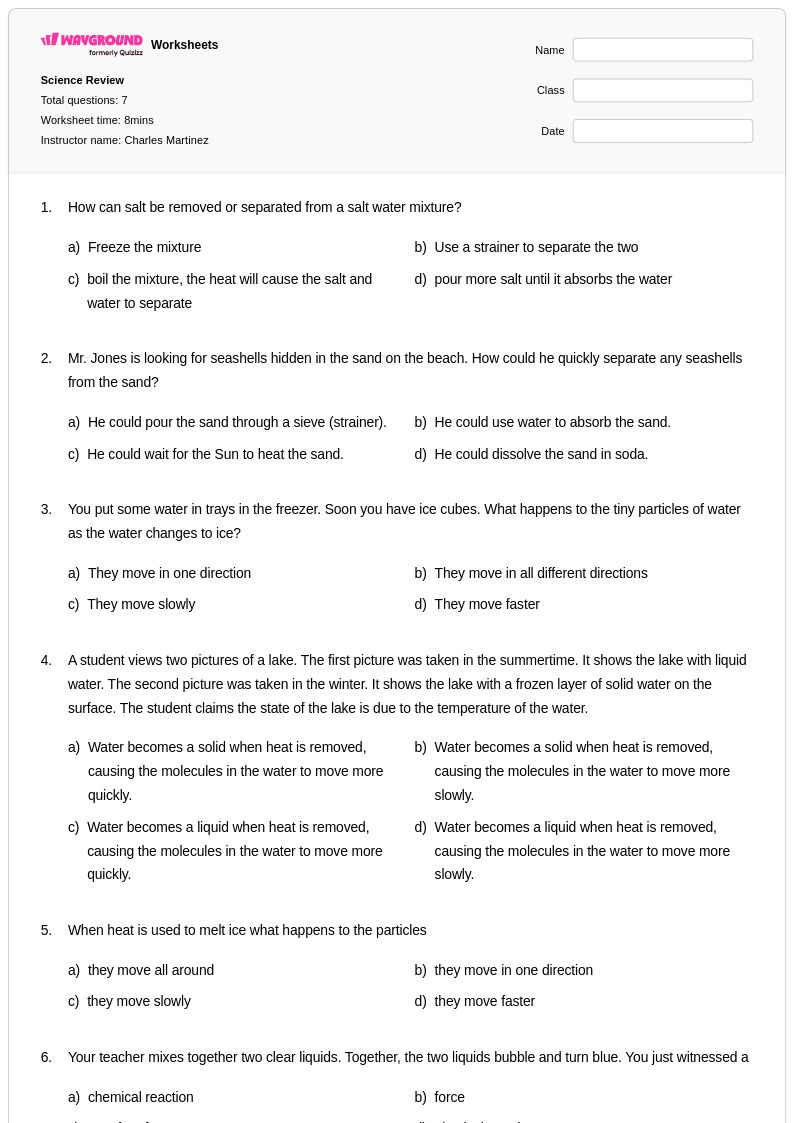
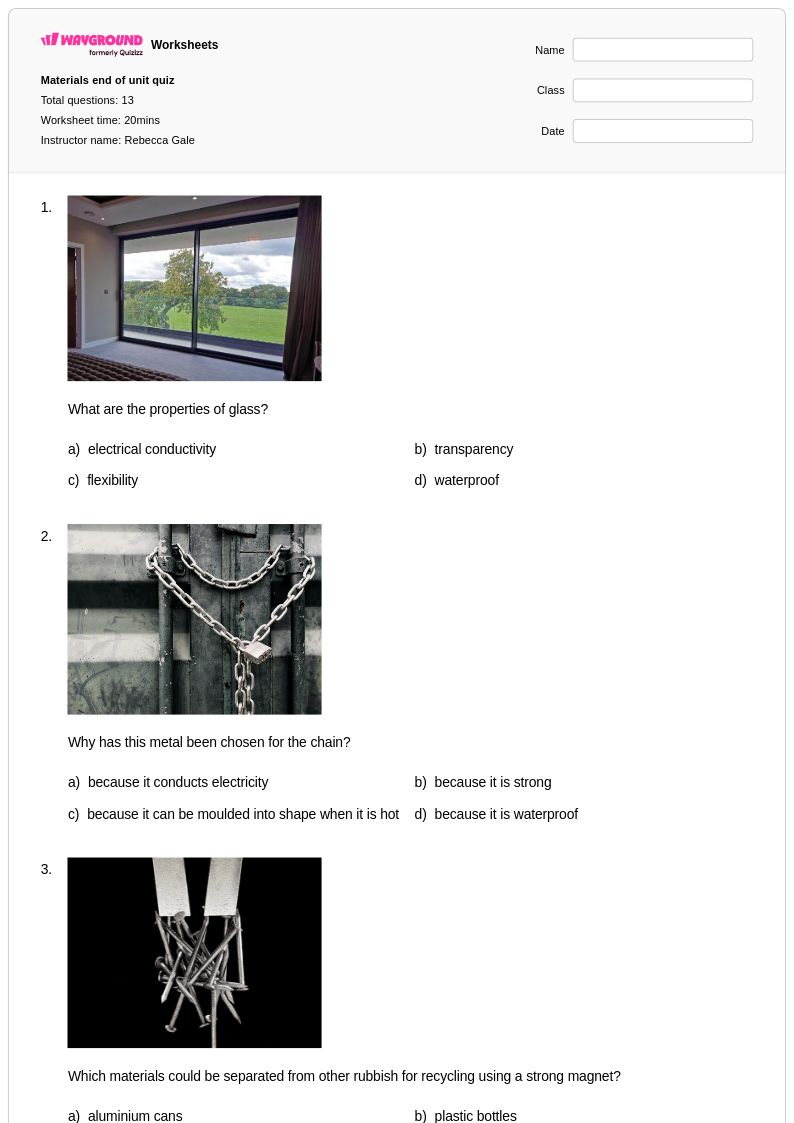
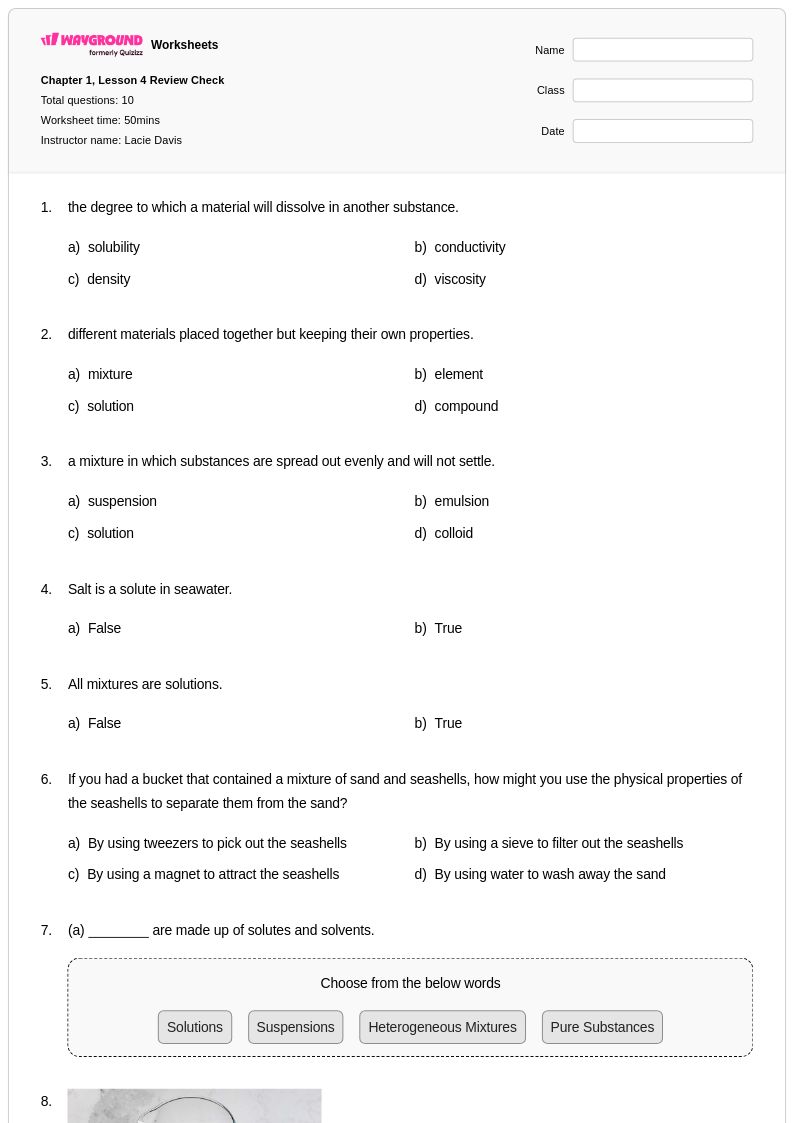
Explore our free Class 5 seashells biology worksheets and printables that help students discover marine life classification, shell structures, and coastal ecosystems through engaging practice problems with complete answer keys.
Explore printable Seashells worksheets for Class 5
Seashells serve as fascinating biological specimens that Class 5 students can explore to understand fundamental concepts about marine ecosystems, animal classification, and adaptation strategies. Wayground's comprehensive collection of seashell worksheets provides educators with expertly crafted materials that guide young learners through hands-on investigations of mollusk anatomy, shell formation processes, and habitat relationships. These educational resources strengthen critical observation skills, scientific vocabulary development, and data analysis abilities through engaging practice problems that encourage students to examine shell characteristics, compare species variations, and draw connections between form and function. Teachers can access these free printables complete with detailed answer keys, ensuring seamless implementation whether used for individual study, collaborative group work, or assessment purposes, with each pdf resource designed to meet the developmental needs of fifth-grade science learners.
Wayground's extensive platform, built from the foundation of Quizizz's educational expertise, empowers teachers with millions of carefully curated, teacher-created resources specifically focused on seashell biology and related marine science topics for Class 5 classrooms. The platform's robust search and filtering capabilities allow educators to quickly locate materials aligned with state and national science standards, while built-in differentiation tools enable seamless customization to accommodate diverse learning styles and academic readiness levels. Whether delivered in traditional printable formats or interactive digital experiences, these versatile worksheet collections support comprehensive lesson planning by providing structured opportunities for skill practice, targeted remediation for struggling learners, and enrichment activities that challenge advanced students to deepen their understanding of marine biodiversity and ecological relationships through systematic study of seashell specimens.
FAQs
How do I teach students about seashell classification in a science class?
Start by introducing the two major mollusk groups students are most likely to encounter: gastropods, which produce single coiled shells, and bivalves, which produce two-part hinged shells. Use physical shell specimens or detailed diagrams alongside classification worksheets to help students sort shells by structure, symmetry, and surface features. Connecting shell shape to the organism's habitat and feeding strategy gives students a biological framework rather than treating classification as simple memorization.
What exercises help students practice identifying and analyzing seashells?
Effective practice activities include labeling shell anatomy diagrams, matching shell types to their mollusk group, and comparing growth ring patterns to infer age or environmental conditions. Worksheets that ask students to connect shell characteristics to survival adaptations are particularly effective because they build both observation and analytical reasoning skills simultaneously. Practice problems that incorporate real coastal ecosystem data also reinforce how shell study connects to broader marine biology concepts.
What common misconceptions do students have about seashells?
A frequent misconception is that a seashell is a separate object the organism builds and lives inside, rather than an integral part of the animal's body produced by the mantle tissue. Students also commonly assume all shells come from ocean environments, not recognizing that many mollusks are freshwater or terrestrial. Another error is conflating shell size directly with organism age without accounting for growth rate variations caused by temperature, food availability, and water chemistry.
How do seashells connect to broader marine ecosystem and biodiversity topics?
Shells serve as physical records of biodiversity, recording species distribution, environmental health, and evolutionary adaptation along coastlines. Teaching shell formation alongside concepts like calcium carbonate saturation in seawater links shell biology directly to ocean acidification and climate change discussions. This cross-disciplinary connection makes seashell study a practical entry point into ecosystem-level thinking for students in earth science, environmental science, or biology courses.
How do I use Wayground's seashells worksheets in my classroom?
Wayground's seashells worksheets are available as printable PDFs for traditional classroom use and in digital formats for technology-integrated learning environments, giving teachers flexibility depending on their setup. You can also host the worksheets as a live quiz on Wayground, which allows for real-time student response tracking. The included answer keys make it straightforward to use these materials for independent practice, small group work, or as a follow-up activity after a direct instruction lesson on marine biology.
How can I differentiate seashells instruction for students at different ability levels?
For students who need additional support, reduce the number of shell types introduced at one time and focus on the most visually distinct features before moving to finer classification distinctions. Wayground's platform supports accommodations such as read-aloud functionality for students who need questions read to them, reduced answer choices to lower cognitive load, and extended time settings that can be configured per student. These accommodations can be assigned individually while other students receive default settings, keeping the process unobtrusive for the class as a whole.