Free Printable Sensory Words Worksheets for Class 3
Enhance Class 3 students' descriptive writing skills with our free sensory words worksheets featuring engaging printables, practice problems, and answer keys that help young learners identify and use vivid language.
Explore printable Sensory Words worksheets for Class 3
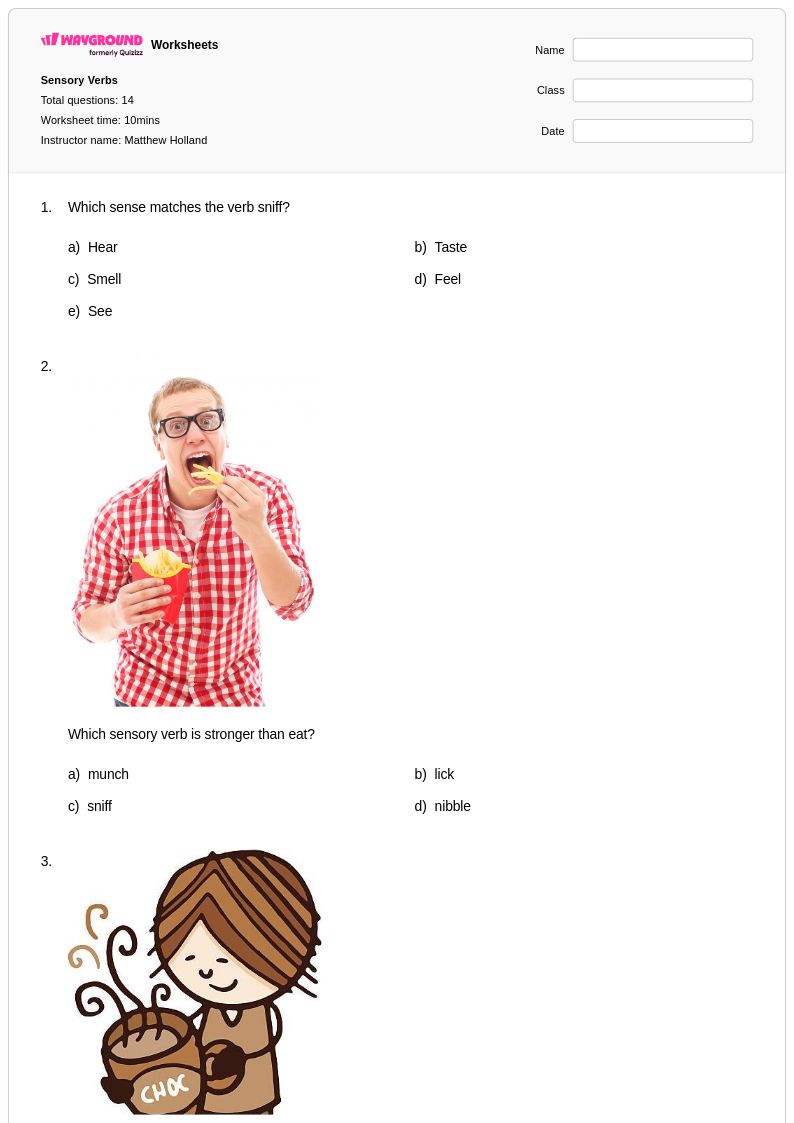
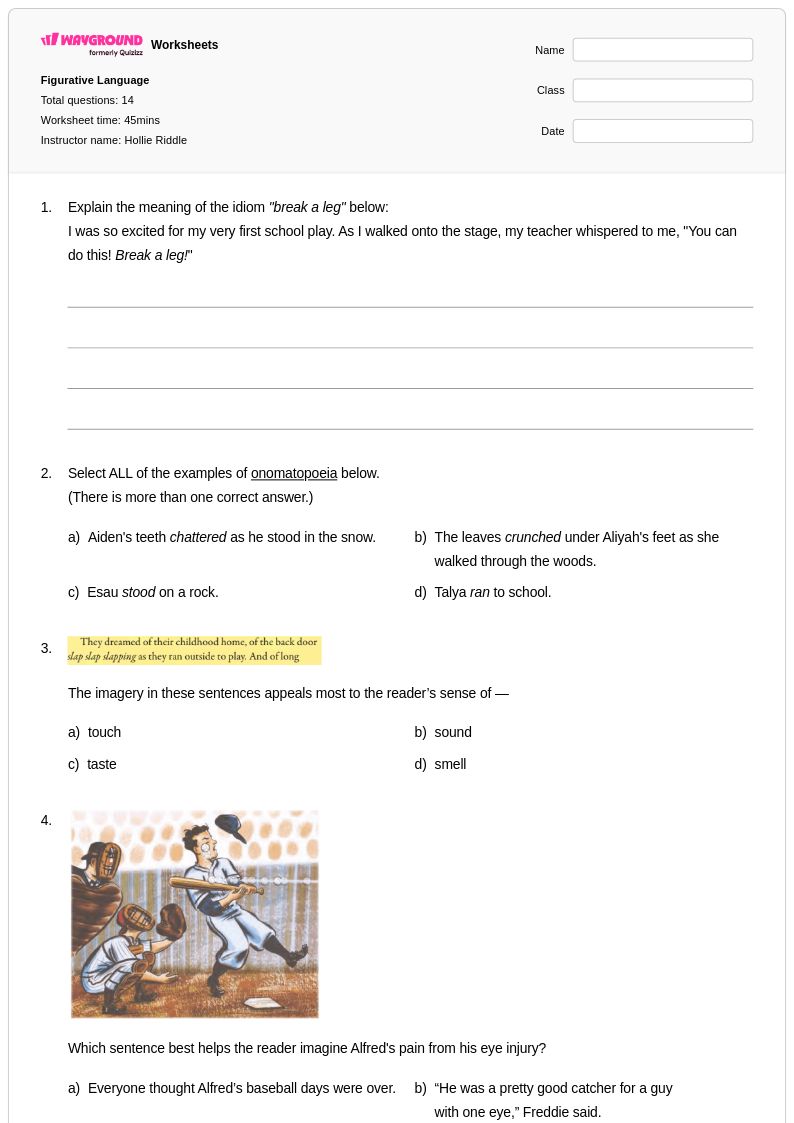
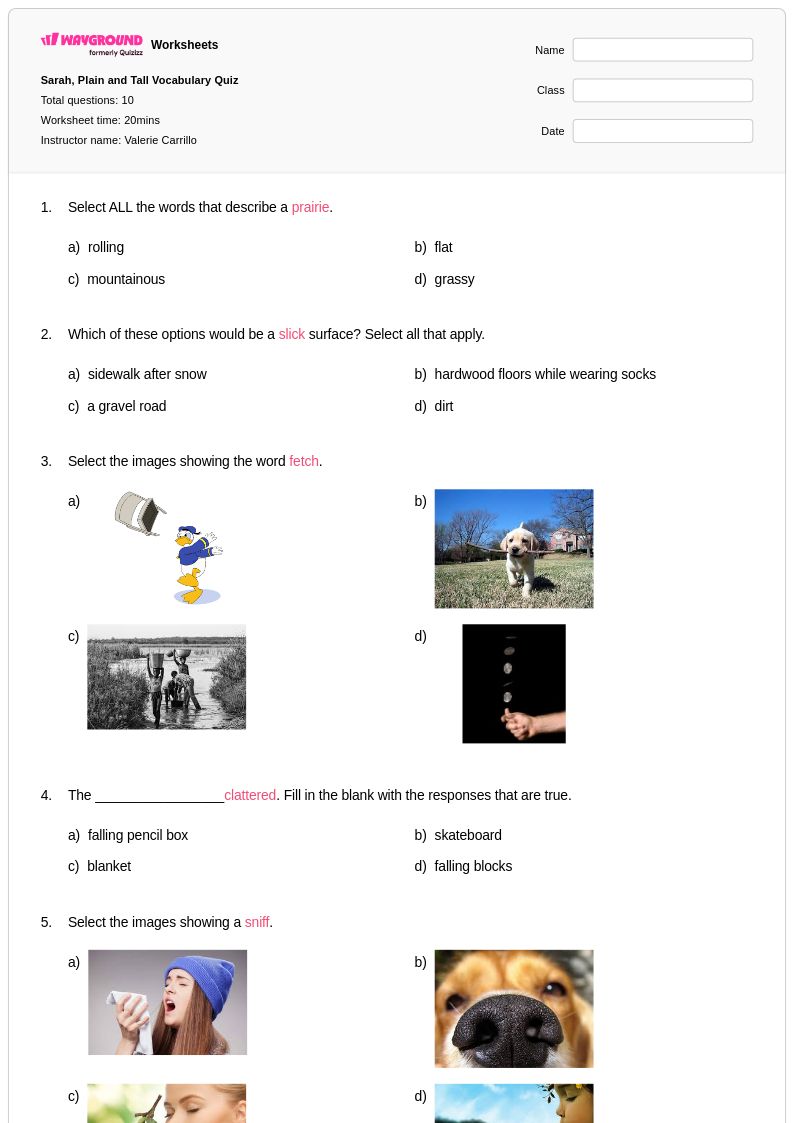
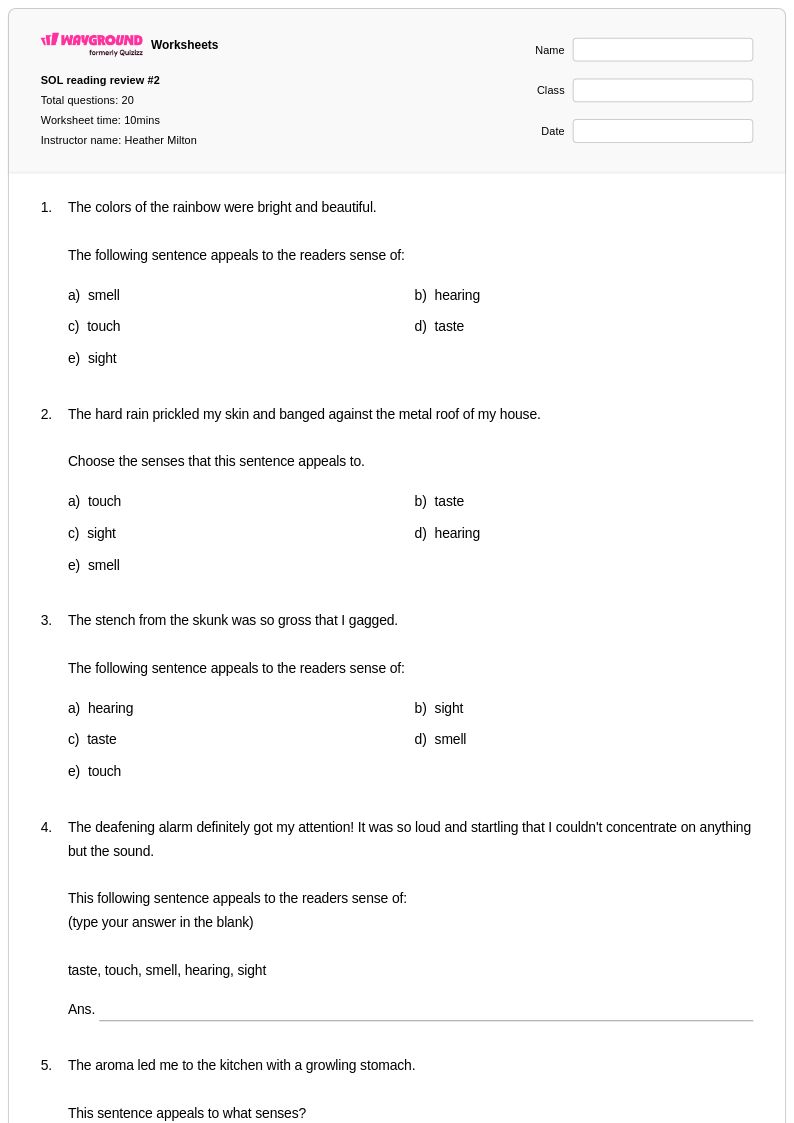
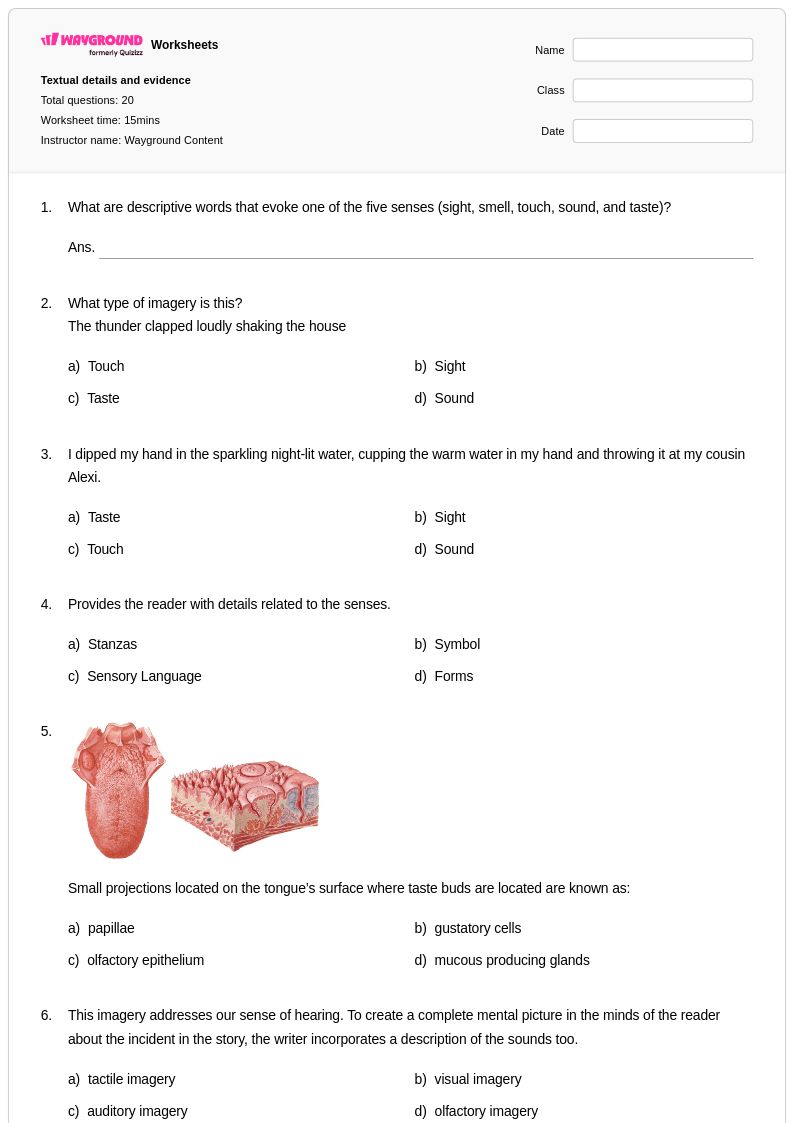
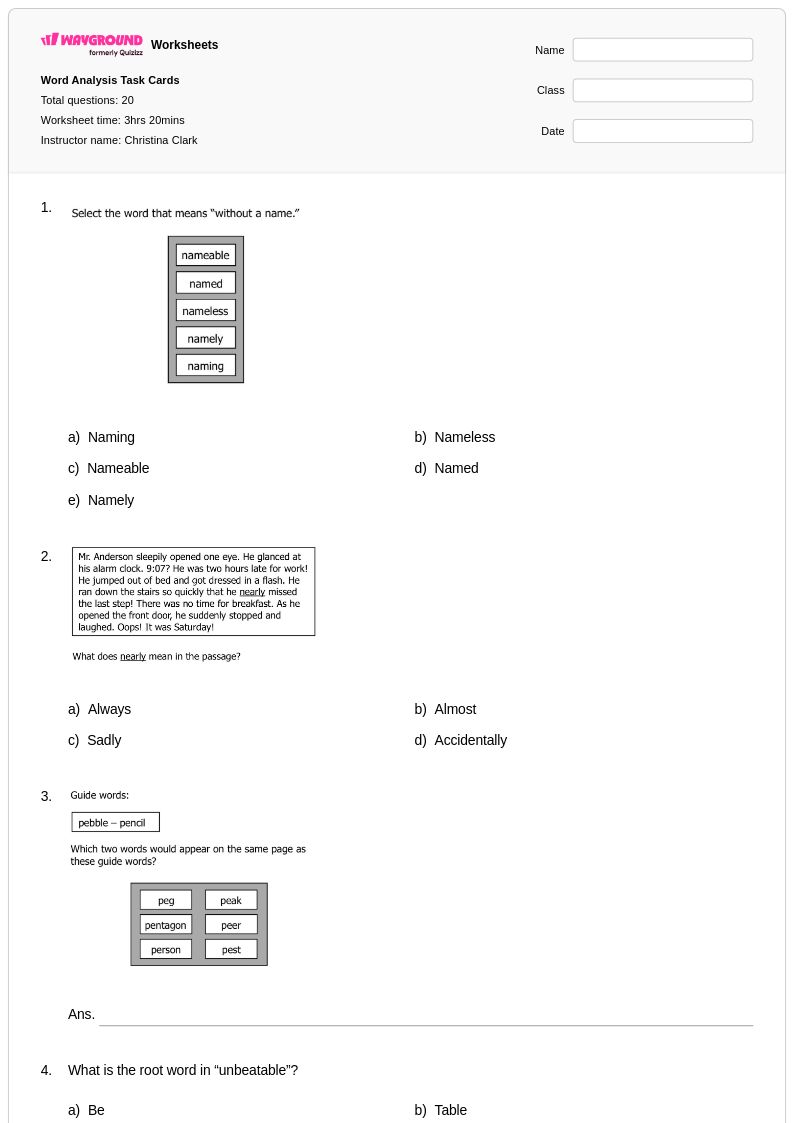
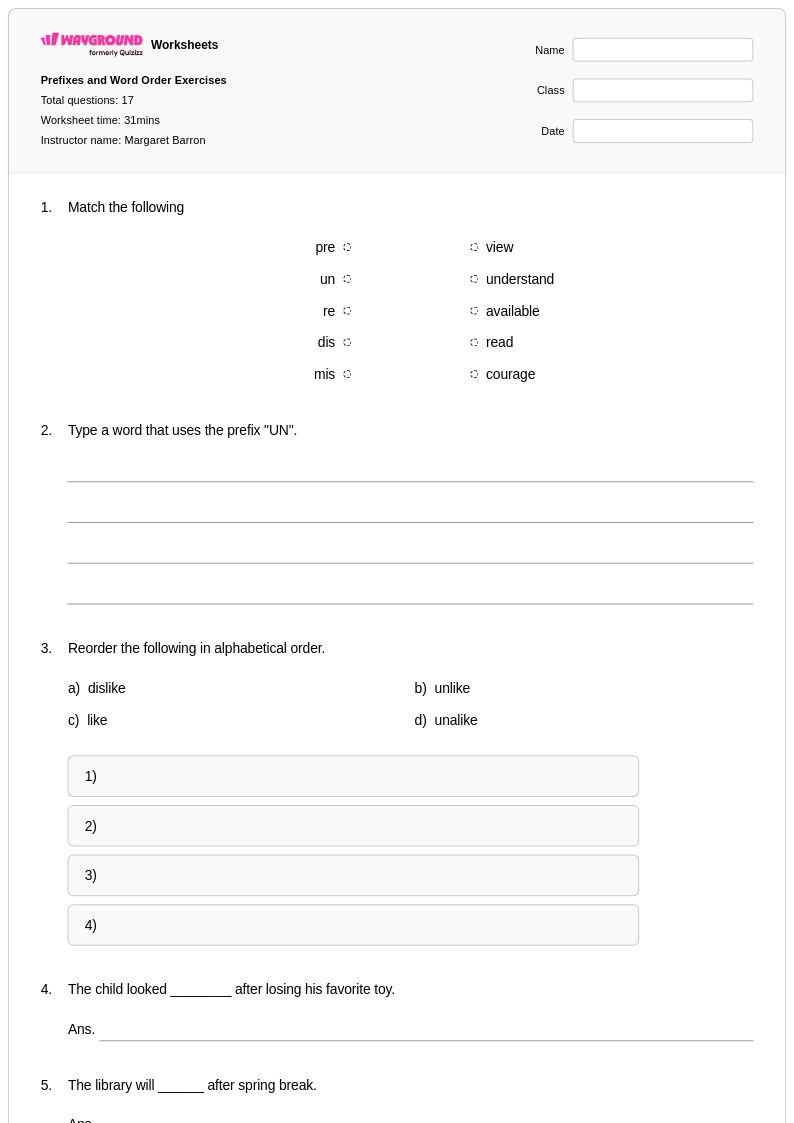
Sensory words worksheets for Class 3 students available through Wayground provide essential practice in developing descriptive vocabulary and enhancing writing skills. These carefully designed printables focus on teaching young learners to identify and use words that appeal to the five senses—sight, sound, smell, taste, and touch—enabling them to create more vivid and engaging written work. Each worksheet includes structured practice problems that guide students through recognizing sensory language in text passages and applying these descriptive words in their own writing exercises. The comprehensive collection offers various difficulty levels with complete answer keys, ensuring teachers can effectively assess student progress while providing free, accessible resources that strengthen vocabulary development and creative expression skills essential for third-grade language arts mastery.
Wayground's extensive library supports educators with millions of teacher-created sensory words worksheets specifically tailored for Class 3 instruction, featuring robust search and filtering capabilities that allow quick identification of materials aligned with specific learning objectives and curriculum standards. Teachers benefit from comprehensive differentiation tools that enable customization of worksheet content to meet diverse student needs, whether for remediation support or enrichment challenges. The platform's flexible format options include both printable PDF versions for traditional classroom use and digital formats for interactive learning environments, streamlining lesson planning while providing consistent access to high-quality practice materials. These versatile resources facilitate targeted skill practice sessions, support individualized instruction approaches, and enable teachers to efficiently address varying proficiency levels within their classrooms while maintaining focus on developing students' ability to incorporate rich, sensory-based vocabulary into their written communication.
FAQs
How do I teach sensory words to elementary and middle school students?
Start by anchoring each of the five senses to concrete, familiar experiences — describe the smell of rain, the texture of sandpaper, the sound of a crowded cafeteria — before introducing formal vocabulary. Once students can name sensory experiences in their own words, introduce categorization activities where they sort descriptive words by sense. From there, move into reading excerpts and identifying how authors use sensory language to create vivid imagery, then have students practice applying those words in their own short writing pieces.
What activities help students practice identifying and using sensory words?
Sensory word banks are one of the most effective practice tools — students fill in descriptive words organized by the five senses, which reinforces both vocabulary and categorization skills simultaneously. Paired reading activities where students highlight sensory language in mentor texts help them recognize how descriptive words function in context. Writing extension tasks that require students to revise a flat, bare-bones paragraph using sensory detail push them to apply what they've learned rather than just recall it.
What mistakes do students commonly make when using sensory words in their writing?
The most common error is over-relying on visual descriptions while neglecting the other four senses, which produces writing that feels incomplete or flat. Students also tend to use generic descriptors like 'nice' or 'loud' instead of precise sensory vocabulary, missing the specificity that makes descriptive writing effective. Another frequent issue is sensory overload — piling too many descriptive words into a single sentence — which can make writing feel cluttered rather than vivid.
How do sensory words connect to reading comprehension and literary analysis?
Sensory language is one of the primary tools authors use to build setting, establish mood, and create emotional resonance with the reader. When students can identify sensory details in a text, they develop a richer understanding of how word choice shapes meaning and reader experience — a foundational skill in literary analysis. Teaching students to notice and label sensory language in literature also builds the vocabulary awareness they need to transfer those techniques into their own writing.
How do I use Wayground's sensory words worksheets in my classroom?
Wayground's sensory words worksheets are available as printable PDFs for traditional classroom use and in digital formats for technology-integrated learning environments, including the option to host them as a live quiz on Wayground. Each worksheet includes a complete answer key, so teachers can provide fast, accurate feedback without additional preparation. Wayground also supports student-level accommodations such as read aloud, extended time, and reduced answer choices, which can be assigned individually so that students with different learning needs can access the same activity with appropriate support.
How can I differentiate sensory words instruction for students at different skill levels?
For students who are just beginning, focus on single-sense sorting tasks and simple fill-in-the-blank exercises using a provided word bank to reduce cognitive load. More advanced students can work with open-ended writing prompts that require them to independently select and deploy sensory vocabulary across multiple senses. On Wayground, teachers can apply reduced answer choices for students who need scaffolding on multiple-choice tasks, and enable read aloud for students who benefit from hearing questions and content read to them — both settings can be configured per student without disrupting the rest of the class.